02
Learning Outcomes: After attending this module, participants should be able to:
Understand the nature of rice diseases, how they develop and spread
Know the general principles in disease management
Describe distinguishing signs and symptoms and identify major viral, fungal, and bacterial rice diseases
Learn management strategies based on IPM principles<br>
04
Lesson 1: Disease Concepts Learning Objective:
To define what is a Disease,
To explain the disease tetrahedron concept
To discuss common signs and symptoms of Rice Diseases. Structure:
What is a Disease
Disease Tetrahedron
Signs and Symptoms of Rice Diseases<br>
05
What is a Disease? A disease is an impairment of the normal physiological functioning of a plant or plant part. It interferes with normal function, structure and economic value. It can be recognized by the associated visible changes on the entire plant or plant parts called symptoms.<br>
06
Disease Tetrahedron Concept<br>
07
Activity: Signs and Symptoms<br>
08
Definition of Terms Symptom – a visible or detectable abnormality in the host as a result of the disease Sign – observable evidence or indication of the pathogen; consists of the pathogen or its parts or products;
-- this increases the reliability of disease diagnosis<br>
09
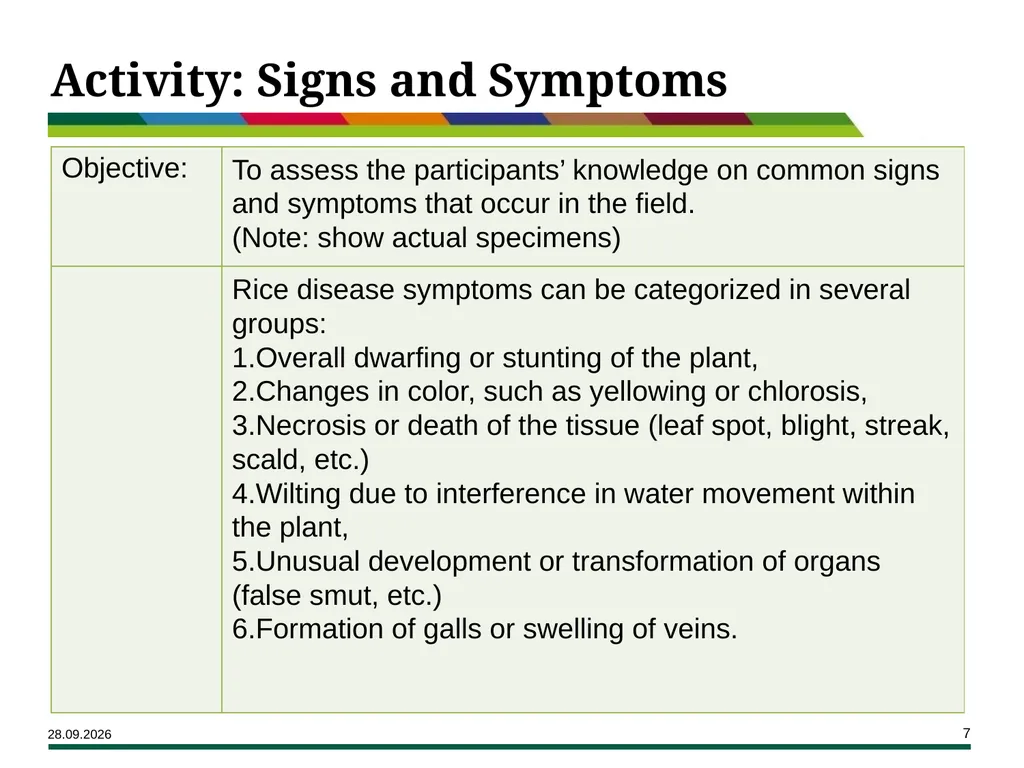
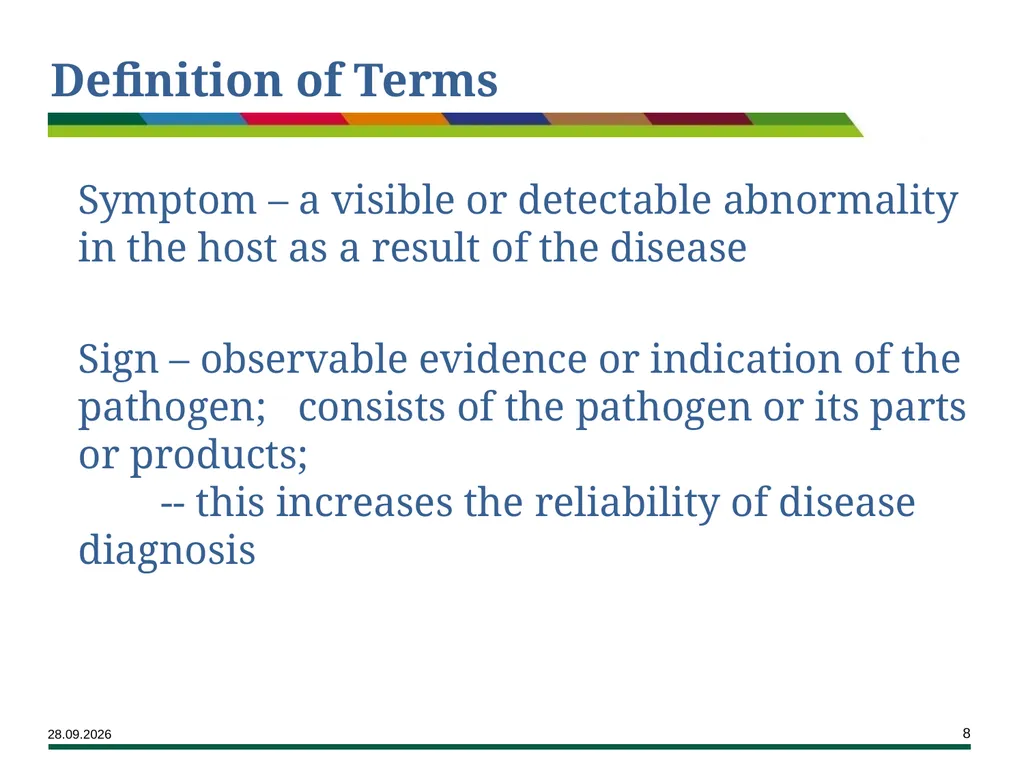
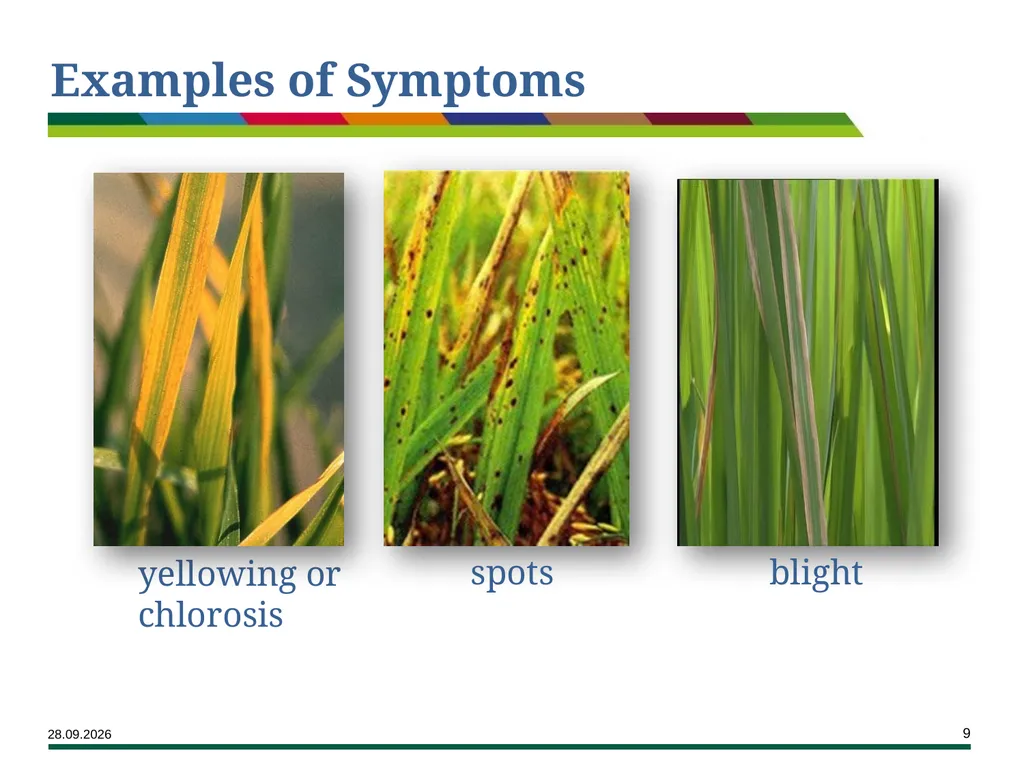
Examples of Symptoms yellowing or
chlorosis spots blight<br>
10
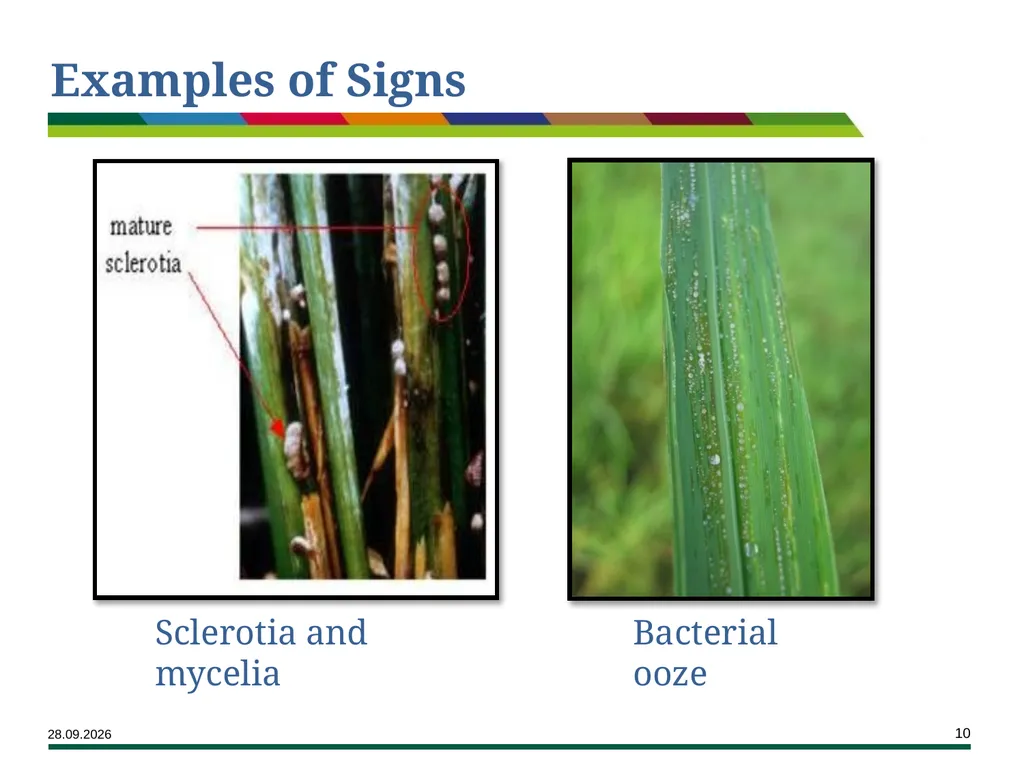
Examples of Signs Sclerotia and mycelia Bacterial ooze<br>
11
Lesson 2: General Principles in Disease Management Learning Objectives:
Explain the General Principles in Disease Management Structure:
Disease Management Principles<br>
12
General Principles in Disease Management Disease management is primarily based on the following principles:
Avoidance of the Pathogen
Exclusion of Inoculum plants
Eradication of the Pathogen
Protection
Disease resistance
Therapy<br>
13
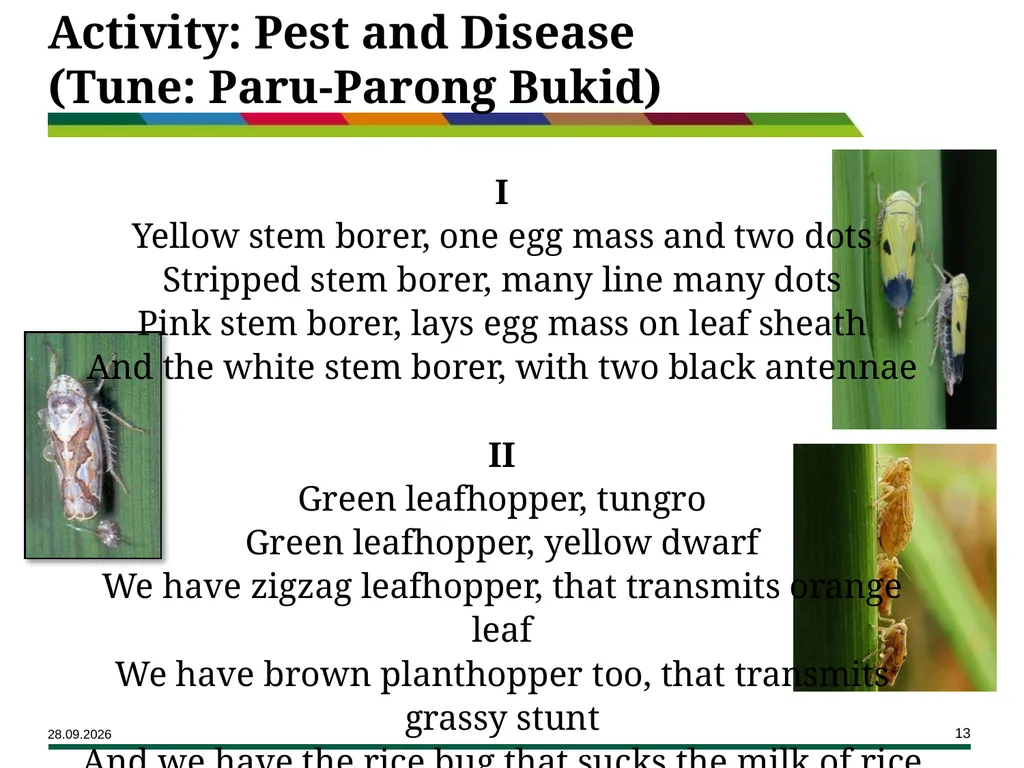
Activity: Pest and Disease
(Tune: Paru-Parong Bukid) I
Yellow stem borer, one egg mass and two dots
Stripped stem borer, many line many dots
Pink stem borer, lays egg mass on leaf sheath
And the white stem borer, with two black antennae
II
Green leafhopper, tungro
Green leafhopper, yellow dwarf
We have zigzag leafhopper, that transmits orange leaf
We have brown planthopper too, that transmits grassy stunt
And we have the rice bug that sucks the milk of rice<br>
14
Lesson 3: Viral Diseases and their Management Learning Objectives:
To identify the symptoms of viral diseases and their management Structure:
Symptoms of Viral Diseases and their Management<br>
15
Rice Tungro Virus Disease Symptoms stunted growth
yellowing (yellow-yellow orange) that starts on the younger leaves
slightly reduced tillers
caused by 2 types of viruses: Rice Tungro Bacilliform Virus (RTBV) and Rice Tungro Spherical Virus (RTSV)
presence of both RTBV and RTSV results to severe symptoms and damage<br>
16
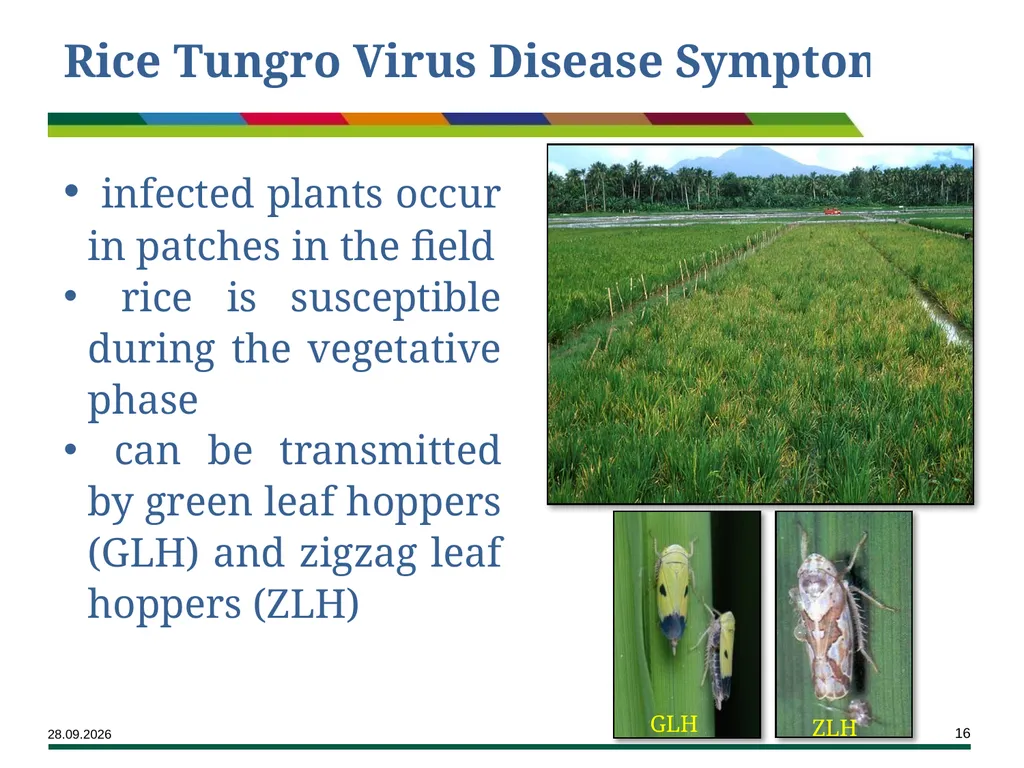
Rice Tungro Virus Disease Symptoms infected plants occur in patches in the field
rice is susceptible during the vegetative phase
can be transmitted by green leaf hoppers (GLH) and zigzag leaf hoppers (ZLH) GLH ZLH<br>
17
Management of Rice Tungro Disease Use of resistant or tolerant varieties against viruses or insect vectors (Ex. NSIC Rc118 and NSIC Rc120)
Practice of synchronous planting to minimize spread of the disease from one field to another
Proper management of insect vectors
Roguing of infected plants while incidence is still low to prevent further spread
Plowing under infected stubbles right after harvest
Rotation of cultivars with different levels of resistance<br>
18
Management of Rice Tungro Disease Note: For viral diseases, it is more effective to take measures to prevent viral diseases from entering the field than to control the disease after it has appeared. Once a plant is infected by virus it cannot be cured.<br>
19
Lesson 4: Fungal Diseases and their Management Learning Objectives:
To identify the symptoms of fungal diseases and their management Structure:
Symptoms of fungal Diseases and their Management<br>
20
Fungal Diseases and their Management Blast (leaf) Blast
(node and neck) Brown Spot Narrow Brown Spot Sheath Blight Sheath Rot Stem Rot Source: http://www.knowledgebank.irri.org/training/fact-sheets/pest-management/diseases/<br>
21
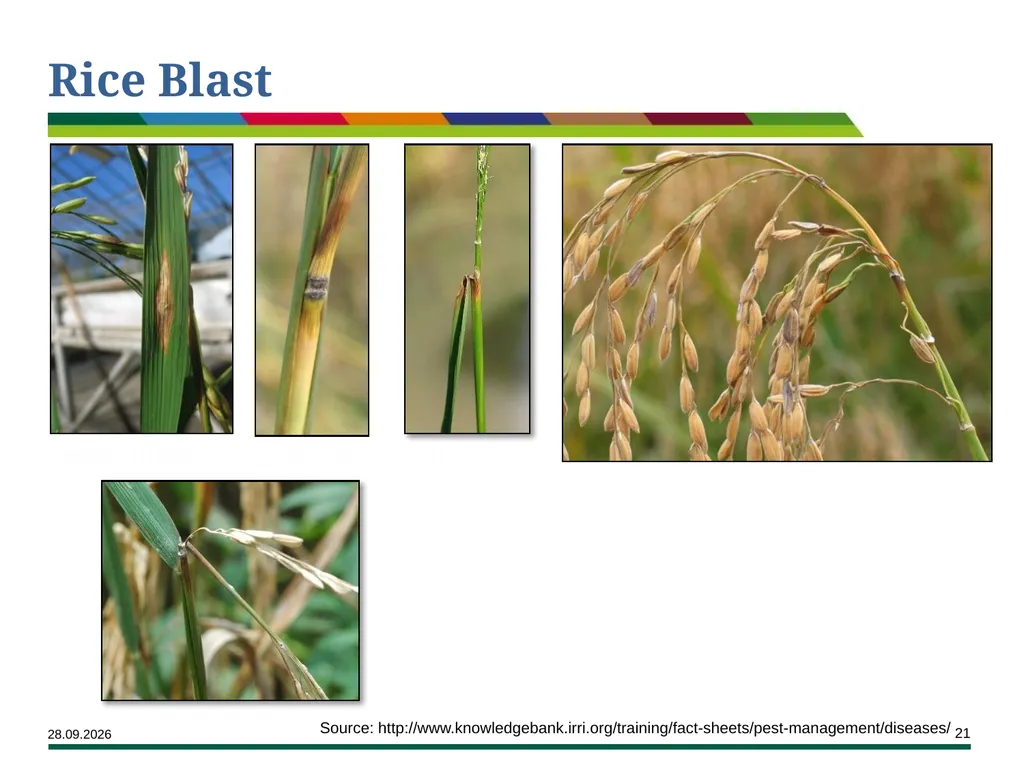
Rice Blast Leaf blast Source: http://www.knowledgebank.irri.org/training/fact-sheets/pest-management/diseases/ Neck blast Panicle Blast Node blast Collar blast<br>
22
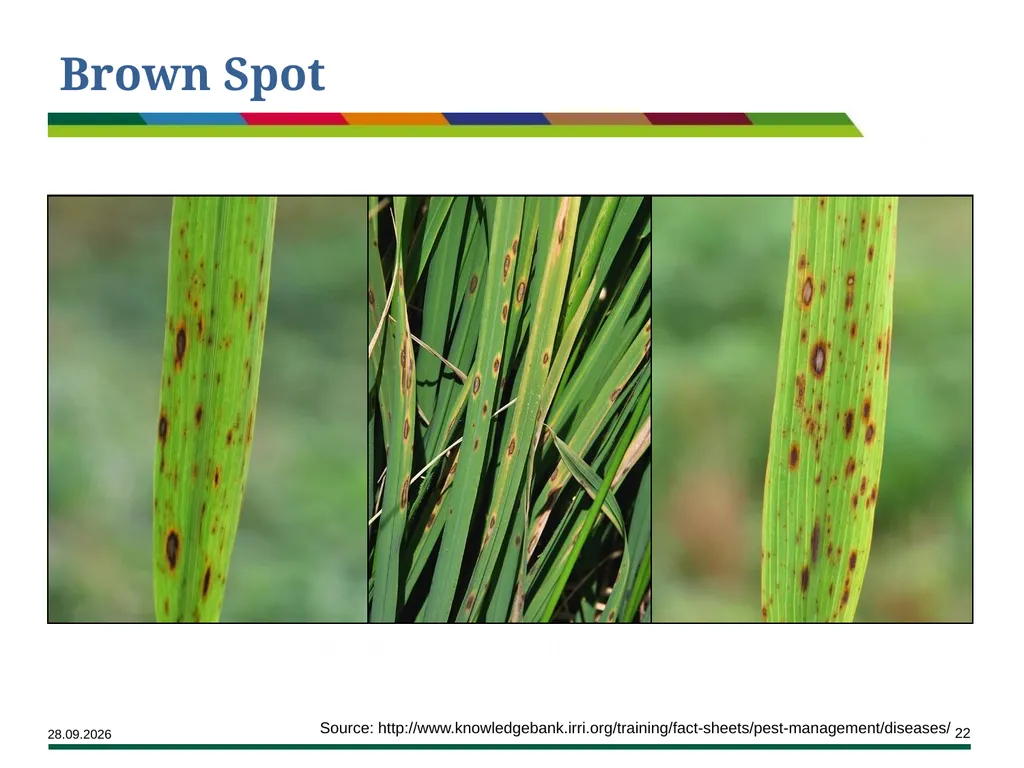
Brown Spot Brown spot lesions on leaves Source: http://www.knowledgebank.irri.org/training/fact-sheets/pest-management/diseases/<br>
23
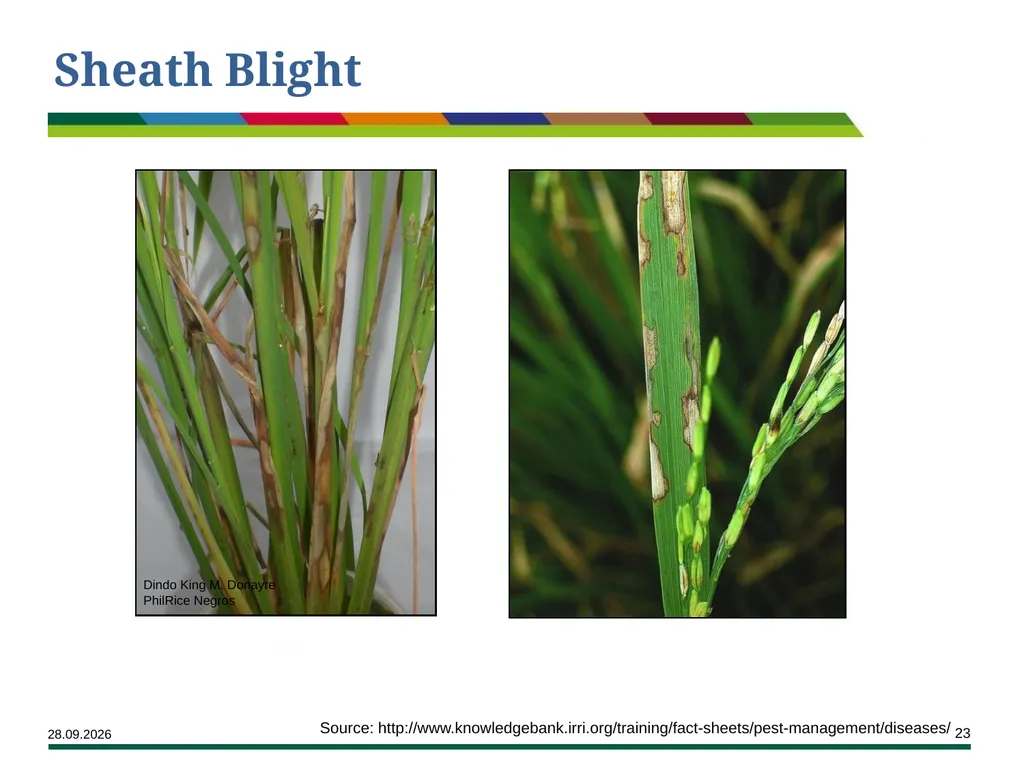
Sheath Blight Source: http://www.knowledgebank.irri.org/training/fact-sheets/pest-management/diseases/ Sheath Blight Symptoms on Leaf Sheath and on Leaves Dindo King M. Donayre PhilRice Negros<br>
24
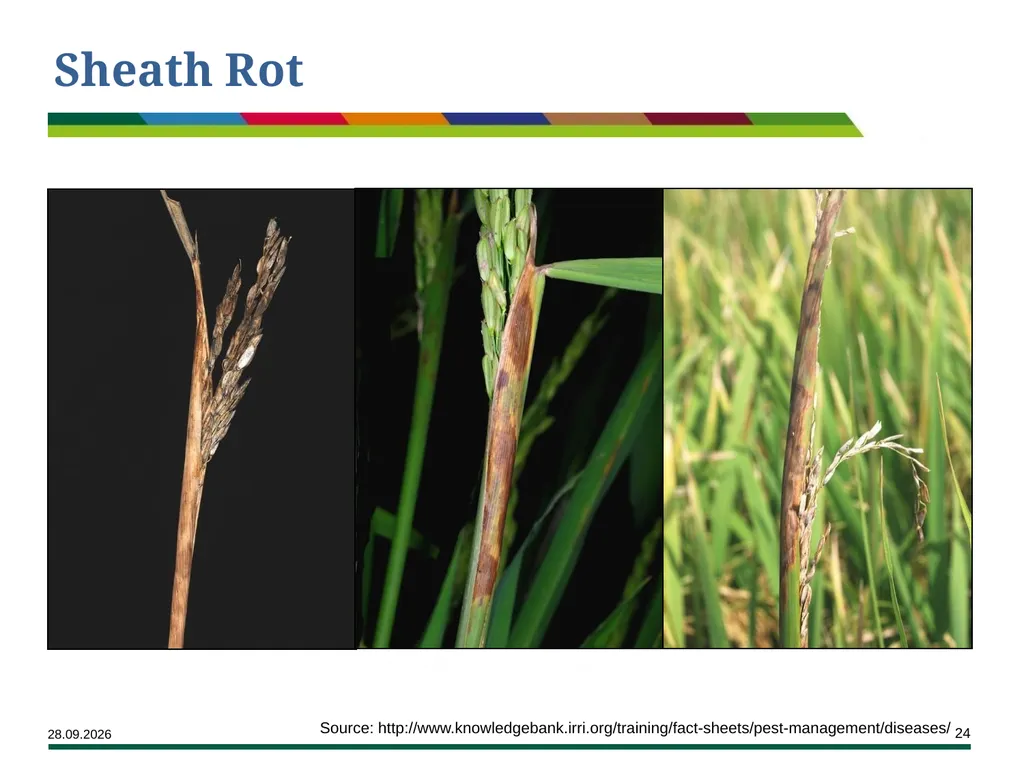
Sheath Rot Sheath Rot Symptoms Source: http://www.knowledgebank.irri.org/training/fact-sheets/pest-management/diseases/<br>
25
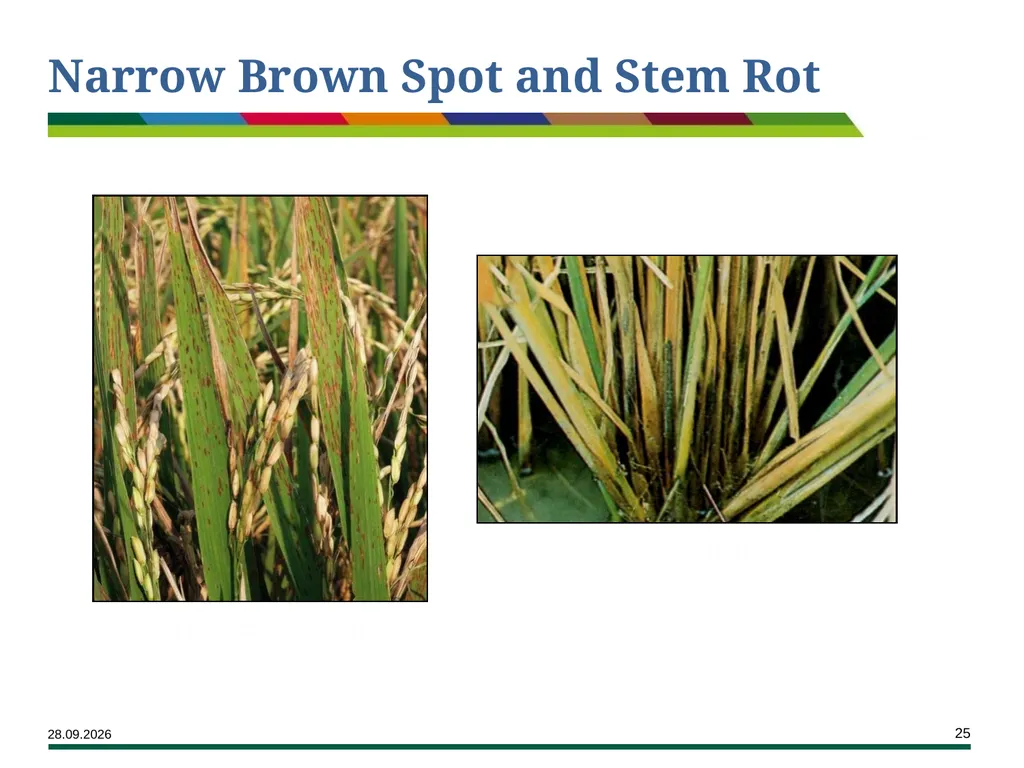
Narrow Brown Spot and Stem Rot Narrow Brown Spot Stem Rot<br>
26
General Management Strategies for
Fungal Diseases Use of disease-free seeds since most of fungal diseases are seed-borne (Ex. Brown Spot, Bakanae)
Follow recommended seeding rate or planting distance to avoid rapid spread of fungal diseases
Practice sanitation at all times by performing regular weeding in the field, levees and irrigation canals to remove possible alternate hosts
Observe balance fertilization since some fungal disease are indicators of nutrient deficiencies (Ex. Brown Spot and Sheath Blight – indication of K deficiency)
Proper water management. Excessive and continuous water increases RH that favors growth and reproduction of fungus.
Proper use of recommended fungicides if necessary<br>
27
Lesson 5: Bacterial Diseases and their Management Learning Objectives:
To identify the symptoms of bacterial diseases and their management Structure:
Symptoms and Management Control:
Bacterial Blight
Bacterial Leaf Streak<br>
28
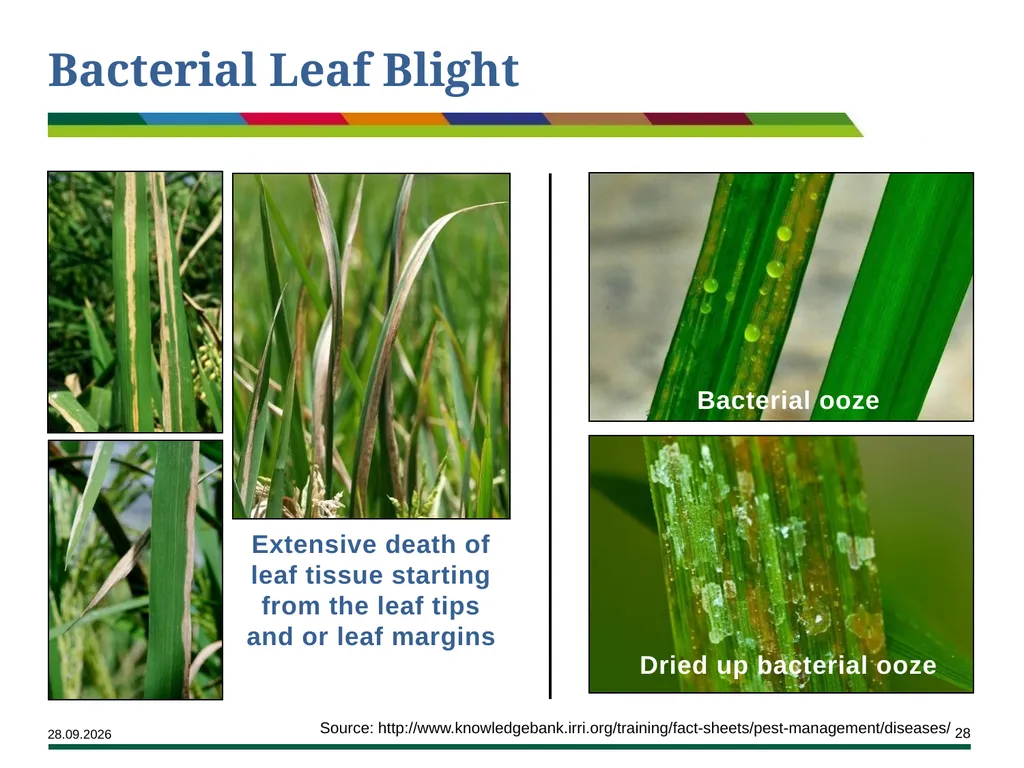
Bacterial Leaf Blight Extensive death of leaf tissue starting from the leaf tips and or leaf margins Source: http://www.knowledgebank.irri.org/training/fact-sheets/pest-management/diseases/ Bacterial ooze Dried up bacterial ooze<br>
29
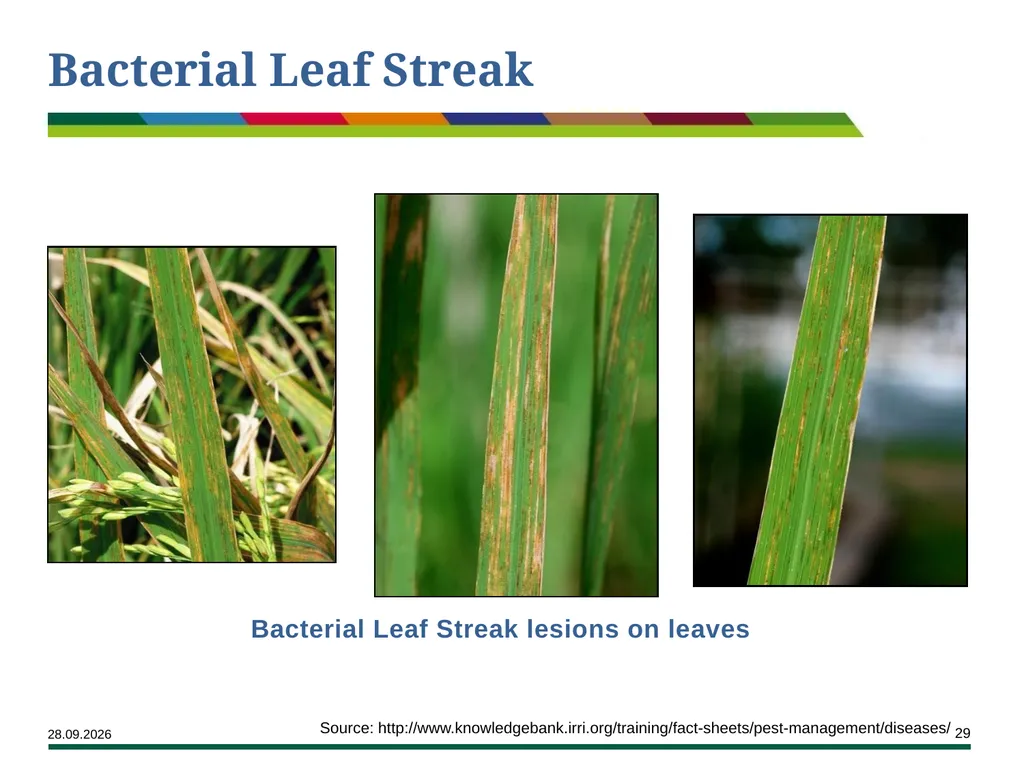
Bacterial Leaf Streak Source: http://www.knowledgebank.irri.org/training/fact-sheets/pest-management/diseases/ Bacterial Leaf Streak lesions on leaves<br>
30
General Management Strategies for
Bacterial Diseases Fallow the field after harvest and allow the field to dry
Use of resistant/tolerant varieties if available
Avoid wounding of leaves during transplanting that may serve as entry points of bacteria
Practice sanitation at all times by performing regular weeding in the field, levees and irrigation canals to remove possible alternate hosts
Avoid excessive Nitrogen application (practice split application of N) and increase use of K fertilizer for healthier growth. Excessive N favors rapid reproduction of bacterial cells.<br>
31
General Management Strategies for
Bacterial Diseases Drain the field to prevent further spread and to minimize reproduction of bacteria
In the case of Bacterial Leaf Streak or BLS, grains from infected crops should not be used as seeds for the next planting season because BLS in particular is seed-borne or may be carried through seeds.<br>
32
Evaluation Activity:
Ballot Box Evaluation<br>