
Making and implementing policy Rohan Samarajiva &

Description: Making and implementing policy Rohan Samarajiva Helani Galpaya Yangon, 26 July 2014 This work was carried out with the aid of a grant from the International Development Research Centre, Ottawa, Canada. Objective Highlight challenges of
Related Topics
Download Presentation
"Making and implementing policy Rohan Samarajiva &" is the property of its rightful owner. Permission is granted to download and print the materials on this website for personal, non-commercial use only, and to display it on your personal computer provided you do not modify the materials and that you retain all copyright notices contained in the materials. By downloading content from our website, you accept the terms of this agreement.
Presentation Transcript
slide1. Making and implementing policy Rohan Samarajiva & Helani Galpaya
Yangon, 26 July 2014 This work was carried out with the aid of a grant from the International Development Research Centre, Ottawa, Canada.<br>
slide2. Objective Highlight challenges of building effective organizations to achieve objectives set out in LAW and implement POLICY
In case of a law that requires action by private parties (e.g., offering of mobile telecom services), regulation
Where direct government action is required 2<br>
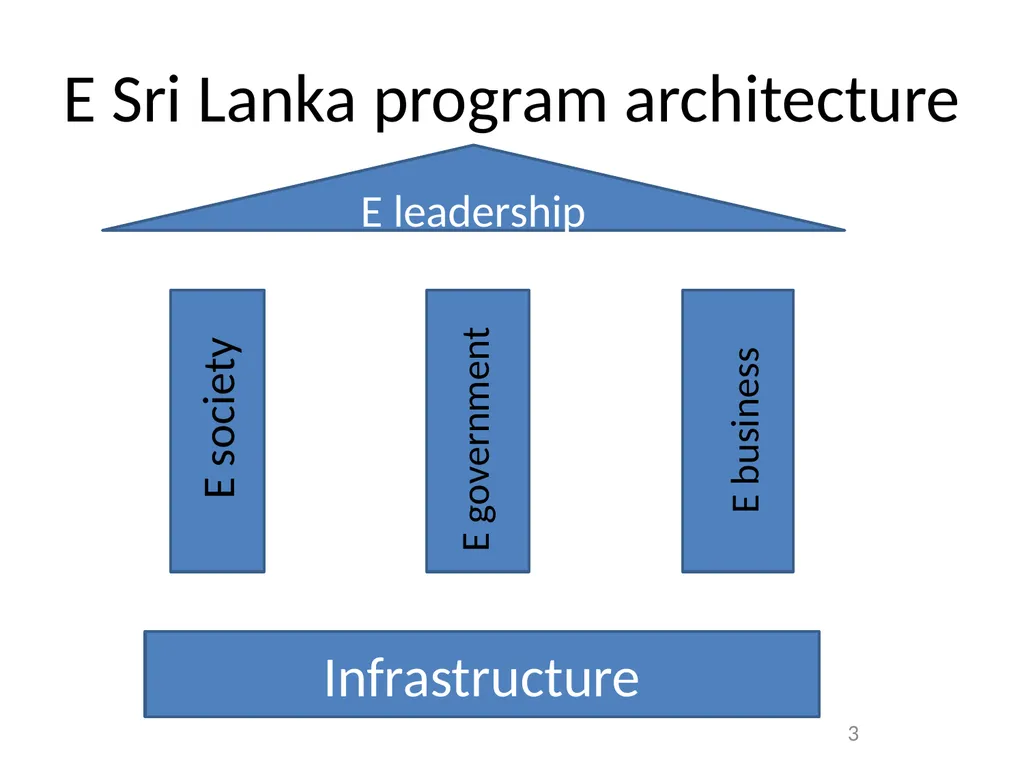
slide3. E Sri Lanka program architecture 3 E leadership Infrastructure E society E government E business<br>
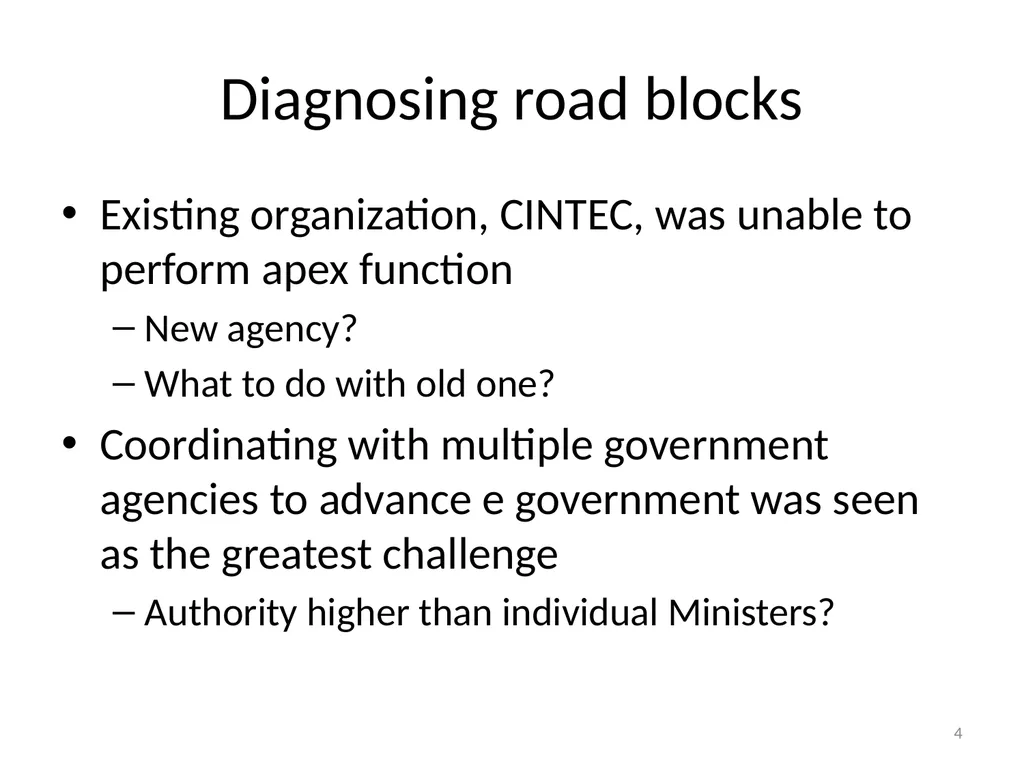
slide4. Diagnosing road blocks Existing organization, CINTEC, was unable to perform apex function
New agency?
What to do with old one?
Coordinating with multiple government agencies to advance e government was seen as the greatest challenge
Authority higher than individual Ministers? 4<br>
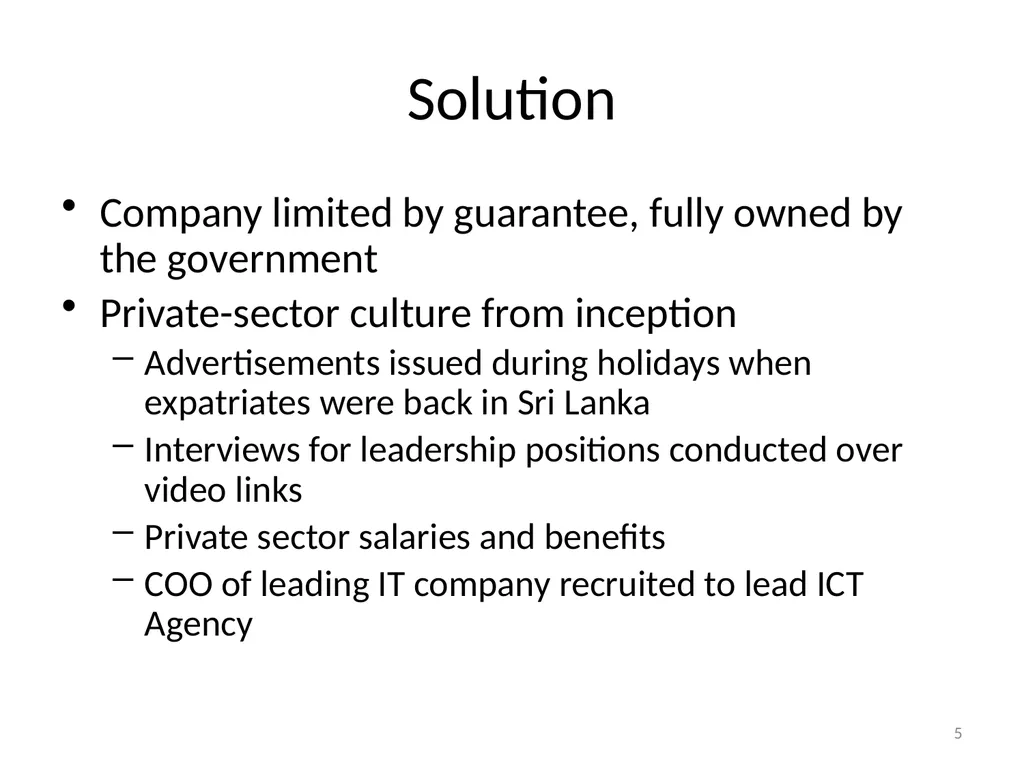
slide5. Solution Company limited by guarantee, fully owned by the government
Private-sector culture from inception
Advertisements issued during holidays when expatriates were back in Sri Lanka
Interviews for leadership positions conducted over video links
Private sector salaries and benefits
COO of leading IT company recruited to lead ICT Agency 5<br>
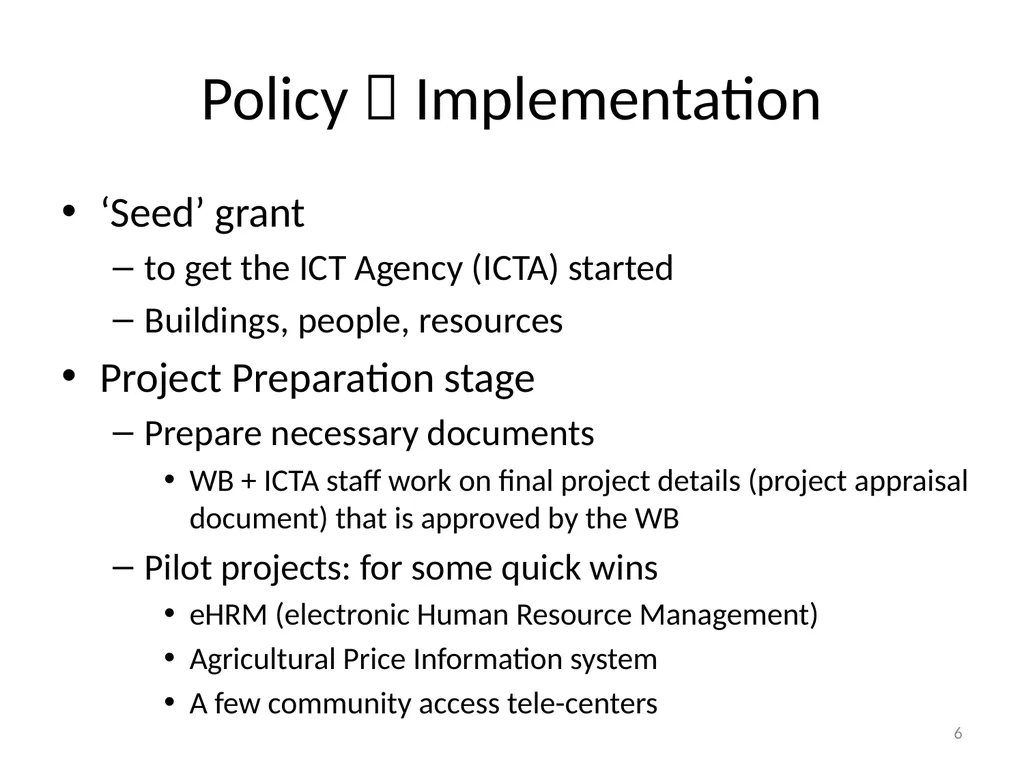
slide6. Policy Implementation ‘Seed’ grant
to get the ICT Agency (ICTA) started
Buildings, people, resources
Project Preparation stage
Prepare necessary documents
WB + ICTA staff work on final project details (project appraisal document) that is approved by the WB
Pilot projects: for some quick wins
eHRM (electronic Human Resource Management)
Agricultural Price Information system
A few community access tele-centers 6<br>
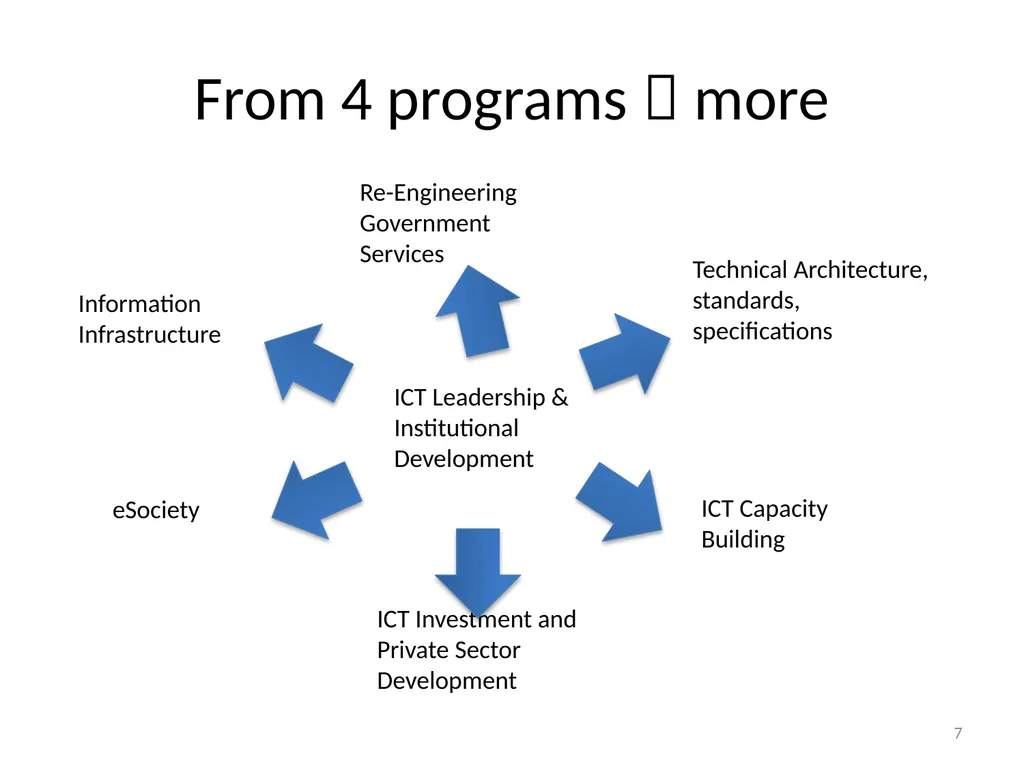
slide7. From 4 programs more 7 ICT Leadership & Institutional Development Re-Engineering Government Services ICT Capacity Building ICT Investment and Private Sector Development Technical Architecture, standards, specifications eSociety Information Infrastructure<br>
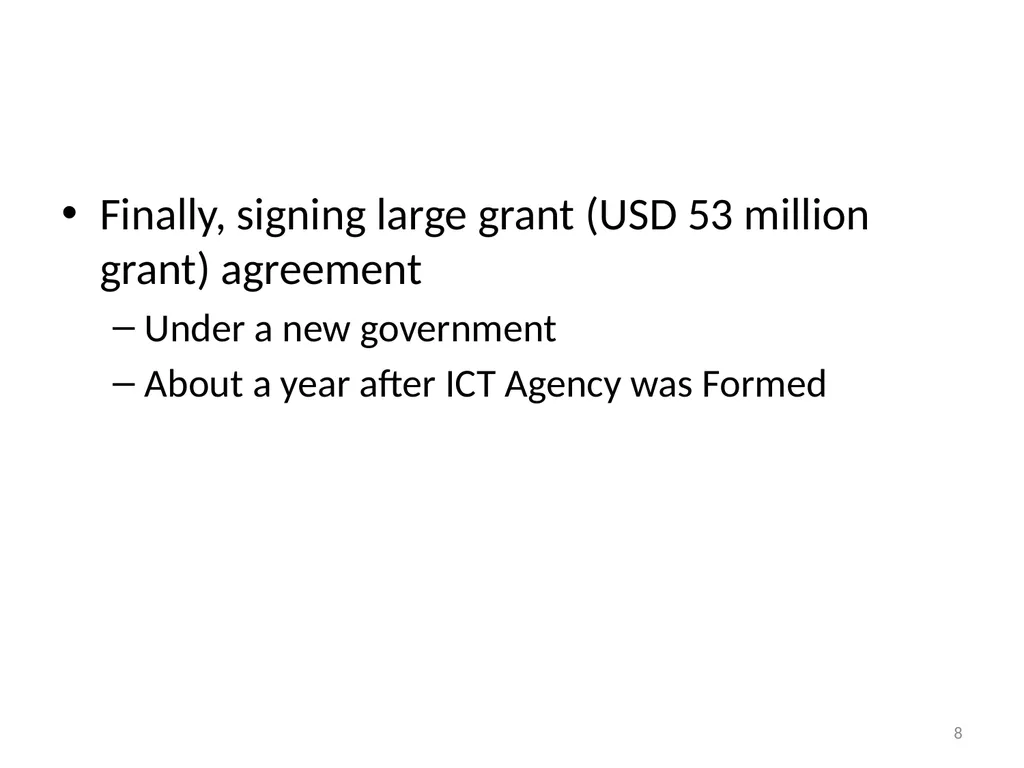
slide8. Finally, signing large grant (USD 53 million grant) agreement
Under a new government
About a year after ICT Agency was Formed 8<br>
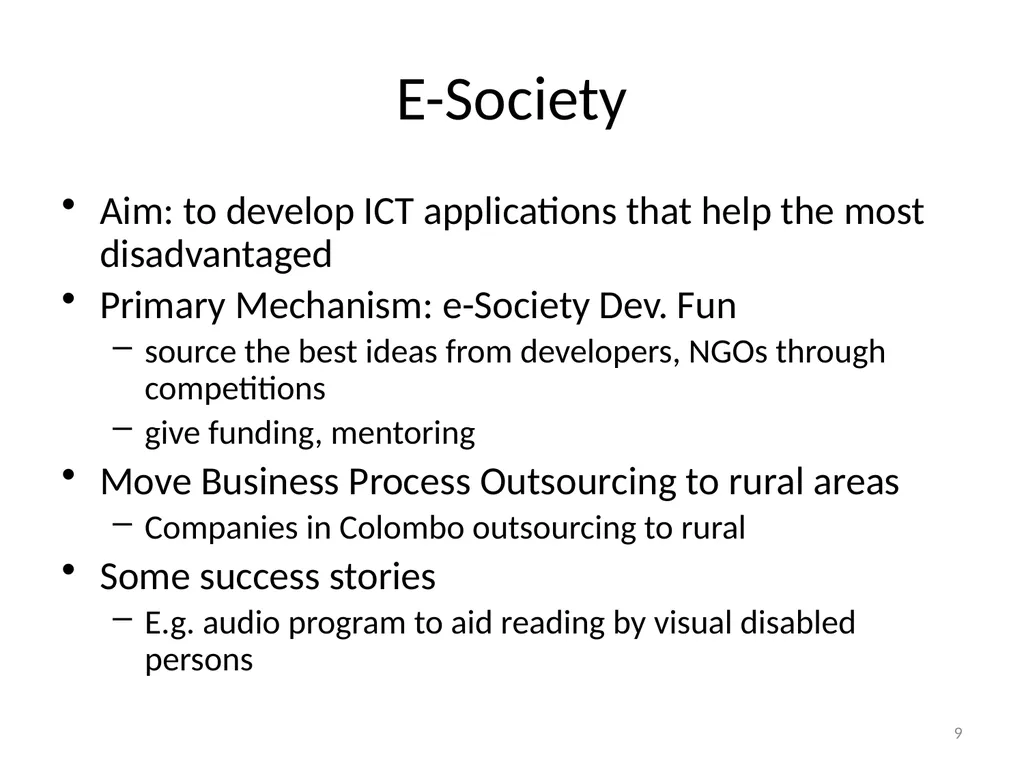
slide9. E-Society Aim: to develop ICT applications that help the most disadvantaged
Primary Mechanism: e-Society Dev. Fun
source the best ideas from developers, NGOs through competitions
give funding, mentoring
Move Business Process Outsourcing to rural areas
Companies in Colombo outsourcing to rural
Some success stories
E.g. audio program to aid reading by visual disabled persons 9<br>
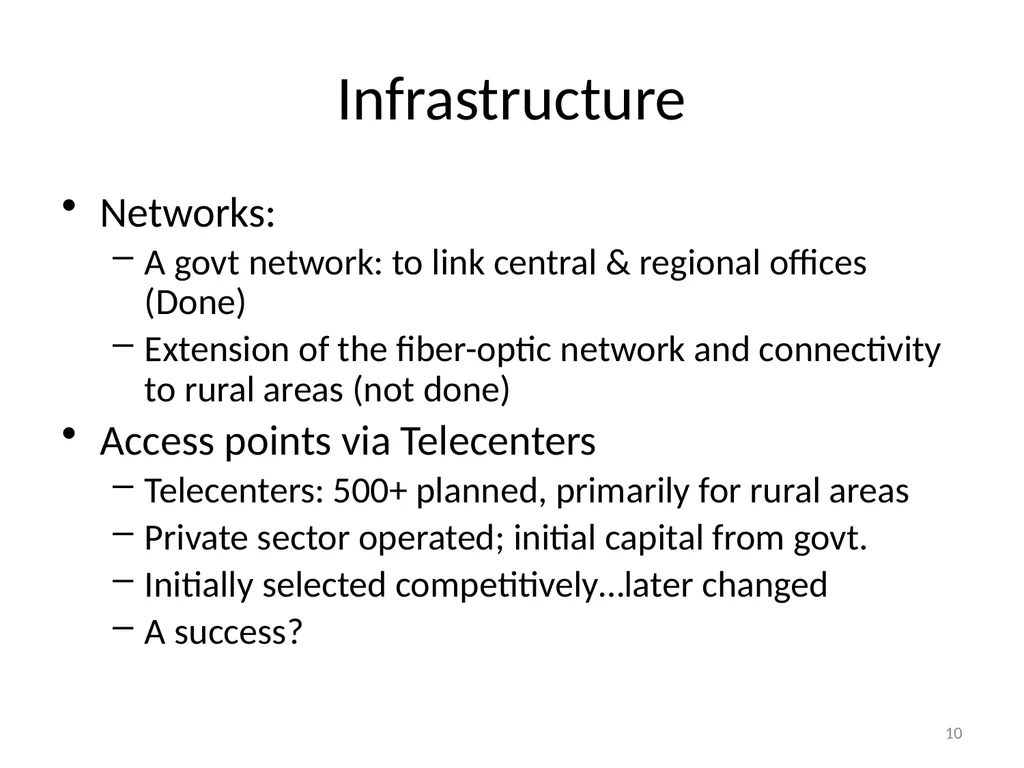
slide10. Infrastructure Networks:
A govt network: to link central & regional offices (Done)
Extension of the fiber-optic network and connectivity to rural areas (not done)
Access points via Telecenters
Telecenters: 500+ planned, primarily for rural areas
Private sector operated; initial capital from govt.
Initially selected competitively…later changed
A success? 10<br>
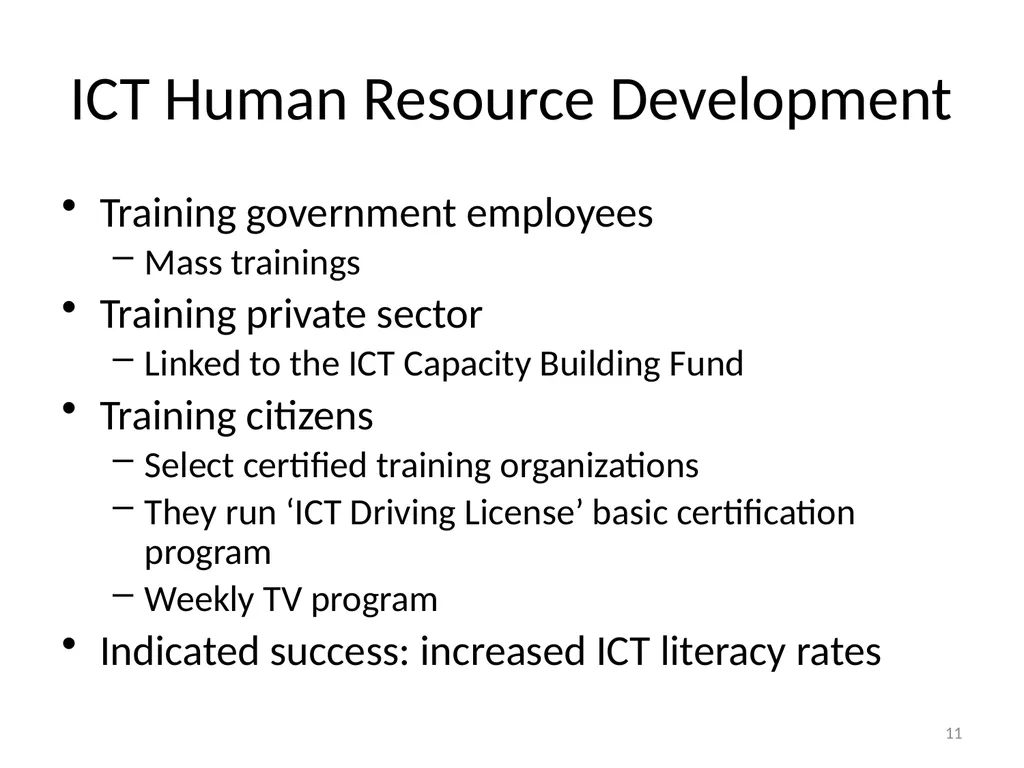
slide11. ICT Human Resource Development Training government employees
Mass trainings
Training private sector
Linked to the ICT Capacity Building Fund
Training citizens
Select certified training organizations
They run ‘ICT Driving License’ basic certification program
Weekly TV program
Indicated success: increased ICT literacy rates 11<br>
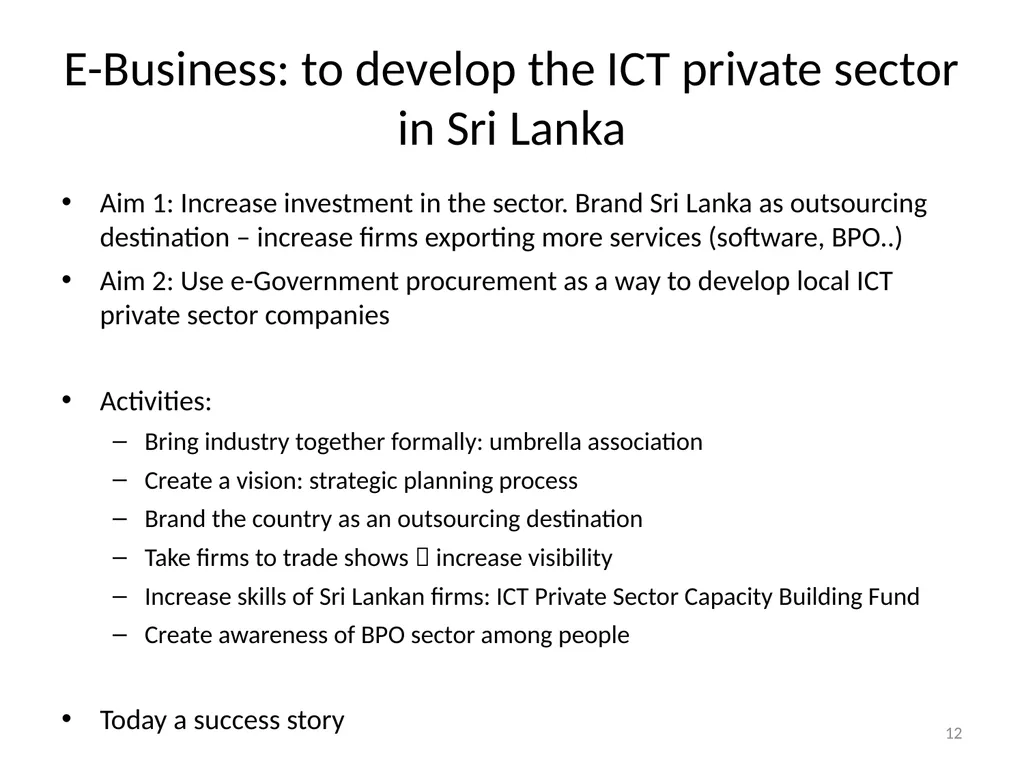
slide12. E-Business: to develop the ICT private sector in Sri Lanka Aim 1: Increase investment in the sector. Brand Sri Lanka as outsourcing destination – increase firms exporting more services (software, BPO..)
Aim 2: Use e-Government procurement as a way to develop local ICT private sector companies
Activities:
Bring industry together formally: umbrella association
Create a vision: strategic planning process
Brand the country as an outsourcing destination
Take firms to trade shows increase visibility
Increase skills of Sri Lankan firms: ICT Private Sector Capacity Building Fund
Create awareness of BPO sector among people
Today a success story 12<br>
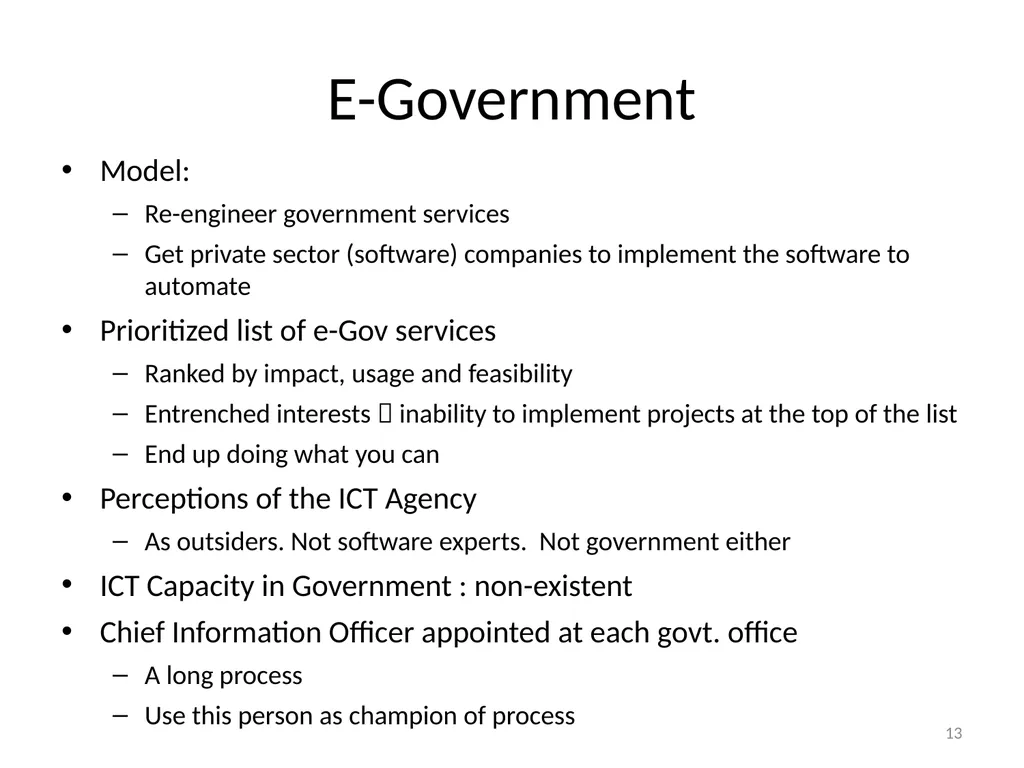
slide13. E-Government Model:
Re-engineer government services
Get private sector (software) companies to implement the software to automate
Prioritized list of e-Gov services
Ranked by impact, usage and feasibility
Entrenched interests inability to implement projects at the top of the list
End up doing what you can
Perceptions of the ICT Agency
As outsiders. Not software experts. Not government either
ICT Capacity in Government : non-existent
Chief Information Officer appointed at each govt. office
A long process
Use this person as champion of process 13<br>
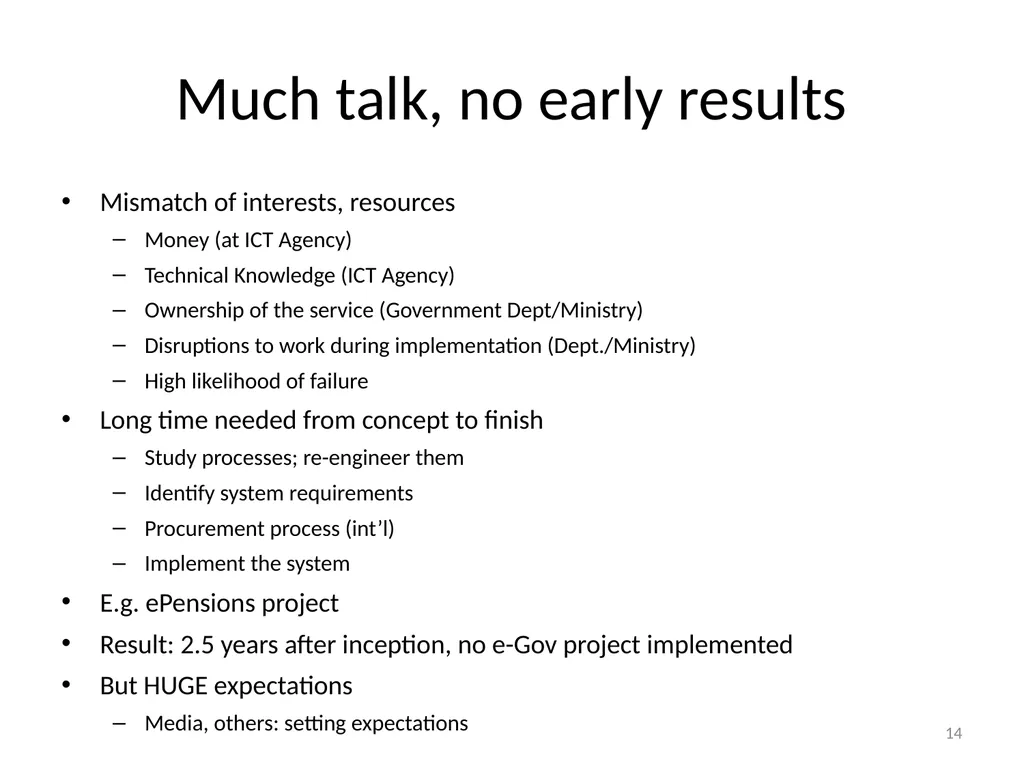
slide14. Much talk, no early results Mismatch of interests, resources
Money (at ICT Agency)
Technical Knowledge (ICT Agency)
Ownership of the service (Government Dept/Ministry)
Disruptions to work during implementation (Dept./Ministry)
High likelihood of failure
Long time needed from concept to finish
Study processes; re-engineer them
Identify system requirements
Procurement process (int’l)
Implement the system
E.g. ePensions project
Result: 2.5 years after inception, no e-Gov project implemented
But HUGE expectations
Media, others: setting expectations 14<br>
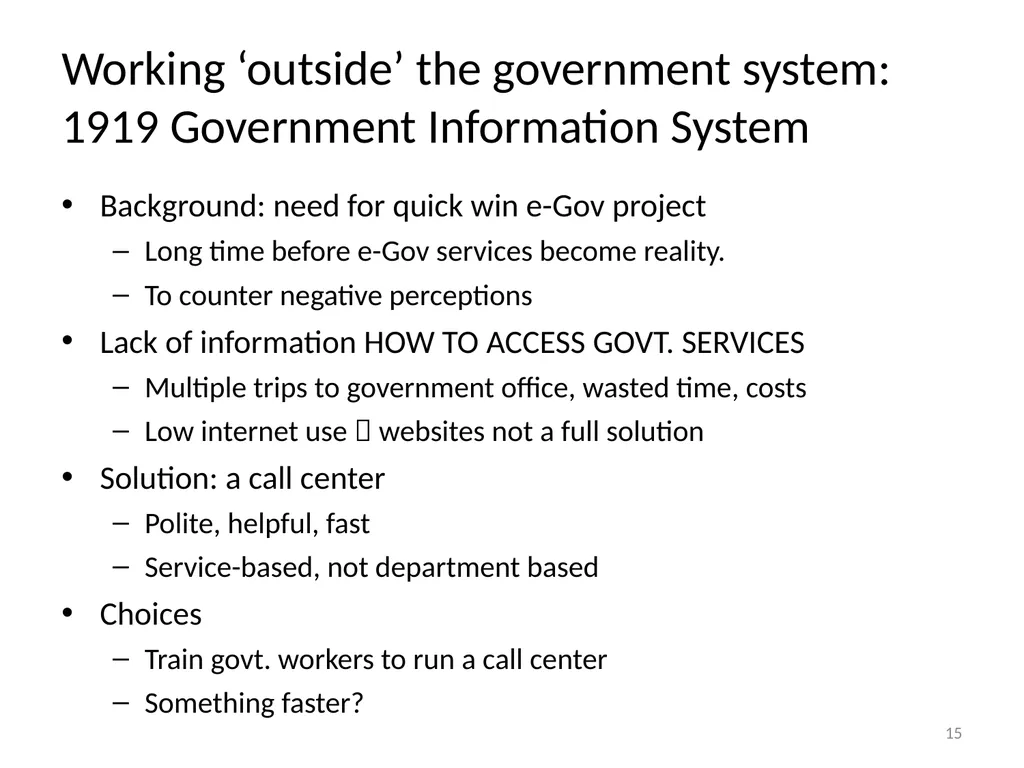
slide15. Working ‘outside’ the government system: 1919 Government Information System Background: need for quick win e-Gov project
Long time before e-Gov services become reality.
To counter negative perceptions
Lack of information HOW TO ACCESS GOVT. SERVICES
Multiple trips to government office, wasted time, costs
Low internet use websites not a full solution
Solution: a call center
Polite, helpful, fast
Service-based, not department based
Choices
Train govt. workers to run a call center
Something faster? 15<br>
slide16. Tapping the existing capacity at call centers
Service US/UK markets staffed at night
Empty during day time cheap, excess capacity
World class technology already existing
Necessary conditions: information on govt process
Resistance, lack of interest, lack of vision
Use interns get each ministry to check.
Competitive procurement
Rules vs. Rules
“But how can private sector people answer government questions”?
Under the radar implementation
‘Surprise’ soft launch 16<br>
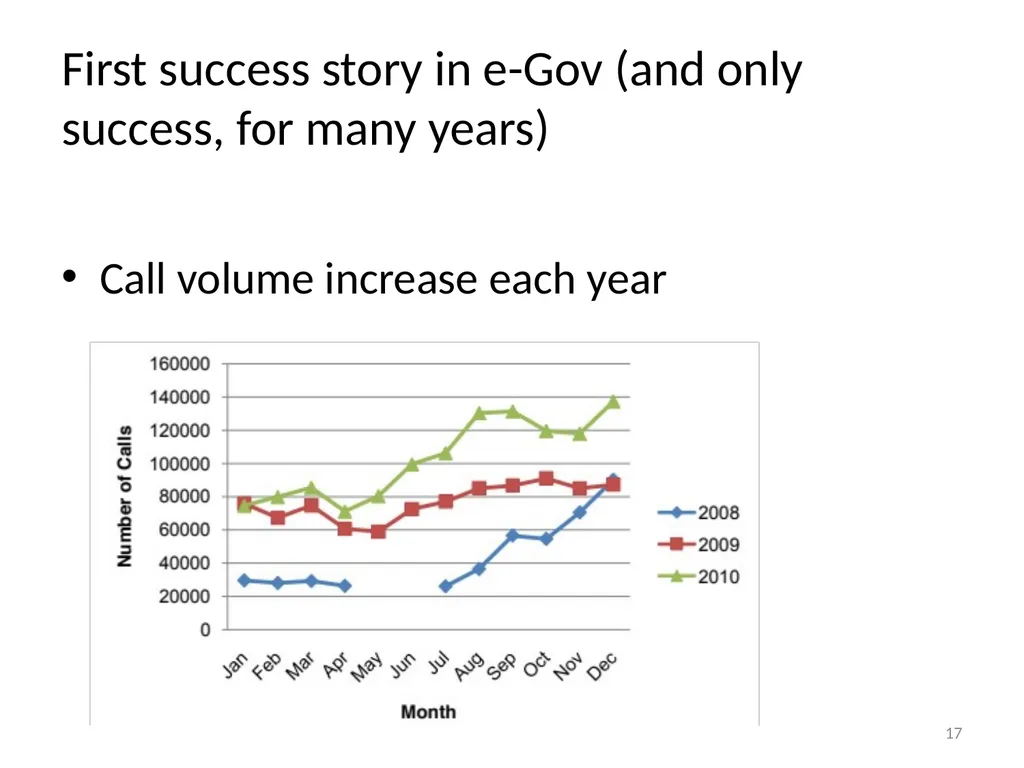
slide17. First success story in e-Gov (and only success, for many years) 17 Call volume increase each year<br>
slide18. More calls answered than abandoned 18<br>
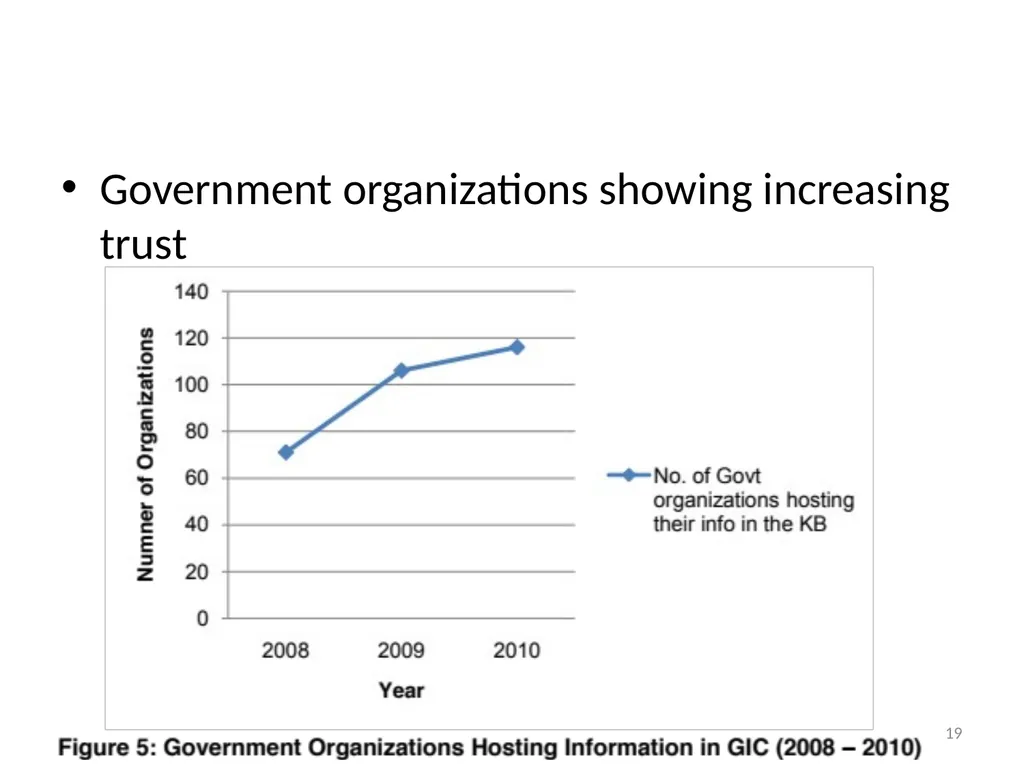
slide19. 19 Government organizations showing increasing trust<br>
slide20. Turn-around in eGov Re-thinking how systems are designed
Modular (break down into parts)
Open source
In-house vs. outside development
Change in skill set of e-Gov team
Serious ‘techies’ hired
Chief Technology Officer Appointed
Local industry ‘taught’ how to bid, manage contract risk 20<br>
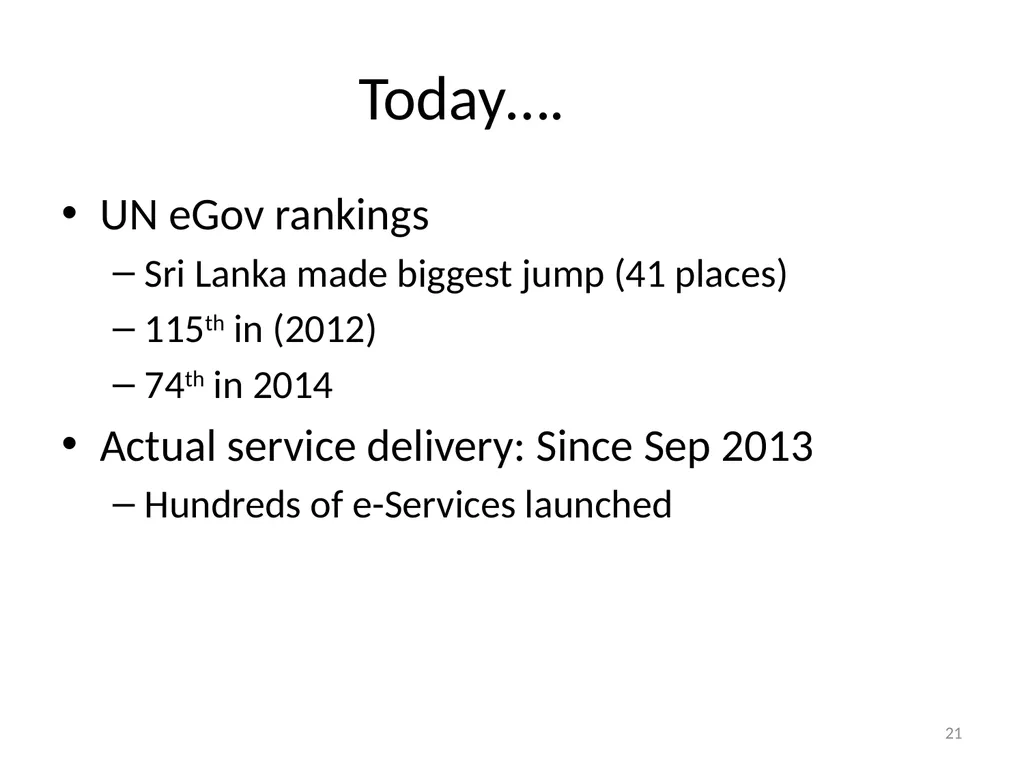
slide21. Today…. UN eGov rankings
Sri Lanka made biggest jump (41 places)
115th in (2012)
74th in 2014
Actual service delivery: Since Sep 2013
Hundreds of e-Services launched 21<br>
slide22. Did the structure make sense?<br>
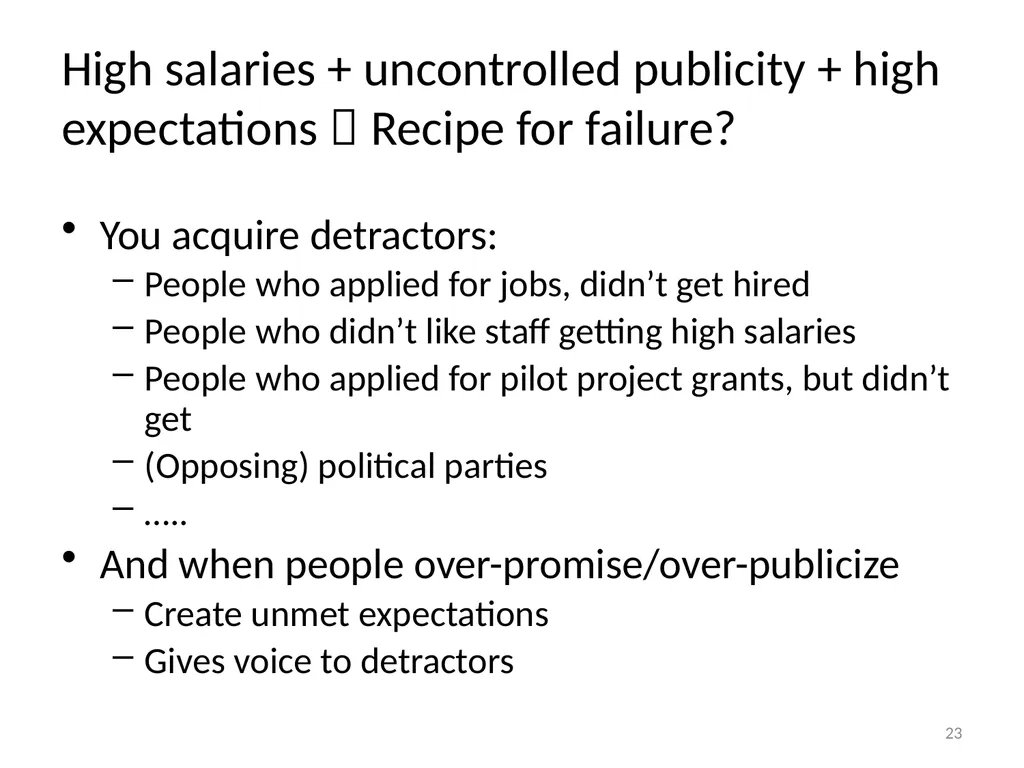
slide23. High salaries + uncontrolled publicity + high expectations Recipe for failure? You acquire detractors:
People who applied for jobs, didn’t get hired
People who didn’t like staff getting high salaries
People who applied for pilot project grants, but didn’t get
(Opposing) political parties
…..
And when people over-promise/over-publicize
Create unmet expectations
Gives voice to detractors 23<br>
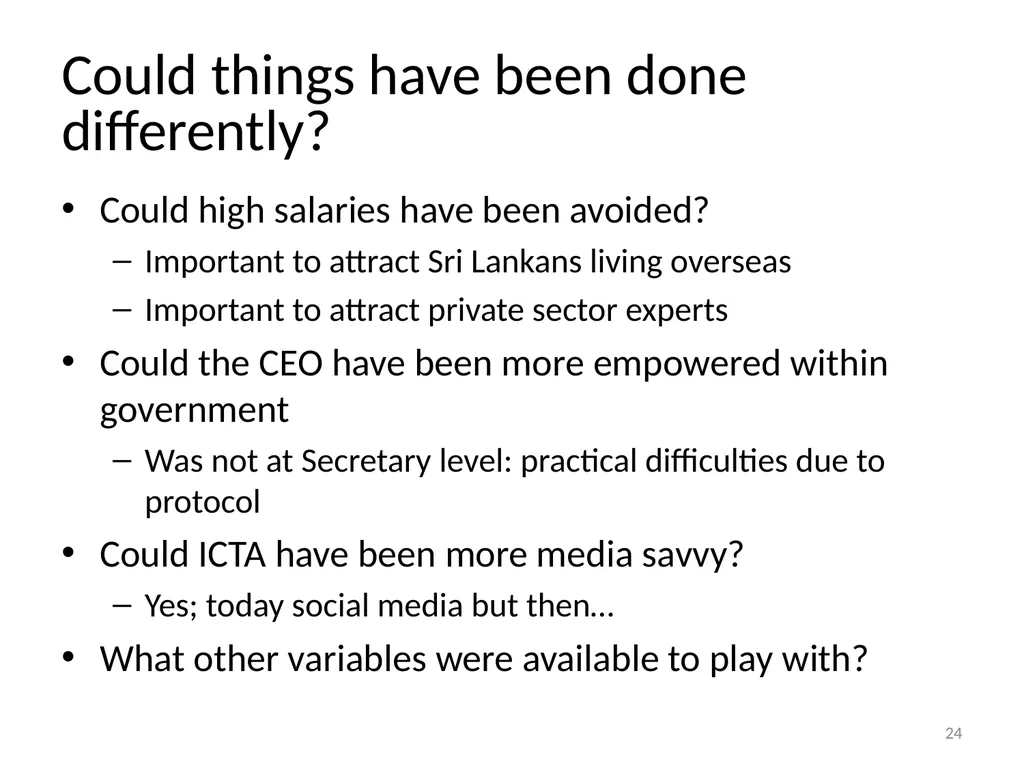
slide24. Could things have been done differently? Could high salaries have been avoided?
Important to attract Sri Lankans living overseas
Important to attract private sector experts
Could the CEO have been more empowered within government
Was not at Secretary level: practical difficulties due to protocol
Could ICTA have been more media savvy?
Yes; today social media but then…
What other variables were available to play with? 24<br>
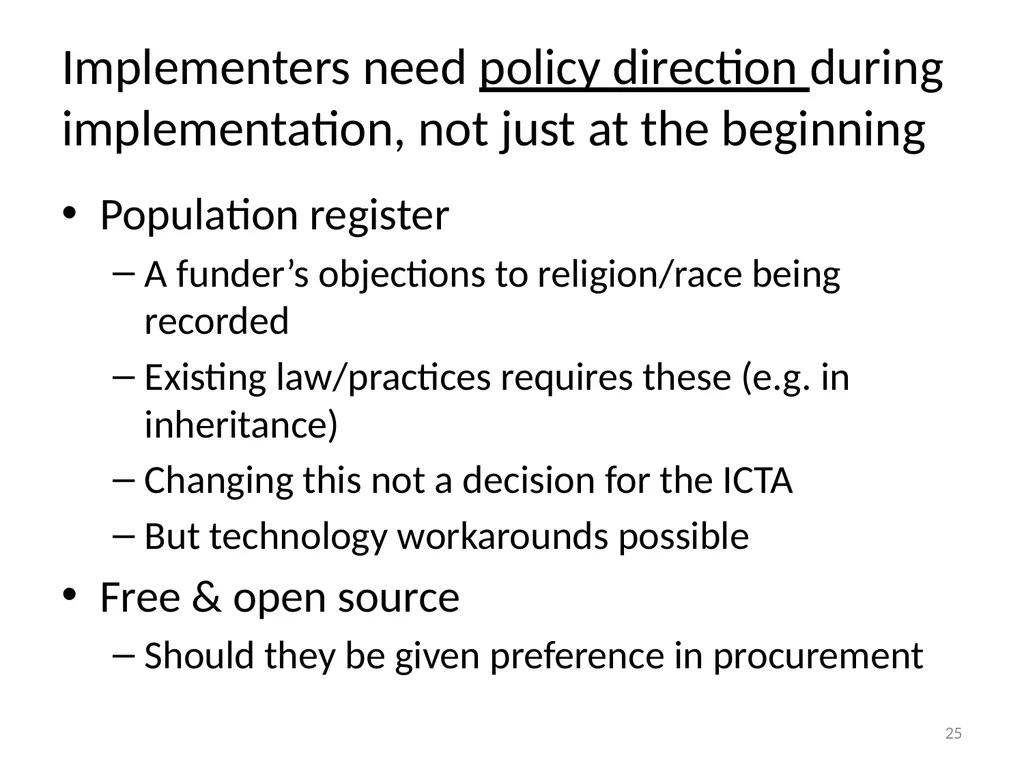
slide25. Implementers need policy direction during implementation, not just at the beginning Population register
A funder’s objections to religion/race being recorded
Existing law/practices requires these (e.g. in inheritance)
Changing this not a decision for the ICTA
But technology workarounds possible
Free & open source
Should they be given preference in procurement 25<br>
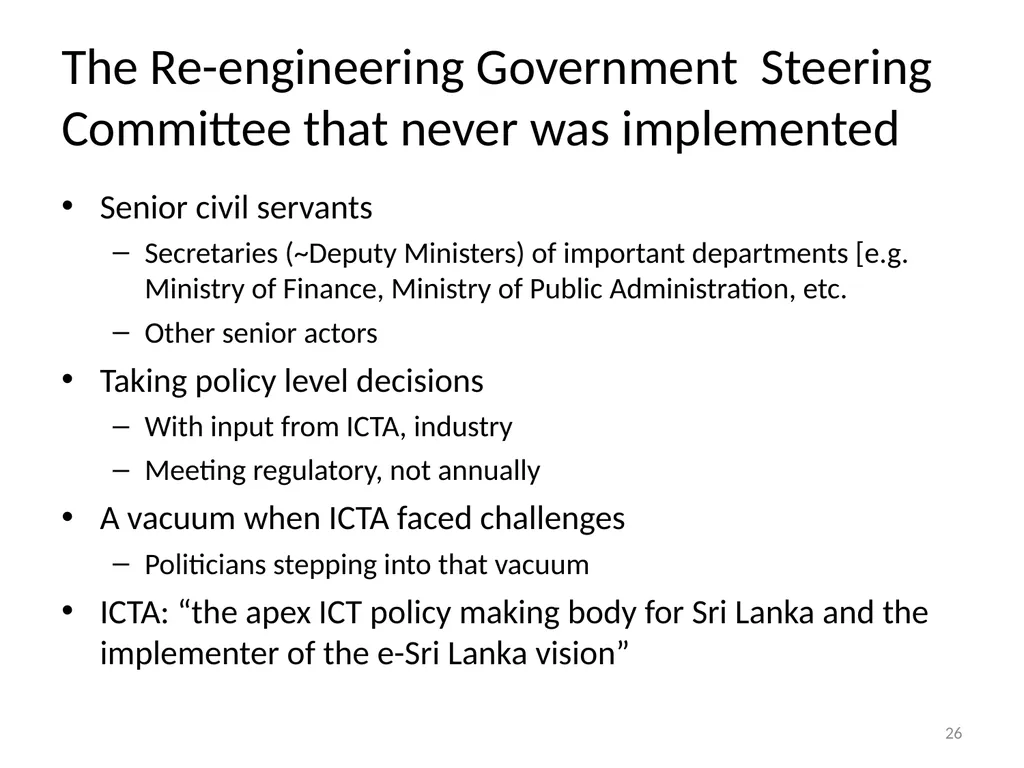
slide26. The Re-engineering Government Steering Committee that never was implemented Senior civil servants
Secretaries (~Deputy Ministers) of important departments [e.g. Ministry of Finance, Ministry of Public Administration, etc.
Other senior actors
Taking policy level decisions
With input from ICTA, industry
Meeting regulatory, not annually
A vacuum when ICTA faced challenges
Politicians stepping into that vacuum
ICTA: “the apex ICT policy making body for Sri Lanka and the implementer of the e-Sri Lanka vision” 26<br>
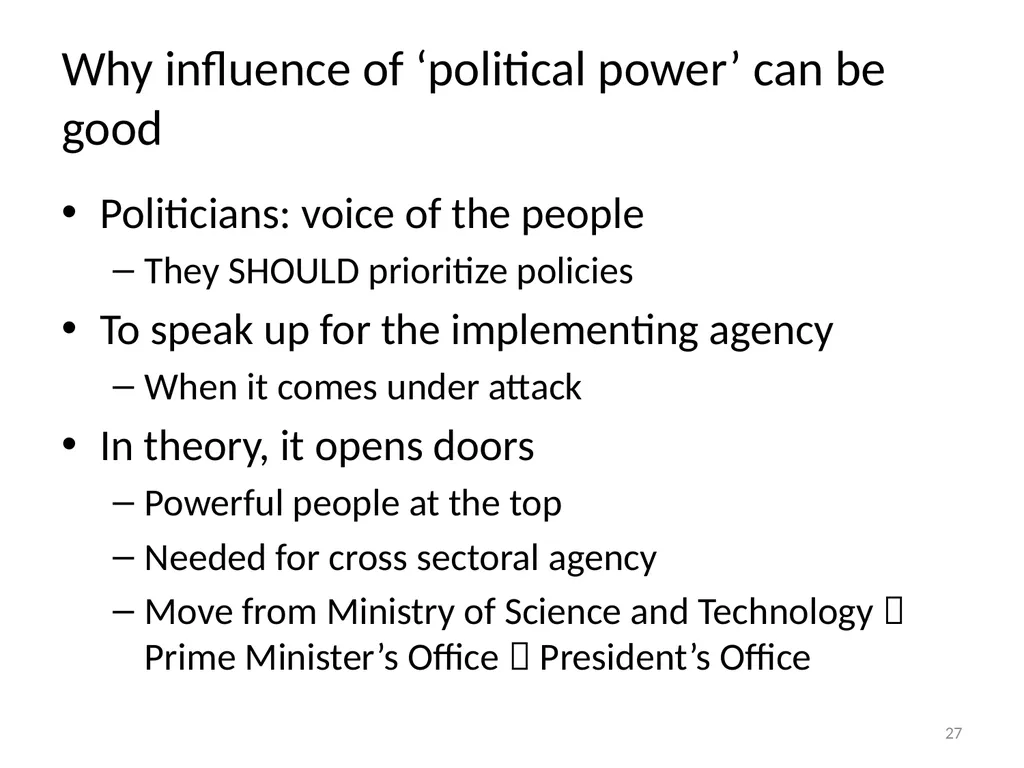
slide27. Why influence of ‘political power’ can be good Politicians: voice of the people
They SHOULD prioritize policies
To speak up for the implementing agency
When it comes under attack
In theory, it opens doors
Powerful people at the top
Needed for cross sectoral agency
Move from Ministry of Science and Technology Prime Minister’s Office President’s Office 27<br>
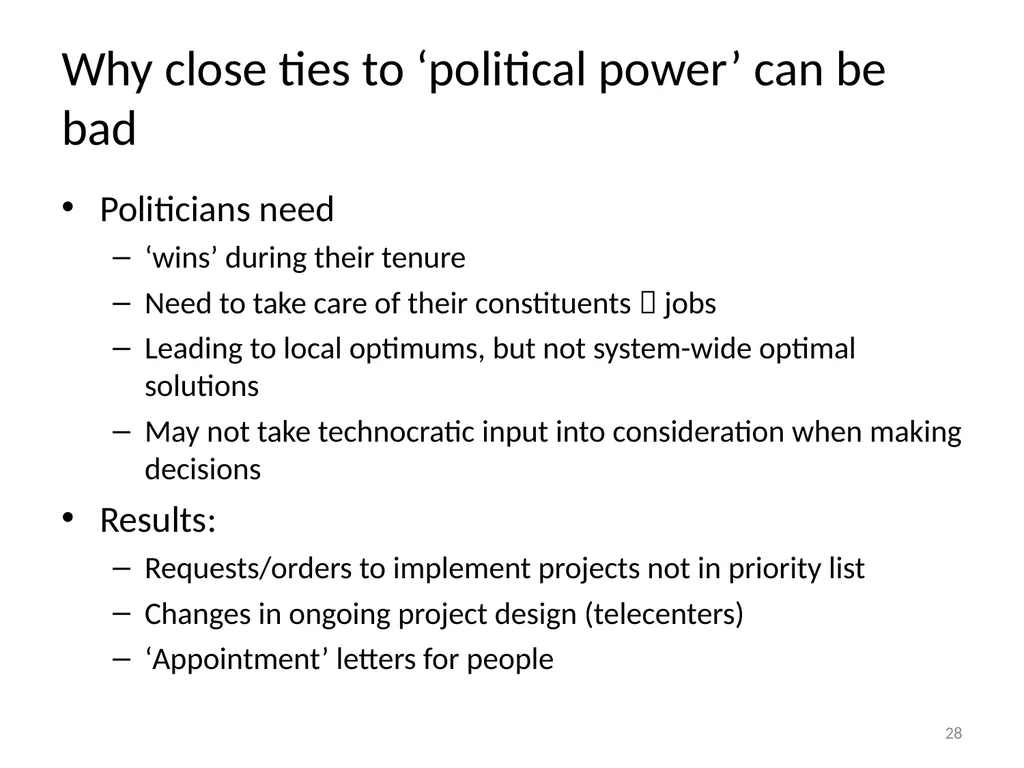
slide28. Why close ties to ‘political power’ can be bad Politicians need
‘wins’ during their tenure
Need to take care of their constituents jobs
Leading to local optimums, but not system-wide optimal solutions
May not take technocratic input into consideration when making decisions
Results:
Requests/orders to implement projects not in priority list
Changes in ongoing project design (telecenters)
‘Appointment’ letters for people 28<br>
Yangon, 26 July 2014 This work was carried out with the aid of a grant from the International Development Research Centre, Ottawa, Canada.<br>
slide2. Objective Highlight challenges of building effective organizations to achieve objectives set out in LAW and implement POLICY
In case of a law that requires action by private parties (e.g., offering of mobile telecom services), regulation
Where direct government action is required 2<br>
slide3. E Sri Lanka program architecture 3 E leadership Infrastructure E society E government E business<br>
slide4. Diagnosing road blocks Existing organization, CINTEC, was unable to perform apex function
New agency?
What to do with old one?
Coordinating with multiple government agencies to advance e government was seen as the greatest challenge
Authority higher than individual Ministers? 4<br>
slide5. Solution Company limited by guarantee, fully owned by the government
Private-sector culture from inception
Advertisements issued during holidays when expatriates were back in Sri Lanka
Interviews for leadership positions conducted over video links
Private sector salaries and benefits
COO of leading IT company recruited to lead ICT Agency 5<br>
slide6. Policy Implementation ‘Seed’ grant
to get the ICT Agency (ICTA) started
Buildings, people, resources
Project Preparation stage
Prepare necessary documents
WB + ICTA staff work on final project details (project appraisal document) that is approved by the WB
Pilot projects: for some quick wins
eHRM (electronic Human Resource Management)
Agricultural Price Information system
A few community access tele-centers 6<br>
slide7. From 4 programs more 7 ICT Leadership & Institutional Development Re-Engineering Government Services ICT Capacity Building ICT Investment and Private Sector Development Technical Architecture, standards, specifications eSociety Information Infrastructure<br>
slide8. Finally, signing large grant (USD 53 million grant) agreement
Under a new government
About a year after ICT Agency was Formed 8<br>
slide9. E-Society Aim: to develop ICT applications that help the most disadvantaged
Primary Mechanism: e-Society Dev. Fun
source the best ideas from developers, NGOs through competitions
give funding, mentoring
Move Business Process Outsourcing to rural areas
Companies in Colombo outsourcing to rural
Some success stories
E.g. audio program to aid reading by visual disabled persons 9<br>
slide10. Infrastructure Networks:
A govt network: to link central & regional offices (Done)
Extension of the fiber-optic network and connectivity to rural areas (not done)
Access points via Telecenters
Telecenters: 500+ planned, primarily for rural areas
Private sector operated; initial capital from govt.
Initially selected competitively…later changed
A success? 10<br>
slide11. ICT Human Resource Development Training government employees
Mass trainings
Training private sector
Linked to the ICT Capacity Building Fund
Training citizens
Select certified training organizations
They run ‘ICT Driving License’ basic certification program
Weekly TV program
Indicated success: increased ICT literacy rates 11<br>
slide12. E-Business: to develop the ICT private sector in Sri Lanka Aim 1: Increase investment in the sector. Brand Sri Lanka as outsourcing destination – increase firms exporting more services (software, BPO..)
Aim 2: Use e-Government procurement as a way to develop local ICT private sector companies
Activities:
Bring industry together formally: umbrella association
Create a vision: strategic planning process
Brand the country as an outsourcing destination
Take firms to trade shows increase visibility
Increase skills of Sri Lankan firms: ICT Private Sector Capacity Building Fund
Create awareness of BPO sector among people
Today a success story 12<br>
slide13. E-Government Model:
Re-engineer government services
Get private sector (software) companies to implement the software to automate
Prioritized list of e-Gov services
Ranked by impact, usage and feasibility
Entrenched interests inability to implement projects at the top of the list
End up doing what you can
Perceptions of the ICT Agency
As outsiders. Not software experts. Not government either
ICT Capacity in Government : non-existent
Chief Information Officer appointed at each govt. office
A long process
Use this person as champion of process 13<br>
slide14. Much talk, no early results Mismatch of interests, resources
Money (at ICT Agency)
Technical Knowledge (ICT Agency)
Ownership of the service (Government Dept/Ministry)
Disruptions to work during implementation (Dept./Ministry)
High likelihood of failure
Long time needed from concept to finish
Study processes; re-engineer them
Identify system requirements
Procurement process (int’l)
Implement the system
E.g. ePensions project
Result: 2.5 years after inception, no e-Gov project implemented
But HUGE expectations
Media, others: setting expectations 14<br>
slide15. Working ‘outside’ the government system: 1919 Government Information System Background: need for quick win e-Gov project
Long time before e-Gov services become reality.
To counter negative perceptions
Lack of information HOW TO ACCESS GOVT. SERVICES
Multiple trips to government office, wasted time, costs
Low internet use websites not a full solution
Solution: a call center
Polite, helpful, fast
Service-based, not department based
Choices
Train govt. workers to run a call center
Something faster? 15<br>
slide16. Tapping the existing capacity at call centers
Service US/UK markets staffed at night
Empty during day time cheap, excess capacity
World class technology already existing
Necessary conditions: information on govt process
Resistance, lack of interest, lack of vision
Use interns get each ministry to check.
Competitive procurement
Rules vs. Rules
“But how can private sector people answer government questions”?
Under the radar implementation
‘Surprise’ soft launch 16<br>
slide17. First success story in e-Gov (and only success, for many years) 17 Call volume increase each year<br>
slide18. More calls answered than abandoned 18<br>
slide19. 19 Government organizations showing increasing trust<br>
slide20. Turn-around in eGov Re-thinking how systems are designed
Modular (break down into parts)
Open source
In-house vs. outside development
Change in skill set of e-Gov team
Serious ‘techies’ hired
Chief Technology Officer Appointed
Local industry ‘taught’ how to bid, manage contract risk 20<br>
slide21. Today…. UN eGov rankings
Sri Lanka made biggest jump (41 places)
115th in (2012)
74th in 2014
Actual service delivery: Since Sep 2013
Hundreds of e-Services launched 21<br>
slide22. Did the structure make sense?<br>
slide23. High salaries + uncontrolled publicity + high expectations Recipe for failure? You acquire detractors:
People who applied for jobs, didn’t get hired
People who didn’t like staff getting high salaries
People who applied for pilot project grants, but didn’t get
(Opposing) political parties
…..
And when people over-promise/over-publicize
Create unmet expectations
Gives voice to detractors 23<br>
slide24. Could things have been done differently? Could high salaries have been avoided?
Important to attract Sri Lankans living overseas
Important to attract private sector experts
Could the CEO have been more empowered within government
Was not at Secretary level: practical difficulties due to protocol
Could ICTA have been more media savvy?
Yes; today social media but then…
What other variables were available to play with? 24<br>
slide25. Implementers need policy direction during implementation, not just at the beginning Population register
A funder’s objections to religion/race being recorded
Existing law/practices requires these (e.g. in inheritance)
Changing this not a decision for the ICTA
But technology workarounds possible
Free & open source
Should they be given preference in procurement 25<br>
slide26. The Re-engineering Government Steering Committee that never was implemented Senior civil servants
Secretaries (~Deputy Ministers) of important departments [e.g. Ministry of Finance, Ministry of Public Administration, etc.
Other senior actors
Taking policy level decisions
With input from ICTA, industry
Meeting regulatory, not annually
A vacuum when ICTA faced challenges
Politicians stepping into that vacuum
ICTA: “the apex ICT policy making body for Sri Lanka and the implementer of the e-Sri Lanka vision” 26<br>
slide27. Why influence of ‘political power’ can be good Politicians: voice of the people
They SHOULD prioritize policies
To speak up for the implementing agency
When it comes under attack
In theory, it opens doors
Powerful people at the top
Needed for cross sectoral agency
Move from Ministry of Science and Technology Prime Minister’s Office President’s Office 27<br>
slide28. Why close ties to ‘political power’ can be bad Politicians need
‘wins’ during their tenure
Need to take care of their constituents jobs
Leading to local optimums, but not system-wide optimal solutions
May not take technocratic input into consideration when making decisions
Results:
Requests/orders to implement projects not in priority list
Changes in ongoing project design (telecenters)
‘Appointment’ letters for people 28<br>