
Making the C.R.A.A.P. Test Less Crappy Kat


Description: Making the C.R.A.A.P. Test Less Crappy Kat Phillips, Eryn Roles, Sabrina Thomas Marshall University Libraries When evaluating information sources what are the top things you look for? Have you ever caught yourself spreading
Related Topics
Download Presentation
"Making the C.R.A.A.P. Test Less Crappy Kat" is the property of its rightful owner. Permission is granted to download and print the materials on this website for personal, non-commercial use only, and to display it on your personal computer provided you do not modify the materials and that you retain all copyright notices contained in the materials. By downloading content from our website, you accept the terms of this agreement.
Presentation Transcript
slide1. Making the C.R.A.A.P. Test Less Crappy Kat Phillips, Eryn Roles, & Sabrina Thomas
Marshall University Libraries<br>
slide2. When evaluating information sources what are the top things you look for? Have you ever caught yourself spreading misinformation? How?
Have you caught yourself in a moment of emotional panic when looking at information sources?
Are you comfortable sharing these stories with your students?<br>
slide3. CRAAP Test - How teaching librarians have been using it. Currency - The timeliness of the information.
Relevance - The importance of the information for your needs.
Authority - The source of the information
Accuracy - The reliability, truthfulness and correctness of the content.
Purpose - The reason the information exists.<br>
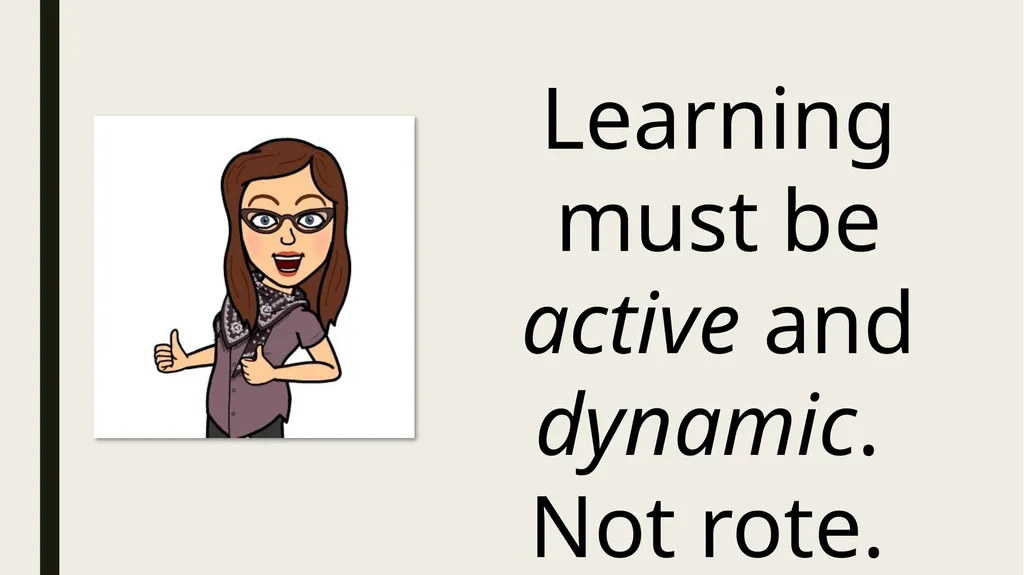
slide4. Learning must be active and dynamic.
Not rote.<br>
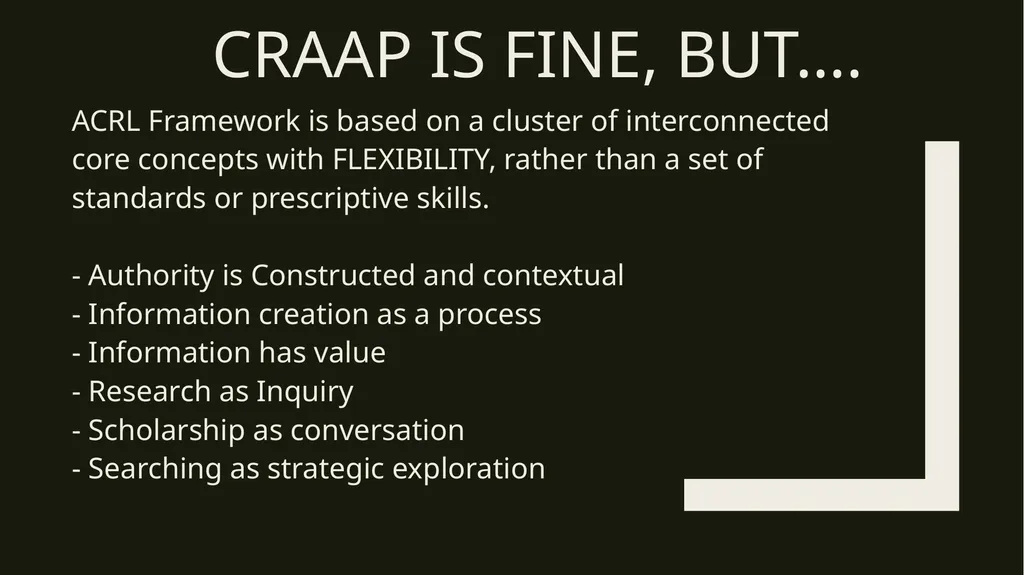
slide5. CRAAP is fine, but…. ACRL Framework is based on a cluster of interconnected core concepts with FLEXIBILITY, rather than a set of standards or prescriptive skills.
- Authority is Constructed and contextual
- Information creation as a process
- Information has value
- Research as Inquiry
- Scholarship as conversation
- Searching as strategic exploration<br>
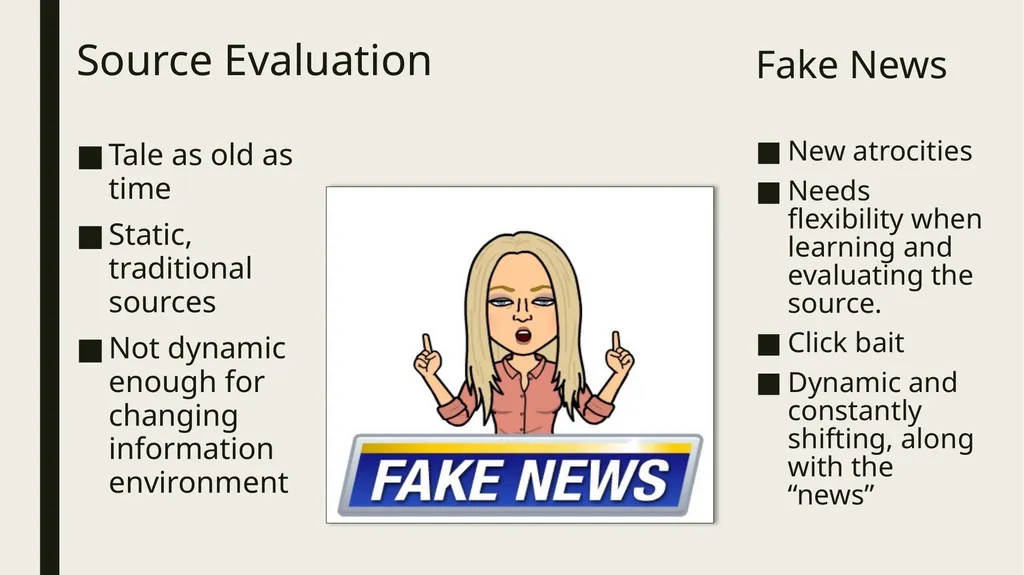
slide6. Source Evaluation Tale as old as time
Static, traditional sources
Not dynamic enough for changing information environment Fake News New atrocities
Needs flexibility when learning and evaluating the source.
Click bait
Dynamic and constantly shifting, along with the “news”<br>
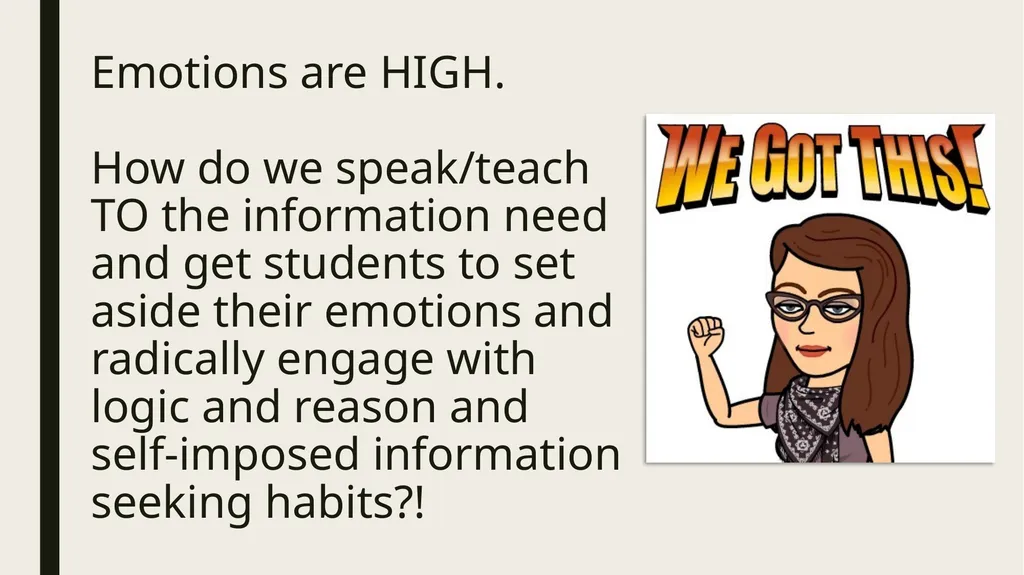
slide7. Emotions are HIGH. How do we speak/teach TO the information need and get students to set aside their emotions and radically engage with logic and reason and self-imposed information seeking habits?!<br>
slide8. IF I APPLY test<br>
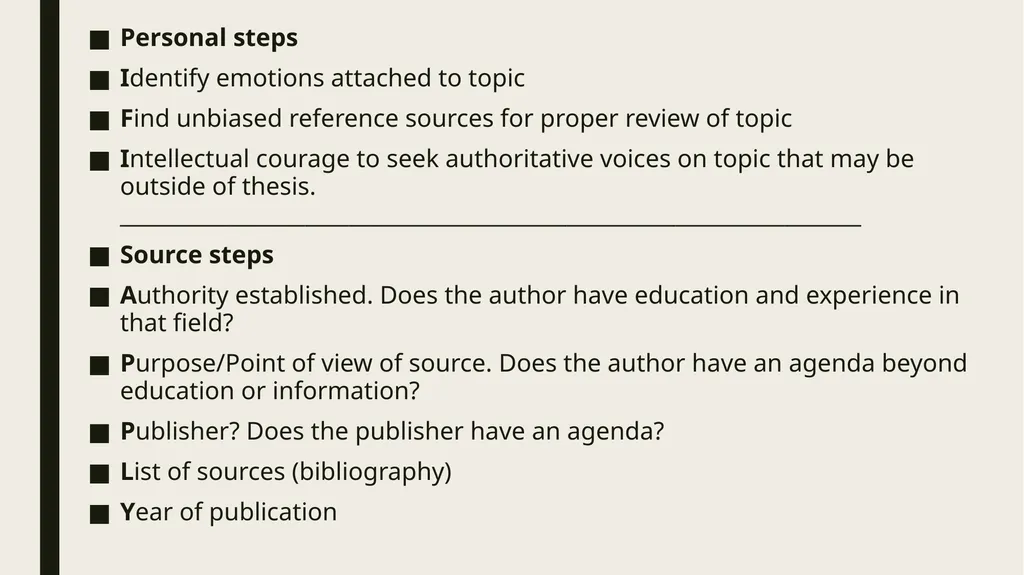
slide9. Personal steps
Identify emotions attached to topic
Find unbiased reference sources for proper review of topic
Intellectual courage to seek authoritative voices on topic that may be outside of thesis. ____________________________________________________________________
Source steps
Authority established. Does the author have education and experience in that field?
Purpose/Point of view of source. Does the author have an agenda beyond education or information?
Publisher? Does the publisher have an agenda?
List of sources (bibliography)
Year of publication<br>
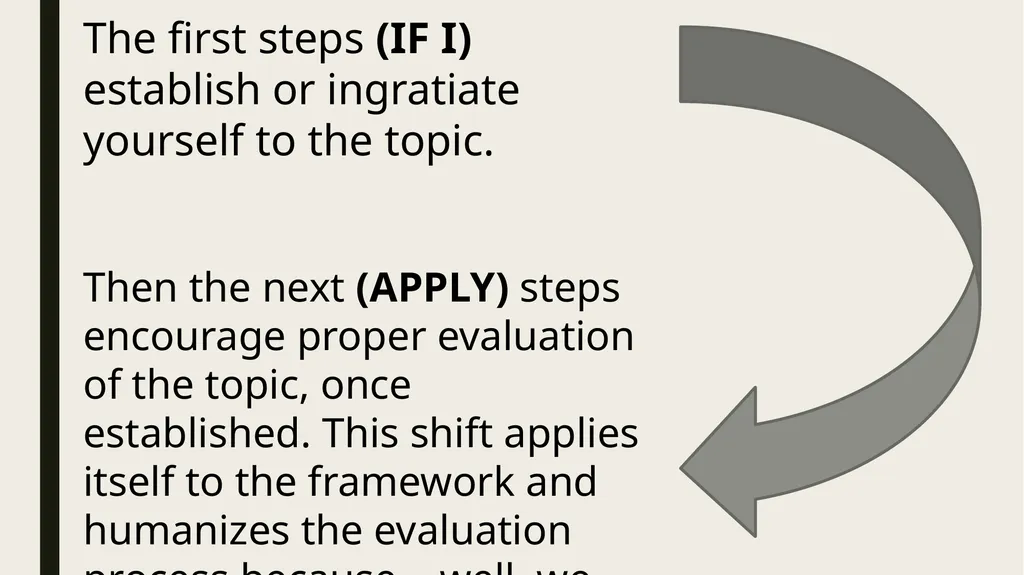
slide10. The first steps (IF I) establish or ingratiate yourself to the topic.
Then the next (APPLY) steps encourage proper evaluation of the topic, once established. This shift applies itself to the framework and humanizes the evaluation process because… well, we need to.<br>
slide11. Eryn Roles, roles1@marshall.edu
Kat Phillips, phillipsk@marshall.edu
Sabrina Thomas, tho4@marshall.edu QUESTIONS?
COMMENTS?
CRITICISMS?<br>
Marshall University Libraries<br>
slide2. When evaluating information sources what are the top things you look for? Have you ever caught yourself spreading misinformation? How?
Have you caught yourself in a moment of emotional panic when looking at information sources?
Are you comfortable sharing these stories with your students?<br>
slide3. CRAAP Test - How teaching librarians have been using it. Currency - The timeliness of the information.
Relevance - The importance of the information for your needs.
Authority - The source of the information
Accuracy - The reliability, truthfulness and correctness of the content.
Purpose - The reason the information exists.<br>
slide4. Learning must be active and dynamic.
Not rote.<br>
slide5. CRAAP is fine, but…. ACRL Framework is based on a cluster of interconnected core concepts with FLEXIBILITY, rather than a set of standards or prescriptive skills.
- Authority is Constructed and contextual
- Information creation as a process
- Information has value
- Research as Inquiry
- Scholarship as conversation
- Searching as strategic exploration<br>
slide6. Source Evaluation Tale as old as time
Static, traditional sources
Not dynamic enough for changing information environment Fake News New atrocities
Needs flexibility when learning and evaluating the source.
Click bait
Dynamic and constantly shifting, along with the “news”<br>
slide7. Emotions are HIGH. How do we speak/teach TO the information need and get students to set aside their emotions and radically engage with logic and reason and self-imposed information seeking habits?!<br>
slide8. IF I APPLY test<br>
slide9. Personal steps
Identify emotions attached to topic
Find unbiased reference sources for proper review of topic
Intellectual courage to seek authoritative voices on topic that may be outside of thesis. ____________________________________________________________________
Source steps
Authority established. Does the author have education and experience in that field?
Purpose/Point of view of source. Does the author have an agenda beyond education or information?
Publisher? Does the publisher have an agenda?
List of sources (bibliography)
Year of publication<br>
slide10. The first steps (IF I) establish or ingratiate yourself to the topic.
Then the next (APPLY) steps encourage proper evaluation of the topic, once established. This shift applies itself to the framework and humanizes the evaluation process because… well, we need to.<br>
slide11. Eryn Roles, roles1@marshall.edu
Kat Phillips, phillipsk@marshall.edu
Sabrina Thomas, tho4@marshall.edu QUESTIONS?
COMMENTS?
CRITICISMS?<br>