
Management Fourteenth Edition, Global Edition


Description: Management Fourteenth Edition, Global Edition Chapter 1 Managers and You in the Workplace Copyright 2018 Pearson Education, Ltd. All Rights Reserved Learning Objectives 1.1 Tell who managers are and where they work. Know how to manage
Related Topics
Download Presentation
"Management Fourteenth Edition, Global Edition" is the property of its rightful owner. Permission is granted to download and print the materials on this website for personal, non-commercial use only, and to display it on your personal computer provided you do not modify the materials and that you retain all copyright notices contained in the materials. By downloading content from our website, you accept the terms of this agreement.
Presentation Transcript
slide1. Management Fourteenth Edition, Global Edition Chapter 1 Managers and You in the Workplace Copyright © 2018 Pearson Education, Ltd. All Rights Reserved<br>
slide2. Learning Objectives 1.1 Tell who managers are and where they work.
Know how to manage your time.
1.2 Explain why managers are important to organizations.
1.3 Describe the functions, roles, and skills of managers.
Develop your skill at being politically aware.
1.4 Describe the factors that are reshaping and redefining the manager’s job.
1.5 Explain the value of studying management.<br>
slide3. Who Is a Manager? Manager: someone who coordinates and oversees the work of other people so that organizational goals can be accomplished<br>
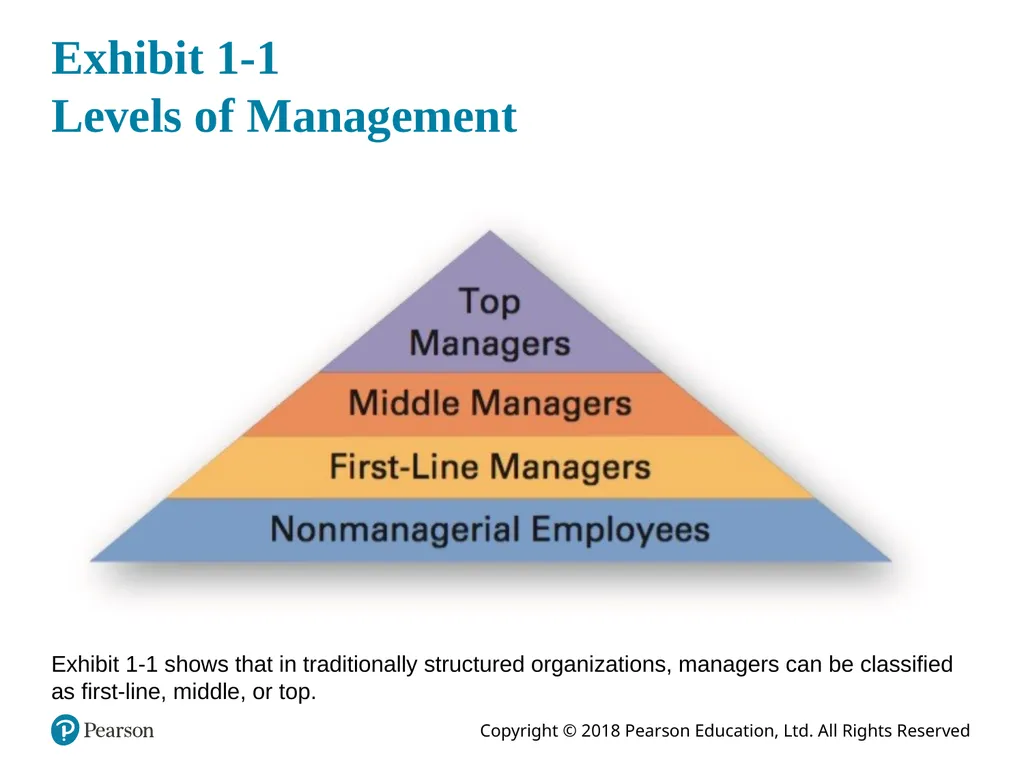
slide4. Exhibit 1-1 Levels of Management Exhibit 1-1 shows that in traditionally structured organizations, managers can be classified as first-line, middle, or top.<br>
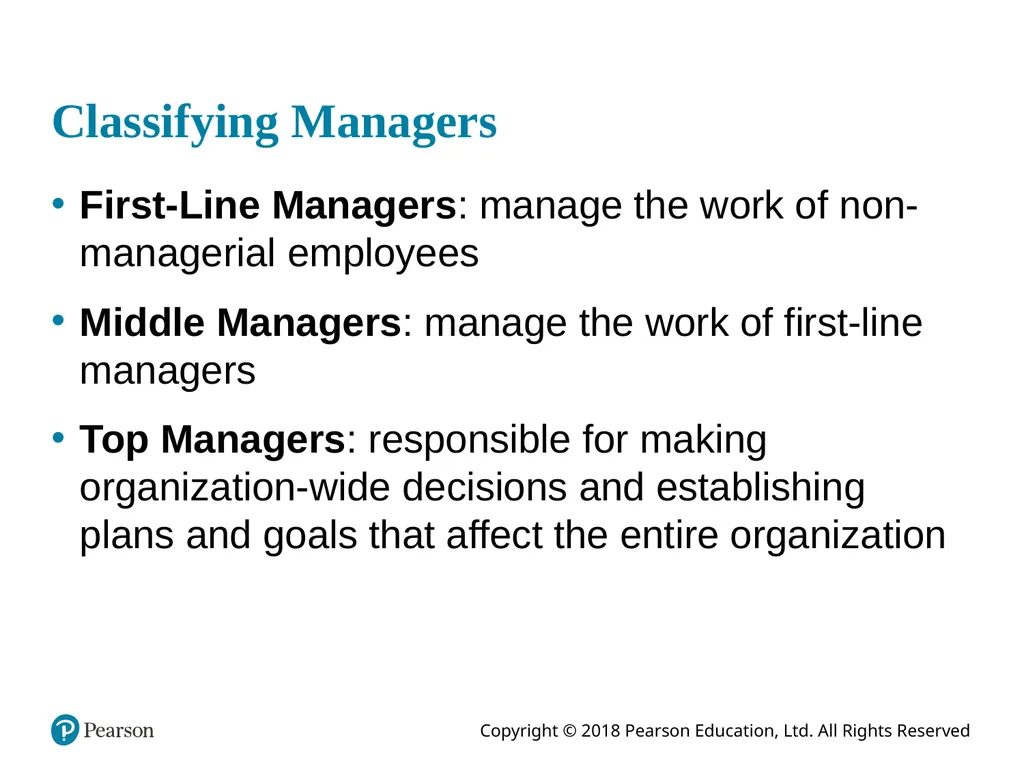
slide5. Classifying Managers First-Line Managers: manage the work of non-managerial employees
Middle Managers: manage the work of first-line managers
Top Managers: responsible for making organization-wide decisions and establishing plans and goals that affect the entire organization<br>
slide6. Where Do Managers Work? Organization: a deliberate arrangement of people to accomplish some specific purpose<br>
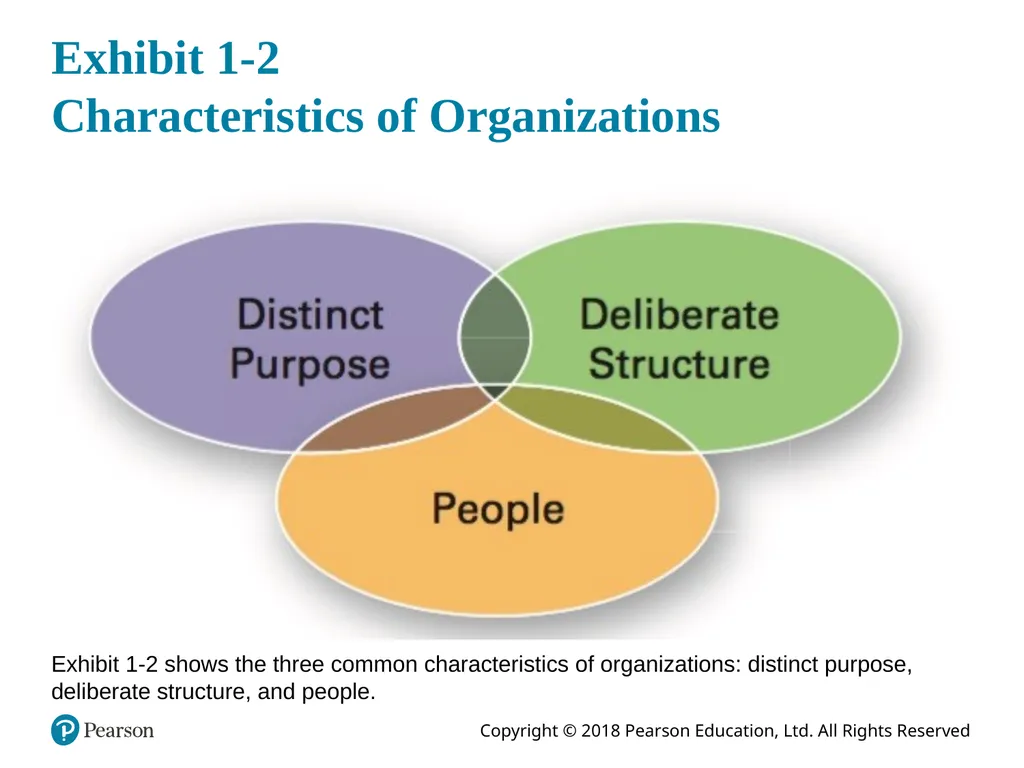
slide7. Exhibit 1-2 Characteristics of Organizations Exhibit 1-2 shows the three common characteristics of organizations: distinct purpose, deliberate structure, and people.<br>
slide8. Why Are Managers Important? Organizations need their managerial skills and abilities now more than ever
Managers are critical to getting things done
Managers do matter to organizations<br>
slide9. What Do Managers Do? Management involves coordinating and overseeing the work activities of others so that their activities are completed efficiently and effectively.<br>
slide10. Efficiency and Effectiveness Efficiency: doing things right
getting the most output from the least amount of input
Effectiveness: doing the right things
attaining organizational goals<br>
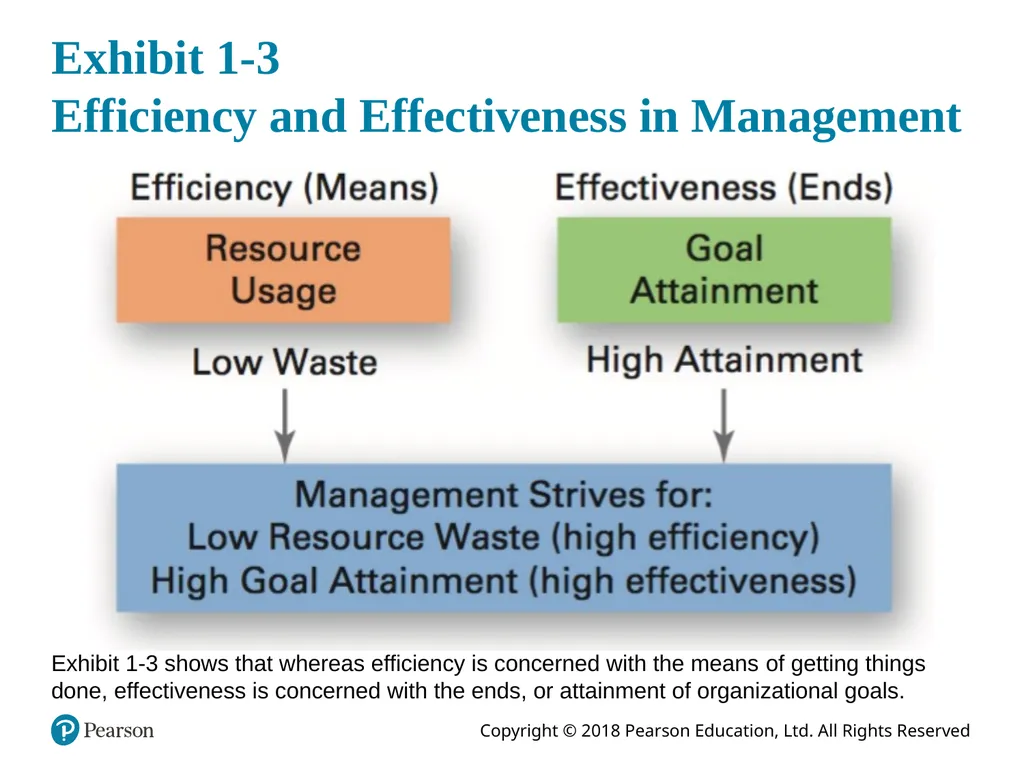
slide11. Exhibit 1-3 Efficiency and Effectiveness in Management Exhibit 1-3 shows that whereas efficiency is concerned with the means of getting things done, effectiveness is concerned with the ends, or attainment of organizational goals.<br>
slide12. Management Functions Planning: Defining goals, establishing strategies to achieve goals, and developing plans to integrate and coordinate activities
Organizing: Arranging and structuring work to accomplish organizational goals
Lending: Working with and through people to accomplish goals
Controlling: Monitoring, comparing, and correcting work<br>
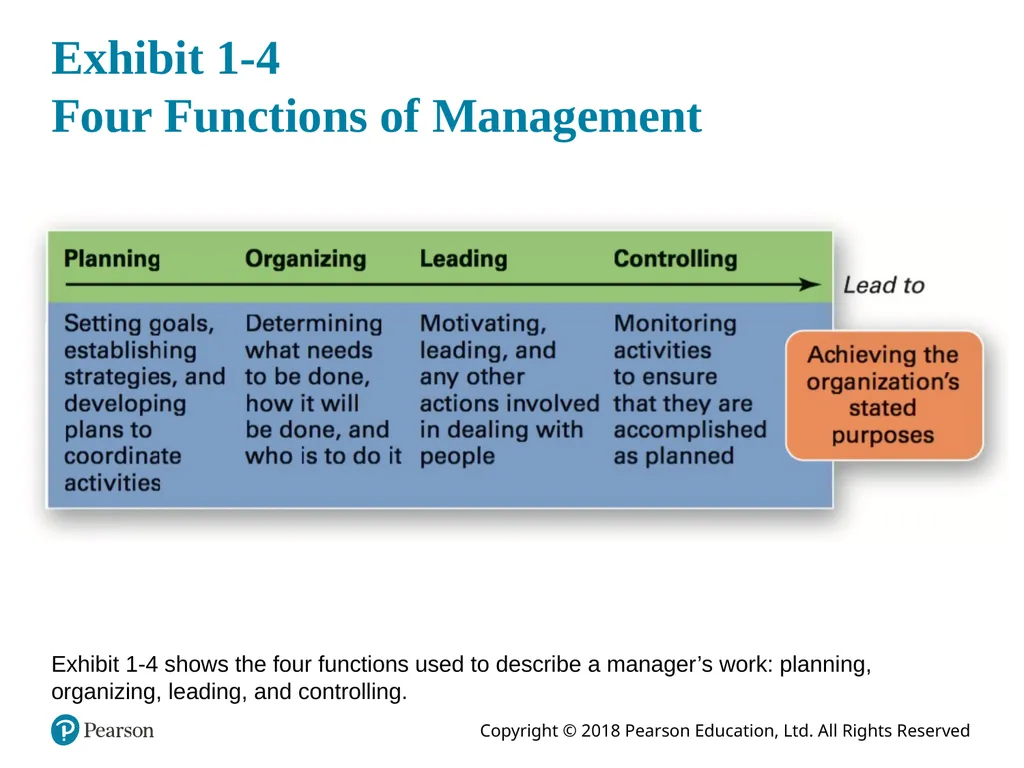
slide13. Exhibit 1-4 Four Functions of Management Exhibit 1-4 shows the four functions used to describe a manager’s work: planning, organizing, leading, and controlling.<br>
slide14. Mintzberg’s Managerial Roles and a Contemporary Model of Managing Roles: specific actions or behaviors expected of and exhibited by a manager
Mintzberg identified 10 roles grouped around interpersonal relationships, the transfer of information, and decision-making<br>
slide15. Types of Roles Interpersonal
Figurehead, leader, liaison
Informational
Monitor, disseminator, spokesperson
Decisional
Entrepreneur, disturbance handler, resource allocator, negotiator<br>
slide16. Exhibit 1-5 Mintzberg’s Managerial Roles Exhibit 1-4 shows the four functions used to describe a manager’s work: planning, organizing, leading, and controlling.<br>
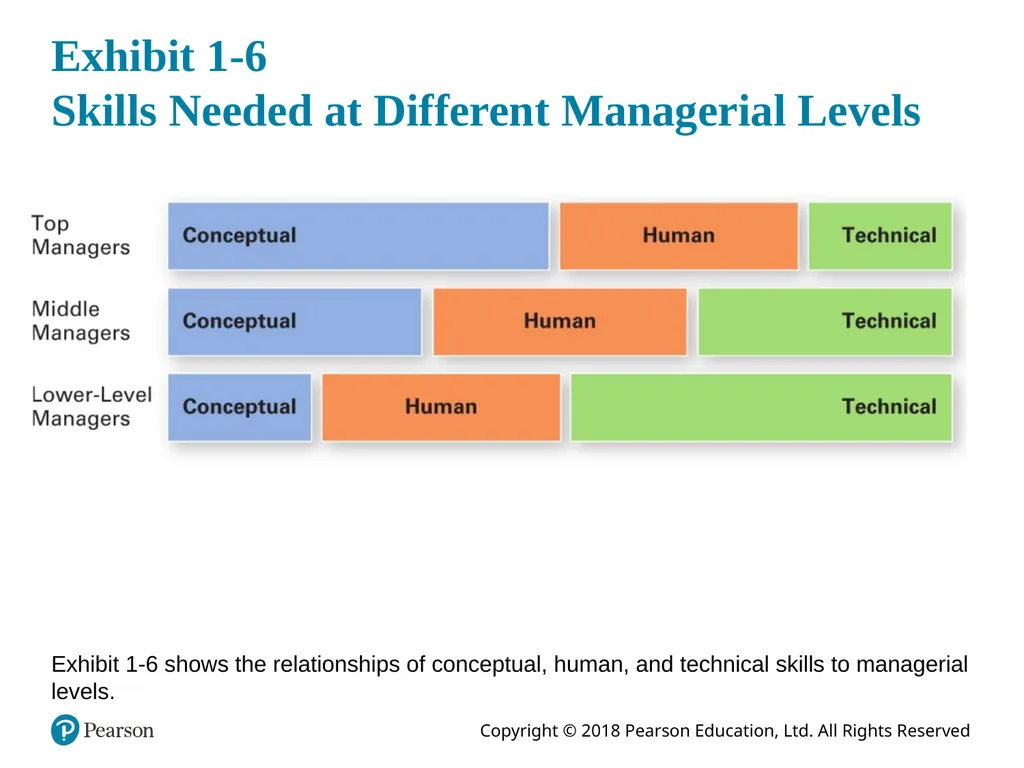
slide17. Management Skills Technical skills
Knowledge and proficiency in a specific field
Human skills
The ability to work well with other people
Conceptual skills
The ability to think and conceptualize about abstract and complex situations concerning the organization<br>
slide18. Exhibit 1-6 Skills Needed at Different Managerial Levels Exhibit 1-6 shows the relationships of conceptual, human, and technical skills to managerial levels.<br>
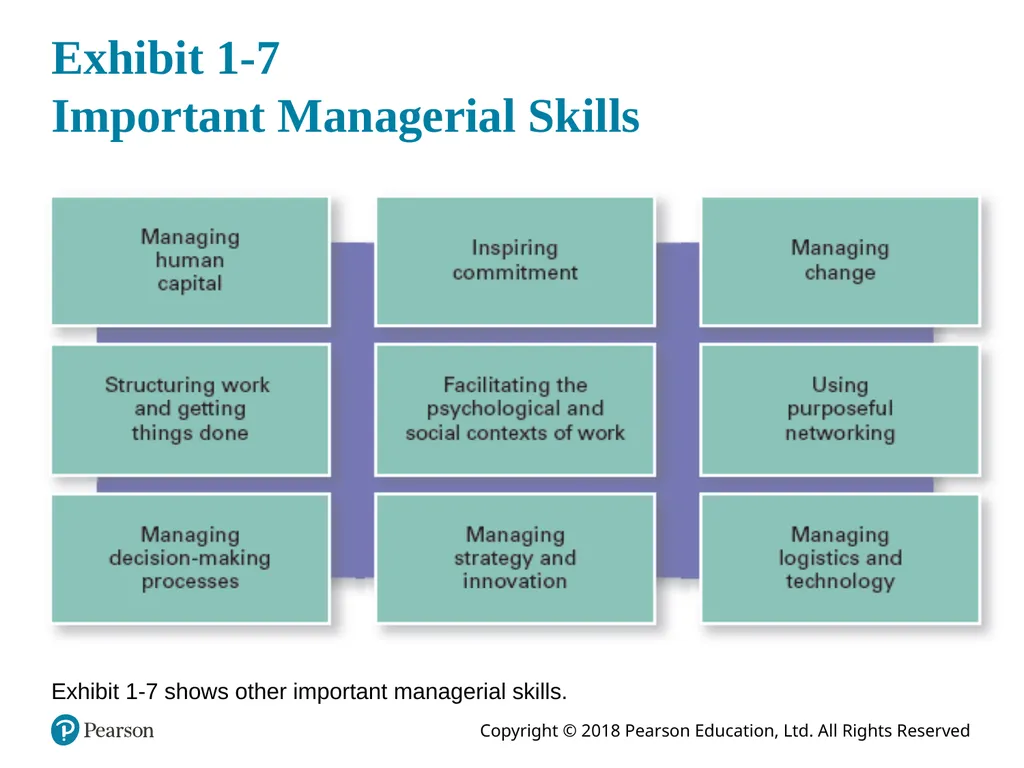
slide19. Exhibit 1-7 Important Managerial Skills Exhibit 1-7 shows other important managerial skills.<br>
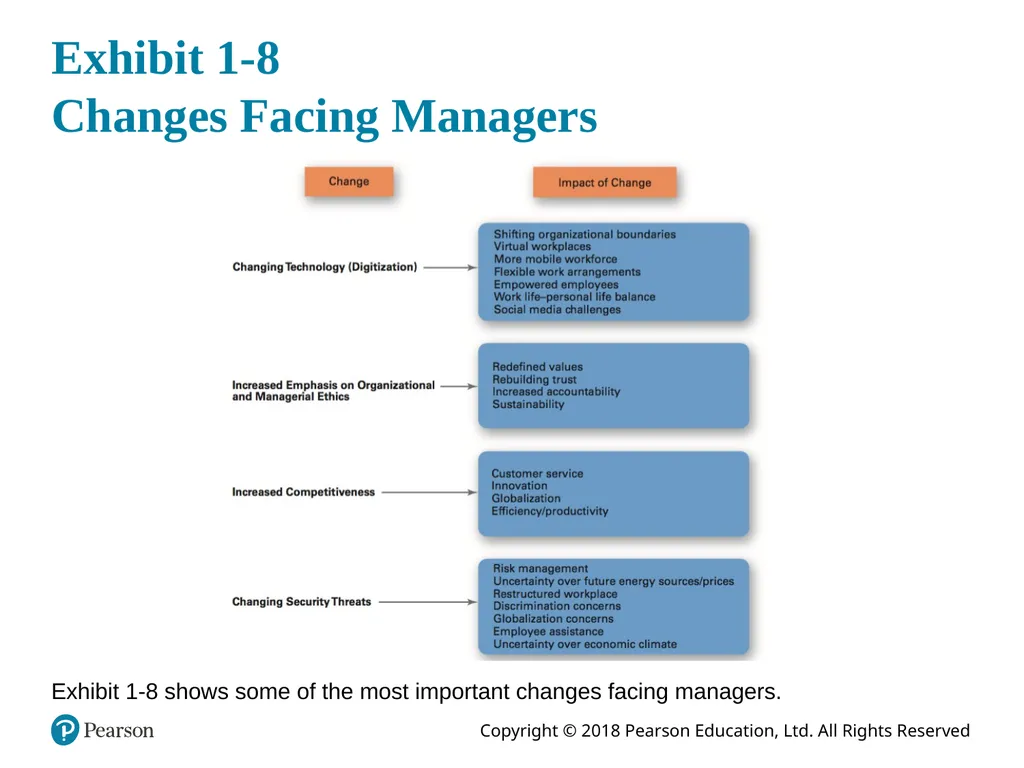
slide20. Exhibit 1-8 Changes Facing Managers Exhibit 1-8 shows some of the most important changes facing managers.<br>
slide21. Focus on the Customer Without customers, most organizations would cease to exist
Managing customer relationships is the responsibility of all managers and employees
Consistent, high-quality customer service is essential<br>
slide22. Focus on Technology Managers must get employees on board with new technology
Managers must oversee the social interactions and challenges involved in using collaborative technologies<br>
slide23. Focus on Social Media Social media: forms of electronic communication through which users create online communities to share ideas, information, personal messages, and other content<br>
slide24. Focus on Innovation Innovation: exploring new territory, taking risks, and doing things differently<br>
slide25. Focus on Sustainability Sustainability: a company’s ability to achieve its business goals and increase long-term shareholder value by integrating economic, environmental, and social opportunities into its business strategies<br>
slide26. Focus on the Employee Treating employees well is not only the right thing to do, it is also good business<br>
slide27. The Universality of Management The reality that management is needed in all types and sizes of organizations, at all organizational levels, in all organizational areas, and in organizations no matter where located<br>
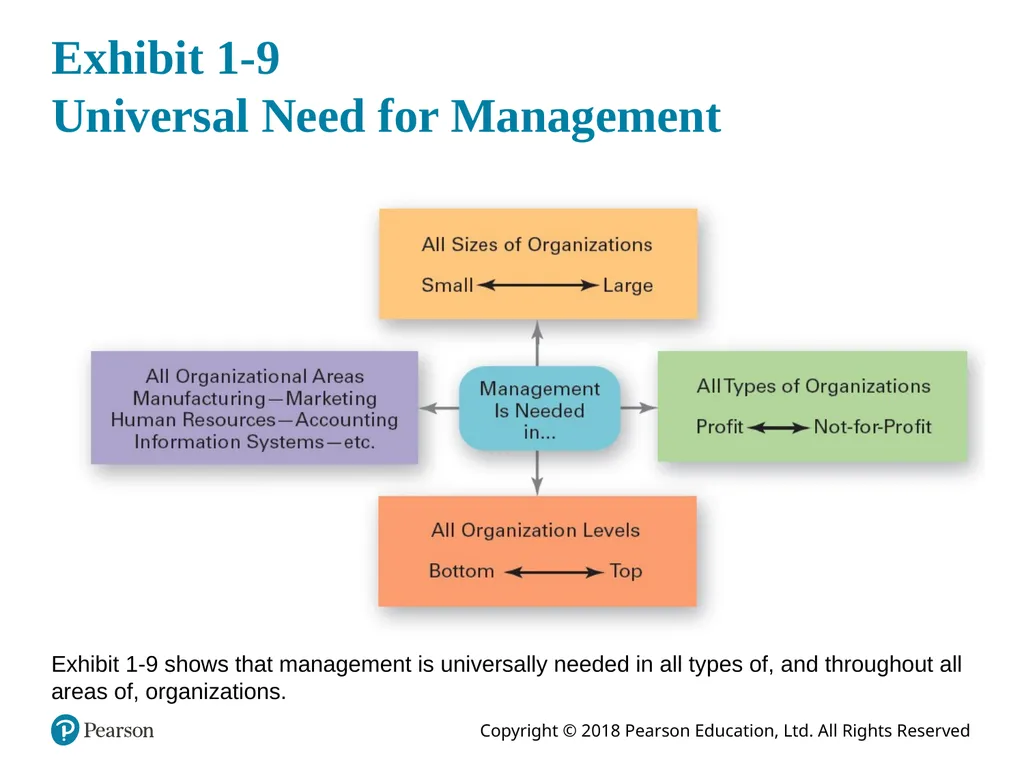
slide28. Exhibit 1-9 Universal Need for Management Exhibit 1-9 shows that management is universally needed in all types of, and throughout all areas of, organizations.<br>
slide29. The Reality of Work When you begin your career, you will either manage or be managed.<br>
slide30. Challenges of Being a Manager Can be a thankless job
May entail clerical type duties
Managers also spend significant amounts of time in meetings and dealing with interruptions
Managers often have to deal with a variety of personalities and have to make do with limited resources<br>
slide31. Rewards of Being a Manager Responsible for creating a productive work environment
Recognition and status in your organization and in the community
Attractive compensation in the form of salaries, bonuses, and stock options<br>
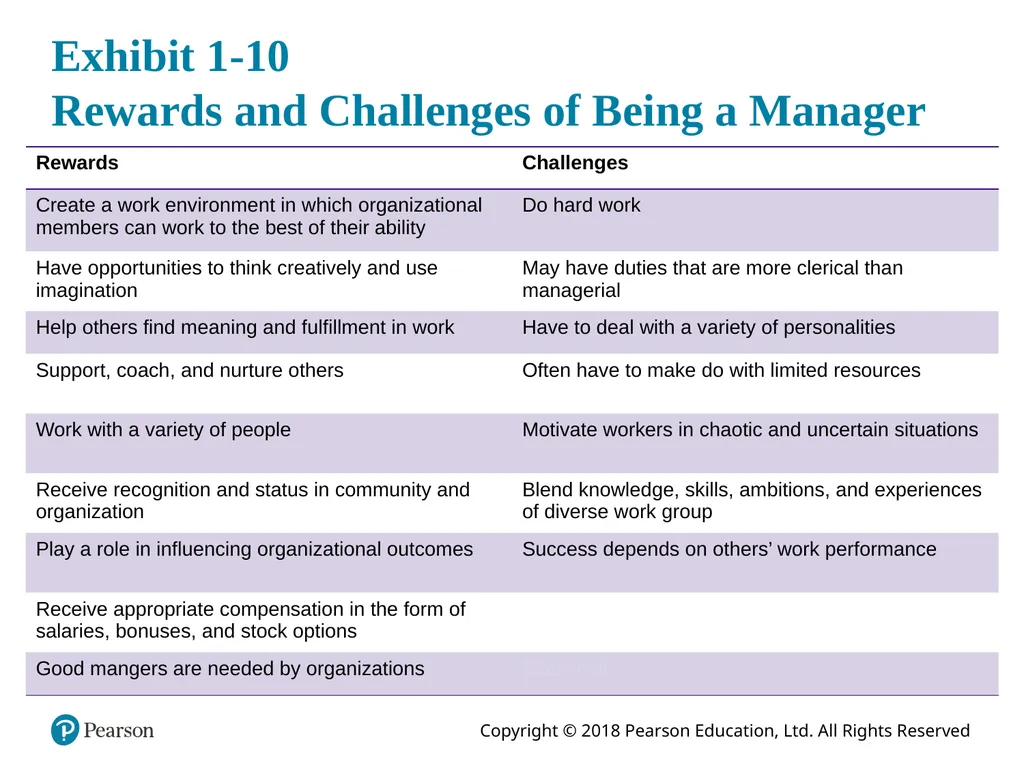
slide32. Exhibit 1-10 Rewards and Challenges of Being a Manager<br>
slide33. Review Learning Objective 1.1 Tell who managers are and where they work.
Managers coordinate and oversee the work of other people so that organizational goals can be accomplished.
Managers work in an organization, which is a deliberate arrangement of people to accomplish some specific purpose.<br>
slide34. Review Learning Objective 1.2 Explain why managers are important to organizations.
Organizations need their managerial skills and abilities in uncertain, complex, and chaotic times.
Managers are critical to getting things done in organizations.
Managers contribute to employee productivity and loyalty.<br>
slide35. Review Learning Objective 1.3 (1 of 3) Describe the functions, roles, and skills of managers.
Management involves coordinating and overseeing the efficient and effective completion of others’ work activities.
The four functions of management include planning, organizing, leading, and controlling.<br>
slide36. Review Learning Objective 1.3 (2 of 3) Mintzberg’s managerial roles include:
Interpersonal, involve people and other ceremonial/symbolic duties (figurehead, leader, and liaison)
Informational, collecting, receiving, and disseminating information (monitor, disseminator, and spokesperson)
Decisional, making choices (entrepreneur, disturbance handler, resource allocator, and negotiator)<br>
slide37. Review Learning Objective 1.3 (3 of 3) Katz’s managerial skills include:
Technical (job-specific knowledge and techniques)
Human (ability to work well with people)
Conceptual (ability to think and express ideas)<br>
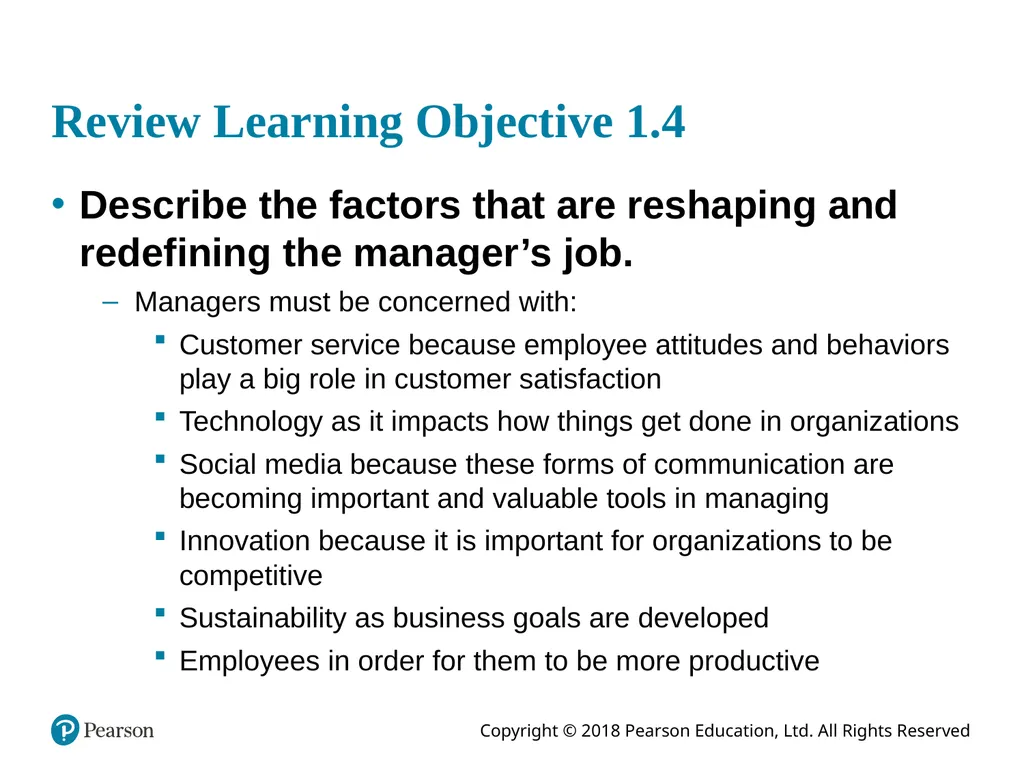
slide38. Review Learning Objective 1.4 Describe the factors that are reshaping and redefining the manager’s job.
Managers must be concerned with:
Customer service because employee attitudes and behaviors play a big role in customer satisfaction
Technology as it impacts how things get done in organizations
Social media because these forms of communication are becoming important and valuable tools in managing
Innovation because it is important for organizations to be competitive
Sustainability as business goals are developed
Employees in order for them to be more productive<br>
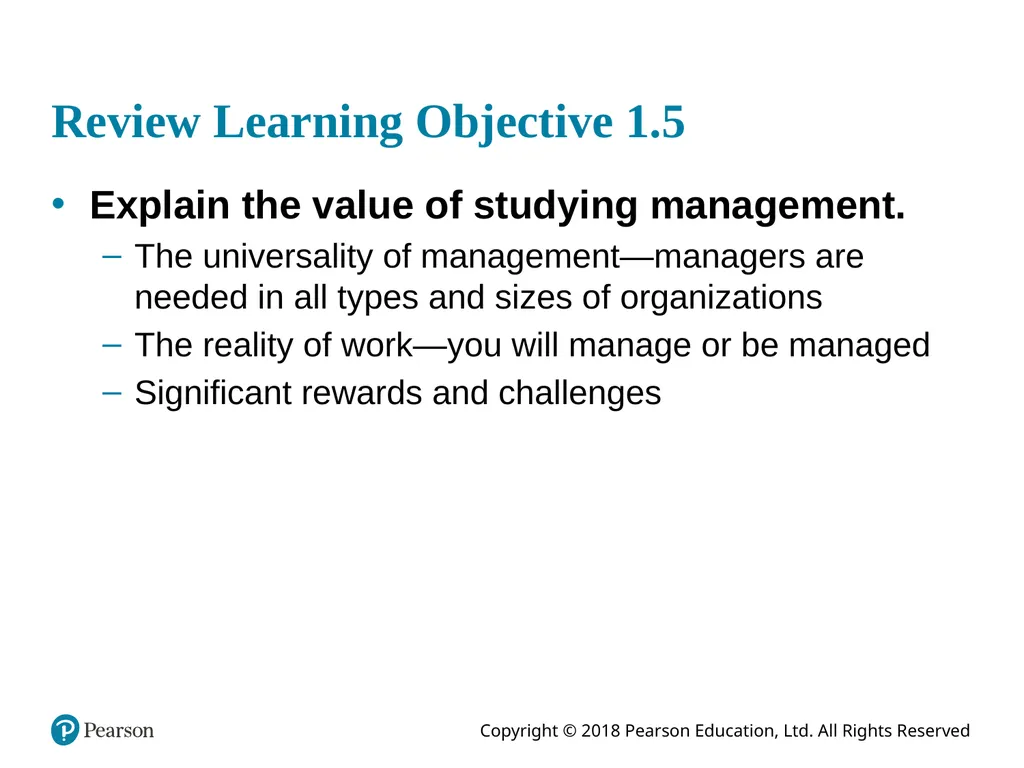
slide39. Review Learning Objective 1.5 Explain the value of studying management.
The universality of management—managers are needed in all types and sizes of organizations
The reality of work—you will manage or be managed
Significant rewards and challenges<br>
slide2. Learning Objectives 1.1 Tell who managers are and where they work.
Know how to manage your time.
1.2 Explain why managers are important to organizations.
1.3 Describe the functions, roles, and skills of managers.
Develop your skill at being politically aware.
1.4 Describe the factors that are reshaping and redefining the manager’s job.
1.5 Explain the value of studying management.<br>
slide3. Who Is a Manager? Manager: someone who coordinates and oversees the work of other people so that organizational goals can be accomplished<br>
slide4. Exhibit 1-1 Levels of Management Exhibit 1-1 shows that in traditionally structured organizations, managers can be classified as first-line, middle, or top.<br>
slide5. Classifying Managers First-Line Managers: manage the work of non-managerial employees
Middle Managers: manage the work of first-line managers
Top Managers: responsible for making organization-wide decisions and establishing plans and goals that affect the entire organization<br>
slide6. Where Do Managers Work? Organization: a deliberate arrangement of people to accomplish some specific purpose<br>
slide7. Exhibit 1-2 Characteristics of Organizations Exhibit 1-2 shows the three common characteristics of organizations: distinct purpose, deliberate structure, and people.<br>
slide8. Why Are Managers Important? Organizations need their managerial skills and abilities now more than ever
Managers are critical to getting things done
Managers do matter to organizations<br>
slide9. What Do Managers Do? Management involves coordinating and overseeing the work activities of others so that their activities are completed efficiently and effectively.<br>
slide10. Efficiency and Effectiveness Efficiency: doing things right
getting the most output from the least amount of input
Effectiveness: doing the right things
attaining organizational goals<br>
slide11. Exhibit 1-3 Efficiency and Effectiveness in Management Exhibit 1-3 shows that whereas efficiency is concerned with the means of getting things done, effectiveness is concerned with the ends, or attainment of organizational goals.<br>
slide12. Management Functions Planning: Defining goals, establishing strategies to achieve goals, and developing plans to integrate and coordinate activities
Organizing: Arranging and structuring work to accomplish organizational goals
Lending: Working with and through people to accomplish goals
Controlling: Monitoring, comparing, and correcting work<br>
slide13. Exhibit 1-4 Four Functions of Management Exhibit 1-4 shows the four functions used to describe a manager’s work: planning, organizing, leading, and controlling.<br>
slide14. Mintzberg’s Managerial Roles and a Contemporary Model of Managing Roles: specific actions or behaviors expected of and exhibited by a manager
Mintzberg identified 10 roles grouped around interpersonal relationships, the transfer of information, and decision-making<br>
slide15. Types of Roles Interpersonal
Figurehead, leader, liaison
Informational
Monitor, disseminator, spokesperson
Decisional
Entrepreneur, disturbance handler, resource allocator, negotiator<br>
slide16. Exhibit 1-5 Mintzberg’s Managerial Roles Exhibit 1-4 shows the four functions used to describe a manager’s work: planning, organizing, leading, and controlling.<br>
slide17. Management Skills Technical skills
Knowledge and proficiency in a specific field
Human skills
The ability to work well with other people
Conceptual skills
The ability to think and conceptualize about abstract and complex situations concerning the organization<br>
slide18. Exhibit 1-6 Skills Needed at Different Managerial Levels Exhibit 1-6 shows the relationships of conceptual, human, and technical skills to managerial levels.<br>
slide19. Exhibit 1-7 Important Managerial Skills Exhibit 1-7 shows other important managerial skills.<br>
slide20. Exhibit 1-8 Changes Facing Managers Exhibit 1-8 shows some of the most important changes facing managers.<br>
slide21. Focus on the Customer Without customers, most organizations would cease to exist
Managing customer relationships is the responsibility of all managers and employees
Consistent, high-quality customer service is essential<br>
slide22. Focus on Technology Managers must get employees on board with new technology
Managers must oversee the social interactions and challenges involved in using collaborative technologies<br>
slide23. Focus on Social Media Social media: forms of electronic communication through which users create online communities to share ideas, information, personal messages, and other content<br>
slide24. Focus on Innovation Innovation: exploring new territory, taking risks, and doing things differently<br>
slide25. Focus on Sustainability Sustainability: a company’s ability to achieve its business goals and increase long-term shareholder value by integrating economic, environmental, and social opportunities into its business strategies<br>
slide26. Focus on the Employee Treating employees well is not only the right thing to do, it is also good business<br>
slide27. The Universality of Management The reality that management is needed in all types and sizes of organizations, at all organizational levels, in all organizational areas, and in organizations no matter where located<br>
slide28. Exhibit 1-9 Universal Need for Management Exhibit 1-9 shows that management is universally needed in all types of, and throughout all areas of, organizations.<br>
slide29. The Reality of Work When you begin your career, you will either manage or be managed.<br>
slide30. Challenges of Being a Manager Can be a thankless job
May entail clerical type duties
Managers also spend significant amounts of time in meetings and dealing with interruptions
Managers often have to deal with a variety of personalities and have to make do with limited resources<br>
slide31. Rewards of Being a Manager Responsible for creating a productive work environment
Recognition and status in your organization and in the community
Attractive compensation in the form of salaries, bonuses, and stock options<br>
slide32. Exhibit 1-10 Rewards and Challenges of Being a Manager<br>
slide33. Review Learning Objective 1.1 Tell who managers are and where they work.
Managers coordinate and oversee the work of other people so that organizational goals can be accomplished.
Managers work in an organization, which is a deliberate arrangement of people to accomplish some specific purpose.<br>
slide34. Review Learning Objective 1.2 Explain why managers are important to organizations.
Organizations need their managerial skills and abilities in uncertain, complex, and chaotic times.
Managers are critical to getting things done in organizations.
Managers contribute to employee productivity and loyalty.<br>
slide35. Review Learning Objective 1.3 (1 of 3) Describe the functions, roles, and skills of managers.
Management involves coordinating and overseeing the efficient and effective completion of others’ work activities.
The four functions of management include planning, organizing, leading, and controlling.<br>
slide36. Review Learning Objective 1.3 (2 of 3) Mintzberg’s managerial roles include:
Interpersonal, involve people and other ceremonial/symbolic duties (figurehead, leader, and liaison)
Informational, collecting, receiving, and disseminating information (monitor, disseminator, and spokesperson)
Decisional, making choices (entrepreneur, disturbance handler, resource allocator, and negotiator)<br>
slide37. Review Learning Objective 1.3 (3 of 3) Katz’s managerial skills include:
Technical (job-specific knowledge and techniques)
Human (ability to work well with people)
Conceptual (ability to think and express ideas)<br>
slide38. Review Learning Objective 1.4 Describe the factors that are reshaping and redefining the manager’s job.
Managers must be concerned with:
Customer service because employee attitudes and behaviors play a big role in customer satisfaction
Technology as it impacts how things get done in organizations
Social media because these forms of communication are becoming important and valuable tools in managing
Innovation because it is important for organizations to be competitive
Sustainability as business goals are developed
Employees in order for them to be more productive<br>
slide39. Review Learning Objective 1.5 Explain the value of studying management.
The universality of management—managers are needed in all types and sizes of organizations
The reality of work—you will manage or be managed
Significant rewards and challenges<br>