
Managing across provincial, national and

Description: Managing across provincial, national and international jurisdictions: A case study of LRF-Fisheries in Indonesia Akhmad Fauzi Department of Resource Environmental Economics Bogor Agricultural University (IPB) Brief overview of Indonesia
Related Topics
Download Presentation
"Managing across provincial, national and" is the property of its rightful owner. Permission is granted to download and print the materials on this website for personal, non-commercial use only, and to display it on your personal computer provided you do not modify the materials and that you retain all copyright notices contained in the materials. By downloading content from our website, you accept the terms of this agreement.
Presentation Transcript
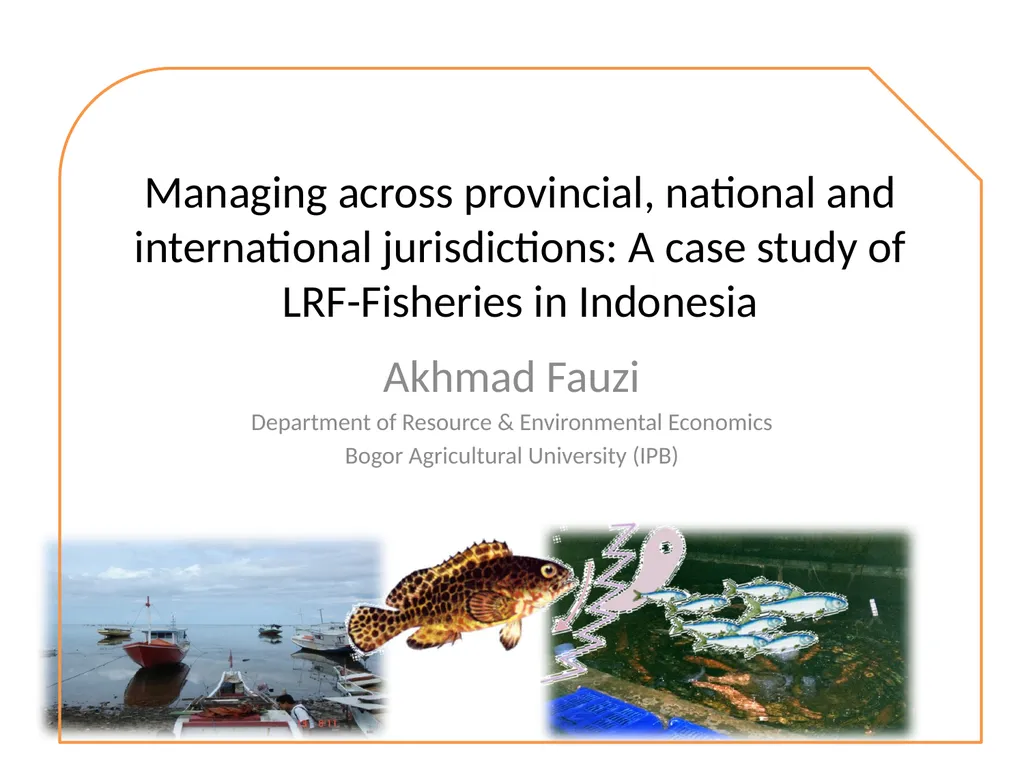
slide1. Managing across provincial, national and international jurisdictions: A case study of LRF-Fisheries in Indonesia Akhmad Fauzi
Department of Resource & Environmental Economics
Bogor Agricultural University (IPB)<br>
slide2. Brief overview of Indonesia LRFF Indonesia is one of the key players in LRFFT to international market
Sustainable fisheries management, including LRF has become commitment of Indonesian Government
LRFF in Indonesia has been practiced for several decades, with different scale of economics and different geographical areas
Indonesian LRF faces enormous challenges from ecological, economical and social perspective
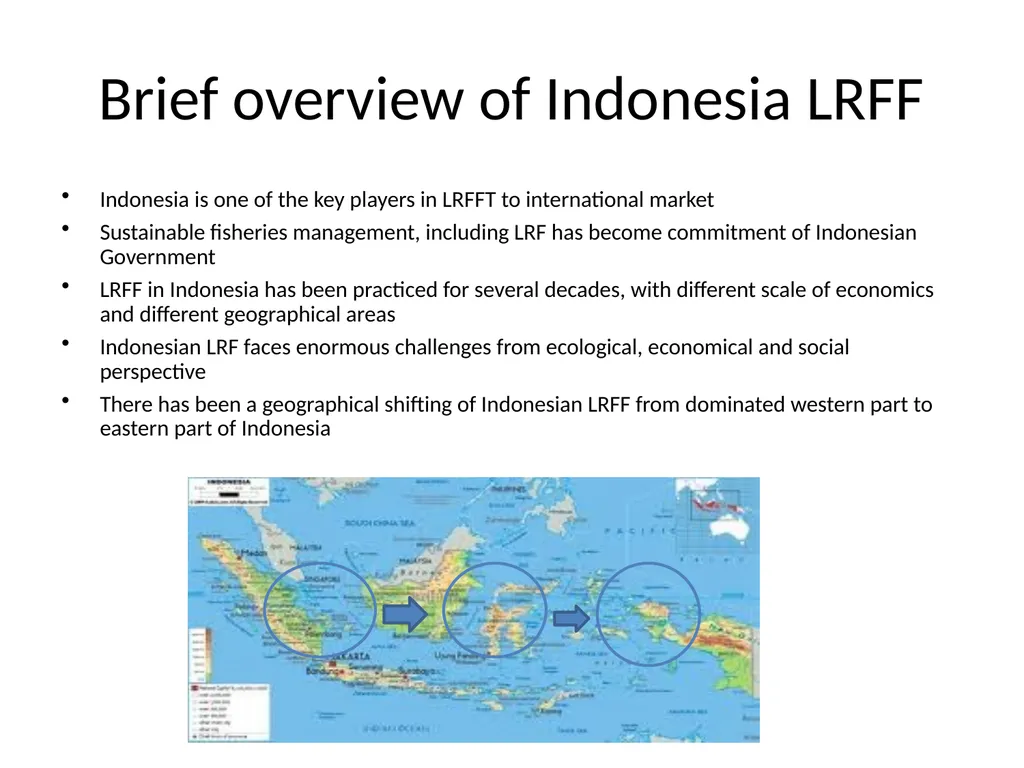
There has been a geographical shifting of Indonesian LRFF from dominated western part to eastern part of Indonesia<br>
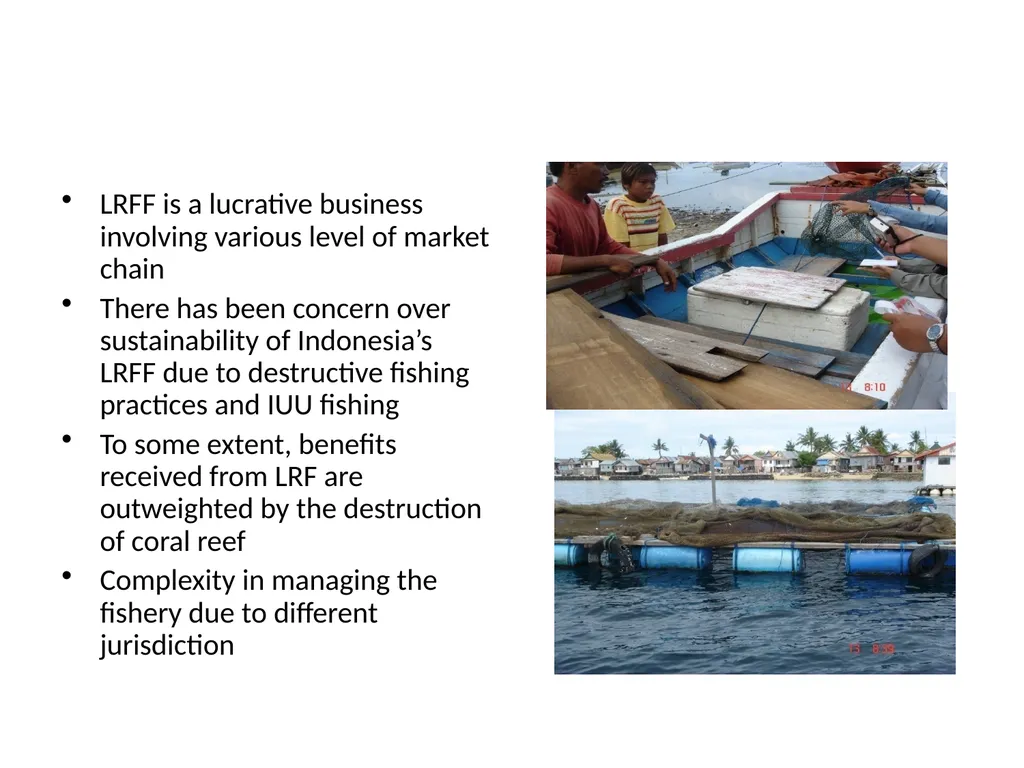
slide3. LRFF is a lucrative business involving various level of market chain
There has been concern over sustainability of Indonesia’s LRFF due to destructive fishing practices and IUU fishing
To some extent, benefits received from LRF are outweighted by the destruction of coral reef
Complexity in managing the fishery due to different jurisdiction<br>
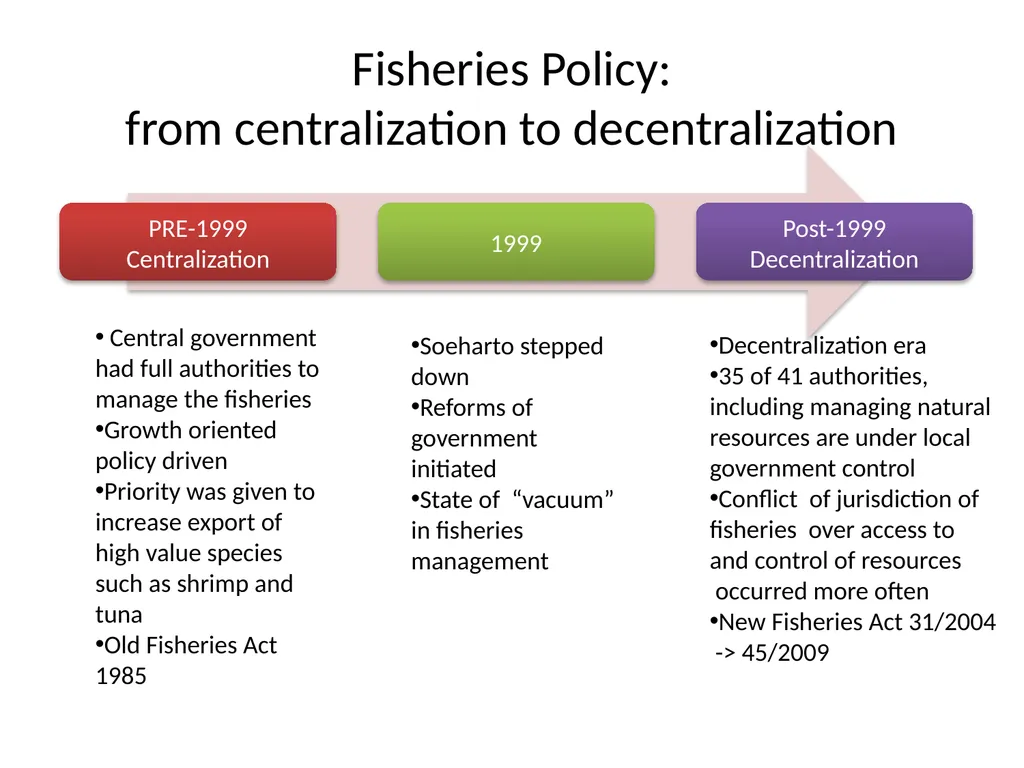
slide4. Fisheries Policy: from centralization to decentralization Central government had full authorities to manage the fisheries
Growth oriented policy driven
Priority was given to increase export of high value species such as shrimp and tuna
Old Fisheries Act 1985 Soeharto stepped down
Reforms of government initiated
State of “vacuum” in fisheries management Decentralization era
35 of 41 authorities, including managing natural resources are under local government control
Conflict of jurisdiction of fisheries over access to and control of resources
occurred more often
New Fisheries Act 31/2004 -> 45/2009<br>
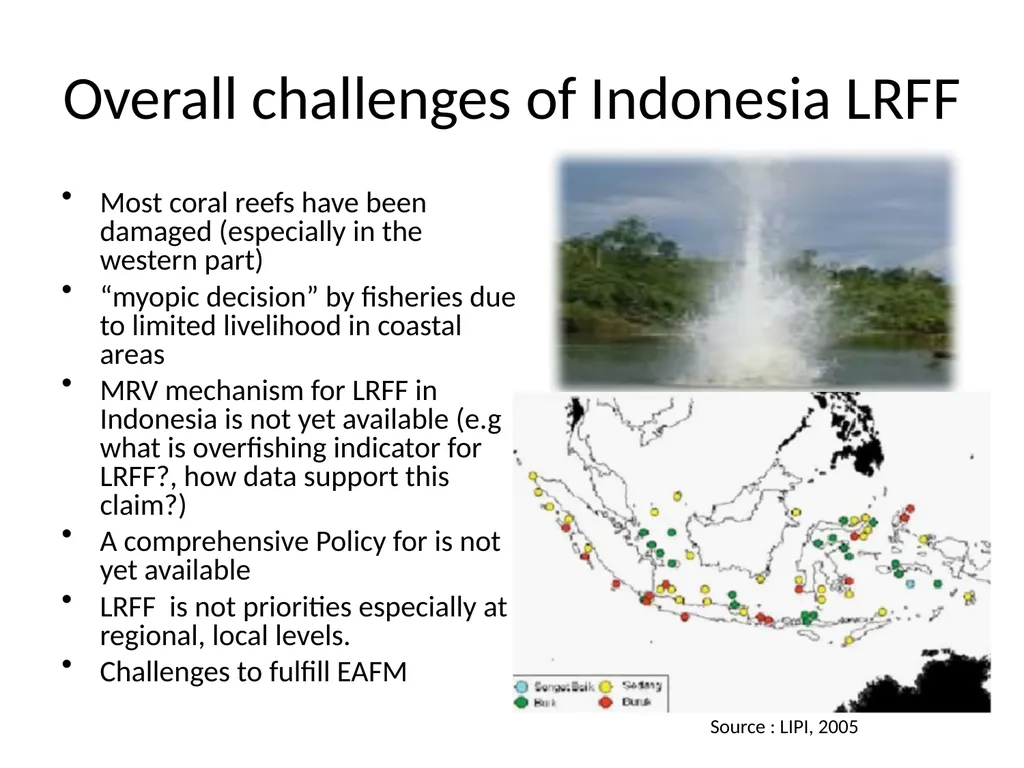
slide5. Overall challenges of Indonesia LRFF Most coral reefs have been damaged (especially in the western part)
“myopic decision” by fisheries due to limited livelihood in coastal areas
MRV mechanism for LRFF in Indonesia is not yet available (e.g what is overfishing indicator for LRFF?, how data support this claim?)
A comprehensive Policy for is not yet available
LRFF is not priorities especially at regional, local levels.
Challenges to fulfill EAFM Source : LIPI, 2005<br>
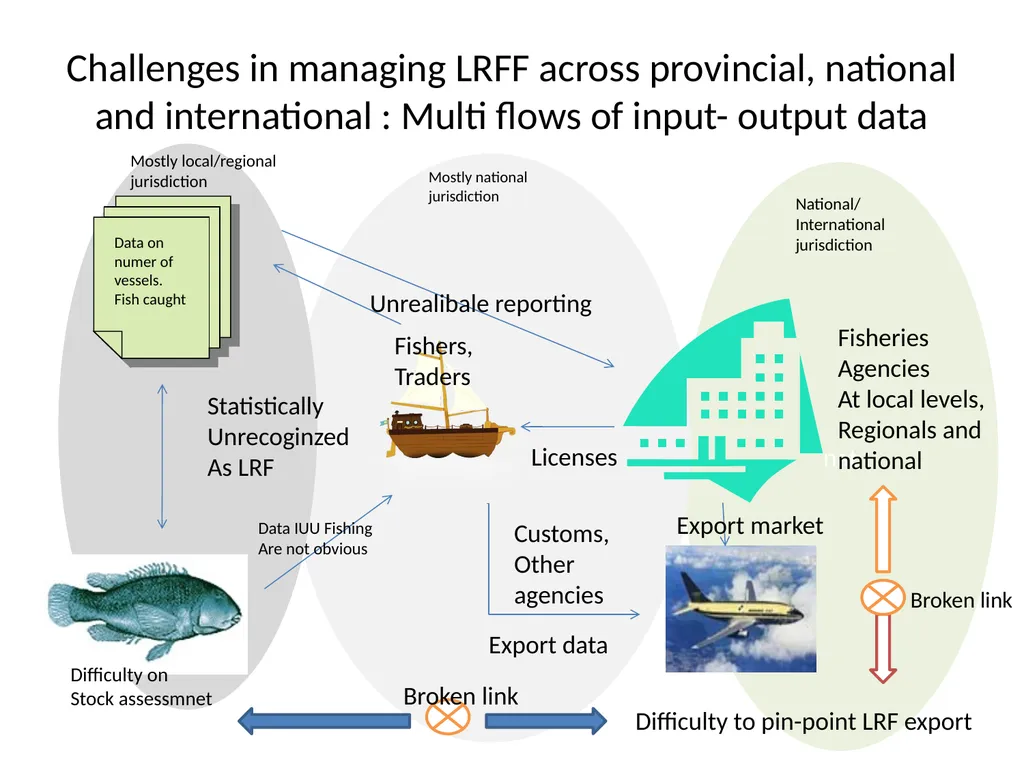
slide6. Challenges in managing LRFF across provincial, national and international : Multi flows of input- output data<br>
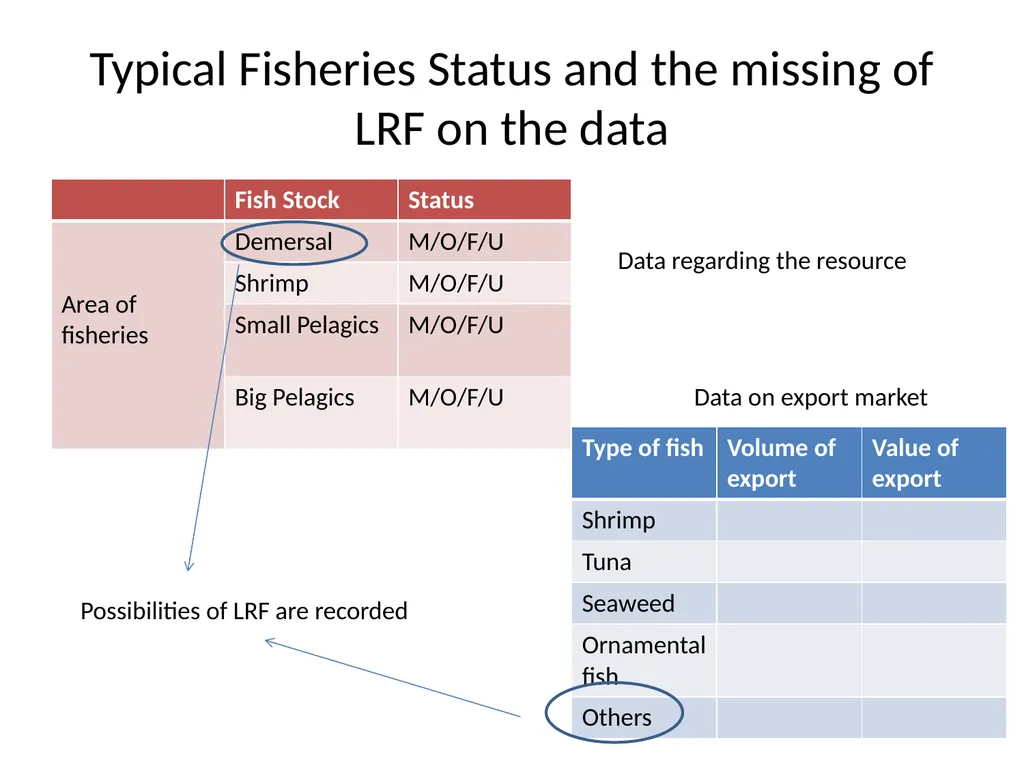
slide7. Typical Fisheries Status and the missing of LRF on the data Possibilities of LRF are recorded Data regarding the resource Data on export market<br>
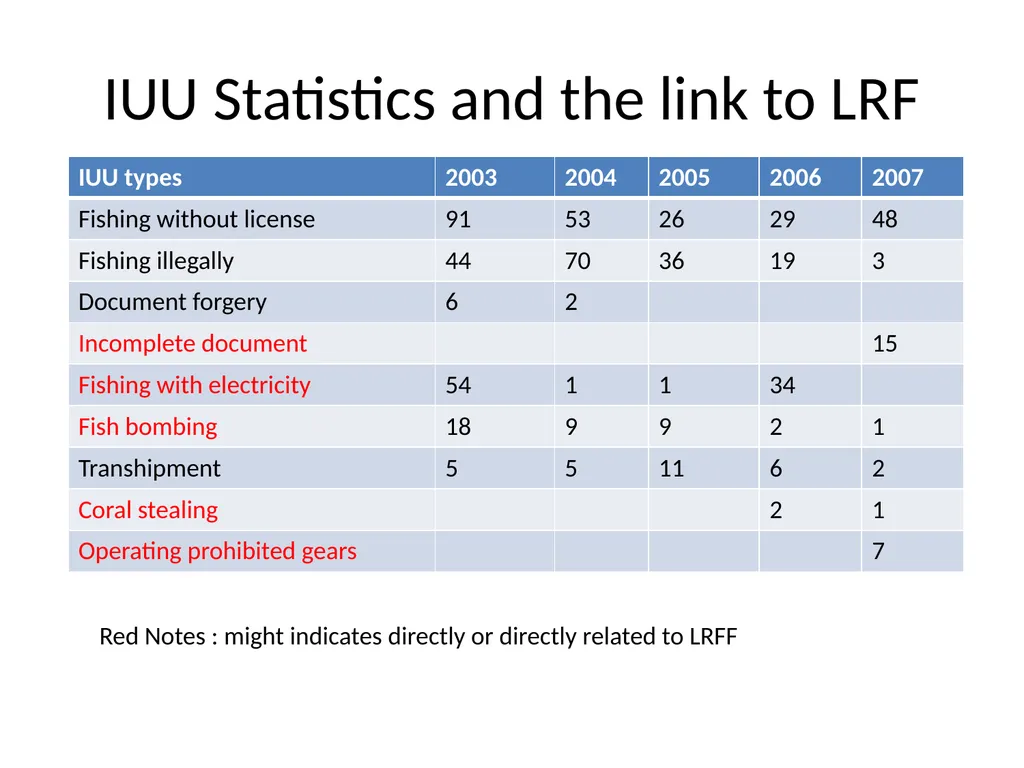
slide8. IUU Statistics and the link to LRF Red Notes : might indicates directly or directly related to LRFF<br>
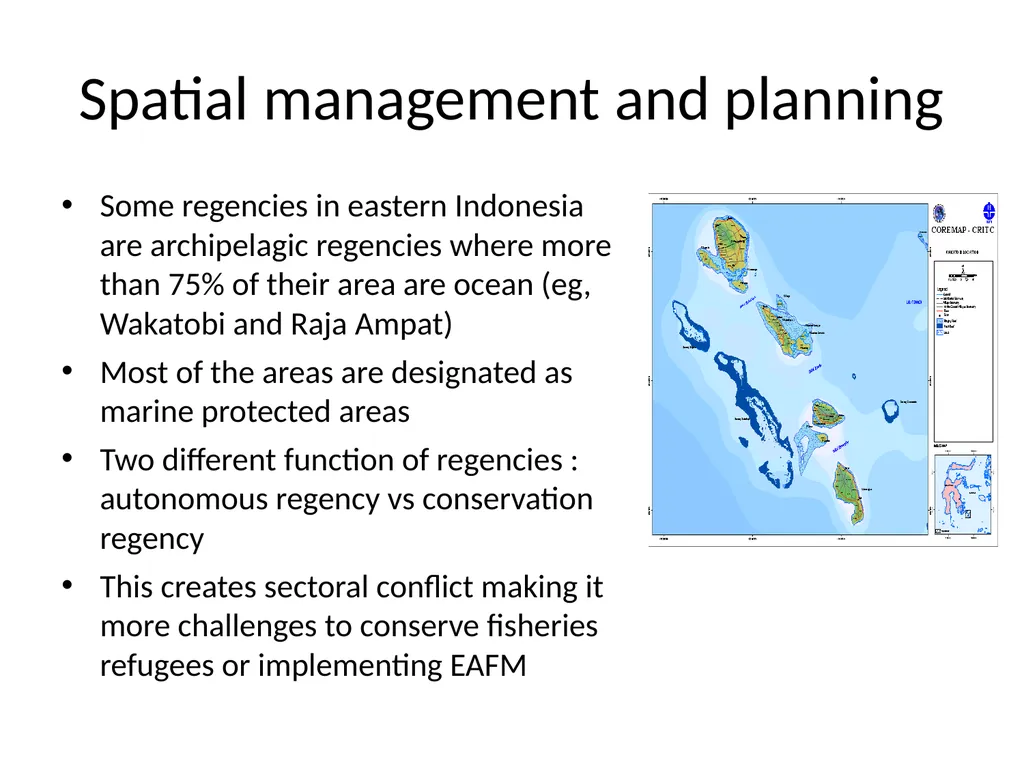
slide9. Spatial management and planning Some regencies in eastern Indonesia are archipelagic regencies where more than 75% of their area are ocean (eg, Wakatobi and Raja Ampat)
Most of the areas are designated as marine protected areas
Two different function of regencies : autonomous regency vs conservation regency
This creates sectoral conflict making it more challenges to conserve fisheries refugees or implementing EAFM<br>
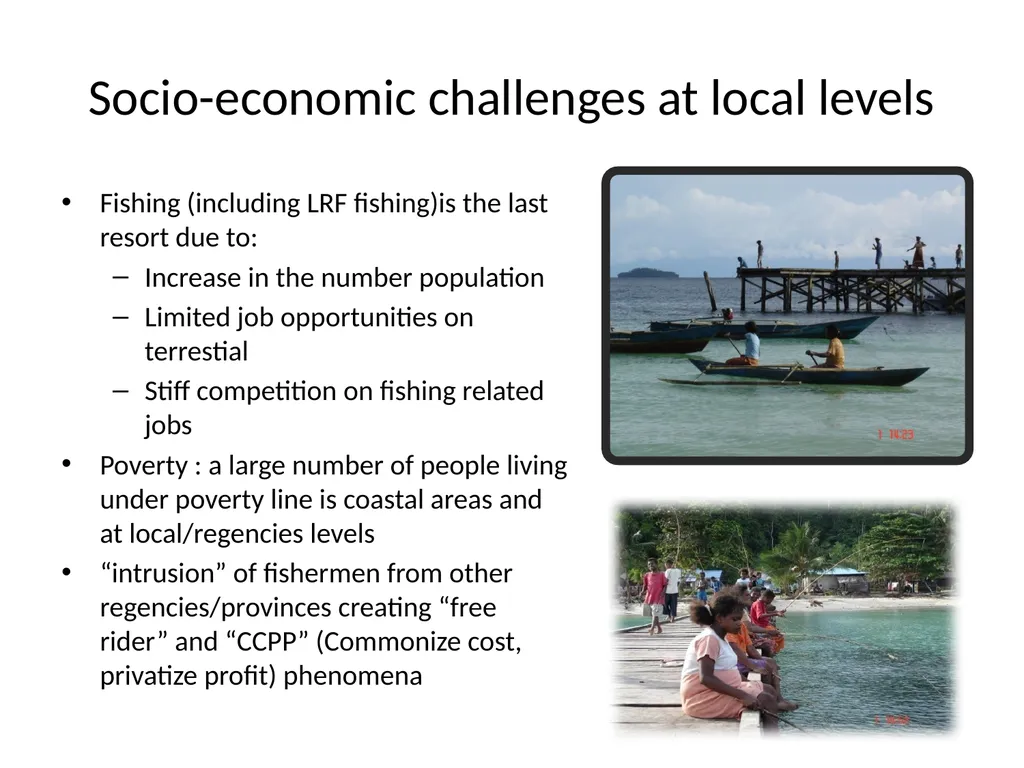
slide10. Socio-economic challenges at local levels Fishing (including LRF fishing)is the last resort due to:
Increase in the number population
Limited job opportunities on terrestial
Stiff competition on fishing related jobs
Poverty : a large number of people living under poverty line is coastal areas and at local/regencies levels
“intrusion” of fishermen from other regencies/provinces creating “free rider” and “CCPP” (Commonize cost, privatize profit) phenomena<br>
slide11. Institutional aspects Various institutions are involved in LRFF at regional levels
Conflicting regulations at local levels as LRF fishery encompass many sectors of economy
Property rights problem and higher transaction costs create insecure business
Giving exclusive concession to private sector (e.g diving business) creates tension between fishers and private sector. As a result fishers have to fish further.
Increase in cost of fishing creates spiral upward for myopic behavior for LRF<br>
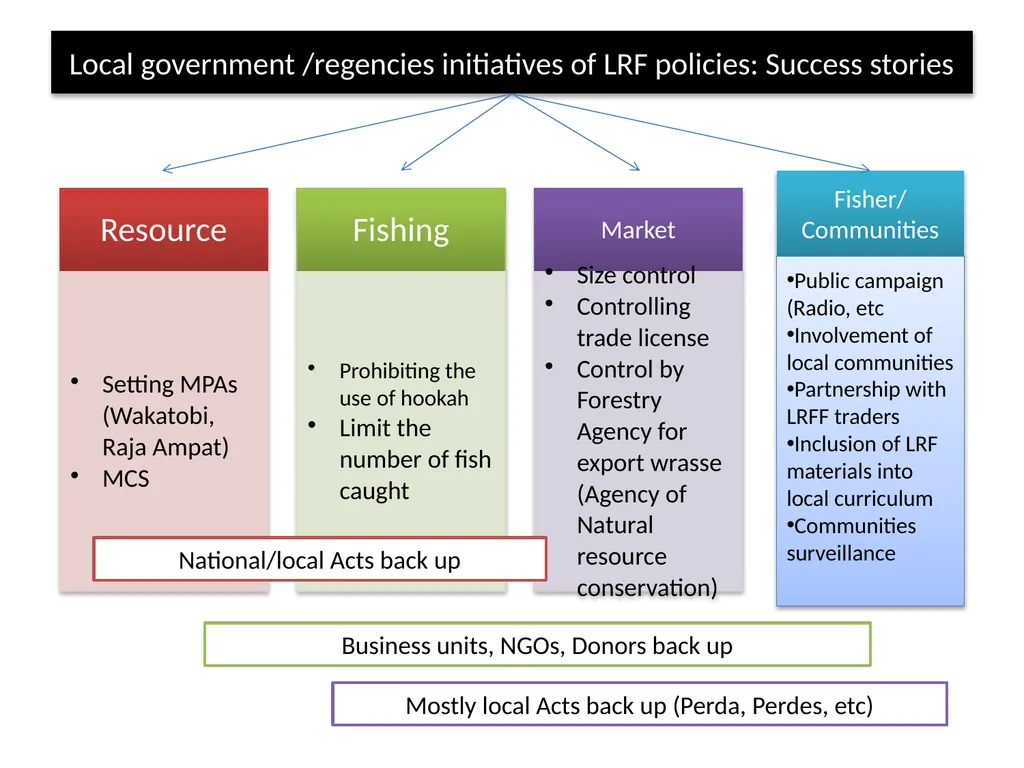
slide12. Fisher/
Communities Public campaign (Radio, etc
Involvement of local communities
Partnership with LRFF traders
Inclusion of LRF materials into local curriculum
Communities surveillance Local government /regencies initiatives of LRF policies: Success stories National/local Acts back up Mostly local Acts back up (Perda, Perdes, etc) Business units, NGOs, Donors back up<br>
slide13. Final remarks The government of Indonesia through its fisheries agencies both at national and regional levels has spent considerable efforts to manage the LRFF sustainably : some fail but some succeeded
Partnership with private sectors and communities has been encouraged and developed: it’s been an on going process and some work
Promoting co-management and ecosystem approach to fisheries management has been initiated with cooperation from various institutions through various programs
Improvement in data, statistics and scientific information with regard to LRF has been proposed
Several regulations have been proposed, including size limit and moratorium proposal for certain species with help from stakeholders
Complexity in regional, national and international jurisdictions calls for strong cooperation and collaboration among government units and other institutions<br>
Department of Resource & Environmental Economics
Bogor Agricultural University (IPB)<br>
slide2. Brief overview of Indonesia LRFF Indonesia is one of the key players in LRFFT to international market
Sustainable fisheries management, including LRF has become commitment of Indonesian Government
LRFF in Indonesia has been practiced for several decades, with different scale of economics and different geographical areas
Indonesian LRF faces enormous challenges from ecological, economical and social perspective
There has been a geographical shifting of Indonesian LRFF from dominated western part to eastern part of Indonesia<br>
slide3. LRFF is a lucrative business involving various level of market chain
There has been concern over sustainability of Indonesia’s LRFF due to destructive fishing practices and IUU fishing
To some extent, benefits received from LRF are outweighted by the destruction of coral reef
Complexity in managing the fishery due to different jurisdiction<br>
slide4. Fisheries Policy: from centralization to decentralization Central government had full authorities to manage the fisheries
Growth oriented policy driven
Priority was given to increase export of high value species such as shrimp and tuna
Old Fisheries Act 1985 Soeharto stepped down
Reforms of government initiated
State of “vacuum” in fisheries management Decentralization era
35 of 41 authorities, including managing natural resources are under local government control
Conflict of jurisdiction of fisheries over access to and control of resources
occurred more often
New Fisheries Act 31/2004 -> 45/2009<br>
slide5. Overall challenges of Indonesia LRFF Most coral reefs have been damaged (especially in the western part)
“myopic decision” by fisheries due to limited livelihood in coastal areas
MRV mechanism for LRFF in Indonesia is not yet available (e.g what is overfishing indicator for LRFF?, how data support this claim?)
A comprehensive Policy for is not yet available
LRFF is not priorities especially at regional, local levels.
Challenges to fulfill EAFM Source : LIPI, 2005<br>
slide6. Challenges in managing LRFF across provincial, national and international : Multi flows of input- output data<br>
slide7. Typical Fisheries Status and the missing of LRF on the data Possibilities of LRF are recorded Data regarding the resource Data on export market<br>
slide8. IUU Statistics and the link to LRF Red Notes : might indicates directly or directly related to LRFF<br>
slide9. Spatial management and planning Some regencies in eastern Indonesia are archipelagic regencies where more than 75% of their area are ocean (eg, Wakatobi and Raja Ampat)
Most of the areas are designated as marine protected areas
Two different function of regencies : autonomous regency vs conservation regency
This creates sectoral conflict making it more challenges to conserve fisheries refugees or implementing EAFM<br>
slide10. Socio-economic challenges at local levels Fishing (including LRF fishing)is the last resort due to:
Increase in the number population
Limited job opportunities on terrestial
Stiff competition on fishing related jobs
Poverty : a large number of people living under poverty line is coastal areas and at local/regencies levels
“intrusion” of fishermen from other regencies/provinces creating “free rider” and “CCPP” (Commonize cost, privatize profit) phenomena<br>
slide11. Institutional aspects Various institutions are involved in LRFF at regional levels
Conflicting regulations at local levels as LRF fishery encompass many sectors of economy
Property rights problem and higher transaction costs create insecure business
Giving exclusive concession to private sector (e.g diving business) creates tension between fishers and private sector. As a result fishers have to fish further.
Increase in cost of fishing creates spiral upward for myopic behavior for LRF<br>
slide12. Fisher/
Communities Public campaign (Radio, etc
Involvement of local communities
Partnership with LRFF traders
Inclusion of LRF materials into local curriculum
Communities surveillance Local government /regencies initiatives of LRF policies: Success stories National/local Acts back up Mostly local Acts back up (Perda, Perdes, etc) Business units, NGOs, Donors back up<br>
slide13. Final remarks The government of Indonesia through its fisheries agencies both at national and regional levels has spent considerable efforts to manage the LRFF sustainably : some fail but some succeeded
Partnership with private sectors and communities has been encouraged and developed: it’s been an on going process and some work
Promoting co-management and ecosystem approach to fisheries management has been initiated with cooperation from various institutions through various programs
Improvement in data, statistics and scientific information with regard to LRF has been proposed
Several regulations have been proposed, including size limit and moratorium proposal for certain species with help from stakeholders
Complexity in regional, national and international jurisdictions calls for strong cooperation and collaboration among government units and other institutions<br>