Managing Illness in Farm Animals Phil Myer, Liesel Schneider, Bryan Reiling, Nathan Conner, Taylor Ruth, and Christopher Stripling University of Nebraska-Lincoln University of Tennessee
"Managing Illness in Farm Animals Phil Myer**," is the property of its rightful owner. Permission is granted to
download and print the materials on this website for personal, non-commercial use only, and to display it
on your personal computer provided you do not modify the materials and that you retain all copyright
notices contained in the materials. By downloading content from our website, you accept the terms of this
agreement.
Presentation Transcript
01
Managing Illness in Farm Animals Phil Myer**, Liesel Schneider**, Bryan Reiling*, Nathan Conner*, Taylor Ruth*, and Christopher Stripling**
*University of Nebraska-Lincoln **University of Tennessee<br>
02
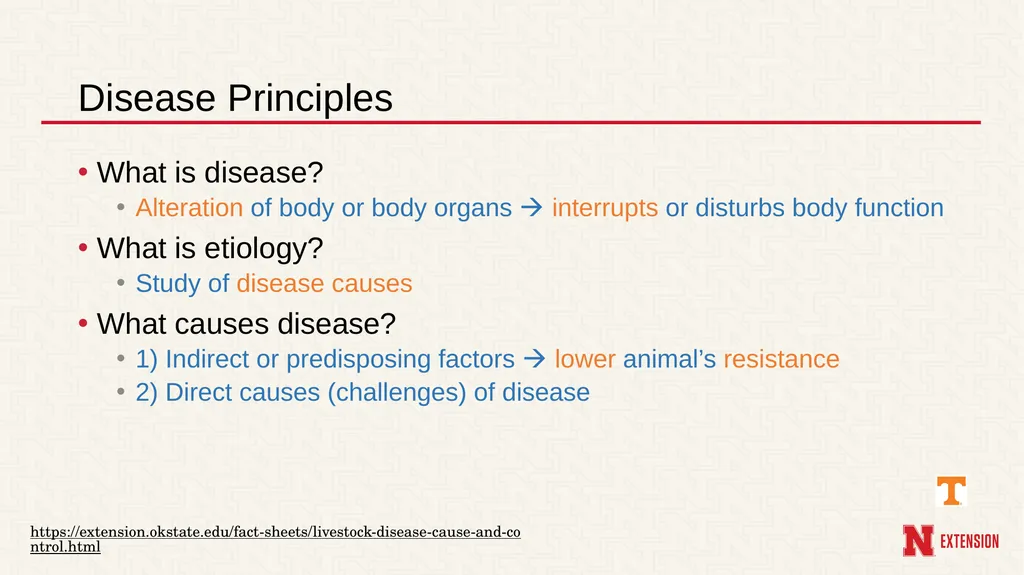
https://extension.okstate.edu/fact-sheets/livestock-disease-cause-and-control.html Disease Principles What is disease?
Alteration of body or body organs interrupts or disturbs body function
What is etiology?
Study of disease causes
What causes disease?
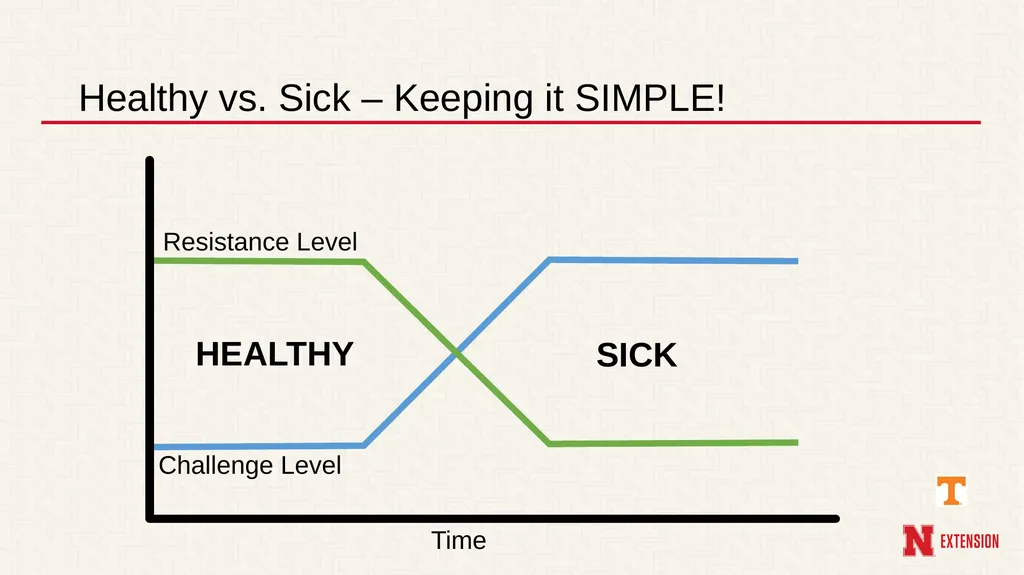
1) Indirect or predisposing factors lower animal’s resistance
2) Direct causes (challenges) of disease<br>
03
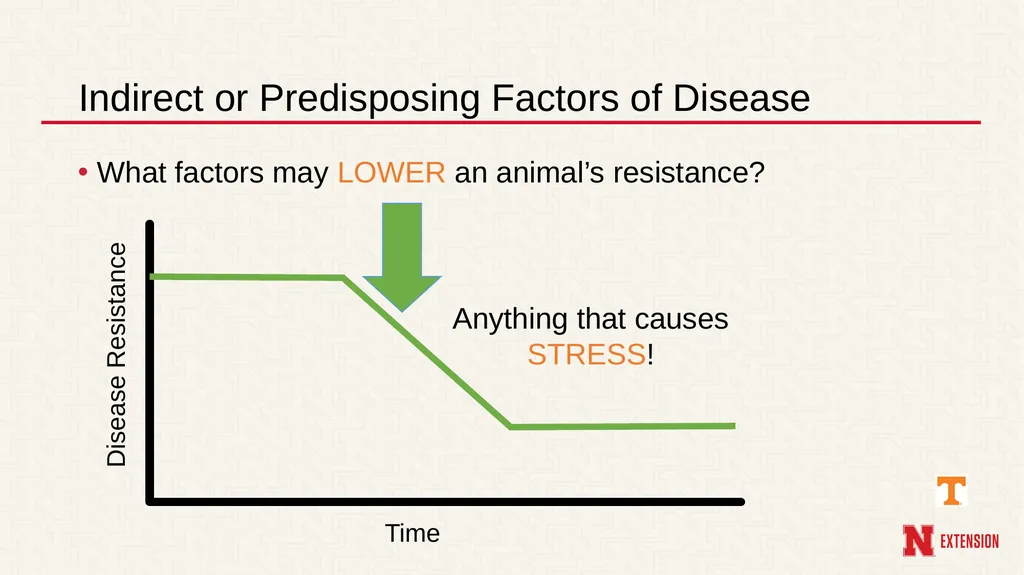
What factors may LOWER an animal’s resistance? Disease Resistance Time Indirect or Predisposing Factors of Disease Anything that causes
STRESS!<br>
04
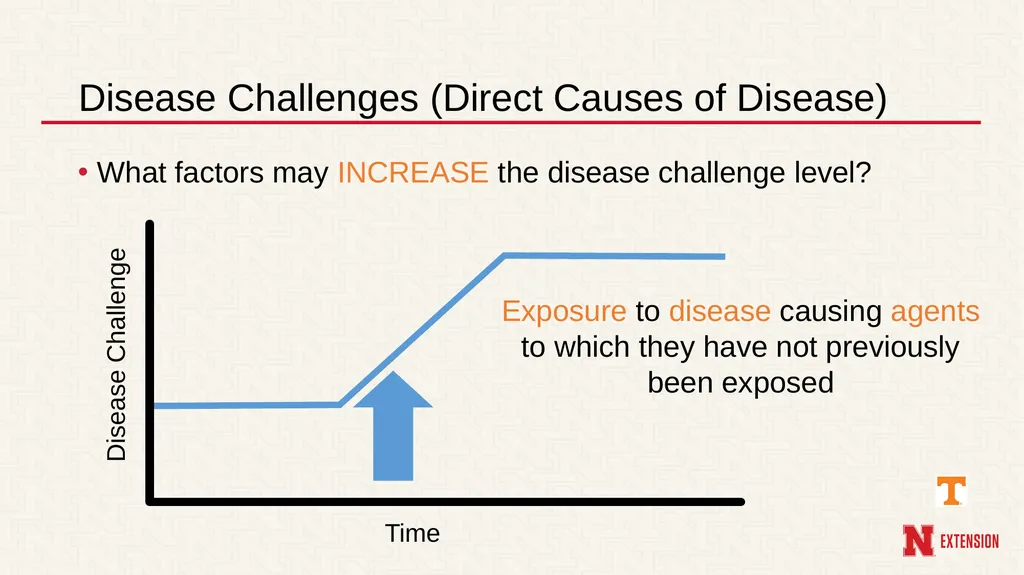
What factors may INCREASE the disease challenge level? Disease Challenge Time Disease Challenges (Direct Causes of Disease) Exposure to disease causing agents to which they have not previously been exposed<br>
05
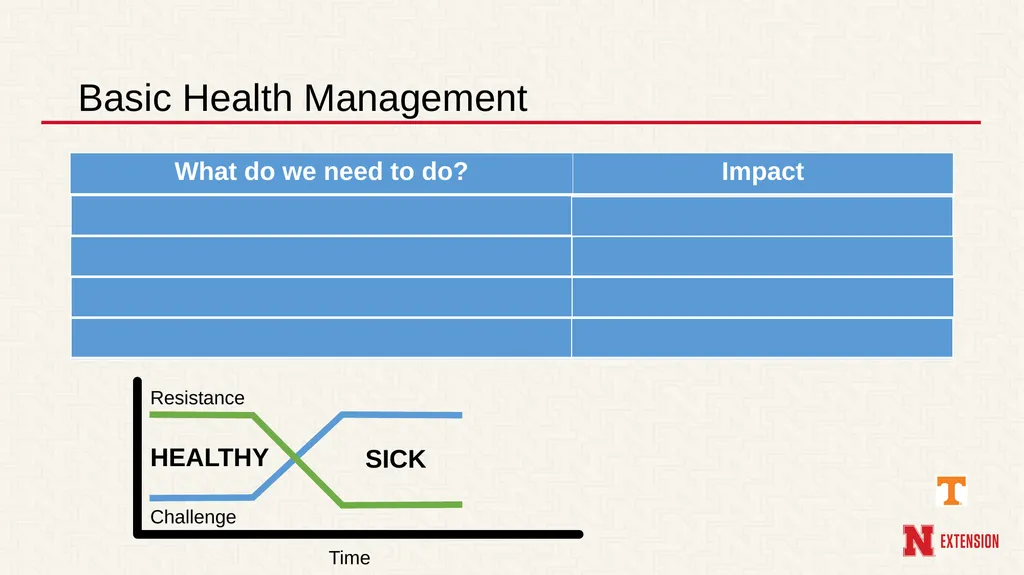
Time Healthy vs. Sick – Keeping it SIMPLE! HEALTHY SICK Resistance Level Challenge Level<br>
06
What are the Direct Causes of Disease? Bacteria
Viruses
Parasites
Fungi
Nutritional deficiencies
Chemical poisons
Unknown causes https://extension.okstate.edu/fact-sheets/livestock-disease-cause-and-control.html<br>
07
True or False
All contagious diseases are infectious, but not all infectious diseases are contagious
Contagious Diseases
Transmitted readily from one individual or group to another
Infectious Diseases
Produced by living organisms Infectious vs. Contagious Diseases https://extension.okstate.edu/fact-sheets/livestock-disease-cause-and-control.html<br>
08
How are Infectious Diseases Spread? Introduction of new animals
Diseased animals
Healthy animals (incubating disease)
Healthy animals (recovered, but carriers)
People moving between groups of animals
On clothing, on shoes, in nasal passages
Vehicles & equipment
Carcasses, not properly disposed<br>
09
How are Infectious Diseases Spread? Contaminated feed or feed bags
Impure water – surface drainage water
Manure handling & aerosolized manure/dust
Other animals
Horses, dogs, cats
Wildlife, rodents, birds, insects<br>
10
Body Defenses Against Disease How does the body PREVENT invasion of disease organisms?
Natural or physical barriers
Skin
Cornea of the eyes
Membranes lining the respiratory, digestive, urinary, and reproductive tracts
Cilia (hair-like projections) trap & move foreign material
Enzyme containing secretions (i.e., Sweat, tears, mucous)
Dilute & “wash out” invading organisms
Enzymes can also kill organisms https://www.merckmanuals.com/home/immune-disorders/biology-of-the-immune-system/overview-of-the-immune-system#v778496<br>
11
Body Defenses Against Disease How does the body FIGHT a disease organism?
White blood cells & antibodies
Inherited or natural immunity
Does not require previous encounter with organism
Acquired immunity
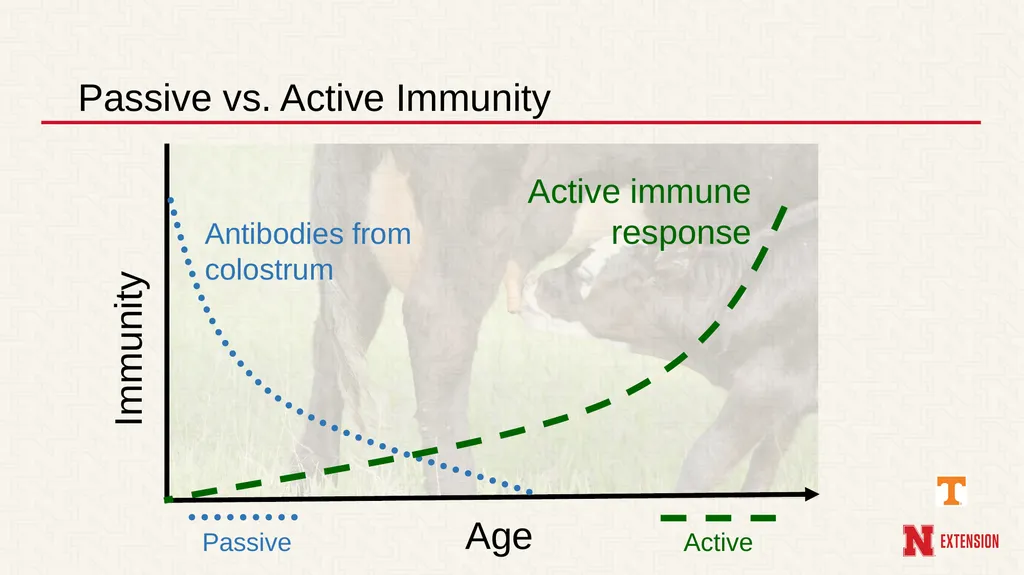
Passive – transferred from dam to baby, via colostrum
Active – stimulated by vaccination (exposure to dead or living disease agent) https://www.merckmanuals.com/home/immune-disorders/biology-of-the-immune-system/overview-of-the-immune-system#v778496<br>
12
Passive vs. Active Immunity Immunity Active immune response Passive Active Antibodies from colostrum Age<br>
13
Body Defenses Against Disease Fever – elevated body temperature
Assists the immune system
Excessive temperatures organ malfunction & failure
Inflammation
“Walls off” the area
blood flow immune cell flow to the area https://www.merckmanuals.com/home/infections/biology-of-infectious-disease/defenses-against-infection<br>
14
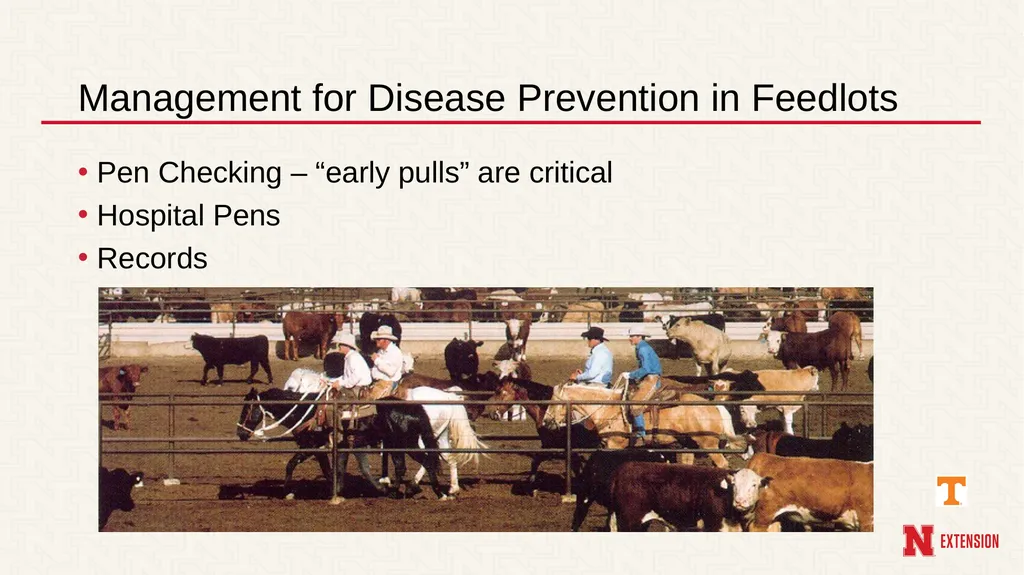
Management for Disease Prevention in Feedlots Pen Checking – “early pulls” are critical
Hospital Pens
Records<br>
15
What is normal? Eating – Healthy animals like to eat!
Alert behavior
For ruminants, they will “ruminate” (chew cud)
Sign of contentment, relaxation, health
Vital signs (for cattle)
Temperature: 101.5oF
Range from 97-103 dependent on time of day, outside temp, physical activity, etc.
Pulse rate: 40-70 beats/min
Respiration: 10-30 breaths/min (for mature cattle)
Highly variable dependent on numerous animal & environmental conditions https://www.iowabeefcenter.org/bch/VitalSigns.pdf https://www.thecattlesite.com/articles/2038/identifying-sick-or-injured-cattle/<br>
16
How do you know if an animal is sick? NOT Normal!
Not eating (or at least, not as much)
May drink MORE or LESS water than usual
Change in stool consistency diarrhea, or constipation
Less active/alert – slow to rise, dull eyes, droopy ears
Runny or dry nose
Cough – maybe, maybe not
Swellings, limps, unusual skin conditions<br>