
ManTech Project No. S2844 Digital Accuracy Control
TA
Published · 15 slides · 0 views
1 / 1
Description
ManTech Project No. S2844 Digital Accuracy Control Management System (DACMS) Project POP: December 2019 June 2021 Project Type: Process Change - Under Cognizance of Industry Carrie Callahan, GDBIW Dan Finke, PSU ARL NSRP All Panel Meeting
Related Topics
Share
Embed code
Download this presentation From Below
"ManTech Project No. S2844 Digital Accuracy Control" is the property of its rightful owner. Permission is granted to download and print the materials on this website for personal, non-commercial use only, and to display it on your personal computer provided you do not modify the materials and that you retain all copyright notices contained in the materials. By downloading content from our website, you accept the terms of this agreement.
Presentation Transcript
01
ManTech Project No. S2844
Digital Accuracy Control Management System
(DACMS)
Project POP: December 2019 – June 2021
Project Type: Process Change - Under Cognizance of Industry
Carrie Callahan, GDBIW
Dan Finke, PSU ARL NSRP All Panel Meeting – March 2021 DISTRIBUTION STATEMENT A: Approved for public release: distribution unlimited.
DCN#43-7828-21<br>
DCN#43-7828-21<br>
02
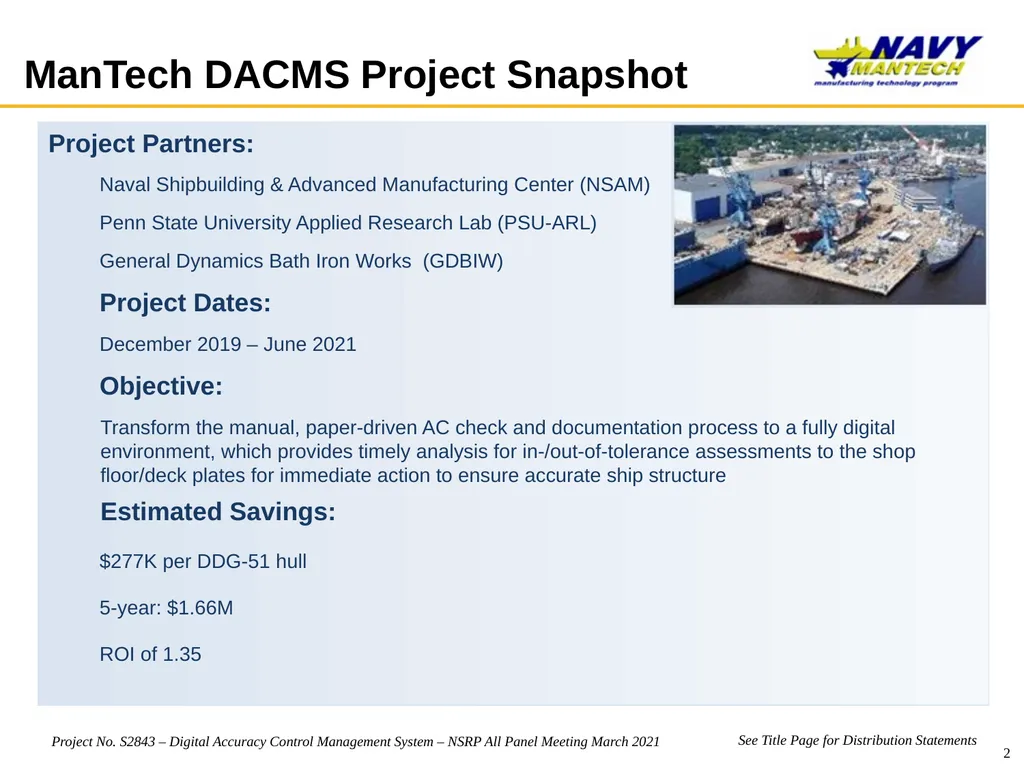
Project Partners:
Naval Shipbuilding & Advanced Manufacturing Center (NSAM)
Penn State University Applied Research Lab (PSU-ARL)
General Dynamics Bath Iron Works (GDBIW)
Project Dates:
December 2019 – June 2021
Objective:
Transform the manual, paper-driven AC check and documentation process to a fully digital environment, which provides timely analysis for in-/out-of-tolerance assessments to the shop floor/deck plates for immediate action to ensure accurate ship structure
Estimated Savings:
$277K per DDG-51 hull
5-year: $1.66M
ROI of 1.35 ManTech DACMS Project Snapshot<br>
Naval Shipbuilding & Advanced Manufacturing Center (NSAM)
Penn State University Applied Research Lab (PSU-ARL)
General Dynamics Bath Iron Works (GDBIW)
Project Dates:
December 2019 – June 2021
Objective:
Transform the manual, paper-driven AC check and documentation process to a fully digital environment, which provides timely analysis for in-/out-of-tolerance assessments to the shop floor/deck plates for immediate action to ensure accurate ship structure
Estimated Savings:
$277K per DDG-51 hull
5-year: $1.66M
ROI of 1.35 ManTech DACMS Project Snapshot<br>
03
Agenda Background
Issue
Project Objectives
Approach
Statement of Work
Accomplishments to Date
Work in Progress
Next Steps
Benefits and Savings Assumptions
Conclusions<br>
Issue
Project Objectives
Approach
Statement of Work
Accomplishments to Date
Work in Progress
Next Steps
Benefits and Savings Assumptions
Conclusions<br>
04
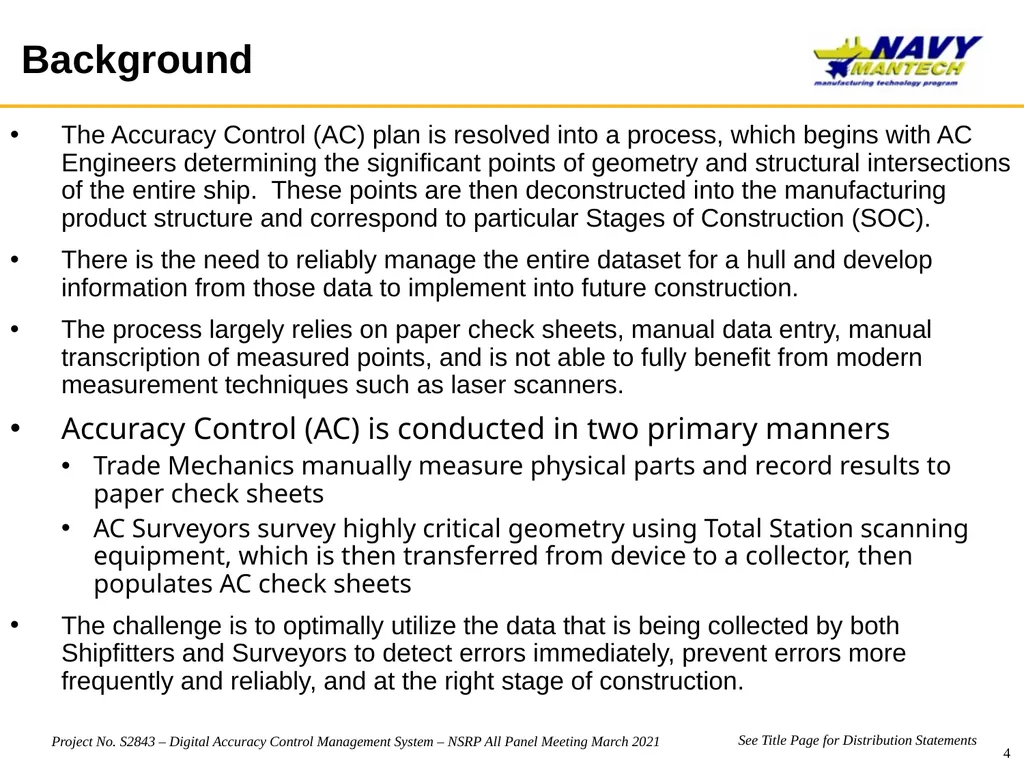
Background The Accuracy Control (AC) plan is resolved into a process, which begins with AC Engineers determining the significant points of geometry and structural intersections of the entire ship. These points are then deconstructed into the manufacturing product structure and correspond to particular Stages of Construction (SOC).
There is the need to reliably manage the entire dataset for a hull and develop information from those data to implement into future construction.
The process largely relies on paper check sheets, manual data entry, manual transcription of measured points, and is not able to fully benefit from modern measurement techniques such as laser scanners.
Accuracy Control (AC) is conducted in two primary manners
Trade Mechanics manually measure physical parts and record results to paper check sheets
AC Surveyors survey highly critical geometry using Total Station scanning equipment, which is then transferred from device to a collector, then populates AC check sheets
The challenge is to optimally utilize the data that is being collected by both Shipfitters and Surveyors to detect errors immediately, prevent errors more frequently and reliably, and at the right stage of construction.<br>
There is the need to reliably manage the entire dataset for a hull and develop information from those data to implement into future construction.
The process largely relies on paper check sheets, manual data entry, manual transcription of measured points, and is not able to fully benefit from modern measurement techniques such as laser scanners.
Accuracy Control (AC) is conducted in two primary manners
Trade Mechanics manually measure physical parts and record results to paper check sheets
AC Surveyors survey highly critical geometry using Total Station scanning equipment, which is then transferred from device to a collector, then populates AC check sheets
The challenge is to optimally utilize the data that is being collected by both Shipfitters and Surveyors to detect errors immediately, prevent errors more frequently and reliably, and at the right stage of construction.<br>
05
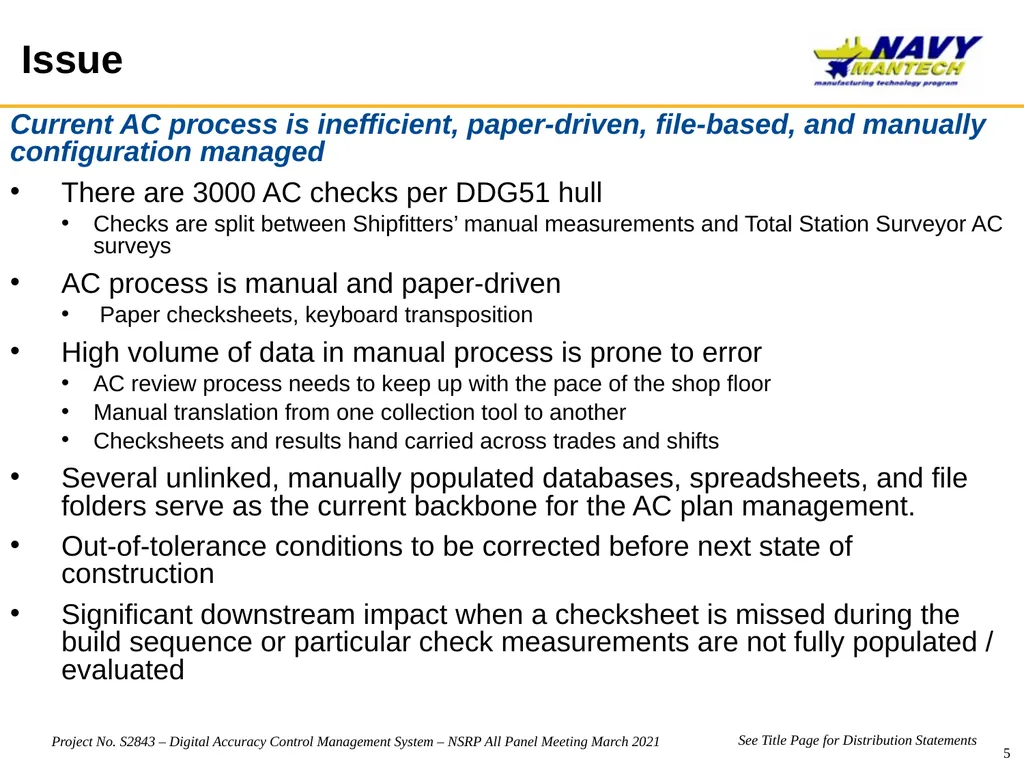
Issue Current AC process is inefficient, paper-driven, file-based, and manually configuration managed
There are 3000 AC checks per DDG51 hull
Checks are split between Shipfitters’ manual measurements and Total Station Surveyor AC surveys
AC process is manual and paper-driven
Paper checksheets, keyboard transposition
High volume of data in manual process is prone to error
AC review process needs to keep up with the pace of the shop floor
Manual translation from one collection tool to another
Checksheets and results hand carried across trades and shifts
Several unlinked, manually populated databases, spreadsheets, and file folders serve as the current backbone for the AC plan management.
Out-of-tolerance conditions to be corrected before next state of construction
Significant downstream impact when a checksheet is missed during the build sequence or particular check measurements are not fully populated / evaluated<br>
There are 3000 AC checks per DDG51 hull
Checks are split between Shipfitters’ manual measurements and Total Station Surveyor AC surveys
AC process is manual and paper-driven
Paper checksheets, keyboard transposition
High volume of data in manual process is prone to error
AC review process needs to keep up with the pace of the shop floor
Manual translation from one collection tool to another
Checksheets and results hand carried across trades and shifts
Several unlinked, manually populated databases, spreadsheets, and file folders serve as the current backbone for the AC plan management.
Out-of-tolerance conditions to be corrected before next state of construction
Significant downstream impact when a checksheet is missed during the build sequence or particular check measurements are not fully populated / evaluated<br>
06
Project Objective Goals:
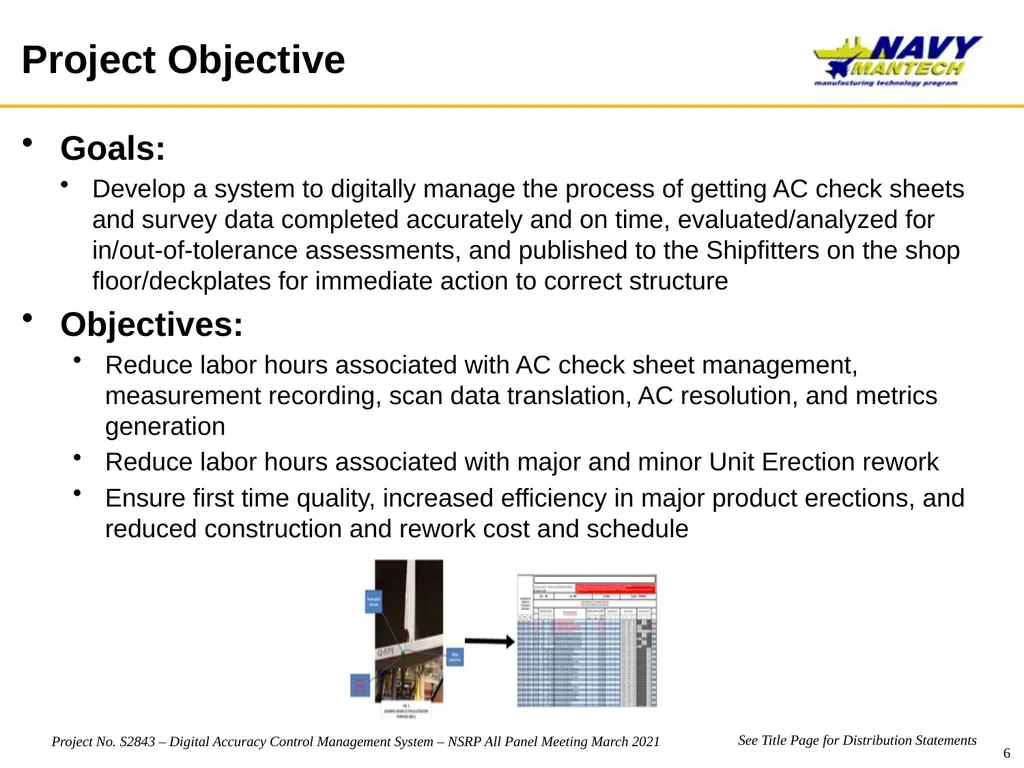
Develop a system to digitally manage the process of getting AC check sheets and survey data completed accurately and on time, evaluated/analyzed for in/out-of-tolerance assessments, and published to the Shipfitters on the shop floor/deckplates for immediate action to correct structure
Objectives:
Reduce labor hours associated with AC check sheet management, measurement recording, scan data translation, AC resolution, and metrics generation
Reduce labor hours associated with major and minor Unit Erection rework
Ensure first time quality, increased efficiency in major product erections, and reduced construction and rework cost and schedule<br>
Develop a system to digitally manage the process of getting AC check sheets and survey data completed accurately and on time, evaluated/analyzed for in/out-of-tolerance assessments, and published to the Shipfitters on the shop floor/deckplates for immediate action to correct structure
Objectives:
Reduce labor hours associated with AC check sheet management, measurement recording, scan data translation, AC resolution, and metrics generation
Reduce labor hours associated with major and minor Unit Erection rework
Ensure first time quality, increased efficiency in major product erections, and reduced construction and rework cost and schedule<br>
07
Approach The Digital Accuracy Control Management System (DACMS) project will develop a system which transforms the manual, paper-driven AC check and documentation process to a fully digital environment.
The project will facilitate the process of collecting AC data by Shipfitters electronically, via tablet, on the shop floor and deckplates and feed to a consolidated AC data system.
System will seamlessly integrate Survey AC data via Total Station, into the same consolidated data system.
DACMS will contain the determined AC points crucial to fabrication and assembly, as well as their corresponding value within the configured design.
DACMS will analyze the data in regards to in/out-of-tolerance condition and deliver this information to AC Engineers who, in turn, will disposition the analysis within the tool and deliver back to the shop floor/deckplates.
The system will manage and maintain AC data configuration.
This system will leverage the Central Data System (CDS) hub developed for ONR ManTech project S2600, Shipyard Capacity Planning.<br>
The project will facilitate the process of collecting AC data by Shipfitters electronically, via tablet, on the shop floor and deckplates and feed to a consolidated AC data system.
System will seamlessly integrate Survey AC data via Total Station, into the same consolidated data system.
DACMS will contain the determined AC points crucial to fabrication and assembly, as well as their corresponding value within the configured design.
DACMS will analyze the data in regards to in/out-of-tolerance condition and deliver this information to AC Engineers who, in turn, will disposition the analysis within the tool and deliver back to the shop floor/deckplates.
The system will manage and maintain AC data configuration.
This system will leverage the Central Data System (CDS) hub developed for ONR ManTech project S2600, Shipyard Capacity Planning.<br>
08
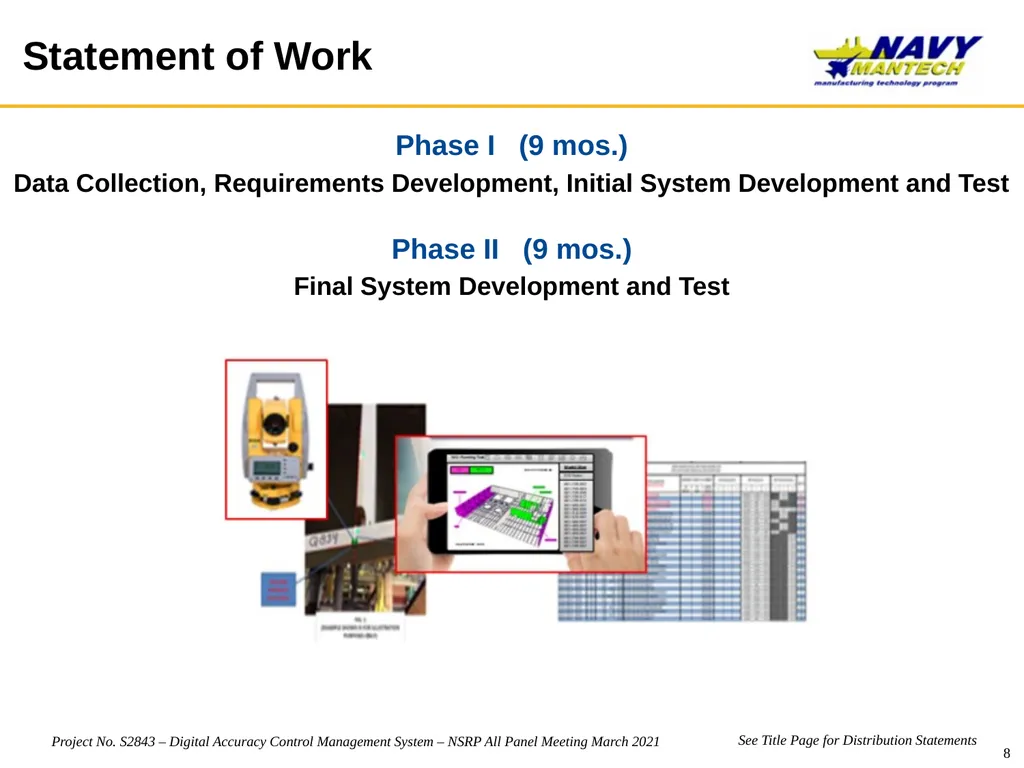
Statement of Work Phase I (9 mos.)
Data Collection, Requirements Development, Initial System Development and Test
Phase II (9 mos.)
Final System Development and Test<br>
Data Collection, Requirements Development, Initial System Development and Test
Phase II (9 mos.)
Final System Development and Test<br>
09
Accomplishments to Date Phase I – Complete
Task 1 – Investigate Current Process and Map Future State
Completed current and future state definition for management of Accuracy Control checkpoints, checksheets, data collection, and analysis
Task 2 – Develop Requirements and Use Cases
Completed requirements and use case definition for DACMS data, format, workflow, user interfaces
Conducted internal go/no go assessment, consensus for proceeding to prototype development
Task 3 – Design and Develop Prototype Data System
Completed DACMS architecture and data system design
Developed initial system prototype data schema
Task 4 – Develop DACMS Prototype
Completed DACMS system logic in data schema
Completed DACMS prototype
Conducted BIW IT Architectural Review Board review
Provided simulated demonstrations to shipyard end users
Task 5 – Go/No Go, Phase I Report
Conducted end-phase go/no go assessment
Prepared Phase I report and conducted prototype demo<br>
Task 1 – Investigate Current Process and Map Future State
Completed current and future state definition for management of Accuracy Control checkpoints, checksheets, data collection, and analysis
Task 2 – Develop Requirements and Use Cases
Completed requirements and use case definition for DACMS data, format, workflow, user interfaces
Conducted internal go/no go assessment, consensus for proceeding to prototype development
Task 3 – Design and Develop Prototype Data System
Completed DACMS architecture and data system design
Developed initial system prototype data schema
Task 4 – Develop DACMS Prototype
Completed DACMS system logic in data schema
Completed DACMS prototype
Conducted BIW IT Architectural Review Board review
Provided simulated demonstrations to shipyard end users
Task 5 – Go/No Go, Phase I Report
Conducted end-phase go/no go assessment
Prepared Phase I report and conducted prototype demo<br>
10
Work in Progress Phase II – Active
Task 6 – Develop Automated Routines for Capture/Translation/Management of AC Data
Development of automated routines, data capture and management
Developing integration with the Total Station for automated data conversion from device into DACMS
Development of the data translation processes
Establish test environment at shipyard
Testing and validation of automated routines by stakeholders
Task 7 – Extend DACMS Software
Continued modifications to system architecture, hardening of system, solutions for deep dive areas
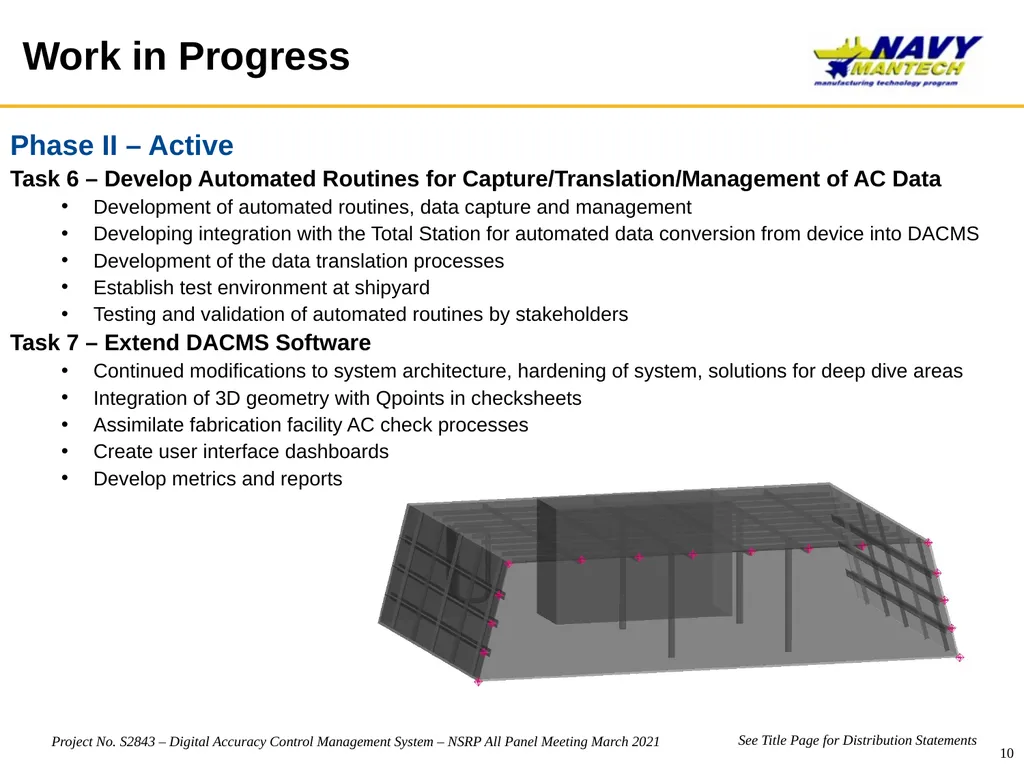
Integration of 3D geometry with Qpoints in checksheets
Assimilate fabrication facility AC check processes
Create user interface dashboards
Develop metrics and reports<br>
Task 6 – Develop Automated Routines for Capture/Translation/Management of AC Data
Development of automated routines, data capture and management
Developing integration with the Total Station for automated data conversion from device into DACMS
Development of the data translation processes
Establish test environment at shipyard
Testing and validation of automated routines by stakeholders
Task 7 – Extend DACMS Software
Continued modifications to system architecture, hardening of system, solutions for deep dive areas
Integration of 3D geometry with Qpoints in checksheets
Assimilate fabrication facility AC check processes
Create user interface dashboards
Develop metrics and reports<br>
11
Next Steps Phase II – Active
Task 8 – Test/Evaluate DACMS
Conduct user functional and end user testing
Task 9 – Final DACMS Tool Software Revision
Complete system enhancements based on testing results and fully implement connection to data capture/collection devices
Task 10 – Develop Specifications for Shipyard Deployment
Document administrative and operational specifications for DACMS
Review and approval by stakeholders and IT
Task 11 – Final Reporting
Update shipyard business case
Develop implementation plan
Produce final report
Conduct final demonstration<br>
Task 8 – Test/Evaluate DACMS
Conduct user functional and end user testing
Task 9 – Final DACMS Tool Software Revision
Complete system enhancements based on testing results and fully implement connection to data capture/collection devices
Task 10 – Develop Specifications for Shipyard Deployment
Document administrative and operational specifications for DACMS
Review and approval by stakeholders and IT
Task 11 – Final Reporting
Update shipyard business case
Develop implementation plan
Produce final report
Conduct final demonstration<br>
12
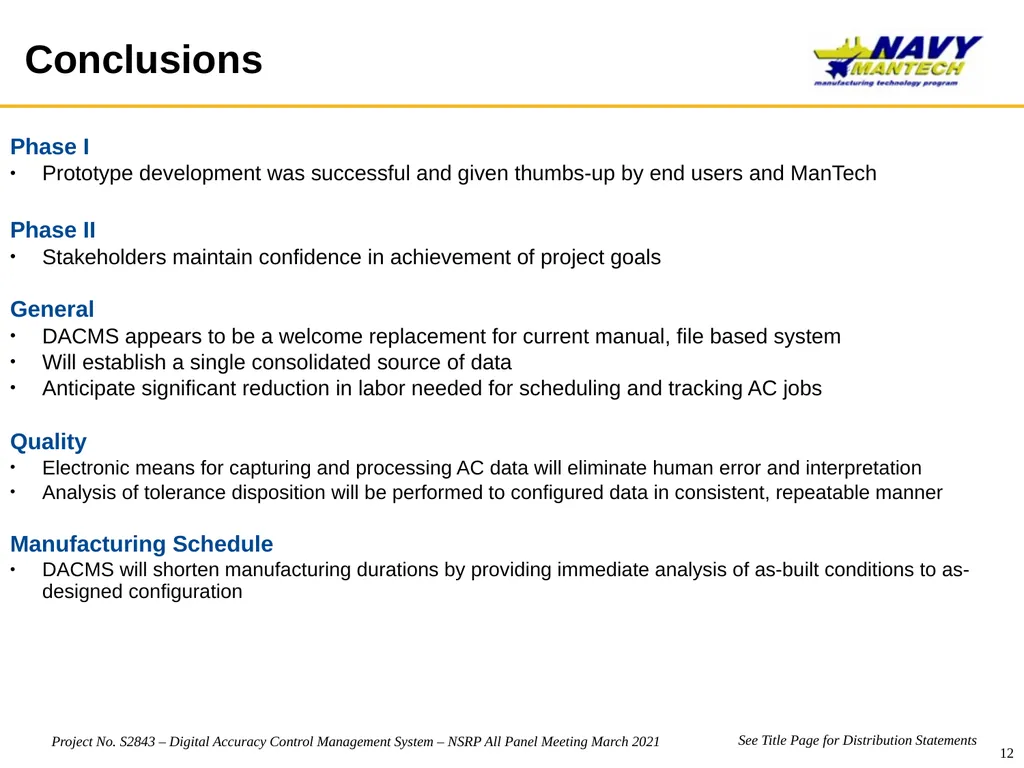
Conclusions Phase I
Prototype development was successful and given thumbs-up by end users and ManTech
Phase II
Stakeholders maintain confidence in achievement of project goals
General
DACMS appears to be a welcome replacement for current manual, file based system
Will establish a single consolidated source of data
Anticipate significant reduction in labor needed for scheduling and tracking AC jobs
Quality
Electronic means for capturing and processing AC data will eliminate human error and interpretation
Analysis of tolerance disposition will be performed to configured data in consistent, repeatable manner
Manufacturing Schedule
DACMS will shorten manufacturing durations by providing immediate analysis of as-built conditions to as-designed configuration<br>
Prototype development was successful and given thumbs-up by end users and ManTech
Phase II
Stakeholders maintain confidence in achievement of project goals
General
DACMS appears to be a welcome replacement for current manual, file based system
Will establish a single consolidated source of data
Anticipate significant reduction in labor needed for scheduling and tracking AC jobs
Quality
Electronic means for capturing and processing AC data will eliminate human error and interpretation
Analysis of tolerance disposition will be performed to configured data in consistent, repeatable manner
Manufacturing Schedule
DACMS will shorten manufacturing durations by providing immediate analysis of as-built conditions to as-designed configuration<br>
13
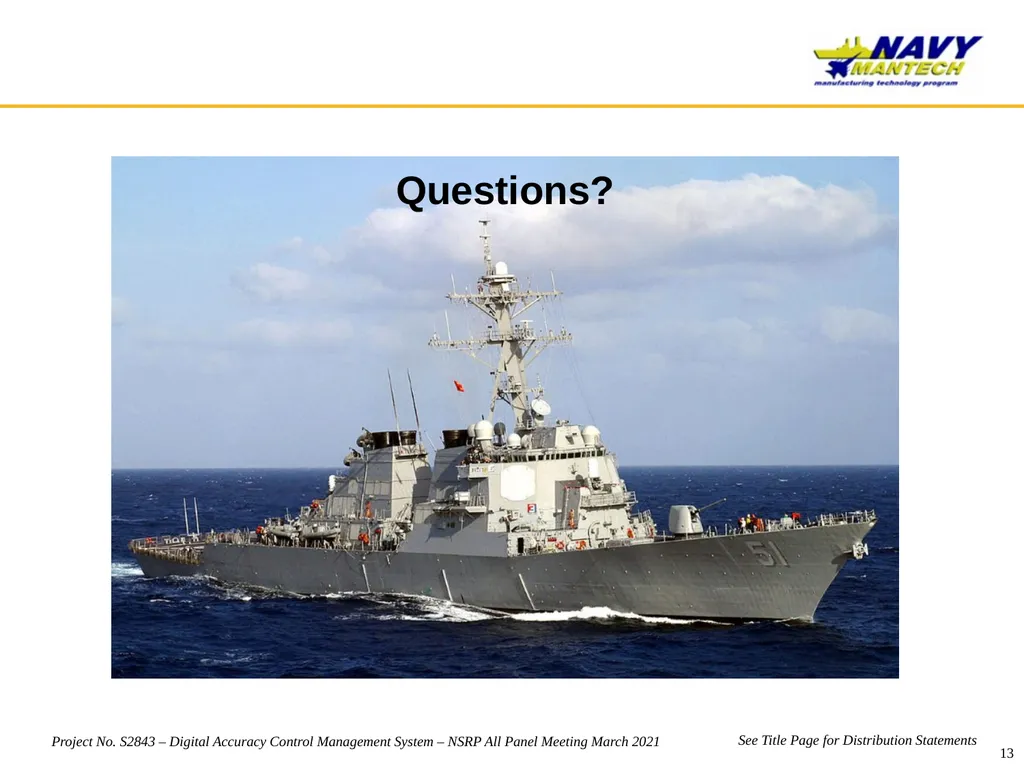
Questions?<br>
14
Backup<br>
15
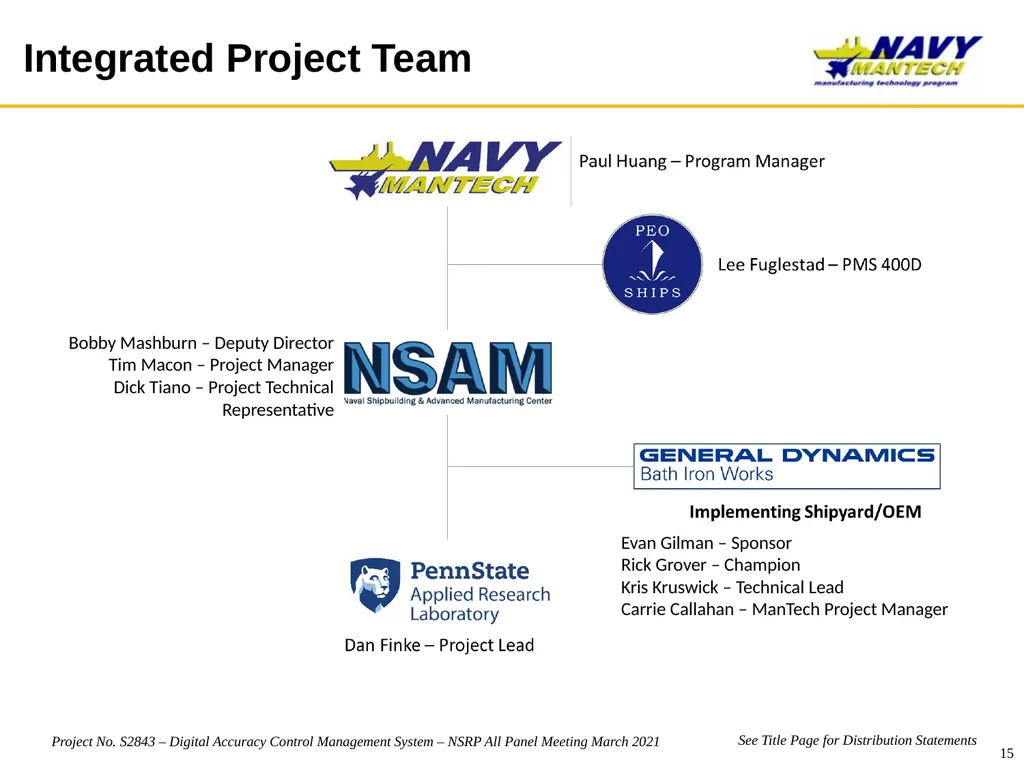
Integrated Project Team<br>