
Mark Gerstein Yale U. Biomedical Data Science
Description: Mark Gerstein Yale U. Biomedical Data Science (GersteinLab.orgcourses452) Genome Annotation (Multi-omic Analyses) (25m7-part1) Last edit in spring 25. Just first half related to genome annotation. Reduced integration section. Now loosely
Related Topics
Download Presentation
"Mark Gerstein Yale U. Biomedical Data Science" is the property of its rightful owner. Permission is granted to download and print the materials on this website for personal, non-commercial use only, and to display it on your personal computer provided you do not modify the materials and that you retain all copyright notices contained in the materials. By downloading content from our website, you accept the terms of this agreement.
Presentation Transcript
slide1. Mark Gerstein
Yale U. Biomedical Data Science (GersteinLab.org/courses/452)
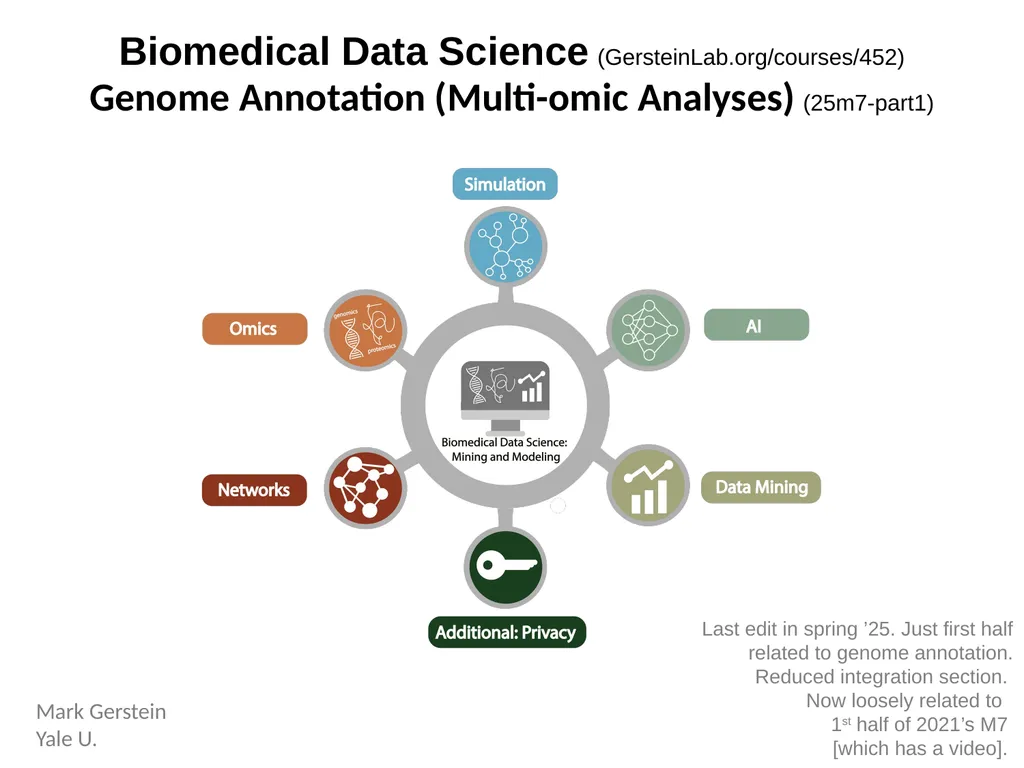
Genome Annotation (Multi-omic Analyses) (25m7-part1) Last edit in spring ’25. Just first half related to genome annotation. Reduced integration section. Now loosely related to 1st half of 2021’s M7 [which has a video].<br>
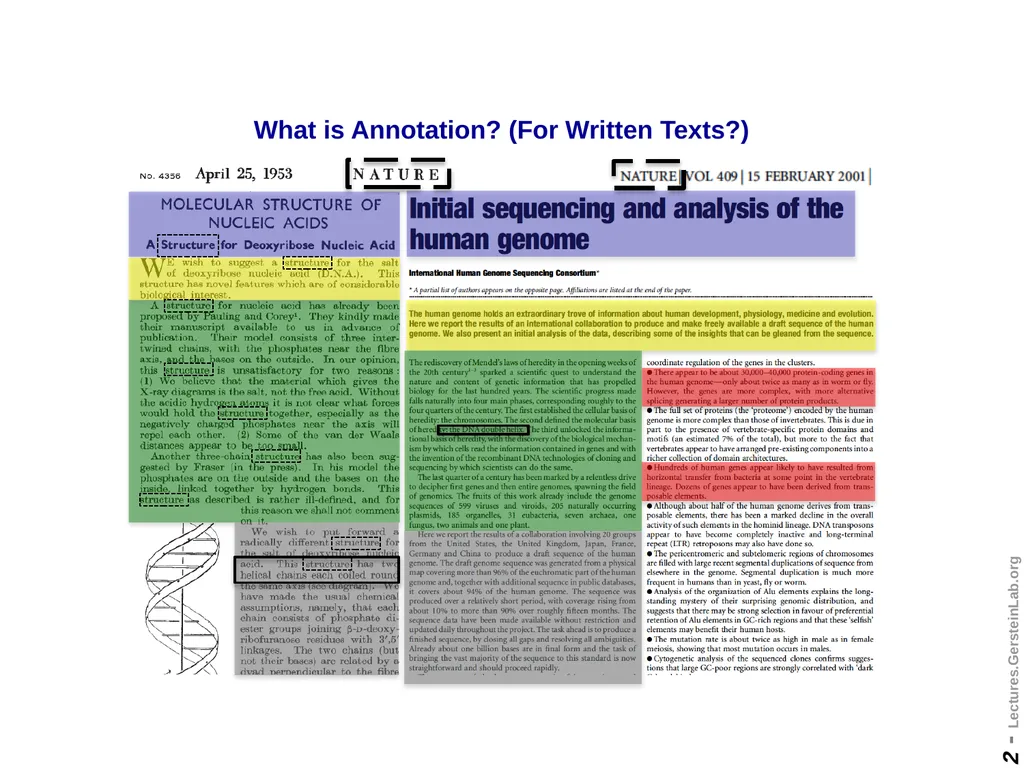
slide2. What is Annotation? (For Written Texts?)<br>
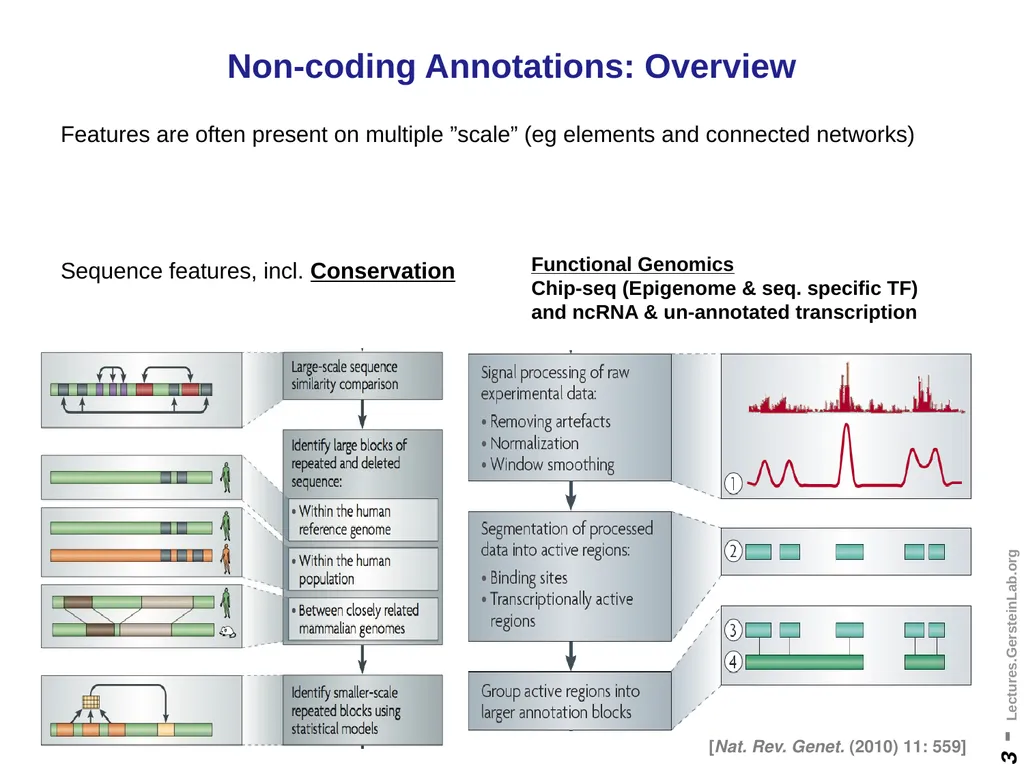
slide3. Non-coding Annotations: Overview Features are often present on multiple ”scale” (eg elements and connected networks)
Sequence features, incl. Conservation Functional Genomics
Chip-seq (Epigenome & seq. specific TF) and ncRNA & un-annotated transcription [Nat. Rev. Genet. (2010) 11: 559]<br>
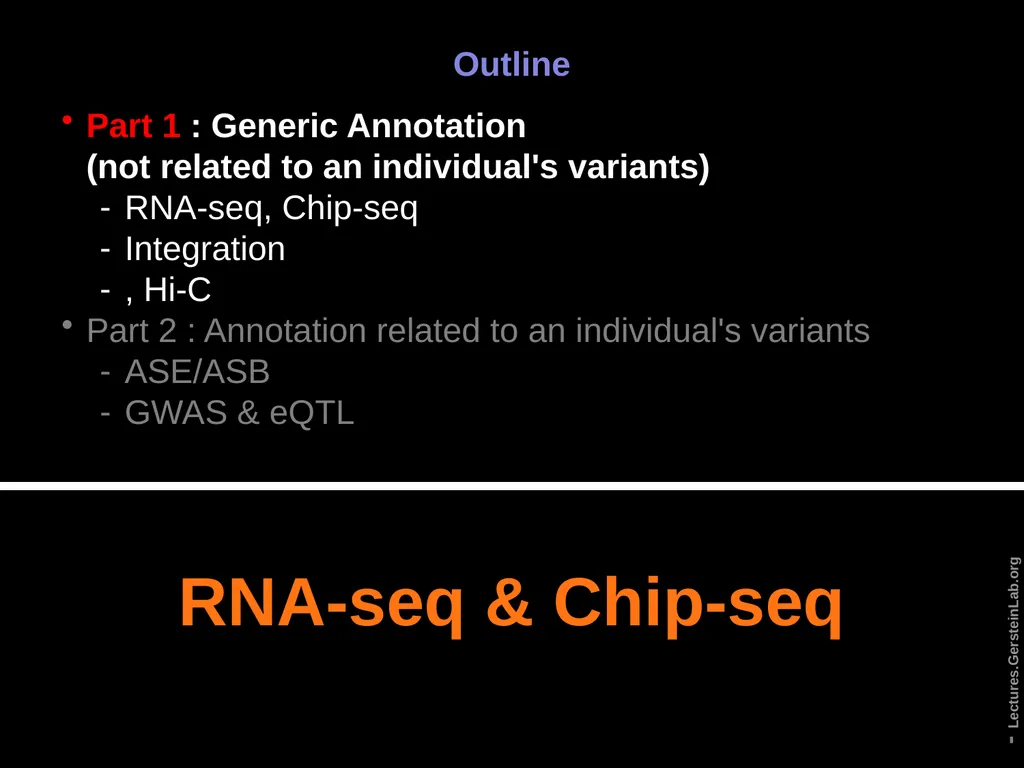
slide4. Outline Part 1 : Generic Annotation (not related to an individual's variants)
RNA-seq, Chip-seq
Integration
, Hi-C
Part 2 : Annotation related to an individual's variants
ASE/ASB
GWAS & eQTL RNA-seq & Chip-seq<br>
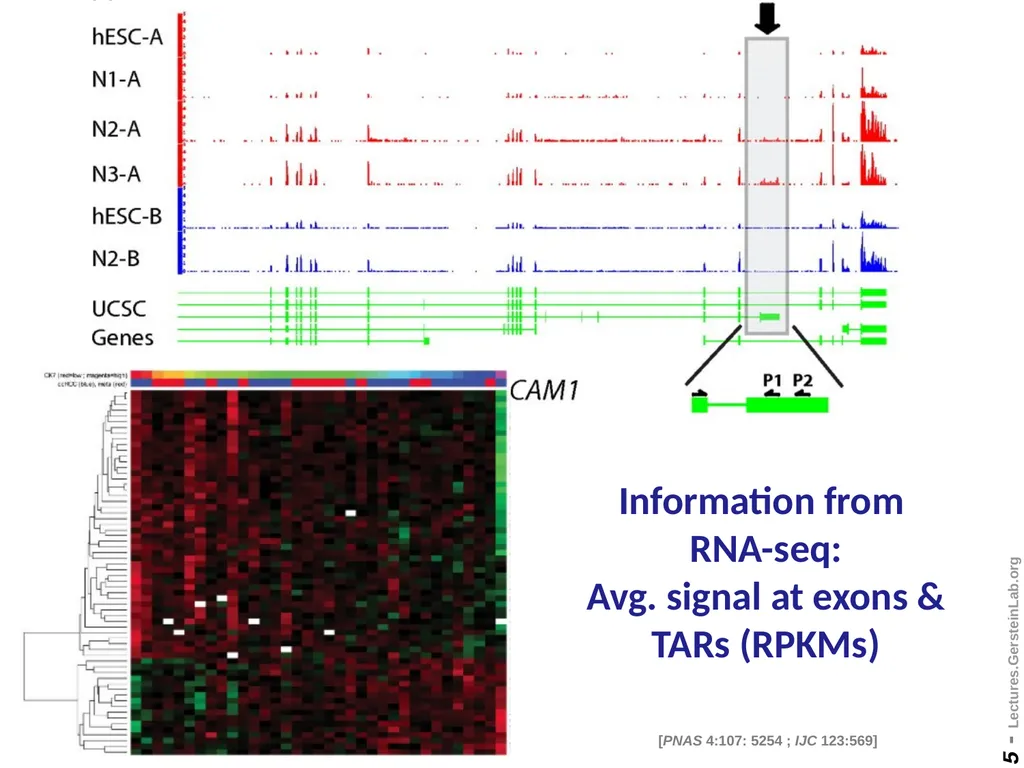
slide5. Information from RNA-seq: Avg. signal at exons & TARs (RPKMs) [PNAS 4:107: 5254 ; IJC 123:569]<br>
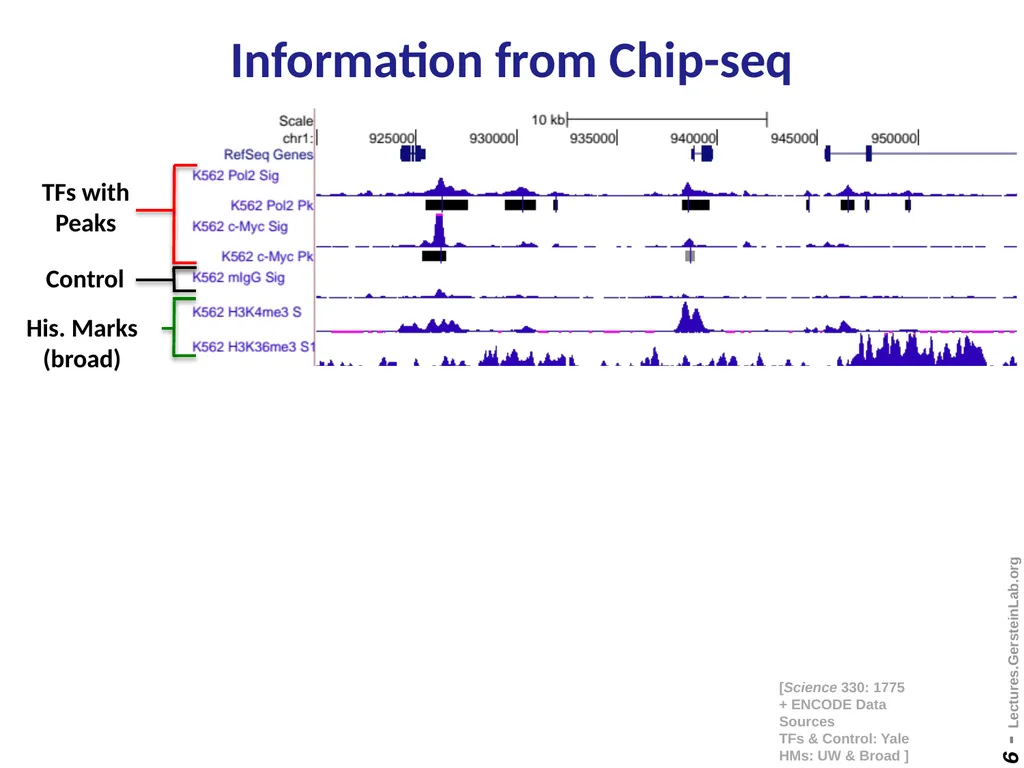
slide6. Information from Chip-seq TFs with Peaks Control His. Marks
(broad) [Science 330: 1775
+ ENCODE Data Sources
TFs & Control: Yale
HMs: UW & Broad ]<br>
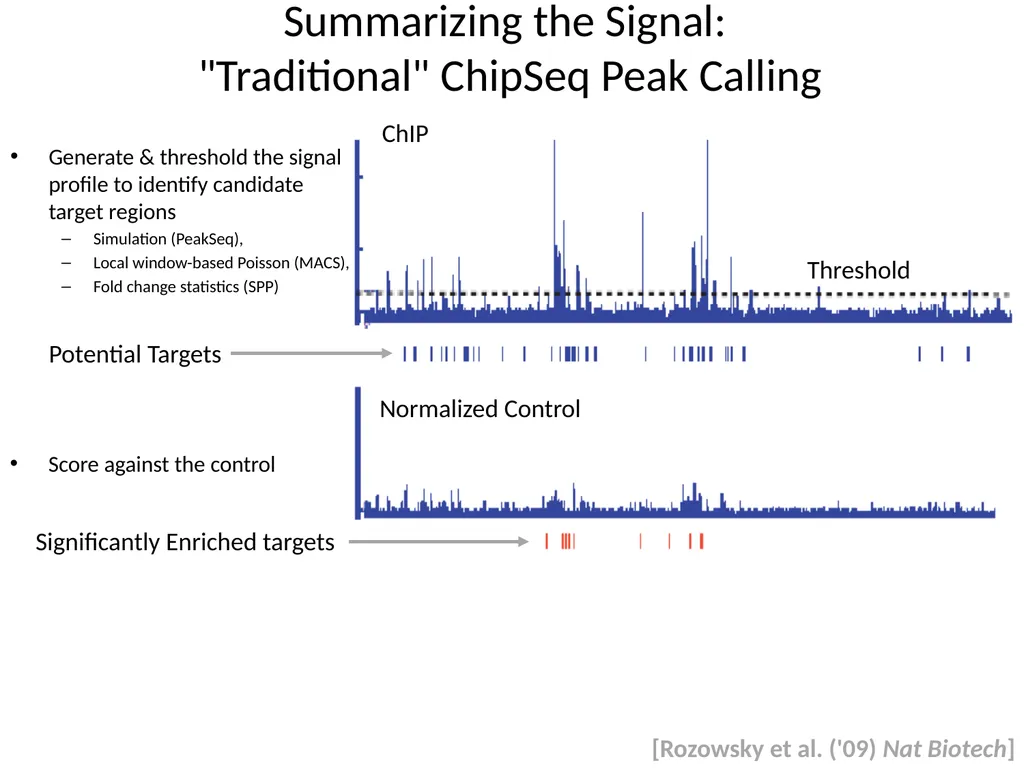
slide7. Summarizing the Signal: "Traditional" ChipSeq Peak Calling Threshold Generate & threshold the signal profile to identify candidate target regions
Simulation (PeakSeq),
Local window-based Poisson (MACS),
Fold change statistics (SPP) Score against the control Potential Targets Significantly Enriched targets Normalized Control ChIP [Rozowsky et al. ('09) Nat Biotech]<br>
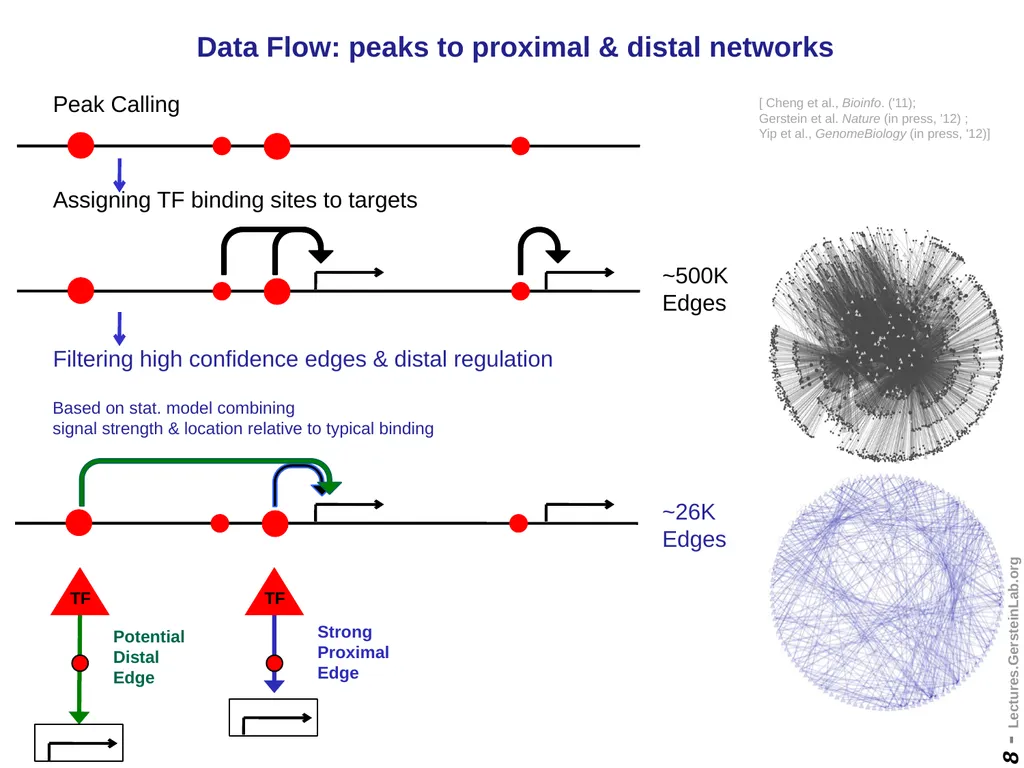
slide8. Data Flow: peaks to proximal & distal networks Peak Calling
Assigning TF binding sites to targets
Filtering high confidence edges & distal regulation Based on stat. model combining signal strength & location relative to typical binding ~500K Edges ~26K Edges Potential Distal Edge Strong Proximal Edge [ Cheng et al., Bioinfo. ('11); Gerstein et al. Nature (in press, '12) ; Yip et al., GenomeBiology (in press, '12)]<br>
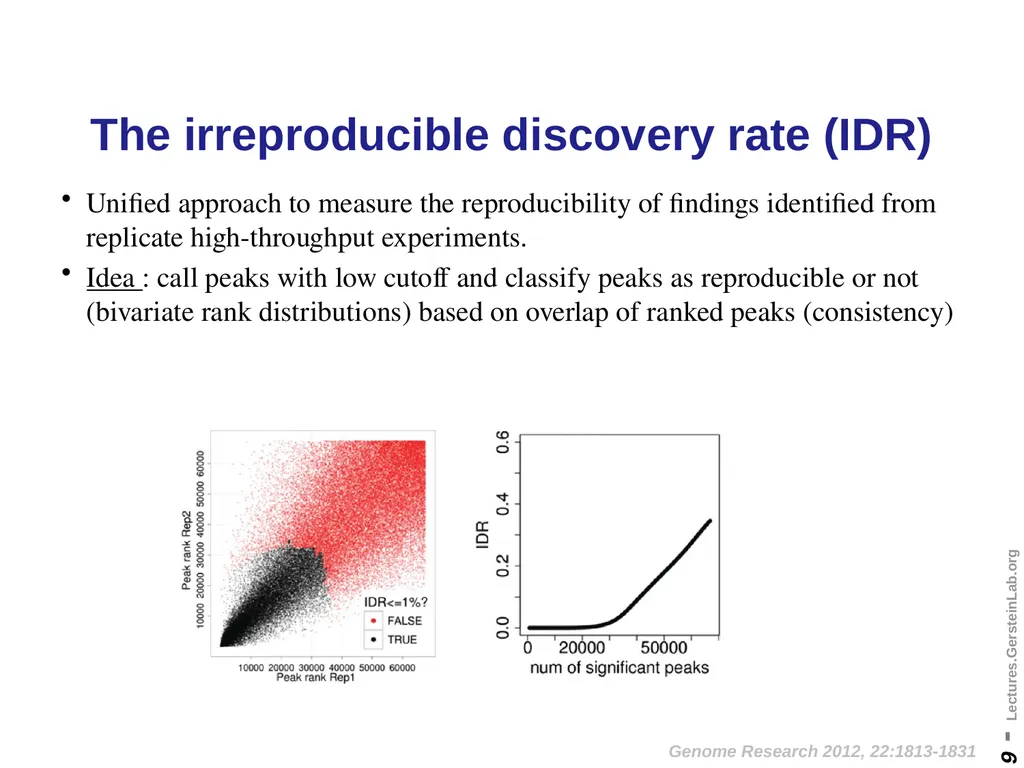
slide9. The irreproducible discovery rate (IDR) Unified approach to measure the reproducibility of findings identified from replicate high-throughput experiments.
Idea : call peaks with low cutoff and classify peaks as reproducible or not (bivariate rank distributions) based on overlap of ranked peaks (consistency) Genome Research 2012, 22:1813-1831<br>
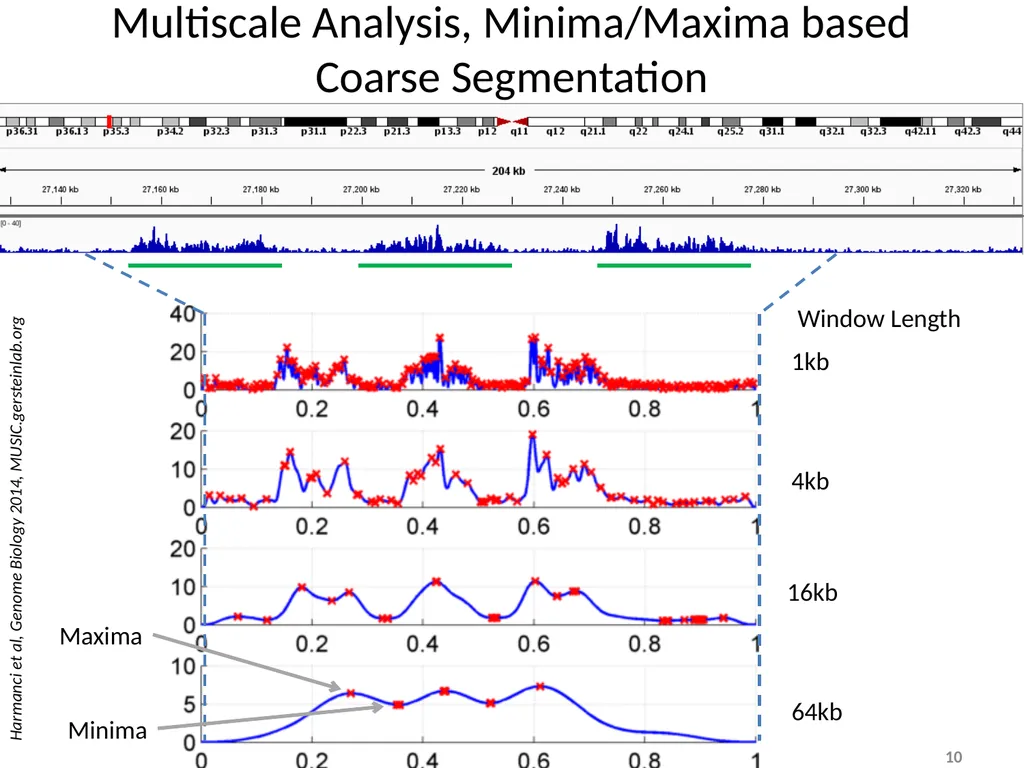
slide10. Multiscale Analysis, Minima/Maxima based Coarse Segmentation Multiscale analysis is a natural way to analyze the ChIP-Seq data 10 1kb 4kb 16kb 64kb Window Length Maxima Minima Harmanci et al, Genome Biology 2014, MUSIC.gersteinlab.org<br>
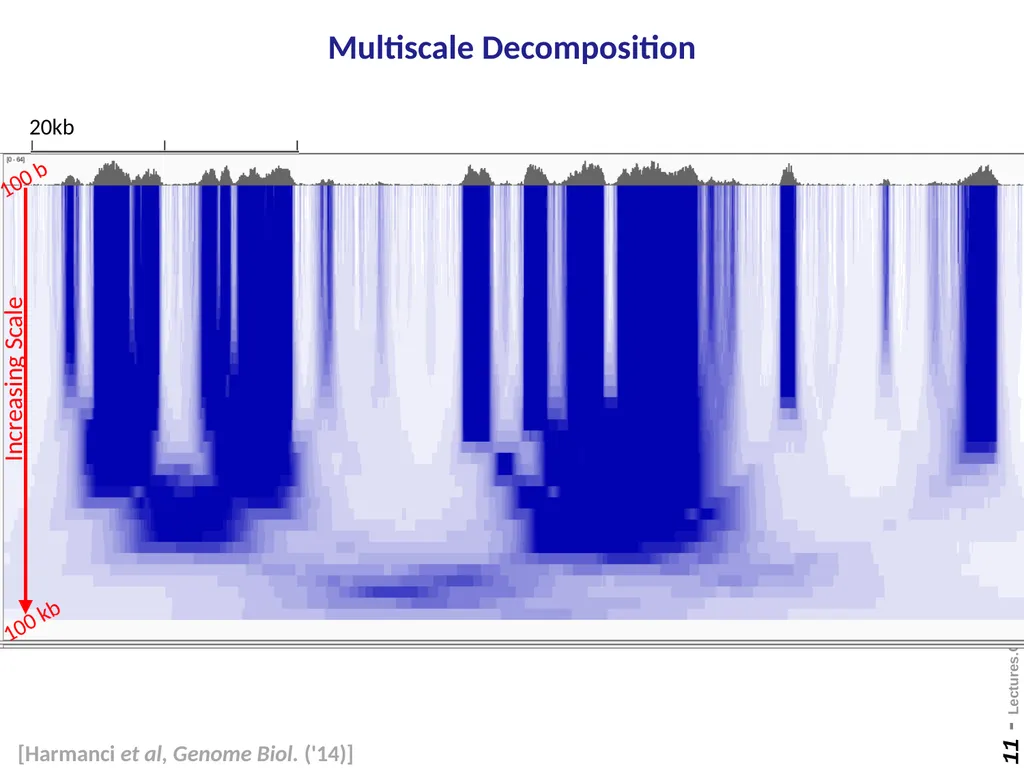
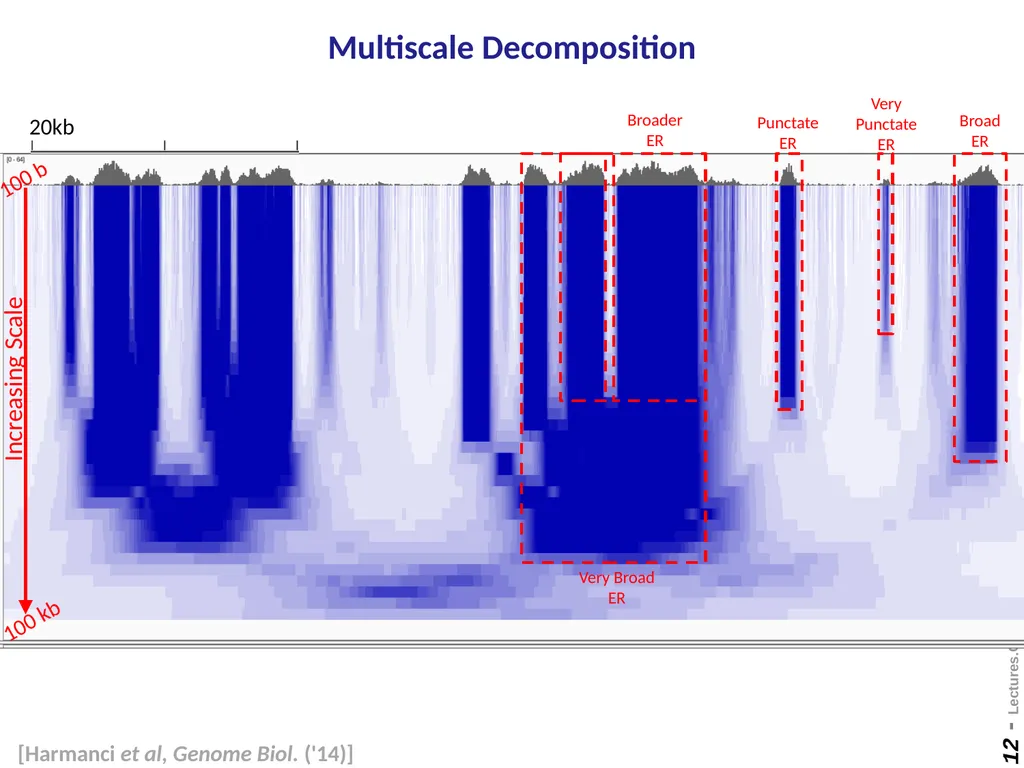
slide11. Multiscale Decomposition Increasing Scale 20kb 100 b 100 kb [Harmanci et al, Genome Biol. ('14)]<br>
slide12. Multiscale Decomposition Increasing Scale 20kb Very
Punctate
ER Broad
ER Broader
ER Very Broad
ER Punctate
ER 100 b 100 kb [Harmanci et al, Genome Biol. ('14)]<br>
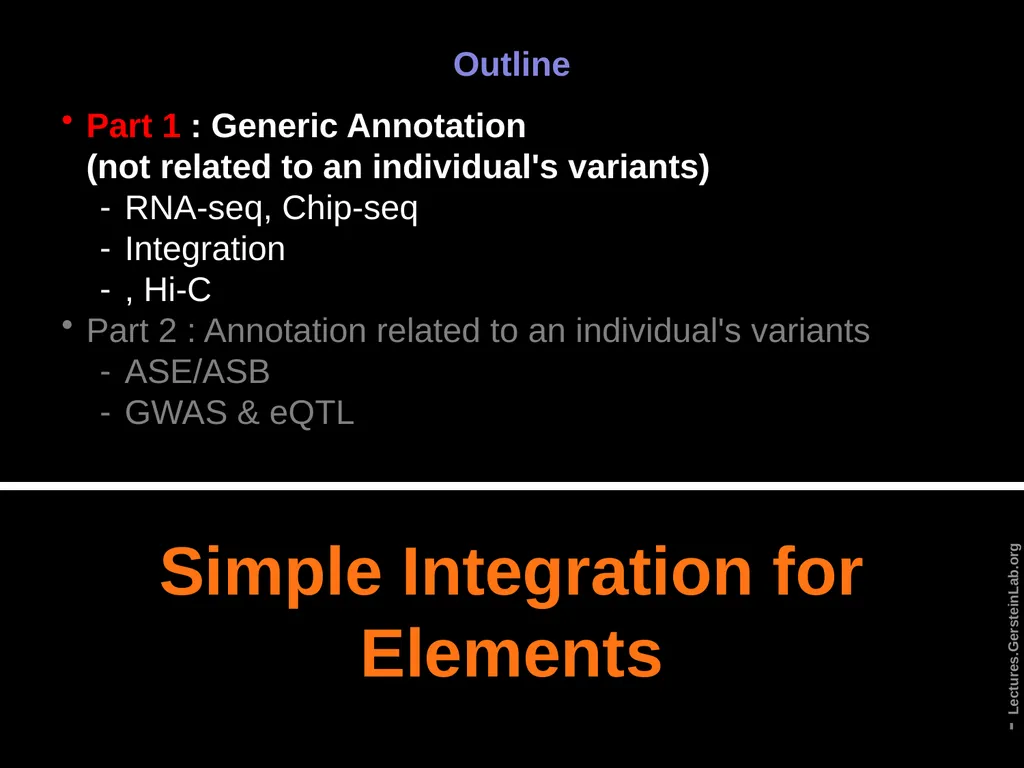
slide13. Outline Part 1 : Generic Annotation (not related to an individual's variants)
RNA-seq, Chip-seq
Integration
, Hi-C
Part 2 : Annotation related to an individual's variants
ASE/ASB
GWAS & eQTL Simple Integration for Elements<br>
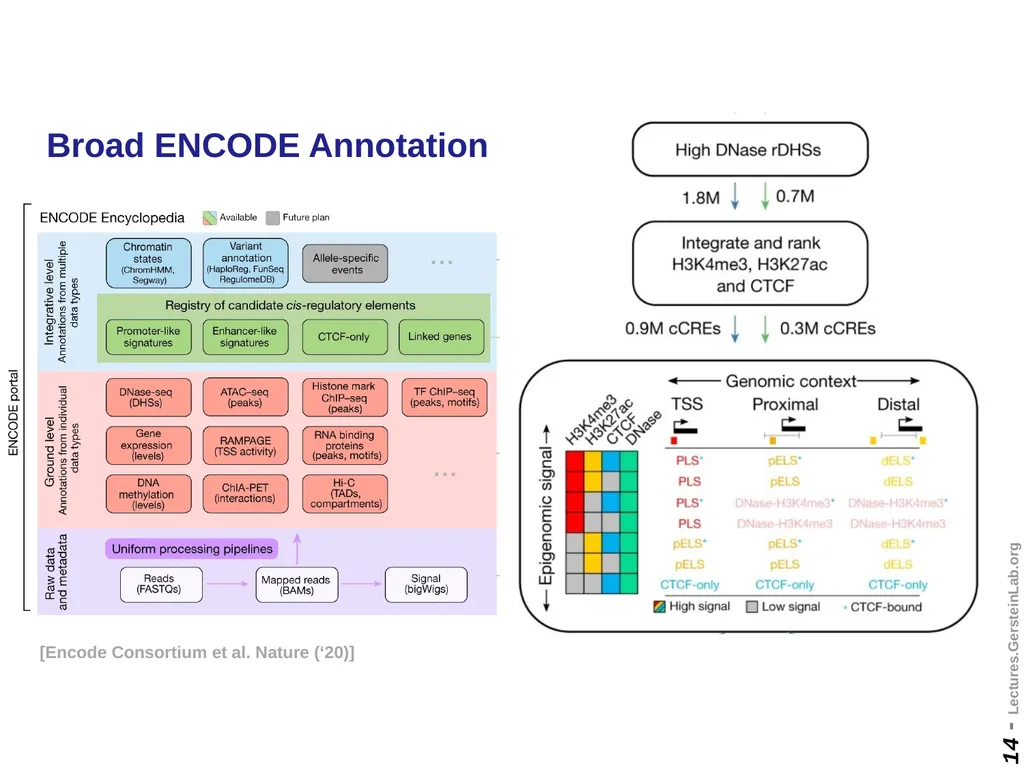
slide14. Broad ENCODE Annotation [Encode Consortium et al. Nature (‘20)]<br>
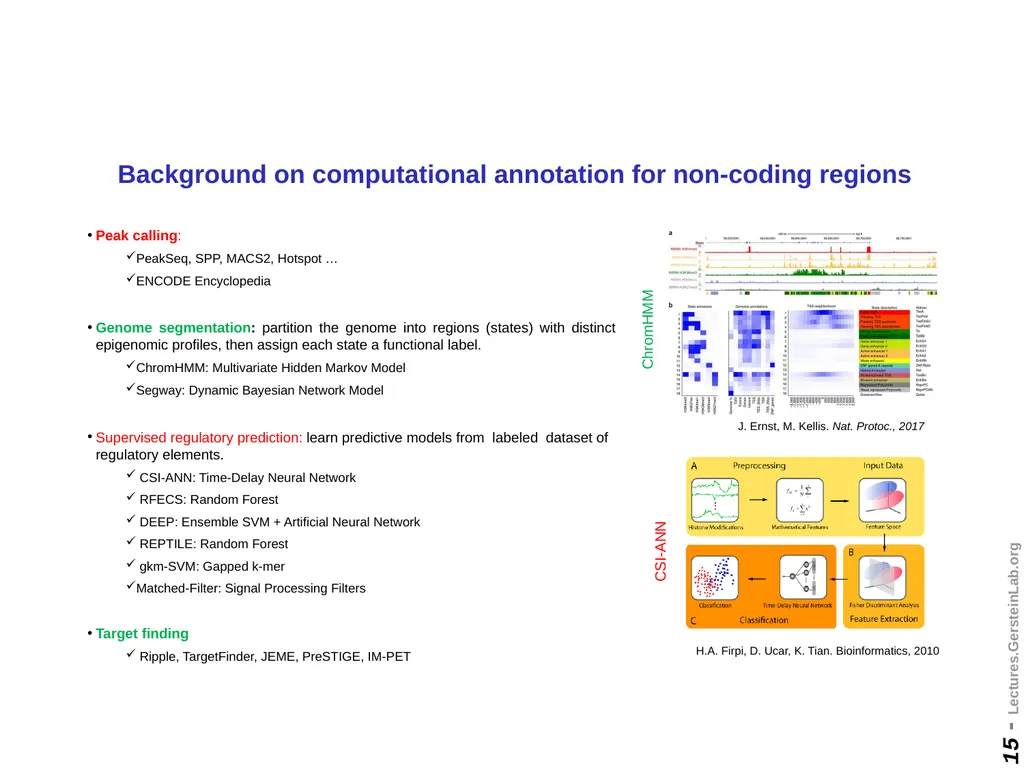
slide15. Background on computational annotation for non-coding regions Peak calling:
PeakSeq, SPP, MACS2, Hotspot …
ENCODE Encyclopedia
Genome segmentation: partition the genome into regions (states) with distinct epigenomic profiles, then assign each state a functional label.
ChromHMM: Multivariate Hidden Markov Model
Segway: Dynamic Bayesian Network Model
Supervised regulatory prediction: learn predictive models from labeled dataset of regulatory elements.
CSI-ANN: Time-Delay Neural Network
RFECS: Random Forest
DEEP: Ensemble SVM + Artificial Neural Network
REPTILE: Random Forest
gkm-SVM: Gapped k-mer
Matched-Filter: Signal Processing Filters
Target finding
Ripple, TargetFinder, JEME, PreSTIGE, IM-PET ChromHMM CSI-ANN J. Ernst, M. Kellis. Nat. Protoc., 2017 H.A. Firpi, D. Ucar, K. Tian. Bioinformatics, 2010<br>
slide16. Outline Part 1 : Generic Annotation (not related to an individual's variants)
RNA-seq, Chip-seq
Integration
, Hi-C
Part 2 : Annotation related to an individual's variants
ASE/ASB
GWAS & eQTL Hi-C<br>
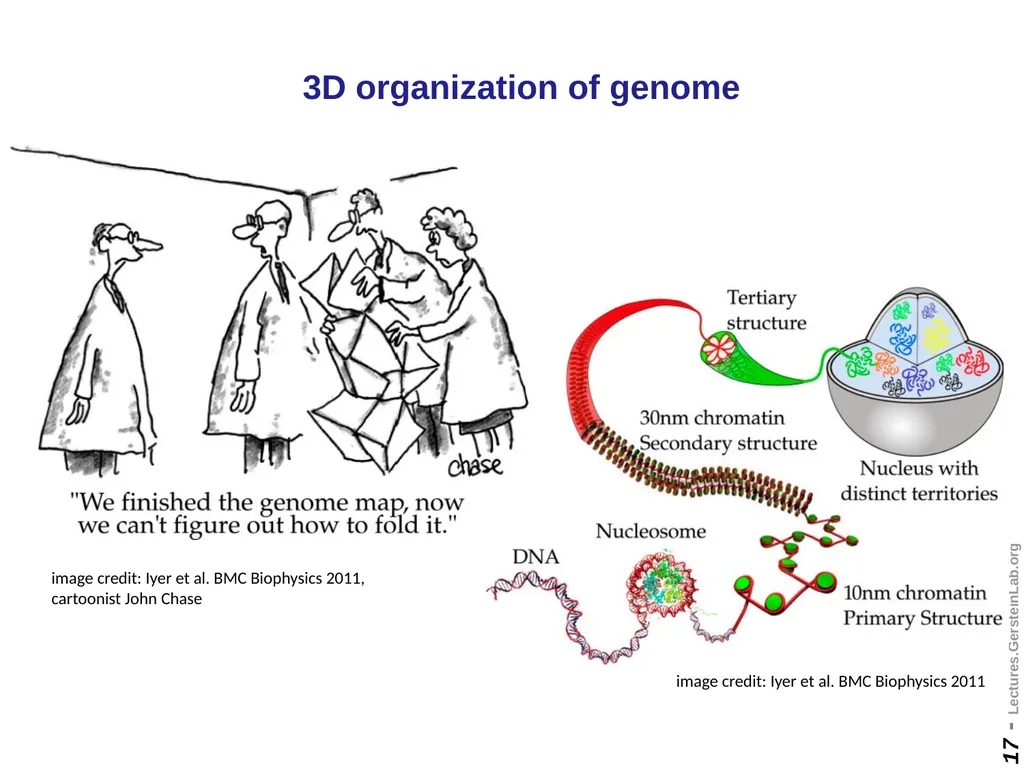
slide17. 3D organization of genome image credit: Iyer et al. BMC Biophysics 2011,
cartoonist John Chase image credit: Iyer et al. BMC Biophysics 2011<br>
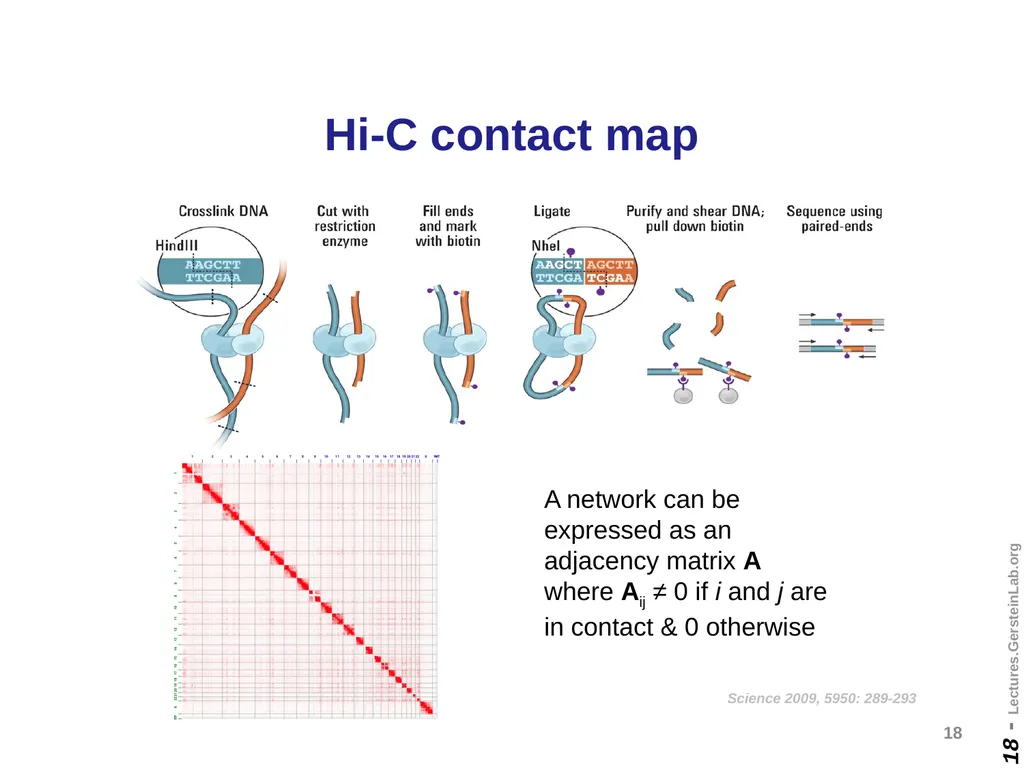
slide18. Hi-C contact map Science 2009, 5950: 289-293 18 A network can be expressed as an adjacency matrix A where Aij ≠ 0 if i and j are in contact & 0 otherwise<br>
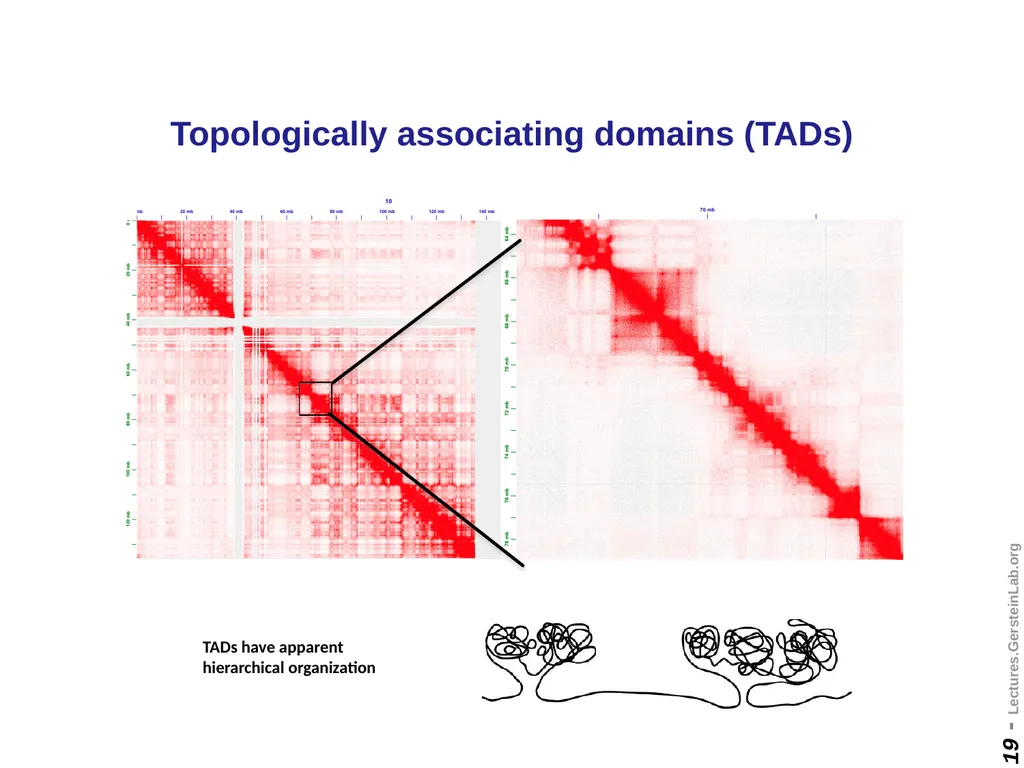
slide19. Topologically associating domains (TADs) TADs have apparent
hierarchical organization<br>
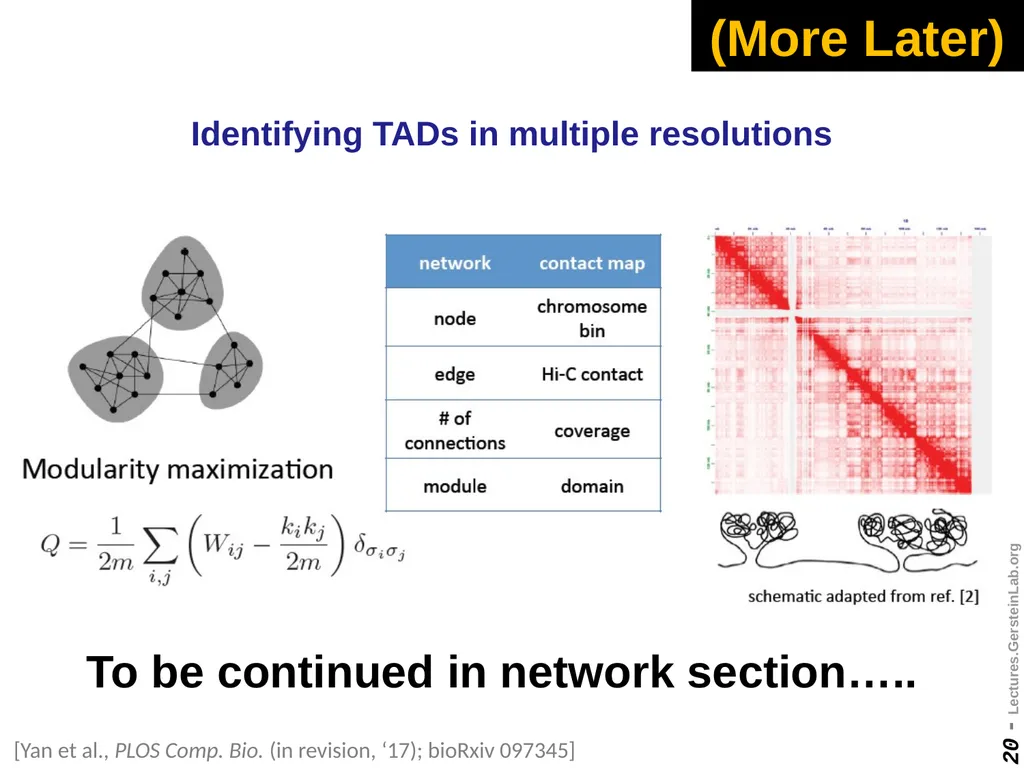
slide20. Identifying TADs in multiple resolutions [Yan et al., PLOS Comp. Bio. (in revision, ‘17); bioRxiv 097345] To be continued in network section….. (More Later)<br>
slide21. References for 25m7 part-1 (Functional Annotation of the Genome) Alexander, R. P., Fang, G., Rozowsky, J., Snyder, M., & Gerstein, M. B. (2010). Annotating non-coding regions of the genome. Nature Reviews Genetics, 11(8), 559–571. https://doi.org/10.1038/nrg2814 (Read whole thing.)
Expanded encyclopaedias of DNA elements in the human and mouse genomes The ENCODE Project Consortium et al. Nature volume 583, pages 699–710 (2020) https://www.nature.com/articles/s41586-020-2493-4 (Focus on text associated with Figs 2 and 3.)
Mackenzie, R. (2024, January 24). RNA-Seq: Basics, applications and Protocol. Genomics Research From Technology Networks. https://www.technologynetworks.com/genomics/articles/rna-seq-basics-applications-and-protocol-299461 (Extra reference, optional)<br>
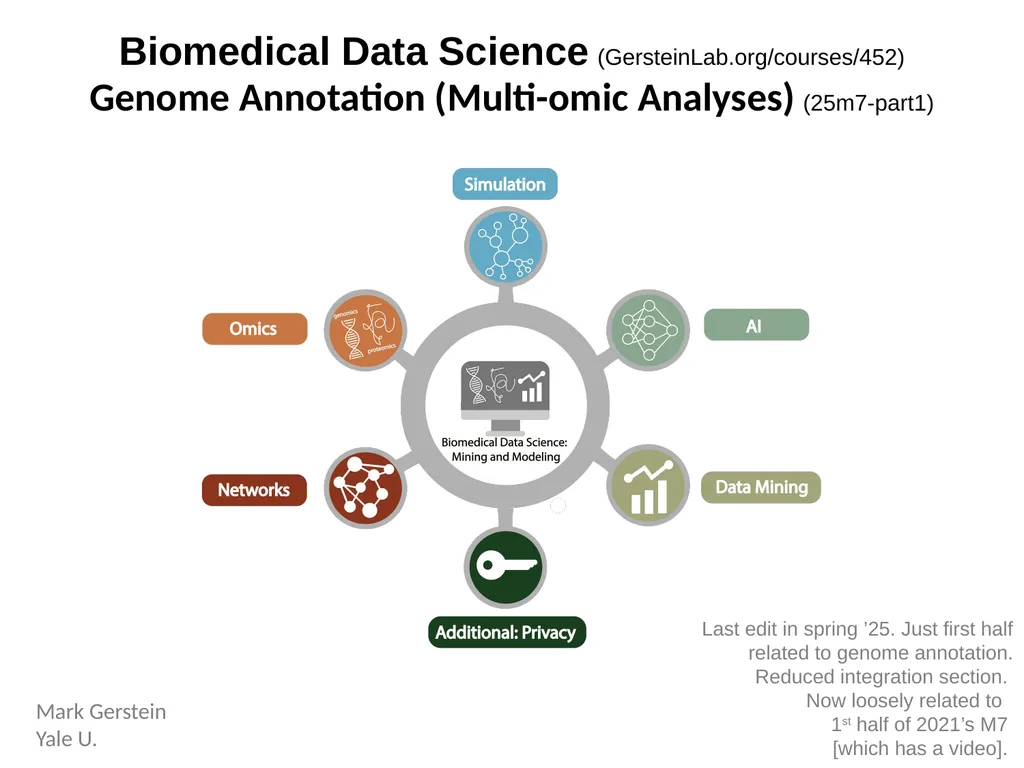
Genome Annotation (Multi-omic Analyses) (25m7-part1) Last edit in spring ’25. Just first half related to genome annotation. Reduced integration section. Now loosely related to 1st half of 2021’s M7 [which has a video].<br>
slide2. What is Annotation? (For Written Texts?)<br>
slide3. Non-coding Annotations: Overview Features are often present on multiple ”scale” (eg elements and connected networks)
Sequence features, incl. Conservation Functional Genomics
Chip-seq (Epigenome & seq. specific TF) and ncRNA & un-annotated transcription [Nat. Rev. Genet. (2010) 11: 559]<br>
slide4. Outline Part 1 : Generic Annotation (not related to an individual's variants)
RNA-seq, Chip-seq
Integration
, Hi-C
Part 2 : Annotation related to an individual's variants
ASE/ASB
GWAS & eQTL RNA-seq & Chip-seq<br>
slide5. Information from RNA-seq: Avg. signal at exons & TARs (RPKMs) [PNAS 4:107: 5254 ; IJC 123:569]<br>
slide6. Information from Chip-seq TFs with Peaks Control His. Marks
(broad) [Science 330: 1775
+ ENCODE Data Sources
TFs & Control: Yale
HMs: UW & Broad ]<br>
slide7. Summarizing the Signal: "Traditional" ChipSeq Peak Calling Threshold Generate & threshold the signal profile to identify candidate target regions
Simulation (PeakSeq),
Local window-based Poisson (MACS),
Fold change statistics (SPP) Score against the control Potential Targets Significantly Enriched targets Normalized Control ChIP [Rozowsky et al. ('09) Nat Biotech]<br>
slide8. Data Flow: peaks to proximal & distal networks Peak Calling
Assigning TF binding sites to targets
Filtering high confidence edges & distal regulation Based on stat. model combining signal strength & location relative to typical binding ~500K Edges ~26K Edges Potential Distal Edge Strong Proximal Edge [ Cheng et al., Bioinfo. ('11); Gerstein et al. Nature (in press, '12) ; Yip et al., GenomeBiology (in press, '12)]<br>
slide9. The irreproducible discovery rate (IDR) Unified approach to measure the reproducibility of findings identified from replicate high-throughput experiments.
Idea : call peaks with low cutoff and classify peaks as reproducible or not (bivariate rank distributions) based on overlap of ranked peaks (consistency) Genome Research 2012, 22:1813-1831<br>
slide10. Multiscale Analysis, Minima/Maxima based Coarse Segmentation Multiscale analysis is a natural way to analyze the ChIP-Seq data 10 1kb 4kb 16kb 64kb Window Length Maxima Minima Harmanci et al, Genome Biology 2014, MUSIC.gersteinlab.org<br>
slide11. Multiscale Decomposition Increasing Scale 20kb 100 b 100 kb [Harmanci et al, Genome Biol. ('14)]<br>
slide12. Multiscale Decomposition Increasing Scale 20kb Very
Punctate
ER Broad
ER Broader
ER Very Broad
ER Punctate
ER 100 b 100 kb [Harmanci et al, Genome Biol. ('14)]<br>
slide13. Outline Part 1 : Generic Annotation (not related to an individual's variants)
RNA-seq, Chip-seq
Integration
, Hi-C
Part 2 : Annotation related to an individual's variants
ASE/ASB
GWAS & eQTL Simple Integration for Elements<br>
slide14. Broad ENCODE Annotation [Encode Consortium et al. Nature (‘20)]<br>
slide15. Background on computational annotation for non-coding regions Peak calling:
PeakSeq, SPP, MACS2, Hotspot …
ENCODE Encyclopedia
Genome segmentation: partition the genome into regions (states) with distinct epigenomic profiles, then assign each state a functional label.
ChromHMM: Multivariate Hidden Markov Model
Segway: Dynamic Bayesian Network Model
Supervised regulatory prediction: learn predictive models from labeled dataset of regulatory elements.
CSI-ANN: Time-Delay Neural Network
RFECS: Random Forest
DEEP: Ensemble SVM + Artificial Neural Network
REPTILE: Random Forest
gkm-SVM: Gapped k-mer
Matched-Filter: Signal Processing Filters
Target finding
Ripple, TargetFinder, JEME, PreSTIGE, IM-PET ChromHMM CSI-ANN J. Ernst, M. Kellis. Nat. Protoc., 2017 H.A. Firpi, D. Ucar, K. Tian. Bioinformatics, 2010<br>
slide16. Outline Part 1 : Generic Annotation (not related to an individual's variants)
RNA-seq, Chip-seq
Integration
, Hi-C
Part 2 : Annotation related to an individual's variants
ASE/ASB
GWAS & eQTL Hi-C<br>
slide17. 3D organization of genome image credit: Iyer et al. BMC Biophysics 2011,
cartoonist John Chase image credit: Iyer et al. BMC Biophysics 2011<br>
slide18. Hi-C contact map Science 2009, 5950: 289-293 18 A network can be expressed as an adjacency matrix A where Aij ≠ 0 if i and j are in contact & 0 otherwise<br>
slide19. Topologically associating domains (TADs) TADs have apparent
hierarchical organization<br>
slide20. Identifying TADs in multiple resolutions [Yan et al., PLOS Comp. Bio. (in revision, ‘17); bioRxiv 097345] To be continued in network section….. (More Later)<br>
slide21. References for 25m7 part-1 (Functional Annotation of the Genome) Alexander, R. P., Fang, G., Rozowsky, J., Snyder, M., & Gerstein, M. B. (2010). Annotating non-coding regions of the genome. Nature Reviews Genetics, 11(8), 559–571. https://doi.org/10.1038/nrg2814 (Read whole thing.)
Expanded encyclopaedias of DNA elements in the human and mouse genomes The ENCODE Project Consortium et al. Nature volume 583, pages 699–710 (2020) https://www.nature.com/articles/s41586-020-2493-4 (Focus on text associated with Figs 2 and 3.)
Mackenzie, R. (2024, January 24). RNA-Seq: Basics, applications and Protocol. Genomics Research From Technology Networks. https://www.technologynetworks.com/genomics/articles/rna-seq-basics-applications-and-protocol-299461 (Extra reference, optional)<br>