
Marketing I Aviation & Mechatronics Engineering

Description: Marketing I Aviation Mechatronics Engineering Departments Why we should study Marketing?? There are many reasons why should study Marketing, and below are some of the reasons:- Enhance employment opportunities Marketing skills are
Related Topics
Download Presentation
"Marketing I Aviation & Mechatronics Engineering" is the property of its rightful owner. Permission is granted to download and print the materials on this website for personal, non-commercial use only, and to display it on your personal computer provided you do not modify the materials and that you retain all copyright notices contained in the materials. By downloading content from our website, you accept the terms of this agreement.
Presentation Transcript
slide1. Marketing I
Aviation & Mechatronics Engineering Departments<br>
slide2. Why we should study Marketing??<br>
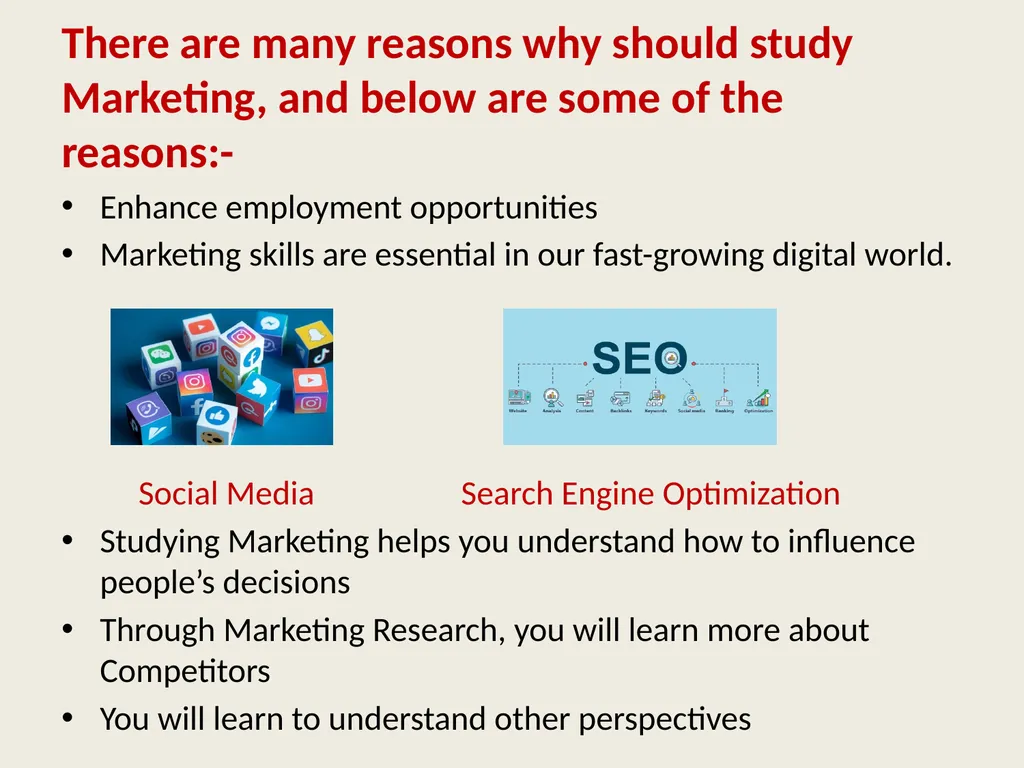
slide3. There are many reasons why should study Marketing, and below are some of the reasons:- Enhance employment opportunities
Marketing skills are essential in our fast-growing digital world.
Social Media Search Engine Optimization
Studying Marketing helps you understand how to influence people’s decisions
Through Marketing Research, you will learn more about Competitors
You will learn to understand other perspectives<br>
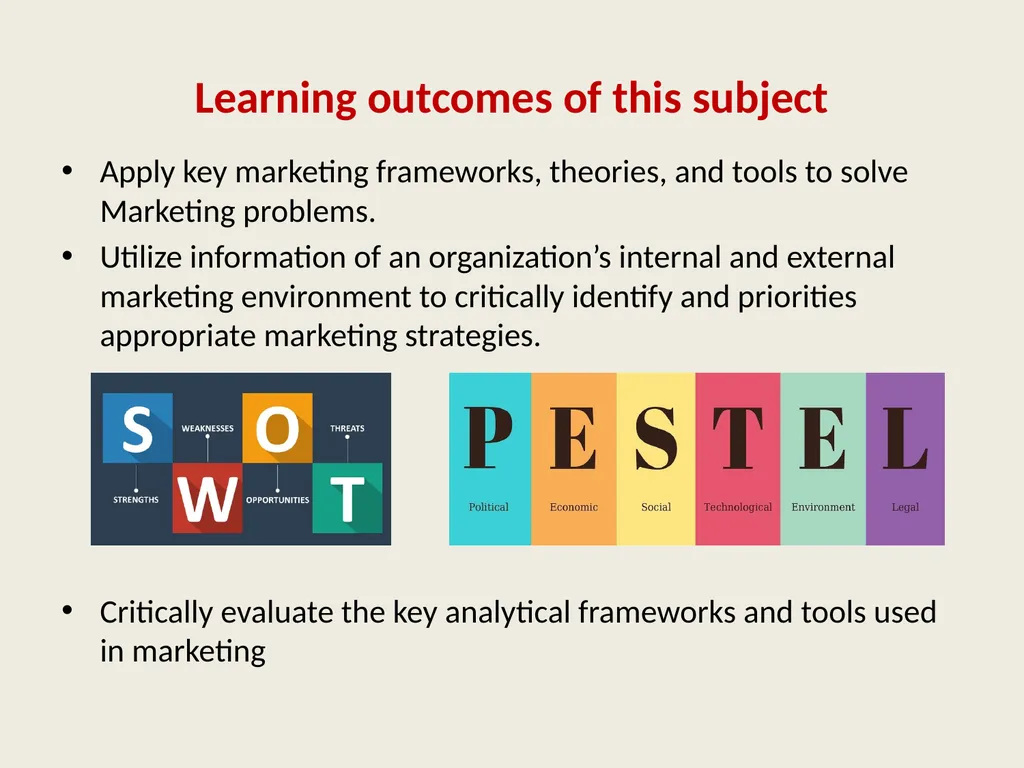
slide4. Learning outcomes of this subject Apply key marketing frameworks, theories, and tools to solve Marketing problems.
Utilize information of an organization’s internal and external marketing environment to critically identify and priorities appropriate marketing strategies.
Critically evaluate the key analytical frameworks and tools used in marketing<br>
slide5. What is Marketing The management process responsible for identifying, anticipating and satisfying customer requirements profitably.” (The Chartered Institute of Marketing 2015).
Marketing is the activity, set of institution, and processes to create, exchange communicate,, and deliver product and services that have values for clients, customers, society and partners (Marsall g and Johnsto M 2023).
Marketing consists of many activities including: identifying customer needs; developing goods and services to satisfy those needs; communicating information about products to potential customers; and logistics and distribution management, which assures that products are delivered to customers as needed (University of North Texas 2023).<br>
slide6. Products and Services Each business or firm is offering some kind of products or services to their customers, but what exactly are products and services?
Firm, Company, Business: is an organization which sells or produces product or provides a service which customers pay for
Customer: is an individual or company that purchases goods or services
Product is anything that can be offered in a market for attention, acquisition, use, or consumption that might satisfy a need or want (Kolter, P and Armstrong, G 2017)<br>
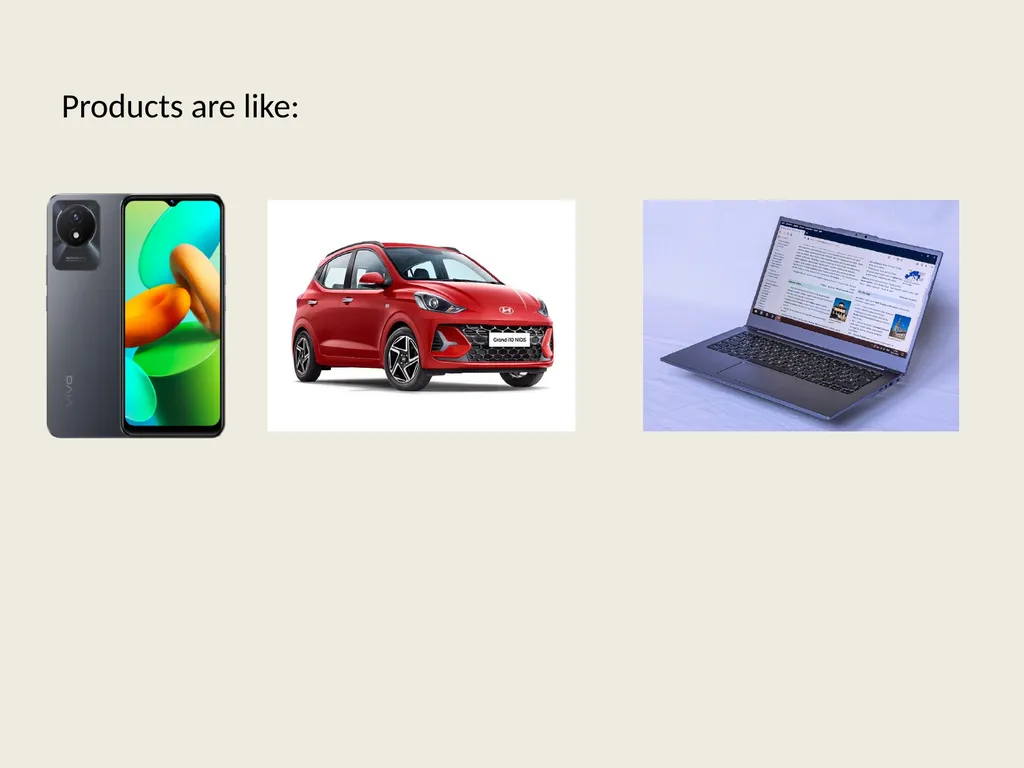
slide7. Products are like:<br>
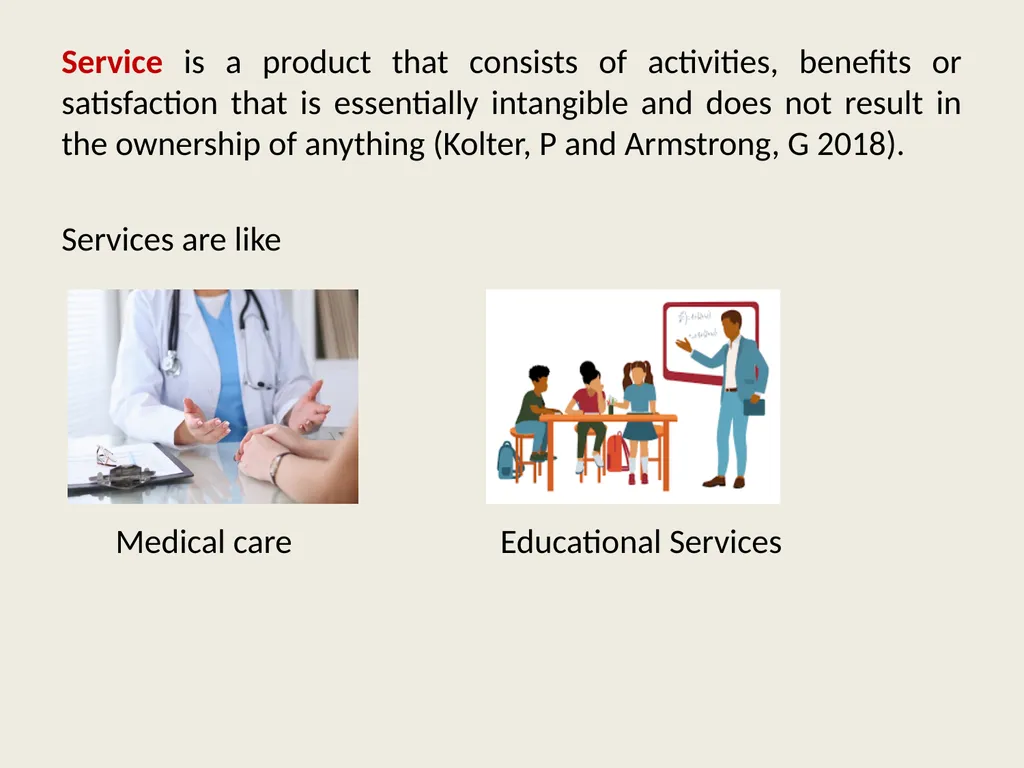
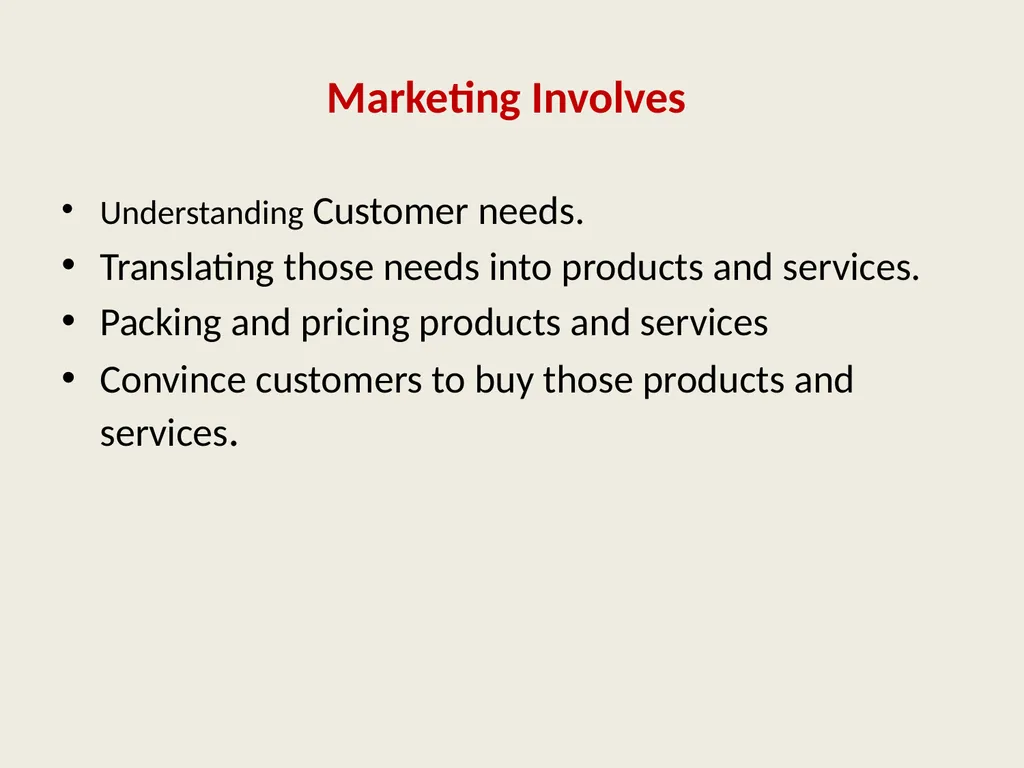
slide8. Service is a product that consists of activities, benefits or satisfaction that is essentially intangible and does not result in the ownership of anything (Kolter, P and Armstrong, G 2018).
Services are like
Medical care Educational Services<br>
slide9. Marketing Involves Understanding Customer needs.
Translating those needs into products and services.
Packing and pricing products and services
Convince customers to buy those products and services.<br>
slide10. Marketing Goals According to Kolter, P and Armstrong, G 2017, “organizational goals depends on determining and knowing the needs and wants of target markets and delivering the desired satisfactions
better than competitors do”.<br>
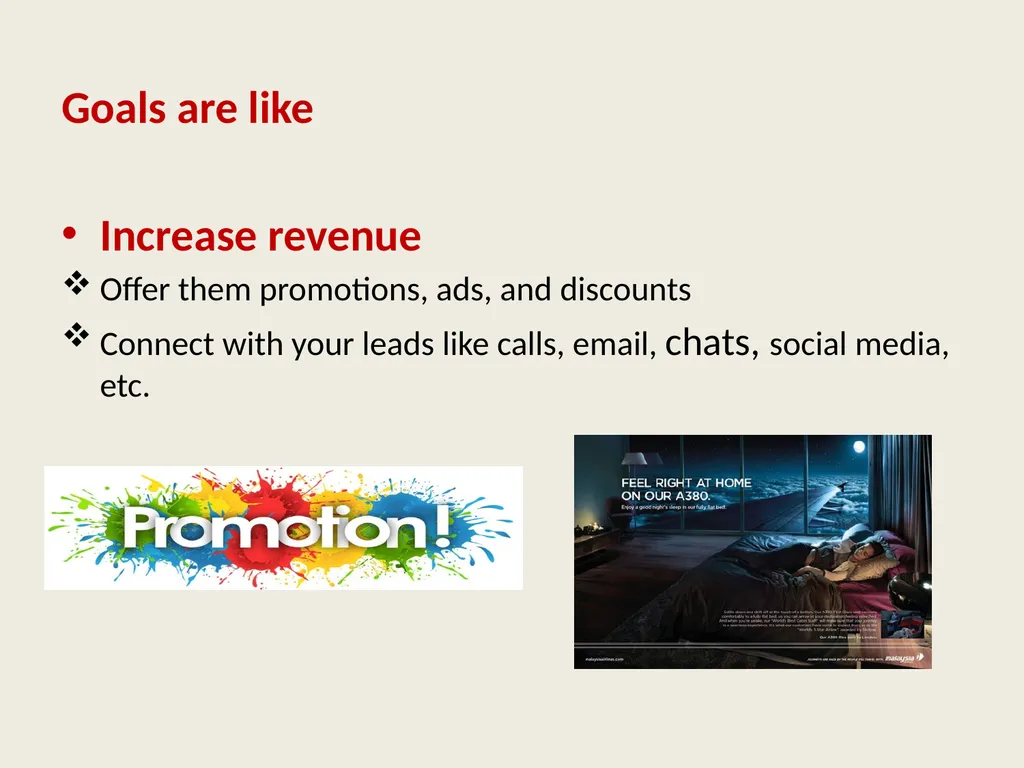
slide11. Goals are like
Increase revenue
Offer them promotions, ads, and discounts
Connect with your leads like calls, email, chats, social media, etc.<br>
slide12. Increase brand awareness
Posting regularly
Updating all online pages with the latest information
Increase customer value
Provide quality customer service
Give them privilege access to new products or services<br>
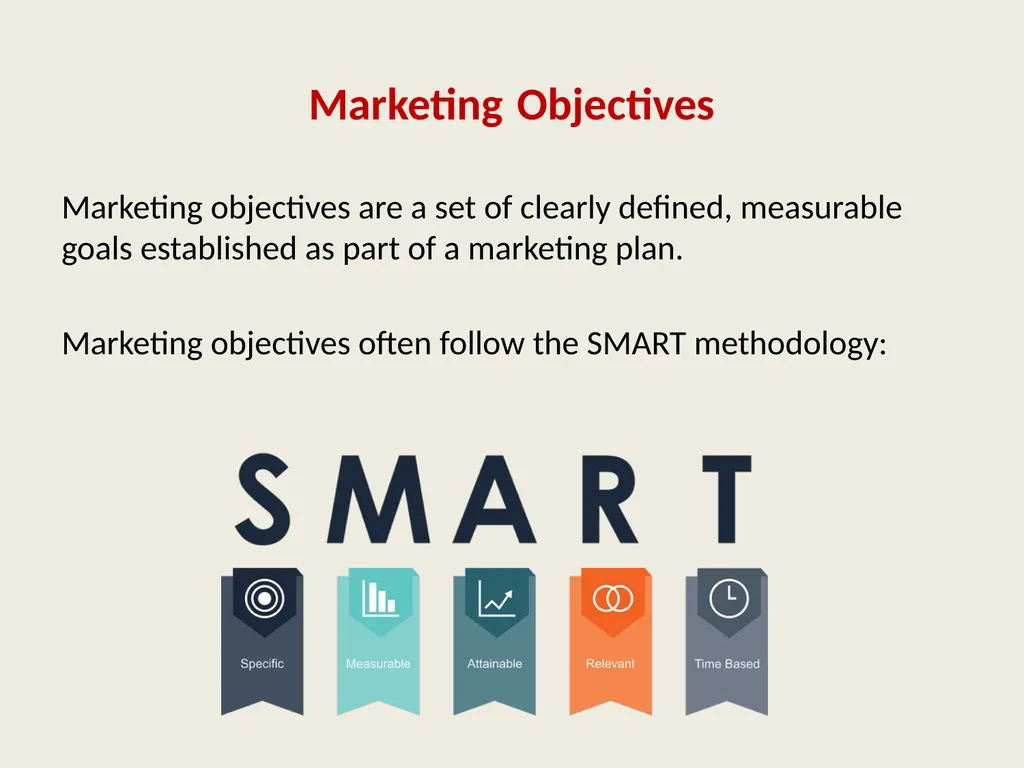
slide13. Marketing Objectives Marketing objectives are a set of clearly defined, measurable goals established as part of a marketing plan.
Marketing objectives often follow the SMART methodology:<br>
slide14. “The SMART acronym was first used in 1981 in an edition of Management Review, attributed to George Doran” (Charted Institute of Marketing 2020).
Specific
A set quantity result. Followers, revenue, signups etc
Measurable
You have the tools necessary to measure it
Attainable
The market and business performance support it<br>
slide15. Relevant
The business benefits and you can do it
Time-based
Also called 'timely' or 'time-bound'. Has a set time to end or time limit.<br>
slide16. References Kotler, P., Armstrong, G. and Opresnik, M.O. (2018) Principles of Marketing. Singapore: Pearson Education South Asia Pte Ltd.
Kotler, P. et al. (2017) Principles of Marketing. Harlow, England: Pearson.
Marshall, G.W. and Johnston, M.W. (2023) Marketing management. New York, NY: McGraw-Hill Education.
Srw0098 (2021a) What is marketing?, G. Brint Ryan College of Business. Available at: https://cob.unt.edu/mktg/what-is-marketing (Accessed: 08 October 2023).
Team CIM, C. (2023) How to set smart objectives: CIM content hub, How to set SMART objectives | CIM Content hub. Available at: https://www.cim.co.uk/content-hub/editorial/back-to-basics-how-to-set-smart-objectives/ (Accessed: 08 October 2023).<br>
slide17. Thank You
For Your Attention<br>
slide2. Why we should study Marketing??<br>
slide3. There are many reasons why should study Marketing, and below are some of the reasons:- Enhance employment opportunities
Marketing skills are essential in our fast-growing digital world.
Social Media Search Engine Optimization
Studying Marketing helps you understand how to influence people’s decisions
Through Marketing Research, you will learn more about Competitors
You will learn to understand other perspectives<br>
slide4. Learning outcomes of this subject Apply key marketing frameworks, theories, and tools to solve Marketing problems.
Utilize information of an organization’s internal and external marketing environment to critically identify and priorities appropriate marketing strategies.
Critically evaluate the key analytical frameworks and tools used in marketing<br>
slide5. What is Marketing The management process responsible for identifying, anticipating and satisfying customer requirements profitably.” (The Chartered Institute of Marketing 2015).
Marketing is the activity, set of institution, and processes to create, exchange communicate,, and deliver product and services that have values for clients, customers, society and partners (Marsall g and Johnsto M 2023).
Marketing consists of many activities including: identifying customer needs; developing goods and services to satisfy those needs; communicating information about products to potential customers; and logistics and distribution management, which assures that products are delivered to customers as needed (University of North Texas 2023).<br>
slide6. Products and Services Each business or firm is offering some kind of products or services to their customers, but what exactly are products and services?
Firm, Company, Business: is an organization which sells or produces product or provides a service which customers pay for
Customer: is an individual or company that purchases goods or services
Product is anything that can be offered in a market for attention, acquisition, use, or consumption that might satisfy a need or want (Kolter, P and Armstrong, G 2017)<br>
slide7. Products are like:<br>
slide8. Service is a product that consists of activities, benefits or satisfaction that is essentially intangible and does not result in the ownership of anything (Kolter, P and Armstrong, G 2018).
Services are like
Medical care Educational Services<br>
slide9. Marketing Involves Understanding Customer needs.
Translating those needs into products and services.
Packing and pricing products and services
Convince customers to buy those products and services.<br>
slide10. Marketing Goals According to Kolter, P and Armstrong, G 2017, “organizational goals depends on determining and knowing the needs and wants of target markets and delivering the desired satisfactions
better than competitors do”.<br>
slide11. Goals are like
Increase revenue
Offer them promotions, ads, and discounts
Connect with your leads like calls, email, chats, social media, etc.<br>
slide12. Increase brand awareness
Posting regularly
Updating all online pages with the latest information
Increase customer value
Provide quality customer service
Give them privilege access to new products or services<br>
slide13. Marketing Objectives Marketing objectives are a set of clearly defined, measurable goals established as part of a marketing plan.
Marketing objectives often follow the SMART methodology:<br>
slide14. “The SMART acronym was first used in 1981 in an edition of Management Review, attributed to George Doran” (Charted Institute of Marketing 2020).
Specific
A set quantity result. Followers, revenue, signups etc
Measurable
You have the tools necessary to measure it
Attainable
The market and business performance support it<br>
slide15. Relevant
The business benefits and you can do it
Time-based
Also called 'timely' or 'time-bound'. Has a set time to end or time limit.<br>
slide16. References Kotler, P., Armstrong, G. and Opresnik, M.O. (2018) Principles of Marketing. Singapore: Pearson Education South Asia Pte Ltd.
Kotler, P. et al. (2017) Principles of Marketing. Harlow, England: Pearson.
Marshall, G.W. and Johnston, M.W. (2023) Marketing management. New York, NY: McGraw-Hill Education.
Srw0098 (2021a) What is marketing?, G. Brint Ryan College of Business. Available at: https://cob.unt.edu/mktg/what-is-marketing (Accessed: 08 October 2023).
Team CIM, C. (2023) How to set smart objectives: CIM content hub, How to set SMART objectives | CIM Content hub. Available at: https://www.cim.co.uk/content-hub/editorial/back-to-basics-how-to-set-smart-objectives/ (Accessed: 08 October 2023).<br>
slide17. Thank You
For Your Attention<br>