
Medicines Management Training for Radiographers


Description: Medicines Management Training for Radiographers Cathryn Evans Lead Medicines Management Technician for Community Diagnostics and Imaging October 2023 Welcome to your medicines management training presentation specifically designed to meet
Related Topics
Download Presentation
"Medicines Management Training for Radiographers" is the property of its rightful owner. Permission is granted to download and print the materials on this website for personal, non-commercial use only, and to display it on your personal computer provided you do not modify the materials and that you retain all copyright notices contained in the materials. By downloading content from our website, you accept the terms of this agreement.
Presentation Transcript
slide1. Medicines Management Training for Radiographers Cathryn Evans – Lead Medicines Management Technician for Community Diagnostics and Imaging
October 2023<br>
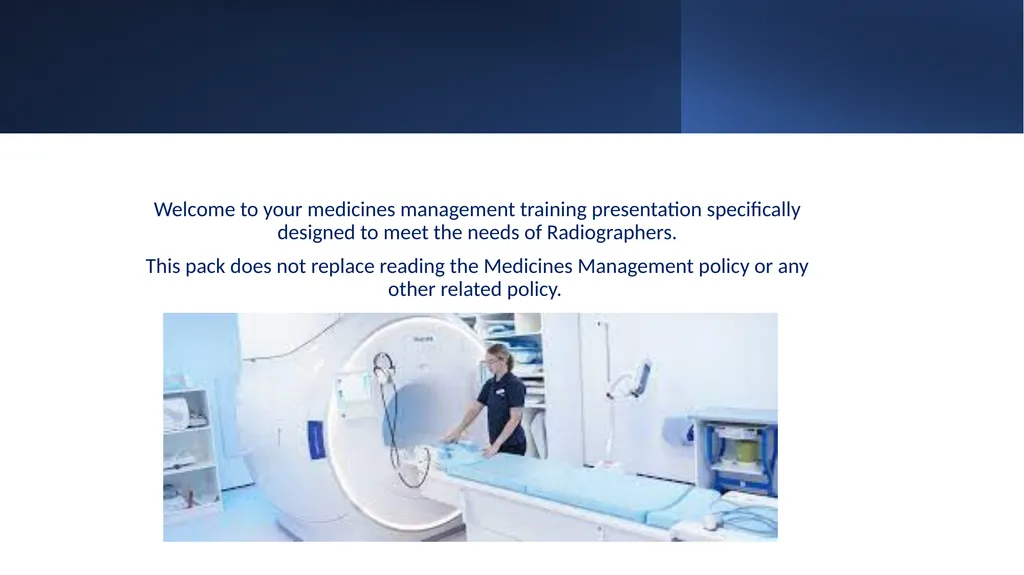
slide2. Welcome to your medicines management training presentation specifically designed to meet the needs of Radiographers.
This pack does not replace reading the Medicines Management policy or any other related policy.<br>
slide3. Contents
Learning outcomes
Why do we have a medicines management policy?
Importance of medicines management
Medication seen in Imaging
General Medication handling
Medical Gases
Allergy Status
Digital Temperature Monitoring
Patient Safety Alerts
Patient Group Directives
Incident Reporting
Gina's Story
Test Your Knowledge
Further Reading<br>
slide4. Learning Outcomes
On completion of this self-directed learning pack, you should be able to:
• Understand the contents of this pack
• Know how to access information about Medicines Management issues and obtain further information if required
• Understand that there are supporting policies and guidelines available on the Trust HUB and from the Royal Pharmaceutical Society (RPS), The Health & Care Professions Council (HCPC)and national safety alerts
• Understand your responsibility to report medicines management incidents on the Trust incident reporting system (Datix®) in line with the Trust Policy<br>
slide5. Why do we have a Medicines Management Policy?
• To define the standard(s) required
• To raise awareness of and minimise risks
• To ensure a safe and effective approach to medicines handling across the organisation
• To protect patients and staff<br>
slide6. Medicines Management
Incidents can occur due to a variety of reasons e.g., human factors, ambiguity in processes and lack of awareness
Medicines management includes areas such as delivery, storage, preparation, administration and safe disposal of medicines.
Where can I find information on Medicines Management?
Always check and follow Trust’s guidance on safe and effective medicines handling
Our Medicines Management Policy can be accessed via the Hub
Medicines Management Policy.pdf
The RCR has also worked with the RPS and other stakeholders to produce guidance that you should be familiar with and highlighted sources of guidance for specific areas of practice
Admin of Meds prof guidance.pdf (rpharms.com)<br>
slide7. Examples of Medicines seen in the Imaging Department
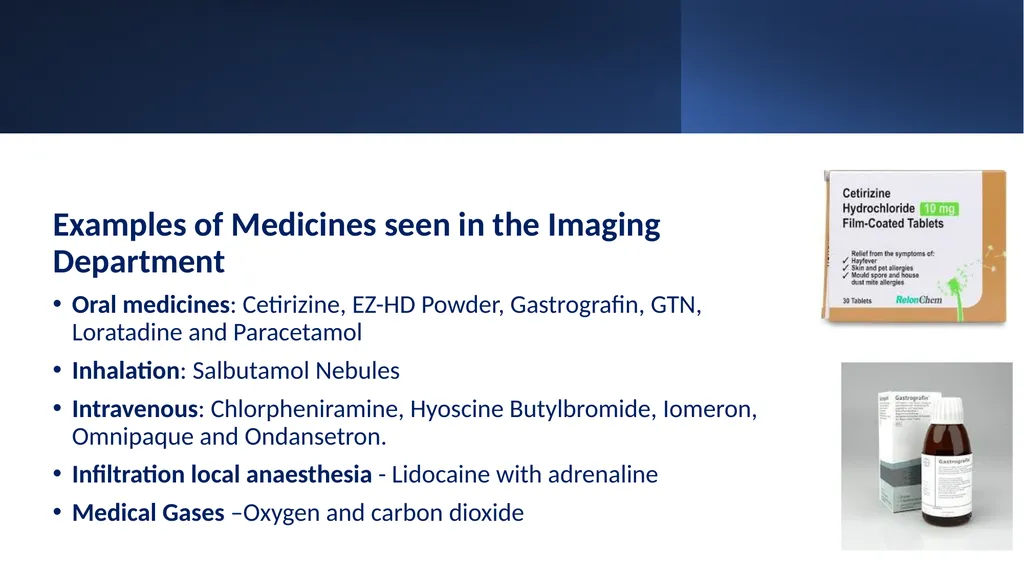
Oral medicines: Cetirizine, EZ-HD Powder, Gastrografin, GTN, Loratadine and Paracetamol
Inhalation: Salbutamol Nebules
Intravenous: Chlorpheniramine, Hyoscine Butylbromide, Iomeron, Omnipaque and Ondansetron.
Infiltration local anaesthesia - Lidocaine with adrenaline
Medical Gases –Oxygen and carbon dioxide<br>
slide8. General medication handling
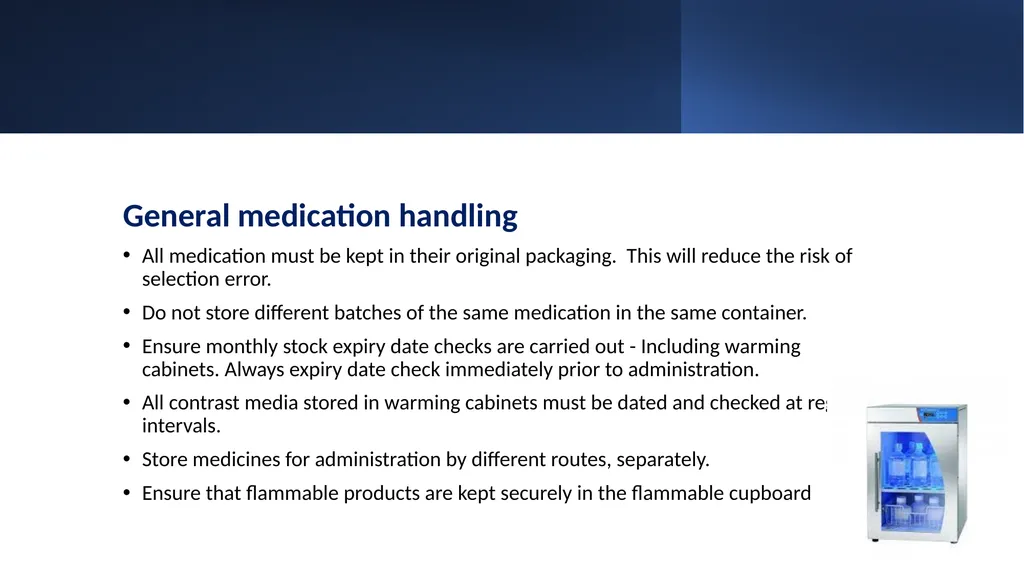
All medication must be kept in their original packaging. This will reduce the risk of selection error.
Do not store different batches of the same medication in the same container.
Ensure monthly stock expiry date checks are carried out - Including warming cabinets. Always expiry date check immediately prior to administration.
All contrast media stored in warming cabinets must be dated and checked at regular intervals.
Store medicines for administration by different routes, separately.
Ensure that flammable products are kept securely in the flammable cupboard<br>
slide9. General medication handling
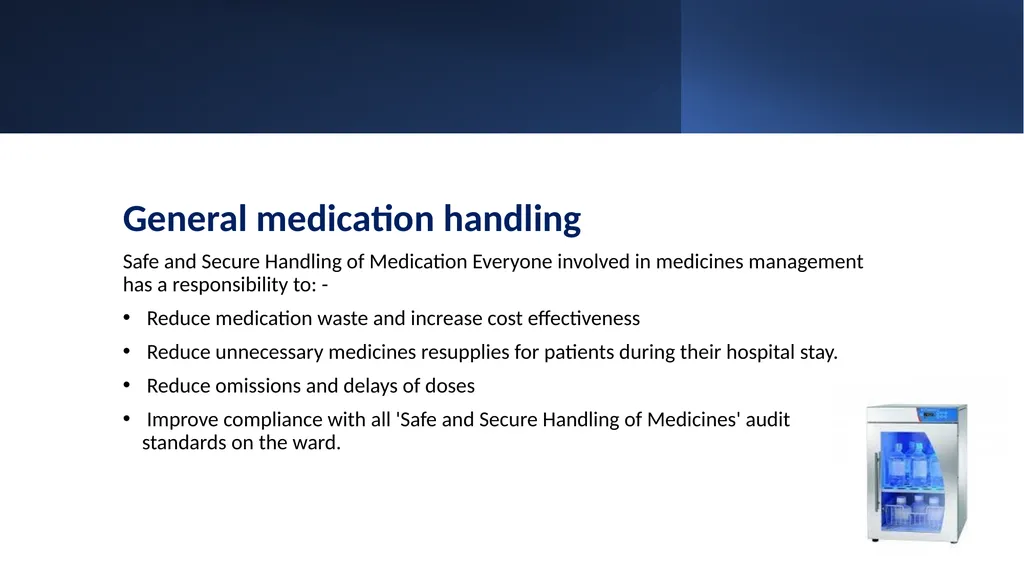
Safe and Secure Handling of Medication Everyone involved in medicines management has a responsibility to: -
Reduce medication waste and increase cost effectiveness
Reduce unnecessary medicines resupplies for patients during their hospital stay.
Reduce omissions and delays of doses
Improve compliance with all 'Safe and Secure Handling of Medicines' audit standards on the ward.<br>
slide10. General medication handling
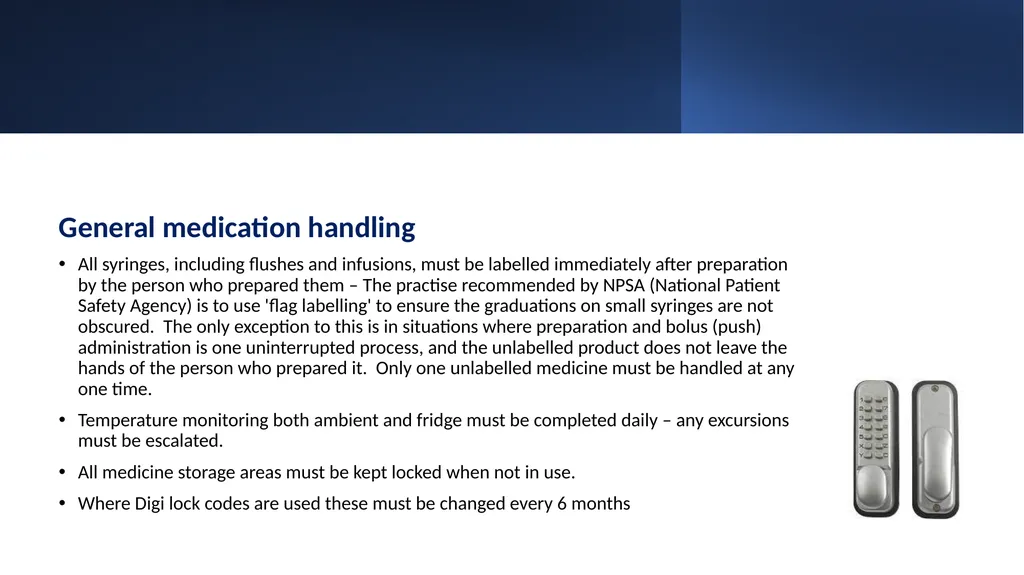
All syringes, including flushes and infusions, must be labelled immediately after preparation by the person who prepared them – The practise recommended by NPSA (National Patient Safety Agency) is to use 'flag labelling' to ensure the graduations on small syringes are not obscured. The only exception to this is in situations where preparation and bolus (push) administration is one uninterrupted process, and the unlabelled product does not leave the hands of the person who prepared it. Only one unlabelled medicine must be handled at any one time.
Temperature monitoring both ambient and fridge must be completed daily – any excursions must be escalated.
All medicine storage areas must be kept locked when not in use.
Where Digi lock codes are used these must be changed every 6 months<br>
slide11. Obtaining medication out of hours
OOH drug cupboard (via Site Co-ordinator)
Review drug borrowing procedure
Contact on-call pharmacist if necessary
It is not permitted to transfer ward stock CDs from one ward/department's CD cupboard, and ward CD record book, to another. This would be seen as the Nurse/Midwife supplying a stock of a CD and would therefore be illegal.<br>
slide12. Medical Gases
• Medical gases are regarded as drugs and as such must be prescribed
• Only Oxygen may be administered in an emergency (cardiac arrest or respiratory distress) without a prescription.
See link:- Prescribing, Administration & Monitoring Oxygen Policy Guideline Template
• All staff handling and administering medical gases must only do so after they have completed medical gas safety training.
• See the Medical Gases Page for further information<br>
slide13. Allergies
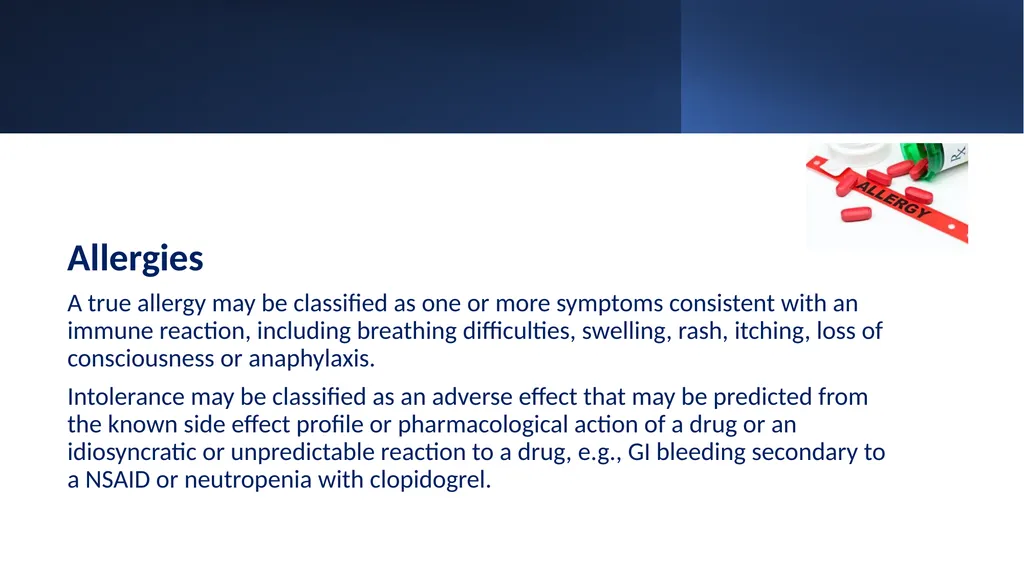
A true allergy may be classified as one or more symptoms consistent with an immune reaction, including breathing difficulties, swelling, rash, itching, loss of consciousness or anaphylaxis.
Intolerance may be classified as an adverse effect that may be predicted from the known side effect profile or pharmacological action of a drug or an idiosyncratic or unpredictable reaction to a drug, e.g., GI bleeding secondary to a NSAID or neutropenia with clopidogrel.<br>
slide14. Allergies
Before administering a medicine, the registered healthcare professional will check:
The identity of the patient. Complying with the Patient Identification Policy and ensuring that no procedure, investigation or provision of care is undertaken without checking the identification of the patient and the identification band and a patient’s allergy/ADR status to prevent the occurrence of adverse incidents or near misses arising from misidentification.
Policy Template http://thehub/c/documents/policies/Documents/Patient%20Identification%20Policy%20v6.pdf
The allergy status of the patient - Medicines must not be administered unless the allergy status information is completed
The Trust requires all healthcare practitioners to enter known drug allergies and sensitivities on medication prescribing documents together with their manifestations OR specify that there are no known allergies.
Each prescribing document includes an allergy status section which must be completed
On paper records this entry should also be initialled and dated by the HCP who has obtained the information. Drugs must not be administered unless allergy status information is completed.
The allergy status must be updated on Sunrise® electronic patient record and electronic prescribing and administration (EPMA) system
For more information on how to record an allergy on Sunrise:
Recording an Allergy on Sunrise QRG v1.0.pdf<br>
slide15. Temperature Monitoring
The Royal Pharmaceutical Society Safe and Secure Handling of Medicines guidance (RPS, 2018) stipulates that medicines should be stored under conditions that assure their quality until they are used or administered.
Organisations are required to have policies and procedures to outline storage and temperature monitoring arrangements for all medicines and provide assurance that these are being followed by staff.
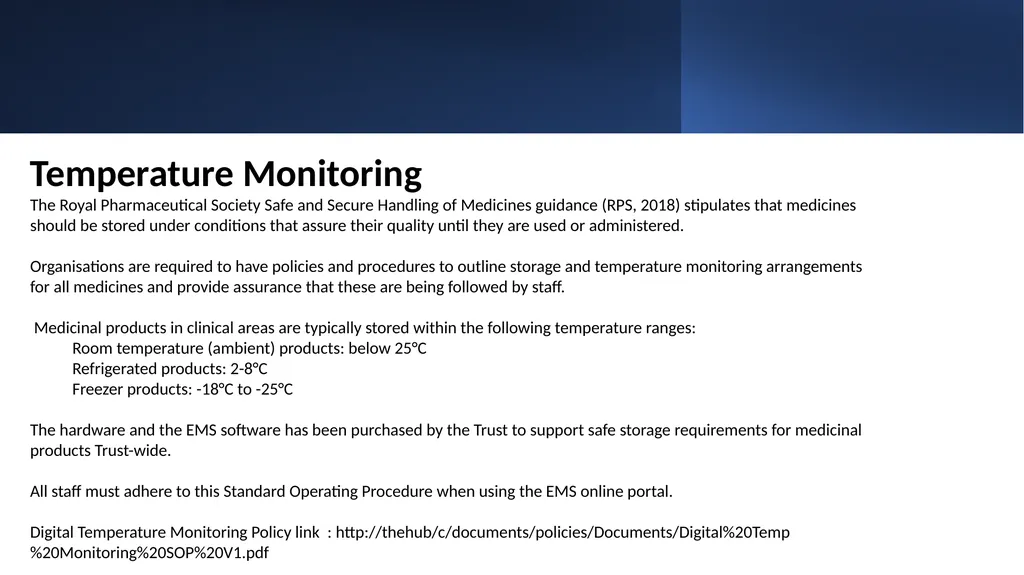
Medicinal products in clinical areas are typically stored within the following temperature ranges:
Room temperature (ambient) products: below 25°C
Refrigerated products: 2-8°C
Freezer products: -18°C to -25°C
The hardware and the EMS software has been purchased by the Trust to support safe storage requirements for medicinal products Trust-wide.
All staff must adhere to this Standard Operating Procedure when using the EMS online portal.
Digital Temperature Monitoring Policy link : http://thehub/c/documents/policies/Documents/Digital%20Temp%20Monitoring%20SOP%20V1.pdf<br>
slide16. Patient Safety Alerts
• Patient safety alerts rapidly warn the healthcare system of risks. They provide guidance on preventing potential incidents that may lead to harm or death.
• Alerts are currently issued via NHS Improvement and cascaded to our Trust via the Central Alerting System (CAS)
• The Never Events Policy and Framework incorporates key actions from previous NPSA alerts
The following slide highlights an issue raised in national patient safety alert<br>
slide17. Risk of severe and fatal burns with paraffin containing and paraffin-free emollients
Click on the link to watch a video that has been produced for medical professionals and carers, which highlights the potential fire hazards associated with paraffin-based skin products.
MHRA - Emollient Fires - YouTube
As you watch the video think about how you can minimise the risk of harm
“Warnings about the risk of severe and fatal burns have been extended to all paraffin-based emollients regardless of paraffin concentration. Data suggest there is also a risk for paraffin-free emollients.” MHRA, 2018
Now read the latest MHRA advice for healthcare professionals by clicking the link
Emollients: new information about risk of severe and fatal burns with paraffin-containing and paraffin-free emollients - GOV.UK (www.gov.uk)<br>
slide18. Patient Group Directions
In August 2000 Patient Group Directions (PGDs) became an additional way in which medicines could be supplied and administered to patients by a specified range of registered health care professionals without first seeing a licensed prescriber.
Patient Group Directions (PGDs) are written instructions for the supply or administration of medicines to groups of patients who may not be individually identified before presentation for treatment.
Radiographers are permitted to administer medicines such as contrast media to patients, in accordance with a doctor’s or dentist’s prescription, or in accordance with an authorised PGD on which they are named.
It is the Radiographers responsibility to read and understand the PGD and operate within its directions.
Refer to the Patient Group Direction (PGD) Development, Implementation and Review Policy: Procedural Document Development Management Policy Template v7<br>
slide19. Patient Group Directions
Class of healthcare professional for whom PGD is applicable.
Professional qualifications required.
HPC Registered Diagnostic Radiographers
BSc (Hons) Radiography or Diploma of the college of Radiographers
With Professional Indemnity cover.
Has a current contract of employment with DGFT.<br>
slide20. Patient Group Directions
Additional requirements/specialist qualifications required
• Knowledge and understanding of working under PGDs and has been assessed as competent in the role/training in the use of PGDs.
• Certificate of Competence in Administering Intravenous Injections, (Accredited by the College of Radiographers or locally approved course).
• Knowledge and understanding of standard operating procedure (SOP) for the administration of contrast media and medication.
• Knowledge and understanding of a PGD.
• Working knowledge of adverse reactions to the medication used with the PGD and how to identify drug interactions.
• Training appropriate to recognise and manage allergic/anaphylactic reactions.<br>
slide21. Patient Group Directions
Continued training requirements
The Radiographer is responsible for keeping themselves up to date and must keep a record of their CPD in line with the HCPC requirements for registrants.
Actively taking part in annual individual performance reviews.
Individuals operating under this PGD are personally responsible for ensuring they remain up to date with the use of all medicines and guidance included in the PGD - if any training needs are identified these should be discussed with the senior individual responsible for authorising individuals to act under the PGD and further training provided as required.
Ensuring they have received written authorisation to act as an approved practitioner under the PGD.
Ensuring a new specimen signature on any change of name is immediately added to the master Authorisation to Practice Under a Patient Group Direction.<br>
slide22. Incident reporting and Learning
The Dudley Group NHS Foundation Trust is committed to providing a safe environment for all persons who come into contact with its premises or services. This includes patients, visitors, staff and contractors.
The Trust recognises that incidents will at times occur and this policy ensures there is a framework in place for reporting and managing incidents to minimise the risk of them happening again.
This is achieved by the collection of information about adverse incidents (including near misses), ill health and hazards, to facilitate wider organisational learning.<br>
slide23. Incident reporting and Learning
All staff regardless of position, title, occupation etc has a responsibility to identify, act upon and report incidents/near-misses which they have witnessed or been involved in.
The person who reports the incident is responsible for assigning an initial severity grade according to their perception of the incident and its consequences at the time of the report. This will grade the harm caused by the Trust not the harm to the individual.
If the incident is an actual/potential Serious Incident or possible Never Event they are responsible for escalating it immediately to a senior manager<br>
slide24. Incident Reporting and Learning
• All healthcare professionals are responsible for reporting incidents/errors/near misses relating to the use of medicines using The Dudley Group NHS FT Incident Reporting System & Serious Incident Reporting Policy.
• The Trust incident reporting system (Datix®) and policies are available via the Hub.
• Examples of situations that should be reported as patient safety incidents are included in the Medicines Management Policy
• All medication incidents reported via Datix® are automatically sent to the pharmacy team and reviewed by the Medication Safety Officer (MSO). The Safe Medicines Practice (SMP) Group will identify trends and ensure reported incidents are used to reduce the likelihood of recurrence and minimise the risk of patient harm.
• Changes in practice and lessons learnt are shared across the organisation through mandatory and ward-based training, communication through medicines link nurses in each clinical area and through senior and junior medical communication channels, providing the opportunity for individual practitioners to review their practice, improving it in line with the outcome of incident reviews.
• If you or a colleague are interested in joining SMP Group then please contact the Pharmacy via switchboard and ask to speak with the MSO<br>
slide25. Incident reporting
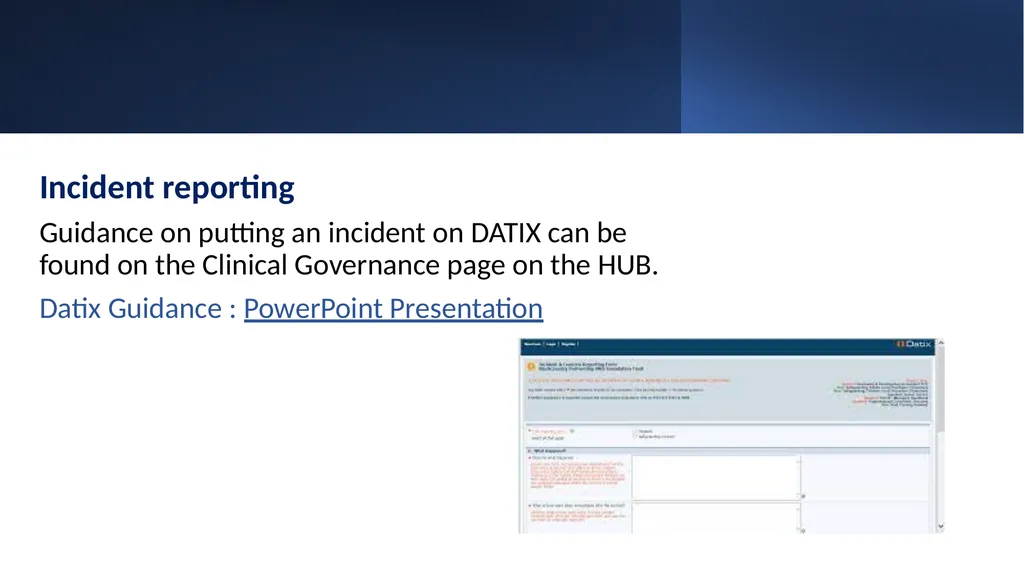
Guidance on putting an incident on DATIX can be found on the Clinical Governance page on the HUB.
Datix Guidance : PowerPoint Presentation<br>
slide26. Gina's story
This video is an example of how errors relating to medicines can occur and how we can reduce the likelihood of the events
The Human Factor: Learning from Gina's Story. - YouTube<br>
slide27. Key points from Gina's story
Highlights the importance of medication management.
Roles and responsibilities of all staff must be clearly defined.
Safety check lists must be utilised.
We can only learn from errors if they are reported.
We can then make changes to processes to ensure error do not happen again.
Departments and Trusts can learn from each other.<br>
slide28. Reflecting on Gina's Story
After watching Gina's story:
Take an active approach to designing systems and processes in your area to prevent errors.
Reflect on your current practise. Are there any service improvements that can be made in your area.
Think about human factors and how they can affect your practise.
If you have any medicines management issues, please feel free to contact the pharmacy team.<br>
slide29. Test your Knowledge
The following questions are based on our Trust’s Medicines Management Policy and other policies relating to this training pack.
You should attempt all questions before checking your answers on slides 32-33
If you are unsure of any answers you can refer to the Policy on the Hub or discuss with your line manager.<br>
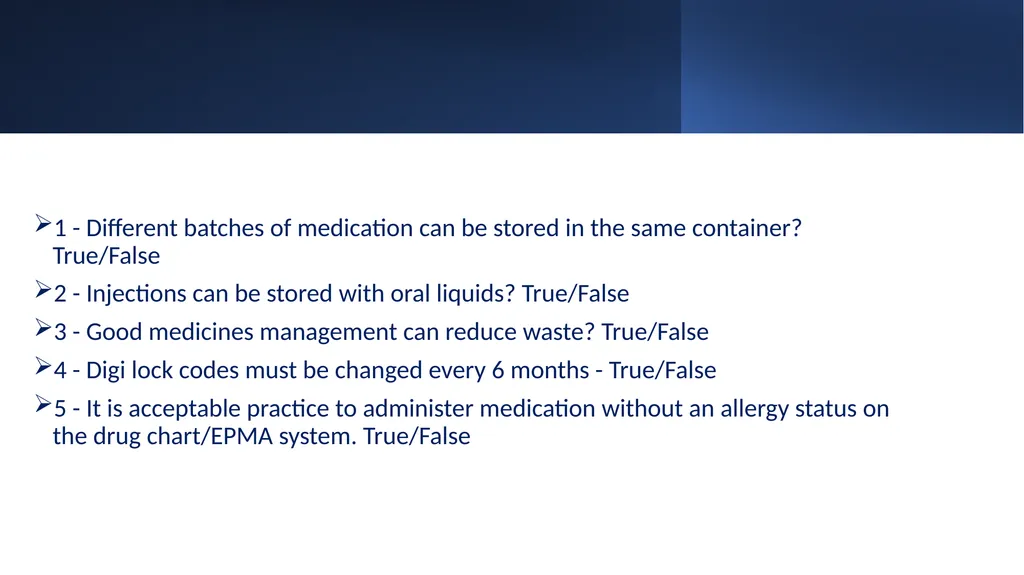
slide30. 1 - Different batches of medication can be stored in the same container? True/False
2 - Injections can be stored with oral liquids? True/False
3 - Good medicines management can reduce waste? True/False
4 - Digi lock codes must be changed every 6 months - True/False
5 - It is acceptable practice to administer medication without an allergy status on the drug chart/EPMA system. True/False<br>
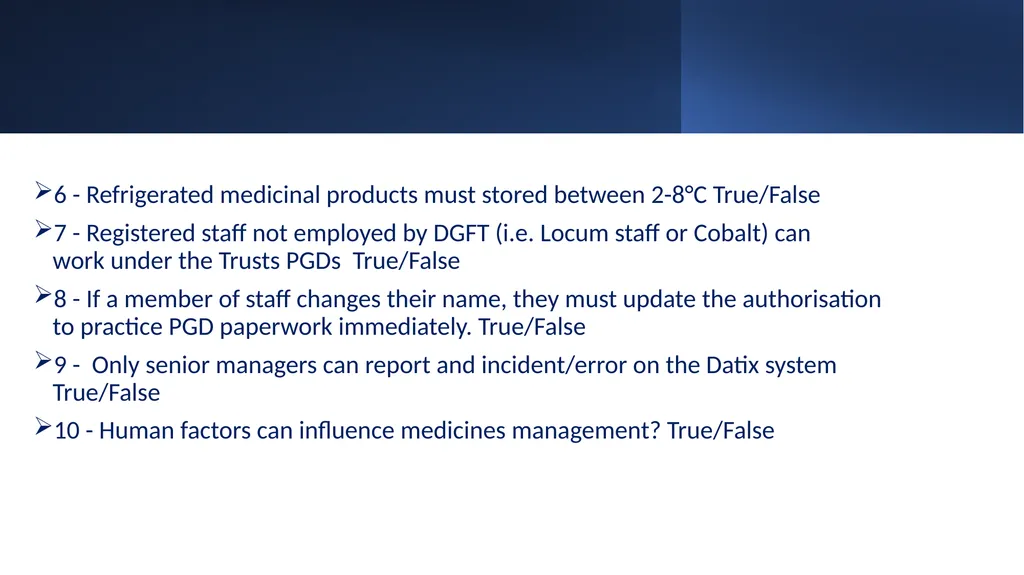
slide31. 6 - Refrigerated medicinal products must stored between 2-8°C True/False
7 - Registered staff not employed by DGFT (i.e. Locum staff or Cobalt) can work under the Trusts PGDs True/False
8 - If a member of staff changes their name, they must update the authorisation to practice PGD paperwork immediately. True/False
9 - Only senior managers can report and incident/error on the Datix system True/False
10 - Human factors can influence medicines management? True/False<br>
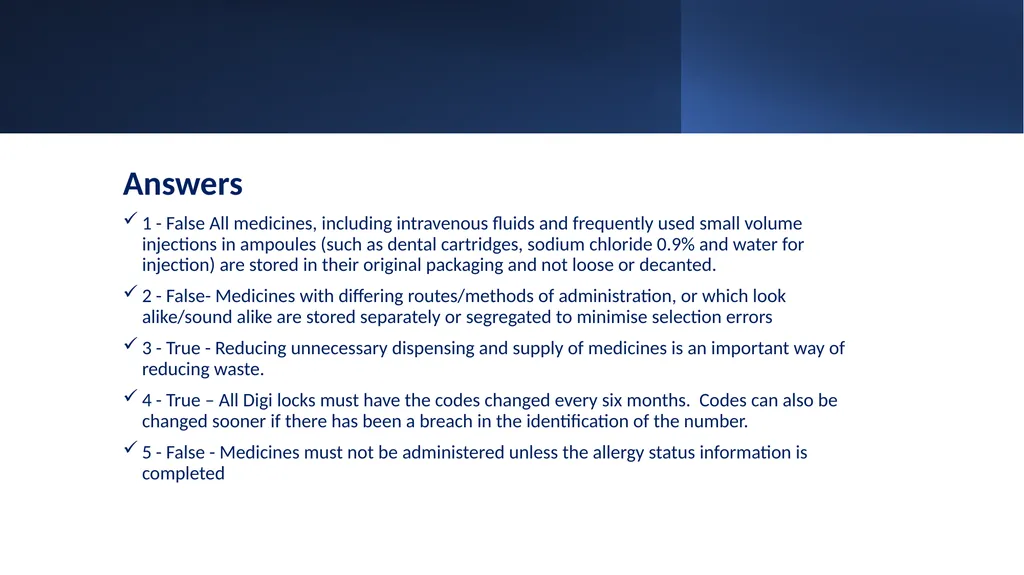
slide32. Answers
1 - False All medicines, including intravenous fluids and frequently used small volume injections in ampoules (such as dental cartridges, sodium chloride 0.9% and water for injection) are stored in their original packaging and not loose or decanted.
2 - False- Medicines with differing routes/methods of administration, or which look alike/sound alike are stored separately or segregated to minimise selection errors
3 - True - Reducing unnecessary dispensing and supply of medicines is an important way of reducing waste.
4 - True – All Digi locks must have the codes changed every six months. Codes can also be changed sooner if there has been a breach in the identification of the number.
5 - False - Medicines must not be administered unless the allergy status information is completed<br>
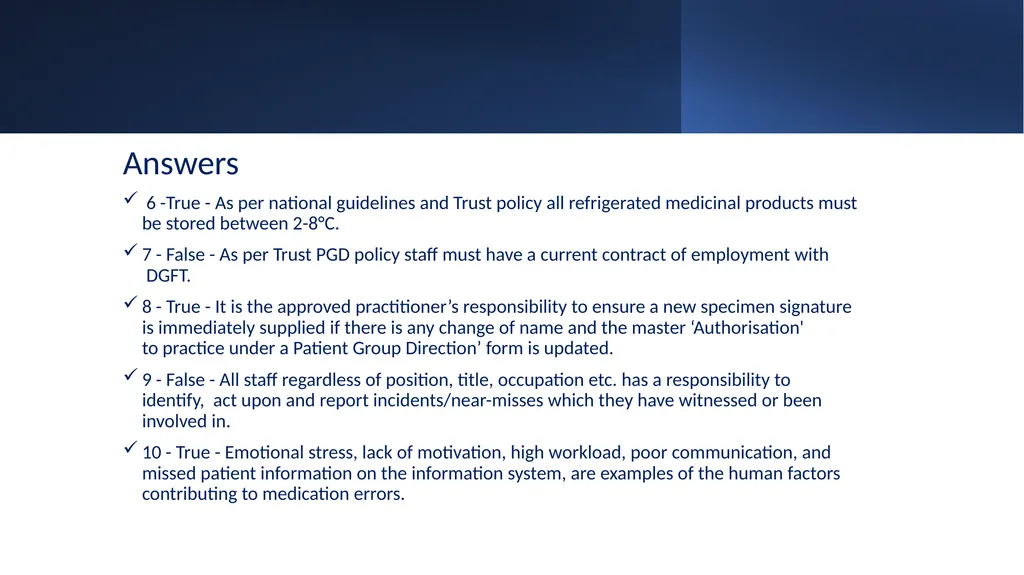
slide33. Answers
6 -True - As per national guidelines and Trust policy all refrigerated medicinal products must be stored between 2-8°C.
7 - False - As per Trust PGD policy staff must have a current contract of employment with DGFT.
8 - True - It is the approved practitioner’s responsibility to ensure a new specimen signature is immediately supplied if there is any change of name and the master ‘Authorisation' to practice under a Patient Group Direction’ form is updated.
9 - False - All staff regardless of position, title, occupation etc. has a responsibility to identify, act upon and report incidents/near-misses which they have witnessed or been involved in.
10 - True - Emotional stress, lack of motivation, high workload, poor communication, and missed patient information on the information system, are examples of the human factors contributing to medication errors.<br>
slide34. Further reading :
The Medicines Management Policy:
Medicines Management Policy.pdf
Digital Temperature Monitoring Policy:
Guideline Template
PATIENT GROUP DIRECTION (PGD) DEVELOPMENT, IMPLEMENTATION AND REVIEW POLICY:
Procedural Document Development Management Policy Template v7
INCIDENT REPORTING AND MANAGEMENT POLICY (INCLUDING SERIOUS INCIDENTS):
Incident Reporting and Management Policy.pdf
Patient Identification Policy
Policy Template<br>
slide35. Next steps…
• If you have a question or concern about any medicines management issue please contact your line manager, team leader or Pharmacy
• Complete the declaration on the following slide that you have completed and understood the information provided in this self-directed learning package, then copy and paste all the information and email to dgft.learning@nhs.net<br>
slide36. Contact learning and development
Regarding the "Medicines Management Training for Radiographers" I confirm that:
I have read the entire self-directed learning programme and understood its contents.
I know how and who to contact if I have issues regarding medicines management and to obtain further information as required.
I understand there are supporting polices and guidelines available on the Trust HUB
I understand that I have a responsibility to report medicines management incidents on the Trust incident reporting system (Datix)in line with the Trust Incident reporting procedure.
Full name:
Date of completion:
Job role:
Department<br>
October 2023<br>
slide2. Welcome to your medicines management training presentation specifically designed to meet the needs of Radiographers.
This pack does not replace reading the Medicines Management policy or any other related policy.<br>
slide3. Contents
Learning outcomes
Why do we have a medicines management policy?
Importance of medicines management
Medication seen in Imaging
General Medication handling
Medical Gases
Allergy Status
Digital Temperature Monitoring
Patient Safety Alerts
Patient Group Directives
Incident Reporting
Gina's Story
Test Your Knowledge
Further Reading<br>
slide4. Learning Outcomes
On completion of this self-directed learning pack, you should be able to:
• Understand the contents of this pack
• Know how to access information about Medicines Management issues and obtain further information if required
• Understand that there are supporting policies and guidelines available on the Trust HUB and from the Royal Pharmaceutical Society (RPS), The Health & Care Professions Council (HCPC)and national safety alerts
• Understand your responsibility to report medicines management incidents on the Trust incident reporting system (Datix®) in line with the Trust Policy<br>
slide5. Why do we have a Medicines Management Policy?
• To define the standard(s) required
• To raise awareness of and minimise risks
• To ensure a safe and effective approach to medicines handling across the organisation
• To protect patients and staff<br>
slide6. Medicines Management
Incidents can occur due to a variety of reasons e.g., human factors, ambiguity in processes and lack of awareness
Medicines management includes areas such as delivery, storage, preparation, administration and safe disposal of medicines.
Where can I find information on Medicines Management?
Always check and follow Trust’s guidance on safe and effective medicines handling
Our Medicines Management Policy can be accessed via the Hub
Medicines Management Policy.pdf
The RCR has also worked with the RPS and other stakeholders to produce guidance that you should be familiar with and highlighted sources of guidance for specific areas of practice
Admin of Meds prof guidance.pdf (rpharms.com)<br>
slide7. Examples of Medicines seen in the Imaging Department
Oral medicines: Cetirizine, EZ-HD Powder, Gastrografin, GTN, Loratadine and Paracetamol
Inhalation: Salbutamol Nebules
Intravenous: Chlorpheniramine, Hyoscine Butylbromide, Iomeron, Omnipaque and Ondansetron.
Infiltration local anaesthesia - Lidocaine with adrenaline
Medical Gases –Oxygen and carbon dioxide<br>
slide8. General medication handling
All medication must be kept in their original packaging. This will reduce the risk of selection error.
Do not store different batches of the same medication in the same container.
Ensure monthly stock expiry date checks are carried out - Including warming cabinets. Always expiry date check immediately prior to administration.
All contrast media stored in warming cabinets must be dated and checked at regular intervals.
Store medicines for administration by different routes, separately.
Ensure that flammable products are kept securely in the flammable cupboard<br>
slide9. General medication handling
Safe and Secure Handling of Medication Everyone involved in medicines management has a responsibility to: -
Reduce medication waste and increase cost effectiveness
Reduce unnecessary medicines resupplies for patients during their hospital stay.
Reduce omissions and delays of doses
Improve compliance with all 'Safe and Secure Handling of Medicines' audit standards on the ward.<br>
slide10. General medication handling
All syringes, including flushes and infusions, must be labelled immediately after preparation by the person who prepared them – The practise recommended by NPSA (National Patient Safety Agency) is to use 'flag labelling' to ensure the graduations on small syringes are not obscured. The only exception to this is in situations where preparation and bolus (push) administration is one uninterrupted process, and the unlabelled product does not leave the hands of the person who prepared it. Only one unlabelled medicine must be handled at any one time.
Temperature monitoring both ambient and fridge must be completed daily – any excursions must be escalated.
All medicine storage areas must be kept locked when not in use.
Where Digi lock codes are used these must be changed every 6 months<br>
slide11. Obtaining medication out of hours
OOH drug cupboard (via Site Co-ordinator)
Review drug borrowing procedure
Contact on-call pharmacist if necessary
It is not permitted to transfer ward stock CDs from one ward/department's CD cupboard, and ward CD record book, to another. This would be seen as the Nurse/Midwife supplying a stock of a CD and would therefore be illegal.<br>
slide12. Medical Gases
• Medical gases are regarded as drugs and as such must be prescribed
• Only Oxygen may be administered in an emergency (cardiac arrest or respiratory distress) without a prescription.
See link:- Prescribing, Administration & Monitoring Oxygen Policy Guideline Template
• All staff handling and administering medical gases must only do so after they have completed medical gas safety training.
• See the Medical Gases Page for further information<br>
slide13. Allergies
A true allergy may be classified as one or more symptoms consistent with an immune reaction, including breathing difficulties, swelling, rash, itching, loss of consciousness or anaphylaxis.
Intolerance may be classified as an adverse effect that may be predicted from the known side effect profile or pharmacological action of a drug or an idiosyncratic or unpredictable reaction to a drug, e.g., GI bleeding secondary to a NSAID or neutropenia with clopidogrel.<br>
slide14. Allergies
Before administering a medicine, the registered healthcare professional will check:
The identity of the patient. Complying with the Patient Identification Policy and ensuring that no procedure, investigation or provision of care is undertaken without checking the identification of the patient and the identification band and a patient’s allergy/ADR status to prevent the occurrence of adverse incidents or near misses arising from misidentification.
Policy Template http://thehub/c/documents/policies/Documents/Patient%20Identification%20Policy%20v6.pdf
The allergy status of the patient - Medicines must not be administered unless the allergy status information is completed
The Trust requires all healthcare practitioners to enter known drug allergies and sensitivities on medication prescribing documents together with their manifestations OR specify that there are no known allergies.
Each prescribing document includes an allergy status section which must be completed
On paper records this entry should also be initialled and dated by the HCP who has obtained the information. Drugs must not be administered unless allergy status information is completed.
The allergy status must be updated on Sunrise® electronic patient record and electronic prescribing and administration (EPMA) system
For more information on how to record an allergy on Sunrise:
Recording an Allergy on Sunrise QRG v1.0.pdf<br>
slide15. Temperature Monitoring
The Royal Pharmaceutical Society Safe and Secure Handling of Medicines guidance (RPS, 2018) stipulates that medicines should be stored under conditions that assure their quality until they are used or administered.
Organisations are required to have policies and procedures to outline storage and temperature monitoring arrangements for all medicines and provide assurance that these are being followed by staff.
Medicinal products in clinical areas are typically stored within the following temperature ranges:
Room temperature (ambient) products: below 25°C
Refrigerated products: 2-8°C
Freezer products: -18°C to -25°C
The hardware and the EMS software has been purchased by the Trust to support safe storage requirements for medicinal products Trust-wide.
All staff must adhere to this Standard Operating Procedure when using the EMS online portal.
Digital Temperature Monitoring Policy link : http://thehub/c/documents/policies/Documents/Digital%20Temp%20Monitoring%20SOP%20V1.pdf<br>
slide16. Patient Safety Alerts
• Patient safety alerts rapidly warn the healthcare system of risks. They provide guidance on preventing potential incidents that may lead to harm or death.
• Alerts are currently issued via NHS Improvement and cascaded to our Trust via the Central Alerting System (CAS)
• The Never Events Policy and Framework incorporates key actions from previous NPSA alerts
The following slide highlights an issue raised in national patient safety alert<br>
slide17. Risk of severe and fatal burns with paraffin containing and paraffin-free emollients
Click on the link to watch a video that has been produced for medical professionals and carers, which highlights the potential fire hazards associated with paraffin-based skin products.
MHRA - Emollient Fires - YouTube
As you watch the video think about how you can minimise the risk of harm
“Warnings about the risk of severe and fatal burns have been extended to all paraffin-based emollients regardless of paraffin concentration. Data suggest there is also a risk for paraffin-free emollients.” MHRA, 2018
Now read the latest MHRA advice for healthcare professionals by clicking the link
Emollients: new information about risk of severe and fatal burns with paraffin-containing and paraffin-free emollients - GOV.UK (www.gov.uk)<br>
slide18. Patient Group Directions
In August 2000 Patient Group Directions (PGDs) became an additional way in which medicines could be supplied and administered to patients by a specified range of registered health care professionals without first seeing a licensed prescriber.
Patient Group Directions (PGDs) are written instructions for the supply or administration of medicines to groups of patients who may not be individually identified before presentation for treatment.
Radiographers are permitted to administer medicines such as contrast media to patients, in accordance with a doctor’s or dentist’s prescription, or in accordance with an authorised PGD on which they are named.
It is the Radiographers responsibility to read and understand the PGD and operate within its directions.
Refer to the Patient Group Direction (PGD) Development, Implementation and Review Policy: Procedural Document Development Management Policy Template v7<br>
slide19. Patient Group Directions
Class of healthcare professional for whom PGD is applicable.
Professional qualifications required.
HPC Registered Diagnostic Radiographers
BSc (Hons) Radiography or Diploma of the college of Radiographers
With Professional Indemnity cover.
Has a current contract of employment with DGFT.<br>
slide20. Patient Group Directions
Additional requirements/specialist qualifications required
• Knowledge and understanding of working under PGDs and has been assessed as competent in the role/training in the use of PGDs.
• Certificate of Competence in Administering Intravenous Injections, (Accredited by the College of Radiographers or locally approved course).
• Knowledge and understanding of standard operating procedure (SOP) for the administration of contrast media and medication.
• Knowledge and understanding of a PGD.
• Working knowledge of adverse reactions to the medication used with the PGD and how to identify drug interactions.
• Training appropriate to recognise and manage allergic/anaphylactic reactions.<br>
slide21. Patient Group Directions
Continued training requirements
The Radiographer is responsible for keeping themselves up to date and must keep a record of their CPD in line with the HCPC requirements for registrants.
Actively taking part in annual individual performance reviews.
Individuals operating under this PGD are personally responsible for ensuring they remain up to date with the use of all medicines and guidance included in the PGD - if any training needs are identified these should be discussed with the senior individual responsible for authorising individuals to act under the PGD and further training provided as required.
Ensuring they have received written authorisation to act as an approved practitioner under the PGD.
Ensuring a new specimen signature on any change of name is immediately added to the master Authorisation to Practice Under a Patient Group Direction.<br>
slide22. Incident reporting and Learning
The Dudley Group NHS Foundation Trust is committed to providing a safe environment for all persons who come into contact with its premises or services. This includes patients, visitors, staff and contractors.
The Trust recognises that incidents will at times occur and this policy ensures there is a framework in place for reporting and managing incidents to minimise the risk of them happening again.
This is achieved by the collection of information about adverse incidents (including near misses), ill health and hazards, to facilitate wider organisational learning.<br>
slide23. Incident reporting and Learning
All staff regardless of position, title, occupation etc has a responsibility to identify, act upon and report incidents/near-misses which they have witnessed or been involved in.
The person who reports the incident is responsible for assigning an initial severity grade according to their perception of the incident and its consequences at the time of the report. This will grade the harm caused by the Trust not the harm to the individual.
If the incident is an actual/potential Serious Incident or possible Never Event they are responsible for escalating it immediately to a senior manager<br>
slide24. Incident Reporting and Learning
• All healthcare professionals are responsible for reporting incidents/errors/near misses relating to the use of medicines using The Dudley Group NHS FT Incident Reporting System & Serious Incident Reporting Policy.
• The Trust incident reporting system (Datix®) and policies are available via the Hub.
• Examples of situations that should be reported as patient safety incidents are included in the Medicines Management Policy
• All medication incidents reported via Datix® are automatically sent to the pharmacy team and reviewed by the Medication Safety Officer (MSO). The Safe Medicines Practice (SMP) Group will identify trends and ensure reported incidents are used to reduce the likelihood of recurrence and minimise the risk of patient harm.
• Changes in practice and lessons learnt are shared across the organisation through mandatory and ward-based training, communication through medicines link nurses in each clinical area and through senior and junior medical communication channels, providing the opportunity for individual practitioners to review their practice, improving it in line with the outcome of incident reviews.
• If you or a colleague are interested in joining SMP Group then please contact the Pharmacy via switchboard and ask to speak with the MSO<br>
slide25. Incident reporting
Guidance on putting an incident on DATIX can be found on the Clinical Governance page on the HUB.
Datix Guidance : PowerPoint Presentation<br>
slide26. Gina's story
This video is an example of how errors relating to medicines can occur and how we can reduce the likelihood of the events
The Human Factor: Learning from Gina's Story. - YouTube<br>
slide27. Key points from Gina's story
Highlights the importance of medication management.
Roles and responsibilities of all staff must be clearly defined.
Safety check lists must be utilised.
We can only learn from errors if they are reported.
We can then make changes to processes to ensure error do not happen again.
Departments and Trusts can learn from each other.<br>
slide28. Reflecting on Gina's Story
After watching Gina's story:
Take an active approach to designing systems and processes in your area to prevent errors.
Reflect on your current practise. Are there any service improvements that can be made in your area.
Think about human factors and how they can affect your practise.
If you have any medicines management issues, please feel free to contact the pharmacy team.<br>
slide29. Test your Knowledge
The following questions are based on our Trust’s Medicines Management Policy and other policies relating to this training pack.
You should attempt all questions before checking your answers on slides 32-33
If you are unsure of any answers you can refer to the Policy on the Hub or discuss with your line manager.<br>
slide30. 1 - Different batches of medication can be stored in the same container? True/False
2 - Injections can be stored with oral liquids? True/False
3 - Good medicines management can reduce waste? True/False
4 - Digi lock codes must be changed every 6 months - True/False
5 - It is acceptable practice to administer medication without an allergy status on the drug chart/EPMA system. True/False<br>
slide31. 6 - Refrigerated medicinal products must stored between 2-8°C True/False
7 - Registered staff not employed by DGFT (i.e. Locum staff or Cobalt) can work under the Trusts PGDs True/False
8 - If a member of staff changes their name, they must update the authorisation to practice PGD paperwork immediately. True/False
9 - Only senior managers can report and incident/error on the Datix system True/False
10 - Human factors can influence medicines management? True/False<br>
slide32. Answers
1 - False All medicines, including intravenous fluids and frequently used small volume injections in ampoules (such as dental cartridges, sodium chloride 0.9% and water for injection) are stored in their original packaging and not loose or decanted.
2 - False- Medicines with differing routes/methods of administration, or which look alike/sound alike are stored separately or segregated to minimise selection errors
3 - True - Reducing unnecessary dispensing and supply of medicines is an important way of reducing waste.
4 - True – All Digi locks must have the codes changed every six months. Codes can also be changed sooner if there has been a breach in the identification of the number.
5 - False - Medicines must not be administered unless the allergy status information is completed<br>
slide33. Answers
6 -True - As per national guidelines and Trust policy all refrigerated medicinal products must be stored between 2-8°C.
7 - False - As per Trust PGD policy staff must have a current contract of employment with DGFT.
8 - True - It is the approved practitioner’s responsibility to ensure a new specimen signature is immediately supplied if there is any change of name and the master ‘Authorisation' to practice under a Patient Group Direction’ form is updated.
9 - False - All staff regardless of position, title, occupation etc. has a responsibility to identify, act upon and report incidents/near-misses which they have witnessed or been involved in.
10 - True - Emotional stress, lack of motivation, high workload, poor communication, and missed patient information on the information system, are examples of the human factors contributing to medication errors.<br>
slide34. Further reading :
The Medicines Management Policy:
Medicines Management Policy.pdf
Digital Temperature Monitoring Policy:
Guideline Template
PATIENT GROUP DIRECTION (PGD) DEVELOPMENT, IMPLEMENTATION AND REVIEW POLICY:
Procedural Document Development Management Policy Template v7
INCIDENT REPORTING AND MANAGEMENT POLICY (INCLUDING SERIOUS INCIDENTS):
Incident Reporting and Management Policy.pdf
Patient Identification Policy
Policy Template<br>
slide35. Next steps…
• If you have a question or concern about any medicines management issue please contact your line manager, team leader or Pharmacy
• Complete the declaration on the following slide that you have completed and understood the information provided in this self-directed learning package, then copy and paste all the information and email to dgft.learning@nhs.net<br>
slide36. Contact learning and development
Regarding the "Medicines Management Training for Radiographers" I confirm that:
I have read the entire self-directed learning programme and understood its contents.
I know how and who to contact if I have issues regarding medicines management and to obtain further information as required.
I understand there are supporting polices and guidelines available on the Trust HUB
I understand that I have a responsibility to report medicines management incidents on the Trust incident reporting system (Datix)in line with the Trust Incident reporting procedure.
Full name:
Date of completion:
Job role:
Department<br>