Mental Health Implications of the Covid-19
Description: Mental Health Implications of the Covid-19 Pandemic Ushmita Nana Counselling Psychologist www.unanapsychologist.com PSYCHOLOGICAL IMPACT Widespread Psychological Distress Financial Distress Lack of Social Support Unpredictability Leading to
Related Topics
Download Presentation
"Mental Health Implications of the Covid-19" is the property of its rightful owner. Permission is granted to download and print the materials on this website for personal, non-commercial use only, and to display it on your personal computer provided you do not modify the materials and that you retain all copyright notices contained in the materials. By downloading content from our website, you accept the terms of this agreement.
Presentation Transcript
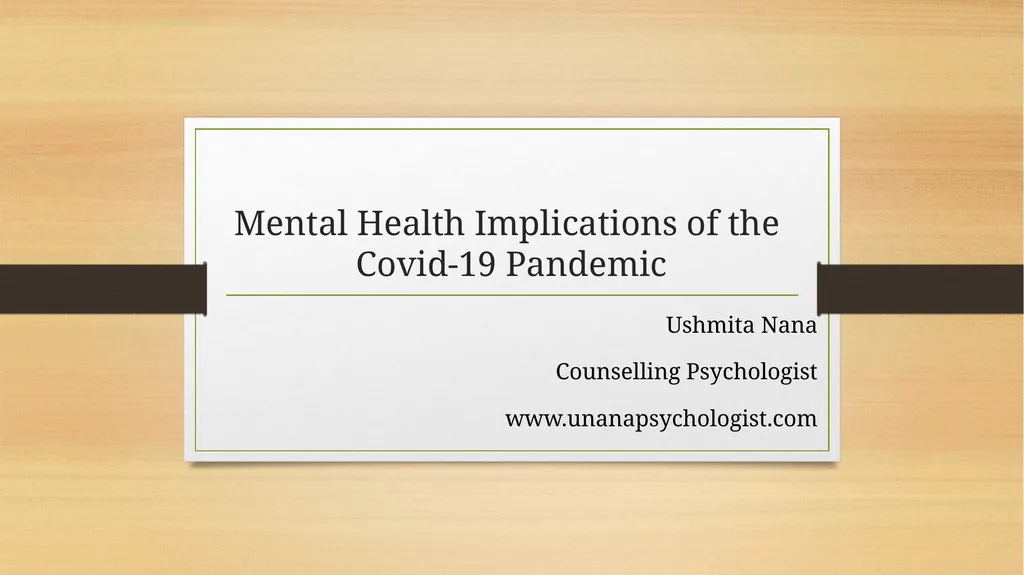
slide1. Mental Health Implications of the Covid-19 Pandemic Ushmita Nana
Counselling Psychologist
www.unanapsychologist.com<br>
slide2. PSYCHOLOGICAL IMPACT Widespread Psychological Distress
Financial Distress
Lack of Social Support
Unpredictability Leading to Anxiety and Depression
Inability to Access Usual Coping Mechanisms
Lack of Distraction Leading to Unresolved Experiences<br>
slide3. SIGNS OF EMOTIONAL DISTRESS<br>
slide4. COPING TOOLS Acknowledge Feelings as Valid
Limit Media Consumption – once or twice daily
Seek Reputable Information
Reflect on Past Coping Strategies
Opposite Action – funny video or movie
Explore your Circle of Control
Stay Connected – Call Instead of Text
Recognize the Signs of Depression and Anxiety<br>
slide5. WORKING FROM HOME Initial Novelty
Work/Life Balance – Relationship Distress, Burnout
Other Challenges – Motivation, Isolation, Insomnia
Suggestions:
Routine and Structure for Work Day – Cue Work Time and Home Time
Create Work Space – Avoid Bedroom
Digital Detox Evenings<br>
slide6. LIMITING CONFLICT Confined Spaces May Lead to Conflict
Suggestions
Roster for Chores
Engage in Enjoyable Activities
Communicate Needs
Engage in ‘Me’ time<br>
slide7. STAYING CONNECTED Social Relationships Required for Good Mental Health
Improve Quality of Interactions by Avoiding Distractions
Virtual Dates
Online Hobby Groups
Online Stretching or Exercise Groups<br>
slide8. DEALING WITH CHILDREN Behavioural Signs of Emotional Stress – clingy, bed-wetting, disruptive
Model Appropriate Reactions
Have Honest and Age-appropriate Discussions
Encourage Curiosity
Explore Creative Means of Expression – Worry Monster
Implement Routine and Structure
Introduce Stimulating Activities
Include One on One Time
Limit News Exposure<br>
slide9. DEALING WITH THE ELDERLY Isolation Risk Factor for Depression
Dementia Suggestions:
Regular Routines
Limit Exposure to News
Calming Activities – Music, Painting, Singing
Exercise
Keep in Contact
Photos of Friends and Family<br>
slide10. ADDRESSING GRIEF Grief as a Normal Reaction to Loss
Complicated Grief – Extended, Severe
Sudden Death, Other Stressors, Lack of Support
Not Saying Goodbye, Rituals, Funerals
Ways of Mourning
Letter Writing
Lighting of Candle, Listening to Music
Scrap-booking, Memory Box<br>
slide11. STAGES OF GRIEF Denial – involves denying the pain for a short time
Anger – Gain control over fears, blame, hostile
Bargaining – Acknowledge reality, illusion of control
Despair – Depression sets in, hopeless and helpless
Acceptance – Acknowledge and surrender to the facts<br>
slide12. SYMBOLIC GRIEF Loss of Freedom, Livelihoods, Space
Denial - “It’s just the flu, people get the flu every year”
Anger - “Its all China’s fault…If the government did something differently”
Bargaining - “If I wear my mask I can visit my friends”
Despair – “There is no end in sight, we are all doomed”
Acceptance – “I cannot meet my friends, lets find creative ways of overcoming this challenge”<br>
slide13. ENDING THE STIGMA Be Conscious of the Language Used
Covid Case vs. Individual Being Treated for COVID
Separate the Diagnosis from the Person
People are more than their diagnosis!<br>
slide14. HOPE AND RESILIENCE Stories of Hope and Solidarity
Younger Adults Reaching Out to Elderly
Frontline Workers Cheered and Celebrated
Families Bonding
Online Support Groups
Financial Assistance
The Influence of Thoughts on Feelings<br>
Counselling Psychologist
www.unanapsychologist.com<br>
slide2. PSYCHOLOGICAL IMPACT Widespread Psychological Distress
Financial Distress
Lack of Social Support
Unpredictability Leading to Anxiety and Depression
Inability to Access Usual Coping Mechanisms
Lack of Distraction Leading to Unresolved Experiences<br>
slide3. SIGNS OF EMOTIONAL DISTRESS<br>
slide4. COPING TOOLS Acknowledge Feelings as Valid
Limit Media Consumption – once or twice daily
Seek Reputable Information
Reflect on Past Coping Strategies
Opposite Action – funny video or movie
Explore your Circle of Control
Stay Connected – Call Instead of Text
Recognize the Signs of Depression and Anxiety<br>
slide5. WORKING FROM HOME Initial Novelty
Work/Life Balance – Relationship Distress, Burnout
Other Challenges – Motivation, Isolation, Insomnia
Suggestions:
Routine and Structure for Work Day – Cue Work Time and Home Time
Create Work Space – Avoid Bedroom
Digital Detox Evenings<br>
slide6. LIMITING CONFLICT Confined Spaces May Lead to Conflict
Suggestions
Roster for Chores
Engage in Enjoyable Activities
Communicate Needs
Engage in ‘Me’ time<br>
slide7. STAYING CONNECTED Social Relationships Required for Good Mental Health
Improve Quality of Interactions by Avoiding Distractions
Virtual Dates
Online Hobby Groups
Online Stretching or Exercise Groups<br>
slide8. DEALING WITH CHILDREN Behavioural Signs of Emotional Stress – clingy, bed-wetting, disruptive
Model Appropriate Reactions
Have Honest and Age-appropriate Discussions
Encourage Curiosity
Explore Creative Means of Expression – Worry Monster
Implement Routine and Structure
Introduce Stimulating Activities
Include One on One Time
Limit News Exposure<br>
slide9. DEALING WITH THE ELDERLY Isolation Risk Factor for Depression
Dementia Suggestions:
Regular Routines
Limit Exposure to News
Calming Activities – Music, Painting, Singing
Exercise
Keep in Contact
Photos of Friends and Family<br>
slide10. ADDRESSING GRIEF Grief as a Normal Reaction to Loss
Complicated Grief – Extended, Severe
Sudden Death, Other Stressors, Lack of Support
Not Saying Goodbye, Rituals, Funerals
Ways of Mourning
Letter Writing
Lighting of Candle, Listening to Music
Scrap-booking, Memory Box<br>
slide11. STAGES OF GRIEF Denial – involves denying the pain for a short time
Anger – Gain control over fears, blame, hostile
Bargaining – Acknowledge reality, illusion of control
Despair – Depression sets in, hopeless and helpless
Acceptance – Acknowledge and surrender to the facts<br>
slide12. SYMBOLIC GRIEF Loss of Freedom, Livelihoods, Space
Denial - “It’s just the flu, people get the flu every year”
Anger - “Its all China’s fault…If the government did something differently”
Bargaining - “If I wear my mask I can visit my friends”
Despair – “There is no end in sight, we are all doomed”
Acceptance – “I cannot meet my friends, lets find creative ways of overcoming this challenge”<br>
slide13. ENDING THE STIGMA Be Conscious of the Language Used
Covid Case vs. Individual Being Treated for COVID
Separate the Diagnosis from the Person
People are more than their diagnosis!<br>
slide14. HOPE AND RESILIENCE Stories of Hope and Solidarity
Younger Adults Reaching Out to Elderly
Frontline Workers Cheered and Celebrated
Families Bonding
Online Support Groups
Financial Assistance
The Influence of Thoughts on Feelings<br>