Mental health workgroup Update 15th Washington Group meeting 27-29 October 2015 DSM V Definition of mental disorders A mental disorder is a syndrome characterized by clinically significant disturbance in an individuals cognition, emotion,
"Mental health workgroup Update 15th Washington" is the property of its rightful owner. Permission is granted to
download and print the materials on this website for personal, non-commercial use only, and to display it
on your personal computer provided you do not modify the materials and that you retain all copyright
notices contained in the materials. By downloading content from our website, you accept the terms of this
agreement.
Presentation Transcript
01
Mental health workgroup Update
15th Washington Group meeting
27-29 October 2015<br>
02
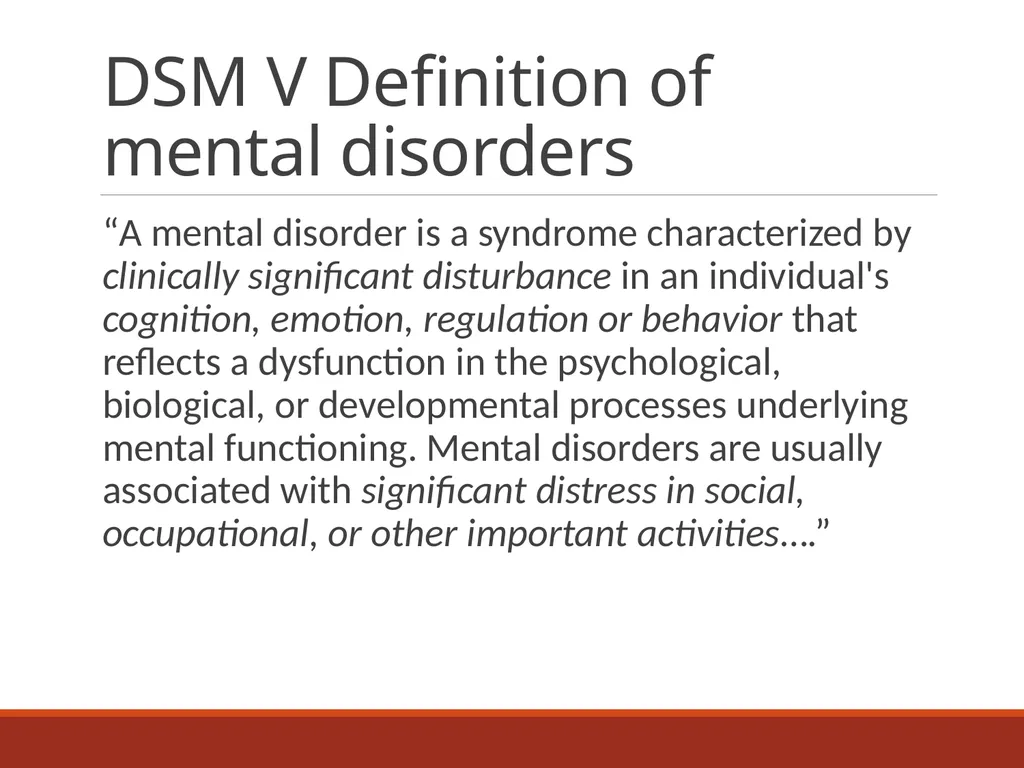
DSM V Definition of mental disorders “A mental disorder is a syndrome characterized by clinically significant disturbance in an individual's cognition, emotion, regulation or behavior that reflects a dysfunction in the psychological, biological, or developmental processes underlying mental functioning. Mental disorders are usually associated with significant distress in social, occupational, or other important activities….”<br>
03
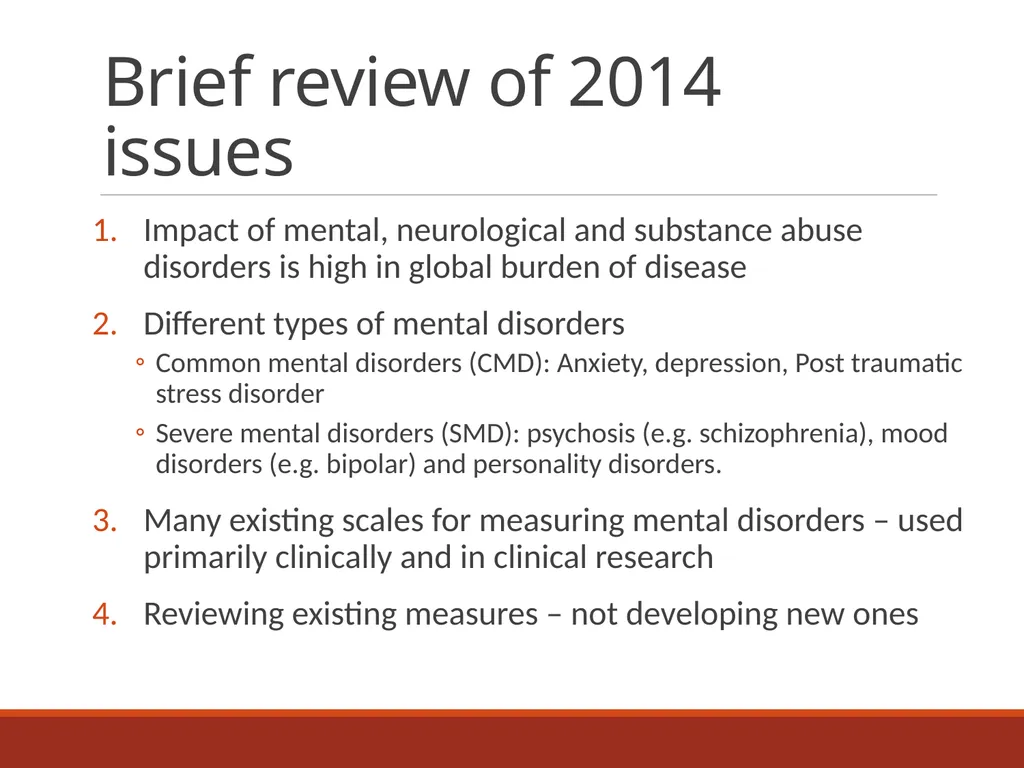
Brief review of 2014 issues Impact of mental, neurological and substance abuse disorders is high in global burden of disease
Different types of mental disorders
Common mental disorders (CMD): Anxiety, depression, Post traumatic stress disorder
Severe mental disorders (SMD): psychosis (e.g. schizophrenia), mood disorders (e.g. bipolar) and personality disorders.
Many existing scales for measuring mental disorders – used primarily clinically and in clinical research
Reviewing existing measures – not developing new ones<br>
04
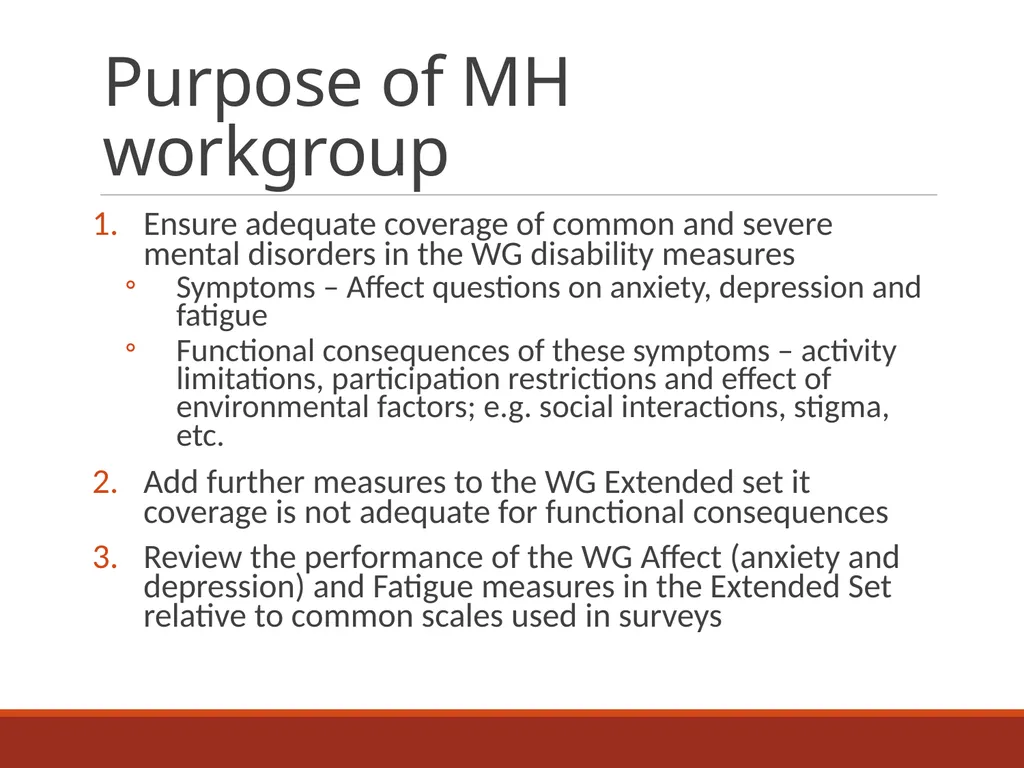
Purpose of MH workgroup Ensure adequate coverage of common and severe mental disorders in the WG disability measures
Symptoms – Affect questions on anxiety, depression and fatigue
Functional consequences of these symptoms – activity limitations, participation restrictions and effect of environmental factors; e.g. social interactions, stigma, etc.
Add further measures to the WG Extended set it coverage is not adequate for functional consequences
Review the performance of the WG Affect (anxiety and depression) and Fatigue measures in the Extended Set relative to common scales used in surveys<br>
05
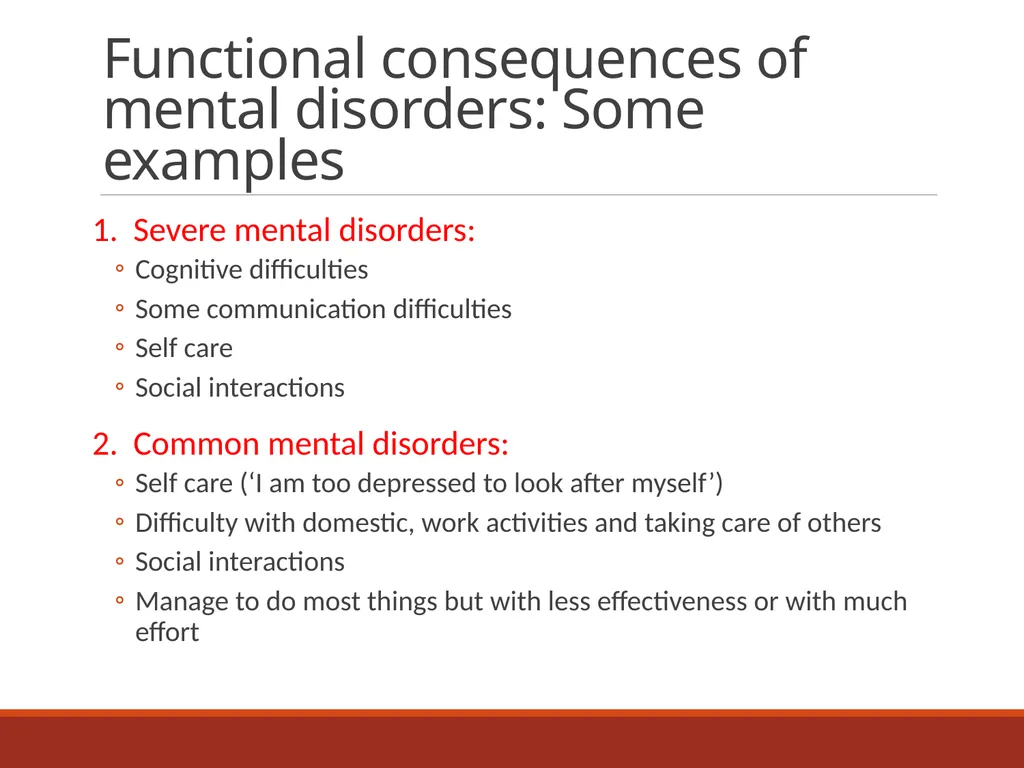
Functional consequences of mental disorders: Some examples 1. Severe mental disorders:
Cognitive difficulties
Some communication difficulties
Self care
Social interactions
2. Common mental disorders:
Self care (‘I am too depressed to look after myself’)
Difficulty with domestic, work activities and taking care of others
Social interactions
Manage to do most things but with less effectiveness or with much effort<br>
06
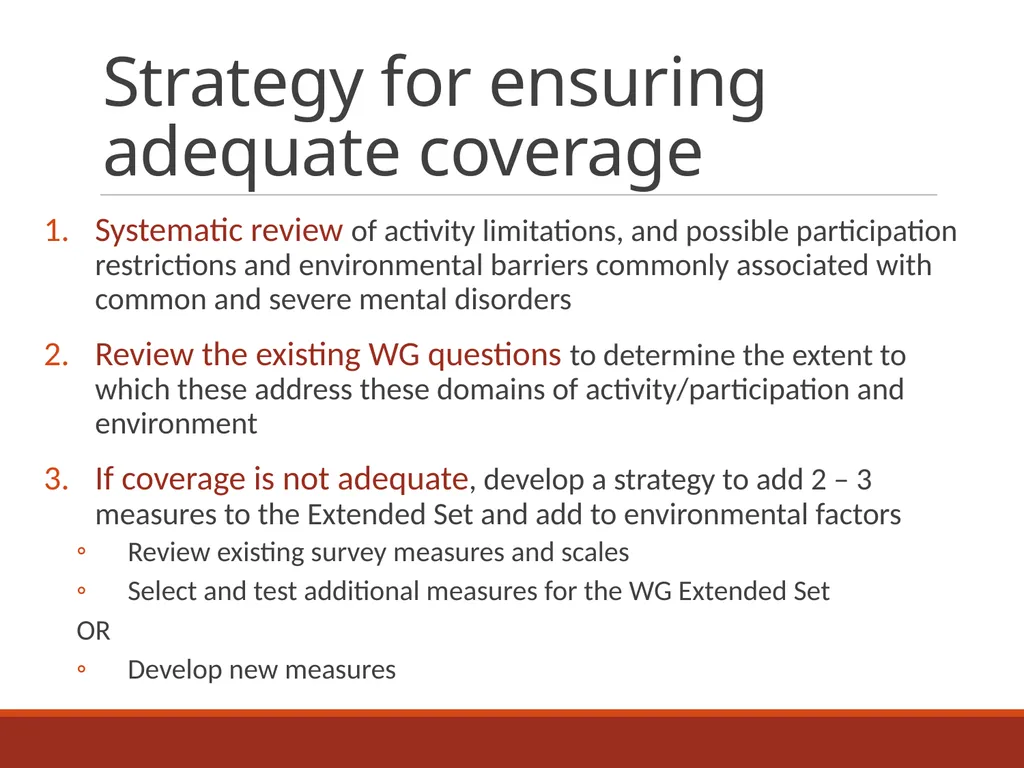
Strategy for ensuring adequate coverage Systematic review of activity limitations, and possible participation restrictions and environmental barriers commonly associated with common and severe mental disorders
Review the existing WG questions to determine the extent to which these address these domains of activity/participation and environment
If coverage is not adequate, develop a strategy to add 2 – 3 measures to the Extended Set and add to environmental factors
Review existing survey measures and scales
Select and test additional measures for the WG Extended Set
OR
Develop new measures<br>
07
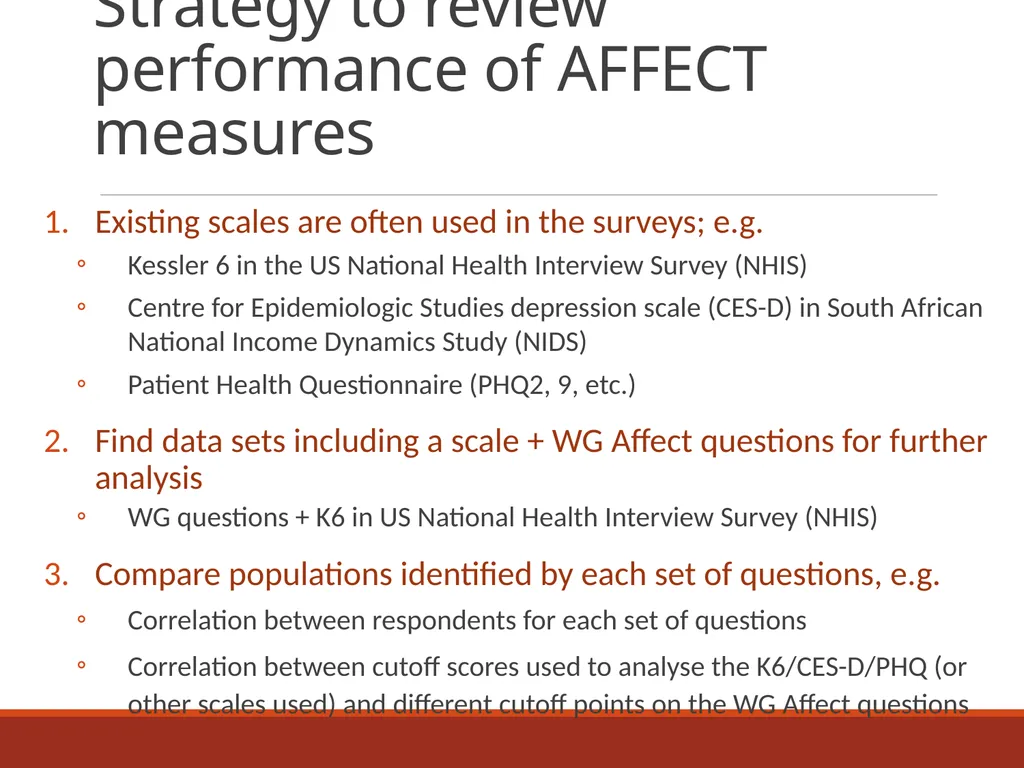
Strategy to review performance of AFFECT measures Existing scales are often used in the surveys; e.g.
Kessler 6 in the US National Health Interview Survey (NHIS)
Centre for Epidemiologic Studies depression scale (CES-D) in South African National Income Dynamics Study (NIDS)
Patient Health Questionnaire (PHQ2, 9, etc.)
Find data sets including a scale + WG Affect questions for further analysis
WG questions + K6 in US National Health Interview Survey (NHIS)
Compare populations identified by each set of questions, e.g.
Correlation between respondents for each set of questions
Correlation between cutoff scores used to analyse the K6/CES-D/PHQ (or other scales used) and different cutoff points on the WG Affect questions<br>
08
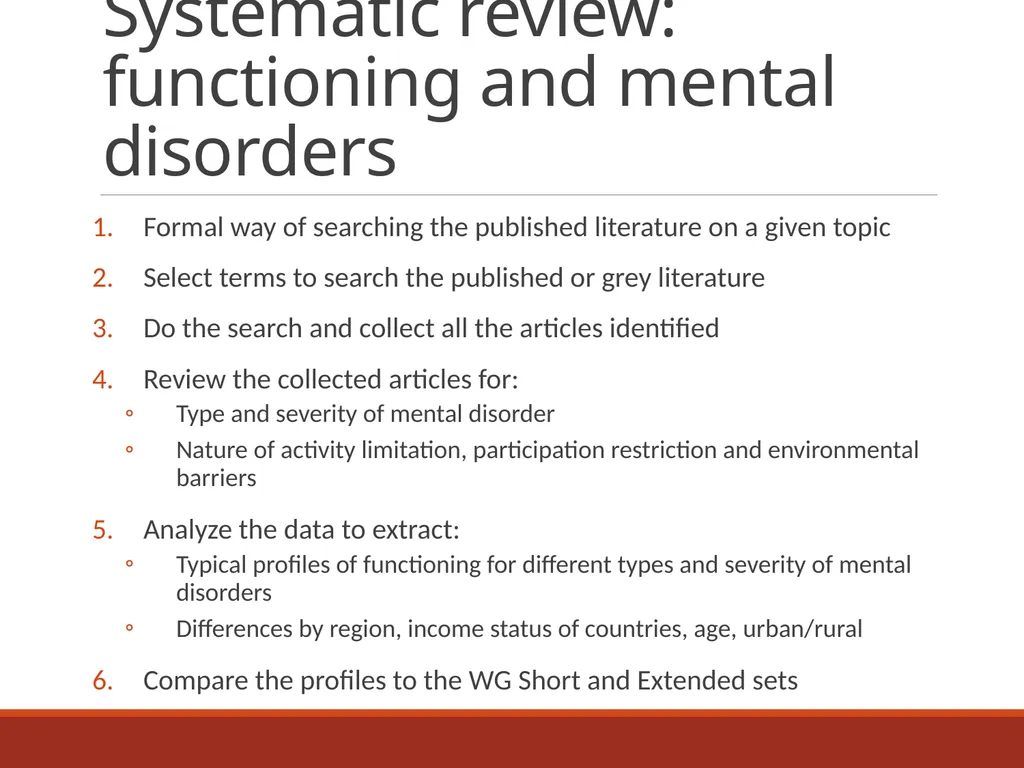
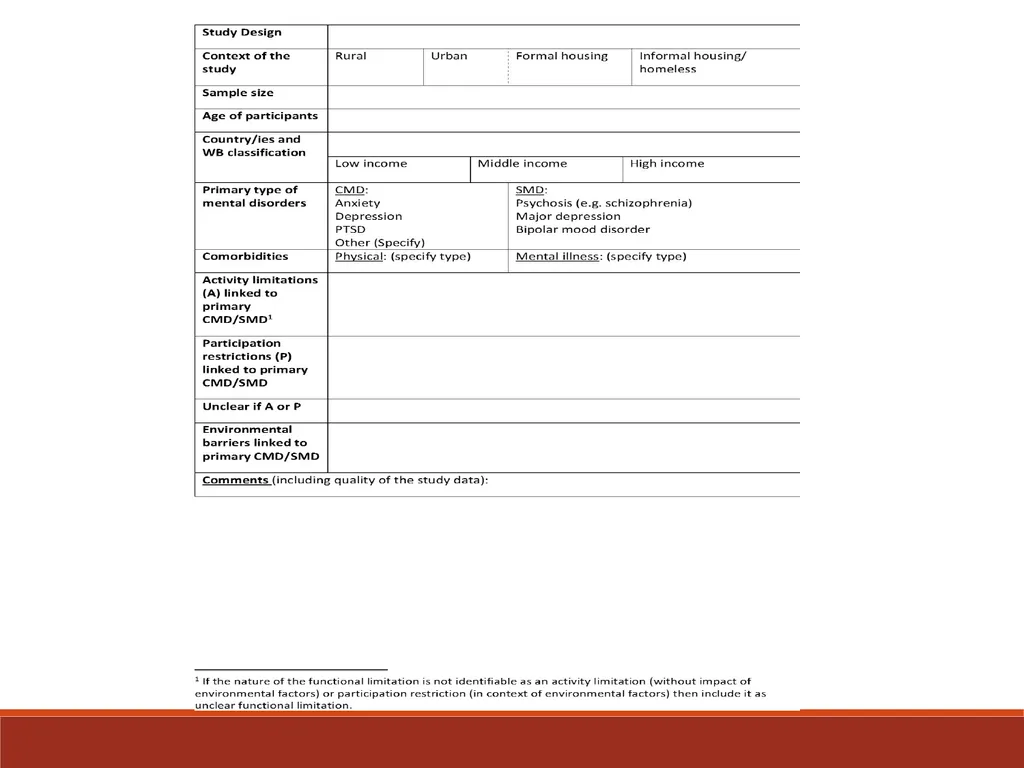
Systematic review: functioning and mental disorders Formal way of searching the published literature on a given topic
Select terms to search the published or grey literature
Do the search and collect all the articles identified
Review the collected articles for:
Type and severity of mental disorder
Nature of activity limitation, participation restriction and environmental barriers
Analyze the data to extract:
Typical profiles of functioning for different types and severity of mental disorders
Differences by region, income status of countries, age, urban/rural
Compare the profiles to the WG Short and Extended sets<br>
09
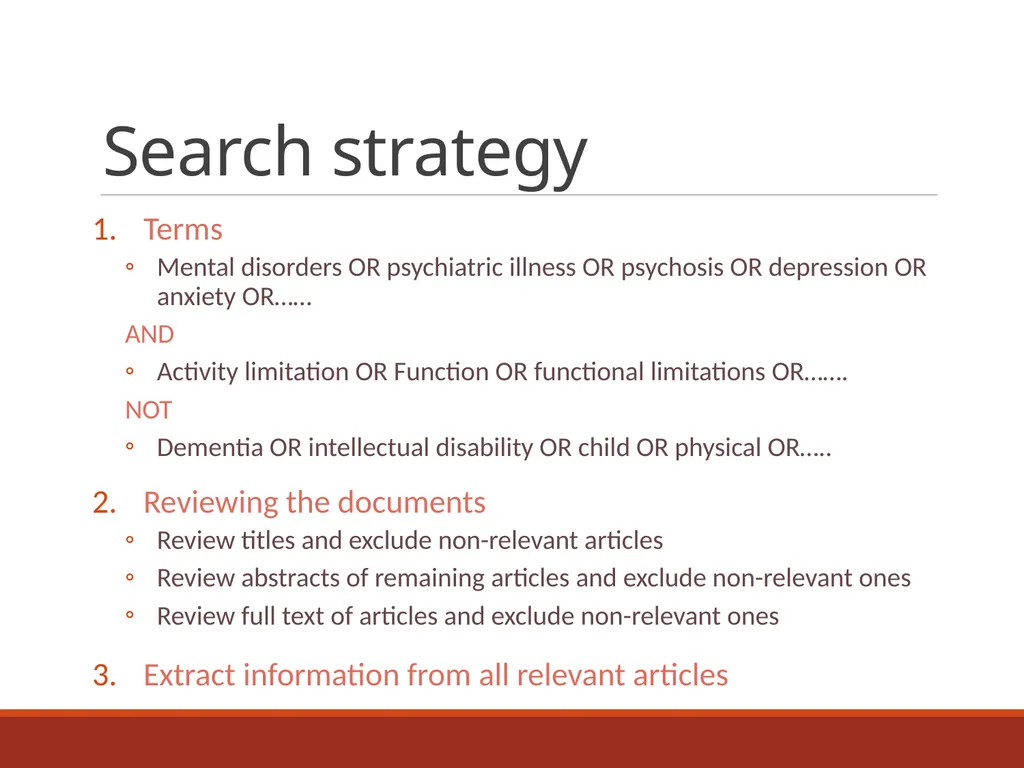
Search strategy Terms
Mental disorders OR psychiatric illness OR psychosis OR depression OR anxiety OR……
AND
Activity limitation OR Function OR functional limitations OR…….
NOT
Dementia OR intellectual disability OR child OR physical OR…..
Reviewing the documents
Review titles and exclude non-relevant articles
Review abstracts of remaining articles and exclude non-relevant ones
Review full text of articles and exclude non-relevant ones
Extract information from all relevant articles<br>
10
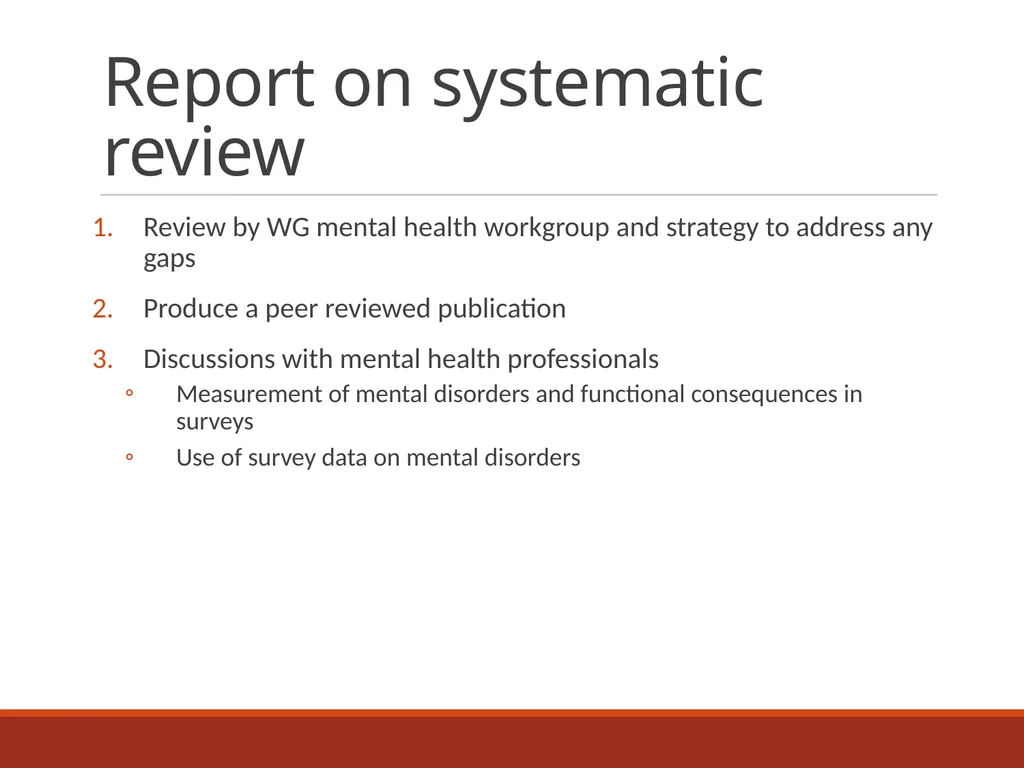
Report on systematic review Review by WG mental health workgroup and strategy to address any gaps
Produce a peer reviewed publication
Discussions with mental health professionals
Measurement of mental disorders and functional consequences in surveys
Use of survey data on mental disorders<br>
11
Over the next year …. Contribute to systematic review
Lead at University of Cape Town (Margie Schneider)
Contribution of grey/unpublished literature from countries
Contribution of articles in languages other than English
Title and abstract reviewing
Data extraction
Report writing
Review mental health measures in member countries
Peru – Genera Rivera
Italy – review of instruments
South Africa – Margie Schneider
??
Availability of data sets with WG Affect questions + another MH scale<br>
12
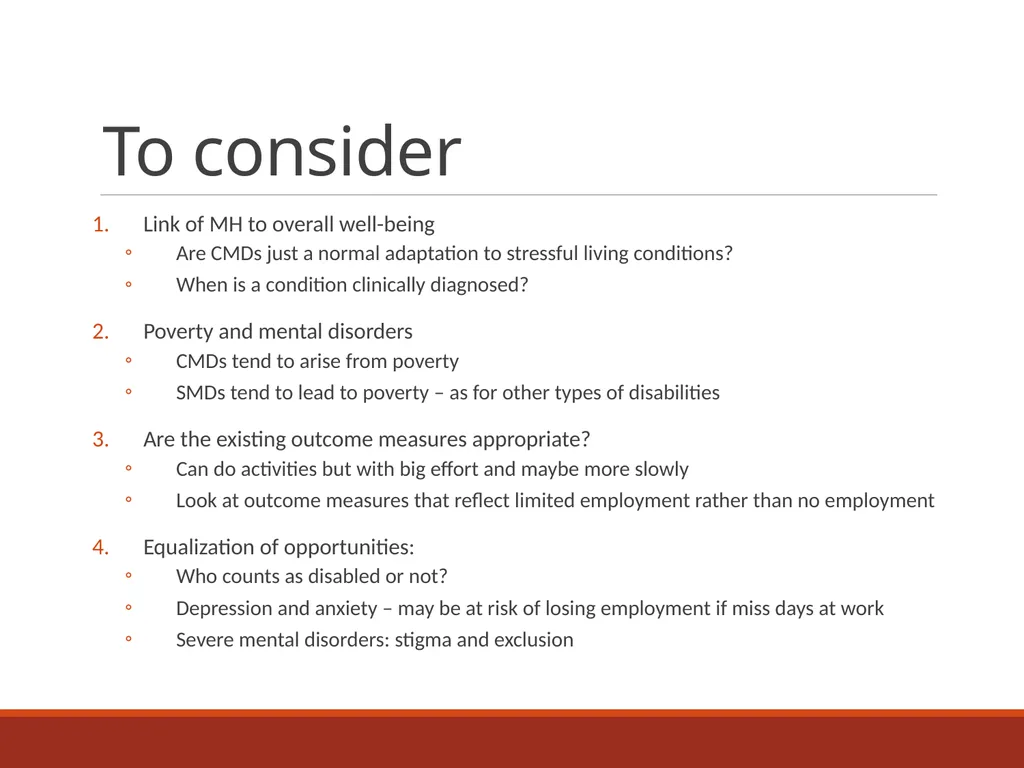
To consider Link of MH to overall well-being
Are CMDs just a normal adaptation to stressful living conditions?
When is a condition clinically diagnosed?
Poverty and mental disorders
CMDs tend to arise from poverty
SMDs tend to lead to poverty – as for other types of disabilities
Are the existing outcome measures appropriate?
Can do activities but with big effort and maybe more slowly
Look at outcome measures that reflect limited employment rather than no employment
Equalization of opportunities:
Who counts as disabled or not?
Depression and anxiety – may be at risk of losing employment if miss days at work
Severe mental disorders: stigma and exclusion<br>