Methods Fish preservation By Dr. K. Usha Rani DNR. College Definition Preservation means keeping the fish, after it has landed, in a condition wholesome and fit for human consumption for a short period to few days or for longer periods of
"Methods Fish preservation By Dr. K. Usha Rani DNR." is the property of its rightful owner. Permission is granted to
download and print the materials on this website for personal, non-commercial use only, and to display it
on your personal computer provided you do not modify the materials and that you retain all copyright
notices contained in the materials. By downloading content from our website, you accept the terms of this
agreement.
Presentation Transcript
01
Methods Fish preservation By
Dr. K. Usha Rani
DNR. College<br>
02
Definition Preservation means keeping the fish, after it has landed, in a condition wholesome and fit for human consumption for a short period to few days or for longer periods of over few months.
Fish body consists of proteins, fats, minerals, vitamins, amino acids, iodine, phosphorus and huge quantity of water. Thereafter dead fishes get spoiled by the process of decomposition and therefore proper fish preservation techniques or methods are vital.<br>
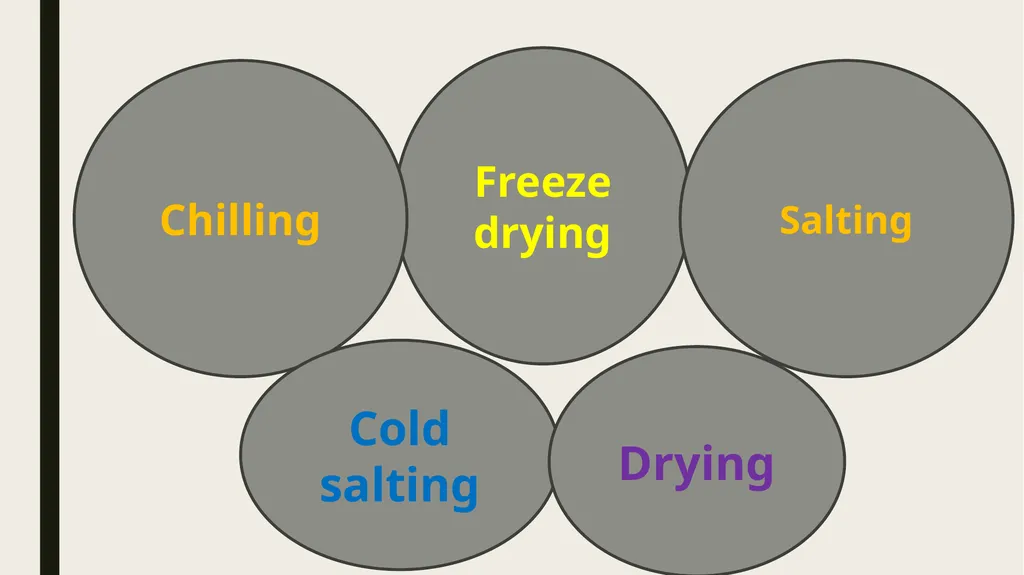
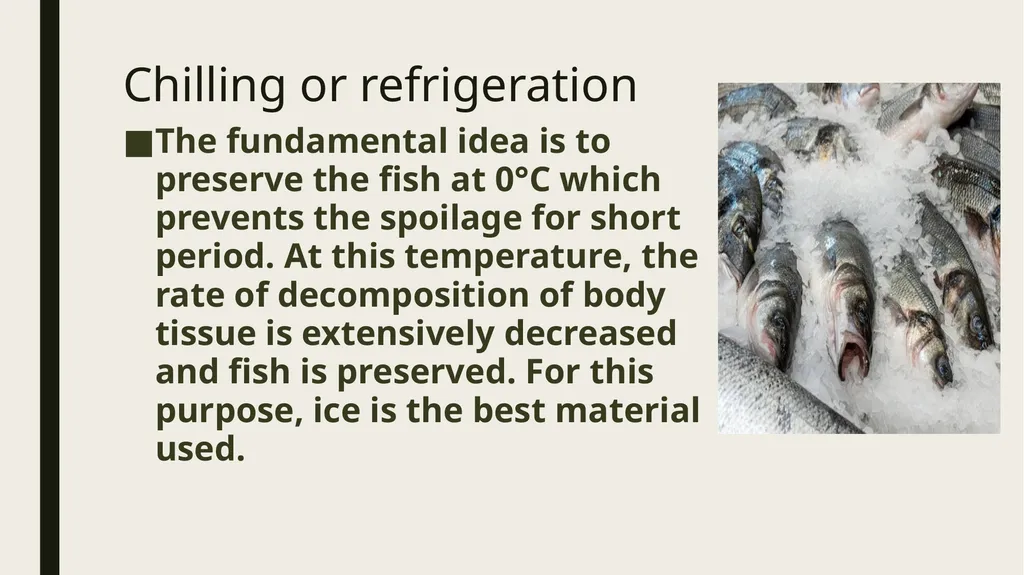
The fundamental idea is to preserve the fish at 0°C which prevents the spoilage for short period. At this temperature, the rate of decomposition of body tissue is extensively decreased and fish is preserved. For this purpose, ice is the best material used. Chilling or refrigeration<br>
05
Freeze drying This procedure includes steps, first freezing of the fish and then the second step is drying of fish by sublimation. In this method ice is converted into water vapor without melting. By this procedure the color and nutritive substances are completely preserved. In this method the fish is frozen at -20°C by preserving them in freezing chamber<br>
06
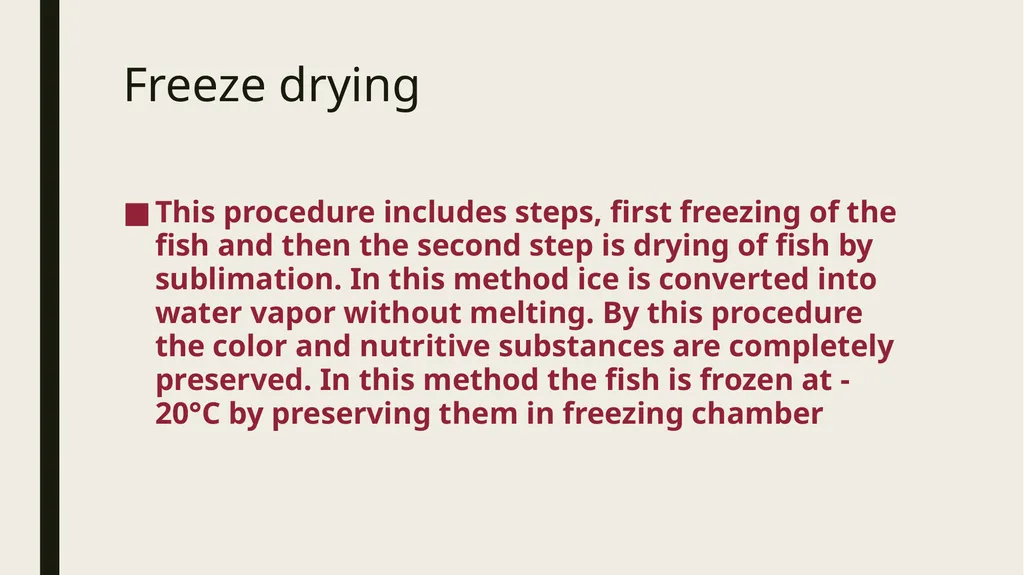
Salting Salting is very old and common practice used in fish preservation in India and different parts of the world. Salting is nothing but the partial dehydration of fishes by osmosis with sodium chloride. Due to extreme salting, microbes are killed and diastasis is stopped.<br>
07
Cold salting Salt and crushed ice is spread on the fishes. This procedure is performed in cold room only where temperature is maintained at 2 or 3°C. This is also referred to as light cold salting. Strong salting procedure is done on the normal room temperature.<br>
08
Drying By this technique small sized fishes are stored for dehydration By this technique small sized fishes are dried. The fishes are stored for dehydration on a mat for 3 to 5 days and during this period turning over the fishes is continued. After complete dehydration, the dry fishes can be stored<br>
09
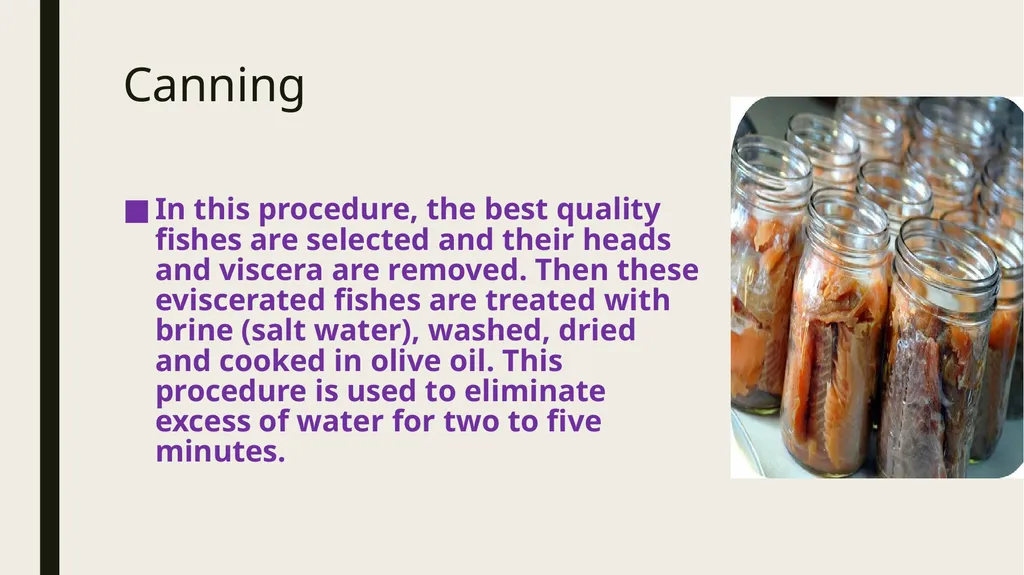
Canning In this procedure, the best quality fishes are selected and their heads and viscera are removed. Then these eviscerated fishes are treated with brine (salt water), washed, dried and cooked in olive oil. This procedure is used to eliminate excess of water for two to five minutes.<br>
10
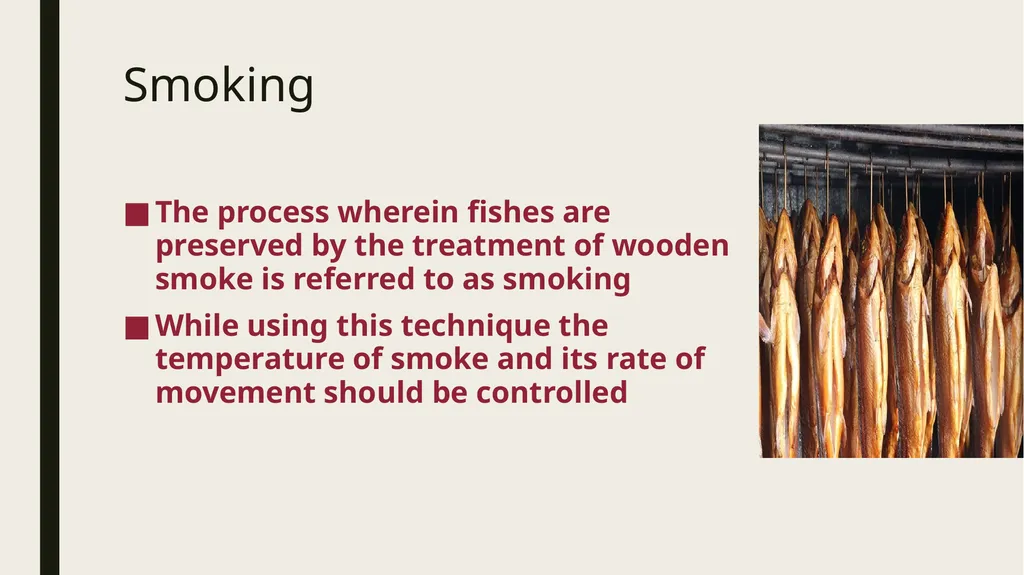
Smoking The process wherein fishes are preserved by the treatment of wooden smoke is referred to as smoking
While using this technique the temperature of smoke and its rate of movement should be controlled<br>