
Microbiological Testing of Foods: Microbiological

Description: Microbiological Testing of Foods: Microbiological limits and criteria Decision making based on microbiological data Requires microbiological limits to be established Differentiates acceptable from unacceptable products or processes
Related Topics
Download Presentation
"Microbiological Testing of Foods: Microbiological" is the property of its rightful owner. Permission is granted to download and print the materials on this website for personal, non-commercial use only, and to display it on your personal computer provided you do not modify the materials and that you retain all copyright notices contained in the materials. By downloading content from our website, you accept the terms of this agreement.
Presentation Transcript
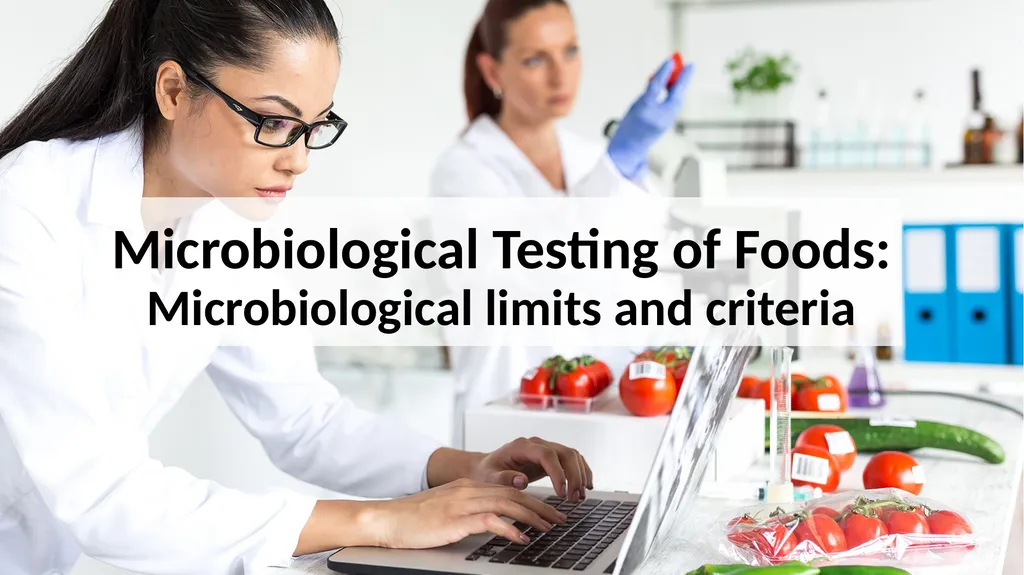
slide1. Microbiological Testing of Foods:
Microbiological limits and criteria<br>
slide2. Decision making based on microbiological data Requires microbiological limits to be established
Differentiates acceptable from unacceptable products or processes
Microbiological limits meaningless without:
Sampling plan
Analytical procedures
Defined action/decision based on results
Microbiological criteria
Microbiological limits that include methods and sampling plans<br>
slide3. Microbiological criteria Specify the number of sample units to be collected
Analytical method
Number of analytical units that should conform to the limits
Established for quality and safety
Used in setting standards, guidelines, and purchase specifications<br>
slide4. Analytical methods Must know the method used when communicating microbiological criterion
Must be matched for microorganism and food type
Sources of scientifically valid methods for examination of food:
International Standards Organization (ISO)
FDA Bacteriological Analytical Manual (BAM)
American Public Health Association (APHA) Compendium of Methods for the Microbial Examination of Foods<br>
slide5. Terminology related to acceptance criteria for microbiological testing Microbiological standards:
International, national, or regional laws
Microbiological specification:
Between vendor and buyer
Microbiological guidelines:
Internal advisory criteria<br>
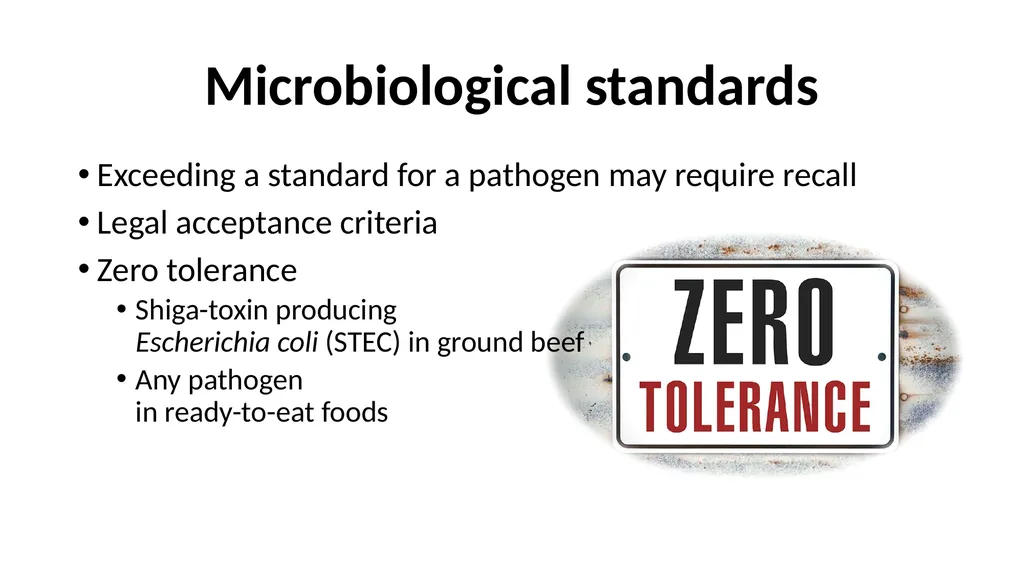
slide6. Microbiological standards Exceeding a standard for a pathogen may require recall
Legal acceptance criteria
Zero tolerance
Shiga-toxin producing Escherichia coli (STEC) in ground beef
Any pathogen in ready-to-eat foods<br>
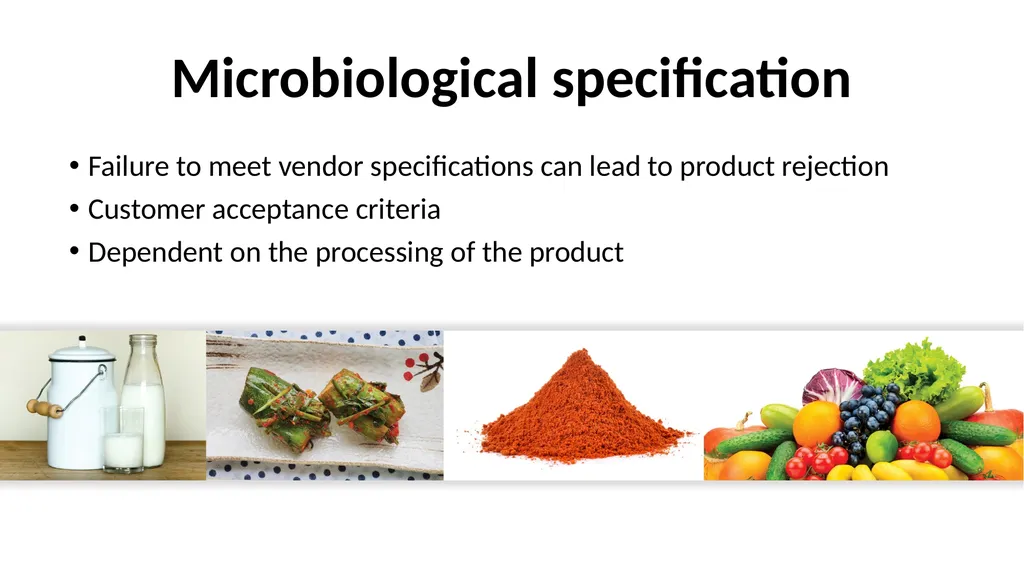
slide7. Microbiological specification Failure to meet vendor specifications can lead to product rejection
Customer acceptance criteria
Dependent on the processing of the product<br>
slide8. Microbiological guideline Internal acceptance criteria
Established by a processor, trade association, or government
Serves as an alert that remedial action should be take<br>
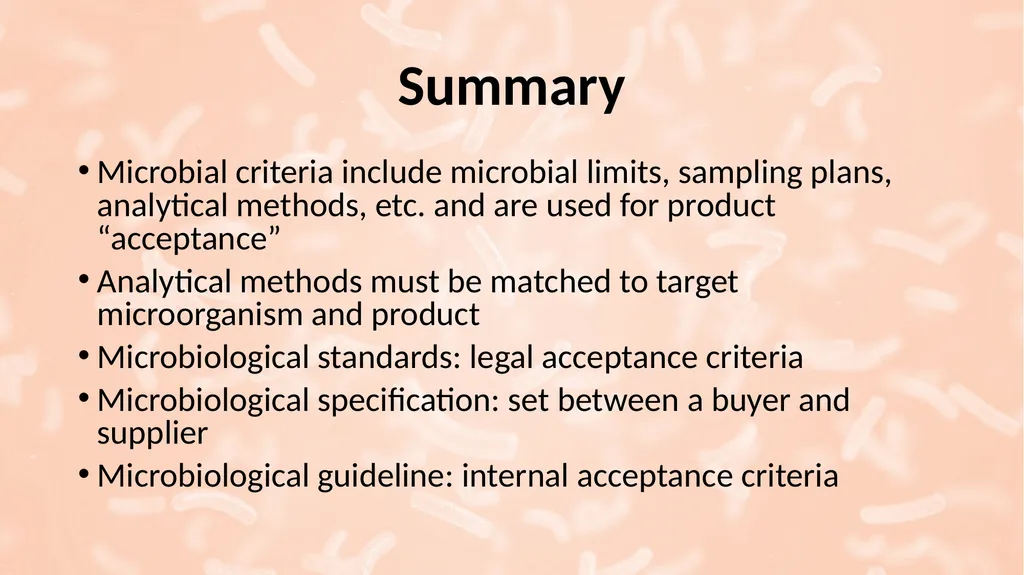
slide9. Summary Microbial criteria include microbial limits, sampling plans, analytical methods, etc. and are used for product “acceptance”
Analytical methods must be matched to target microorganism and product
Microbiological standards: legal acceptance criteria
Microbiological specification: set between a buyer and supplier
Microbiological guideline: internal acceptance criteria<br>
slide10. The development of this material was supported by the National Institute of Food and Agriculture, U.S. Department of Agriculture, under award number 2020-70020-32263. USDA is an equal opportunity employer and service provider. Any opinions, findings, conclusions, or recommendations expressed in this publication are those of the author(s) and do not necessarily reflect the view of the U.S. Department of Agriculture. This information is provided by the authors in good faith, but without warranty. It is intended as an educational resource and not as advice tailored to a specific operation or a substitute for actual federal or state regulations and guidance from FDA or other regulatory agencies. We will not be responsible or liable directly or indirectly for any consequences resulting from use of information provided in this document or resources suggested in this document.
This presentation and recording are covered by the University of California Copyright Ownership Policy and were generated by Dr. Erin DiCaprio as Scholarly work.<br>
slide2. Decision making based on microbiological data Requires microbiological limits to be established
Differentiates acceptable from unacceptable products or processes
Microbiological limits meaningless without:
Sampling plan
Analytical procedures
Defined action/decision based on results
Microbiological criteria
Microbiological limits that include methods and sampling plans<br>
slide3. Microbiological criteria Specify the number of sample units to be collected
Analytical method
Number of analytical units that should conform to the limits
Established for quality and safety
Used in setting standards, guidelines, and purchase specifications<br>
slide4. Analytical methods Must know the method used when communicating microbiological criterion
Must be matched for microorganism and food type
Sources of scientifically valid methods for examination of food:
International Standards Organization (ISO)
FDA Bacteriological Analytical Manual (BAM)
American Public Health Association (APHA) Compendium of Methods for the Microbial Examination of Foods<br>
slide5. Terminology related to acceptance criteria for microbiological testing Microbiological standards:
International, national, or regional laws
Microbiological specification:
Between vendor and buyer
Microbiological guidelines:
Internal advisory criteria<br>
slide6. Microbiological standards Exceeding a standard for a pathogen may require recall
Legal acceptance criteria
Zero tolerance
Shiga-toxin producing Escherichia coli (STEC) in ground beef
Any pathogen in ready-to-eat foods<br>
slide7. Microbiological specification Failure to meet vendor specifications can lead to product rejection
Customer acceptance criteria
Dependent on the processing of the product<br>
slide8. Microbiological guideline Internal acceptance criteria
Established by a processor, trade association, or government
Serves as an alert that remedial action should be take<br>
slide9. Summary Microbial criteria include microbial limits, sampling plans, analytical methods, etc. and are used for product “acceptance”
Analytical methods must be matched to target microorganism and product
Microbiological standards: legal acceptance criteria
Microbiological specification: set between a buyer and supplier
Microbiological guideline: internal acceptance criteria<br>
slide10. The development of this material was supported by the National Institute of Food and Agriculture, U.S. Department of Agriculture, under award number 2020-70020-32263. USDA is an equal opportunity employer and service provider. Any opinions, findings, conclusions, or recommendations expressed in this publication are those of the author(s) and do not necessarily reflect the view of the U.S. Department of Agriculture. This information is provided by the authors in good faith, but without warranty. It is intended as an educational resource and not as advice tailored to a specific operation or a substitute for actual federal or state regulations and guidance from FDA or other regulatory agencies. We will not be responsible or liable directly or indirectly for any consequences resulting from use of information provided in this document or resources suggested in this document.
This presentation and recording are covered by the University of California Copyright Ownership Policy and were generated by Dr. Erin DiCaprio as Scholarly work.<br>