Middlesex County Community Care Team: The Impact of Care Coordination Across Providers Mobile Integrated Health Work Group November 7, 2017 Presented by Jim Santacroce, Emergency Medical Services Middlesex Hospital 1 Middlesex County CCT
"Middlesex County Community Care Team: The Impact" is the property of its rightful owner. Permission is granted to
download and print the materials on this website for personal, non-commercial use only, and to display it
on your personal computer provided you do not modify the materials and that you retain all copyright
notices contained in the materials. By downloading content from our website, you accept the terms of this
agreement.
Presentation Transcript
01
Middlesex County Community Care Team: The Impact of Care Coordination Across Providers Mobile Integrated Health Work Group
November 7, 2017 Presented by
Jim Santacroce, Emergency Medical Services
Middlesex Hospital 1<br>
02
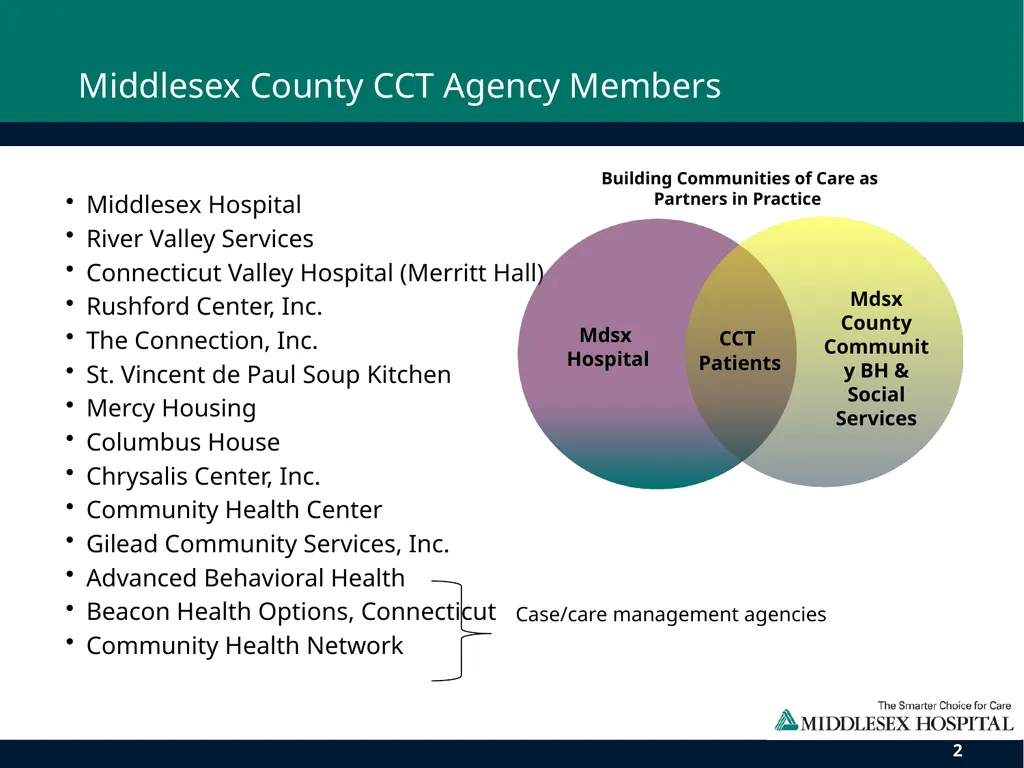
Middlesex County CCT Agency Members Middlesex Hospital
River Valley Services
Connecticut Valley Hospital (Merritt Hall)
Rushford Center, Inc.
The Connection, Inc.
St. Vincent de Paul Soup Kitchen
Mercy Housing
Columbus House
Chrysalis Center, Inc.
Community Health Center
Gilead Community Services, Inc.
Advanced Behavioral Health
Beacon Health Options, Connecticut
Community Health Network 2 Case/care management agencies CCT
Patients Mdsx County
Community BH & Social Services Mdsx Hospital Building Communities of Care as Partners in Practice<br>
03
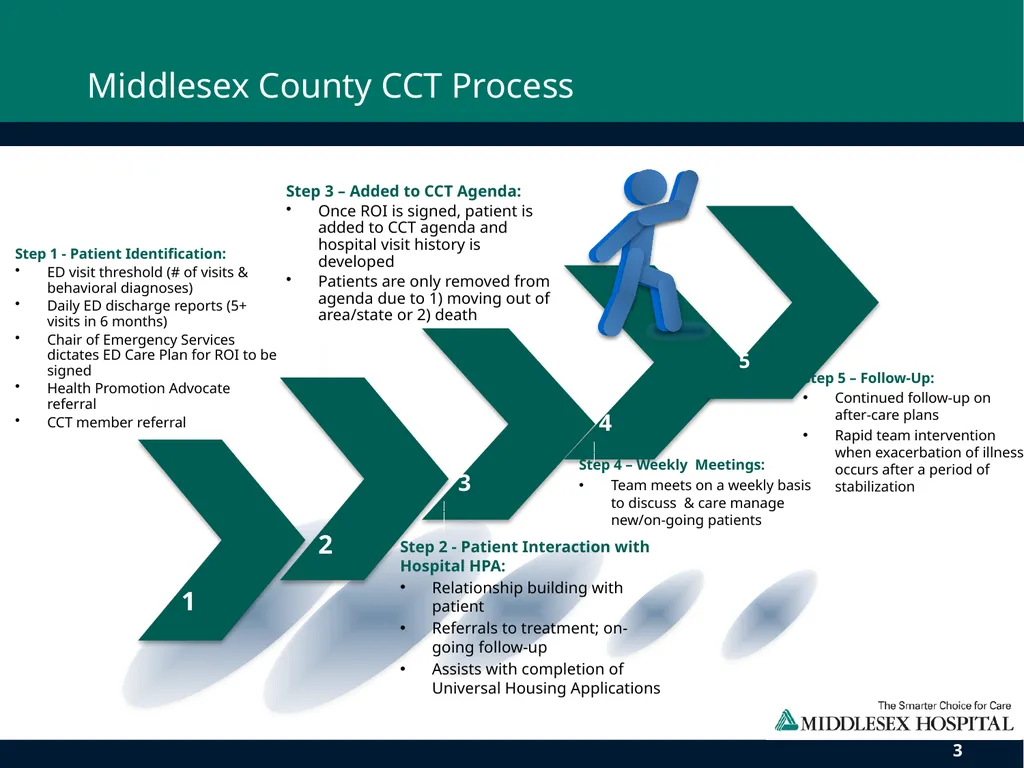
1 2 3 4 5 Step 1 - Patient Identification:
ED visit threshold (# of visits & behavioral diagnoses)
Daily ED discharge reports (5+ visits in 6 months)
Chair of Emergency Services dictates ED Care Plan for ROI to be signed
Health Promotion Advocate referral
CCT member referral Step 2 - Patient Interaction with Hospital HPA:
Relationship building with patient
Referrals to treatment; on-going follow-up
Assists with completion of Universal Housing Applications Step 3 – Added to CCT Agenda:
Once ROI is signed, patient is added to CCT agenda and hospital visit history is developed
Patients are only removed from agenda due to 1) moving out of area/state or 2) death Step 4 – Weekly Meetings:
Team meets on a weekly basis to discuss & care manage new/on-going patients Step 5 – Follow-Up:
Continued follow-up on after-care plans
Rapid team intervention when exacerbation of illness occurs after a period of stabilization Middlesex County CCT Process 3<br>
04
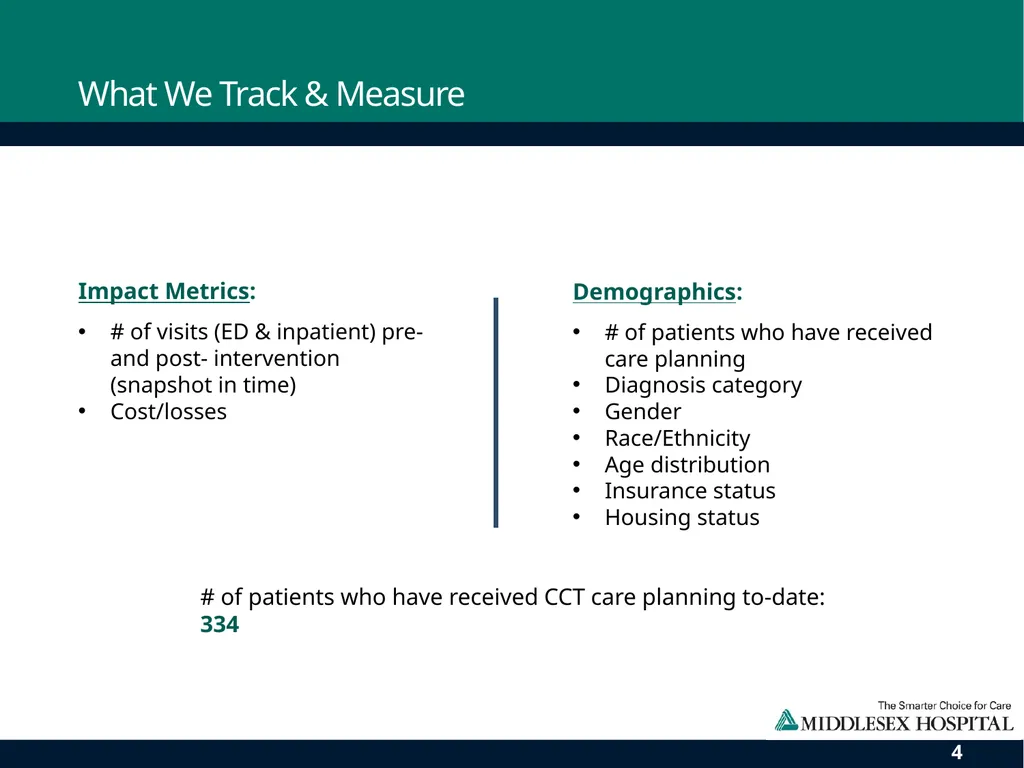
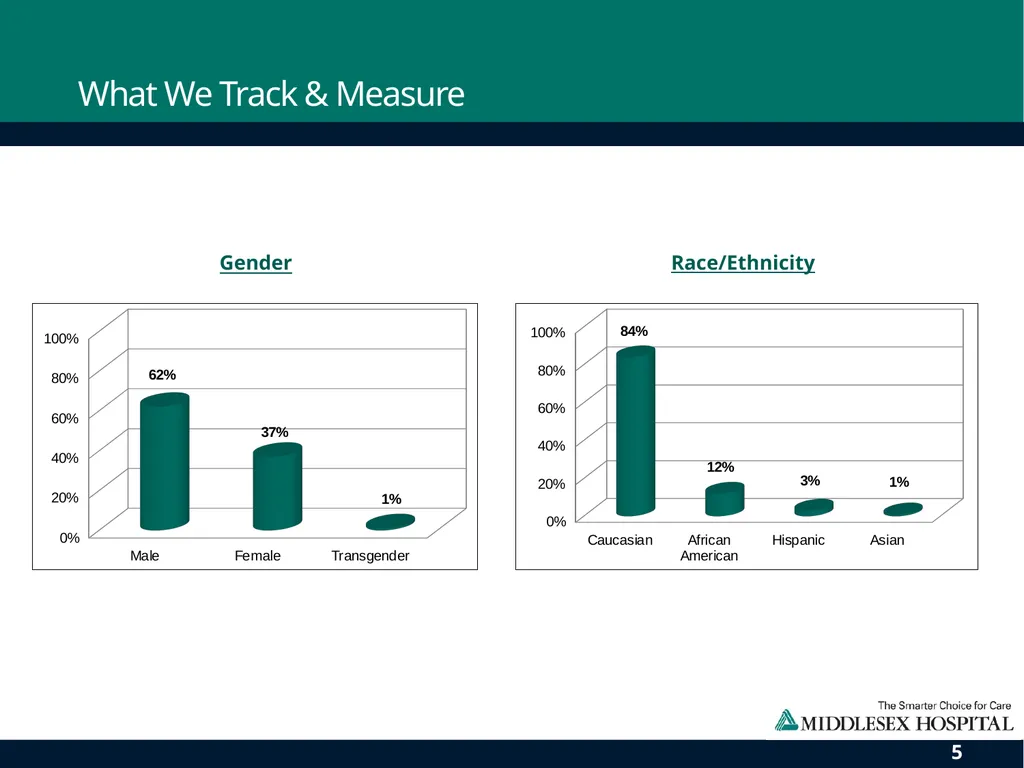
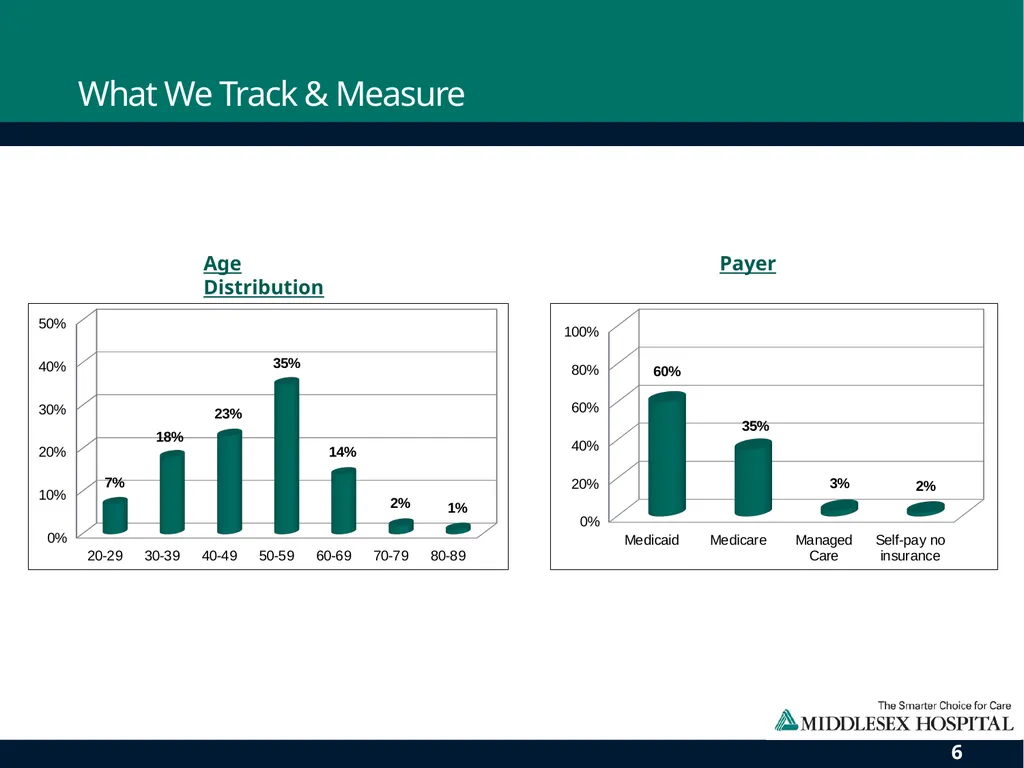
4 What We Track & Measure Demographics:
# of patients who have received care planning
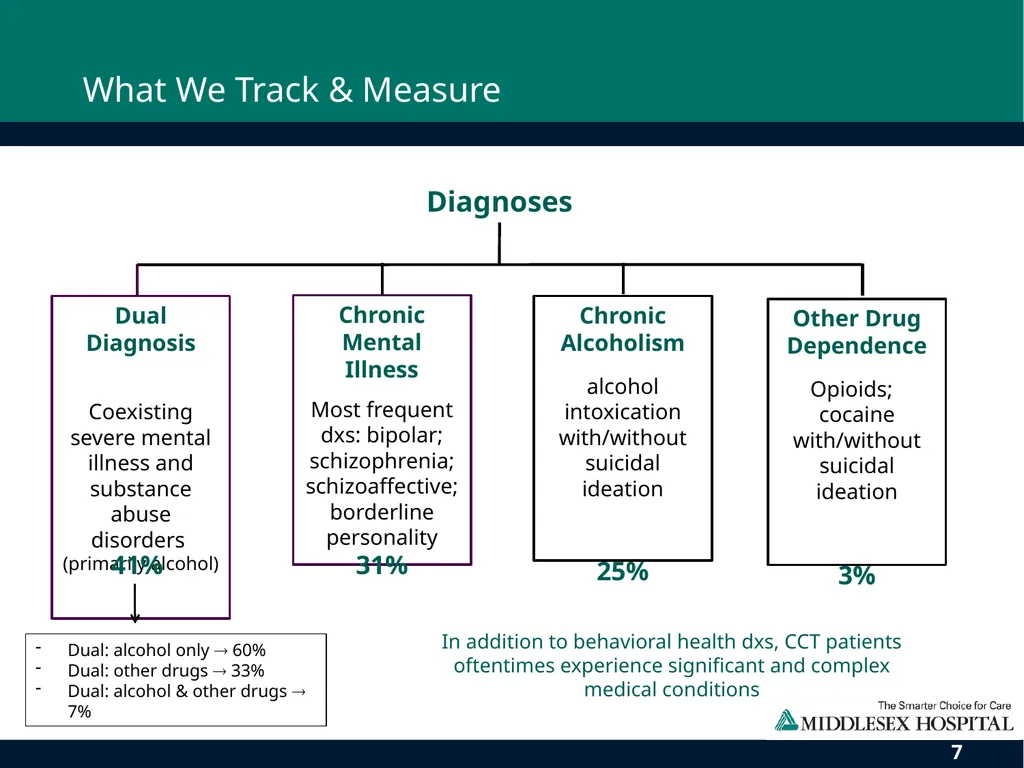
Diagnosis category
Gender
Race/Ethnicity
Age distribution
Insurance status
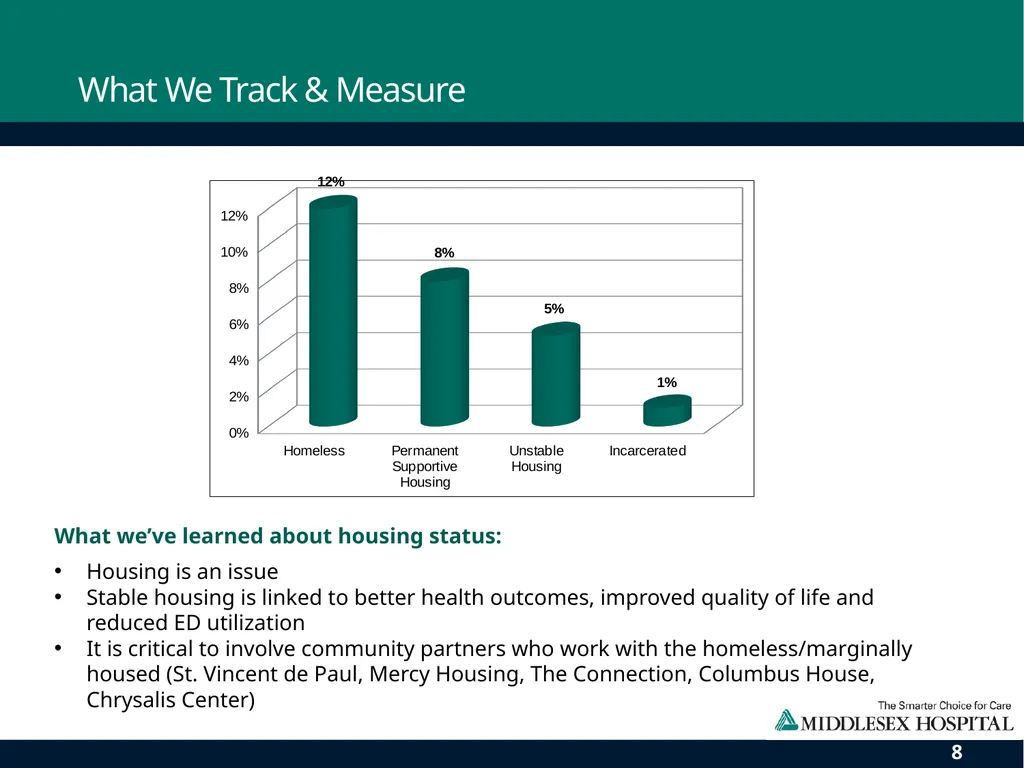
Housing status Impact Metrics:
# of visits (ED & inpatient) pre- and post- intervention (snapshot in time)
Cost/losses # of patients who have received CCT care planning to-date: 334<br>
05
5 What We Track & Measure Race/Ethnicity Gender<br>
06
6 What We Track & Measure Payer Age Distribution<br>
07
What We Track & Measure Diagnoses 7 Chronic Alcoholism
Coexisting severe mental illness and substance abuse disorders
(primarily alcohol) 41% 31% 25% 3% Dual: alcohol only 60%
Dual: other drugs 33%
Dual: alcohol & other drugs 7% In addition to behavioral health dxs, CCT patients oftentimes experience significant and complex medical conditions<br>
08
8 What We Track & Measure What we’ve learned about housing status:
Housing is an issue
Stable housing is linked to better health outcomes, improved quality of life and reduced ED utilization
It is critical to involve community partners who work with the homeless/marginally housed (St. Vincent de Paul, Mercy Housing, The Connection, Columbus House, Chrysalis Center)<br>
09
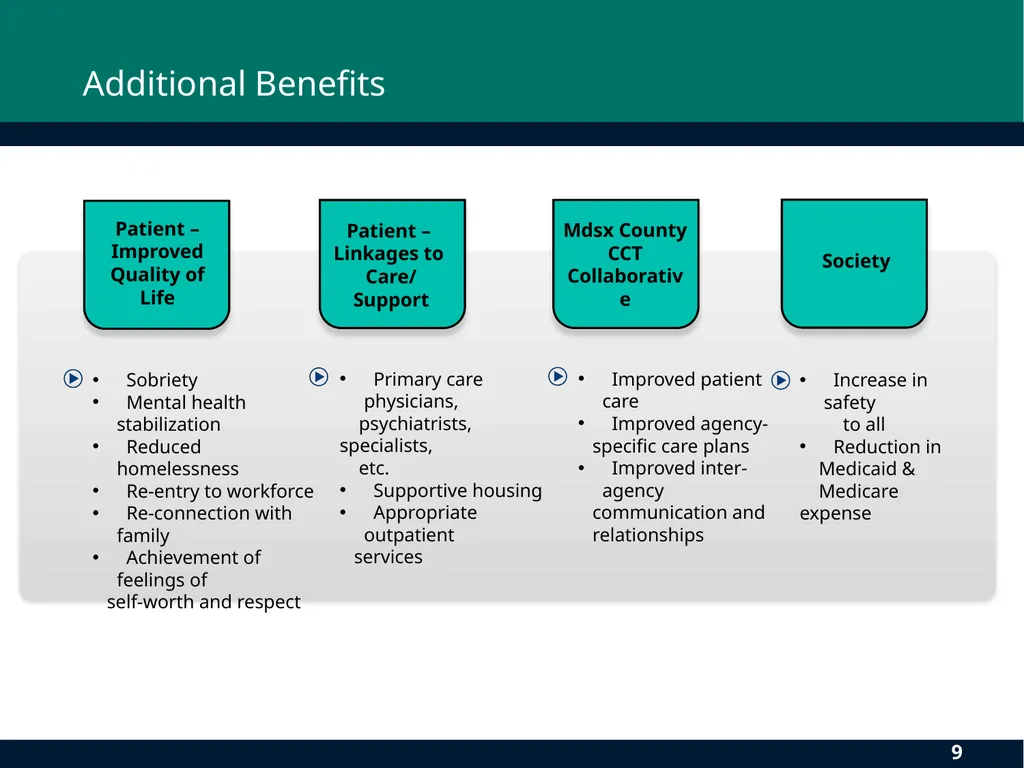
Patient – Improved Quality of Life Sobriety
Mental health stabilization
Reduced homelessness
Re-entry to workforce
Re-connection with family
Achievement of feelings of
self-worth and respect Additional Benefits Patient –
Linkages to
Care/Support Primary care physicians,
psychiatrists, specialists,
etc.
Supportive housing
Appropriate outpatient
services Improved patient care
Improved agency-
specific care plans
Improved inter-agency
communication and
relationships Mdsx County CCT Collaborative Society Increase in safety to all
Reduction in
Medicaid &
Medicare expense 9<br>
10
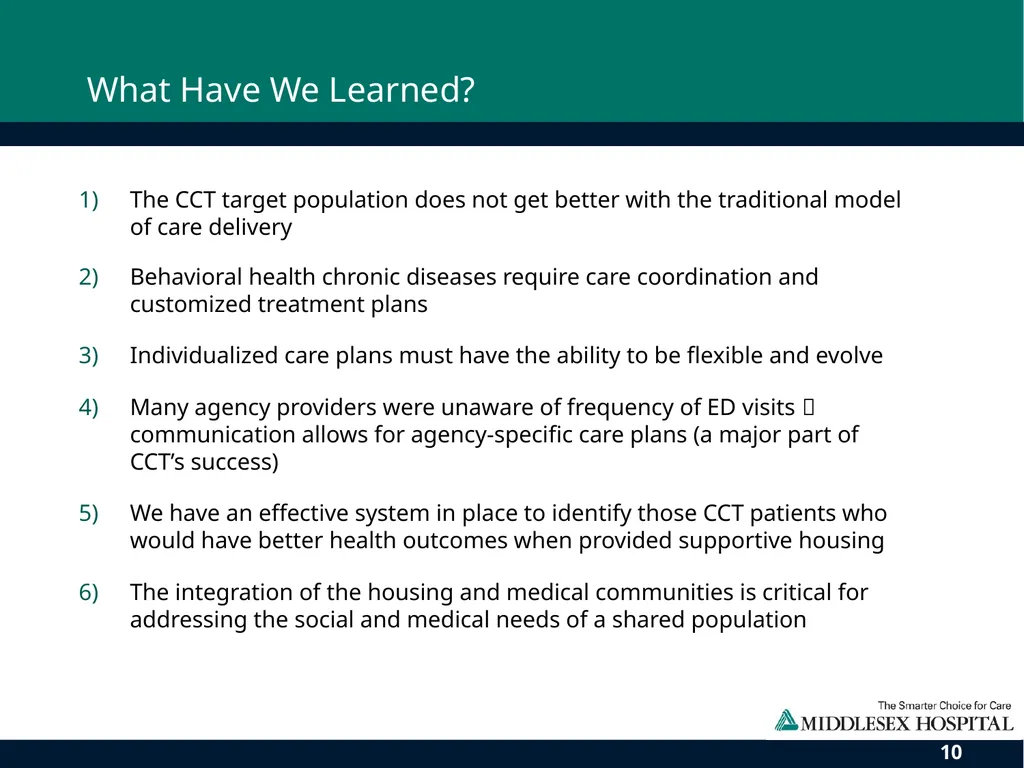
What Have We Learned? The CCT target population does not get better with the traditional model of care delivery
Behavioral health chronic diseases require care coordination and customized treatment plans
Individualized care plans must have the ability to be flexible and evolve
Many agency providers were unaware of frequency of ED visits communication allows for agency-specific care plans (a major part of CCT’s success)
We have an effective system in place to identify those CCT patients who would have better health outcomes when provided supportive housing
The integration of the housing and medical communities is critical for addressing the social and medical needs of a shared population 10<br>
11
Questions?
Thank You!
Jim Santacroce, Manager Emergency Medical Services
Middlesex Hospital
28 Crescent Street
Middletown, CT 06457 jim.santacroce@midhosp.org 11<br>