Minimising harm from alcohol misuse: Challenges to the development of effective policy nTrance used under a Creative Commons 2.0 license Understanding harms and costs of alcohol use John Moriarty What harms accrue from Alcohol use? Routes
"Minimising harm from alcohol misuse: Challenges to" is the property of its rightful owner. Permission is granted to
download and print the materials on this website for personal, non-commercial use only, and to display it
on your personal computer provided you do not modify the materials and that you retain all copyright
notices contained in the materials. By downloading content from our website, you accept the terms of this
agreement.
Presentation Transcript
01
Minimising harm from alcohol misuse:
Challenges to the development of effective policy nTrance used under a Creative Commons 2.0 license<br>
02
Understanding harms and costs of alcohol use John Moriarty<br>
03
What harms accrue from Alcohol use? Routes to estimation
Aggregating individual-level harms
Aggregating cost to the exchequer
Comparing the harms born by the individual themselves to those born by others<br>
04
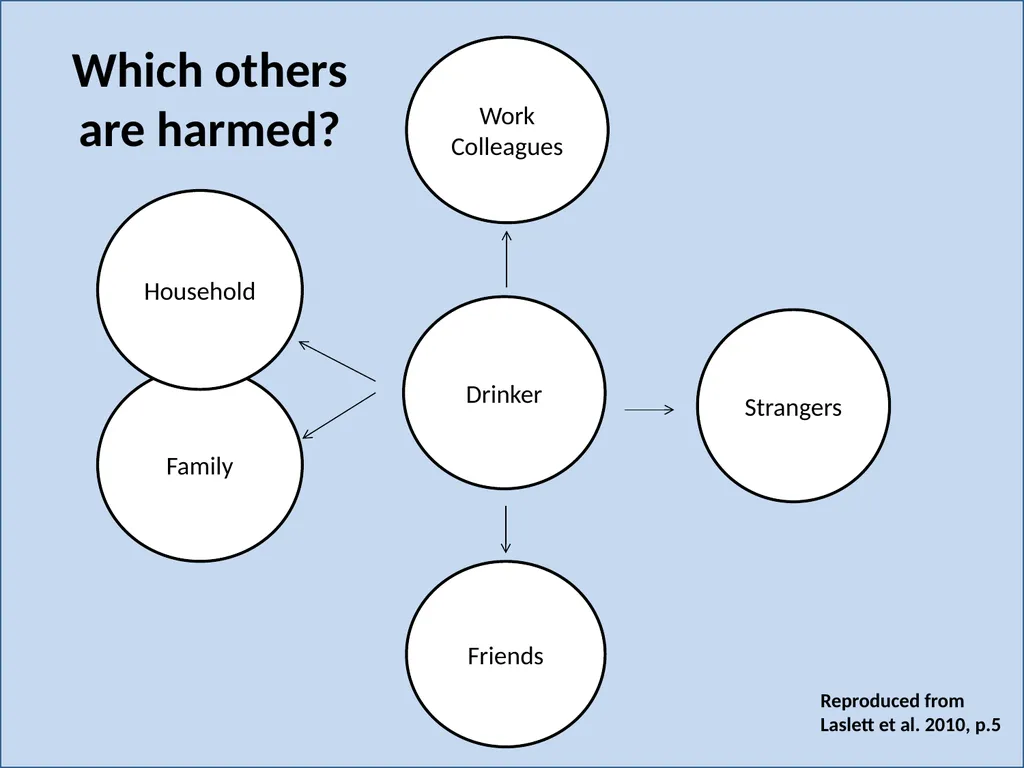
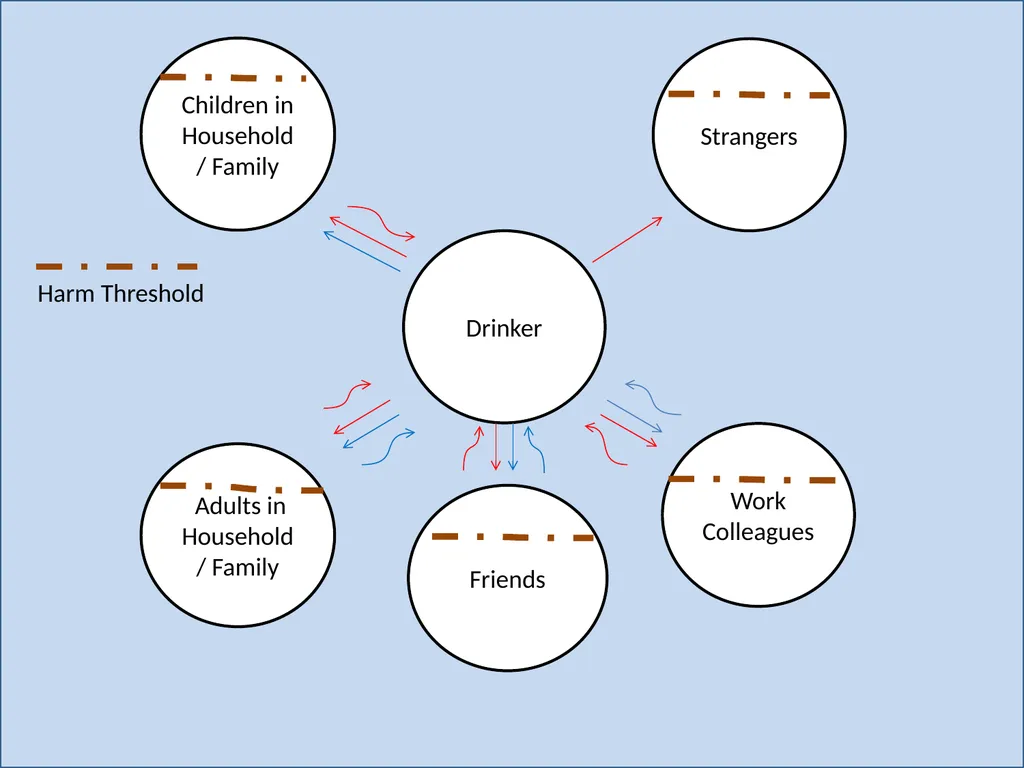
Work Colleagues Strangers Family Drinker Friends Household Reproduced from
Laslett et al. 2010, p.5 Which others are harmed?<br>
05
What’s still missing? Peer influence and feedback loops<br>
06
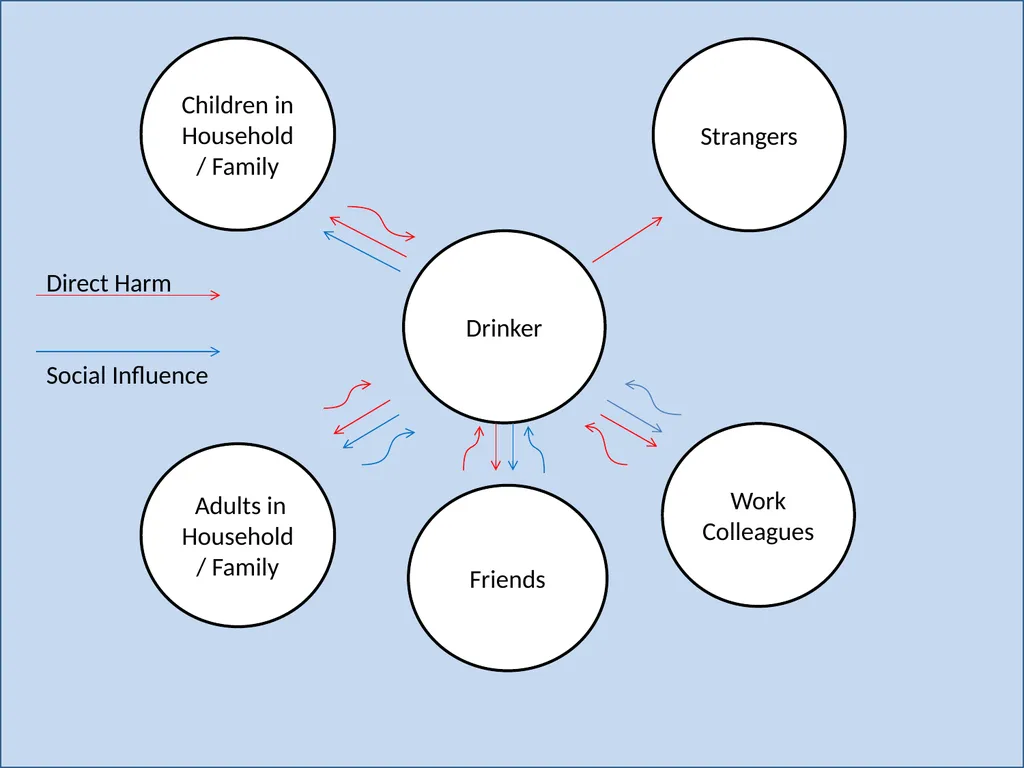
Work Colleagues Strangers Drinker Friends Children in Household / Family Adults in Household / Family Direct Harm
Social Influence<br>
07
What’s still missing? Peer influence and feedback loops
Thresholds where use becomes harmful<br>
08
Work Colleagues Strangers Drinker Friends Children in Household / Family Adults in Household / Family Harm Threshold<br>
09
What’s still missing? Peer influence and feedback loops
Thresholds where use becomes harmful
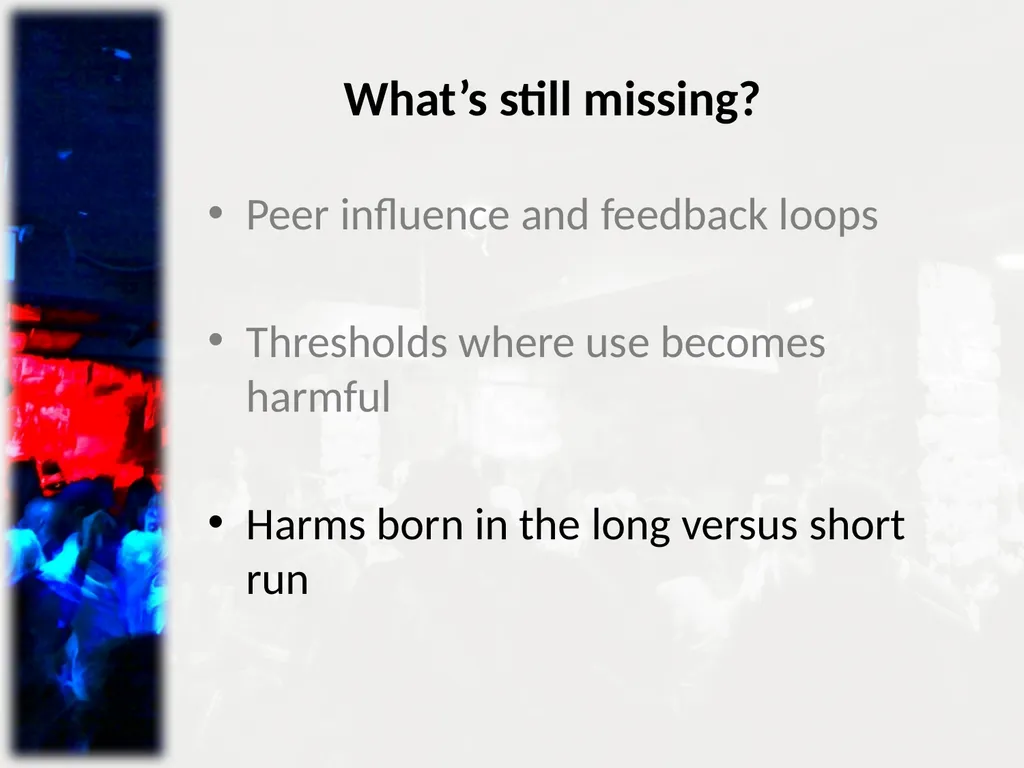
Harms born in the long versus short run<br>
10
Translating research on alcohol related harms into effective policy Andrew Percy<br>
11
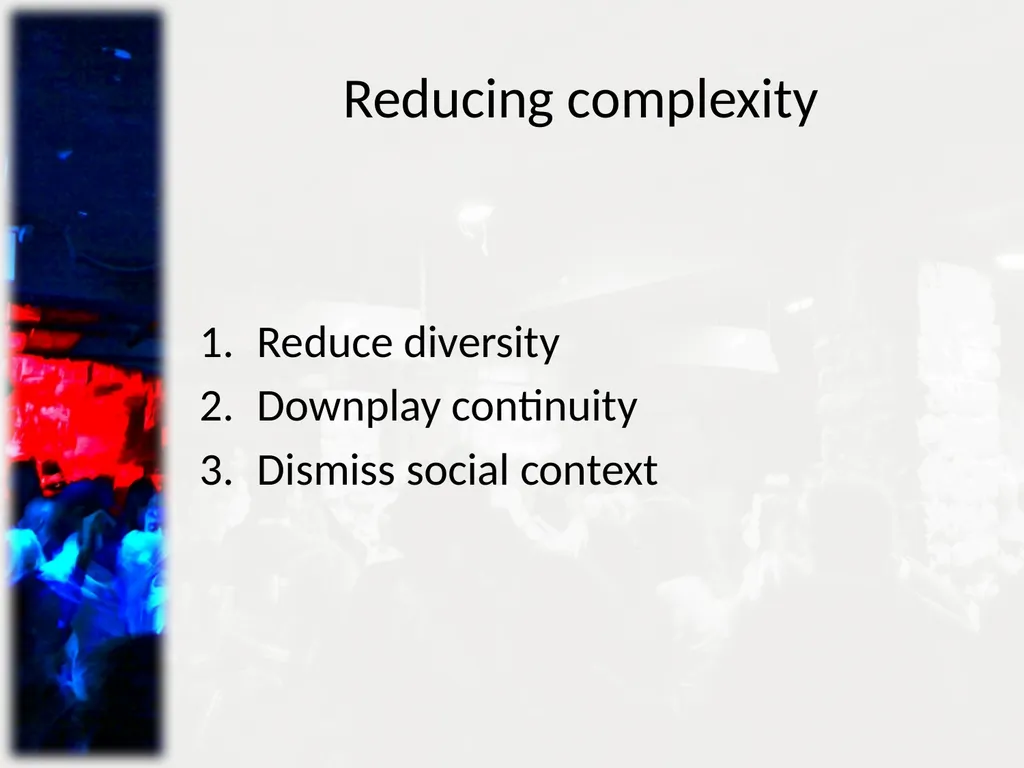
Reducing complexity Reduce diversity
Downplay continuity
Dismiss social context<br>
12
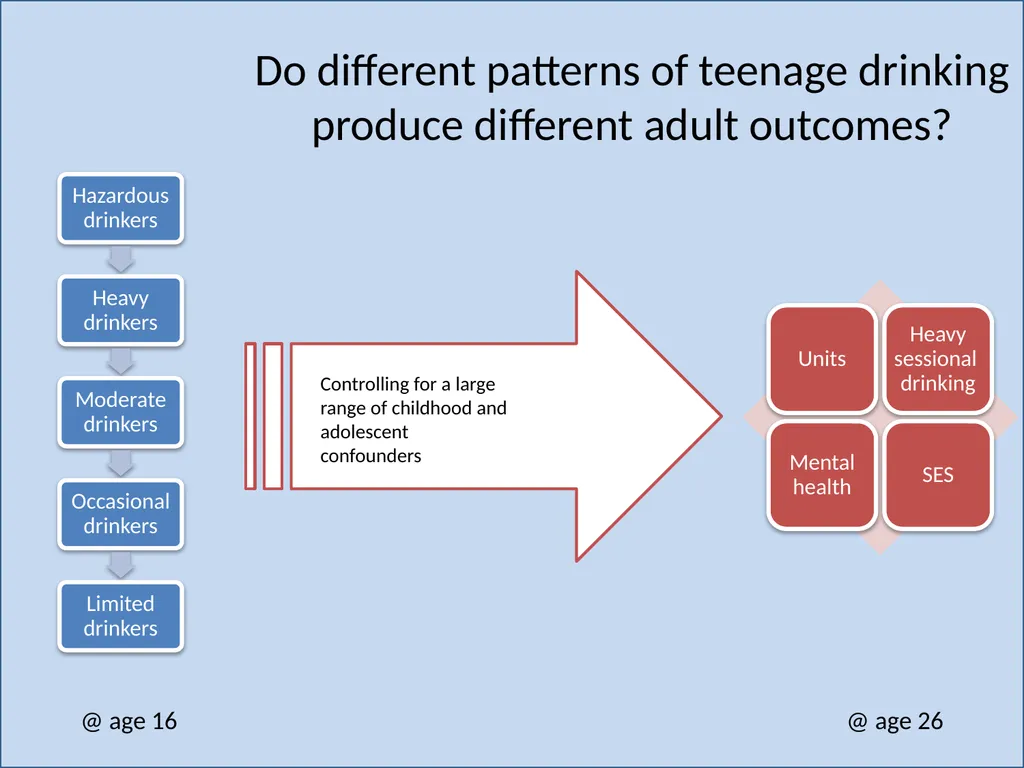
Do different patterns of teenage drinking produce different adult outcomes? @ age 16 @ age 26 Controlling for a large range of childhood and adolescent confounders<br>
13
How different is teenage drinking from adult drinking? Teenagers drink to be sociable, to celebrate, to commiserate, to relax, to have a good time with friends.
Just like adults<br>
14
How different is teenage drinking from adult drinking? For most teenage drinkers, passing out, being sick, getting into fights, having to be looked after by your friends are all highly embarrassing incidents.
Just like adults<br>
15
How different is teenage drinking from adult drinking? Teenage drinkers use a range of strategies to regulate their consumption developed through trial and error.<br>
16
Does social context (people and places) matters in alcohol related harms? We collect data from individuals, we analyse individuals, we graph individuals, we design interventions for individuals.
BUT
Teenage drinking is done in groups<br>
17
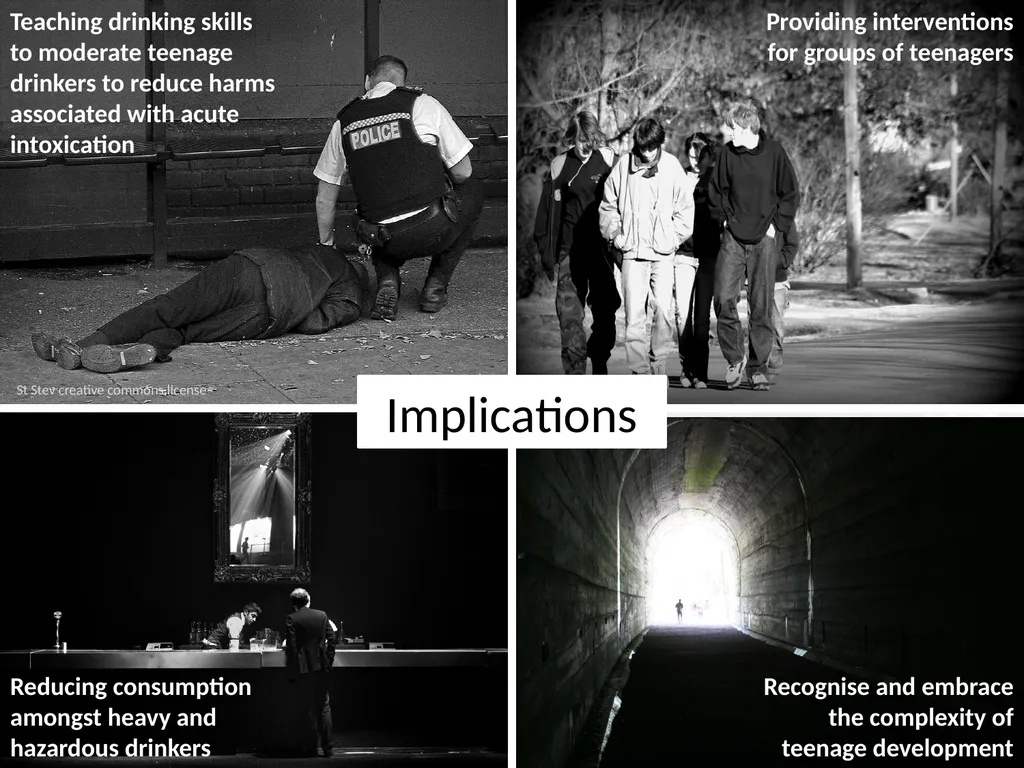
Implications? Implications Teaching drinking skills to moderate teenage drinkers to reduce harms associated with acute intoxication Reducing consumption amongst heavy and hazardous drinkers Providing interventions for groups of teenagers Recognise and embrace the complexity of teenage development St Stev creative commons license<br>