Model-based UI Meeting November 2010, Lyon Fabio Paternò CNR-ISTI, HIIS Laboratory Pisa, Italy http:giove.isti.cnr.it 2 Model-based approaches Allow designers and developers to concentrate on main semantic aspects Languages that represent
"Model-based UI Meeting November 2010, Lyon Fabio" is the property of its rightful owner. Permission is granted to
download and print the materials on this website for personal, non-commercial use only, and to display it
on your personal computer provided you do not modify the materials and that you retain all copyright
notices contained in the materials. By downloading content from our website, you accept the terms of this
agreement.
2 Model-based approaches Allow designers and developers to concentrate on main semantic aspects
Languages that represent such aspects
Avoid the need to learn and manage many implementation languages
Linking semantic information and implemementation elements
Interoperability through many possible implementation languages
Facilitate support of assistive technology<br>
03
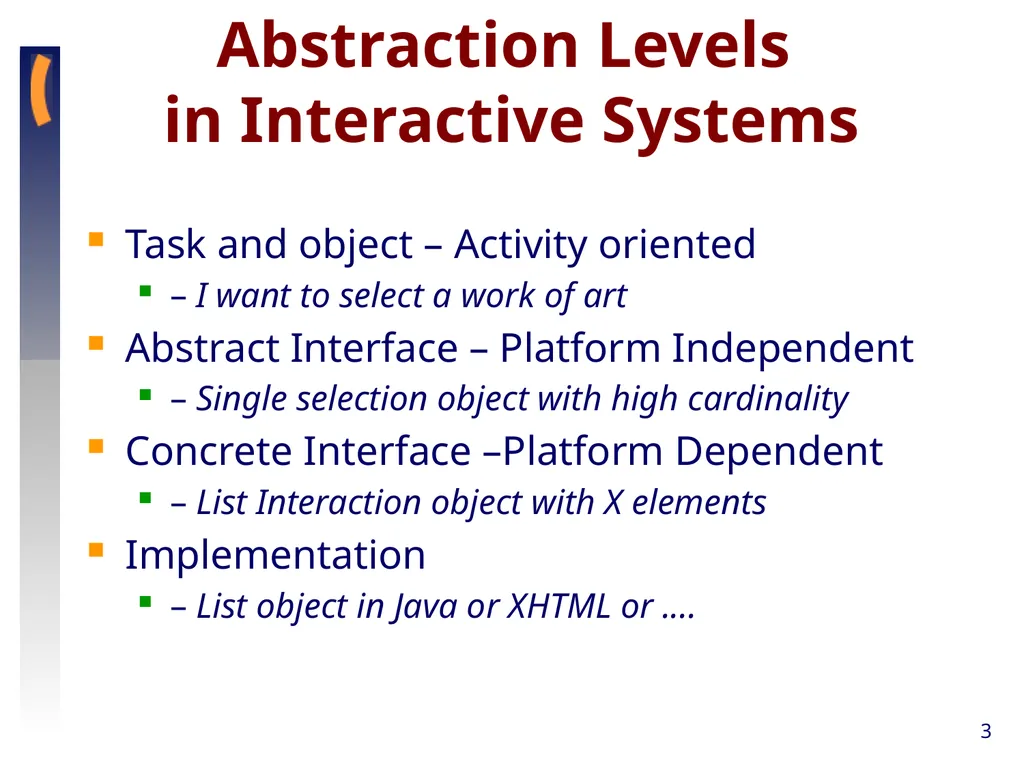
3 Abstraction Levels in Interactive Systems Task and object – Activity oriented
– I want to select a work of art
Abstract Interface – Platform Independent
– Single selection object with high cardinality
Concrete Interface –Platform Dependent
– List Interaction object with X elements
Implementation
– List object in Java or XHTML or ....<br>
04
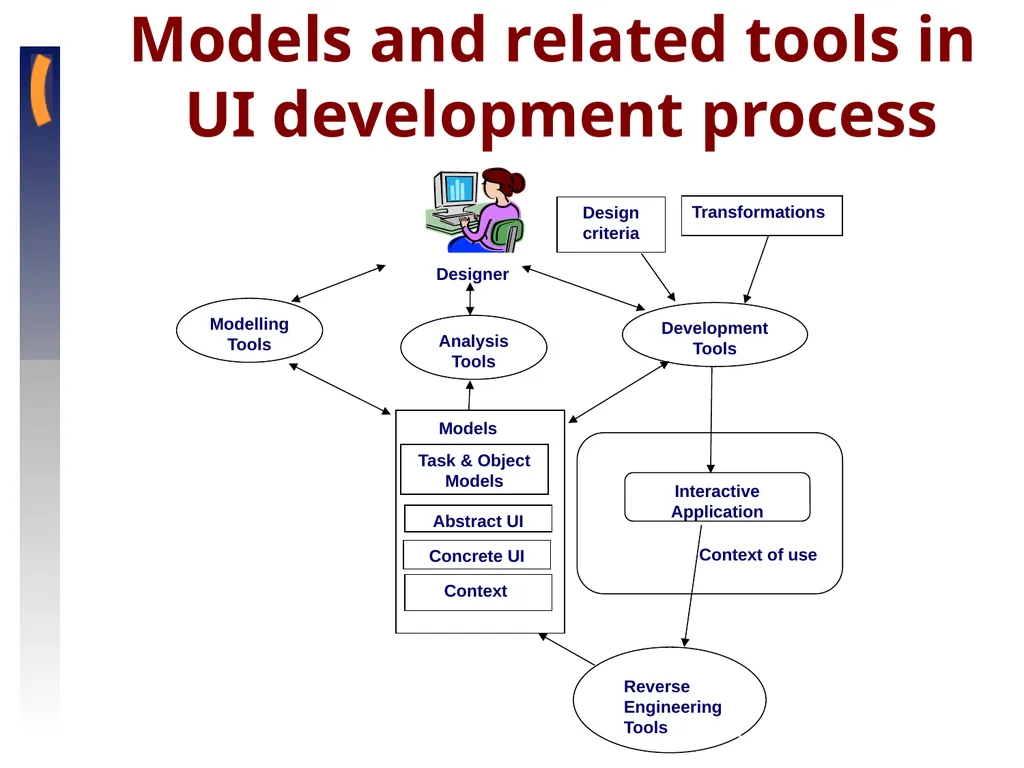
Models and related tools in UI development process<br>
05
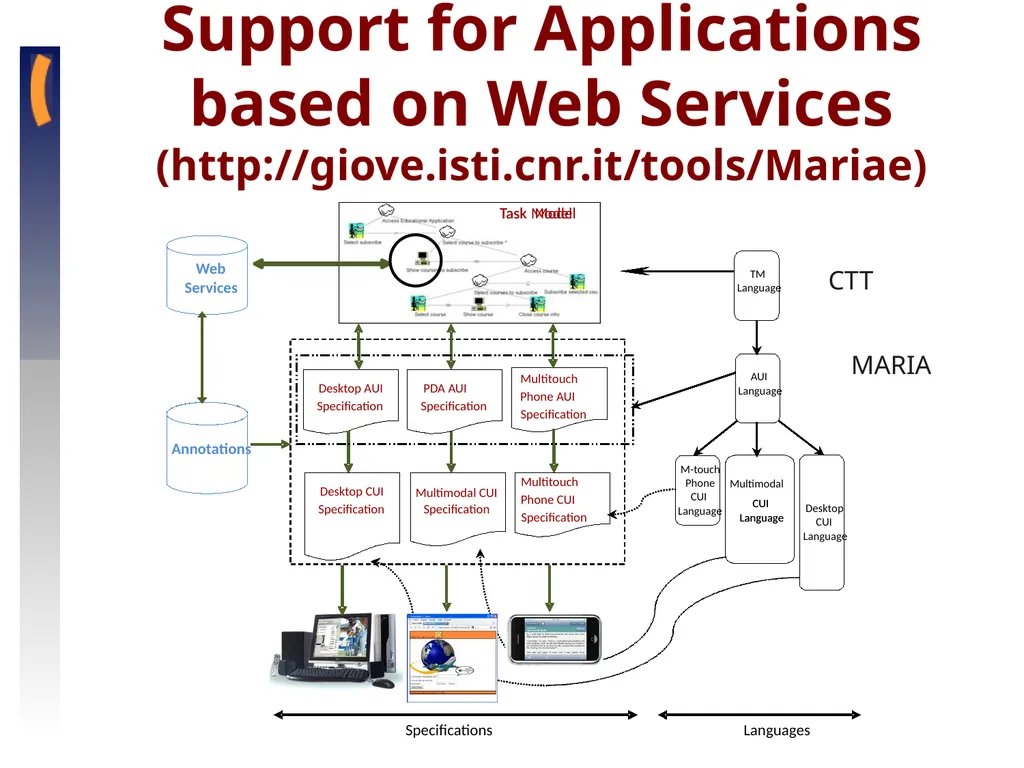
Support for Applications based on Web Services (http://giove.isti.cnr.it/tools/Mariae) Task Model Web Services Annotations Task Model CTT<br>
06
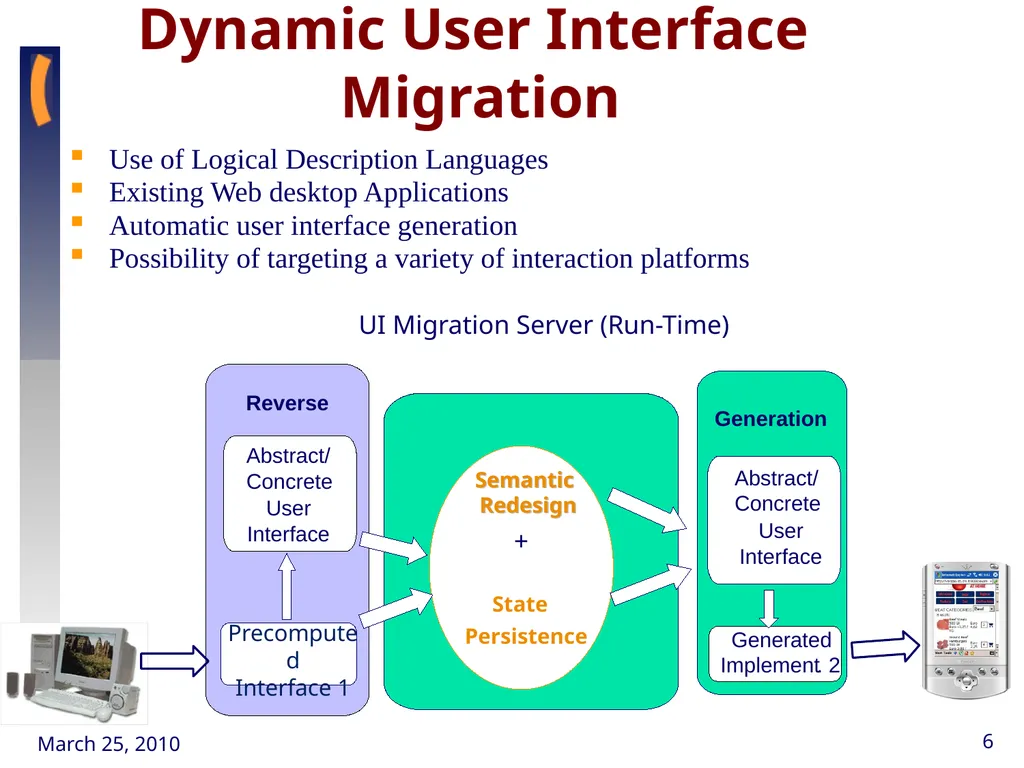
6 Dynamic User Interface Migration Use of Logical Description Languages
Existing Web desktop Applications
Automatic user interface generation
Possibility of targeting a variety of interaction platforms Semantic Semantic Redesign Redesign Generated Implement . 2 Interface Semantic Semantic Redesign Redesign State Persistence Reverse Generated Implement . 2 Generation Abstract/
Concrete User
Interface Abstract/
Concrete User
Interface March 25, 2010 + UI Migration Server (Run-Time) Precomputed Interface 1<br>
07
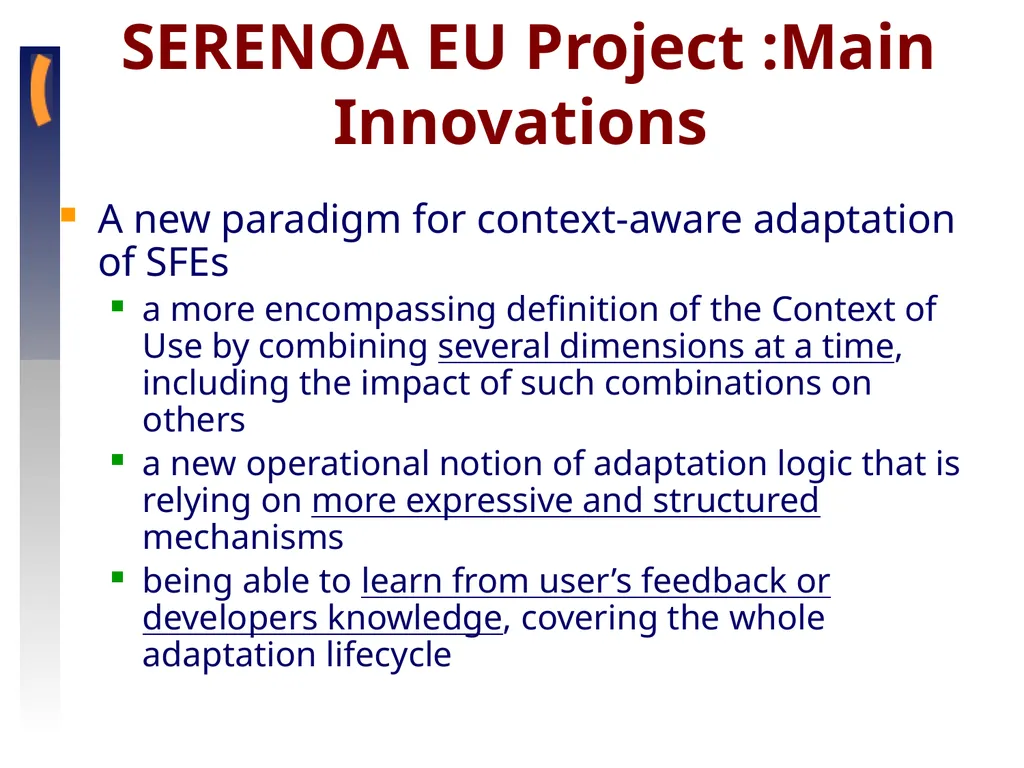
SERENOA EU Project :Main Innovations A new paradigm for context-aware adaptation of SFEs
a more encompassing definition of the Context of Use by combining several dimensions at a time, including the impact of such combinations on others
a new operational notion of adaptation logic that is relying on more expressive and structured mechanisms
being able to learn from user’s feedback or developers knowledge, covering the whole adaptation lifecycle<br>
08
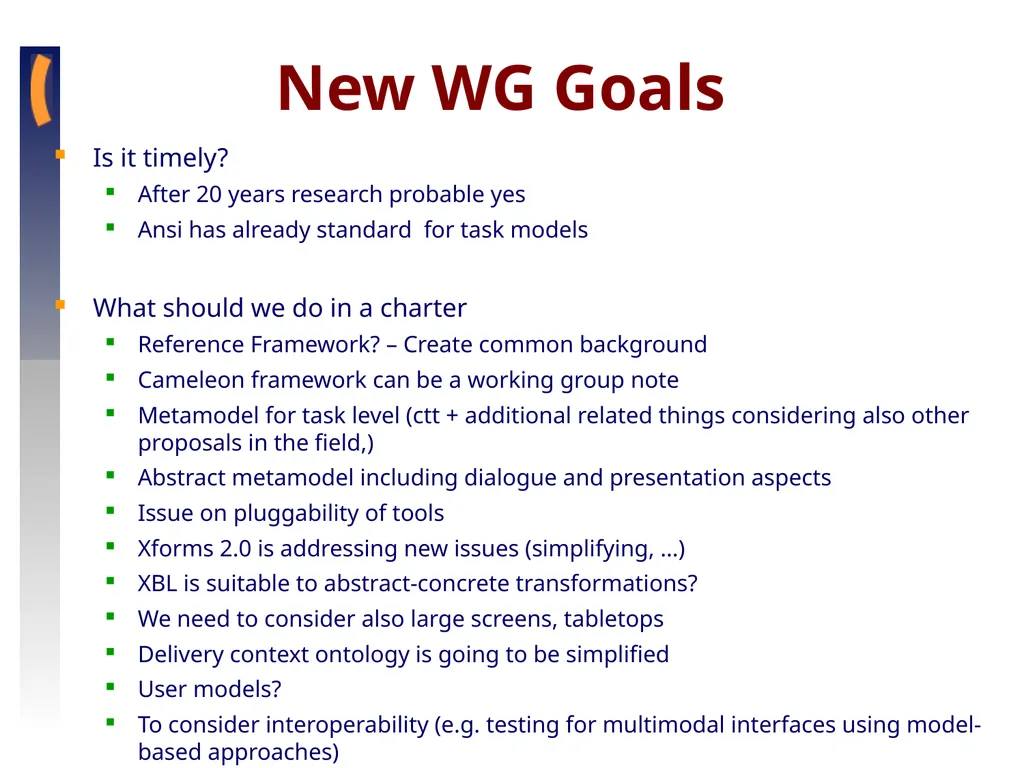
New WG Goals Is it timely?
After 20 years research probable yes
Ansi has already standard for task models
What should we do in a charter
Reference Framework? – Create common background
Cameleon framework can be a working group note
Metamodel for task level (ctt + additional related things considering also other proposals in the field,)
Abstract metamodel including dialogue and presentation aspects
Issue on pluggability of tools
Xforms 2.0 is addressing new issues (simplifying, …)
XBL is suitable to abstract-concrete transformations?
We need to consider also large screens, tabletops
Delivery context ontology is going to be simplified
User models?
To consider interoperability (e.g. testing for multimodal interfaces using model-based approaches)<br>
09
Stakeholders Minimal level for reccomendation standards is to ensure two or more implementations
Deployment – tool developers
Adoption – developers of context-dependent applications, more accessible applications,
Web site owners or operators (those who pay) e.g. health organizations<br>
10
Benefits Benefits for end users and their representatives
Liason with authoring tools in accessibility
Models for communicating with clients and testing
Useful to support development with changing requirements
Support for usability testing and verification of reachability and other properties<br>
11
Working Group CNR-ISTI HIIS Lab
DFKI
Telefonica
ProDevelop
CWI
UCL
University of Poitiers/INRIA
PUC Rio
DAI Lab in Berlin<br>
12
Liaisons & Dependencies W3C
XForms -> AUI should review Xforms and vice versa
WAI/ARIA -> AUI should review ARIA and vice versa
WAI/Authoring Tools Accessibility Guidelines
MultiModal Group – Specifications consistent with MMI architecture
SMIL – Models consistency, temporal aspects
HCG (Hypertext Coordination Group)
Semantic Web – Feeding back any gaps
Voice Browser – Check abstract vocabulary – relations with statechartxml
Mobile activity<br>