Modeling and Analysis of Attacks and Counter Defense Mechanisms for Cyber Physical Systems Zongtao Lin Shuqi Zhao 1 Abstract Cyber Physical System: modernized electrical grid Types of failures: attrition, pervasion, and exfiltration
"Modeling and Analysis of Attacks and Counter" is the property of its rightful owner. Permission is granted to
download and print the materials on this website for personal, non-commercial use only, and to display it
on your personal computer provided you do not modify the materials and that you retain all copyright
notices contained in the materials. By downloading content from our website, you accept the terms of this
agreement.
Presentation Transcript
01
Modeling and Analysis of Attacks and Counter Defense Mechanisms for Cyber Physical Systems Zongtao Lin & Shuqi Zhao 1<br>
02
Abstract Cyber Physical System: modernized electrical grid
Types of failures: attrition, pervasion, and exfiltration
Optimal design conditions: intrusion detection interval, redundancy level
Tradeoff between 3 types of failures
Use redundancy to improve overall system reliability 2<br>
03
Introduction 2 lines of research in modeling and analysis of CPSs
Formalized safety and functional requirements utilizing formal modeling and analysis tools
Mathematical model for analyzing the system's response behavior in the presence of malicious nodes performing various attacks 3<br>
04
Introduction Introduce attacks and countermeasures on the survivability of CPSs
Illustrate attrition, pervasion, and exfiltration failure on a modernized electrical grid
Use redundancy to improve the overall system reliability 4<br>
05
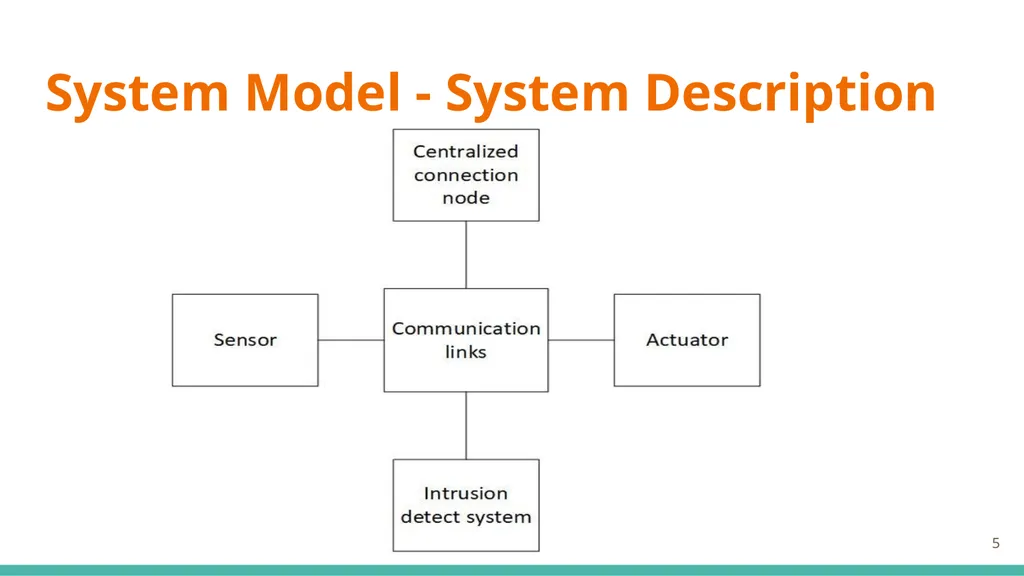
System Model - System Description 5<br>
06
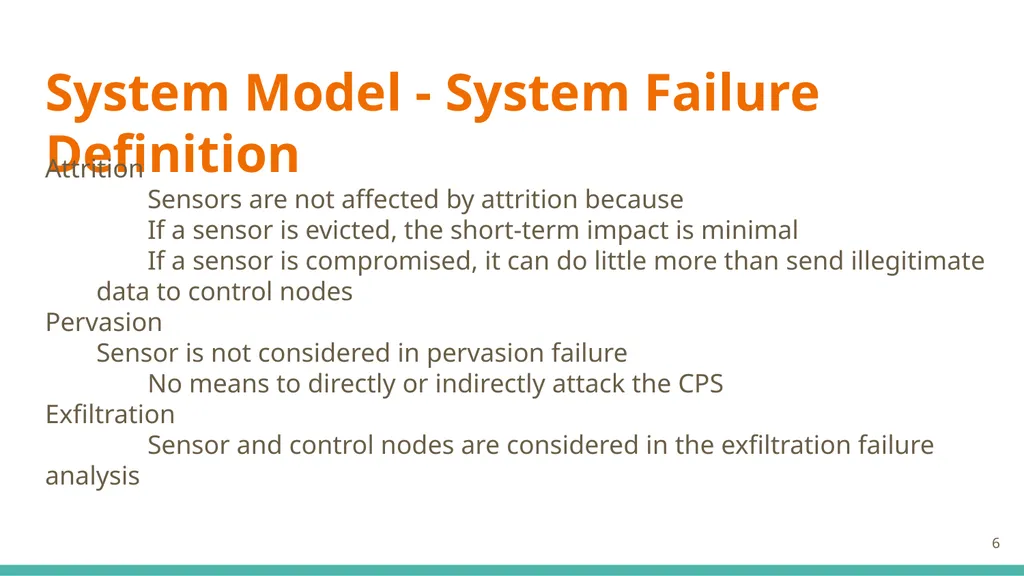
System Model - System Failure Definition Attrition
Sensors are not affected by attrition because
If a sensor is evicted, the short-term impact is minimal
If a sensor is compromised, it can do little more than send illegitimate data to control nodes
Pervasion
Sensor is not considered in pervasion failure
No means to directly or indirectly attack the CPS
Exfiltration
Sensor and control nodes are considered in the exfiltration failure analysis 6<br>
07
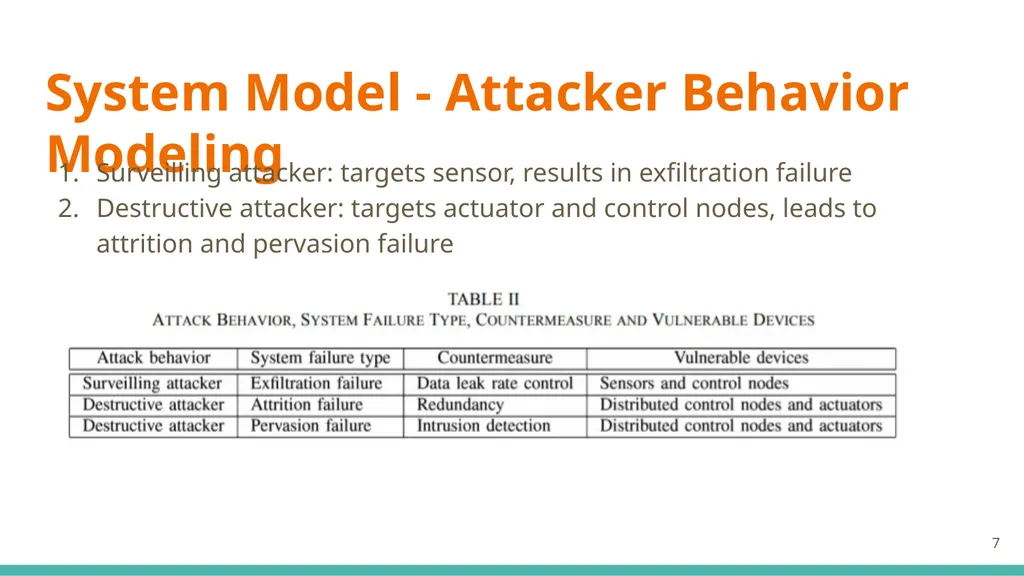
System Model - Attacker Behavior Modeling Surveilling attacker: targets sensor, results in exfiltration failure
Destructive attacker: targets actuator and control nodes, leads to attrition and pervasion failure 7<br>
08
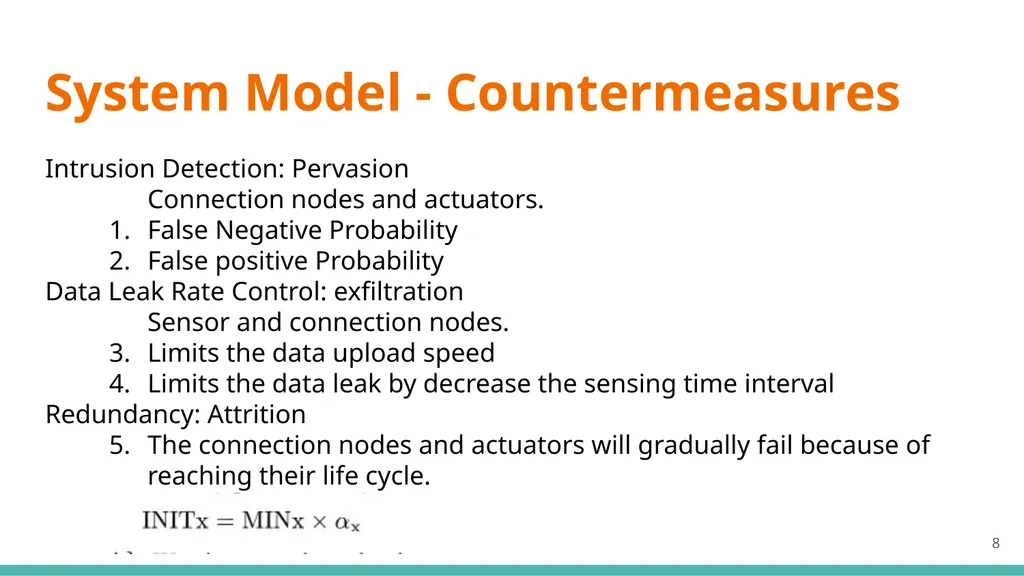
System Model - Countermeasures Intrusion Detection: Pervasion
Connection nodes and actuators.
False Negative Probability
False positive Probability
Data Leak Rate Control: exfiltration
Sensor and connection nodes.
Limits the data upload speed
Limits the data leak by decrease the sensing time interval
Redundancy: Attrition
The connection nodes and actuators will gradually fail because of reaching their life cycle. 8<br>
09
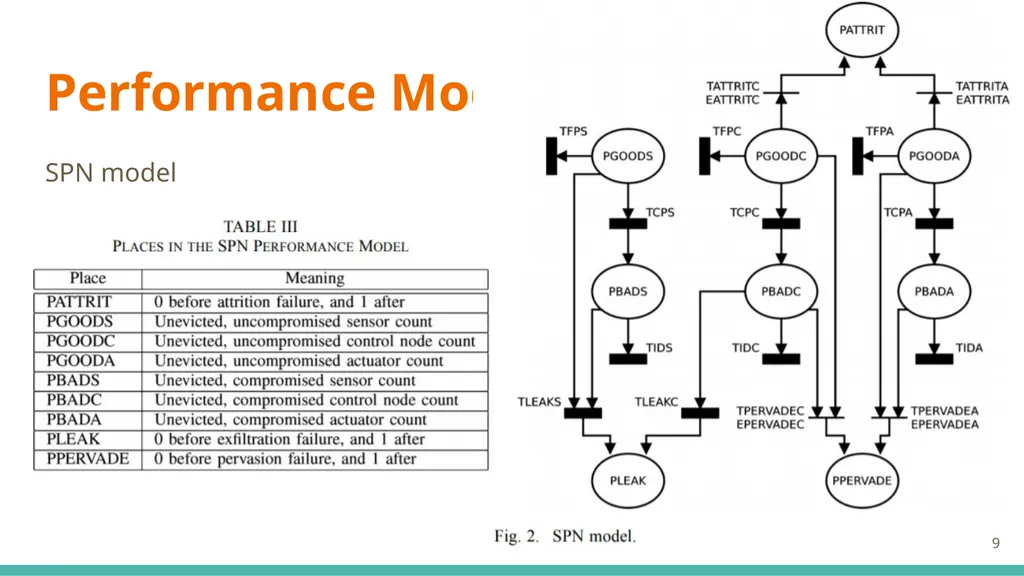
Performance Model SPN model 9<br>
10
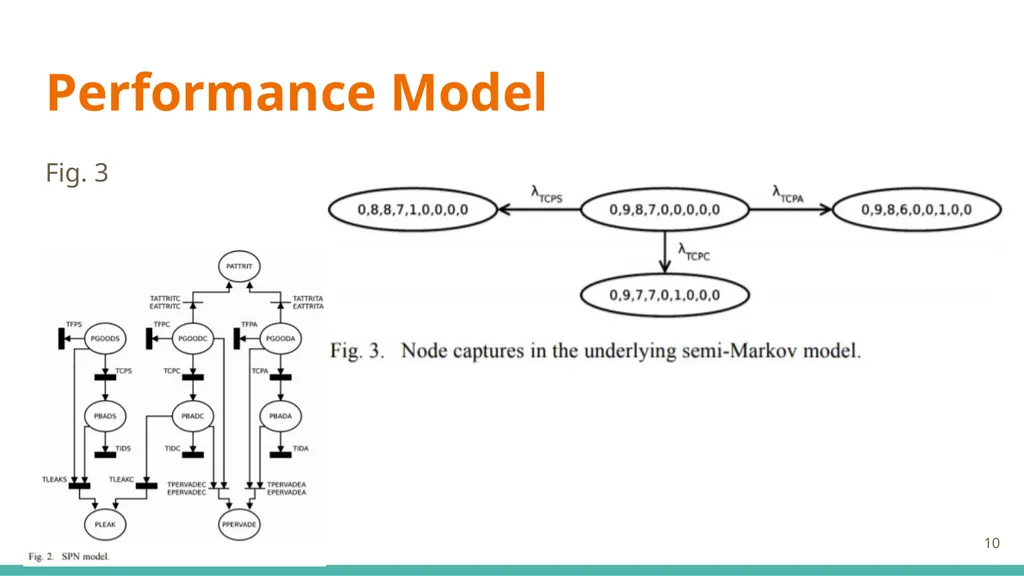
Performance Model Fig. 3 10<br>
11
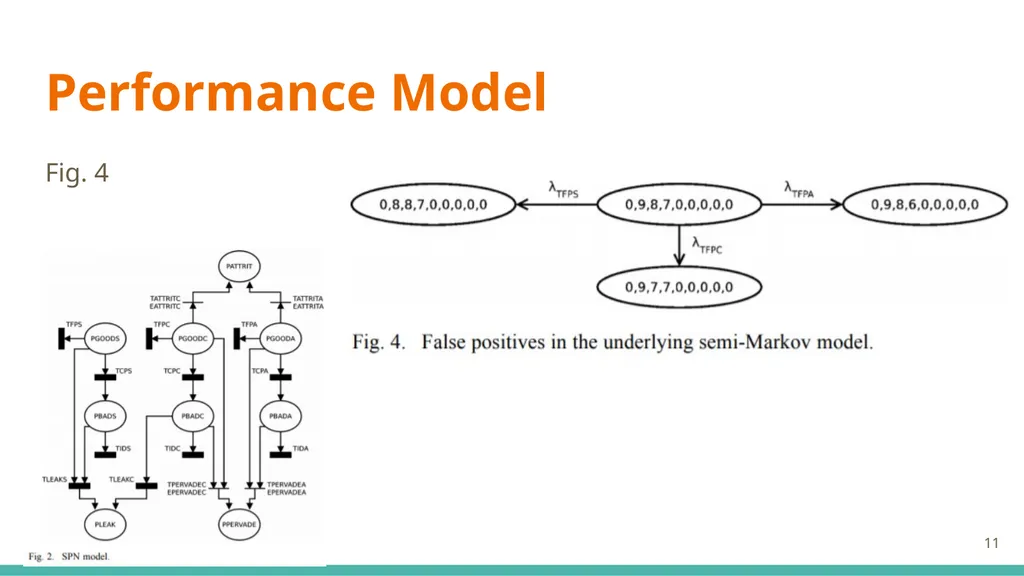
Performance Model Fig. 4 11<br>
12
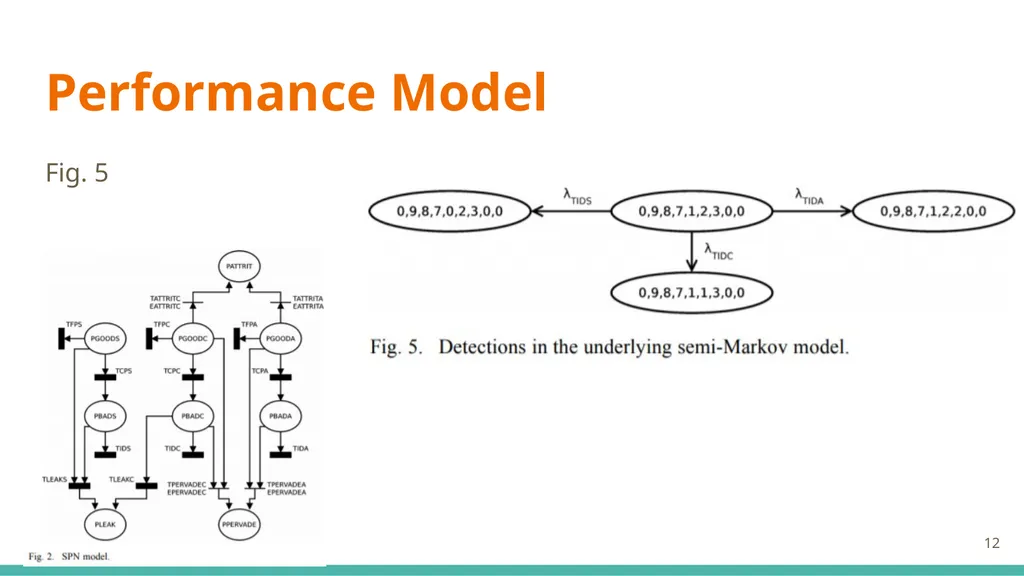
Performance Model Fig. 5 12<br>
13
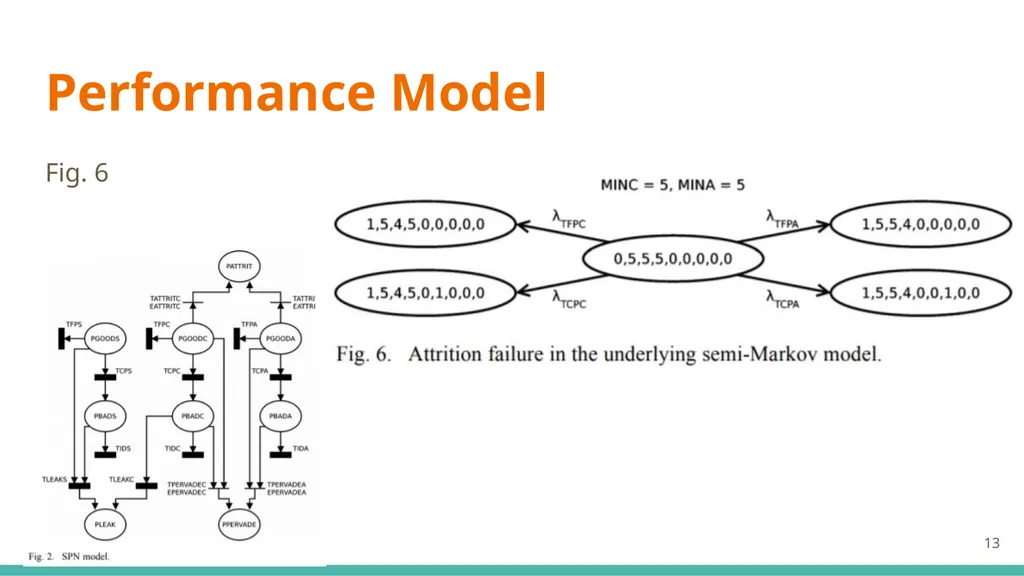
Performance Model Fig. 6 13<br>
14
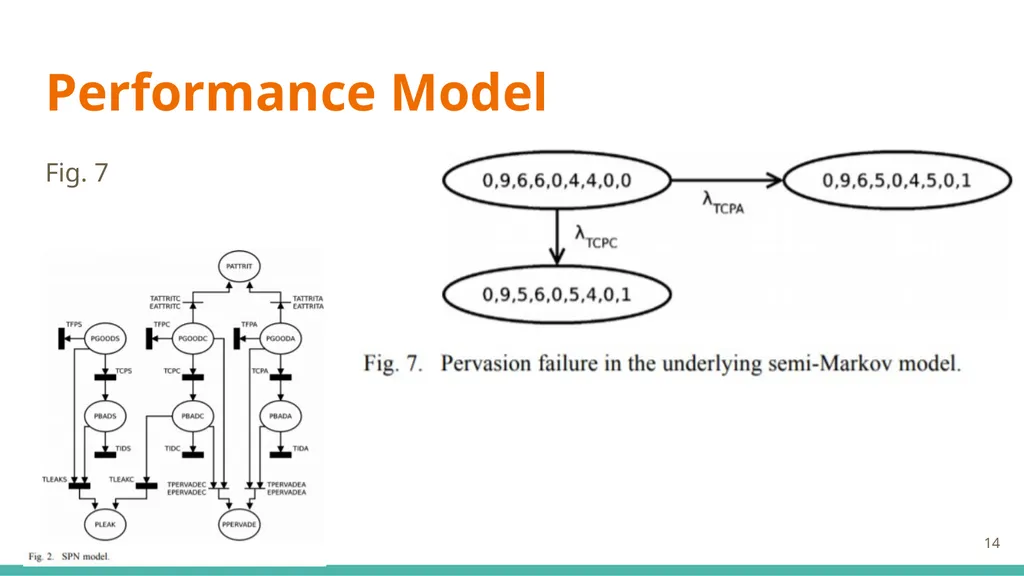
Performance Model Fig. 7 14<br>
15
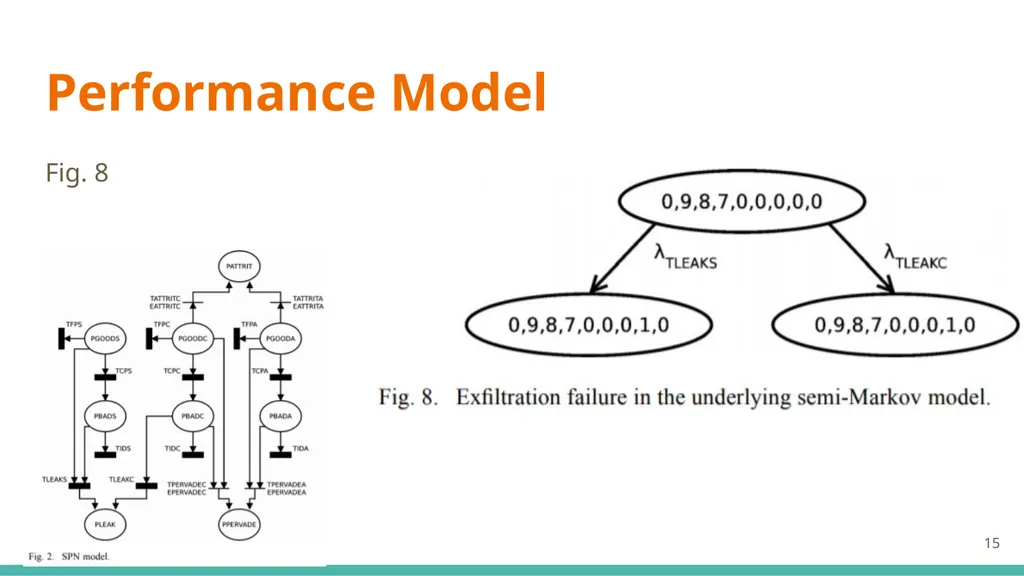
Performance Model Fig. 8 15<br>
16
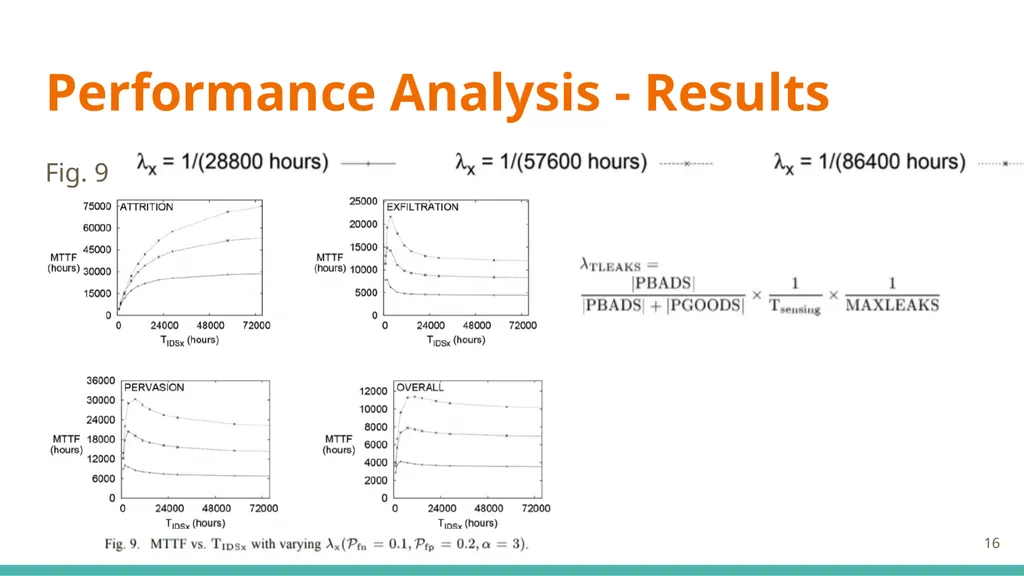
Performance Analysis - Results Fig. 9 16<br>
17
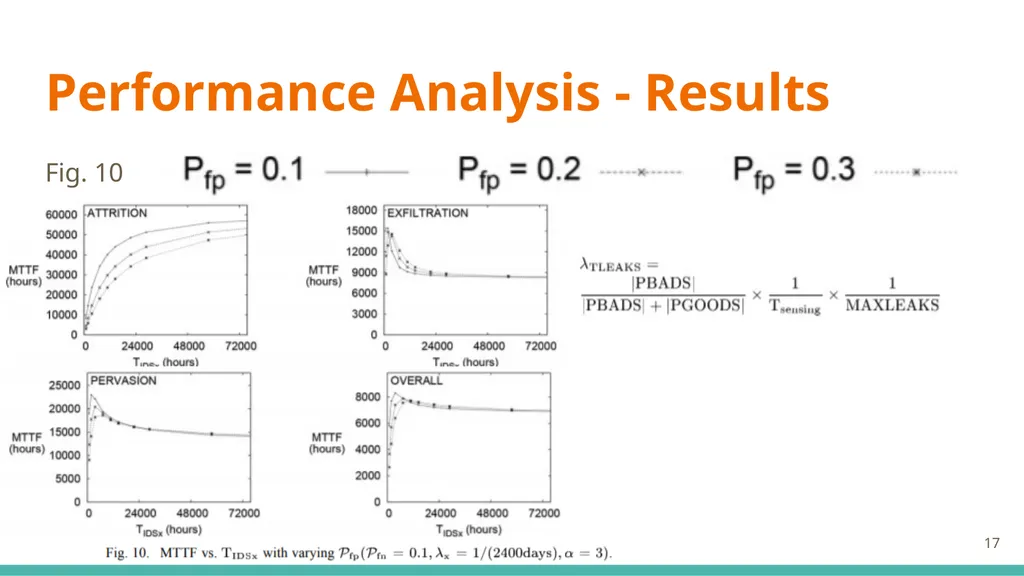
Performance Analysis - Results Fig. 10 17<br>
18
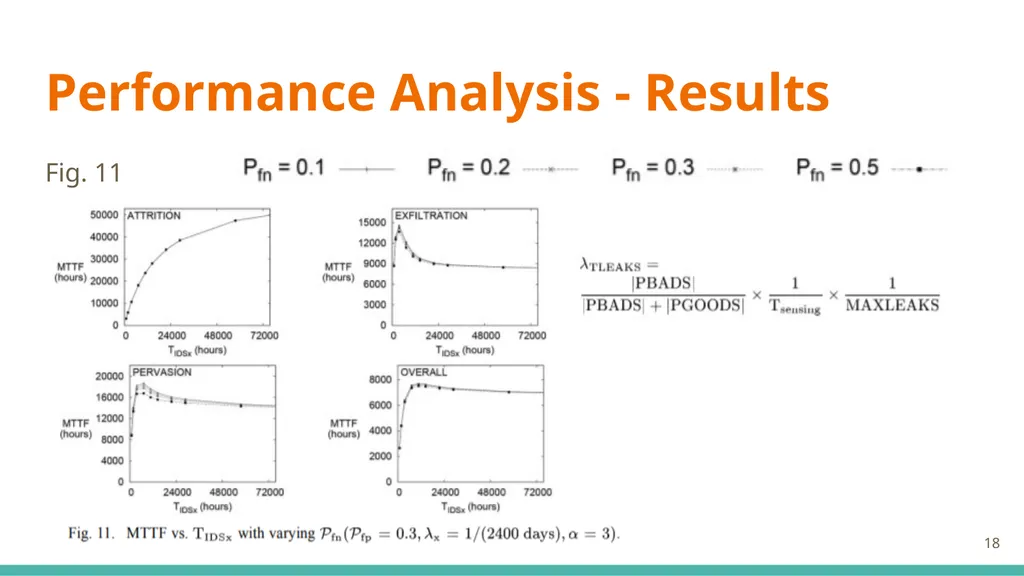
Performance Analysis - Results Fig. 11 18<br>
19
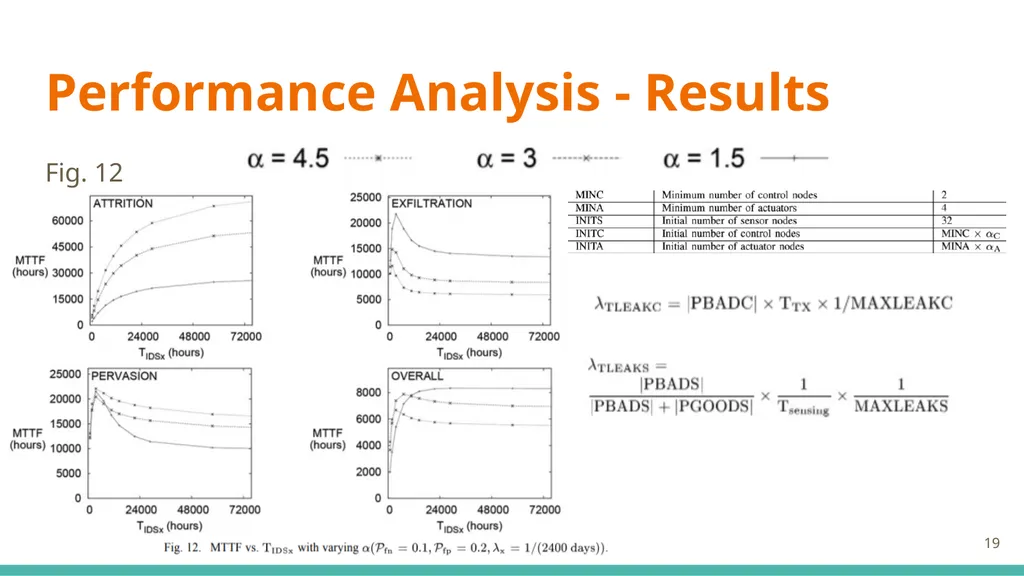
Performance Analysis - Results Fig. 12 19<br>
20
Conclusion With this analytical model, the authors was able to find relationships between the CPS’s maximal MTTF with 4 parameters (intrusion detection interval, the probability of false positive and false negative, and the redundancy level).
Note that by increasing redundancy level, there is some tradeoff between exfiltration failure with other failures. 20<br>