Modeling Hyperelastic Materials Nathan Hoffman
Description: Modeling Hyperelastic Materials Nathan Hoffman Review of Elastic Materials Strain Tensor Lamé Parameters Deformation Gradient Deformation Gradient Examples Greene Strain Tensor Saint Venant Kirchoff Model Figure from Fraldi et al. Volume
Related Topics
Download Presentation
"Modeling Hyperelastic Materials Nathan Hoffman" is the property of its rightful owner. Permission is granted to download and print the materials on this website for personal, non-commercial use only, and to display it on your personal computer provided you do not modify the materials and that you retain all copyright notices contained in the materials. By downloading content from our website, you accept the terms of this agreement.
Presentation Transcript
slide1. Modeling Hyperelastic Materials Nathan Hoffman<br>
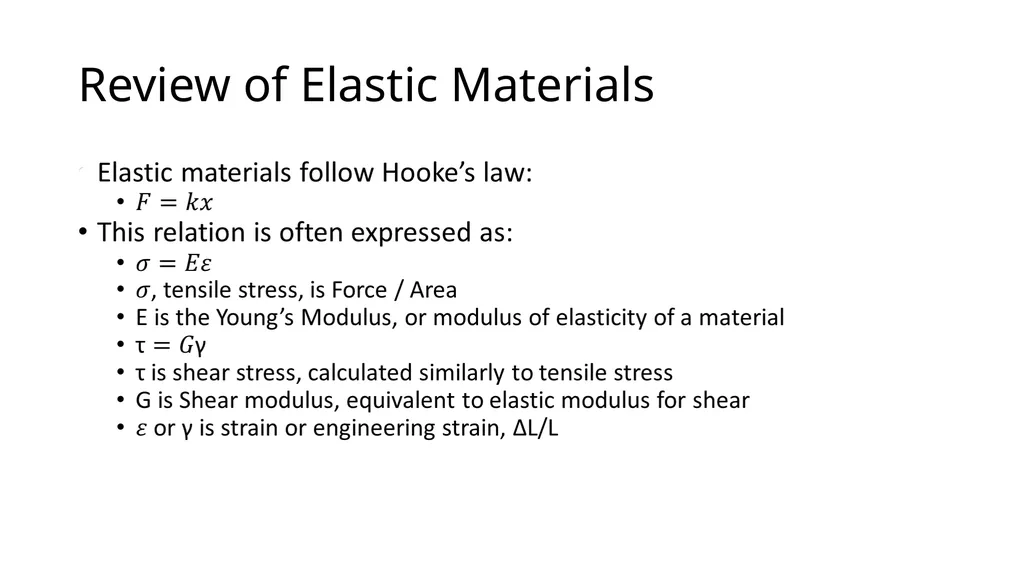
slide2. Review of Elastic Materials<br>
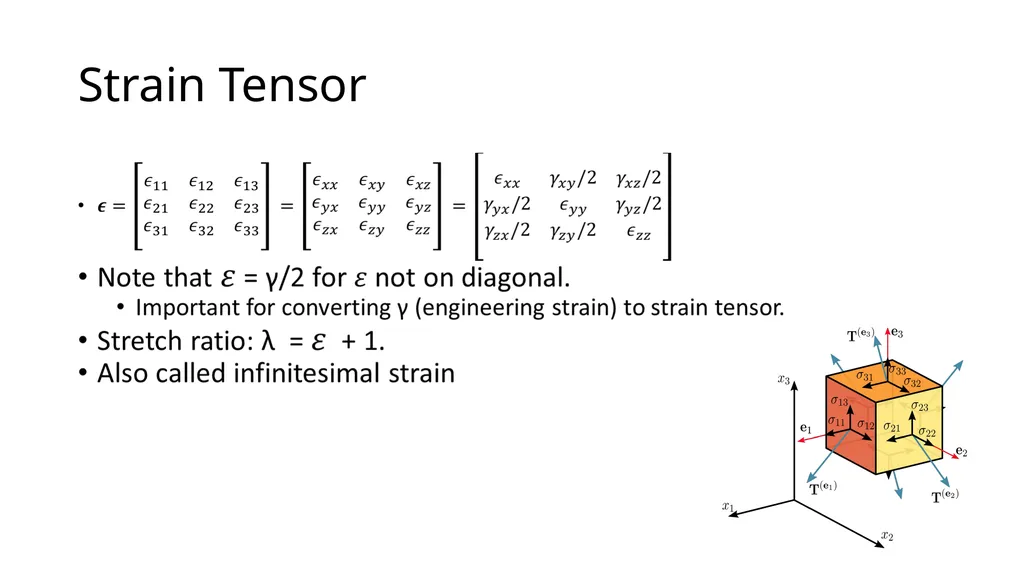
slide3. Strain Tensor<br>
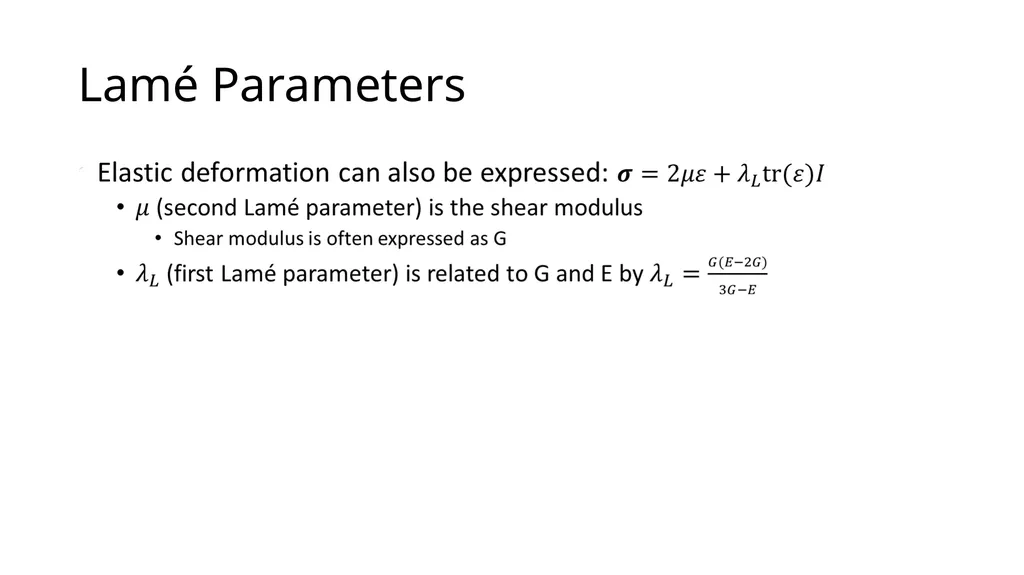
slide4. Lamé Parameters<br>
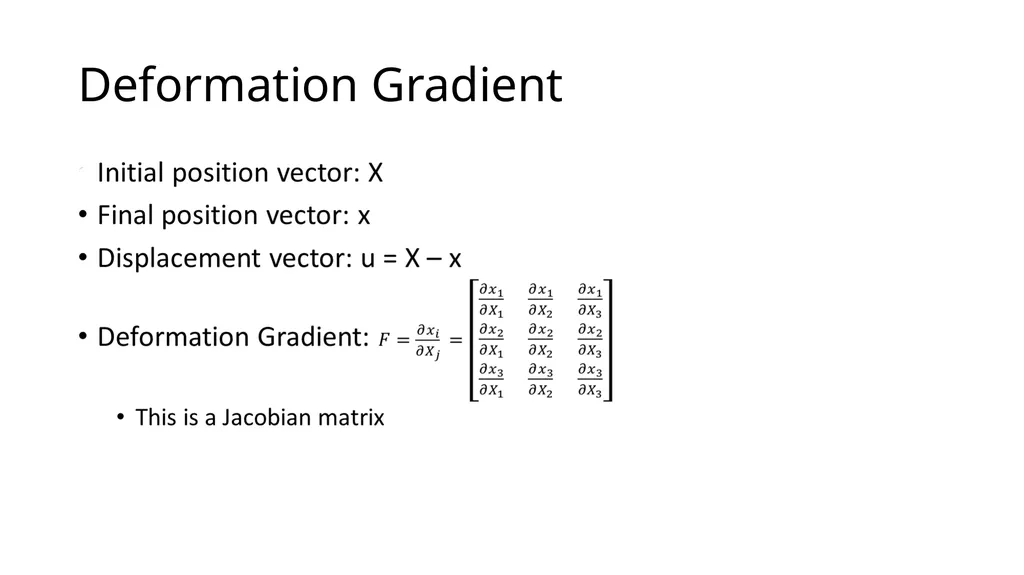
slide5. Deformation Gradient<br>
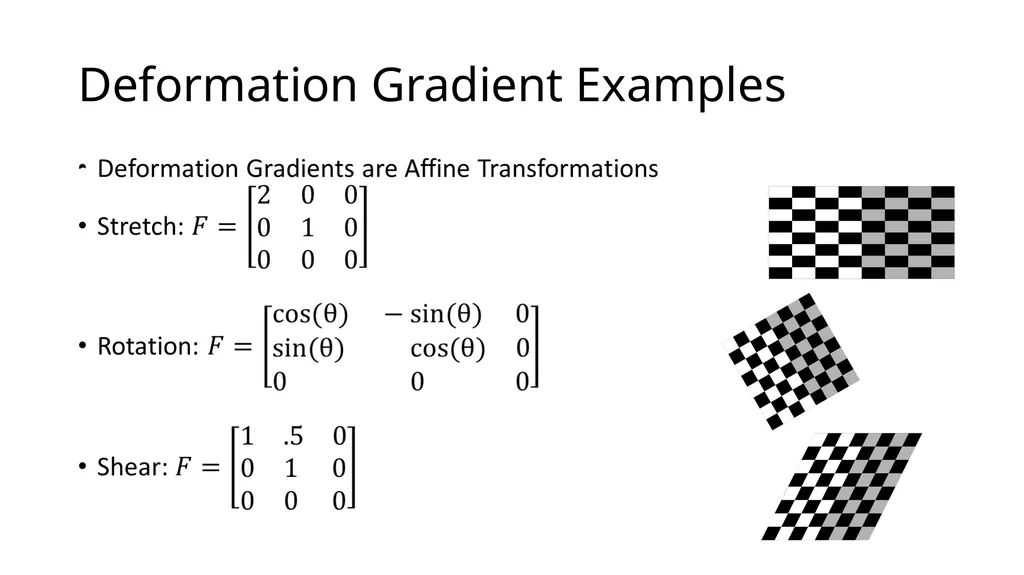
slide6. Deformation Gradient Examples<br>
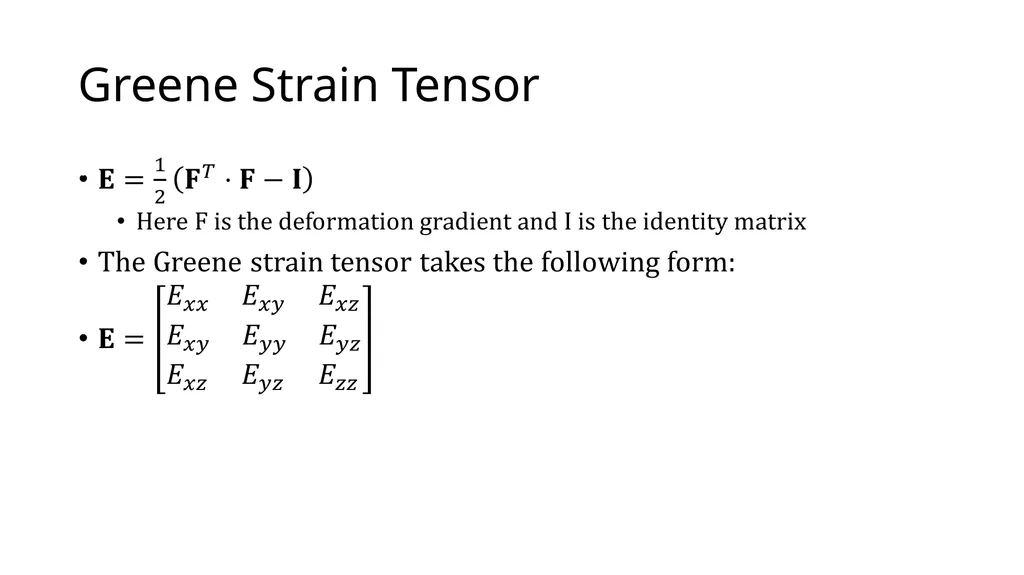
slide7. Greene Strain Tensor<br>
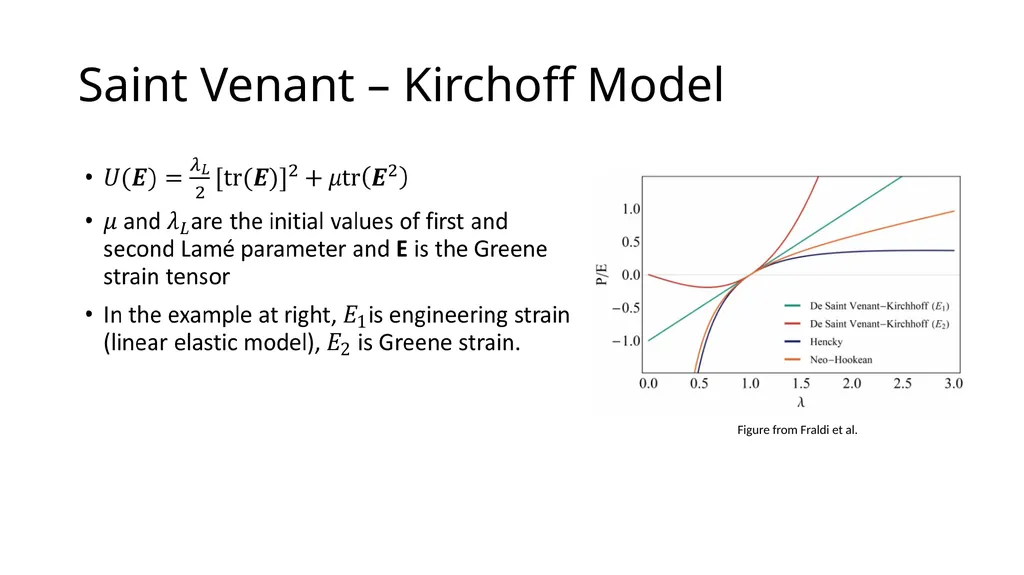
slide8. Saint Venant – Kirchoff Model Figure from Fraldi et al.<br>
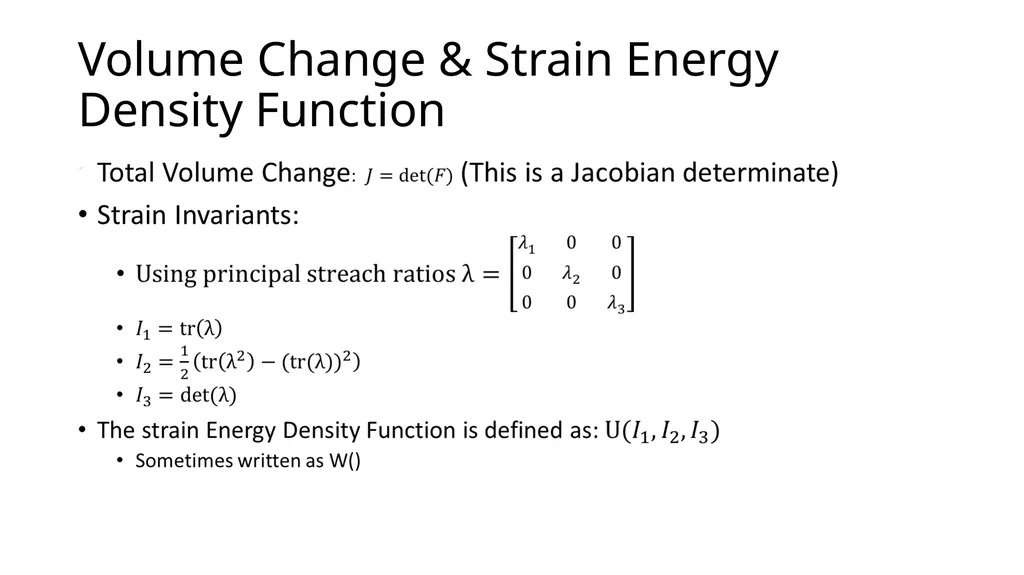
slide9. Volume Change & Strain Energy Density Function<br>
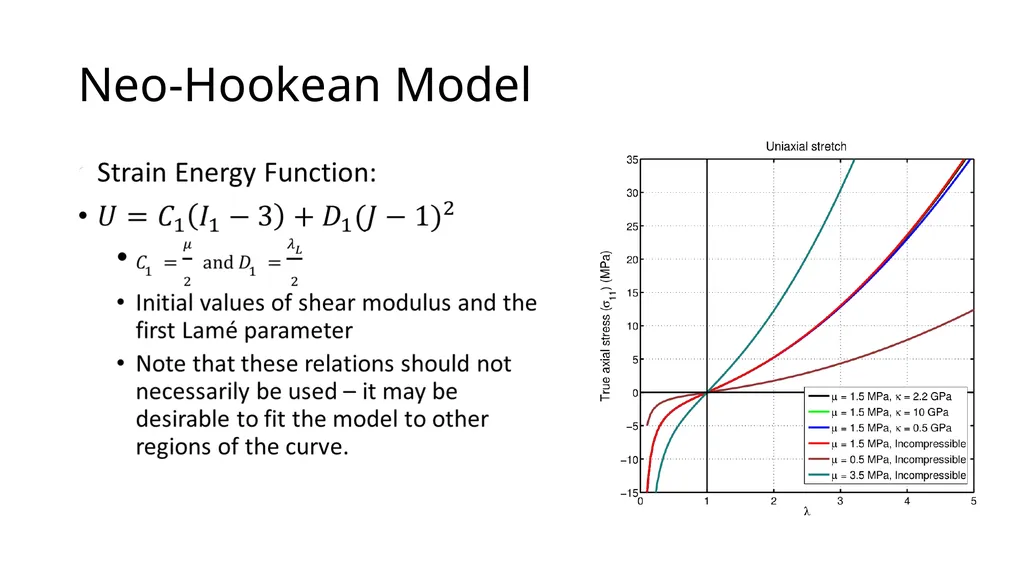
slide10. Neo-Hookean Model<br>
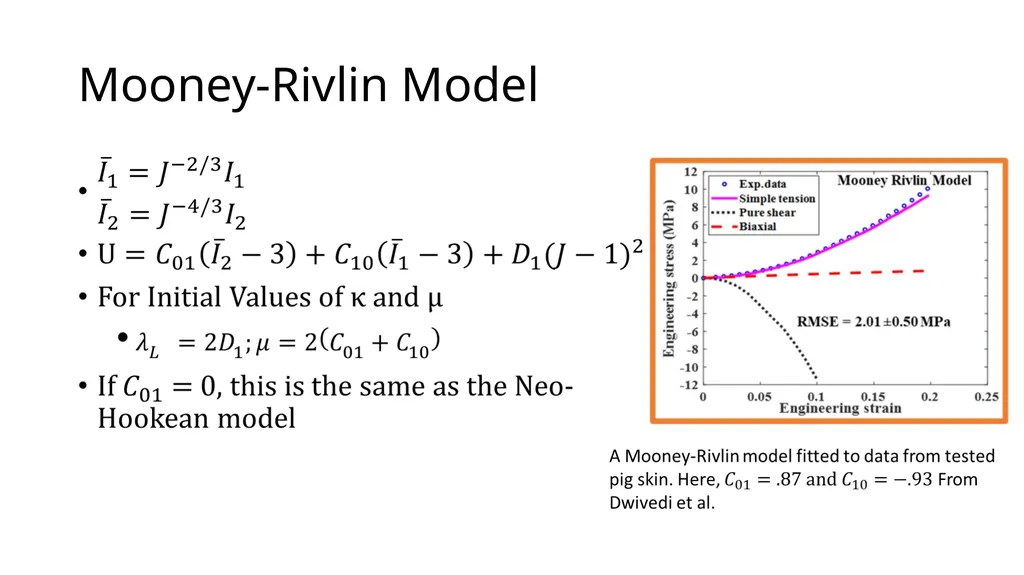
slide11. Mooney-Rivlin Model<br>
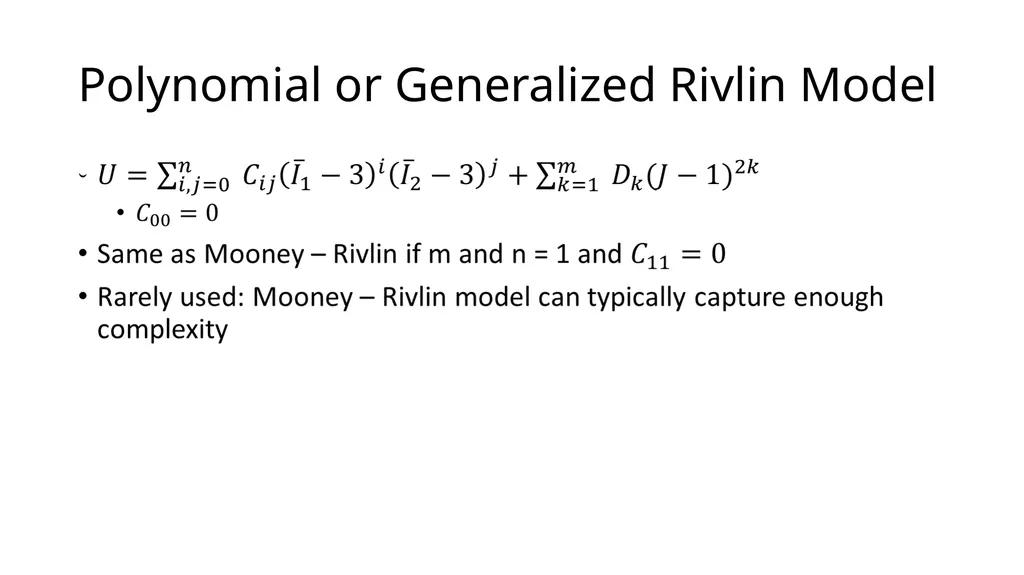
slide12. Polynomial or Generalized Rivlin Model<br>
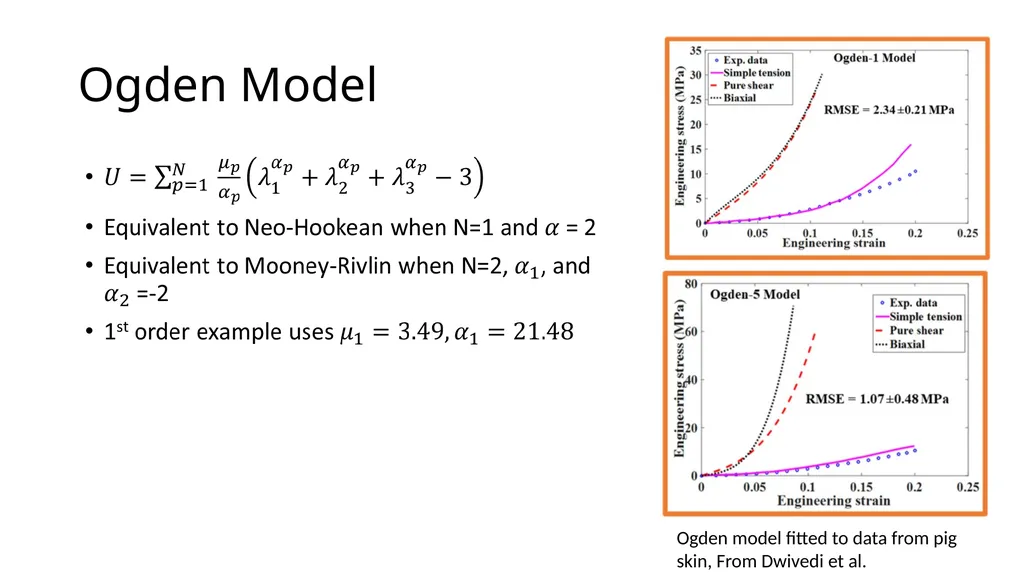
slide13. Ogden Model Ogden model fitted to data from pig skin, From Dwivedi et al.<br>
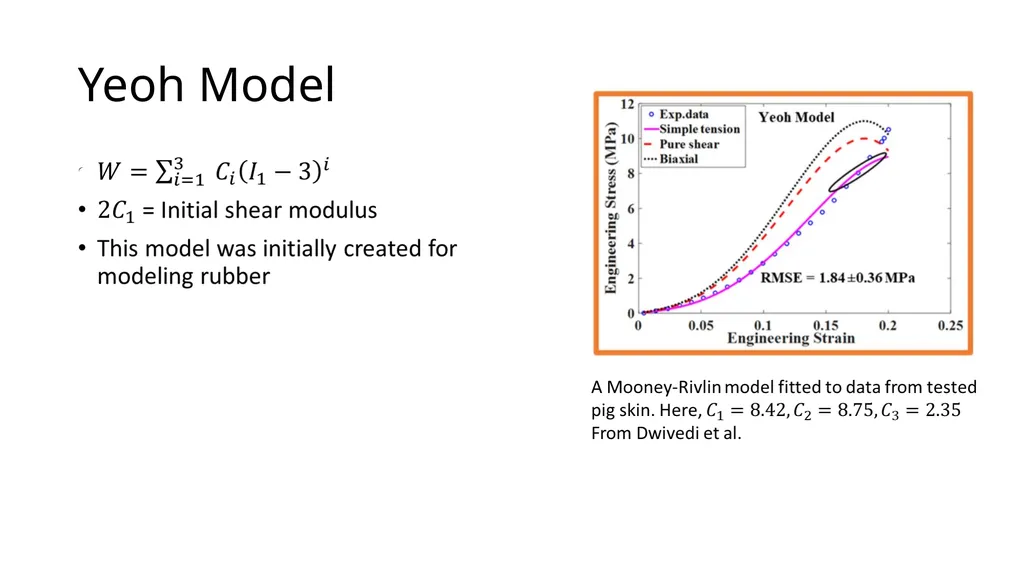
slide14. Yeoh Model<br>
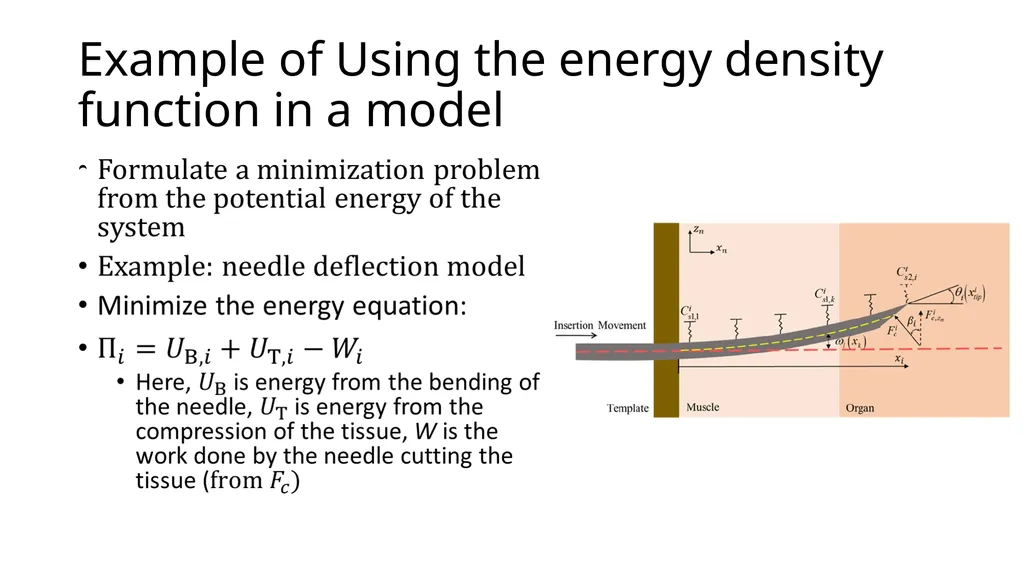
slide15. Example of Using the energy density function in a model<br>
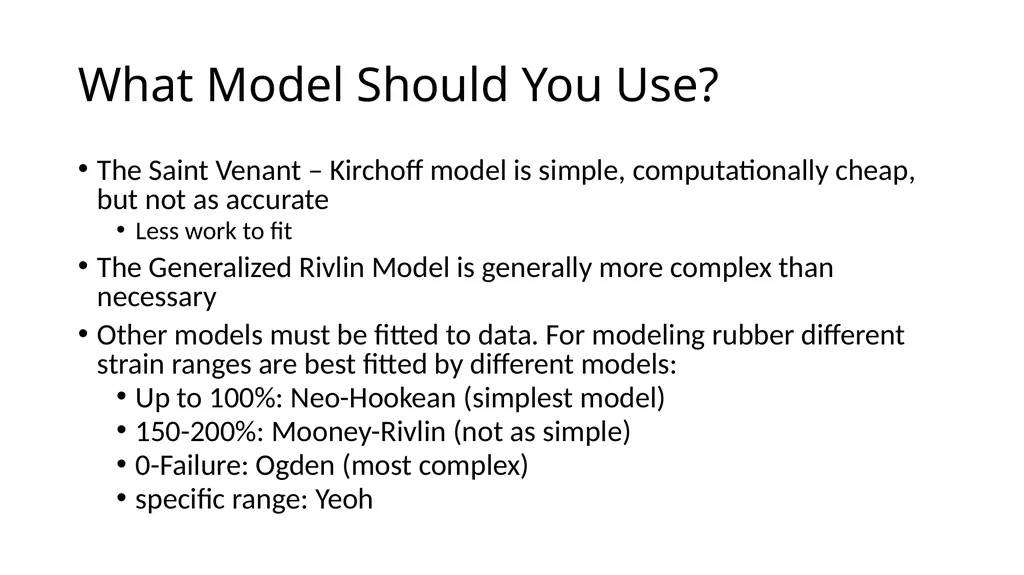
slide16. What Model Should You Use? The Saint Venant – Kirchoff model is simple, computationally cheap, but not as accurate
Less work to fit
The Generalized Rivlin Model is generally more complex than necessary
Other models must be fitted to data. For modeling rubber different strain ranges are best fitted by different models:
Up to 100%: Neo-Hookean (simplest model)
150-200%: Mooney-Rivlin (not as simple)
0-Failure: Ogden (most complex)
specific range: Yeoh<br>
slide2. Review of Elastic Materials<br>
slide3. Strain Tensor<br>
slide4. Lamé Parameters<br>
slide5. Deformation Gradient<br>
slide6. Deformation Gradient Examples<br>
slide7. Greene Strain Tensor<br>
slide8. Saint Venant – Kirchoff Model Figure from Fraldi et al.<br>
slide9. Volume Change & Strain Energy Density Function<br>
slide10. Neo-Hookean Model<br>
slide11. Mooney-Rivlin Model<br>
slide12. Polynomial or Generalized Rivlin Model<br>
slide13. Ogden Model Ogden model fitted to data from pig skin, From Dwivedi et al.<br>
slide14. Yeoh Model<br>
slide15. Example of Using the energy density function in a model<br>
slide16. What Model Should You Use? The Saint Venant – Kirchoff model is simple, computationally cheap, but not as accurate
Less work to fit
The Generalized Rivlin Model is generally more complex than necessary
Other models must be fitted to data. For modeling rubber different strain ranges are best fitted by different models:
Up to 100%: Neo-Hookean (simplest model)
150-200%: Mooney-Rivlin (not as simple)
0-Failure: Ogden (most complex)
specific range: Yeoh<br>