Modern Slavery Training Presentation name date What is modern slavery? The Modern Slavery Act Your responsibilities Our companys anti-slavery and human trafficking policy Learning Objectives a catch-all term to describe human
"Modern Slavery Training Presentation [name] [date]" is the property of its rightful owner. Permission is granted to
download and print the materials on this website for personal, non-commercial use only, and to display it
on your personal computer provided you do not modify the materials and that you retain all copyright
notices contained in the materials. By downloading content from our website, you accept the terms of this
agreement.
Presentation Transcript
01
Modern Slavery Training Presentation [name] [date]<br>
02
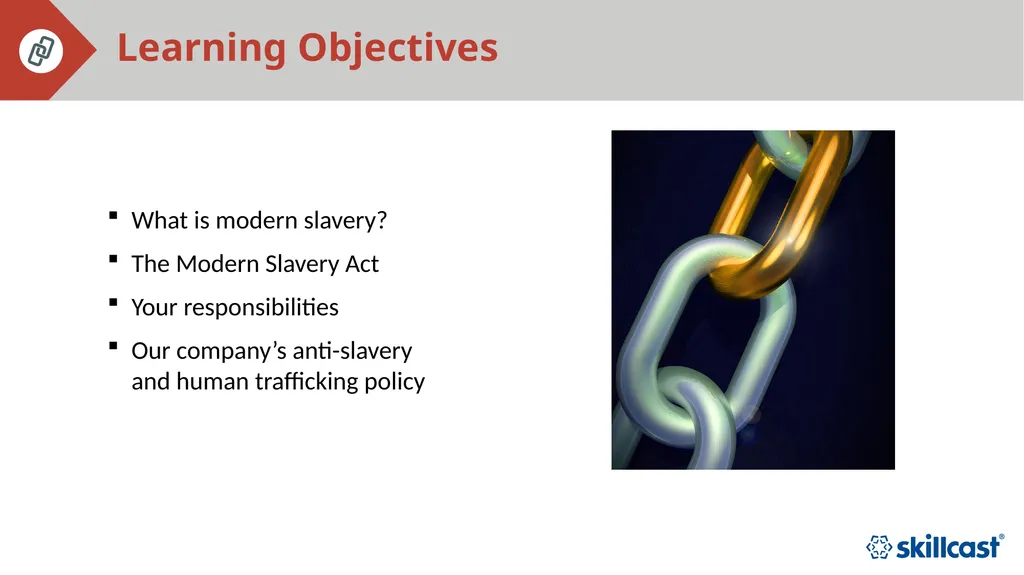
What is modern slavery?
The Modern Slavery Act
Your responsibilities
Our company’s anti-slavery and human trafficking policy Learning Objectives<br>
03
“…a catch-all term to describe human trafficking, forced labour, debt bondage, sex trafficking, forced marriage and other slave-like exploitation…” - World Economic Forum What is modern slavery?<br>
04
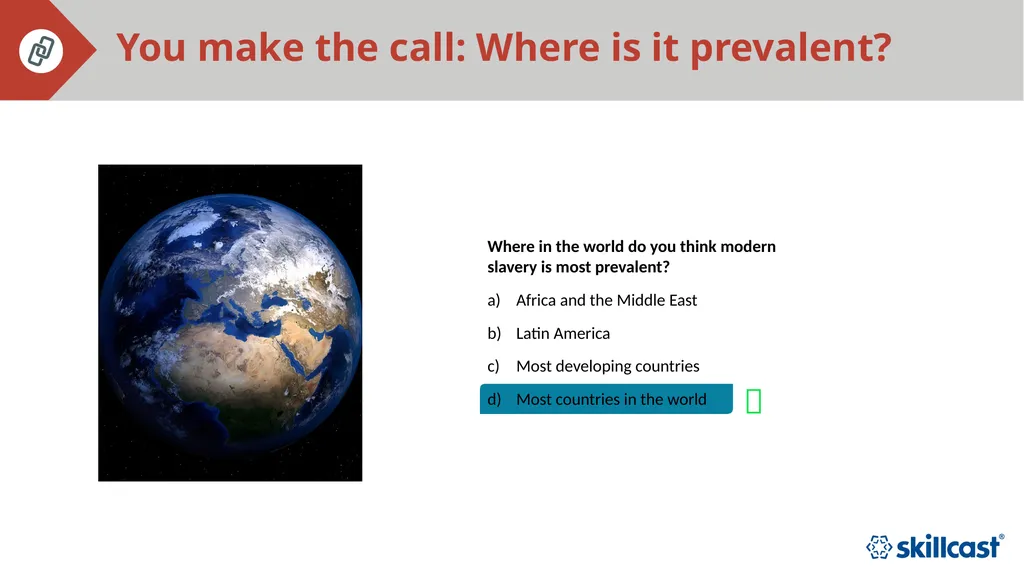
Where in the world do you think modern slavery is most prevalent?
Africa and the Middle East
Latin America
Most developing countries
Most countries in the world You make the call: Where is it prevalent?<br>
05
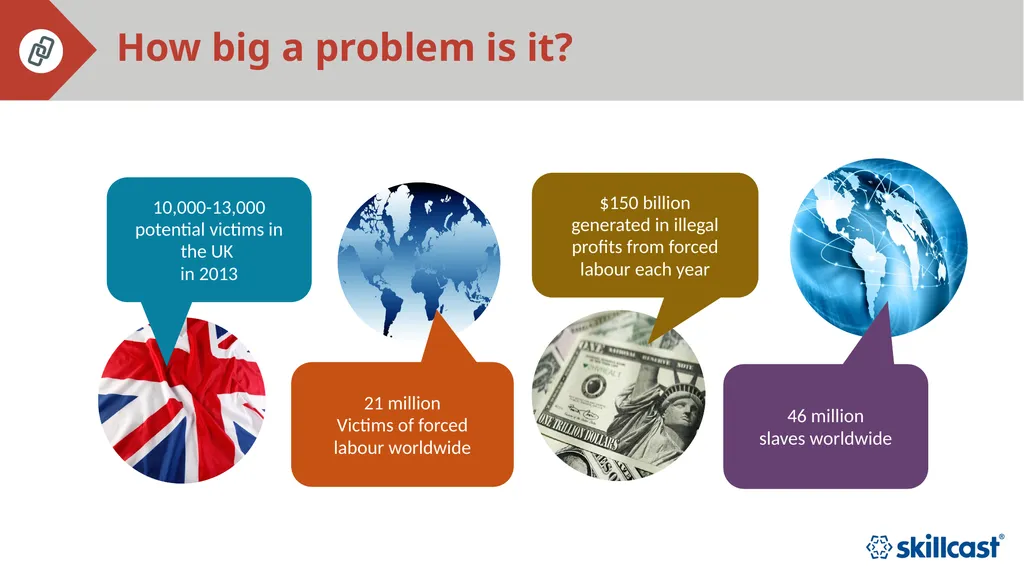
10,000-13,000
potential victims in the UK
in 2013 $150 billion
generated in illegal profits from forced labour each year 21 million
Victims of forced labour worldwide 46 million
slaves worldwide How big a problem is it?<br>
06
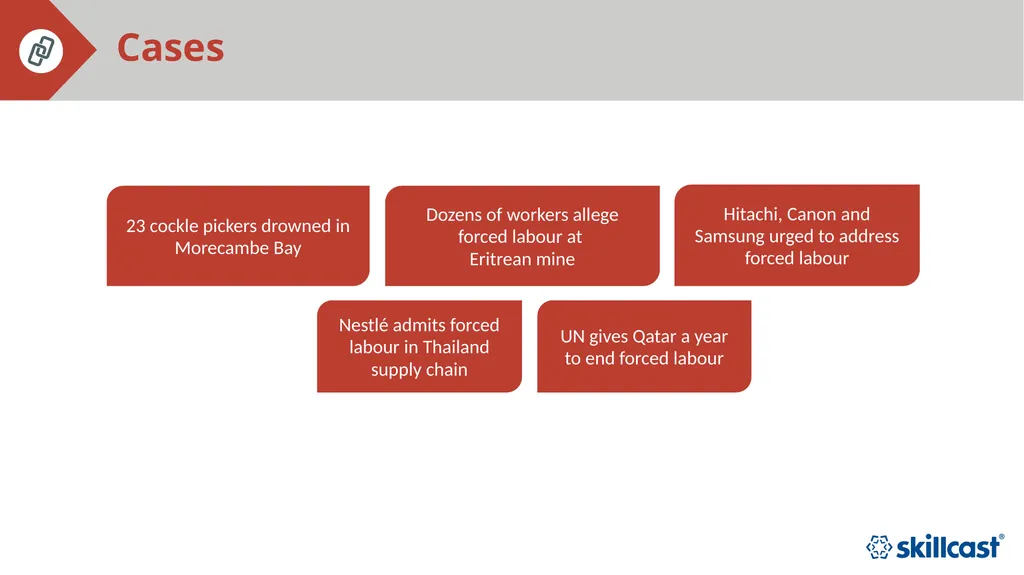
23 cockle pickers drowned in Morecambe Bay Dozens of workers allege forced labour at
Eritrean mine Hitachi, Canon and Samsung urged to address forced labour Nestlé admits forced labour in Thailand supply chain UN gives Qatar a year to end forced labour Cases<br>
07
Slavery is a criminal offence
Up to life imprisonment Penalties<br>
08
Section 54
Our Company has a legal duty to publish:
The steps taken to ensure slavery and human trafficking is not taking place in any of our supply chains or in any part of our business The Modern Slavery Act 2015<br>
09
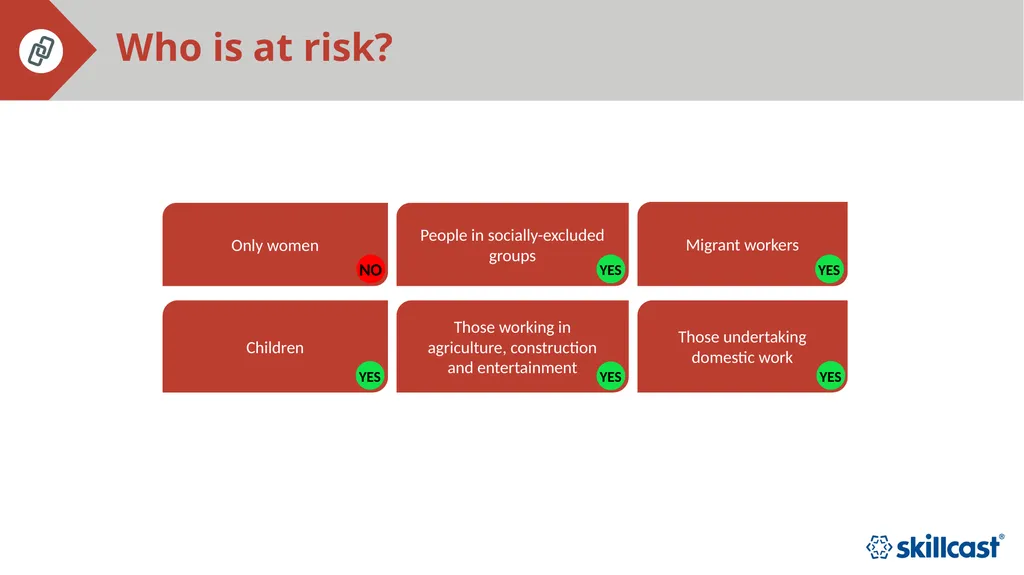
Only women People in socially-excluded groups Migrant workers Children Those working in agriculture, construction and entertainment Those undertaking domestic work YES YES YES NO YES YES Who is at risk?<br>
10
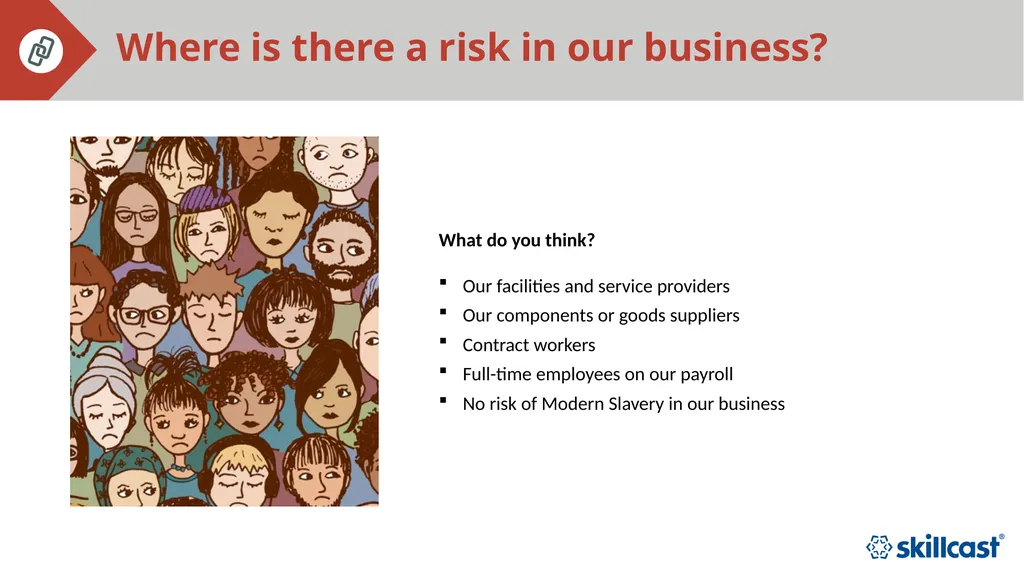
What do you think?
Our facilities and service providers
Our components or goods suppliers
Contract workers
Full-time employees on our payroll
No risk of Modern Slavery in our business Where is there a risk in our business?<br>
11
The anti-immigration sentiment across Europe is a gift to traffickers. Migrant workers will stay under the radar, making them more vulnerable to exploitation This doesn’t just happen on the other side of the world. It’s happening right now in Paris, London and every other capital city. To cleaners, security guards, restaurant and hotel workers. We need to wake up Migrants without the right to remain are hardly likely to complain about unpaid wages and poor treatment Opinion: Increased risk?<br>
12
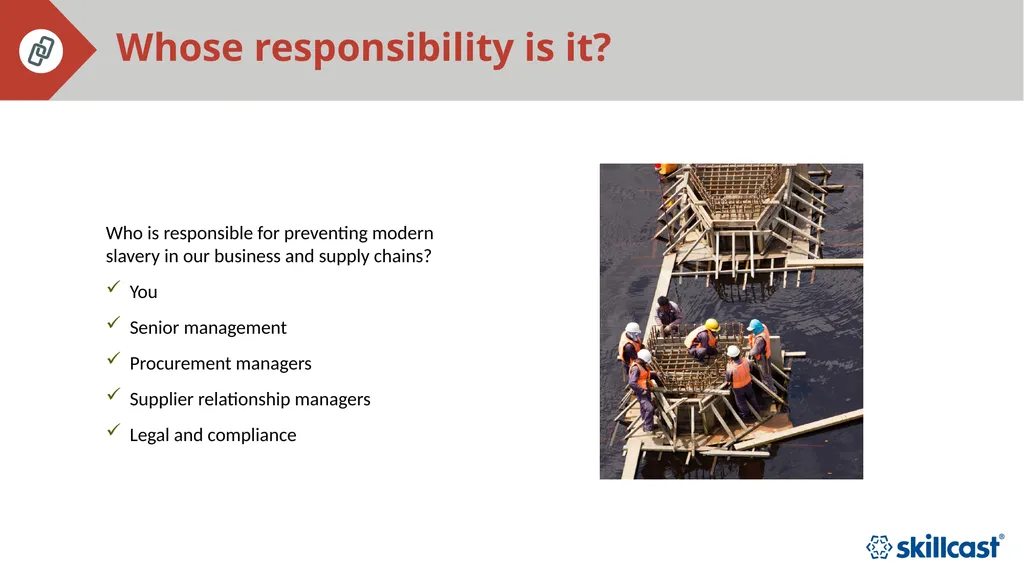
Who is responsible for preventing modern slavery in our business and supply chains?
You
Senior management
Procurement managers
Supplier relationship managers
Legal and compliance Whose responsibility is it?<br>
13
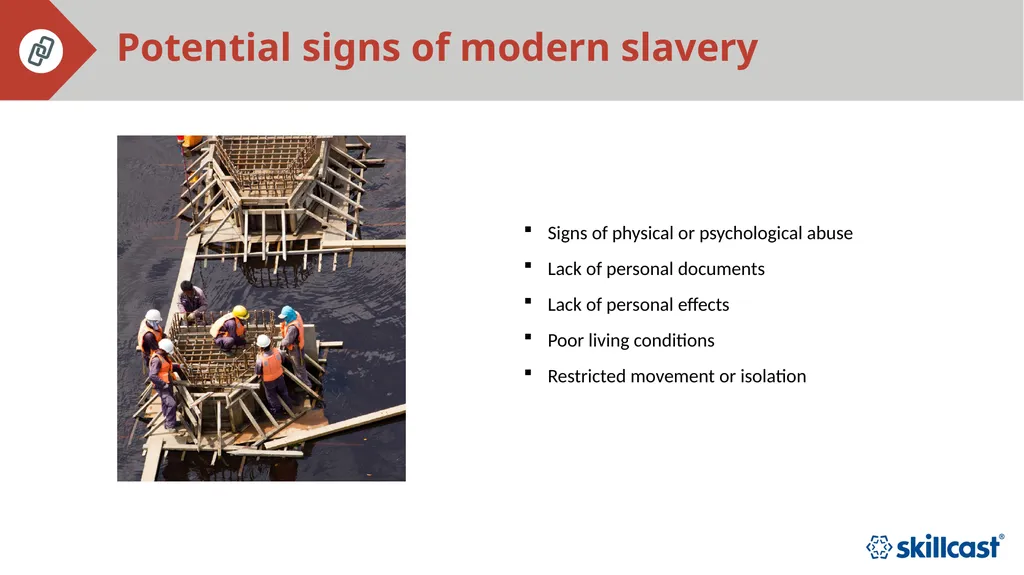
Signs of physical or psychological abuse
Lack of personal documents
Lack of personal effects
Poor living conditions
Restricted movement or isolation Potential signs of modern slavery<br>
14
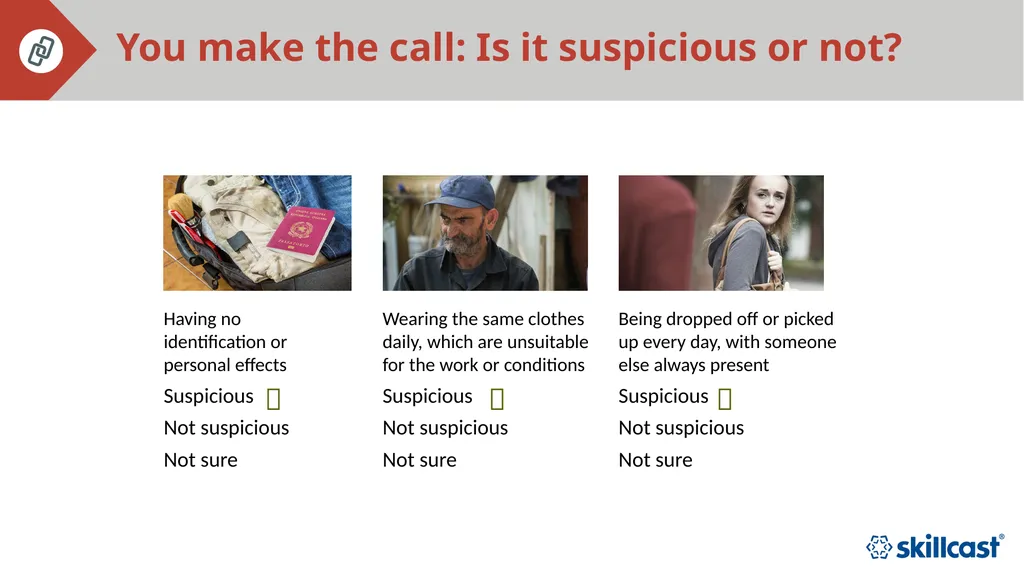
Having no identification or personal effects
Suspicious
Not suspicious
Not sure Wearing the same clothes daily, which are unsuitable for the work or conditions
Suspicious
Not suspicious
Not sure Being dropped off or picked up every day, with someone else always present
Suspicious
Not suspicious
Not sure You make the call: Is it suspicious or not? <br>
15
Speak to the worker about their rights
Encourage the worker to report it to a newspaper
Find out who their minder is and report it to the police
Report your suspicion to Legal or Compliance
Ignore it – there’s nothing you can do That’s suspicious. It doesn’t feel right to me. What should you do?<br>
16
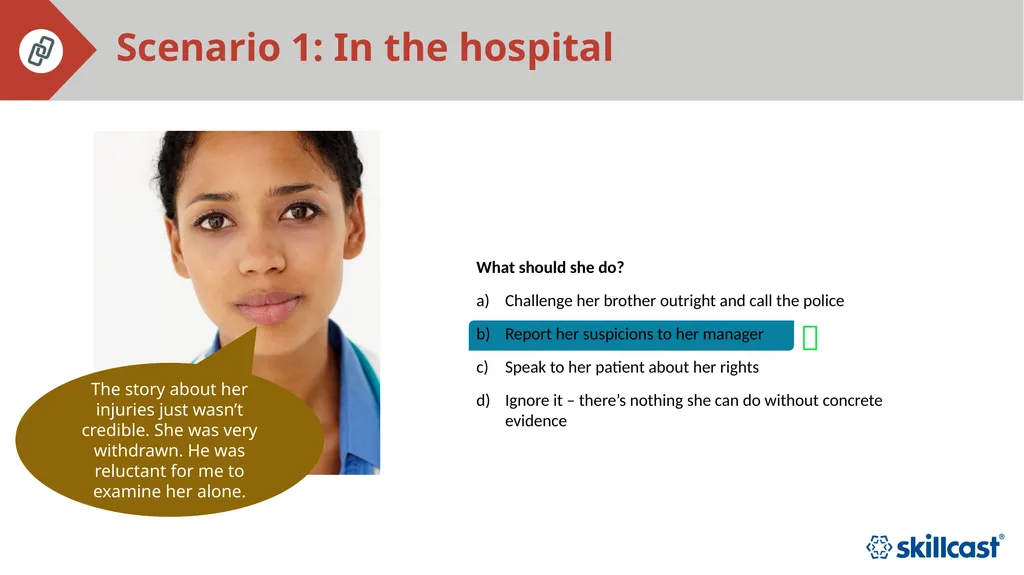
What should she do?
Challenge her brother outright and call the police
Report her suspicions to her manager
Speak to her patient about her rights
Ignore it – there’s nothing she can do without concrete evidence The story about her injuries just wasn’t credible. She was very withdrawn. He was reluctant for me to examine her alone. Scenario 1: In the hospital<br>
17
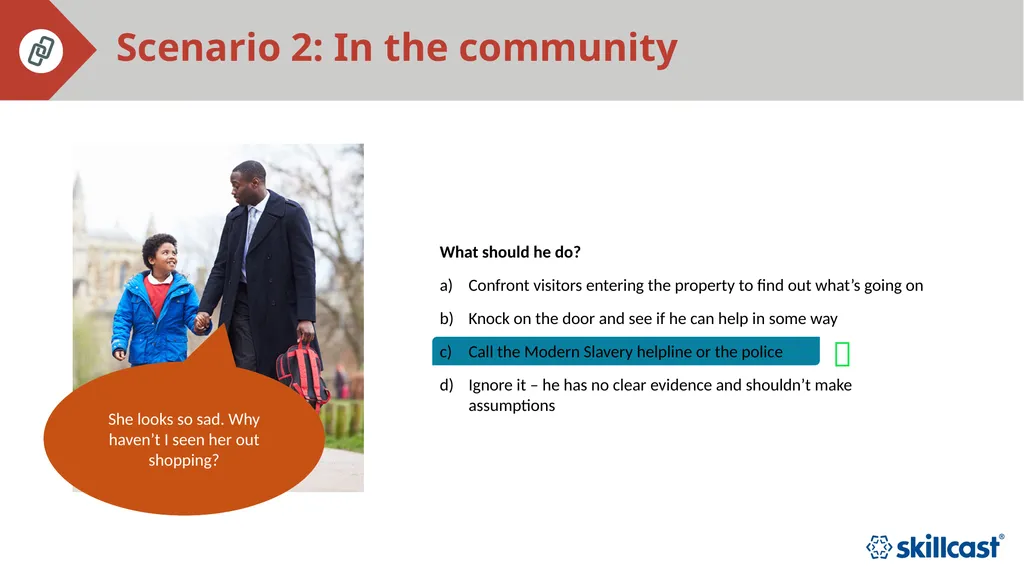
What should he do?
Confront visitors entering the property to find out what’s going on
Knock on the door and see if he can help in some way
Call the Modern Slavery helpline or the police
Ignore it – he has no clear evidence and shouldn’t make assumptions She looks so sad. Why haven’t I seen her out shopping? Scenario 2: In the community<br>
18
Providing information and training – to raise awareness
Identifying parts of our business and supply chain where there is a risk of slavery or human trafficking
Implementing systems and controls to manage the risks
Conducting due diligence in relation to slavery and human trafficking in our business and supply chains
Assessing our effectiveness in preventing slavery and human trafficking in our business and supply chains, using performance indicators
Requiring everyone to read and implement our Anti-Slavery and Human Trafficking Policy Our Anti-Slavery & Human Trafficking Policy<br>
19
Read our Company's Anti-Slavery and Human Trafficking Policy – make sure you understand our rules and know what is expected of you
Be vigilant - watch out for signs of modern slavery
Report any issues or concerns immediately to your manager or Legal/Compliance Do<br>
20
Confront perpetrators of slavery or trafficking – they are dangerous criminals and should not be approached
Try to gather evidence – this may tip off the perpetrator and put the victims at greater risk
Wait for someone else to report it – take responsibility yourself
Do anything to compromise your own or others’ safety Don’t<br>
21
Questions, comments or concerns?<br>
22
Next steps Call _____ on _____ if you need information or guidance
Call _____ on _____ if you need to raise concerns
Access self-study courses on our e-learning portal for further training [or optionally – Complete your mandatory training on our corporate e-learning portal]<br>