04
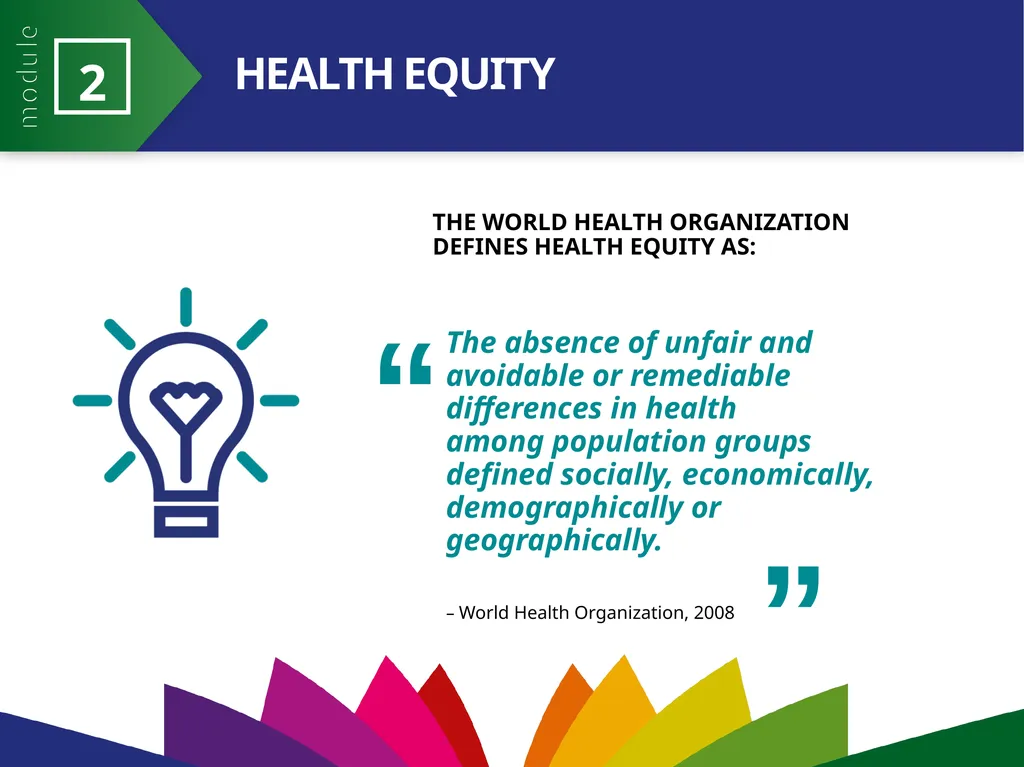
Health equity The World Health Organization �defines health equity as:<br>
05
Health inequities are avoidable – they are created by structural �and political processes and decisions that affect the everyday �living conditions of individuals and populations. The social inequities in health arise because of inequities in the conditions of daily life and the fundamental drivers that give rise �to them: inequities in power, money and resources. THE SOCIAL DETERMINANTS OF HEALTH AND HEALTH INEQUITIES<br>
06
THE SOCIAL DETERMINANTS OF HEALTH AND HEALTH INEQUITIES Action on health inequities requires action across all the social determinants of health: the range of interacting factors that �shape health and well-being. The Social Determinants of Health (SDH/SDOH) shape health inequities. The SDH are conditions in which people are born, grow, work, live, and age, and the wider set of forces and systems shaping the conditions of daily life (the latter also referred to as the social determinants of health equity/or the structural determinants of health). These forces and systems include economic policies and systems, development agendas, social norms, social policies and political systems.<br>
07
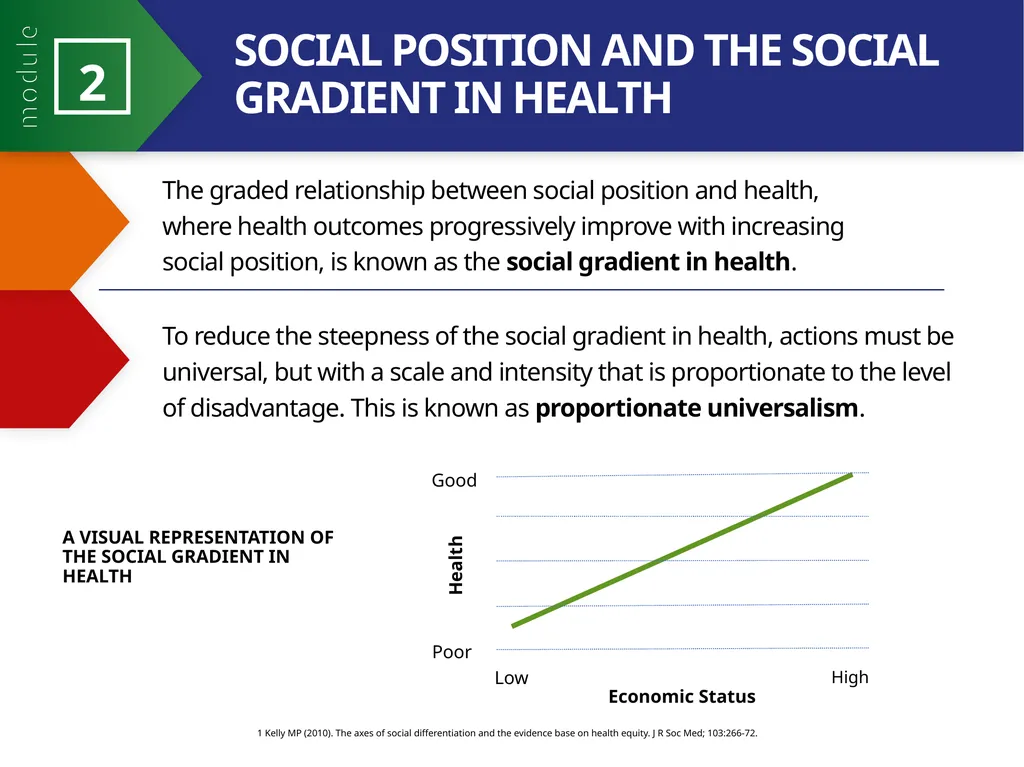
The graded relationship between social position and health, �where health outcomes progressively improve with increasing �social position, is known as the social gradient in health. Social position and the social gradient in health To reduce the steepness of the social gradient in health, actions must be universal, but with a scale and intensity that is proportionate to the level of disadvantage. This is known as proportionate universalism.<br>
08
Inequities in health accumulate throughout life Source: World Health Organization. Review of social determinants and the health divide in �the WHO European Region: final report. Copenhagen: World Health Organization, 2013.<br>
09
Health InEQuality MONITORING Health equity is considered as a normative, aspirational concept, like the ‘right to health’. It is measured through the measurement of health�inequalities – observable differences between subgroups within a population. Health inequalities can thus be measured and monitored and serve as an indirect means of evaluating health inequity. Health inequality monitoring is undertaken to provide information for policies, programmes and practices to reduce health inequity.<br>
10
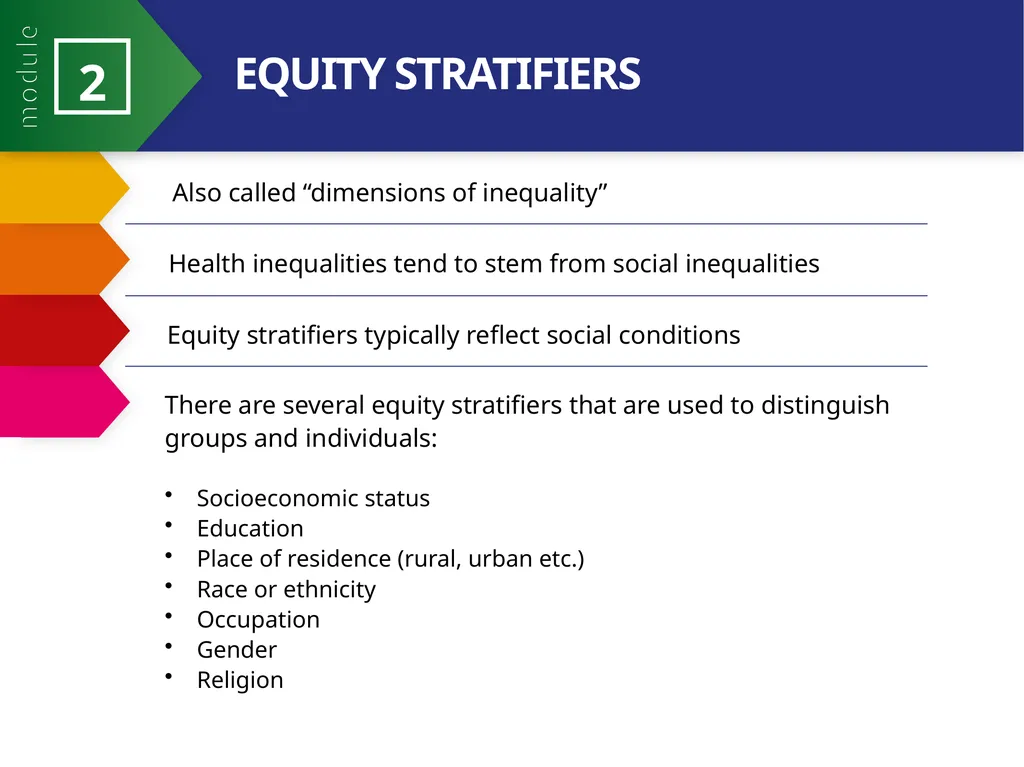
EQUITY STRATIFIERS Also called “dimensions of inequality” Health inequalities tend to stem from social inequalities Equity stratifiers typically reflect social conditions There are several equity stratifiers that are used to distinguish �groups and individuals:
Socioeconomic status
Education
Place of residence (rural, urban etc.)
Race or ethnicity
Occupation
Gender
Religion<br>
11
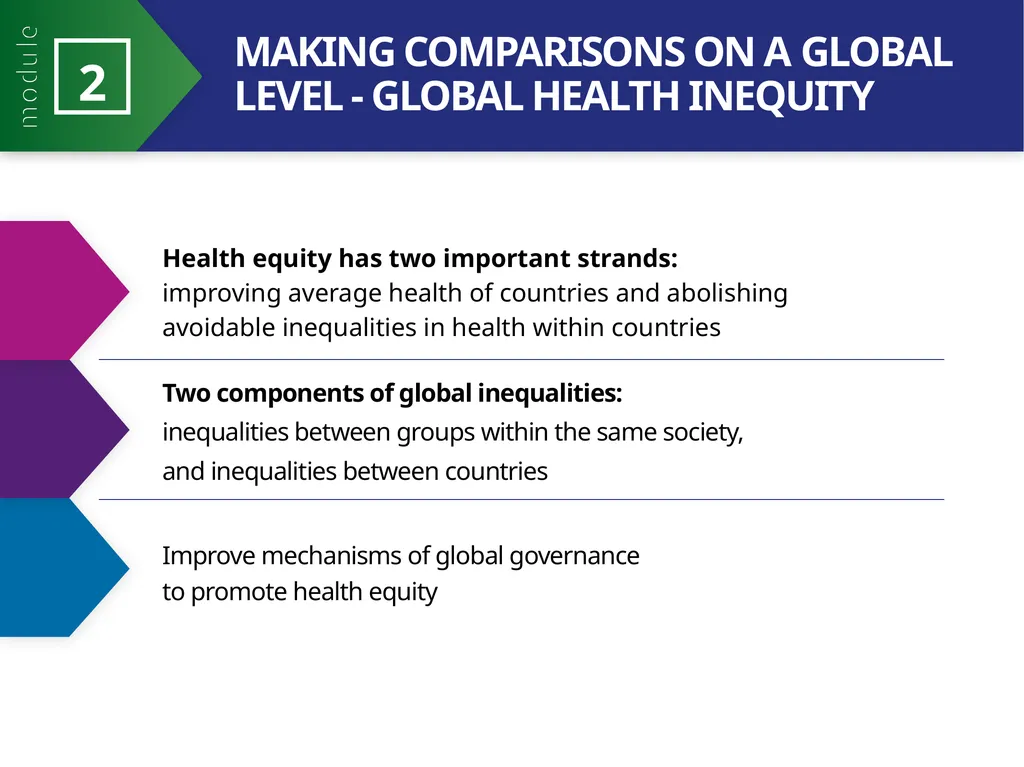
MAKING COMPARISONS ON A global level - GLOBAL HEALTH INEQUITY Health equity has two important strands:
improving average health of countries and abolishing
avoidable inequalities in health within countries Two components of global inequalities:
inequalities between groups within the same society,
and inequalities between countries Improve mechanisms of global governance �to promote health equity<br>
12
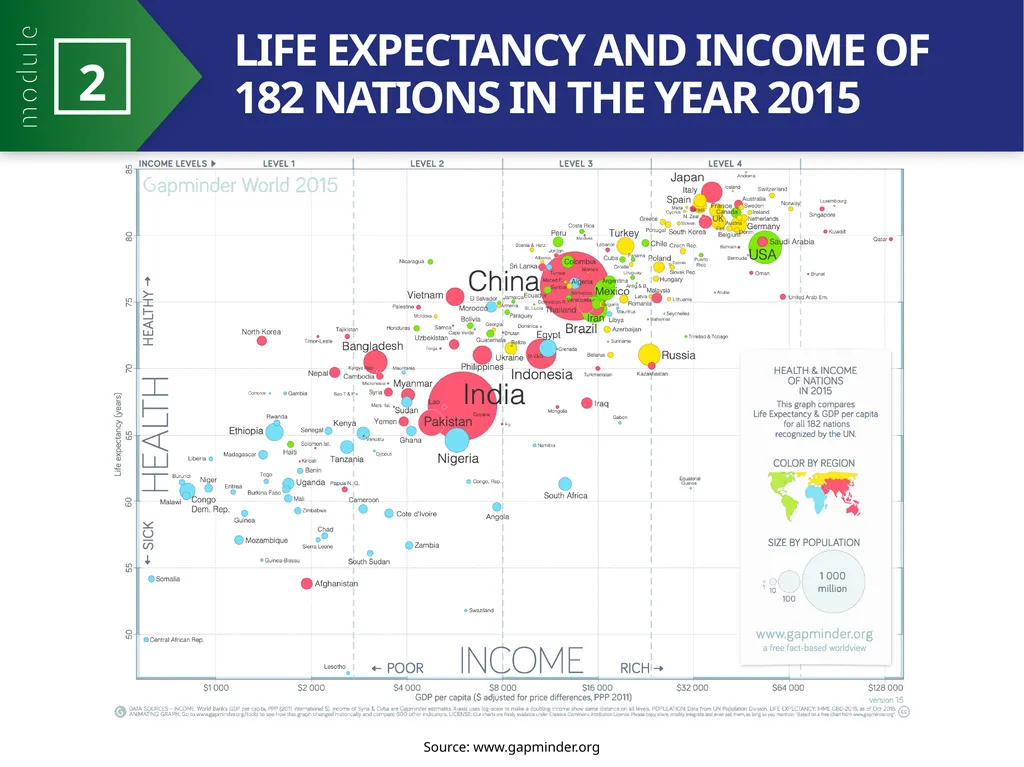
BETWEEN-COUNTRY HEALTH INEQUALITIES Between-country inequality shows variability between countries based on national averages. For example, comparing countries on the basis of national infant mortality rates Poor countries tend to have worse health outcomes �compared to rich countries Levels of inequality also vary considerably even among countries with similar levels of per capita income, as we will see on the next slide<br>
13
Life Expectancy and Income of 182 nations in the year 2015 Source: www.gapminder.org<br>
14
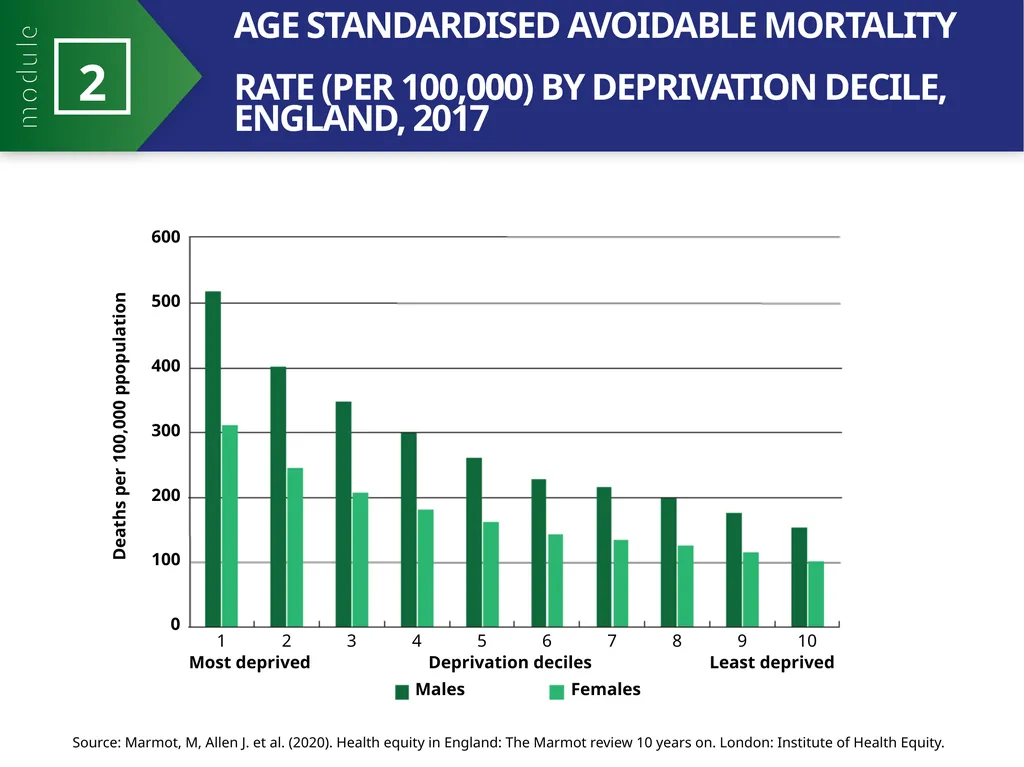
WITHIN-COUNTRY HEALTH INEQUALITIES Within-country inequality exists between subgroups within a country, based on disaggregated data and summary measures of inequality For example, comparing the difference between infant mortality rates among urban and rural subgroups<br>
15
AGE STANDARDISED AVOIDABLE MORTALITY �RATE (PER 100,000) BY DEPRIVATION DECILE, �ENGLAND, 2017 Source: Marmot, M, Allen J. et al. (2020). Health equity in England: The Marmot review 10 years on. London: Institute of Health Equity.<br>
16
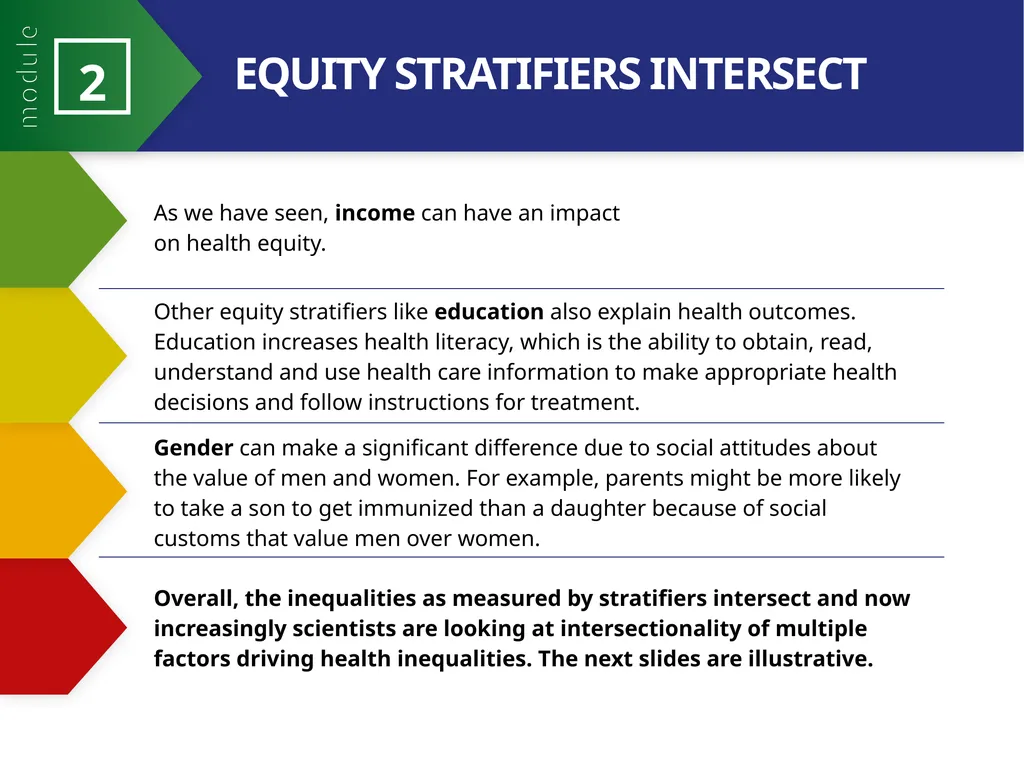
Equity stratifiers INTERSECT As we have seen, income can have an impact �on health equity. Other equity stratifiers like education also explain health outcomes. Education increases health literacy, which is the ability to obtain, read, understand and use health care information to make appropriate health decisions and follow instructions for treatment. Gender can make a significant difference due to social attitudes about the value of men and women. For example, parents might be more likely to take a son to get immunized than a daughter because of social customs that value men over women. Overall, the inequalities as measured by stratifiers intersect and now increasingly scientists are looking at intersectionality of multiple factors driving health inequalities. The next slides are illustrative.<br>
17
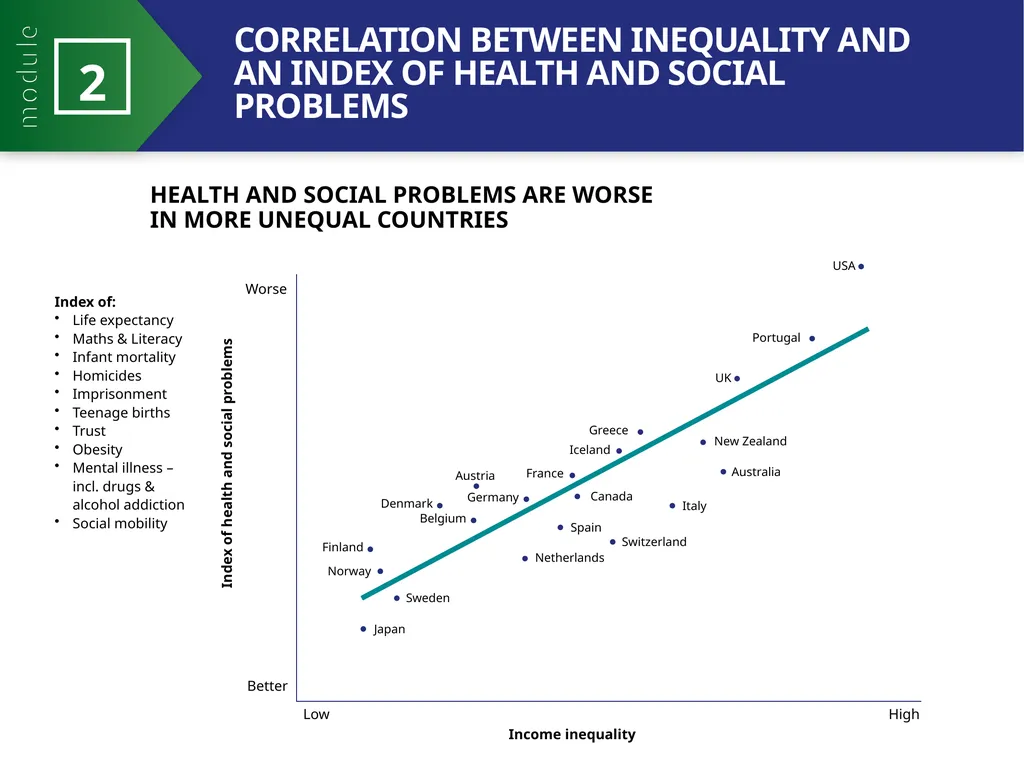
CORRELATION BETWEEN INEQUalITY AND AN INDEX OF HEALTH AND SOCIAL PROBLEMS Health and social problems are worse �in more unequal countries<br>
18
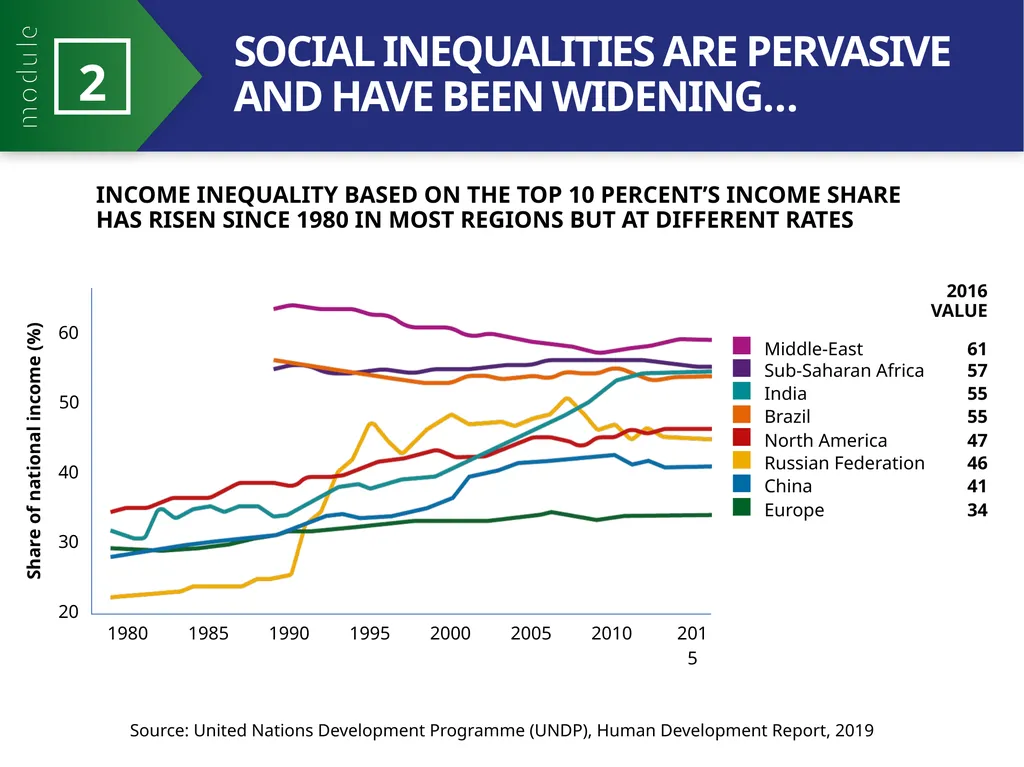
Social INEQUALITIES ARE PERVASIVE AND HAVE BEEN WIDENING… Source: United Nations Development Programme (UNDP), Human Development Report, 2019 Income inequality based on the top 10 percent’s income share �has risen since 1980 in most regions but at different rates<br>
19
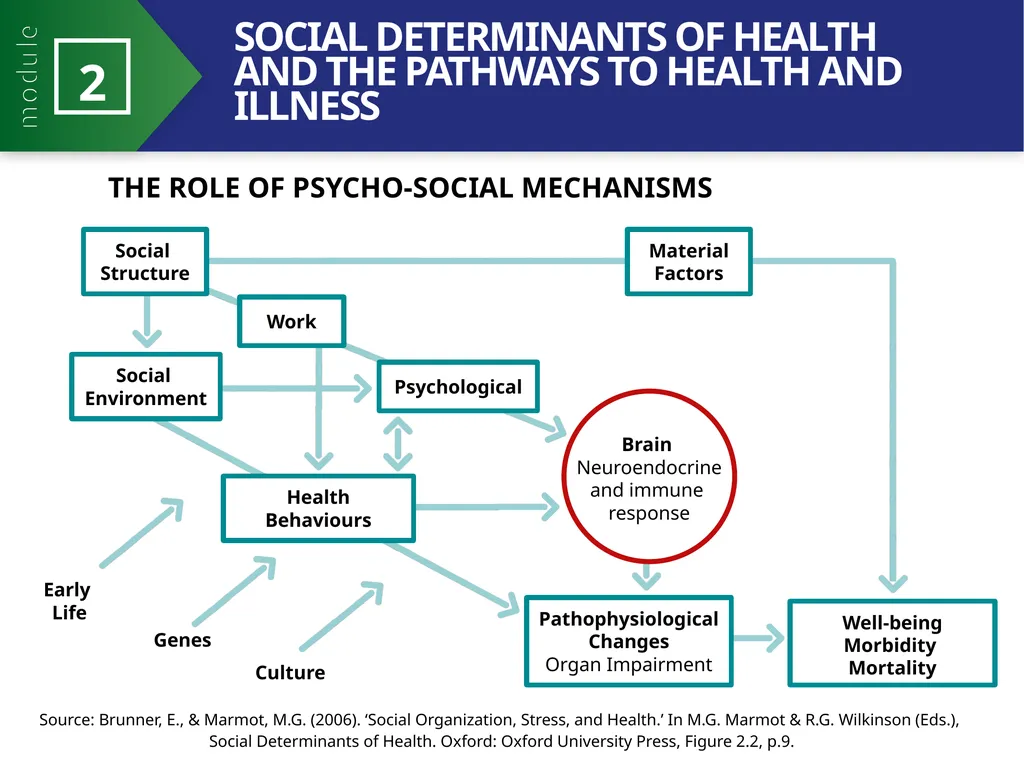
SOCIAL DETERMINANTS OF HEALTH AND THE PATHWAYS TO HEALTH AND ILLNESS The role of psycho-social mechanisms Source: Brunner, E., & Marmot, M.G. (2006). ‘Social Organization, Stress, and Health.’ In M.G. Marmot & R.G. Wilkinson (Eds.), �Social Determinants of Health. Oxford: Oxford University Press, Figure 2.2, p.9.<br>
20
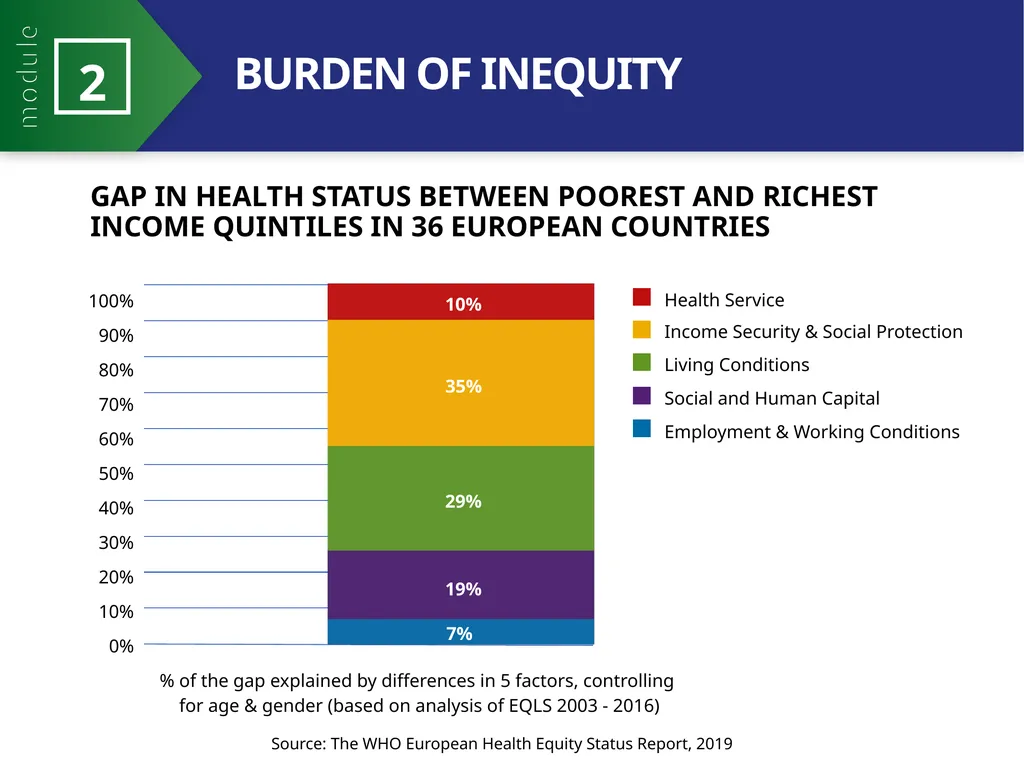
BURDEN OF INEQUITY Gap in health status between poorest and richest �income quintiles in 36 European countries Source: The WHO European Health Equity Status Report, 2019<br>
21
RISING INEQUALITY IS NOT INEVITABLE National policies and institutions �do matter.<br>
22
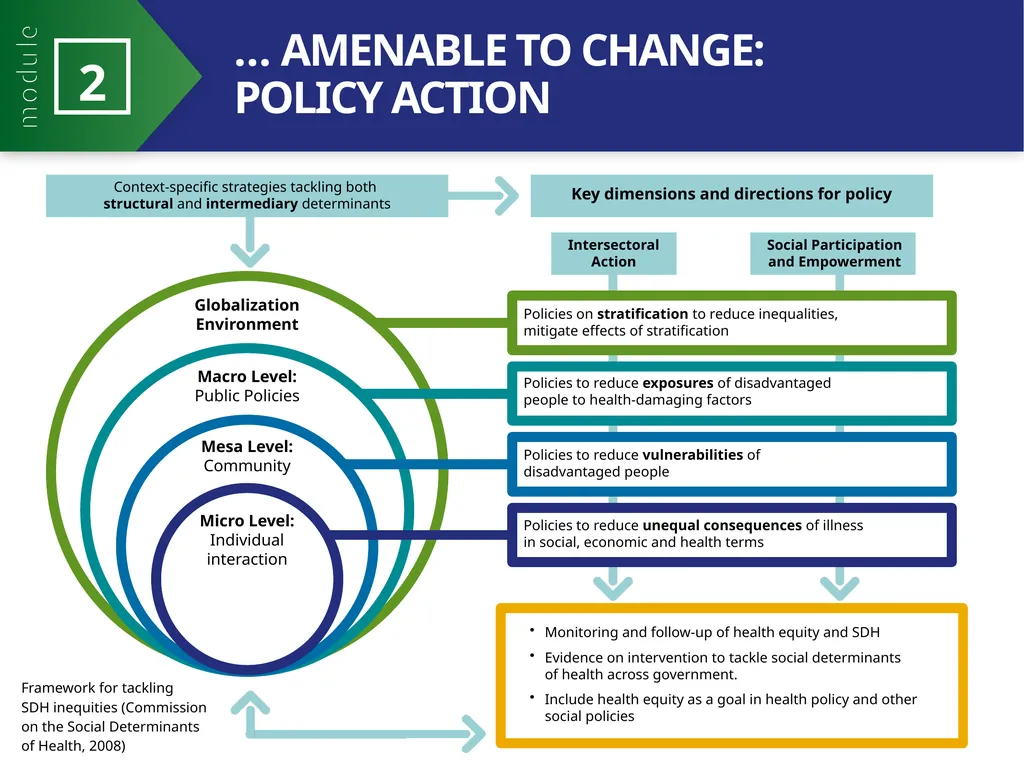
… AMENABLE TO CHANGE:�POLICY ACTION<br>
23
End of
Module 2 Part 2
Please continue �to Module 3<br>