
Module 2: What Workers Need to Know about










Description: Module 2: What Workers Need to Know about Nanomaterial Toxicology Introduction to Nanomaterials and Occupational Health Kristen M. Kulinowski, Ph.D. 8-Hour Training Course This material was produced under grant number SH-21008-10-60-F-48
Related Topics
Download Presentation
"Module 2: What Workers Need to Know about" is the property of its rightful owner. Permission is granted to download and print the materials on this website for personal, non-commercial use only, and to display it on your personal computer provided you do not modify the materials and that you retain all copyright notices contained in the materials. By downloading content from our website, you accept the terms of this agreement.
Presentation Transcript
slide1. Module 2: What Workers Need to Know about Nanomaterial Toxicology
Introduction to Nanomaterials and Occupational Health
Kristen M. Kulinowski, Ph.D. 8-Hour Training Course<br>
slide2. This material was produced under grant number SH-21008-10-60-F-48 from the Occupational Safety and Health Administration, U.S. Department of Labor. It does not necessarily reflect the views or policies of the U.S. Department of Labor, nor does mention of trade names, commercial products, or organizations imply endorsement by the U.S. Government.<br>
slide3. Eight-Hour Training Course<br>
slide4. Lesson Overview Purpose
To provide workers with information on the environmental, health and safety impacts of nanomaterials
Topics
Federal support for nanotechnology and nano- environmental, health and safety (EHS) impacts research
Tools for finding the most up-to-date information on nano-EHS impacts research
Significant findings from the nanoEHS literature<br>
slide5. Learning Objectives At the end of this module you should be able to
Find the latest research on the environmental, health and safety (EHS) impacts of nanomaterials using freely available web resources
Summarize some of the significant EHS research of the past few years
Articulate the significance of the EHS research to occupational safety<br>
slide6. Federal support for nanotechnology and nano-environmental, health and safety (EHS) impacts research Topic 1<br>
slide7. Federal Investment in Nanotechnology Research The National Nanotechnology Initiative (NNI) was created in 2001 to organize federal investments in nanotechnology research<br>
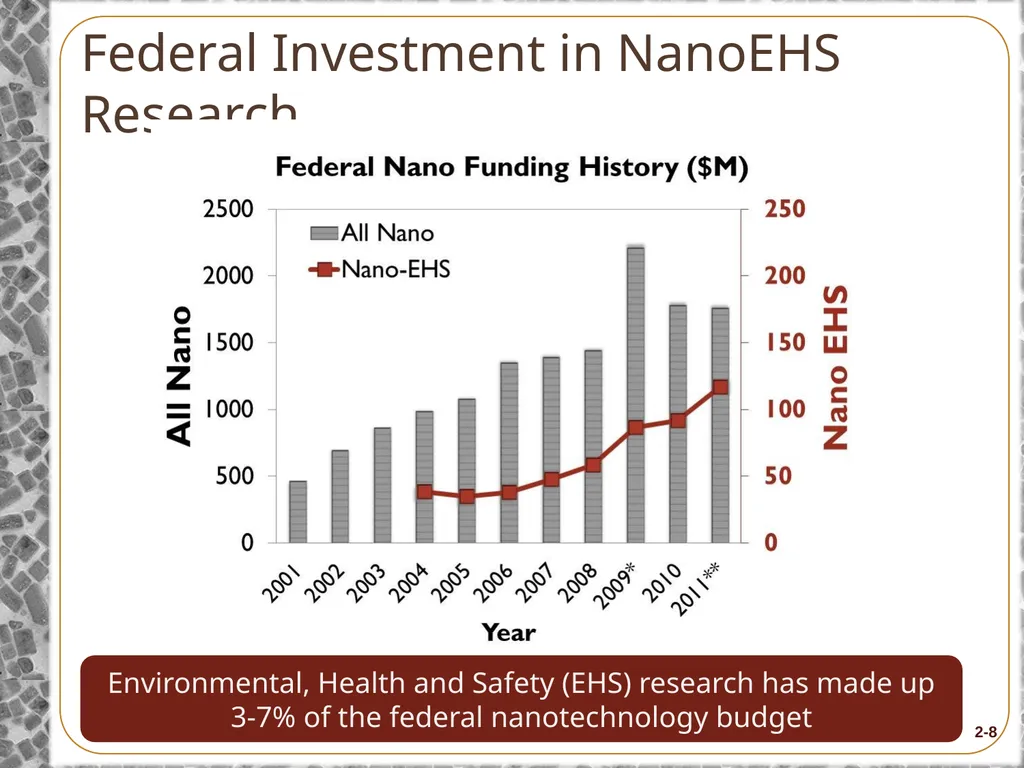
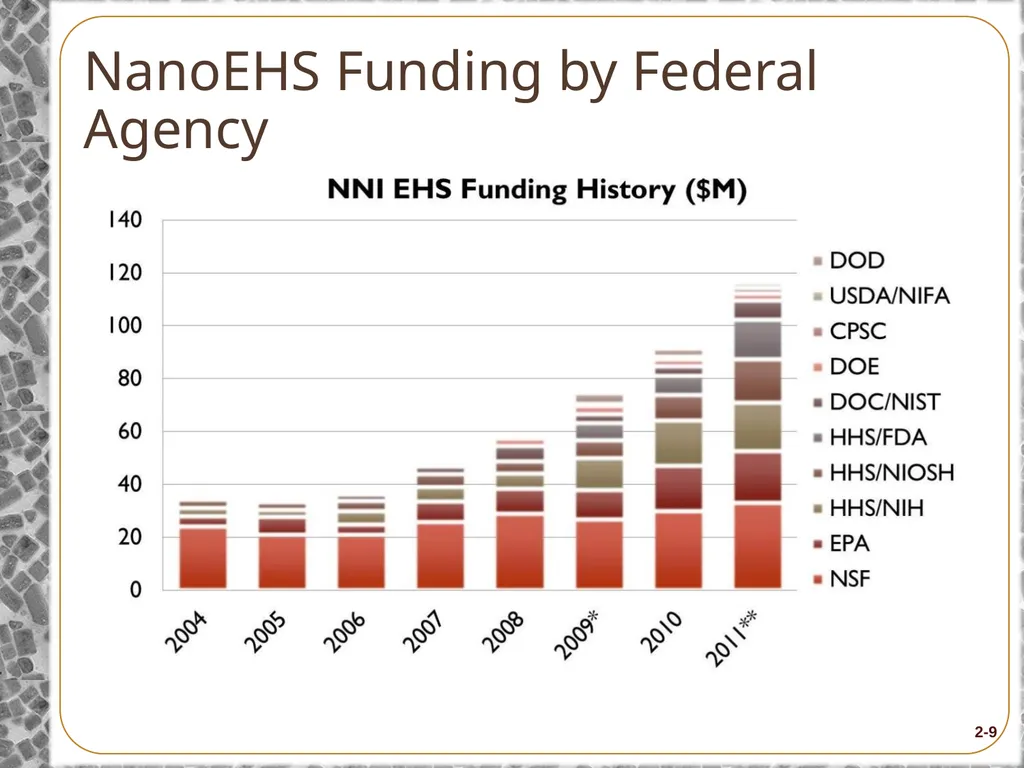
slide8. Federal Investment in NanoEHS Research Environmental, Health and Safety (EHS) research has made up 3-7% of the federal nanotechnology budget<br>
slide9. NanoEHS Funding by Federal Agency<br>
slide10. Tools for finding the most up-to-date information on nanoEHS impacts research Topic 2<br>
slide11. One-Stop Shop for NanoEHS Info http://icon.rice.edu<br>
slide12. Virtual Journal of NanoEHS Weekly updates
Over 5100 records
Rating system
9 tags applied to each entry Database of citations to peer-reviewed nanoEHS papers http://icon.rice.edu/virtualjournal.cfm [out of five]
“This paper makes a major contribution to the literature …”<br>
slide13. Do Your Own Analyses http://icon.rice.edu/report.cfm<br>
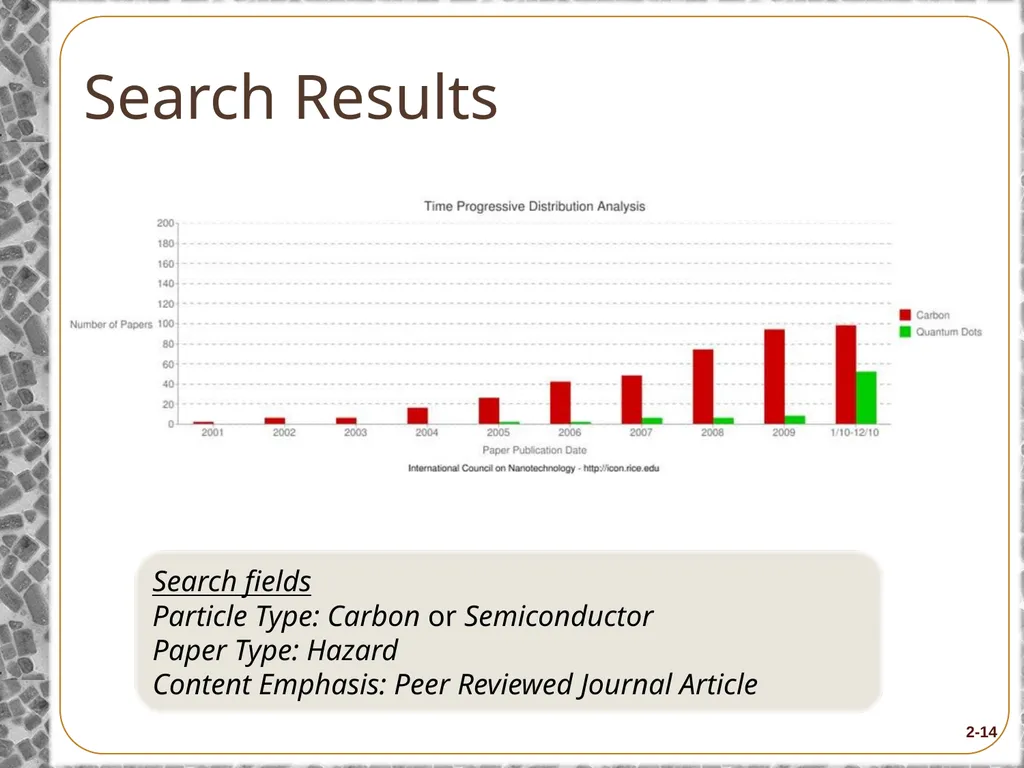
slide14. Search Results Search fields
Particle Type: Carbon or Semiconductor
Paper Type: Hazard
Content Emphasis: Peer Reviewed Journal Article<br>
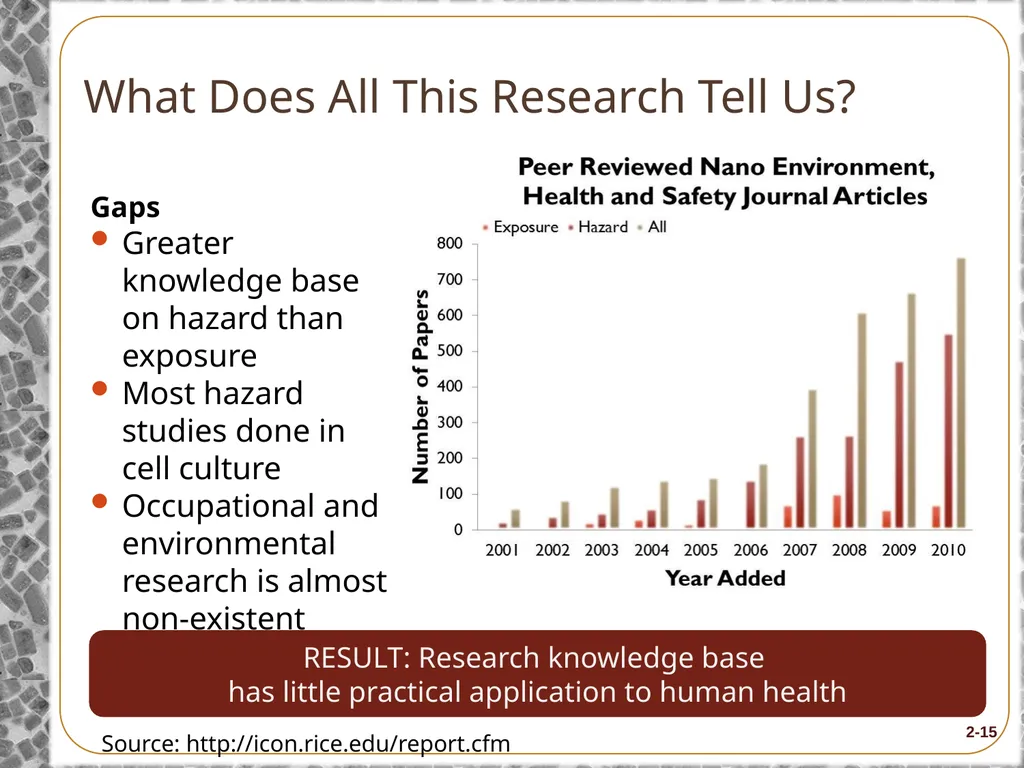
slide15. What Does All This Research Tell Us? Gaps
Greater knowledge base on hazard than exposure
Most hazard studies done in cell culture
Occupational and environmental research is almost non-existent Source: http://icon.rice.edu/report.cfm RESULT: Research knowledge base
has little practical application to human health<br>
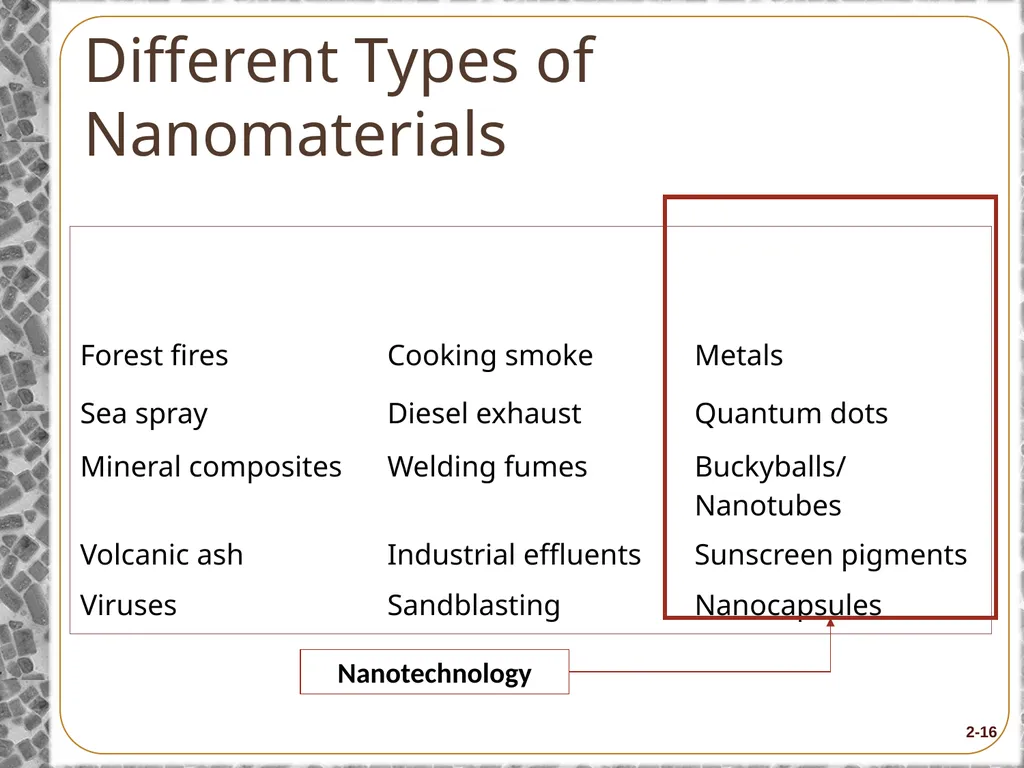
slide16. Different Types of Nanomaterials<br>
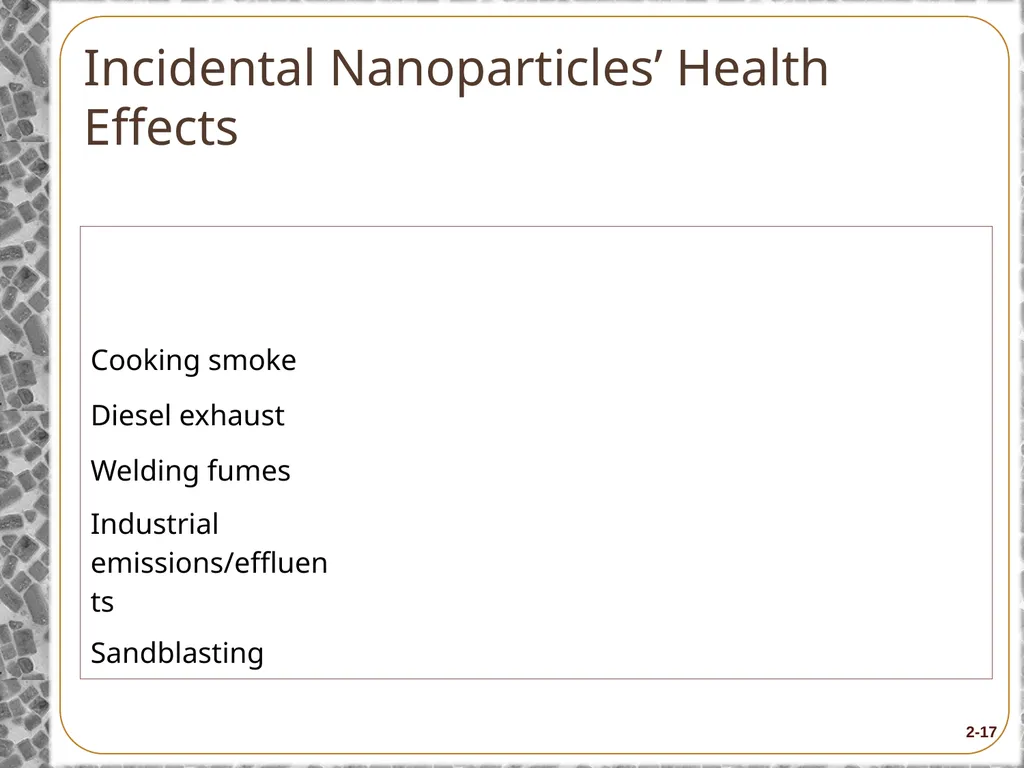
slide17. Incidental Nanoparticles’ Health Effects<br>
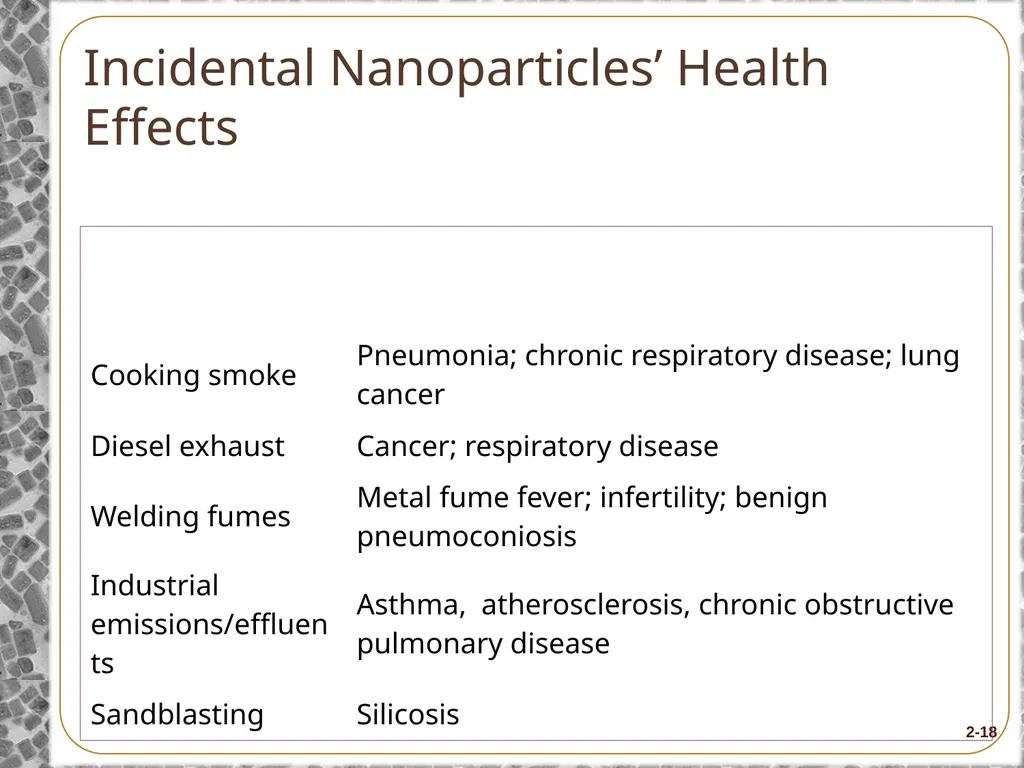
slide18. Incidental Nanoparticles’ Health Effects<br>
slide19. Significant findings from the nanoEHS literature Topic 3<br>
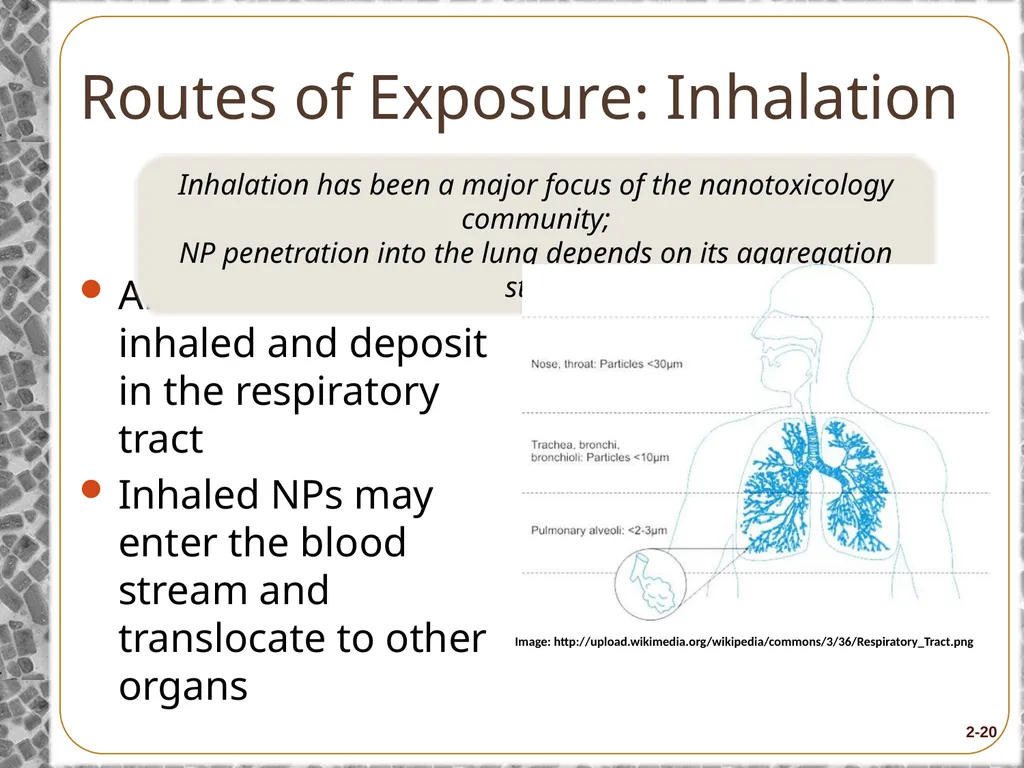
slide20. Routes of Exposure: Inhalation Airborne NPs can be inhaled and deposit in the respiratory tract
Inhaled NPs may enter the blood stream and translocate to other organs Inhalation has been a major focus of the nanotoxicology community;
NP penetration into the lung depends on its aggregation state Image: http://upload.wikimedia.org/wikipedia/commons/3/36/Respiratory_Tract.png<br>
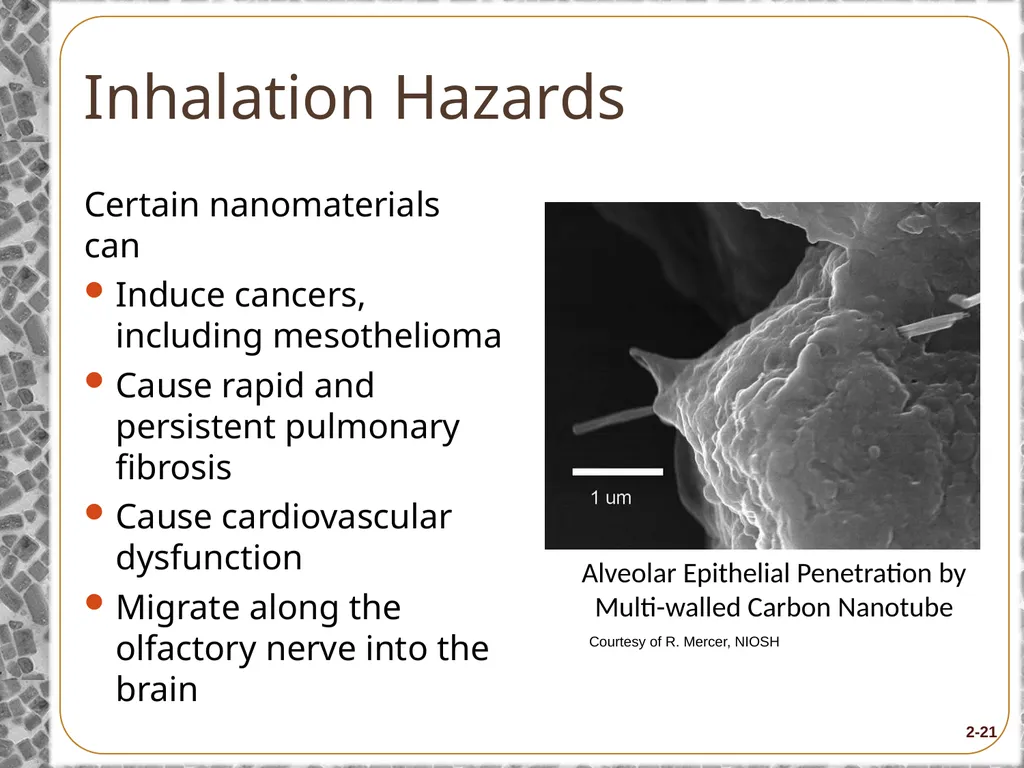
slide21. Inhalation Hazards Certain nanomaterials can
Induce cancers, including mesothelioma
Cause rapid and persistent pulmonary fibrosis
Cause cardiovascular dysfunction
Migrate along the olfactory nerve into the brain Courtesy of R. Mercer, NIOSH Alveolar Epithelial Penetration by Multi-walled Carbon Nanotube<br>
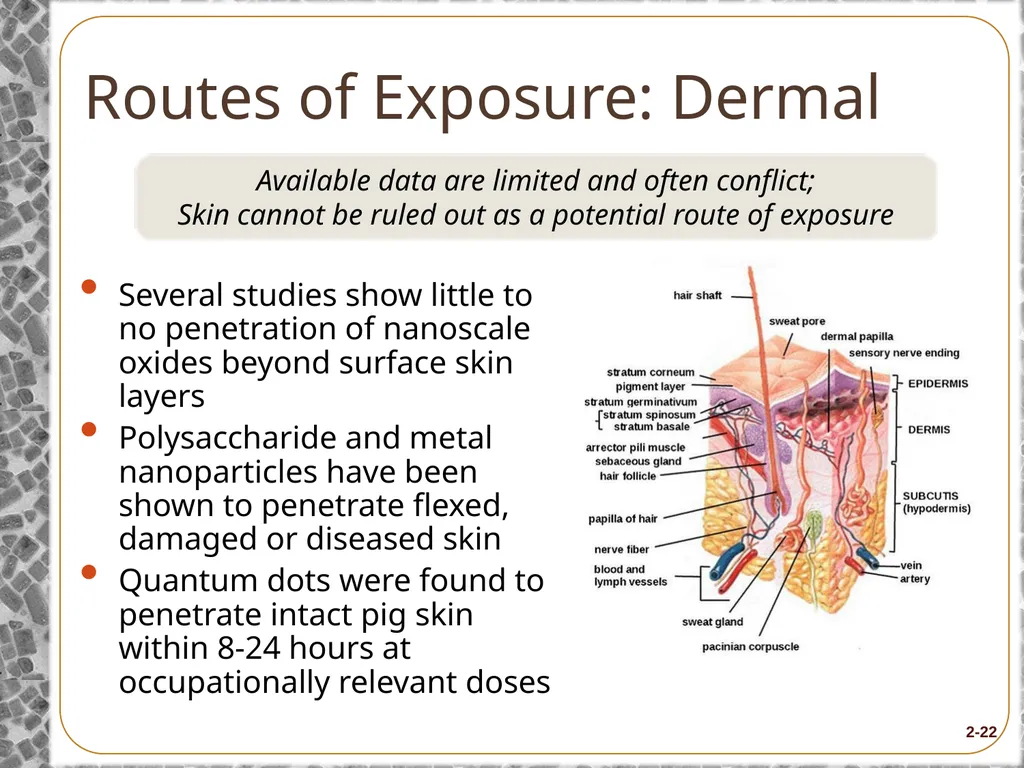
slide22. Routes of Exposure: Dermal Several studies show little to no penetration of nanoscale oxides beyond surface skin layers
Polysaccharide and metal nanoparticles have been shown to penetrate flexed, damaged or diseased skin
Quantum dots were found to penetrate intact pig skin within 8-24 hours at occupationally relevant doses Available data are limited and often conflict;
Skin cannot be ruled out as a potential route of exposure<br>
slide23. Dermal Hazards Various nanoparticles have been shown to
Inhibit cell proliferation (iron oxide, nanotubes, TiO2, silver)
Affect cell morphology (silver, nanotubes)
Initiate irritation response (quantum dots, nanotubes)
Damage cell membrane (fullerenes)
Induce DNA damage (cobalt chrome alloy)<br>
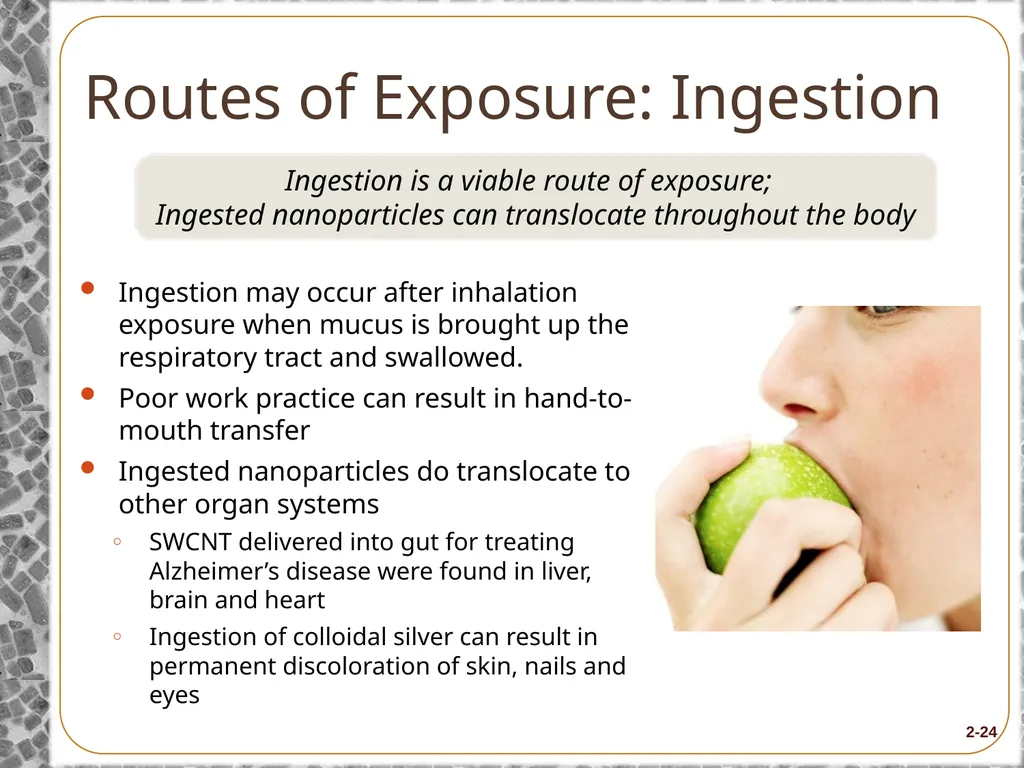
slide24. Routes of Exposure: Ingestion Ingestion may occur after inhalation exposure when mucus is brought up the respiratory tract and swallowed.
Poor work practice can result in hand-to-mouth transfer
Ingested nanoparticles do translocate to other organ systems
SWCNT delivered into gut for treating Alzheimer’s disease were found in liver, brain and heart
Ingestion of colloidal silver can result in permanent discoloration of skin, nails and eyes Ingestion is a viable route of exposure; Ingested nanoparticles can translocate throughout the body<br>
slide25. Ingestion Hazards Various nanoparticles have been shown to
Slightly damage liver (silver)
Trigger immune response in intestinal dendritic cells (TiO2 and SiO2)
Be cytotoxic to human intestinal cells (TiO2, SiO2 and ZnO)
Damage DNA of human intestinal cells (ZnO)
Be genotoxic to liver and lungs after oral adminstration (C60 and SWNT)<br>
slide26. Conclusions Much of the early nanoEHS research has focused on simple systems of limited relevance to human health (e.g., cytotoxicity)
Some nanoparticles can translocate throughout the body after exposure via inhalation, contact with skin or ingestion
Some nanoparticles can induce unwanted health effects in animals or cell cultures It makes sense to control exposure to those nanomaterials for which preliminary hazard data show unwanted health effects or hazards are unknown<br>
slide27. Learning Objectives At the end of this module you should be able to
Find the latest research on the environmental, health and safety (EHS) impacts of nanomaterials using freely available web resources
Summarize some of the significant EHS research of the past few years
Understand the significance of the EHS research to occupational safety<br>
slide28. Eight-Hour Training Course<br>
slide2. This material was produced under grant number SH-21008-10-60-F-48 from the Occupational Safety and Health Administration, U.S. Department of Labor. It does not necessarily reflect the views or policies of the U.S. Department of Labor, nor does mention of trade names, commercial products, or organizations imply endorsement by the U.S. Government.<br>
slide3. Eight-Hour Training Course<br>
slide4. Lesson Overview Purpose
To provide workers with information on the environmental, health and safety impacts of nanomaterials
Topics
Federal support for nanotechnology and nano- environmental, health and safety (EHS) impacts research
Tools for finding the most up-to-date information on nano-EHS impacts research
Significant findings from the nanoEHS literature<br>
slide5. Learning Objectives At the end of this module you should be able to
Find the latest research on the environmental, health and safety (EHS) impacts of nanomaterials using freely available web resources
Summarize some of the significant EHS research of the past few years
Articulate the significance of the EHS research to occupational safety<br>
slide6. Federal support for nanotechnology and nano-environmental, health and safety (EHS) impacts research Topic 1<br>
slide7. Federal Investment in Nanotechnology Research The National Nanotechnology Initiative (NNI) was created in 2001 to organize federal investments in nanotechnology research<br>
slide8. Federal Investment in NanoEHS Research Environmental, Health and Safety (EHS) research has made up 3-7% of the federal nanotechnology budget<br>
slide9. NanoEHS Funding by Federal Agency<br>
slide10. Tools for finding the most up-to-date information on nanoEHS impacts research Topic 2<br>
slide11. One-Stop Shop for NanoEHS Info http://icon.rice.edu<br>
slide12. Virtual Journal of NanoEHS Weekly updates
Over 5100 records
Rating system
9 tags applied to each entry Database of citations to peer-reviewed nanoEHS papers http://icon.rice.edu/virtualjournal.cfm [out of five]
“This paper makes a major contribution to the literature …”<br>
slide13. Do Your Own Analyses http://icon.rice.edu/report.cfm<br>
slide14. Search Results Search fields
Particle Type: Carbon or Semiconductor
Paper Type: Hazard
Content Emphasis: Peer Reviewed Journal Article<br>
slide15. What Does All This Research Tell Us? Gaps
Greater knowledge base on hazard than exposure
Most hazard studies done in cell culture
Occupational and environmental research is almost non-existent Source: http://icon.rice.edu/report.cfm RESULT: Research knowledge base
has little practical application to human health<br>
slide16. Different Types of Nanomaterials<br>
slide17. Incidental Nanoparticles’ Health Effects<br>
slide18. Incidental Nanoparticles’ Health Effects<br>
slide19. Significant findings from the nanoEHS literature Topic 3<br>
slide20. Routes of Exposure: Inhalation Airborne NPs can be inhaled and deposit in the respiratory tract
Inhaled NPs may enter the blood stream and translocate to other organs Inhalation has been a major focus of the nanotoxicology community;
NP penetration into the lung depends on its aggregation state Image: http://upload.wikimedia.org/wikipedia/commons/3/36/Respiratory_Tract.png<br>
slide21. Inhalation Hazards Certain nanomaterials can
Induce cancers, including mesothelioma
Cause rapid and persistent pulmonary fibrosis
Cause cardiovascular dysfunction
Migrate along the olfactory nerve into the brain Courtesy of R. Mercer, NIOSH Alveolar Epithelial Penetration by Multi-walled Carbon Nanotube<br>
slide22. Routes of Exposure: Dermal Several studies show little to no penetration of nanoscale oxides beyond surface skin layers
Polysaccharide and metal nanoparticles have been shown to penetrate flexed, damaged or diseased skin
Quantum dots were found to penetrate intact pig skin within 8-24 hours at occupationally relevant doses Available data are limited and often conflict;
Skin cannot be ruled out as a potential route of exposure<br>
slide23. Dermal Hazards Various nanoparticles have been shown to
Inhibit cell proliferation (iron oxide, nanotubes, TiO2, silver)
Affect cell morphology (silver, nanotubes)
Initiate irritation response (quantum dots, nanotubes)
Damage cell membrane (fullerenes)
Induce DNA damage (cobalt chrome alloy)<br>
slide24. Routes of Exposure: Ingestion Ingestion may occur after inhalation exposure when mucus is brought up the respiratory tract and swallowed.
Poor work practice can result in hand-to-mouth transfer
Ingested nanoparticles do translocate to other organ systems
SWCNT delivered into gut for treating Alzheimer’s disease were found in liver, brain and heart
Ingestion of colloidal silver can result in permanent discoloration of skin, nails and eyes Ingestion is a viable route of exposure; Ingested nanoparticles can translocate throughout the body<br>
slide25. Ingestion Hazards Various nanoparticles have been shown to
Slightly damage liver (silver)
Trigger immune response in intestinal dendritic cells (TiO2 and SiO2)
Be cytotoxic to human intestinal cells (TiO2, SiO2 and ZnO)
Damage DNA of human intestinal cells (ZnO)
Be genotoxic to liver and lungs after oral adminstration (C60 and SWNT)<br>
slide26. Conclusions Much of the early nanoEHS research has focused on simple systems of limited relevance to human health (e.g., cytotoxicity)
Some nanoparticles can translocate throughout the body after exposure via inhalation, contact with skin or ingestion
Some nanoparticles can induce unwanted health effects in animals or cell cultures It makes sense to control exposure to those nanomaterials for which preliminary hazard data show unwanted health effects or hazards are unknown<br>
slide27. Learning Objectives At the end of this module you should be able to
Find the latest research on the environmental, health and safety (EHS) impacts of nanomaterials using freely available web resources
Summarize some of the significant EHS research of the past few years
Understand the significance of the EHS research to occupational safety<br>
slide28. Eight-Hour Training Course<br>