
Module 4 IPV vaccine administration Training for

Description: Module 4 IPV vaccine administration Training for Inactivated Poliovirus Vaccine (IPV) introduction Learning objectives At the end of the module, the participant will be able to: Identify the necessary steps to assure good vaccine quality
Related Topics
Download Presentation
"Module 4 IPV vaccine administration Training for" is the property of its rightful owner. Permission is granted to download and print the materials on this website for personal, non-commercial use only, and to display it on your personal computer provided you do not modify the materials and that you retain all copyright notices contained in the materials. By downloading content from our website, you accept the terms of this agreement.
Presentation Transcript
slide1. Module 4
IPV vaccine administration Training for Inactivated Poliovirus Vaccine (IPV) introduction<br>
slide2. Learning objectives At the end of the module, the participant will be able to:
Identify the necessary steps to assure good vaccine quality
Describe the method to administer the vaccine
Duration
30 minutes<br>
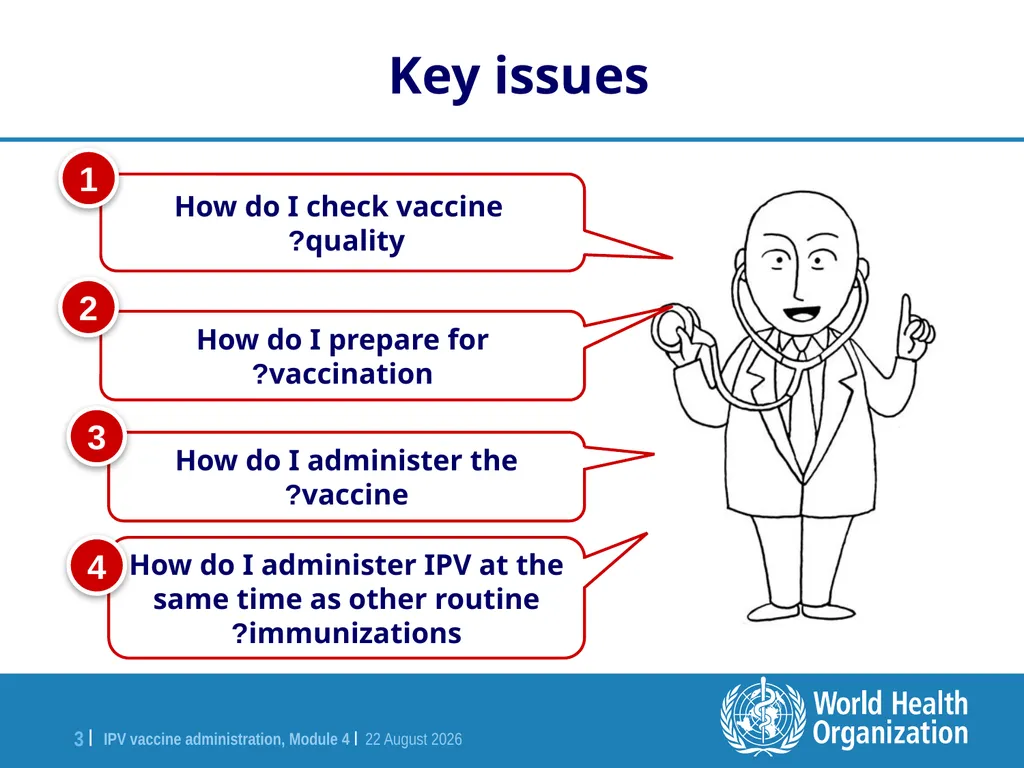
slide3. Key issues<br>
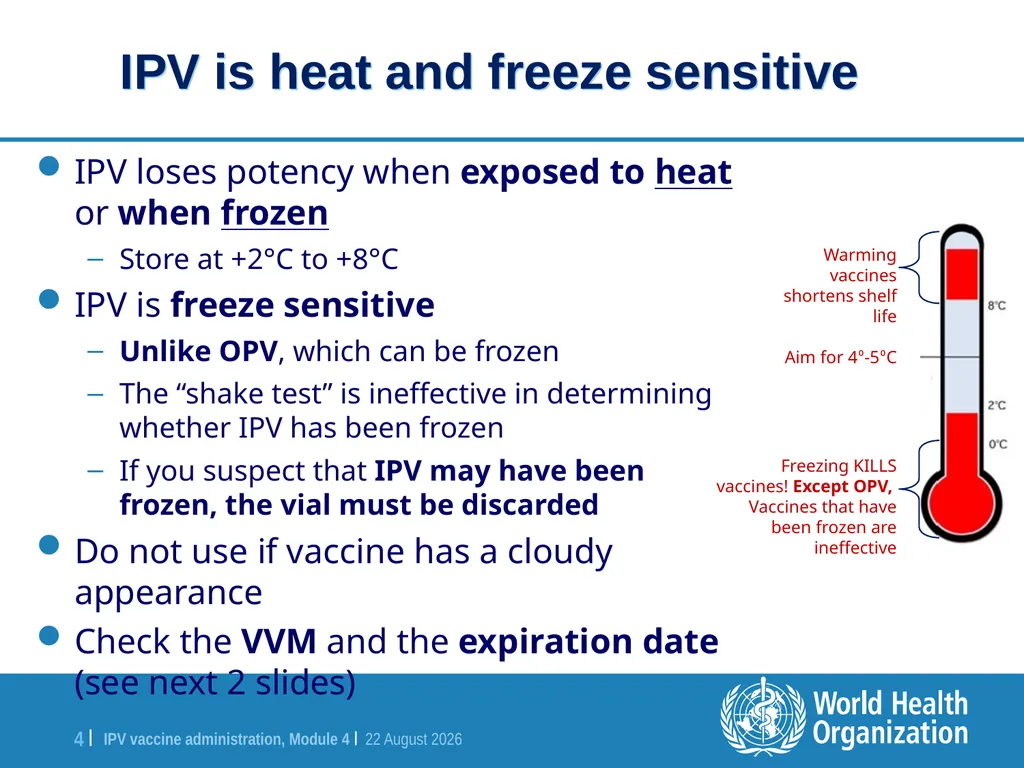
slide4. IPV loses potency when exposed to heat or when frozen
Store at +2°C to +8°C
IPV is freeze sensitive
Unlike OPV, which can be frozen
The “shake test” is ineffective in determining whether IPV has been frozen
If you suspect that IPV may have been frozen, the vial must be discarded
Do not use if vaccine has a cloudy appearance
Check the VVM and the expiration date (see next 2 slides) IPV is heat and freeze sensitive Freezing KILLS vaccines! Except OPV, Vaccines that have been frozen are ineffective Aim for 4⁰-5⁰C Warming vaccines shortens shelf life<br>
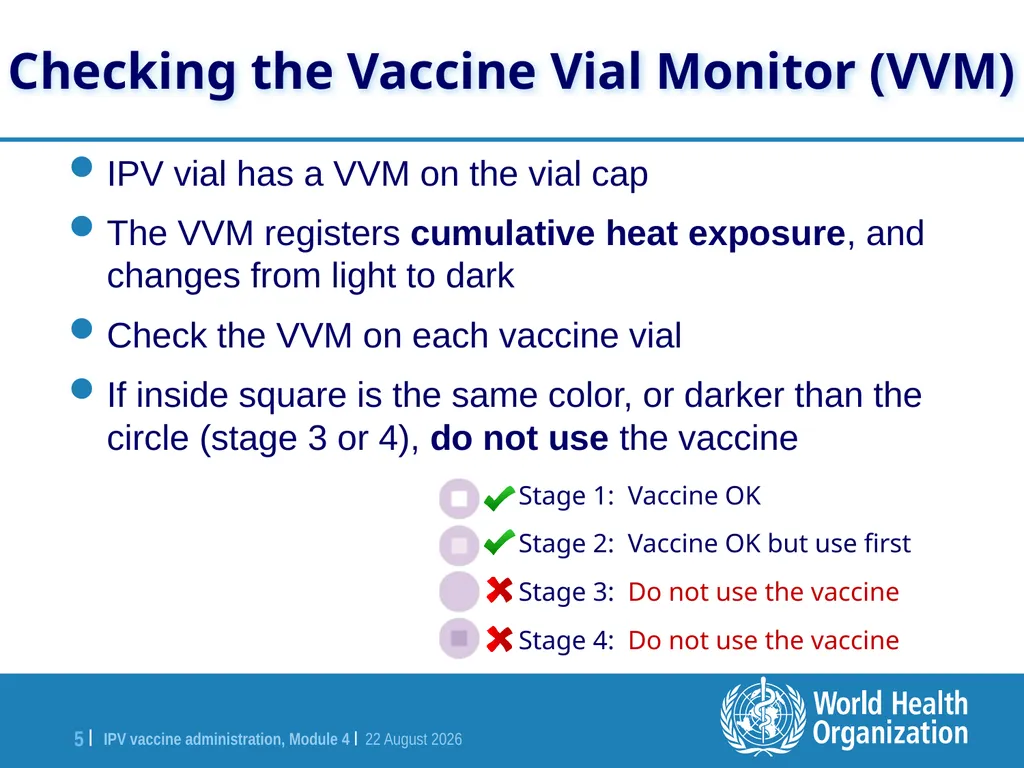
slide5. IPV vial has a VVM on the vial cap
The VVM registers cumulative heat exposure, and changes from light to dark
Check the VVM on each vaccine vial
If inside square is the same color, or darker than the circle (stage 3 or 4), do not use the vaccine Checking the Vaccine Vial Monitor (VVM)<br>
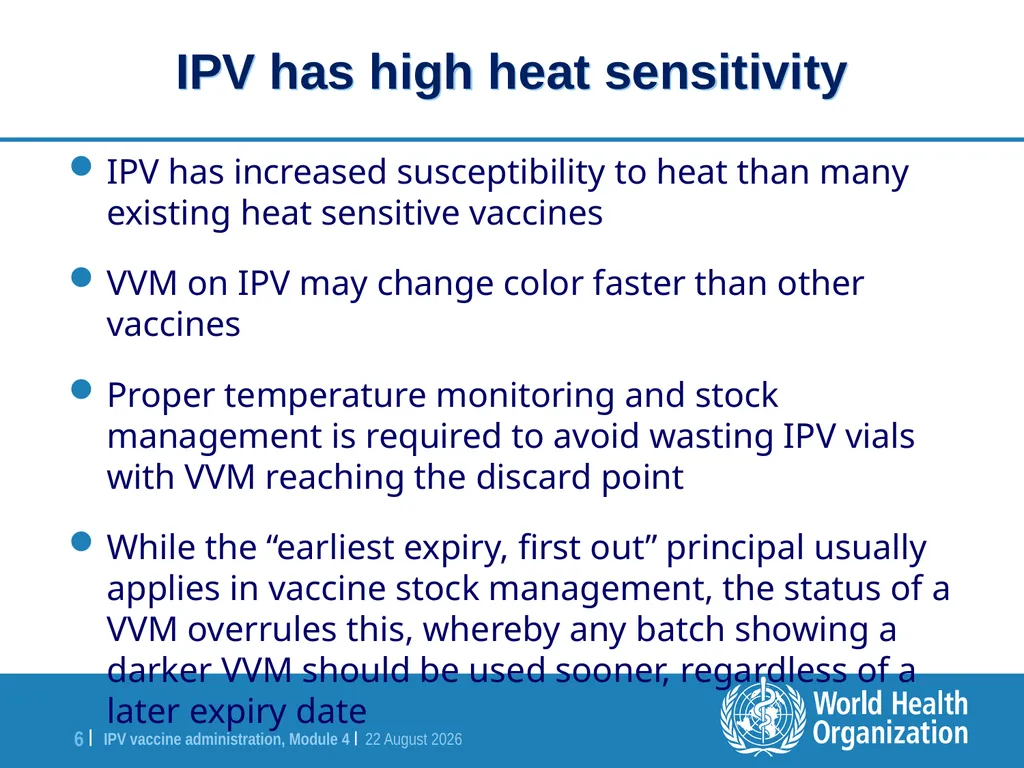
slide6. IPV has increased susceptibility to heat than many existing heat sensitive vaccines
VVM on IPV may change color faster than other vaccines
Proper temperature monitoring and stock management is required to avoid wasting IPV vials with VVM reaching the discard point
While the “earliest expiry, first out” principal usually applies in vaccine stock management, the status of a VVM overrules this, whereby any batch showing a darker VVM should be used sooner, regardless of a later expiry date IPV has high heat sensitivity<br>
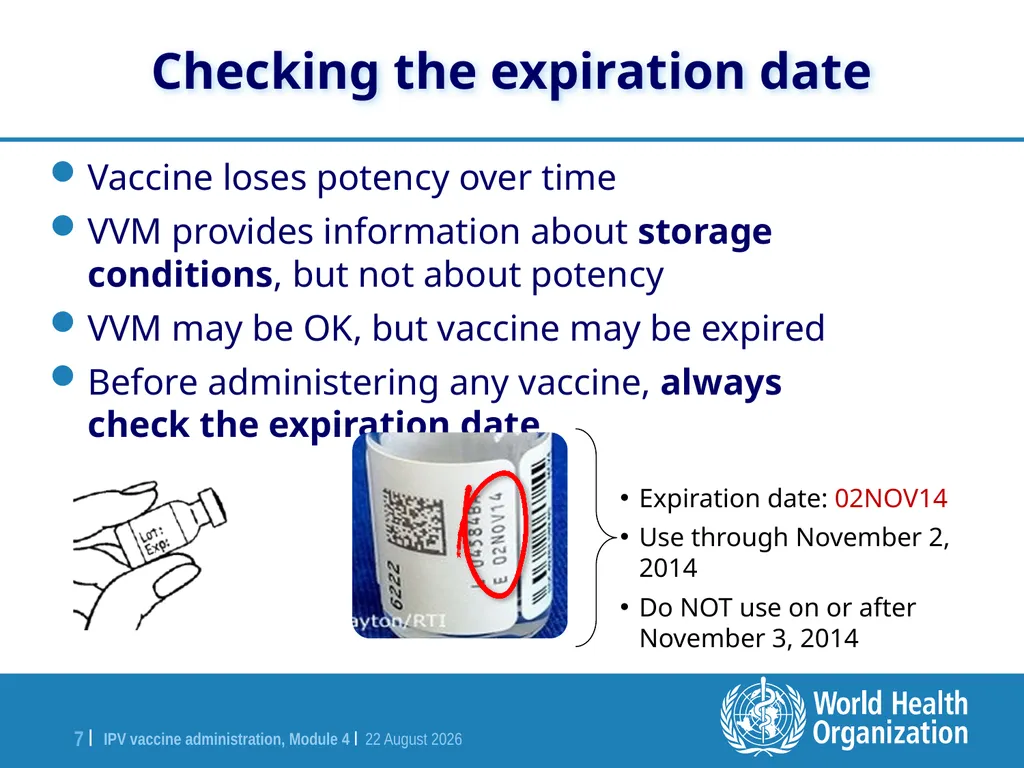
slide7. Checking the expiration date Vaccine loses potency over time
VVM provides information about storage conditions, but not about potency
VVM may be OK, but vaccine may be expired
Before administering any vaccine, always check the expiration date Expiration date: 02NOV14
Use through November 2, 2014
Do NOT use on or after November 3, 2014<br>
slide8. Give IPV at or after age 14 weeks, usually with OPV3 and DTP3/Penta 3
Give one dose of IPV, together with OPV
Both vaccines together provide the strongest polio immunity
IPV may be given with other injectable vaccines At what age should IPV be administered? Example EPI schedule using DTP-Hib-Hep B (Pentavalent), pneumococcal conjugate (PCV) and rotavirus vaccines
IPV should be given at 14 weeks, or at the first contact after 14 weeks<br>
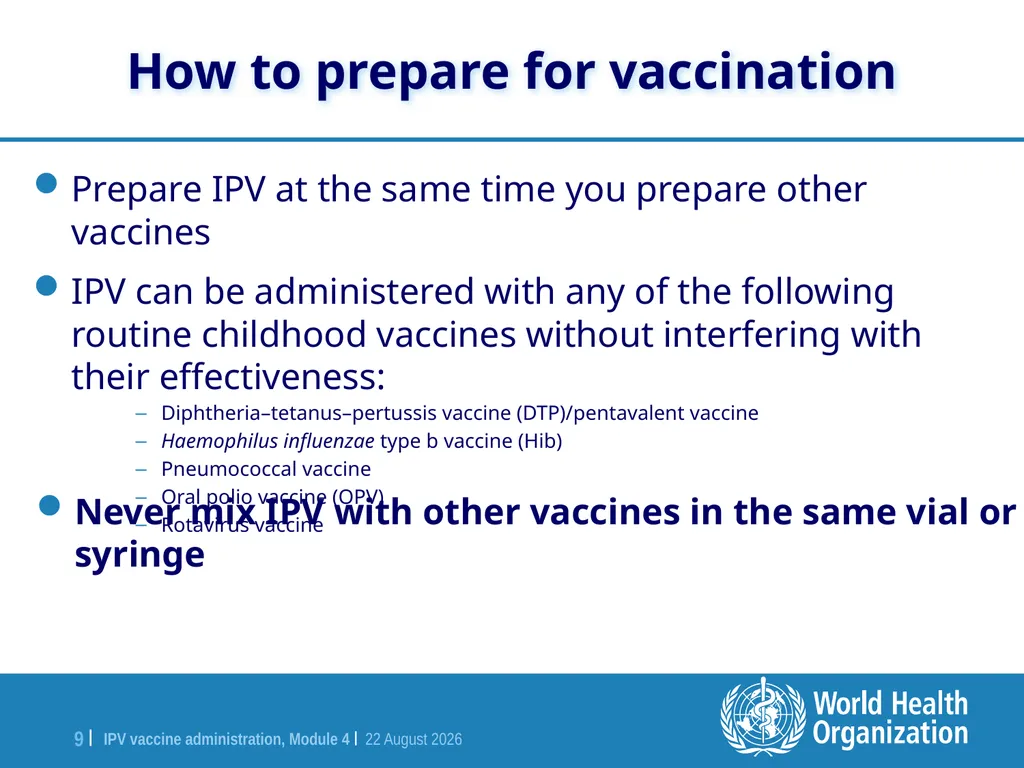
slide9. How to prepare for vaccination Never mix IPV with other vaccines in the same vial or syringe Prepare IPV at the same time you prepare other vaccines
IPV can be administered with any of the following routine childhood vaccines without interfering with their effectiveness:
Diphtheria–tetanus–pertussis vaccine (DTP)/pentavalent vaccine
Haemophilus influenzae type b vaccine (Hib)
Pneumococcal vaccine
Oral polio vaccine (OPV)
Rotavirus vaccine<br>
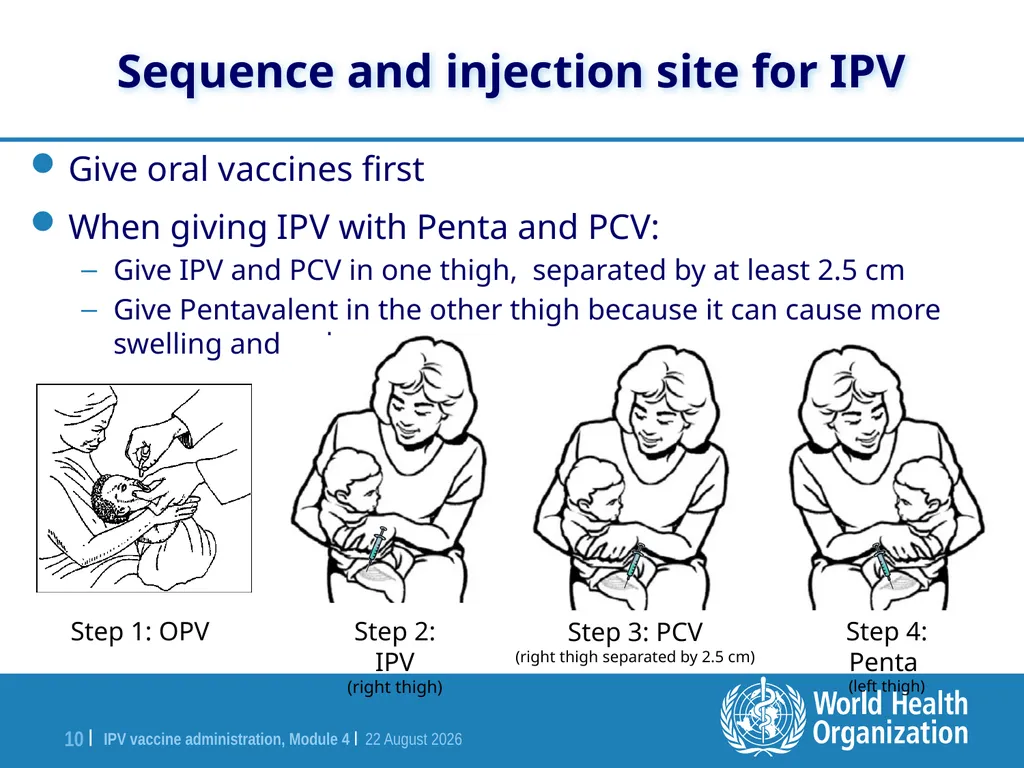
slide10. Sequence and injection site for IPV Give oral vaccines first
When giving IPV with Penta and PCV:
Give IPV and PCV in one thigh, separated by at least 2.5 cm
Give Pentavalent in the other thigh because it can cause more swelling and redness Step 1: OPV Step 2: IPV
(right thigh) Step 3: PCV
(right thigh separated by 2.5 cm) Step 4: Penta
(left thigh)<br>
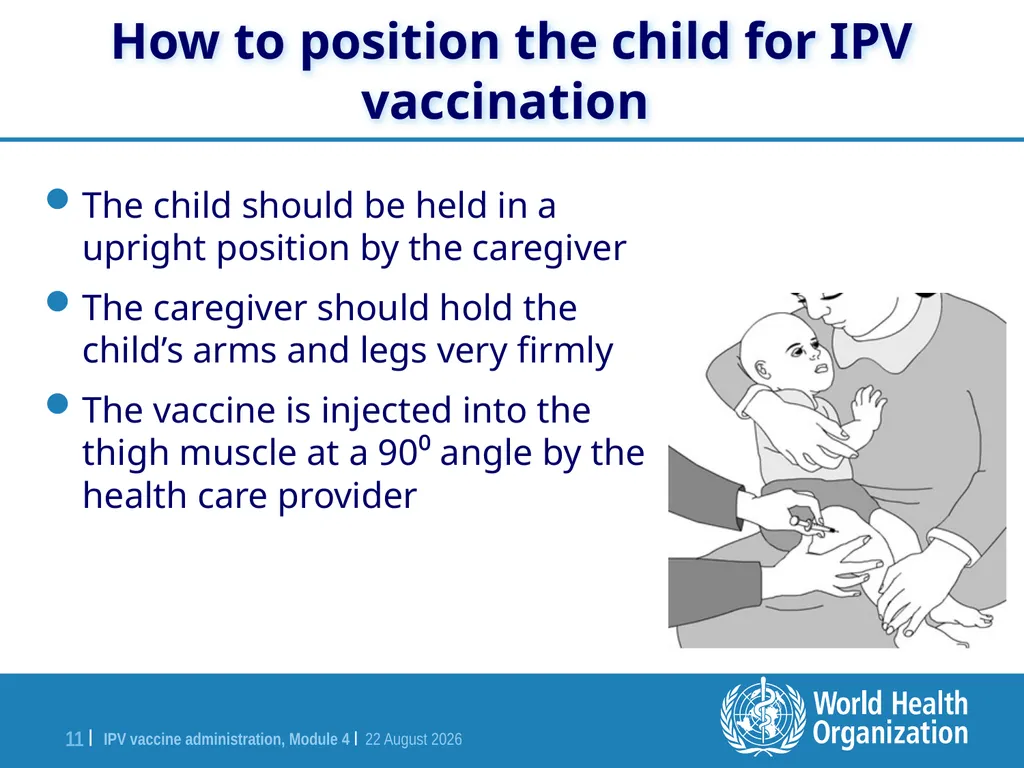
slide11. The child should be held in a upright position by the caregiver
The caregiver should hold the child’s arms and legs very firmly
The vaccine is injected into the thigh muscle at a 90⁰ angle by the health care provider How to position the child for IPV vaccination<br>
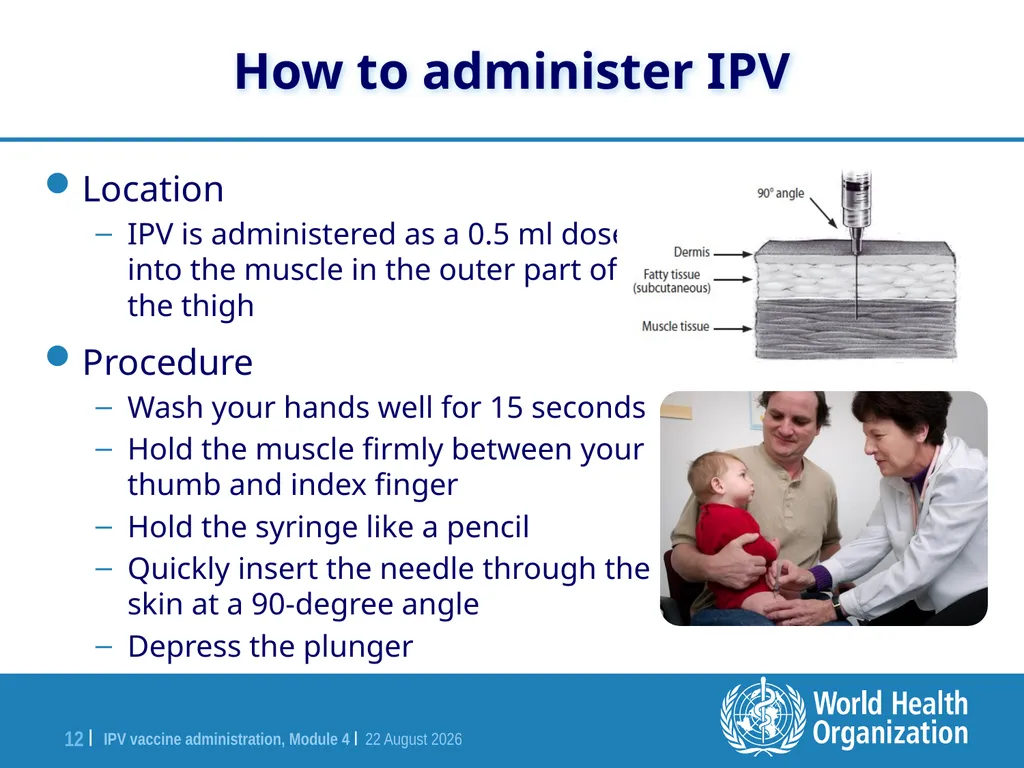
slide12. How to administer IPV Location
IPV is administered as a 0.5 ml dose into the muscle in the outer part of the thigh
Procedure
Wash your hands well for 15 seconds
Hold the muscle firmly between your thumb and index finger
Hold the syringe like a pencil
Quickly insert the needle through the skin at a 90-degree angle
Depress the plunger<br>
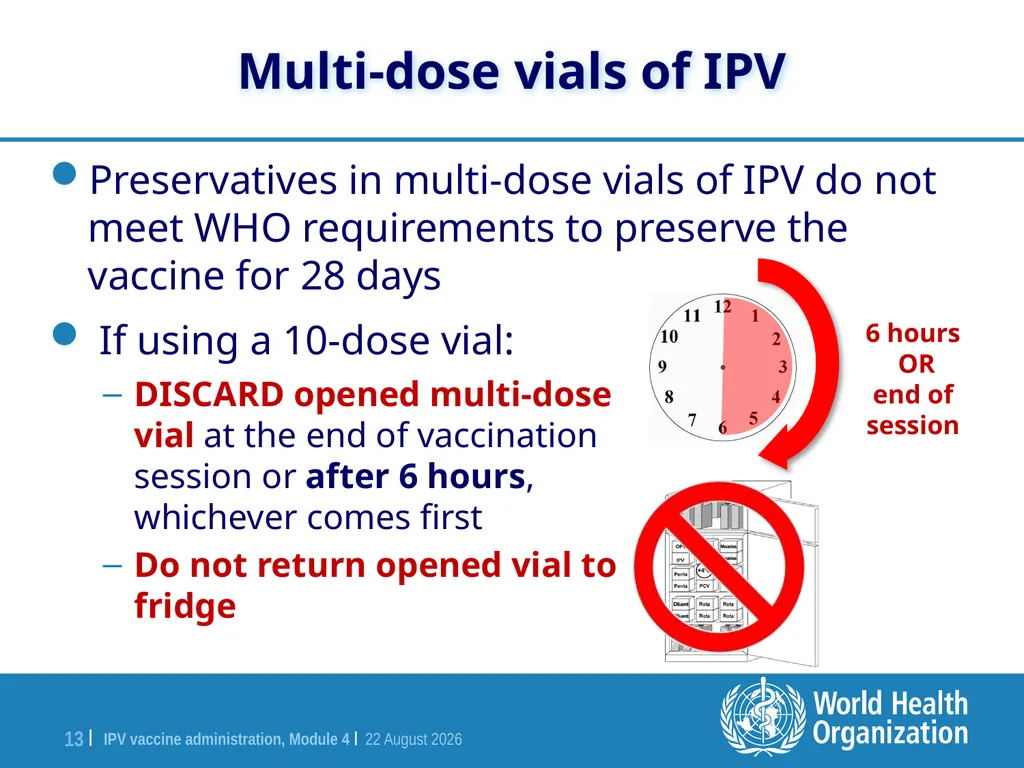
slide13. Multi-dose vials of IPV DISCARD opened multi-dose vial at the end of vaccination session or after 6 hours, whichever comes first
Do not return opened vial to fridge Preservatives in multi-dose vials of IPV do not meet WHO requirements to preserve the vaccine for 28 days
If using a 10-dose vial: 6 hours
OR
end of session<br>
slide14. Factors associated with vaccine wastage Unavoidable
Requirement to discard opened multi-dose vials at end of immunization session or within 6 hours after opening, whichever comes first
Avoidable
Poor stock management
Over-supply
Vaccine reaches expiry before use (recall the EEFO principle)
Lost, broken, stolen vials
Cold chain failure
Loss of potency (high temperatures)
Inactivated vaccine (freezing)
Poor vaccination technique
Administration of more than recommended 0.5 ml for each injection<br>
slide15. Multi-dose vials of IPV may have high wastage rates
Wastage rates will vary by facility, and should be monitored
Do not let concerns about unavoidable wastage related to discarding unused opened vials stop you from offering vaccine to a child
High wastage rates for multi-dose vials of IPV are anticipated and accounted for in predicting demand Concerns about wastage should not stop you from vaccinating a child<br>
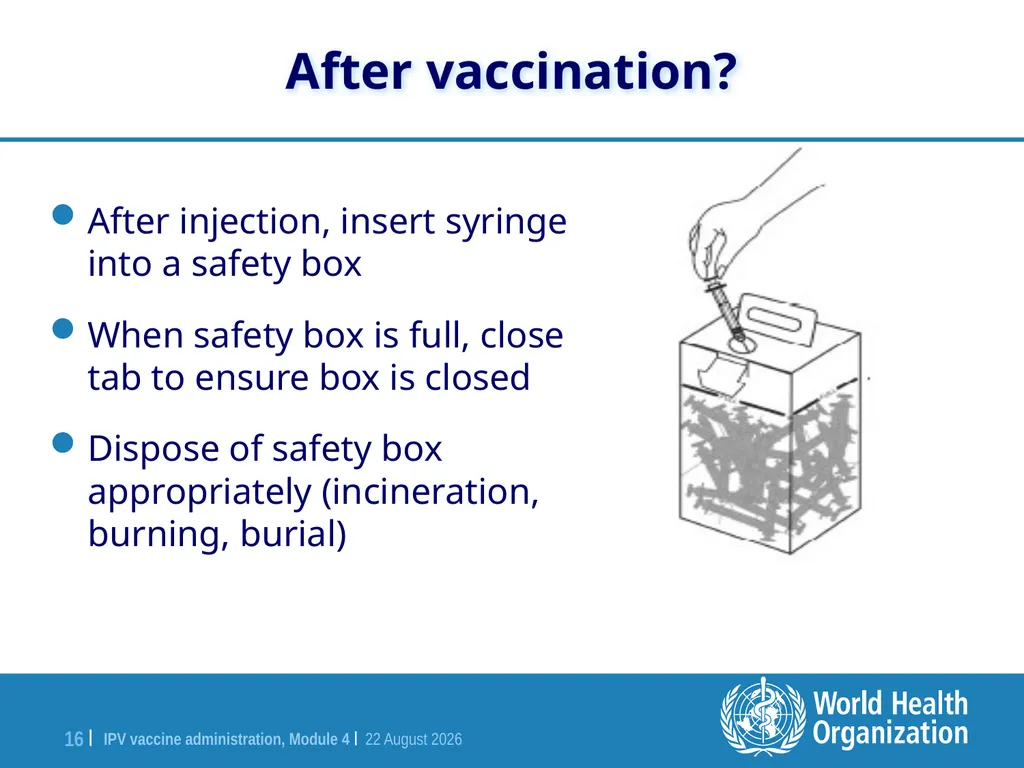
slide16. After vaccination? After injection, insert syringe into a safety box
When safety box is full, close tab to ensure box is closed
Dispose of safety box appropriately (incineration, burning, burial)<br>
slide17. What are some ways to reduce pain when giving an injection? What should you do in this scenario?<br>
slide18. The child is 14 weeks old.
You give him/her OPV, Rota, IPV, PCV and pentavalent vaccines.
In which order should you give the vaccines? What should you do in this scenario?<br>
slide19. Key messages Check and interpret VVM and expiration date on the vaccine vial before giving the vaccine
IPV is prepared and administered similarly to other intramuscular injections
Prepare and dispose of IPV as you do other injectable vaccines
Have the caregiver comfortably hold the child upright while inserting the needle into the thigh muscle at a 90⁰ angle
Give OPV first, then administer other injectable vaccines: IPV and PCV in one thigh at least 2.5 cm apart and Pentavalent in the other thigh<br>
slide20. End of module Thank you
for your attention!<br>
IPV vaccine administration Training for Inactivated Poliovirus Vaccine (IPV) introduction<br>
slide2. Learning objectives At the end of the module, the participant will be able to:
Identify the necessary steps to assure good vaccine quality
Describe the method to administer the vaccine
Duration
30 minutes<br>
slide3. Key issues<br>
slide4. IPV loses potency when exposed to heat or when frozen
Store at +2°C to +8°C
IPV is freeze sensitive
Unlike OPV, which can be frozen
The “shake test” is ineffective in determining whether IPV has been frozen
If you suspect that IPV may have been frozen, the vial must be discarded
Do not use if vaccine has a cloudy appearance
Check the VVM and the expiration date (see next 2 slides) IPV is heat and freeze sensitive Freezing KILLS vaccines! Except OPV, Vaccines that have been frozen are ineffective Aim for 4⁰-5⁰C Warming vaccines shortens shelf life<br>
slide5. IPV vial has a VVM on the vial cap
The VVM registers cumulative heat exposure, and changes from light to dark
Check the VVM on each vaccine vial
If inside square is the same color, or darker than the circle (stage 3 or 4), do not use the vaccine Checking the Vaccine Vial Monitor (VVM)<br>
slide6. IPV has increased susceptibility to heat than many existing heat sensitive vaccines
VVM on IPV may change color faster than other vaccines
Proper temperature monitoring and stock management is required to avoid wasting IPV vials with VVM reaching the discard point
While the “earliest expiry, first out” principal usually applies in vaccine stock management, the status of a VVM overrules this, whereby any batch showing a darker VVM should be used sooner, regardless of a later expiry date IPV has high heat sensitivity<br>
slide7. Checking the expiration date Vaccine loses potency over time
VVM provides information about storage conditions, but not about potency
VVM may be OK, but vaccine may be expired
Before administering any vaccine, always check the expiration date Expiration date: 02NOV14
Use through November 2, 2014
Do NOT use on or after November 3, 2014<br>
slide8. Give IPV at or after age 14 weeks, usually with OPV3 and DTP3/Penta 3
Give one dose of IPV, together with OPV
Both vaccines together provide the strongest polio immunity
IPV may be given with other injectable vaccines At what age should IPV be administered? Example EPI schedule using DTP-Hib-Hep B (Pentavalent), pneumococcal conjugate (PCV) and rotavirus vaccines
IPV should be given at 14 weeks, or at the first contact after 14 weeks<br>
slide9. How to prepare for vaccination Never mix IPV with other vaccines in the same vial or syringe Prepare IPV at the same time you prepare other vaccines
IPV can be administered with any of the following routine childhood vaccines without interfering with their effectiveness:
Diphtheria–tetanus–pertussis vaccine (DTP)/pentavalent vaccine
Haemophilus influenzae type b vaccine (Hib)
Pneumococcal vaccine
Oral polio vaccine (OPV)
Rotavirus vaccine<br>
slide10. Sequence and injection site for IPV Give oral vaccines first
When giving IPV with Penta and PCV:
Give IPV and PCV in one thigh, separated by at least 2.5 cm
Give Pentavalent in the other thigh because it can cause more swelling and redness Step 1: OPV Step 2: IPV
(right thigh) Step 3: PCV
(right thigh separated by 2.5 cm) Step 4: Penta
(left thigh)<br>
slide11. The child should be held in a upright position by the caregiver
The caregiver should hold the child’s arms and legs very firmly
The vaccine is injected into the thigh muscle at a 90⁰ angle by the health care provider How to position the child for IPV vaccination<br>
slide12. How to administer IPV Location
IPV is administered as a 0.5 ml dose into the muscle in the outer part of the thigh
Procedure
Wash your hands well for 15 seconds
Hold the muscle firmly between your thumb and index finger
Hold the syringe like a pencil
Quickly insert the needle through the skin at a 90-degree angle
Depress the plunger<br>
slide13. Multi-dose vials of IPV DISCARD opened multi-dose vial at the end of vaccination session or after 6 hours, whichever comes first
Do not return opened vial to fridge Preservatives in multi-dose vials of IPV do not meet WHO requirements to preserve the vaccine for 28 days
If using a 10-dose vial: 6 hours
OR
end of session<br>
slide14. Factors associated with vaccine wastage Unavoidable
Requirement to discard opened multi-dose vials at end of immunization session or within 6 hours after opening, whichever comes first
Avoidable
Poor stock management
Over-supply
Vaccine reaches expiry before use (recall the EEFO principle)
Lost, broken, stolen vials
Cold chain failure
Loss of potency (high temperatures)
Inactivated vaccine (freezing)
Poor vaccination technique
Administration of more than recommended 0.5 ml for each injection<br>
slide15. Multi-dose vials of IPV may have high wastage rates
Wastage rates will vary by facility, and should be monitored
Do not let concerns about unavoidable wastage related to discarding unused opened vials stop you from offering vaccine to a child
High wastage rates for multi-dose vials of IPV are anticipated and accounted for in predicting demand Concerns about wastage should not stop you from vaccinating a child<br>
slide16. After vaccination? After injection, insert syringe into a safety box
When safety box is full, close tab to ensure box is closed
Dispose of safety box appropriately (incineration, burning, burial)<br>
slide17. What are some ways to reduce pain when giving an injection? What should you do in this scenario?<br>
slide18. The child is 14 weeks old.
You give him/her OPV, Rota, IPV, PCV and pentavalent vaccines.
In which order should you give the vaccines? What should you do in this scenario?<br>
slide19. Key messages Check and interpret VVM and expiration date on the vaccine vial before giving the vaccine
IPV is prepared and administered similarly to other intramuscular injections
Prepare and dispose of IPV as you do other injectable vaccines
Have the caregiver comfortably hold the child upright while inserting the needle into the thigh muscle at a 90⁰ angle
Give OPV first, then administer other injectable vaccines: IPV and PCV in one thigh at least 2.5 cm apart and Pentavalent in the other thigh<br>
slide20. End of module Thank you
for your attention!<br>