
MODULE 4 PART 1 The policy-making process 4
Description: MODULE 4 PART 1 The policy-making process 4 Complex social issues Recognize that complex problems require complex solutions Have been able to successfully apply Health in All Policies thinking to the problem of obesity LEARNING OBJECTIVES
Related Topics
Download Presentation
"MODULE 4 PART 1 The policy-making process 4" is the property of its rightful owner. Permission is granted to download and print the materials on this website for personal, non-commercial use only, and to display it on your personal computer provided you do not modify the materials and that you retain all copyright notices contained in the materials. By downloading content from our website, you accept the terms of this agreement.
Presentation Transcript
slide1. MODULE 4 PART 1
The policy-making process 4 Complex social issues<br>
slide2. Recognize that complex problems require complex solutions Have been able to successfully apply Health in All Policies thinking to the problem of obesity LEARNING OBJECTIVES<br>
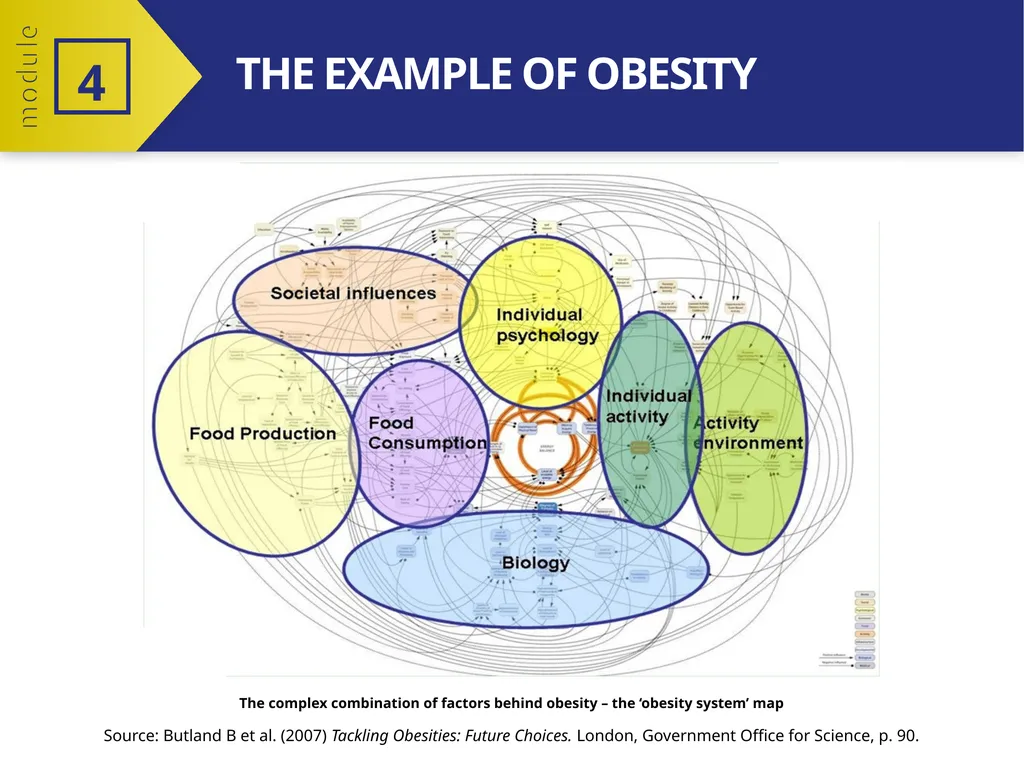
slide3. Wicked problems Complex social issues: causes are not always clear, the solutions are not straightforward and there are many actors involved. These issues are described as “messy”, “fuzzy” or “wicked”. For example: health inequality and NCDs such as cancer, cardiovascular disease and mental illness.<br>
slide4. The example of obesity The complex combination of factors behind obesity – the ‘obesity system’ map Source: Butland B et al. (2007) Tackling Obesities: Future Choices. London, Government Office for Science, p. 90.<br>
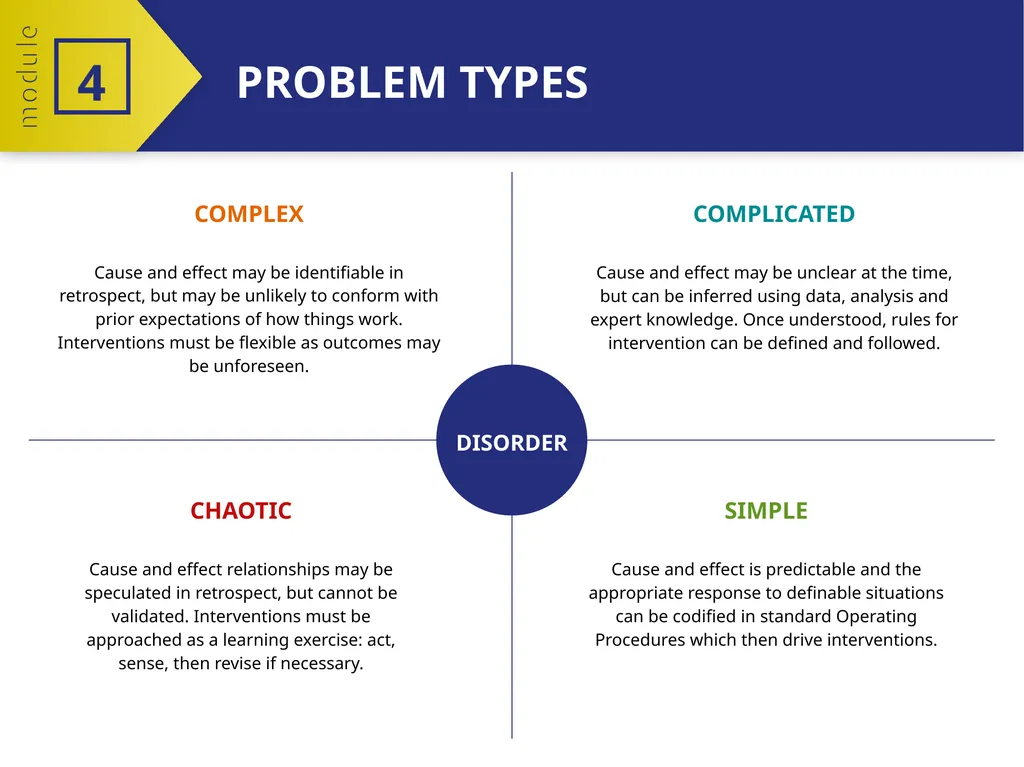
slide5. Problem types COMPLEX
Cause and effect may be identifiable in retrospect, but may be unlikely to conform with prior expectations of how things work. Interventions must be flexible as outcomes may be unforeseen.<br>
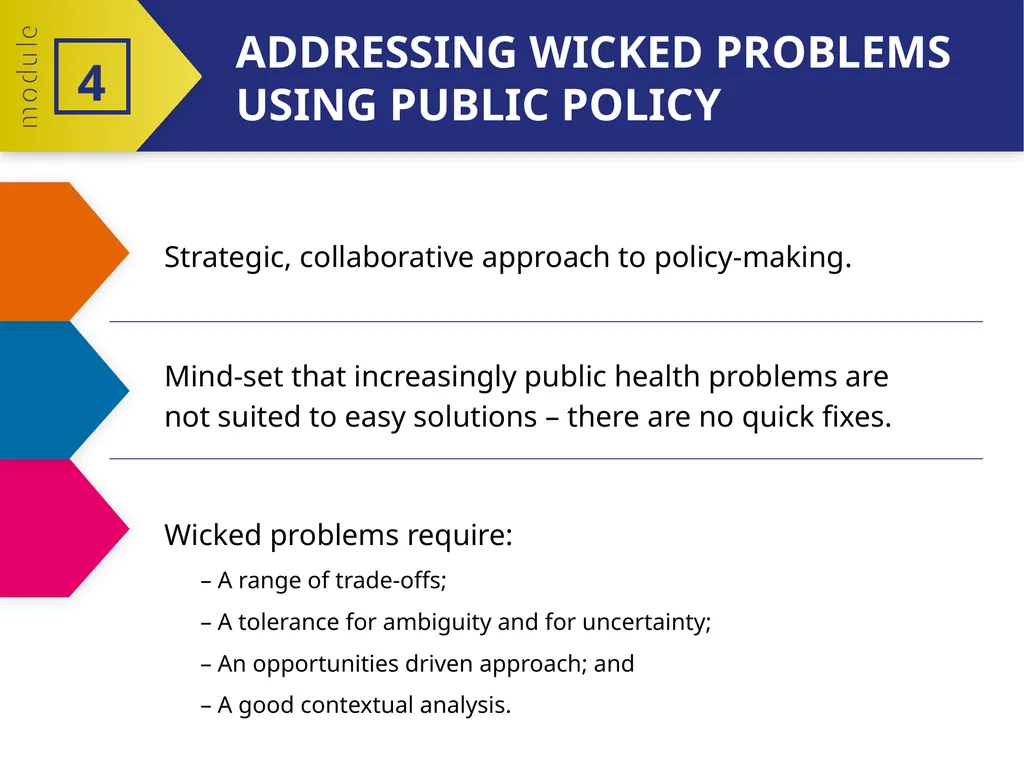
slide6. Strategic, collaborative approach to policy-making. Mind-set that increasingly public health problems are not suited to easy solutions – there are no quick fixes. Wicked problems require:
– A range of trade-offs;
– A tolerance for ambiguity and for uncertainty;
– An opportunities driven approach; and
– A good contextual analysis. Addressing wicked problems using public policy<br>
slide7. End of
Module 4 Part 1
Please continue to Module 4 Part 2<br>
The policy-making process 4 Complex social issues<br>
slide2. Recognize that complex problems require complex solutions Have been able to successfully apply Health in All Policies thinking to the problem of obesity LEARNING OBJECTIVES<br>
slide3. Wicked problems Complex social issues: causes are not always clear, the solutions are not straightforward and there are many actors involved. These issues are described as “messy”, “fuzzy” or “wicked”. For example: health inequality and NCDs such as cancer, cardiovascular disease and mental illness.<br>
slide4. The example of obesity The complex combination of factors behind obesity – the ‘obesity system’ map Source: Butland B et al. (2007) Tackling Obesities: Future Choices. London, Government Office for Science, p. 90.<br>
slide5. Problem types COMPLEX
Cause and effect may be identifiable in retrospect, but may be unlikely to conform with prior expectations of how things work. Interventions must be flexible as outcomes may be unforeseen.<br>
slide6. Strategic, collaborative approach to policy-making. Mind-set that increasingly public health problems are not suited to easy solutions – there are no quick fixes. Wicked problems require:
– A range of trade-offs;
– A tolerance for ambiguity and for uncertainty;
– An opportunities driven approach; and
– A good contextual analysis. Addressing wicked problems using public policy<br>
slide7. End of
Module 4 Part 1
Please continue to Module 4 Part 2<br>