Module 5 Identifying Survivors and Other Witnesses Training Materials on the International Protocol Institute for International Criminal Investigations 2015 INTERNATIONAL PROTOCOL, PART 2 MODULE 5 PAGES 41-44 Who can be a
"Module 5 – Identifying Survivors and Other" is the property of its rightful owner. Permission is granted to
download and print the materials on this website for personal, non-commercial use only, and to display it
on your personal computer provided you do not modify the materials and that you retain all copyright
notices contained in the materials. By downloading content from our website, you accept the terms of this
agreement.
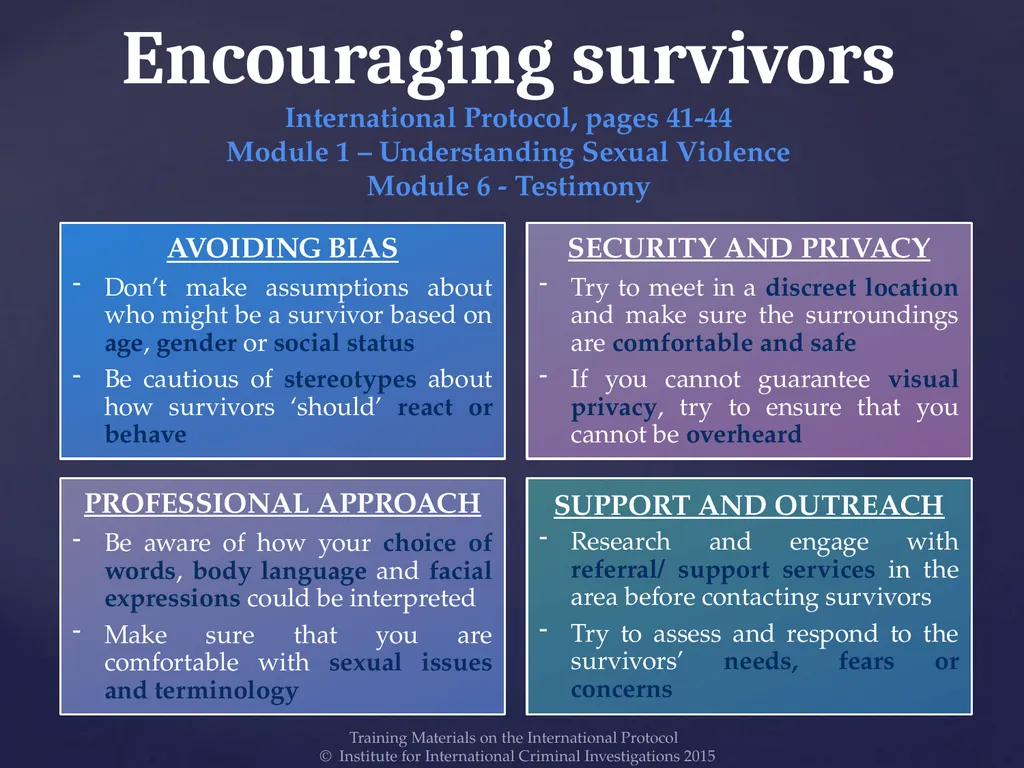
You may not always know in advance that the person you are going to speak with has been affected by sexual violence, so be prepared to respond sensitively and appropriately even if surprised
If your research tells you sexual violence has taken place, but you cannot identify any witnesses or survivors, you should consider devising a new approach to identifying witnesses and survivors<br>
03
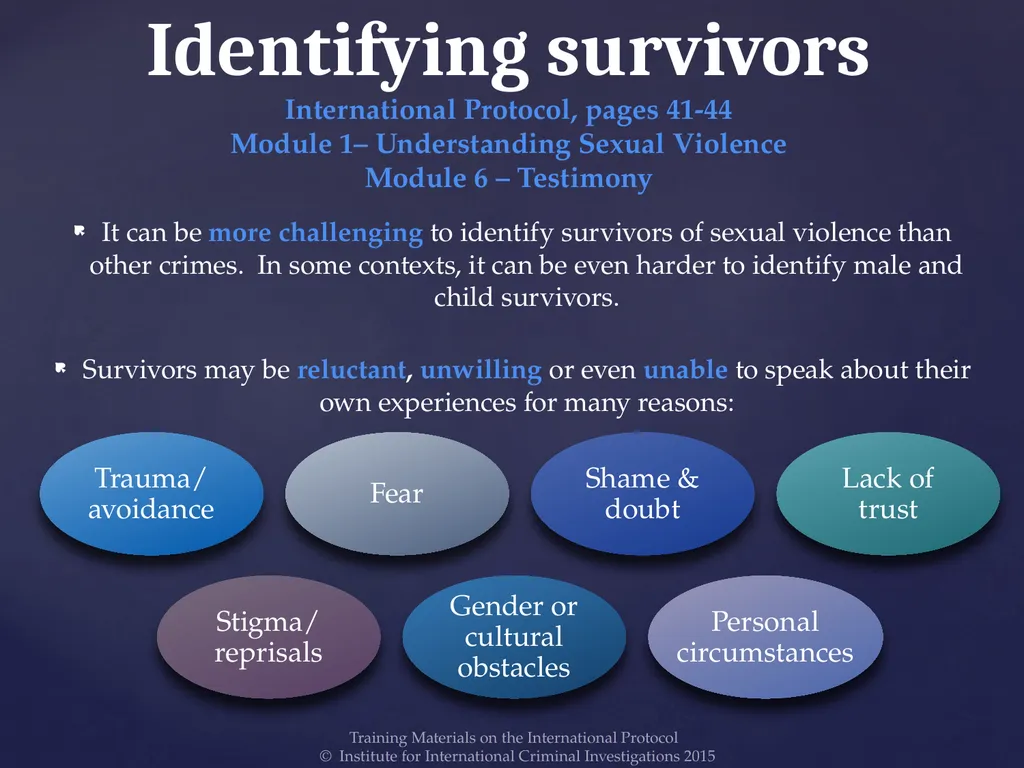
It can be more challenging to identify survivors of sexual violence than other crimes. In some contexts, it can be even harder to identify male and child survivors.
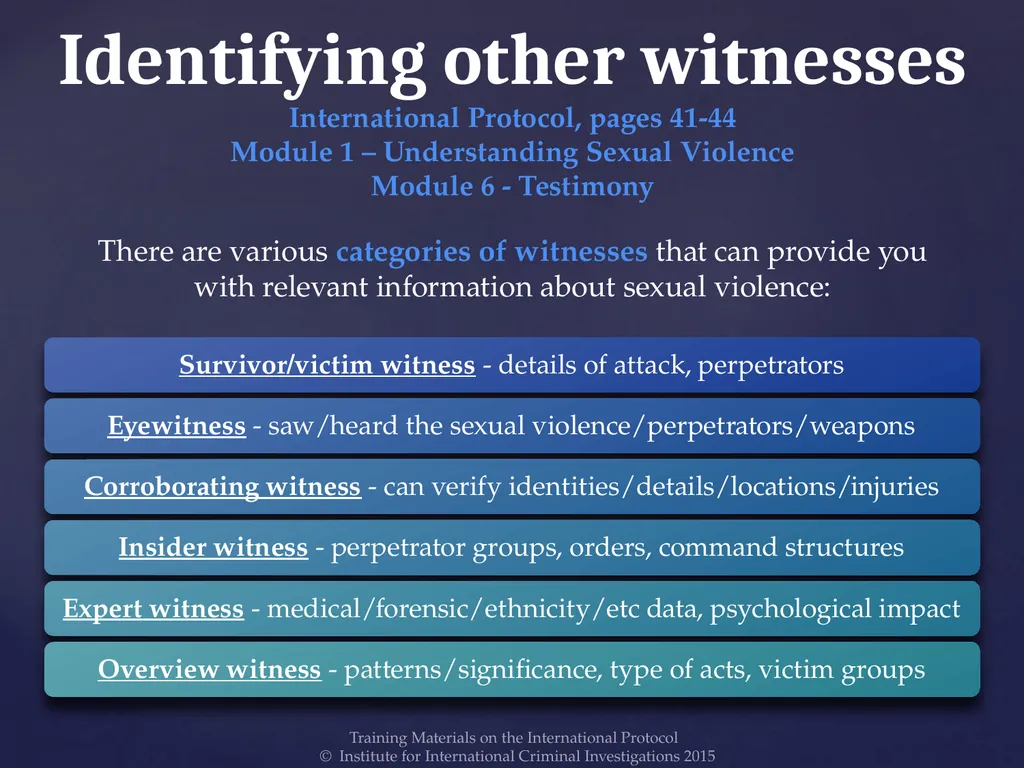
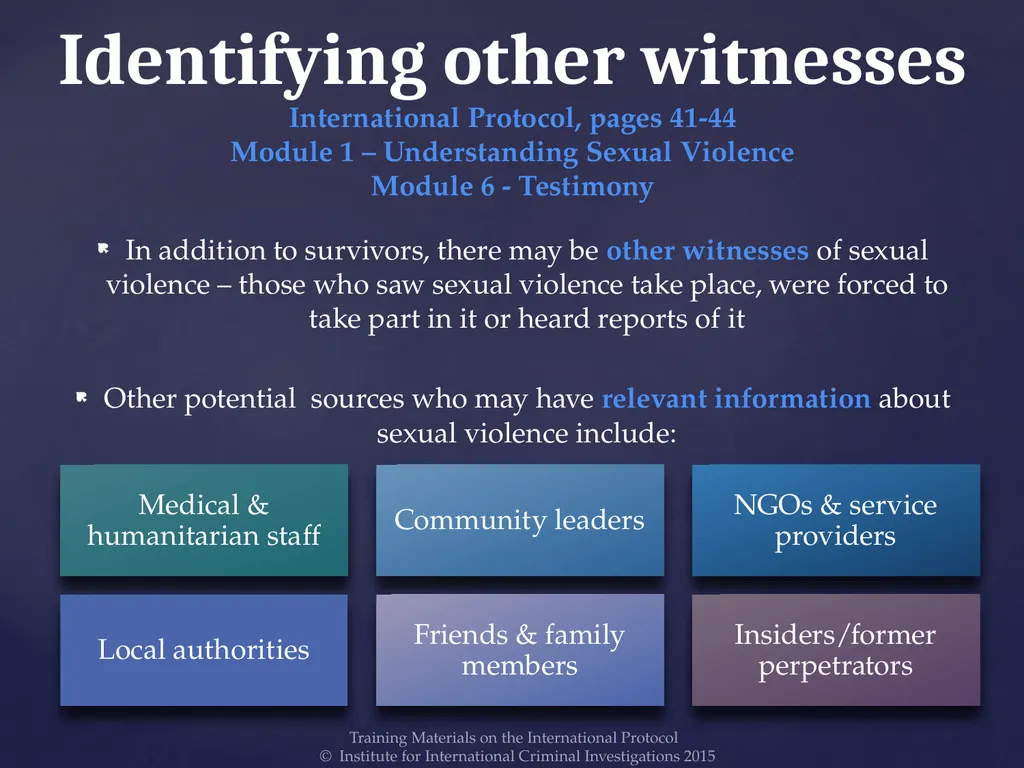
In addition to survivors, there may be other witnesses of sexual violence – those who saw sexual violence take place, were forced to take part in it or heard reports of it
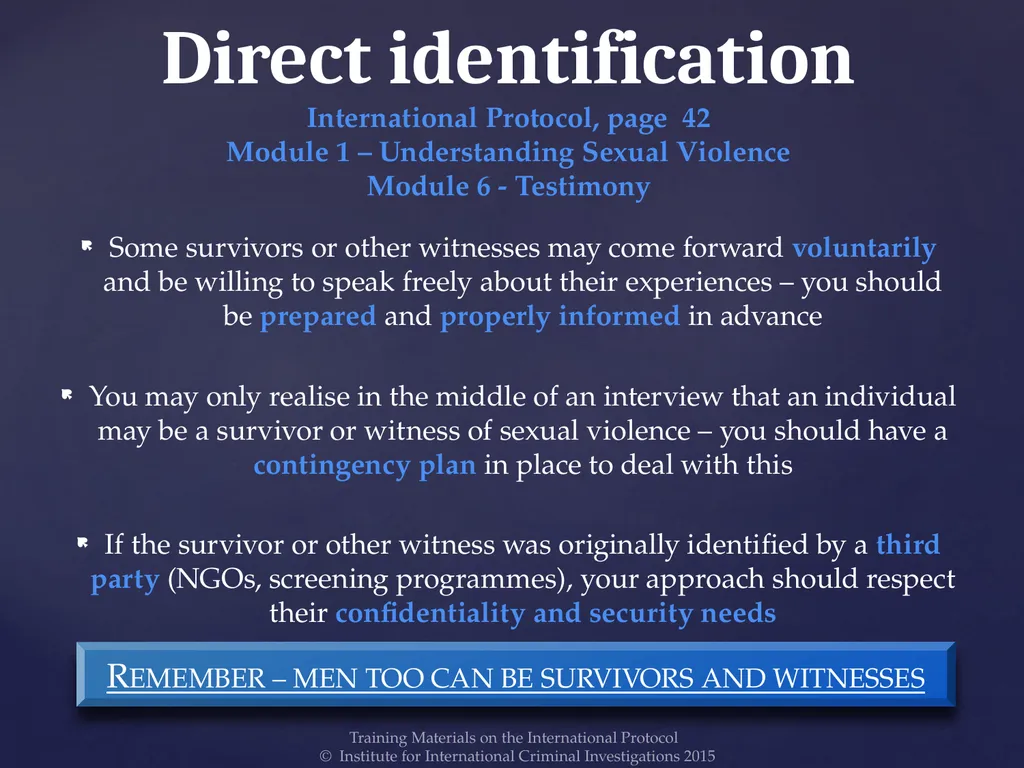
Some survivors or other witnesses may come forward voluntarily and be willing to speak freely about their experiences – you should be prepared and properly informed in advance
You may only realise in the middle of an interview that an individual may be a survivor or witness of sexual violence – you should have a contingency plan in place to deal with this
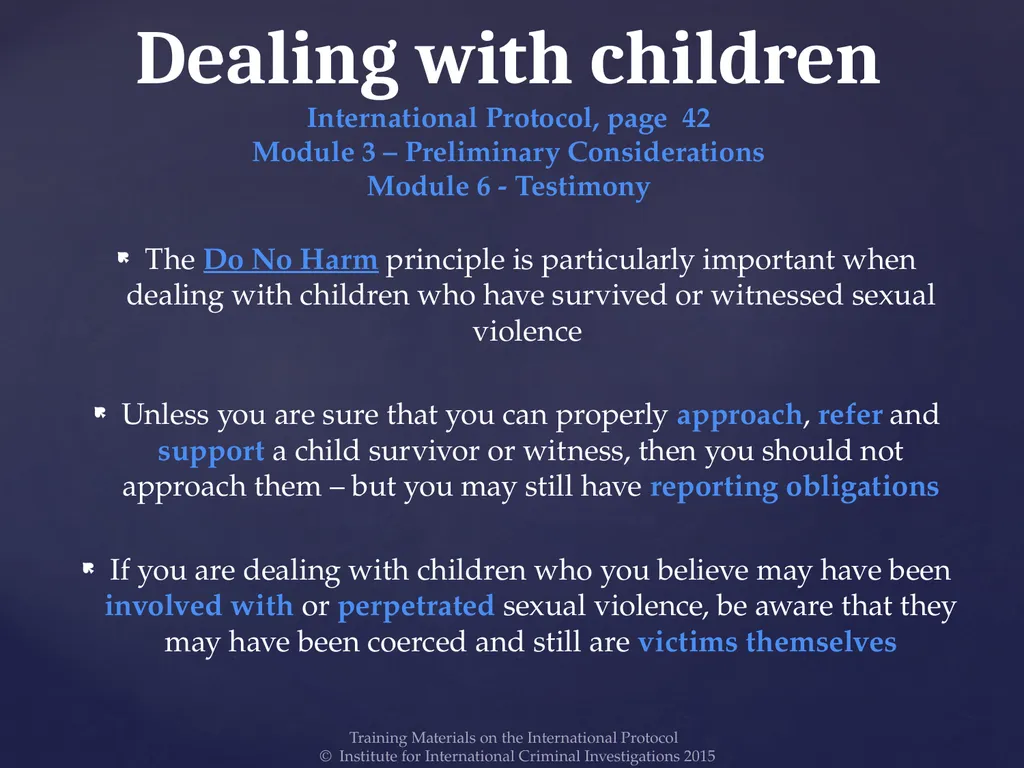
Unless you are sure that you can properly approach, refer and support a child survivor or witness, then you should not approach them – but you may still have reporting obligations
If you are dealing with children who you believe may have been involved with or perpetrated sexual violence, be aware that they may have been coerced and still are victims themselves<br>
09
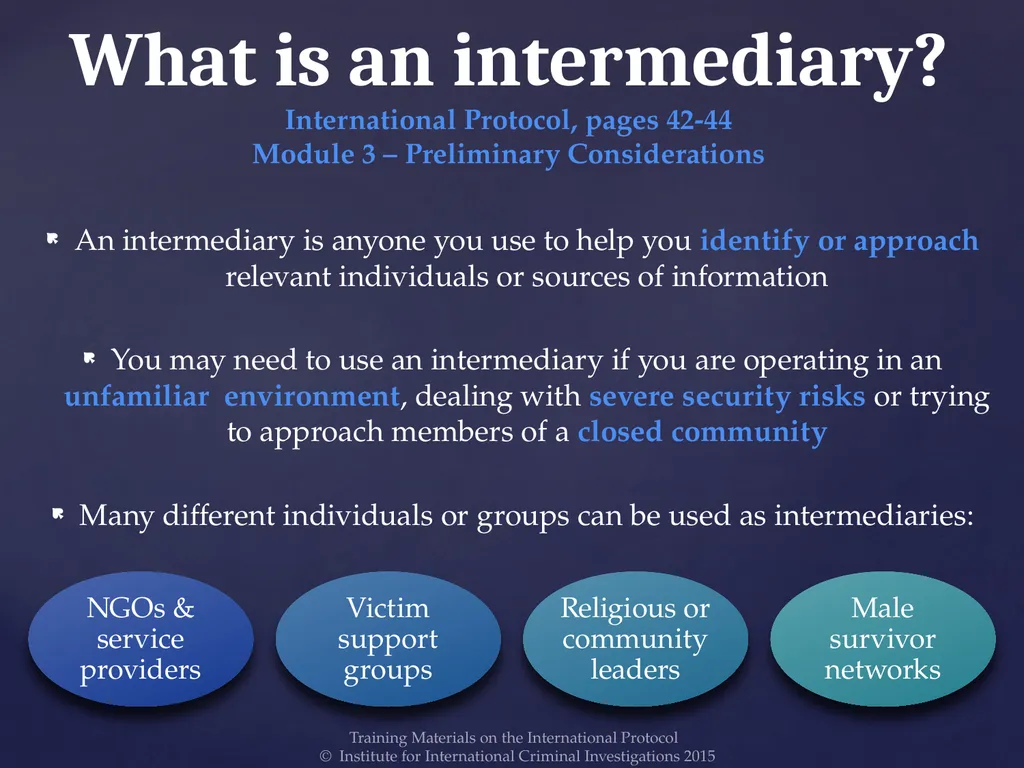
An intermediary is anyone you use to help you identify or approach relevant individuals or sources of information
You may need to use an intermediary if you are operating in an unfamiliar environment, dealing with severe security risks or trying to approach members of a closed community
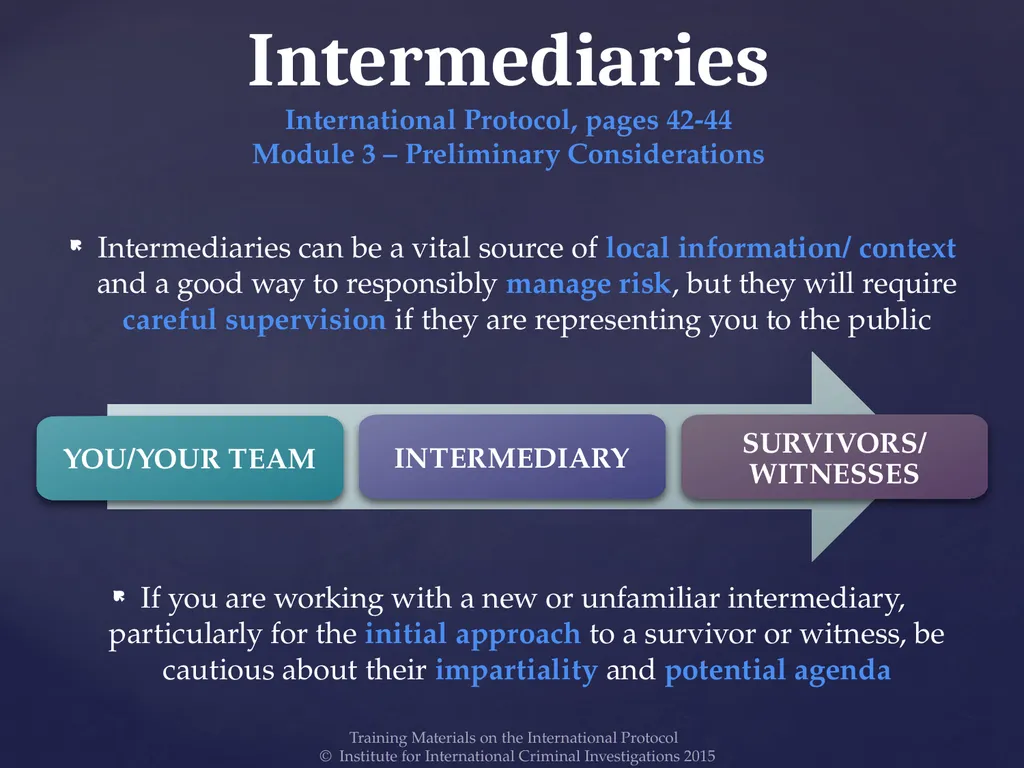
Intermediaries can be a vital source of local information/ context and a good way to responsibly manage risk, but they will require careful supervision if they are representing you to the public
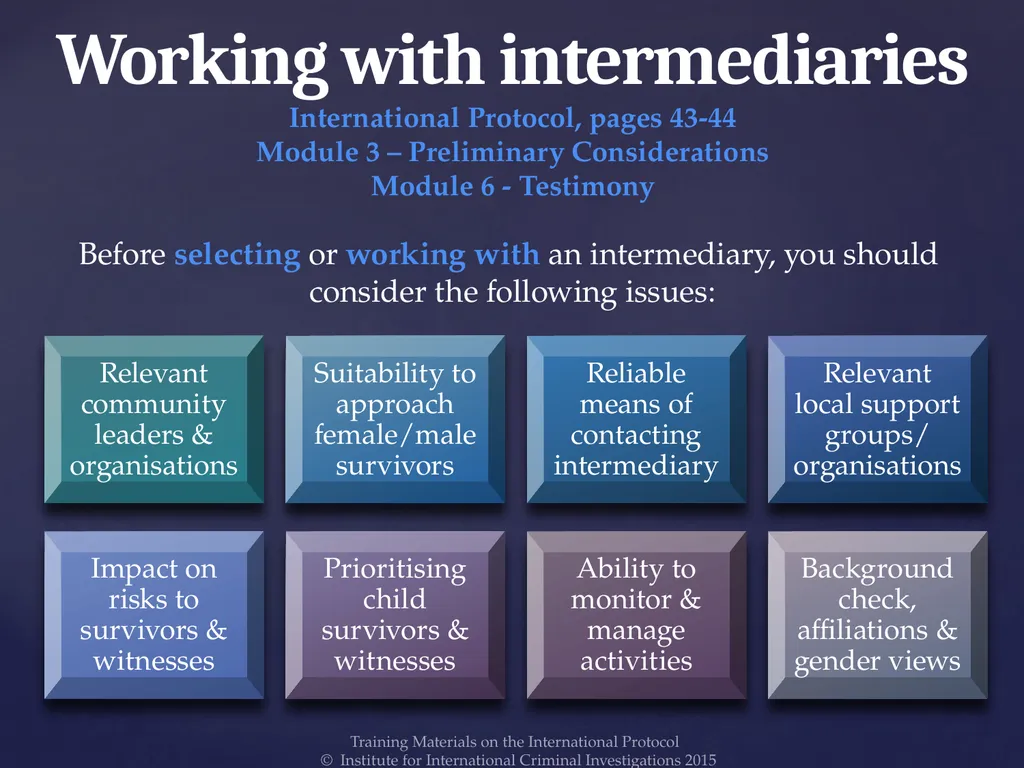
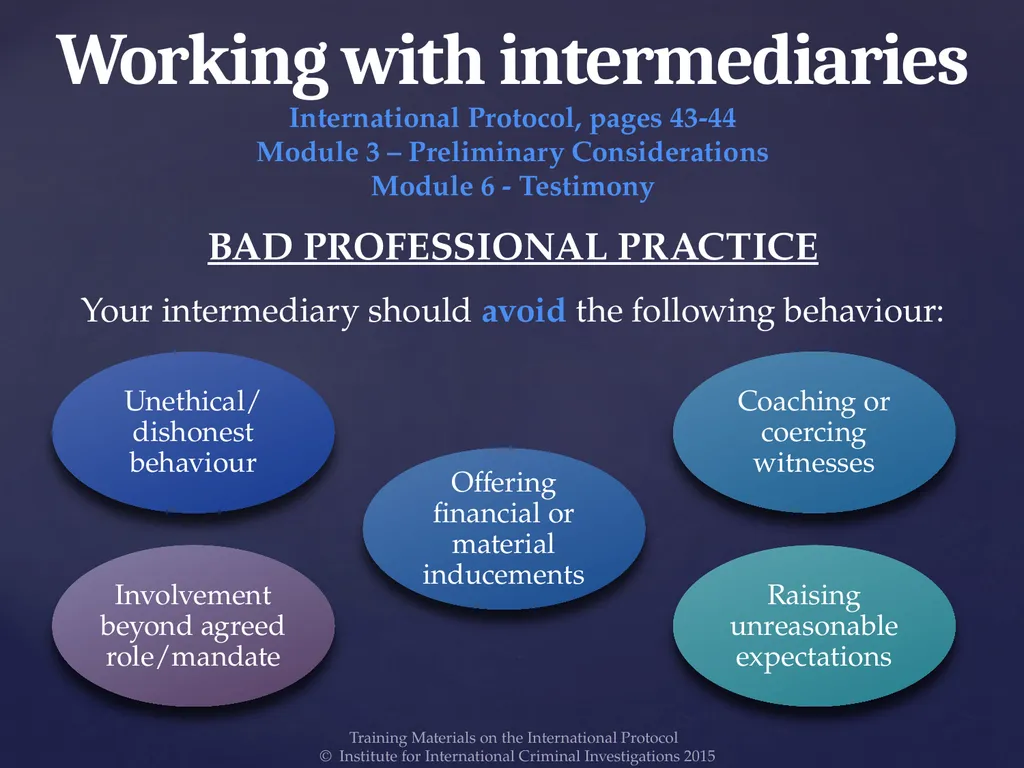
Your intermediary should avoid the following behaviour: Working with intermediaries International Protocol, pages 43-44 Module 3 – Preliminary Considerations Module 6 - Testimony<br>
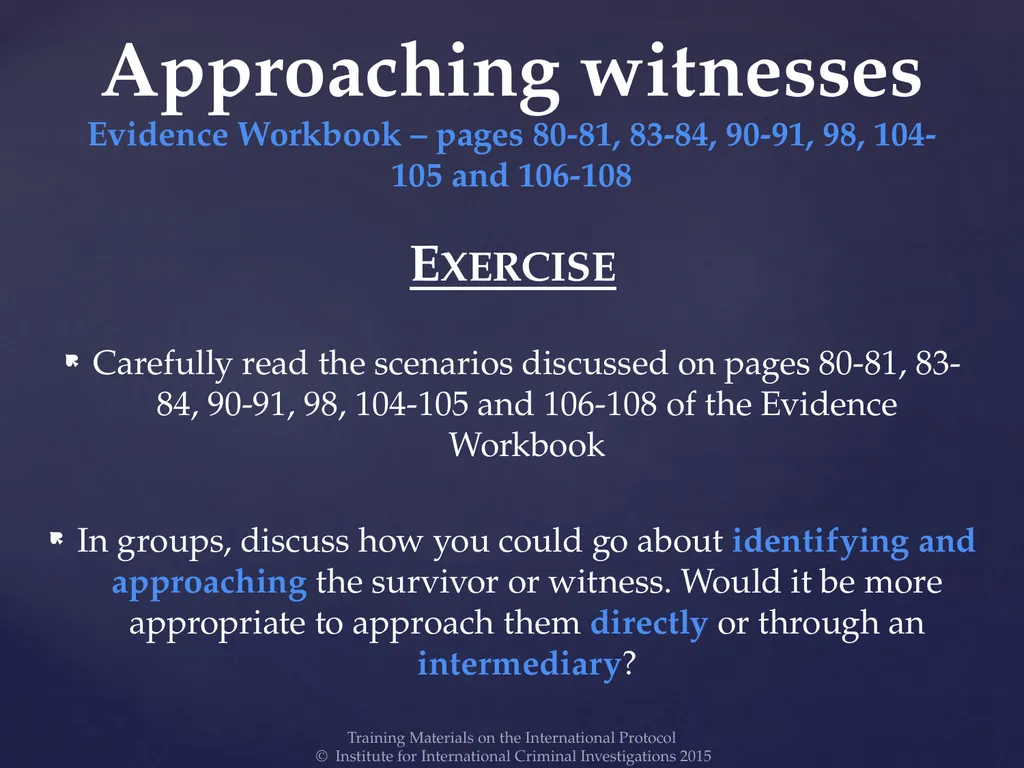
Carefully read the scenarios discussed on pages 80-81, 83-84, 90-91, 98, 104-105 and 106-108 of the Evidence Workbook
In groups, discuss how you could go about identifying and approaching the survivor or witness. Would it be more appropriate to approach them directly or through an intermediary?<br>