Mohammad Hajjat Purdue University Joint work with: Shankar P N (Purdue), David Maltz (Microsoft), Sanjay Rao (Purdue) and Kunwadee Sripanidkulchai (NECTEC Thailand) 1 Dealer: Application-aware Request Splitting for Interactive Cloud
"Mohammad Hajjat Purdue University Joint work with:" is the property of its rightful owner. Permission is granted to
download and print the materials on this website for personal, non-commercial use only, and to display it
on your personal computer provided you do not modify the materials and that you retain all copyright
notices contained in the materials. By downloading content from our website, you accept the terms of this
agreement.
Presentation Transcript
01
Mohammad Hajjat
Purdue University
Joint work with:
Shankar P N (Purdue), David Maltz (Microsoft), Sanjay Rao (Purdue) and Kunwadee Sripanidkulchai (NECTEC Thailand) 1 Dealer: Application-aware Request Splitting for Interactive Cloud Applications<br>
02
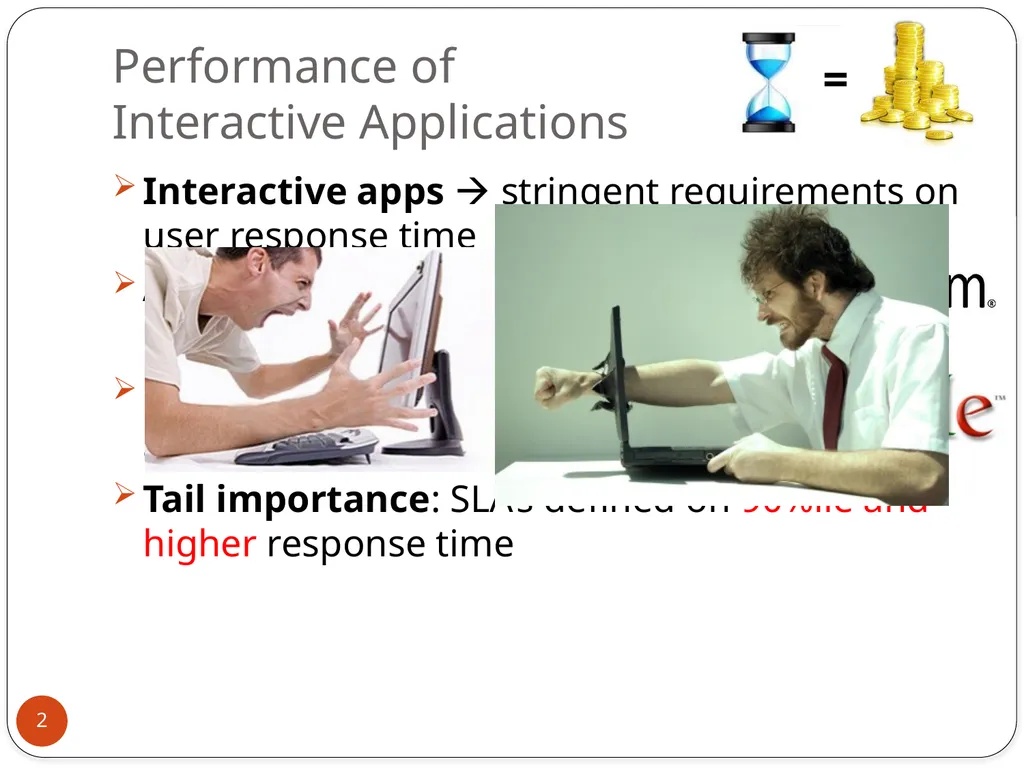
Performance of Interactive Applications 2 Interactive apps stringent requirements on user response time
Amazon: every 100ms latency cost
1% in sales
Google: 0.5 sec’s delay increase traffic
and revenue drop by 20%
Tail importance: SLA’s defined on 90%ile and higher response time =<br>
03
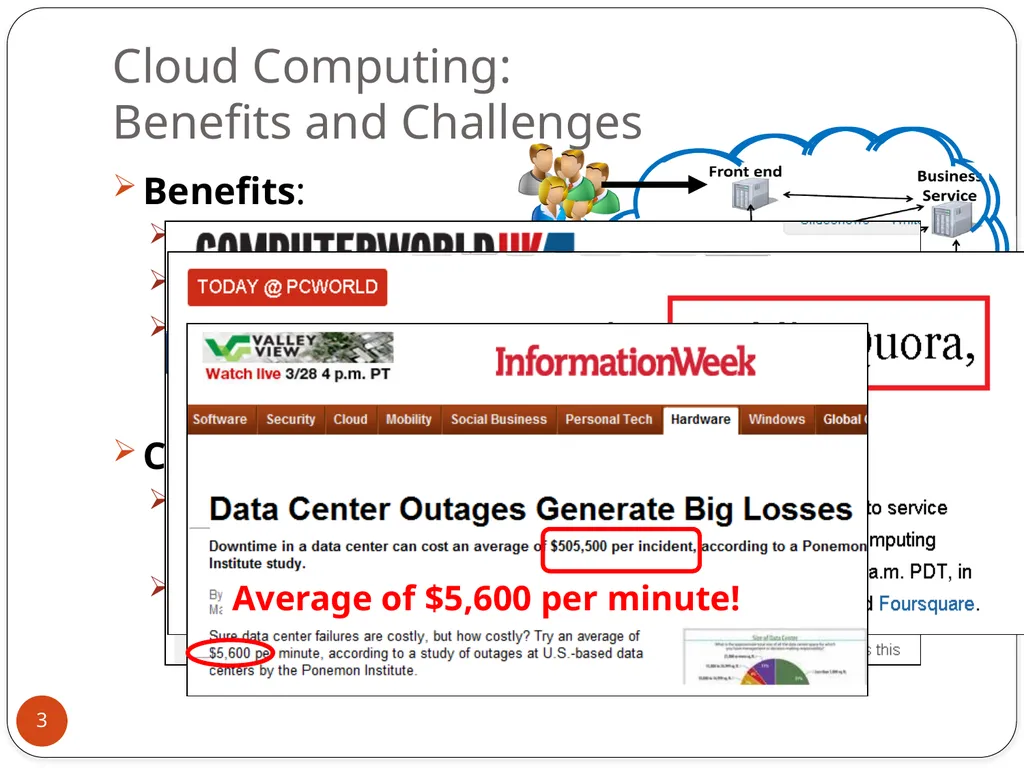
Cloud Computing: Benefits and Challenges 3 Benefits:
Elasticity
Cost-savings
Geo-distribution:
Service resilience, disaster recovery, better user experience, etc.
Challenges:
Performance is variable: [Ballani’11], [ Wang’10], [Li’10], [Mangot’09], etc.
Even worse, data-centers fail<br>
04
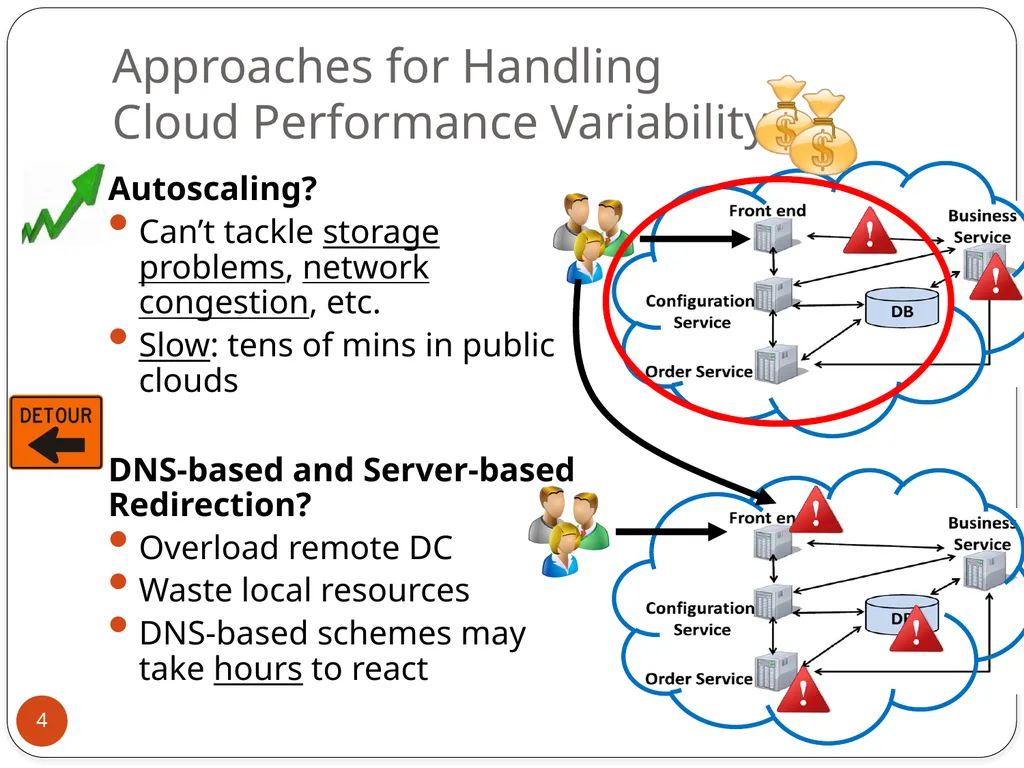
Approaches for Handling Cloud Performance Variability 4 Autoscaling?
Can’t tackle storage problems, network congestion, etc.
Slow: tens of mins in public clouds
DNS-based and Server-based Redirection?
Overload remote DC
Waste local resources
DNS-based schemes may take hours to react<br>
05
Contributions 5 Introduce Dealer to help interactive multi-tier applications respond to transient variability in performance in cloud
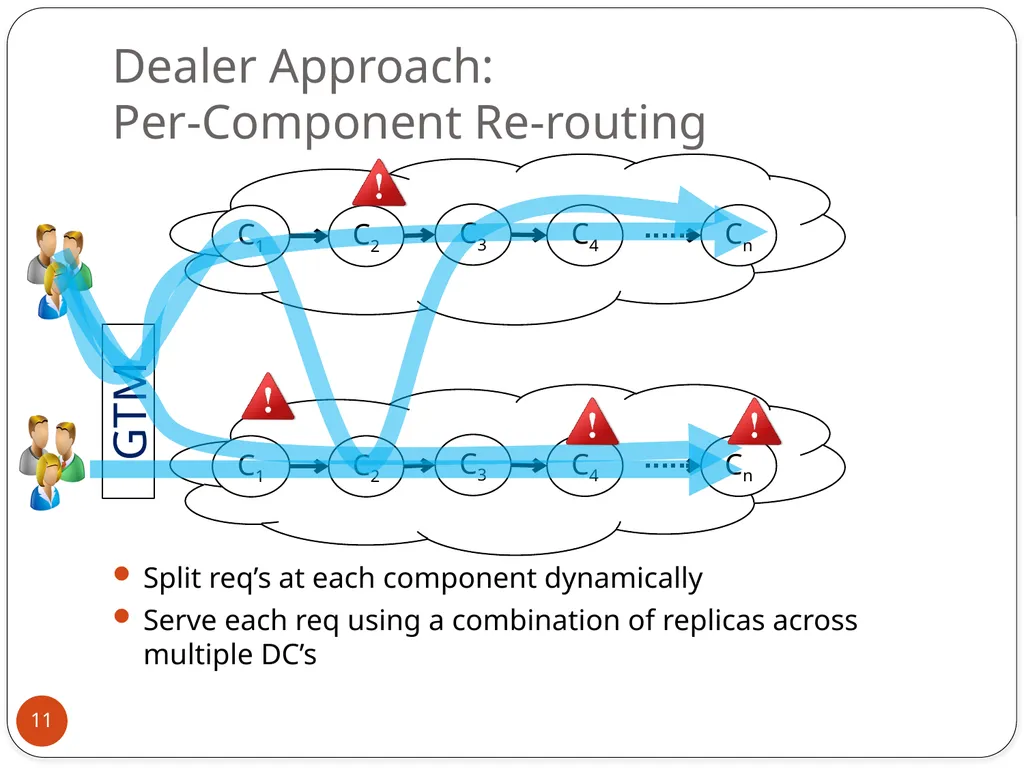
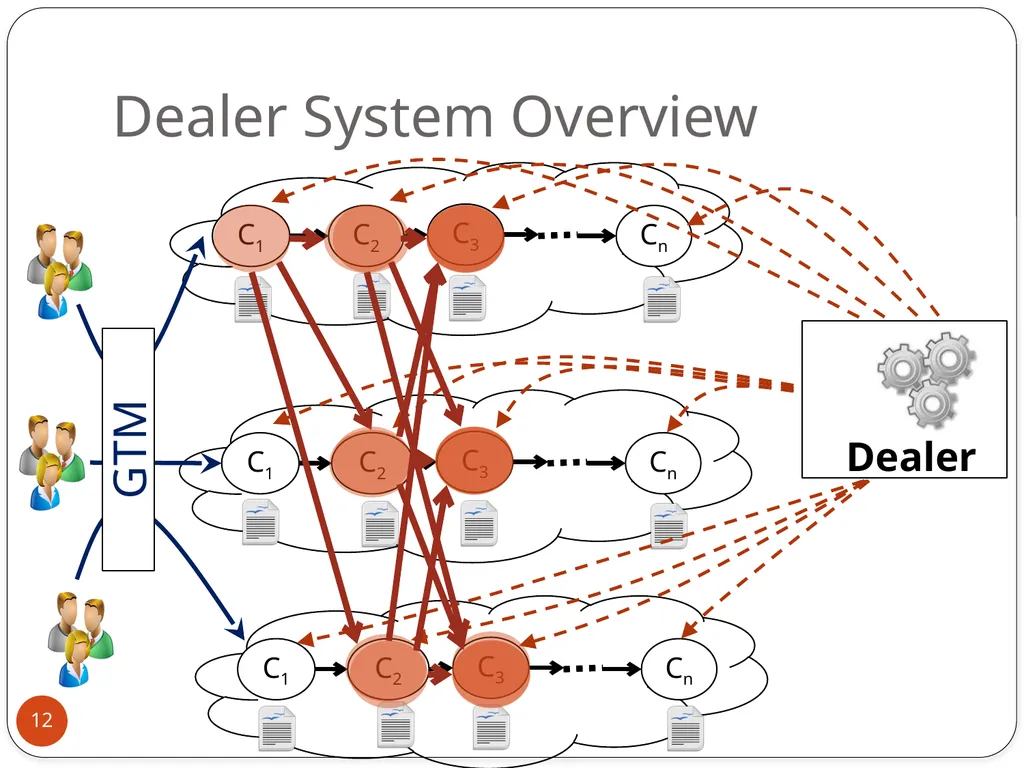
Split requests at component granularity (rather entire DC) Pick best combination of component replicas (potentially across multiple DC’s) to serve each individual request
Benefits over naïve approaches:
Wide range of variability in cloud (performance problems, network congestion, workload spikes, failures, etc.)
Short time scale adaptation (tens of seconds to few minutes)
Performance tail (90th percentile and higher):
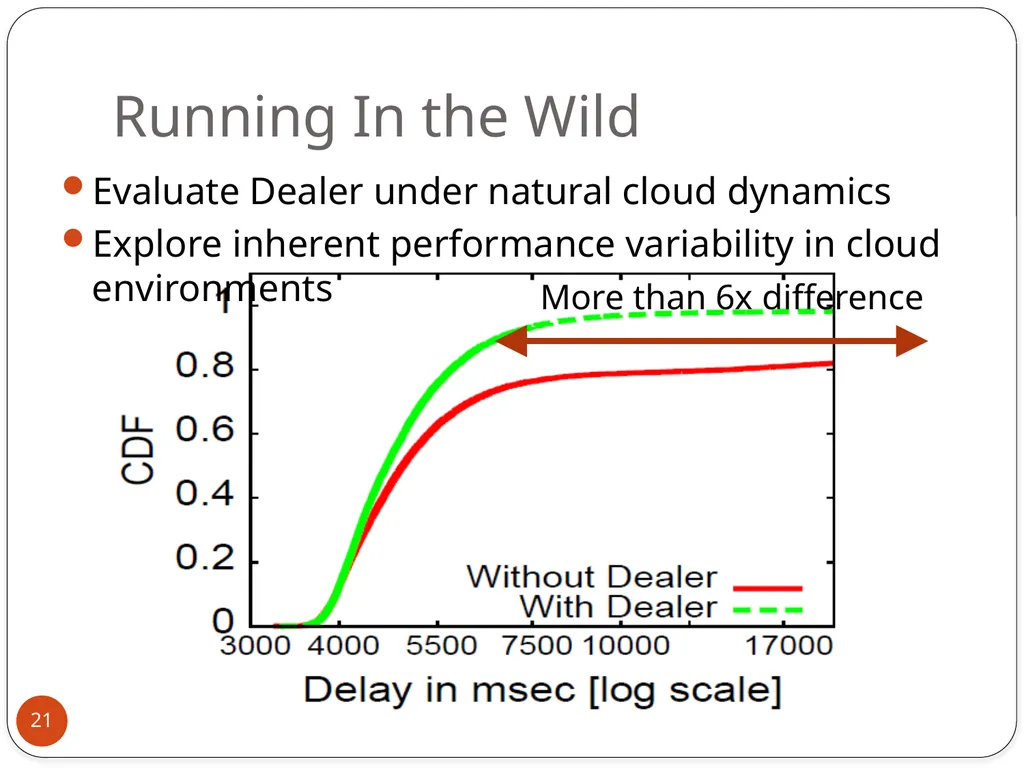
Under natural cloud dynamics > 6x
Redirection schemes: e.g., DNS-based load-balancers > 3x<br>
06
Outline 6 Introduction
Measurement and Observations
System Design
Evaluation<br>
07
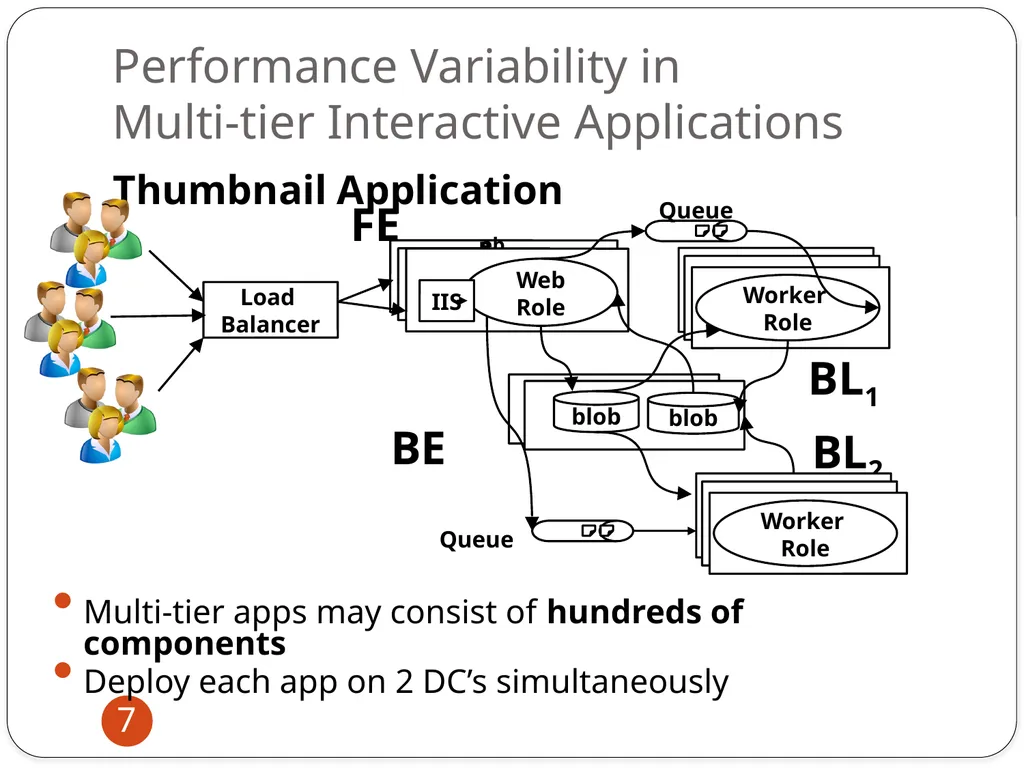
Performance Variability in Multi-tier Interactive Applications 7 Multi-tier apps may consist of hundreds of components
Deploy each app on 2 DC’s simultaneously<br>
08
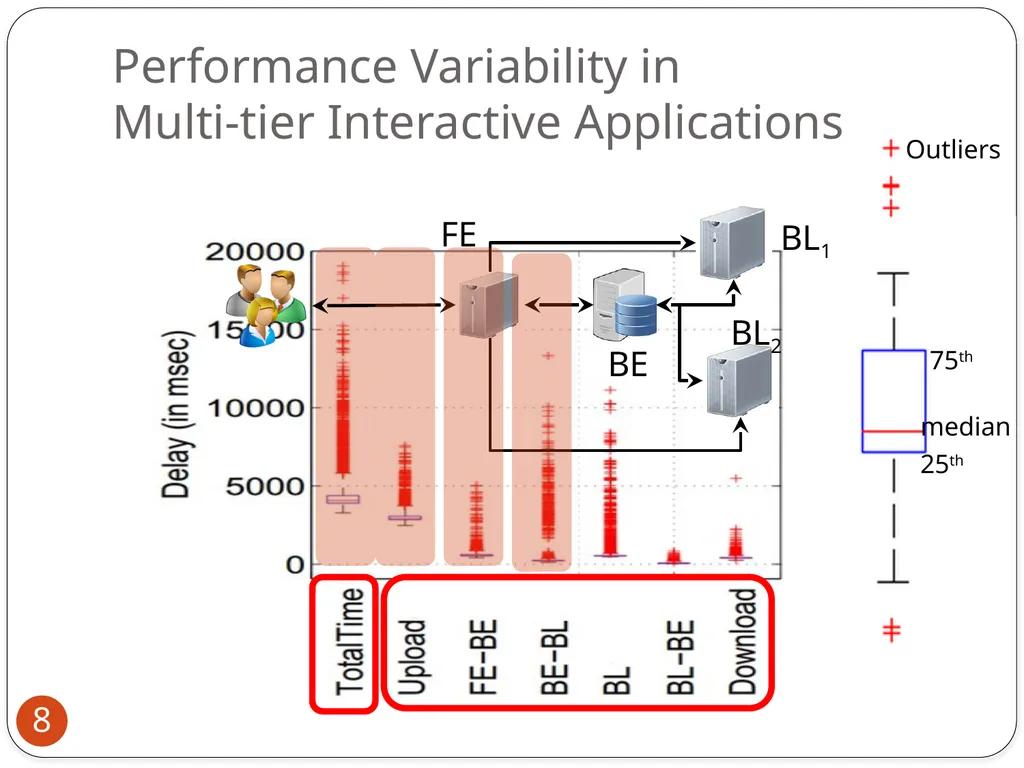
Performance Variability in Multi-tier Interactive Applications 8<br>
09
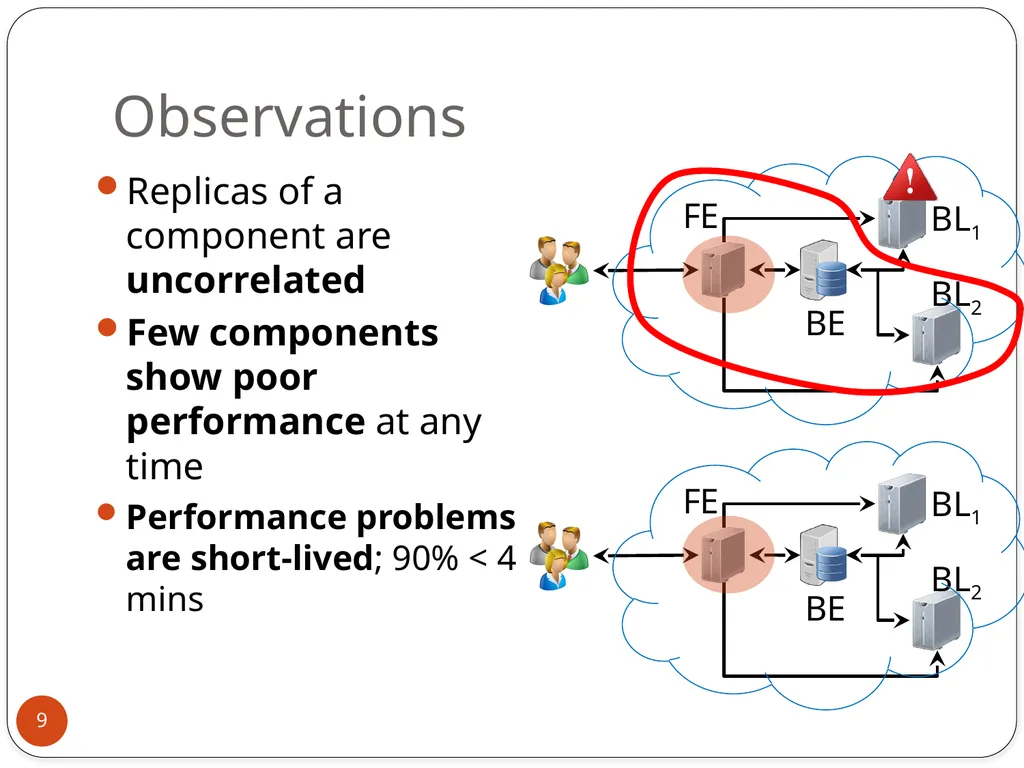
Observations 9 Replicas of a component are uncorrelated
Few components show poor performance at any time
Performance problems are short-lived; 90% < 4 mins<br>
10
Outline 10 Introduction
Measurement and Observations
System Design
Evaluation<br>
11
Dealer Approach: Per-Component Re-routing 11 Split req’s at each component dynamically
Serve each req using a combination of replicas across multiple DC’s GTM<br>
12
12 Dealer GTM Dealer System Overview<br>
13
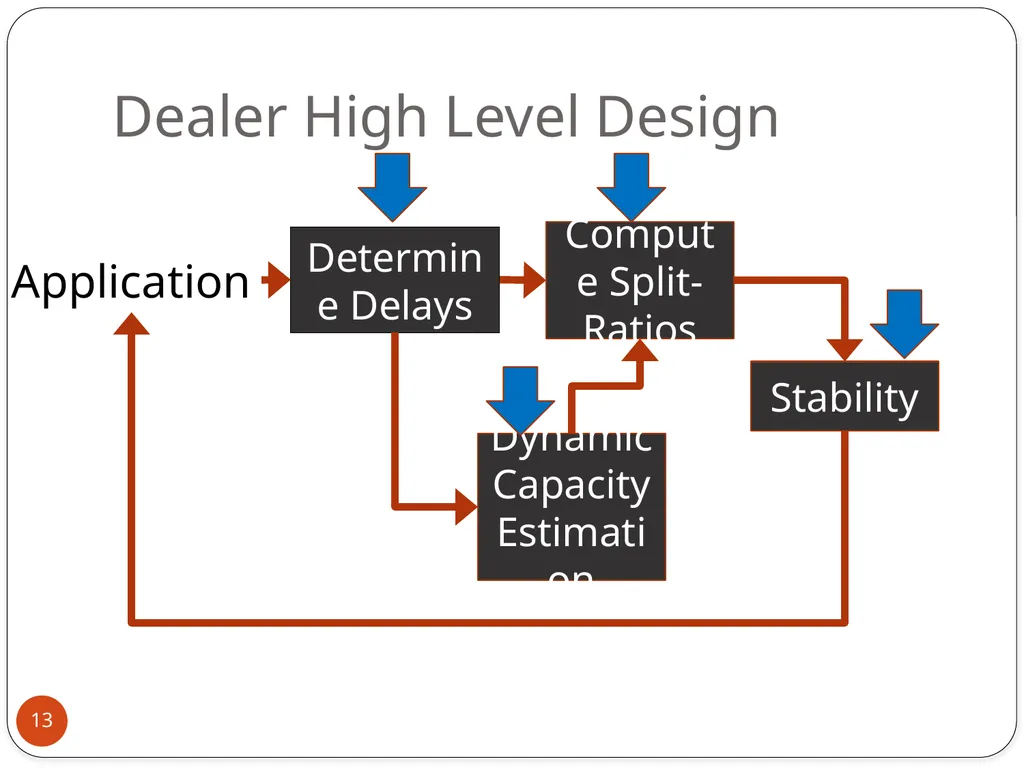
Dealer High Level Design 13<br>
14
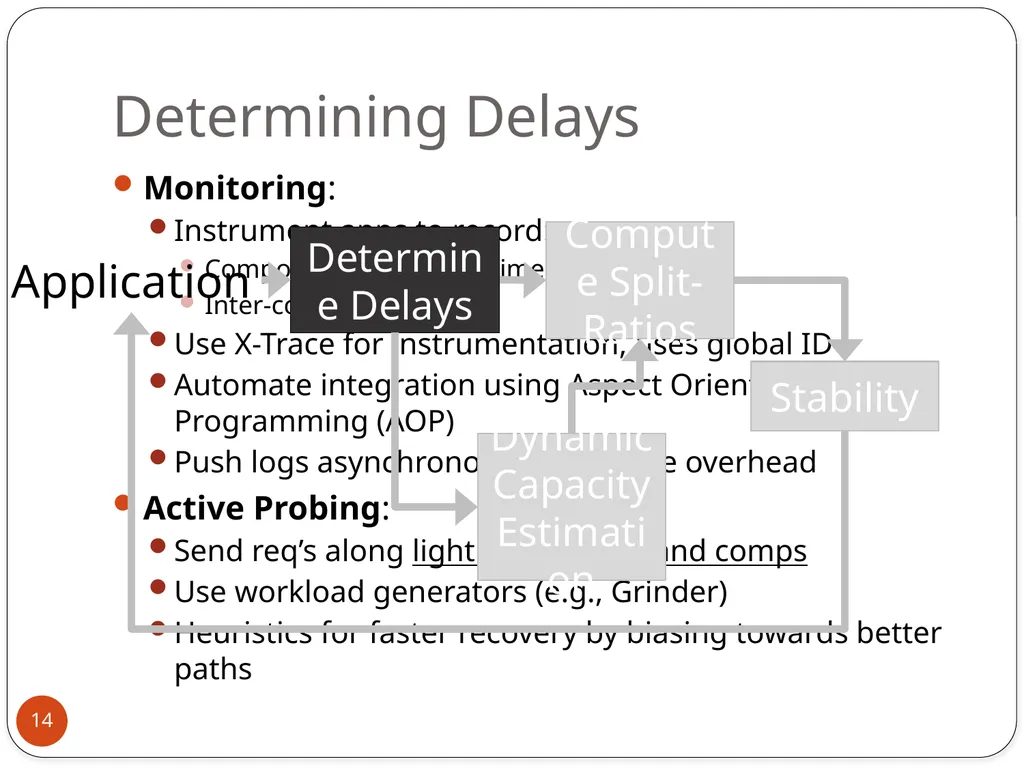
Determining Delays 14 Monitoring:
Instrument apps to record:
Component processing time
Inter-component delay
Use X-Trace for instrumentation, uses global ID
Automate integration using Aspect Oriented Programming (AOP)
Push logs asynchronously to reduce overhead
Active Probing:
Send req’s along lightly used links and comps
Use workload generators (e.g., Grinder)
Heuristics for faster recovery by biasing towards better paths<br>
15
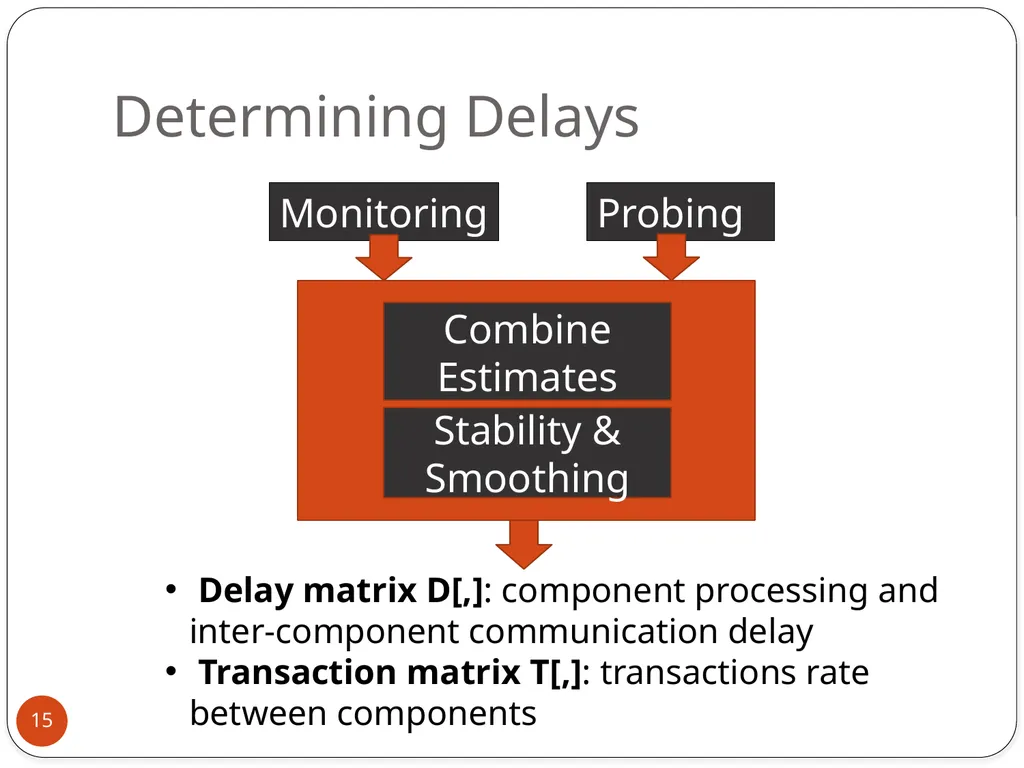
Determining Delays 15 Monitoring Probing Delay matrix D[,]: component processing and inter-component communication delay
Transaction matrix T[,]: transactions rate between components Combine Estimates Stability & Smoothing<br>
16
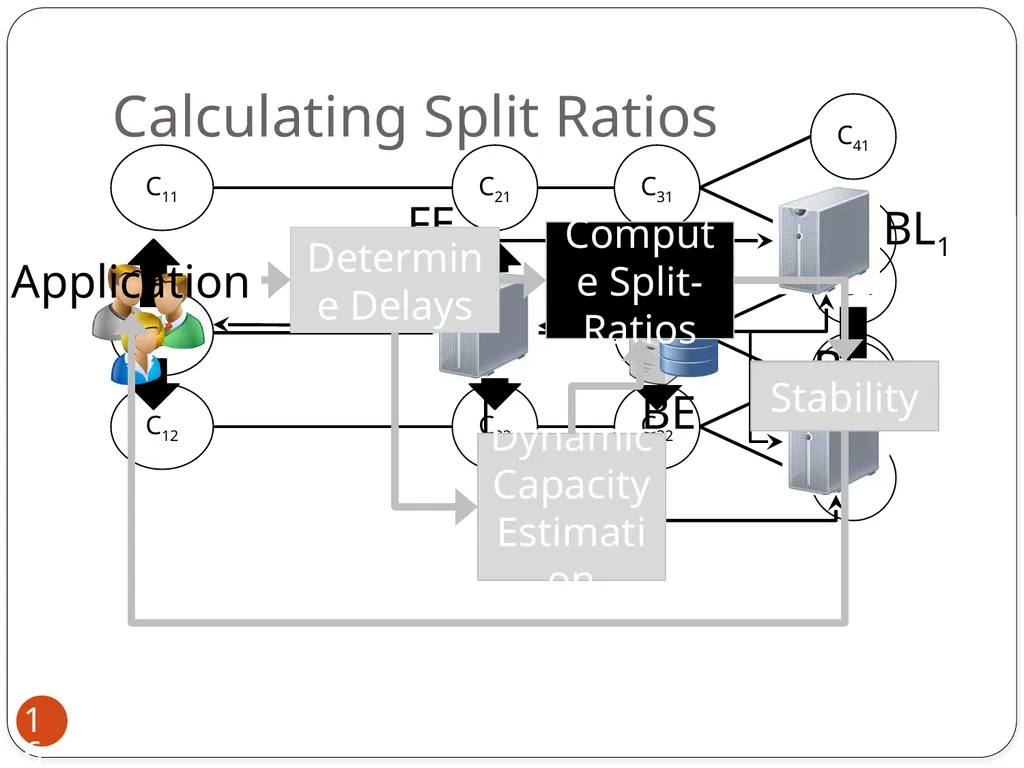
Calculating Split Ratios 16<br>
17
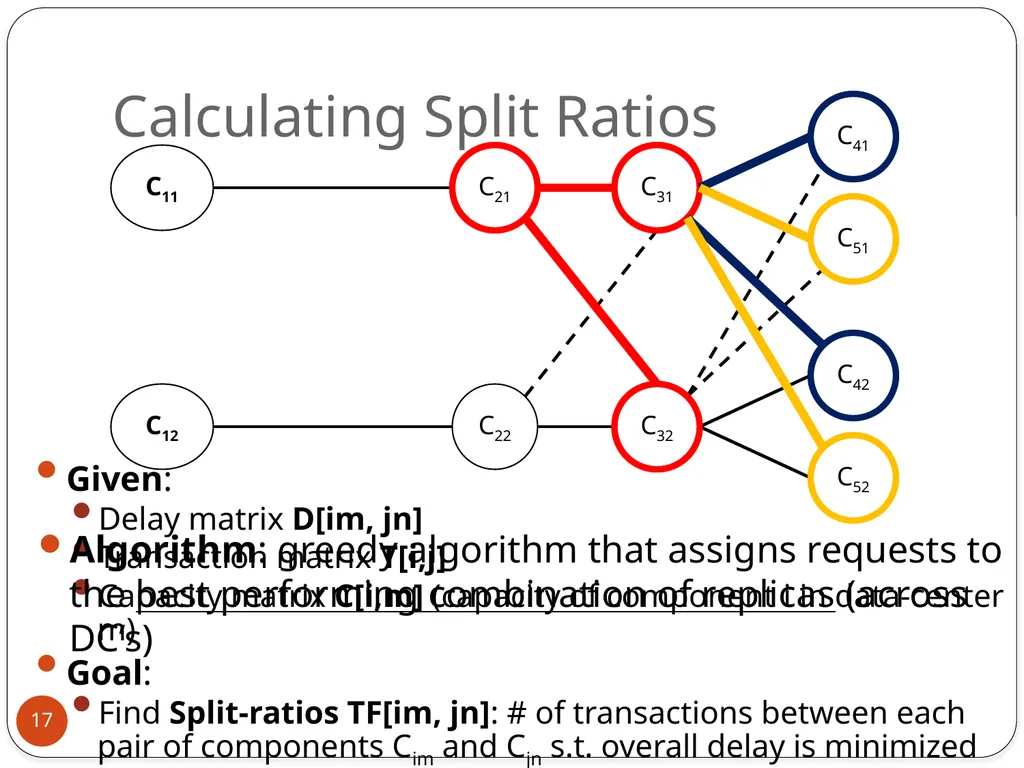
C21 C41 C31 C11 C22 C42 C32 C12 C51 C52 Calculating Split Ratios 17 Given:
Delay matrix D[im, jn]
Transaction matrix T[i,j]
Capacity matrix C[i,m] (capacity of component i in data-center m)
Goal:
Find Split-ratios TF[im, jn]: # of transactions between each pair of components Cim and Cjn s.t. overall delay is minimized Algorithm: greedy algorithm that assigns requests to the best performing combination of replicas (across DC’s)<br>
18
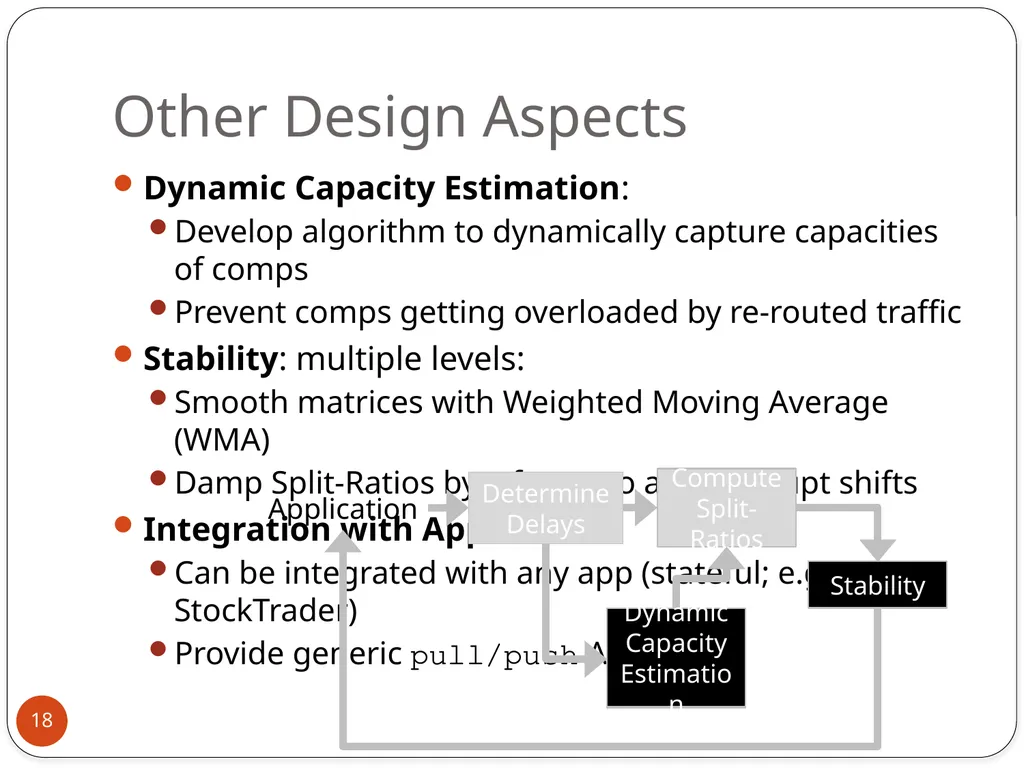
Other Design Aspects 18 Dynamic Capacity Estimation:
Develop algorithm to dynamically capture capacities of comps
Prevent comps getting overloaded by re-routed traffic
Stability: multiple levels:
Smooth matrices with Weighted Moving Average (WMA)
Damp Split-Ratios by a factor to avoid abrupt shifts
Integration with Apps:
Can be integrated with any app (stateful; e.g., StockTrader)
Provide generic pull/push API’s Dynamic Capacity Estimation Stability<br>
19
Outline 19 Introduction
Measurement and Observations
System Design
Evaluation<br>
20
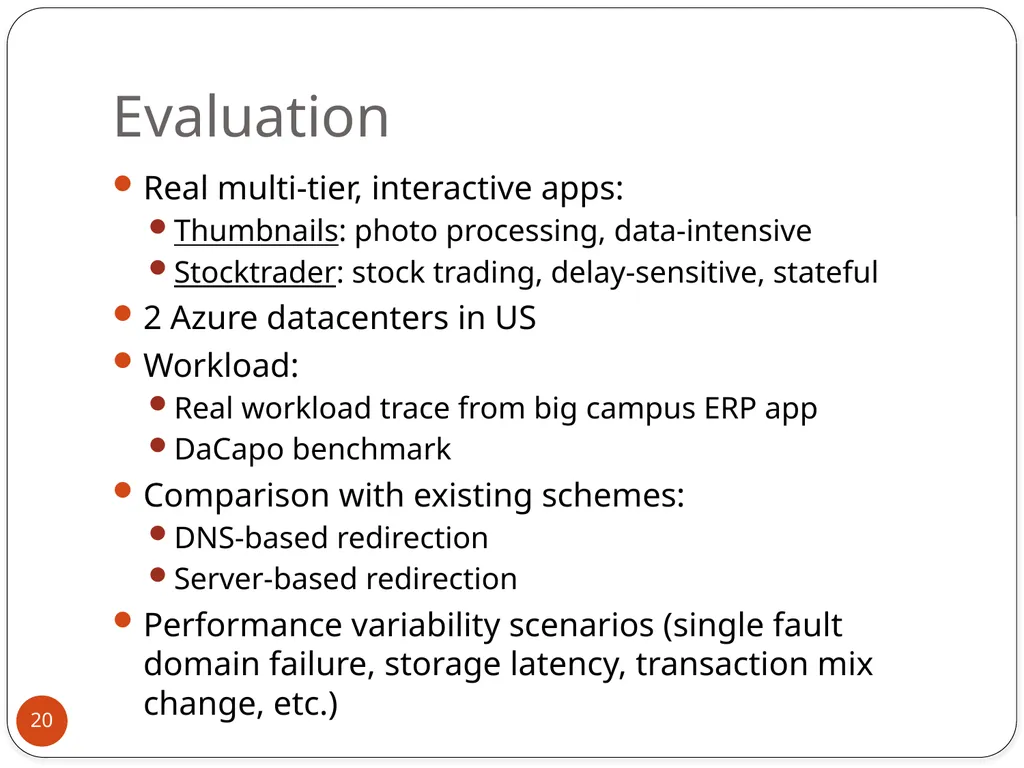
Evaluation 20 Real multi-tier, interactive apps:
Thumbnails: photo processing, data-intensive
Stocktrader: stock trading, delay-sensitive, stateful
2 Azure datacenters in US
Workload:
Real workload trace from big campus ERP app
DaCapo benchmark
Comparison with existing schemes:
DNS-based redirection
Server-based redirection
Performance variability scenarios (single fault domain failure, storage latency, transaction mix change, etc.)<br>
21
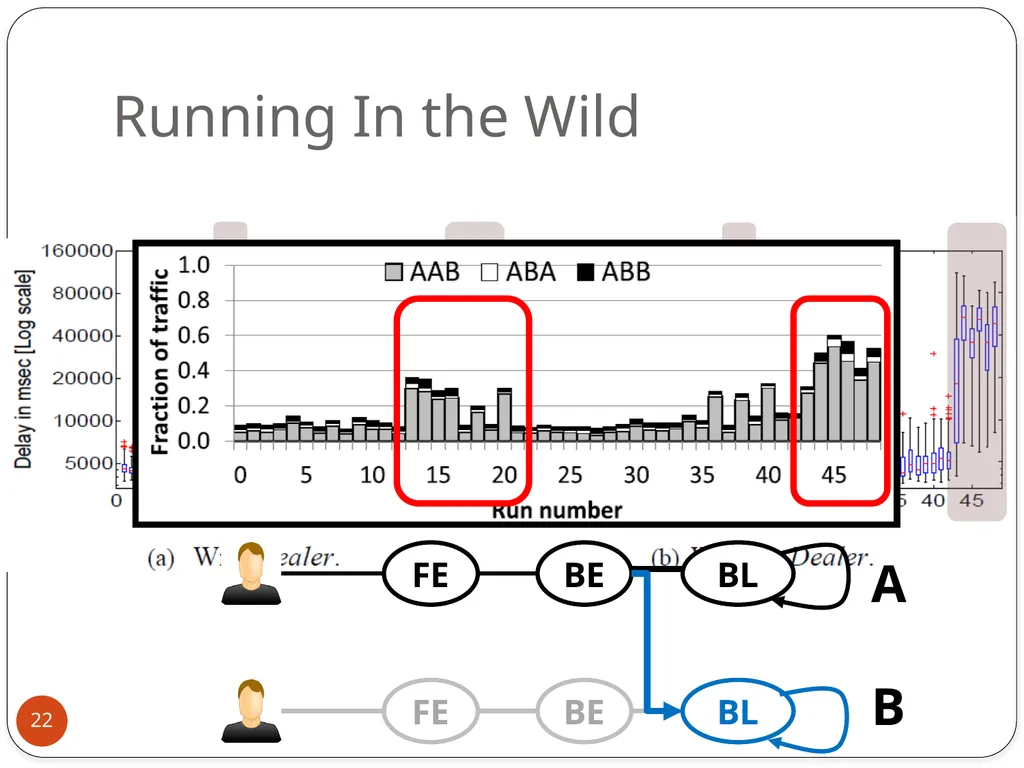
Running In the Wild 21 Evaluate Dealer under natural cloud dynamics
Explore inherent performance variability in cloud environments<br>
22
Running In the Wild 22<br>
23
Dealer vs. GTM 23 Global Traffic Managers (GTM’s) use DNS to route user IP’s to closest DC
Best performing DC ≠ closest DC (measured by RTT)
Results: more than 3x improvement for 90th percentile and higher<br>
24
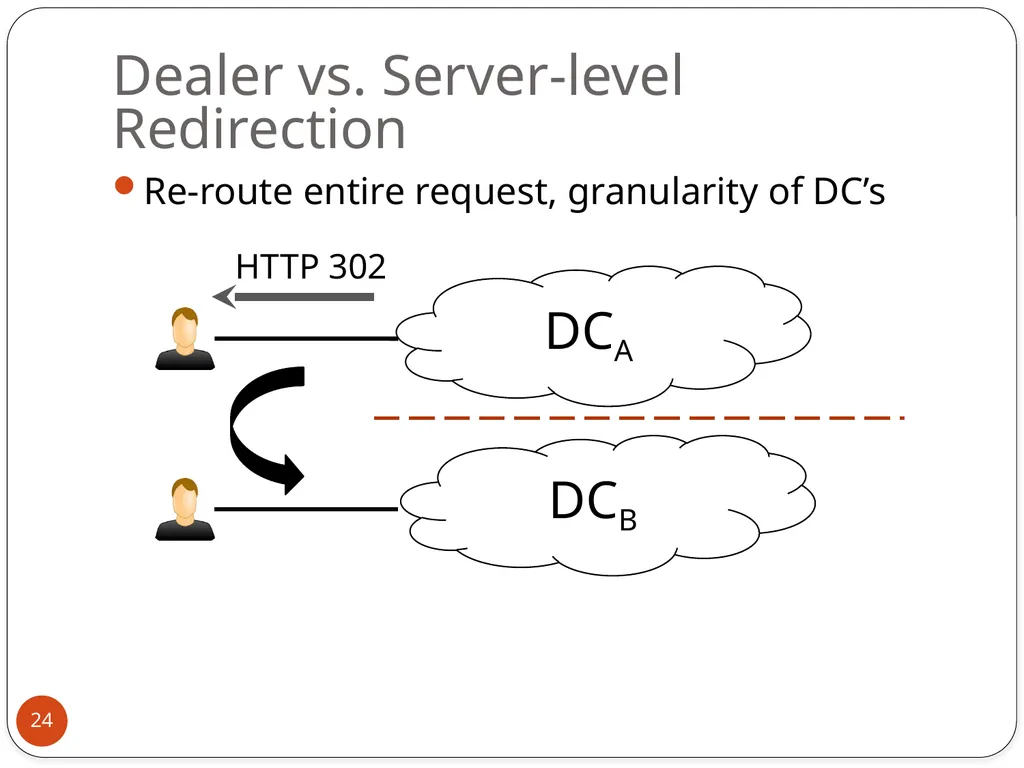
Dealer vs. Server-level Redirection 24 Re-route entire request, granularity of DC’s DCA DCB<br>
25
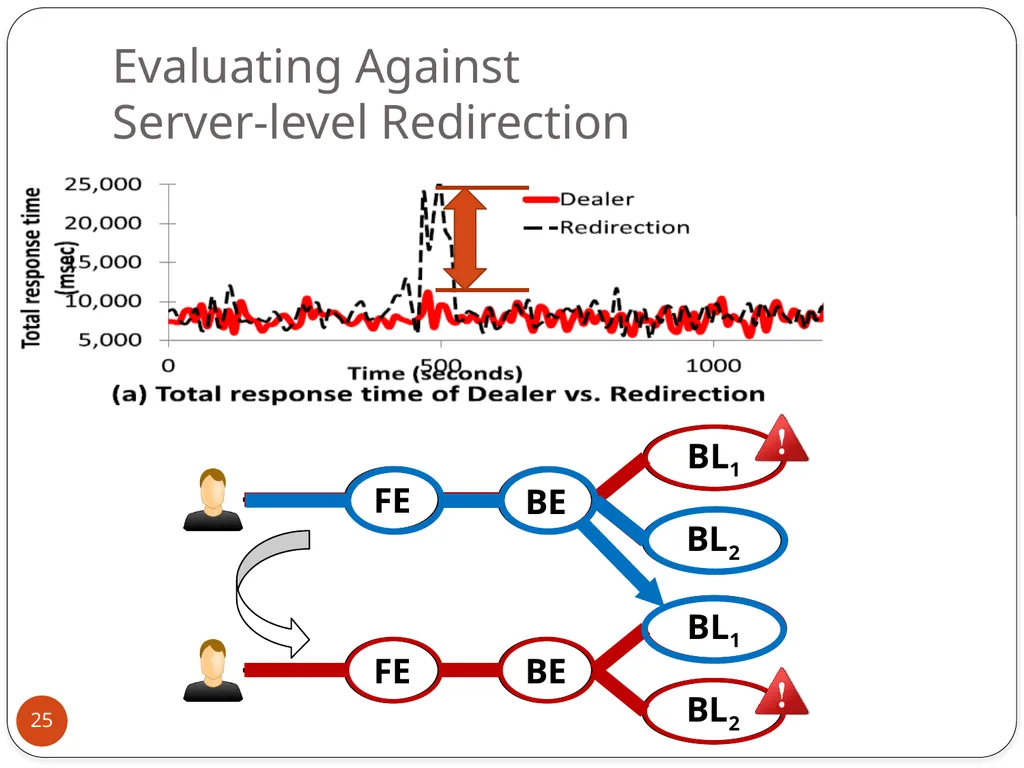
Evaluating Against Server-level Redirection 25 FE BE BL1 BL2 FE BE BL1 BL2<br>
26
Conclusions 26 Dealer: novel technique to handle cloud variability in multi-tier interactive apps
Per-component re-routing: dynamically split user req’s across replicas in multiple DC’s at component granularity
Transient cloud variability: performance problems in cloud services, workload spikes, failures, etc.
Short time scale adaptation: tens of seconds to few mins
Performance tail improvement:
Natural cloud dynamics > 6x
Coarse-grain Redirection: e.g., DNS-based GTM > 3x<br>