MoHFW /CDC / BD Partnership Project LABS FOR LIFE
Description: MoHFW CDC BD Partnership Project LABS FOR LIFE PROJECT - INDIA Equipment Management It is important to teach operators to troubleshoot equipment problems in order to quickly get the equipment functioning and resume testing as rapidly as
Related Topics
Download Presentation
"MoHFW /CDC / BD Partnership Project LABS FOR LIFE" is the property of its rightful owner. Permission is granted to download and print the materials on this website for personal, non-commercial use only, and to display it on your personal computer provided you do not modify the materials and that you retain all copyright notices contained in the materials. By downloading content from our website, you accept the terms of this agreement.
Presentation Transcript
slide1. MoHFW /CDC / BD Partnership Project LABS FOR LIFE PROJECT - INDIA Equipment Management<br>
slide2. It is important to teach operators to troubleshoot equipment problems in order to quickly get the equipment functioning and resume testing as rapidly as possible.
When an operator observes instrument drift, it is important to repeat the preventive maintenance procedures as a first step to resolve the problem. If this does not work, proceed with troubleshooting Trouble shooting Determining the source and cause of the problem<br>
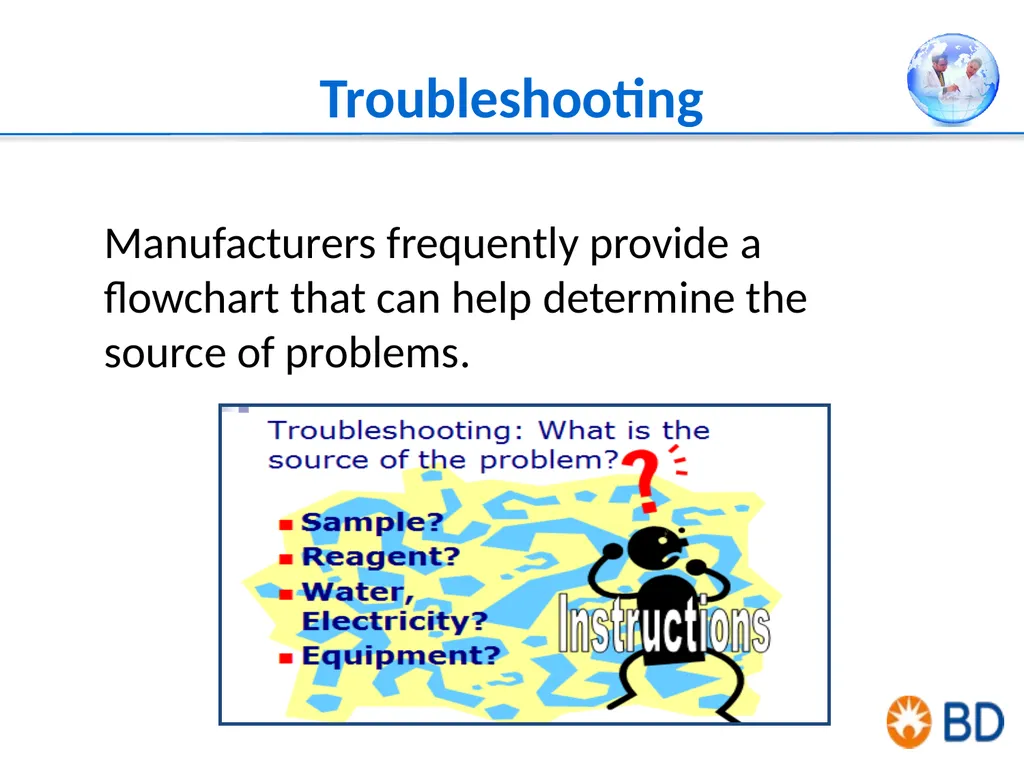
slide3. Manufacturers frequently provide a flowchart that can help determine the source of problems. Troubleshooting<br>
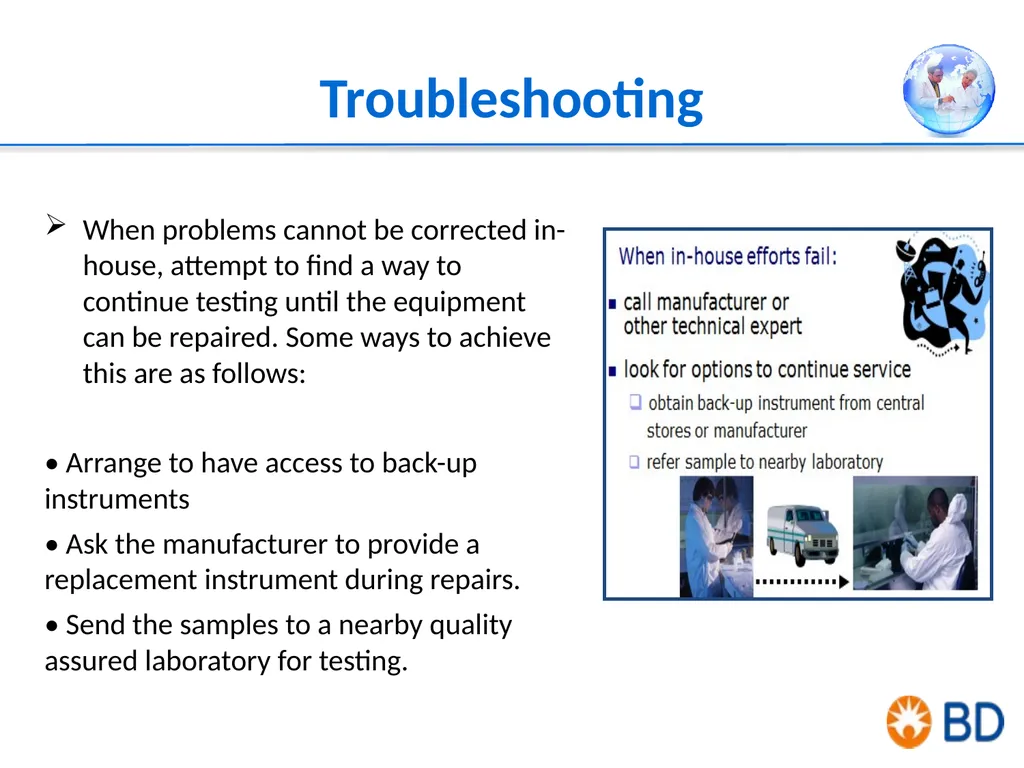
slide4. When problems cannot be corrected in-house, attempt to find a way to continue testing until the equipment can be repaired. Some ways to achieve this are as follows:
• Arrange to have access to back-up instruments
• Ask the manufacturer to provide a replacement instrument during repairs.
• Send the samples to a nearby quality assured laboratory for testing. Troubleshooting<br>
slide5. It must be clarified by the manufacturer/supplier during training as to what instrument flags and alerts should the lab personnel watch out for. Also, it should be clearly known to what extent/step the equipment troubleshooting can be done by the lab personnel and which snags are to be addressed by the manufacturer only.
The manufacturer must provide single point of contact/helpline for troubleshooting as effectively and in as timely a manner as possible. Troubleshooting Flags<br>
slide2. It is important to teach operators to troubleshoot equipment problems in order to quickly get the equipment functioning and resume testing as rapidly as possible.
When an operator observes instrument drift, it is important to repeat the preventive maintenance procedures as a first step to resolve the problem. If this does not work, proceed with troubleshooting Trouble shooting Determining the source and cause of the problem<br>
slide3. Manufacturers frequently provide a flowchart that can help determine the source of problems. Troubleshooting<br>
slide4. When problems cannot be corrected in-house, attempt to find a way to continue testing until the equipment can be repaired. Some ways to achieve this are as follows:
• Arrange to have access to back-up instruments
• Ask the manufacturer to provide a replacement instrument during repairs.
• Send the samples to a nearby quality assured laboratory for testing. Troubleshooting<br>
slide5. It must be clarified by the manufacturer/supplier during training as to what instrument flags and alerts should the lab personnel watch out for. Also, it should be clearly known to what extent/step the equipment troubleshooting can be done by the lab personnel and which snags are to be addressed by the manufacturer only.
The manufacturer must provide single point of contact/helpline for troubleshooting as effectively and in as timely a manner as possible. Troubleshooting Flags<br>