Monitoring progress on menstrual health services in schools 2nd International Learning Exchange on WinS - Africa 8 May 2024 Christie Chatterley, WHOUNICEF Joint Monitoring Programme (JMP) If we dont monitor it, we cant improve it Why
"Monitoring progress on menstrual health services" is the property of its rightful owner. Permission is granted to
download and print the materials on this website for personal, non-commercial use only, and to display it
on your personal computer provided you do not modify the materials and that you retain all copyright
notices contained in the materials. By downloading content from our website, you accept the terms of this
agreement.
Presentation Transcript
01
Monitoring progress on menstrual health services in schools 2nd International Learning Exchange on WinS - Africa
8 May 2024
Christie Chatterley, WHO/UNICEF Joint Monitoring Programme (JMP)<br>
02
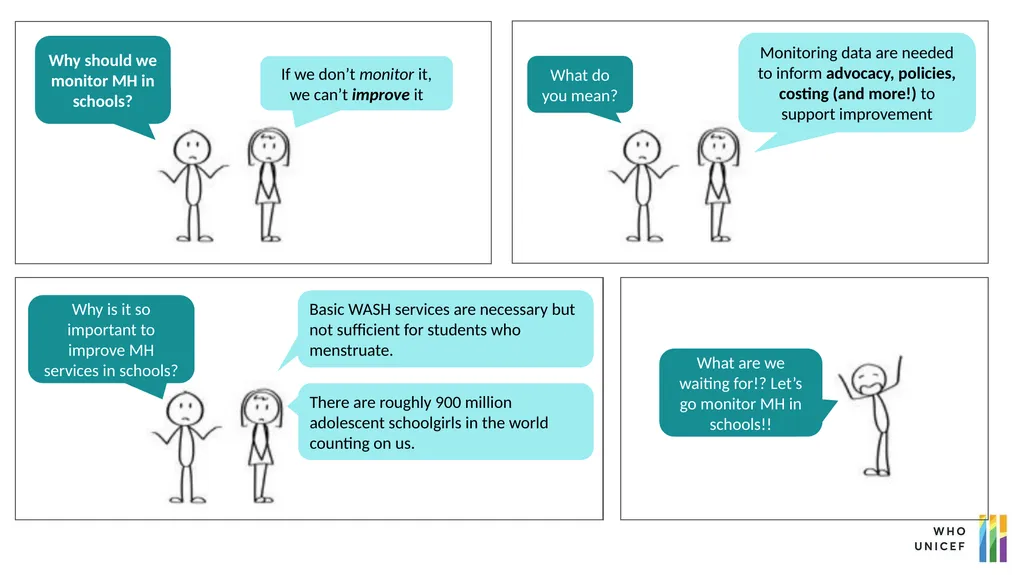
If we don’t monitor it, we can’t improve it Why should we monitor MH in schools? Monitoring data are needed to inform advocacy, policies, costing (and more!) to support improvement What do you mean? Why is it so important to improve MH services in schools? Basic WASH services are necessary but not sufficient for students who menstruate. What are we waiting for!? Let’s go monitor MH in schools!! There are roughly 900 million adolescent schoolgirls in the world counting on us.<br>
03
What exactly should we be monitoring??<br>
04
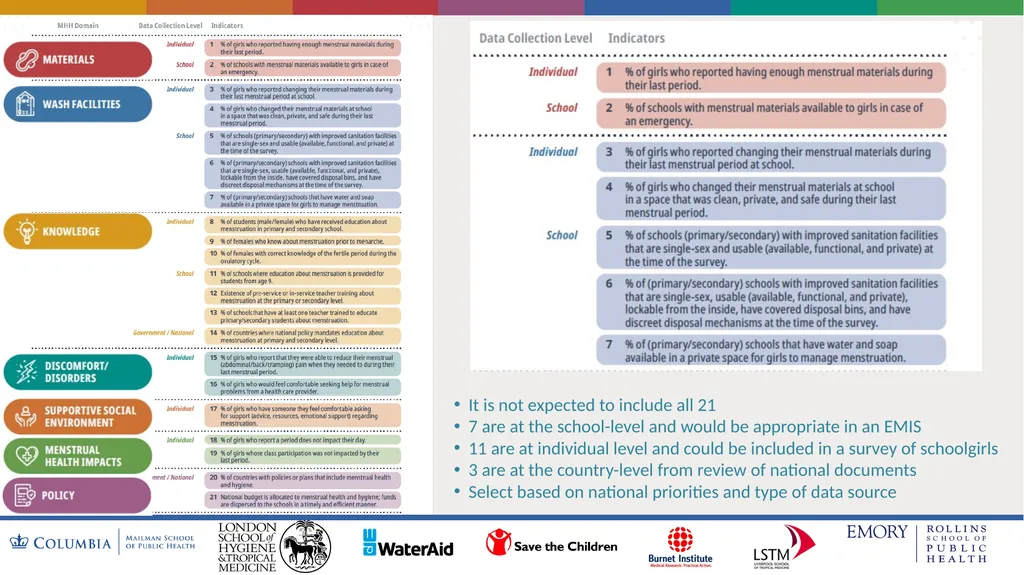
It is not expected to include all 21
7 are at the school-level and would be appropriate in an EMIS
11 are at individual level and could be included in a survey of schoolgirls
3 are at the country-level from review of national documents
Select based on national priorities and type of data source<br>
05
Some countries already have data related to some of the priority indicators for girls’ menstrual health and hygiene!<br>
06
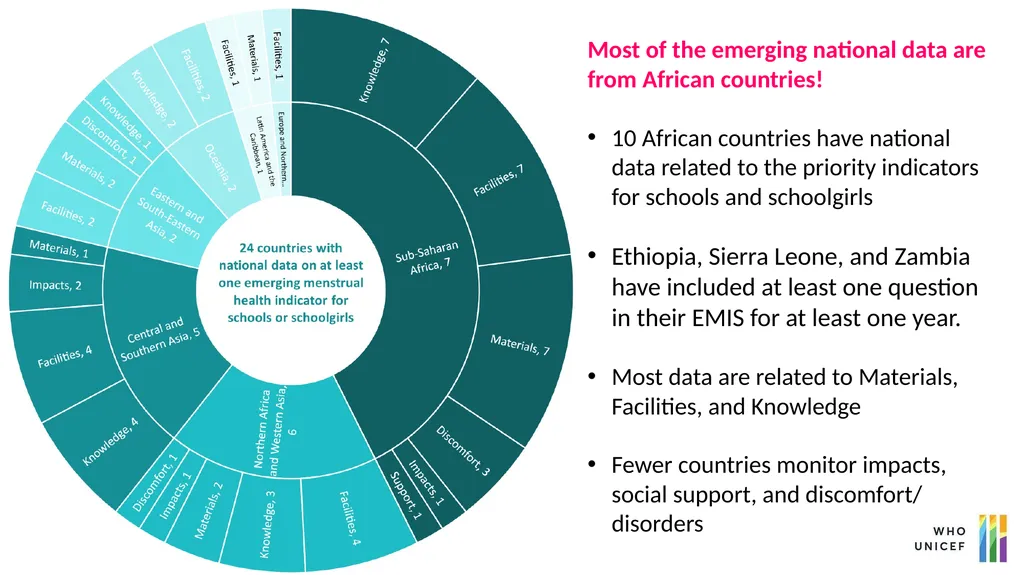
Most of the emerging national data are from African countries!
10 African countries have national data related to the priority indicators for schools and schoolgirls
Ethiopia, Sierra Leone, and Zambia have included at least one question in their EMIS for at least one year.
Most data are related to Materials, Facilities, and Knowledge
Fewer countries monitor impacts, social support, and discomfort/ disorders<br>
07
A Sneak Peak at Emerging Data (EMBARGOED – will be officially released 28 May)<br>
08
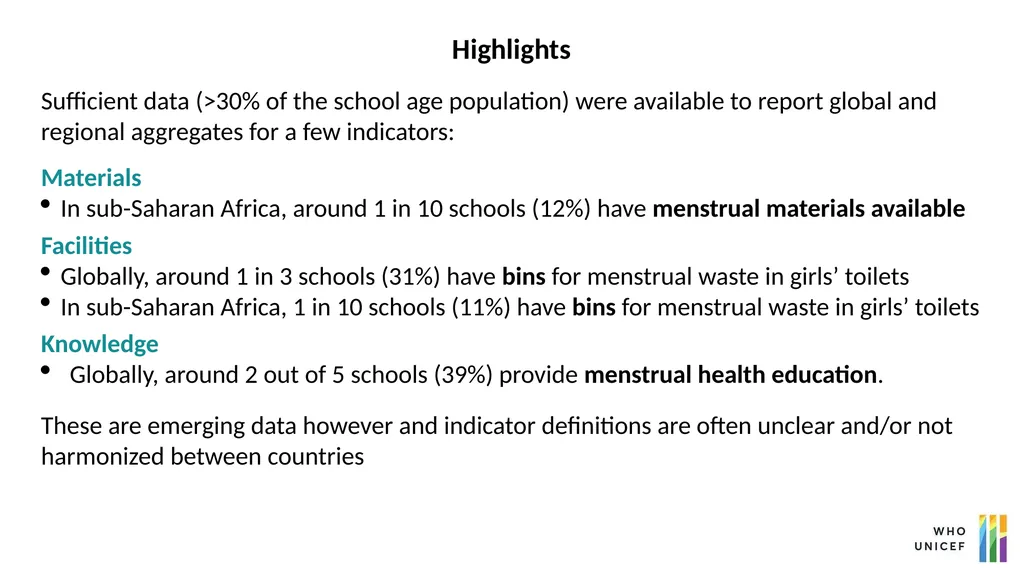
Highlights Sufficient data (>30% of the school age population) were available to report global and regional aggregates for a few indicators:
Materials
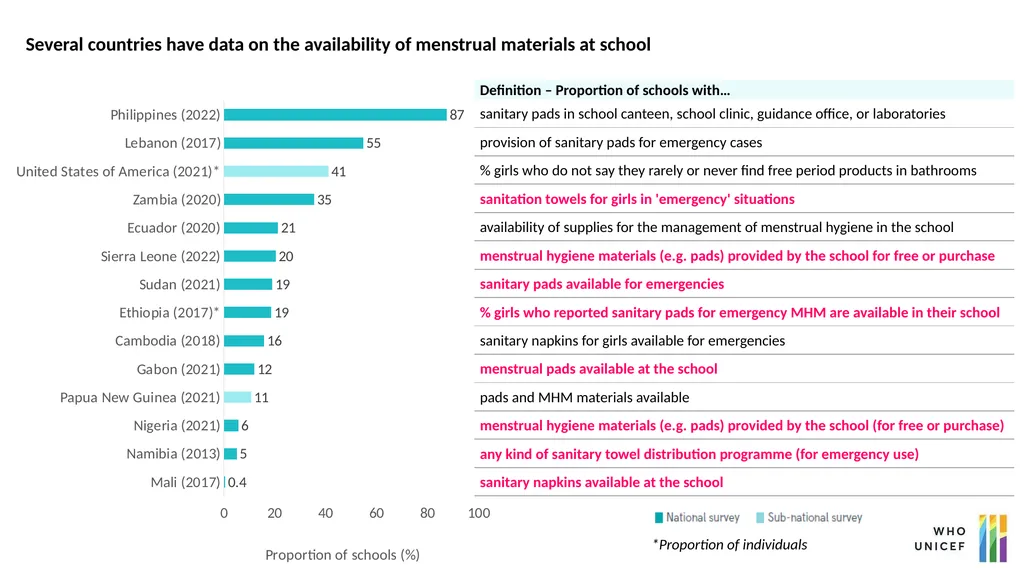
In sub-Saharan Africa, around 1 in 10 schools (12%) have menstrual materials available
Facilities
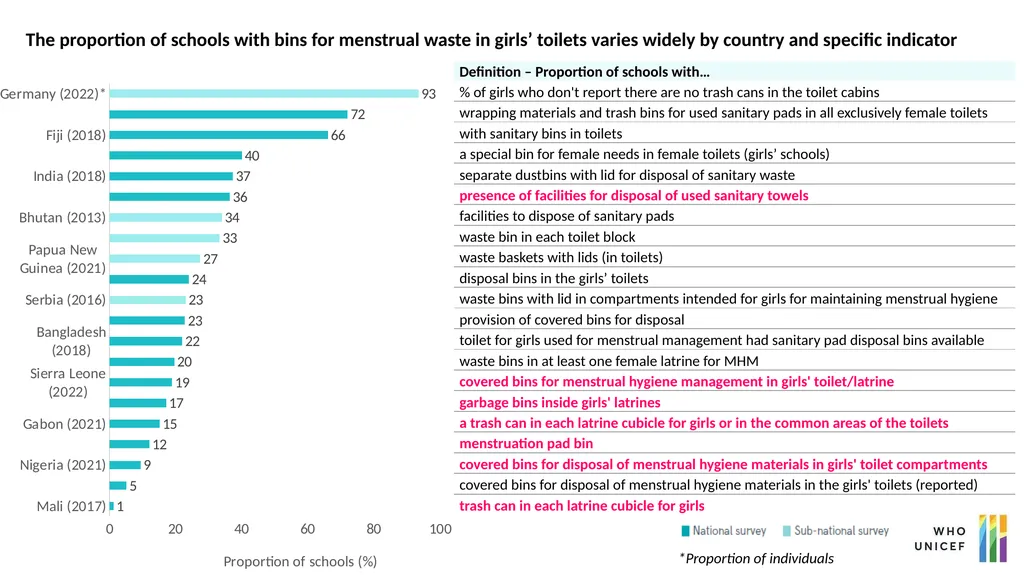
Globally, around 1 in 3 schools (31%) have bins for menstrual waste in girls’ toilets
In sub-Saharan Africa, 1 in 10 schools (11%) have bins for menstrual waste in girls’ toilets
Knowledge
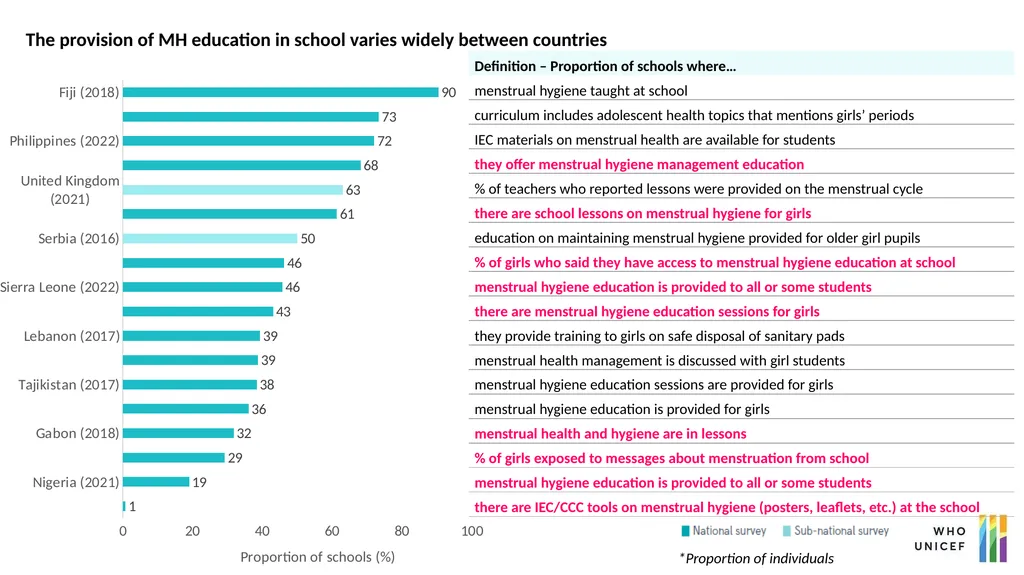
Globally, around 2 out of 5 schools (39%) provide menstrual health education.
These are emerging data however and indicator definitions are often unclear and/or not harmonized between countries<br>
09
Several countries have data on the availability of menstrual materials at school *Proportion of individuals<br>
10
The proportion of schools with bins for menstrual waste in girls’ toilets varies widely by country and specific indicator *Proportion of individuals<br>
11
The provision of MH education in school varies widely between countries *Proportion of individuals<br>
12
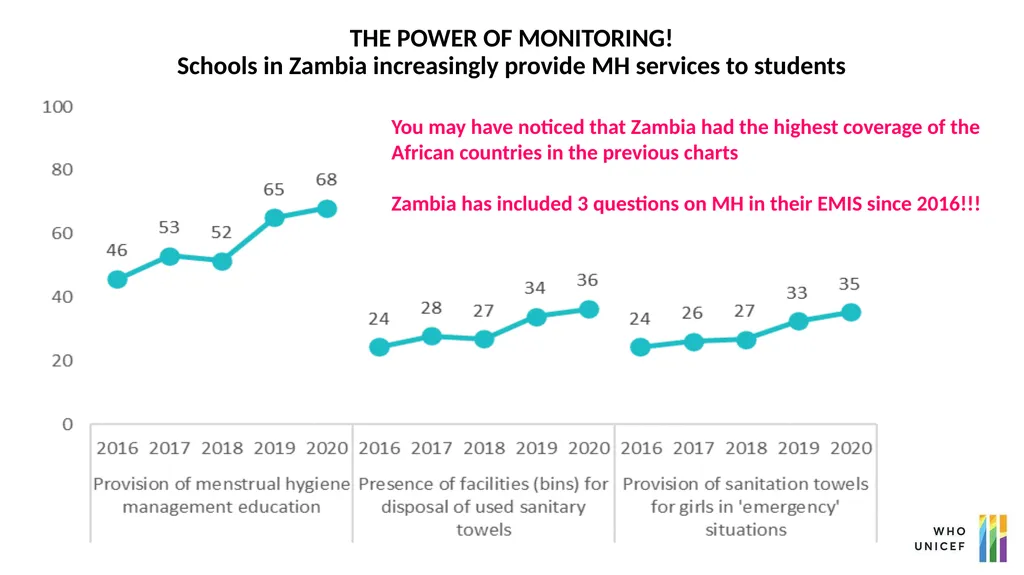
THE POWER OF MONITORING! Schools in Zambia increasingly provide MH services to students You may have noticed that Zambia had the highest coverage of the African countries in the previous charts
Zambia has included 3 questions on MH in their EMIS since 2016!!!<br>
13
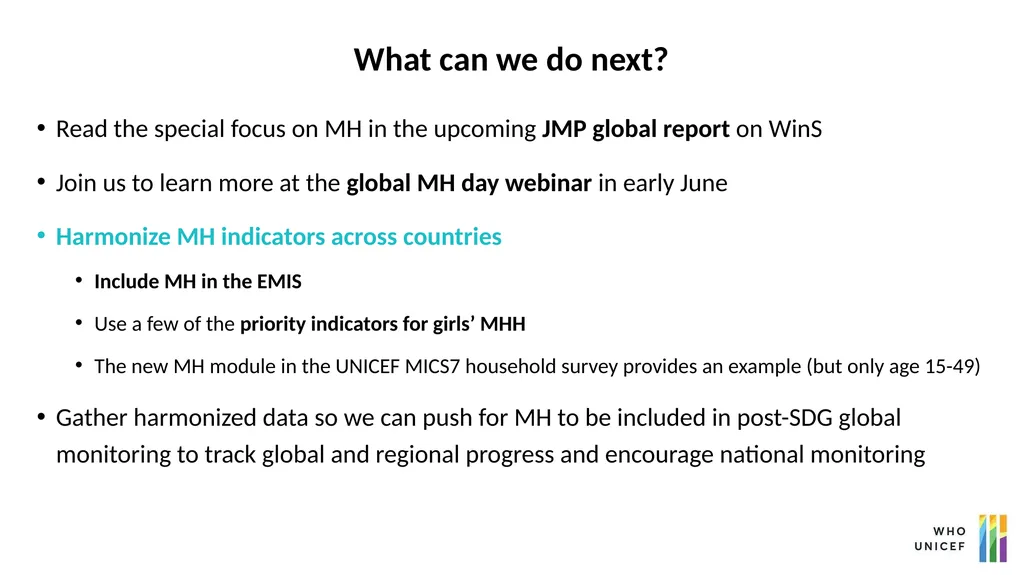
What can we do next? Read the special focus on MH in the upcoming JMP global report on WinS
Join us to learn more at the global MH day webinar in early June
Harmonize MH indicators across countries
Include MH in the EMIS
Use a few of the priority indicators for girls’ MHH
The new MH module in the UNICEF MICS7 household survey provides an example (but only age 15-49)
Gather harmonized data so we can push for MH to be included in post-SDG global monitoring to track global and regional progress and encourage national monitoring<br>
14
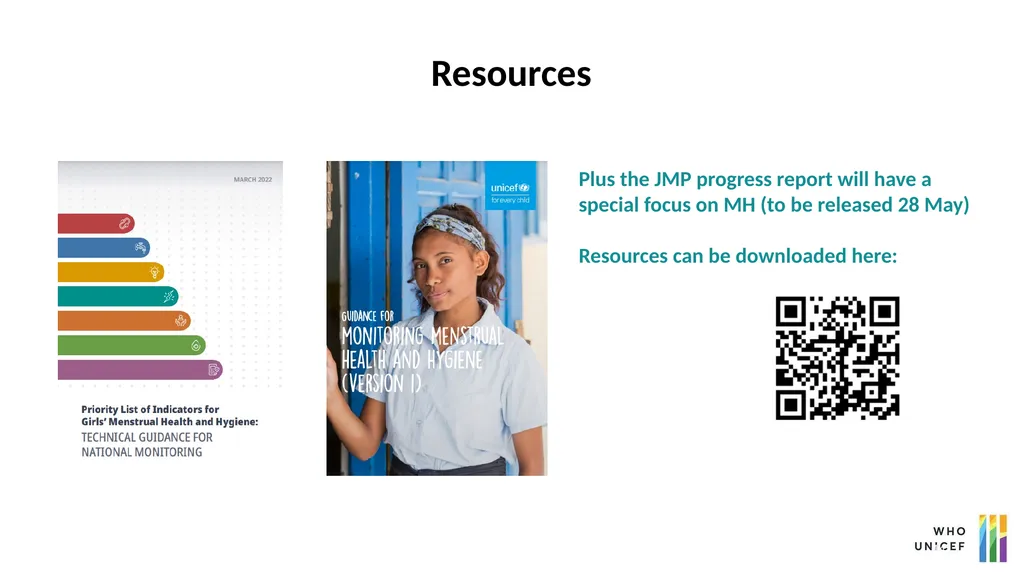
Resources 14 Plus the JMP progress report will have a special focus on MH (to be released 28 May)