
Mood Disorders (Bipolar Disorder, DMDD),


Description: Mood Disorders (Bipolar Disorder, DMDD), Aggression, and SIB Joshua Proemsey, MD Child and Adolescent Psychiatry Fellow, PGY-5 Division of Child and Adolescent Psychiatry Department of Psychiatry University of Florida Bipolar Disorder:
Related Topics
Download Presentation
"Mood Disorders (Bipolar Disorder, DMDD)," is the property of its rightful owner. Permission is granted to download and print the materials on this website for personal, non-commercial use only, and to display it on your personal computer provided you do not modify the materials and that you retain all copyright notices contained in the materials. By downloading content from our website, you accept the terms of this agreement.
Presentation Transcript
slide1. Mood Disorders (Bipolar Disorder, DMDD), Aggression, and SIB Joshua Proemsey, MD
Child and Adolescent Psychiatry Fellow, PGY-5
Division of Child and Adolescent Psychiatry
Department of Psychiatry
University of Florida<br>
slide2. Bipolar Disorder: Clinical Characteristics Mood disorder characterized by mood swings between manic and depressive states
Mood swings are episodic
A portion of youth will meet full criteria for Bipolar Disorder although criteria were not designed for Pediatric Populations
Normal children will exhibit manic or hypomanic symptoms<br>
slide3. Bipolar Disorder: Subtypes Bipolar I Disorder:
Episodes of mania and depression (14+ days of depression)
Mixed episodes can occur
Bipolar II Disorder:
Episodes of hypomania and depression
Cyclothymia:
Duration of 1 year with more than half time with episodes of elevated or depressed mood
Periods of euthymic mood less than 2 months<br>
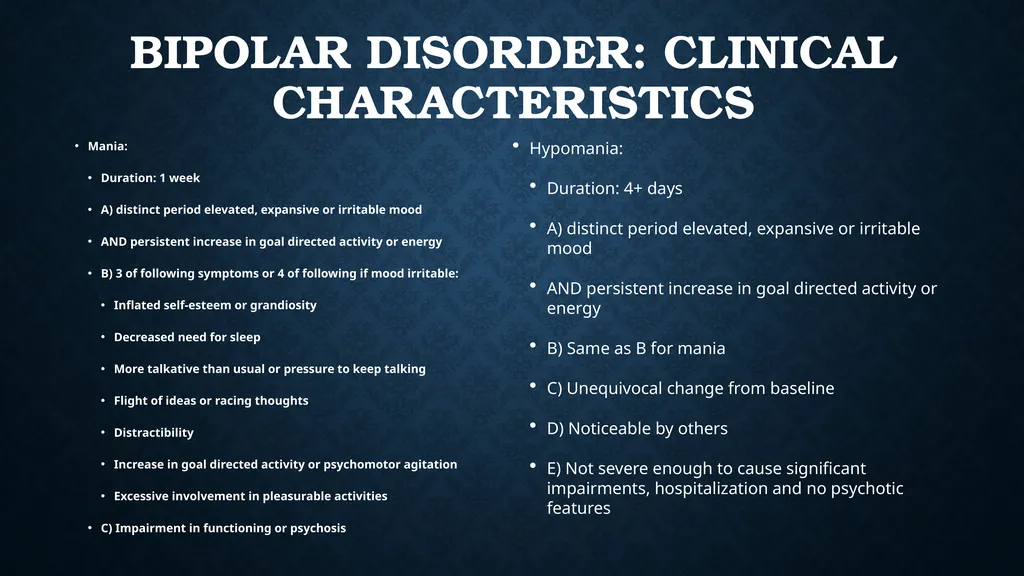
slide4. Bipolar Disorder: Clinical Characteristics Mania:
Duration: 1 week
A) distinct period elevated, expansive or irritable mood
AND persistent increase in goal directed activity or energy
B) 3 of following symptoms or 4 of following if mood irritable:
Inflated self-esteem or grandiosity
Decreased need for sleep
More talkative than usual or pressure to keep talking
Flight of ideas or racing thoughts
Distractibility
Increase in goal directed activity or psychomotor agitation
Excessive involvement in pleasurable activities
C) Impairment in functioning or psychosis Hypomania:
Duration: 4+ days
A) distinct period elevated, expansive or irritable mood
AND persistent increase in goal directed activity or energy
B) Same as B for mania
C) Unequivocal change from baseline
D) Noticeable by others
E) Not severe enough to cause significant impairments, hospitalization and no psychotic features<br>
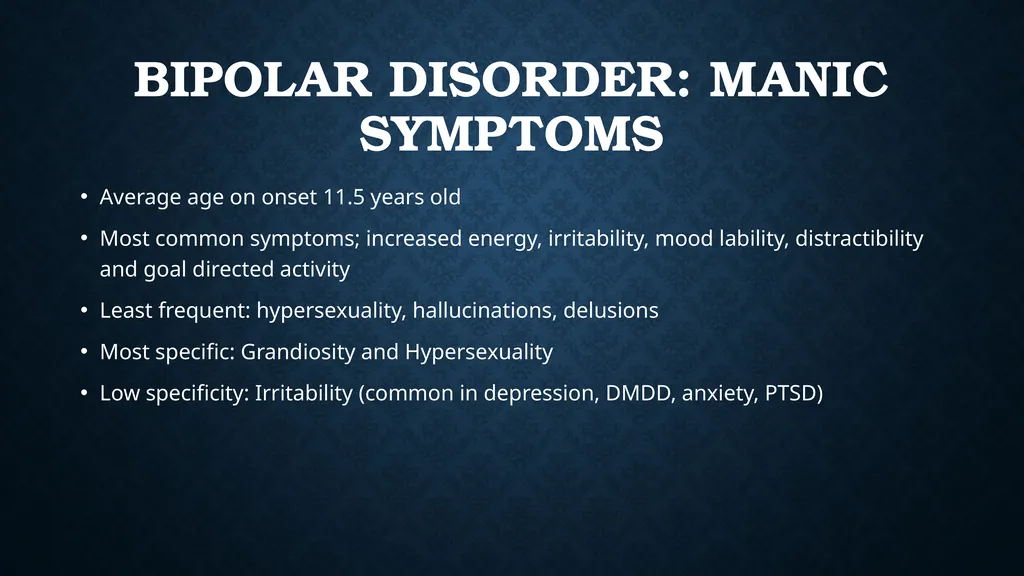
slide5. Bipolar Disorder: Manic Symptoms Average age on onset 11.5 years old
Most common symptoms; increased energy, irritability, mood lability, distractibility and goal directed activity
Least frequent: hypersexuality, hallucinations, delusions
Most specific: Grandiosity and Hypersexuality
Low specificity: Irritability (common in depression, DMDD, anxiety, PTSD)<br>
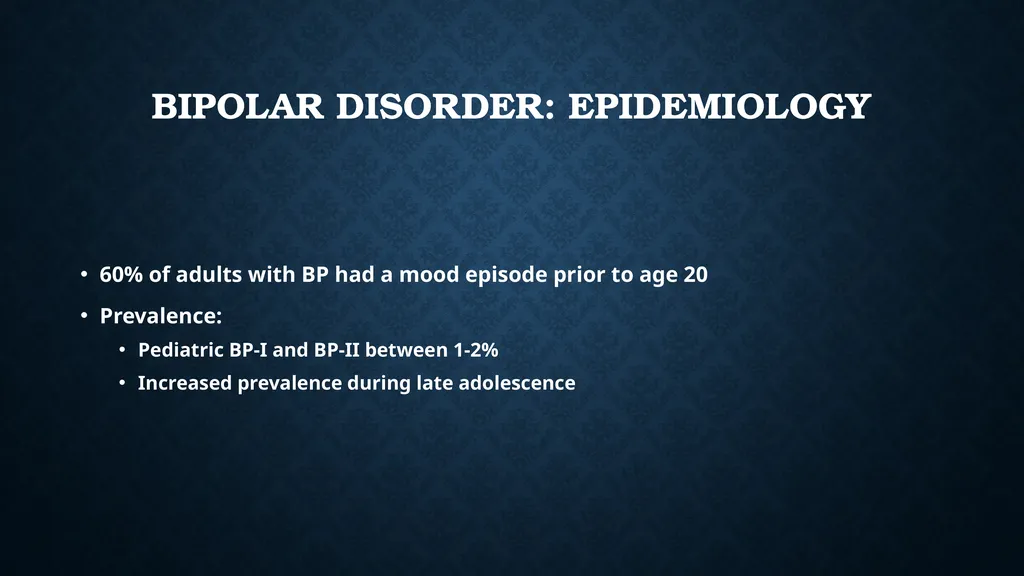
slide6. Bipolar Disorder: Epidemiology 60% of adults with BP had a mood episode prior to age 20
Prevalence:
Pediatric BP-I and BP-II between 1-2%
Increased prevalence during late adolescence<br>
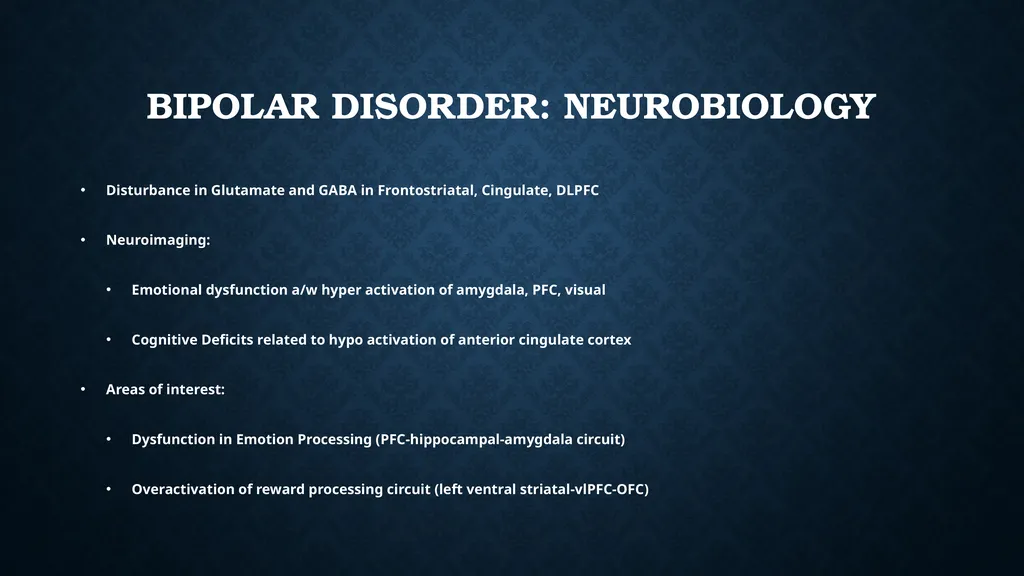
slide7. Bipolar Disorder: Neurobiology Disturbance in Glutamate and GABA in Frontostriatal, Cingulate, DLPFC
Neuroimaging:
Emotional dysfunction a/w hyper activation of amygdala, PFC, visual
Cognitive Deficits related to hypo activation of anterior cingulate cortex
Areas of interest:
Dysfunction in Emotion Processing (PFC-hippocampal-amygdala circuit)
Overactivation of reward processing circuit (left ventral striatal-vlPFC-OFC)<br>
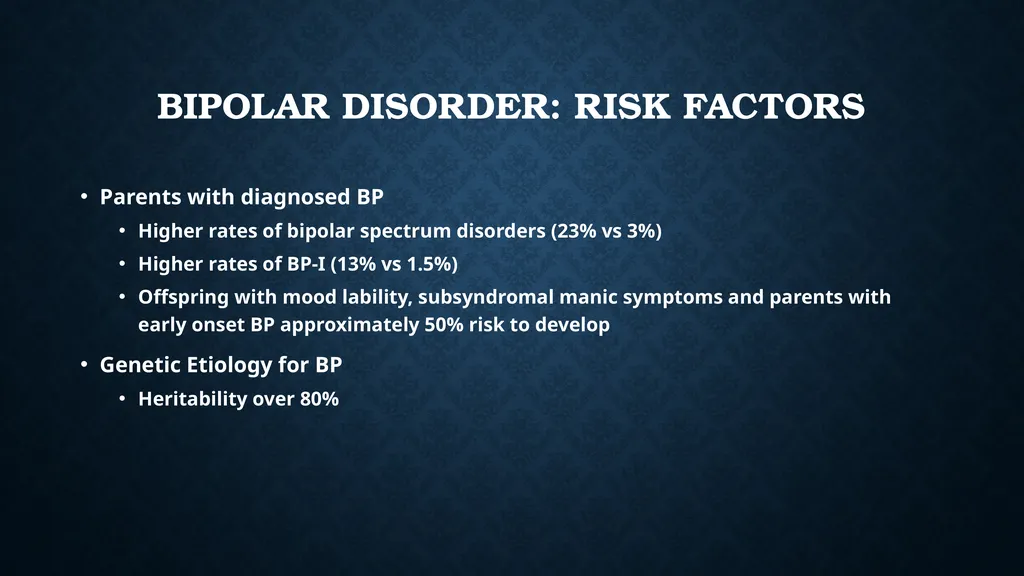
slide8. Bipolar Disorder: Risk Factors Parents with diagnosed BP
Higher rates of bipolar spectrum disorders (23% vs 3%)
Higher rates of BP-I (13% vs 1.5%)
Offspring with mood lability, subsyndromal manic symptoms and parents with early onset BP approximately 50% risk to develop
Genetic Etiology for BP
Heritability over 80%<br>
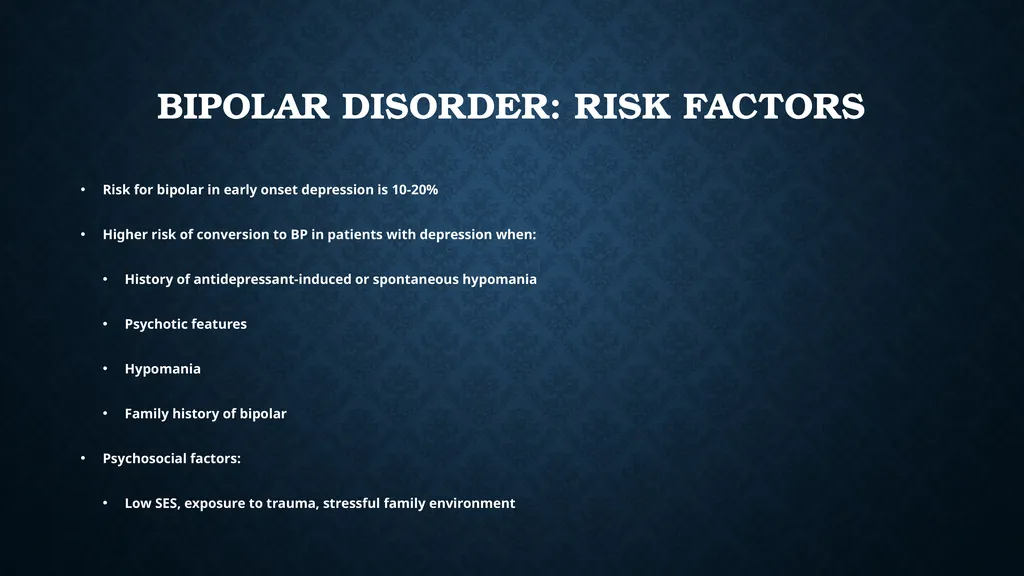
slide9. Bipolar Disorder: Risk Factors Risk for bipolar in early onset depression is 10-20%
Higher risk of conversion to BP in patients with depression when:
History of antidepressant-induced or spontaneous hypomania
Psychotic features
Hypomania
Family history of bipolar
Psychosocial factors:
Low SES, exposure to trauma, stressful family environment<br>
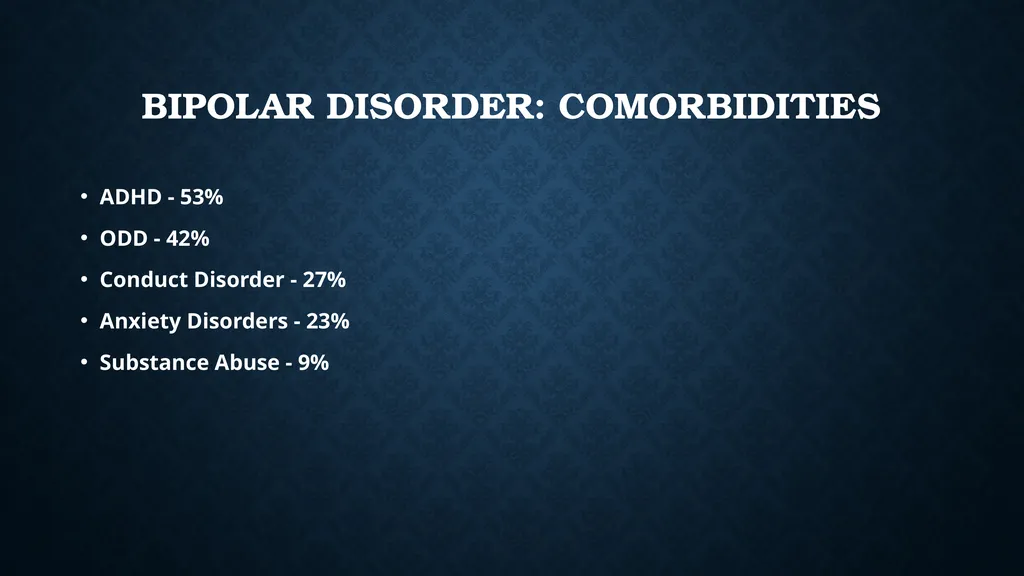
slide10. Bipolar Disorder: Comorbidities ADHD - 53%
ODD - 42%
Conduct Disorder - 27%
Anxiety Disorders - 23%
Substance Abuse - 9%<br>
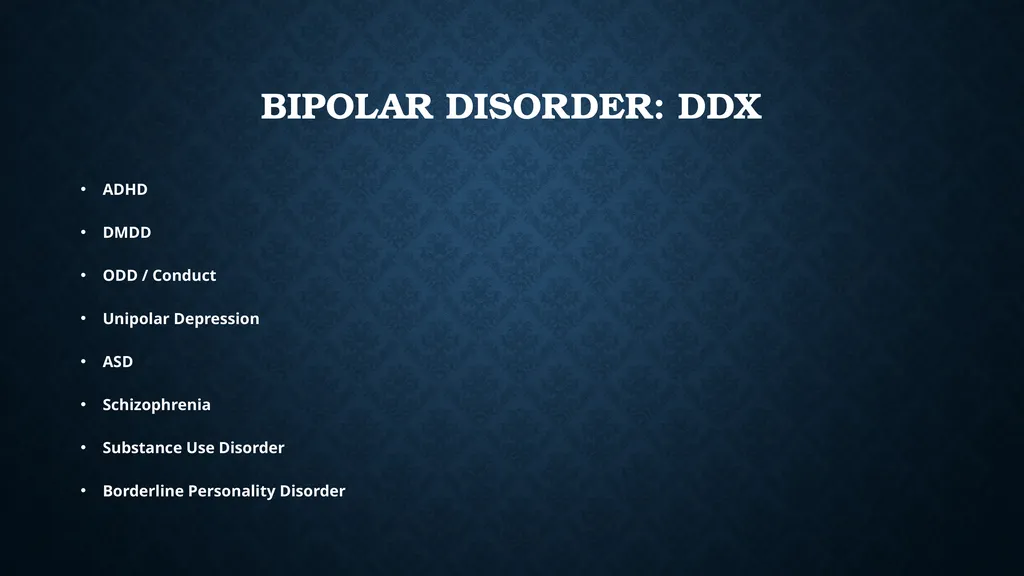
slide11. Bipolar Disorder: DDx ADHD
DMDD
ODD / Conduct
Unipolar Depression
ASD
Schizophrenia
Substance Use Disorder
Borderline Personality Disorder<br>
slide12. Bipolar Disorder: DDx Confusion most often ADHD or Behavioral Disorders
BP: symptoms of euphoria, grandiosity, decreased need for sleep, hyper sexuality (without h/o abuse), and hallucinations
Shared sxs: increased energy, irritability, and aggression
More severe in BP youth
Other areas: Fhx of Bipolar, response to antidepressants<br>
slide13. Bipolar Disorder: DDx ADHD vs Bipolar
Later onset of symptoms (10+)
Symptoms appear abruptly
Responded to stimulants and now not responding
Symptoms are episodic and a/w mood changes Recurrent mood swings, outbursts, rages
Hallucinations or delusions
FHx of bipolar<br>
slide14. Bipolar Disorder vs DMDD Behavior problems only occur during an episode of mania or depression
“Off and on” oppositional or conduct symptoms
Severe behavioral problems that do not respond to treatment<br>
slide15. Bipolar Disorder: Treatment of Mania / Mixed Episodes First Line:
Start with FDA Approved 10-17:
Abilify, Risperdal, Quetiapine, Asenapine
Best data for Risperdal Partial Response to single atypical:
Augment with Lithium
No response:
Switch to another FDA approved antipsychotic or Olanzapine
Switch to lithium<br>
slide16. Bipolar Disorder: Depression FDA Approved: Latuda and Fluoxetine / Olanzapine combination
First, use Latuda
If fails, use combination Fluoxetine / Olanzapine
If fails, use Lamictal
Based upon adult evidence. Evidence sparse in children.<br>
slide17. Bipolar Disorder: Psychosocial Treatment Psychoeducation: disease management
Interpersonal and Social Rhythm Therapy (IPSRT)
Cognitive approaches to stress management, emotional regulation and interpersonal conflict
Highlights mood regulation causing dysfunction in relationships
Discussed regulating sleep and daily rhythms to improve mood regulation and functioning
Dialectical Behavioral Therapy (DBT)
Focus on emotional regulation and mindfulness<br>
slide18. Disruptive Mood Dysregulation Disorder Recurrent temper outbursts with negative mood state
Diagnostic Criteria:
Characterized by frequent, severe, recurrent, temper outbursts and chronically irritable and/or angry mood
At least 3 temper outbursts per week
Onset aged 6 and no older than 10 years old
Must be present for at least 1 year without a symptom free interval of 3 or more months
Symptoms presents in 2 of 3 settings: home, social, school<br>
slide19. DMDD: Course Chronic irritability in early adolescence predicted ADHD in late adolescence and depression in early adulthood
Difference between chronic and episodic irritability
DMDD increases risk for depression and anxiety in adulthood
DMDD does not increase the risk for Bipolar Disorder<br>
slide20. DMDD: Epidemiology Lifetime prevalence approx 0.8 - 3.3%
Prevalence decreases with age
Children with DMDD usually male and younger<br>
slide21. DMDD: Risk Factors Stressful events:
Early life trauma
Recent h/o divorce, grief
Nutritional
Iron deficiency, B12 def, Folate def FHx:
Substance abuse or Psychopathology
Maternal history of peripartum depression<br>
slide22. DMDD: Pathophysiology Not currently great data specifically on DMDD although data on SMD
Hyperarousal elicited by frustrating stimuli
During facial affect recognition task, DMDD showed excessive amygdala activation for all faces compared to BP where excessive activation only occurred with fearful faces<br>
slide23. DMDD: Comorbidities ODD - 96%
ADHD - 81%
Anxiety Disorders - 58%
Conduct Disorder - 13%<br>
slide24. DMDD: Non-pharmacological Treatment Psychotherapeutic Interventions
Target impairment in social functioning and emotional dysregulation
Behavioral Therapy and Parent Management Training
DBT-C - DBT adapted for adolescents include parent training component<br>
slide25. DMDD: Pharmacological Treatment Evidence limited overall
1st Treat Comorbid Disorders such as ADHD, depression, anxiety if present
Antidepressants (SSRI)
Useful in treating comorbid anxiety and depression
Improved chronic and persistent irritability
Remember, DMDD does not have increased rates of bipolar so no increased concern for causing mania
Methylphenidate (MPH)
Useful for treating comorbid ADHD and improving aggression
Optimize medication based upon weight, tolerability and side effects
Second Generation Antipsychotics (Abilify / Risperdal)
Improved irritability and aggression
Concern for side effects<br>
slide26. Aggression Aggression and/or irritability is common in many Psychiatric disorders
Comprehensive Assessment
Modified Overt Aggression Scale (MOAS) - track changes
1st Step - Psychosocial Treatment
Parent Management Training (PMT), Parent Child Interaction Training (PCIT), behavioral therapies such as ABA
Multimodal interventions such as Multisystemic Therapy
Cognitive Behavioral Therapy (CBT)
Family Therapy<br>
slide27. Aggression: Treatment If psychosocial intervention not adequately improve symptoms, consider the following:
Treat primary disorder based upon guidelines
ADHD, Anxiety, Mood Disorders, etc.
Consider Monotherapy with Methylphenidate
If fails, consider amphetamine or alpha 2 agonist
If fails, then consider Atomoxetine
Can combine stimulant with alpha agonist<br>
slide28. Aggression: Treatment If still struggling, consider using an atypical antipsychotic
Low dose Risperdal or Abilify are most frequently used
If this fails, consider using the alternative antipsychotic
If this fails, consider augmenting with a mood stabilizer<br>
slide29. Self-injurious Behavior (SIB) Definition: intentional, self-inflicted damage to the body without suicidal intent
Most commonly: cutting, burning, scratching
NSSI - nonsuicidal self injurious behavior<br>
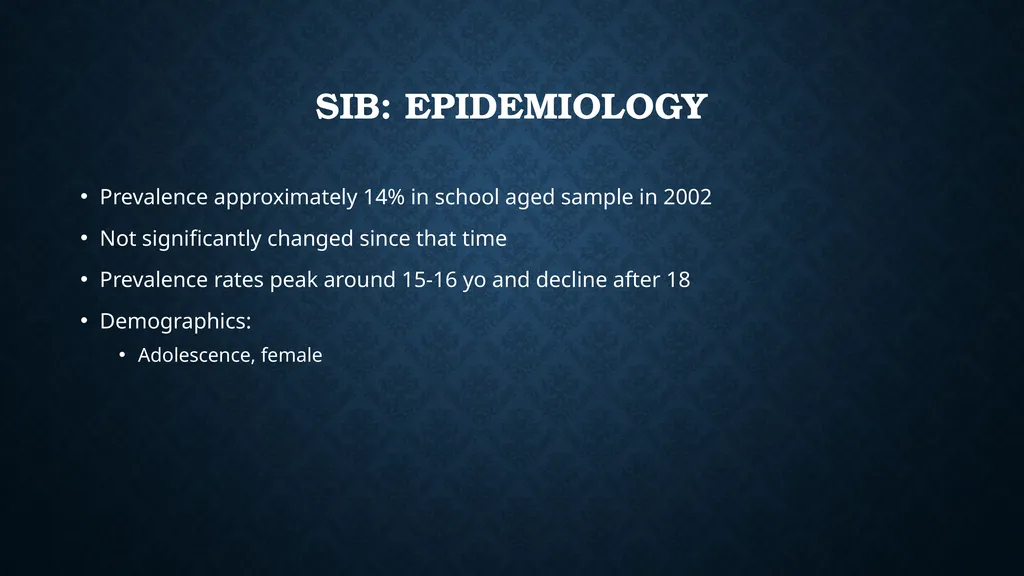
slide30. SIB: Epidemiology Prevalence approximately 14% in school aged sample in 2002
Not significantly changed since that time
Prevalence rates peak around 15-16 yo and decline after 18
Demographics:
Adolescence, female<br>
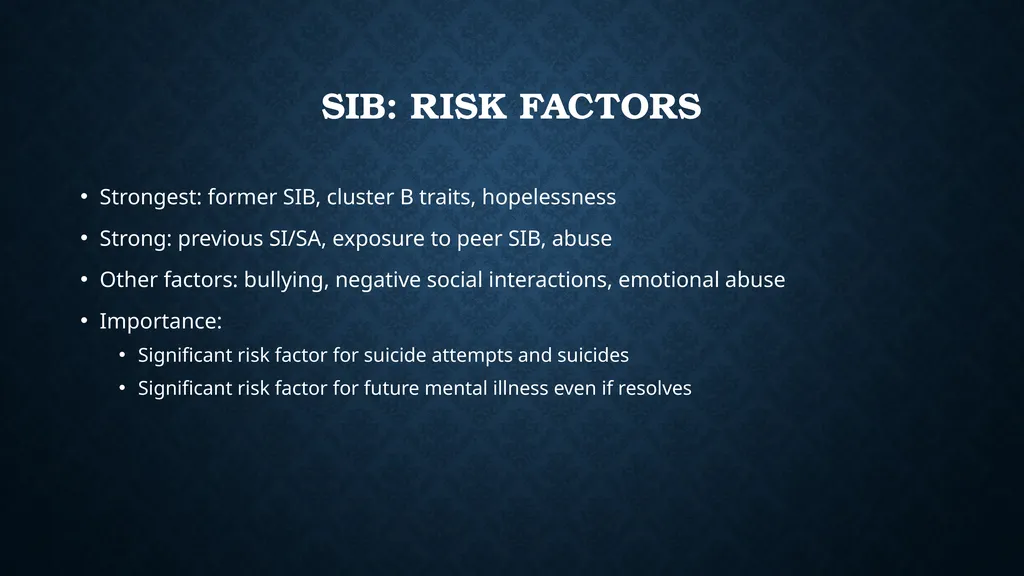
slide31. SIB: Risk Factors Strongest: former SIB, cluster B traits, hopelessness
Strong: previous SI/SA, exposure to peer SIB, abuse
Other factors: bullying, negative social interactions, emotional abuse
Importance:
Significant risk factor for suicide attempts and suicides
Significant risk factor for future mental illness even if resolves<br>
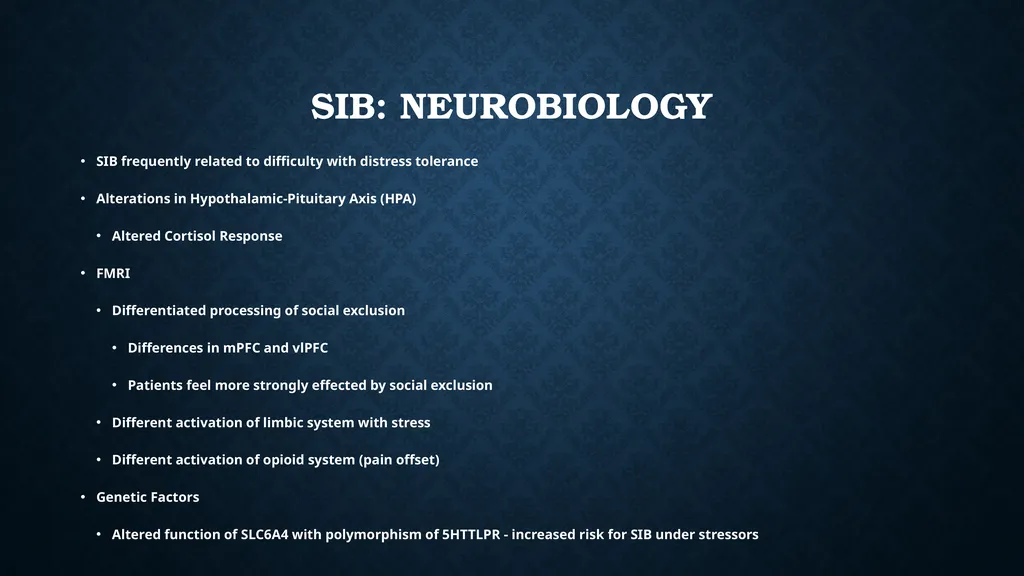
slide32. SIB: Neurobiology SIB frequently related to difficulty with distress tolerance
Alterations in Hypothalamic-Pituitary Axis (HPA)
Altered Cortisol Response
FMRI
Differentiated processing of social exclusion
Differences in mPFC and vlPFC
Patients feel more strongly effected by social exclusion
Different activation of limbic system with stress
Different activation of opioid system (pain offset)
Genetic Factors
Altered function of SLC6A4 with polymorphism of 5HTTLPR - increased risk for SIB under stressors<br>
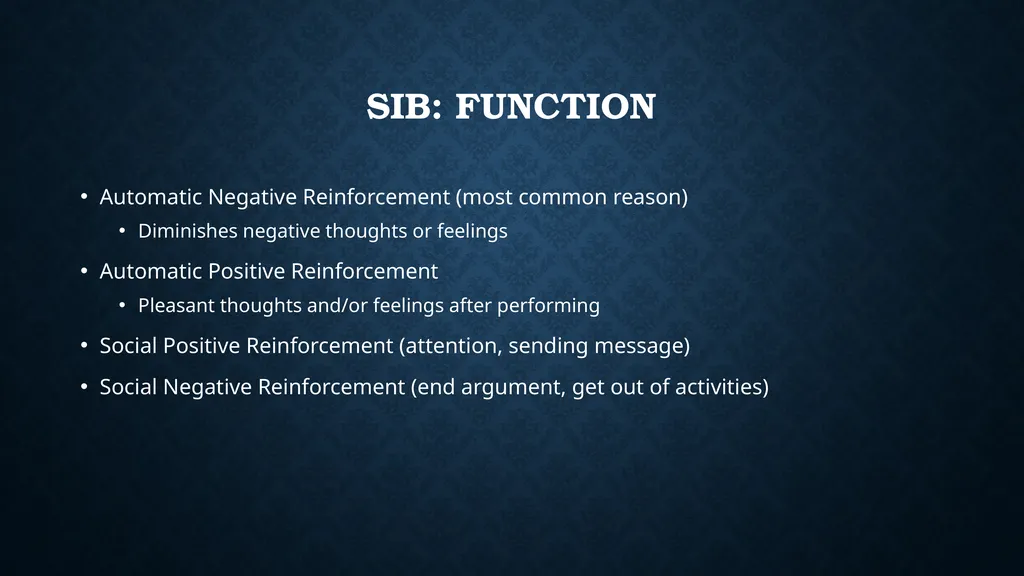
slide33. SIB: Function Automatic Negative Reinforcement (most common reason)
Diminishes negative thoughts or feelings
Automatic Positive Reinforcement
Pleasant thoughts and/or feelings after performing
Social Positive Reinforcement (attention, sending message)
Social Negative Reinforcement (end argument, get out of activities)<br>
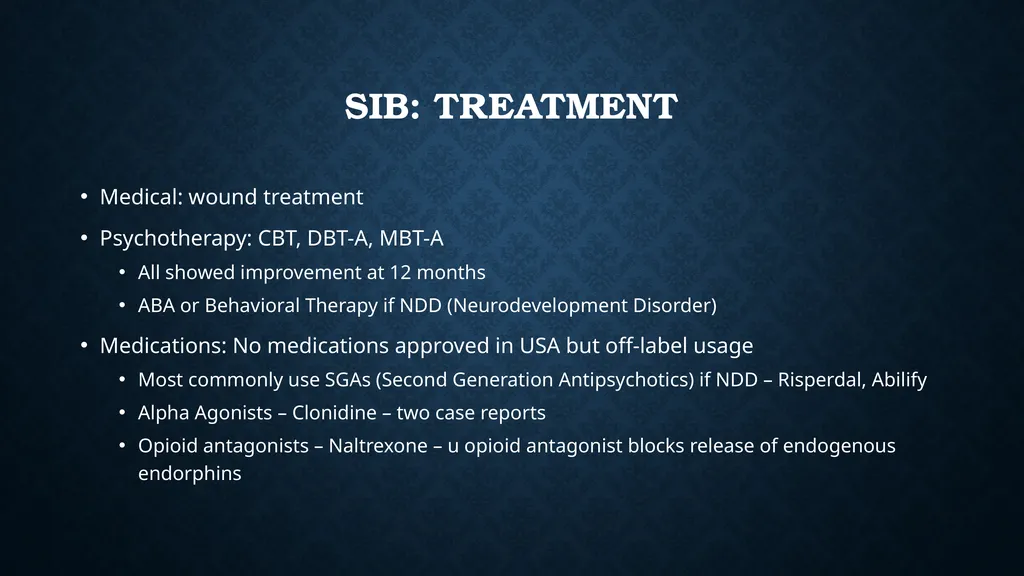
slide34. SIB: Treatment Medical: wound treatment
Psychotherapy: CBT, DBT-A, MBT-A
All showed improvement at 12 months
ABA or Behavioral Therapy if NDD (Neurodevelopment Disorder)
Medications: No medications approved in USA but off-label usage
Most commonly use SGAs (Second Generation Antipsychotics) if NDD – Risperdal, Abilify
Alpha Agonists – Clonidine – two case reports
Opioid antagonists – Naltrexone – u opioid antagonist blocks release of endogenous endorphins<br>
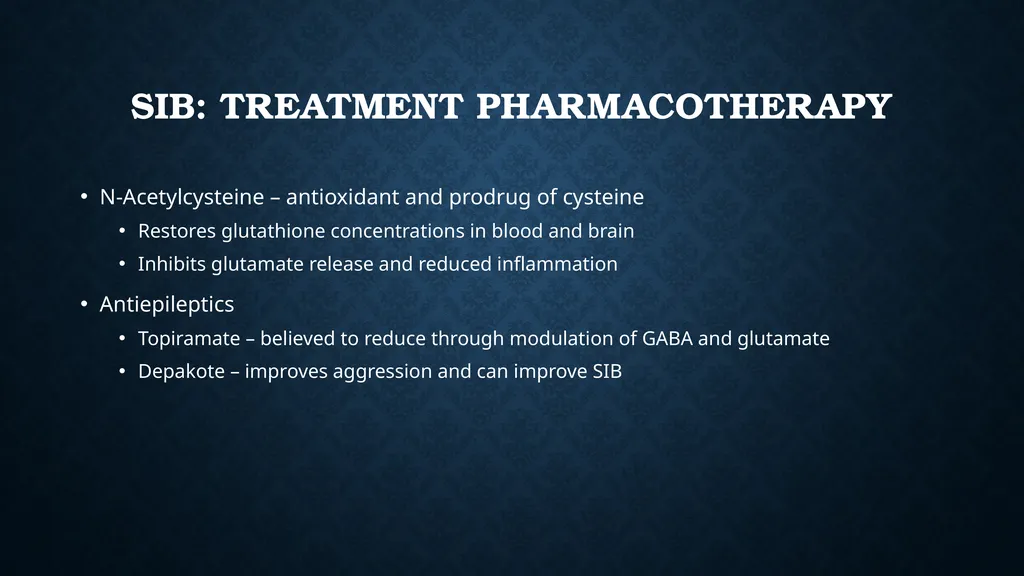
slide35. SIB: Treatment Pharmacotherapy N-Acetylcysteine – antioxidant and prodrug of cysteine
Restores glutathione concentrations in blood and brain
Inhibits glutamate release and reduced inflammation
Antiepileptics
Topiramate – believed to reduce through modulation of GABA and glutamate
Depakote – improves aggression and can improve SIB<br>
Child and Adolescent Psychiatry Fellow, PGY-5
Division of Child and Adolescent Psychiatry
Department of Psychiatry
University of Florida<br>
slide2. Bipolar Disorder: Clinical Characteristics Mood disorder characterized by mood swings between manic and depressive states
Mood swings are episodic
A portion of youth will meet full criteria for Bipolar Disorder although criteria were not designed for Pediatric Populations
Normal children will exhibit manic or hypomanic symptoms<br>
slide3. Bipolar Disorder: Subtypes Bipolar I Disorder:
Episodes of mania and depression (14+ days of depression)
Mixed episodes can occur
Bipolar II Disorder:
Episodes of hypomania and depression
Cyclothymia:
Duration of 1 year with more than half time with episodes of elevated or depressed mood
Periods of euthymic mood less than 2 months<br>
slide4. Bipolar Disorder: Clinical Characteristics Mania:
Duration: 1 week
A) distinct period elevated, expansive or irritable mood
AND persistent increase in goal directed activity or energy
B) 3 of following symptoms or 4 of following if mood irritable:
Inflated self-esteem or grandiosity
Decreased need for sleep
More talkative than usual or pressure to keep talking
Flight of ideas or racing thoughts
Distractibility
Increase in goal directed activity or psychomotor agitation
Excessive involvement in pleasurable activities
C) Impairment in functioning or psychosis Hypomania:
Duration: 4+ days
A) distinct period elevated, expansive or irritable mood
AND persistent increase in goal directed activity or energy
B) Same as B for mania
C) Unequivocal change from baseline
D) Noticeable by others
E) Not severe enough to cause significant impairments, hospitalization and no psychotic features<br>
slide5. Bipolar Disorder: Manic Symptoms Average age on onset 11.5 years old
Most common symptoms; increased energy, irritability, mood lability, distractibility and goal directed activity
Least frequent: hypersexuality, hallucinations, delusions
Most specific: Grandiosity and Hypersexuality
Low specificity: Irritability (common in depression, DMDD, anxiety, PTSD)<br>
slide6. Bipolar Disorder: Epidemiology 60% of adults with BP had a mood episode prior to age 20
Prevalence:
Pediatric BP-I and BP-II between 1-2%
Increased prevalence during late adolescence<br>
slide7. Bipolar Disorder: Neurobiology Disturbance in Glutamate and GABA in Frontostriatal, Cingulate, DLPFC
Neuroimaging:
Emotional dysfunction a/w hyper activation of amygdala, PFC, visual
Cognitive Deficits related to hypo activation of anterior cingulate cortex
Areas of interest:
Dysfunction in Emotion Processing (PFC-hippocampal-amygdala circuit)
Overactivation of reward processing circuit (left ventral striatal-vlPFC-OFC)<br>
slide8. Bipolar Disorder: Risk Factors Parents with diagnosed BP
Higher rates of bipolar spectrum disorders (23% vs 3%)
Higher rates of BP-I (13% vs 1.5%)
Offspring with mood lability, subsyndromal manic symptoms and parents with early onset BP approximately 50% risk to develop
Genetic Etiology for BP
Heritability over 80%<br>
slide9. Bipolar Disorder: Risk Factors Risk for bipolar in early onset depression is 10-20%
Higher risk of conversion to BP in patients with depression when:
History of antidepressant-induced or spontaneous hypomania
Psychotic features
Hypomania
Family history of bipolar
Psychosocial factors:
Low SES, exposure to trauma, stressful family environment<br>
slide10. Bipolar Disorder: Comorbidities ADHD - 53%
ODD - 42%
Conduct Disorder - 27%
Anxiety Disorders - 23%
Substance Abuse - 9%<br>
slide11. Bipolar Disorder: DDx ADHD
DMDD
ODD / Conduct
Unipolar Depression
ASD
Schizophrenia
Substance Use Disorder
Borderline Personality Disorder<br>
slide12. Bipolar Disorder: DDx Confusion most often ADHD or Behavioral Disorders
BP: symptoms of euphoria, grandiosity, decreased need for sleep, hyper sexuality (without h/o abuse), and hallucinations
Shared sxs: increased energy, irritability, and aggression
More severe in BP youth
Other areas: Fhx of Bipolar, response to antidepressants<br>
slide13. Bipolar Disorder: DDx ADHD vs Bipolar
Later onset of symptoms (10+)
Symptoms appear abruptly
Responded to stimulants and now not responding
Symptoms are episodic and a/w mood changes Recurrent mood swings, outbursts, rages
Hallucinations or delusions
FHx of bipolar<br>
slide14. Bipolar Disorder vs DMDD Behavior problems only occur during an episode of mania or depression
“Off and on” oppositional or conduct symptoms
Severe behavioral problems that do not respond to treatment<br>
slide15. Bipolar Disorder: Treatment of Mania / Mixed Episodes First Line:
Start with FDA Approved 10-17:
Abilify, Risperdal, Quetiapine, Asenapine
Best data for Risperdal Partial Response to single atypical:
Augment with Lithium
No response:
Switch to another FDA approved antipsychotic or Olanzapine
Switch to lithium<br>
slide16. Bipolar Disorder: Depression FDA Approved: Latuda and Fluoxetine / Olanzapine combination
First, use Latuda
If fails, use combination Fluoxetine / Olanzapine
If fails, use Lamictal
Based upon adult evidence. Evidence sparse in children.<br>
slide17. Bipolar Disorder: Psychosocial Treatment Psychoeducation: disease management
Interpersonal and Social Rhythm Therapy (IPSRT)
Cognitive approaches to stress management, emotional regulation and interpersonal conflict
Highlights mood regulation causing dysfunction in relationships
Discussed regulating sleep and daily rhythms to improve mood regulation and functioning
Dialectical Behavioral Therapy (DBT)
Focus on emotional regulation and mindfulness<br>
slide18. Disruptive Mood Dysregulation Disorder Recurrent temper outbursts with negative mood state
Diagnostic Criteria:
Characterized by frequent, severe, recurrent, temper outbursts and chronically irritable and/or angry mood
At least 3 temper outbursts per week
Onset aged 6 and no older than 10 years old
Must be present for at least 1 year without a symptom free interval of 3 or more months
Symptoms presents in 2 of 3 settings: home, social, school<br>
slide19. DMDD: Course Chronic irritability in early adolescence predicted ADHD in late adolescence and depression in early adulthood
Difference between chronic and episodic irritability
DMDD increases risk for depression and anxiety in adulthood
DMDD does not increase the risk for Bipolar Disorder<br>
slide20. DMDD: Epidemiology Lifetime prevalence approx 0.8 - 3.3%
Prevalence decreases with age
Children with DMDD usually male and younger<br>
slide21. DMDD: Risk Factors Stressful events:
Early life trauma
Recent h/o divorce, grief
Nutritional
Iron deficiency, B12 def, Folate def FHx:
Substance abuse or Psychopathology
Maternal history of peripartum depression<br>
slide22. DMDD: Pathophysiology Not currently great data specifically on DMDD although data on SMD
Hyperarousal elicited by frustrating stimuli
During facial affect recognition task, DMDD showed excessive amygdala activation for all faces compared to BP where excessive activation only occurred with fearful faces<br>
slide23. DMDD: Comorbidities ODD - 96%
ADHD - 81%
Anxiety Disorders - 58%
Conduct Disorder - 13%<br>
slide24. DMDD: Non-pharmacological Treatment Psychotherapeutic Interventions
Target impairment in social functioning and emotional dysregulation
Behavioral Therapy and Parent Management Training
DBT-C - DBT adapted for adolescents include parent training component<br>
slide25. DMDD: Pharmacological Treatment Evidence limited overall
1st Treat Comorbid Disorders such as ADHD, depression, anxiety if present
Antidepressants (SSRI)
Useful in treating comorbid anxiety and depression
Improved chronic and persistent irritability
Remember, DMDD does not have increased rates of bipolar so no increased concern for causing mania
Methylphenidate (MPH)
Useful for treating comorbid ADHD and improving aggression
Optimize medication based upon weight, tolerability and side effects
Second Generation Antipsychotics (Abilify / Risperdal)
Improved irritability and aggression
Concern for side effects<br>
slide26. Aggression Aggression and/or irritability is common in many Psychiatric disorders
Comprehensive Assessment
Modified Overt Aggression Scale (MOAS) - track changes
1st Step - Psychosocial Treatment
Parent Management Training (PMT), Parent Child Interaction Training (PCIT), behavioral therapies such as ABA
Multimodal interventions such as Multisystemic Therapy
Cognitive Behavioral Therapy (CBT)
Family Therapy<br>
slide27. Aggression: Treatment If psychosocial intervention not adequately improve symptoms, consider the following:
Treat primary disorder based upon guidelines
ADHD, Anxiety, Mood Disorders, etc.
Consider Monotherapy with Methylphenidate
If fails, consider amphetamine or alpha 2 agonist
If fails, then consider Atomoxetine
Can combine stimulant with alpha agonist<br>
slide28. Aggression: Treatment If still struggling, consider using an atypical antipsychotic
Low dose Risperdal or Abilify are most frequently used
If this fails, consider using the alternative antipsychotic
If this fails, consider augmenting with a mood stabilizer<br>
slide29. Self-injurious Behavior (SIB) Definition: intentional, self-inflicted damage to the body without suicidal intent
Most commonly: cutting, burning, scratching
NSSI - nonsuicidal self injurious behavior<br>
slide30. SIB: Epidemiology Prevalence approximately 14% in school aged sample in 2002
Not significantly changed since that time
Prevalence rates peak around 15-16 yo and decline after 18
Demographics:
Adolescence, female<br>
slide31. SIB: Risk Factors Strongest: former SIB, cluster B traits, hopelessness
Strong: previous SI/SA, exposure to peer SIB, abuse
Other factors: bullying, negative social interactions, emotional abuse
Importance:
Significant risk factor for suicide attempts and suicides
Significant risk factor for future mental illness even if resolves<br>
slide32. SIB: Neurobiology SIB frequently related to difficulty with distress tolerance
Alterations in Hypothalamic-Pituitary Axis (HPA)
Altered Cortisol Response
FMRI
Differentiated processing of social exclusion
Differences in mPFC and vlPFC
Patients feel more strongly effected by social exclusion
Different activation of limbic system with stress
Different activation of opioid system (pain offset)
Genetic Factors
Altered function of SLC6A4 with polymorphism of 5HTTLPR - increased risk for SIB under stressors<br>
slide33. SIB: Function Automatic Negative Reinforcement (most common reason)
Diminishes negative thoughts or feelings
Automatic Positive Reinforcement
Pleasant thoughts and/or feelings after performing
Social Positive Reinforcement (attention, sending message)
Social Negative Reinforcement (end argument, get out of activities)<br>
slide34. SIB: Treatment Medical: wound treatment
Psychotherapy: CBT, DBT-A, MBT-A
All showed improvement at 12 months
ABA or Behavioral Therapy if NDD (Neurodevelopment Disorder)
Medications: No medications approved in USA but off-label usage
Most commonly use SGAs (Second Generation Antipsychotics) if NDD – Risperdal, Abilify
Alpha Agonists – Clonidine – two case reports
Opioid antagonists – Naltrexone – u opioid antagonist blocks release of endogenous endorphins<br>
slide35. SIB: Treatment Pharmacotherapy N-Acetylcysteine – antioxidant and prodrug of cysteine
Restores glutathione concentrations in blood and brain
Inhibits glutamate release and reduced inflammation
Antiepileptics
Topiramate – believed to reduce through modulation of GABA and glutamate
Depakote – improves aggression and can improve SIB<br>