
Multi-Classroom Leadership Coaching Part 2: How to


Description: Multi-Classroom Leadership Coaching Part 2: How to Coach In your experience being coached or coaching others, how would you define coaching? Time for this activity: 2 minutes Define coaching and discuss the components of a coaching cycle.
Related Topics
Download Presentation
"Multi-Classroom Leadership Coaching Part 2: How to" is the property of its rightful owner. Permission is granted to download and print the materials on this website for personal, non-commercial use only, and to display it on your personal computer provided you do not modify the materials and that you retain all copyright notices contained in the materials. By downloading content from our website, you accept the terms of this agreement.
Presentation Transcript
slide1. Multi-Classroom Leadership
Coaching Part 2: How to Coach<br>
slide2. In your experience being coached or coaching others, how would you define coaching? Time for this activity: 2 minutes<br>
slide3. Define coaching and discuss the components of a coaching cycle.
Learn about tools used during informal observations and practice using tools.
Learn about and practice using a protocol for leading coaching conversations.<br>
slide4. What is Coaching? Coaching is professional development. Its purpose is to help an adult learner improve their practice.
A coach is a facilitator of someone else’s learning.
- Elena Aguilar, author of “The Art of Coaching”<br>
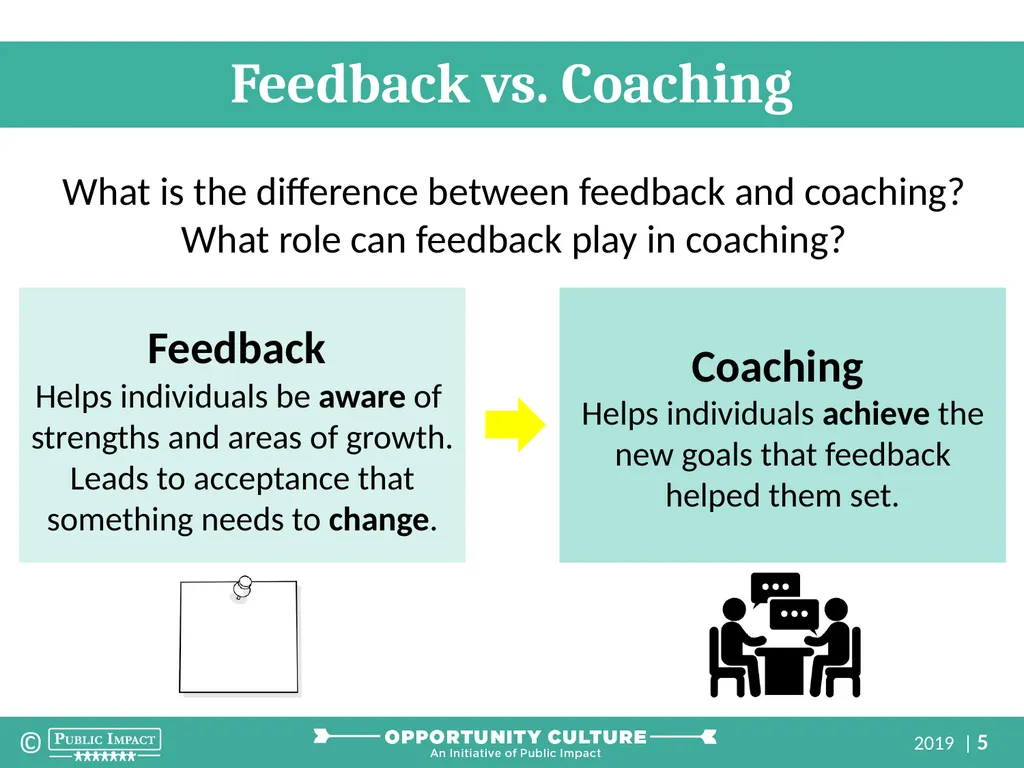
slide5. Feedback vs. Coaching Feedback
Helps individuals be aware of strengths and areas of growth. Leads to acceptance that something needs to change. Coaching
Helps individuals achieve the new goals that feedback helped them set. What is the difference between feedback and coaching? What role can feedback play in coaching?<br>
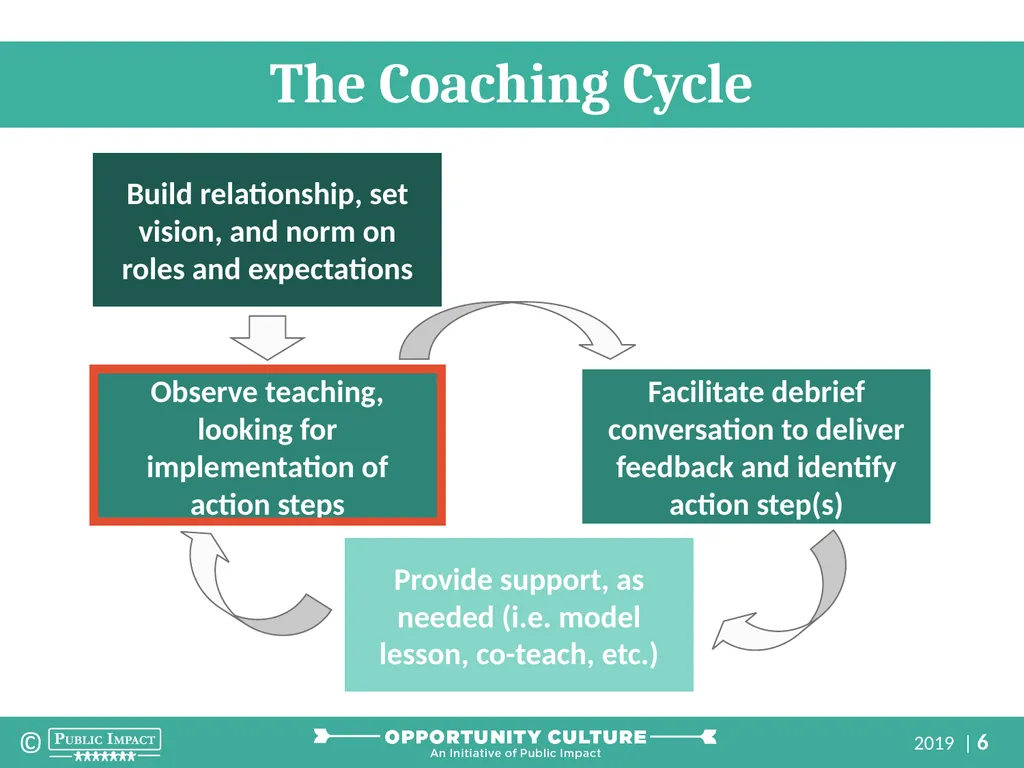
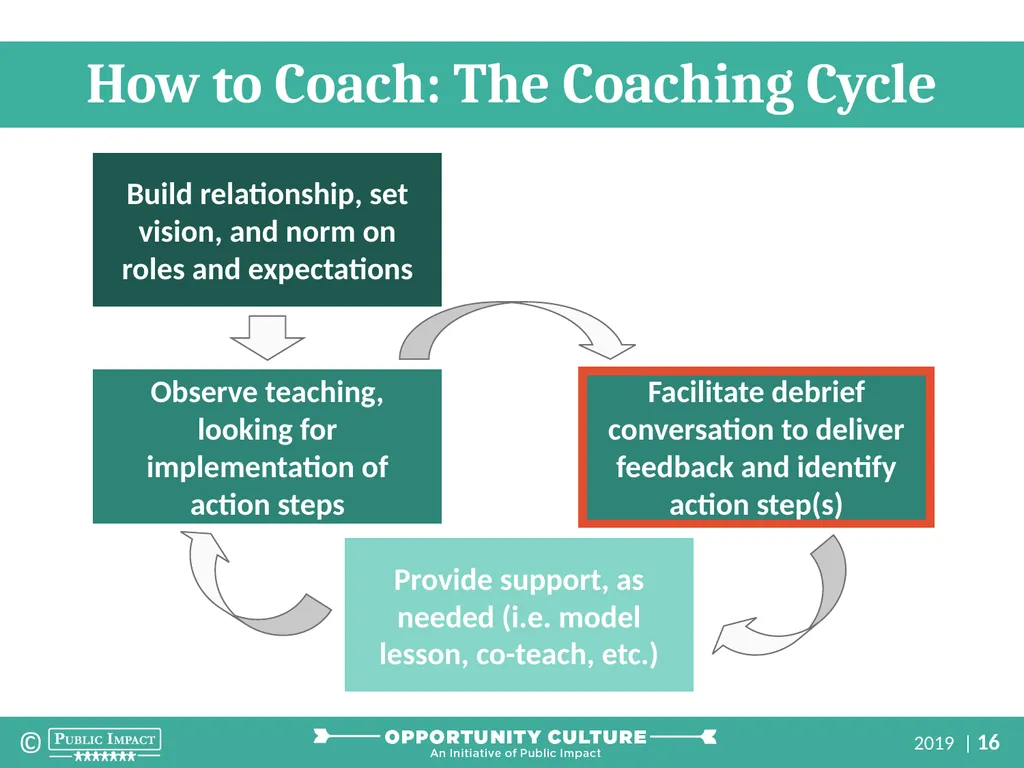
slide6. The Coaching Cycle Observe teaching, looking for implementation of action steps Facilitate debrief conversation to deliver feedback and identify action step(s) Build relationship, set vision, and norm on roles and expectations Provide support, as needed (i.e. model lesson, co-teach, etc.)<br>
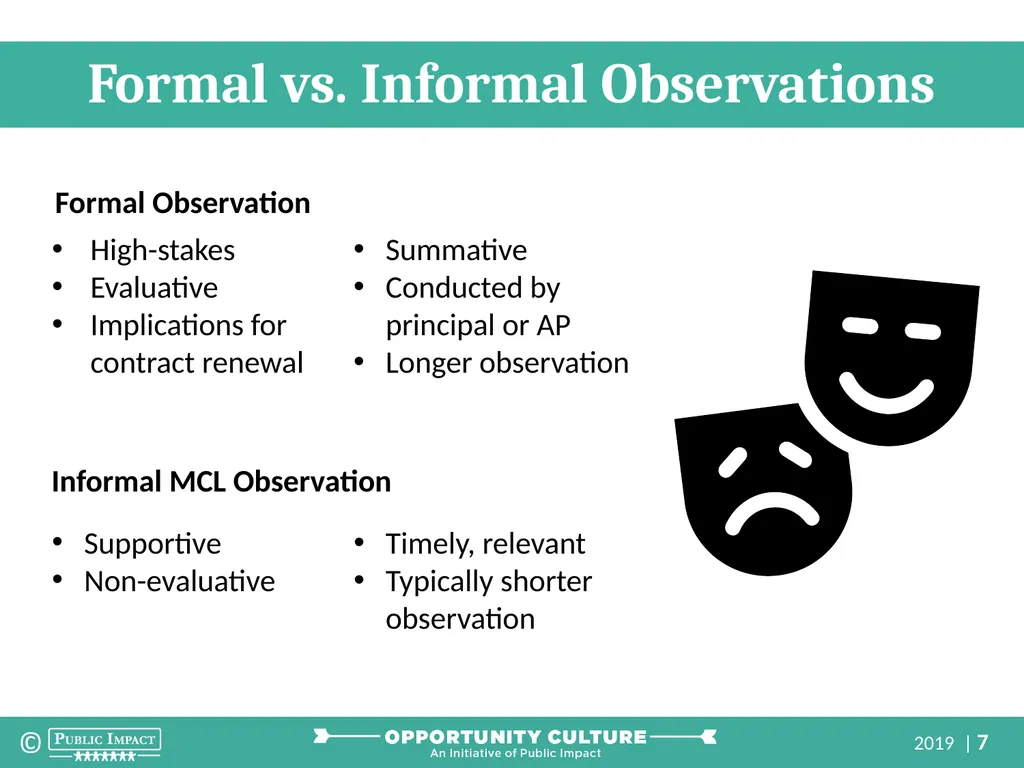
slide7. Formal vs. Informal Observations High-stakes
Evaluative
Implications for contract renewal Supportive
Non-evaluative Summative
Conducted by principal or AP
Longer observation Formal Observation Informal MCL Observation Timely, relevant
Typically shorter observation<br>
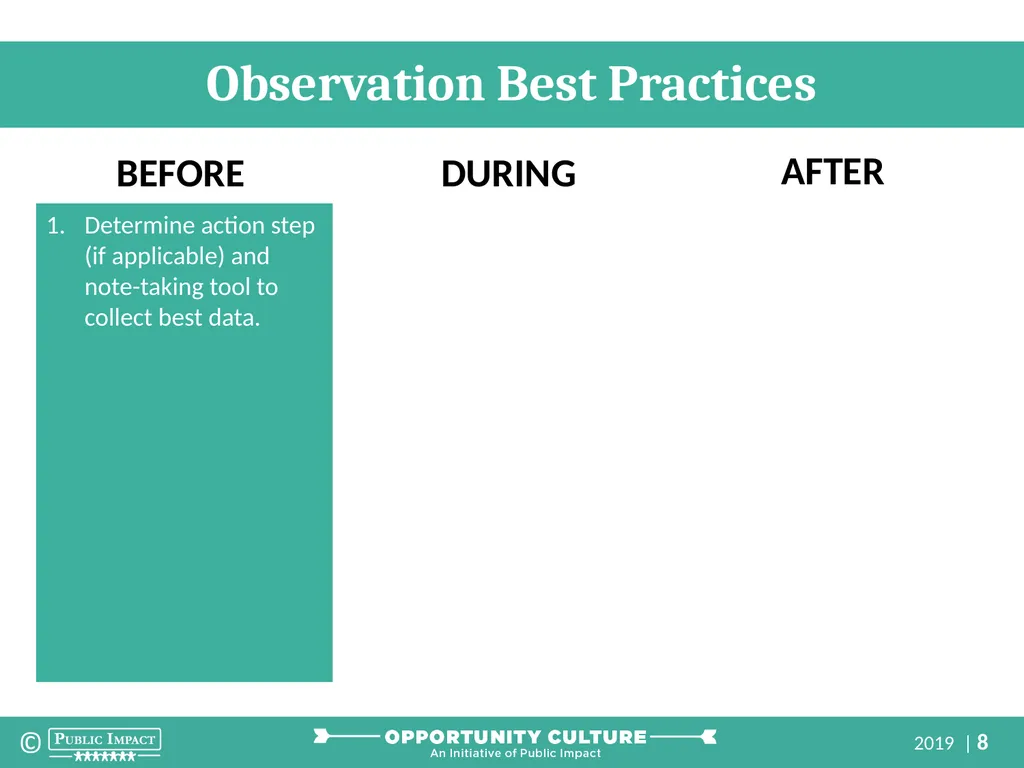
slide8. Observation Best Practices Determine action step (if applicable) and note-taking tool to collect best data. BEFORE DURING AFTER<br>
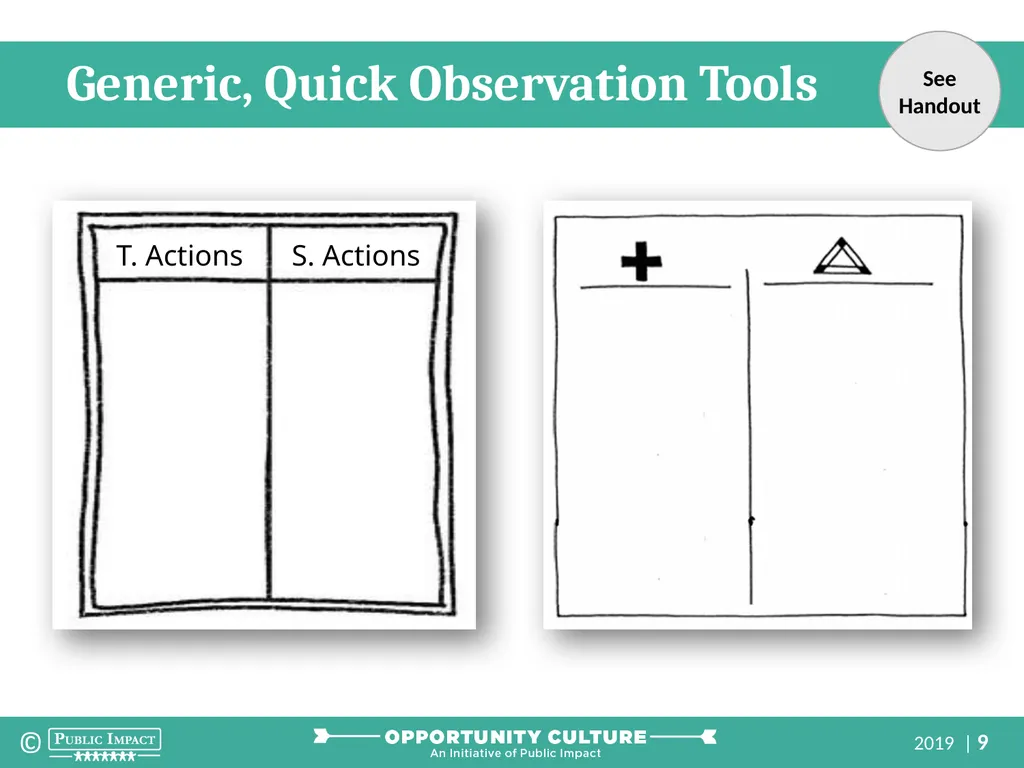
slide9. Generic, Quick Observation Tools See Handout<br>
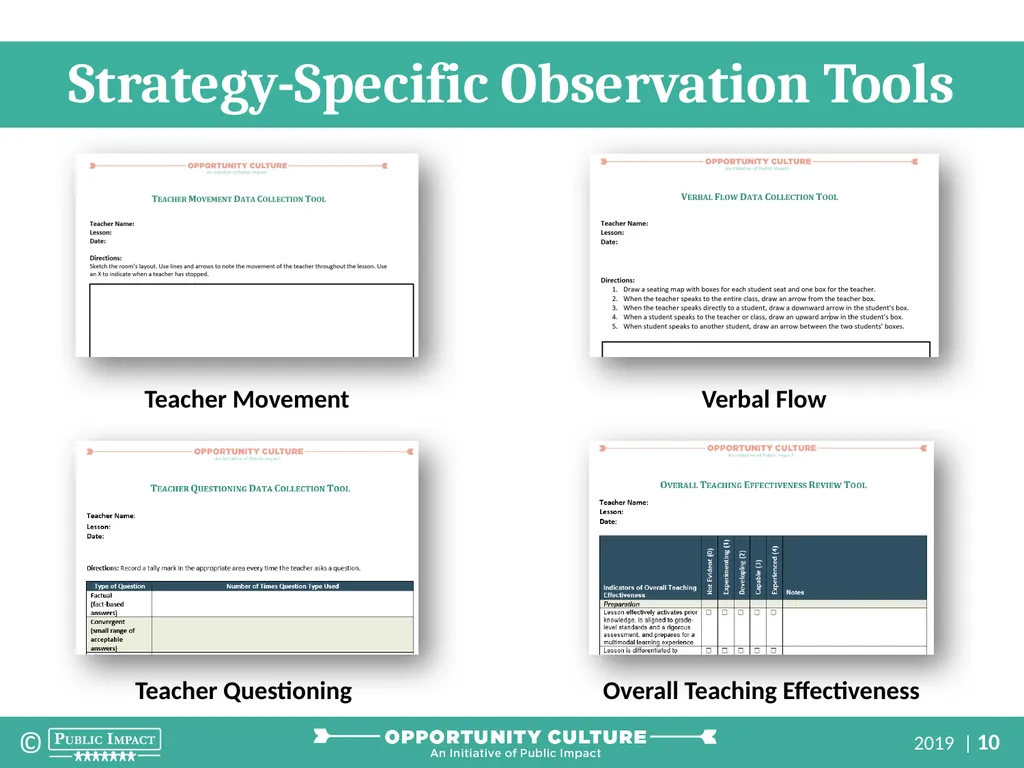
slide10. Strategy-Specific Observation Tools Teacher Movement Teacher Questioning Verbal Flow Overall Teaching Effectiveness<br>
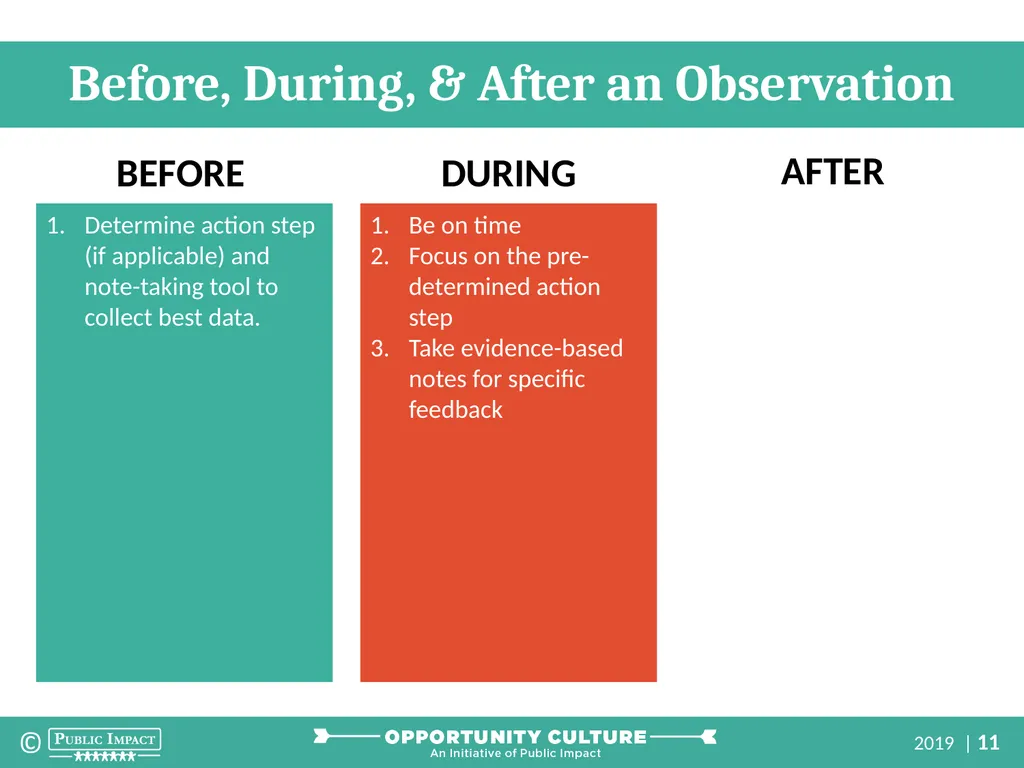
slide11. Before, During, & After an Observation Determine action step (if applicable) and note-taking tool to collect best data. Be on time
Focus on the pre-determined action step
Take evidence-based notes for specific feedback BEFORE DURING AFTER<br>
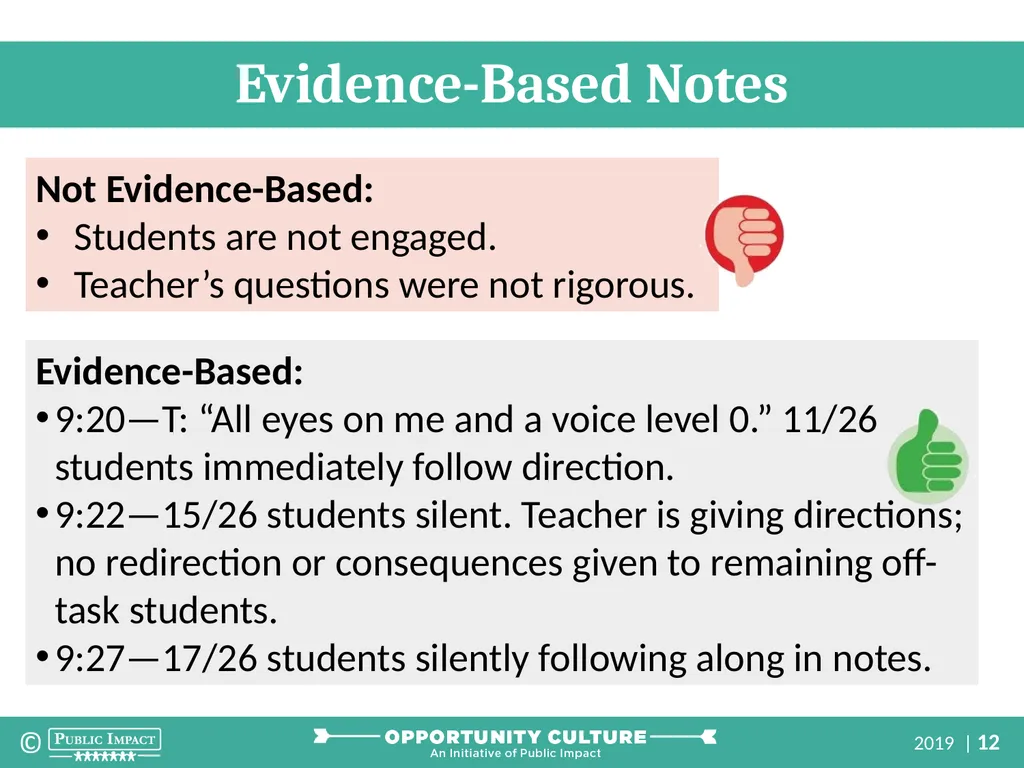
slide12. Evidence-Based Notes Evidence-Based:
9:20—T: “All eyes on me and a voice level 0.” 11/26 students immediately follow direction.
9:22—15/26 students silent. Teacher is giving directions; no redirection or consequences given to remaining off-task students.
9:27—17/26 students silently following along in notes. Not Evidence-Based:
Students are not engaged.
Teacher’s questions were not rigorous.<br>
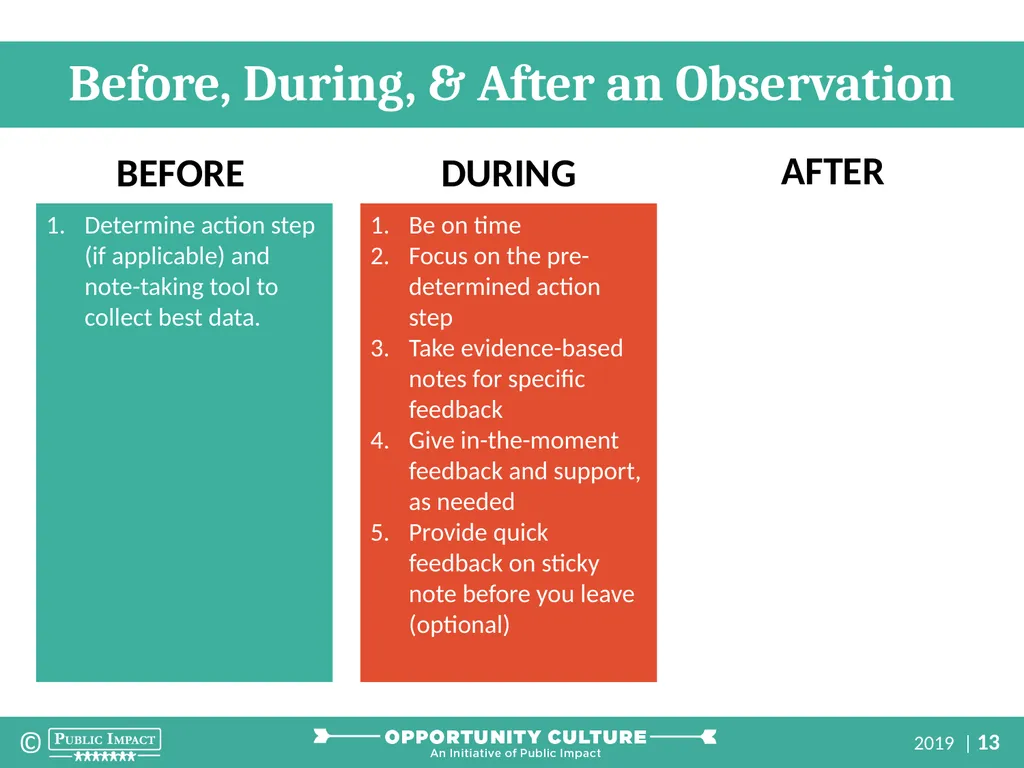
slide13. Before, During, & After an Observation Determine action step (if applicable) and note-taking tool to collect best data. Be on time
Focus on the pre-determined action step
Take evidence-based notes for specific feedback
Give in-the-moment feedback and support, as needed
Provide quick feedback on sticky note before you leave (optional) BEFORE DURING AFTER<br>
slide14. Observation: Practice!<br>
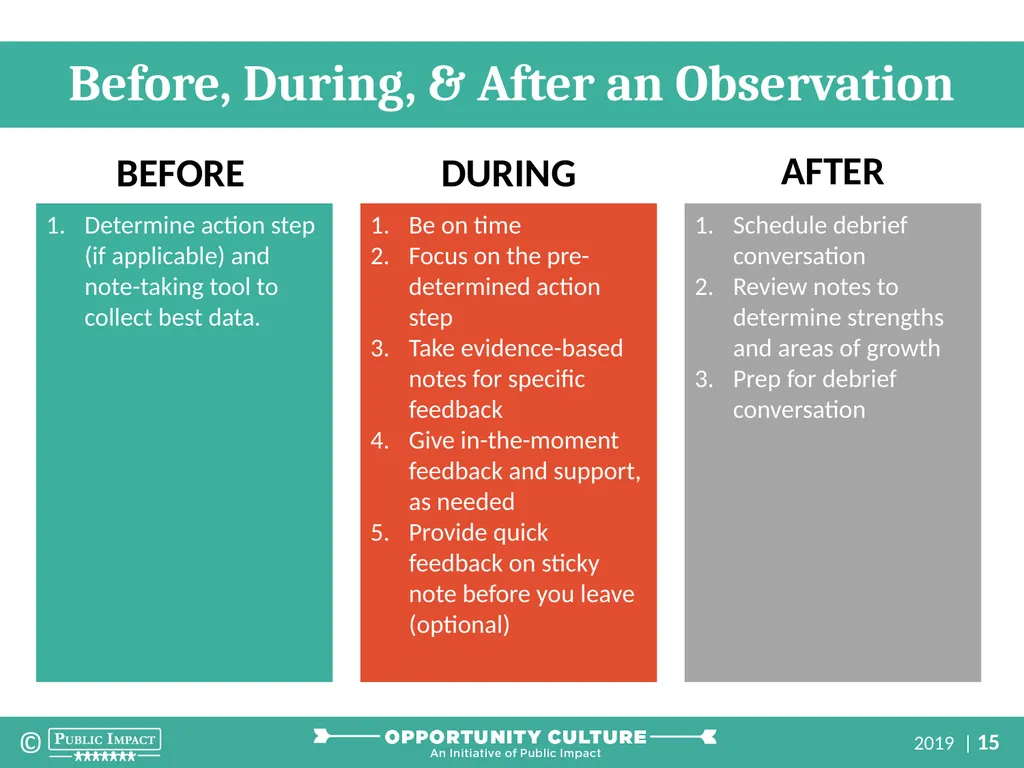
slide15. Before, During, & After an Observation Determine action step (if applicable) and note-taking tool to collect best data. Be on time
Focus on the pre-determined action step
Take evidence-based notes for specific feedback
Give in-the-moment feedback and support, as needed
Provide quick feedback on sticky note before you leave (optional) Schedule debrief conversation
Review notes to determine strengths and areas of growth
Prep for debrief conversation BEFORE DURING AFTER<br>
slide16. How to Coach: The Coaching Cycle<br>
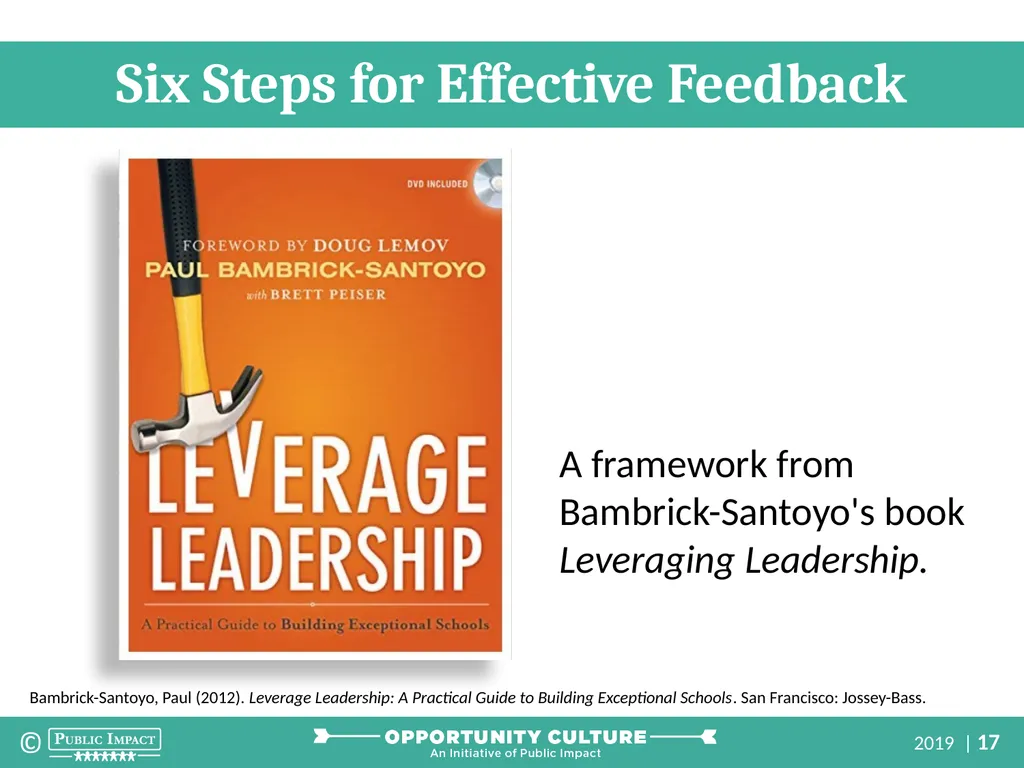
slide17. Six Steps for Effective Feedback A framework from Bambrick-Santoyo's book Leveraging Leadership. Bambrick-Santoyo, Paul (2012). Leverage Leadership: A Practical Guide to Building Exceptional Schools. San Francisco: Jossey-Bass.<br>
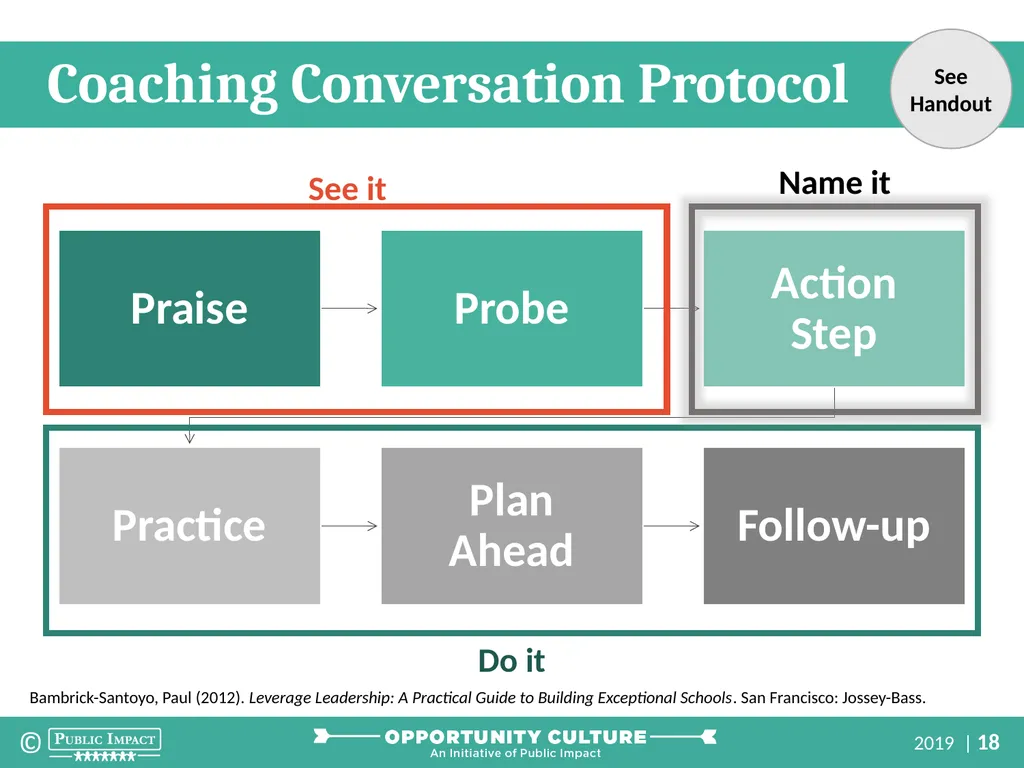
slide18. Coaching Conversation Protocol Bambrick-Santoyo, Paul (2012). Leverage Leadership: A Practical Guide to Building Exceptional Schools. San Francisco: Jossey-Bass. See it Name it Do it See Handout<br>
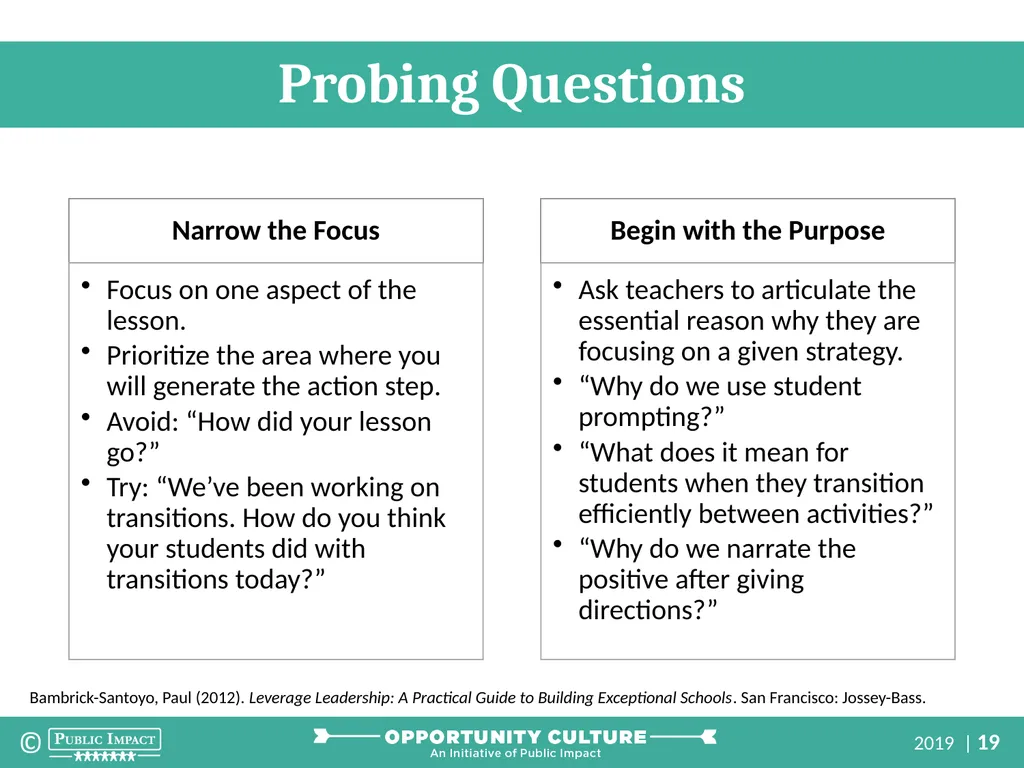
slide19. Probing Questions Bambrick-Santoyo, Paul (2012). Leverage Leadership: A Practical Guide to Building Exceptional Schools. San Francisco: Jossey-Bass.<br>
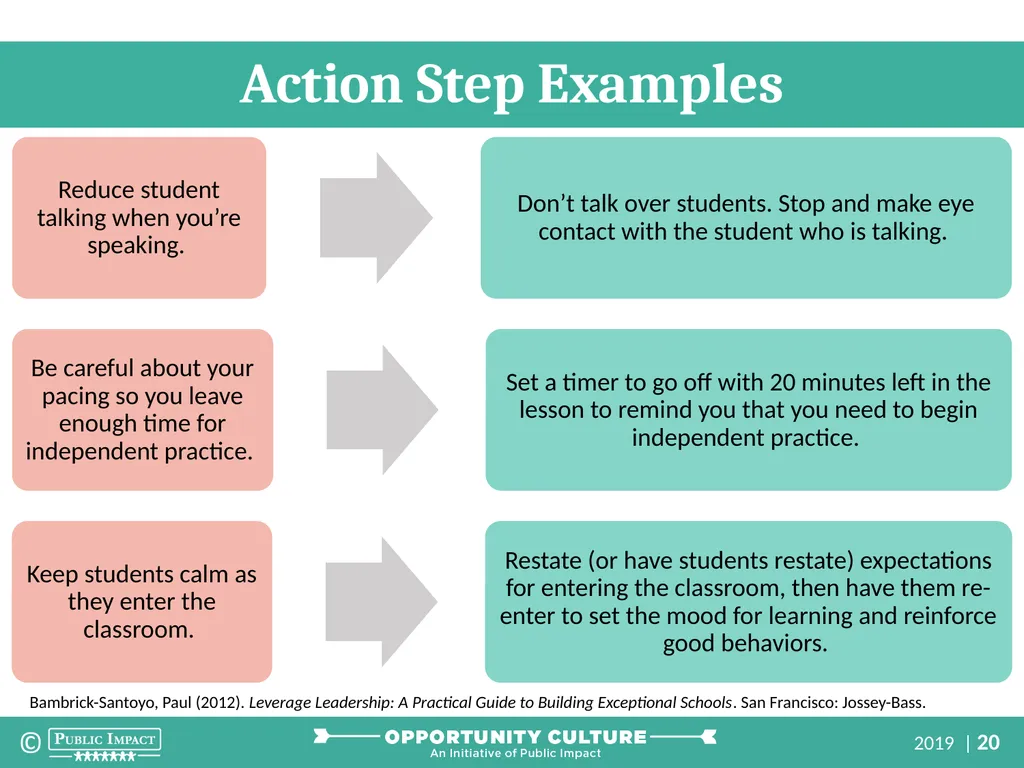
slide20. Action Step Examples Bambrick-Santoyo, Paul (2012). Leverage Leadership: A Practical Guide to Building Exceptional Schools. San Francisco: Jossey-Bass.<br>
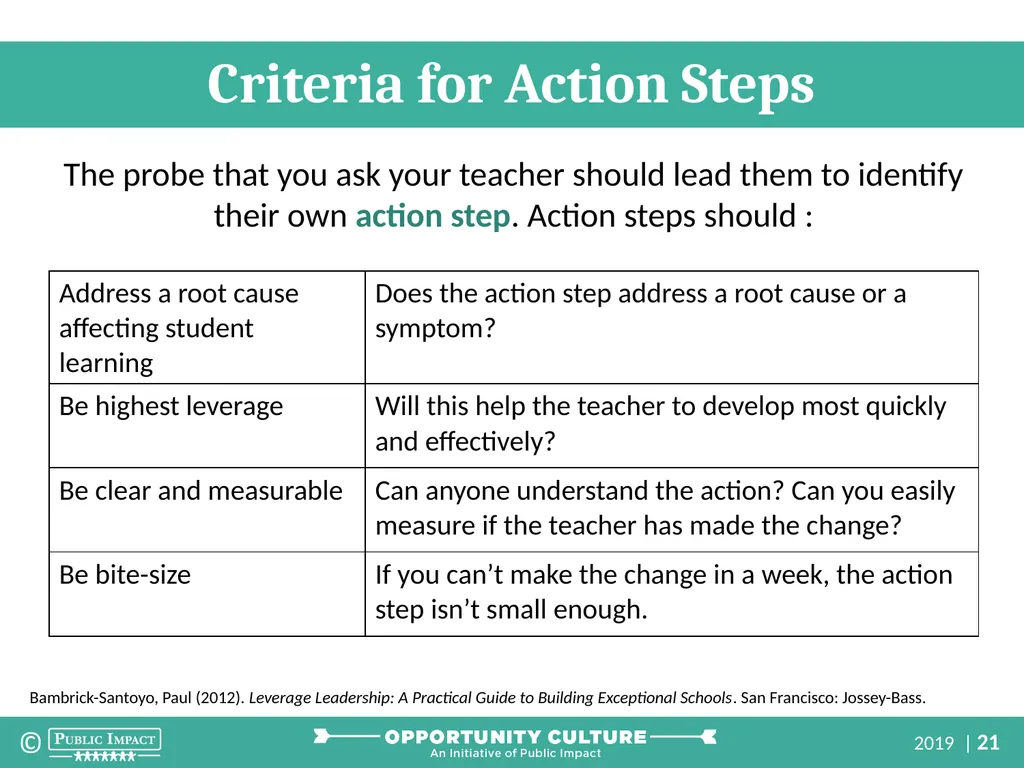
slide21. Criteria for Action Steps The probe that you ask your teacher should lead them to identify their own action step. Action steps should : Bambrick-Santoyo, Paul (2012). Leverage Leadership: A Practical Guide to Building Exceptional Schools. San Francisco: Jossey-Bass.<br>
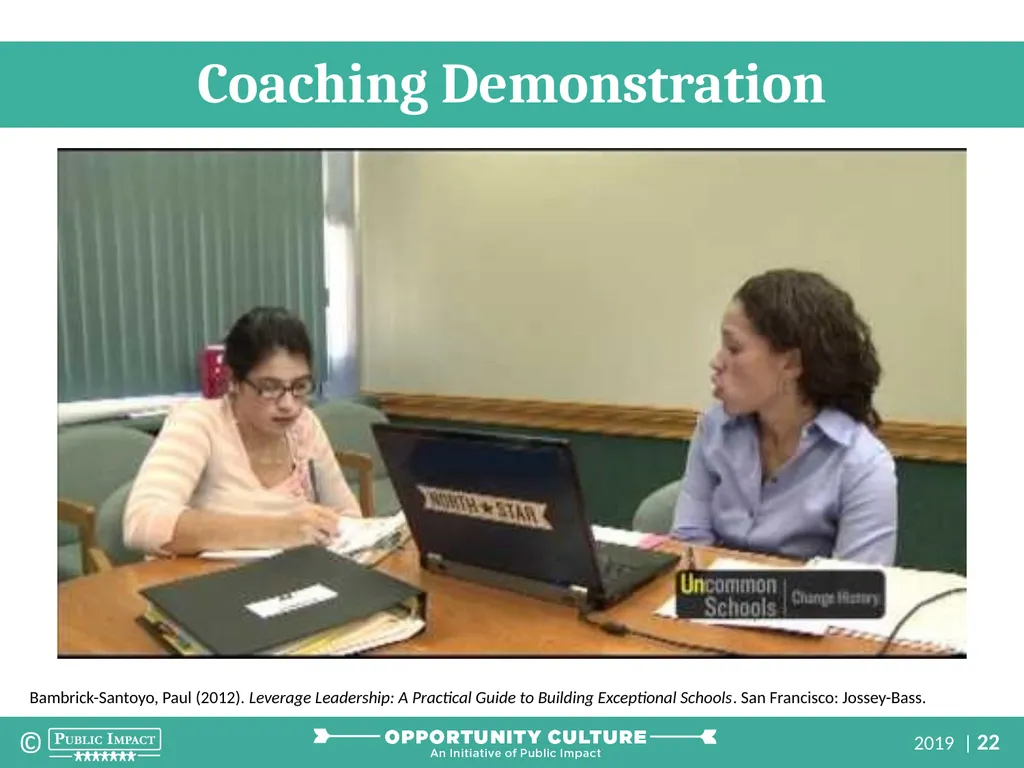
slide22. Coaching Demonstration Bambrick-Santoyo, Paul (2012). Leverage Leadership: A Practical Guide to Building Exceptional Schools. San Francisco: Jossey-Bass.<br>
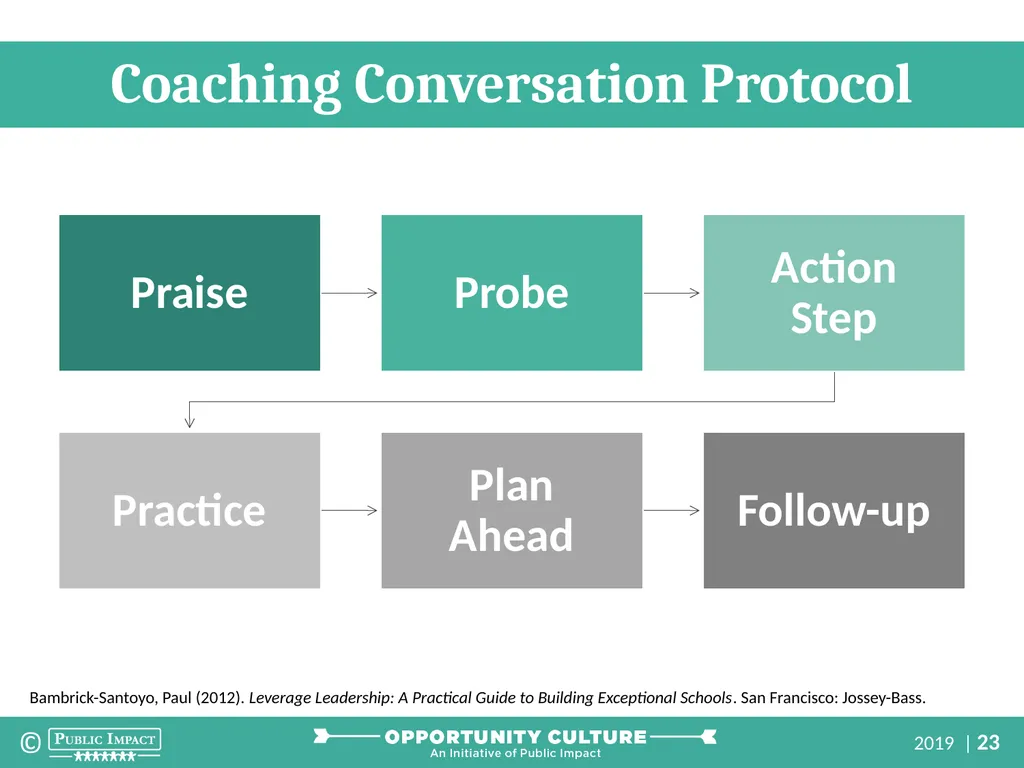
slide23. Coaching Conversation Protocol Bambrick-Santoyo, Paul (2012). Leverage Leadership: A Practical Guide to Building Exceptional Schools. San Francisco: Jossey-Bass.<br>
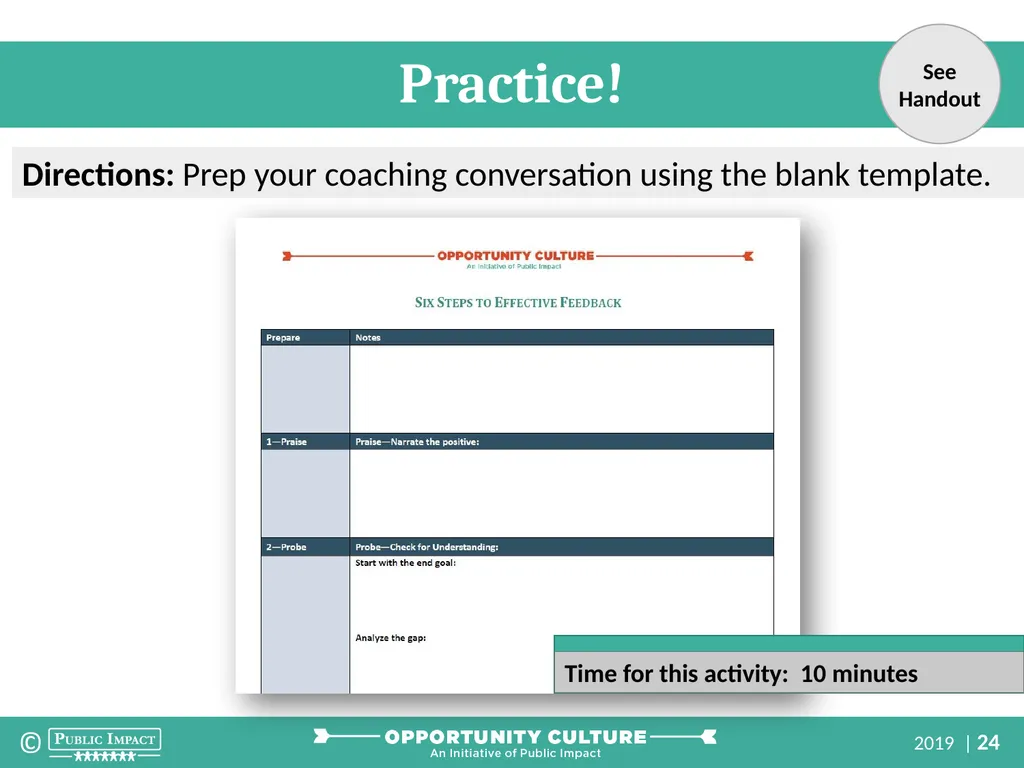
slide24. Practice! Directions: Prep your coaching conversation using the blank template. Time for this activity: 10 minutes See Handout<br>
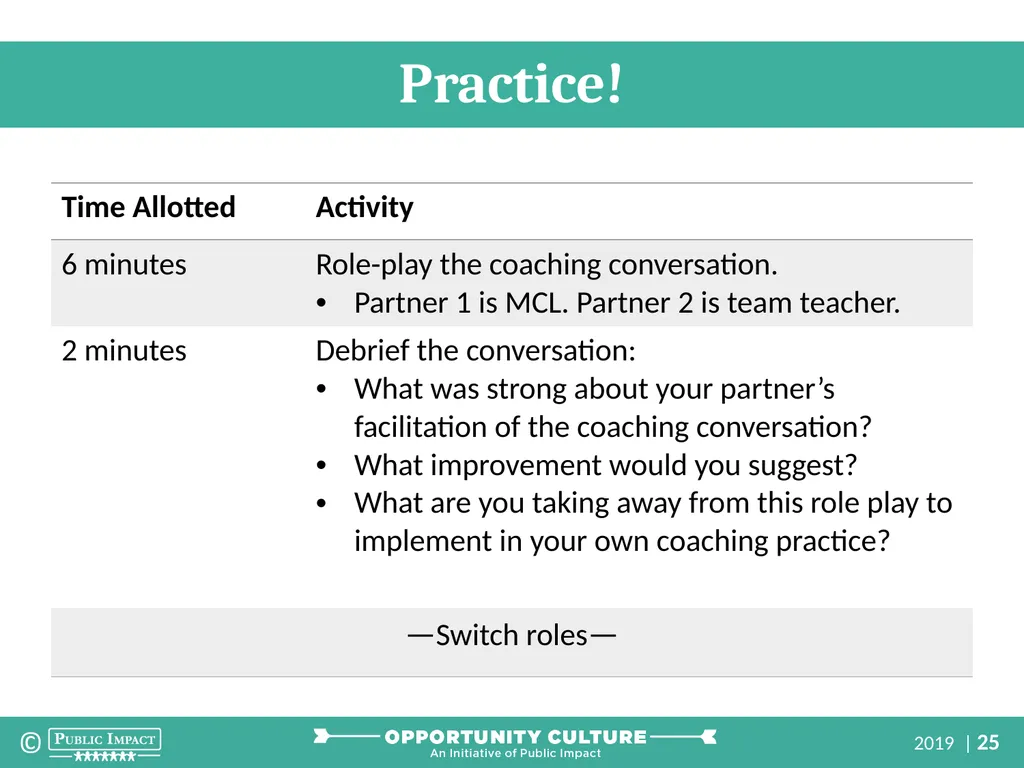
slide25. Practice!<br>
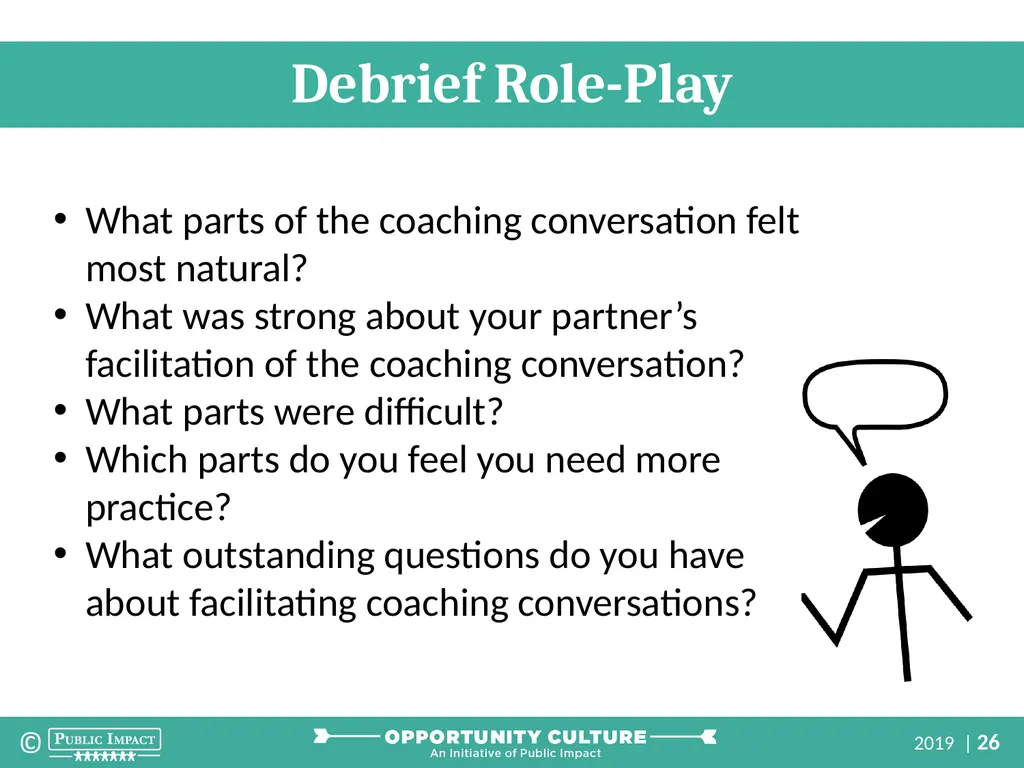
slide26. Debrief Role-Play What parts of the coaching conversation felt most natural?
What was strong about your partner’s facilitation of the coaching conversation?
What parts were difficult?
Which parts do you feel you need more practice?
What outstanding questions do you have about facilitating coaching conversations?<br>
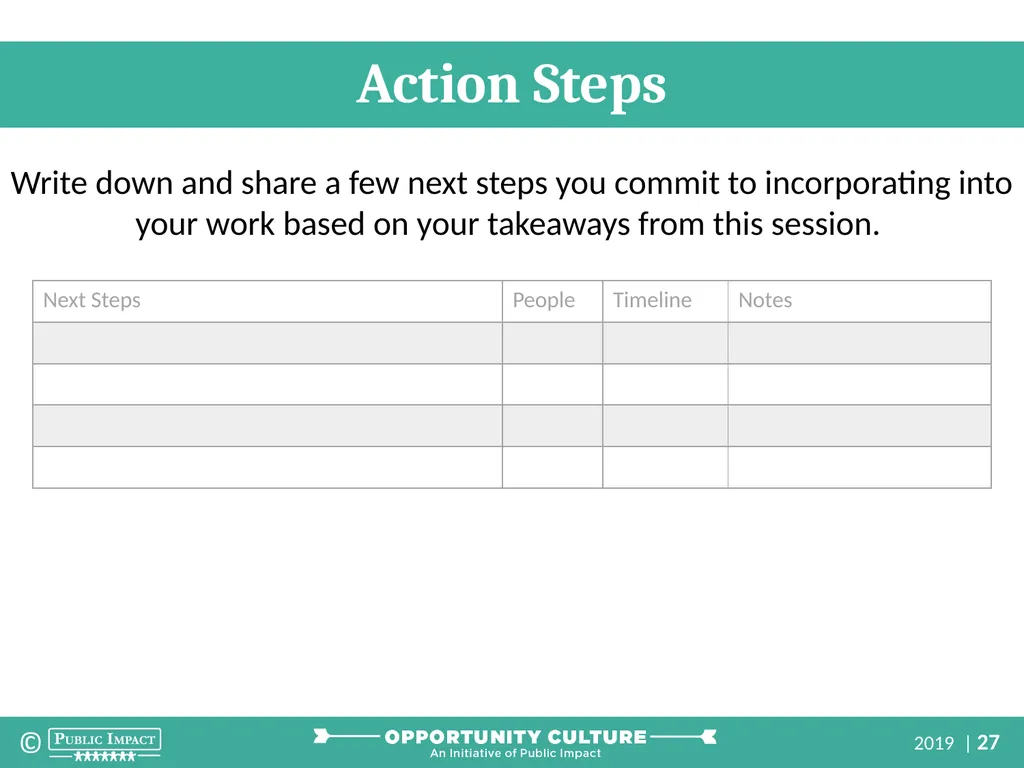
slide27. Action Steps Write down and share a few next steps you commit to incorporating into your work based on your takeaways from this session.<br>
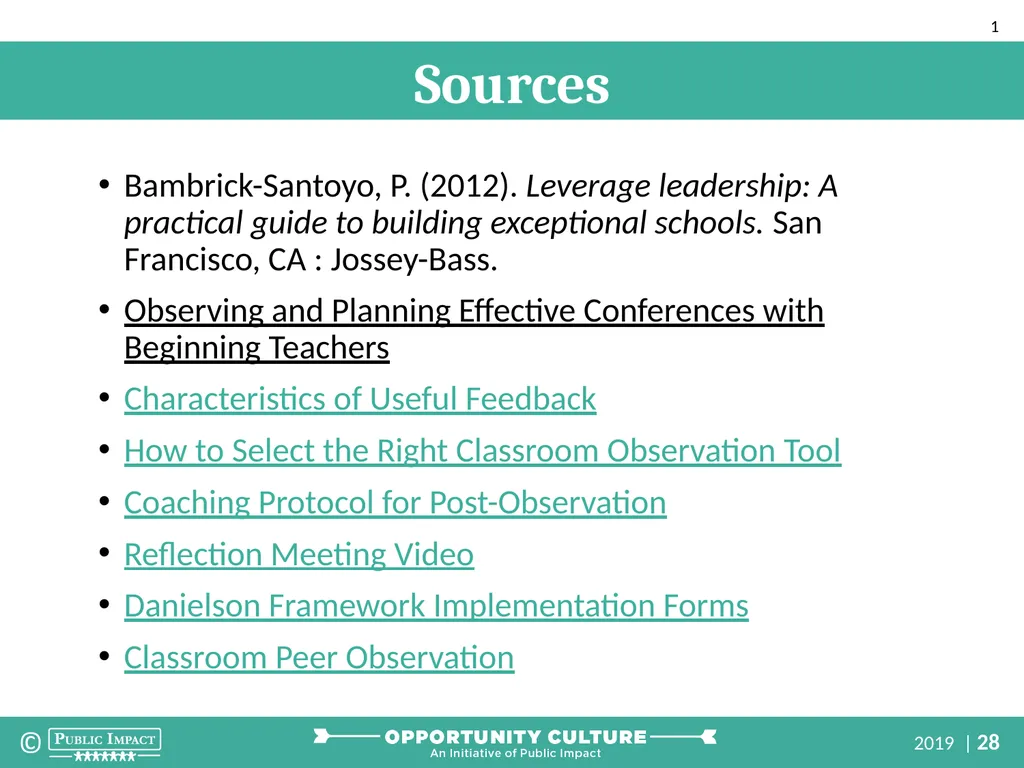
slide28. Bambrick-Santoyo, P. (2012). Leverage leadership: A practical guide to building exceptional schools. San Francisco, CA : Jossey-Bass.
Observing and Planning Effective Conferences with Beginning Teachers
Characteristics of Useful Feedback
How to Select the Right Classroom Observation Tool
Coaching Protocol for Post-Observation
Reflection Meeting Video
Danielson Framework Implementation Forms
Classroom Peer Observation<br>
slide29. Using Video in Coaching Conversations<br>
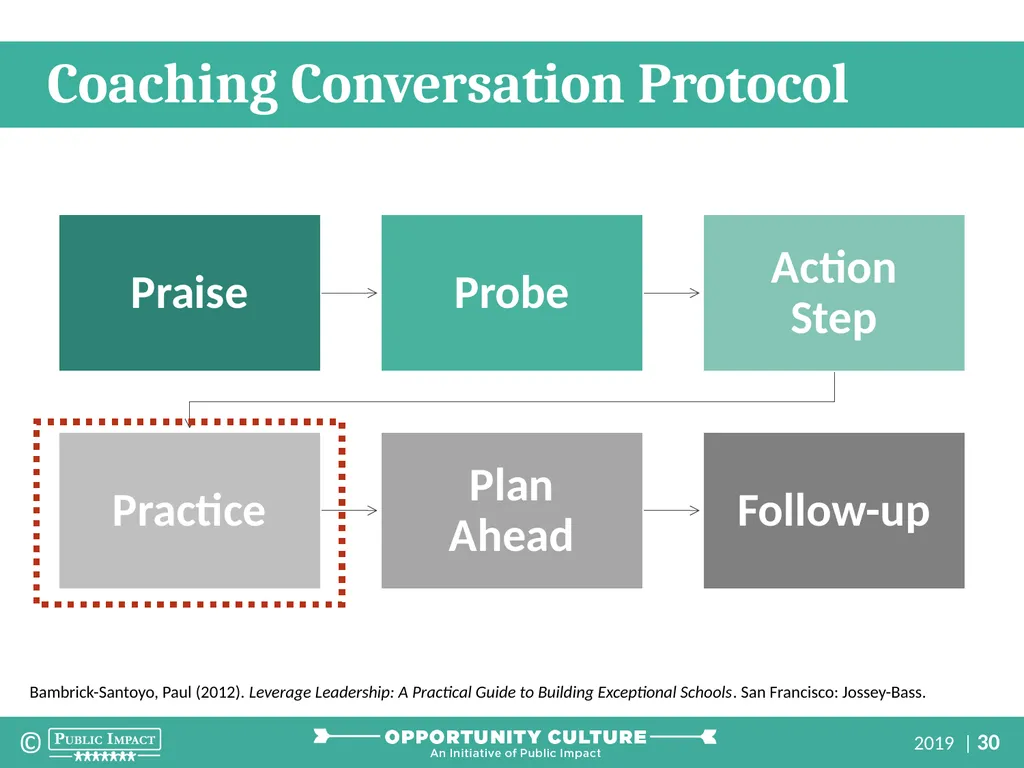
slide30. Coaching Conversation Protocol Bambrick-Santoyo, Paul (2012). Leverage Leadership: A Practical Guide to Building Exceptional Schools. San Francisco: Jossey-Bass.<br>
slide31. Practicing Teacher Actions<br>
slide32. Follow Us! @OppCulture Facebook.com/OpportunityCulture @PublicImpact Facebook.com/PublicImpact LinkedIn.com/company/public-impact---chapel-hill-nc Subscribe to the quarterly Opportunity Culture newsletters, with content by and for Opportunity Culture educators, and sign up to get Remind messages for them: Remind.com/join/ocnew Keep up to date on Opportunity Culture with resources and research from Public Impact by following: OpportunityCulture.org/mailing-list/<br>
Coaching Part 2: How to Coach<br>
slide2. In your experience being coached or coaching others, how would you define coaching? Time for this activity: 2 minutes<br>
slide3. Define coaching and discuss the components of a coaching cycle.
Learn about tools used during informal observations and practice using tools.
Learn about and practice using a protocol for leading coaching conversations.<br>
slide4. What is Coaching? Coaching is professional development. Its purpose is to help an adult learner improve their practice.
A coach is a facilitator of someone else’s learning.
- Elena Aguilar, author of “The Art of Coaching”<br>
slide5. Feedback vs. Coaching Feedback
Helps individuals be aware of strengths and areas of growth. Leads to acceptance that something needs to change. Coaching
Helps individuals achieve the new goals that feedback helped them set. What is the difference between feedback and coaching? What role can feedback play in coaching?<br>
slide6. The Coaching Cycle Observe teaching, looking for implementation of action steps Facilitate debrief conversation to deliver feedback and identify action step(s) Build relationship, set vision, and norm on roles and expectations Provide support, as needed (i.e. model lesson, co-teach, etc.)<br>
slide7. Formal vs. Informal Observations High-stakes
Evaluative
Implications for contract renewal Supportive
Non-evaluative Summative
Conducted by principal or AP
Longer observation Formal Observation Informal MCL Observation Timely, relevant
Typically shorter observation<br>
slide8. Observation Best Practices Determine action step (if applicable) and note-taking tool to collect best data. BEFORE DURING AFTER<br>
slide9. Generic, Quick Observation Tools See Handout<br>
slide10. Strategy-Specific Observation Tools Teacher Movement Teacher Questioning Verbal Flow Overall Teaching Effectiveness<br>
slide11. Before, During, & After an Observation Determine action step (if applicable) and note-taking tool to collect best data. Be on time
Focus on the pre-determined action step
Take evidence-based notes for specific feedback BEFORE DURING AFTER<br>
slide12. Evidence-Based Notes Evidence-Based:
9:20—T: “All eyes on me and a voice level 0.” 11/26 students immediately follow direction.
9:22—15/26 students silent. Teacher is giving directions; no redirection or consequences given to remaining off-task students.
9:27—17/26 students silently following along in notes. Not Evidence-Based:
Students are not engaged.
Teacher’s questions were not rigorous.<br>
slide13. Before, During, & After an Observation Determine action step (if applicable) and note-taking tool to collect best data. Be on time
Focus on the pre-determined action step
Take evidence-based notes for specific feedback
Give in-the-moment feedback and support, as needed
Provide quick feedback on sticky note before you leave (optional) BEFORE DURING AFTER<br>
slide14. Observation: Practice!<br>
slide15. Before, During, & After an Observation Determine action step (if applicable) and note-taking tool to collect best data. Be on time
Focus on the pre-determined action step
Take evidence-based notes for specific feedback
Give in-the-moment feedback and support, as needed
Provide quick feedback on sticky note before you leave (optional) Schedule debrief conversation
Review notes to determine strengths and areas of growth
Prep for debrief conversation BEFORE DURING AFTER<br>
slide16. How to Coach: The Coaching Cycle<br>
slide17. Six Steps for Effective Feedback A framework from Bambrick-Santoyo's book Leveraging Leadership. Bambrick-Santoyo, Paul (2012). Leverage Leadership: A Practical Guide to Building Exceptional Schools. San Francisco: Jossey-Bass.<br>
slide18. Coaching Conversation Protocol Bambrick-Santoyo, Paul (2012). Leverage Leadership: A Practical Guide to Building Exceptional Schools. San Francisco: Jossey-Bass. See it Name it Do it See Handout<br>
slide19. Probing Questions Bambrick-Santoyo, Paul (2012). Leverage Leadership: A Practical Guide to Building Exceptional Schools. San Francisco: Jossey-Bass.<br>
slide20. Action Step Examples Bambrick-Santoyo, Paul (2012). Leverage Leadership: A Practical Guide to Building Exceptional Schools. San Francisco: Jossey-Bass.<br>
slide21. Criteria for Action Steps The probe that you ask your teacher should lead them to identify their own action step. Action steps should : Bambrick-Santoyo, Paul (2012). Leverage Leadership: A Practical Guide to Building Exceptional Schools. San Francisco: Jossey-Bass.<br>
slide22. Coaching Demonstration Bambrick-Santoyo, Paul (2012). Leverage Leadership: A Practical Guide to Building Exceptional Schools. San Francisco: Jossey-Bass.<br>
slide23. Coaching Conversation Protocol Bambrick-Santoyo, Paul (2012). Leverage Leadership: A Practical Guide to Building Exceptional Schools. San Francisco: Jossey-Bass.<br>
slide24. Practice! Directions: Prep your coaching conversation using the blank template. Time for this activity: 10 minutes See Handout<br>
slide25. Practice!<br>
slide26. Debrief Role-Play What parts of the coaching conversation felt most natural?
What was strong about your partner’s facilitation of the coaching conversation?
What parts were difficult?
Which parts do you feel you need more practice?
What outstanding questions do you have about facilitating coaching conversations?<br>
slide27. Action Steps Write down and share a few next steps you commit to incorporating into your work based on your takeaways from this session.<br>
slide28. Bambrick-Santoyo, P. (2012). Leverage leadership: A practical guide to building exceptional schools. San Francisco, CA : Jossey-Bass.
Observing and Planning Effective Conferences with Beginning Teachers
Characteristics of Useful Feedback
How to Select the Right Classroom Observation Tool
Coaching Protocol for Post-Observation
Reflection Meeting Video
Danielson Framework Implementation Forms
Classroom Peer Observation<br>
slide29. Using Video in Coaching Conversations<br>
slide30. Coaching Conversation Protocol Bambrick-Santoyo, Paul (2012). Leverage Leadership: A Practical Guide to Building Exceptional Schools. San Francisco: Jossey-Bass.<br>
slide31. Practicing Teacher Actions<br>
slide32. Follow Us! @OppCulture Facebook.com/OpportunityCulture @PublicImpact Facebook.com/PublicImpact LinkedIn.com/company/public-impact---chapel-hill-nc Subscribe to the quarterly Opportunity Culture newsletters, with content by and for Opportunity Culture educators, and sign up to get Remind messages for them: Remind.com/join/ocnew Keep up to date on Opportunity Culture with resources and research from Public Impact by following: OpportunityCulture.org/mailing-list/<br>