
Multivariate Analysis Dr. Asmaa Ghalib Jabir

Description: Multivariate Analysis Dr. Asmaa Ghalib Jabir Lecture One Matrix Algebra Matrix Algebra The Matrix It is an ordered array of a set of observations as m rows and n columns, those observations are called: elements. A(( aij )) , where
Related Topics
Download Presentation
"Multivariate Analysis Dr. Asmaa Ghalib Jabir" is the property of its rightful owner. Permission is granted to download and print the materials on this website for personal, non-commercial use only, and to display it on your personal computer provided you do not modify the materials and that you retain all copyright notices contained in the materials. By downloading content from our website, you accept the terms of this agreement.
Presentation Transcript
slide1. Multivariate Analysis Dr. Asmaa Ghalib Jabir<br>
slide2. Lecture One Matrix Algebra<br>
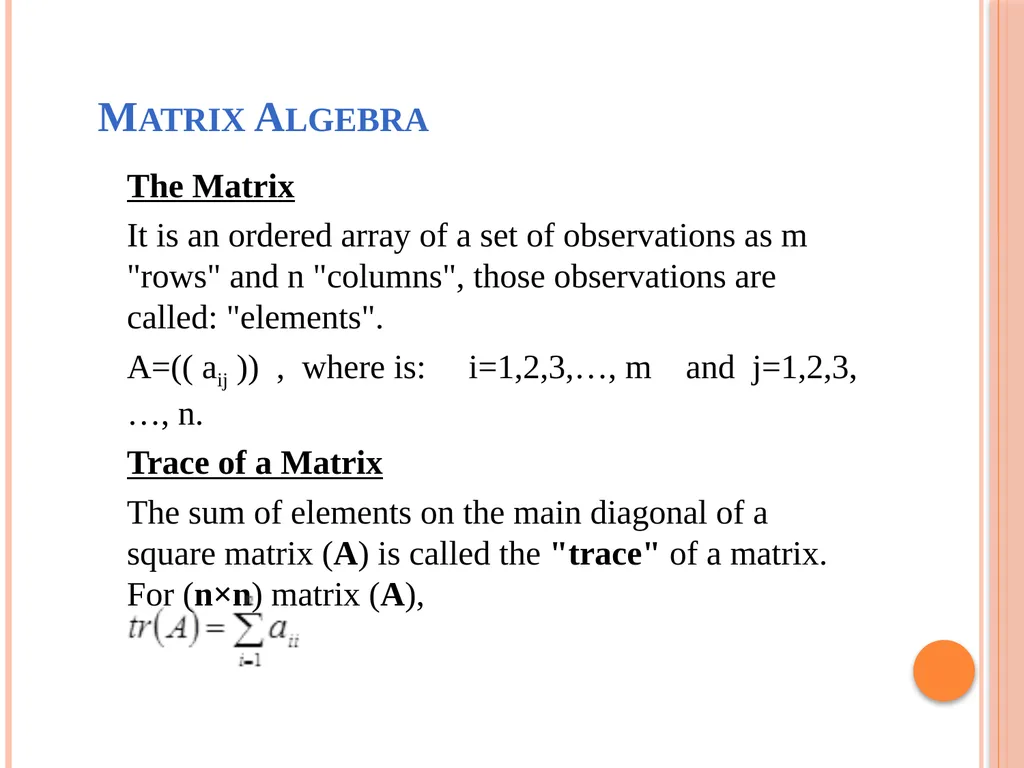
slide3. Matrix Algebra The Matrix
It is an ordered array of a set of observations as m "rows" and n "columns", those observations are called: "elements".
A=(( aij )) , where is: i=1,2,3,…, m and j=1,2,3,…, n.
Trace of a Matrix
The sum of elements on the main diagonal of a square matrix (A) is called the "trace" of a matrix. For (n×n) matrix (A),<br>
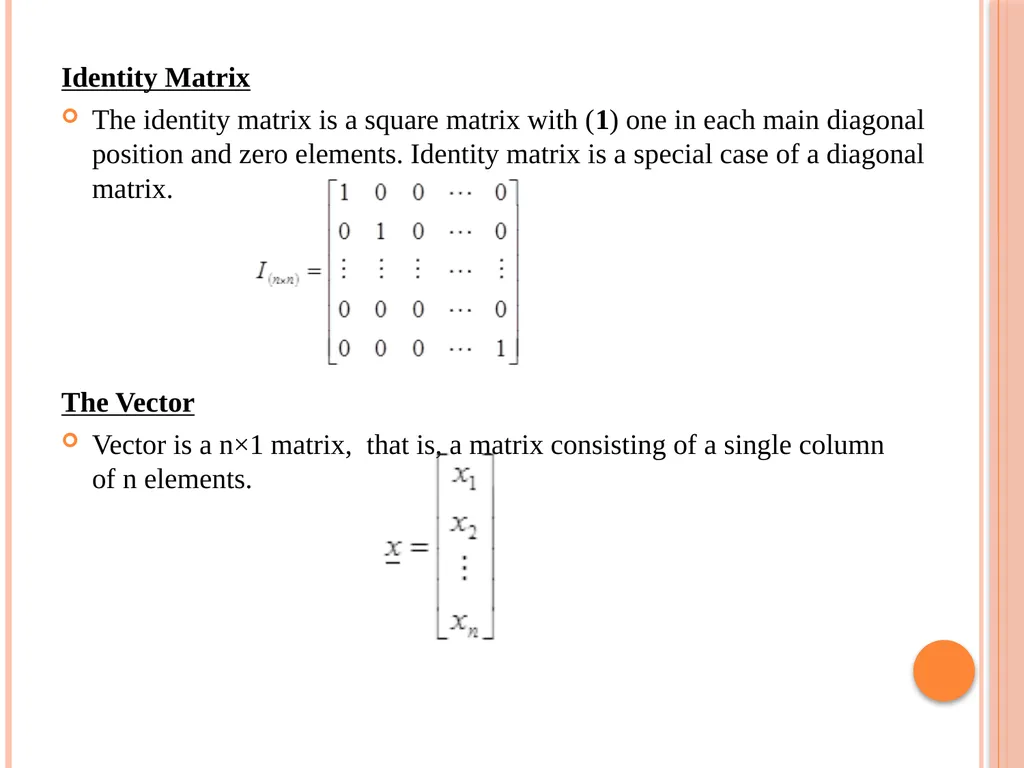
slide4. Identity Matrix
The identity matrix is a square matrix with (1) one in each main diagonal position and zero elements. Identity matrix is a special case of a diagonal matrix.
The Vector
Vector is a n×1 matrix, that is, a matrix consisting of a single column of n elements.<br>
slide5. Diagonal Matrix
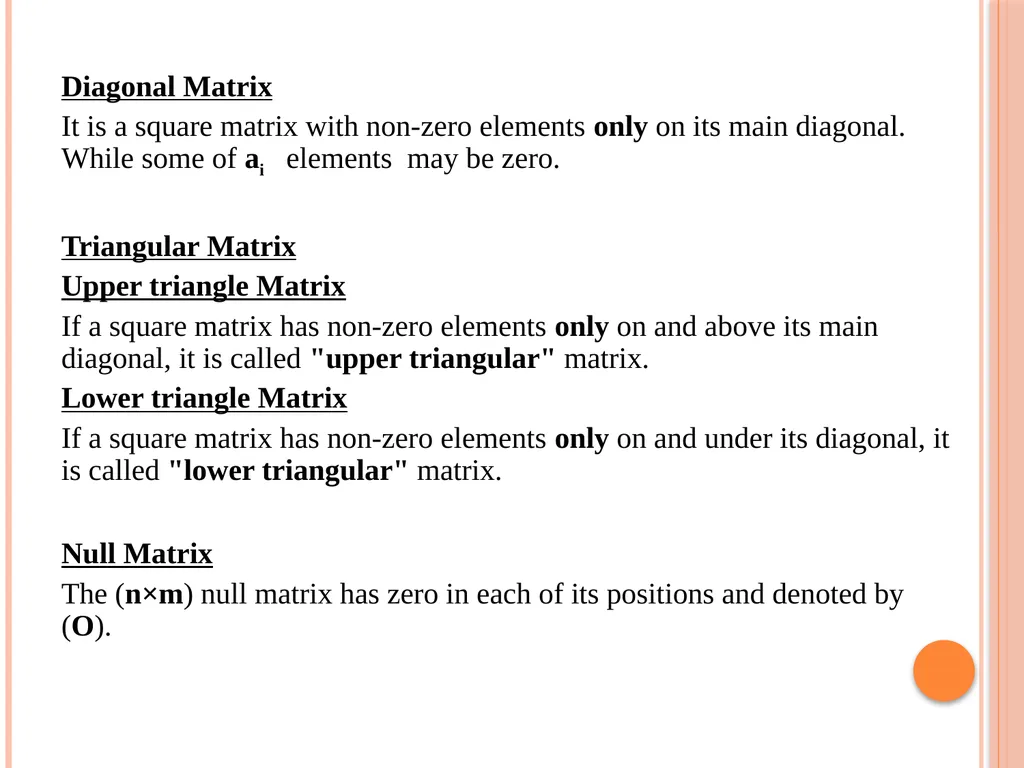
It is a square matrix with non-zero elements only on its main diagonal. While some of ai elements may be zero.
Triangular Matrix
Upper triangle Matrix
If a square matrix has non-zero elements only on and above its main diagonal, it is called "upper triangular" matrix.
Lower triangle Matrix
If a square matrix has non-zero elements only on and under its diagonal, it is called "lower triangular" matrix.
Null Matrix
The (n×m) null matrix has zero in each of its positions and denoted by (O).<br>
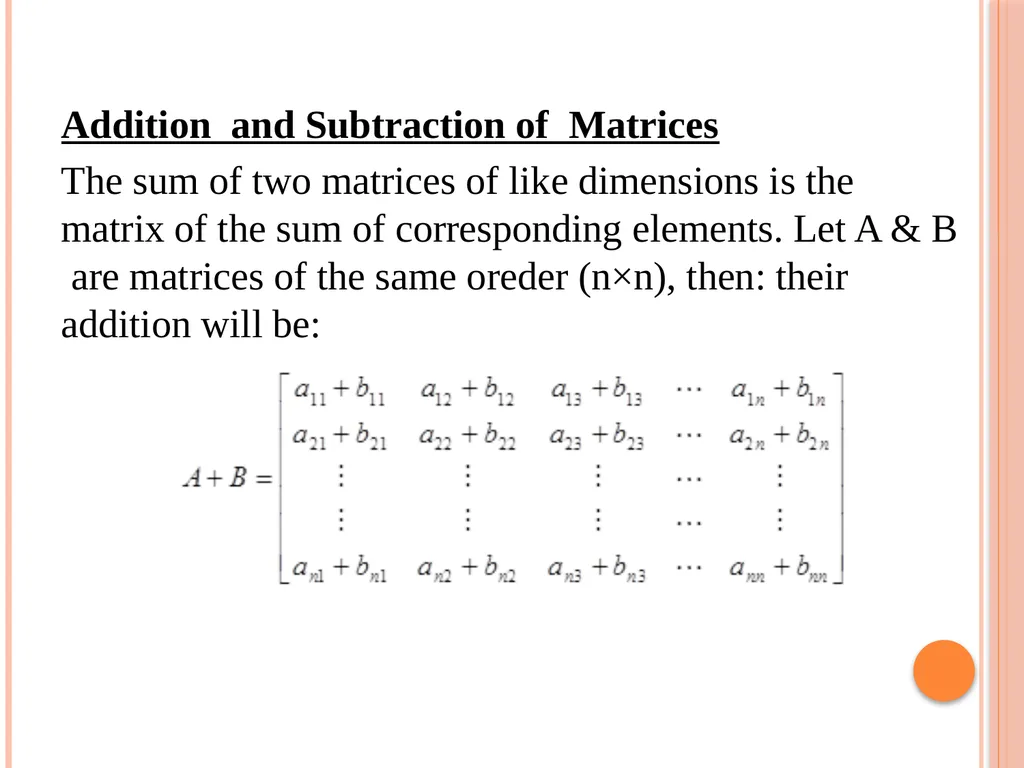
slide6. Addition and Subtraction of Matrices
The sum of two matrices of like dimensions is the matrix of the sum of corresponding elements. Let A & B are matrices of the same oreder (n×n), then: their addition will be:<br>
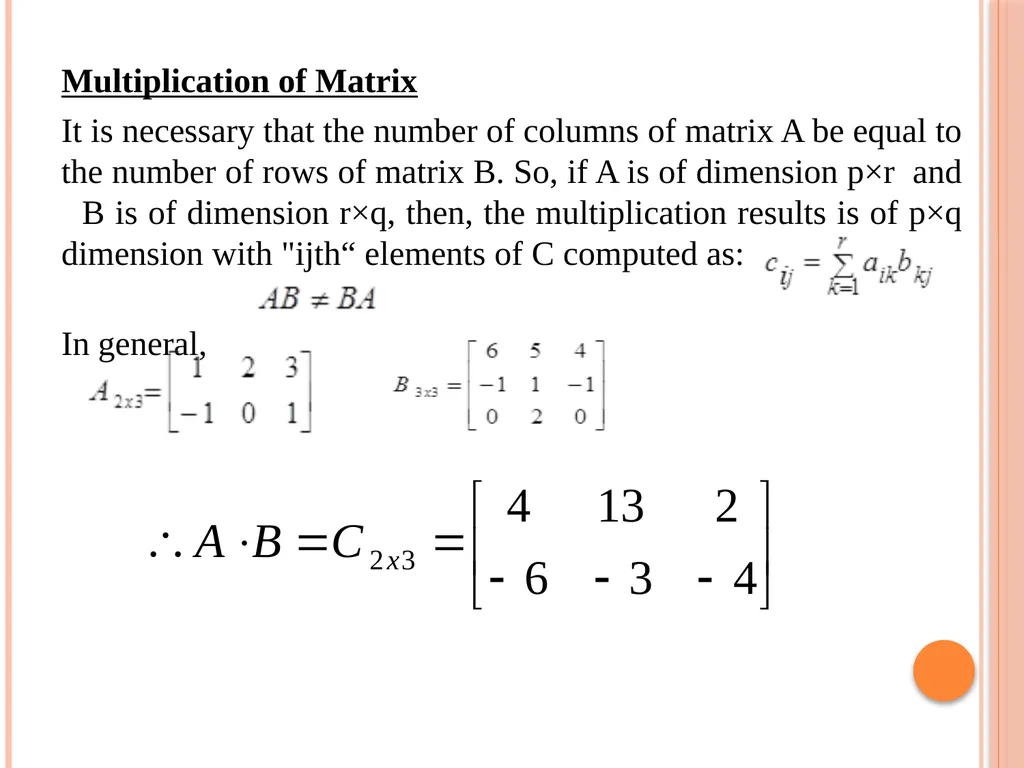
slide7. Multiplication of Matrix
It is necessary that the number of columns of matrix A be equal to the number of rows of matrix B. So, if A is of dimension p×r and B is of dimension r×q, then, the multiplication results is of p×q dimension with "ijth“ elements of C computed as:
In general,<br>
slide2. Lecture One Matrix Algebra<br>
slide3. Matrix Algebra The Matrix
It is an ordered array of a set of observations as m "rows" and n "columns", those observations are called: "elements".
A=(( aij )) , where is: i=1,2,3,…, m and j=1,2,3,…, n.
Trace of a Matrix
The sum of elements on the main diagonal of a square matrix (A) is called the "trace" of a matrix. For (n×n) matrix (A),<br>
slide4. Identity Matrix
The identity matrix is a square matrix with (1) one in each main diagonal position and zero elements. Identity matrix is a special case of a diagonal matrix.
The Vector
Vector is a n×1 matrix, that is, a matrix consisting of a single column of n elements.<br>
slide5. Diagonal Matrix
It is a square matrix with non-zero elements only on its main diagonal. While some of ai elements may be zero.
Triangular Matrix
Upper triangle Matrix
If a square matrix has non-zero elements only on and above its main diagonal, it is called "upper triangular" matrix.
Lower triangle Matrix
If a square matrix has non-zero elements only on and under its diagonal, it is called "lower triangular" matrix.
Null Matrix
The (n×m) null matrix has zero in each of its positions and denoted by (O).<br>
slide6. Addition and Subtraction of Matrices
The sum of two matrices of like dimensions is the matrix of the sum of corresponding elements. Let A & B are matrices of the same oreder (n×n), then: their addition will be:<br>
slide7. Multiplication of Matrix
It is necessary that the number of columns of matrix A be equal to the number of rows of matrix B. So, if A is of dimension p×r and B is of dimension r×q, then, the multiplication results is of p×q dimension with "ijth“ elements of C computed as:
In general,<br>