My Language Portrait Overview This in-class teaching and learning task provides an opportunity for students to explore and communicate their linguistic identities and language practices and the role these play in shaping their experiences
"My Language Portrait Overview This in-class" is the property of its rightful owner. Permission is granted to
download and print the materials on this website for personal, non-commercial use only, and to display it
on your personal computer provided you do not modify the materials and that you retain all copyright
notices contained in the materials. By downloading content from our website, you accept the terms of this
agreement.
Presentation Transcript
01
My Language Portrait Overview This in-class teaching and learning task provides an opportunity for students to explore and communicate their linguistic identities and language practices and the role these play in shaping their experiences as language learners. Utilising Busch’s (2012) multimodal, biographical ‘Language Portrait’, students create a visual representation of their communicative resources and write a reflective text to share with their peers and teachers. Teachers begin by creating a self-portrait which they then write about and share with others in small groups. Depending on students’ levels, the task can also be extended to engage students in a critical discussion about languages and language use.
Resources have been developed in collaboration with Julie Choi, Senior Lecturer in Education (Additional Languages) in the Melbourne Graduate School of Education.<br>
02
My Language Portrait<br>
03
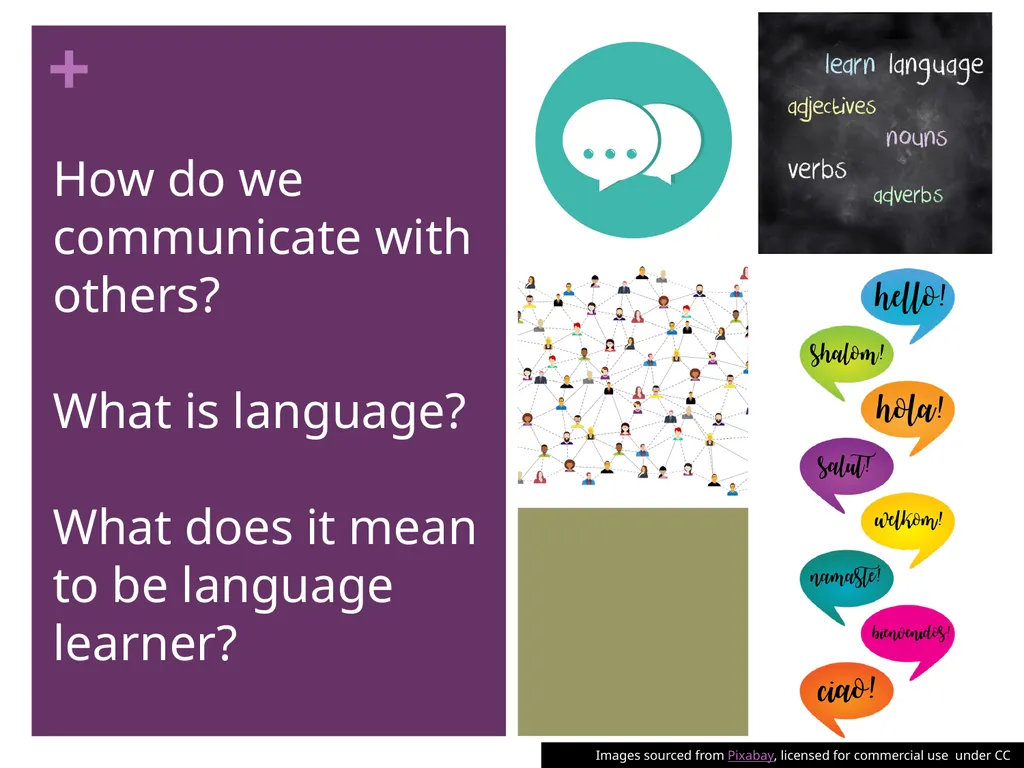
How do we communicate with others? What is language? What does it mean to be language learner? Images sourced from Pixabay, licensed for commercial use under CC<br>
04
Learning Intention We will learn to explore our identity as language learners.<br>
05
Success Criteria I can represent different ways of communicating using symbols and colours.
I can write about my identity as a language learner.
I can discuss my work with my classmates.<br>
06
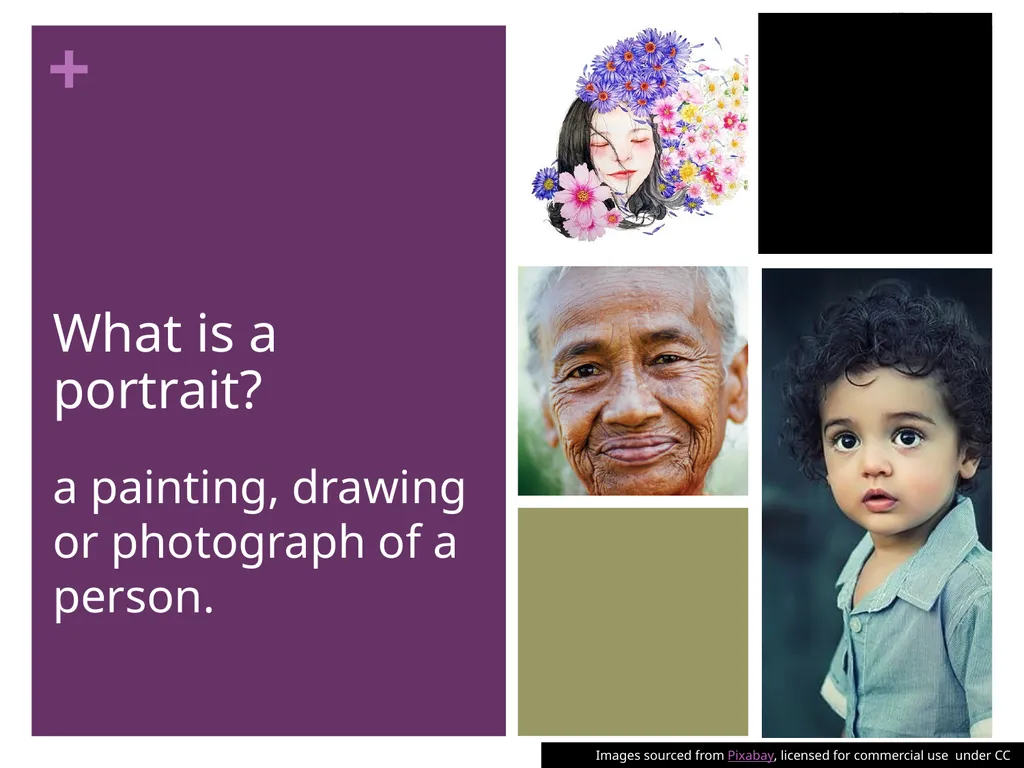
What is a portrait? a painting, drawing or photograph of a person. Images sourced from Pixabay, licensed for commercial use under CC<br>
07
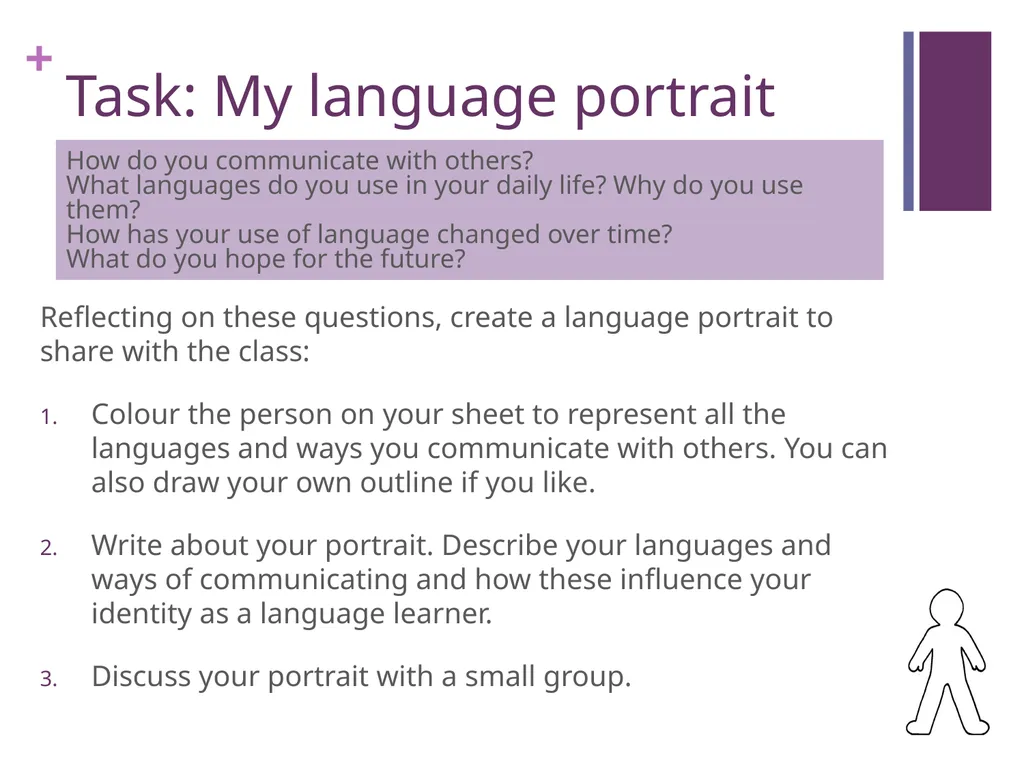
Task: My language portrait Reflecting on these questions, create a language portrait to share with the class:
Colour the person on your sheet to represent all the languages and ways you communicate with others. You can also draw your own outline if you like.
Write about your portrait. Describe your languages and ways of communicating and how these influence your identity as a language learner.
Discuss your portrait with a small group. How do you communicate with others? What languages do you use in your daily life? Why do you use them? How has your use of language changed over time? What do you hope for the future?<br>
08
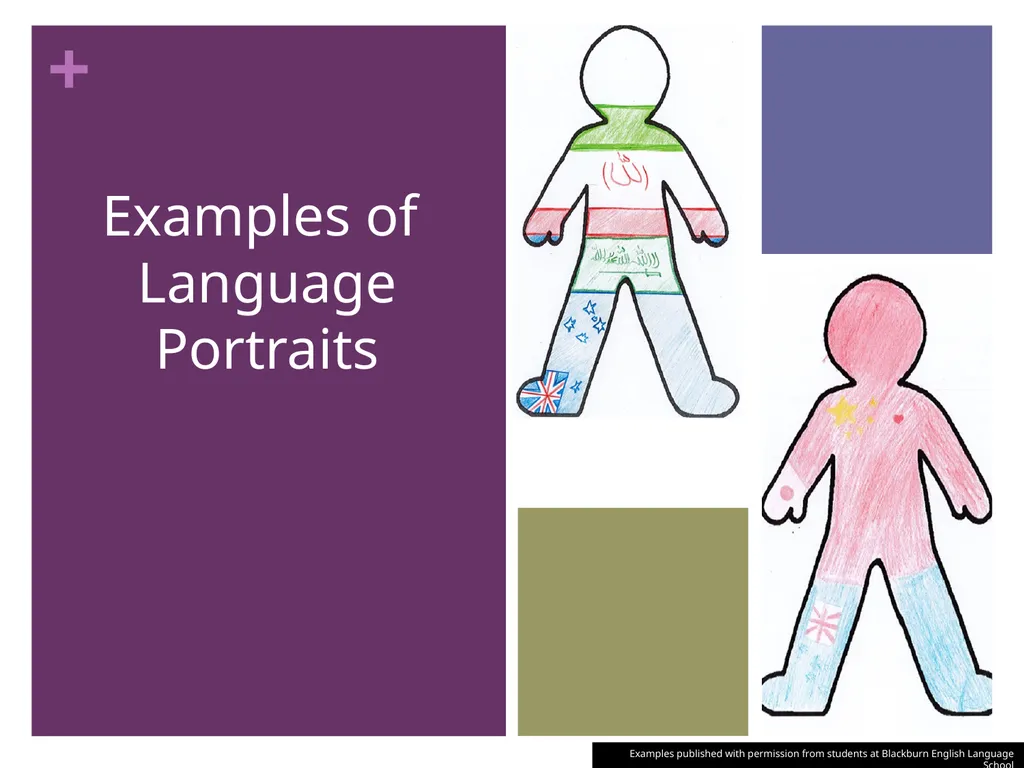
Examples of Language Portraits Examples published with permission from students at Blackburn English Language School<br>
09
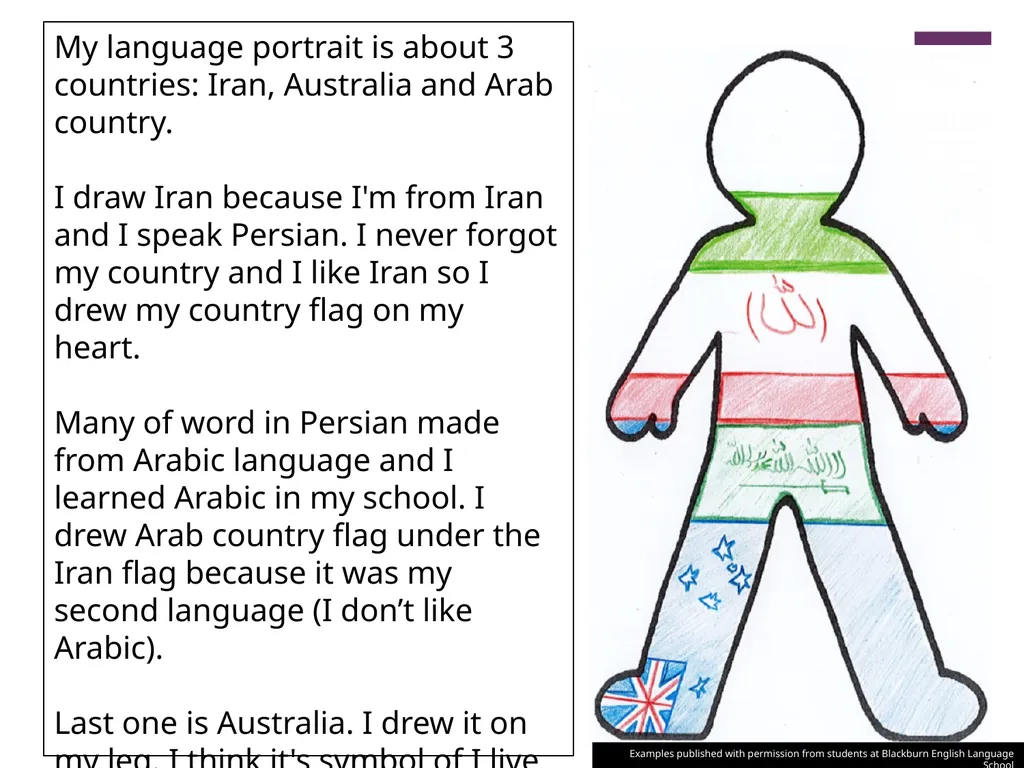
My language portrait is about 3 countries: Iran, Australia and Arab country. I draw Iran because I'm from Iran and I speak Persian. I never forgot my country and I like Iran so I drew my country flag on my heart.
Many of word in Persian made from Arabic language and I learned Arabic in my school. I drew Arab country flag under the Iran flag because it was my second language (I don’t like Arabic).
Last one is Australia. I drew it on my leg. I think it's symbol of I live in Australia or I walk on Australia. Examples published with permission from students at Blackburn English Language School<br>
10
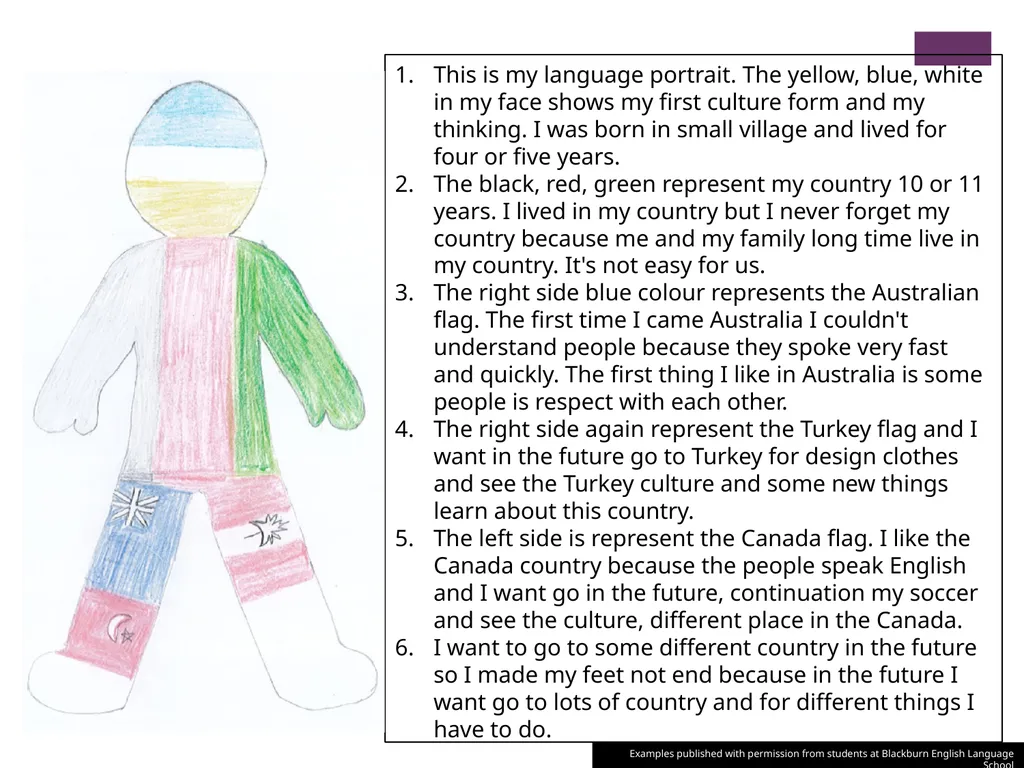
This is my language portrait. The yellow, blue, white in my face shows my first culture form and my thinking. I was born in small village and lived for four or five years.
The black, red, green represent my country 10 or 11 years. I lived in my country but I never forget my country because me and my family long time live in my country. It's not easy for us.
The right side blue colour represents the Australian flag. The first time I came Australia I couldn't understand people because they spoke very fast and quickly. The first thing I like in Australia is some people is respect with each other.
The right side again represent the Turkey flag and I want in the future go to Turkey for design clothes and see the Turkey culture and some new things learn about this country.
The left side is represent the Canada flag. I like the Canada country because the people speak English and I want go in the future, continuation my soccer and see the culture, different place in the Canada.
I want to go to some different country in the future so I made my feet not end because in the future I want go to lots of country and for different things I have to do. Examples published with permission from students at Blackburn English Language School<br>
11
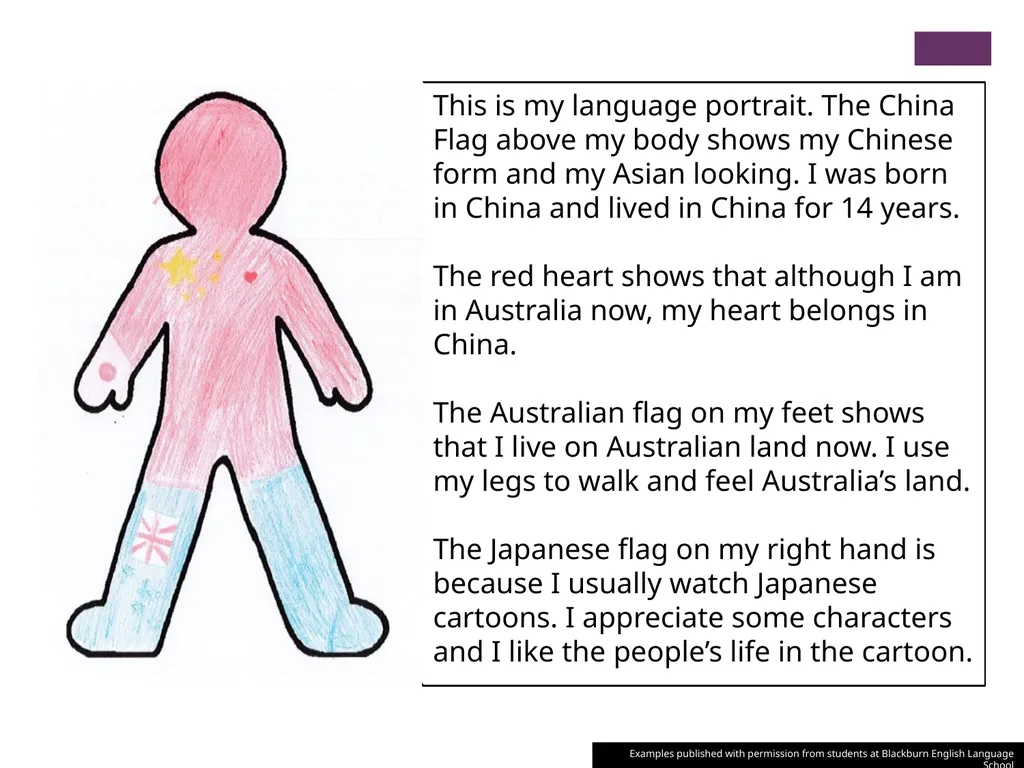
This is my language portrait. The China Flag above my body shows my Chinese form and my Asian looking. I was born in China and lived in China for 14 years.
The red heart shows that although I am in Australia now, my heart belongs in China.
The Australian flag on my feet shows that I live on Australian land now. I use my legs to walk and feel Australia’s land.
The Japanese flag on my right hand is because I usually watch Japanese cartoons. I appreciate some characters and I like the people’s life in the cartoon. Examples published with permission from students at Blackburn English Language School<br>