Nanomaterials Pearson 1.2 You mean from science fiction right? Nope! Nanotechnology is a very real and scientific practice. It has been developed for the past 30 years, since 1981. The famous physicist Richard Feynman first suggested it
"Nanomaterials Pearson 1.2 You mean from science" is the property of its rightful owner. Permission is granted to
download and print the materials on this website for personal, non-commercial use only, and to display it
on your personal computer provided you do not modify the materials and that you retain all copyright
notices contained in the materials. By downloading content from our website, you accept the terms of this
agreement.
Presentation Transcript
01
Nanomaterials Pearson 1.2<br>
02
You mean from science fiction right? Nope! Nanotechnology is a very real and scientific practice.
It has been developed for the past 30 years, since 1981. The famous physicist Richard Feynman first suggested it however, in 1959. (smart guy)
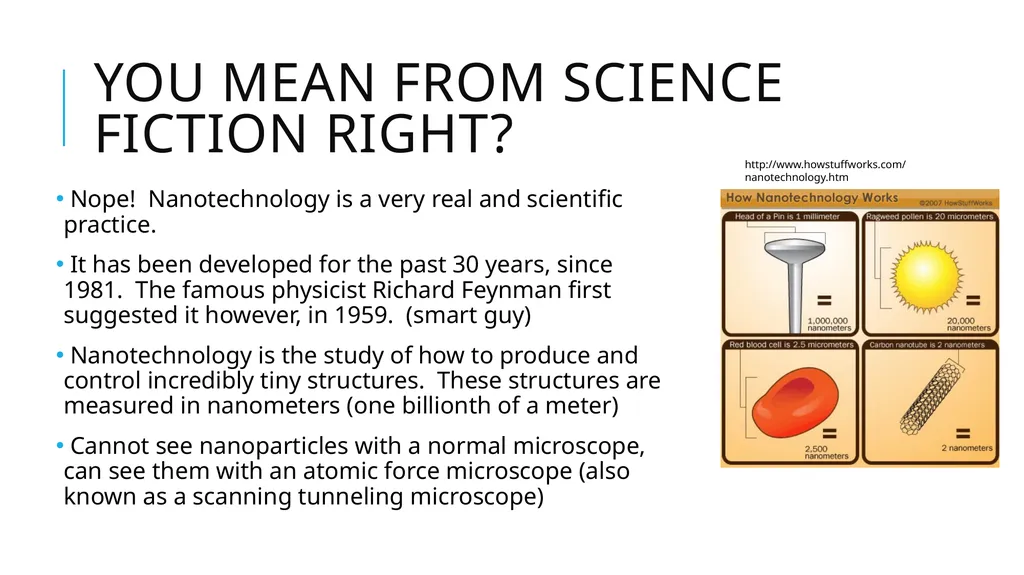
Nanotechnology is the study of how to produce and control incredibly tiny structures. These structures are measured in nanometers (one billionth of a meter)
Cannot see nanoparticles with a normal microscope, can see them with an atomic force microscope (also known as a scanning tunneling microscope) http://www.howstuffworks.com/nanotechnology.htm<br>
03
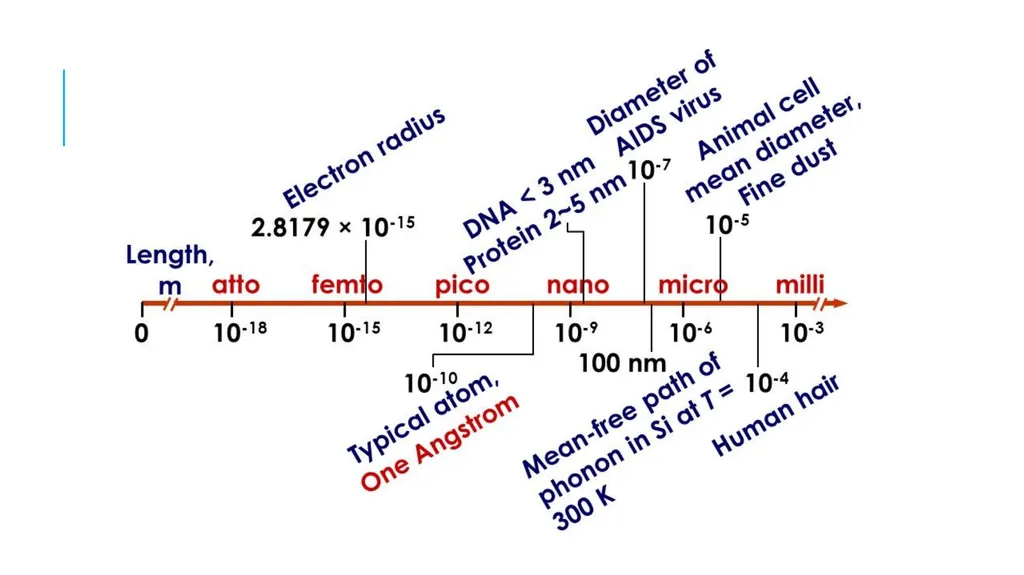
Nanomaterials: 1 to 100 nm<br>
04
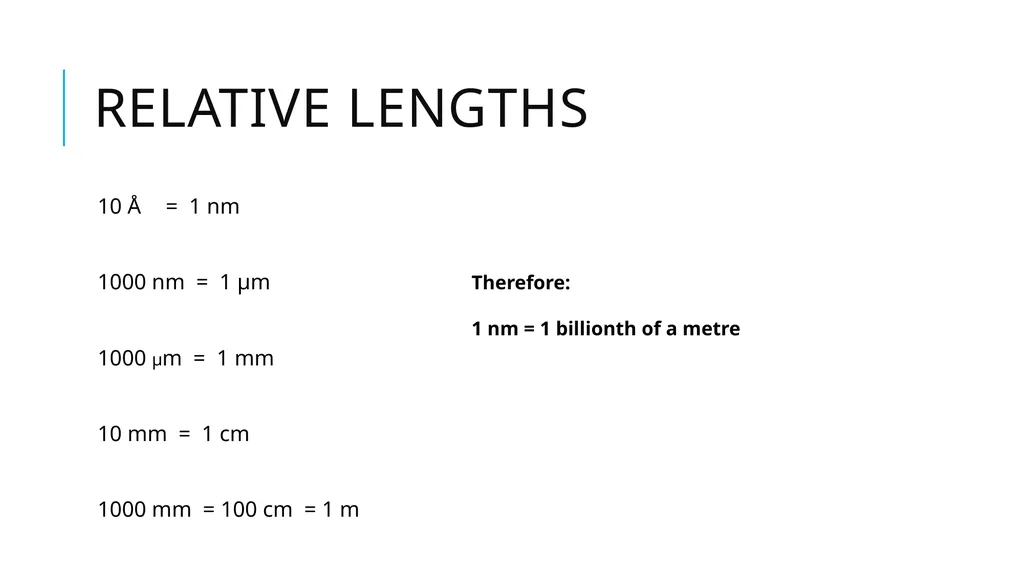
Relative lengths 10 Å = 1 nm
1000 nm = 1 µm
1000 µm = 1 mm
10 mm = 1 cm
1000 mm = 100 cm = 1 m Therefore:
1 nm = 1 billionth of a metre<br>
05
Properties “Properties of materials are size-dependent in this scale range. Thus, when particle size is made to be nanoscale, properties such as melting point, fluorescence, electrical conductivity, magnetic permeability, and chemical reactivity change as a function of the size of the particle.”
- http://www.nano.gov/nanotech-101/special
“Nanomaterials have the stability of materials in the micro-scale as well as the chemical and physical properties of the molecular scale”<br>
06
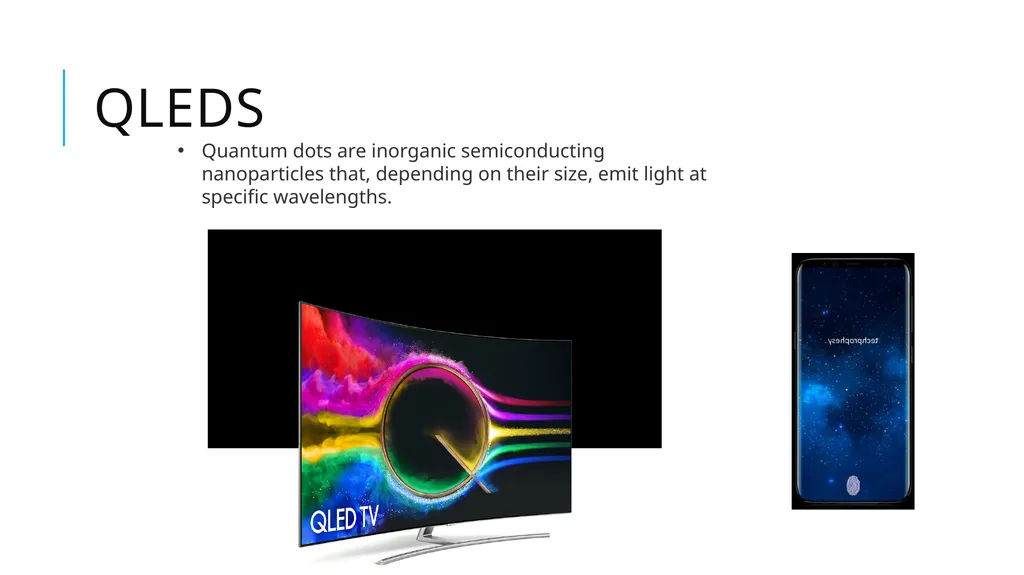
QLEDs Quantum dots are inorganic semiconducting nanoparticles that, depending on their size, emit light at specific wavelengths.<br>
07
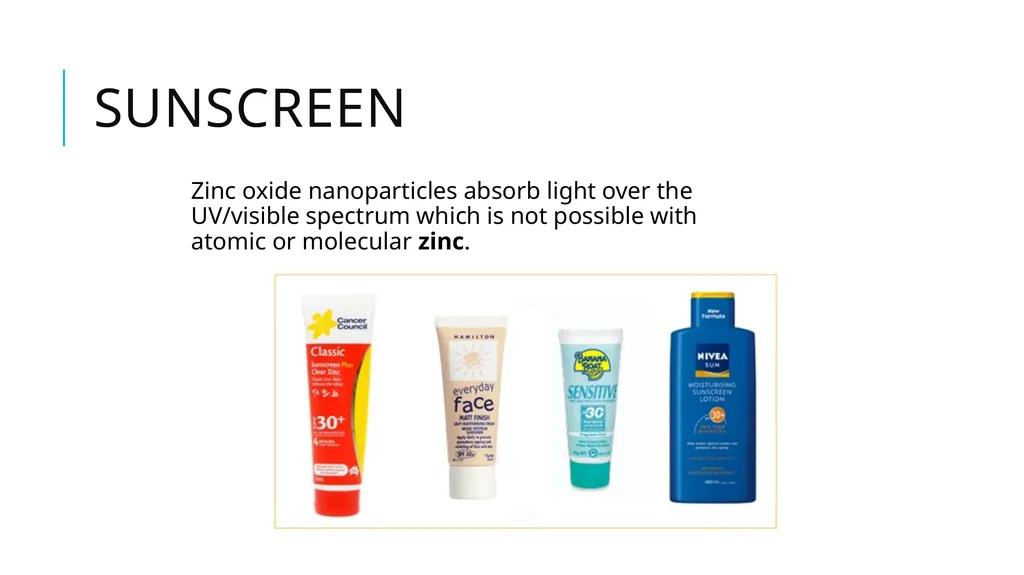
Sunscreen Zinc oxide nanoparticles absorb light over the UV/visible spectrum which is not possible with atomic or molecular zinc.<br>
08
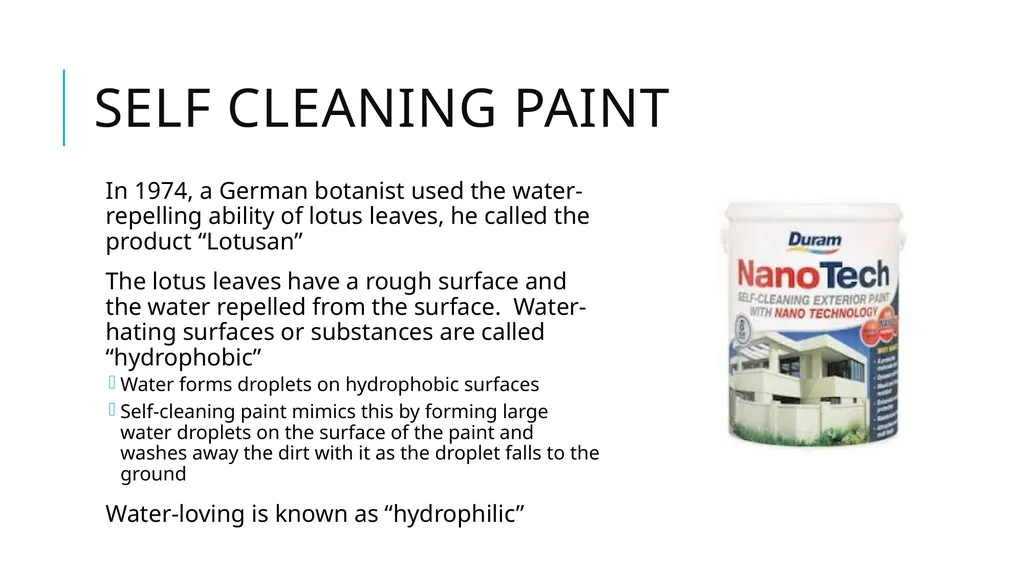
Self cleaning paint In 1974, a German botanist used the water-repelling ability of lotus leaves, he called the product “Lotusan”
The lotus leaves have a rough surface and the water repelled from the surface. Water-hating surfaces or substances are called “hydrophobic”
Water forms droplets on hydrophobic surfaces
Self-cleaning paint mimics this by forming large water droplets on the surface of the paint and washes away the dirt with it as the droplet falls to the ground
Water-loving is known as “hydrophilic”<br>
09
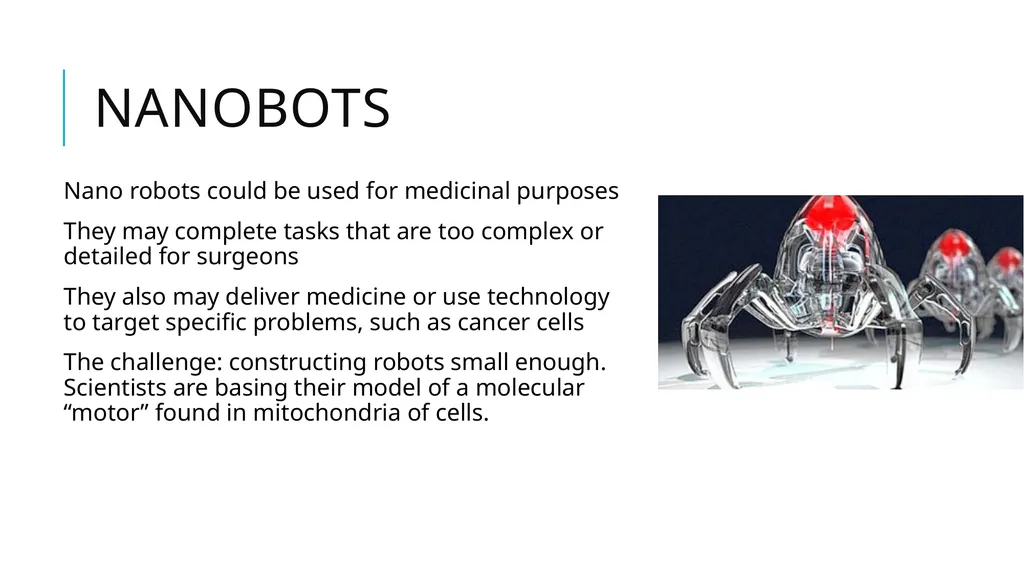
Nanobots Nano robots could be used for medicinal purposes
They may complete tasks that are too complex or detailed for surgeons
They also may deliver medicine or use technology to target specific problems, such as cancer cells
The challenge: constructing robots small enough. Scientists are basing their model of a molecular “motor” found in mitochondria of cells.<br>
10
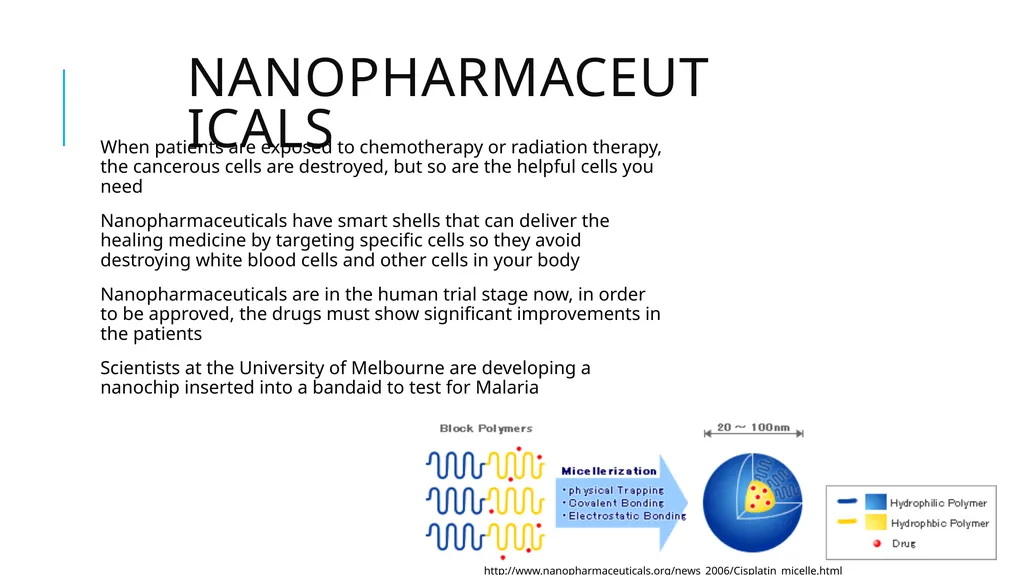
Nanopharmaceuticals When patients are exposed to chemotherapy or radiation therapy, the cancerous cells are destroyed, but so are the helpful cells you need
Nanopharmaceuticals have smart shells that can deliver the healing medicine by targeting specific cells so they avoid destroying white blood cells and other cells in your body
Nanopharmaceuticals are in the human trial stage now, in order to be approved, the drugs must show significant improvements in the patients
Scientists at the University of Melbourne are developing a nanochip inserted into a bandaid to test for Malaria http://www.nanopharmaceuticals.org/news_2006/Cisplatin_micelle.html<br>
11
Questions Select the option which best describes a nanomaterial:
A particle in the range of 1 nm – 1000 nm
A material that is used in sunscreens and consists of particles that can been viewed under a microscope
A material consisting of particles in the 1 nm – 100 nm range
A material consisting of particles in the 100 nm – 1000 nm range<br>
12
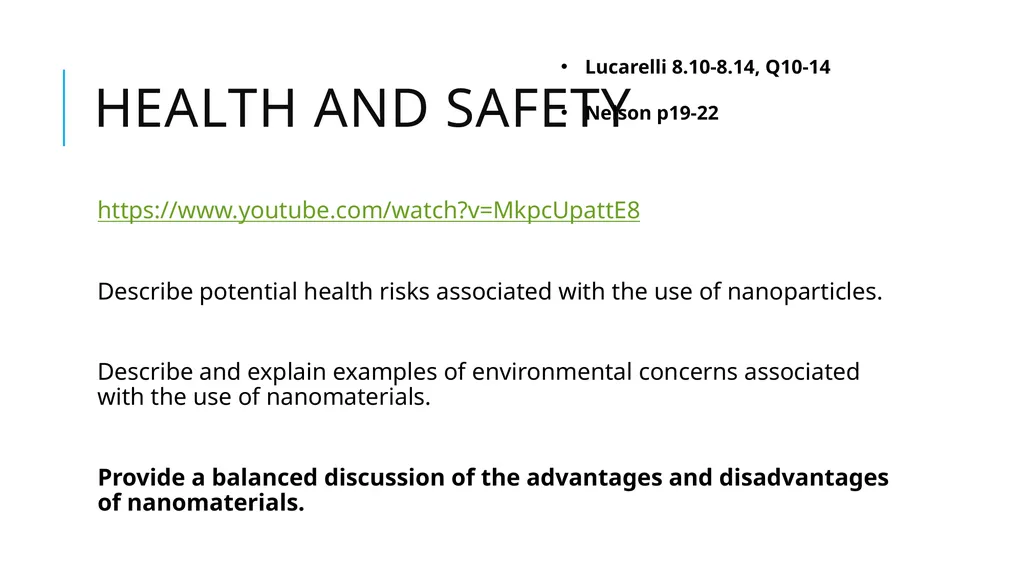
Health and Safety https://www.youtube.com/watch?v=MkpcUpattE8
Describe potential health risks associated with the use of nanoparticles.
Describe and explain examples of environmental concerns associated with the use of nanomaterials.
Provide a balanced discussion of the advantages and disadvantages of nanomaterials. Lucarelli 8.10-8.14, Q10-14
Nelson p19-22<br>
13
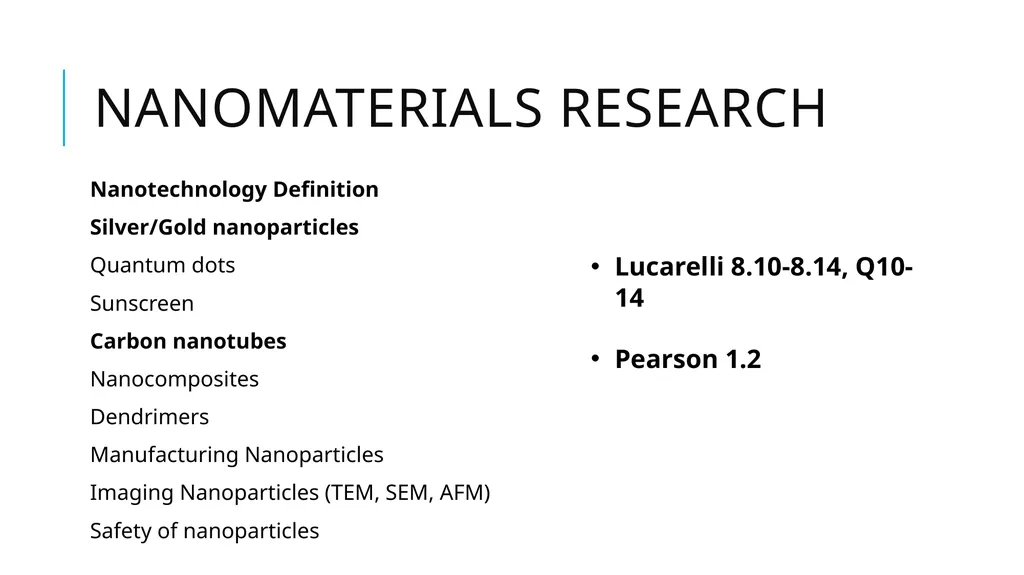
Nanomaterials Research Nanotechnology Definition
Silver/Gold nanoparticles
Quantum dots
Sunscreen
Carbon nanotubes
Nanocomposites
Dendrimers
Manufacturing Nanoparticles
Imaging Nanoparticles (TEM, SEM, AFM)
Safety of nanoparticles Lucarelli 8.10-8.14, Q10-14