
NAS Enterprise Architecture Infrastructure
PC
Published · 137 slides · 0 views

1 / 1

Description
NAS Enterprise Architecture Infrastructure Roadmaps v16.0 Baseline February 2022 Table of Contents 2 Infrastructure Roadmap Overview What are the Infrastructure Roadmaps? The FAA Infrastructure Roadmaps show the progression of system
Related Topics
Share
Embed code
Download this presentation From Below
"NAS Enterprise Architecture Infrastructure" is the property of its rightful owner. Permission is granted to download and print the materials on this website for personal, non-commercial use only, and to display it on your personal computer provided you do not modify the materials and that you retain all copyright notices contained in the materials. By downloading content from our website, you accept the terms of this agreement.
Presentation Transcript
01
NAS Enterprise Architecture Infrastructure Roadmaps v16.0 Baseline February 2022<br>
02
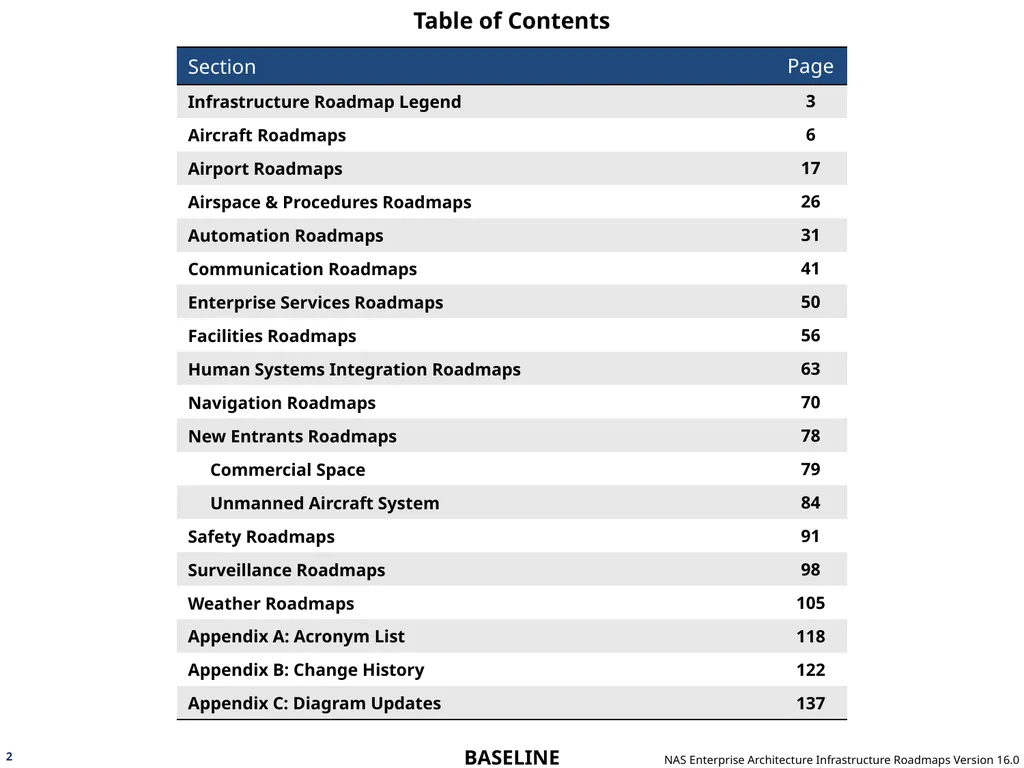
Table of Contents 2<br>
03
Infrastructure Roadmap Overview What are the Infrastructure Roadmaps?
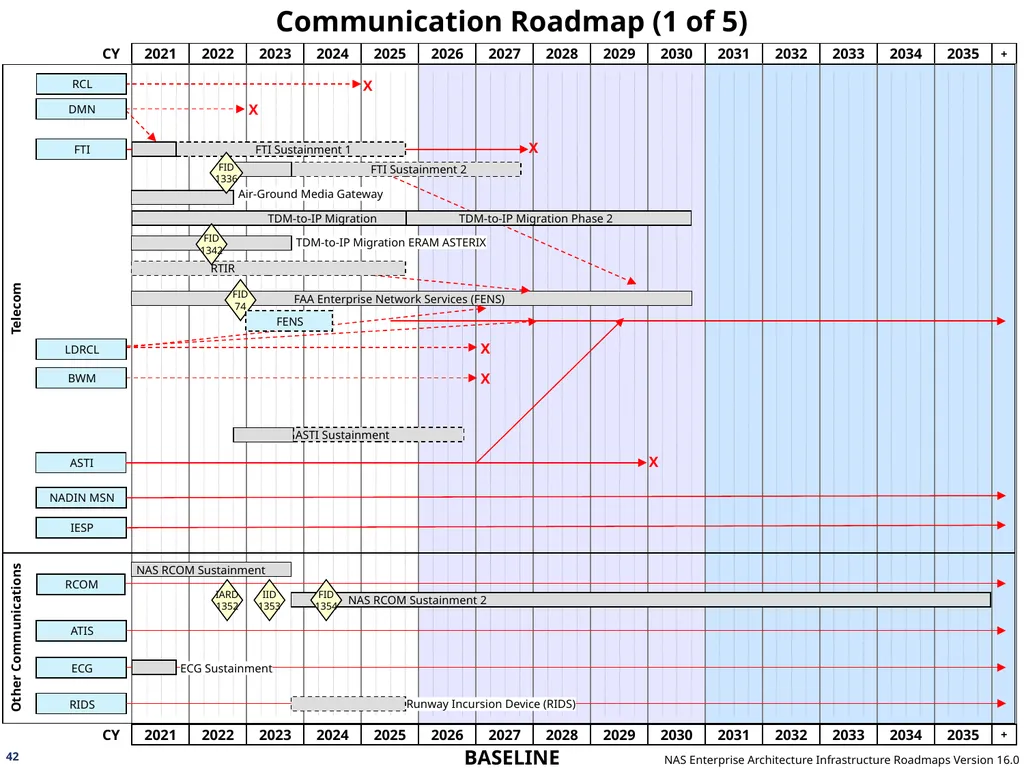
The FAA Infrastructure Roadmaps show the progression of system deployments, investments, and key decision points for major NAS acquisitions. They depict the acquisition strategy to evolve the NAS from the As-Is to the To-Be environment.
The Infrastructure Roadmaps show all Capital Investment Plan (CIP) investment projects and systems identified in the NSIP that will deliver the necessary functionality to enable OIs and BTIs.
Guidelines for Understanding the Roadmaps
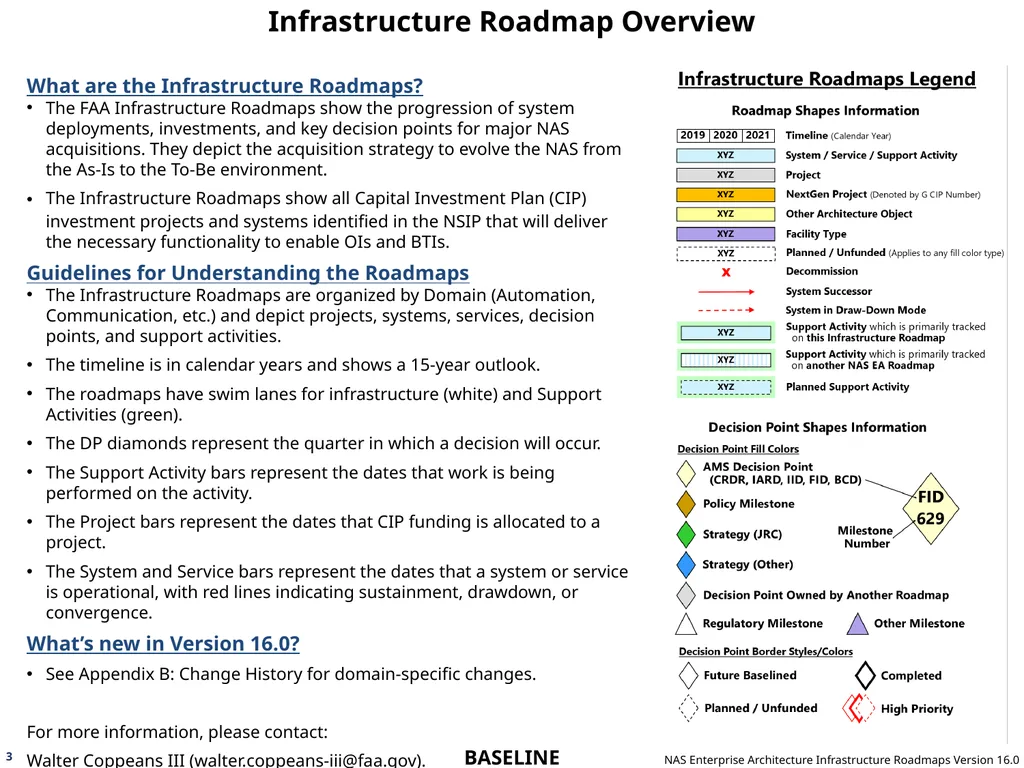
The Infrastructure Roadmaps are organized by Domain (Automation, Communication, etc.) and depict projects, systems, services, decision points, and support activities.
The timeline is in calendar years and shows a 15-year outlook.
The roadmaps have swim lanes for infrastructure (white) and Support Activities (green).
The DP diamonds represent the quarter in which a decision will occur.
The Support Activity bars represent the dates that work is being performed on the activity.
The Project bars represent the dates that CIP funding is allocated to a project.
The System and Service bars represent the dates that a system or service is operational, with red lines indicating sustainment, drawdown, or convergence.
What’s new in Version 16.0?
See Appendix B: Change History for domain-specific changes.
For more information, please contact:
Walter Coppeans III (walter.coppeans-iii@faa.gov). 3<br>
The FAA Infrastructure Roadmaps show the progression of system deployments, investments, and key decision points for major NAS acquisitions. They depict the acquisition strategy to evolve the NAS from the As-Is to the To-Be environment.
The Infrastructure Roadmaps show all Capital Investment Plan (CIP) investment projects and systems identified in the NSIP that will deliver the necessary functionality to enable OIs and BTIs.
Guidelines for Understanding the Roadmaps
The Infrastructure Roadmaps are organized by Domain (Automation, Communication, etc.) and depict projects, systems, services, decision points, and support activities.
The timeline is in calendar years and shows a 15-year outlook.
The roadmaps have swim lanes for infrastructure (white) and Support Activities (green).
The DP diamonds represent the quarter in which a decision will occur.
The Support Activity bars represent the dates that work is being performed on the activity.
The Project bars represent the dates that CIP funding is allocated to a project.
The System and Service bars represent the dates that a system or service is operational, with red lines indicating sustainment, drawdown, or convergence.
What’s new in Version 16.0?
See Appendix B: Change History for domain-specific changes.
For more information, please contact:
Walter Coppeans III (walter.coppeans-iii@faa.gov). 3<br>
04
Overview of CY2022 Decision Points 4<br>
05
Overview of CY2023 Decision Points<br>
06
Aircraft Objective: The Aircraft roadmap presents planned advances in Airframe and Avionics in coordination with NAS NextGen improvements.
For more information, please contact Stephen VanTrees (stephen.vantrees@faa.gov). 6<br>
For more information, please contact Stephen VanTrees (stephen.vantrees@faa.gov). 6<br>
07
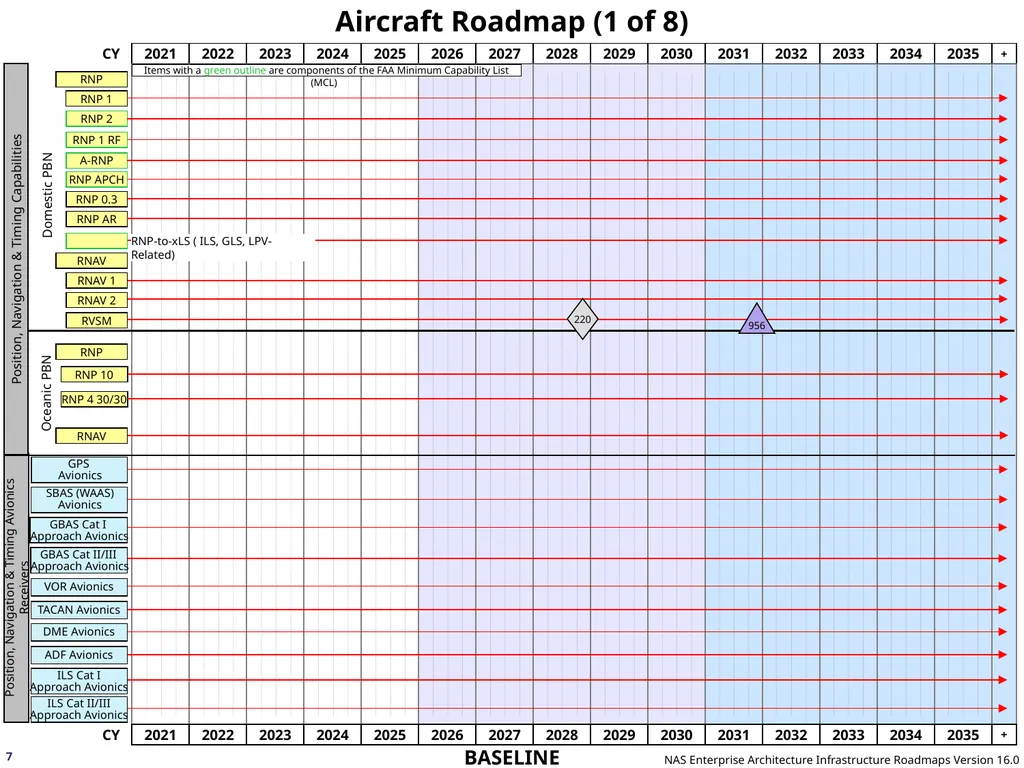
Aircraft Roadmap (1 of 8) 7<br>
08
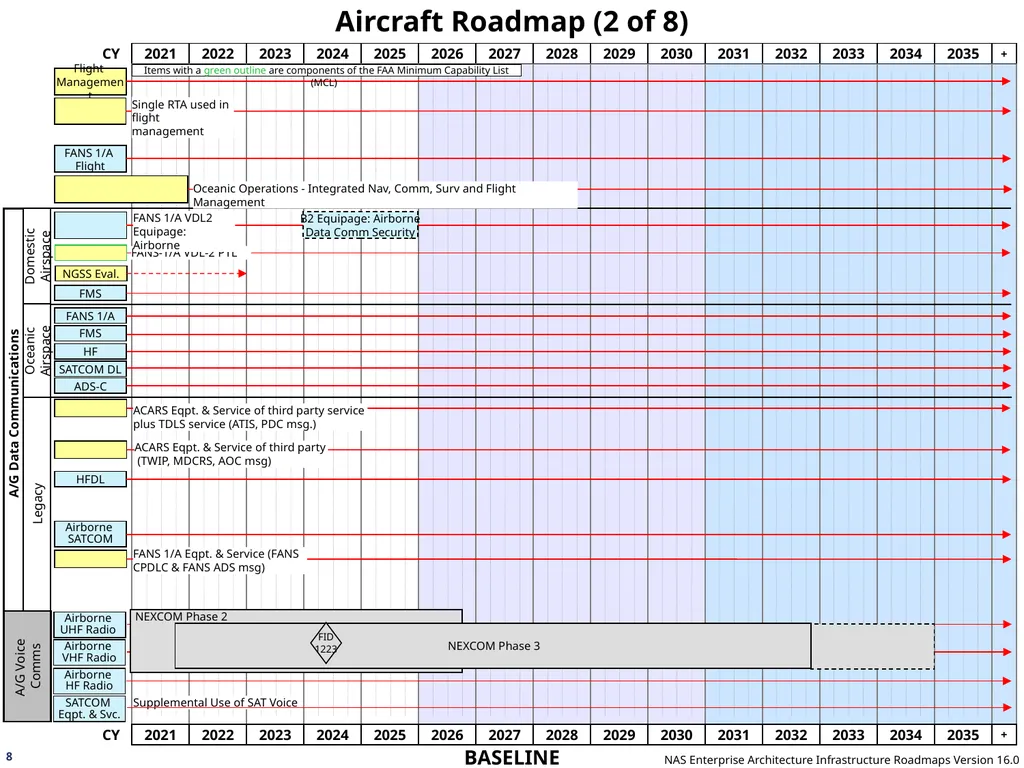
Aircraft Roadmap (2 of 8) 8<br>
09
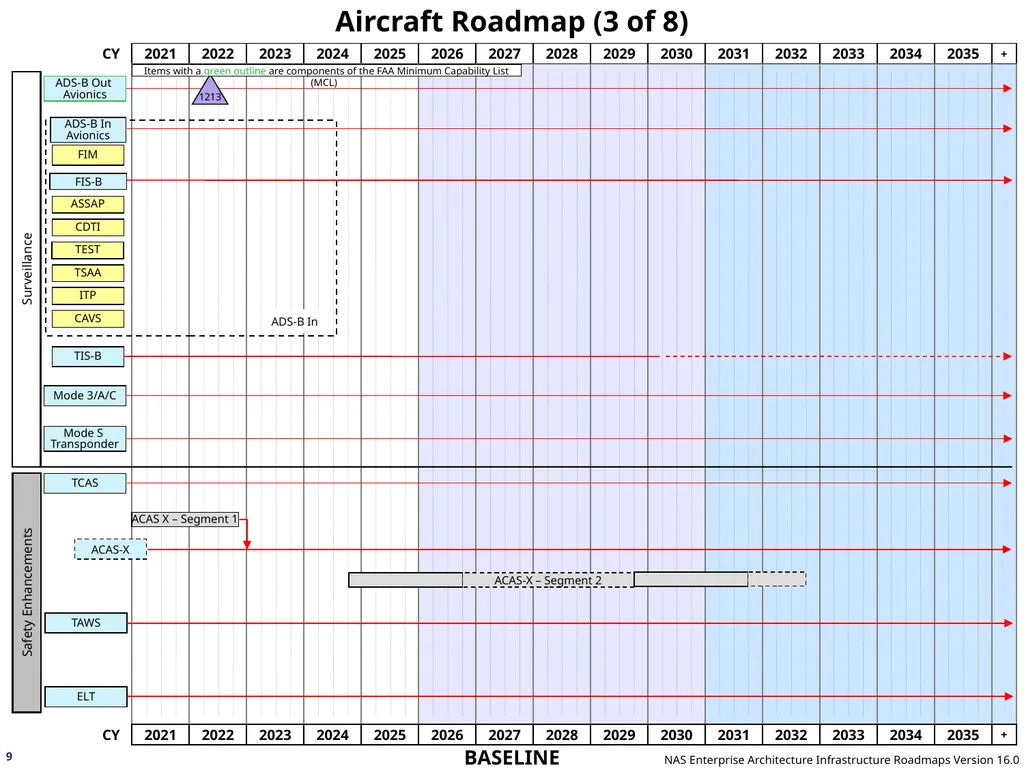
Aircraft Roadmap (3 of 8) 9<br>
10
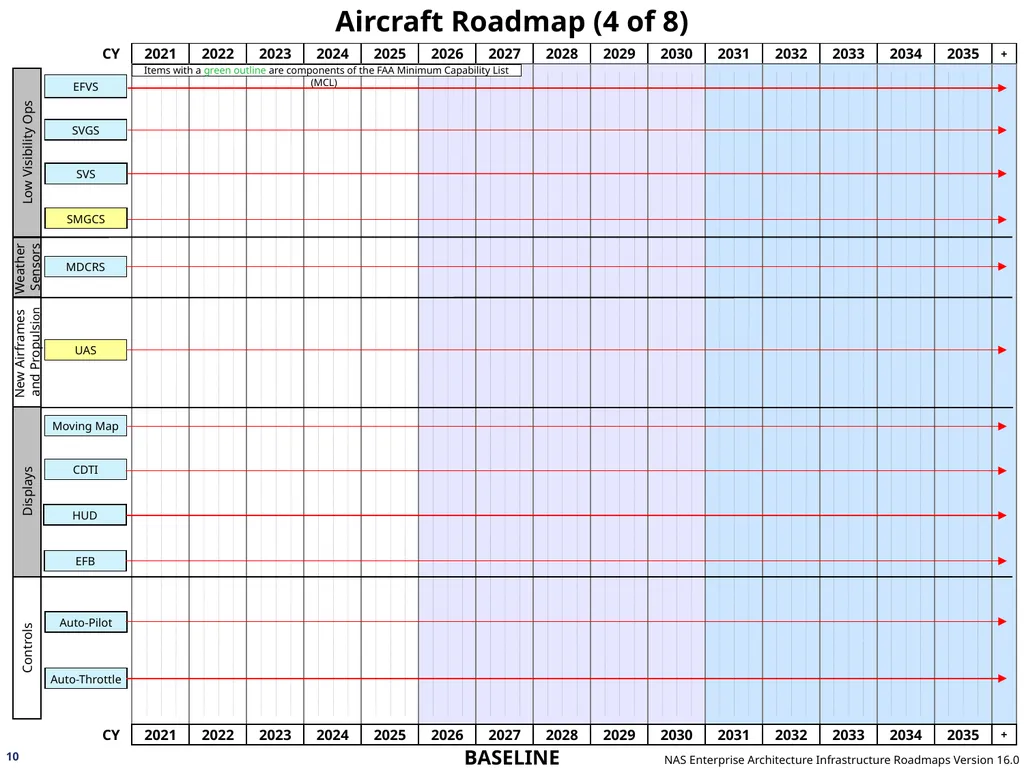
Aircraft Roadmap (4 of 8) 10<br>
11
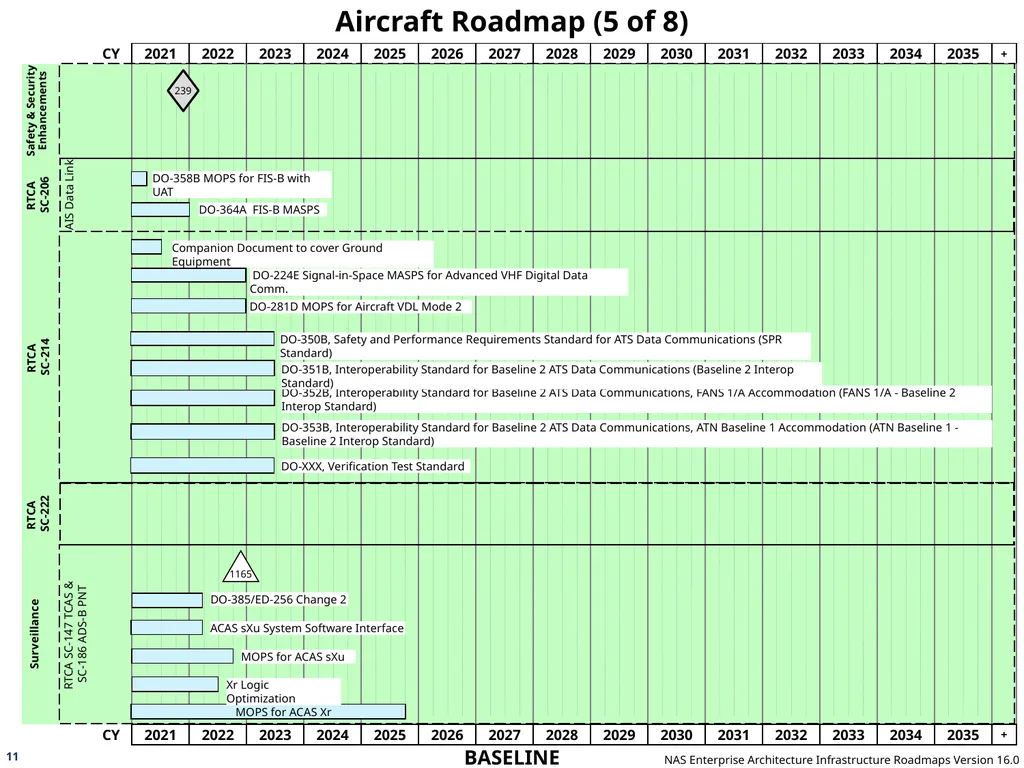
Aircraft Roadmap (5 of 8) 11<br>
12
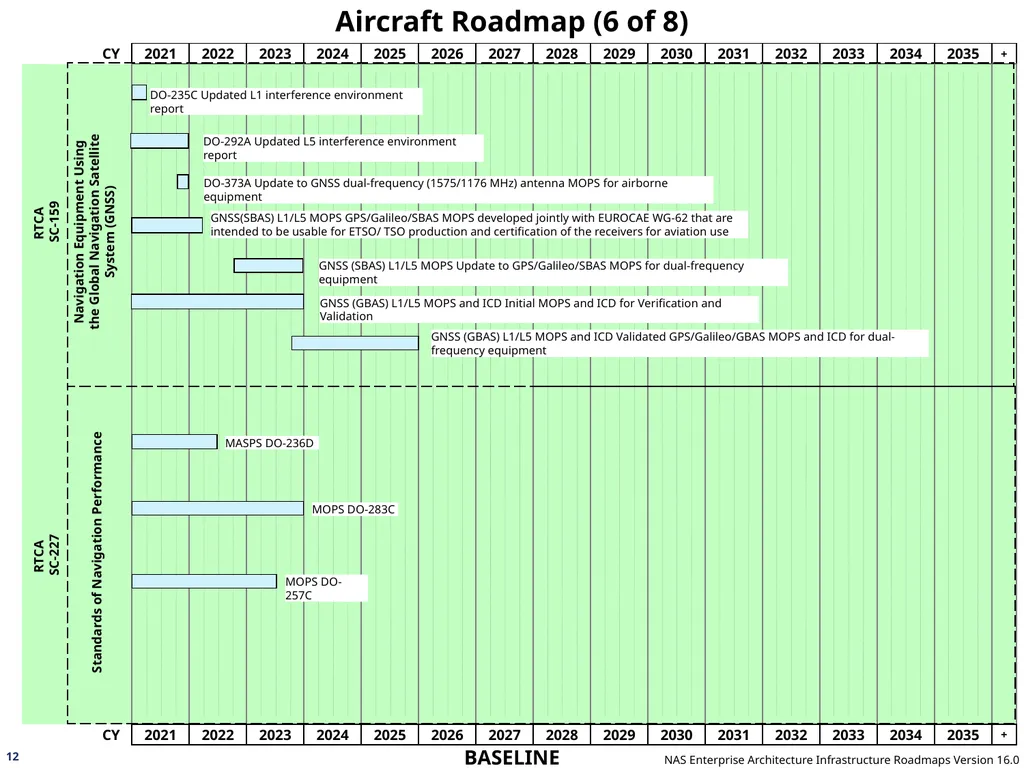
Aircraft Roadmap (6 of 8) 12<br>
13
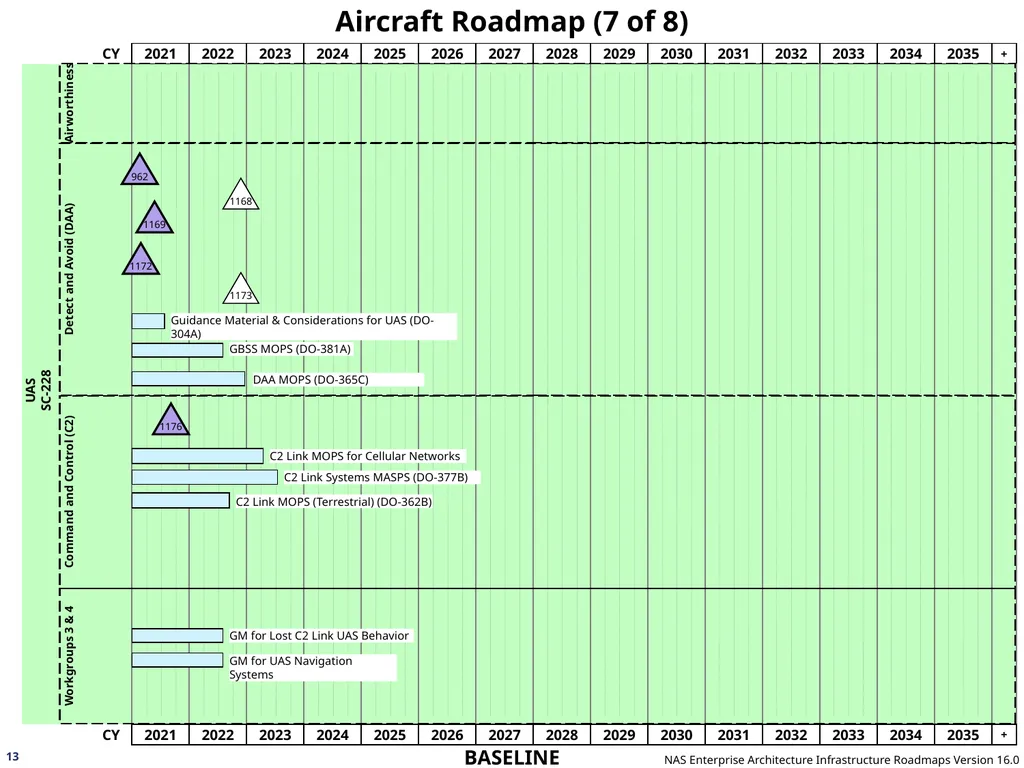
Aircraft Roadmap (7 of 8) 13<br>
14
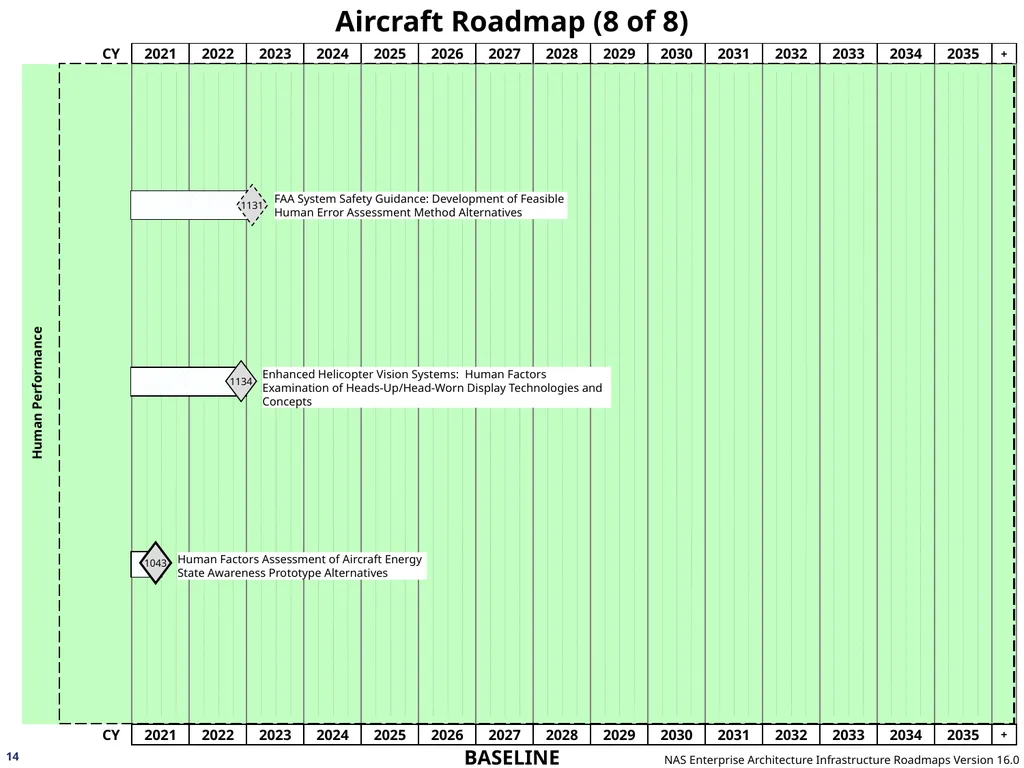
Aircraft Roadmap (8 of 8) 14<br>
15
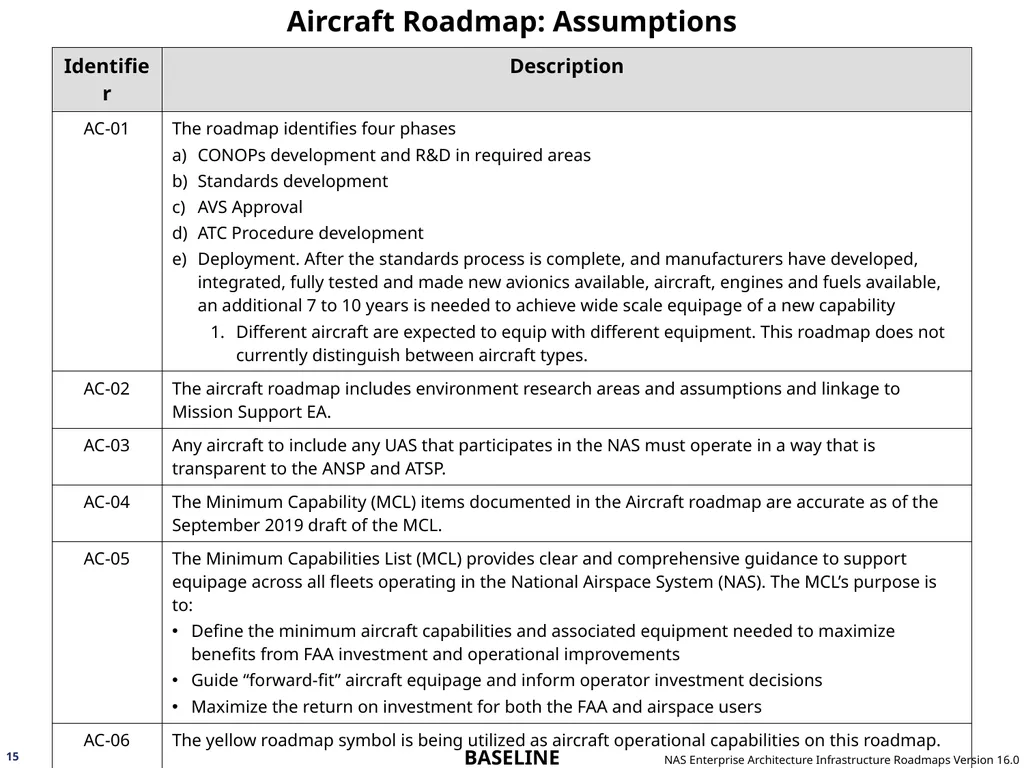
Aircraft Roadmap: Assumptions 15<br>
16
Aircraft Roadmap: Decision Points (1 of 1) 16<br>
17
Airport Objective: The Airport Roadmap identifies NextGen progression of services, procedures and systems in the airport environment.
For more information, please contact Brandon Parks (brandon.m.parks@faa.gov). 17<br>
For more information, please contact Brandon Parks (brandon.m.parks@faa.gov). 17<br>
18
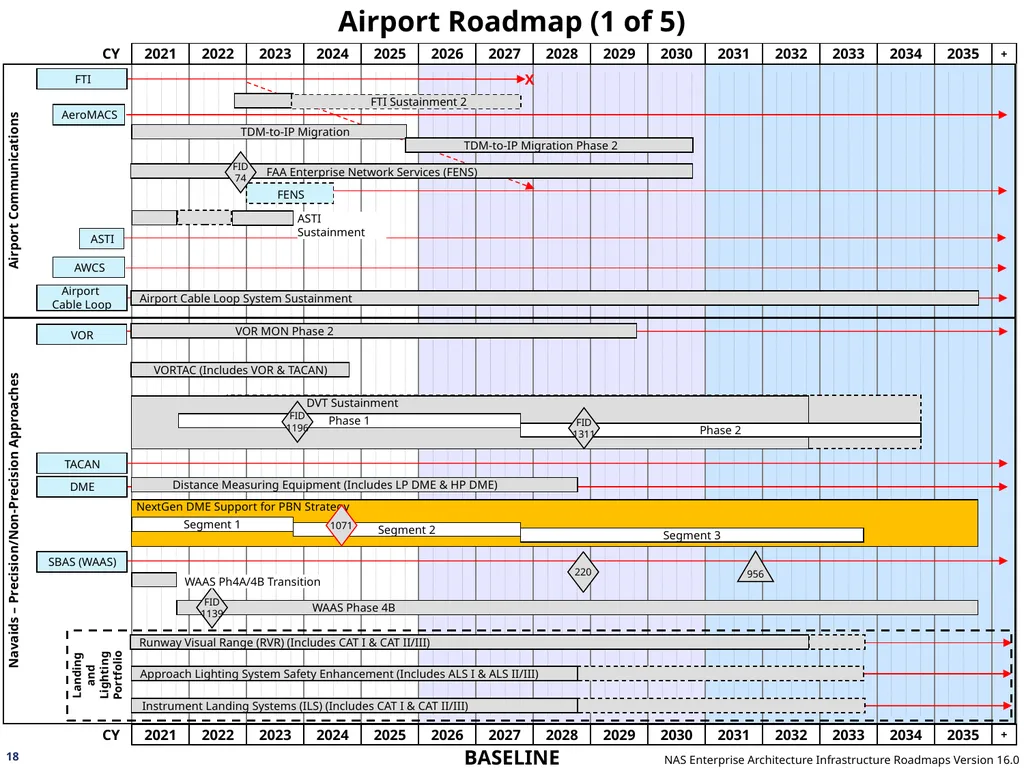
Airport Roadmap (1 of 5) 18<br>
19
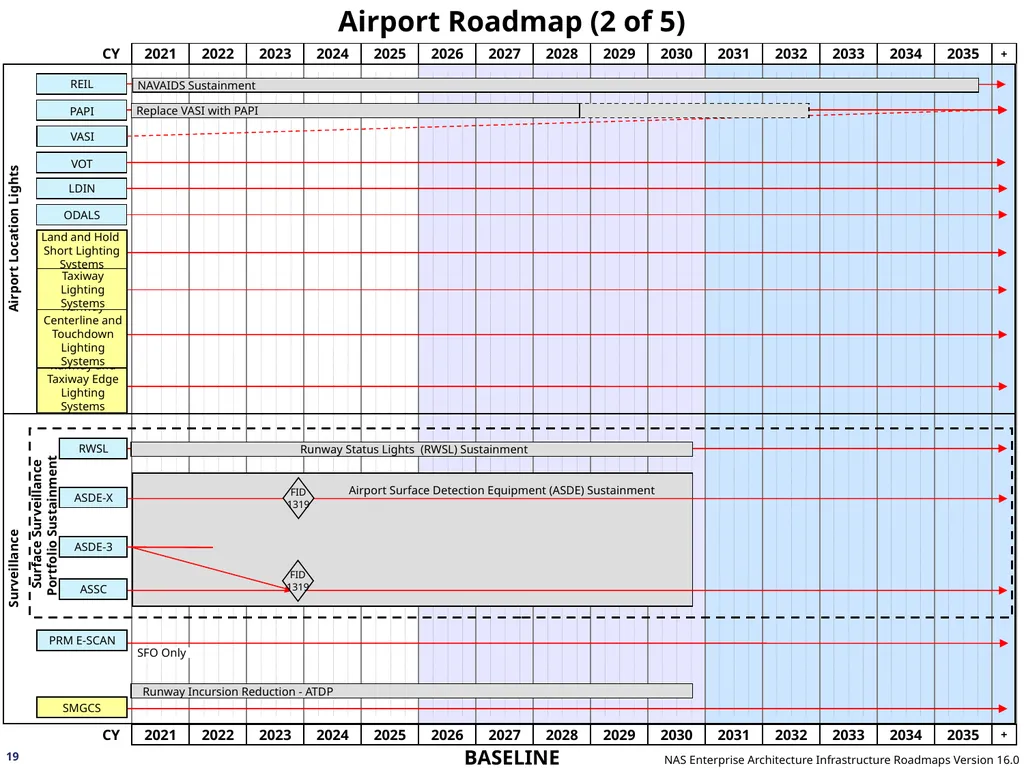
Airport Roadmap (2 of 5) 19<br>
20
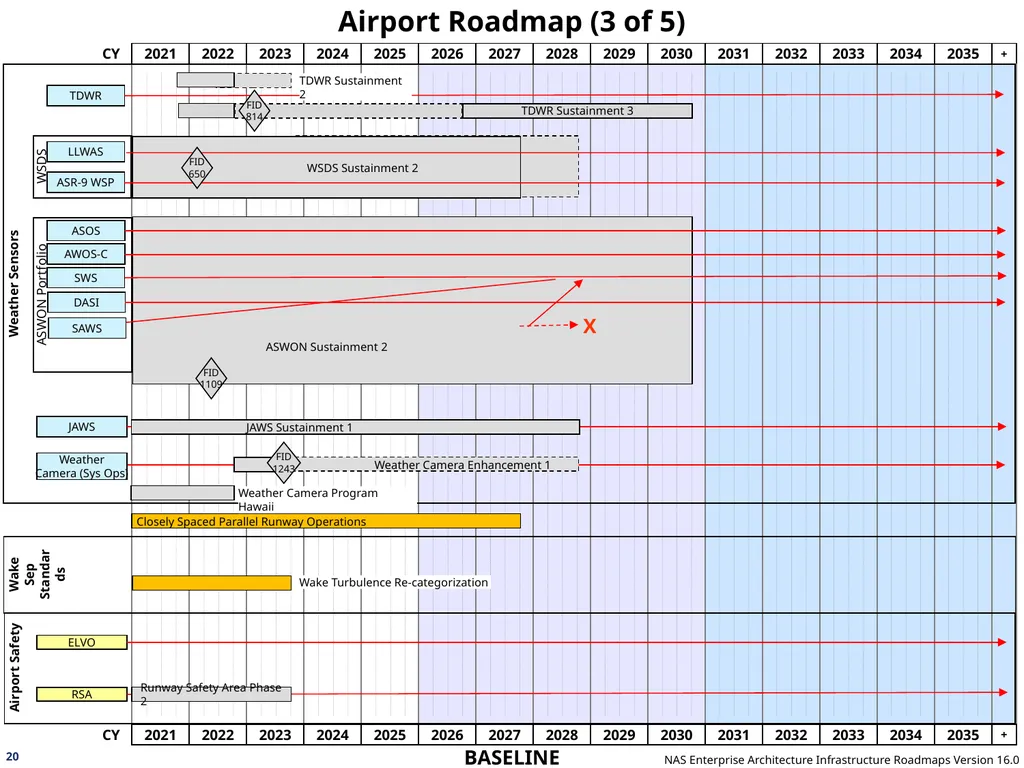
Airport Roadmap (3 of 5) 20<br>
21
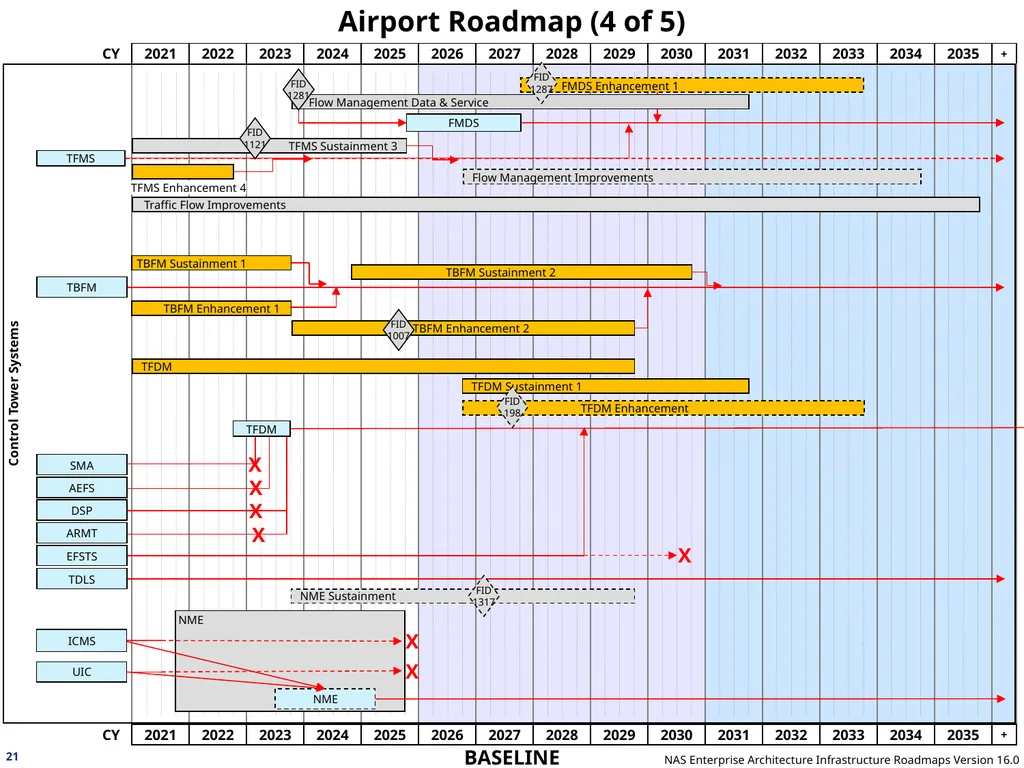
Airport Roadmap (4 of 5) 21<br>
22
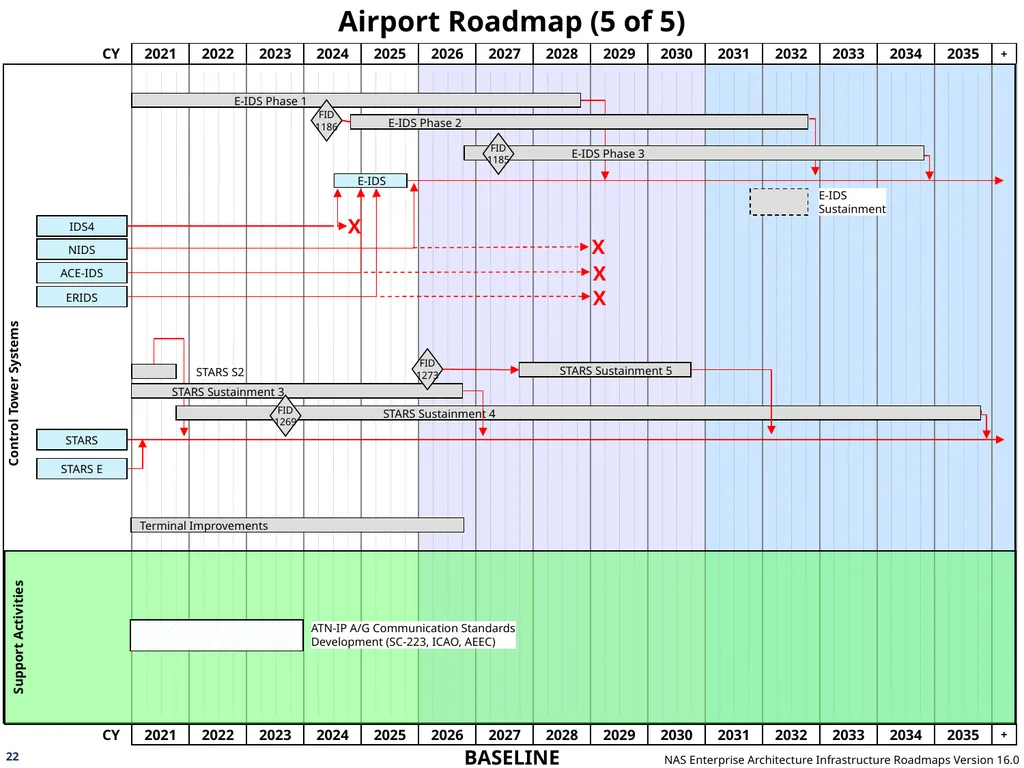
Airport Roadmap (5 of 5) 22<br>
23
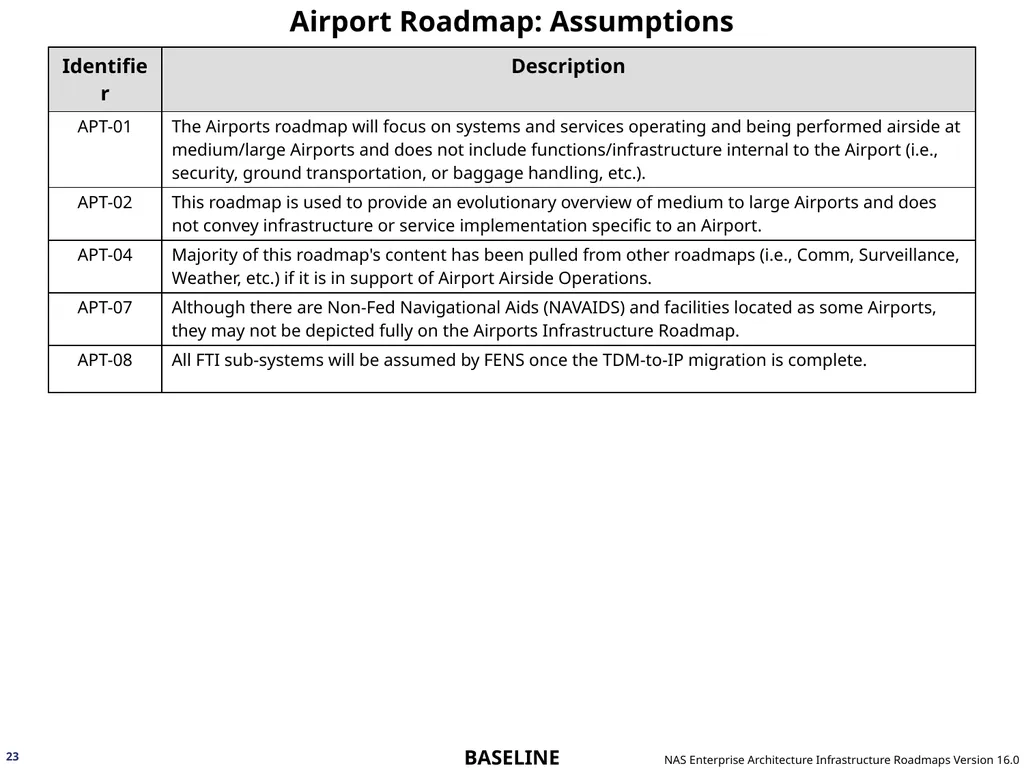
Airport Roadmap: Assumptions 23<br>
24
Airport Roadmap: Decision Points (1 of 2) 24<br>
25
Airport Roadmap: Decision Points (1 of 2) 25<br>
26
Airspace and Procedures Objective: The Airspace and Procedures roadmap presents an Executive View (EV) of systems and procedures, including associated research projects, with an effect on the large-scale redesign and optimization of major airspace.
For more information, please contact Tamon Honda (Tamon.Honda@faa.gov). 26<br>
For more information, please contact Tamon Honda (Tamon.Honda@faa.gov). 26<br>
27
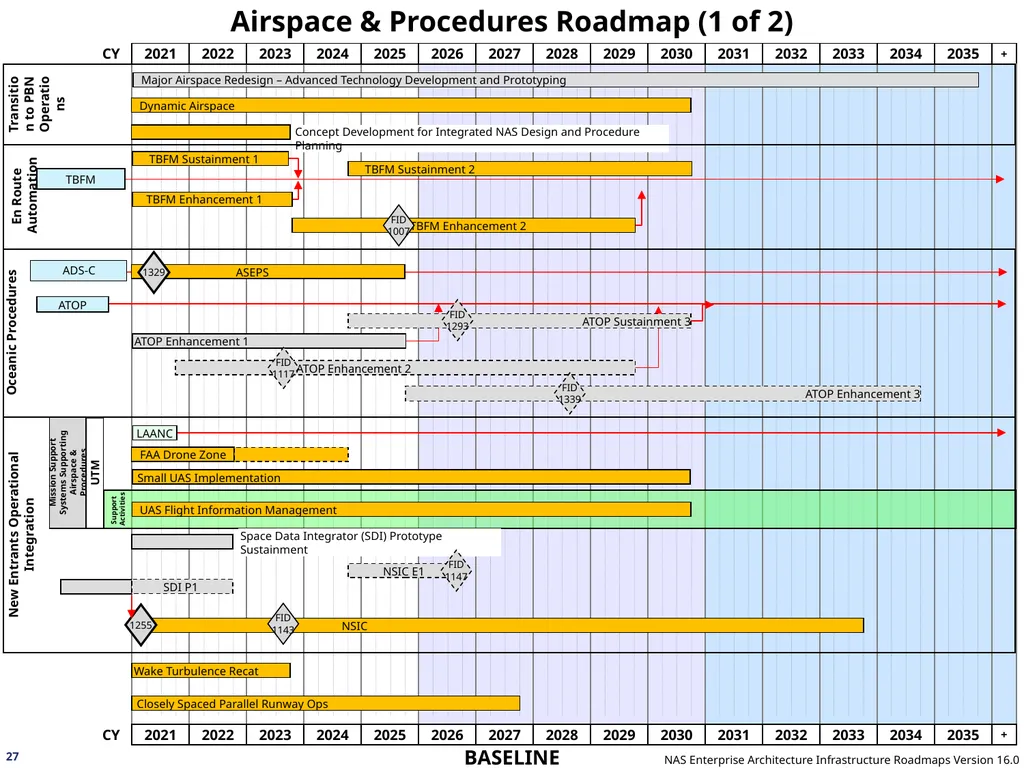
Airspace & Procedures Roadmap (1 of 2) 27<br>
28
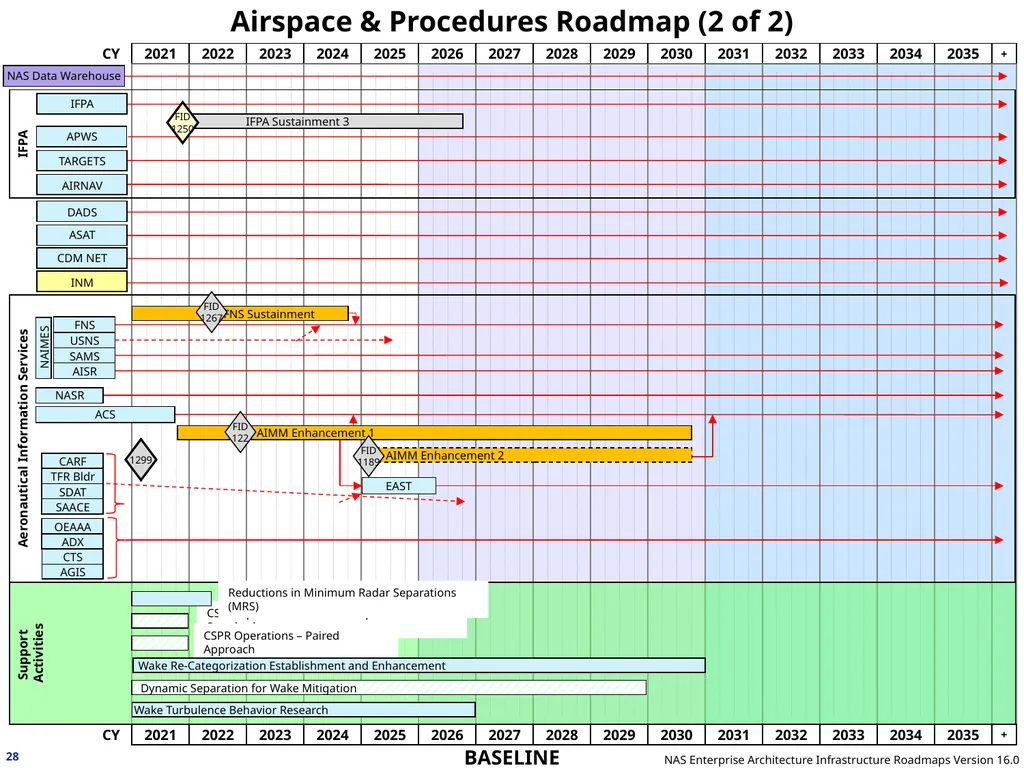
Airspace & Procedures Roadmap (2 of 2) 28<br>
29
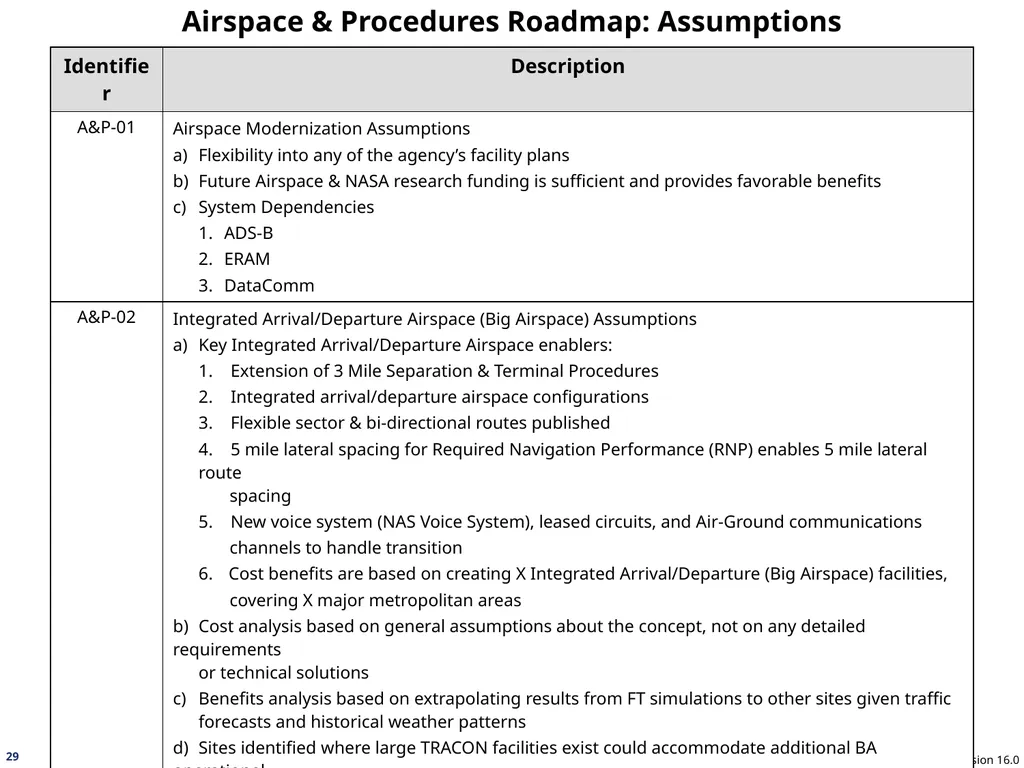
Airspace & Procedures Roadmap: Assumptions 29<br>
30
Airspace & Procedures Roadmap: Decision Points (1 of 1) 30<br>
31
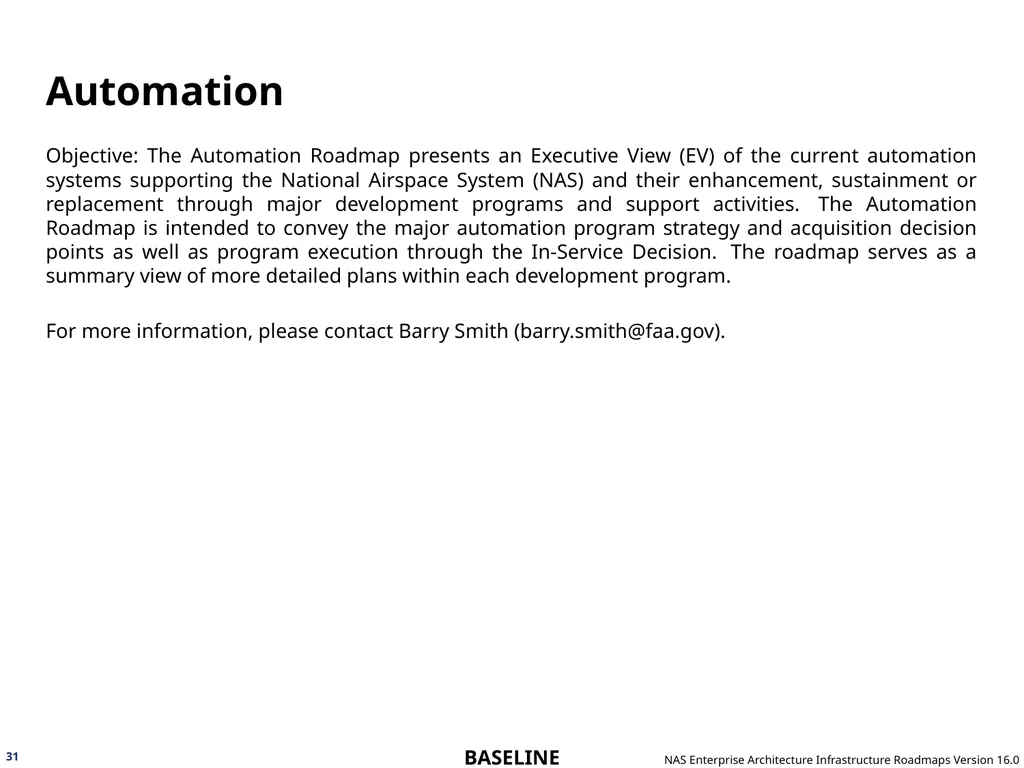
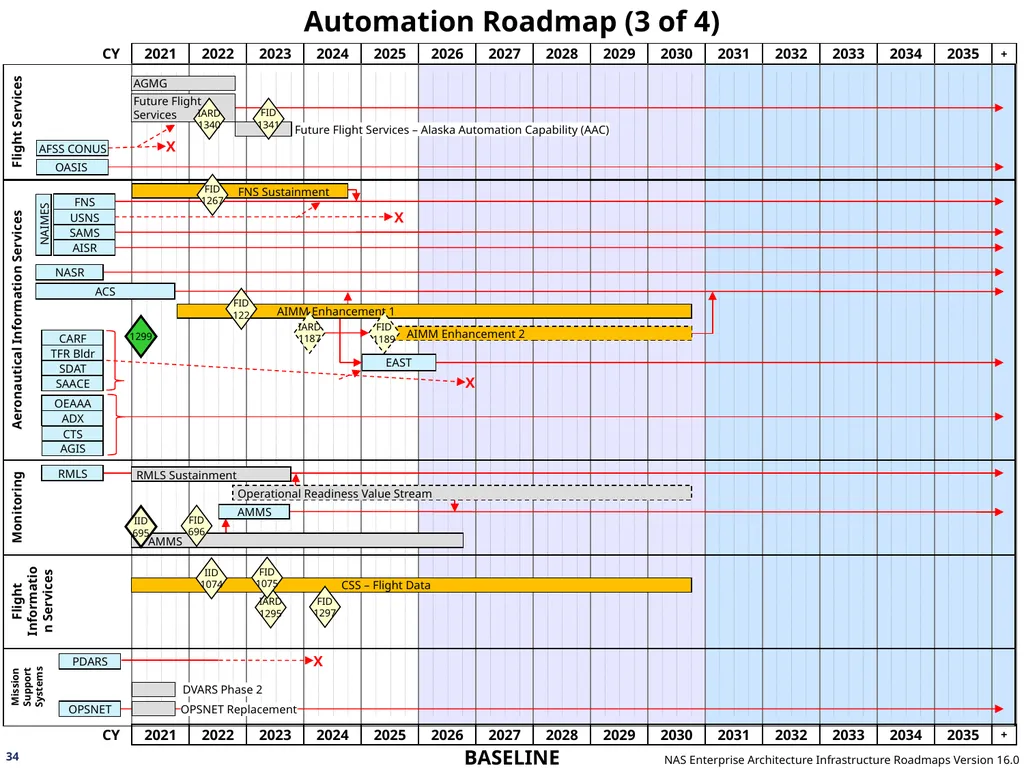
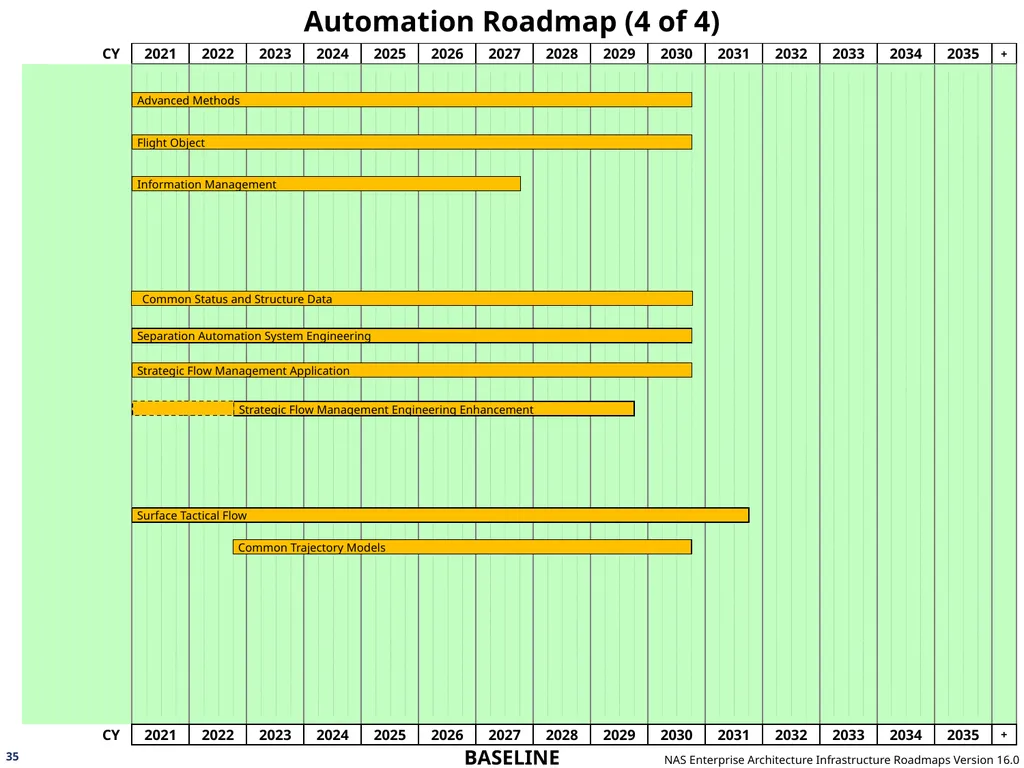
Automation Objective: The Automation Roadmap presents an Executive View (EV) of the current automation systems supporting the National Airspace System (NAS) and their enhancement, sustainment or replacement through major development programs and support activities. The Automation Roadmap is intended to convey the major automation program strategy and acquisition decision points as well as program execution through the In-Service Decision. The roadmap serves as a summary view of more detailed plans within each development program.
For more information, please contact Barry Smith (barry.smith@faa.gov). 31<br>
For more information, please contact Barry Smith (barry.smith@faa.gov). 31<br>
32
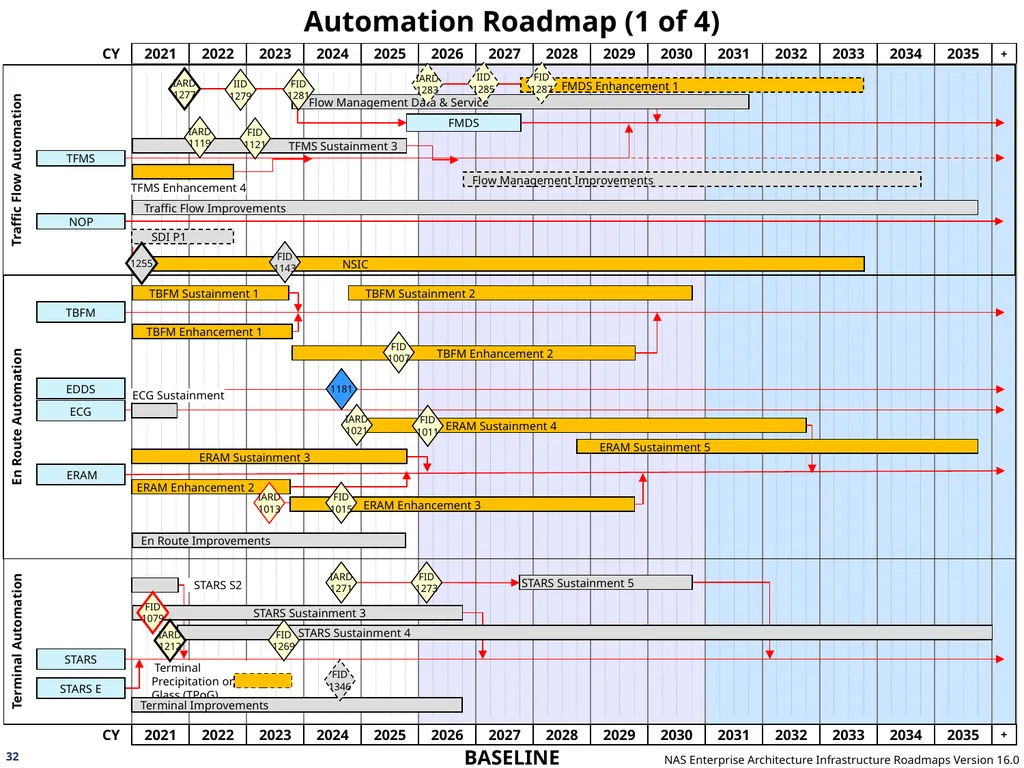
Automation Roadmap (1 of 4) 32<br>
33
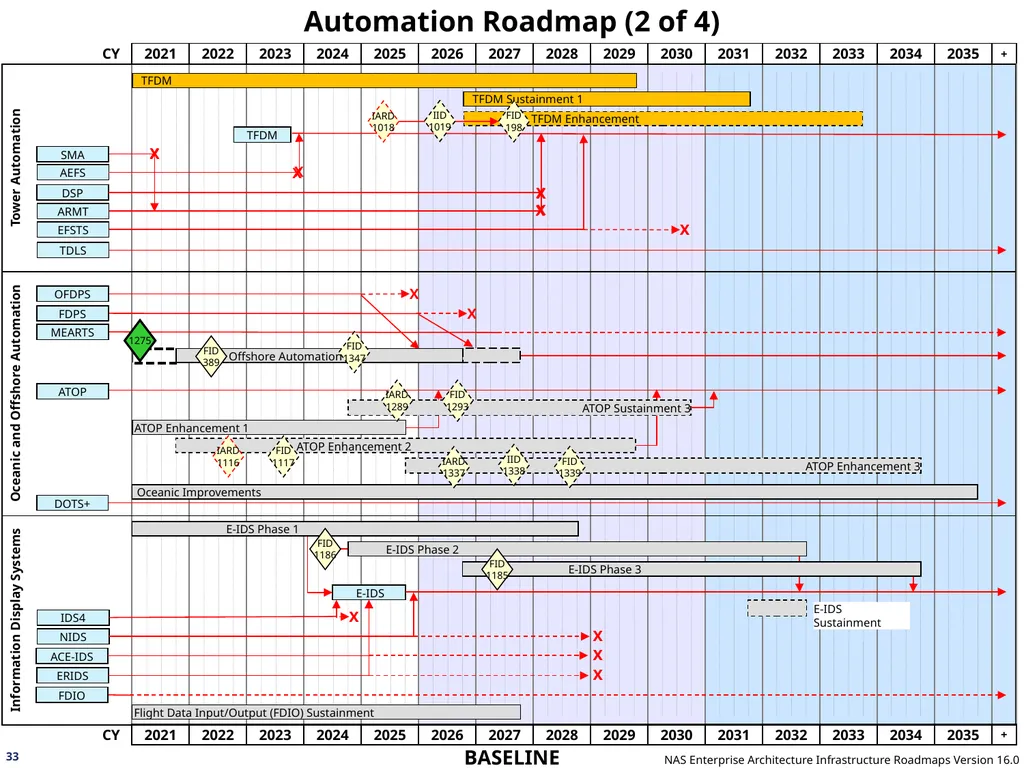
Automation Roadmap (2 of 4) 33<br>
34
Automation Roadmap (3 of 4) 34<br>
35
Automation Roadmap (4 of 4) 35 Common Status and Structure Data<br>
36
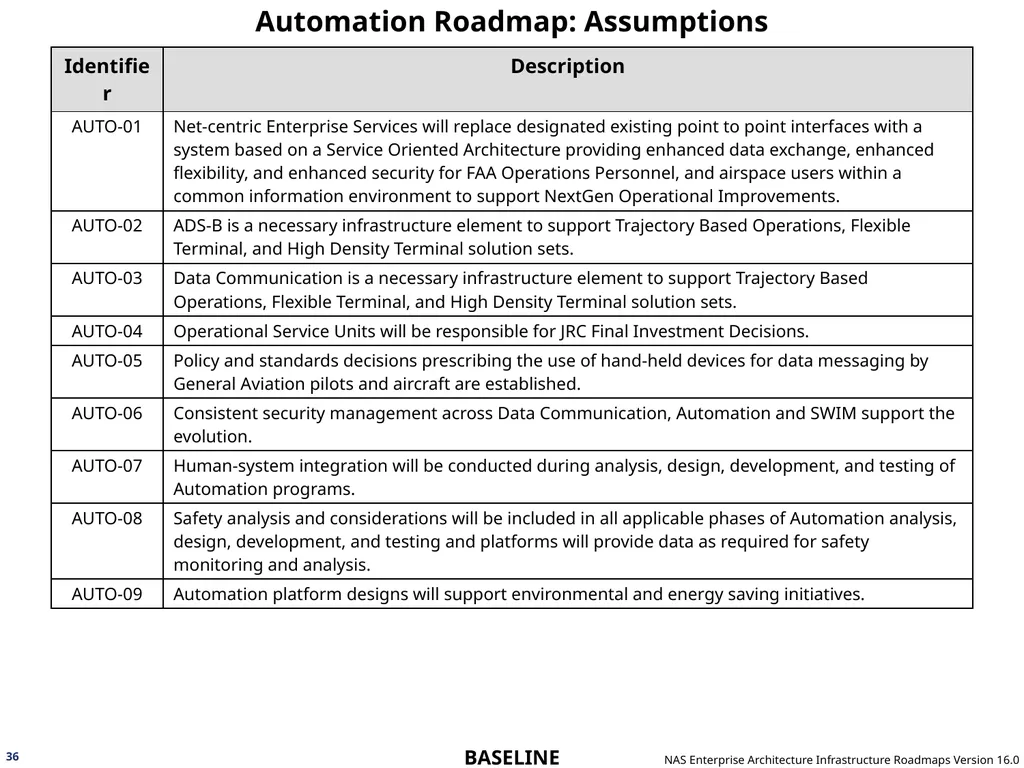
Automation Roadmap: Assumptions 36<br>
37
Automation Roadmap: Decision Points (1 of 4) 37<br>
38
Automation Roadmap: Decision Points (2 of 4) 38<br>
39
Automation Roadmap: Decision Points (3 of 4) 39<br>
40
Automation Roadmap: Decision Points (4 of 4) 40<br>
41
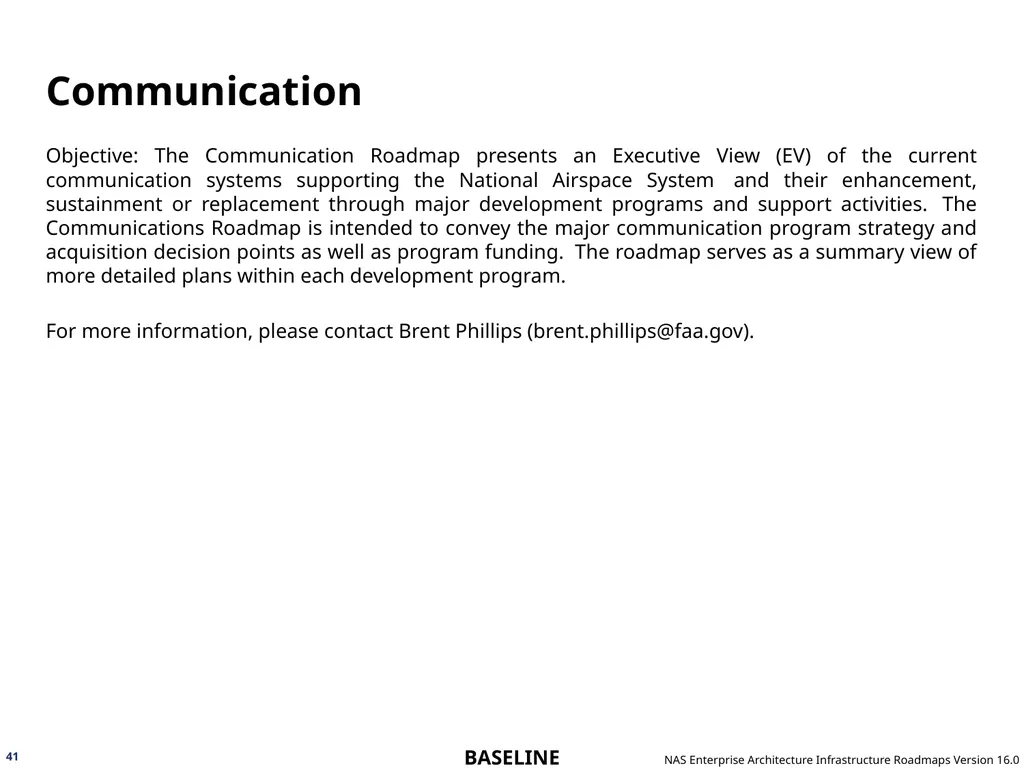
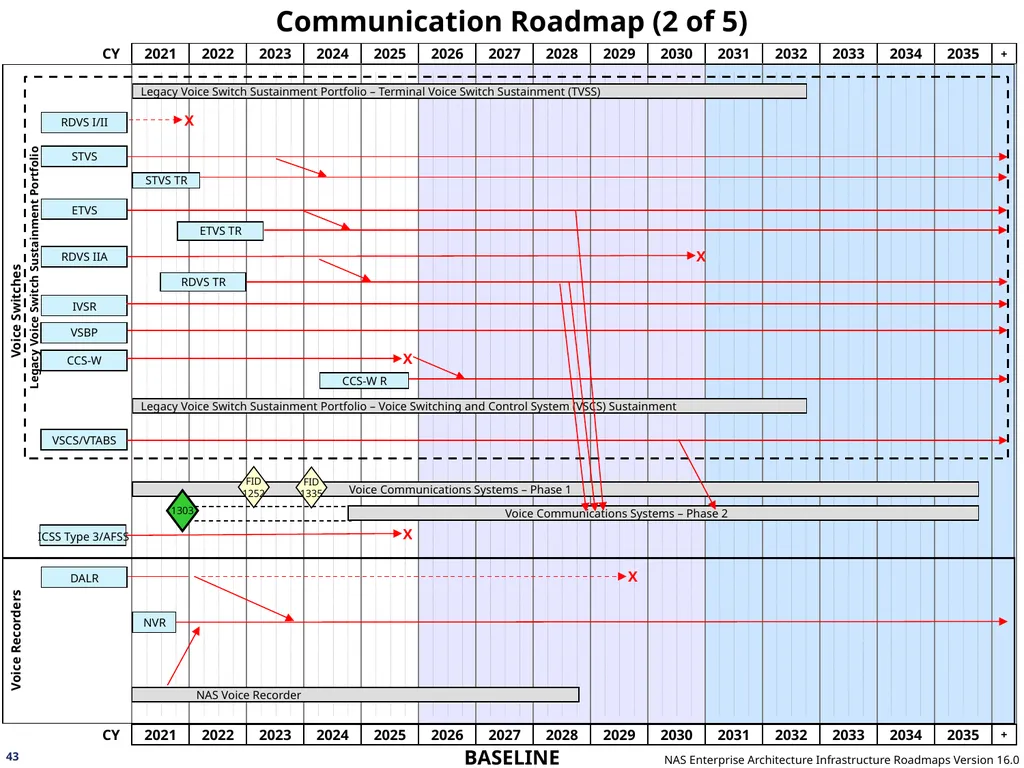
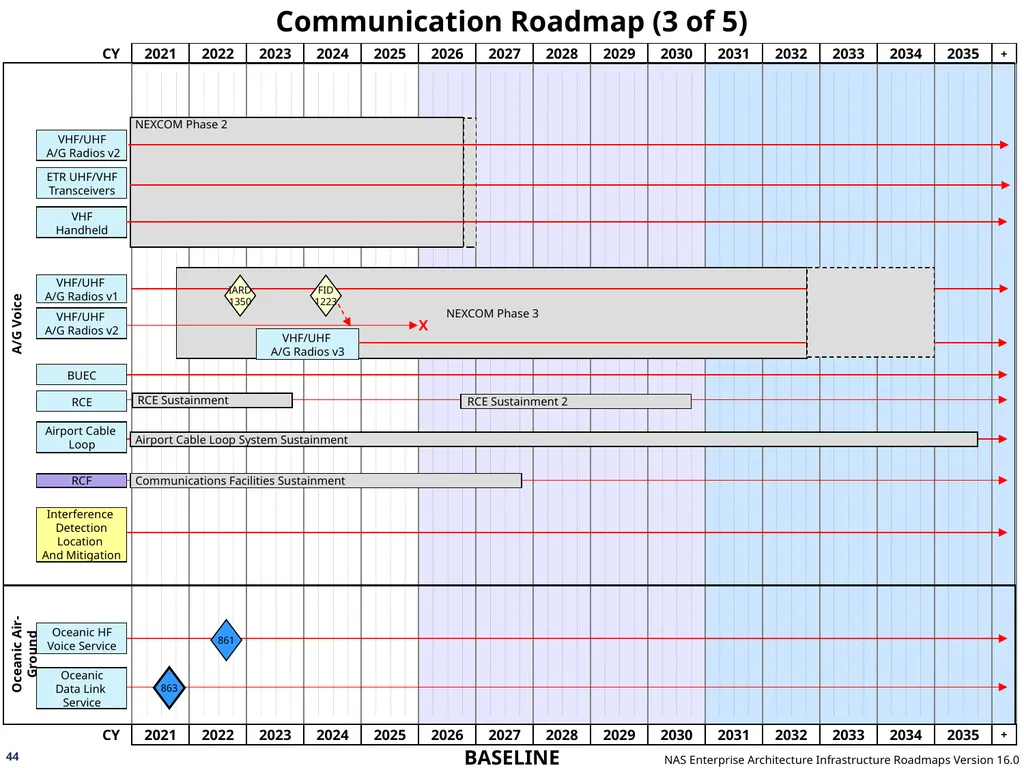
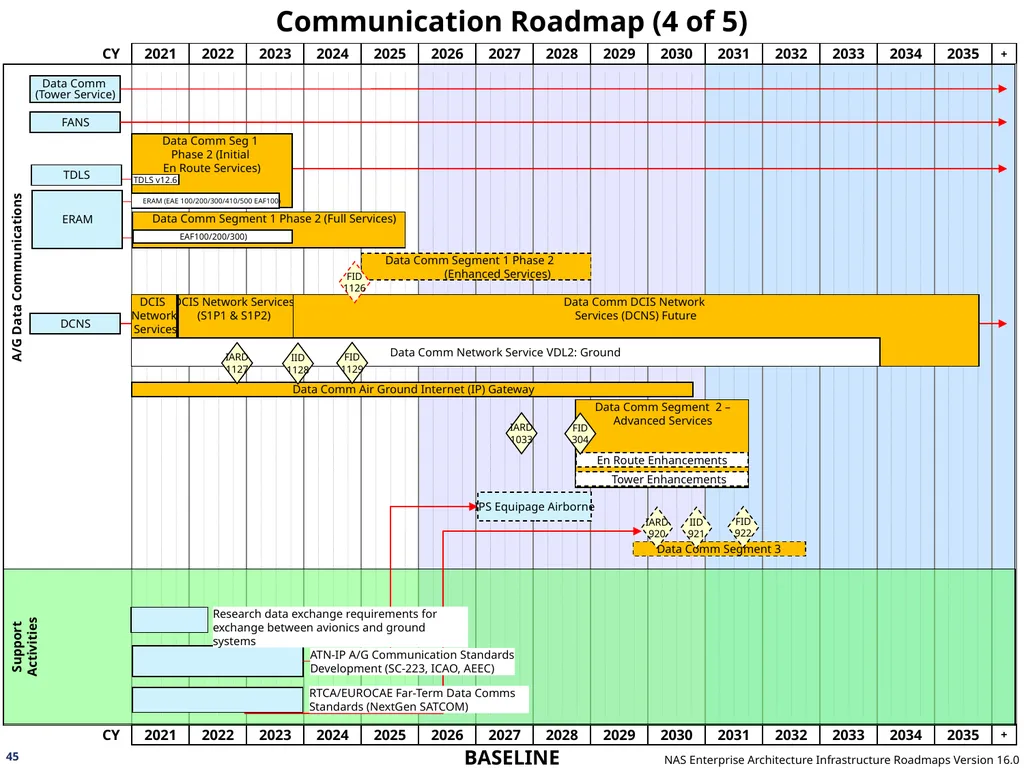
Communication Objective: The Communication Roadmap presents an Executive View (EV) of the current communication systems supporting the National Airspace System and their enhancement, sustainment or replacement through major development programs and support activities. The Communications Roadmap is intended to convey the major communication program strategy and acquisition decision points as well as program funding. The roadmap serves as a summary view of more detailed plans within each development program.
For more information, please contact Brent Phillips (brent.phillips@faa.gov). 41<br>
For more information, please contact Brent Phillips (brent.phillips@faa.gov). 41<br>
42
Communication Roadmap (1 of 5) 42<br>
43
Communication Roadmap (2 of 5) 43<br>
44
Communication Roadmap (3 of 5) 44<br>
45
Communication Roadmap (4 of 5) 45<br>
46
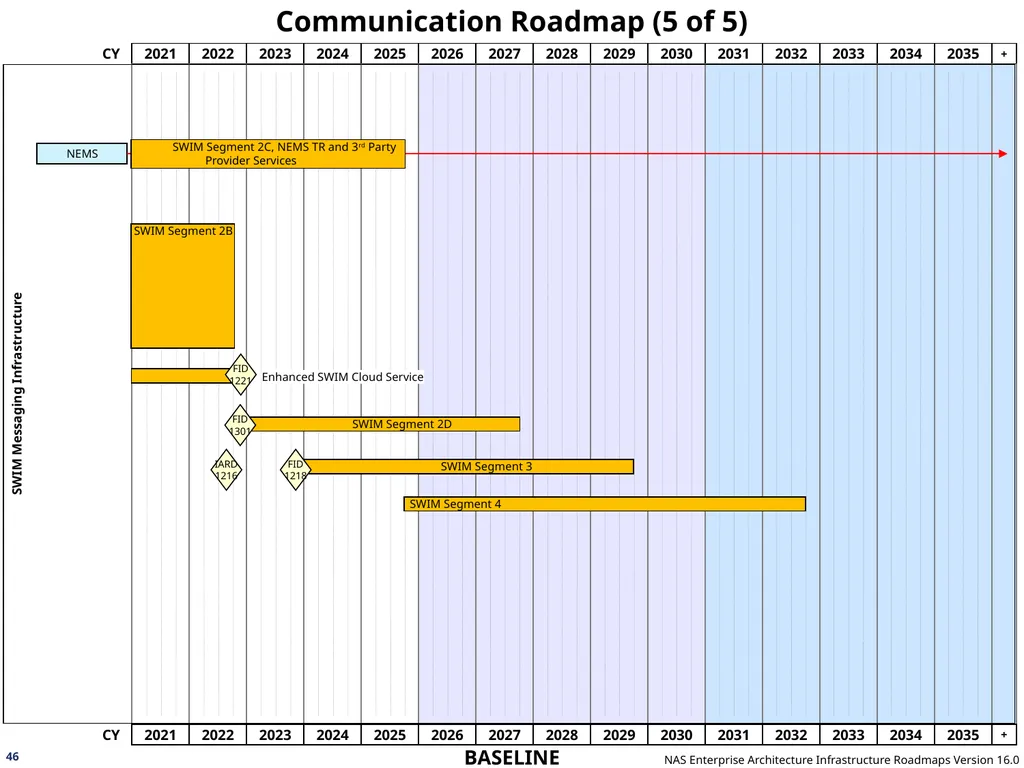
Communication Roadmap (5 of 5) 46<br>
47
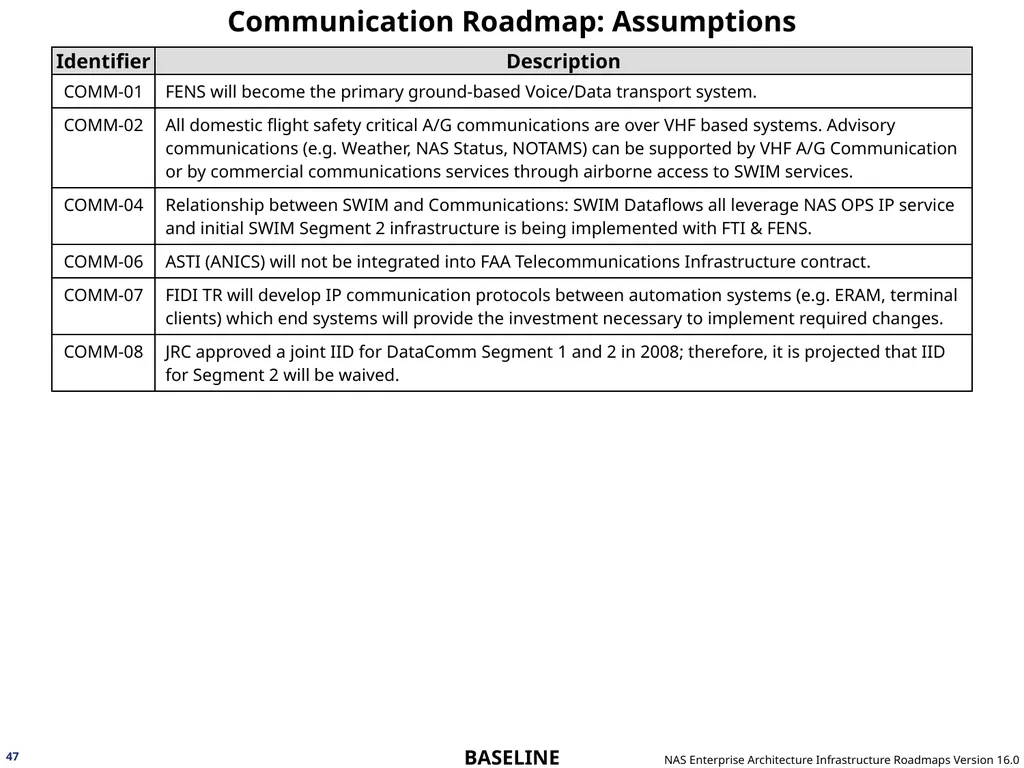
Communication Roadmap: Assumptions 47<br>
48
Communication Roadmap: Decision Points (1 of 2) 48<br>
49
Communication Roadmap: Decision Points (2 of 2) 49<br>
50
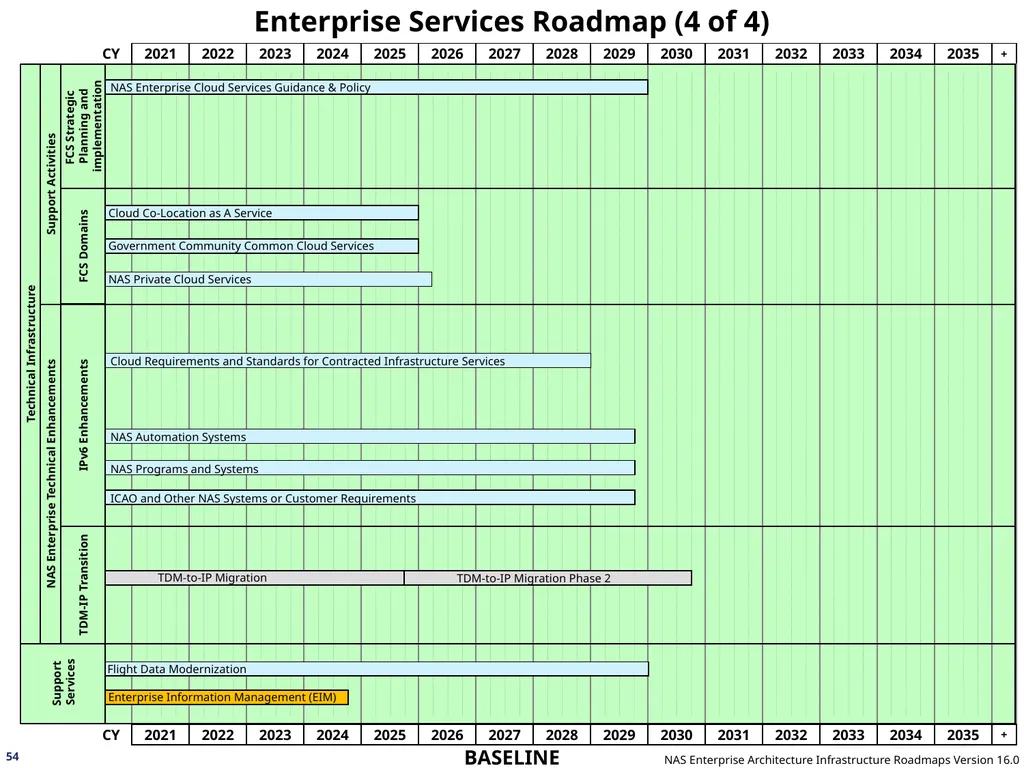
Enterprise Services Objective: The Enterprise Services Roadmap presents an Executive View (EV) of the evolution of existing and planned enterprise services provided by NAS systems and programs and provides an outline of the major activities, decisions, and milestones. By definition, services are capabilities that exist as processes, applications, infrastructure, or any combination. They are implemented using design principles that support and promote enterprise-wide interoperability, sharing, standardization, federation, awareness, loose coupling, granularity, modularity, abstraction, reuse, and flexibility.
For more information, please contact Lakaisha Ajaegbulemh (lakaisha.ajaegbulemh@faa.gov). 50<br>
For more information, please contact Lakaisha Ajaegbulemh (lakaisha.ajaegbulemh@faa.gov). 50<br>
51
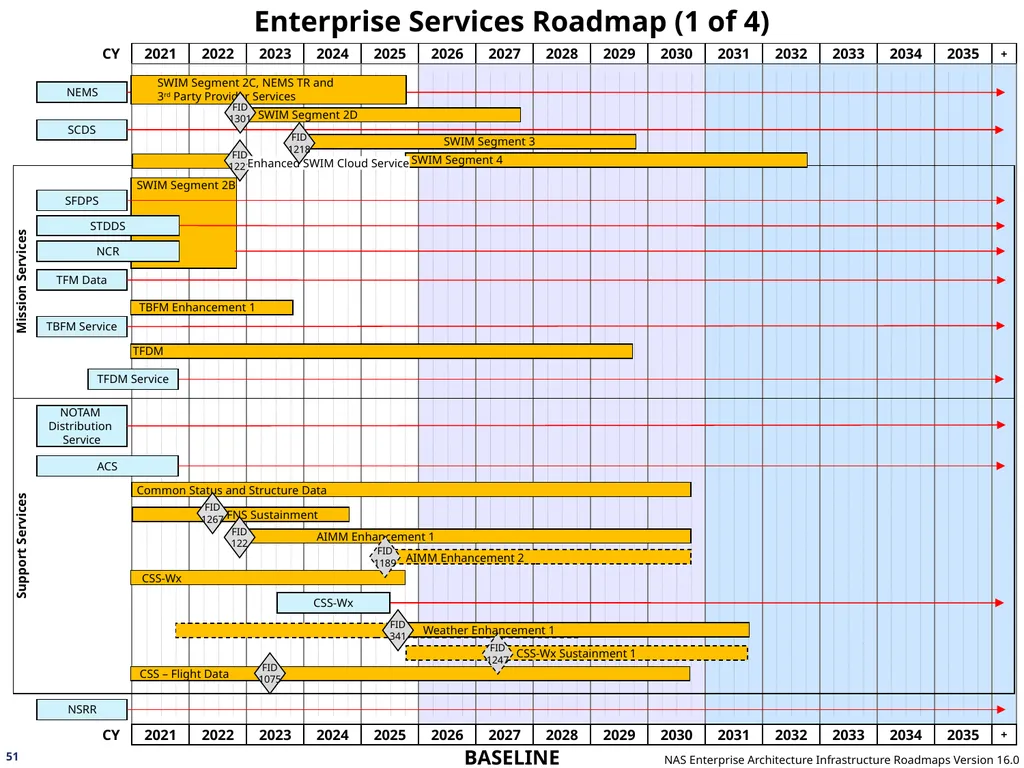
Enterprise Services Roadmap (1 of 4) 51<br>
52
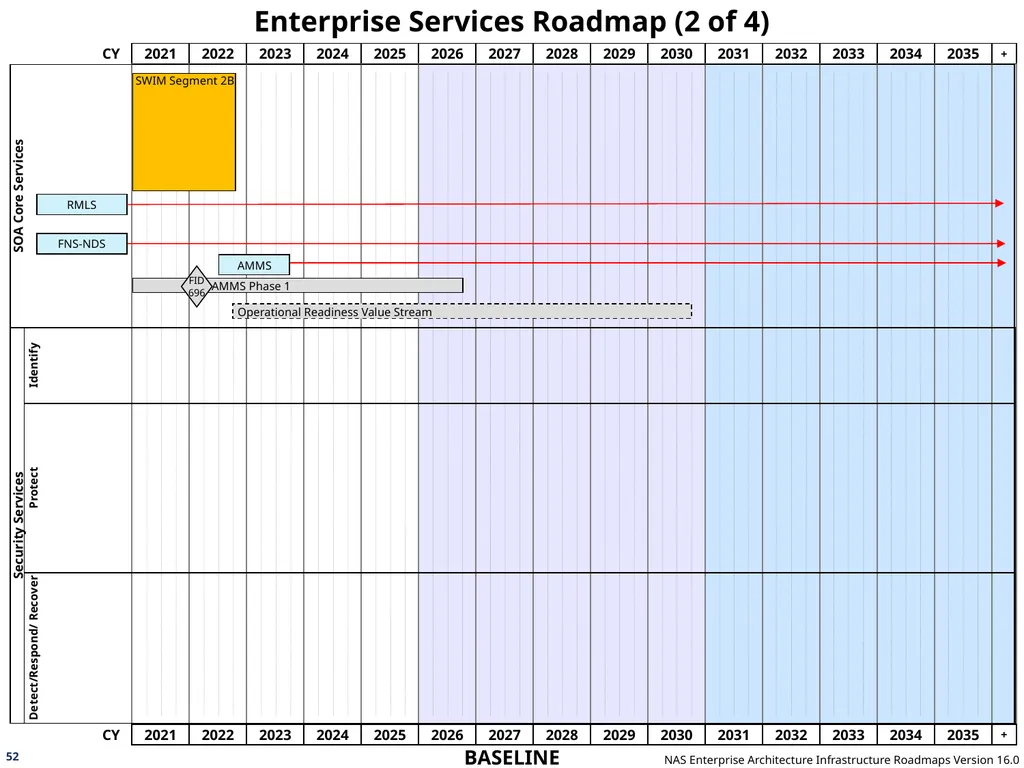
Enterprise Services Roadmap (2 of 4) 52<br>
53
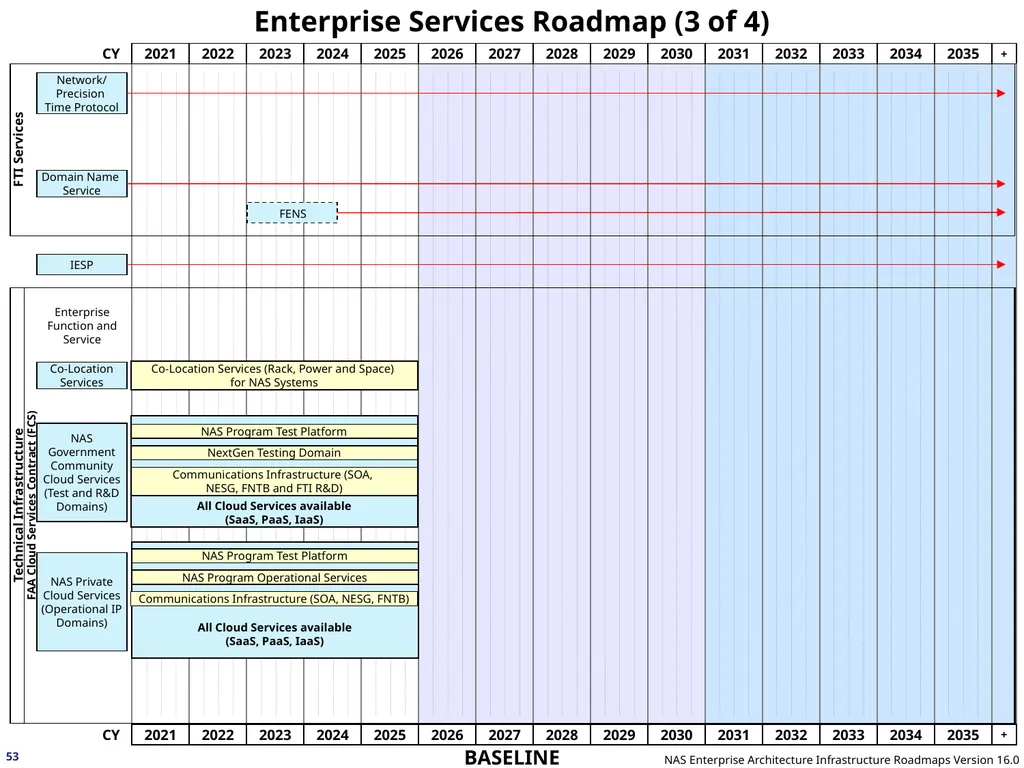
Enterprise Services Roadmap (3 of 4) 53<br>
54
Enterprise Services Roadmap (4 of 4) 54<br>
55
Enterprise Services Roadmap: Decision Points (1 of 1) 55<br>
56
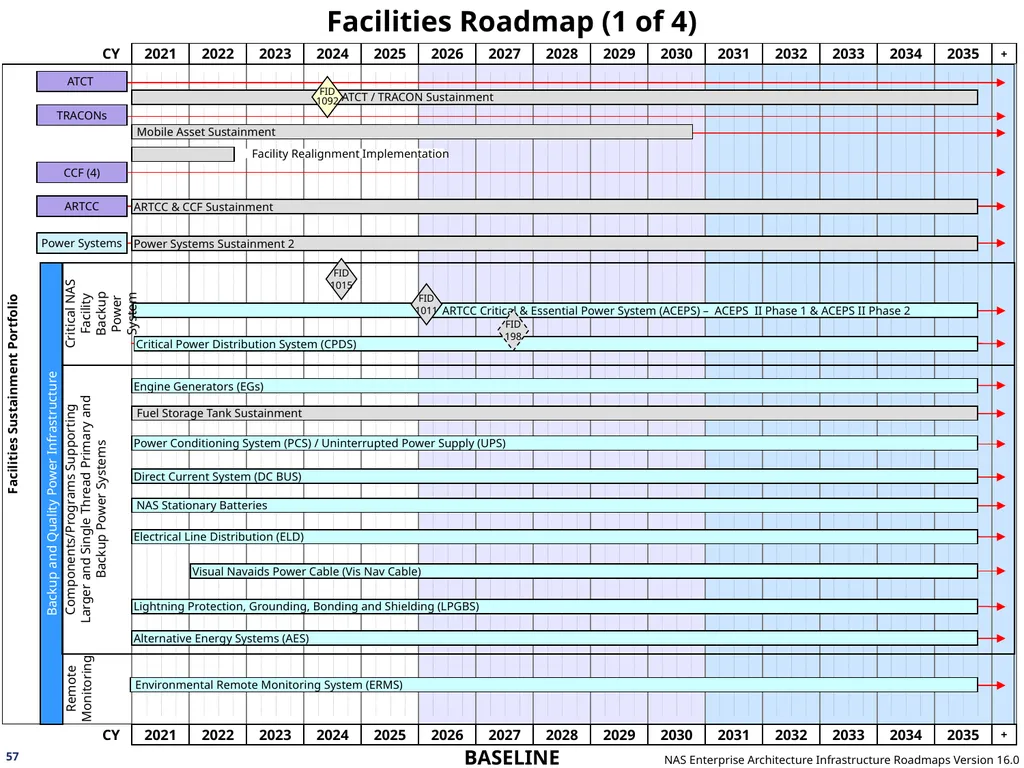
Facilities Objective: The Facilities roadmap depicts the legacy NAS Facilities and the evolution towards the NextGen Future Facilities environment.
For more information, please contact Lakaisha Ajaegbulemh (lakaisha.ajaegbulemh@faa.gov). 56<br>
For more information, please contact Lakaisha Ajaegbulemh (lakaisha.ajaegbulemh@faa.gov). 56<br>
57
Facilities Roadmap (1 of 4) 57<br>
58
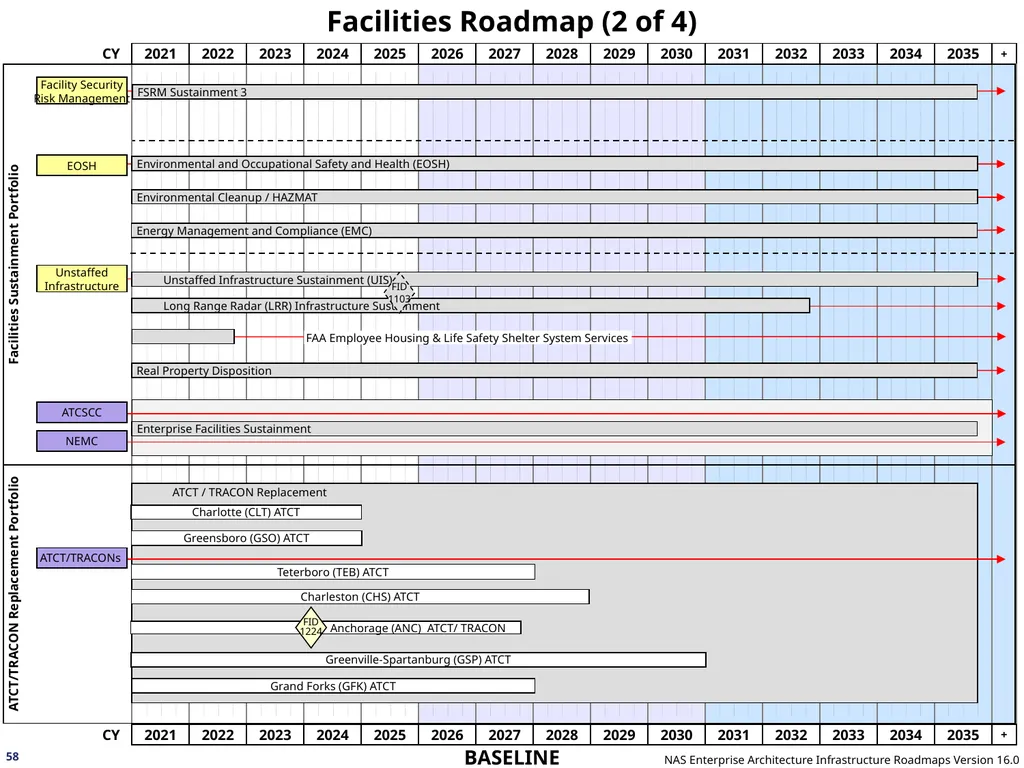
Facilities Roadmap (2 of 4) 58<br>
59
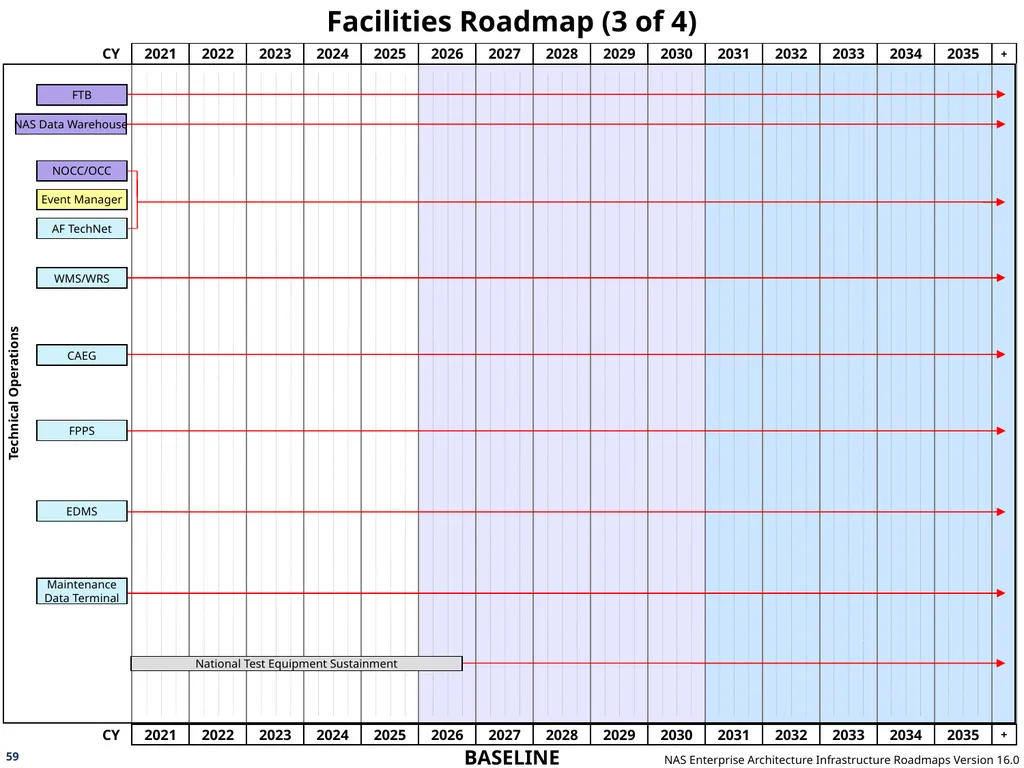
Facilities Roadmap (3 of 4) 59<br>
60
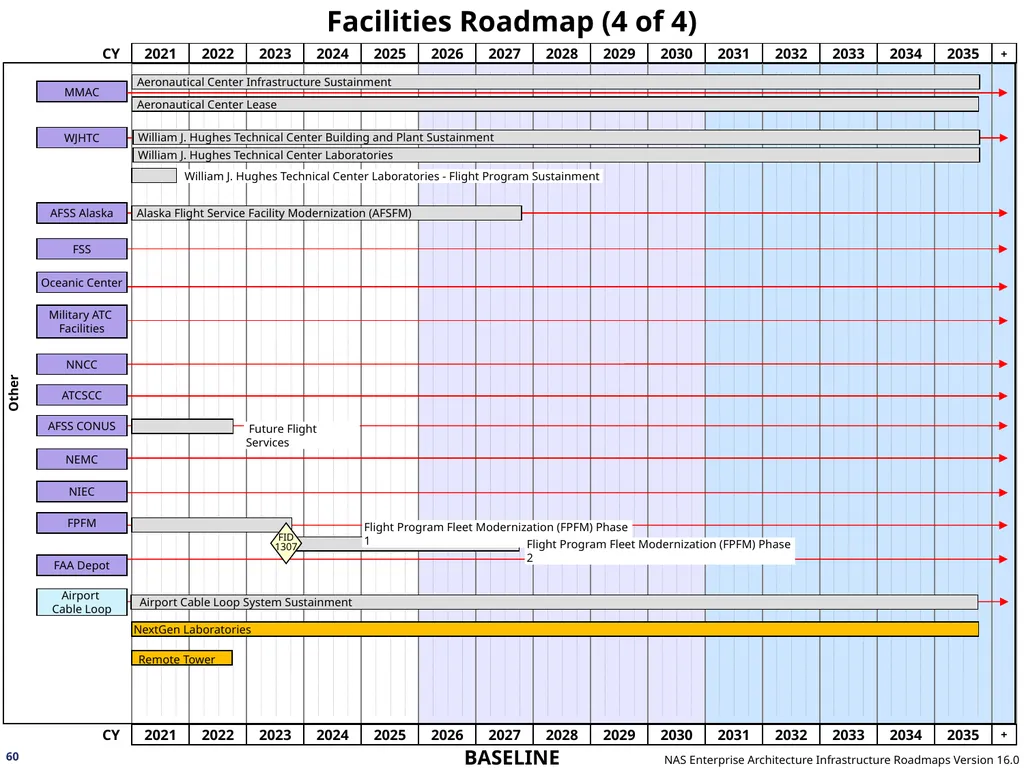
Facilities Roadmap (4 of 4) 60 Other Future Flight Services<br>
61
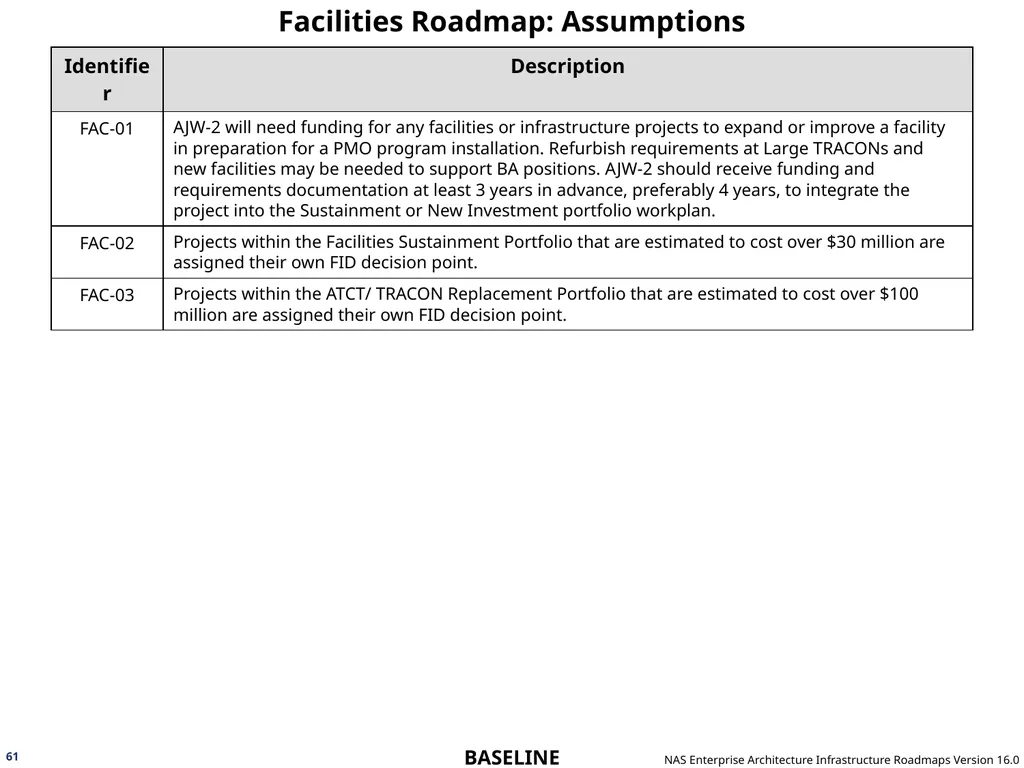
Facilities Roadmap: Assumptions 61<br>
62
Facilities Roadmap: Decision Points (1 of 1) 62<br>
63
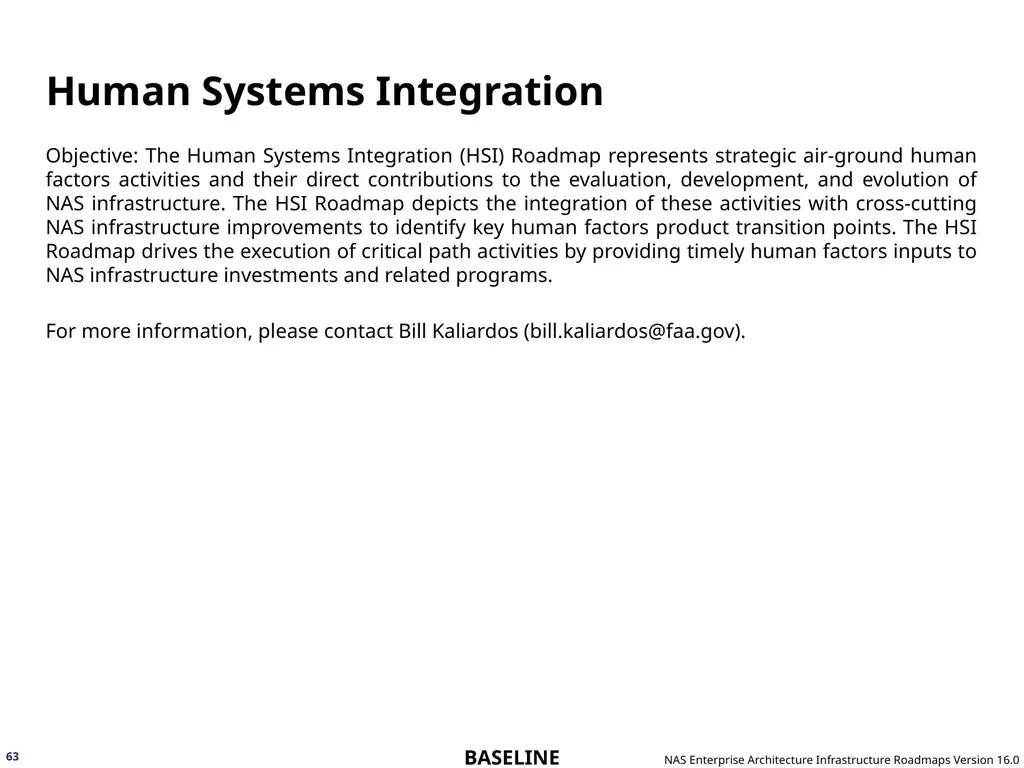
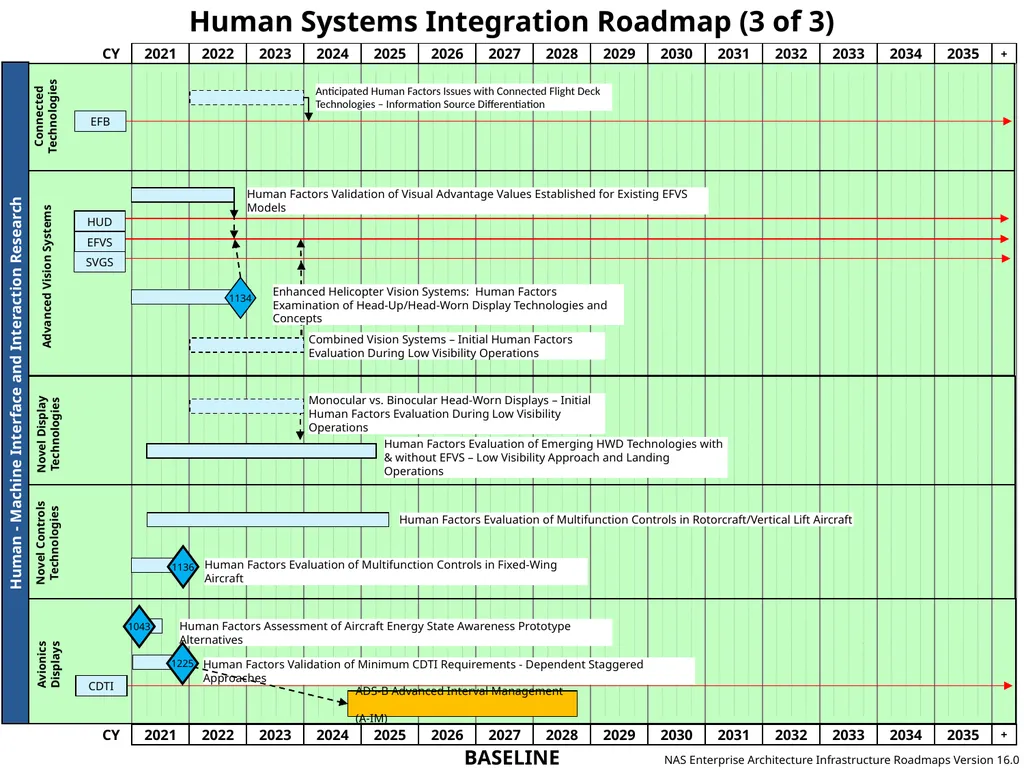
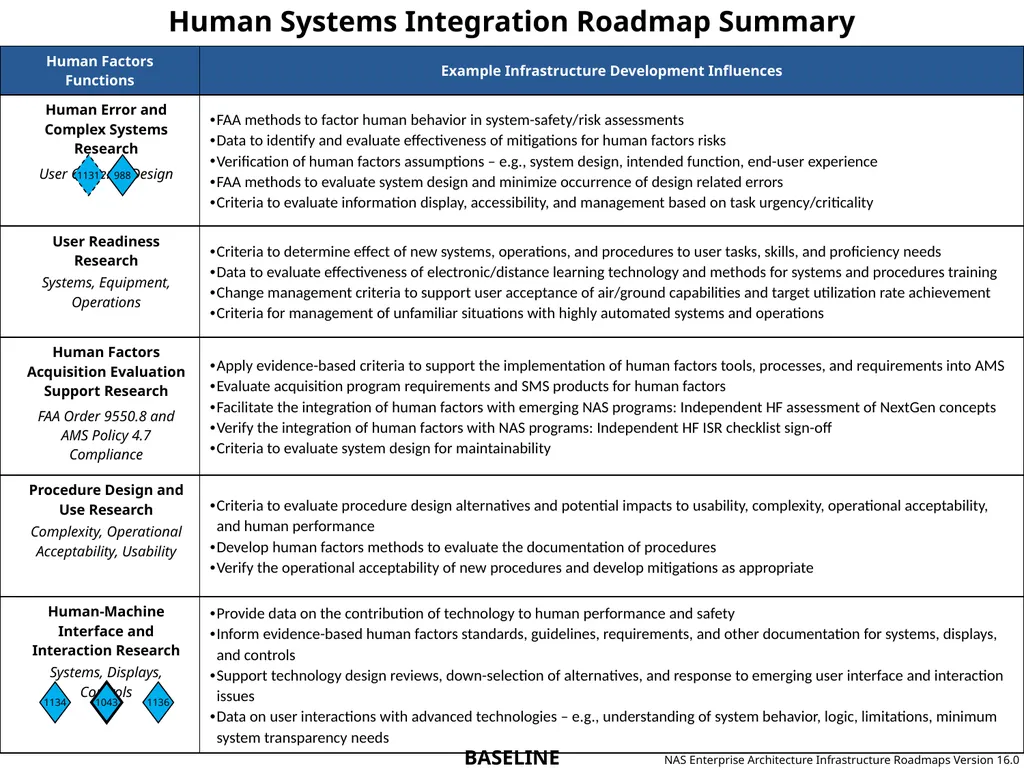
Human Systems Integration Objective: The Human Systems Integration (HSI) Roadmap represents strategic air-ground human factors activities and their direct contributions to the evaluation, development, and evolution of NAS infrastructure. The HSI Roadmap depicts the integration of these activities with cross-cutting NAS infrastructure improvements to identify key human factors product transition points. The HSI Roadmap drives the execution of critical path activities by providing timely human factors inputs to NAS infrastructure investments and related programs.
For more information, please contact Bill Kaliardos (bill.kaliardos@faa.gov). 63<br>
For more information, please contact Bill Kaliardos (bill.kaliardos@faa.gov). 63<br>
64
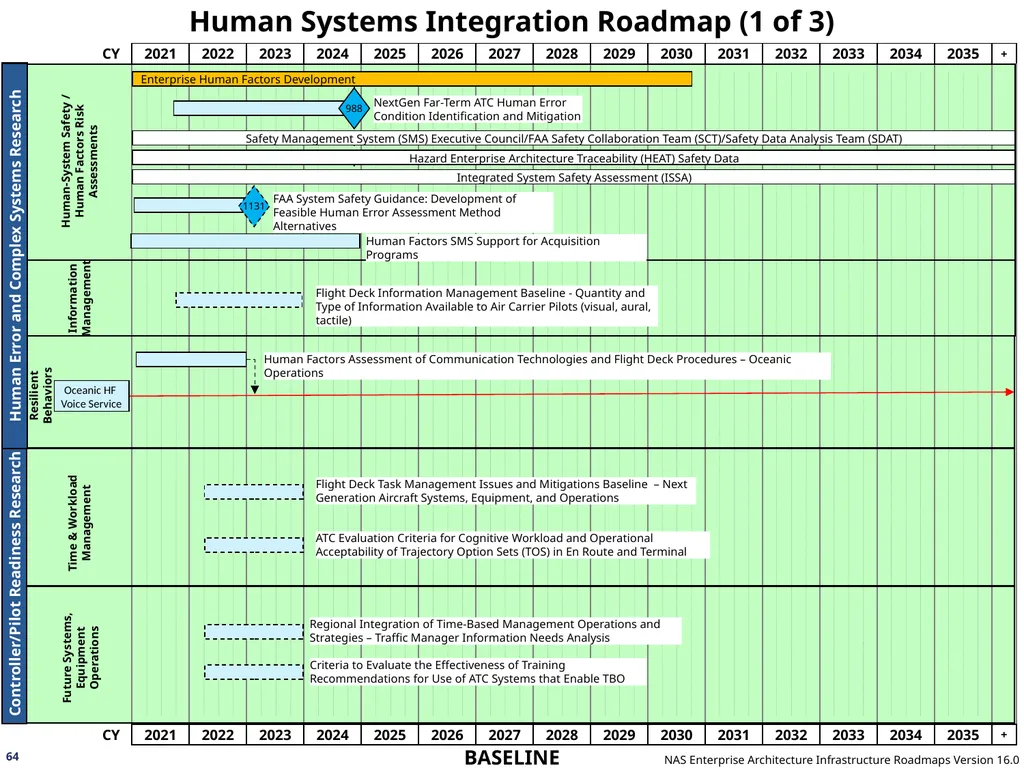
Human Systems Integration Roadmap (1 of 3) 64<br>
65
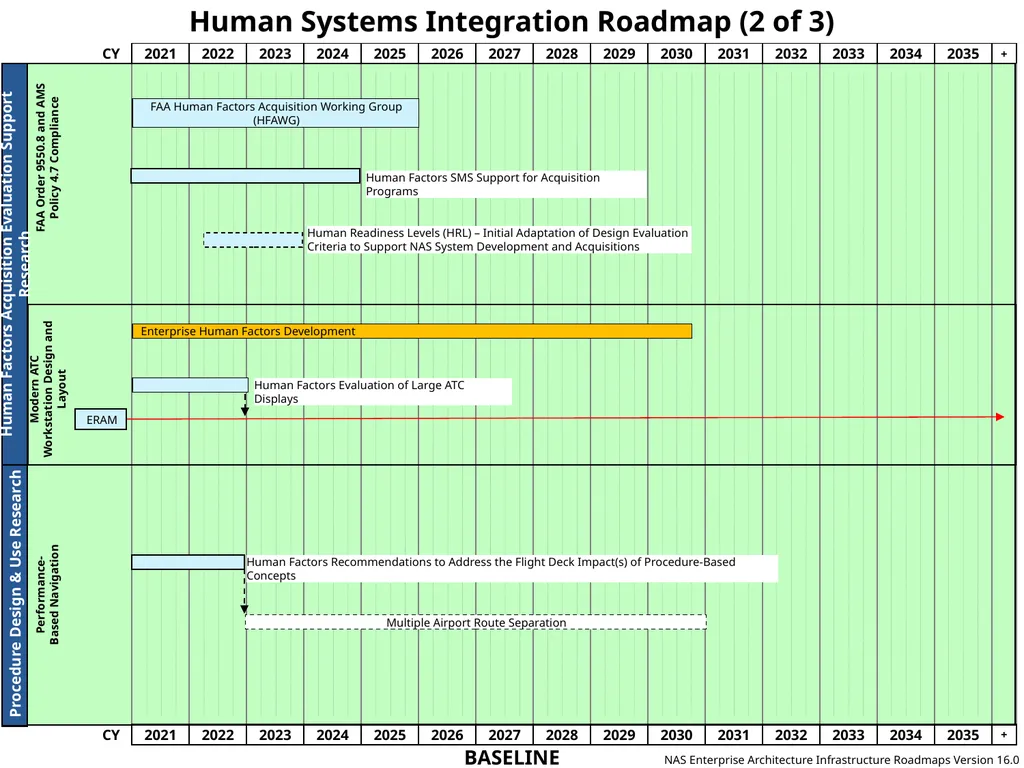
Human Systems Integration Roadmap (2 of 3)<br>
66
Human Systems Integration Roadmap (3 of 3) ADS-B Advanced Interval Management
(A-IM)<br>
(A-IM)<br>
67
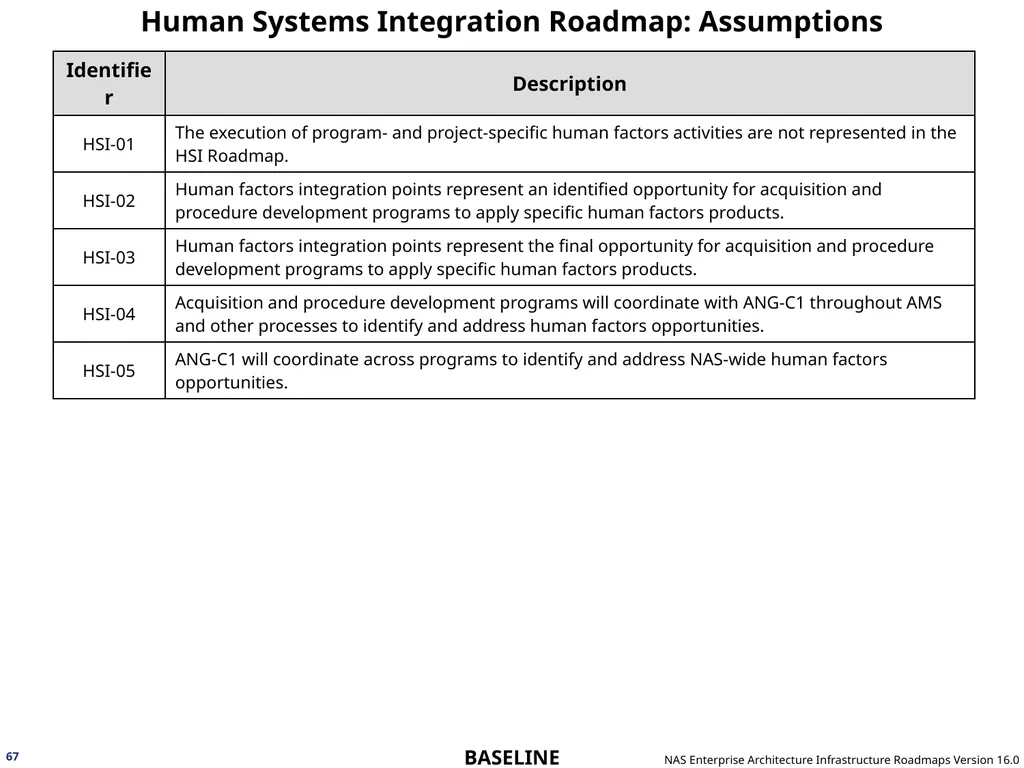
Human Systems Integration Roadmap: Assumptions 67<br>
68
Human Systems Integration Roadmap Summary 988 1131 1043 1134 1136<br>
69
Human Systems Integration Roadmap: Decision Points (1 of 1) 69<br>
70
Navigation Objective: The Navigation roadmap depicts the establishment, sustainment and evolution of ground-based, satellite-based, and visual navigation systems which enable aircraft to determine and report their position, navigate in accordance with clearances, and efficiently transit the NAS. These systems support conventional and Performance-Based Navigation (PBN) for the NAS and will ensure safe, efficient, and resilient services.
For more information, please contact Lannie Herlihy (lannie.herlihy@faa.gov). 70<br>
For more information, please contact Lannie Herlihy (lannie.herlihy@faa.gov). 70<br>
71
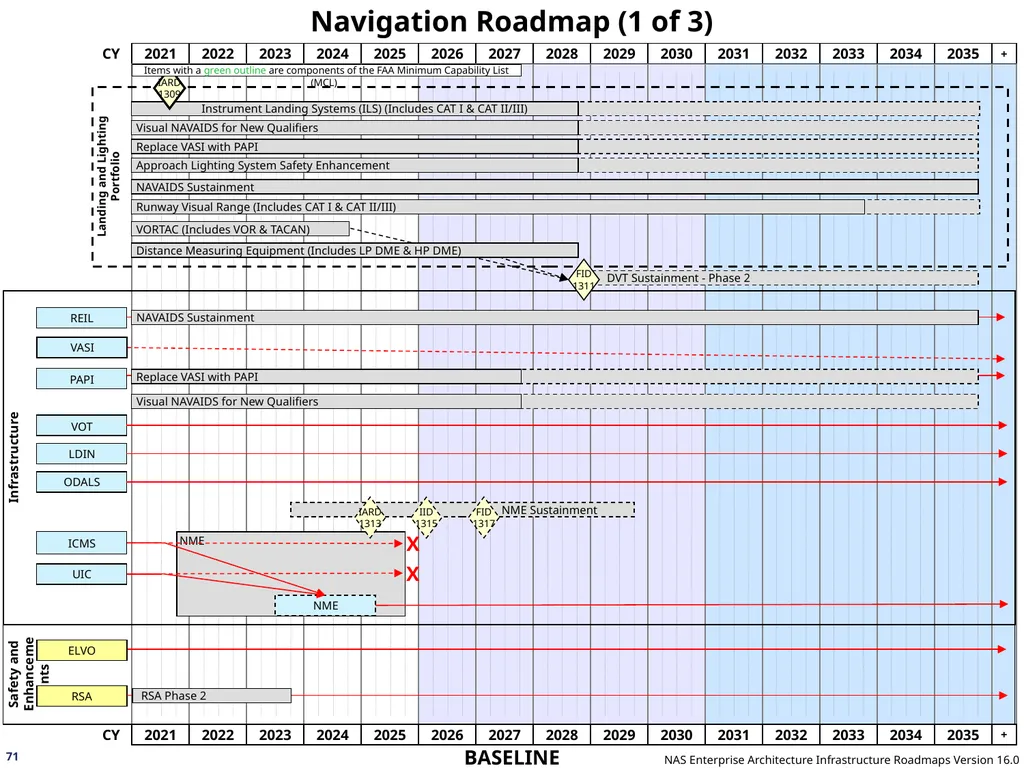
Navigation Roadmap (1 of 3) 71<br>
72
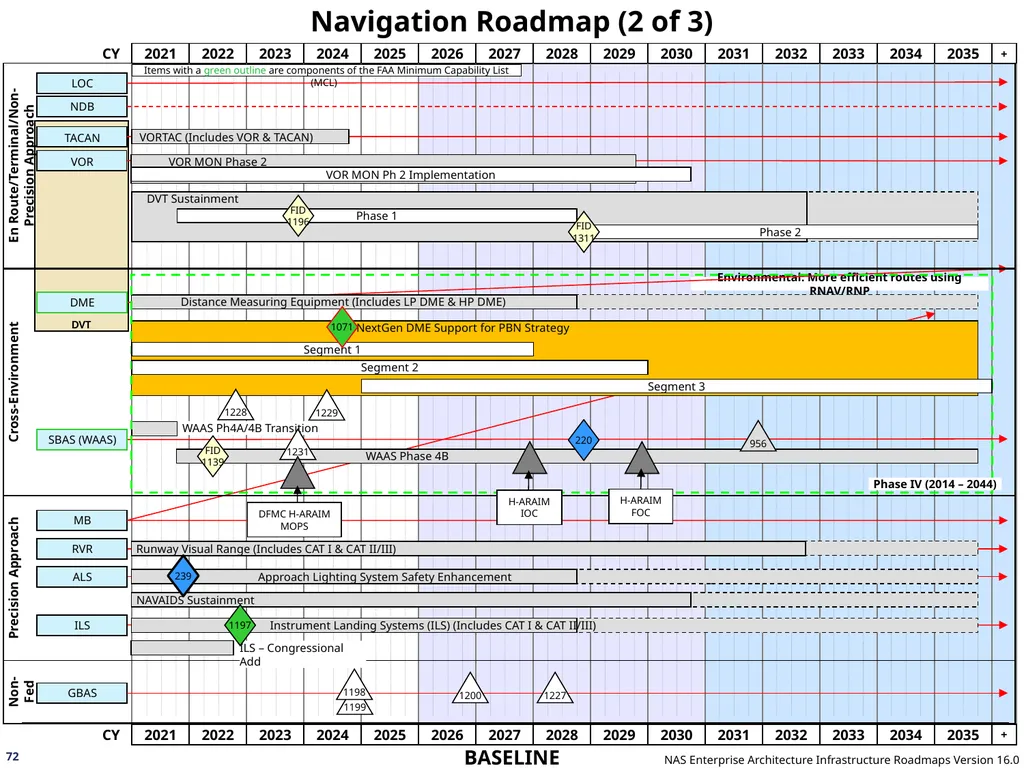
Navigation Roadmap (2 of 3) 72<br>
73
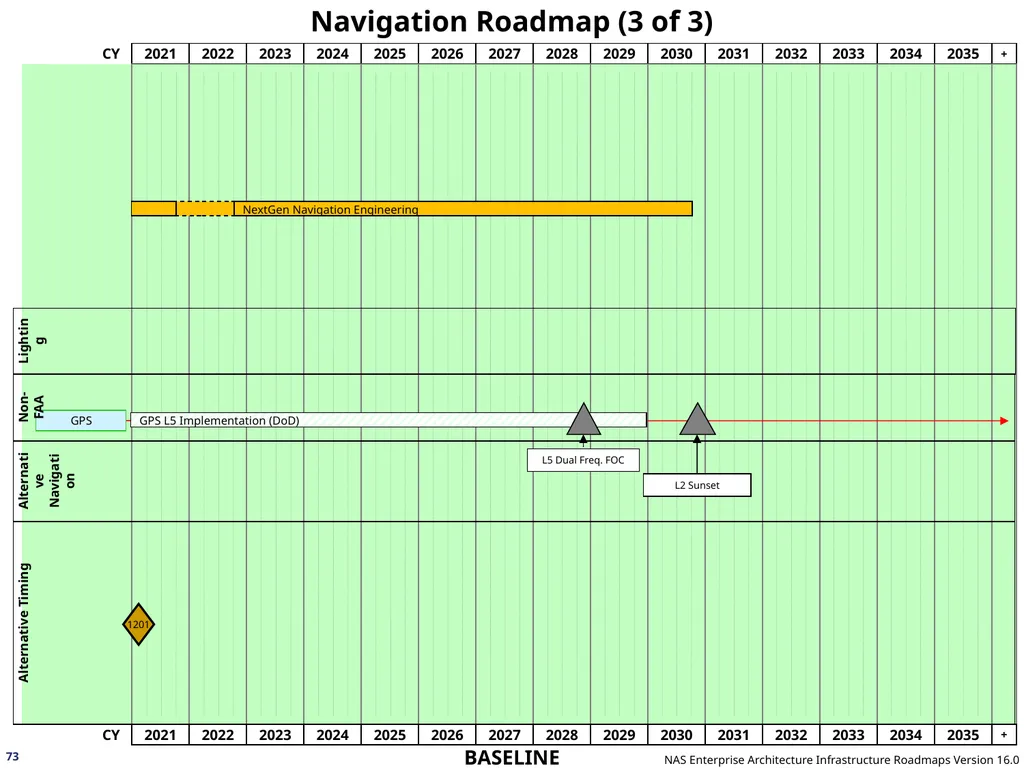
Navigation Roadmap (3 of 3) 73<br>
74
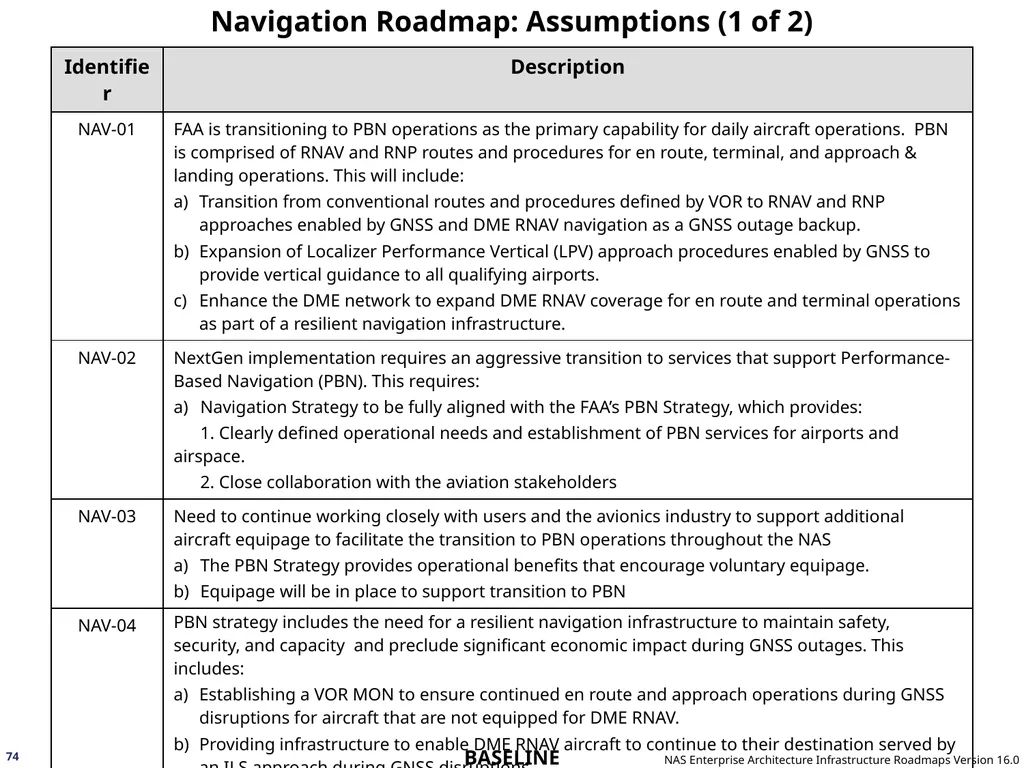
Navigation Roadmap: Assumptions (1 of 2) 74<br>
75
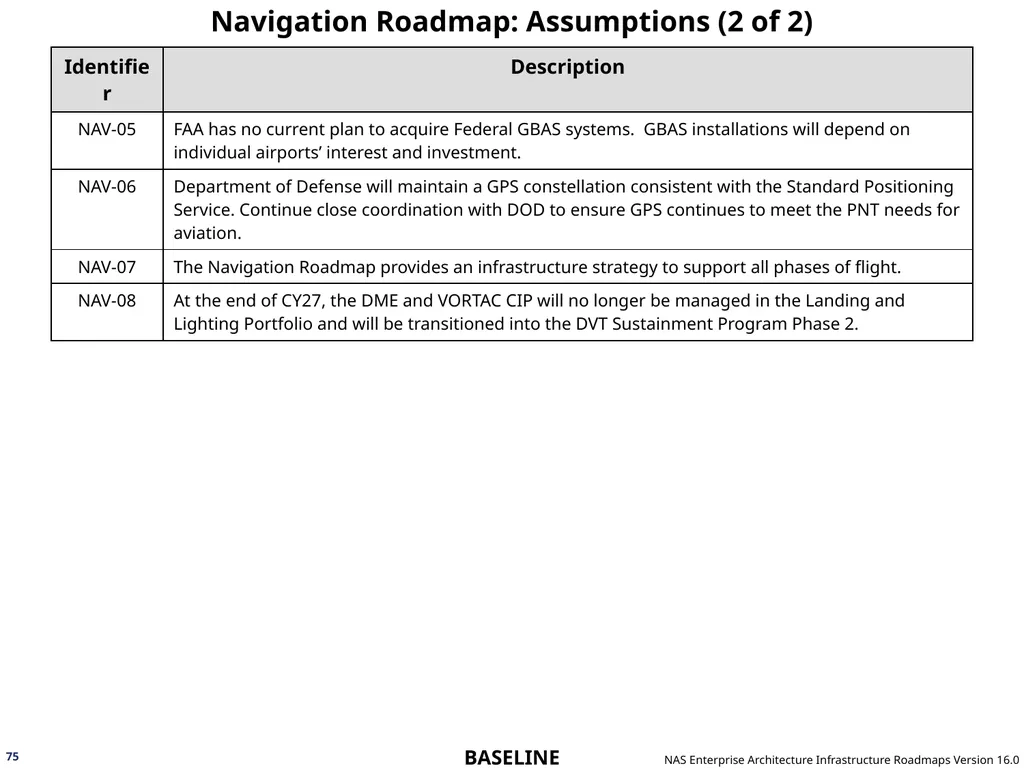
Navigation Roadmap: Assumptions (2 of 2) 75<br>
76
Navigation Roadmap: Decision Points (1 of 2) 76<br>
77
Navigation Roadmap: Decision Points (1 of 2) 77<br>
78
New Entrants Objective: The New Entrants roadmap provides a consolidated timeline of activities and investments, both active and planned, required to integrate UAS and Commercial Space into the NAS.
For more information, please contact Mike Hritz (mike.hritz@faa.gov). 78<br>
For more information, please contact Mike Hritz (mike.hritz@faa.gov). 78<br>
79
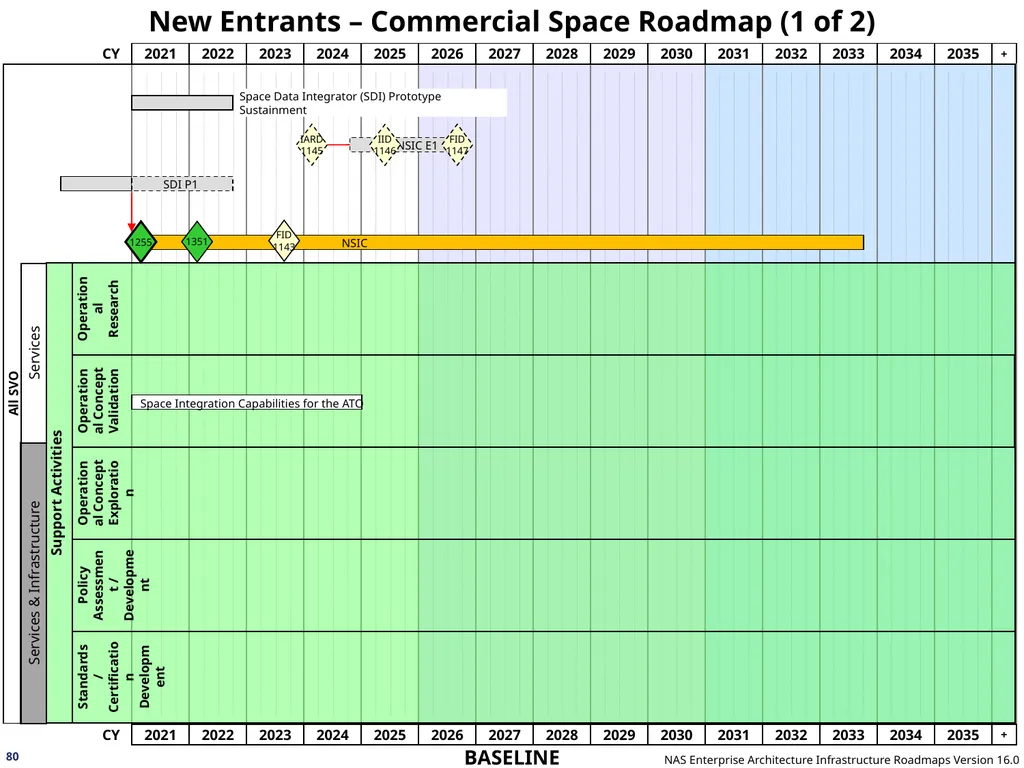
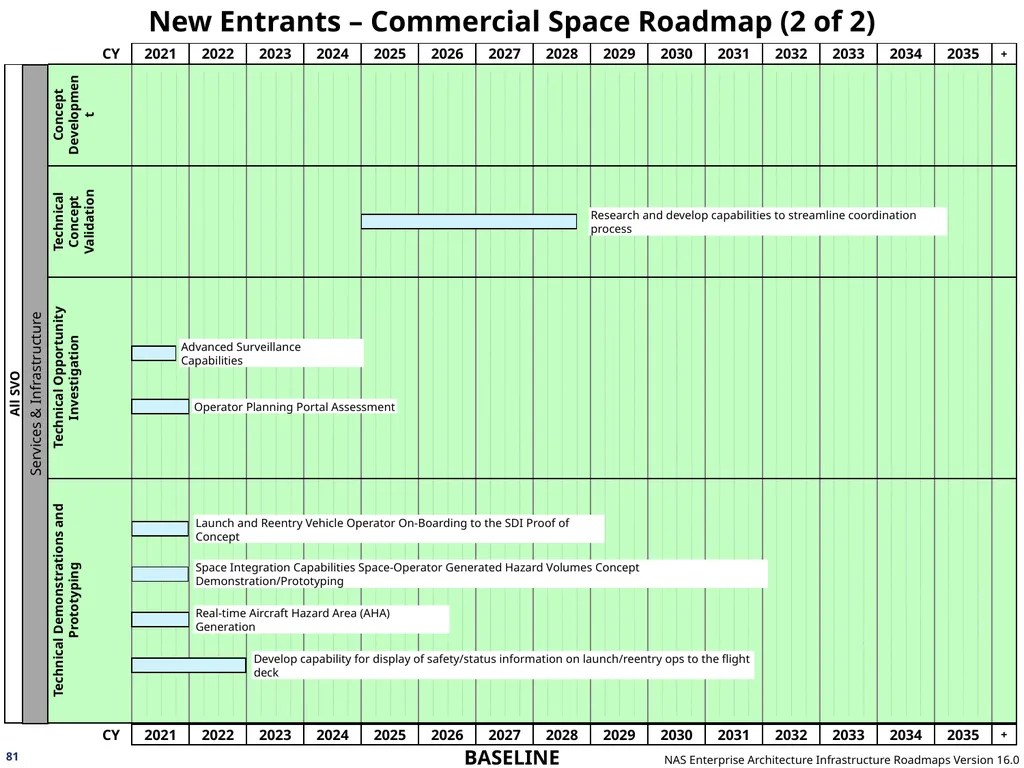
New Entrants – Commercial Space Objective: The New Entrants Commercial Space Roadmap presents an Executive View (EV) of the current systems supporting the National Airspace System (NAS) and their enhancement, sustainment or replacement through major development programs and support activities. The Commercial Space Roadmap is intended to convey the major program strategy and acquisition decision points as well as program execution through the In-Service Decision. The roadmap serves as a summary view of more detailed plans within each development program.
For more information, please contact Magda Batista-Carver (magda.batista-carver@faa.gov). 79<br>
For more information, please contact Magda Batista-Carver (magda.batista-carver@faa.gov). 79<br>
80
New Entrants – Commercial Space Roadmap (1 of 2) 80<br>
81
New Entrants – Commercial Space Roadmap (2 of 2) 81<br>
82
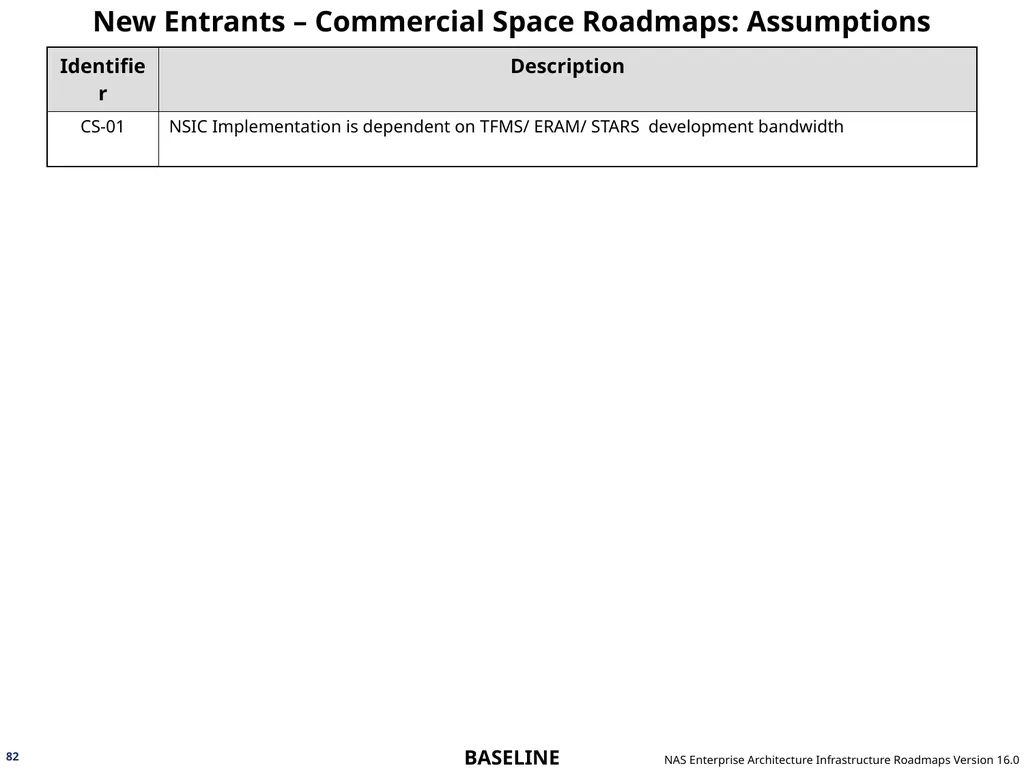
New Entrants – Commercial Space Roadmaps: Assumptions 82<br>
83
New Entrants – Commercial Space Roadmap: Decision Points (1 of 1) 83<br>
84
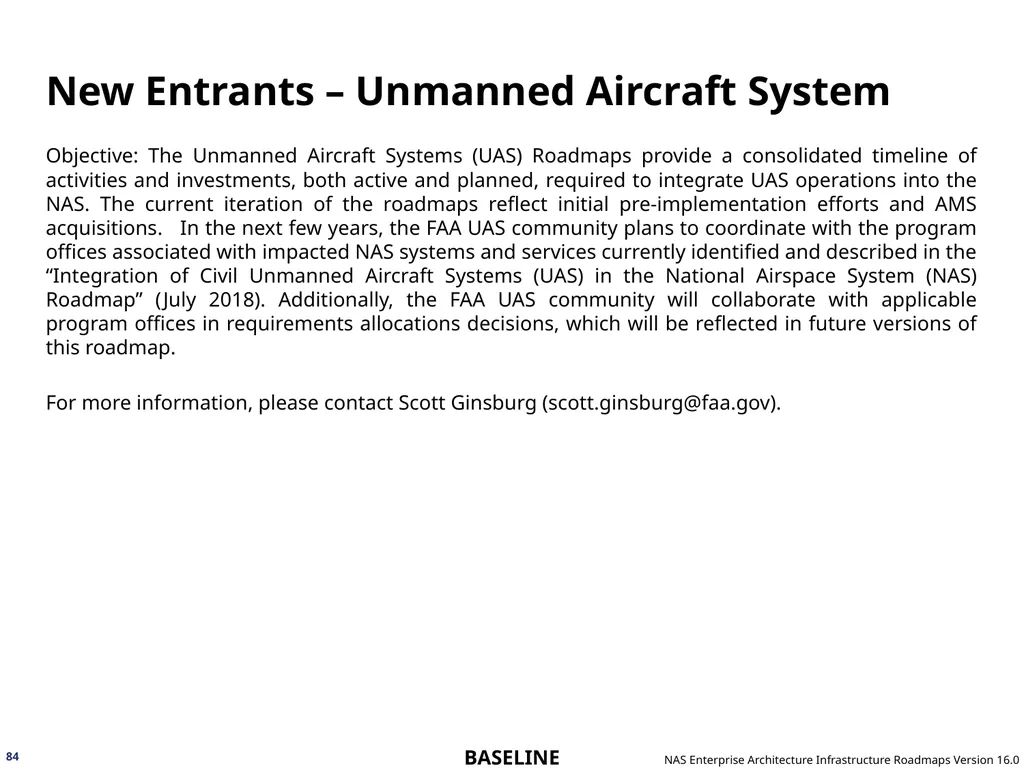
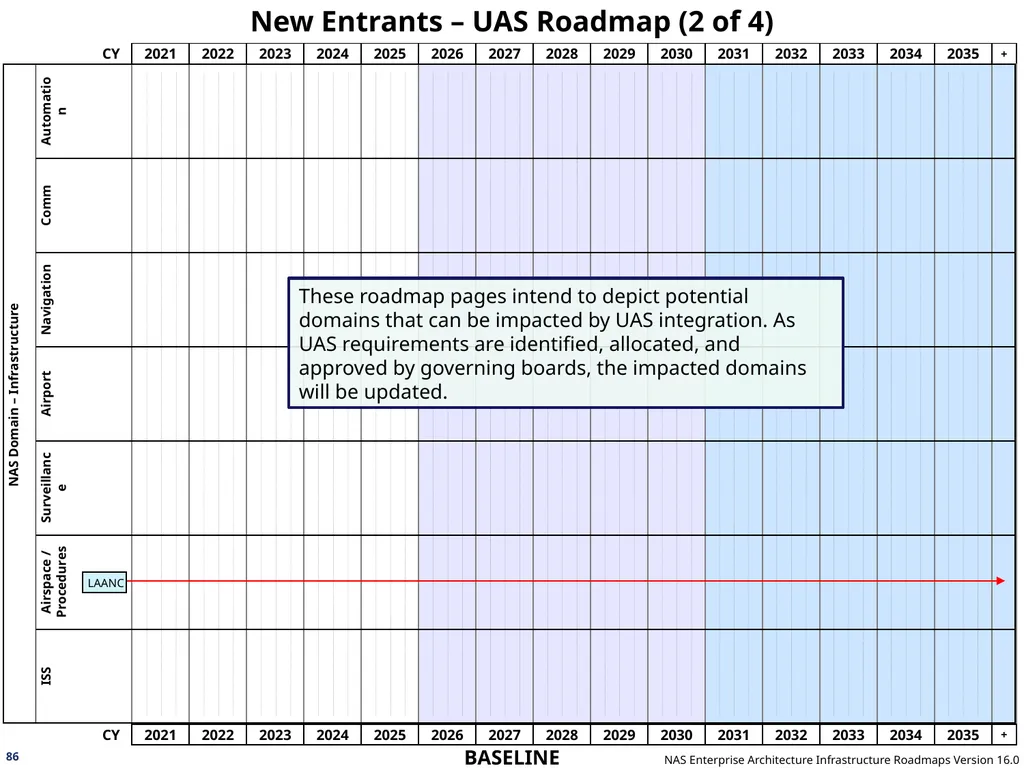
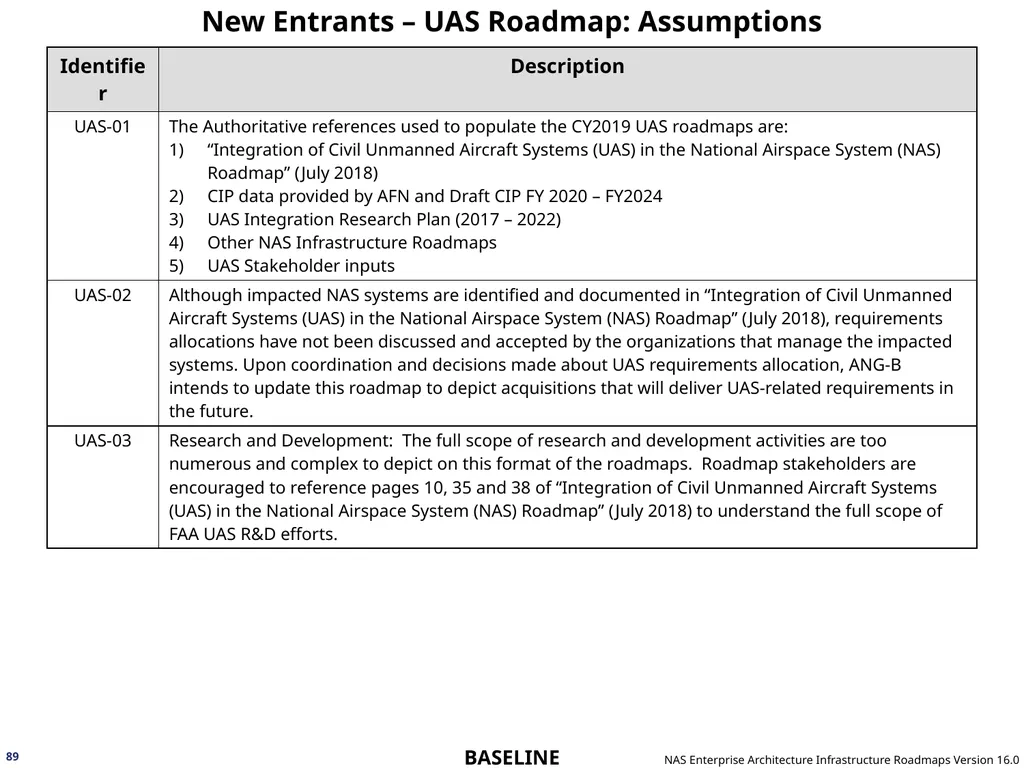
New Entrants – Unmanned Aircraft System Objective: The Unmanned Aircraft Systems (UAS) Roadmaps provide a consolidated timeline of activities and investments, both active and planned, required to integrate UAS operations into the NAS. The current iteration of the roadmaps reflect initial pre-implementation efforts and AMS acquisitions. In the next few years, the FAA UAS community plans to coordinate with the program offices associated with impacted NAS systems and services currently identified and described in the “Integration of Civil Unmanned Aircraft Systems (UAS) in the National Airspace System (NAS) Roadmap” (July 2018). Additionally, the FAA UAS community will collaborate with applicable program offices in requirements allocations decisions, which will be reflected in future versions of this roadmap.
For more information, please contact Scott Ginsburg (scott.ginsburg@faa.gov). 84<br>
For more information, please contact Scott Ginsburg (scott.ginsburg@faa.gov). 84<br>
85
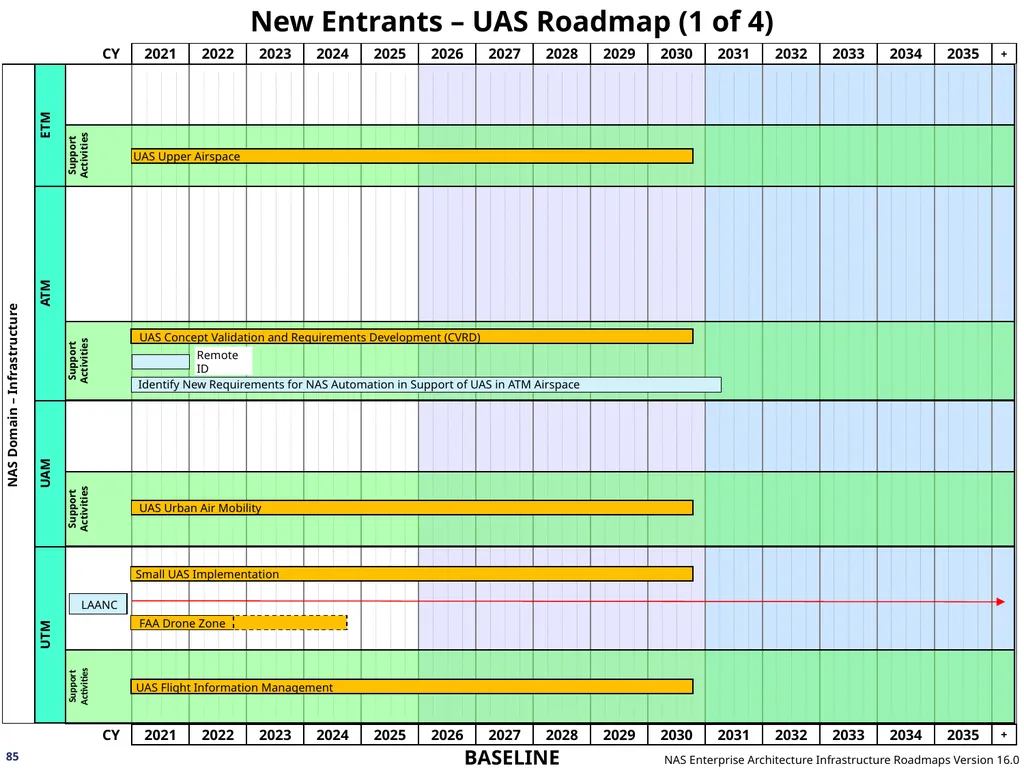
New Entrants – UAS Roadmap (1 of 4) 85<br>
86
New Entrants – UAS Roadmap (2 of 4) 86<br>
87
New Entrants – UAS Roadmap (3 of 4) 87<br>
88
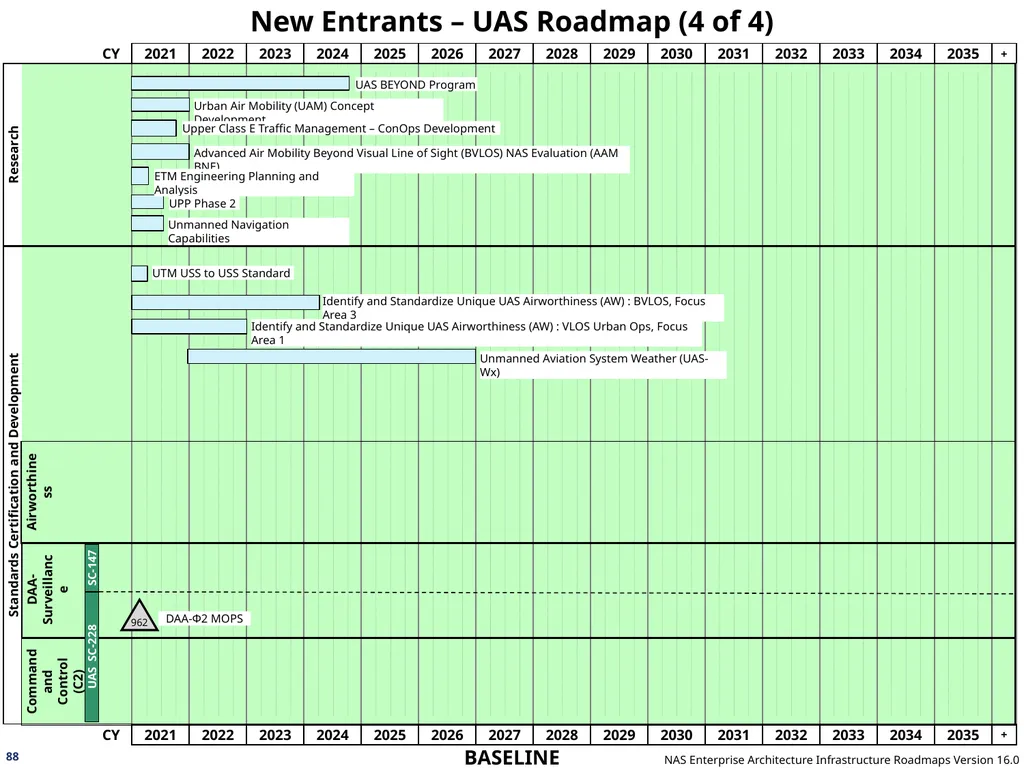
New Entrants – UAS Roadmap (4 of 4) 88<br>
89
New Entrants – UAS Roadmap: Assumptions 89<br>
90
New Entrants – UAS Roadmap: Decision Points (1 of 1) 90<br>
91
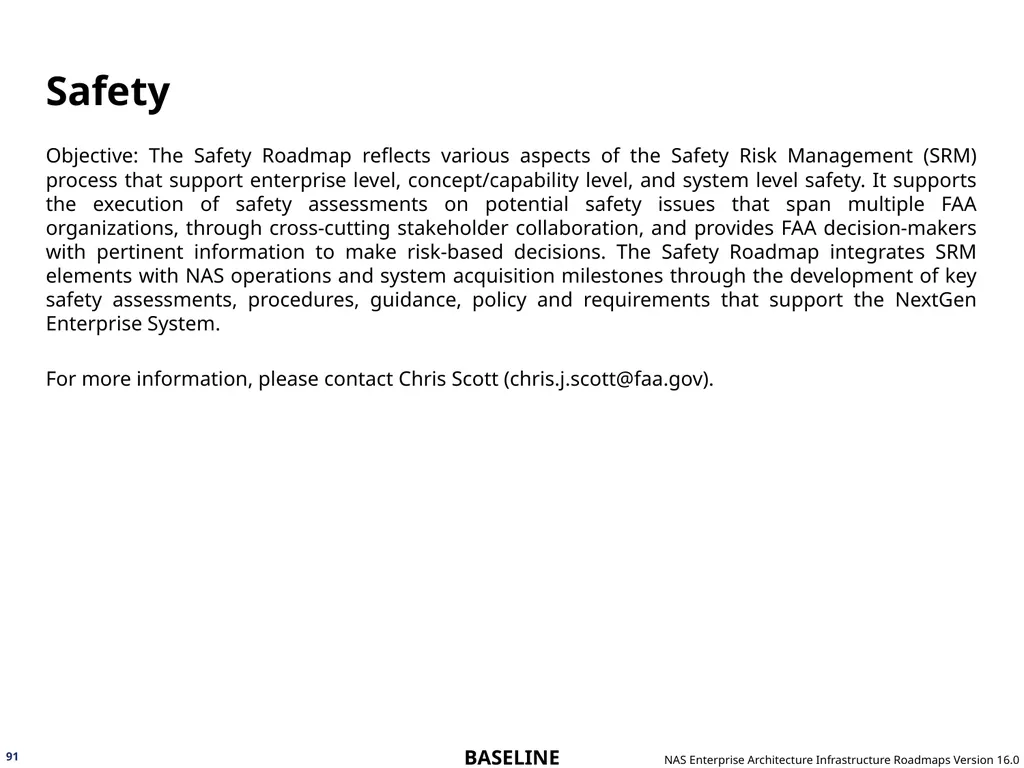
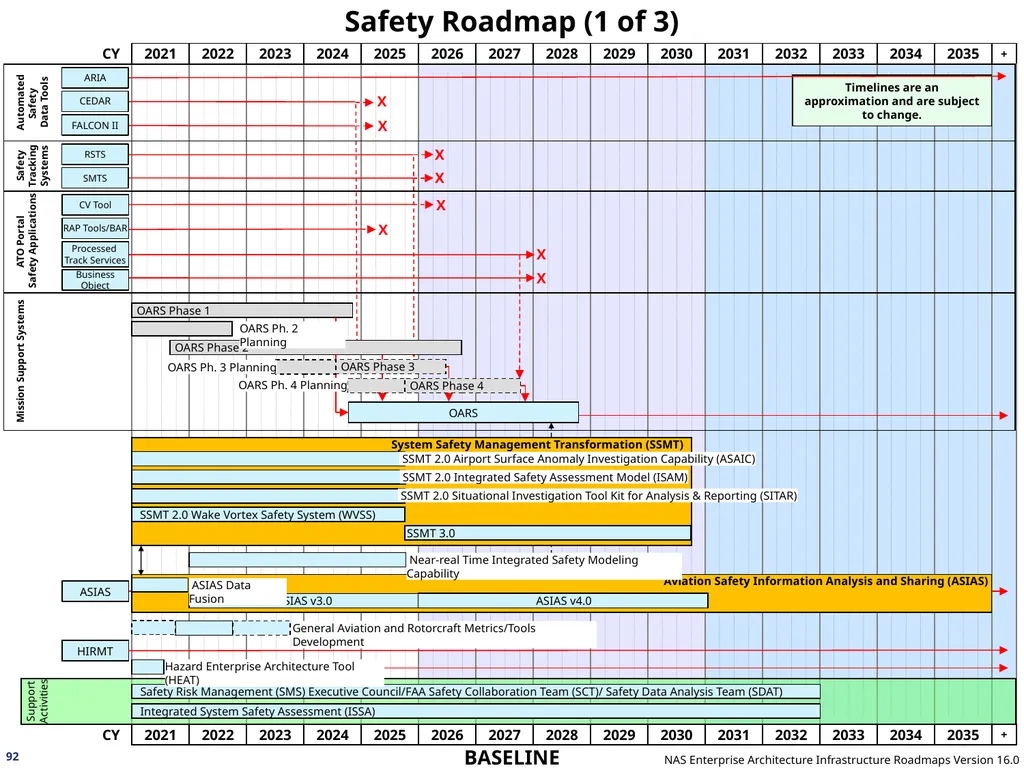
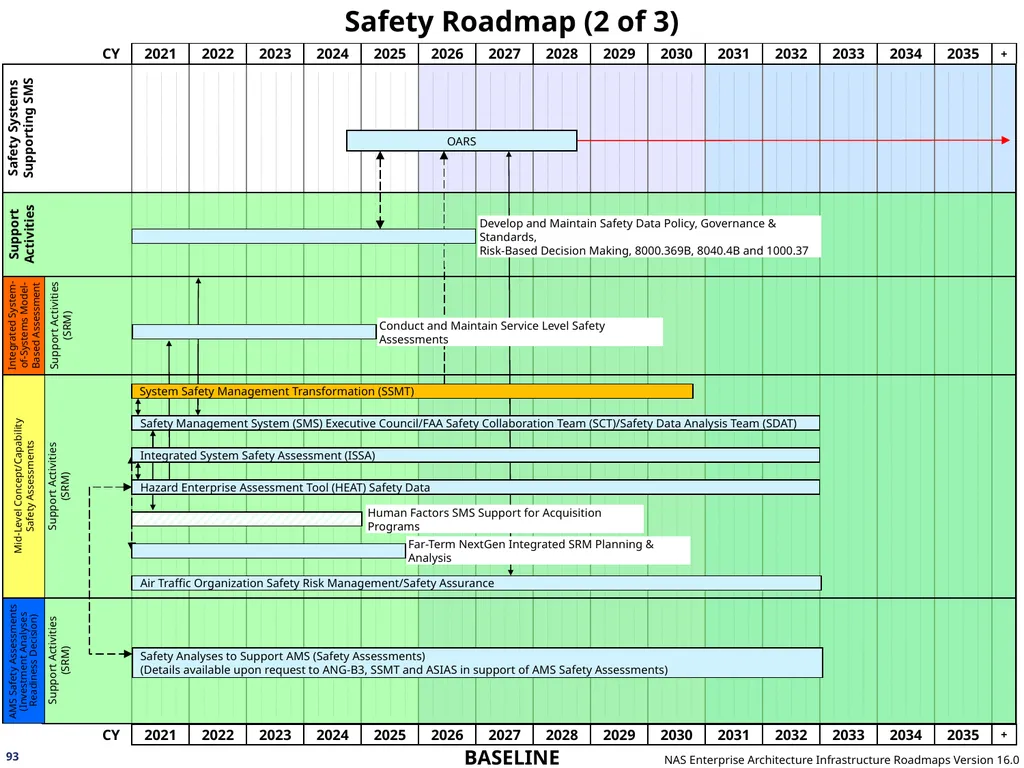
Safety Objective: The Safety Roadmap reflects various aspects of the Safety Risk Management (SRM) process that support enterprise level, concept/capability level, and system level safety. It supports the execution of safety assessments on potential safety issues that span multiple FAA organizations, through cross-cutting stakeholder collaboration, and provides FAA decision-makers with pertinent information to make risk-based decisions. The Safety Roadmap integrates SRM elements with NAS operations and system acquisition milestones through the development of key safety assessments, procedures, guidance, policy and requirements that support the NextGen Enterprise System.
For more information, please contact Chris Scott (chris.j.scott@faa.gov). 91<br>
For more information, please contact Chris Scott (chris.j.scott@faa.gov). 91<br>
92
Safety Roadmap (1 of 3) 92<br>
93
Safety Roadmap (2 of 3) 93<br>
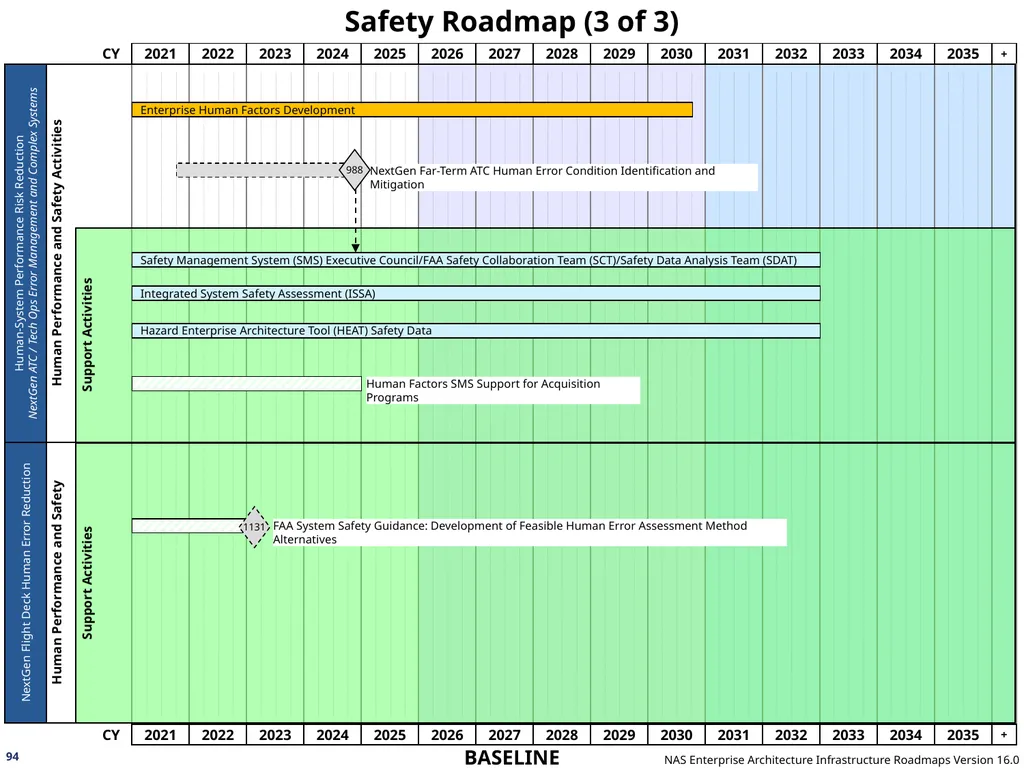
94
Safety Roadmap (3 of 3) 94<br>
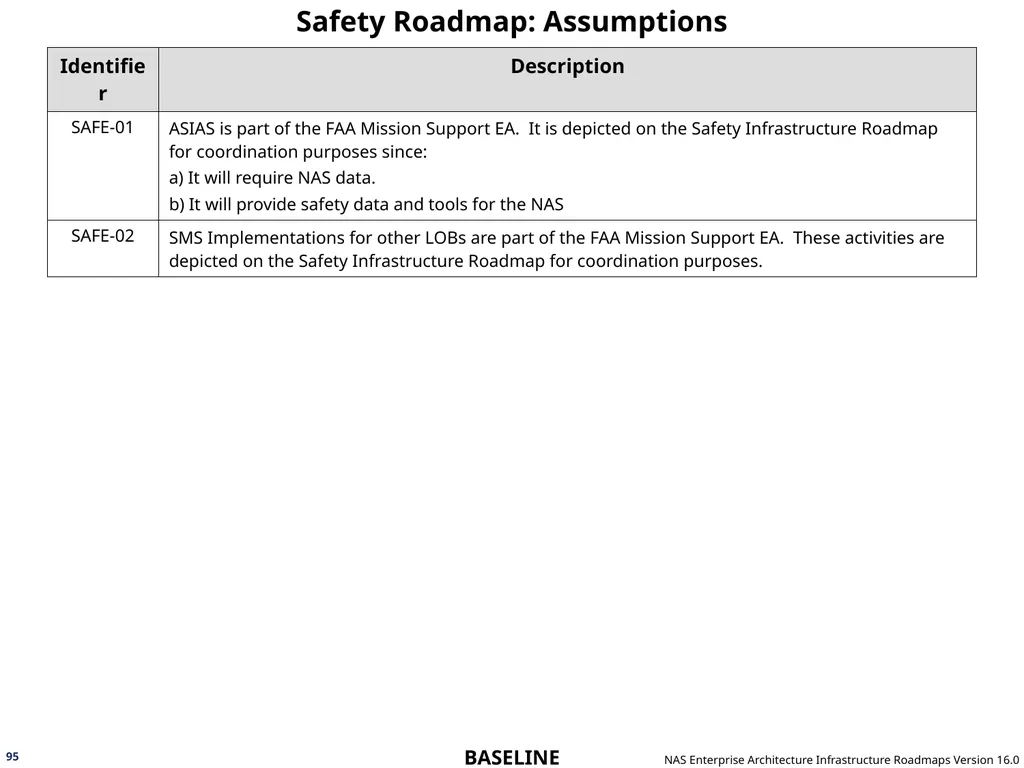
95
Safety Roadmap: Assumptions 95<br>
96
Safety Roadmap: Decision Points (1 of 1) 96<br>
97
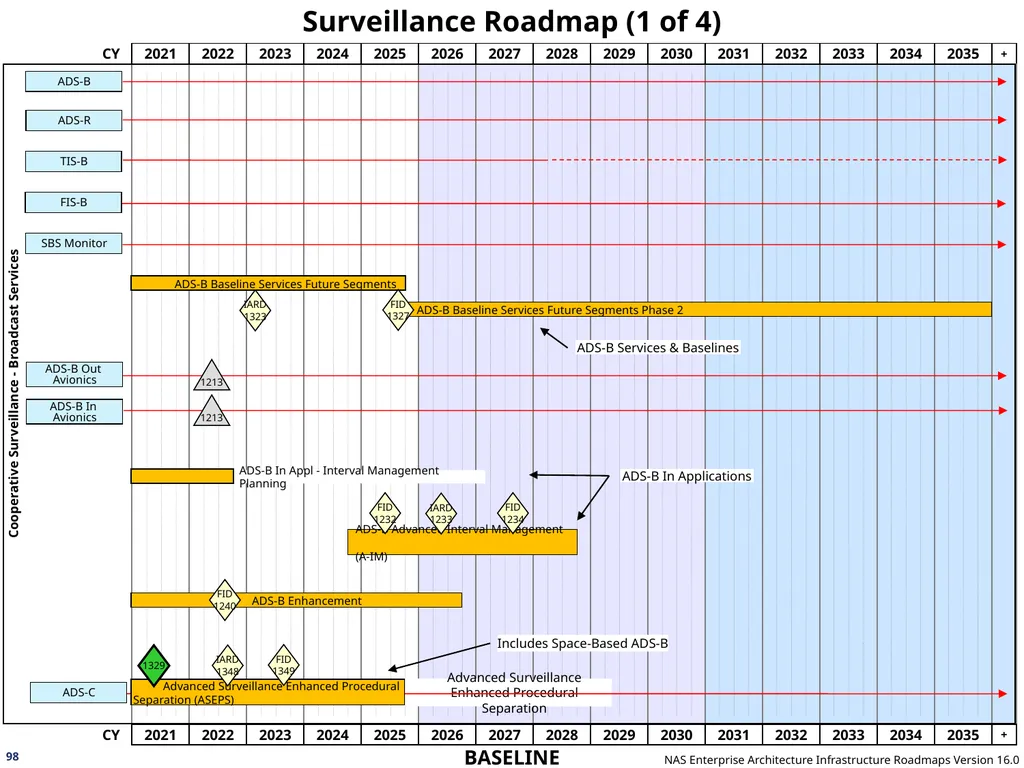
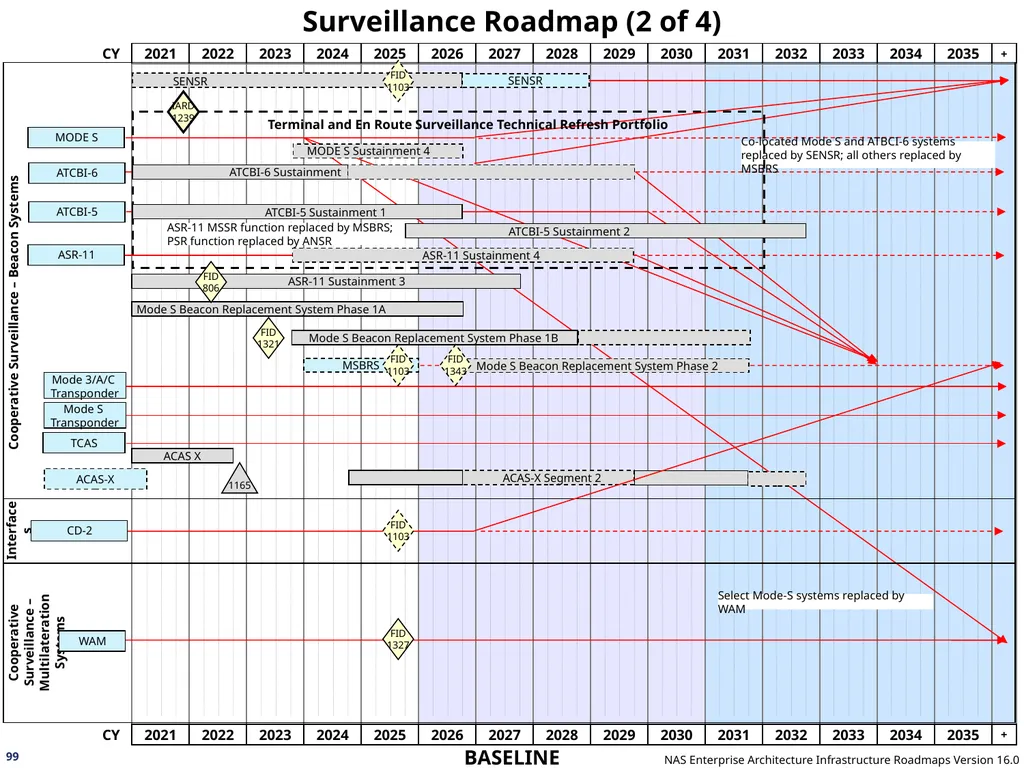
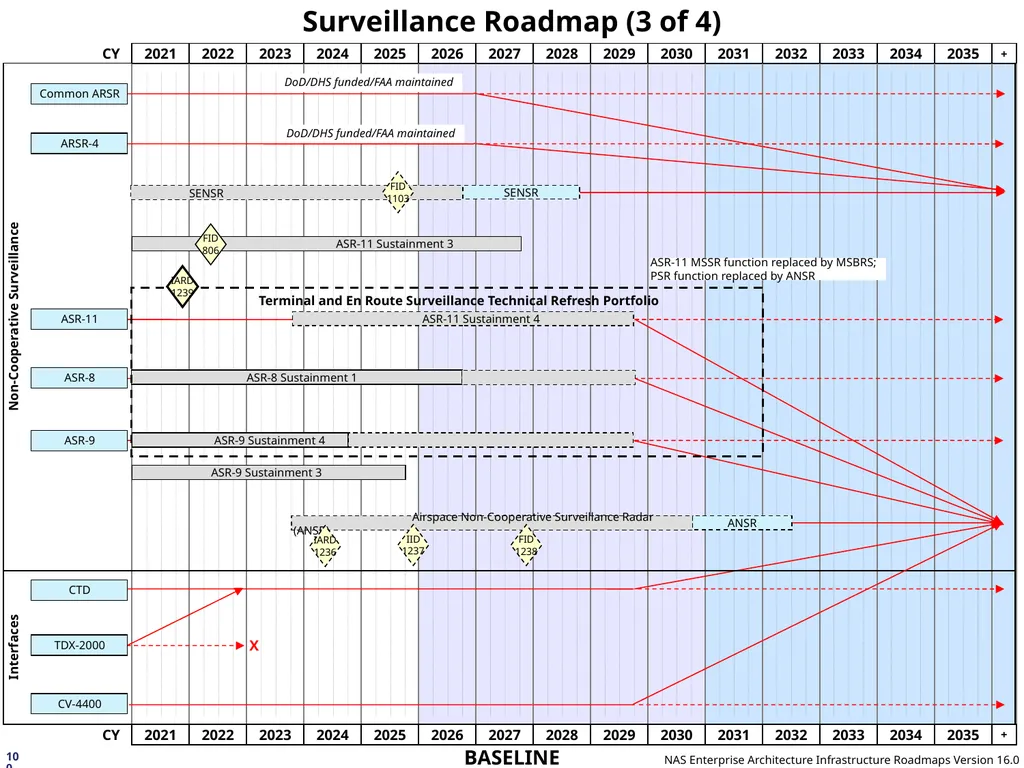
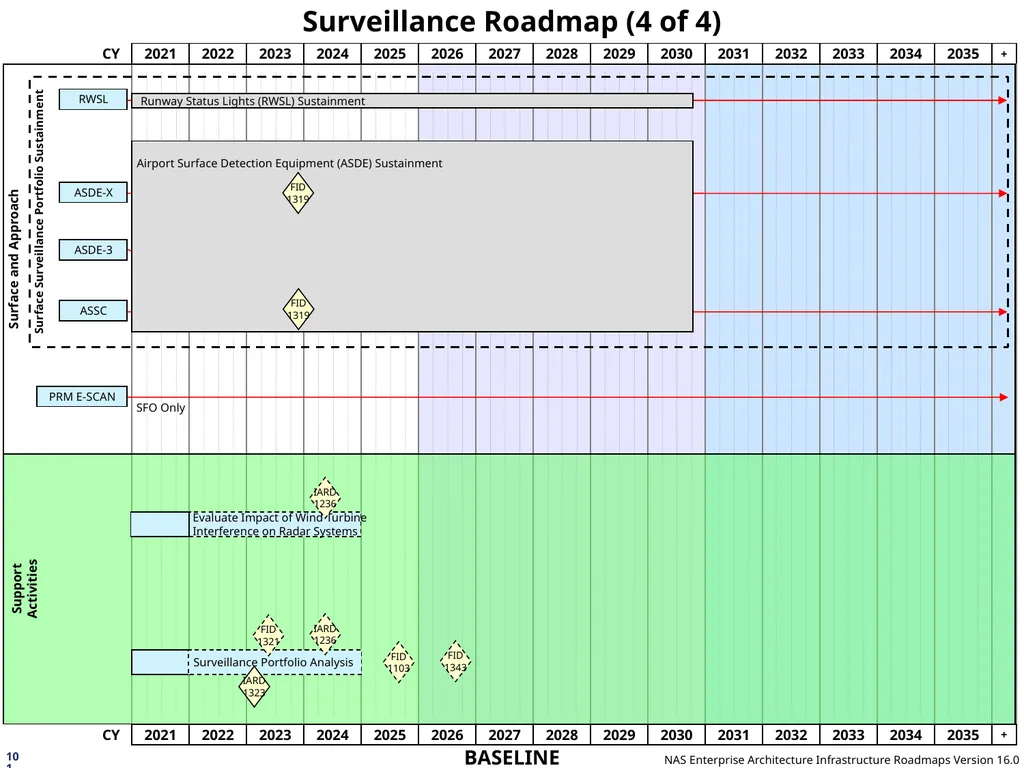
Surveillance Objective: The Surveillance roadmap depicts the sustainment of legacy surveillance systems and the evolution towards the NextGen environment.
For more information, please contact James Baird (james.baird@faa.gov). 97<br>
For more information, please contact James Baird (james.baird@faa.gov). 97<br>
98
Surveillance Roadmap (1 of 4) 98<br>
99
Surveillance Roadmap (2 of 4) 99<br>
100
Surveillance Roadmap (3 of 4) 100<br>
101
Surveillance Roadmap (4 of 4) 101<br>
102
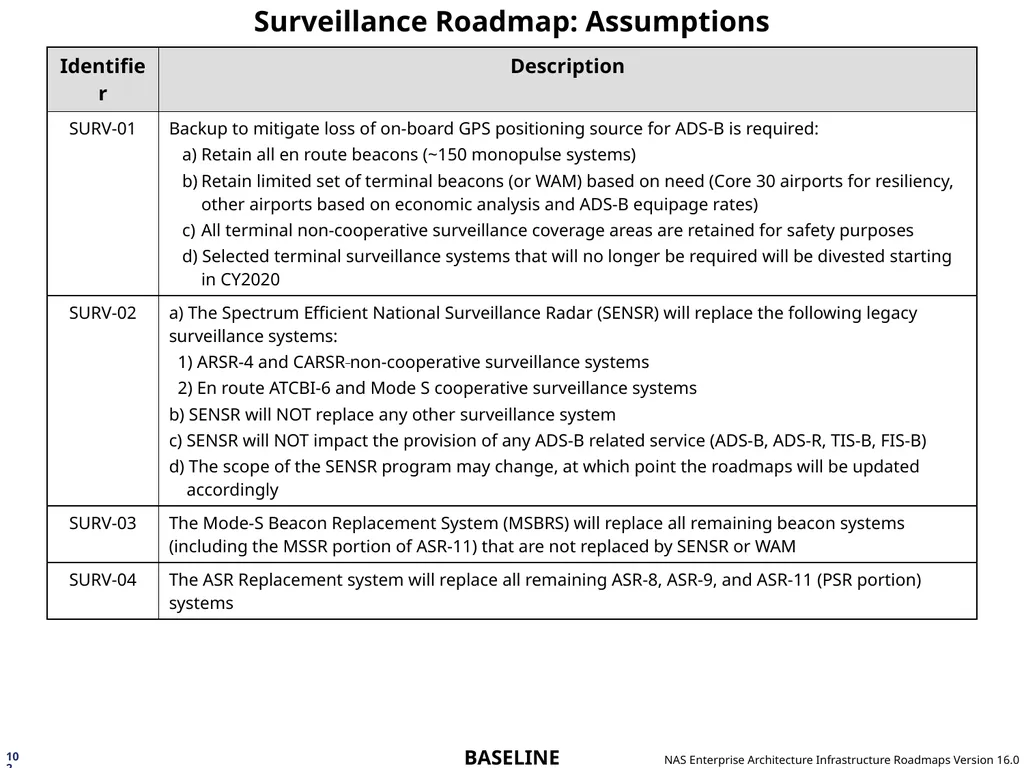
Surveillance Roadmap: Assumptions 102<br>
103
Surveillance Roadmap: Decision Points (1 of 2) 103<br>
104
Surveillance Roadmap: Decision Points (1 of 2) 104<br>
105
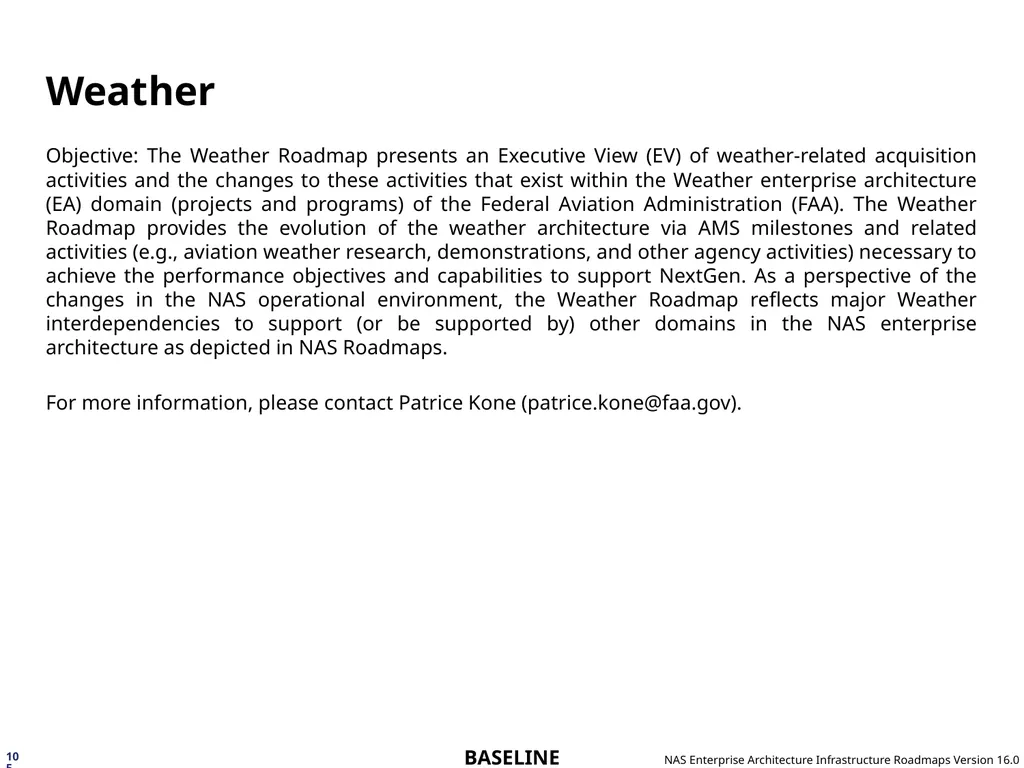
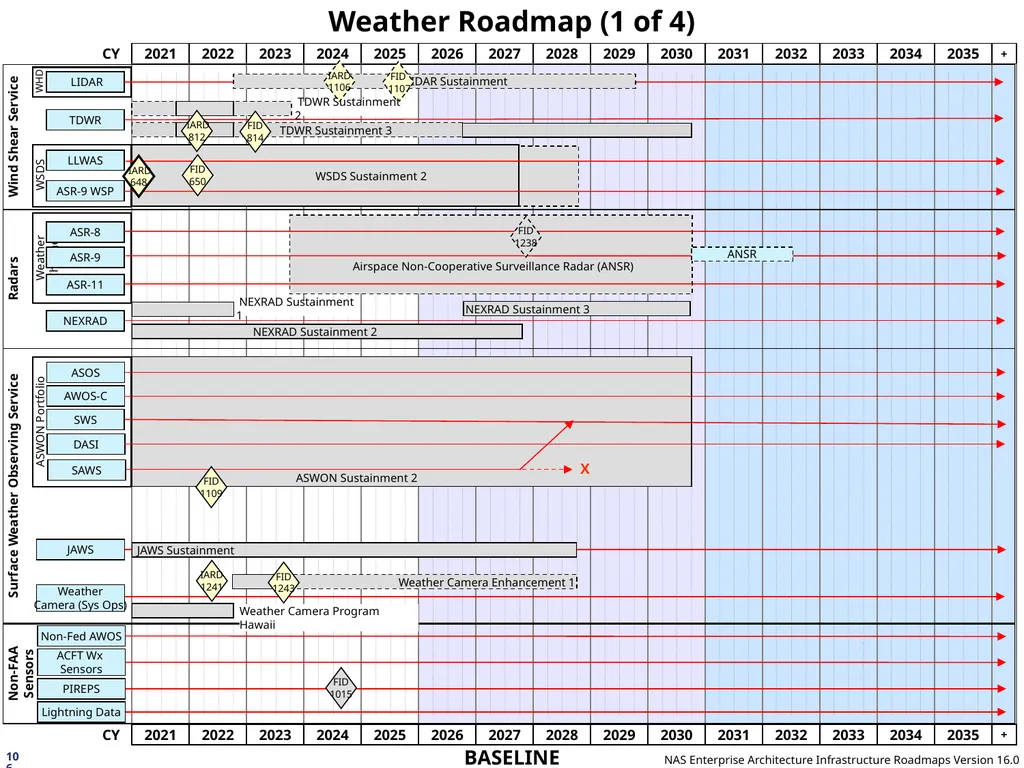
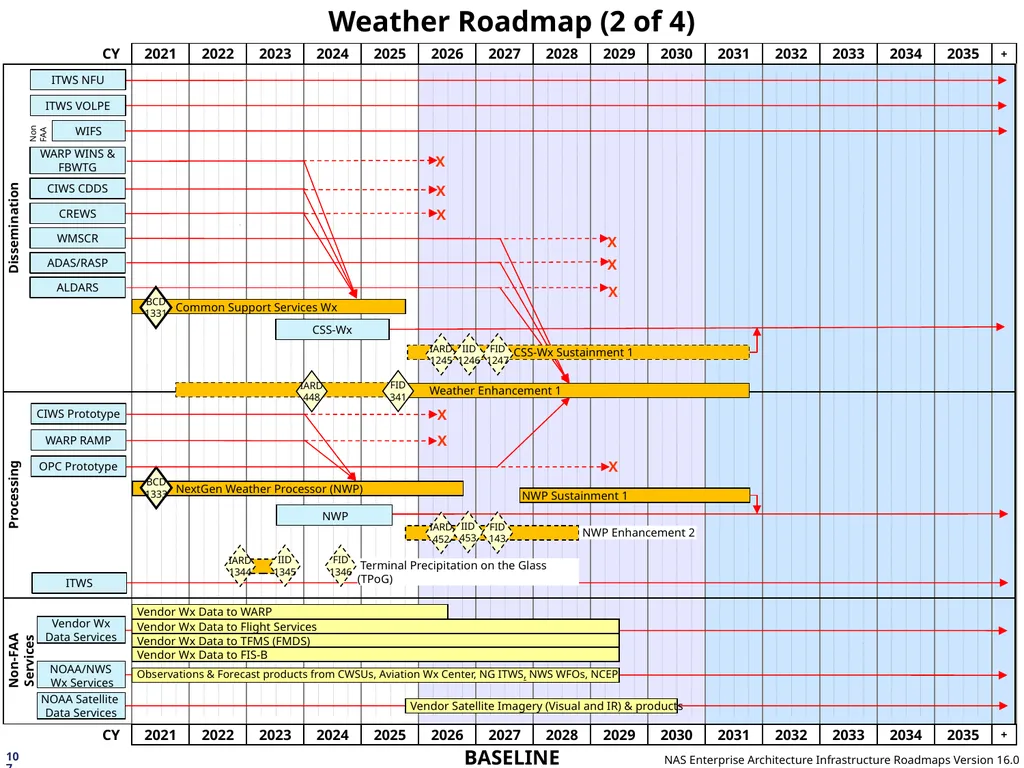
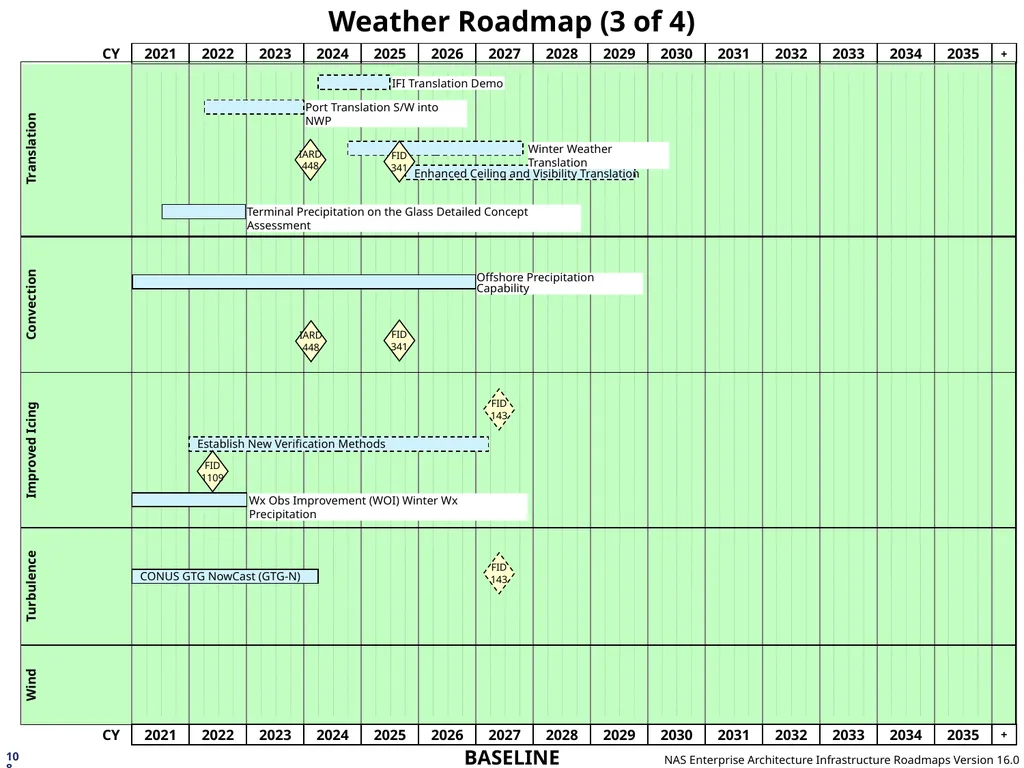
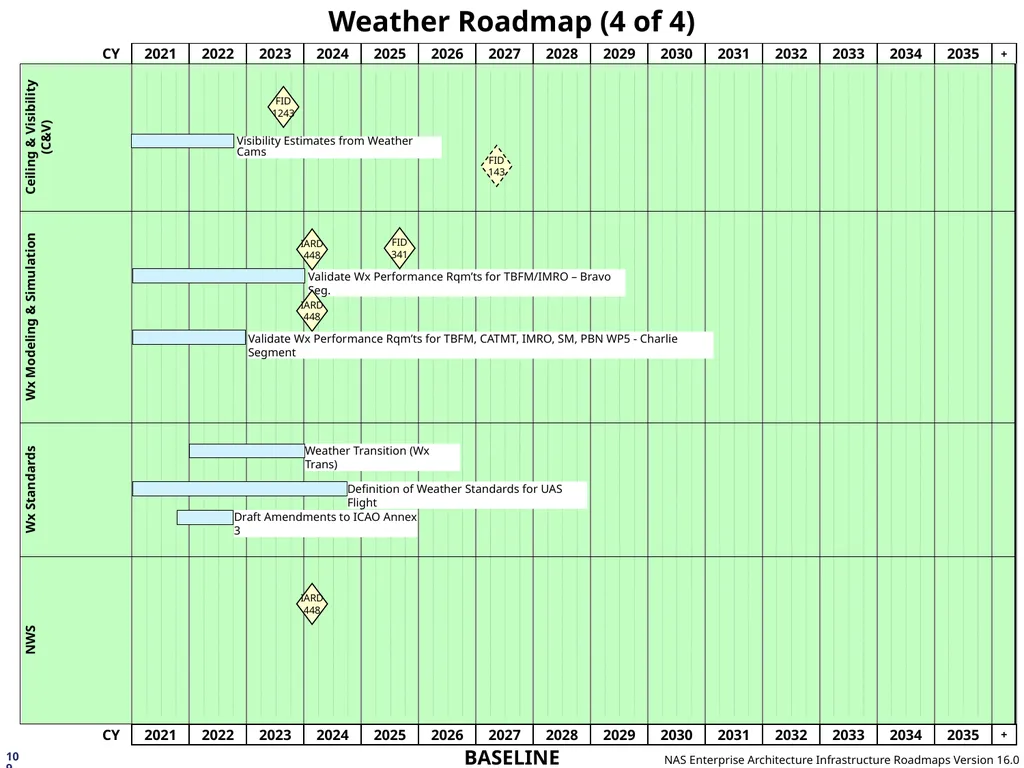
Weather Objective: The Weather Roadmap presents an Executive View (EV) of weather-related acquisition activities and the changes to these activities that exist within the Weather enterprise architecture (EA) domain (projects and programs) of the Federal Aviation Administration (FAA). The Weather Roadmap provides the evolution of the weather architecture via AMS milestones and related activities (e.g., aviation weather research, demonstrations, and other agency activities) necessary to achieve the performance objectives and capabilities to support NextGen. As a perspective of the changes in the NAS operational environment, the Weather Roadmap reflects major Weather interdependencies to support (or be supported by) other domains in the NAS enterprise architecture as depicted in NAS Roadmaps.
For more information, please contact Patrice Kone (patrice.kone@faa.gov). 105<br>
For more information, please contact Patrice Kone (patrice.kone@faa.gov). 105<br>
106
Weather Roadmap (1 of 4) 106<br>
107
Weather Roadmap (2 of 4) 107 IID
1345<br>
1345<br>
108
Weather Roadmap (3 of 4) 108 Winter Weather Translation<br>
109
Weather Roadmap (4 of 4) 109<br>
110
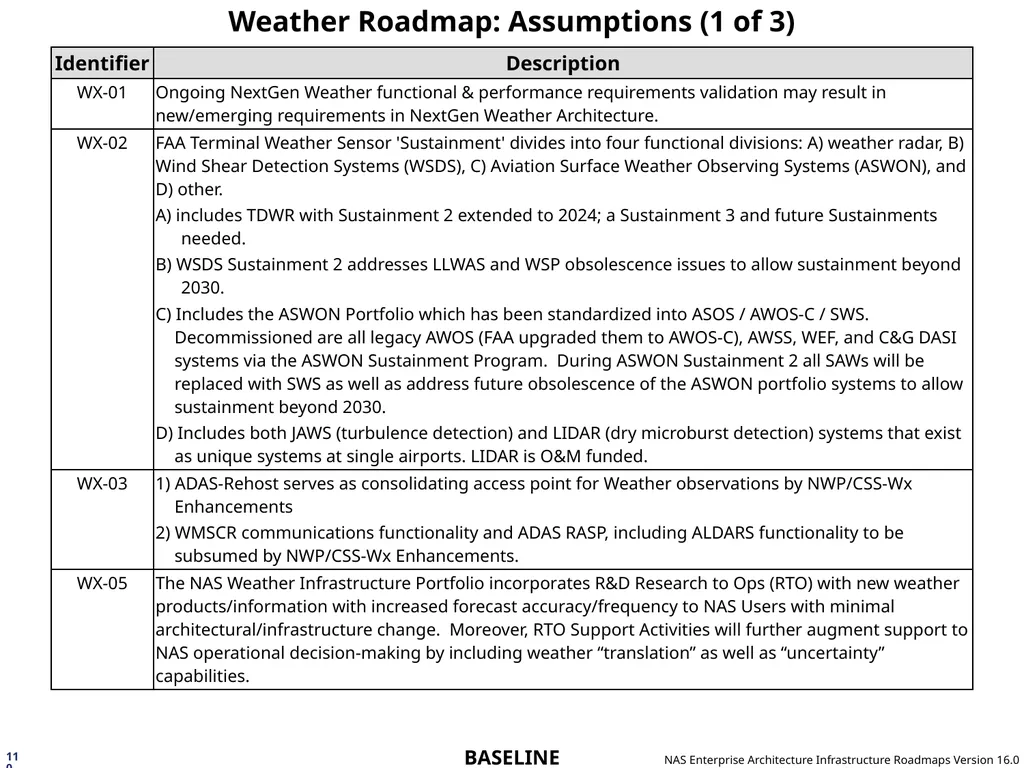
Weather Roadmap: Assumptions (1 of 3) 110<br>
111
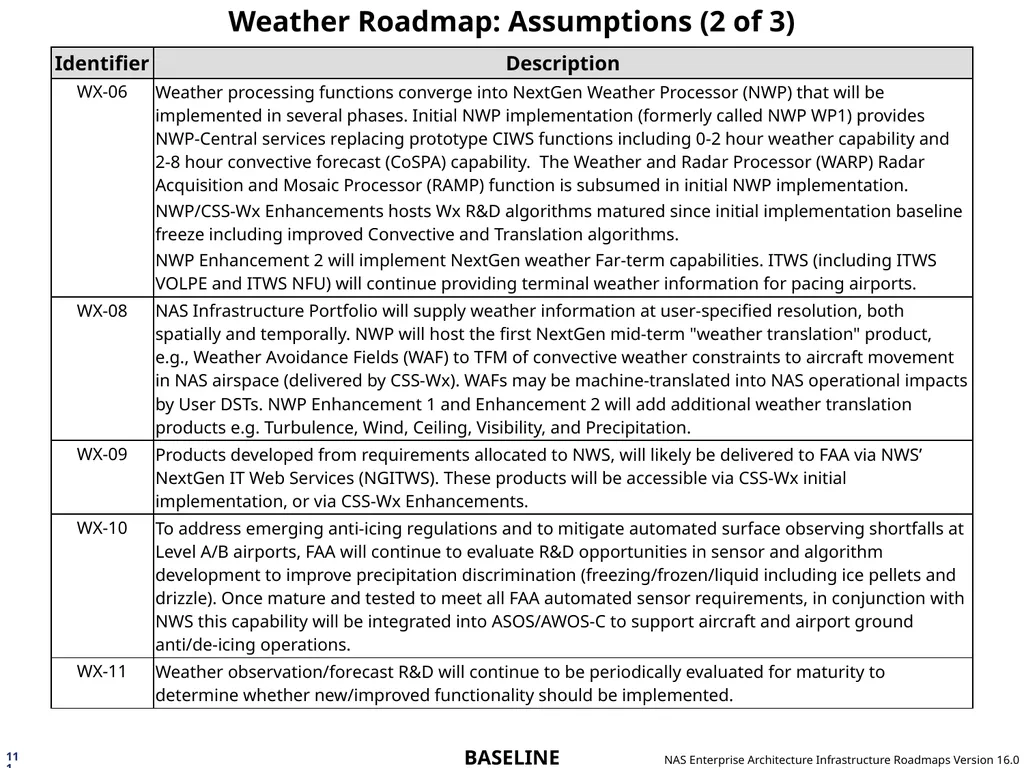
Weather Roadmap: Assumptions (2 of 3) 111<br>
112
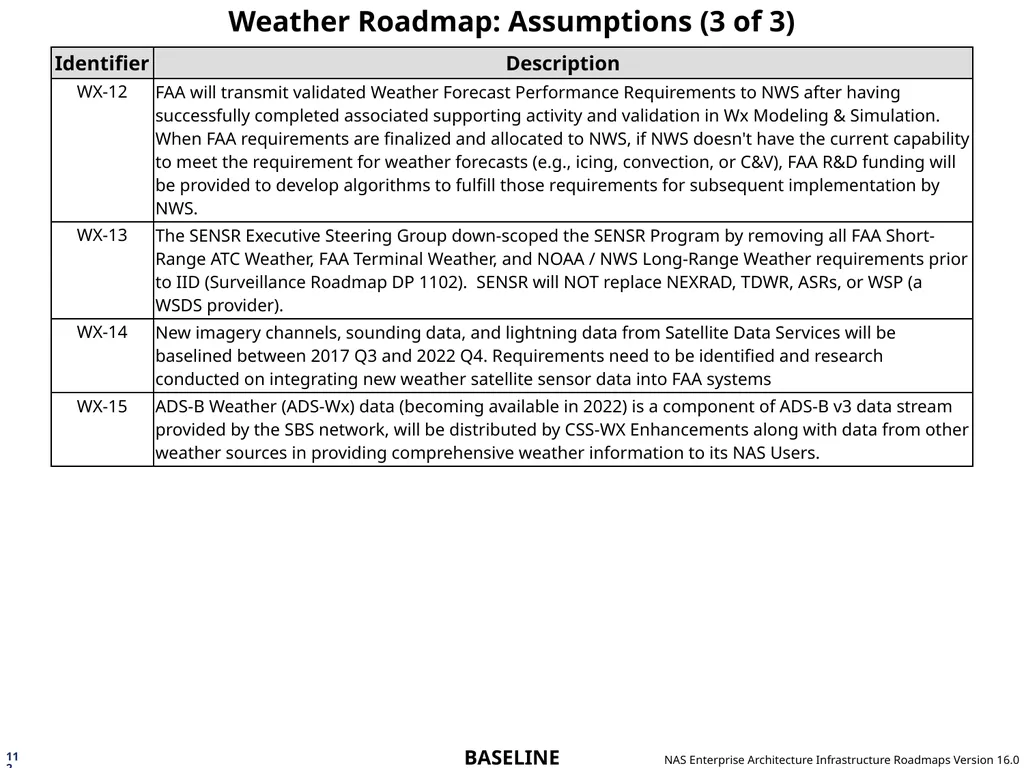
Weather Roadmap: Assumptions (3 of 3) 112<br>
113
Weather Roadmap: Decision Points (1 of 2) 113<br>
114
Weather Roadmap: Decision Points (2 of 2) 114<br>
115
Appendix A
Acronym List 115<br>
116
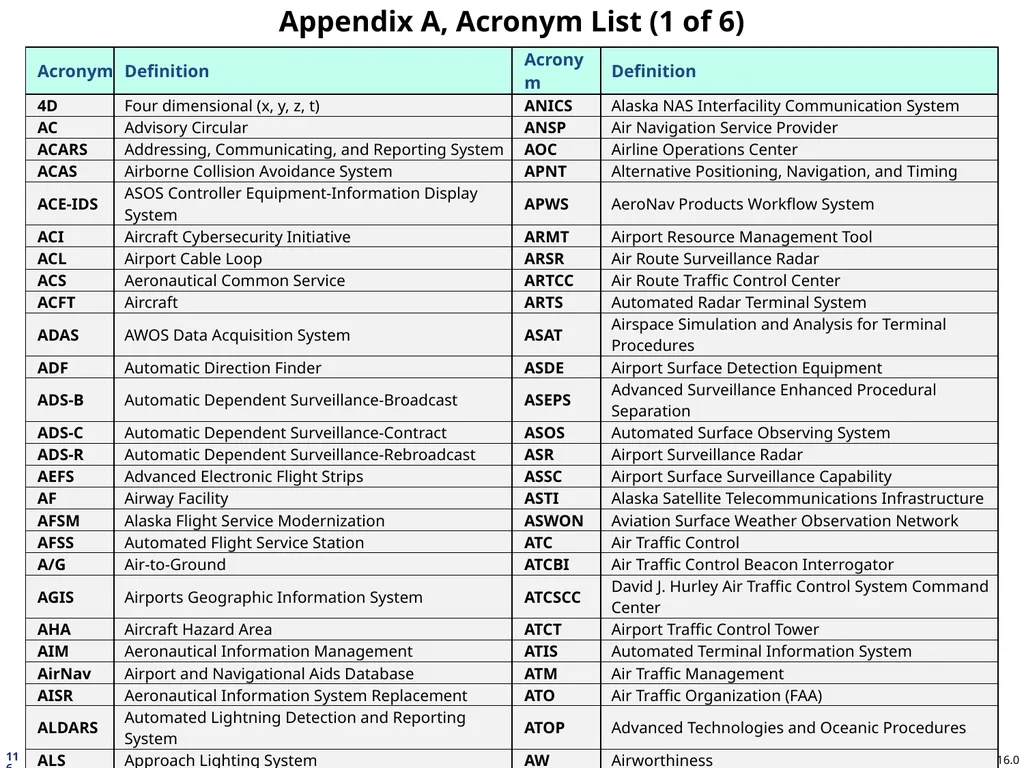
Appendix A, Acronym List (1 of 6) 116<br>
117
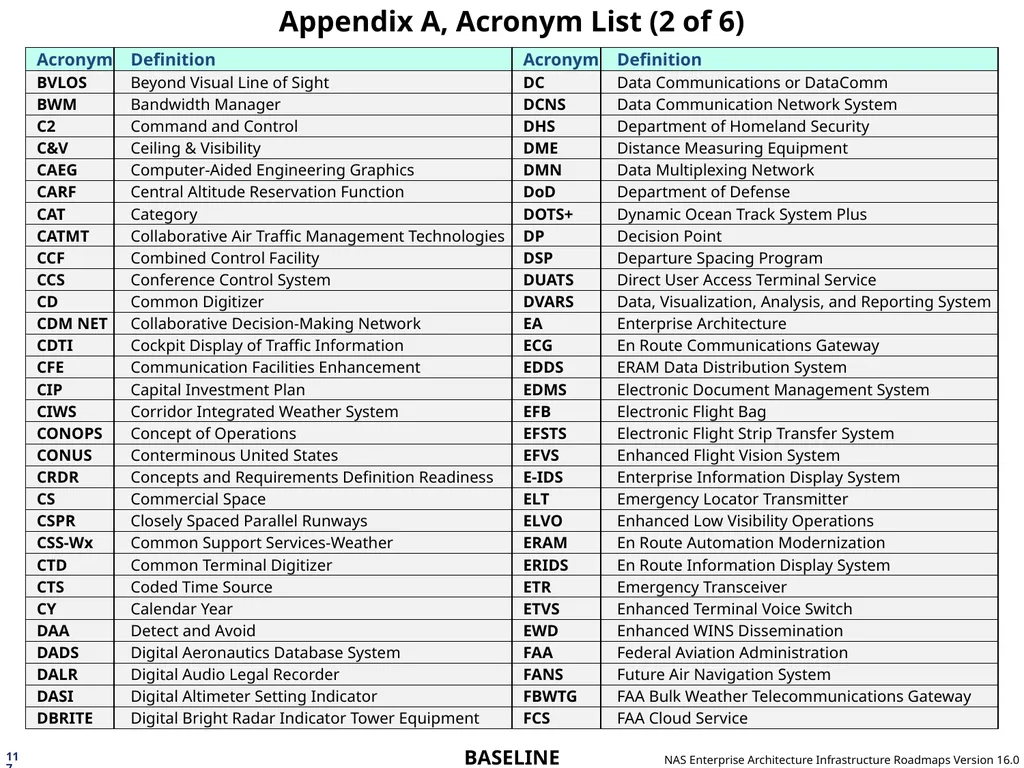
Appendix A, Acronym List (2 of 6) 117<br>
118
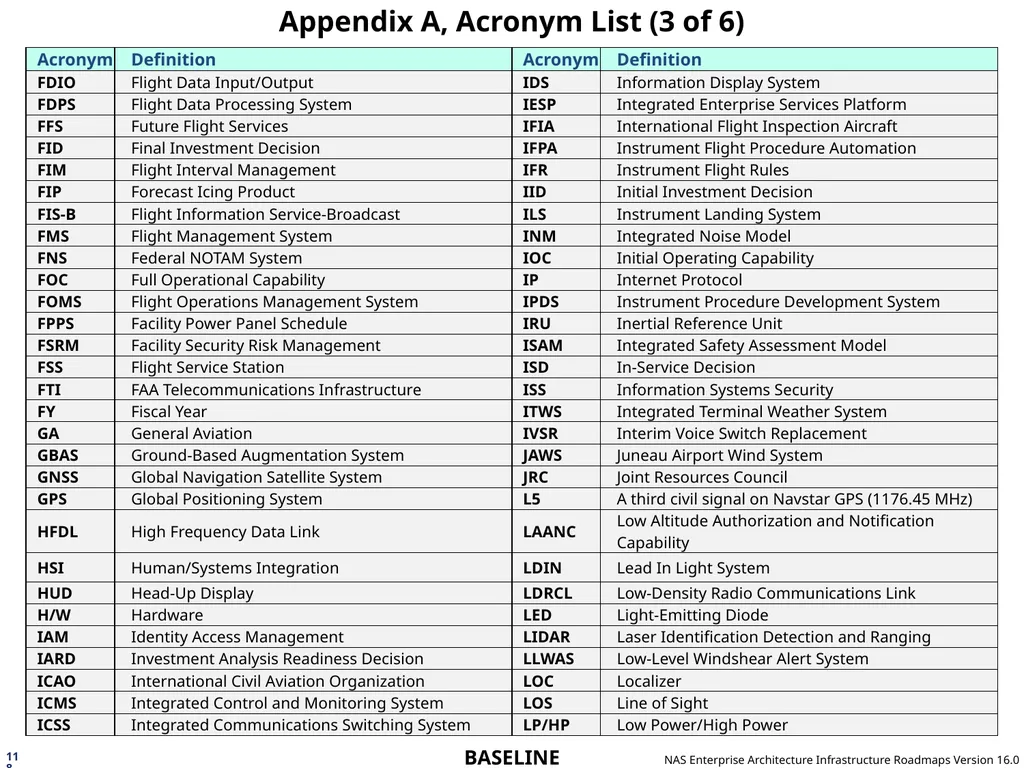
Appendix A, Acronym List (3 of 6) 118<br>
119
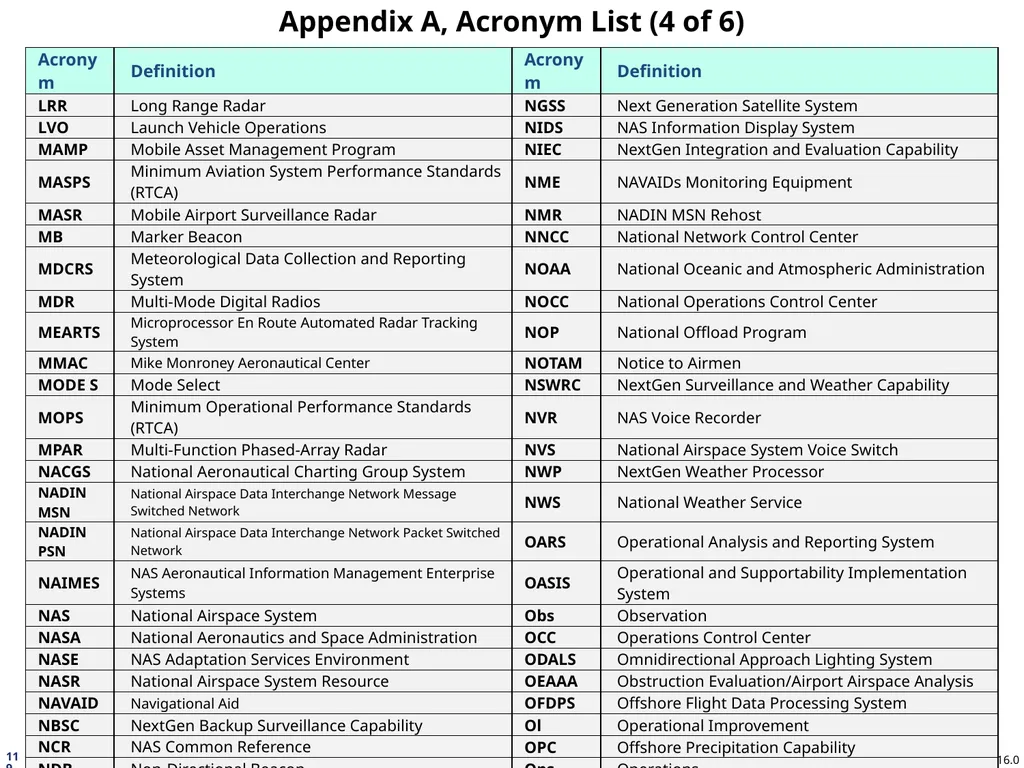
Appendix A, Acronym List (4 of 6) 119<br>
120
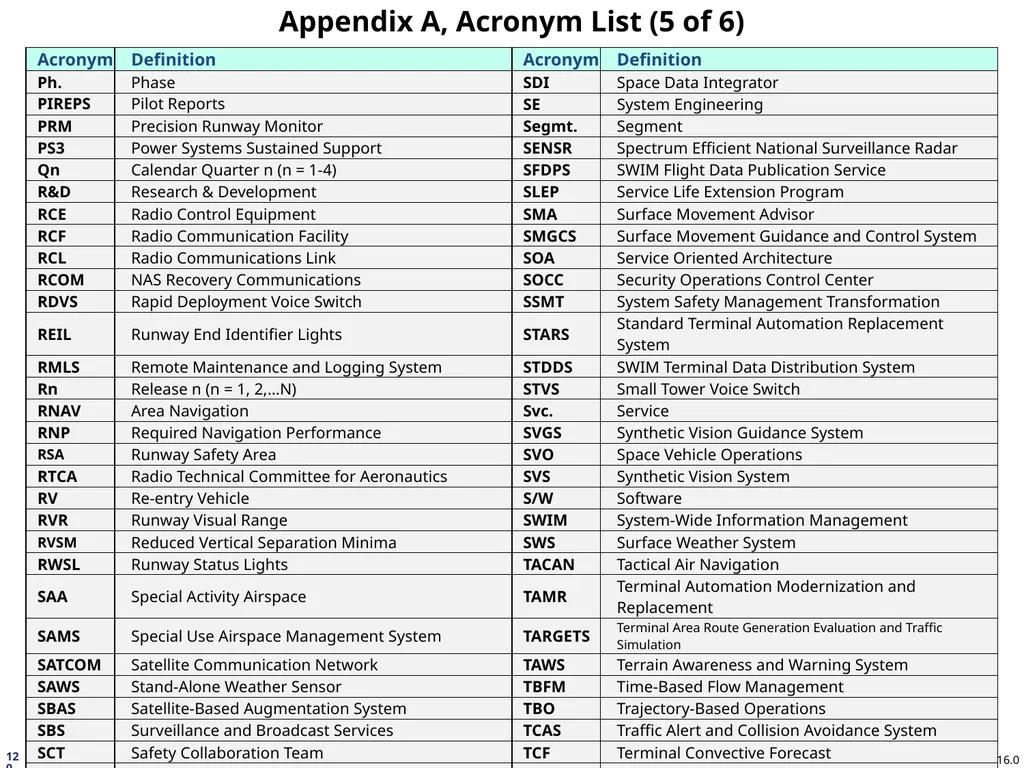
Appendix A, Acronym List (5 of 6) 120<br>
121
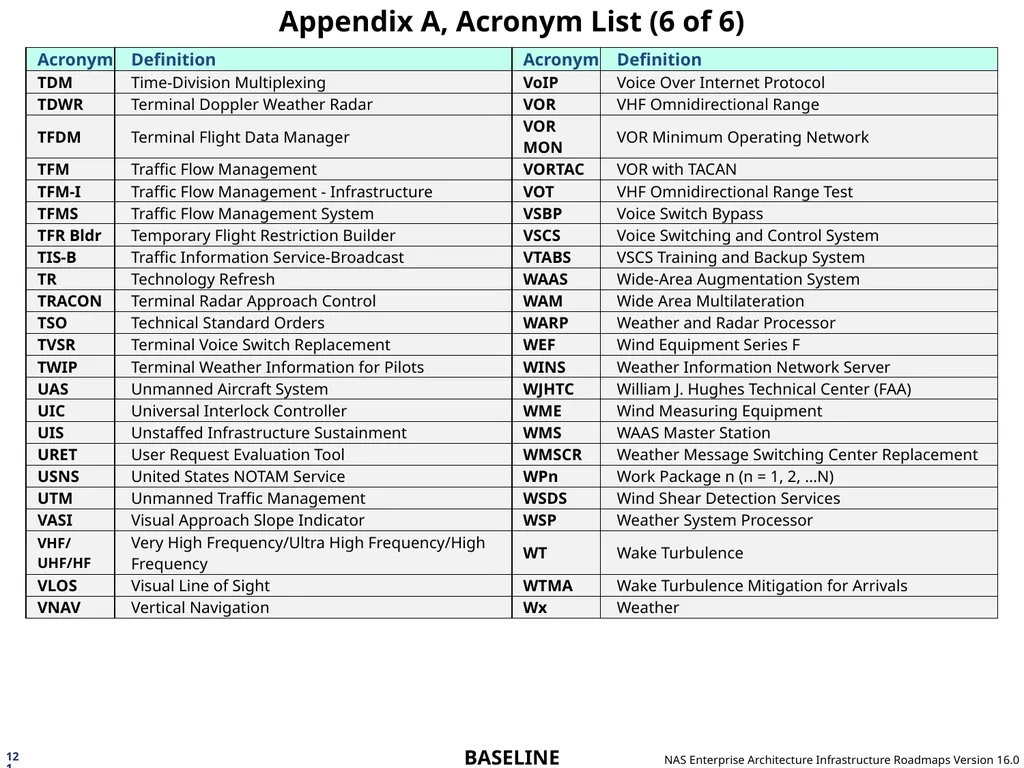
Appendix A, Acronym List (6 of 6) 121<br>
122
Appendix B
Change History 122<br>
123
Aircraft Synchronized elements with other Roadmaps
Updated Support Activities based on RTCA milestones and schedules 123<br>
Updated Support Activities based on RTCA milestones and schedules 123<br>
124
Airport Synchronized elements with other Roadmaps
Updated to reflect the most recent CIP 124<br>
Updated to reflect the most recent CIP 124<br>
125
Airspace & Procedures Added “Reductions in Minimum Radar Separations (MRS)” Support Activity from PLA Mapping and removed completed Support Activities
Aligned secondary elements to primary roadmaps 125<br>
Aligned secondary elements to primary roadmaps 125<br>
126
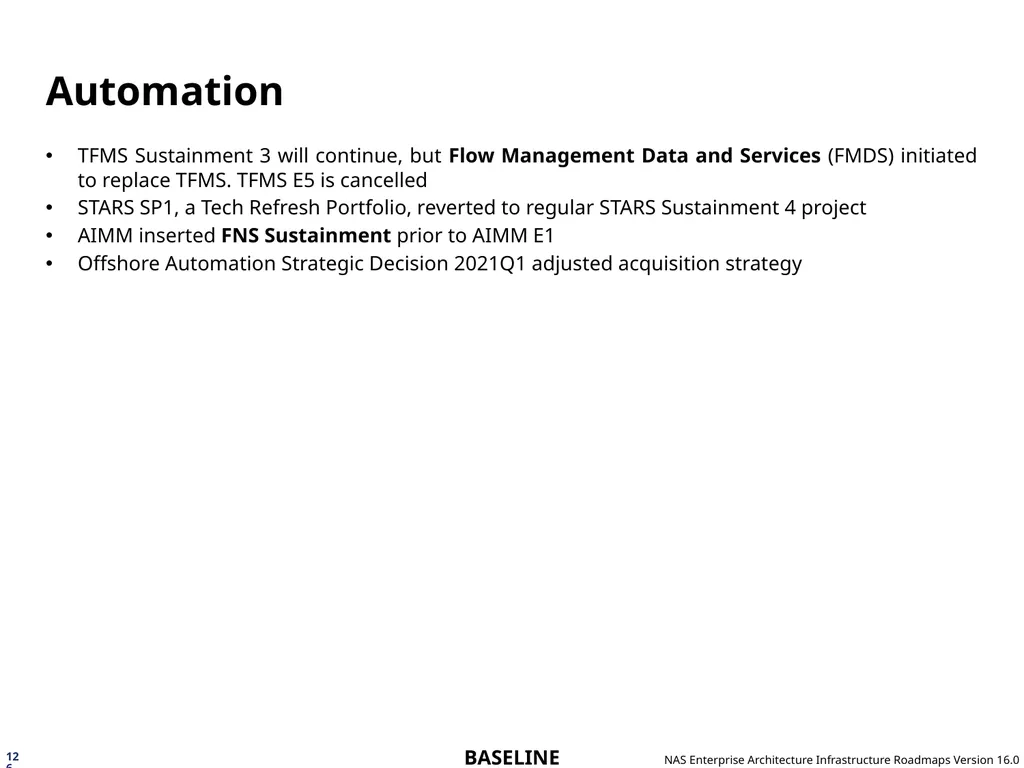
Automation TFMS Sustainment 3 will continue, but Flow Management Data and Services (FMDS) initiated to replace TFMS. TFMS E5 is cancelled
STARS SP1, a Tech Refresh Portfolio, reverted to regular STARS Sustainment 4 project
AIMM inserted FNS Sustainment prior to AIMM E1
Offshore Automation Strategic Decision 2021Q1 adjusted acquisition strategy 126<br>
STARS SP1, a Tech Refresh Portfolio, reverted to regular STARS Sustainment 4 project
AIMM inserted FNS Sustainment prior to AIMM E1
Offshore Automation Strategic Decision 2021Q1 adjusted acquisition strategy 126<br>
127
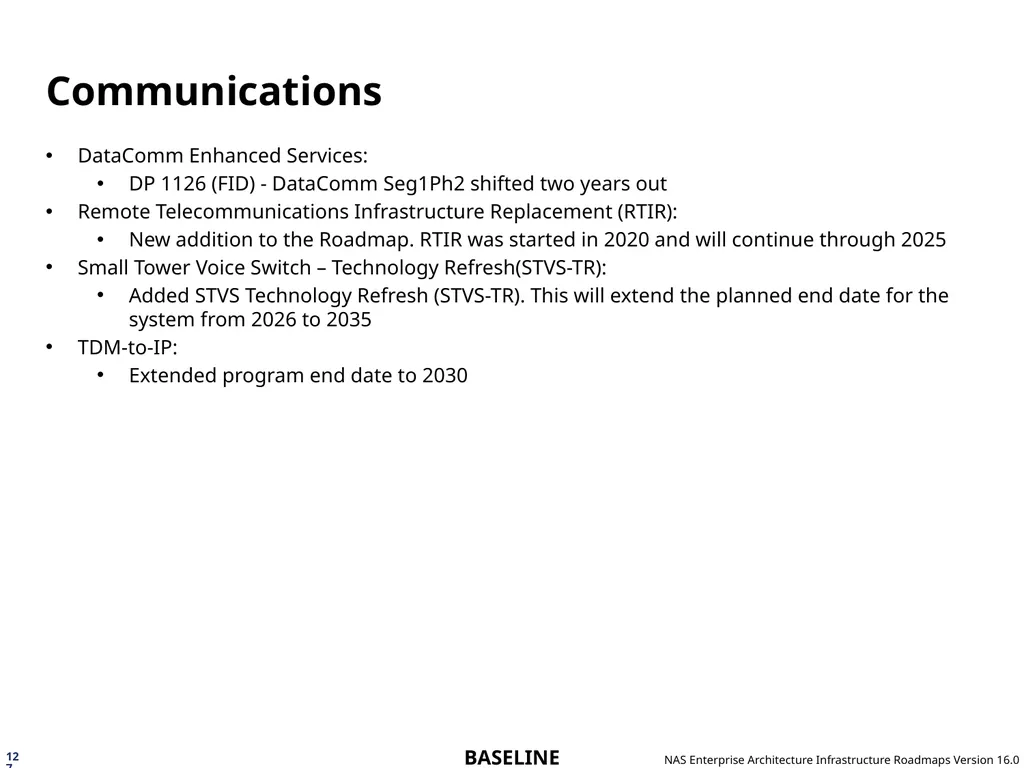
Communications DataComm Enhanced Services:
DP 1126 (FID) - DataComm Seg1Ph2 shifted two years out
Remote Telecommunications Infrastructure Replacement (RTIR):
New addition to the Roadmap. RTIR was started in 2020 and will continue through 2025
Small Tower Voice Switch – Technology Refresh(STVS-TR):
Added STVS Technology Refresh (STVS-TR). This will extend the planned end date for the system from 2026 to 2035
TDM-to-IP:
Extended program end date to 2030 127<br>
DP 1126 (FID) - DataComm Seg1Ph2 shifted two years out
Remote Telecommunications Infrastructure Replacement (RTIR):
New addition to the Roadmap. RTIR was started in 2020 and will continue through 2025
Small Tower Voice Switch – Technology Refresh(STVS-TR):
Added STVS Technology Refresh (STVS-TR). This will extend the planned end date for the system from 2026 to 2035
TDM-to-IP:
Extended program end date to 2030 127<br>
128
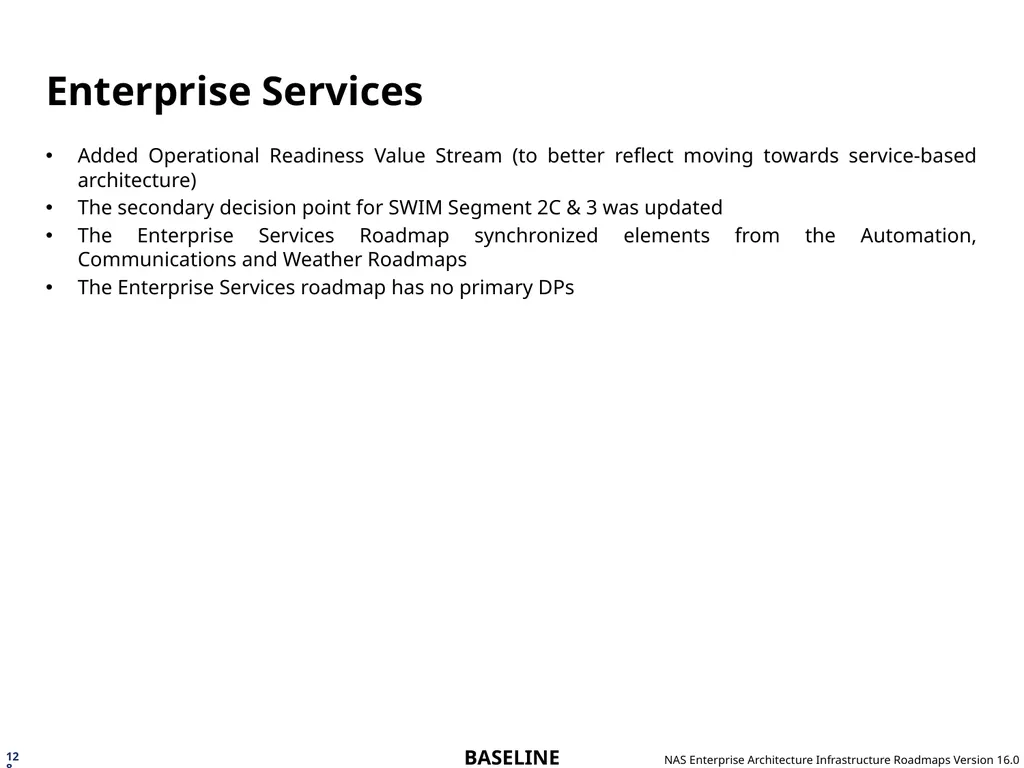
Enterprise Services Added Operational Readiness Value Stream (to better reflect moving towards service-based architecture)
The secondary decision point for SWIM Segment 2C & 3 was updated
The Enterprise Services Roadmap synchronized elements from the Automation, Communications and Weather Roadmaps
The Enterprise Services roadmap has no primary DPs 128<br>
The secondary decision point for SWIM Segment 2C & 3 was updated
The Enterprise Services Roadmap synchronized elements from the Automation, Communications and Weather Roadmaps
The Enterprise Services roadmap has no primary DPs 128<br>
129
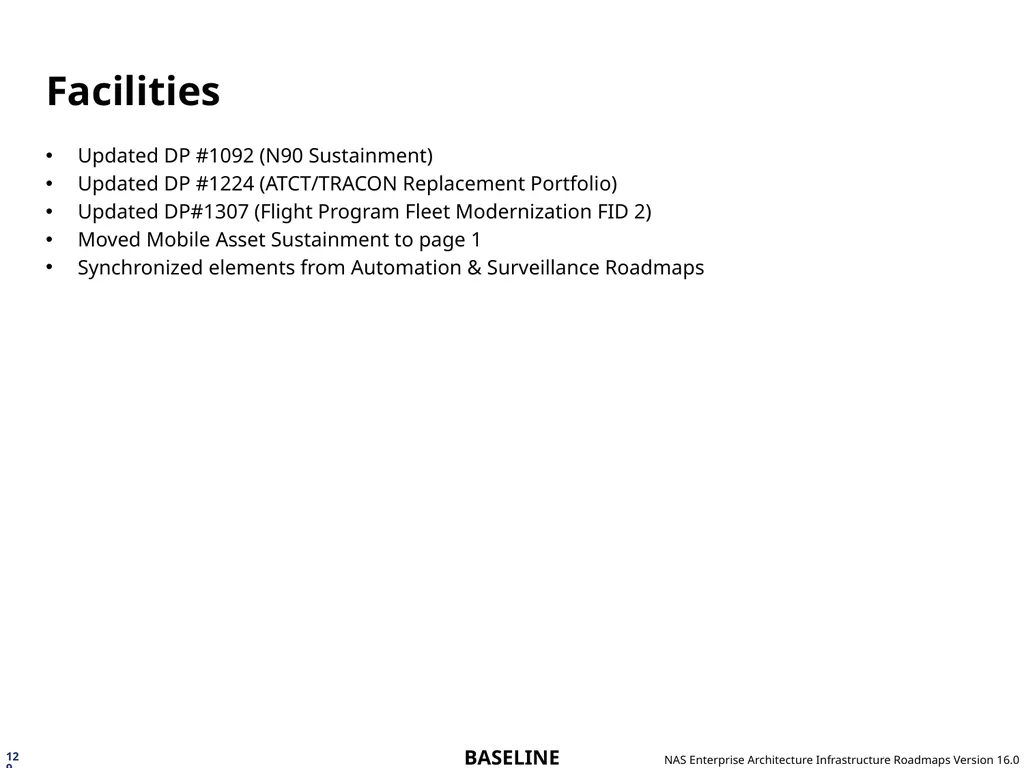
Facilities Updated DP #1092 (N90 Sustainment)
Updated DP #1224 (ATCT/TRACON Replacement Portfolio)
Updated DP#1307 (Flight Program Fleet Modernization FID 2)
Moved Mobile Asset Sustainment to page 1
Synchronized elements from Automation & Surveillance Roadmaps 129<br>
Updated DP #1224 (ATCT/TRACON Replacement Portfolio)
Updated DP#1307 (Flight Program Fleet Modernization FID 2)
Moved Mobile Asset Sustainment to page 1
Synchronized elements from Automation & Surveillance Roadmaps 129<br>
130
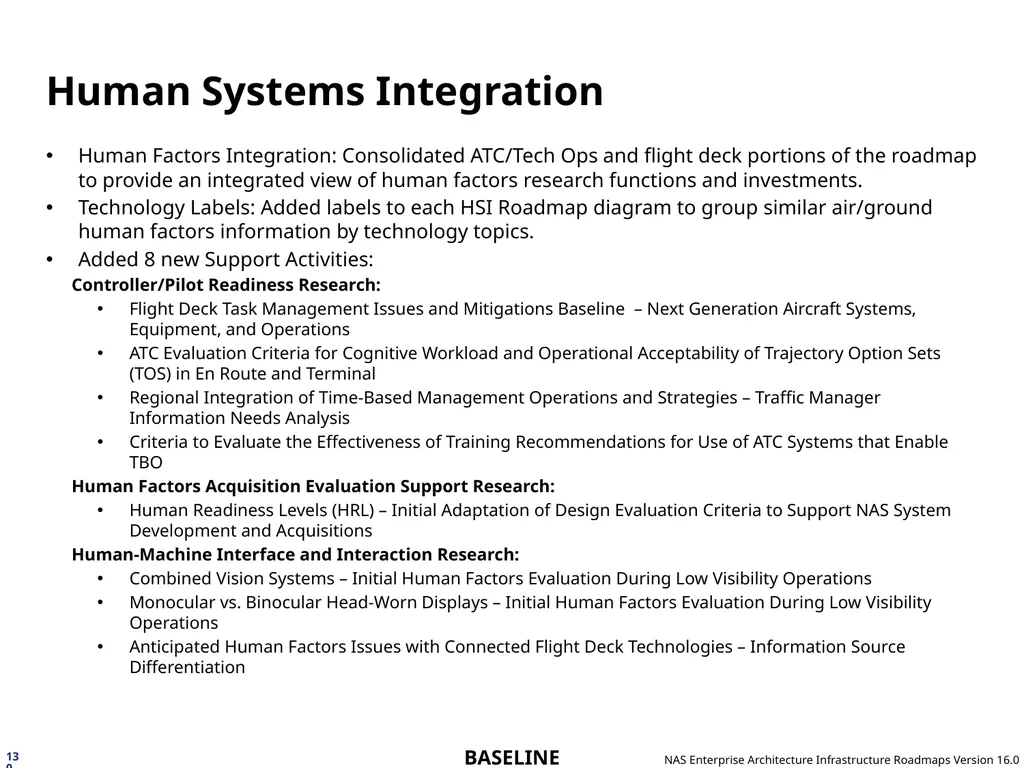
Human Systems Integration Human Factors Integration: Consolidated ATC/Tech Ops and flight deck portions of the roadmap to provide an integrated view of human factors research functions and investments.
Technology Labels: Added labels to each HSI Roadmap diagram to group similar air/ground human factors information by technology topics.
Added 8 new Support Activities:
Controller/Pilot Readiness Research:
Flight Deck Task Management Issues and Mitigations Baseline – Next Generation Aircraft Systems, Equipment, and Operations
ATC Evaluation Criteria for Cognitive Workload and Operational Acceptability of Trajectory Option Sets (TOS) in En Route and Terminal
Regional Integration of Time-Based Management Operations and Strategies – Traffic Manager Information Needs Analysis
Criteria to Evaluate the Effectiveness of Training Recommendations for Use of ATC Systems that Enable TBO
Human Factors Acquisition Evaluation Support Research:
Human Readiness Levels (HRL) – Initial Adaptation of Design Evaluation Criteria to Support NAS System Development and Acquisitions
Human-Machine Interface and Interaction Research:
Combined Vision Systems – Initial Human Factors Evaluation During Low Visibility Operations
Monocular vs. Binocular Head-Worn Displays – Initial Human Factors Evaluation During Low Visibility Operations
Anticipated Human Factors Issues with Connected Flight Deck Technologies – Information Source Differentiation 130<br>
Technology Labels: Added labels to each HSI Roadmap diagram to group similar air/ground human factors information by technology topics.
Added 8 new Support Activities:
Controller/Pilot Readiness Research:
Flight Deck Task Management Issues and Mitigations Baseline – Next Generation Aircraft Systems, Equipment, and Operations
ATC Evaluation Criteria for Cognitive Workload and Operational Acceptability of Trajectory Option Sets (TOS) in En Route and Terminal
Regional Integration of Time-Based Management Operations and Strategies – Traffic Manager Information Needs Analysis
Criteria to Evaluate the Effectiveness of Training Recommendations for Use of ATC Systems that Enable TBO
Human Factors Acquisition Evaluation Support Research:
Human Readiness Levels (HRL) – Initial Adaptation of Design Evaluation Criteria to Support NAS System Development and Acquisitions
Human-Machine Interface and Interaction Research:
Combined Vision Systems – Initial Human Factors Evaluation During Low Visibility Operations
Monocular vs. Binocular Head-Worn Displays – Initial Human Factors Evaluation During Low Visibility Operations
Anticipated Human Factors Issues with Connected Flight Deck Technologies – Information Source Differentiation 130<br>
131
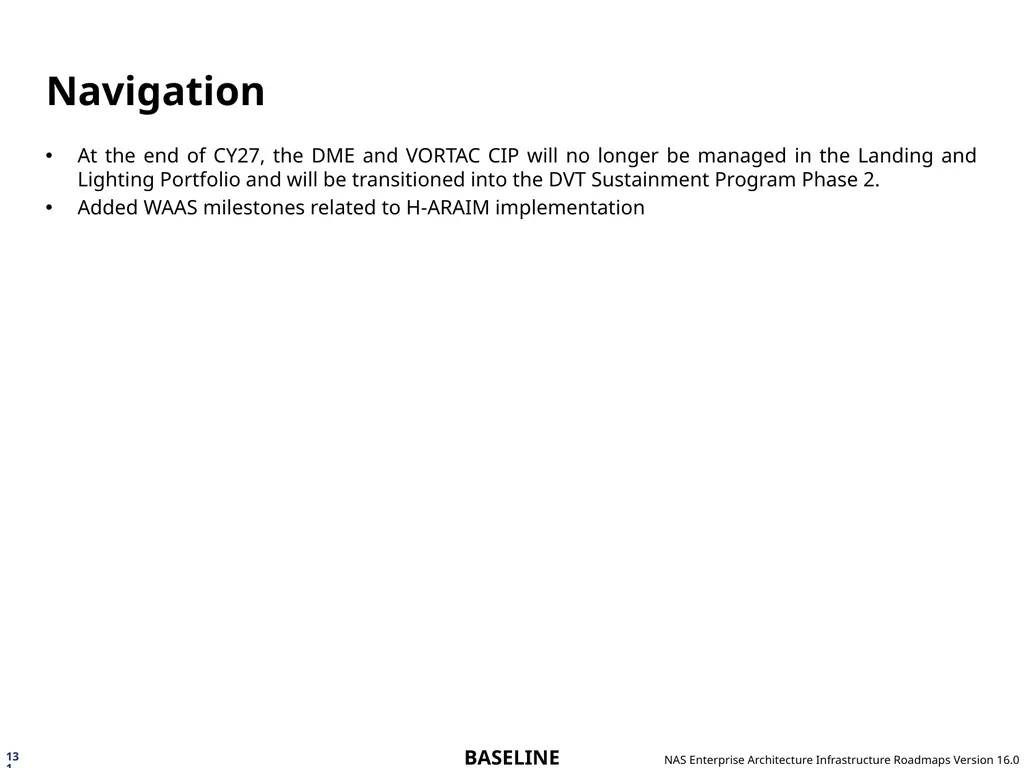
Navigation At the end of CY27, the DME and VORTAC CIP will no longer be managed in the Landing and Lighting Portfolio and will be transitioned into the DVT Sustainment Program Phase 2.
Added WAAS milestones related to H-ARAIM implementation 131<br>
Added WAAS milestones related to H-ARAIM implementation 131<br>
132
New Entrants – Commercial Space Added Support Activity “Space Integration Capabilities Space-Operator Generated Hazard Volumes Concept Demonstration/Prototyping”
Updated SDI P2 to NSIC E1 132<br>
Updated SDI P2 to NSIC E1 132<br>
133
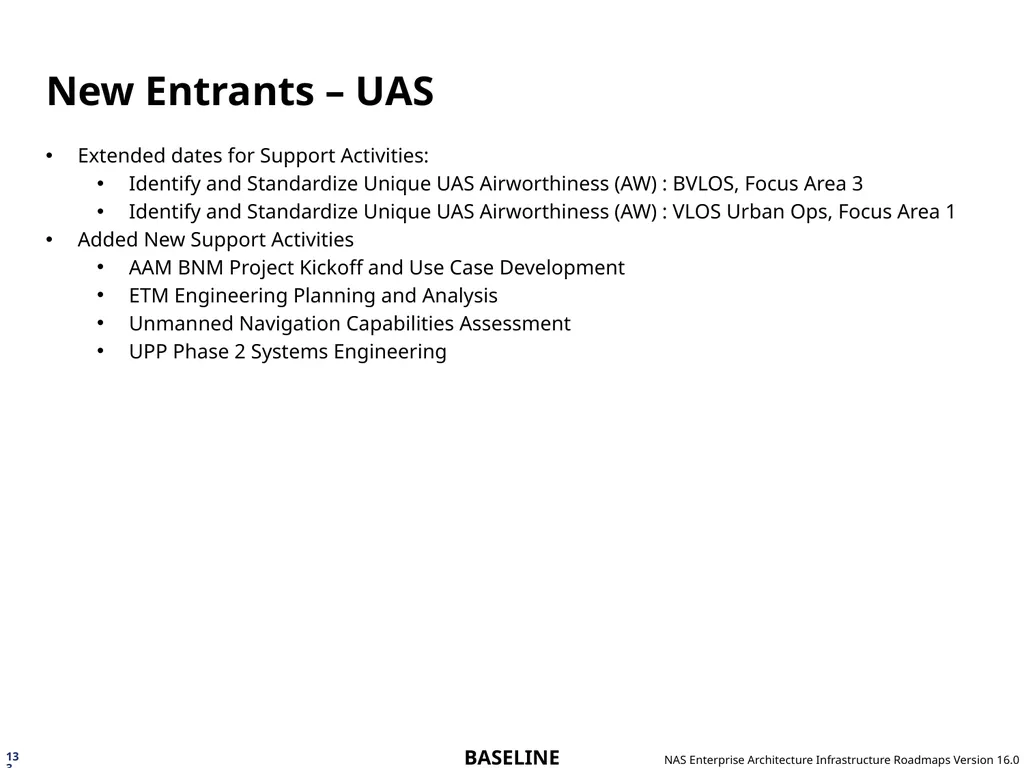
New Entrants – UAS Extended dates for Support Activities:
Identify and Standardize Unique UAS Airworthiness (AW) : BVLOS, Focus Area 3
Identify and Standardize Unique UAS Airworthiness (AW) : VLOS Urban Ops, Focus Area 1
Added New Support Activities
AAM BNM Project Kickoff and Use Case Development
ETM Engineering Planning and Analysis
Unmanned Navigation Capabilities Assessment
UPP Phase 2 Systems Engineering 133<br>
Identify and Standardize Unique UAS Airworthiness (AW) : BVLOS, Focus Area 3
Identify and Standardize Unique UAS Airworthiness (AW) : VLOS Urban Ops, Focus Area 1
Added New Support Activities
AAM BNM Project Kickoff and Use Case Development
ETM Engineering Planning and Analysis
Unmanned Navigation Capabilities Assessment
UPP Phase 2 Systems Engineering 133<br>
134
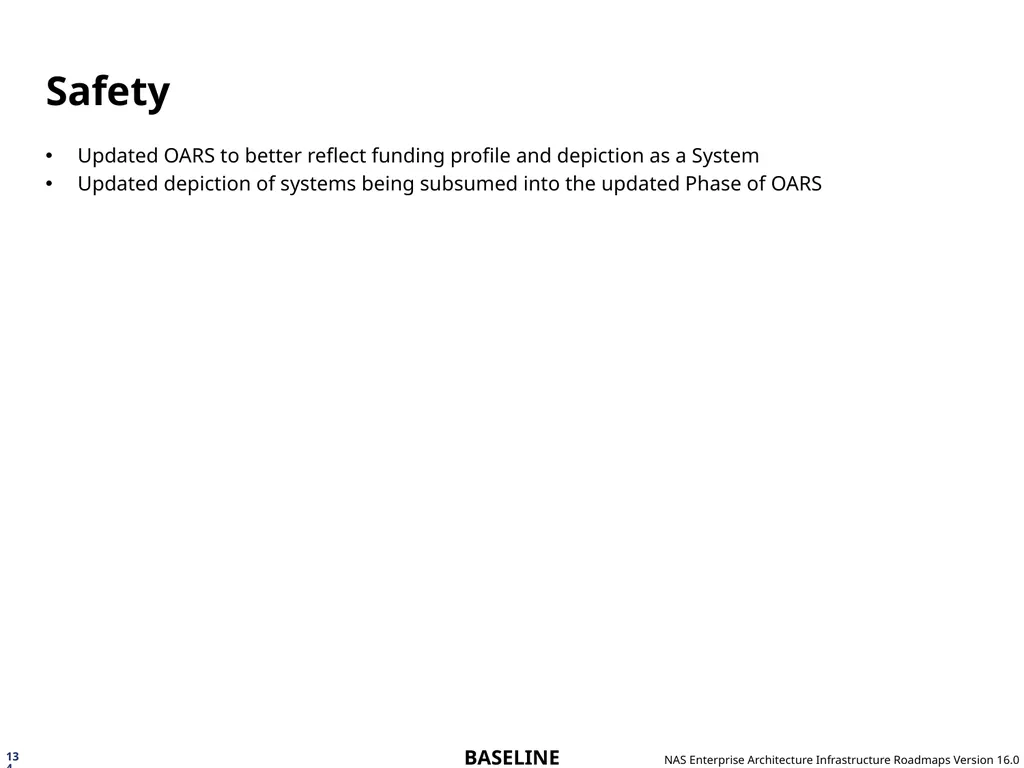
Safety Updated OARS to better reflect funding profile and depiction as a System
Updated depiction of systems being subsumed into the updated Phase of OARS 134<br>
Updated depiction of systems being subsumed into the updated Phase of OARS 134<br>
135
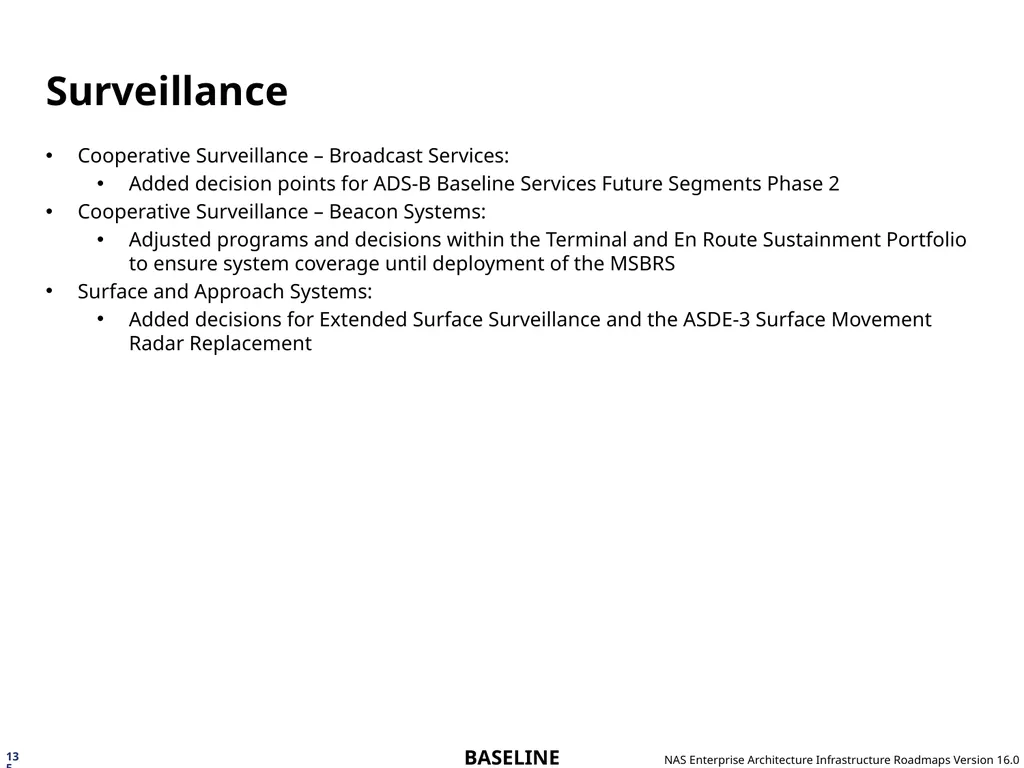
Surveillance Cooperative Surveillance – Broadcast Services:
Added decision points for ADS-B Baseline Services Future Segments Phase 2
Cooperative Surveillance – Beacon Systems:
Adjusted programs and decisions within the Terminal and En Route Sustainment Portfolio to ensure system coverage until deployment of the MSBRS
Surface and Approach Systems:
Added decisions for Extended Surface Surveillance and the ASDE-3 Surface Movement Radar Replacement 135<br>
Added decision points for ADS-B Baseline Services Future Segments Phase 2
Cooperative Surveillance – Beacon Systems:
Adjusted programs and decisions within the Terminal and En Route Sustainment Portfolio to ensure system coverage until deployment of the MSBRS
Surface and Approach Systems:
Added decisions for Extended Surface Surveillance and the ASDE-3 Surface Movement Radar Replacement 135<br>
136
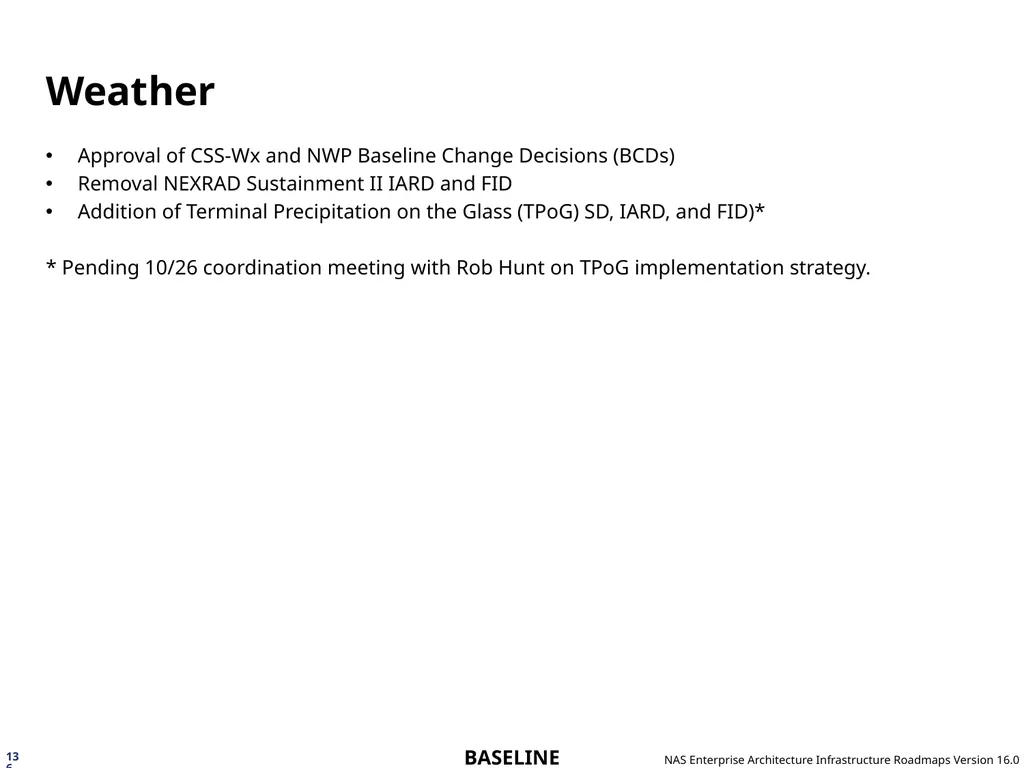
Weather Approval of CSS-Wx and NWP Baseline Change Decisions (BCDs)
Removal NEXRAD Sustainment II IARD and FID
Addition of Terminal Precipitation on the Glass (TPoG) SD, IARD, and FID)*
* Pending 10/26 coordination meeting with Rob Hunt on TPoG implementation strategy. 136<br>
Removal NEXRAD Sustainment II IARD and FID
Addition of Terminal Precipitation on the Glass (TPoG) SD, IARD, and FID)*
* Pending 10/26 coordination meeting with Rob Hunt on TPoG implementation strategy. 136<br>
137
Appendix C
Diagram Updates 137<br>