
NAS Enterprise Architecture Service Roadmaps
TD
Published · 40 slides · 0 views
1 / 1
Description
NAS Enterprise Architecture Service Roadmaps Version 15.0 BASELINE February 2023 Contents Service Roadmap Overview What are the Service Roadmaps? The NAS Service Roadmaps depict current NAS operations and the timeline for planned
Related Topics
Share
Embed code
Download this presentation From Below
"NAS Enterprise Architecture Service Roadmaps" is the property of its rightful owner. Permission is granted to download and print the materials on this website for personal, non-commercial use only, and to display it on your personal computer provided you do not modify the materials and that you retain all copyright notices contained in the materials. By downloading content from our website, you accept the terms of this agreement.
Presentation Transcript
01
NAS Enterprise Architecture Service Roadmaps
Version 15.0 BASELINE February 2023<br>
Version 15.0 BASELINE February 2023<br>
02
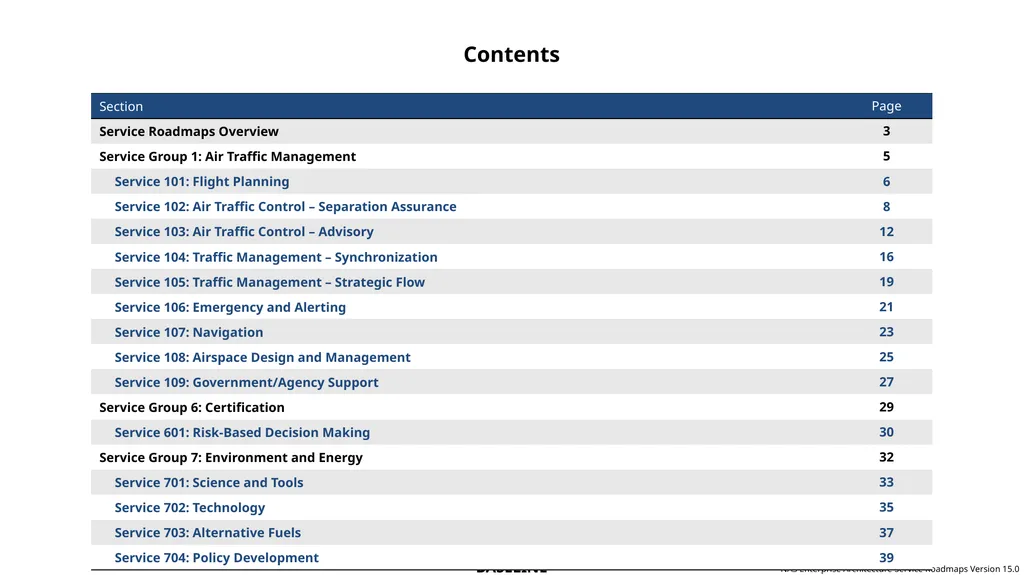
Contents<br>
03
Service Roadmap Overview What are the Service Roadmaps?
The NAS Service Roadmaps depict current NAS operations and the timeline for planned improvements that will deliver benefits to NAS users in pursuit of the Next Generation Air Transportation System (NextGen) vision and move towards an Info-Centric NAS for select FAA services.
The Service Roadmaps are updated annually as research and analyses more clearly define FAA service evolution.
The Roadmaps also include relevant Support Activities which support the development or identification of new capabilities.
Guidelines for Understanding the Roadmaps
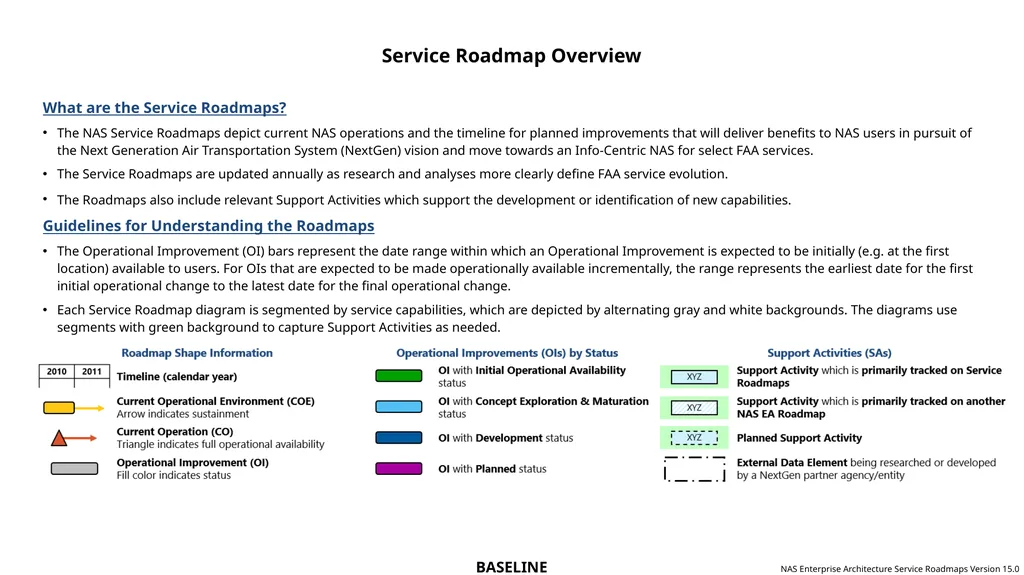
The Operational Improvement (OI) bars represent the date range within which an Operational Improvement is expected to be initially (e.g. at the first location) available to users. For OIs that are expected to be made operationally available incrementally, the range represents the earliest date for the first initial operational change to the latest date for the final operational change.
Each Service Roadmap diagram is segmented by service capabilities, which are depicted by alternating gray and white backgrounds. The diagrams use segments with green background to capture Support Activities as needed.
Roadmap Legend<br>
The NAS Service Roadmaps depict current NAS operations and the timeline for planned improvements that will deliver benefits to NAS users in pursuit of the Next Generation Air Transportation System (NextGen) vision and move towards an Info-Centric NAS for select FAA services.
The Service Roadmaps are updated annually as research and analyses more clearly define FAA service evolution.
The Roadmaps also include relevant Support Activities which support the development or identification of new capabilities.
Guidelines for Understanding the Roadmaps
The Operational Improvement (OI) bars represent the date range within which an Operational Improvement is expected to be initially (e.g. at the first location) available to users. For OIs that are expected to be made operationally available incrementally, the range represents the earliest date for the first initial operational change to the latest date for the final operational change.
Each Service Roadmap diagram is segmented by service capabilities, which are depicted by alternating gray and white backgrounds. The diagrams use segments with green background to capture Support Activities as needed.
Roadmap Legend<br>
04
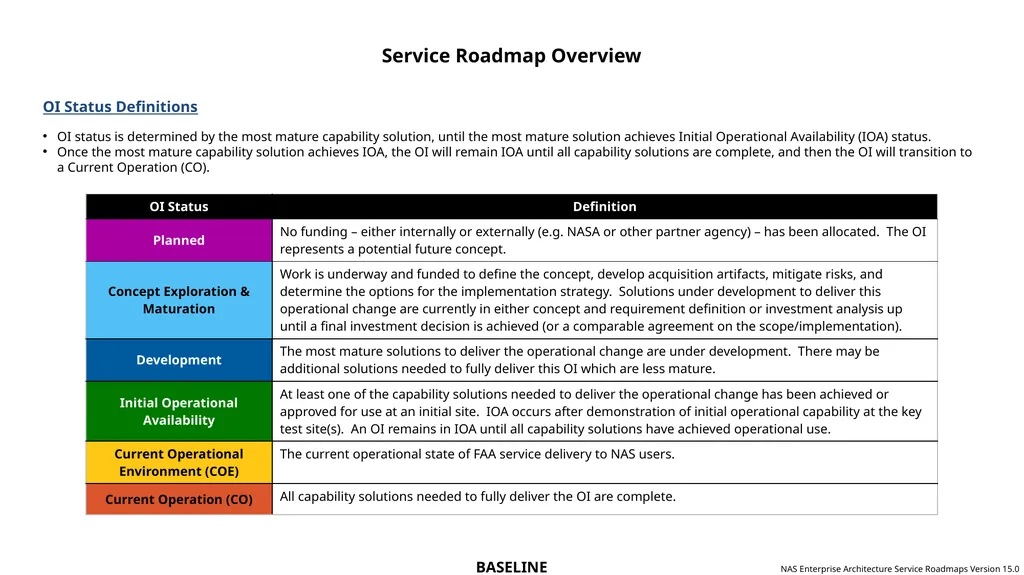
Service Roadmap Overview OI Status Definitions
OI status is determined by the most mature capability solution, until the most mature solution achieves Initial Operational Availability (IOA) status.
Once the most mature capability solution achieves IOA, the OI will remain IOA until all capability solutions are complete, and then the OI will transition to a Current Operation (CO).<br>
OI status is determined by the most mature capability solution, until the most mature solution achieves Initial Operational Availability (IOA) status.
Once the most mature capability solution achieves IOA, the OI will remain IOA until all capability solutions are complete, and then the OI will transition to a Current Operation (CO).<br>
05
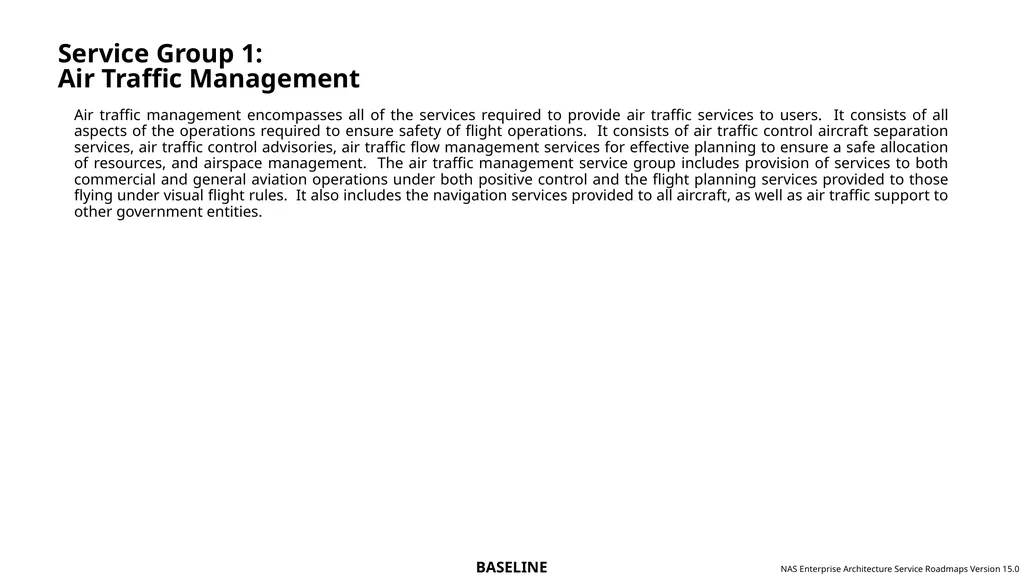
Service Group 1:
Air Traffic Management Air traffic management encompasses all of the services required to provide air traffic services to users. It consists of all aspects of the operations required to ensure safety of flight operations. It consists of air traffic control aircraft separation services, air traffic control advisories, air traffic flow management services for effective planning to ensure a safe allocation of resources, and airspace management. The air traffic management service group includes provision of services to both commercial and general aviation operations under both positive control and the flight planning services provided to those flying under visual flight rules. It also includes the navigation services provided to all aircraft, as well as air traffic support to other government entities.<br>
06
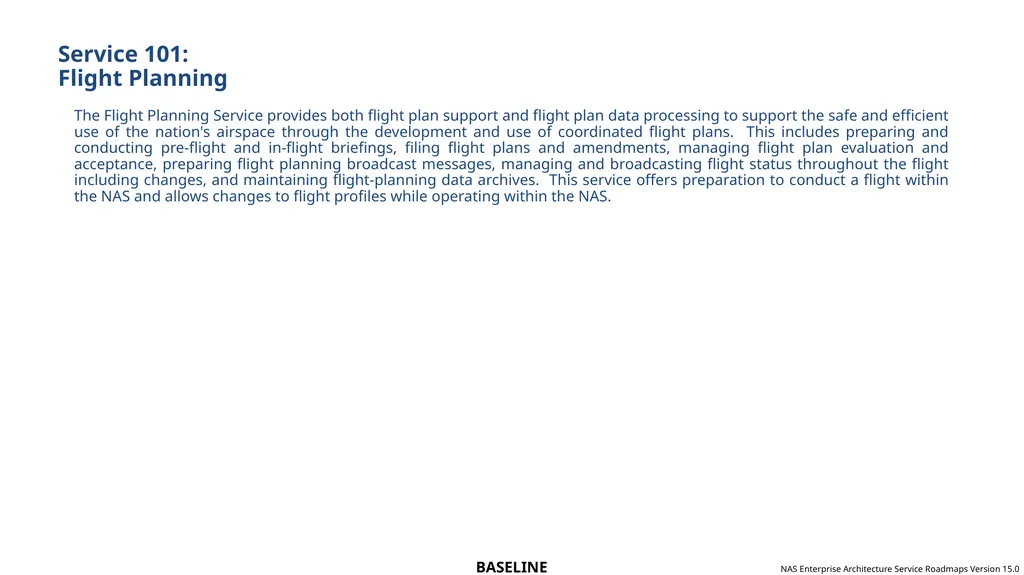
Service 101:
Flight Planning The Flight Planning Service provides both flight plan support and flight plan data processing to support the safe and efficient use of the nation's airspace through the development and use of coordinated flight plans. This includes preparing and conducting pre-flight and in-flight briefings, filing flight plans and amendments, managing flight plan evaluation and acceptance, preparing flight planning broadcast messages, managing and broadcasting flight status throughout the flight including changes, and maintaining flight-planning data archives. This service offers preparation to conduct a flight within the NAS and allows changes to flight profiles while operating within the NAS.<br>
07
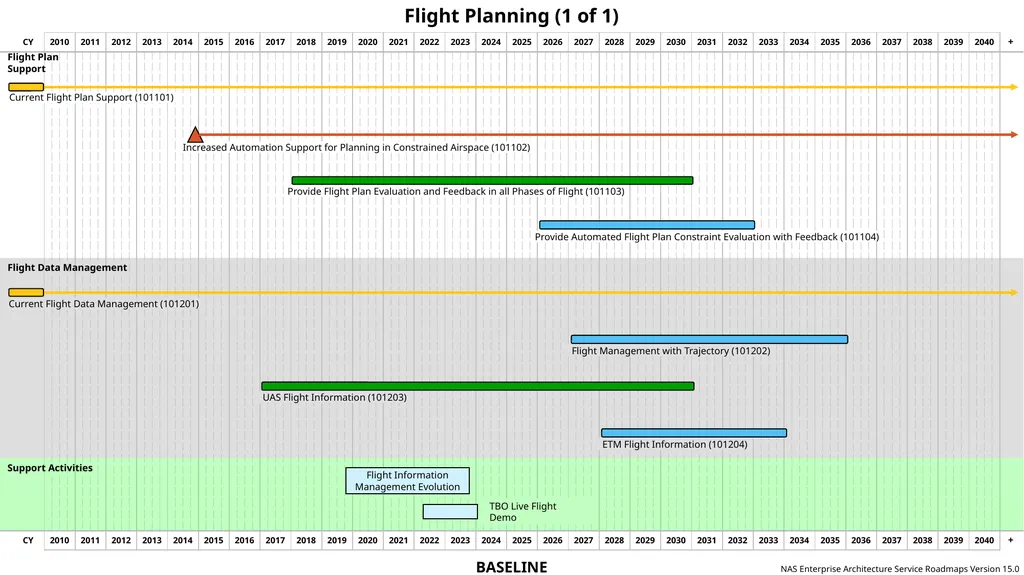
Flight Planning (1 of 1)<br>
08
Service 102:
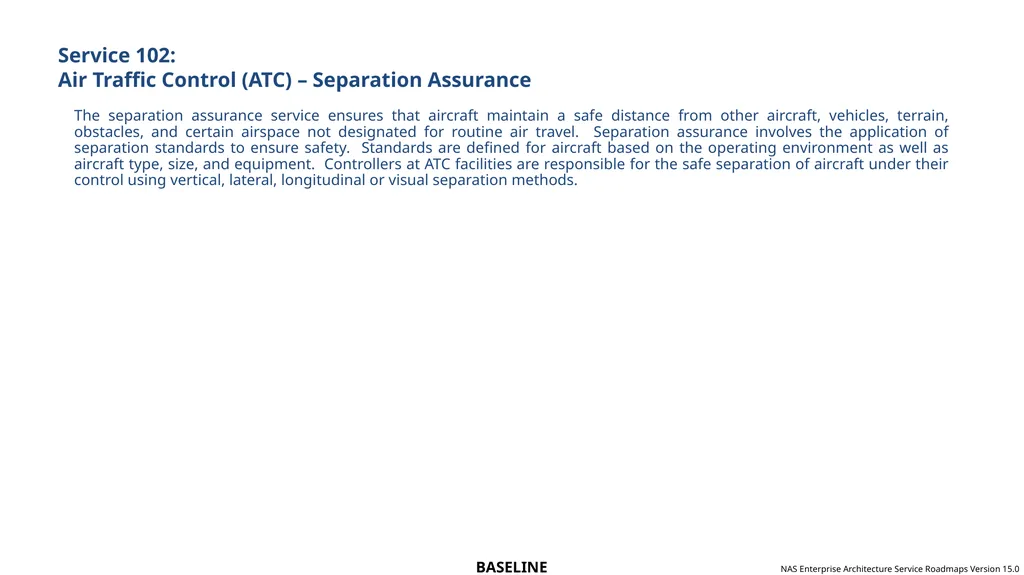
Air Traffic Control (ATC) – Separation Assurance The separation assurance service ensures that aircraft maintain a safe distance from other aircraft, vehicles, terrain, obstacles, and certain airspace not designated for routine air travel. Separation assurance involves the application of separation standards to ensure safety. Standards are defined for aircraft based on the operating environment as well as aircraft type, size, and equipment. Controllers at ATC facilities are responsible for the safe separation of aircraft under their control using vertical, lateral, longitudinal or visual separation methods.<br>
09
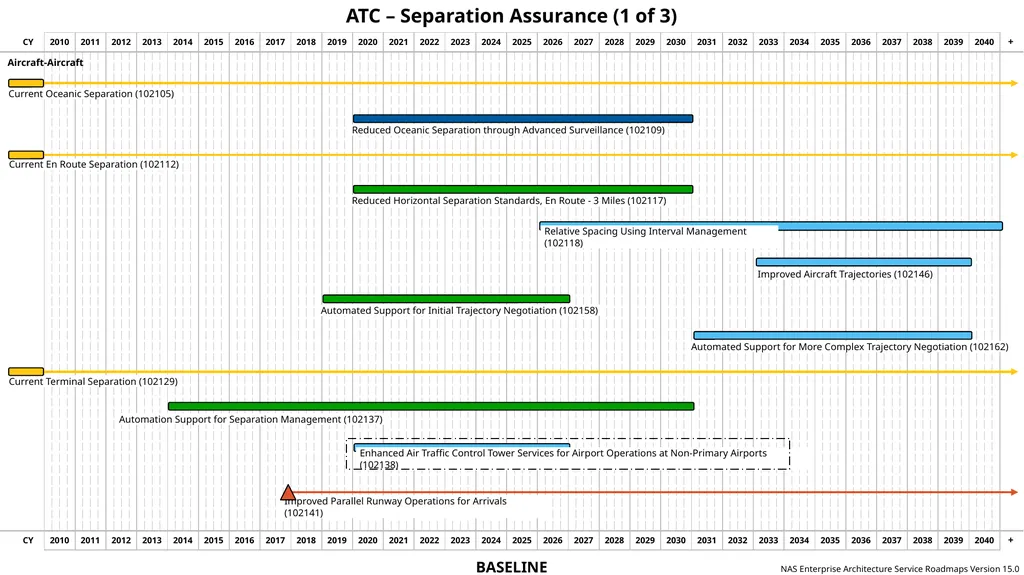
ATC – Separation Assurance (1 of 3)<br>
10
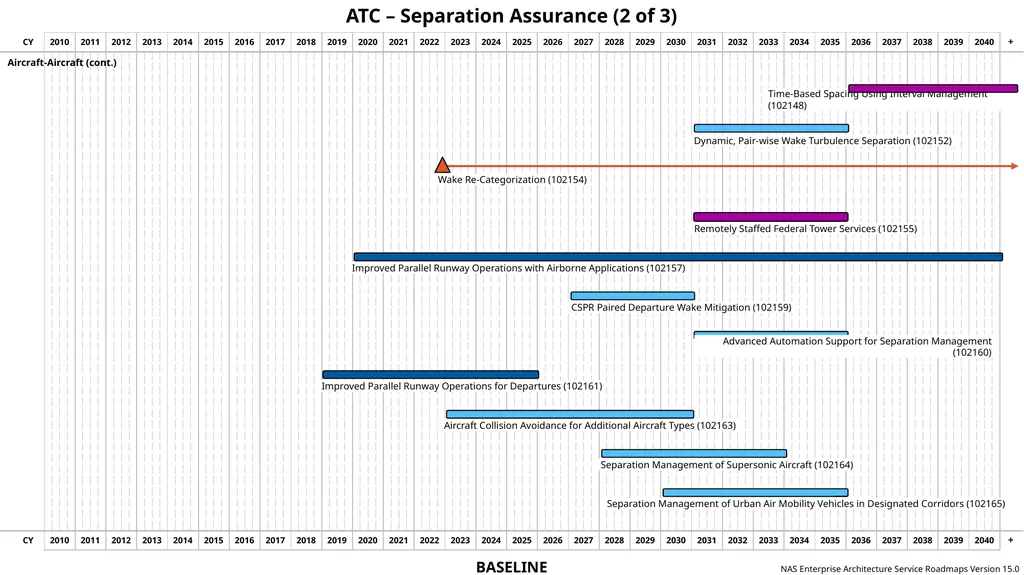
ATC – Separation Assurance (2 of 3)<br>
11
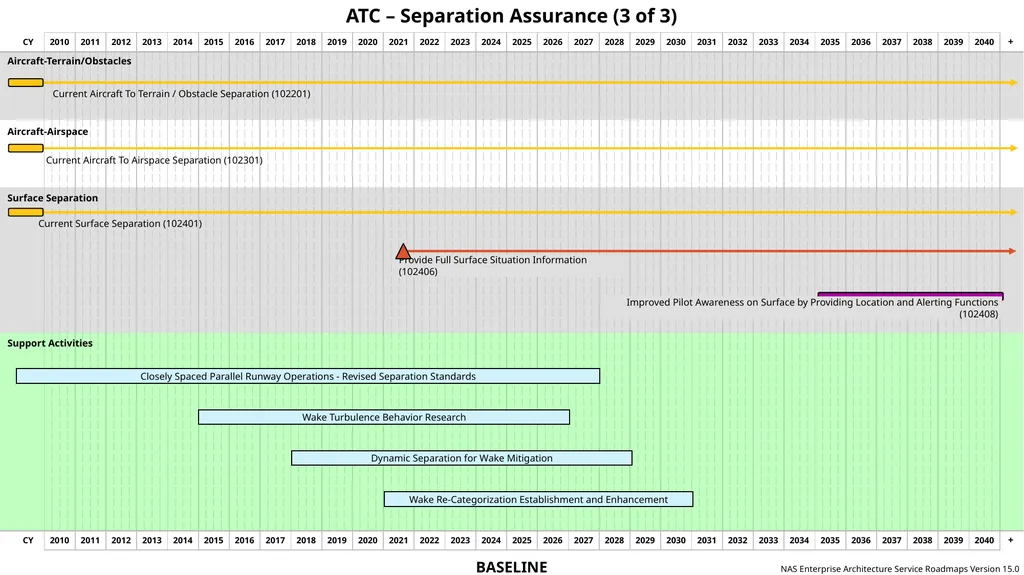
ATC – Separation Assurance (3 of 3)<br>
12
Service 103:
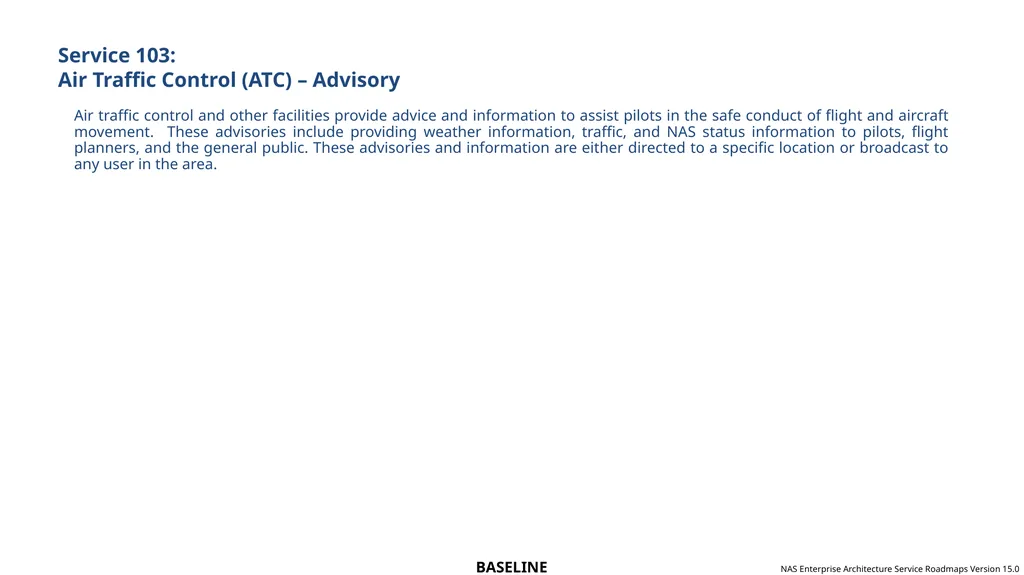
Air Traffic Control (ATC) – Advisory Air traffic control and other facilities provide advice and information to assist pilots in the safe conduct of flight and aircraft movement. These advisories include providing weather information, traffic, and NAS status information to pilots, flight planners, and the general public. These advisories and information are either directed to a specific location or broadcast to any user in the area.<br>
13
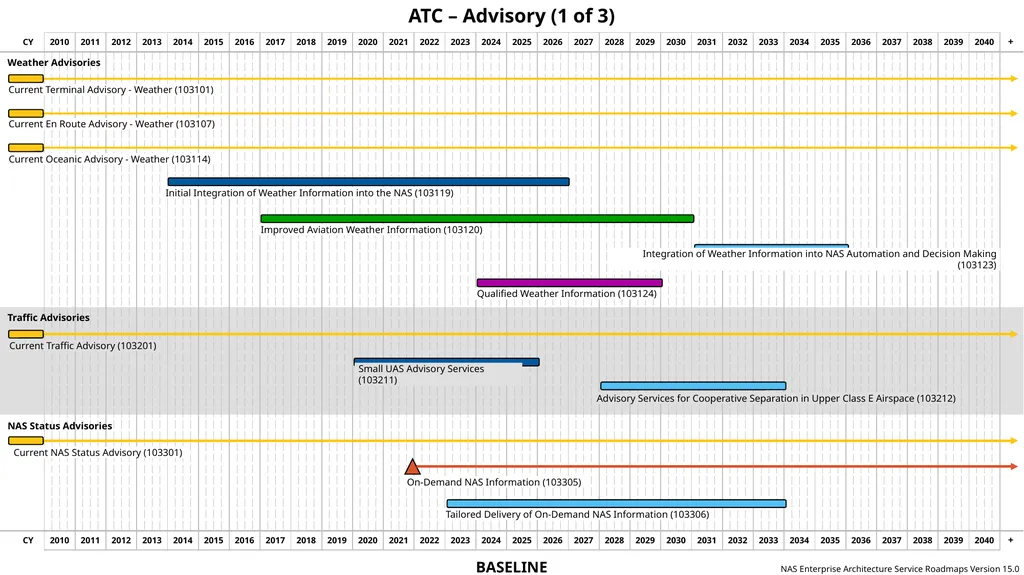
ATC – Advisory (1 of 3)<br>
14
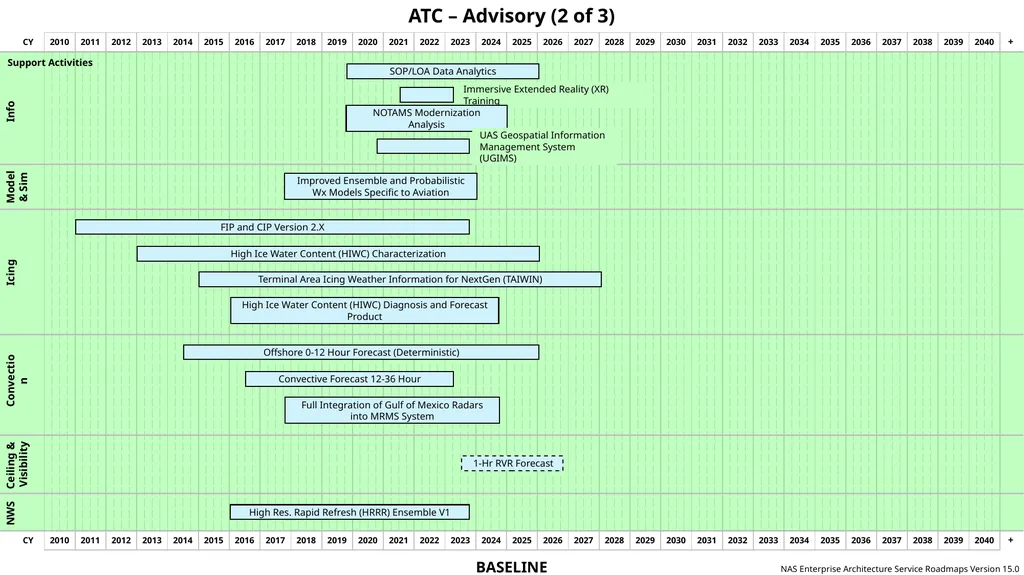
ATC – Advisory (2 of 3)<br>
15
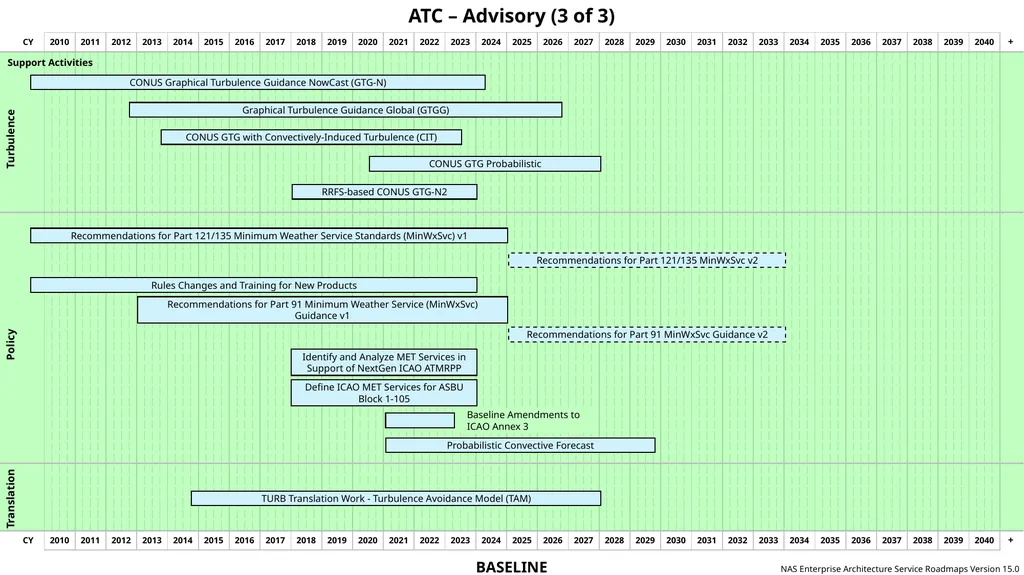
ATC – Advisory (3 of 3)<br>
16
Service 104:
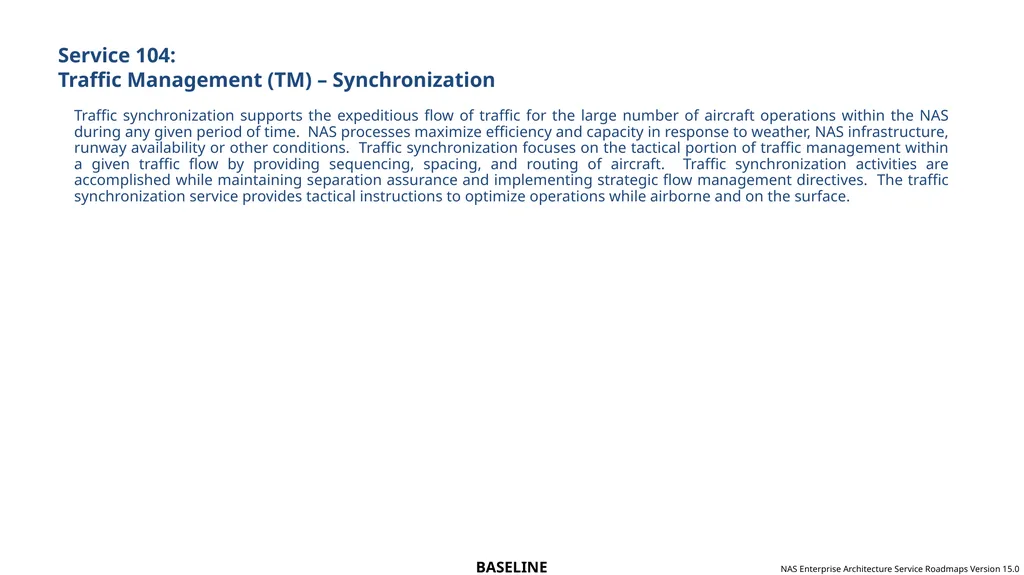
Traffic Management (TM) – Synchronization Traffic synchronization supports the expeditious flow of traffic for the large number of aircraft operations within the NAS during any given period of time. NAS processes maximize efficiency and capacity in response to weather, NAS infrastructure, runway availability or other conditions. Traffic synchronization focuses on the tactical portion of traffic management within a given traffic flow by providing sequencing, spacing, and routing of aircraft. Traffic synchronization activities are accomplished while maintaining separation assurance and implementing strategic flow management directives. The traffic synchronization service provides tactical instructions to optimize operations while airborne and on the surface.<br>
17
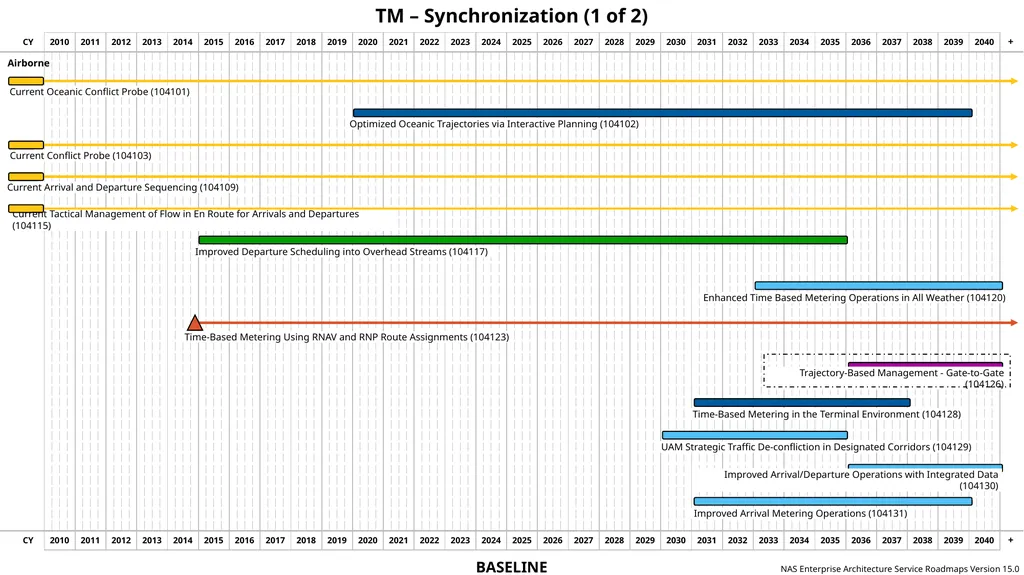
TM – Synchronization (1 of 2)<br>
18
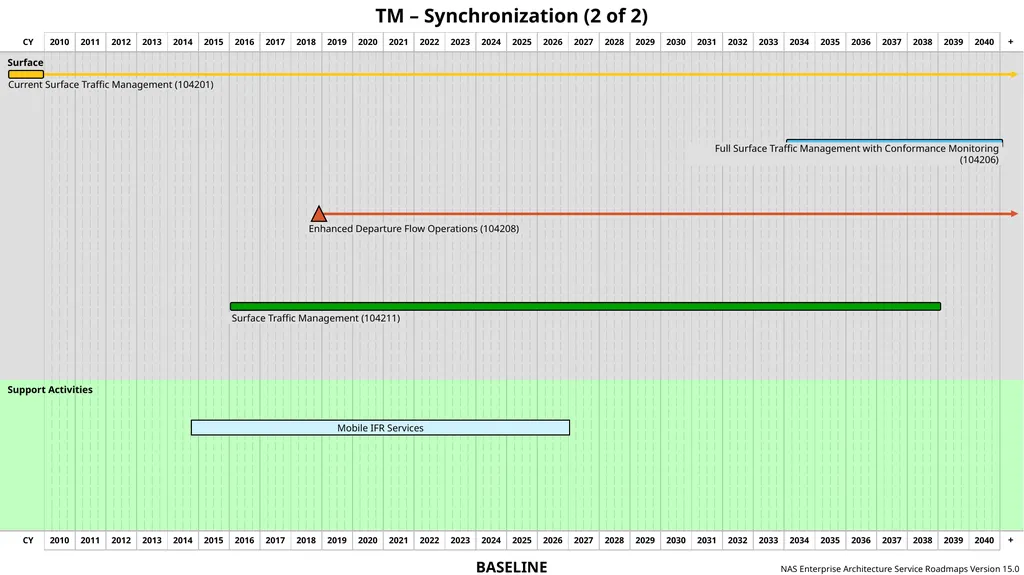
TM – Synchronization (2 of 2)<br>
19
Service 105:
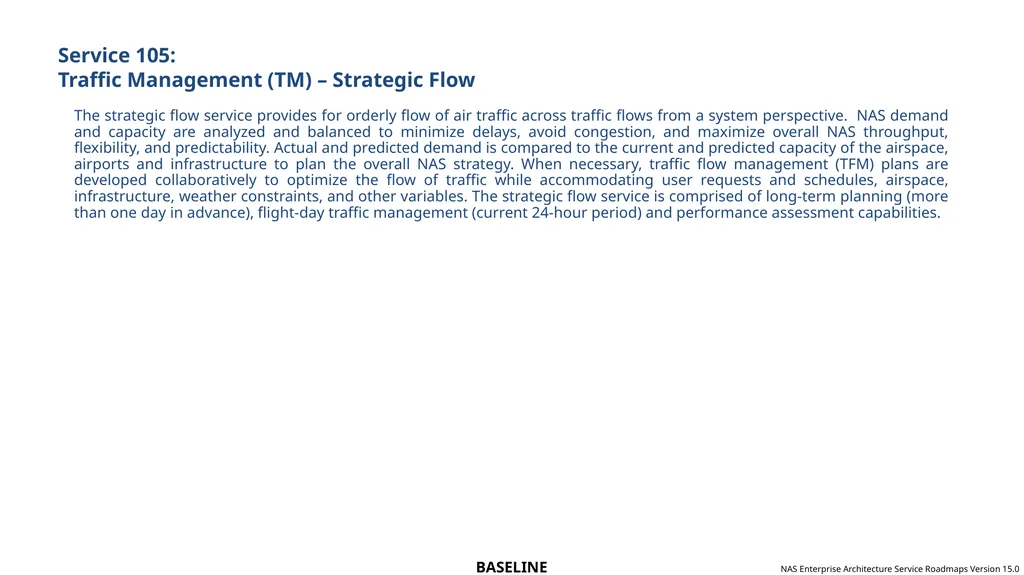
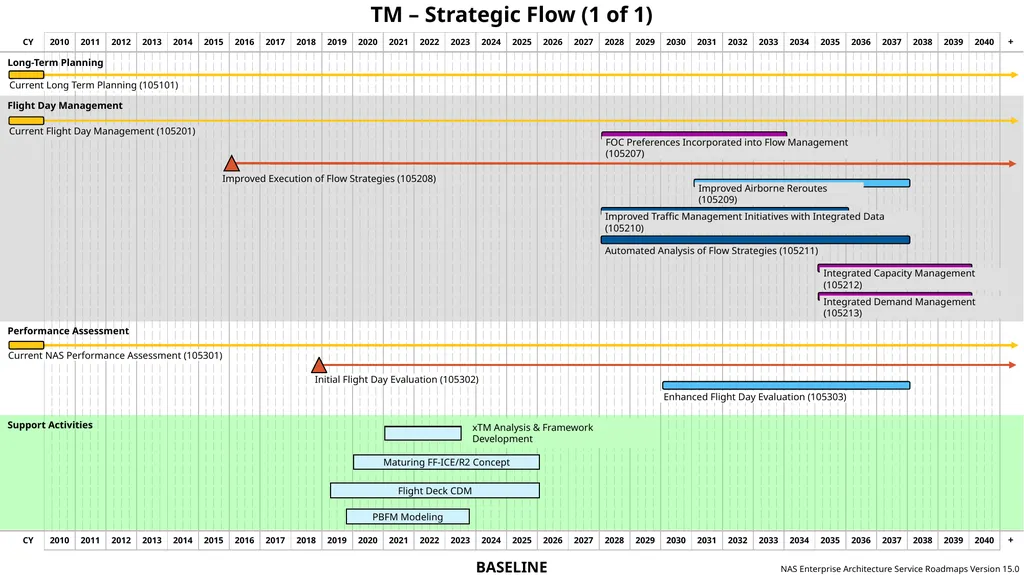
Traffic Management (TM) – Strategic Flow The strategic flow service provides for orderly flow of air traffic across traffic flows from a system perspective. NAS demand and capacity are analyzed and balanced to minimize delays, avoid congestion, and maximize overall NAS throughput, flexibility, and predictability. Actual and predicted demand is compared to the current and predicted capacity of the airspace, airports and infrastructure to plan the overall NAS strategy. When necessary, traffic flow management (TFM) plans are developed collaboratively to optimize the flow of traffic while accommodating user requests and schedules, airspace, infrastructure, weather constraints, and other variables. The strategic flow service is comprised of long-term planning (more than one day in advance), flight-day traffic management (current 24-hour period) and performance assessment capabilities.<br>
20
TM – Strategic Flow (1 of 1)<br>
21
Service 106:
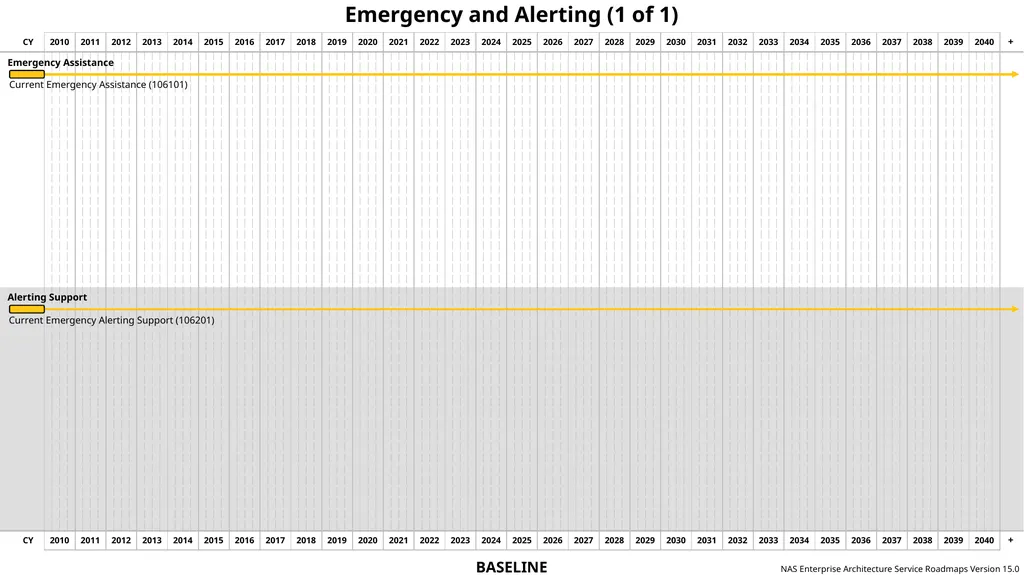
Emergency and Alerting The emergency and alerting service monitors the NAS for distress or urgent situations, evaluates the nature of the distress, and provides an appropriate response to the emergency. Applicable situations include those that occur on the ground or in-flight. Emergency services include emergency assistance and alerting support.<br>
22
Emergency and Alerting (1 of 1)<br>
23
Service 107:
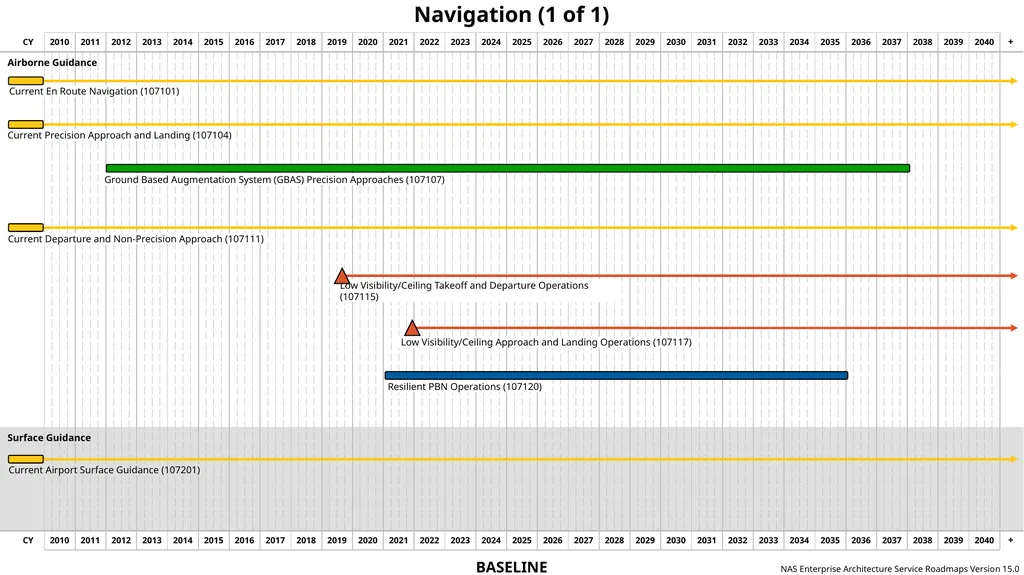
Navigation The Navigation service provides electronic signals-in-space to enable suitably equipped NAS users to determine aircraft position and to operate safely and efficiently under most weather conditions. Avionics onboard the aircraft receive and process the signals to provide the current position, distance from a predefined or selected position, course selection, and course deviation. The Navigation service includes ground and space-based networks of electronic navigation aids (NAVAIDS), as well as visual NAVAIDS, in accordance with international standards. The network of NAVAIDS enables users to navigate during airborne operations (such as cruise, approach, and landing) and during surface operations.<br>
24
Navigation (1 of 1)<br>
25
Service 108:
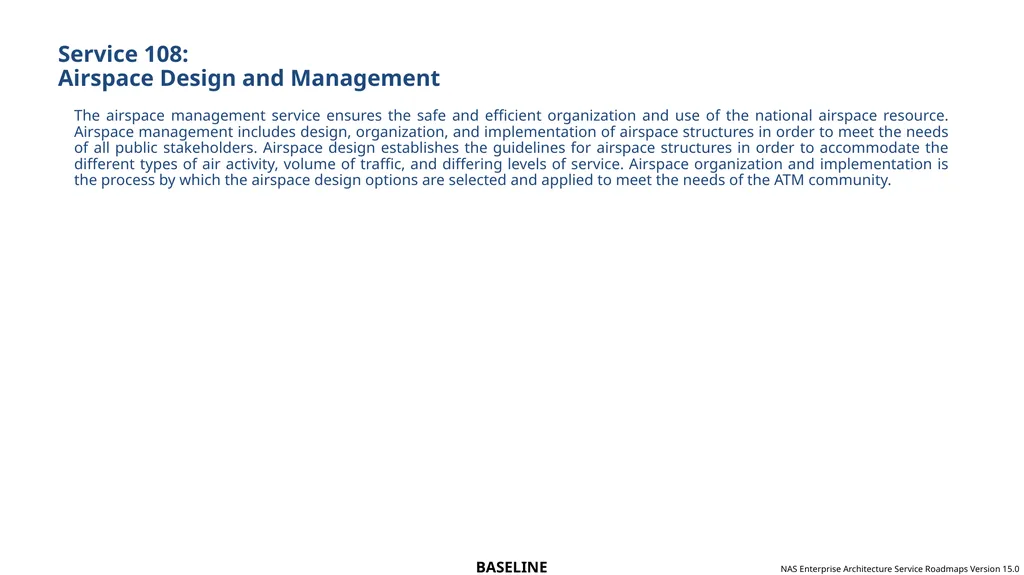
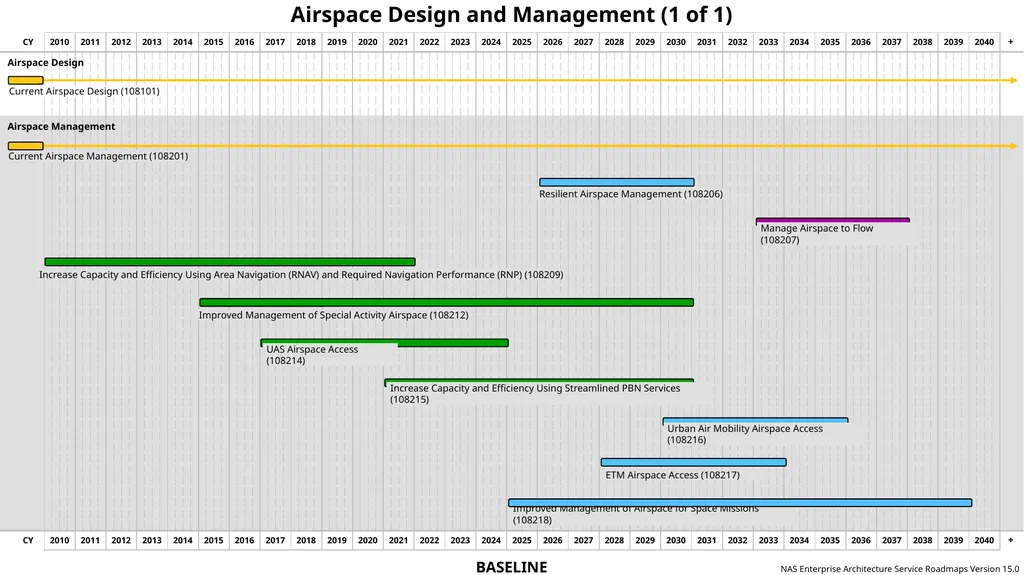
Airspace Design and Management The airspace management service ensures the safe and efficient organization and use of the national airspace resource. Airspace management includes design, organization, and implementation of airspace structures in order to meet the needs of all public stakeholders. Airspace design establishes the guidelines for airspace structures in order to accommodate the different types of air activity, volume of traffic, and differing levels of service. Airspace organization and implementation is the process by which the airspace design options are selected and applied to meet the needs of the ATM community.<br>
26
Airspace Design and Management (1 of 1)<br>
27
Service 109:
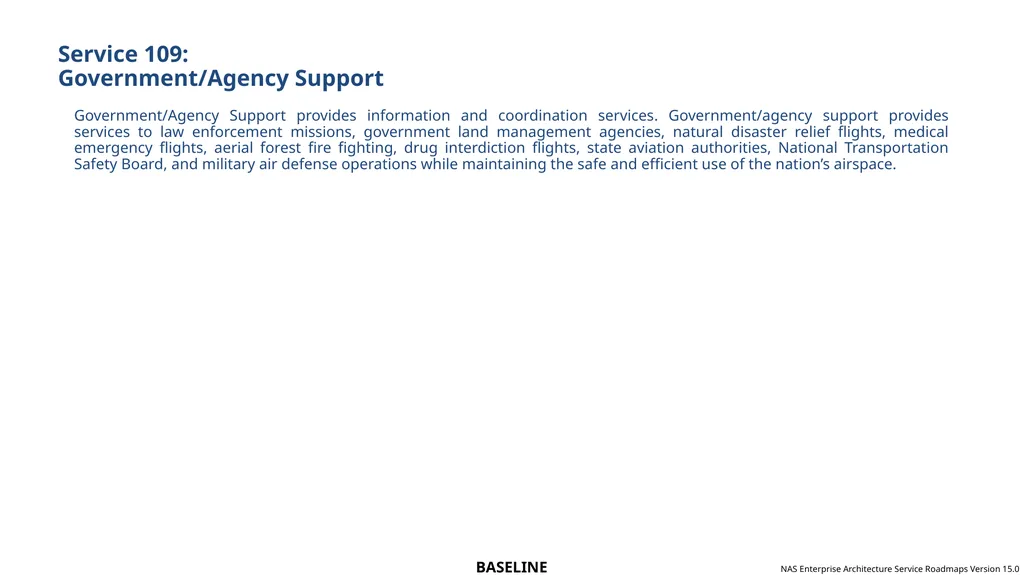
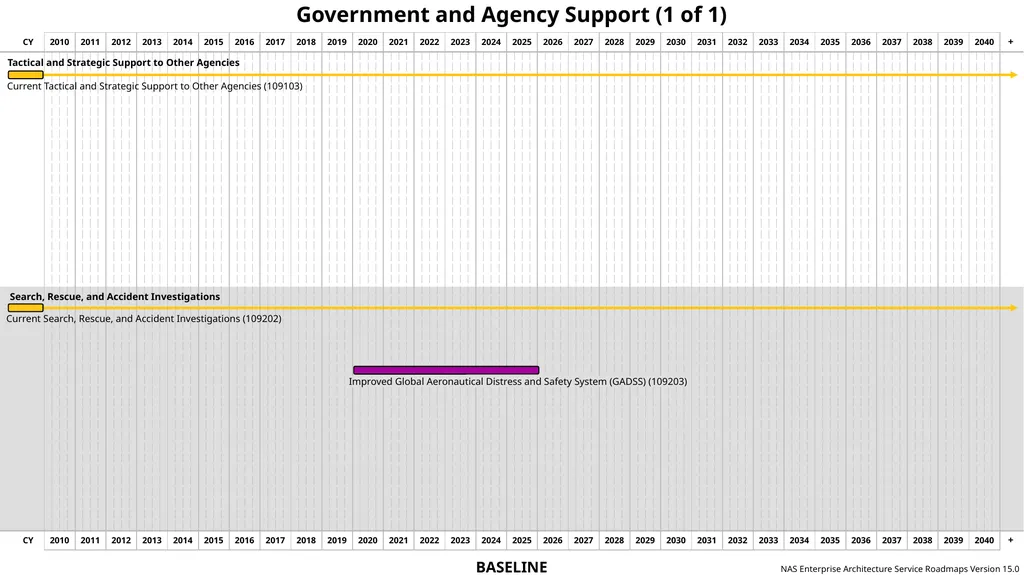
Government/Agency Support Government/Agency Support provides information and coordination services. Government/agency support provides services to law enforcement missions, government land management agencies, natural disaster relief flights, medical emergency flights, aerial forest fire fighting, drug interdiction flights, state aviation authorities, National Transportation Safety Board, and military air defense operations while maintaining the safe and efficient use of the nation’s airspace.<br>
28
Government and Agency Support (1 of 1)<br>
29
Service Group 6:
Certification Certification Services is responsible for developing regulations; certification, continued operational safety, production approval and airworthiness of aircraft; in addition to certification of pilots, mechanics, and others in safety-related positions; certification of all operational and maintenance enterprises in domestic civil aviation, certification and safety oversight of U.S. commercial airlines and air operators; and oversight for civil flight operations. Certification services also includes the risk-based decision making framework, tools, and processes used to improve aviation safety overall.<br>
30
Service 601:
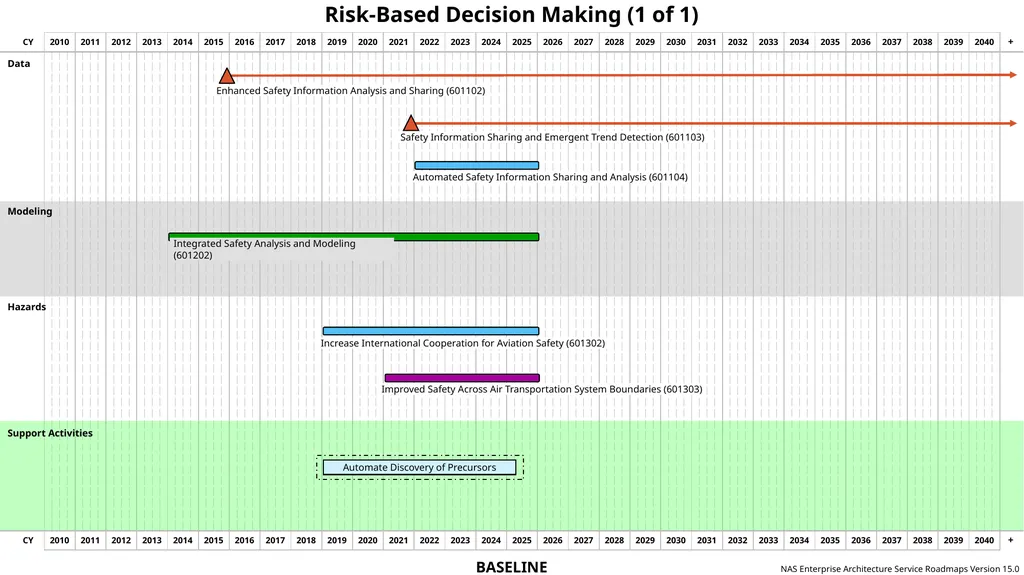
Risk-Based Decision Making Risk-based Decision Making Services build on safety management principles to proactively address emerging safety risk by using consistent, data-informed approaches to make smarter, system-level, risk based decisions.<br>
31
Risk-Based Decision Making (1 of 1)<br>
32
Service Group 7:
Environment and Energy Environment and Energy Services provide environmental protection that allows sustained aviation growth. Environment and Energy Services address the environmental issues associated with aviation such as noise, air quality, climate, energy, and water quality. These services are provided through scientific research and tools for integrated environmental analysis, mature new aircraft technologies, development of aviation alternative fuels, and development of policies and environmental standards, market based measures, and an environmental management system.<br>
33
Service 701:
Science and Tools Aviation environmental analyses, impact determinations, and mitigation decisions for NextGen activities must continue to be based on a solid scientific foundation. This will require continued investments in research to improve our scientific understanding of the impacts of aviation. This is particularly important with respect to aviation’s effects on climate. It is also germane to gaining a more nuanced and multi‐faceted understanding of noise impacts, given community concerns with aircraft noise and public pressures to mitigate noise at levels lower than current Federal guidelines. In addition, the development and use of advanced decision‐support tools that account for interdependencies of impacts and cost‐benefit analyses of potential solutions will facilitate more informed decision‐making. Prospective solutions and combinations of solutions have different impacts, benefits, and costs. Some solutions have the ability to optimize for one area of environmental protection at the expense of another, and trade‐offs should be as transparent as possible.<br>
34
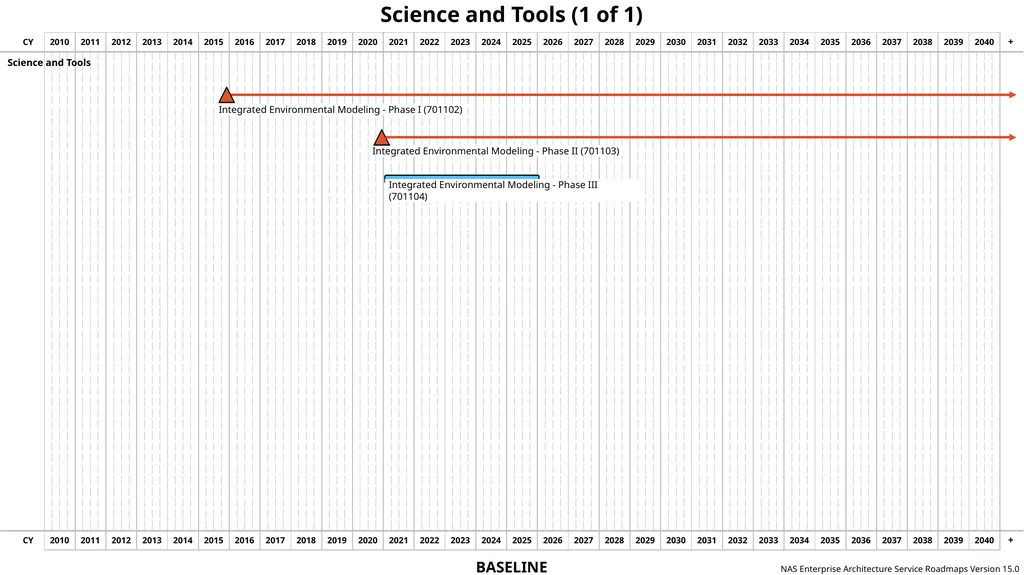
Science and Tools (1 of 1)<br>
35
Service 702:
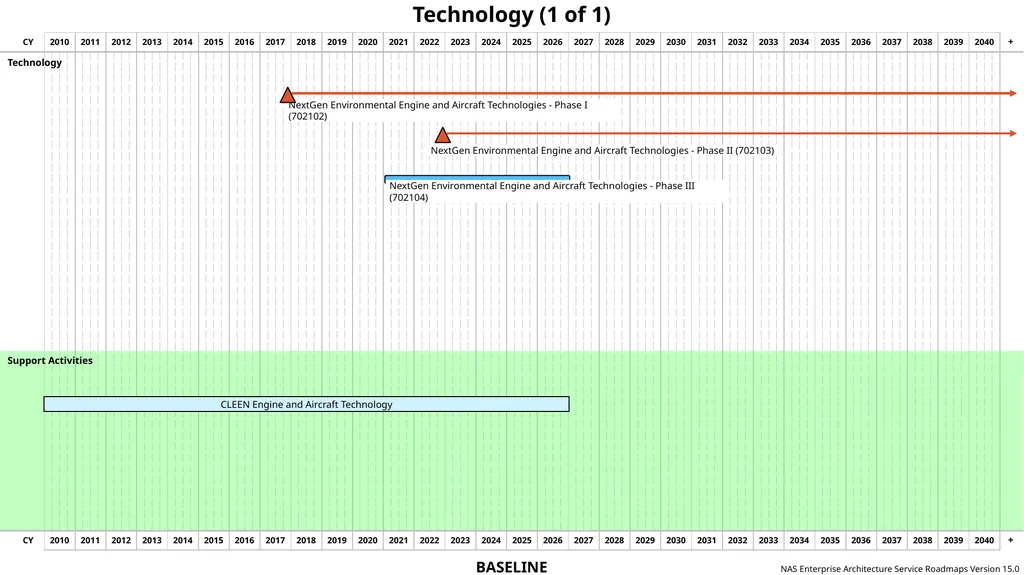
Technology Historically, new technologies have offered the greatest success in reducing aviation’s impacts. New engine/airframe technologies will need to play key roles in achieving aviation environment and energy goals. The U.S. will support advances in engine technology and airframe configurations to lay the foundation for the next generation of aircraft. Our technological strategy envisions a fleet of quieter, cleaner aircraft that operate more efficiently with less energy. The FAA and NASA, along with the Department of Defense, closely coordinate efforts on aeronautics technology research through the President’s National Science and Technology Council’s multi-agency National Aeronautics Research and Development Plan. Each agency focuses on different elements but they share the same national goals. The FAA’s focus is on maturing technologies for near term application, while NASA focuses on a broader range of time frames of technology development. This includes future concepts such as electric aircraft.<br>
36
Technology (1 of 1)<br>
37
Service 703:
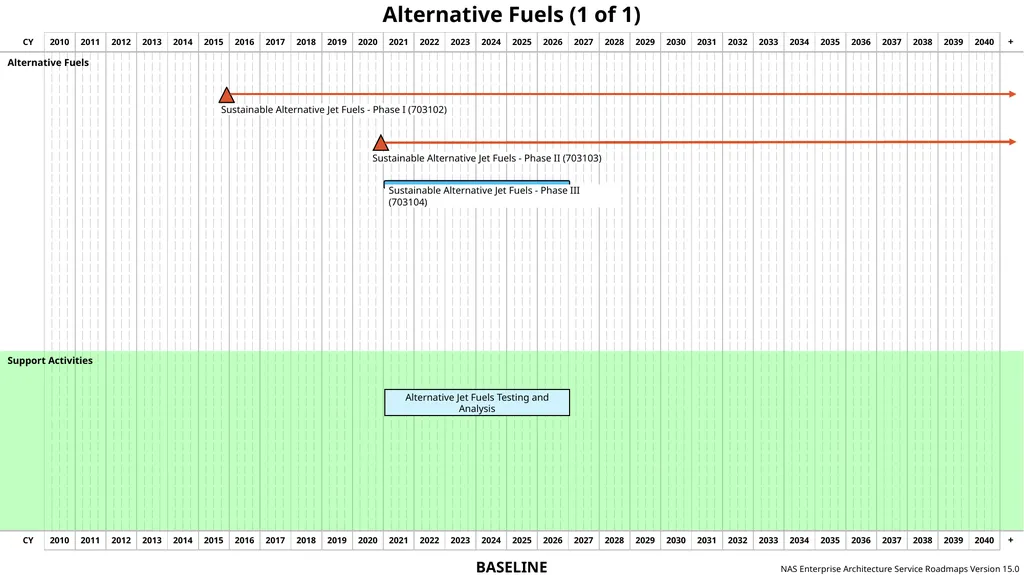
Alternative Fuels Sustainable alternative aviation fuels development and deployment offer prospects for enabling environmental improvements, energy security and economic stability for aviation. The aviation industry has made a commitment to convert its fuel supply to alternative fuels. Government and industry are working cooperatively with coordinating mechanisms such as the Commercial Aviation Alternative Fuels Initiative (CAAFI) and are supporting alternative fuels research. Near term efforts include adding new classes of fuels to the BASELINE alternative jet fuel standard by ASTM International, conducting aircraft flight tests using alternative fuels and ascertaining their emissions characteristics, lifecycle greenhouse gases, and sustainability. A number of challenges remain to sustainable alternative fuel deployment, including financing for commercial production.<br>
38
Alternative Fuels (1 of 1)<br>
39
Service 704:
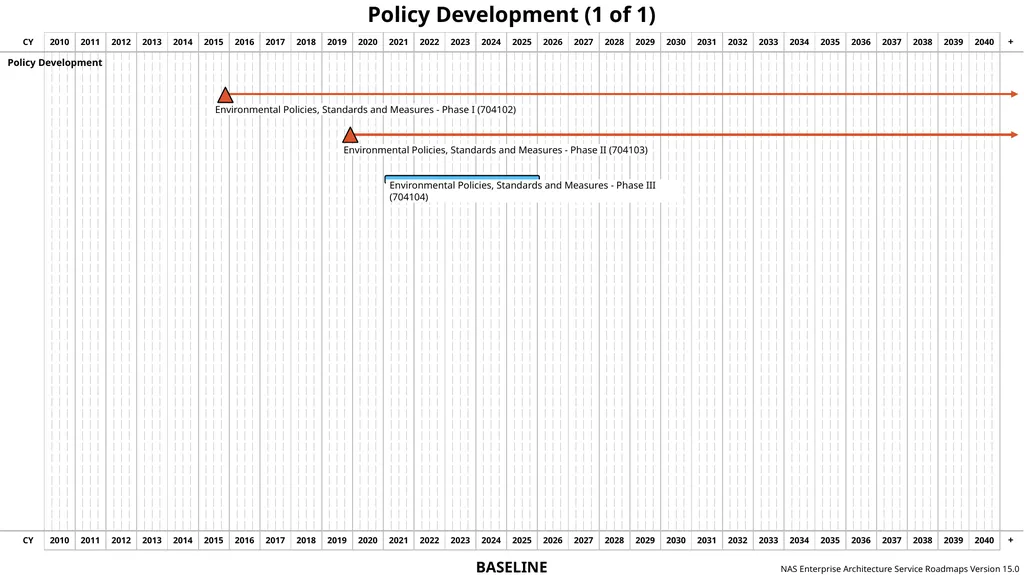
Policy Development Development and implementation of appropriate policies, programs, and mechanisms are critical to support advantageous technology and operational innovations and accelerate their integration into the commercial fleet, the airport environment, and entire national aviation system. The NextGen EMS approach will integrate environmental protection objectives into NextGen and facilitate National Environmental Policy Act (NEPA) reviews. Cooperative partnerships between government and industry can focus and leverage funding in ways that are beneficial for aviation and good for the environment. There is a need for continued and enhanced exploration of the most effective means to address residual aircraft noise impacts that cannot be reduced through technologies to guide capital investments in noise mitigation such as sound insulation, to encourage adequate land use planning, and to support other methods. Internationally, the U.S. is leading efforts at the International Civil Aviation Organization (ICAO) to limit and reduce international aviation emissions, including development of a CO2 standard for aircraft, and a new particulate matter (PM) certification requirement for engines. ICAO has additionally agreed to explore more ambitious goals for the aviation sector, including carbon neutral growth in the mid-term and reductions in the long term. The U.S. is exploring the effectiveness of various policies, including economic incentives to limit and reduce CO2 emissions. The U.S. is also supporting studies to investigate the need, cost and trade‐offs, and the technological feasibility of more stringent noise standards. Additionally, if we are to achieve environmental and energy goals beyond the near term, policies may be needed to accelerate the integration of new technologies into the civil fleet compared to the normal rate of introduction and replacement.<br>
40
Policy Development (1 of 1)<br>