
NATIONAL CONVENTIONAL ARMS CONTROL COMMITTEE
PM
Published · 39 slides · 0 views

1 / 1


Description
NATIONAL CONVENTIONAL ARMS CONTROL COMMITTEE (NCACC) THE 2016 AND 2017 NCACC ANNUAL REPORTS PRESENTATION TO THE JOINT STANDING COMMITTEE ON DEFENCE (JSCD). BY MINISTER J.T. RADEBE CHAIRPERSON OF THE NCACC INTRODUCTION The NCACC would like
Related Topics
Share
Embed code
Download this presentation From Below
"NATIONAL CONVENTIONAL ARMS CONTROL COMMITTEE" is the property of its rightful owner. Permission is granted to download and print the materials on this website for personal, non-commercial use only, and to display it on your personal computer provided you do not modify the materials and that you retain all copyright notices contained in the materials. By downloading content from our website, you accept the terms of this agreement.
Presentation Transcript
01
NATIONAL CONVENTIONAL ARMS CONTROL COMMITTEE (NCACC) THE 2016 AND 2017 NCACC ANNUAL REPORTS PRESENTATION TO THE JOINT STANDING COMMITTEE ON DEFENCE (JSCD).
BY MINISTER J.T. RADEBE – CHAIRPERSON OF THE NCACC<br>
BY MINISTER J.T. RADEBE – CHAIRPERSON OF THE NCACC<br>
02
INTRODUCTION The NCACC would like to thank the Joint Standing Committee on Defence (JSCD) for this Invitation to present the 2016 Reports and 2017 Annual Reports .
The NCACC has approached the task as follows:
The 2016 and 2017 Annual Reports are done in full.
These include 2016 and 2017 Quarterly Reports in PowerPoint presentation.
All these Reports have already been tabled in Parliament.
We trust that the JSCD will accept this approach<br>
The NCACC has approached the task as follows:
The 2016 and 2017 Annual Reports are done in full.
These include 2016 and 2017 Quarterly Reports in PowerPoint presentation.
All these Reports have already been tabled in Parliament.
We trust that the JSCD will accept this approach<br>
03
PROCEDURAL MATTERS REGARDING BRIEFING THE JSCD THE NCACC Reporting to Parliament is prescribed in the law. (The NCAC Act)
Appearing to brief the JSCD is by invitation in terms of the Committees oversight role
The NCACC will always respond to the invitation by the JSCD to provide the briefing
The NCACC can only brief the JSCD on tabled Reports to Parliament.<br>
Appearing to brief the JSCD is by invitation in terms of the Committees oversight role
The NCACC will always respond to the invitation by the JSCD to provide the briefing
The NCACC can only brief the JSCD on tabled Reports to Parliament.<br>
04
PROCEDURAL MATTERS REGARDING BRIEFING THE JSCD THE NCACC Tabling of Report(s) will always occur within 45 days after a period of reporting. This is how reporting is realised:
The Period of reporting must conclude first
Within the month following the Report must be approved by the NCACC.
Within 14 days of approval the Report(s) must be submitted for tabling in Parliament<br>
The Period of reporting must conclude first
Within the month following the Report must be approved by the NCACC.
Within 14 days of approval the Report(s) must be submitted for tabling in Parliament<br>
05
HIGHLIGHTS OF 2016/17 The NCACC received a clean Audit for the Financial Year 2016 and 2017
South Africa having ratified the Arms Trade Treaty (ATT) in 2014, filed its first Annual Report under the ATT in April 2016 and did same for 2017
The Arms Trade Treaty (ATT) appointed a Head of Secretariat and in August 2016, Mr Dumisani Dladla, a South African was confirmed as Head of Secretariat of the ATT. He is based in Geneva, Switzerland for the duration of his tour of duty.<br>
South Africa having ratified the Arms Trade Treaty (ATT) in 2014, filed its first Annual Report under the ATT in April 2016 and did same for 2017
The Arms Trade Treaty (ATT) appointed a Head of Secretariat and in August 2016, Mr Dumisani Dladla, a South African was confirmed as Head of Secretariat of the ATT. He is based in Geneva, Switzerland for the duration of his tour of duty.<br>
06
HIGHLIGHTS OF 2016/17 South Africa was admitted to the Bureau of the ATT in Geneva, we are the only African Country and 1 of 6 globally.<br>
07
THE CONTEXT – INTERNATIONAL:
THE LEGAL FRAMEWORK Treaties – based on International Public Law, which is Legally Binding
Conventions – based on International Common Law, through accepted practice which is morally and persuasively Binding
International Interest Group Arrangement(s) attempt to close gaps that may not be covered by either (Treaty and Convention)<br>
Conventions – based on International Common Law, through accepted practice which is morally and persuasively Binding
International Interest Group Arrangement(s) attempt to close gaps that may not be covered by either (Treaty and Convention)<br>
08
South Africa’s
membership to Treaties
and Conventions ATT – Arms Trade Treaty
APMT – Anti-Personnel Mine Convention
CCW - Certain Conventional Weapons
CCM - Convention on Cluster Munitions
WA- Wassenaar Arrangement 8 CONVENTIONAL ARMS CONTROL<br>
APMT – Anti-Personnel Mine Convention
CCW - Certain Conventional Weapons
CCM - Convention on Cluster Munitions
WA- Wassenaar Arrangement 8 CONVENTIONAL ARMS CONTROL<br>
09
South Africa’s membership
to Treaties and Conventions Non Proliferation Treaty - NPT
Biological Weapons Control (BWC)
Chemical Weapons Convention (CWC)
Missile Technology Control Regime (MTCR)
NSG - Nuclear Suppliers Group
Zangger Committee Trigger List 9 WEAPONS OF MASS DESTRUCTION AND DELIVERY SYSTEMS<br>
Biological Weapons Control (BWC)
Chemical Weapons Convention (CWC)
Missile Technology Control Regime (MTCR)
NSG - Nuclear Suppliers Group
Zangger Committee Trigger List 9 WEAPONS OF MASS DESTRUCTION AND DELIVERY SYSTEMS<br>
10
THE CONTEXT- DOMESTIC:
THE LEGISLATIVE IMPERATIVE The National Conventional Arms Control Act
Act 41 of 2002 (as amended) (primary Act)
Act 73 of 2008 (current Act after amendment)
The National Conventional Arms Control Act also frames the:
Regulation of Foreign Military Assistance Act (RFMA), Act 15 of 1998
Prohibition of Mercenary Activities and Regulation of Certain Activities in an area of Armed Conflict Act – Act 27 of 2006<br>
Act 41 of 2002 (as amended) (primary Act)
Act 73 of 2008 (current Act after amendment)
The National Conventional Arms Control Act also frames the:
Regulation of Foreign Military Assistance Act (RFMA), Act 15 of 1998
Prohibition of Mercenary Activities and Regulation of Certain Activities in an area of Armed Conflict Act – Act 27 of 2006<br>
11
POLICY IMPERATIVES The Act captures the Object as being:
To ensure compliance with Govt. policy in respect of arms control
To implement a legitimate, effective and transparent control process
To provide for an inspectorate to ensure compliance with the provisions of the Act
Protection of Economic and Security Interests
Foster National and International confidence for control over trade in conventional arms<br>
To ensure compliance with Govt. policy in respect of arms control
To implement a legitimate, effective and transparent control process
To provide for an inspectorate to ensure compliance with the provisions of the Act
Protection of Economic and Security Interests
Foster National and International confidence for control over trade in conventional arms<br>
12
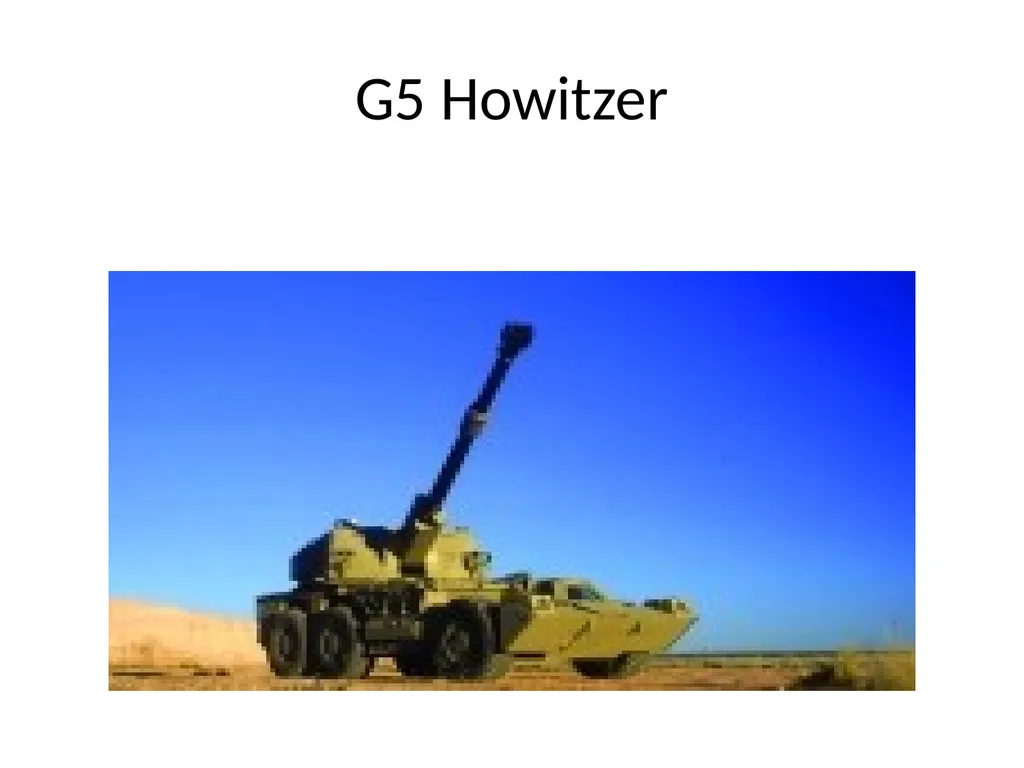
G5 Howitzer<br>
13
COMPOSITION OF THE COMMITTEE The Committee is appointed by the President in terms of s5 of the NCAC Act
The Cabinet Committee is Sui Generis
The Committee may not be chaired by (a) Minister(s) with a line responsibility interest in trade in conventional arms s5(3)
A member must vacate office if: s4(a-c)
Member resigns
Member is removed from office by the President<br>
The Cabinet Committee is Sui Generis
The Committee may not be chaired by (a) Minister(s) with a line responsibility interest in trade in conventional arms s5(3)
A member must vacate office if: s4(a-c)
Member resigns
Member is removed from office by the President<br>
14
NCACC MEMBERS 2016 MINISTERS Min. J.T. Radebe - Chairperson
Min G.N. Pandor –
Deputy Chairperson
Min. N. Mapisa-Nqakula
Min. M. Nkoana-Mashabane
Min. R. Davies
Min. D. Mahlobo
Min. N. Nhleko *
Min. L Brown *
* Ministers appointed mid-term DEPUTY-MINISTERS DM E.R.K. Maphatsoe
DM L.T. Landers
DM M. Jonas<br>
Min G.N. Pandor –
Deputy Chairperson
Min. N. Mapisa-Nqakula
Min. M. Nkoana-Mashabane
Min. R. Davies
Min. D. Mahlobo
Min. N. Nhleko *
Min. L Brown *
* Ministers appointed mid-term DEPUTY-MINISTERS DM E.R.K. Maphatsoe
DM L.T. Landers
DM M. Jonas<br>
15
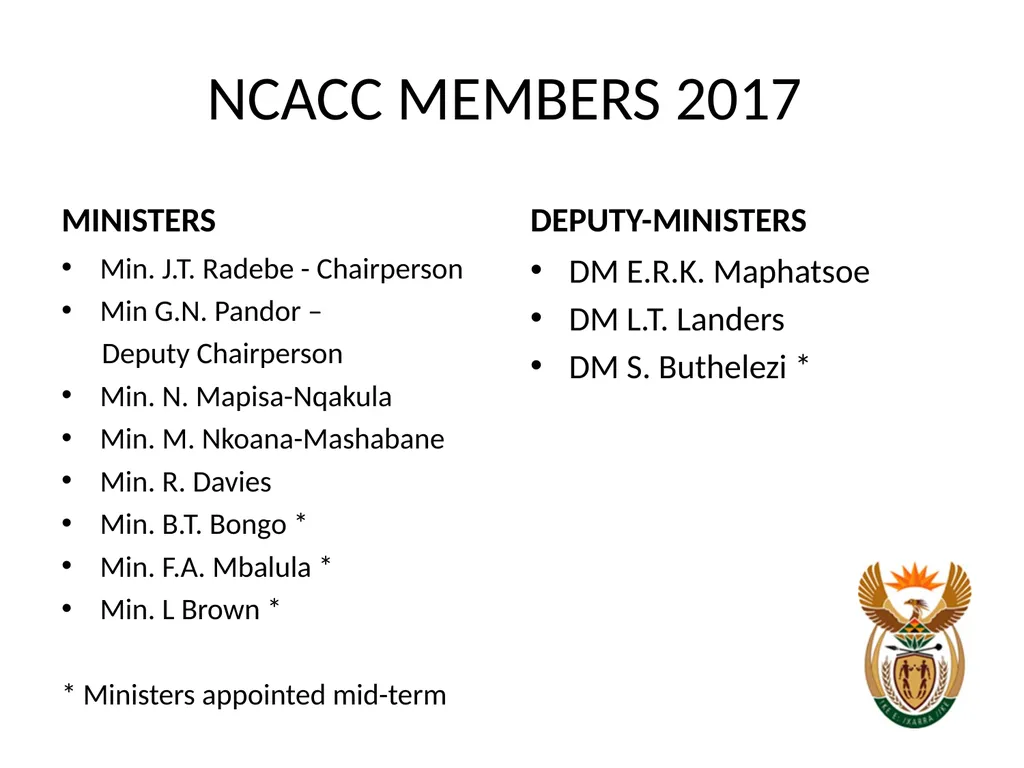
NCACC MEMBERS 2017 MINISTERS Min. J.T. Radebe - Chairperson
Min G.N. Pandor –
Deputy Chairperson
Min. N. Mapisa-Nqakula
Min. M. Nkoana-Mashabane
Min. R. Davies
Min. B.T. Bongo *
Min. F.A. Mbalula *
Min. L Brown *
* Ministers appointed mid-term DEPUTY-MINISTERS DM E.R.K. Maphatsoe
DM L.T. Landers
DM S. Buthelezi *<br>
Min G.N. Pandor –
Deputy Chairperson
Min. N. Mapisa-Nqakula
Min. M. Nkoana-Mashabane
Min. R. Davies
Min. B.T. Bongo *
Min. F.A. Mbalula *
Min. L Brown *
* Ministers appointed mid-term DEPUTY-MINISTERS DM E.R.K. Maphatsoe
DM L.T. Landers
DM S. Buthelezi *<br>
16
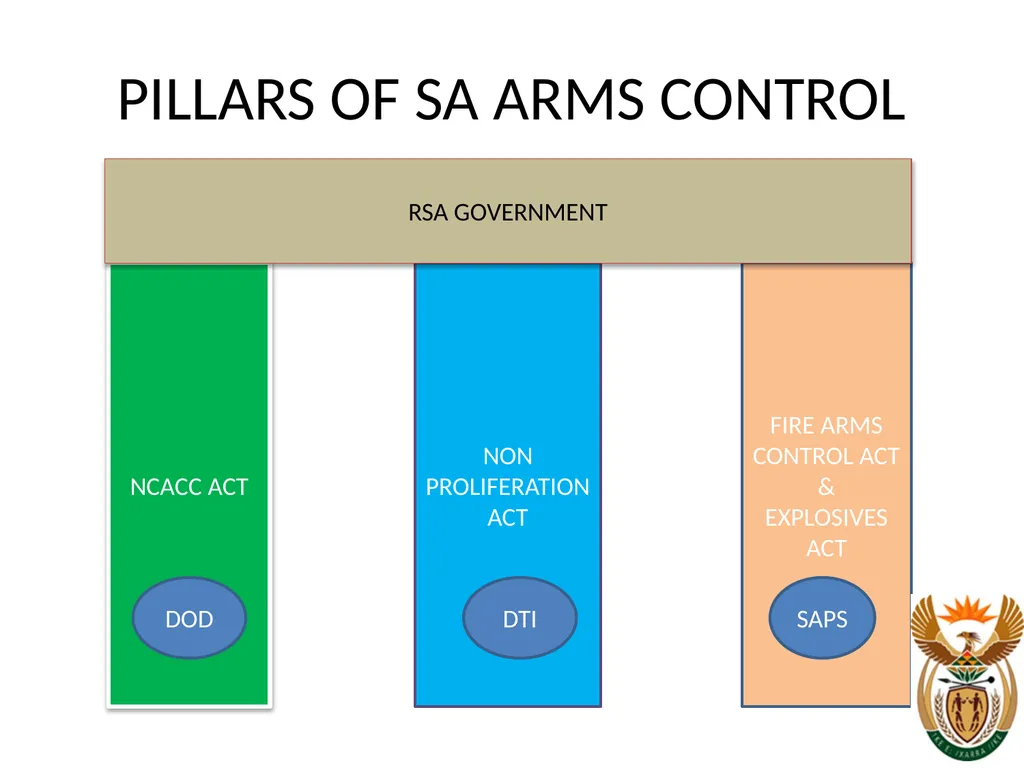
PILLARS OF SA ARMS CONTROL NCACC ACT NON PROLIFERATION ACT FIRE ARMS CONTROL ACT &
EXPLOSIVES
ACT RSA GOVERNMENT DOD DTI SAPS<br>
EXPLOSIVES
ACT RSA GOVERNMENT DOD DTI SAPS<br>
17
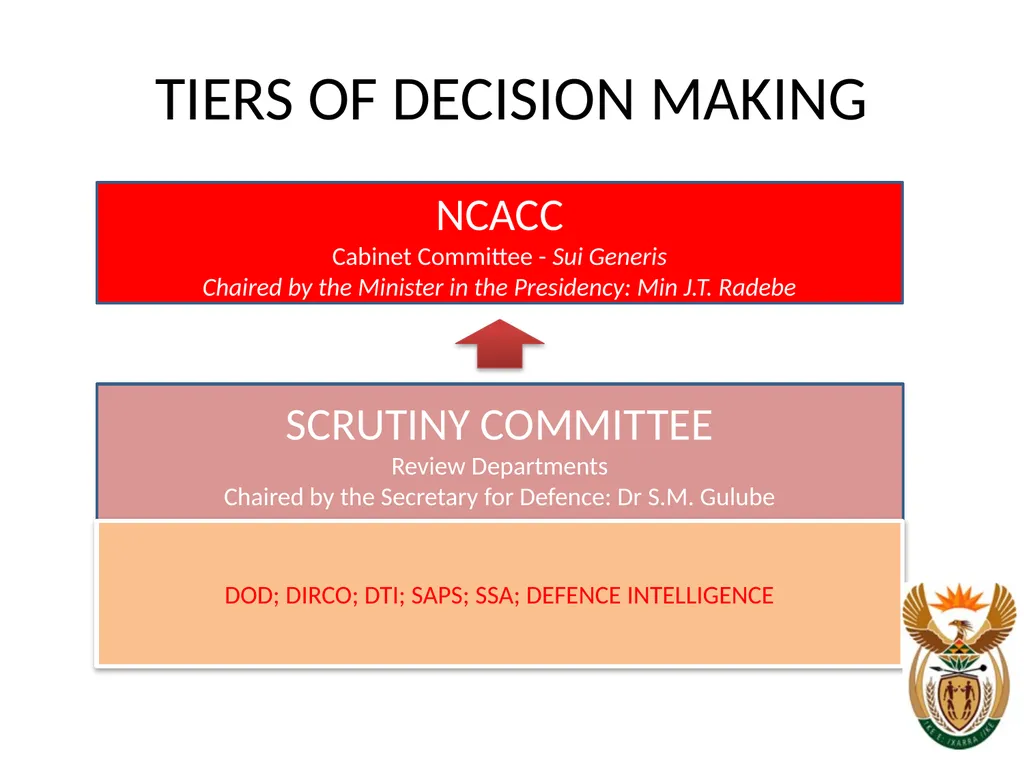
TIERS OF DECISION MAKING NCACC
Cabinet Committee - Sui Generis
Chaired by the Minister in the Presidency: Min J.T. Radebe SCRUTINY COMMITTEE
Review Departments
Chaired by the Secretary for Defence: Dr S.M. Gulube DOD; DIRCO; DTI; SAPS; SSA; DEFENCE INTELLIGENCE<br>
Cabinet Committee - Sui Generis
Chaired by the Minister in the Presidency: Min J.T. Radebe SCRUTINY COMMITTEE
Review Departments
Chaired by the Secretary for Defence: Dr S.M. Gulube DOD; DIRCO; DTI; SAPS; SSA; DEFENCE INTELLIGENCE<br>
18
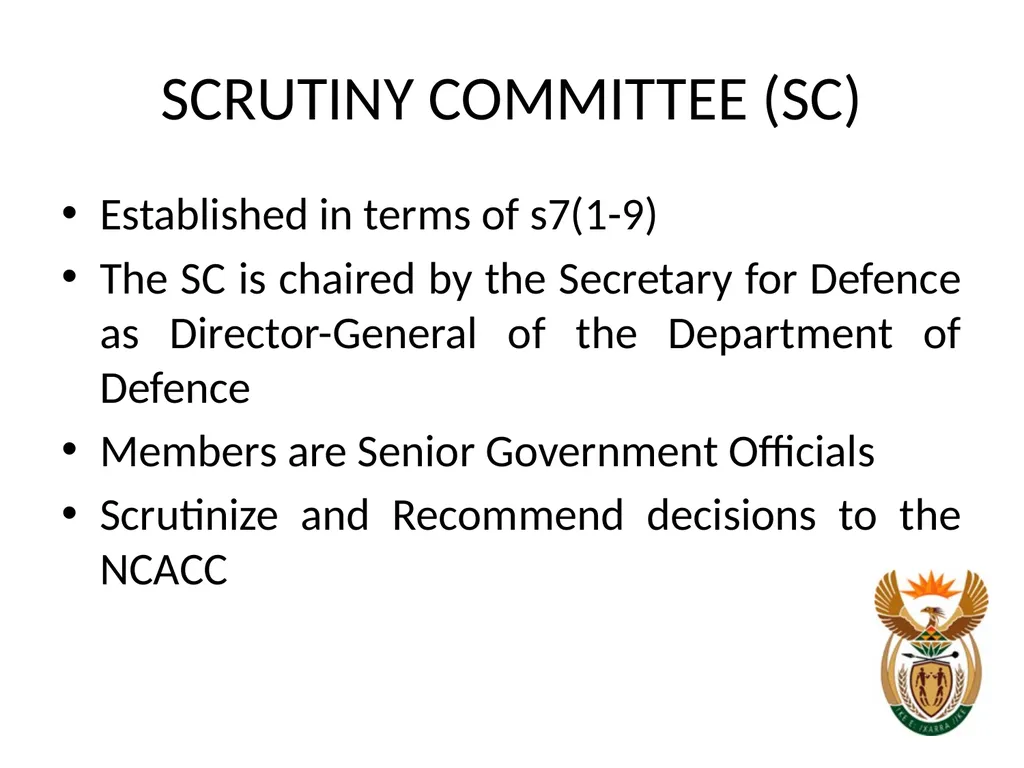
SCRUTINY COMMITTEE (SC) Established in terms of s7(1-9)
The SC is chaired by the Secretary for Defence as Director-General of the Department of Defence
Members are Senior Government Officials
Scrutinize and Recommend decisions to the NCACC<br>
The SC is chaired by the Secretary for Defence as Director-General of the Department of Defence
Members are Senior Government Officials
Scrutinize and Recommend decisions to the NCACC<br>
19
SECRETARIAT Chief Directorate for Conventional Arms Control
Established in terms of s8 of the Act
Serves as the Secretariat of the National Authority for Licencing, the NCACC
Nodal Interface Point with the South African Defence Industry<br>
Established in terms of s8 of the Act
Serves as the Secretariat of the National Authority for Licencing, the NCACC
Nodal Interface Point with the South African Defence Industry<br>
20
INSPECTORATE Directorate: Inspectorate and Audit
Established in terms of s9 and is accountable to the Committee, in terms of s9(1)(a)
Object of the Inspectorate s9(2) (a-b)
Ensure that the conduct in Conventional Arms Control is in compliance with the Act
Ensure that Internal regulatory Processes of the Committee are complied with
Inspectorate must consist of persons appointed by the Minister<br>
Established in terms of s9 and is accountable to the Committee, in terms of s9(1)(a)
Object of the Inspectorate s9(2) (a-b)
Ensure that the conduct in Conventional Arms Control is in compliance with the Act
Ensure that Internal regulatory Processes of the Committee are complied with
Inspectorate must consist of persons appointed by the Minister<br>
21
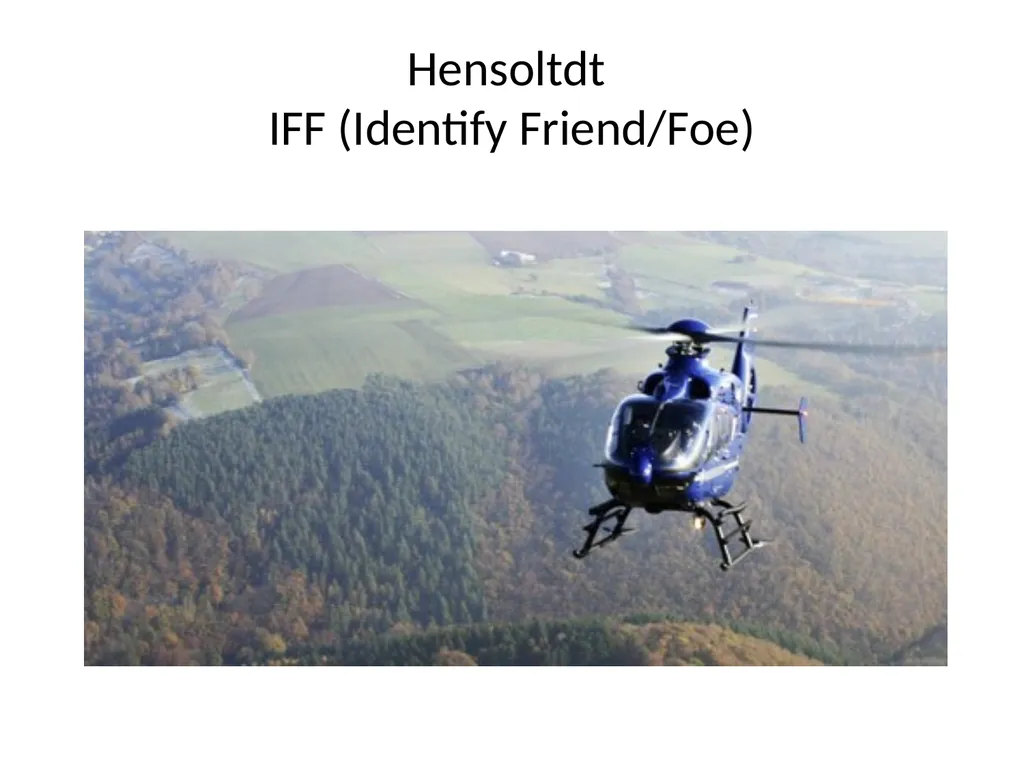
Hensoltdt
IFF (Identify Friend/Foe)<br>
22
SAFEGUARDS ON TRANSFERS The Guiding Principles and Criteria of s15:
UN Security Council Resolutions (Arms Embargo)
Governance – Politics, Human Rights
Regional Dynamics – Stability
Risk of Diversion – Proliferation (Non State Actors)
National Interest – Security, Political & Economic<br>
UN Security Council Resolutions (Arms Embargo)
Governance – Politics, Human Rights
Regional Dynamics – Stability
Risk of Diversion – Proliferation (Non State Actors)
National Interest – Security, Political & Economic<br>
23
SAFEGUARDS ON TRANSFERS The receiving country must provide the NCACC with various undertakings (letters) s16
End-User Certificate (EUC) s17
Routine Inspections must be conducted s18
Entry and Search of Premises with warrant s19
Disclosure and Non disclosure of information s23<br>
End-User Certificate (EUC) s17
Routine Inspections must be conducted s18
Entry and Search of Premises with warrant s19
Disclosure and Non disclosure of information s23<br>
24
Content of Report (s23) Report(s) must be presented to Parliament.
Quarterly and Annually (Cabinet and Parliament)
Content of Report is prescribed by law s23(2)
The Report must reflect the following:
Controlled Items regulation statistics; Exports authorised; Imports authorised; Conveyances authorised
The Report has to comply with the UN Conventional Arms Register (UNCAR)
UNCAR has 7 + 1 Categories<br>
Quarterly and Annually (Cabinet and Parliament)
Content of Report is prescribed by law s23(2)
The Report must reflect the following:
Controlled Items regulation statistics; Exports authorised; Imports authorised; Conveyances authorised
The Report has to comply with the UN Conventional Arms Register (UNCAR)
UNCAR has 7 + 1 Categories<br>
25
REPORTING CYCLES Statistics done on a Calendar not Financial Year basis
The Annual Report of past calendar year is compiled, during the Q1 of the year following
The 1st Quarterly Report of current year is compiled during the 2nd Quarter
The Report to the United Nations is also compiled in Q2, this report needs approval by Parliament before submission to UN.
DIRCO reports to the UN on behalf of RSA<br>
The Annual Report of past calendar year is compiled, during the Q1 of the year following
The 1st Quarterly Report of current year is compiled during the 2nd Quarter
The Report to the United Nations is also compiled in Q2, this report needs approval by Parliament before submission to UN.
DIRCO reports to the UN on behalf of RSA<br>
26
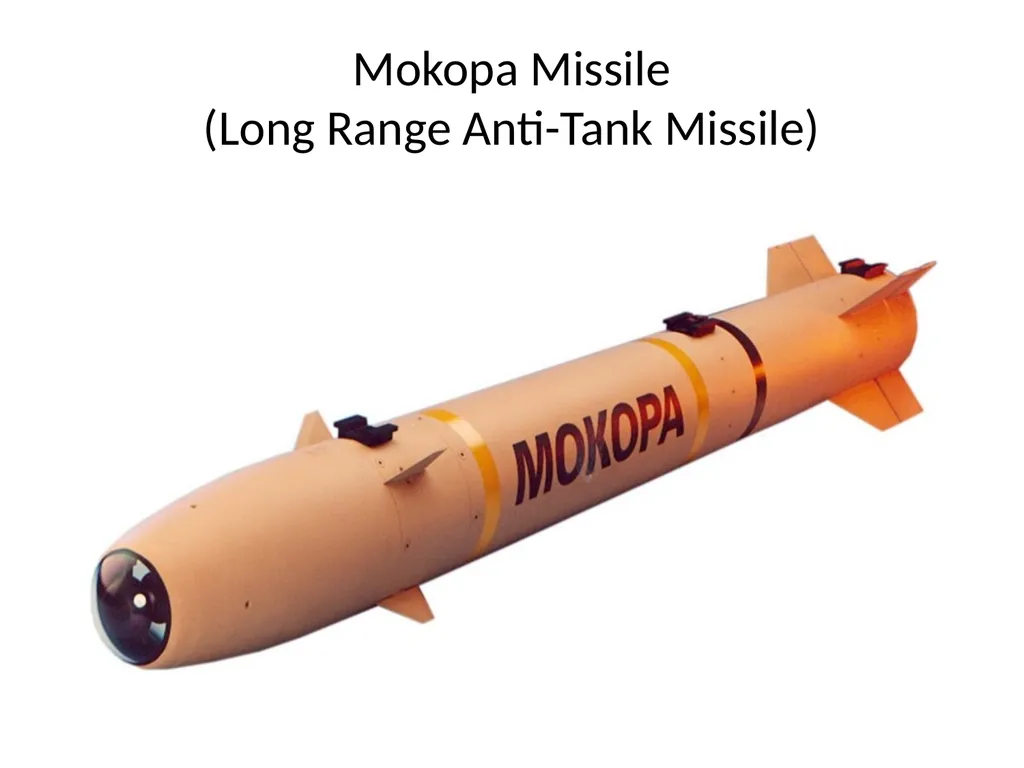
Mokopa Missile
(Long Range Anti-Tank Missile)<br>
27
2016 ANNUAL STATISTICS CONTROLLED ITEMS STATISTICS
EXPORT AUTHORISED
IMPORTS AUTHORISED
CONVEYANCE AUTHORISED APPENDIX A<br>
EXPORT AUTHORISED
IMPORTS AUTHORISED
CONVEYANCE AUTHORISED APPENDIX A<br>
28
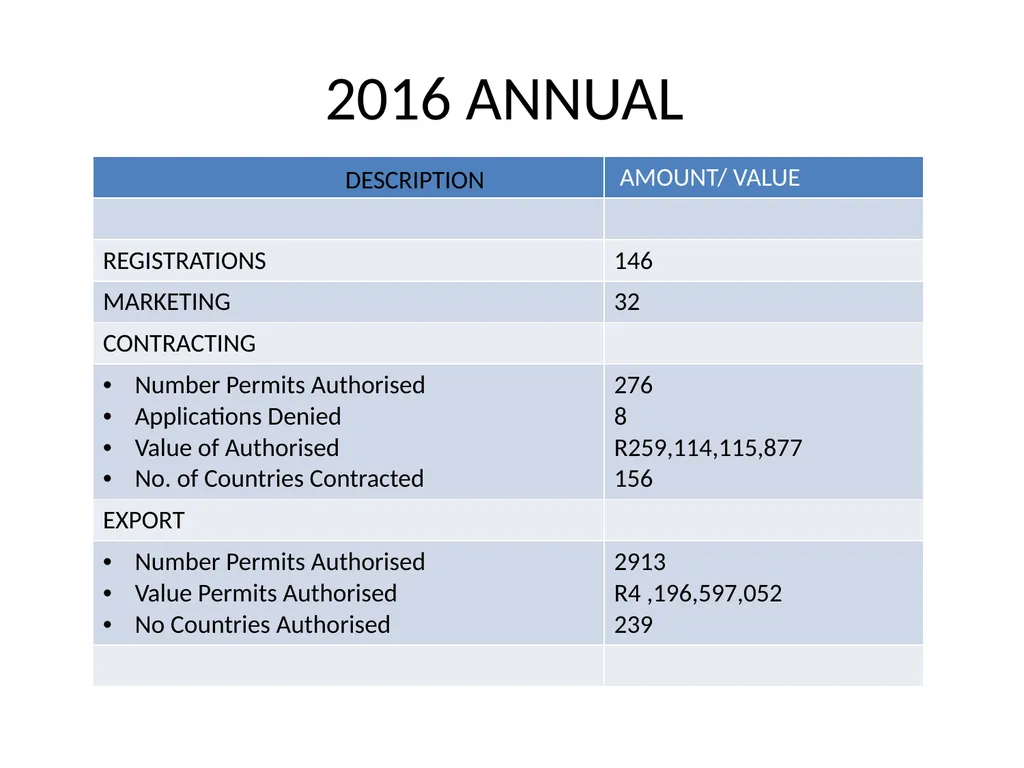
2016 ANNUAL DESCRIPTION<br>
29
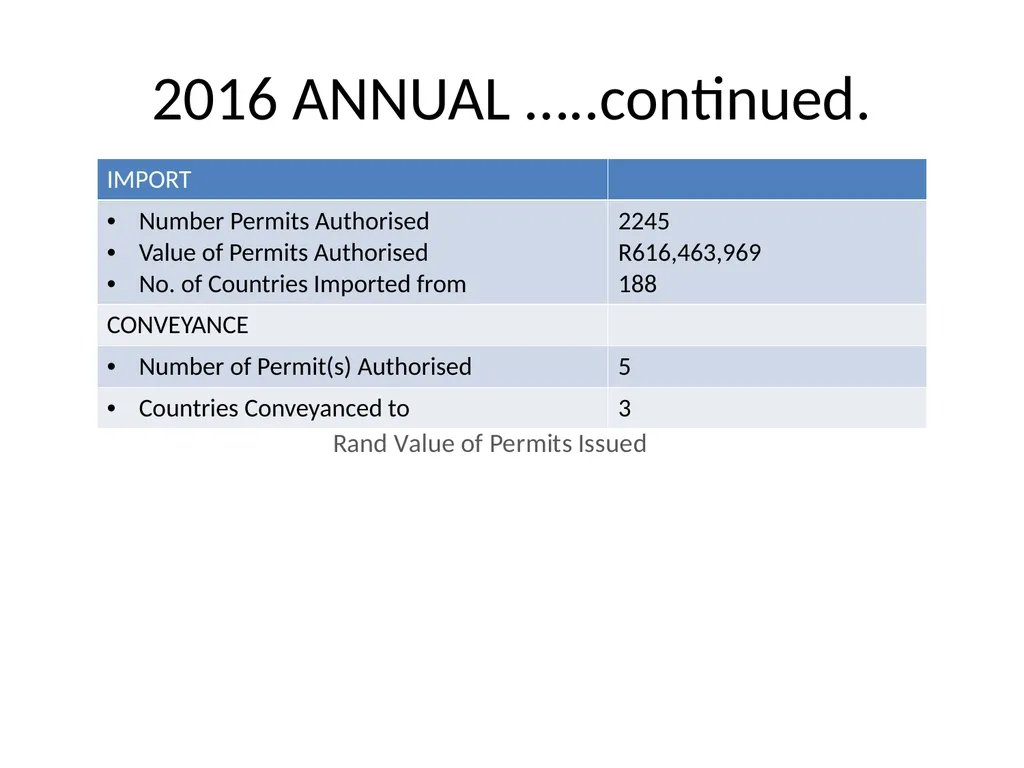
2016 ANNUAL …..continued.<br>
30
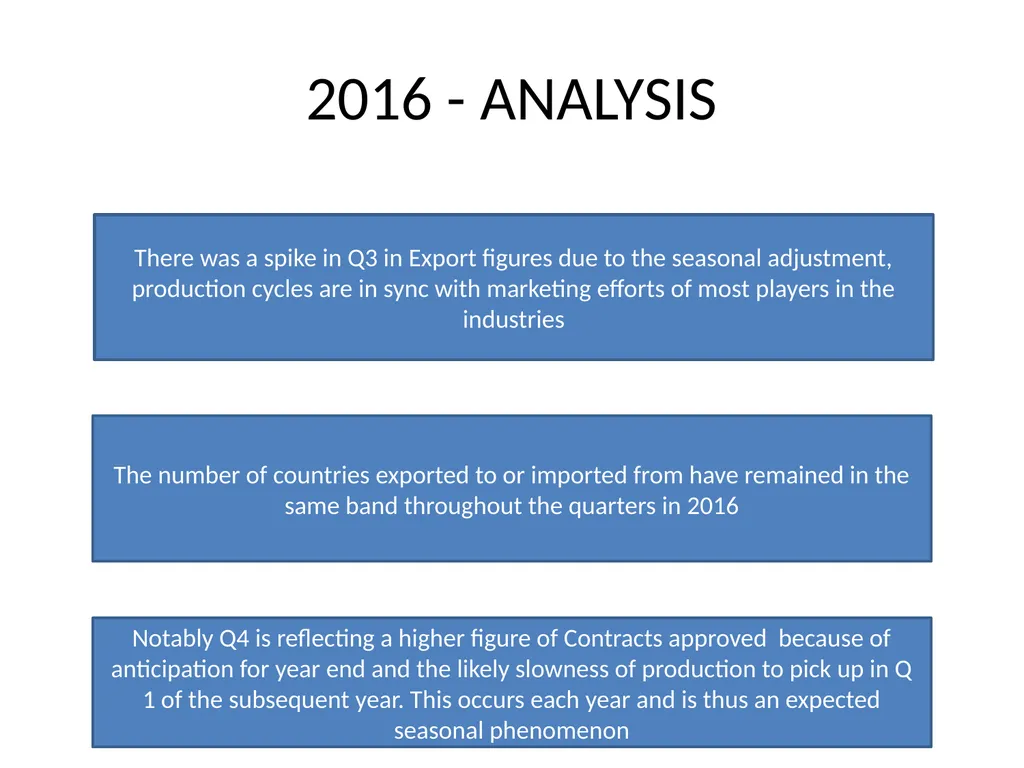
2016 - ANALYSIS There was a spike in Q3 in Export figures due to the seasonal adjustment, production cycles are in sync with marketing efforts of most players in the industries The number of countries exported to or imported from have remained in the same band throughout the quarters in 2016 Notably Q4 is reflecting a higher figure of Contracts approved because of anticipation for year end and the likely slowness of production to pick up in Q 1 of the subsequent year. This occurs each year and is thus an expected seasonal phenomenon<br>
31
2016 - ANALYSIS Various Departments and Agencies of the State continue to offer valued contributions related to decision support for the Cabinet Committee to finalise decisions
The Reports will include risks evaluation and mitigation thereof in relation to the supply of South African Controlled Items to particular countries. This is undertaken in order to avoid Sovereign embarrassment and/or Reputational Damage as a supplier to global markets
Under the direction by the Cabinet Committee, there are assessment of Global trends conducted as well as specific, urgent Geo-politics development(s) that must be concluded which are then monitored on an ongoing basis.
A key consideration on transfer(s) of controlled items is to avoid fuelling conflicts through SA transfers. Given the Country’s contribution for Peace and Security in Africa and worldwide, through various Multilateral platforms.<br>
The Reports will include risks evaluation and mitigation thereof in relation to the supply of South African Controlled Items to particular countries. This is undertaken in order to avoid Sovereign embarrassment and/or Reputational Damage as a supplier to global markets
Under the direction by the Cabinet Committee, there are assessment of Global trends conducted as well as specific, urgent Geo-politics development(s) that must be concluded which are then monitored on an ongoing basis.
A key consideration on transfer(s) of controlled items is to avoid fuelling conflicts through SA transfers. Given the Country’s contribution for Peace and Security in Africa and worldwide, through various Multilateral platforms.<br>
32
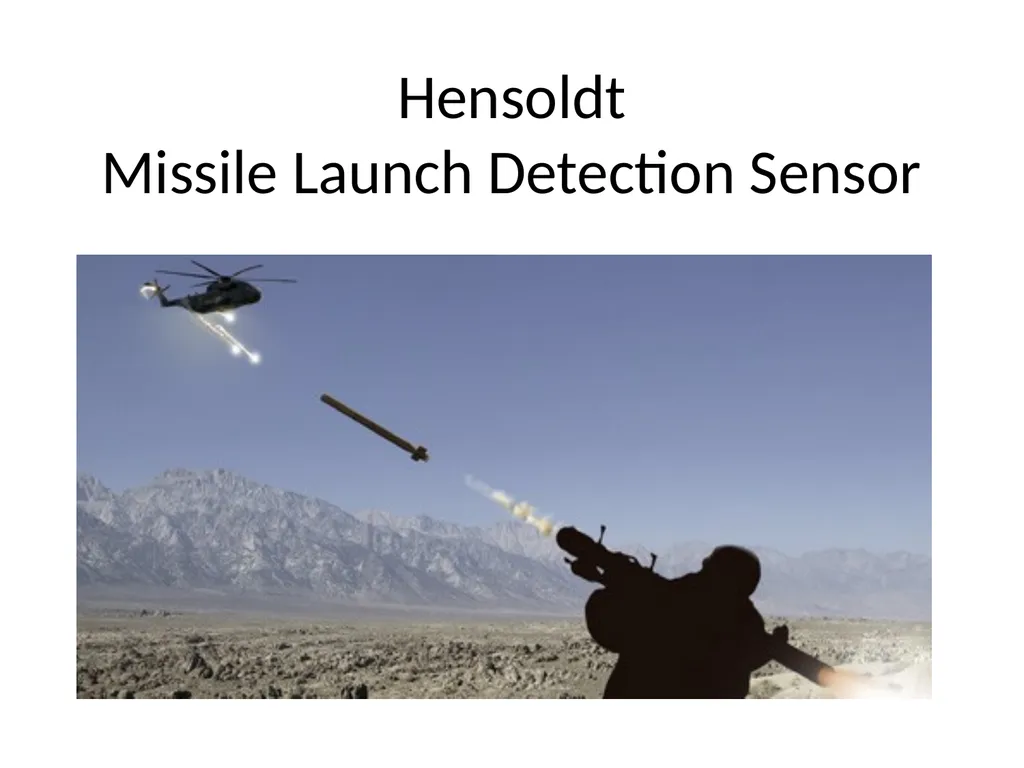
Hensoldt
Missile Launch Detection Sensor<br>
33
2017 ANNUAL STATISTICS CONTROLLED ITEMS STATISTICS
EXPORT AUTHORISED
IMPORTS AUTHORISED
CONVEYANCE AUTHORISED APPENDIX A<br>
EXPORT AUTHORISED
IMPORTS AUTHORISED
CONVEYANCE AUTHORISED APPENDIX A<br>
34
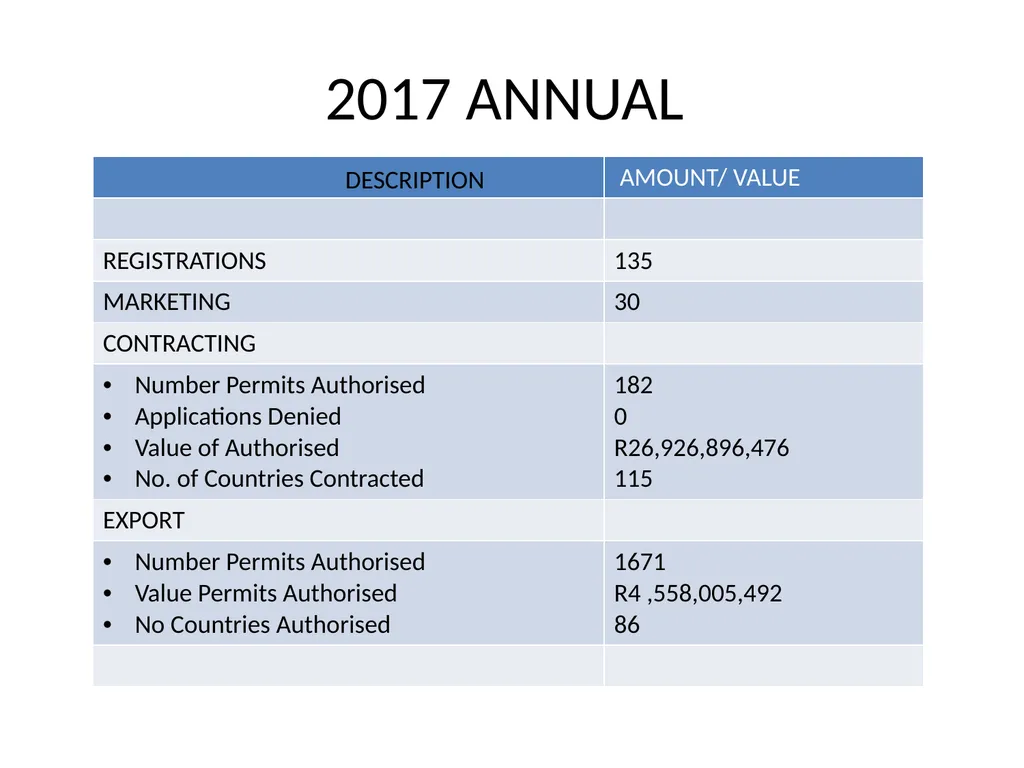
2017 ANNUAL DESCRIPTION<br>
35
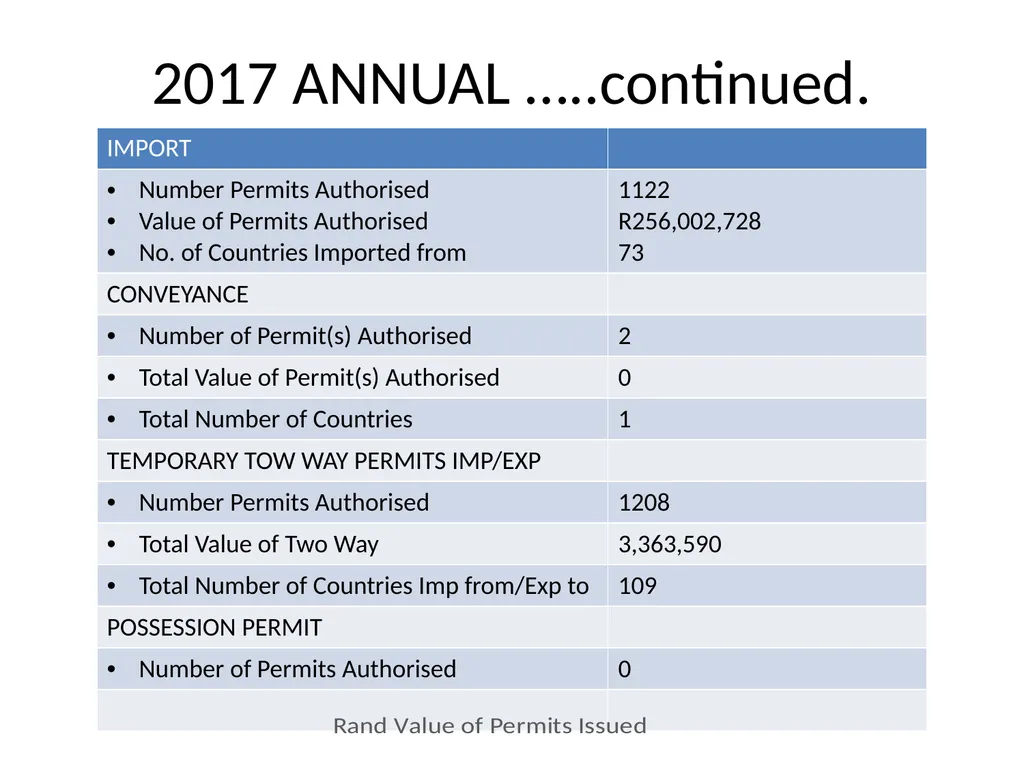
2017 ANNUAL …..continued.<br>
36
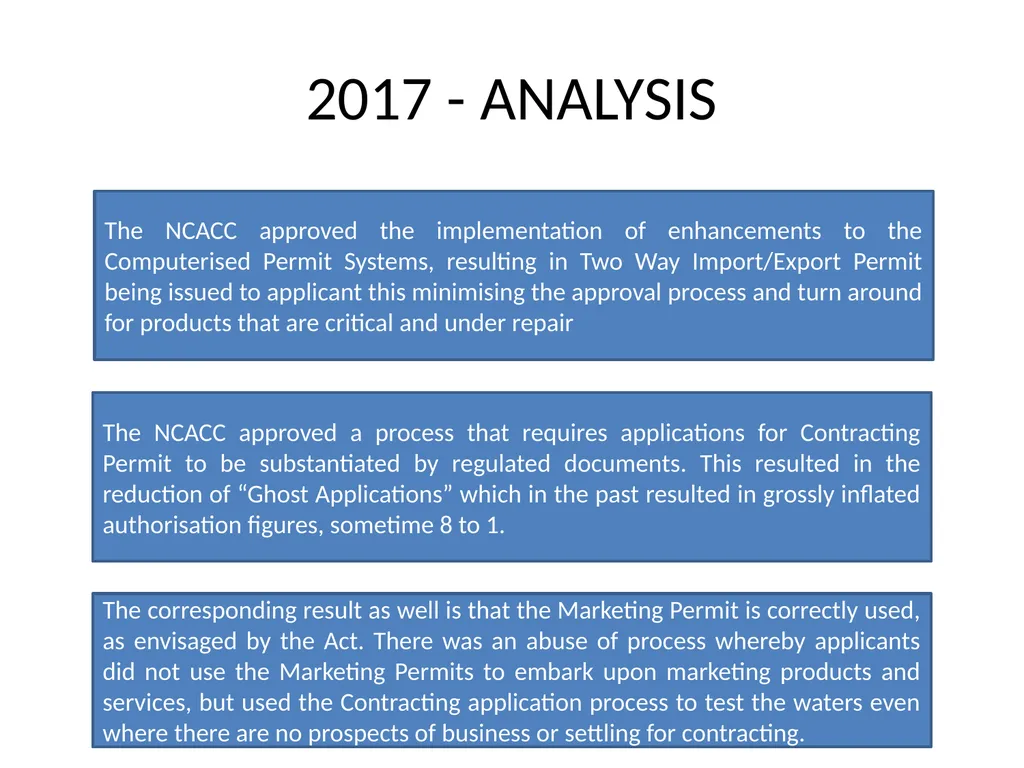
2017 - ANALYSIS The NCACC approved the implementation of enhancements to the Computerised Permit Systems, resulting in Two Way Import/Export Permit being issued to applicant this minimising the approval process and turn around for products that are critical and under repair The NCACC approved a process that requires applications for Contracting Permit to be substantiated by regulated documents. This resulted in the reduction of “Ghost Applications” which in the past resulted in grossly inflated authorisation figures, sometime 8 to 1. The corresponding result as well is that the Marketing Permit is correctly used, as envisaged by the Act. There was an abuse of process whereby applicants did not use the Marketing Permits to embark upon marketing products and services, but used the Contracting application process to test the waters even where there are no prospects of business or settling for contracting.<br>
37
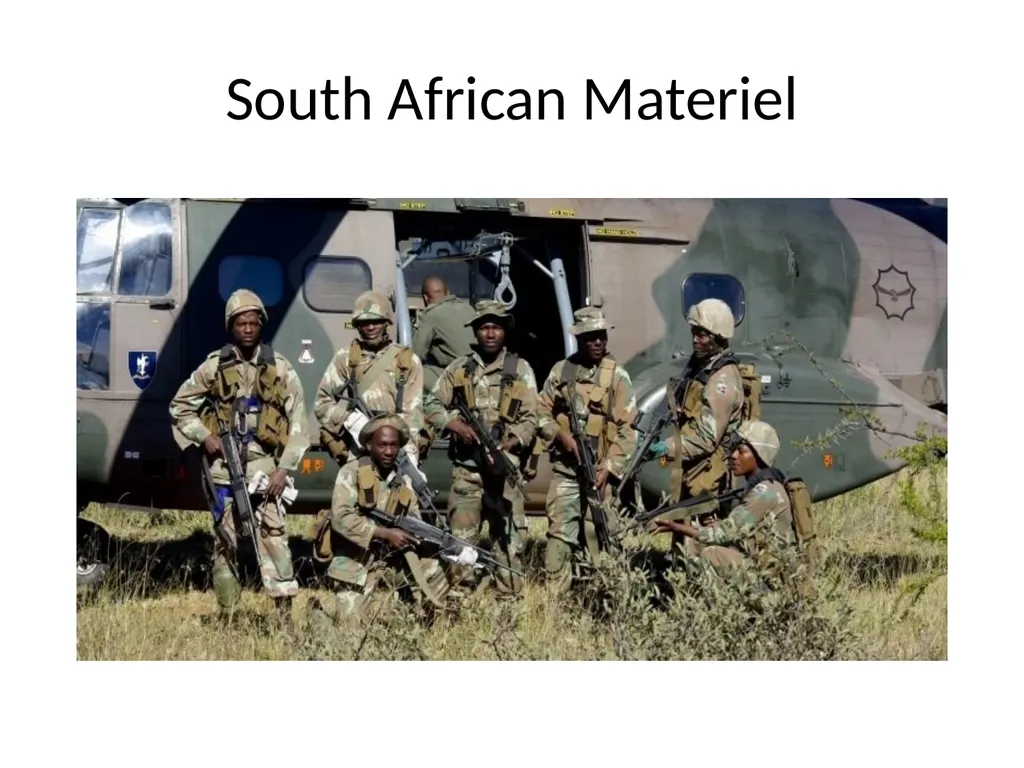
South African Materiel<br>
38
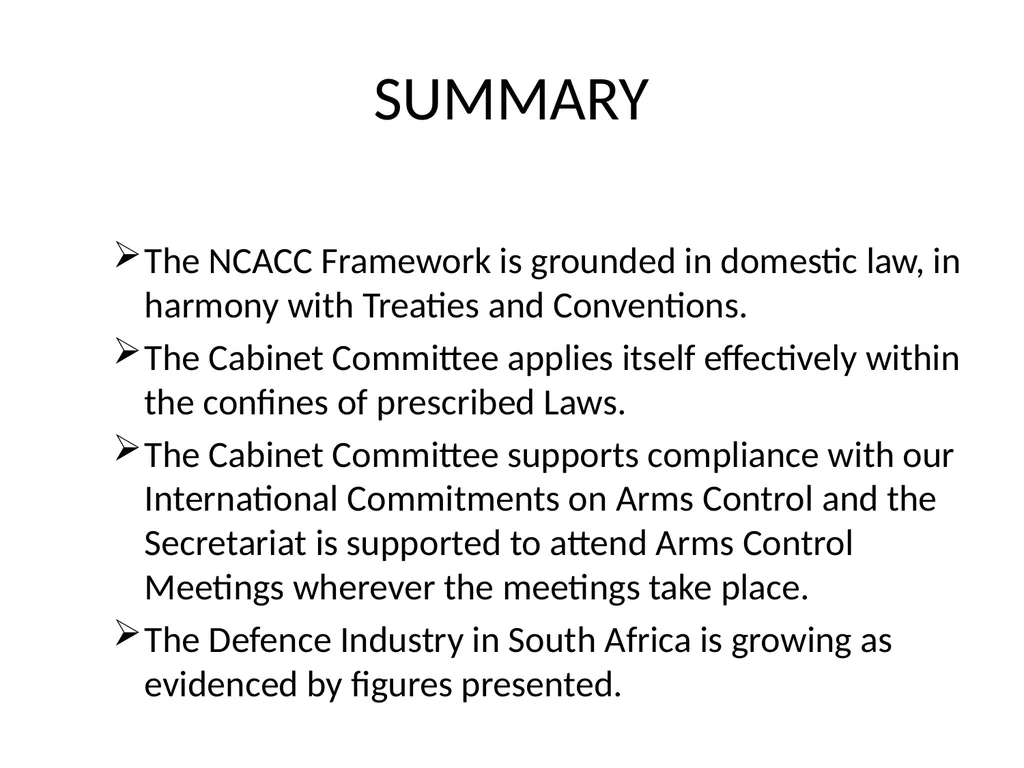
SUMMARY The NCACC Framework is grounded in domestic law, in harmony with Treaties and Conventions.
The Cabinet Committee applies itself effectively within the confines of prescribed Laws.
The Cabinet Committee supports compliance with our International Commitments on Arms Control and the Secretariat is supported to attend Arms Control Meetings wherever the meetings take place.
The Defence Industry in South Africa is growing as evidenced by figures presented.<br>
The Cabinet Committee applies itself effectively within the confines of prescribed Laws.
The Cabinet Committee supports compliance with our International Commitments on Arms Control and the Secretariat is supported to attend Arms Control Meetings wherever the meetings take place.
The Defence Industry in South Africa is growing as evidenced by figures presented.<br>
39
Conclusion Thank You
Question and Answer Session<br>
Question and Answer Session<br>
40
2016 QUARTERLY STATS CONTROLLED ITEMS STATISTICS
EXPORT AUTHORISED
IMPORTS AUTHORISED
CONVEYANCE AUTHORISED APPENDIX B<br>
EXPORT AUTHORISED
IMPORTS AUTHORISED
CONVEYANCE AUTHORISED APPENDIX B<br>
41
2016 Q1 DESCRIPTION<br>
42
2016 Q1 ..continued.<br>
43
2016 Q2 DESCRIPTION<br>
44
2016 Q2 ..continued.<br>
45
2016 Q3 DESCRIPTION<br>
46
2016 Q3 ..continued.<br>
47
2016 Q4 DESCRIPTION<br>
48
2016 Q4 ..continued.<br>
49
2017 QUARTERLY STATS CONTROLLED ITEMS STATISTICS
EXPORT AUTHORISED
IMPORTS AUTHORISED
CONVEYANCE AUTHORISED APPENDIX C<br>
EXPORT AUTHORISED
IMPORTS AUTHORISED
CONVEYANCE AUTHORISED APPENDIX C<br>
50
2017 Q1 DESCRIPTION<br>
51
2017 Q1 ..continued.<br>
52
2017 Q2 DESCRIPTION<br>
53
2017 Q2 ..continued.<br>
54
2017 Q3 DESCRIPTION<br>
55
2017 Q3 ..continued.<br>
56
2017 Q4 DESCRIPTION<br>
57
2017 Q4 ..continued.<br>
58
2017 Q4 ..continued.<br>