
Neoliberalism Cutting public expenditure for











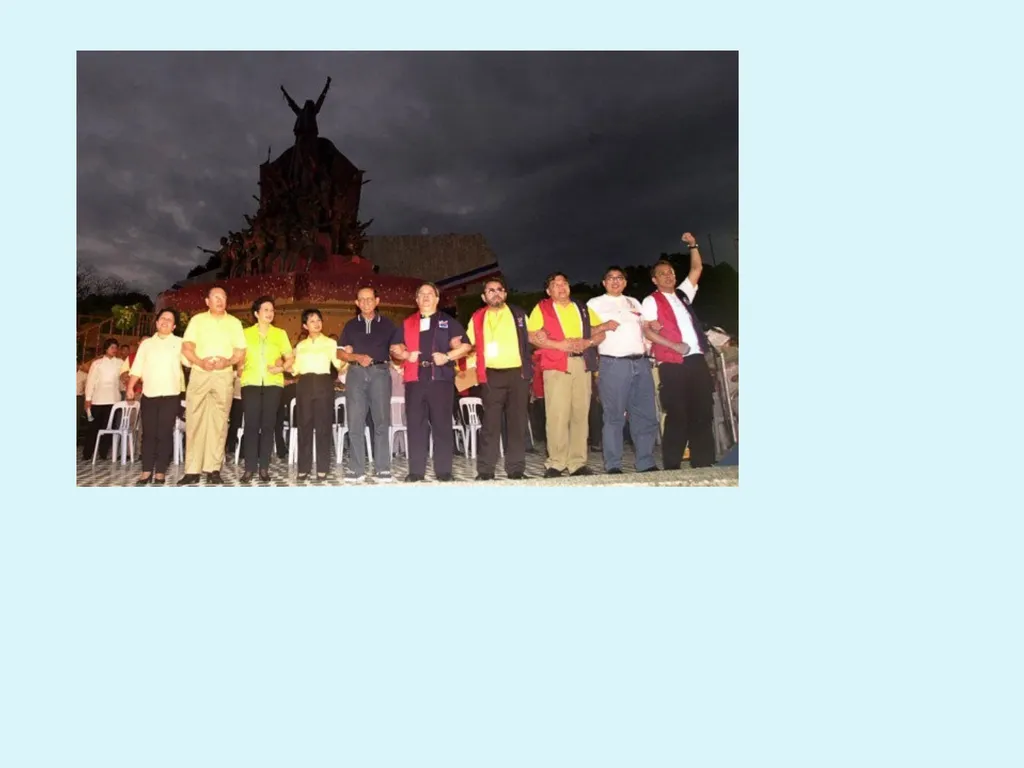
Description: Neoliberalism Cutting public expenditure for social services Deregulation. Privatization. Eliminating the concept of the public good or community Myth of American Exceptionalism Americanism the American mythology that we embody
Related Topics
Download Presentation
"Neoliberalism Cutting public expenditure for" is the property of its rightful owner. Permission is granted to download and print the materials on this website for personal, non-commercial use only, and to display it on your personal computer provided you do not modify the materials and that you retain all copyright notices contained in the materials. By downloading content from our website, you accept the terms of this agreement.
Presentation Transcript
slide4. Neoliberalism
Cutting public expenditure for social services
Deregulation.
Privatization.
Eliminating the concept of "the public good" or "community"<br>
slide5. Myth of American Exceptionalism
Americanism – the American mythology that we embody liberty, equality, individualism, democracy and free market economics.
2. The idea that the US has a unique mission to transform the world for democracy
3. The United States' history and mission give it a
superiority over other nations.<br>
slide8. Three major issues that threaten the whole world
Collapse of the globalization of the neo-liberal economy
Environmental global climate change
Threat of nuclear war<br>
slide9. 1. Hyper-nationalism
2. Militarism
3. Glorification of violence and readiness to use it in politics
4. Fetishization of youth
5. Fetishization of masculinity
6. Leader cult
7. Leader cult
8. Self-definition by opposition
9. Mass mobilization and mass party
10Hierarchical party structure and tendency to purge the disloyal
11Theatricality FASCISM IN THE MAKING<br>
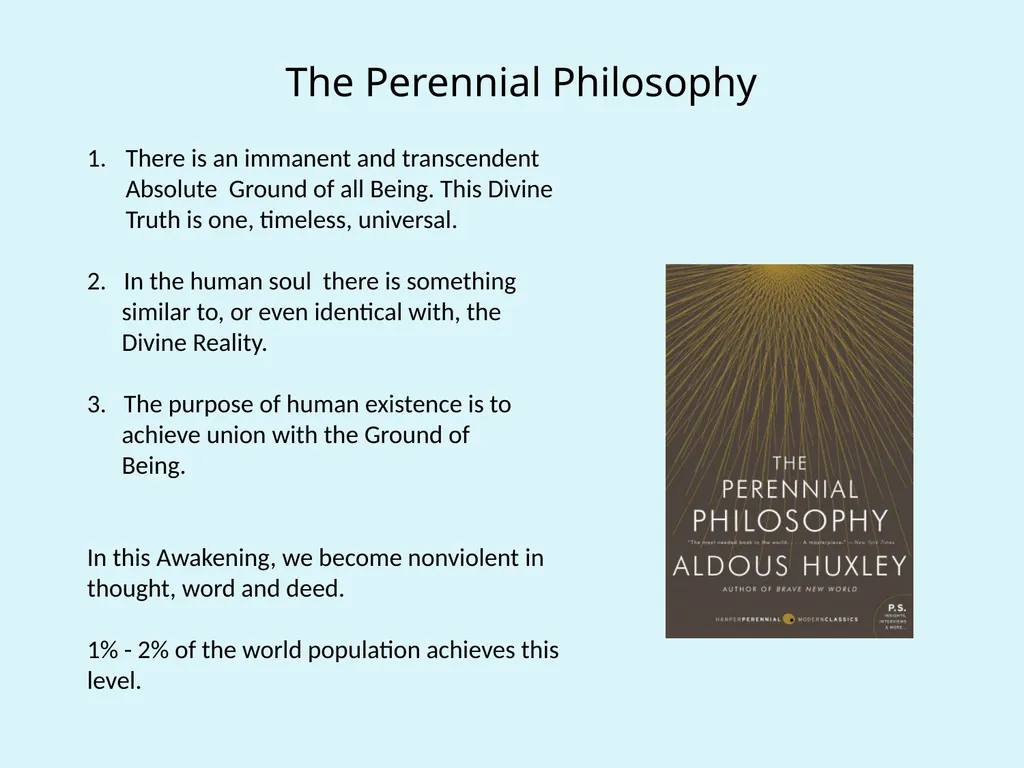
slide10. There is an immanent and transcendent Absolute Ground of all Being. This Divine Truth is one, timeless, universal.
2. In the human soul there is something
similar to, or even identical with, the
Divine Reality.
3. The purpose of human existence is to
achieve union with the Ground of
Being.
In this Awakening, we become nonviolent in thought, word and deed.
1% - 2% of the world population achieves this level. The Perennial Philosophy<br>
slide12. Milky
Way
Galaxy<br>
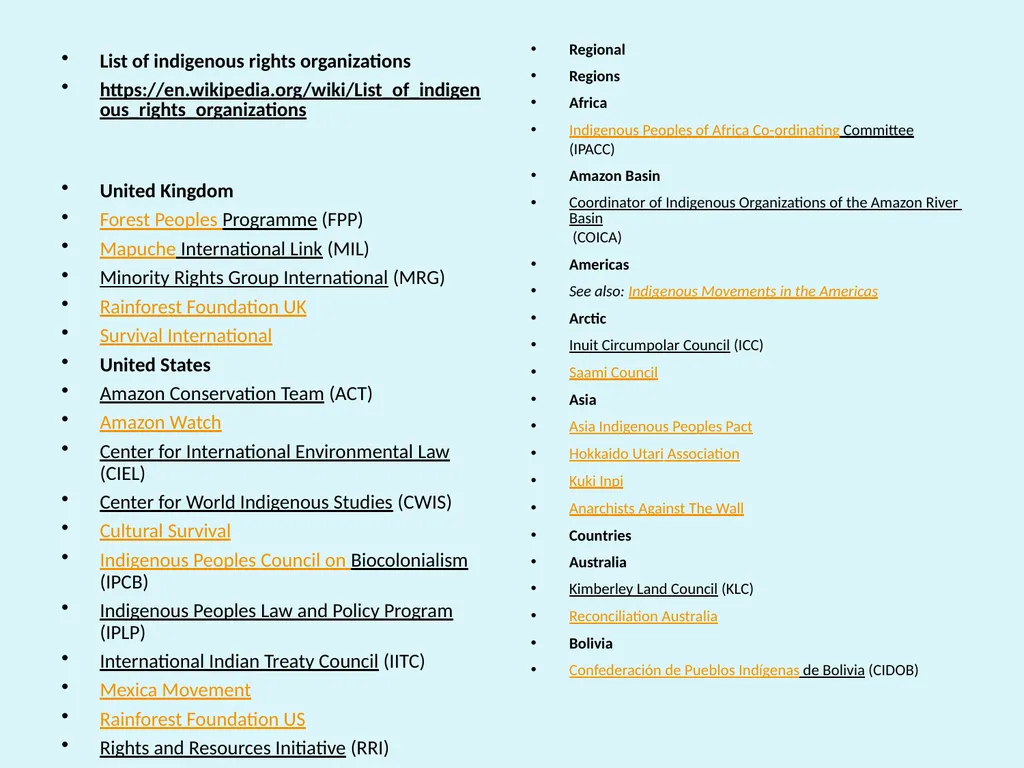
slide14. List of indigenous rights organizations
https://en.wikipedia.org/wiki/List_of_indigenous_rights_organizations
United Kingdom
Forest Peoples Programme (FPP)
Mapuche International Link (MIL)
Minority Rights Group International (MRG)
Rainforest Foundation UK
Survival International
United States
Amazon Conservation Team (ACT)
Amazon Watch
Center for International Environmental Law (CIEL)
Center for World Indigenous Studies (CWIS)
Cultural Survival
Indigenous Peoples Council on Biocolonialism (IPCB)
Indigenous Peoples Law and Policy Program (IPLP)
International Indian Treaty Council (IITC)
Mexica Movement
Rainforest Foundation US
Rights and Resources Initiative (RRI) Regional
Regions
Africa
Indigenous Peoples of Africa Co-ordinating Committee (IPACC)
Amazon Basin
Coordinator of Indigenous Organizations of the Amazon River Basin (COICA)
Americas
See also: Indigenous Movements in the Americas
Arctic
Inuit Circumpolar Council (ICC)
Saami Council
Asia
Asia Indigenous Peoples Pact
Hokkaido Utari Association
Kuki Inpi
Anarchists Against The Wall
Countries
Australia
Kimberley Land Council (KLC)
Reconciliation Australia
Bolivia
Confederación de Pueblos Indígenas de Bolivia (CIDOB)<br>
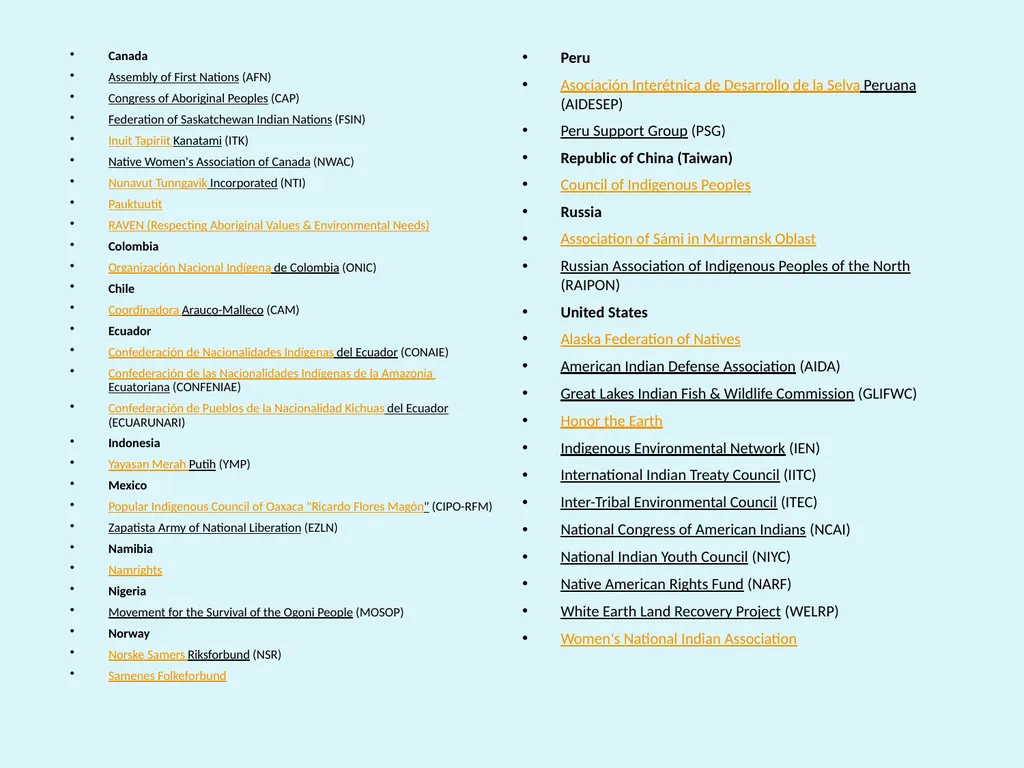
slide15. Canada
Assembly of First Nations (AFN)
Congress of Aboriginal Peoples (CAP)
Federation of Saskatchewan Indian Nations (FSIN)
Inuit Tapiriit Kanatami (ITK)
Native Women's Association of Canada (NWAC)
Nunavut Tunngavik Incorporated (NTI)
Pauktuutit
RAVEN (Respecting Aboriginal Values & Environmental Needs)
Colombia
Organización Nacional Indígena de Colombia (ONIC)
Chile
Coordinadora Arauco-Malleco (CAM)
Ecuador
Confederación de Nacionalidades Indígenas del Ecuador (CONAIE)
Confederación de las Nacionalidades Indígenas de la Amazonia Ecuatoriana (CONFENIAE)
Confederación de Pueblos de la Nacionalidad Kichuas del Ecuador (ECUARUNARI)
Indonesia
Yayasan Merah Putih (YMP)
Mexico
Popular Indigenous Council of Oaxaca "Ricardo Flores Magón" (CIPO-RFM)
Zapatista Army of National Liberation (EZLN)
Namibia
Namrights
Nigeria
Movement for the Survival of the Ogoni People (MOSOP)
Norway
Norske Samers Riksforbund (NSR)
Samenes Folkeforbund Peru
Asociación Interétnica de Desarrollo de la Selva Peruana (AIDESEP)
Peru Support Group (PSG)
Republic of China (Taiwan)
Council of Indigenous Peoples
Russia
Association of Sámi in Murmansk Oblast
Russian Association of Indigenous Peoples of the North (RAIPON)
United States
Alaska Federation of Natives
American Indian Defense Association (AIDA)
Great Lakes Indian Fish & Wildlife Commission (GLIFWC)
Honor the Earth
Indigenous Environmental Network (IEN)
International Indian Treaty Council (IITC)
Inter-Tribal Environmental Council (ITEC)
National Congress of American Indians (NCAI)
National Indian Youth Council (NIYC)
Native American Rights Fund (NARF)
White Earth Land Recovery Project (WELRP)
Women's National Indian Association<br>
slide16. Peru
Asociación Interétnica de Desarrollo de la Selva Peruana (AIDESEP)
Peru Support Group (PSG)
Republic of China (Taiwan)
Council of Indigenous Peoples
Russia
Association of Sámi in Murmansk Oblast
Russian Association of Indigenous Peoples of the North (RAIPON)
United States
Alaska Federation of Natives
American Indian Defense Association (AIDA)
Great Lakes Indian Fish & Wildlife Commission (GLIFWC)
Honor the Earth
Indigenous Environmental Network (IEN)
International Indian Treaty Council (IITC)
Inter-Tribal Environmental Council (ITEC)
National Congress of American Indians (NCAI)
National Indian Youth Council (NIYC)
Native American Rights Fund (NARF)
White Earth Land Recovery Project (WELRP)
Women's National Indian Association Indigenous Association of the Republic of Argentina (AIRA)
National Organization of Indigenous Peoples of Argentina (ONPIA)
Belize
Belize Indigenous Training Institute
Caribbean Organization of Indigenous Peoples (COIP)
Bolivia
Confederation of Indigenous people of Bolivia, previously known as Indigenous Confederation of the East, Chaco, and Bolivian Amazon (CIDOB)
Sole Syndical Confederation of Rural Workers of Bolivia (CSUTCB)
National Council of Ayllus and Markas of Qollasuyu (CONAMAQ)
Organization of Aymara Women of Kollasuyo
Brazil
Coordination of the Indigenous Organizations of the Brazilian Amazon (COIAB)
Coordinating Council of Indigenous Peoples and Organizations of Brazil (CAPOIB)[1]
Indianist Missionary Council (CIMI)
Indigenous Council of Roraima
Pro-Yanomami Commission (CCPY)
Union of Indigenous Nations of Acre and South of the Amazon (UNI-AC)
Articulation of Indigenous Peoples of the South Region - Arpin-South[2]<br>
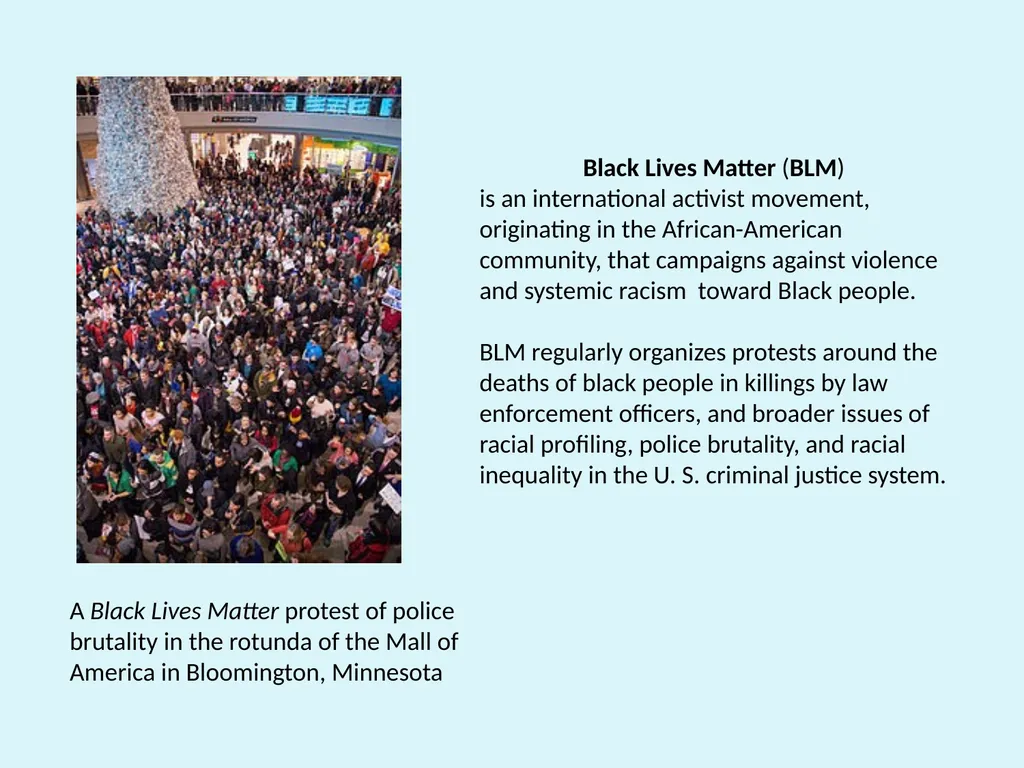
slide17. A Black Lives Matter protest of police brutality in the rotunda of the Mall of America in Bloomington, Minnesota Black Lives Matter (BLM)
is an international activist movement, originating in the African-American community, that campaigns against violence and systemic racism toward Black people.
BLM regularly organizes protests around the deaths of black people in killings by law enforcement officers, and broader issues of racial profiling, police brutality, and racial inequality in the U. S. criminal justice system.<br>
slide18. Churches and faith-based organizations
Small service organizations (such as locally-based centers for day laborers, legal support offices, and ethnic organizations)
National organizations (such as Fair Immigration Reform Movement, the National Council of La Raza, and National Alliance of Latin American and Caribbean Countries)
State and city advocacy organizations (such as Coalition for Humane Immigrant Rights of Los Angeles, and Pueblo Unidos of New Mexico)
Trade unions and labor federations (including the AFL-CIO [American Federation of Labor-Congress of Industrial Organization], Change to Win, UNITE HERE [United Nettle work, Industrial, and Textile Employees Hotel and Restaurant Employees], SEIU [Service Employees International Union], UFCW [United Food and Commercial Workers], and UFW [United Farm Workers] The US Immigrant Rights Movement<br>
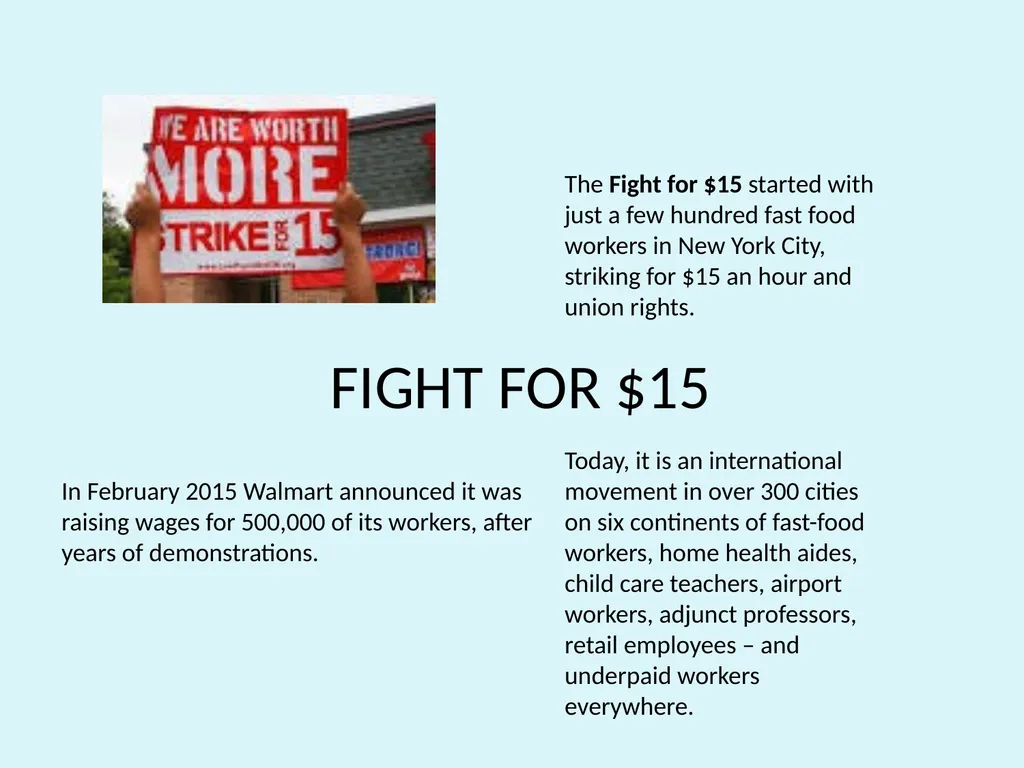
slide19. FIGHT FOR $15 The Fight for $15 started with just a few hundred fast food workers in New York City, striking for $15 an hour and union rights.
Today, it is an international movement in over 300 cities on six continents of fast-food workers, home health aides, child care teachers, airport workers, adjunct professors, retail employees – and underpaid workers everywhere. In February 2015 Walmart announced it was raising wages for 500,000 of its workers, after years of demonstrations.<br>
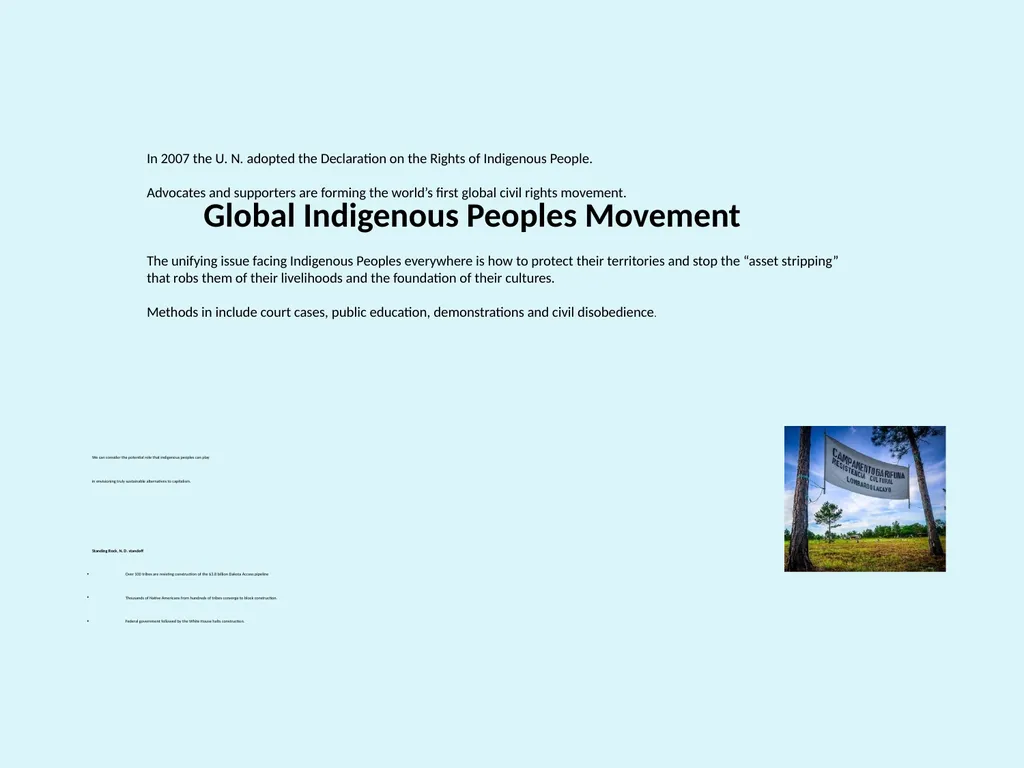
slide20. In 2007 the U. N. adopted the Declaration on the Rights of Indigenous People. Advocates and supporters are forming the world’s first global civil rights movement. The unifying issue facing Indigenous Peoples everywhere is how to protect their territories and stop the “asset stripping” that robs them of their livelihoods and the foundation of their cultures. Methods in include court cases, public education, demonstrations and civil disobedience. Global Indigenous Peoples Movement We can consider the potential role that indigenous peoples can play
in envisioning truly sustainable alternatives to capitalism.
Standing Rock, N. D. standoff
Over 100 tribes are resisting construction of the $3.8 billion Dakota Access pipeline
Thousands of Native Americans from hundreds of tribes converge to block construction.
Federal government followed by the White House halts construction.<br>
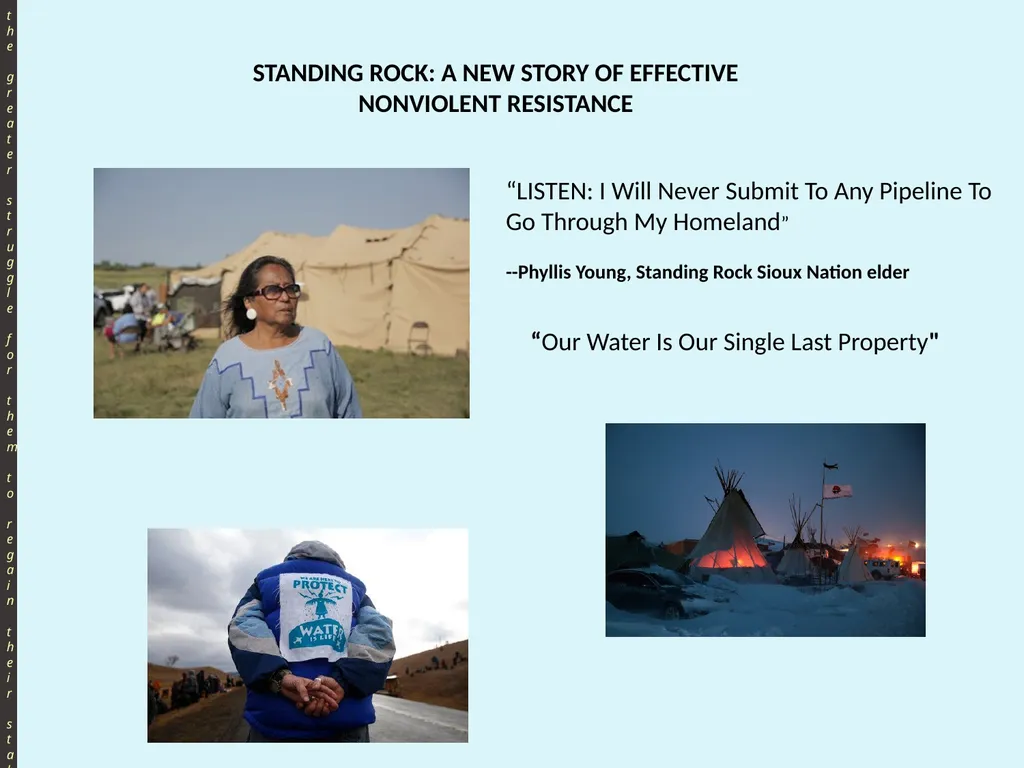
slide21. For MPT, the most important and peline, it will not make them whole again. This has been but a small battle in the greater struggle for them to regain their stability as a sovereign natio. “LISTEN: I Will Never Submit To Any Pipeline To Go Through My Homeland”
--Phyllis Young, Standing Rock Sioux Nation elder STANDING ROCK: A NEW STORY OF EFFECTIVE NONVIOLENT RESISTANCE “Our Water Is Our Single Last Property"<br>
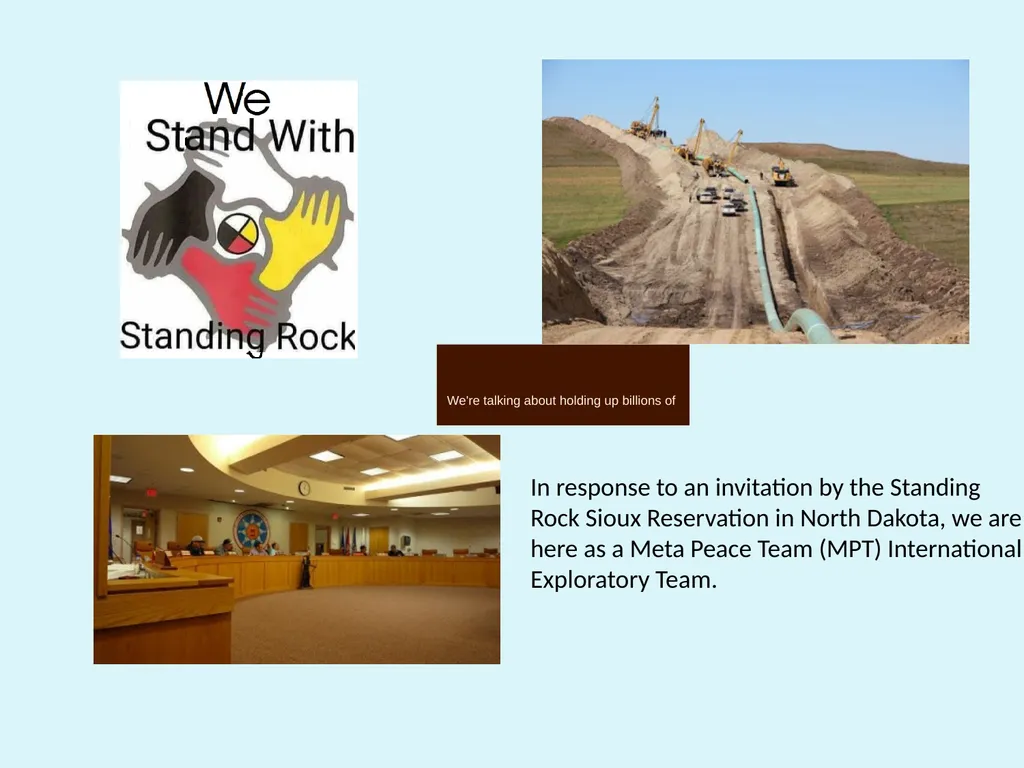
slide22. We're talking about holding up billions of In response to an invitation by the Standing Rock Sioux Reservation in North Dakota, we are here as a Meta Peace Team (MPT) International Exploratory Team.<br>
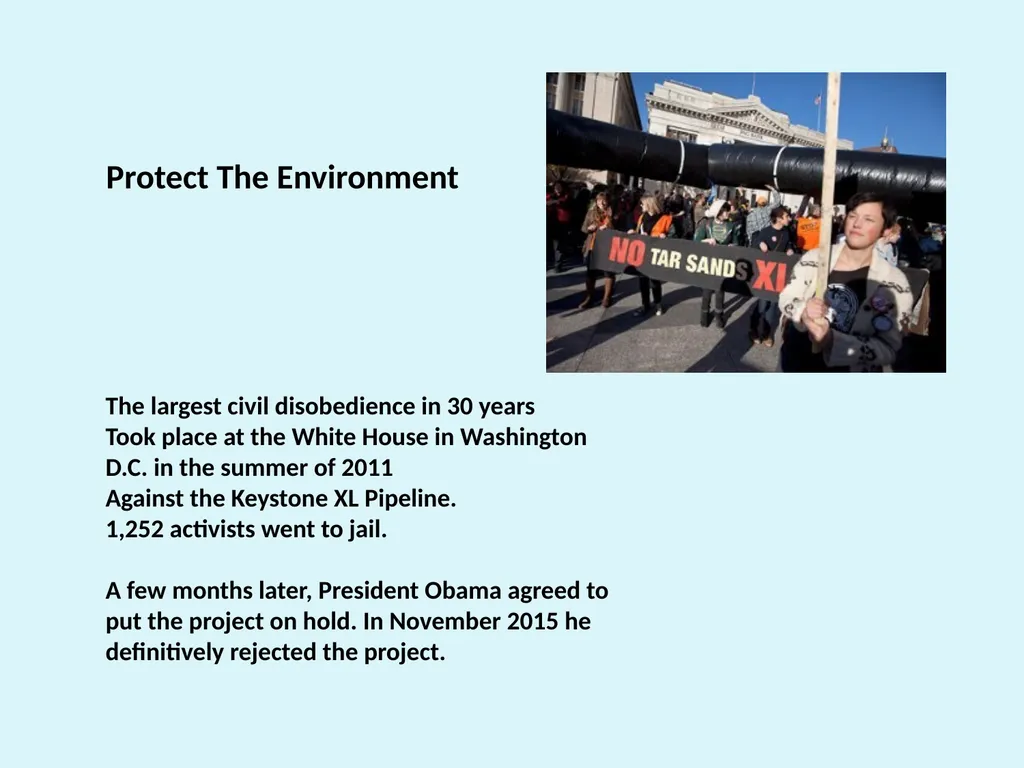
slide23. The largest civil disobedience in 30 years
Took place at the White House in Washington D.C. in the summer of 2011
Against the Keystone XL Pipeline.
1,252 activists went to jail.
A few months later, President Obama agreed to put the project on hold. In November 2015 he definitively rejected the project. Protect The Environment<br>
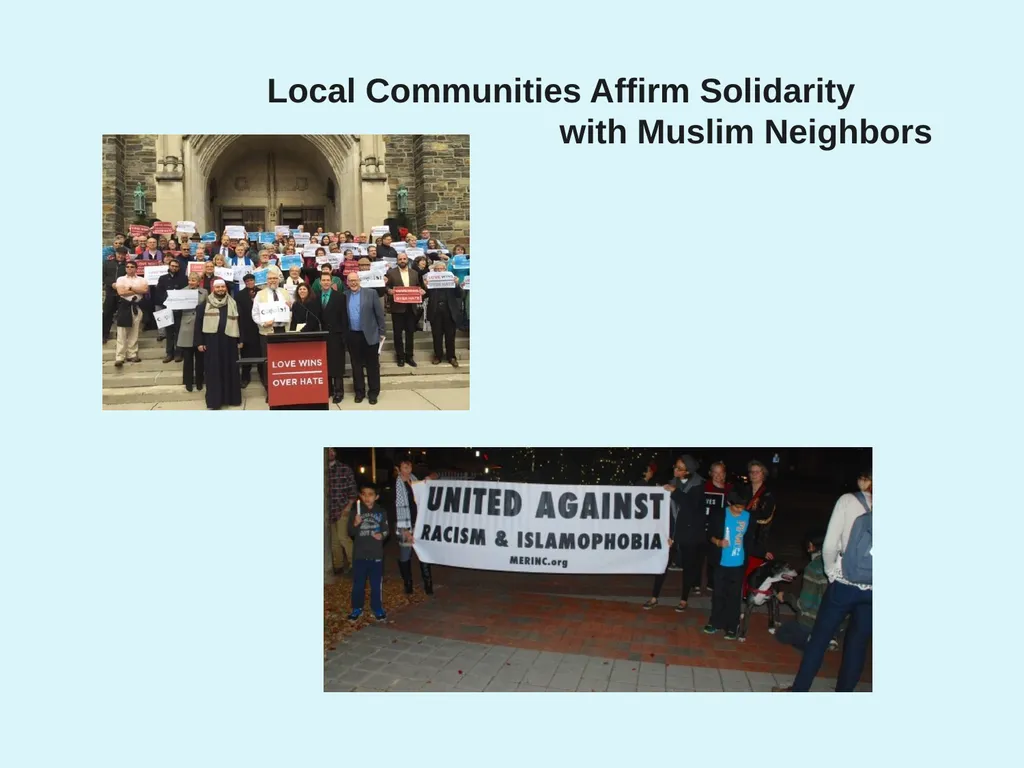
slide25. Local Communities Affirm Solidarity
with Muslim Neighbors<br>
slide26. Local Community as the Basis of a New World
Care for All – total sharing
Simplicity of life
Resiliency
Self-Sufficiency
Intermediate technology
Reaching out to other communities in need
Participation in Nonviolent Resistance
Nonviolent Peace Armies<br>
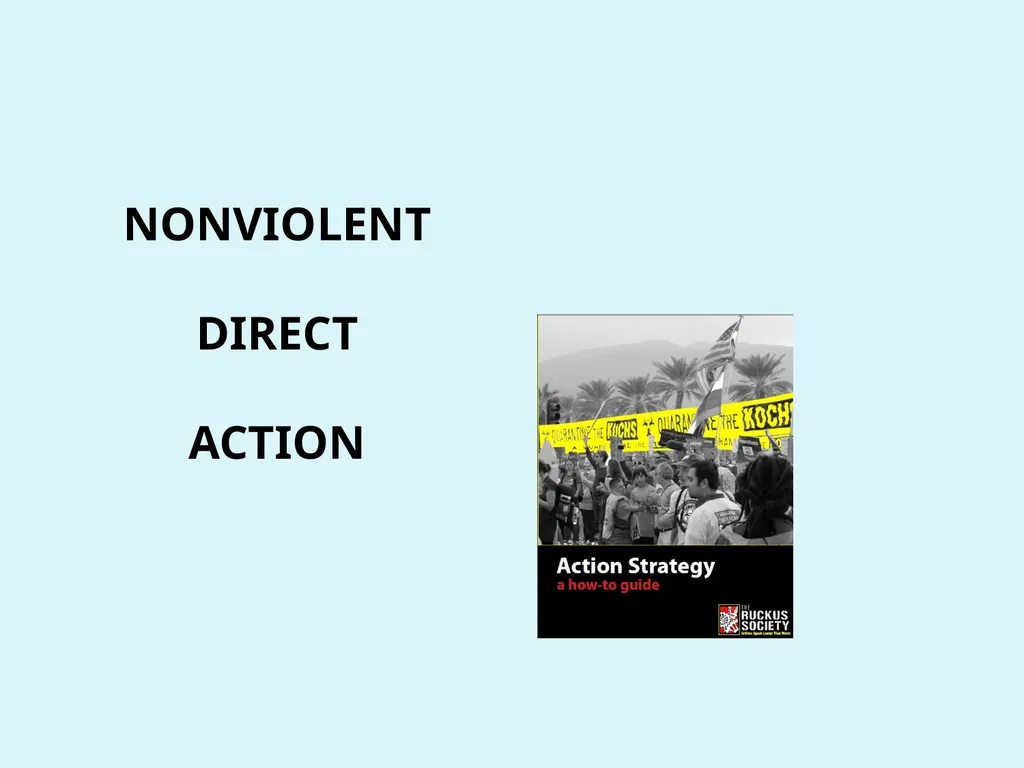
slide27. NONVIOLENT
DIRECT
ACTION<br>
slide28. Gene Sharp’s 198 Methods of Nonviolent Action
5FEB
FORMAL STATEMENTS
Public speeches
Letters of opposition or support
Declarations by organizations and institutions
Signed public declarations
Declarations of indictment and intention
Group or mass petitions
COMMUNICATIONS WITH A WIDER AUDIENCE
Slogans, caricatures, and symbols
Banners, posters, and displayed communications
Leaflets, pamphlets, and books
Newspapers and journals
Records, radio, and television
Skywriting and earthwriting
GROUP REPRESENTATIONS
Deputations
Mock awards
Group lobbying
Picketing
Mock elections
SYMBOLIC PUBLIC ACTS
Displays of flags and symbolic colours
Wearing of symbols
Prayer and worship
Delivering symbolic objects
Protest disrobings
Destruction of own property
Symbolic lights
Displays of portraits
Paint as protest
New signs and names
Symbolic sounds
Symbolic reclamations
Rude gestures
PRESSURES ON INDIVIDUALS
“Haunting” officials
Taunting officials
Fraternization
Vigils
DRAMA AND MUSIC
Humourous skits and pranks
Performances of plays and music
Singing
PROCESSIONS
Marches
Parades
Religious processions
Pilgrimages
Motorcades HONOURING THE DEAD
Political mourning
Mock funerals
Demonstrative funerals
Homage at burial places
PUBLIC ASSEMBLIES
Assemblies of protest or support
Protest meetings
Camouflaged meetings of protest
Teach-ins
WITHDRAWAL AND RENUNCIATION
Walk-outs
Silence
Renouncing honours
Turning one’s back
SOCIAL NONCOOPERATION
OSTRACISM OF PERSONS
Social boycott
Selective social boycott
Lysistratic nonaction
Excommunication
Interdict
SOCIAL NONCOOPERATION
Suspension of social and sports activities
Boycott of social affairs
Student strike
Social disobedience
Withdrawal from social institutions
WITHDRAWAL FROM THE SOCIAL SYSTEM
Stay-at-home
Total personal noncooperation
“Flight” of workers
Sanctuary
Collective disappearance
Protest emigration (hijrat)
ECONOMIC NONCOOPERATION: BOYCOTTS
ACTION BY CONSUMERS
Consumers’ boycott
Nonconsumption of boycotted goods
Policy of austerity
Rent withholding
Refusal to rent
National consumers’ boycott
International consumers’ boycott
ACTION BY WORKERS AND PRODUCERS
Workers’ boycott
Producers’ boycott<br>
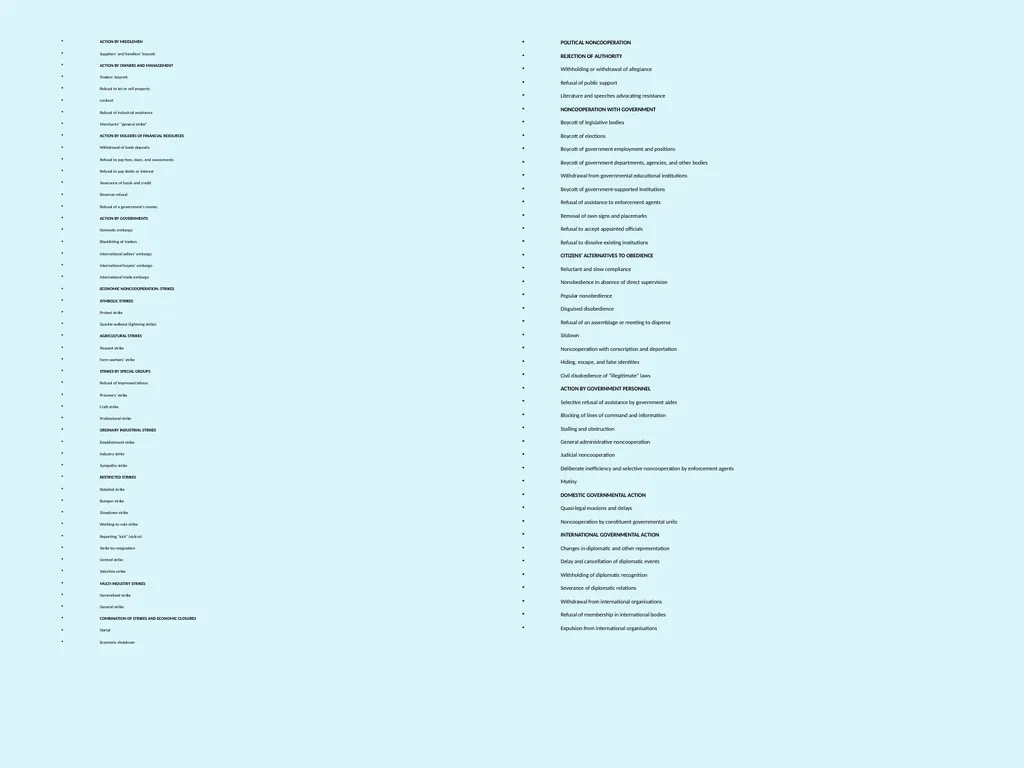
slide29. ACTION BY MIDDLEMEN
Suppliers’ and handlers’ boycott
ACTION BY OWNERS AND MANAGEMENT
Traders’ boycott
Refusal to let or sell property
Lockout
Refusal of industrial assistance
Merchants’ “general strike”
ACTION BY HOLDERS OF FINANCIAL RESOURCES
Withdrawal of bank deposits
Refusal to pay fees, dues, and assessments
Refusal to pay debts or interest
Severance of funds and credit
Revenue refusal
Refusal of a government’s money
ACTION BY GOVERNMENTS
Domestic embargo
Blacklisting of traders
International sellers’ embargo
International buyers’ embargo
International trade embargo
ECONOMIC NONCOOOPERATION: STRIKES
SYMBOLIC STRIKES
Protest strike
Quickie walkout (lightning strike)
AGRICULTURAL STRIKES
Peasant strike
Farm workers’ strike
STRIKES BY SPECIAL GROUPS
Refusal of impressed labour
Prisoners’ strike
Craft strike
Professional strike
ORDINARY INDUSTRIAL STRIKES
Establishment strike
Industry strike
Sympathy strike
RESTRICTED STRIKES
Detailed strike
Bumper strike
Slowdown strike
Working-to-rule strike
Reporting “sick” (sick-in)
Strike by resignation
Limited strike
Selective strike
MULTI-INDUSTRY STRIKES
Generalised strike
General strike
COMBINATION OF STRIKES AND ECONOMIC CLOSURES
Hartal
Economic shutdown POLITICAL NONCOOPERATION
REJECTION OF AUTHORITY
Withholding or withdrawal of allegiance
Refusal of public support
Literature and speeches advocating resistance
NONCOOPERATION WITH GOVERNMENT
Boycott of legislative bodies
Boycott of elections
Boycott of government employment and positions
Boycott of government departments, agencies, and other bodies
Withdrawal from governmental educational institutions
Boycott of government-supported institutions
Refusal of assistance to enforcement agents
Removal of own signs and placemarks
Refusal to accept appointed officials
Refusal to dissolve existing institutions
CITIZENS’ ALTERNATIVES TO OBEDIENCE
Reluctant and slow compliance
Nonobedience in absence of direct supervision
Popular nonobedience
Disguised disobedience
Refusal of an assemblage or meeting to disperse
Sitdown
Noncooperation with conscription and deportation
Hiding, escape, and false identities
Civil disobedience of “illegitimate” laws
ACTION BY GOVERNMENT PERSONNEL
Selective refusal of assistance by government aides
Blocking of lines of command and information
Stalling and obstruction
General administrative noncooperation
Judicial noncooperation
Deliberate inefficiency and selective noncooperation by enforcement agents
Mutiny
DOMESTIC GOVERNMENTAL ACTION
Quasi-legal evasions and delays
Noncooperation by constituent governmental units
INTERNATIONAL GOVERNMENTAL ACTION
Changes in diplomatic and other representation
Delay and cancellation of diplomatic events
Withholding of diplomatic recognition
Severance of diplomatic relations
Withdrawal from international organisations
Refusal of membership in international bodies
Expulsion from international organisations<br>
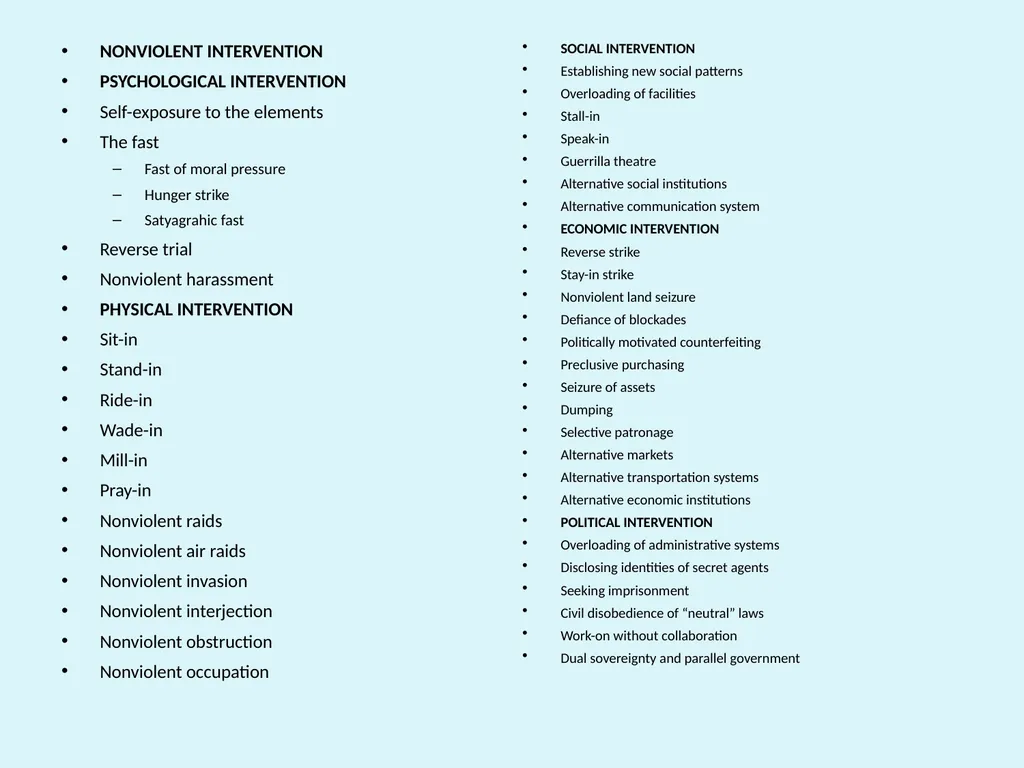
slide30. NONVIOLENT INTERVENTION
PSYCHOLOGICAL INTERVENTION
Self-exposure to the elements
The fast
Fast of moral pressure
Hunger strike
Satyagrahic fast
Reverse trial
Nonviolent harassment
PHYSICAL INTERVENTION
Sit-in
Stand-in
Ride-in
Wade-in
Mill-in
Pray-in
Nonviolent raids
Nonviolent air raids
Nonviolent invasion
Nonviolent interjection
Nonviolent obstruction
Nonviolent occupation SOCIAL INTERVENTION
Establishing new social patterns
Overloading of facilities
Stall-in
Speak-in
Guerrilla theatre
Alternative social institutions
Alternative communication system
ECONOMIC INTERVENTION
Reverse strike
Stay-in strike
Nonviolent land seizure
Defiance of blockades
Politically motivated counterfeiting
Preclusive purchasing
Seizure of assets
Dumping
Selective patronage
Alternative markets
Alternative transportation systems
Alternative economic institutions
POLITICAL INTERVENTION
Overloading of administrative systems
Disclosing identities of secret agents
Seeking imprisonment
Civil disobedience of “neutral” laws
Work-on without collaboration
Dual sovereignty and parallel government<br>
slide31. SOLIDARITY MARCH
ON THE STATE CAPITAL LANSING
1:00PM – 3:00PM
____________________
Meta/Michigan Peace Team
needs volunteers for the peace team
Peace Team Orientation 11:00
Peace Team at Capital
12:30pm – 3:00pm
Contact Peter Dougherty<br>
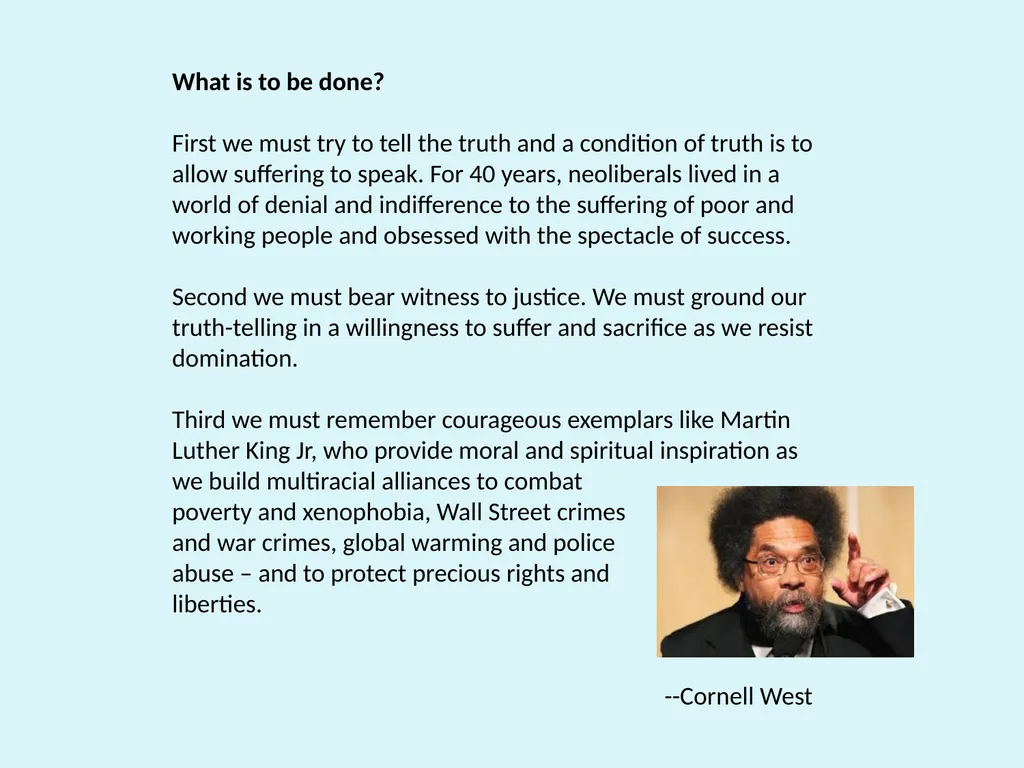
slide32. What is to be done?
First we must try to tell the truth and a condition of truth is to allow suffering to speak. For 40 years, neoliberals lived in a world of denial and indifference to the suffering of poor and working people and obsessed with the spectacle of success.
Second we must bear witness to justice. We must ground our truth-telling in a willingness to suffer and sacrifice as we resist domination.
Third we must remember courageous exemplars like Martin Luther King Jr, who provide moral and spiritual inspiration as we build multiracial alliances to combat
poverty and xenophobia, Wall Street crimes
and war crimes, global warming and police
abuse – and to protect precious rights and
liberties.
--Cornell West<br>
slide33. WHAT CAN YOU DO? GET INVOLVED! GET INVOLVED! GET GET INVOLVED!<br>
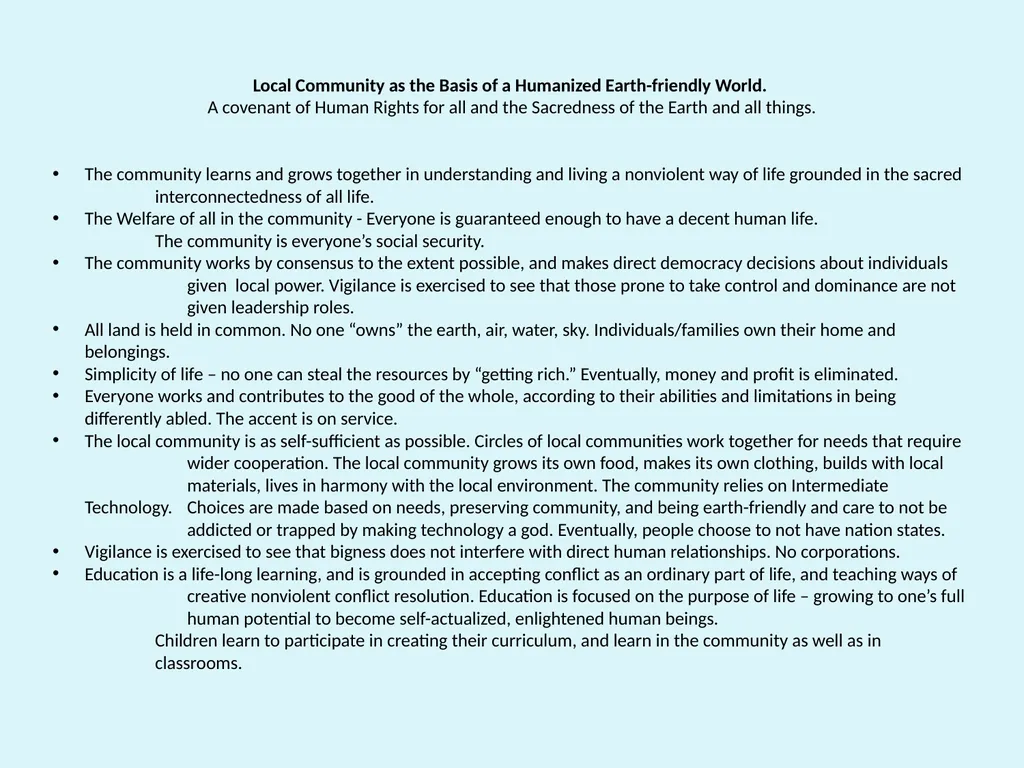
slide37. Local Community as the Basis of a Humanized Earth-friendly World.
A covenant of Human Rights for all and the Sacredness of the Earth and all things.
The community learns and grows together in understanding and living a nonviolent way of life grounded in the sacred
interconnectedness of all life.
The Welfare of all in the community - Everyone is guaranteed enough to have a decent human life.
The community is everyone’s social security.
The community works by consensus to the extent possible, and makes direct democracy decisions about individuals given local power. Vigilance is exercised to see that those prone to take control and dominance are not given leadership roles.
All land is held in common. No one “owns” the earth, air, water, sky. Individuals/families own their home and belongings.
Simplicity of life – no one can steal the resources by “getting rich.” Eventually, money and profit is eliminated.
Everyone works and contributes to the good of the whole, according to their abilities and limitations in being differently abled. The accent is on service.
The local community is as self-sufficient as possible. Circles of local communities work together for needs that require wider cooperation. The local community grows its own food, makes its own clothing, builds with local materials, lives in harmony with the local environment. The community relies on Intermediate Technology. Choices are made based on needs, preserving community, and being earth-friendly and care to not be addicted or trapped by making technology a god. Eventually, people choose to not have nation states.
Vigilance is exercised to see that bigness does not interfere with direct human relationships. No corporations.
Education is a life-long learning, and is grounded in accepting conflict as an ordinary part of life, and teaching ways of creative nonviolent conflict resolution. Education is focused on the purpose of life – growing to one’s full human potential to become self-actualized, enlightened human beings.
Children learn to participate in creating their curriculum, and learn in the community as well as in classrooms.<br>
Cutting public expenditure for social services
Deregulation.
Privatization.
Eliminating the concept of "the public good" or "community"<br>
slide5. Myth of American Exceptionalism
Americanism – the American mythology that we embody liberty, equality, individualism, democracy and free market economics.
2. The idea that the US has a unique mission to transform the world for democracy
3. The United States' history and mission give it a
superiority over other nations.<br>
slide8. Three major issues that threaten the whole world
Collapse of the globalization of the neo-liberal economy
Environmental global climate change
Threat of nuclear war<br>
slide9. 1. Hyper-nationalism
2. Militarism
3. Glorification of violence and readiness to use it in politics
4. Fetishization of youth
5. Fetishization of masculinity
6. Leader cult
7. Leader cult
8. Self-definition by opposition
9. Mass mobilization and mass party
10Hierarchical party structure and tendency to purge the disloyal
11Theatricality FASCISM IN THE MAKING<br>
slide10. There is an immanent and transcendent Absolute Ground of all Being. This Divine Truth is one, timeless, universal.
2. In the human soul there is something
similar to, or even identical with, the
Divine Reality.
3. The purpose of human existence is to
achieve union with the Ground of
Being.
In this Awakening, we become nonviolent in thought, word and deed.
1% - 2% of the world population achieves this level. The Perennial Philosophy<br>
slide12. Milky
Way
Galaxy<br>
slide14. List of indigenous rights organizations
https://en.wikipedia.org/wiki/List_of_indigenous_rights_organizations
United Kingdom
Forest Peoples Programme (FPP)
Mapuche International Link (MIL)
Minority Rights Group International (MRG)
Rainforest Foundation UK
Survival International
United States
Amazon Conservation Team (ACT)
Amazon Watch
Center for International Environmental Law (CIEL)
Center for World Indigenous Studies (CWIS)
Cultural Survival
Indigenous Peoples Council on Biocolonialism (IPCB)
Indigenous Peoples Law and Policy Program (IPLP)
International Indian Treaty Council (IITC)
Mexica Movement
Rainforest Foundation US
Rights and Resources Initiative (RRI) Regional
Regions
Africa
Indigenous Peoples of Africa Co-ordinating Committee (IPACC)
Amazon Basin
Coordinator of Indigenous Organizations of the Amazon River Basin (COICA)
Americas
See also: Indigenous Movements in the Americas
Arctic
Inuit Circumpolar Council (ICC)
Saami Council
Asia
Asia Indigenous Peoples Pact
Hokkaido Utari Association
Kuki Inpi
Anarchists Against The Wall
Countries
Australia
Kimberley Land Council (KLC)
Reconciliation Australia
Bolivia
Confederación de Pueblos Indígenas de Bolivia (CIDOB)<br>
slide15. Canada
Assembly of First Nations (AFN)
Congress of Aboriginal Peoples (CAP)
Federation of Saskatchewan Indian Nations (FSIN)
Inuit Tapiriit Kanatami (ITK)
Native Women's Association of Canada (NWAC)
Nunavut Tunngavik Incorporated (NTI)
Pauktuutit
RAVEN (Respecting Aboriginal Values & Environmental Needs)
Colombia
Organización Nacional Indígena de Colombia (ONIC)
Chile
Coordinadora Arauco-Malleco (CAM)
Ecuador
Confederación de Nacionalidades Indígenas del Ecuador (CONAIE)
Confederación de las Nacionalidades Indígenas de la Amazonia Ecuatoriana (CONFENIAE)
Confederación de Pueblos de la Nacionalidad Kichuas del Ecuador (ECUARUNARI)
Indonesia
Yayasan Merah Putih (YMP)
Mexico
Popular Indigenous Council of Oaxaca "Ricardo Flores Magón" (CIPO-RFM)
Zapatista Army of National Liberation (EZLN)
Namibia
Namrights
Nigeria
Movement for the Survival of the Ogoni People (MOSOP)
Norway
Norske Samers Riksforbund (NSR)
Samenes Folkeforbund Peru
Asociación Interétnica de Desarrollo de la Selva Peruana (AIDESEP)
Peru Support Group (PSG)
Republic of China (Taiwan)
Council of Indigenous Peoples
Russia
Association of Sámi in Murmansk Oblast
Russian Association of Indigenous Peoples of the North (RAIPON)
United States
Alaska Federation of Natives
American Indian Defense Association (AIDA)
Great Lakes Indian Fish & Wildlife Commission (GLIFWC)
Honor the Earth
Indigenous Environmental Network (IEN)
International Indian Treaty Council (IITC)
Inter-Tribal Environmental Council (ITEC)
National Congress of American Indians (NCAI)
National Indian Youth Council (NIYC)
Native American Rights Fund (NARF)
White Earth Land Recovery Project (WELRP)
Women's National Indian Association<br>
slide16. Peru
Asociación Interétnica de Desarrollo de la Selva Peruana (AIDESEP)
Peru Support Group (PSG)
Republic of China (Taiwan)
Council of Indigenous Peoples
Russia
Association of Sámi in Murmansk Oblast
Russian Association of Indigenous Peoples of the North (RAIPON)
United States
Alaska Federation of Natives
American Indian Defense Association (AIDA)
Great Lakes Indian Fish & Wildlife Commission (GLIFWC)
Honor the Earth
Indigenous Environmental Network (IEN)
International Indian Treaty Council (IITC)
Inter-Tribal Environmental Council (ITEC)
National Congress of American Indians (NCAI)
National Indian Youth Council (NIYC)
Native American Rights Fund (NARF)
White Earth Land Recovery Project (WELRP)
Women's National Indian Association Indigenous Association of the Republic of Argentina (AIRA)
National Organization of Indigenous Peoples of Argentina (ONPIA)
Belize
Belize Indigenous Training Institute
Caribbean Organization of Indigenous Peoples (COIP)
Bolivia
Confederation of Indigenous people of Bolivia, previously known as Indigenous Confederation of the East, Chaco, and Bolivian Amazon (CIDOB)
Sole Syndical Confederation of Rural Workers of Bolivia (CSUTCB)
National Council of Ayllus and Markas of Qollasuyu (CONAMAQ)
Organization of Aymara Women of Kollasuyo
Brazil
Coordination of the Indigenous Organizations of the Brazilian Amazon (COIAB)
Coordinating Council of Indigenous Peoples and Organizations of Brazil (CAPOIB)[1]
Indianist Missionary Council (CIMI)
Indigenous Council of Roraima
Pro-Yanomami Commission (CCPY)
Union of Indigenous Nations of Acre and South of the Amazon (UNI-AC)
Articulation of Indigenous Peoples of the South Region - Arpin-South[2]<br>
slide17. A Black Lives Matter protest of police brutality in the rotunda of the Mall of America in Bloomington, Minnesota Black Lives Matter (BLM)
is an international activist movement, originating in the African-American community, that campaigns against violence and systemic racism toward Black people.
BLM regularly organizes protests around the deaths of black people in killings by law enforcement officers, and broader issues of racial profiling, police brutality, and racial inequality in the U. S. criminal justice system.<br>
slide18. Churches and faith-based organizations
Small service organizations (such as locally-based centers for day laborers, legal support offices, and ethnic organizations)
National organizations (such as Fair Immigration Reform Movement, the National Council of La Raza, and National Alliance of Latin American and Caribbean Countries)
State and city advocacy organizations (such as Coalition for Humane Immigrant Rights of Los Angeles, and Pueblo Unidos of New Mexico)
Trade unions and labor federations (including the AFL-CIO [American Federation of Labor-Congress of Industrial Organization], Change to Win, UNITE HERE [United Nettle work, Industrial, and Textile Employees Hotel and Restaurant Employees], SEIU [Service Employees International Union], UFCW [United Food and Commercial Workers], and UFW [United Farm Workers] The US Immigrant Rights Movement<br>
slide19. FIGHT FOR $15 The Fight for $15 started with just a few hundred fast food workers in New York City, striking for $15 an hour and union rights.
Today, it is an international movement in over 300 cities on six continents of fast-food workers, home health aides, child care teachers, airport workers, adjunct professors, retail employees – and underpaid workers everywhere. In February 2015 Walmart announced it was raising wages for 500,000 of its workers, after years of demonstrations.<br>
slide20. In 2007 the U. N. adopted the Declaration on the Rights of Indigenous People. Advocates and supporters are forming the world’s first global civil rights movement. The unifying issue facing Indigenous Peoples everywhere is how to protect their territories and stop the “asset stripping” that robs them of their livelihoods and the foundation of their cultures. Methods in include court cases, public education, demonstrations and civil disobedience. Global Indigenous Peoples Movement We can consider the potential role that indigenous peoples can play
in envisioning truly sustainable alternatives to capitalism.
Standing Rock, N. D. standoff
Over 100 tribes are resisting construction of the $3.8 billion Dakota Access pipeline
Thousands of Native Americans from hundreds of tribes converge to block construction.
Federal government followed by the White House halts construction.<br>
slide21. For MPT, the most important and peline, it will not make them whole again. This has been but a small battle in the greater struggle for them to regain their stability as a sovereign natio. “LISTEN: I Will Never Submit To Any Pipeline To Go Through My Homeland”
--Phyllis Young, Standing Rock Sioux Nation elder STANDING ROCK: A NEW STORY OF EFFECTIVE NONVIOLENT RESISTANCE “Our Water Is Our Single Last Property"<br>
slide22. We're talking about holding up billions of In response to an invitation by the Standing Rock Sioux Reservation in North Dakota, we are here as a Meta Peace Team (MPT) International Exploratory Team.<br>
slide23. The largest civil disobedience in 30 years
Took place at the White House in Washington D.C. in the summer of 2011
Against the Keystone XL Pipeline.
1,252 activists went to jail.
A few months later, President Obama agreed to put the project on hold. In November 2015 he definitively rejected the project. Protect The Environment<br>
slide25. Local Communities Affirm Solidarity
with Muslim Neighbors<br>
slide26. Local Community as the Basis of a New World
Care for All – total sharing
Simplicity of life
Resiliency
Self-Sufficiency
Intermediate technology
Reaching out to other communities in need
Participation in Nonviolent Resistance
Nonviolent Peace Armies<br>
slide27. NONVIOLENT
DIRECT
ACTION<br>
slide28. Gene Sharp’s 198 Methods of Nonviolent Action
5FEB
FORMAL STATEMENTS
Public speeches
Letters of opposition or support
Declarations by organizations and institutions
Signed public declarations
Declarations of indictment and intention
Group or mass petitions
COMMUNICATIONS WITH A WIDER AUDIENCE
Slogans, caricatures, and symbols
Banners, posters, and displayed communications
Leaflets, pamphlets, and books
Newspapers and journals
Records, radio, and television
Skywriting and earthwriting
GROUP REPRESENTATIONS
Deputations
Mock awards
Group lobbying
Picketing
Mock elections
SYMBOLIC PUBLIC ACTS
Displays of flags and symbolic colours
Wearing of symbols
Prayer and worship
Delivering symbolic objects
Protest disrobings
Destruction of own property
Symbolic lights
Displays of portraits
Paint as protest
New signs and names
Symbolic sounds
Symbolic reclamations
Rude gestures
PRESSURES ON INDIVIDUALS
“Haunting” officials
Taunting officials
Fraternization
Vigils
DRAMA AND MUSIC
Humourous skits and pranks
Performances of plays and music
Singing
PROCESSIONS
Marches
Parades
Religious processions
Pilgrimages
Motorcades HONOURING THE DEAD
Political mourning
Mock funerals
Demonstrative funerals
Homage at burial places
PUBLIC ASSEMBLIES
Assemblies of protest or support
Protest meetings
Camouflaged meetings of protest
Teach-ins
WITHDRAWAL AND RENUNCIATION
Walk-outs
Silence
Renouncing honours
Turning one’s back
SOCIAL NONCOOPERATION
OSTRACISM OF PERSONS
Social boycott
Selective social boycott
Lysistratic nonaction
Excommunication
Interdict
SOCIAL NONCOOPERATION
Suspension of social and sports activities
Boycott of social affairs
Student strike
Social disobedience
Withdrawal from social institutions
WITHDRAWAL FROM THE SOCIAL SYSTEM
Stay-at-home
Total personal noncooperation
“Flight” of workers
Sanctuary
Collective disappearance
Protest emigration (hijrat)
ECONOMIC NONCOOPERATION: BOYCOTTS
ACTION BY CONSUMERS
Consumers’ boycott
Nonconsumption of boycotted goods
Policy of austerity
Rent withholding
Refusal to rent
National consumers’ boycott
International consumers’ boycott
ACTION BY WORKERS AND PRODUCERS
Workers’ boycott
Producers’ boycott<br>
slide29. ACTION BY MIDDLEMEN
Suppliers’ and handlers’ boycott
ACTION BY OWNERS AND MANAGEMENT
Traders’ boycott
Refusal to let or sell property
Lockout
Refusal of industrial assistance
Merchants’ “general strike”
ACTION BY HOLDERS OF FINANCIAL RESOURCES
Withdrawal of bank deposits
Refusal to pay fees, dues, and assessments
Refusal to pay debts or interest
Severance of funds and credit
Revenue refusal
Refusal of a government’s money
ACTION BY GOVERNMENTS
Domestic embargo
Blacklisting of traders
International sellers’ embargo
International buyers’ embargo
International trade embargo
ECONOMIC NONCOOOPERATION: STRIKES
SYMBOLIC STRIKES
Protest strike
Quickie walkout (lightning strike)
AGRICULTURAL STRIKES
Peasant strike
Farm workers’ strike
STRIKES BY SPECIAL GROUPS
Refusal of impressed labour
Prisoners’ strike
Craft strike
Professional strike
ORDINARY INDUSTRIAL STRIKES
Establishment strike
Industry strike
Sympathy strike
RESTRICTED STRIKES
Detailed strike
Bumper strike
Slowdown strike
Working-to-rule strike
Reporting “sick” (sick-in)
Strike by resignation
Limited strike
Selective strike
MULTI-INDUSTRY STRIKES
Generalised strike
General strike
COMBINATION OF STRIKES AND ECONOMIC CLOSURES
Hartal
Economic shutdown POLITICAL NONCOOPERATION
REJECTION OF AUTHORITY
Withholding or withdrawal of allegiance
Refusal of public support
Literature and speeches advocating resistance
NONCOOPERATION WITH GOVERNMENT
Boycott of legislative bodies
Boycott of elections
Boycott of government employment and positions
Boycott of government departments, agencies, and other bodies
Withdrawal from governmental educational institutions
Boycott of government-supported institutions
Refusal of assistance to enforcement agents
Removal of own signs and placemarks
Refusal to accept appointed officials
Refusal to dissolve existing institutions
CITIZENS’ ALTERNATIVES TO OBEDIENCE
Reluctant and slow compliance
Nonobedience in absence of direct supervision
Popular nonobedience
Disguised disobedience
Refusal of an assemblage or meeting to disperse
Sitdown
Noncooperation with conscription and deportation
Hiding, escape, and false identities
Civil disobedience of “illegitimate” laws
ACTION BY GOVERNMENT PERSONNEL
Selective refusal of assistance by government aides
Blocking of lines of command and information
Stalling and obstruction
General administrative noncooperation
Judicial noncooperation
Deliberate inefficiency and selective noncooperation by enforcement agents
Mutiny
DOMESTIC GOVERNMENTAL ACTION
Quasi-legal evasions and delays
Noncooperation by constituent governmental units
INTERNATIONAL GOVERNMENTAL ACTION
Changes in diplomatic and other representation
Delay and cancellation of diplomatic events
Withholding of diplomatic recognition
Severance of diplomatic relations
Withdrawal from international organisations
Refusal of membership in international bodies
Expulsion from international organisations<br>
slide30. NONVIOLENT INTERVENTION
PSYCHOLOGICAL INTERVENTION
Self-exposure to the elements
The fast
Fast of moral pressure
Hunger strike
Satyagrahic fast
Reverse trial
Nonviolent harassment
PHYSICAL INTERVENTION
Sit-in
Stand-in
Ride-in
Wade-in
Mill-in
Pray-in
Nonviolent raids
Nonviolent air raids
Nonviolent invasion
Nonviolent interjection
Nonviolent obstruction
Nonviolent occupation SOCIAL INTERVENTION
Establishing new social patterns
Overloading of facilities
Stall-in
Speak-in
Guerrilla theatre
Alternative social institutions
Alternative communication system
ECONOMIC INTERVENTION
Reverse strike
Stay-in strike
Nonviolent land seizure
Defiance of blockades
Politically motivated counterfeiting
Preclusive purchasing
Seizure of assets
Dumping
Selective patronage
Alternative markets
Alternative transportation systems
Alternative economic institutions
POLITICAL INTERVENTION
Overloading of administrative systems
Disclosing identities of secret agents
Seeking imprisonment
Civil disobedience of “neutral” laws
Work-on without collaboration
Dual sovereignty and parallel government<br>
slide31. SOLIDARITY MARCH
ON THE STATE CAPITAL LANSING
1:00PM – 3:00PM
____________________
Meta/Michigan Peace Team
needs volunteers for the peace team
Peace Team Orientation 11:00
Peace Team at Capital
12:30pm – 3:00pm
Contact Peter Dougherty<br>
slide32. What is to be done?
First we must try to tell the truth and a condition of truth is to allow suffering to speak. For 40 years, neoliberals lived in a world of denial and indifference to the suffering of poor and working people and obsessed with the spectacle of success.
Second we must bear witness to justice. We must ground our truth-telling in a willingness to suffer and sacrifice as we resist domination.
Third we must remember courageous exemplars like Martin Luther King Jr, who provide moral and spiritual inspiration as we build multiracial alliances to combat
poverty and xenophobia, Wall Street crimes
and war crimes, global warming and police
abuse – and to protect precious rights and
liberties.
--Cornell West<br>
slide33. WHAT CAN YOU DO? GET INVOLVED! GET INVOLVED! GET GET INVOLVED!<br>
slide37. Local Community as the Basis of a Humanized Earth-friendly World.
A covenant of Human Rights for all and the Sacredness of the Earth and all things.
The community learns and grows together in understanding and living a nonviolent way of life grounded in the sacred
interconnectedness of all life.
The Welfare of all in the community - Everyone is guaranteed enough to have a decent human life.
The community is everyone’s social security.
The community works by consensus to the extent possible, and makes direct democracy decisions about individuals given local power. Vigilance is exercised to see that those prone to take control and dominance are not given leadership roles.
All land is held in common. No one “owns” the earth, air, water, sky. Individuals/families own their home and belongings.
Simplicity of life – no one can steal the resources by “getting rich.” Eventually, money and profit is eliminated.
Everyone works and contributes to the good of the whole, according to their abilities and limitations in being differently abled. The accent is on service.
The local community is as self-sufficient as possible. Circles of local communities work together for needs that require wider cooperation. The local community grows its own food, makes its own clothing, builds with local materials, lives in harmony with the local environment. The community relies on Intermediate Technology. Choices are made based on needs, preserving community, and being earth-friendly and care to not be addicted or trapped by making technology a god. Eventually, people choose to not have nation states.
Vigilance is exercised to see that bigness does not interfere with direct human relationships. No corporations.
Education is a life-long learning, and is grounded in accepting conflict as an ordinary part of life, and teaching ways of creative nonviolent conflict resolution. Education is focused on the purpose of life – growing to one’s full human potential to become self-actualized, enlightened human beings.
Children learn to participate in creating their curriculum, and learn in the community as well as in classrooms.<br>