
Neutralisation reactions You should have completed

Description: Neutralisation reactions You should have completed your low stakes quiz already Science Year 8 Topic: Acids and Alkalis Lesson 6 Learning outcomes Describe what happens during a neutralisation reaction between an acid and an alkali. Explain
Related Topics
Download Presentation
"Neutralisation reactions You should have completed" is the property of its rightful owner. Permission is granted to download and print the materials on this website for personal, non-commercial use only, and to display it on your personal computer provided you do not modify the materials and that you retain all copyright notices contained in the materials. By downloading content from our website, you accept the terms of this agreement.
Presentation Transcript
slide1. Neutralisation reactions You should have completed your low stakes quiz already Science Year 8
Topic: Acids and Alkalis
Lesson 6<br>
slide2. Learning outcomes Describe what happens during a neutralisation reaction between an acid and an alkali.
Explain how to conduct a neutralisation reaction.<br>
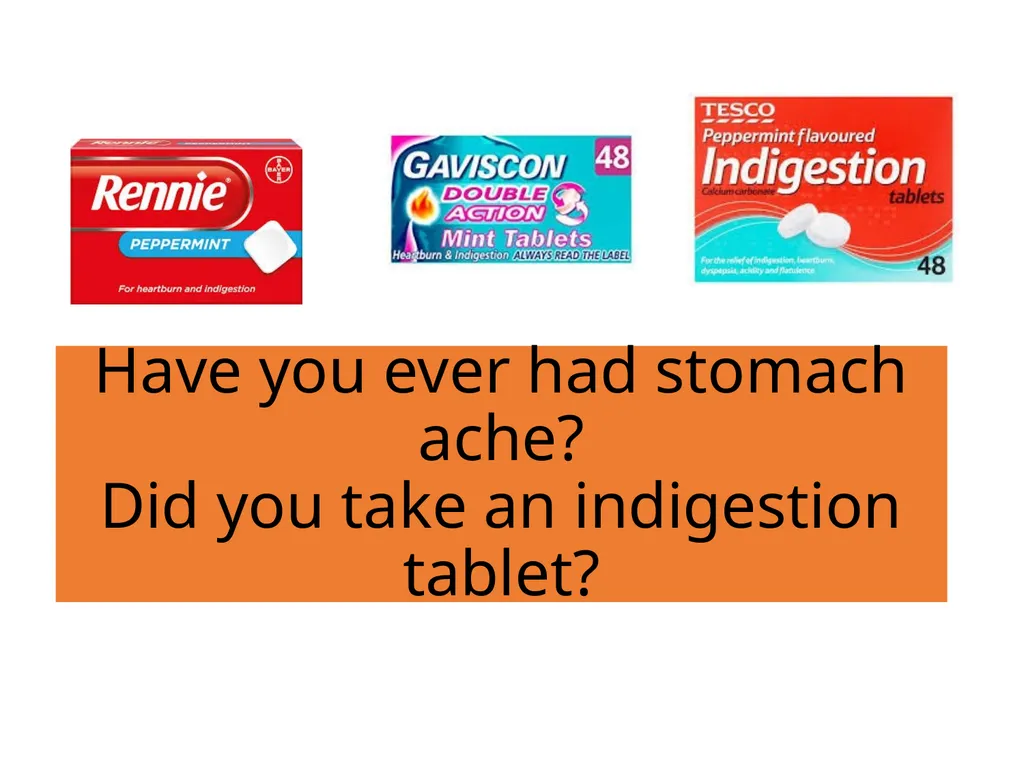
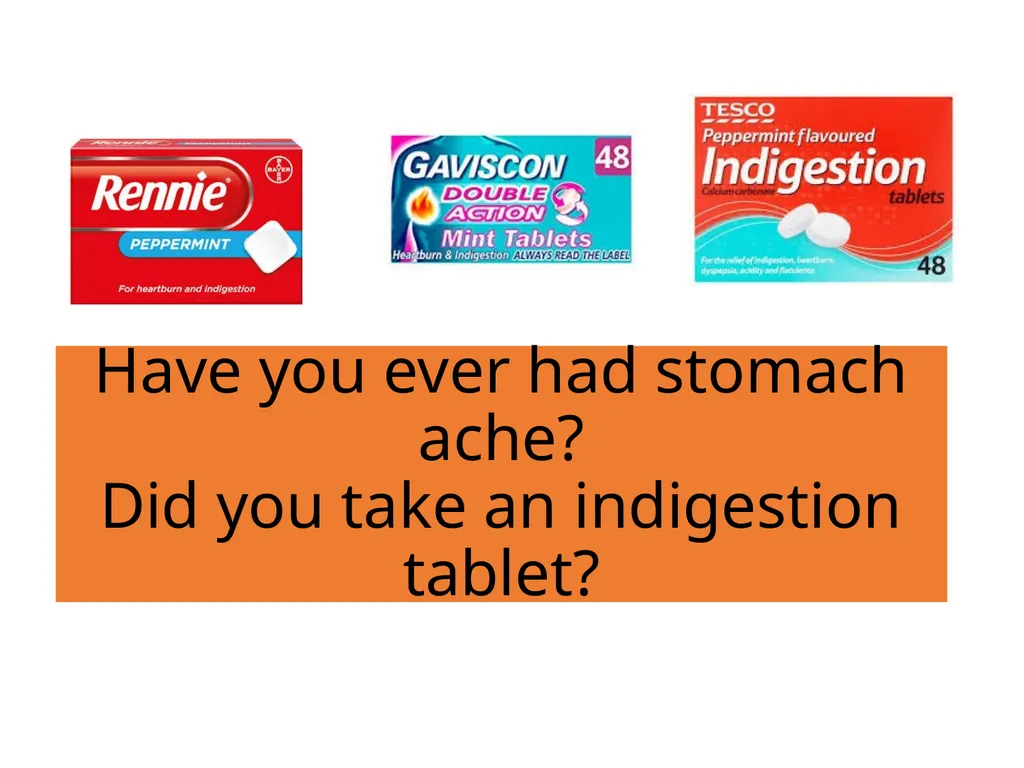
slide3. Have you ever had stomach ache? Did you take an indigestion tablet?<br>
slide4. A chemical reaction happens if you mix together an acid and an alkali. Remember: Universal indicator is used to colour the liquids to show whether it is an acid or alkali<br>
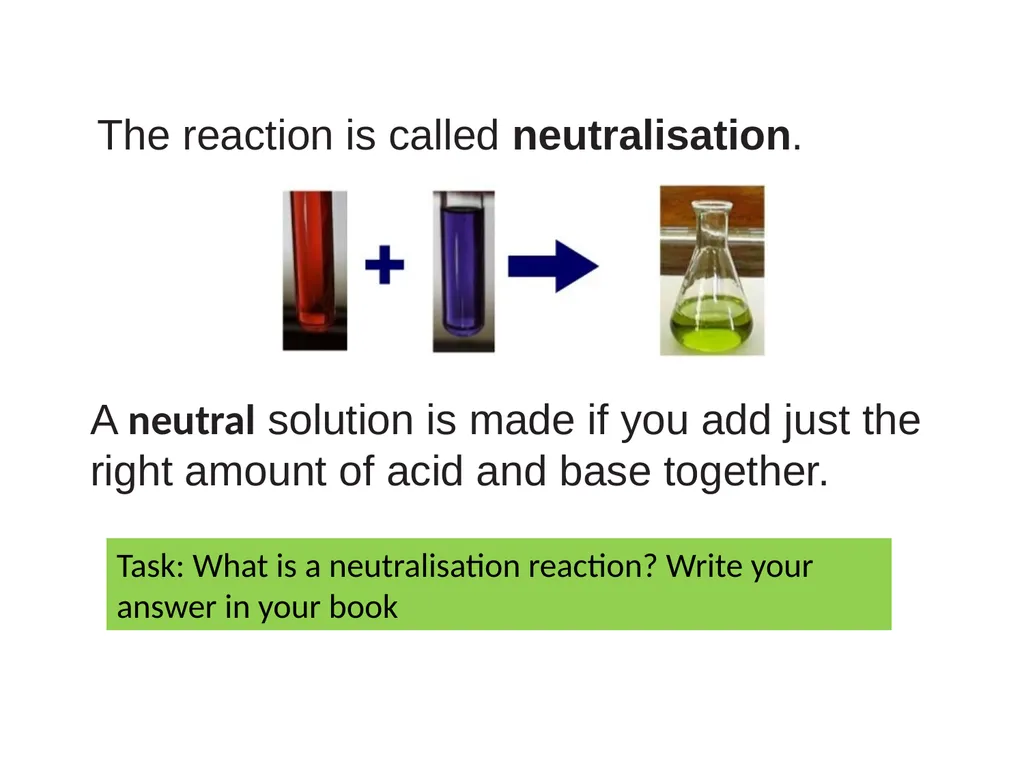
slide5. The reaction is called neutralisation. A neutral solution is made if you add just the right amount of acid and base together. Task: What is a neutralisation reaction? Write your answer in your book<br>
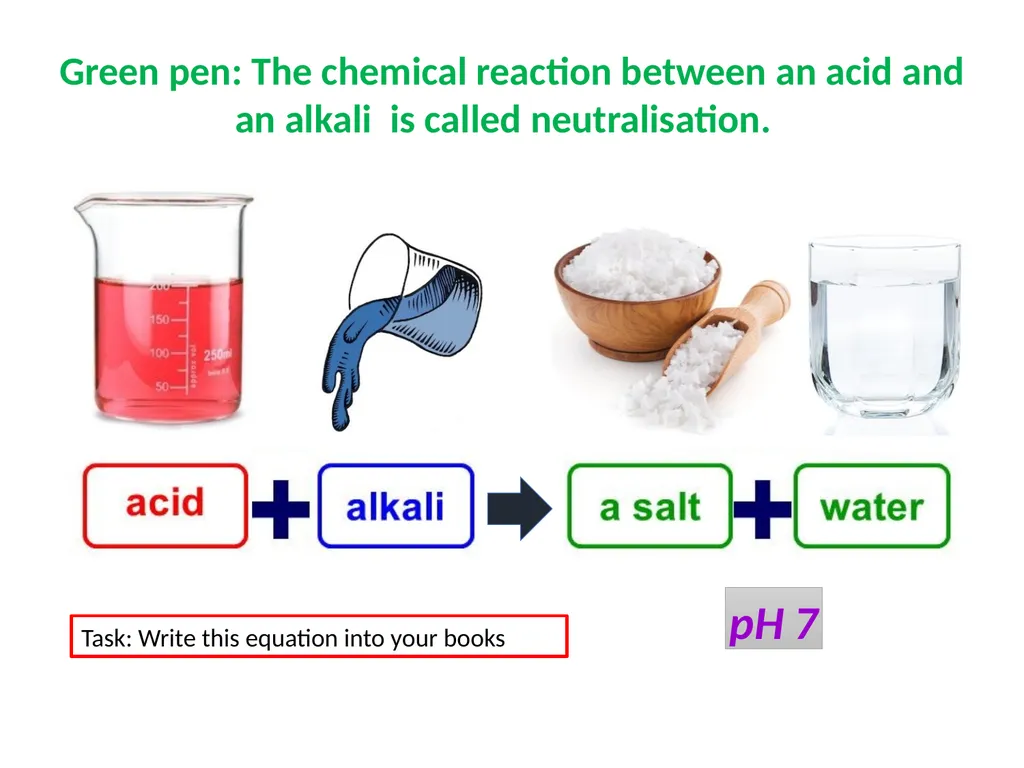
slide6. pH 7 Green pen: The chemical reaction between an acid and an alkali is called neutralisation. Task: Write this equation into your books<br>
slide7. Stronger alkali Stronger acid Neutral 1 2 3 4 5 6 7 8 9 10 11 12 13 14<br>
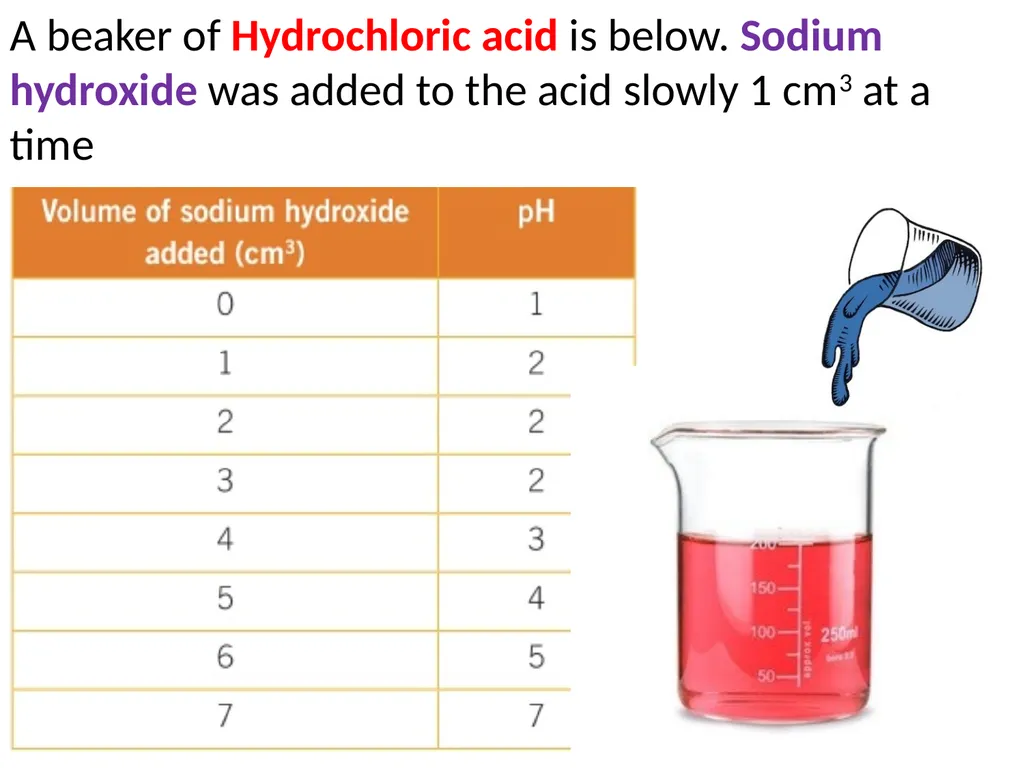
slide8. A beaker of Hydrochloric acid is below. Sodium hydroxide was added to the acid slowly 1 cm3 at a time<br>
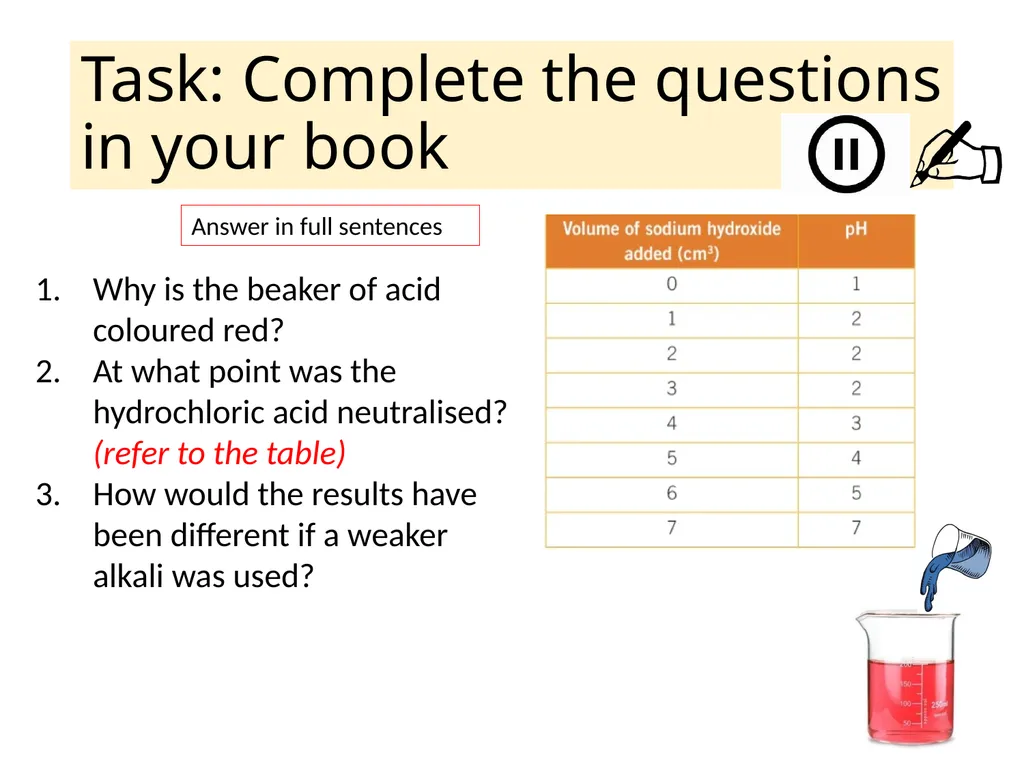
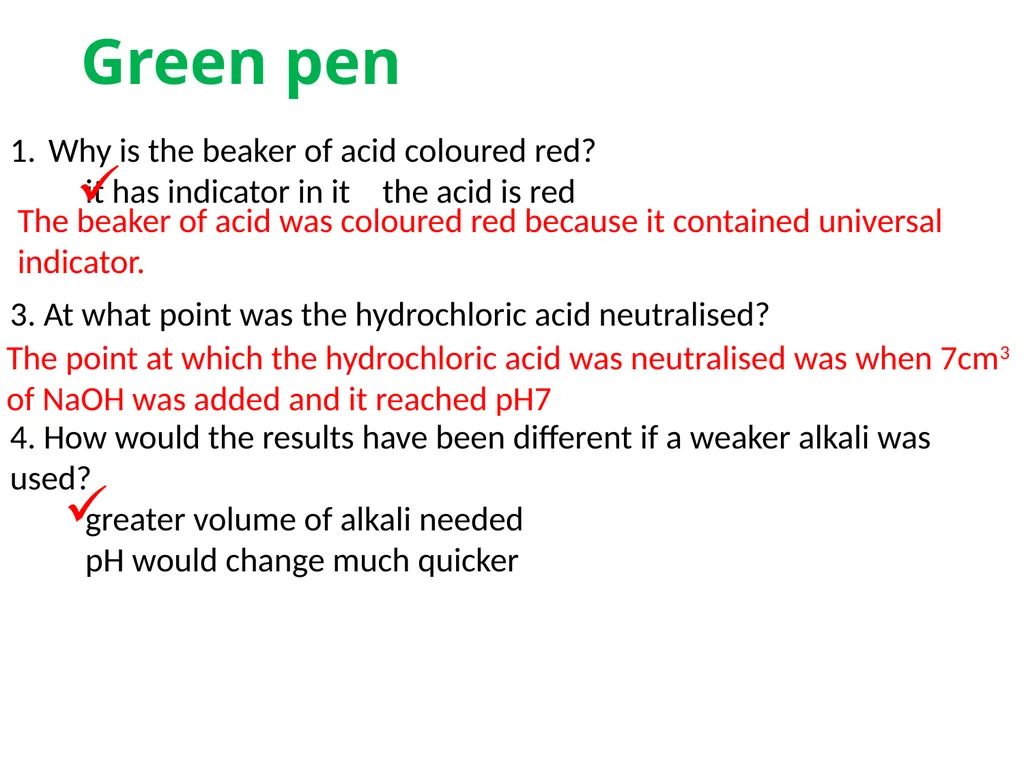
slide9. Why is the beaker of acid coloured red?
At what point was the hydrochloric acid neutralised? (refer to the table)
How would the results have been different if a weaker alkali was used? Task: Complete the questions in your book Answer in full sentences<br>
slide10. Why is the beaker of acid coloured red?
it has indicator in it the acid is red
3. At what point was the hydrochloric acid neutralised?
4. How would the results have been different if a weaker alkali was used?
greater volume of alkali needed
pH would change much quicker The point at which the hydrochloric acid was neutralised was when 7cm3 of NaOH was added and it reached pH7 Green pen The beaker of acid was coloured red because it contained universal indicator.<br>
slide11. Have you ever had stomach ache? Did you take an indigestion tablet?<br>
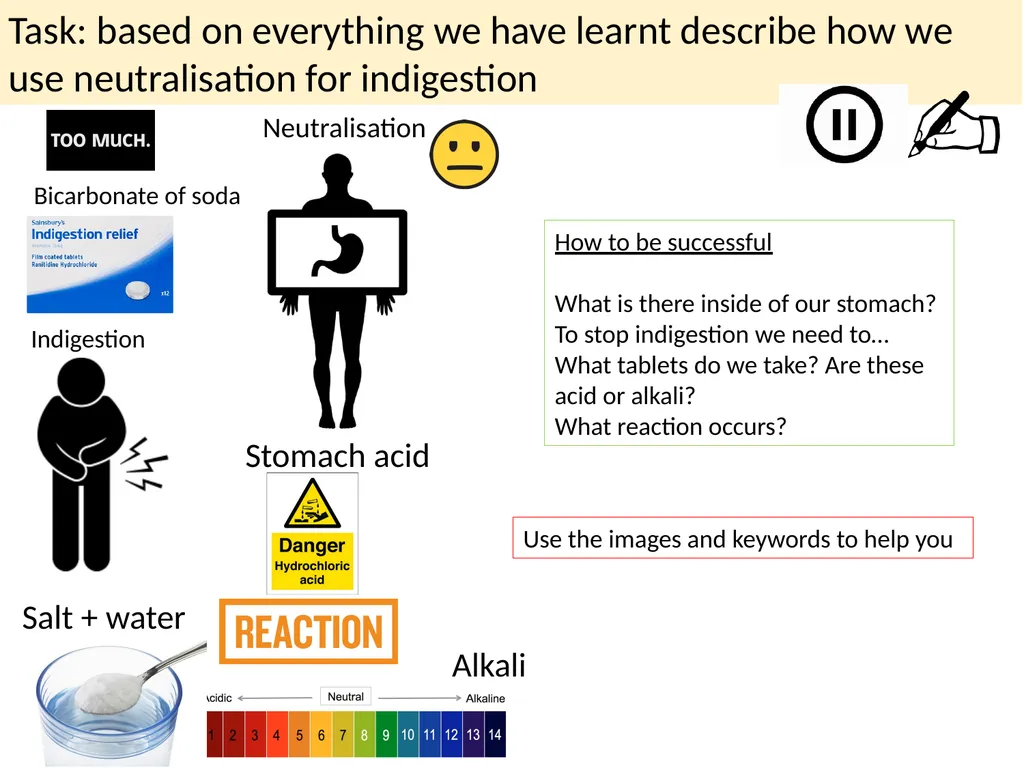
slide12. Task: based on everything we have learnt describe how we use neutralisation for indigestion Bicarbonate of soda Indigestion Stomach acid Alkali Salt + water Neutralisation How to be successful
What is there inside of our stomach?
To stop indigestion we need to…
What tablets do we take? Are these acid or alkali?
What reaction occurs? Use the images and keywords to help you<br>
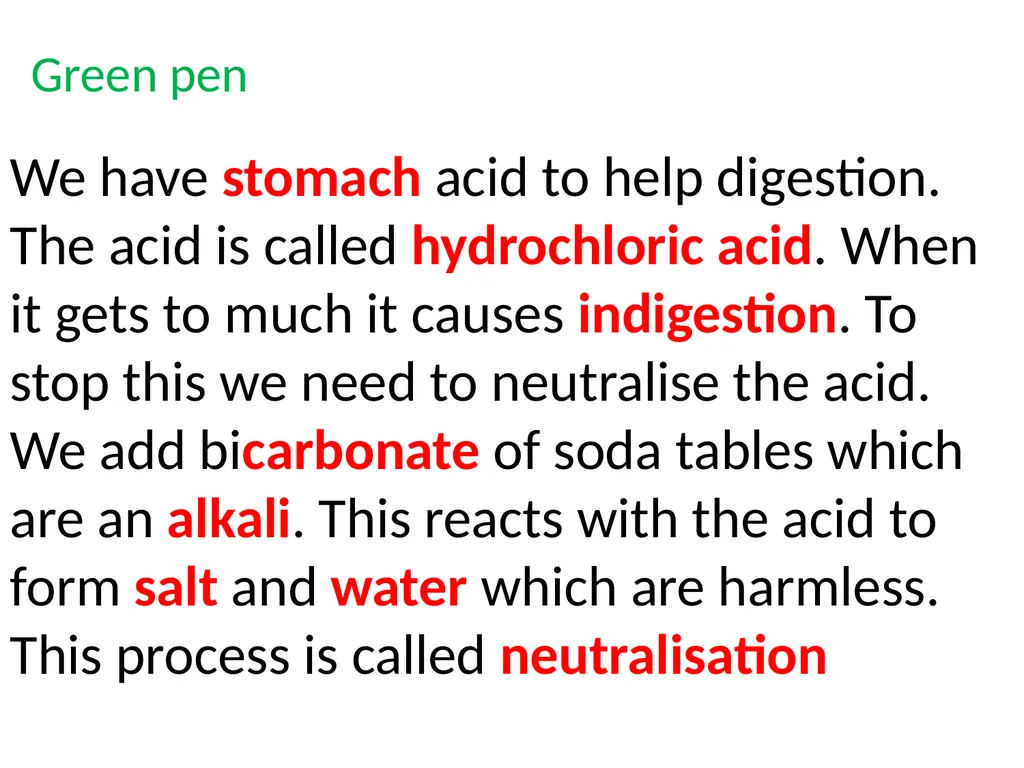
slide13. We have stomach acid to help digestion. The acid is called hydrochloric acid. When it gets to much it causes indigestion. To stop this we need to neutralise the acid. We add bicarbonate of soda tables which are an alkali. This reacts with the acid to form salt and water which are harmless. This process is called neutralisation Green pen<br>
slide14. Learning outcomes Describe what happens during a neutralisation reaction between an acid and an alkali.
Explain how to conduct a neutralisation reaction.<br>
Topic: Acids and Alkalis
Lesson 6<br>
slide2. Learning outcomes Describe what happens during a neutralisation reaction between an acid and an alkali.
Explain how to conduct a neutralisation reaction.<br>
slide3. Have you ever had stomach ache? Did you take an indigestion tablet?<br>
slide4. A chemical reaction happens if you mix together an acid and an alkali. Remember: Universal indicator is used to colour the liquids to show whether it is an acid or alkali<br>
slide5. The reaction is called neutralisation. A neutral solution is made if you add just the right amount of acid and base together. Task: What is a neutralisation reaction? Write your answer in your book<br>
slide6. pH 7 Green pen: The chemical reaction between an acid and an alkali is called neutralisation. Task: Write this equation into your books<br>
slide7. Stronger alkali Stronger acid Neutral 1 2 3 4 5 6 7 8 9 10 11 12 13 14<br>
slide8. A beaker of Hydrochloric acid is below. Sodium hydroxide was added to the acid slowly 1 cm3 at a time<br>
slide9. Why is the beaker of acid coloured red?
At what point was the hydrochloric acid neutralised? (refer to the table)
How would the results have been different if a weaker alkali was used? Task: Complete the questions in your book Answer in full sentences<br>
slide10. Why is the beaker of acid coloured red?
it has indicator in it the acid is red
3. At what point was the hydrochloric acid neutralised?
4. How would the results have been different if a weaker alkali was used?
greater volume of alkali needed
pH would change much quicker The point at which the hydrochloric acid was neutralised was when 7cm3 of NaOH was added and it reached pH7 Green pen The beaker of acid was coloured red because it contained universal indicator.<br>
slide11. Have you ever had stomach ache? Did you take an indigestion tablet?<br>
slide12. Task: based on everything we have learnt describe how we use neutralisation for indigestion Bicarbonate of soda Indigestion Stomach acid Alkali Salt + water Neutralisation How to be successful
What is there inside of our stomach?
To stop indigestion we need to…
What tablets do we take? Are these acid or alkali?
What reaction occurs? Use the images and keywords to help you<br>
slide13. We have stomach acid to help digestion. The acid is called hydrochloric acid. When it gets to much it causes indigestion. To stop this we need to neutralise the acid. We add bicarbonate of soda tables which are an alkali. This reacts with the acid to form salt and water which are harmless. This process is called neutralisation Green pen<br>
slide14. Learning outcomes Describe what happens during a neutralisation reaction between an acid and an alkali.
Explain how to conduct a neutralisation reaction.<br>