NICE PH48 guidance Smoking: acute, maternity and mental health services Public health guideline PH48 Published date: November 2013 John Britton PDG members NICE project team Matthew Alford Community Member Gary Bickerstaffe Health
"NICE PH48 guidance Smoking: acute, maternity and" is the property of its rightful owner. Permission is granted to
download and print the materials on this website for personal, non-commercial use only, and to display it
on your personal computer provided you do not modify the materials and that you retain all copyright
notices contained in the materials. By downloading content from our website, you accept the terms of this
agreement.
Presentation Transcript
01
NICE PH48 guidance Smoking: acute, maternity and mental health services Public health guideline [PH48] Published date: November 2013 John Britton<br>
02
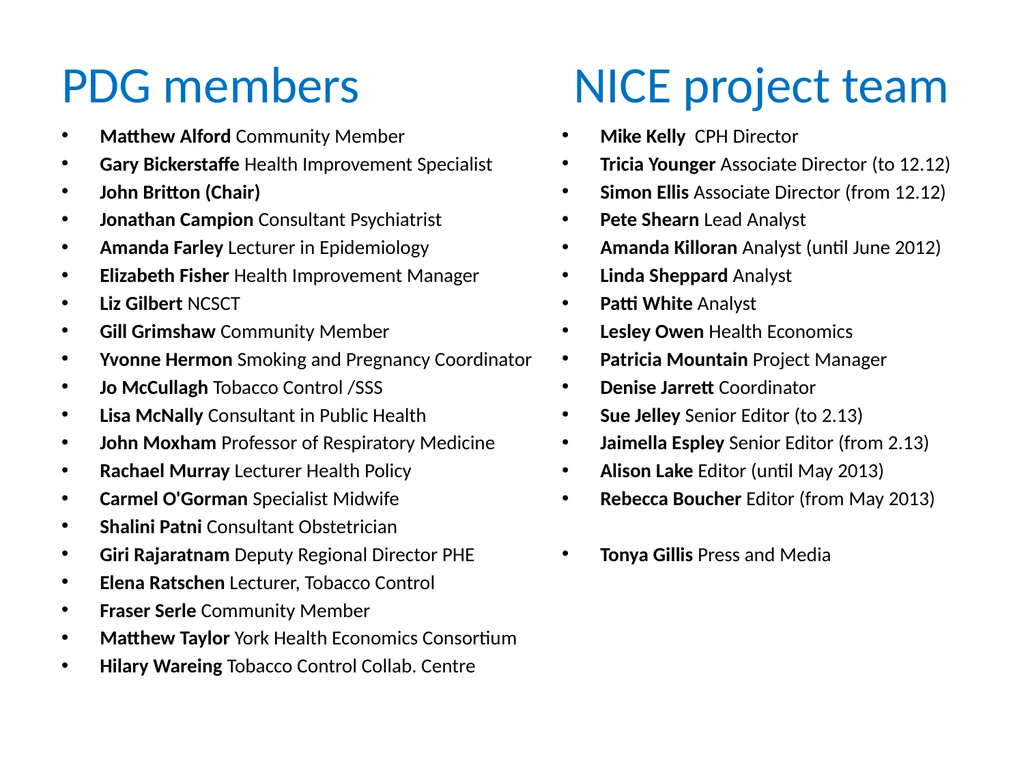
PDG members NICE project team Matthew Alford Community Member
Gary Bickerstaffe Health Improvement Specialist
John Britton (Chair)
Jonathan Campion Consultant Psychiatrist
Amanda Farley Lecturer in Epidemiology
Elizabeth Fisher Health Improvement Manager
Liz Gilbert NCSCT
Gill Grimshaw Community Member
Yvonne Hermon Smoking and Pregnancy Coordinator
Jo McCullagh Tobacco Control /SSS
Lisa McNally Consultant in Public Health
John Moxham Professor of Respiratory Medicine
Rachael Murray Lecturer Health Policy
Carmel O'Gorman Specialist Midwife
Shalini Patni Consultant Obstetrician
Giri Rajaratnam Deputy Regional Director PHE
Elena Ratschen Lecturer, Tobacco Control
Fraser Serle Community Member
Matthew Taylor York Health Economics Consortium
Hilary Wareing Tobacco Control Collab. Centre Mike Kelly CPH Director
Tricia Younger Associate Director (to 12.12)
Simon Ellis Associate Director (from 12.12)
Pete Shearn Lead Analyst
Amanda Killoran Analyst (until June 2012)
Linda Sheppard Analyst
Patti White Analyst
Lesley Owen Health Economics
Patricia Mountain Project Manager
Denise Jarrett Coordinator
Sue Jelley Senior Editor (to 2.13)
Jaimella Espley Senior Editor (from 2.13)
Alison Lake Editor (until May 2013)
Rebecca Boucher Editor (from May 2013)
Tonya Gillis Press and Media<br>
03
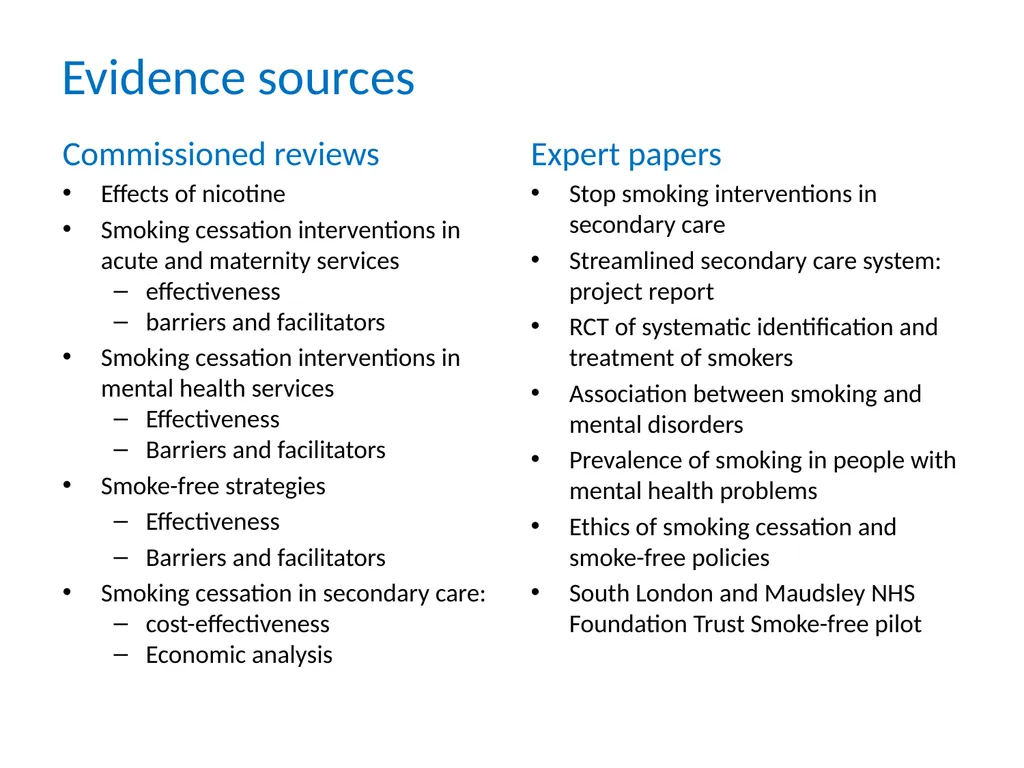
Evidence sources Commissioned reviews
Effects of nicotine
Smoking cessation interventions in acute and maternity services
effectiveness
barriers and facilitators
Smoking cessation interventions in mental health services
Effectiveness
Barriers and facilitators
Smoke-free strategies
Effectiveness
Barriers and facilitators
Smoking cessation in secondary care:
cost-effectiveness
Economic analysis Expert papers
Stop smoking interventions in secondary care
Streamlined secondary care system: project report
RCT of systematic identification and treatment of smokers
Association between smoking and mental disorders
Prevalence of smoking in people with mental health problems
Ethics of smoking cessation and smoke-free policies
South London and Maudsley NHS Foundation Trust Smoke-free pilot<br>
04
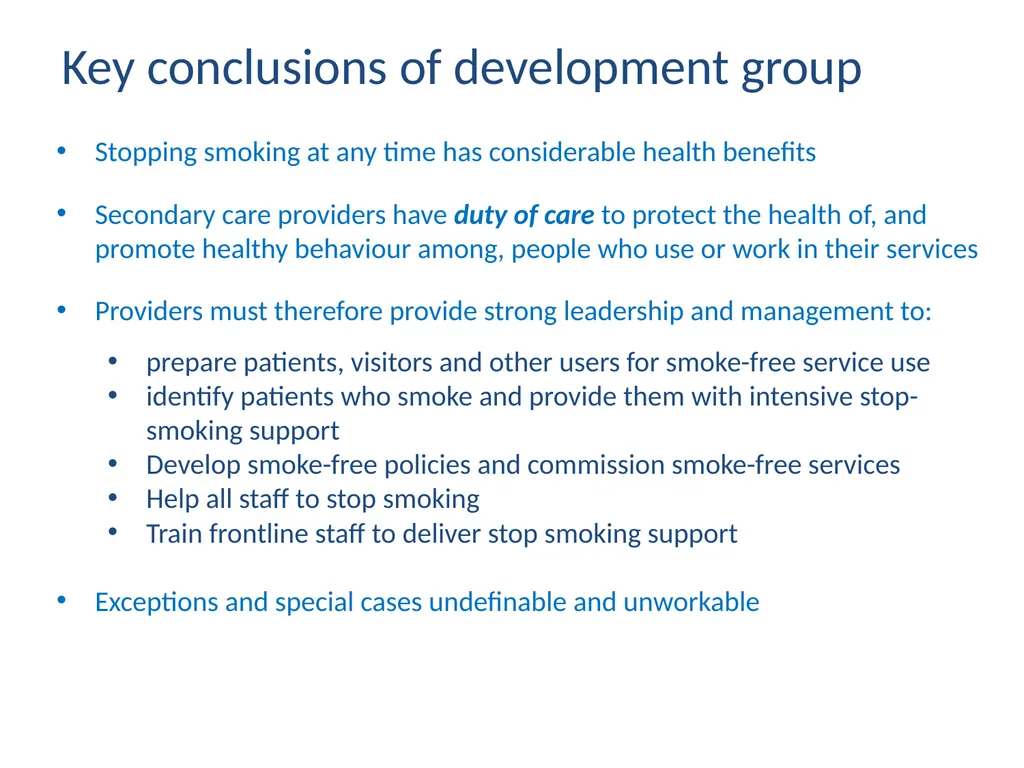
Stopping smoking at any time has considerable health benefits
Secondary care providers have duty of care to protect the health of, and promote healthy behaviour among, people who use or work in their services
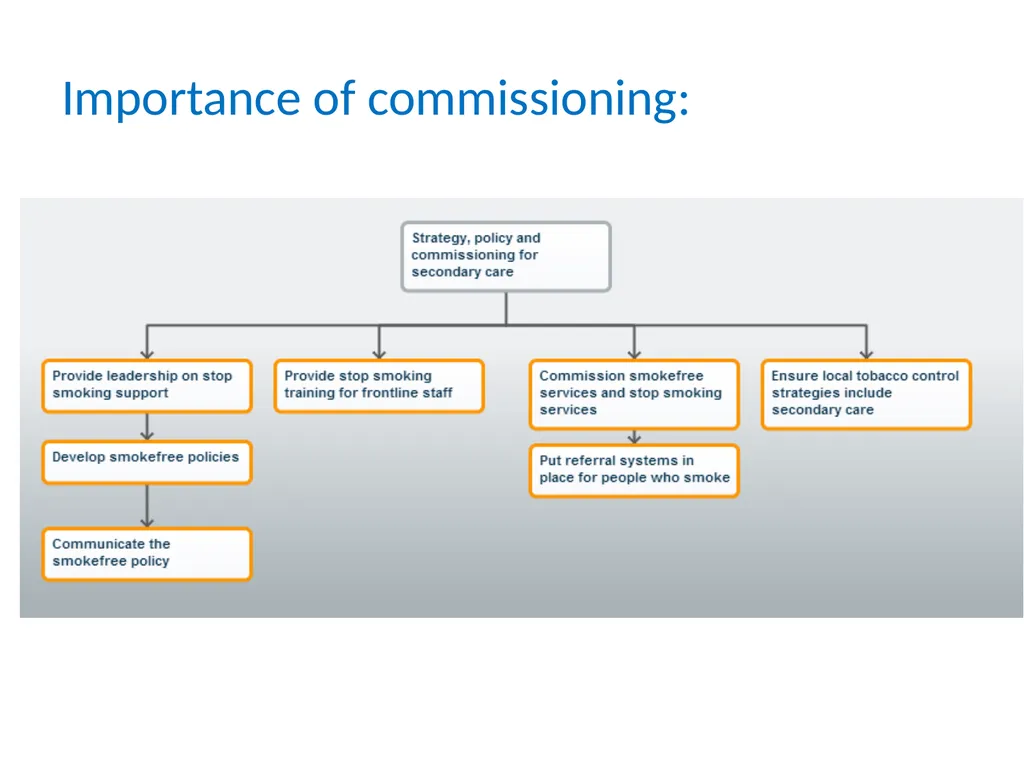
Providers must therefore provide strong leadership and management to:
prepare patients, visitors and other users for smoke-free service use
identify patients who smoke and provide them with intensive stop-smoking support
Develop smoke-free policies and commission smoke-free services
Help all staff to stop smoking
Train frontline staff to deliver stop smoking support
Exceptions and special cases undefinable and unworkable Key conclusions of development group<br>
05
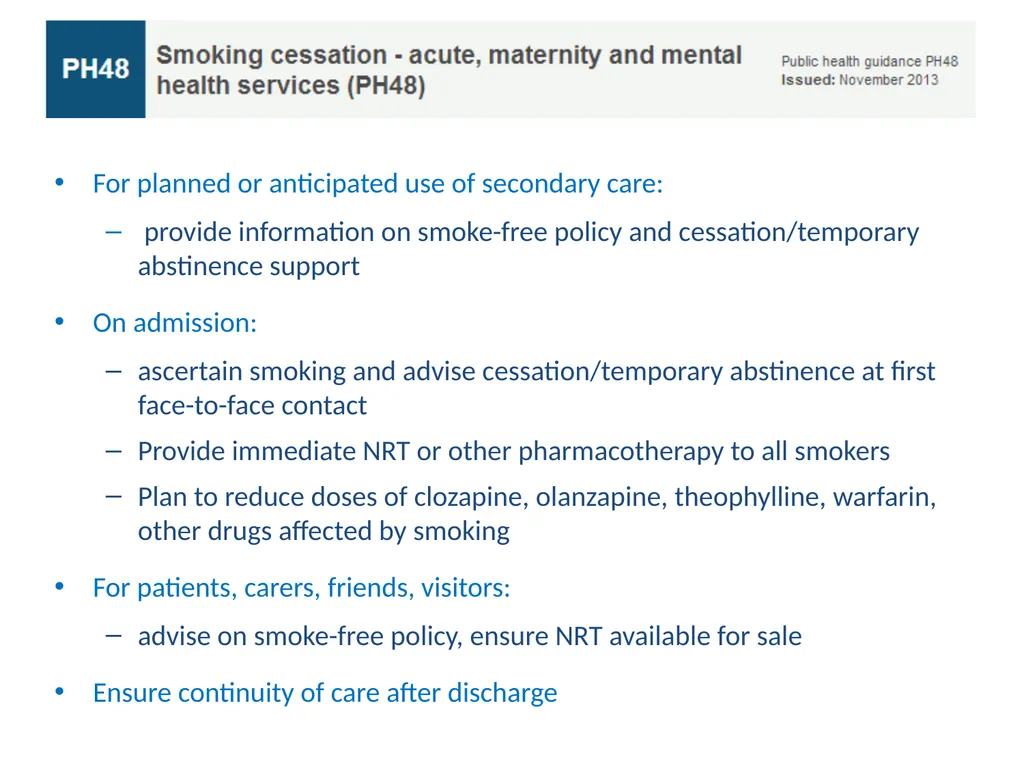
For planned or anticipated use of secondary care:
provide information on smoke-free policy and cessation/temporary abstinence support
On admission:
ascertain smoking and advise cessation/temporary abstinence at first face-to-face contact
Provide immediate NRT or other pharmacotherapy to all smokers
Plan to reduce doses of clozapine, olanzapine, theophylline, warfarin, other drugs affected by smoking
For patients, carers, friends, visitors:
advise on smoke-free policy, ensure NRT available for sale
Ensure continuity of care after discharge<br>
06
Strong leadership and management essential
Stop smoking services must be available on-site
Staff should be trained to support people to stop smoking while using secondary care services.
Staff should be encouraged to quit smoking, or else to abstain while identifiable as NHS staff.
Grounds should also be smoke-free, with no
designated smoking areas
staff-facilitated smoking breaks for anyone using secondary care services<br>
07
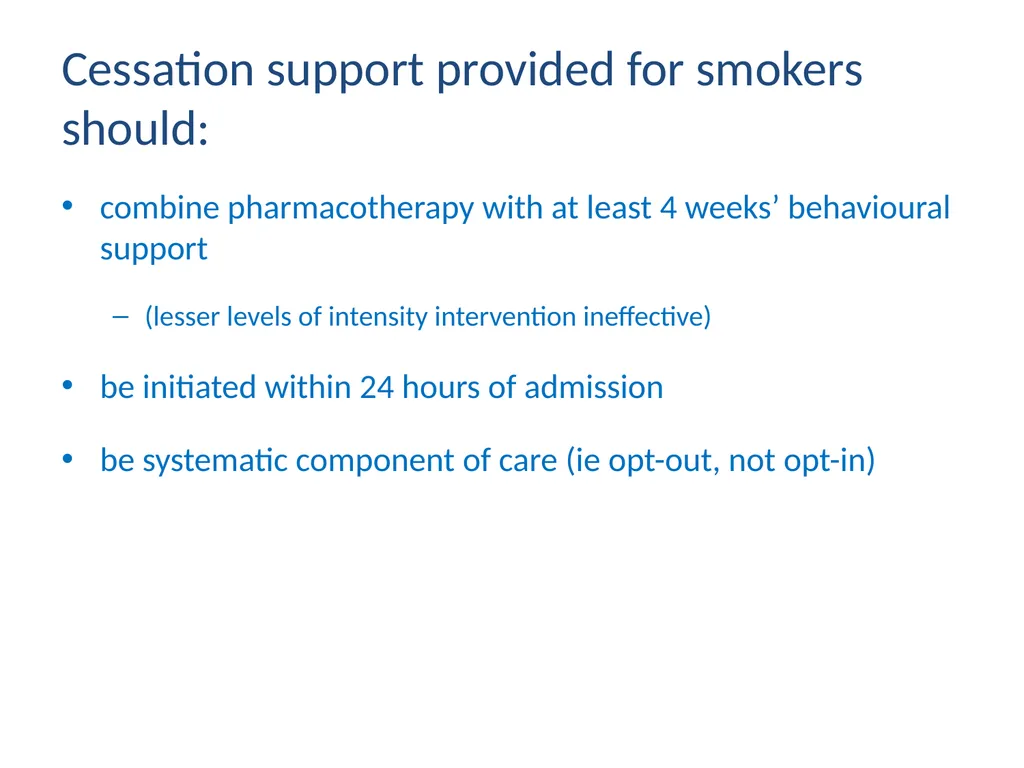
Cessation support provided for smokers should: combine pharmacotherapy with at least 4 weeks’ behavioural support
(lesser levels of intensity intervention ineffective)
be initiated within 24 hours of admission
be systematic component of care (ie opt-out, not opt-in)<br>
08
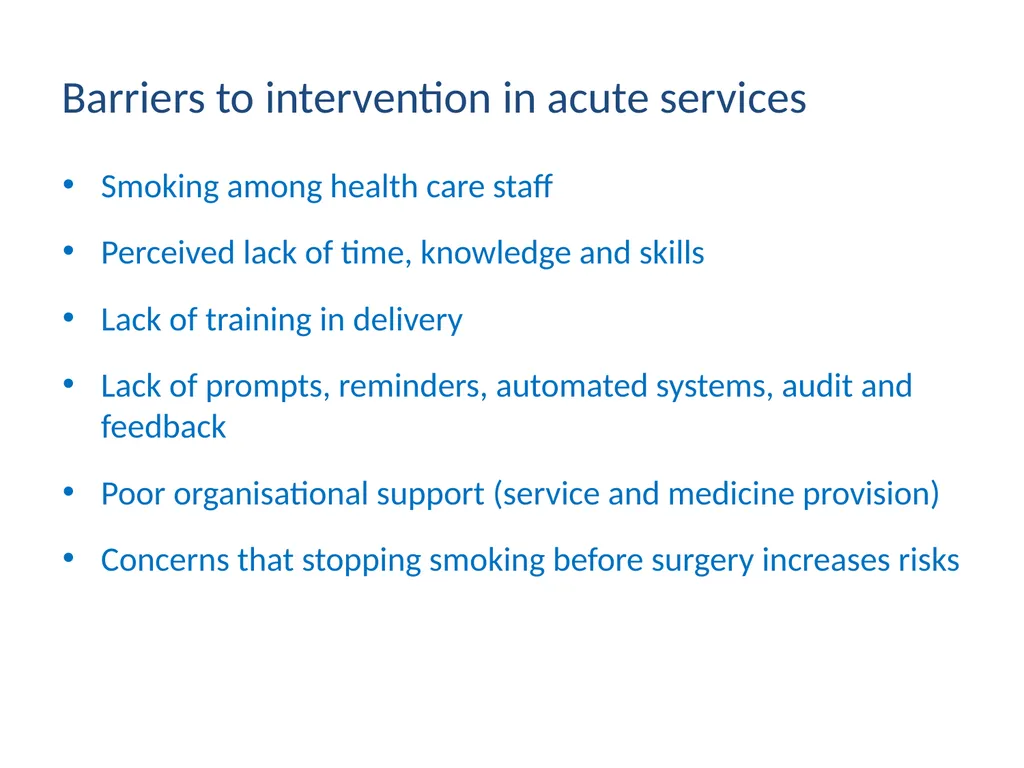
Barriers to intervention in acute services Smoking among health care staff
Perceived lack of time, knowledge and skills
Lack of training in delivery
Lack of prompts, reminders, automated systems, audit and feedback
Poor organisational support (service and medicine provision)
Concerns that stopping smoking before surgery increases risks<br>
09
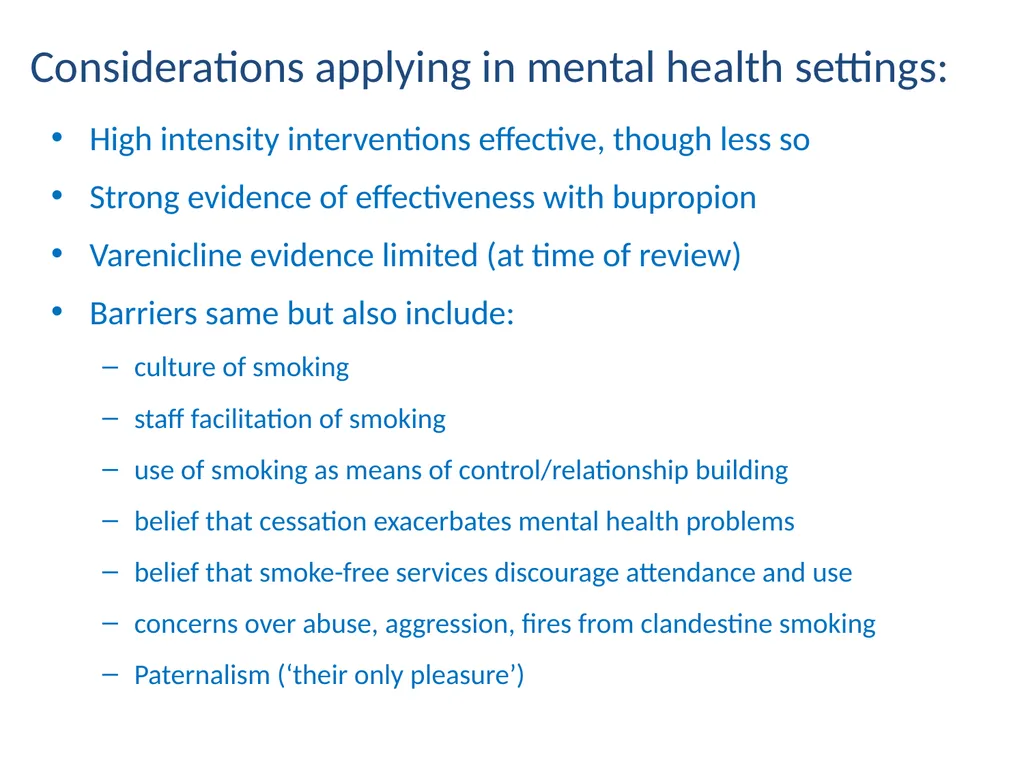
Considerations applying in mental health settings: High intensity interventions effective, though less so
Strong evidence of effectiveness with bupropion
Varenicline evidence limited (at time of review)
Barriers same but also include:
culture of smoking
staff facilitation of smoking
use of smoking as means of control/relationship building
belief that cessation exacerbates mental health problems
belief that smoke-free services discourage attendance and use
concerns over abuse, aggression, fires from clandestine smoking
Paternalism (‘their only pleasure’)<br>
10
Importance of commissioning:<br>
11
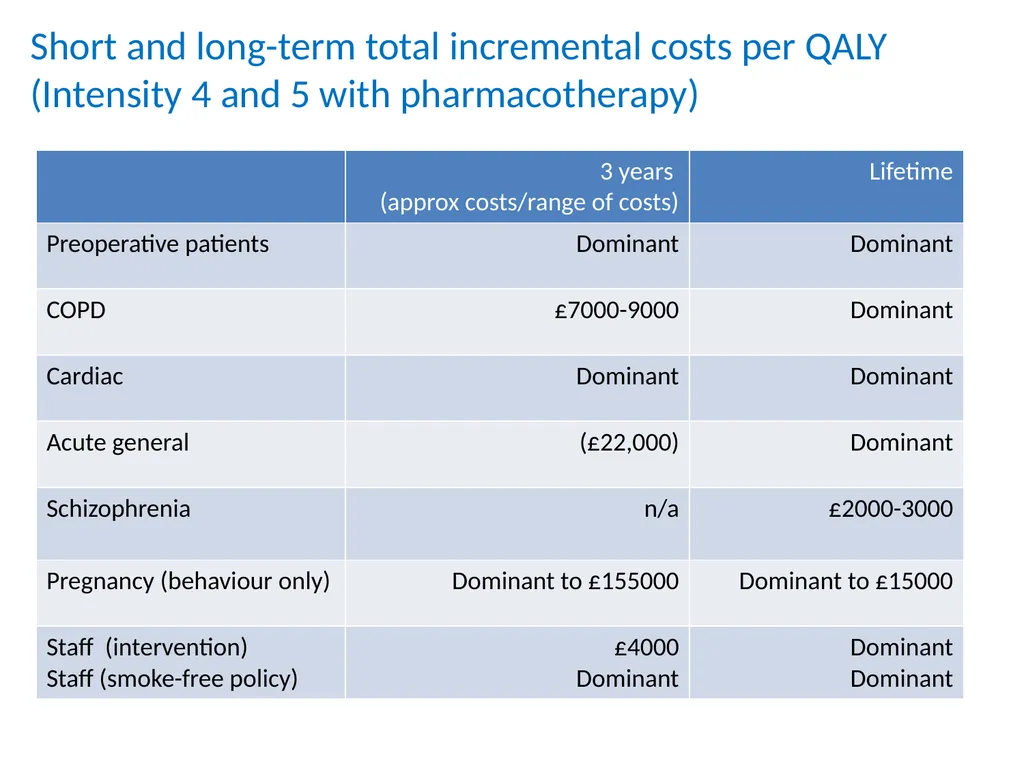
Short and long-term total incremental costs per QALY (Intensity 4 and 5 with pharmacotherapy)<br>