04
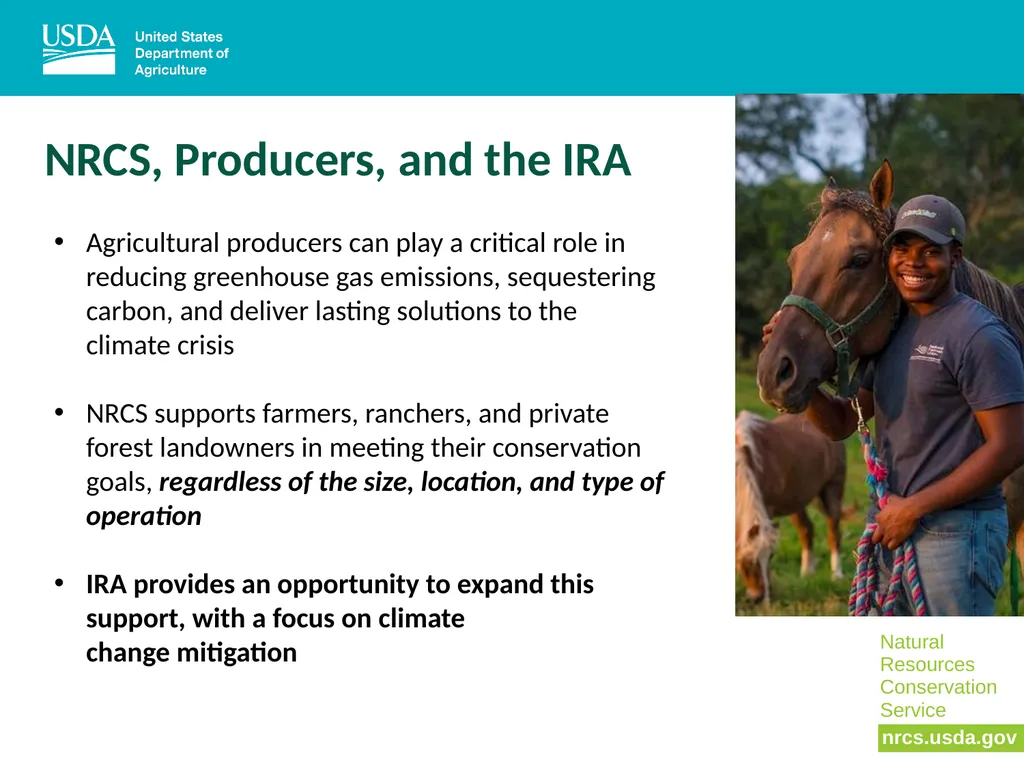
NRCS, Producers, and the IRA Agricultural producers can play a critical role in reducing greenhouse gas emissions, sequestering carbon, and deliver lasting solutions to the climate crisis
NRCS supports farmers, ranchers, and private forest landowners in meeting their conservation goals, regardless of the size, location, and type of operation
IRA provides an opportunity to expand this support, with a focus on climate change mitigation<br>
05
The IRA Focuses on Mitigation The IRA directs NRCS to use the additional funds specifically for climate change mitigation.
Mitigation activities reduce greenhouse gas emissions and improve carbon storage.
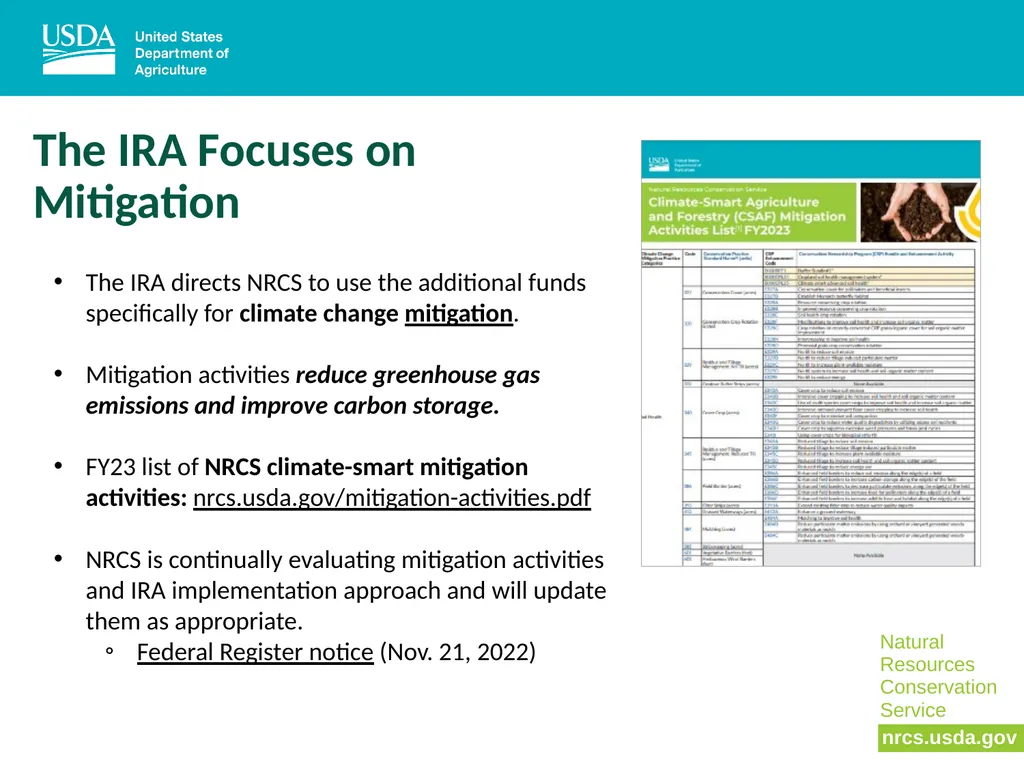
FY23 list of NRCS climate-smart mitigation activities: nrcs.usda.gov/mitigation-activities.pdf
NRCS is continually evaluating mitigation activities and IRA implementation approach and will update them as appropriate.
Federal Register notice (Nov. 21, 2022)<br>
06
Facilitating Practices Enable Mitigation IRA funding can also be used for practices needed to facilitate a mitigation practice.�
Examples of conservation systems that include mitigation practices and the practices that may be needed to facilitate them: Tree/Shrub Establishment (612)
Tree Shrub Site Preparation (490)
Access Control (472)
Conservation Crop Rotation (328)
Cover Crops (340)
Irrigation Water Management (449)
Pest Management Conservation System (595)
Waste Separation Facility (632)
Waste Transfer (634)
Roofs and Covers (367) Prescribed Grazing (528)
Watering Facility (614)�Stream Crossing (578)
Fence (382)
Livestock Shelter Structure (576)
Upland Wildlife Habitat Management (645)
Brush Management (314)�Herbaceous Weed Treatment (315)�Prescribed Grazing (528)<br>
07
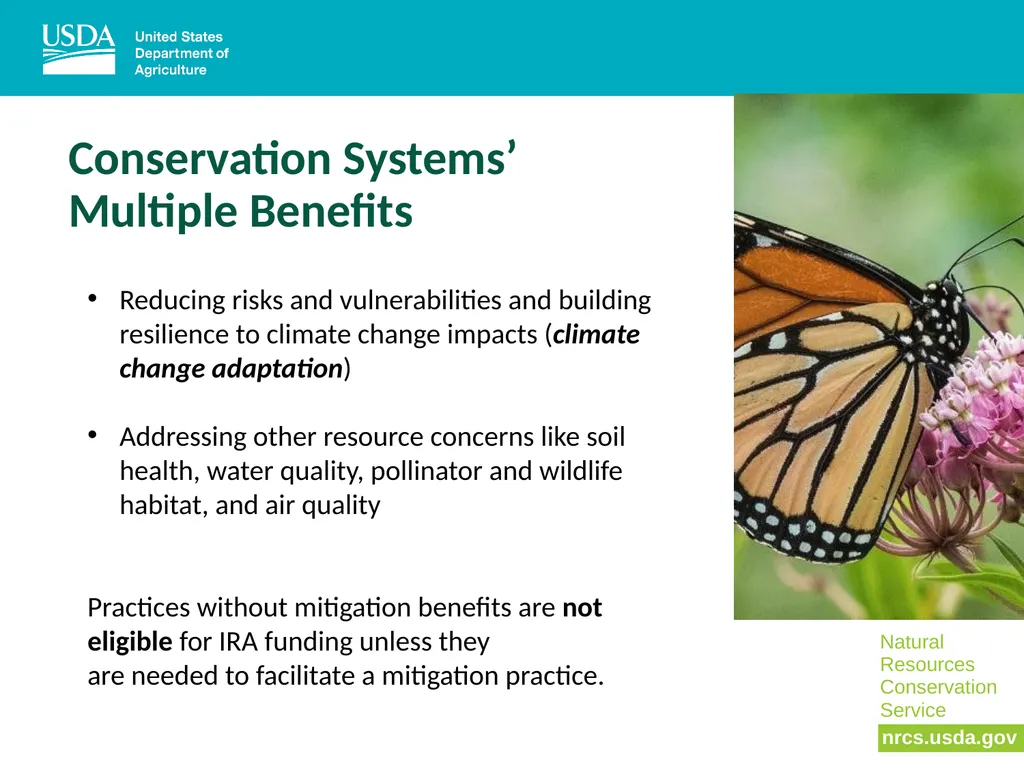
Conservation Systems’ Multiple Benefits Reducing risks and vulnerabilities and building resilience to climate change impacts (climate change adaptation)
Addressing other resource concerns like soil health, water quality, pollinator and wildlife habitat, and air quality
Practices without mitigation benefits are not eligible for IRA funding unless they are needed to facilitate a mitigation practice.<br>
08
Utah Implementation Opportunities Soil Health:
340 Cover Crops
329 Residue and Tillage Management, No Till
�Forestry:
666 Forest Stand Improvement Riparian Forest Buffer
Range/Pasture:
528 Prescribed Grazing
550 Range Planting
512 Pasture and Hay Planting Urban Ag:
340 Cover Crops
484 Mulching
590 Nutrient Management
Facilitating Practices:
314 Brush Management
382 Fence
315 Herbaceous Weed Treatment
516 Livestock Pipeline
614 Watering Facility<br>
09
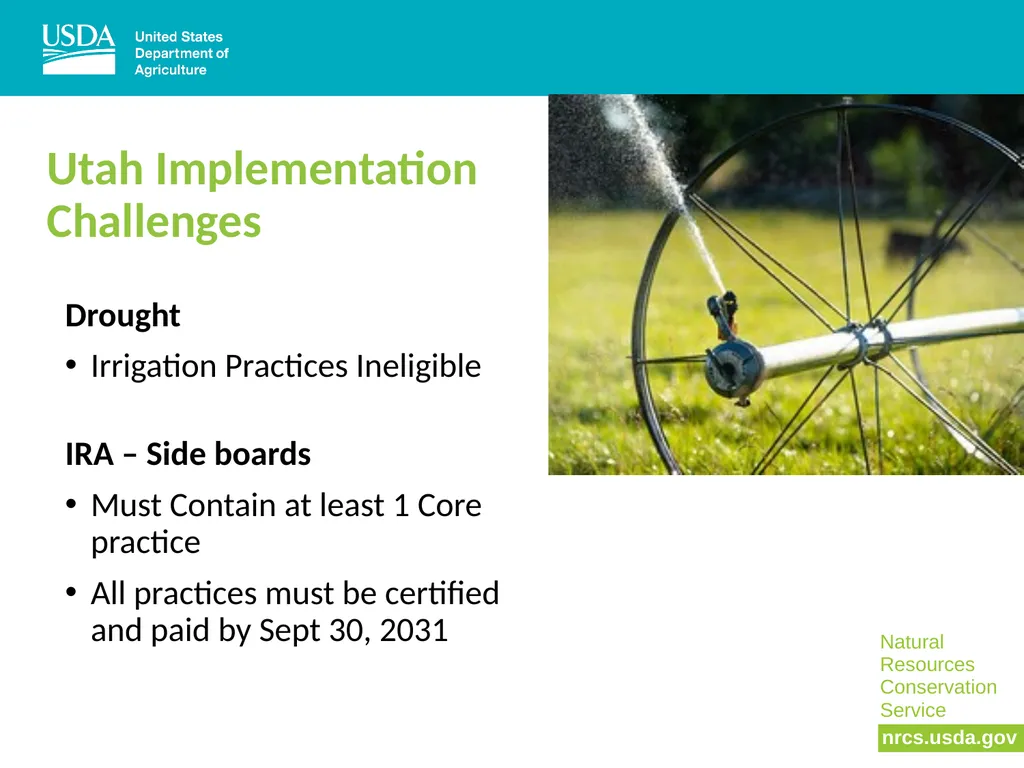
Utah Implementation Challenges Drought
Irrigation Practices Ineligible�
IRA – Side boards
Must Contain at least 1 Core practice
All practices must be certified and paid by Sept 30, 2031<br>
10
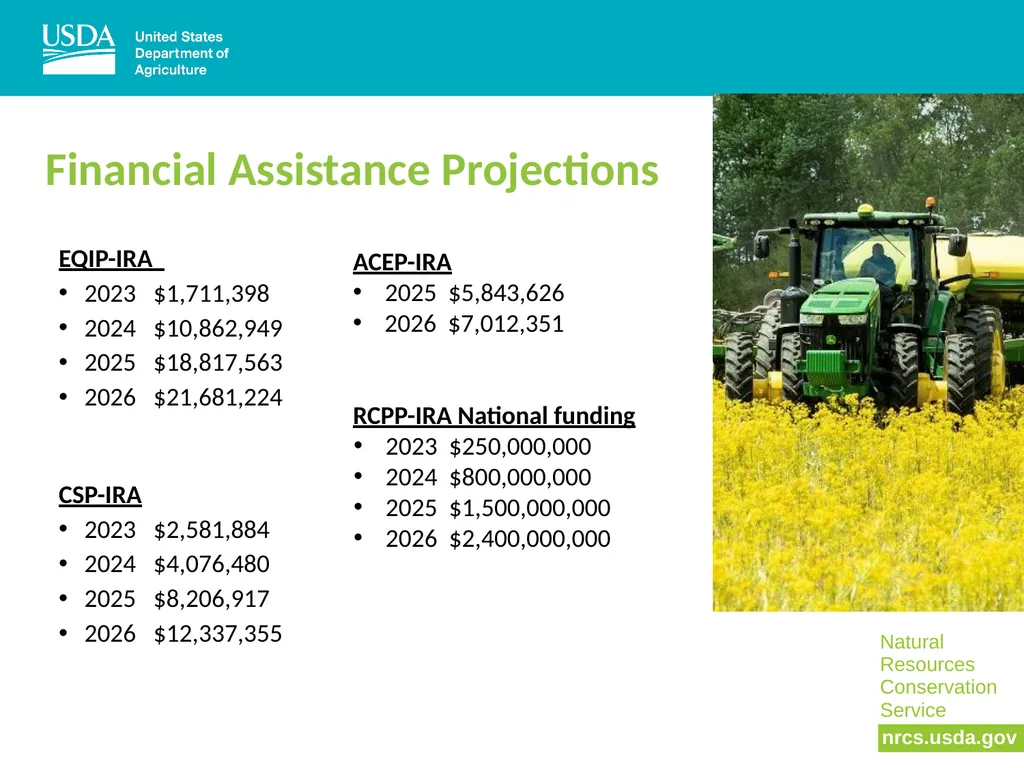
Financial Assistance Projections EQIP-IRA
2023 $1,711,398
2024 $10,862,949
2025 $18,817,563
2026 $21,681,224
�CSP-IRA
2023 $2,581,884
2024 $4,076,480
2025 $8,206,917
2026 $12,337,355 ACEP-IRA
2025 $5,843,626
2026 $7,012,351
RCPP-IRA National funding
2023 $250,000,000
2024 $800,000,000
2025 $1,500,000,000
2026 $2,400,000,000<br>
11
For Interested Producers Everyone has a part to play when it comes to delivering climate solutions
If you’ve never applied, NRCS can help
If you’ve applied before, and were not approved due to limited funding, try again!
NRCS is also working hard to improve producer access to its programs and provide financial and technical assistance to improve your farm, ranch, urban operation or forest land
Contact NRCS at your local service center<br>
12
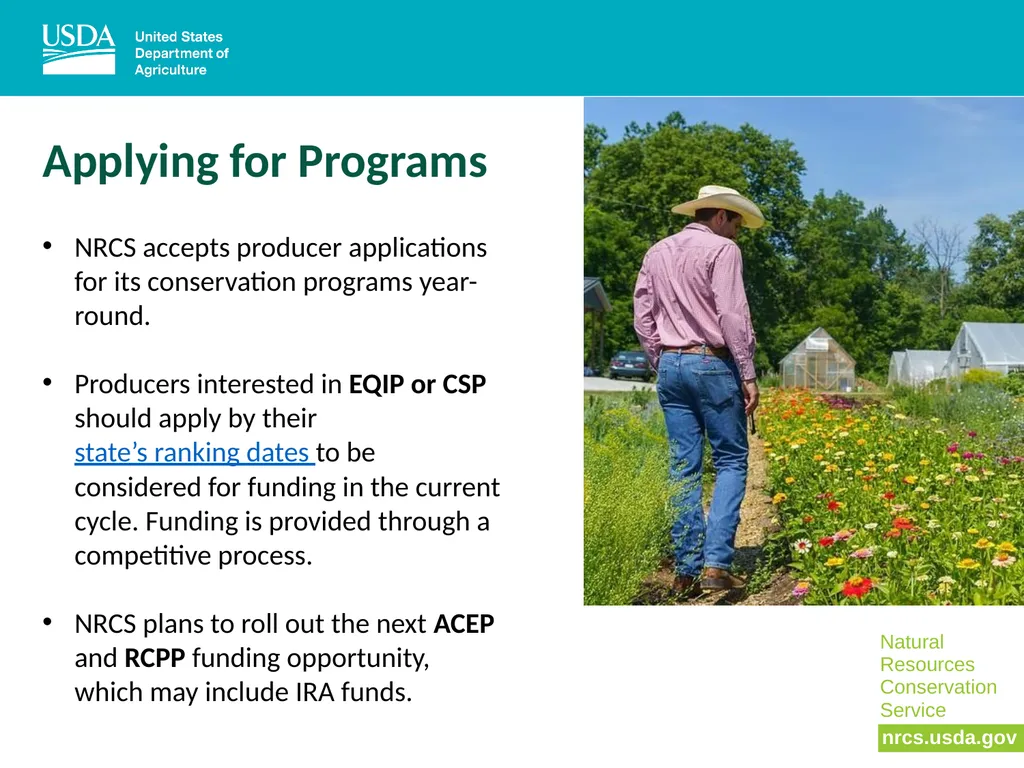
Applying for Programs NRCS accepts producer applications for its conservation programs year-round.
Producers interested in EQIP or CSP should apply by their state’s ranking dates to be considered for funding in the current cycle. Funding is provided through a competitive process.
NRCS plans to roll out the next ACEP and RCPP funding opportunity, which may include IRA funds.<br>
14
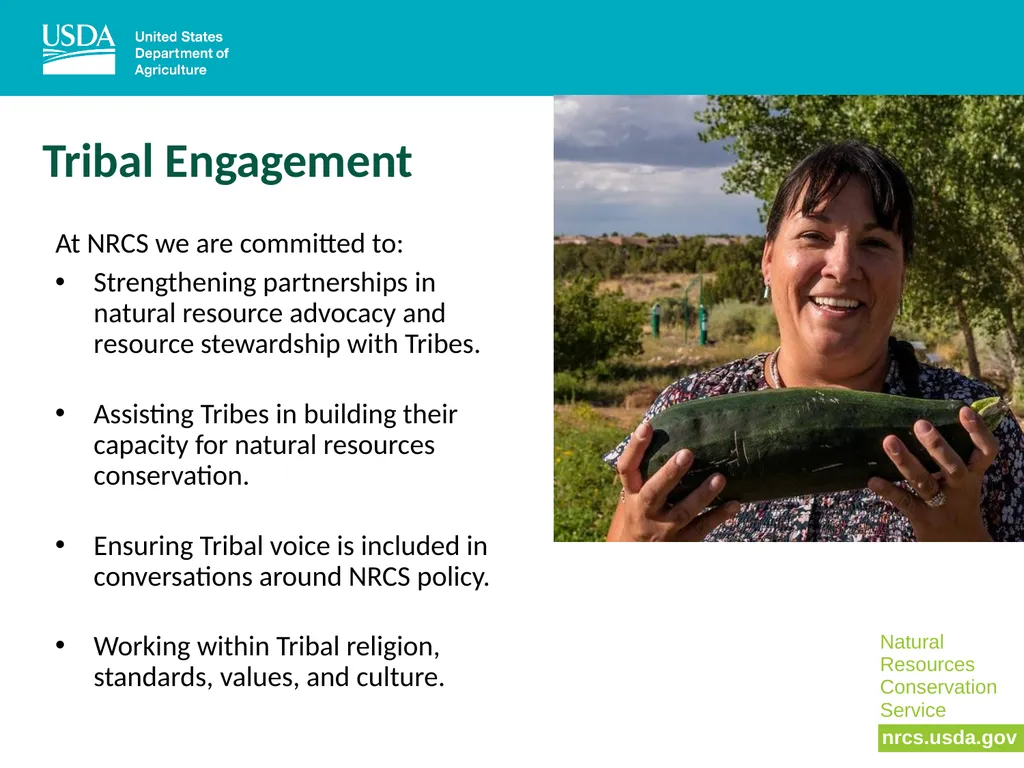
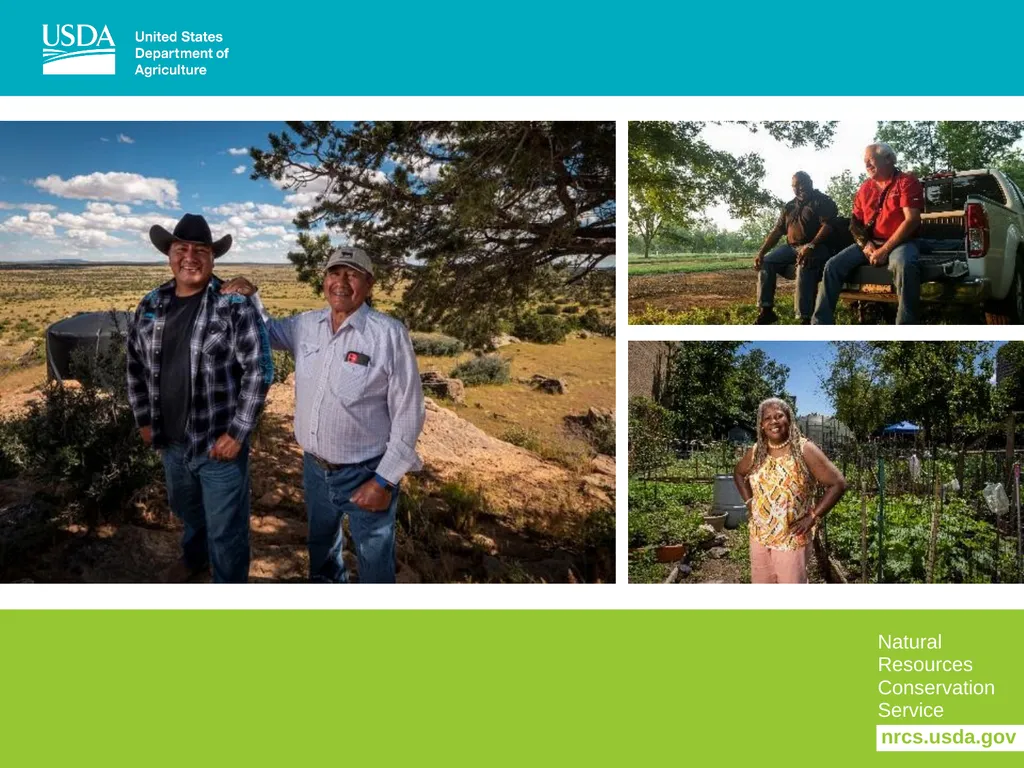
Tribal Engagement At NRCS we are committed to:
Strengthening partnerships in natural resource advocacy and resource stewardship with Tribes.�
Assisting Tribes in building their capacity for natural resources conservation.�
Ensuring Tribal voice is included in conversations around NRCS policy.�
Working within Tribal religion, standards, values, and culture.<br>
15
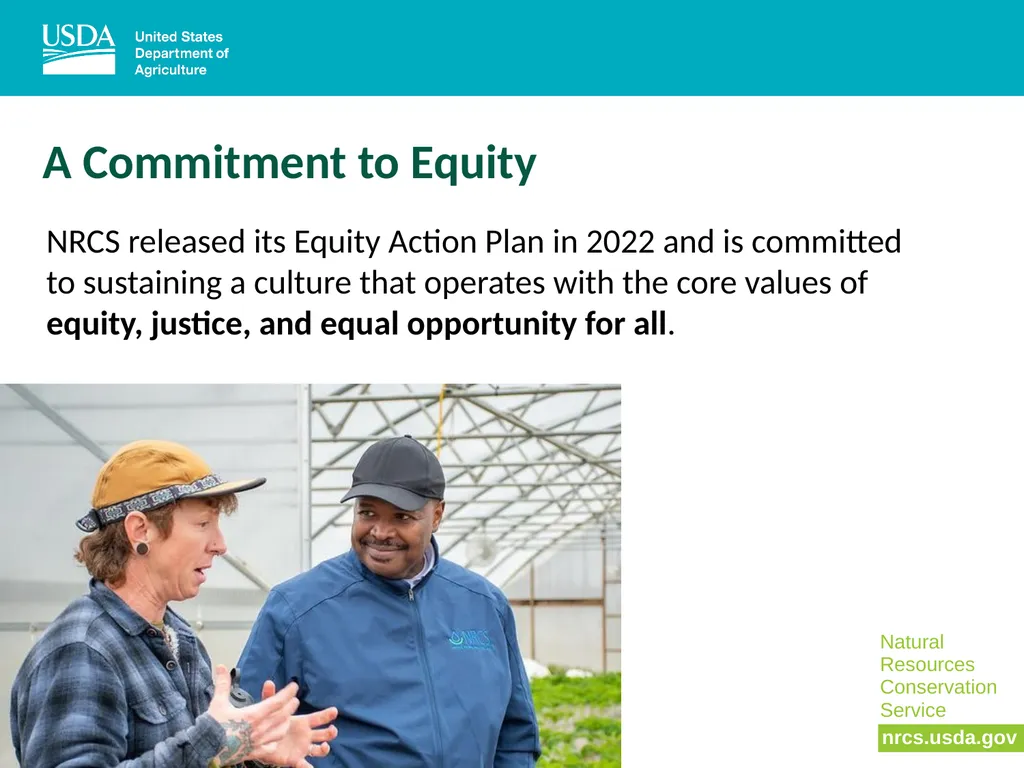
A Commitment to Equity NRCS released its Equity Action Plan in 2022 and is committed to sustaining a culture that operates with the core values of equity, justice, and equal opportunity for all.<br>
16
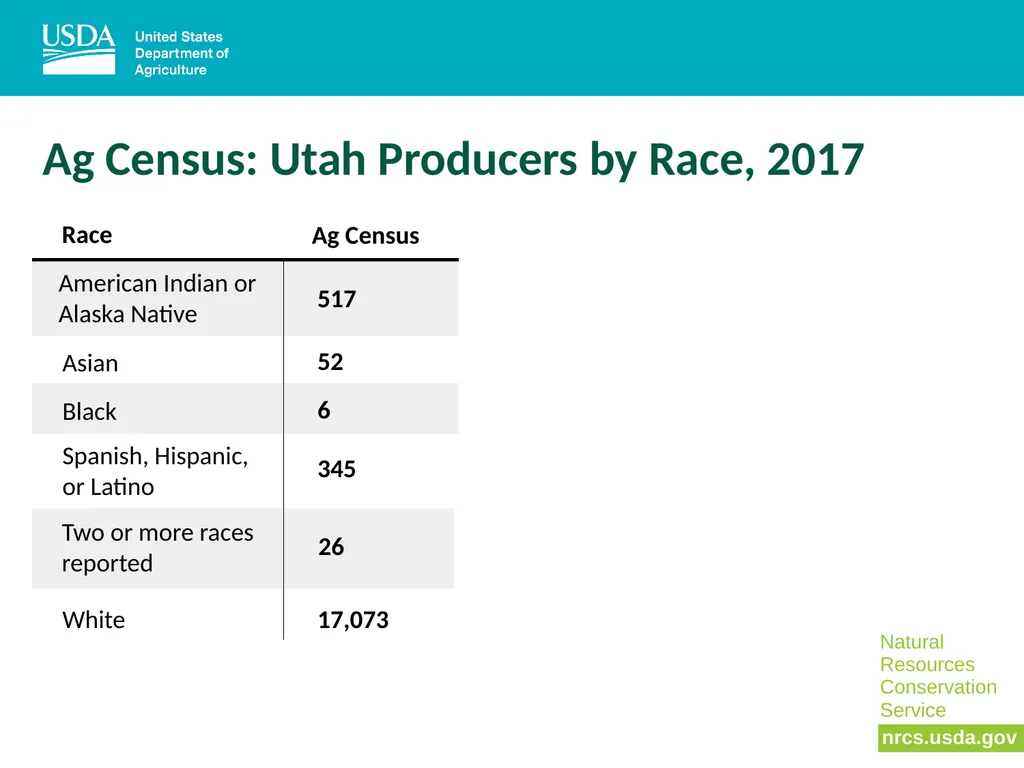
Ag Census: Utah Producers by Race, 2017 Race White Spanish, Hispanic, or Latino Black Asian American Indian or Alaska Native Two or more races reported 517 Ag Census 52 6 345 26 17,073<br>
17
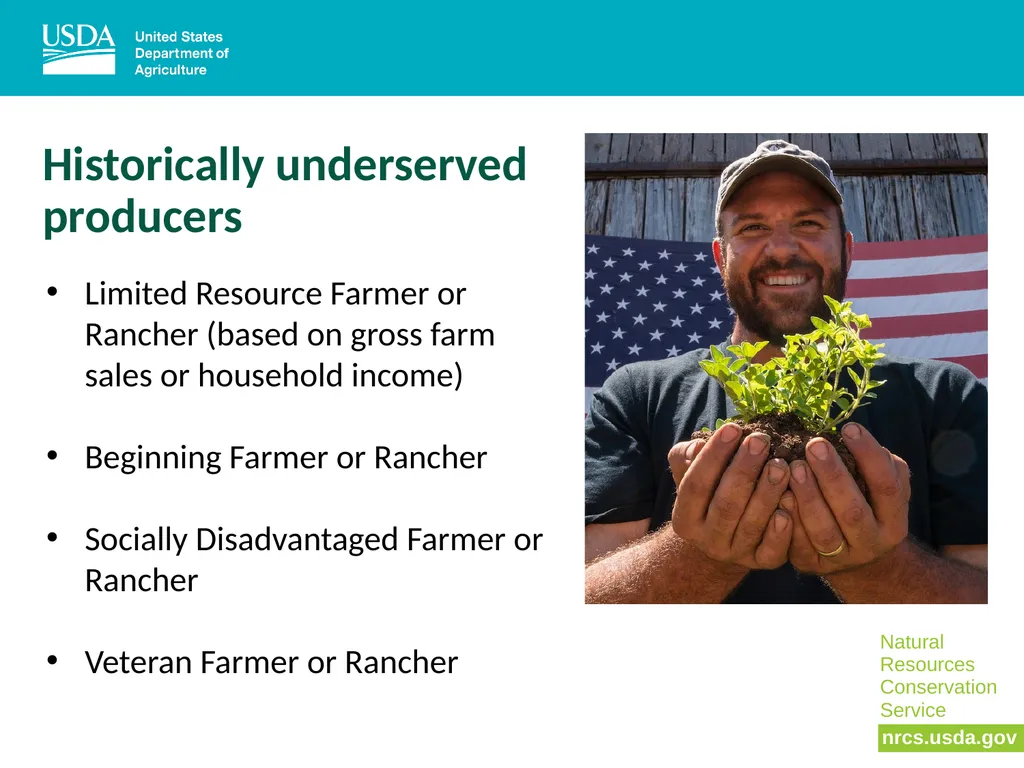
Historically underserved producers Limited Resource Farmer or Rancher (based on gross farm sales or household income)�
Beginning Farmer or Rancher�
Socially Disadvantaged Farmer or Rancher�
Veteran Farmer or Rancher<br>
18
Addressing Inequities Build relationships with community organizations to help improve communication.�
Increase involvement of historically underserved producers in Local Work Group meetings.�
Grow outreach efforts, including recruitment initiatives to support a more diverse staff, and youth activities to encourage participation from the next generation.<br>
20
Natural
Resources
Conservation
Service nrcs.usda.gov<br>