
Nutrient Management for Grazing/Pastures On the

Description: Nutrient Management for GrazingPastures On the Agenda Identify Requirements of Nutrient Management for Grazing Systems Name Advantages of Grazing for Nutrient Management Understand Soil Testing for Pastures Comprehend Recommendations for
Related Topics
Download Presentation
"Nutrient Management for Grazing/Pastures On the" is the property of its rightful owner. Permission is granted to download and print the materials on this website for personal, non-commercial use only, and to display it on your personal computer provided you do not modify the materials and that you retain all copyright notices contained in the materials. By downloading content from our website, you accept the terms of this agreement.
Presentation Transcript
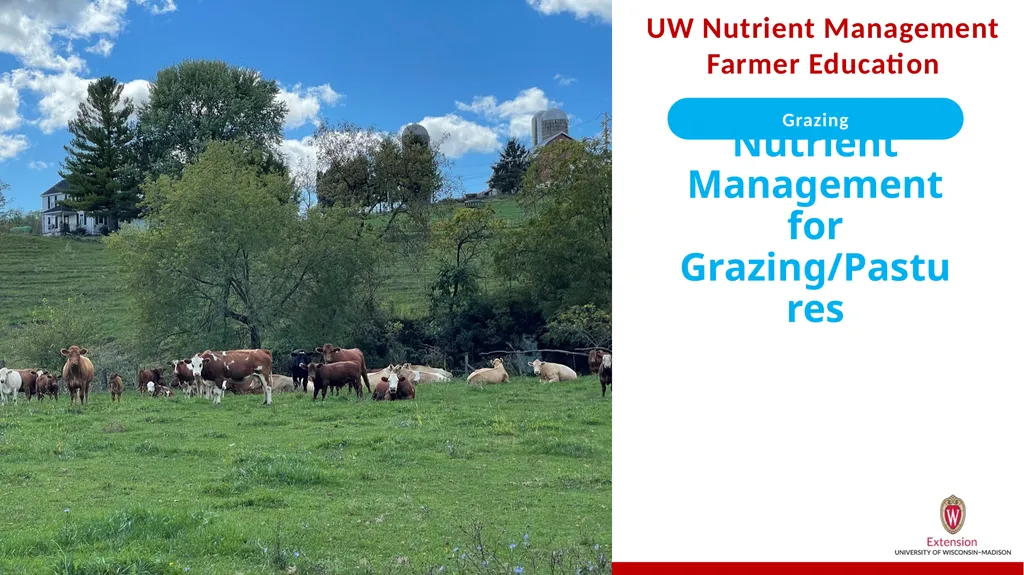
slide1. Nutrient Management for Grazing/Pastures<br>
slide2. On the Agenda Identify Requirements of Nutrient Management for Grazing Systems
Name Advantages of Grazing for Nutrient Management
Understand Soil Testing for Pastures
Comprehend Recommendations for N,P, & K in Wisconsin Pastures
Properly Credit Nutrients from Manure in Pastures
Consider Environmental Risk of Grazing<br>
slide3. Nutrient Management Requirements for Graziers Pastures do need to be included in a nutrient management plan if one or more of the following applies to the pasture:
Receives mechanically applied nutrients (manure or fertilizer)
Has an average of more than one animal unit (1,000 pounds of animal) per acre throughout the grazing season
Has a herd present during winter for feeding activities such as bale grazing and the pasture is not considered a feedlot.<br>
slide4. Requirements for Graziers Pastures do not have to be included in a nutrient management plan if the pasture does not receive applications of nutrients AND one of the following applies:
The pasture is a feedlot or an area that is considered a barnyard, exercise area, or other area where livestock are concentrated
Vegetation is not maintained for forage or the pasture has an average of less than one animal unit per acre throughout the grazing season.
…but having a plan is still a good idea!<br>
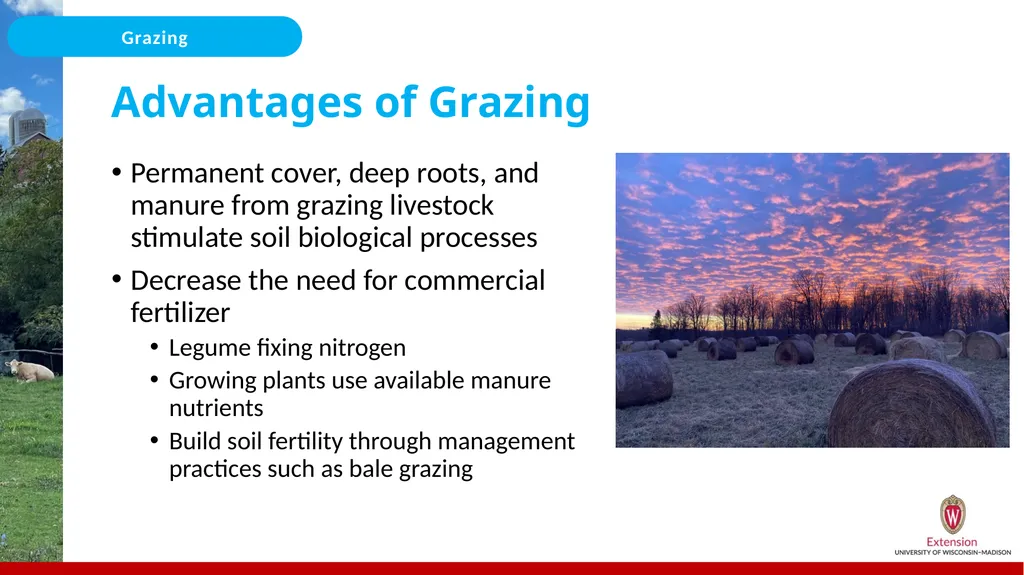
slide5. Advantages of Grazing Permanent cover, deep roots, and manure from grazing livestock stimulate soil biological processes
Decrease the need for commercial fertilizer
Legume fixing nitrogen
Growing plants use available manure nutrients
Build soil fertility through management practices such as bale grazing<br>
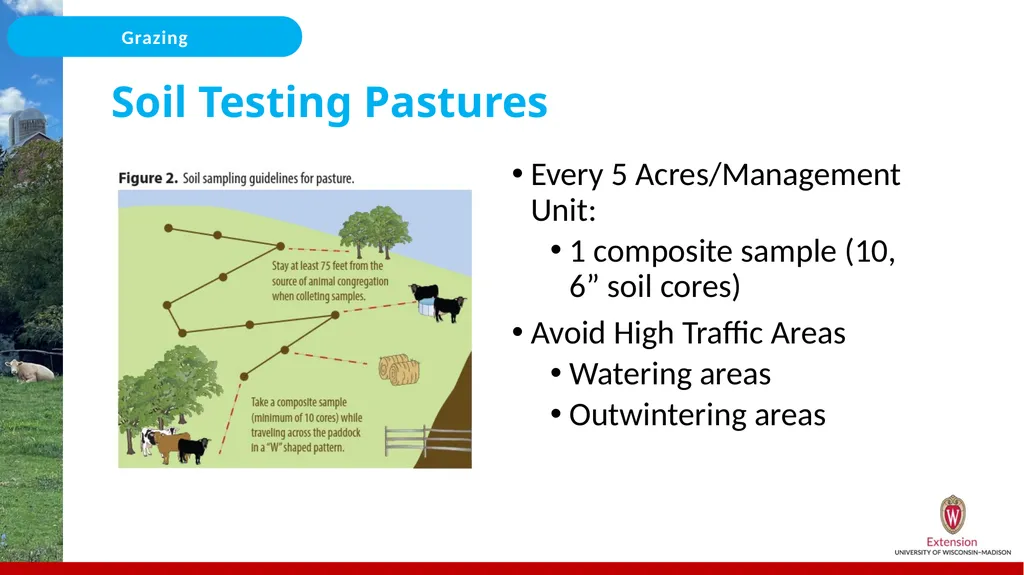
slide6. Soil Testing Pastures Every 5 Acres/Management Unit:
1 composite sample (10, 6” soil cores)
Avoid High Traffic Areas
Watering areas
Outwintering areas<br>
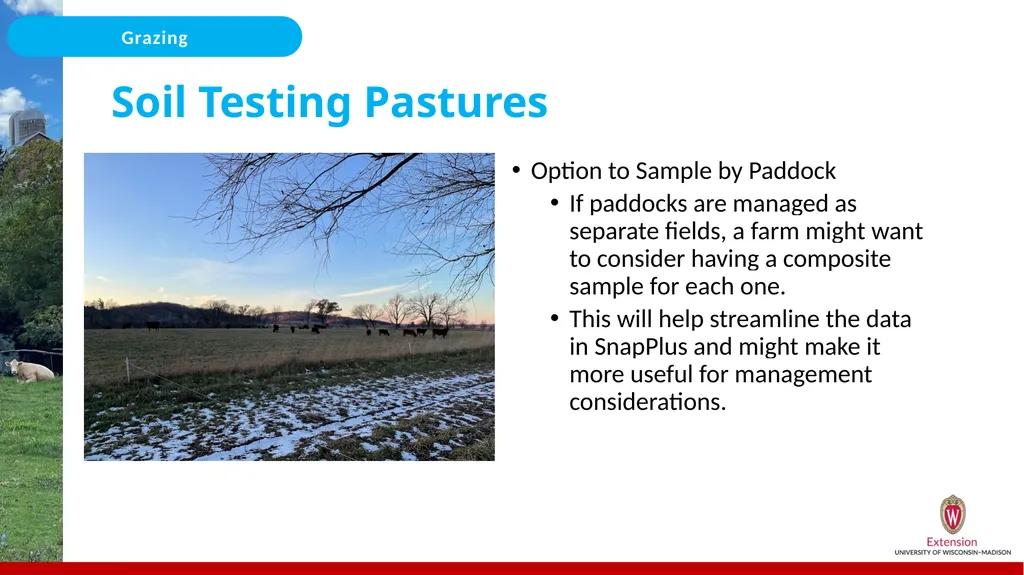
slide7. Soil Testing Pastures Option to Sample by Paddock
If paddocks are managed as separate fields, a farm might want to consider having a composite sample for each one.
This will help streamline the data in SnapPlus and might make it more useful for management considerations.<br>
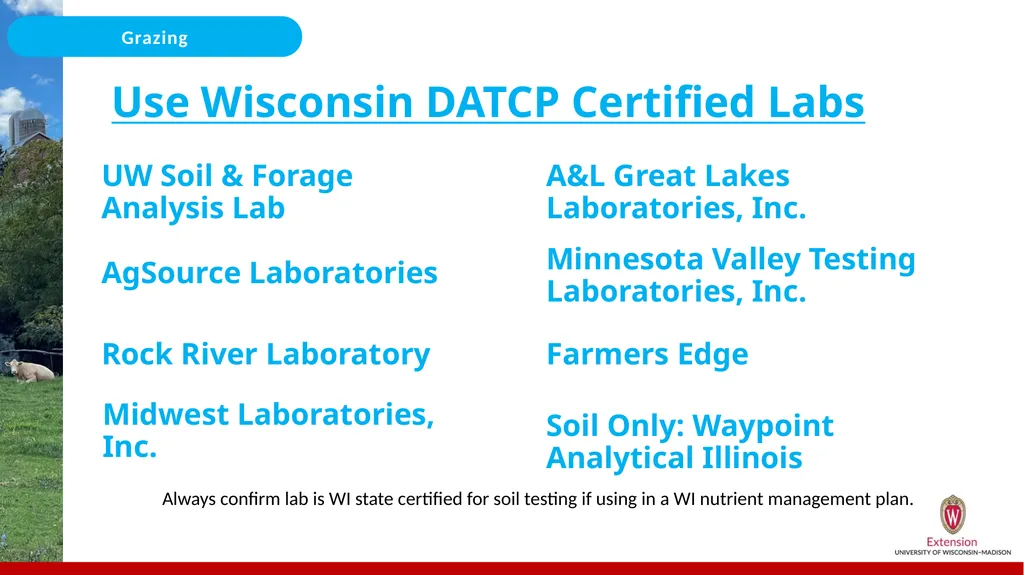
slide8. Use Wisconsin DATCP Certified Labs UW Soil & Forage Analysis Lab AgSource Laboratories Rock River Laboratory Midwest Laboratories, Inc. A&L Great Lakes Laboratories, Inc. Minnesota Valley Testing Laboratories, Inc. Farmers Edge Soil Only: Waypoint Analytical Illinois Always confirm lab is WI state certified for soil testing if using in a WI nutrient management plan.<br>
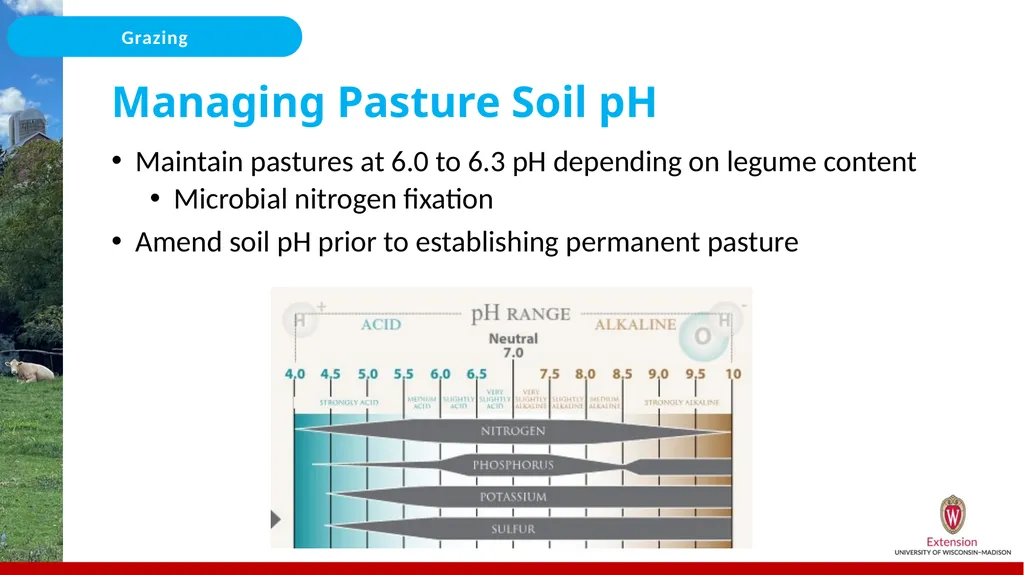
slide9. Managing Pasture Soil pH Maintain pastures at 6.0 to 6.3 pH depending on legume content
Microbial nitrogen fixation
Amend soil pH prior to establishing permanent pasture<br>
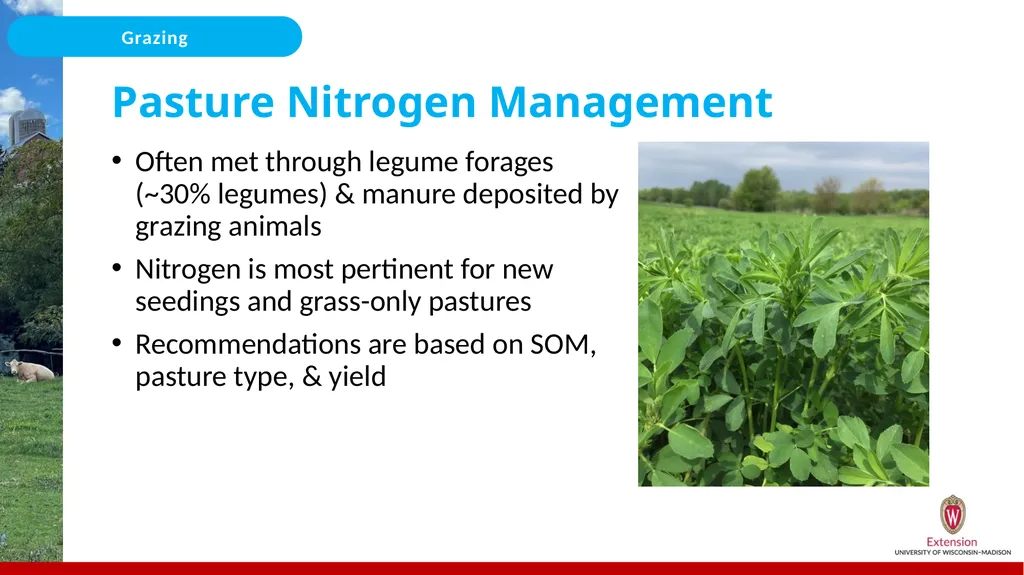
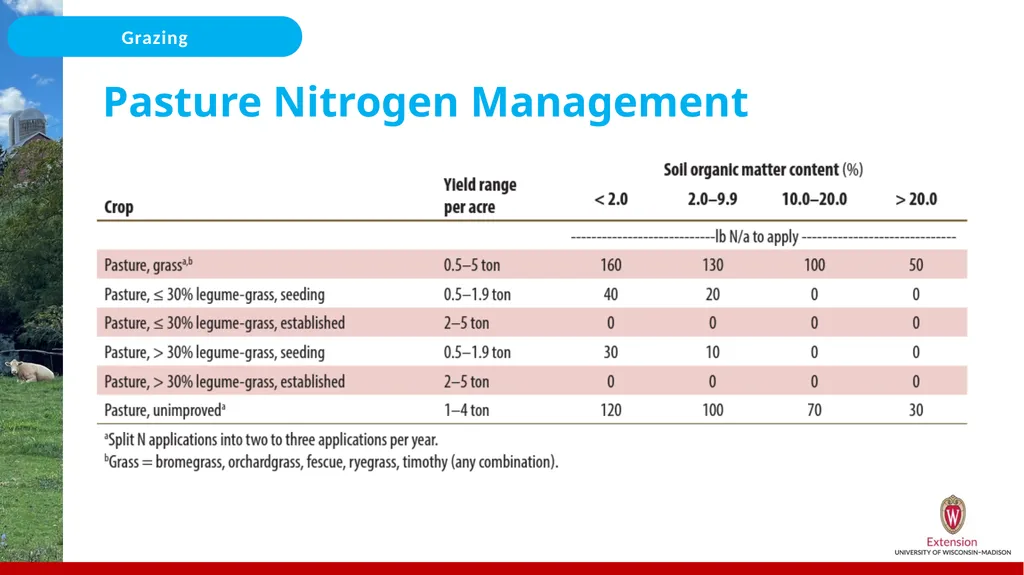
slide10. Pasture Nitrogen Management Often met through legume forages (~30% legumes) & manure deposited by grazing animals
Nitrogen is most pertinent for new seedings and grass-only pastures
Recommendations are based on SOM, pasture type, & yield<br>
slide11. Pasture Nitrogen Management<br>
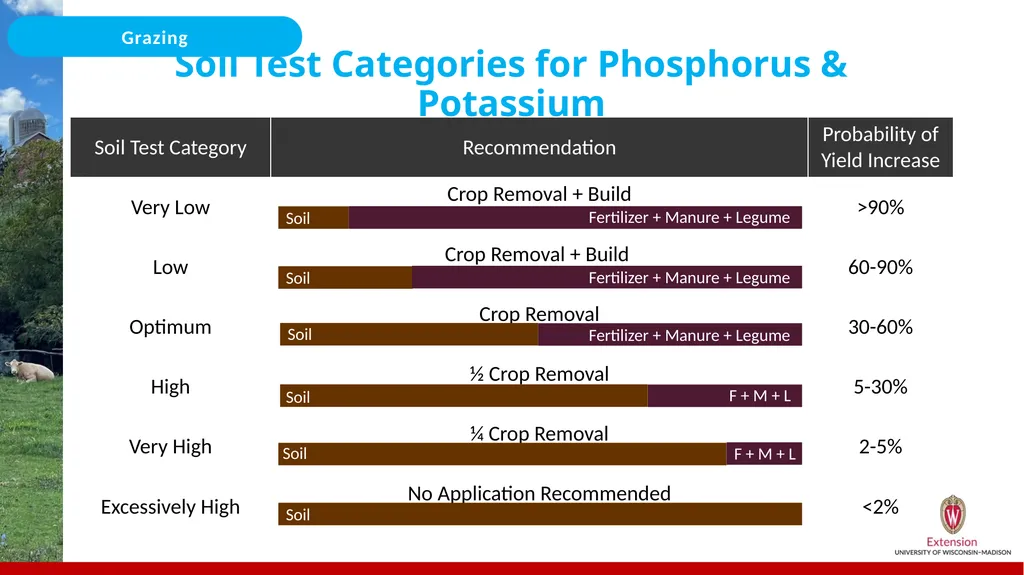
slide12. Soil Test Categories for Phosphorus & Potassium Soil Soil Fertilizer + Manure + Legume Soil Soil F + M + L Fertilizer + Manure + Legume Fertilizer + Manure + Legume Soil Soil F + M + L<br>
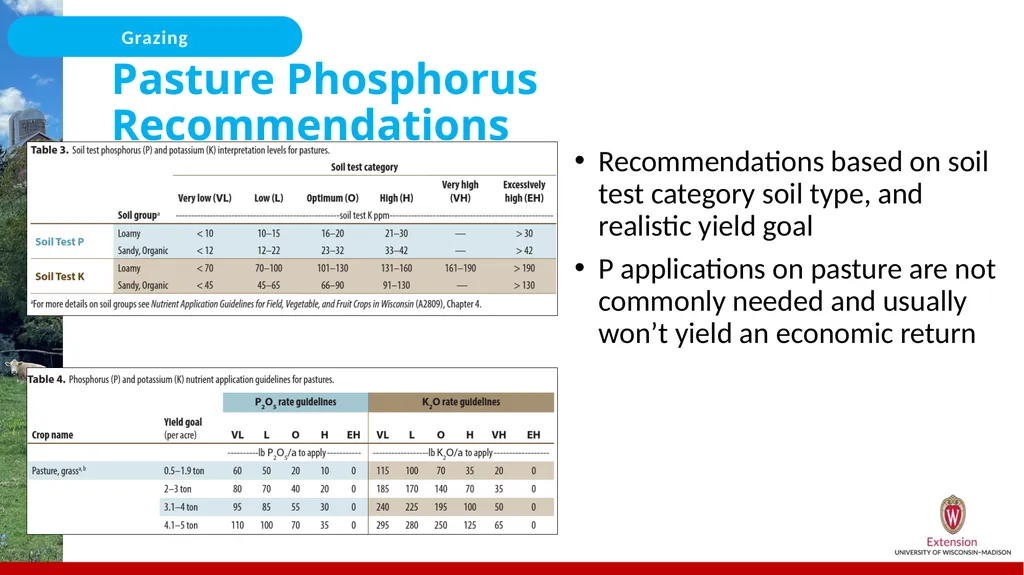
slide13. Pasture Phosphorus Recommendations Recommendations based on soil test category soil type, and realistic yield goal
P applications on pasture are not commonly needed and usually won’t yield an economic return<br>
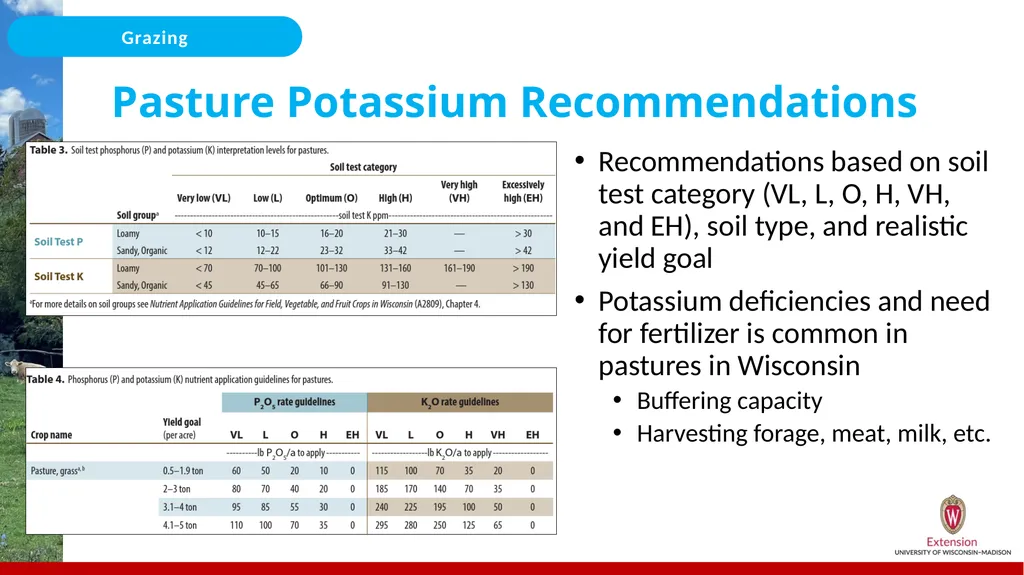
slide14. Pasture Potassium Recommendations Recommendations based on soil test category (VL, L, O, H, VH, and EH), soil type, and realistic yield goal
Potassium deficiencies and need for fertilizer is common in pastures in Wisconsin
Buffering capacity
Harvesting forage, meat, milk, etc.<br>
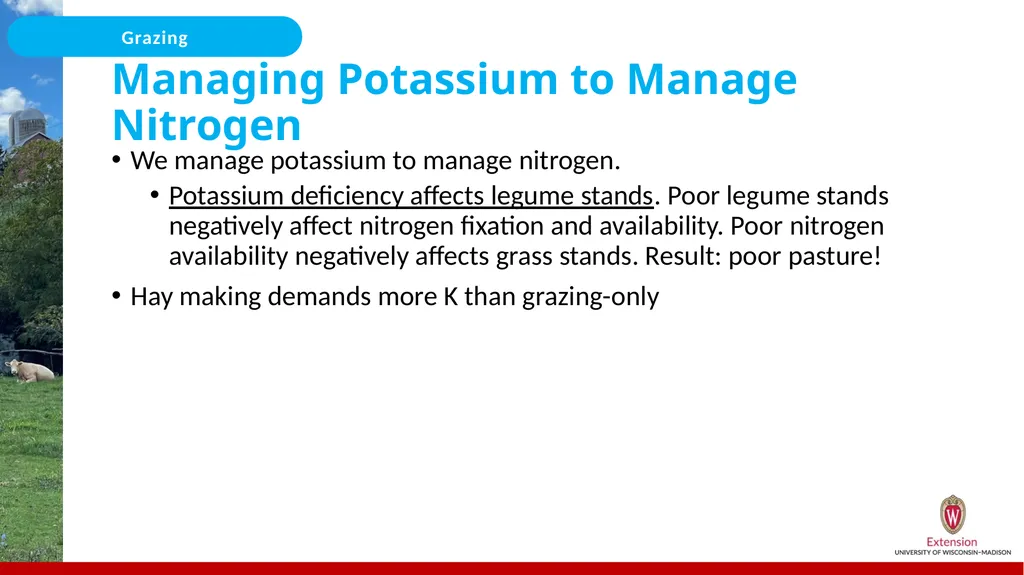
slide15. Managing Potassium to Manage Nitrogen We manage potassium to manage nitrogen.
Potassium deficiency affects legume stands. Poor legume stands negatively affect nitrogen fixation and availability. Poor nitrogen availability negatively affects grass stands. Result: poor pasture!
Hay making demands more K than grazing-only<br>
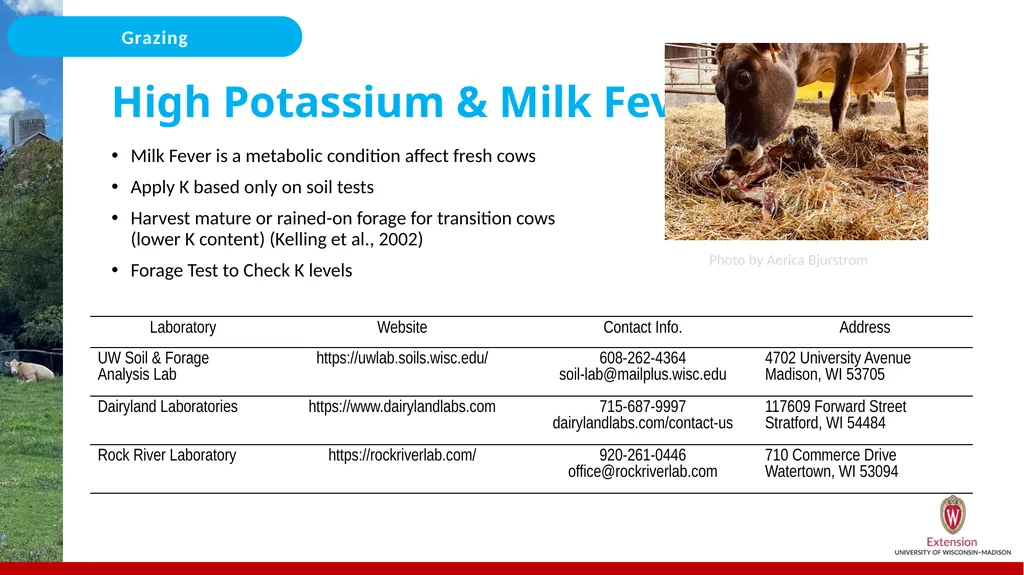
slide16. High Potassium & Milk Fever Milk Fever is a metabolic condition affect fresh cows
Apply K based only on soil tests
Harvest mature or rained-on forage for transition cows (lower K content) (Kelling et al., 2002)
Forage Test to Check K levels Photo by Aerica Bjurstrom<br>
slide17. A Note on Micronutrients? Micronutrients are rarely needed on Wisconsin soils, especially farms that receive manure from livestock (i.e. pasture)<br>
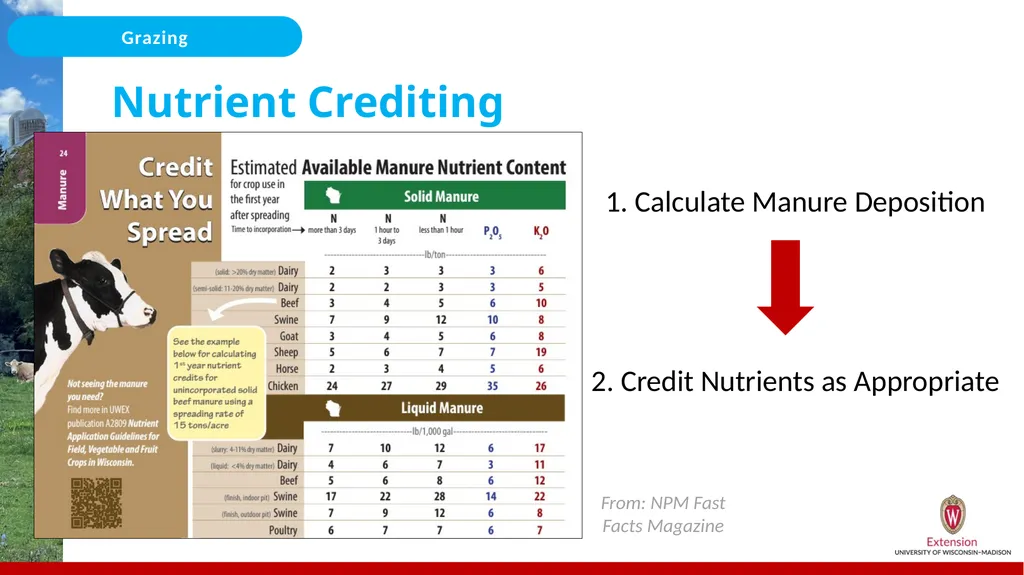
slide18. Nutrient Crediting 1. Calculate Manure Deposition
2. Credit Nutrients as Appropriate From: NPM Fast Facts Magazine<br>
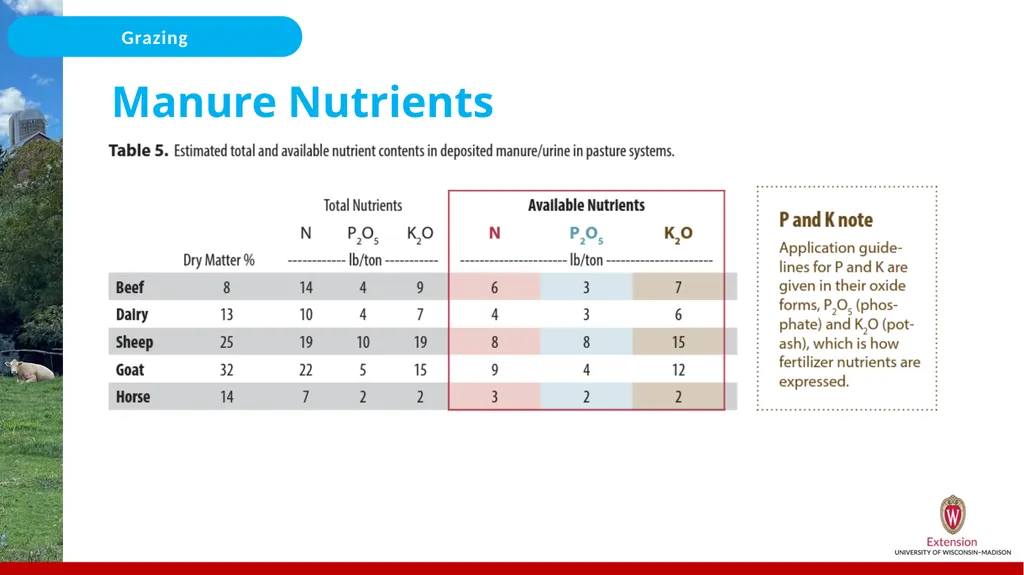
slide19. Manure Nutrients<br>
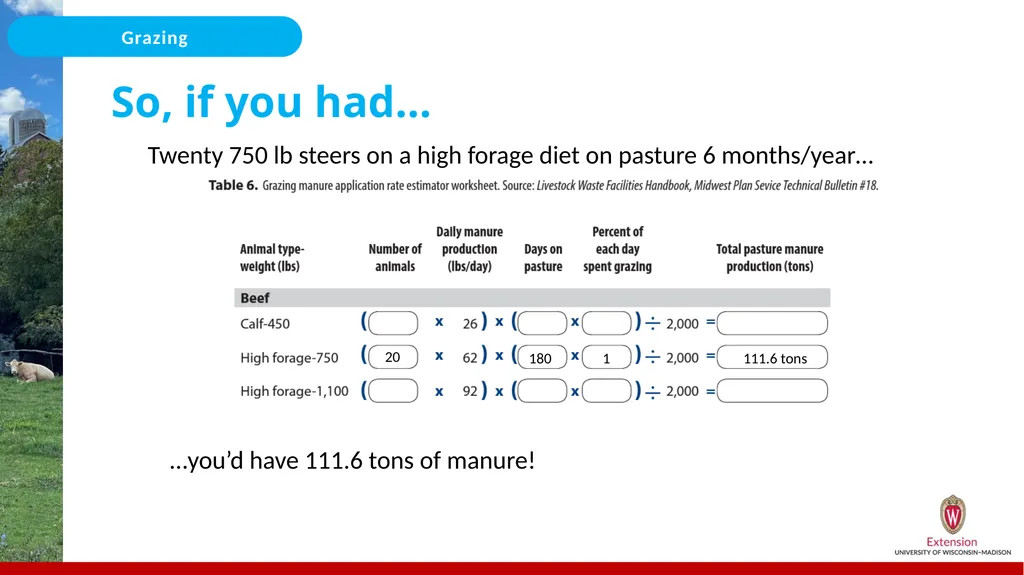
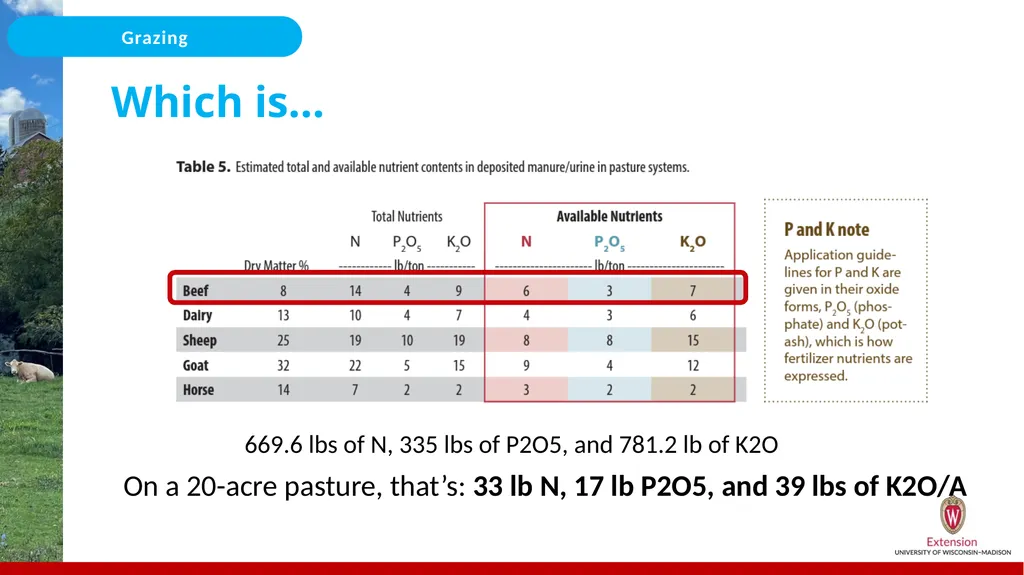
slide20. 10 180 1 55.8 tons So, if you had… Twenty 750 lb steers on a high forage diet on pasture 6 months/year… …you’d have 111.6 tons of manure! 20 180 1 111.6 tons<br>
slide21. 10 180 1 55.8 tons Which is… 669.6 lbs of N, 335 lbs of P2O5, and 781.2 lb of K2O On a 20-acre pasture, that’s: 33 lb N, 17 lb P2O5, and 39 lbs of K2O/A<br>
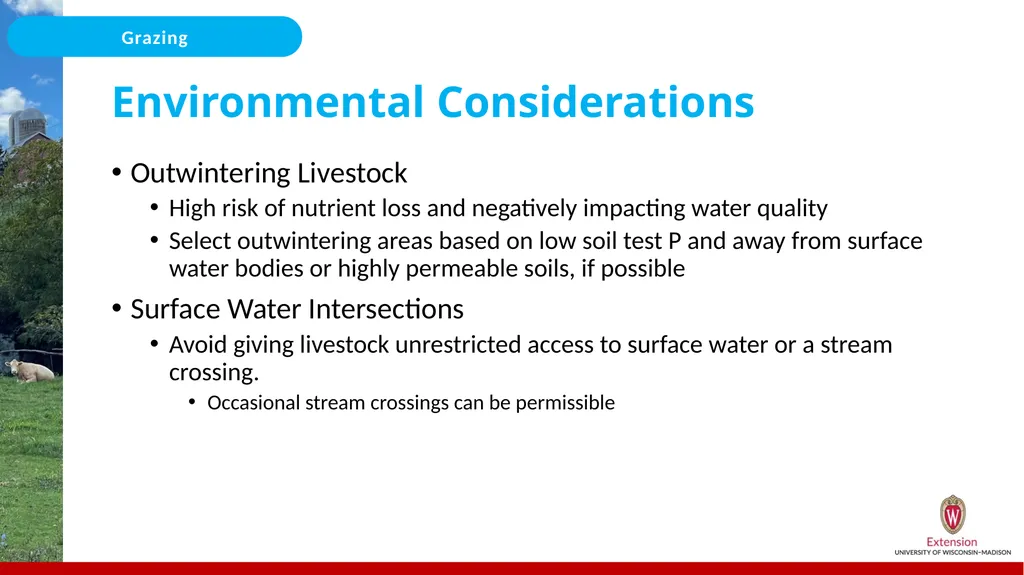
slide22. Environmental Considerations Outwintering Livestock
High risk of nutrient loss and negatively impacting water quality
Select outwintering areas based on low soil test P and away from surface water bodies or highly permeable soils, if possible
Surface Water Intersections
Avoid giving livestock unrestricted access to surface water or a stream crossing.
Occasional stream crossings can be permissible<br>
slide23. Review Identify Requirements of Nutrient Management for Grazing Systems
Name Advantages of Grazing for Nutrient Management
Understand Soil Testing for Pastures
Comprehend Recommendations for N,P, & K in Wisconsin Pastures
Properly Credit Nutrients from Manure in Pastures<br>
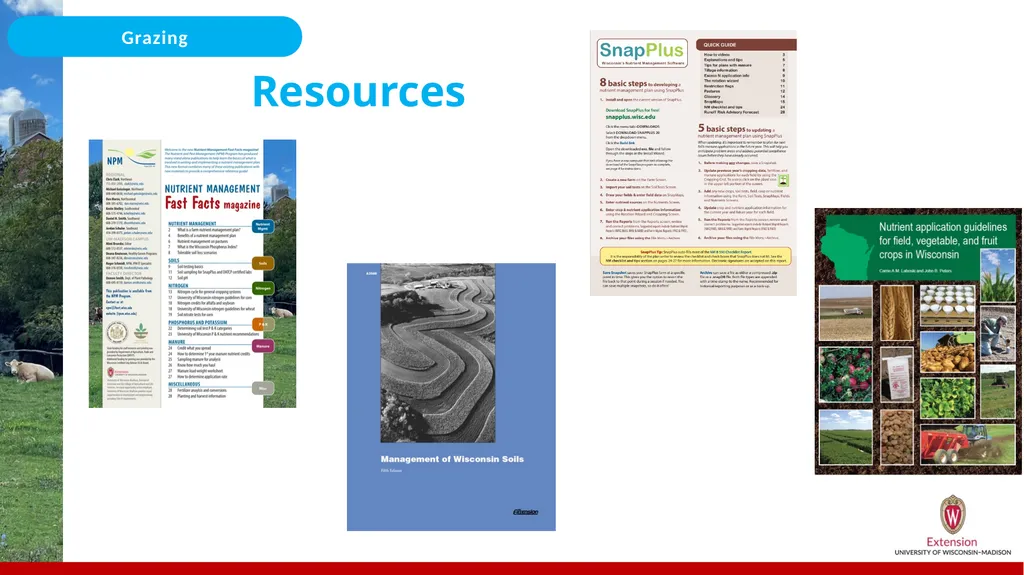
slide24. Resources<br>
slide25. Thanks! Name
Title
Nutrient and Pest Management (NPM) Program
UW-Madison Division of Extension
Email: Phone: Questions?<br>
slide2. On the Agenda Identify Requirements of Nutrient Management for Grazing Systems
Name Advantages of Grazing for Nutrient Management
Understand Soil Testing for Pastures
Comprehend Recommendations for N,P, & K in Wisconsin Pastures
Properly Credit Nutrients from Manure in Pastures
Consider Environmental Risk of Grazing<br>
slide3. Nutrient Management Requirements for Graziers Pastures do need to be included in a nutrient management plan if one or more of the following applies to the pasture:
Receives mechanically applied nutrients (manure or fertilizer)
Has an average of more than one animal unit (1,000 pounds of animal) per acre throughout the grazing season
Has a herd present during winter for feeding activities such as bale grazing and the pasture is not considered a feedlot.<br>
slide4. Requirements for Graziers Pastures do not have to be included in a nutrient management plan if the pasture does not receive applications of nutrients AND one of the following applies:
The pasture is a feedlot or an area that is considered a barnyard, exercise area, or other area where livestock are concentrated
Vegetation is not maintained for forage or the pasture has an average of less than one animal unit per acre throughout the grazing season.
…but having a plan is still a good idea!<br>
slide5. Advantages of Grazing Permanent cover, deep roots, and manure from grazing livestock stimulate soil biological processes
Decrease the need for commercial fertilizer
Legume fixing nitrogen
Growing plants use available manure nutrients
Build soil fertility through management practices such as bale grazing<br>
slide6. Soil Testing Pastures Every 5 Acres/Management Unit:
1 composite sample (10, 6” soil cores)
Avoid High Traffic Areas
Watering areas
Outwintering areas<br>
slide7. Soil Testing Pastures Option to Sample by Paddock
If paddocks are managed as separate fields, a farm might want to consider having a composite sample for each one.
This will help streamline the data in SnapPlus and might make it more useful for management considerations.<br>
slide8. Use Wisconsin DATCP Certified Labs UW Soil & Forage Analysis Lab AgSource Laboratories Rock River Laboratory Midwest Laboratories, Inc. A&L Great Lakes Laboratories, Inc. Minnesota Valley Testing Laboratories, Inc. Farmers Edge Soil Only: Waypoint Analytical Illinois Always confirm lab is WI state certified for soil testing if using in a WI nutrient management plan.<br>
slide9. Managing Pasture Soil pH Maintain pastures at 6.0 to 6.3 pH depending on legume content
Microbial nitrogen fixation
Amend soil pH prior to establishing permanent pasture<br>
slide10. Pasture Nitrogen Management Often met through legume forages (~30% legumes) & manure deposited by grazing animals
Nitrogen is most pertinent for new seedings and grass-only pastures
Recommendations are based on SOM, pasture type, & yield<br>
slide11. Pasture Nitrogen Management<br>
slide12. Soil Test Categories for Phosphorus & Potassium Soil Soil Fertilizer + Manure + Legume Soil Soil F + M + L Fertilizer + Manure + Legume Fertilizer + Manure + Legume Soil Soil F + M + L<br>
slide13. Pasture Phosphorus Recommendations Recommendations based on soil test category soil type, and realistic yield goal
P applications on pasture are not commonly needed and usually won’t yield an economic return<br>
slide14. Pasture Potassium Recommendations Recommendations based on soil test category (VL, L, O, H, VH, and EH), soil type, and realistic yield goal
Potassium deficiencies and need for fertilizer is common in pastures in Wisconsin
Buffering capacity
Harvesting forage, meat, milk, etc.<br>
slide15. Managing Potassium to Manage Nitrogen We manage potassium to manage nitrogen.
Potassium deficiency affects legume stands. Poor legume stands negatively affect nitrogen fixation and availability. Poor nitrogen availability negatively affects grass stands. Result: poor pasture!
Hay making demands more K than grazing-only<br>
slide16. High Potassium & Milk Fever Milk Fever is a metabolic condition affect fresh cows
Apply K based only on soil tests
Harvest mature or rained-on forage for transition cows (lower K content) (Kelling et al., 2002)
Forage Test to Check K levels Photo by Aerica Bjurstrom<br>
slide17. A Note on Micronutrients? Micronutrients are rarely needed on Wisconsin soils, especially farms that receive manure from livestock (i.e. pasture)<br>
slide18. Nutrient Crediting 1. Calculate Manure Deposition
2. Credit Nutrients as Appropriate From: NPM Fast Facts Magazine<br>
slide19. Manure Nutrients<br>
slide20. 10 180 1 55.8 tons So, if you had… Twenty 750 lb steers on a high forage diet on pasture 6 months/year… …you’d have 111.6 tons of manure! 20 180 1 111.6 tons<br>
slide21. 10 180 1 55.8 tons Which is… 669.6 lbs of N, 335 lbs of P2O5, and 781.2 lb of K2O On a 20-acre pasture, that’s: 33 lb N, 17 lb P2O5, and 39 lbs of K2O/A<br>
slide22. Environmental Considerations Outwintering Livestock
High risk of nutrient loss and negatively impacting water quality
Select outwintering areas based on low soil test P and away from surface water bodies or highly permeable soils, if possible
Surface Water Intersections
Avoid giving livestock unrestricted access to surface water or a stream crossing.
Occasional stream crossings can be permissible<br>
slide23. Review Identify Requirements of Nutrient Management for Grazing Systems
Name Advantages of Grazing for Nutrient Management
Understand Soil Testing for Pastures
Comprehend Recommendations for N,P, & K in Wisconsin Pastures
Properly Credit Nutrients from Manure in Pastures<br>
slide24. Resources<br>
slide25. Thanks! Name
Title
Nutrient and Pest Management (NPM) Program
UW-Madison Division of Extension
Email: Phone: Questions?<br>