
Objectives Menstruation Hormone function





Description: Objectives Menstruation Hormone function Fertilizationimplantation Placenta structures Fetal circulation Nageles rule Grief Pregnancy Presumptive Probable Positive Physio changes Adolescent Danger signs GTPAL 1 Structures for Conception
Related Topics
Download Presentation
"Objectives Menstruation Hormone function" is the property of its rightful owner. Permission is granted to download and print the materials on this website for personal, non-commercial use only, and to display it on your personal computer provided you do not modify the materials and that you retain all copyright notices contained in the materials. By downloading content from our website, you accept the terms of this agreement.
Presentation Transcript
slide1. Objectives Menstruation
Hormone function
Fertilization/implantation
Placenta & structures
Fetal circulation
Nagele’s rule
Grief Pregnancy
Presumptive
Probable
Positive
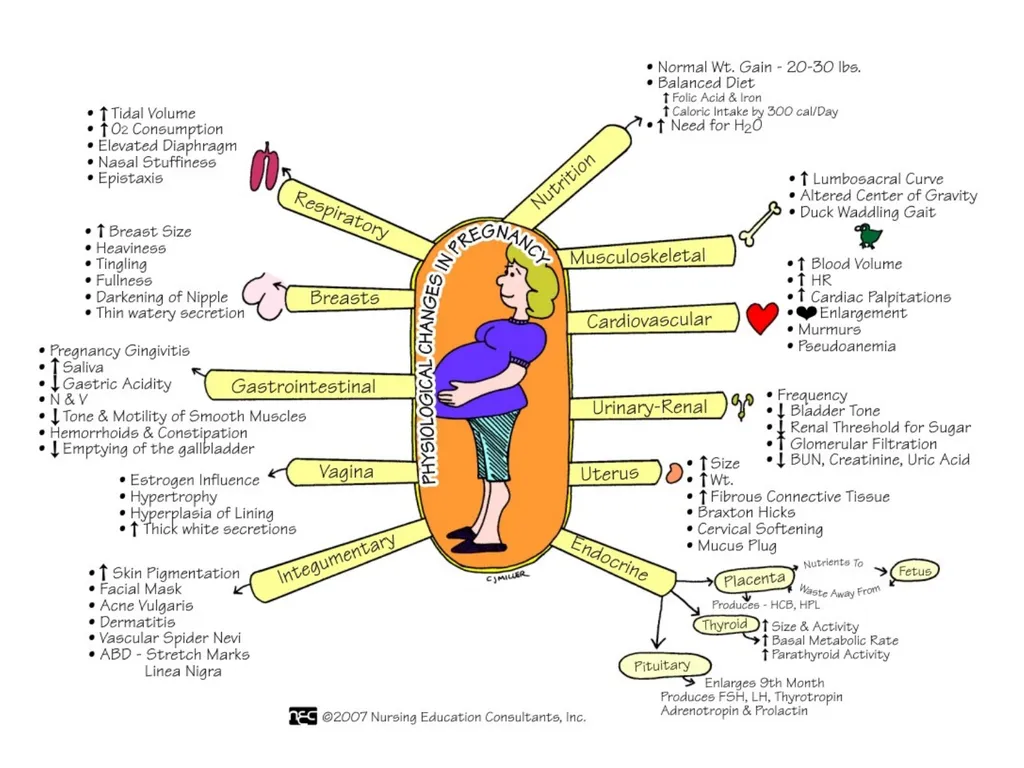
Physio changes
Adolescent
Danger signs
GTPAL 1<br>
slide2. Structures for Conception Female genitals
Pelvis
Uterus 2<br>
slide3. Menstrual cycle Menstrual
Proliferative
Secretory
Ischemic 3<br>
slide4. Ovarian cycle Follicle
Corpeus luteum 4<br>
slide5. Pituitary cycle 5<br>
slide6. MEASURING SPINNBARKEIT (ELASTICITY) 6<br>
slide7. Factors Contributing to Genetic Disorders 1. Hereditary factors
Abnormalities passed from one or both parents.
2. Non-hereditary factors
Environmental
Infections or diseases
Advanced maternal age 7<br>
slide8. Diagnostic Procedures 1. Ultrasound
2. Chorionic Villi sampling
3. Amniocentesis
Fluid analysis
4. Prenatal Labs
MSAFP
Triple Screening: MSAFP + estriol + hCG 8<br>
slide9. 9 CHORIONIC VILLI
SAMPLING AMNIOCENTESIS<br>
slide10. Nursing Management 1. Assessment: Genetic Hx
2. Nursing Dx:
Decisional Conflict
Anticipatory Grieving
Knowledge Deficit
Body Image Disturbance
3. Planning and Implementation:
Identify families needing counseling
Provide information
Support 10<br>
slide11. 5. Evaluation
Couples receive appropriate counseling
Families receive needed information and support
Families are comfortable with own decisions 11<br>
slide12. FERTILIZATION AND IMPLANTATION 1. Fertilization
Ova
Sperm
2. Cellular Multiplication
3. Implantation
4.Cell differentiation 12<br>
slide13. Ampulla
Ovulation
Prostaglandin
Fertilization 13<br>
slide14. 14 Embryonic membranes
Chorion
Amnion<br>
slide15. 15 MATERNAL SIDE OF PLACENTA FETAL SIDE OF PLACENTA<br>
slide16. PLACENTAL CIRCULATION 16<br>
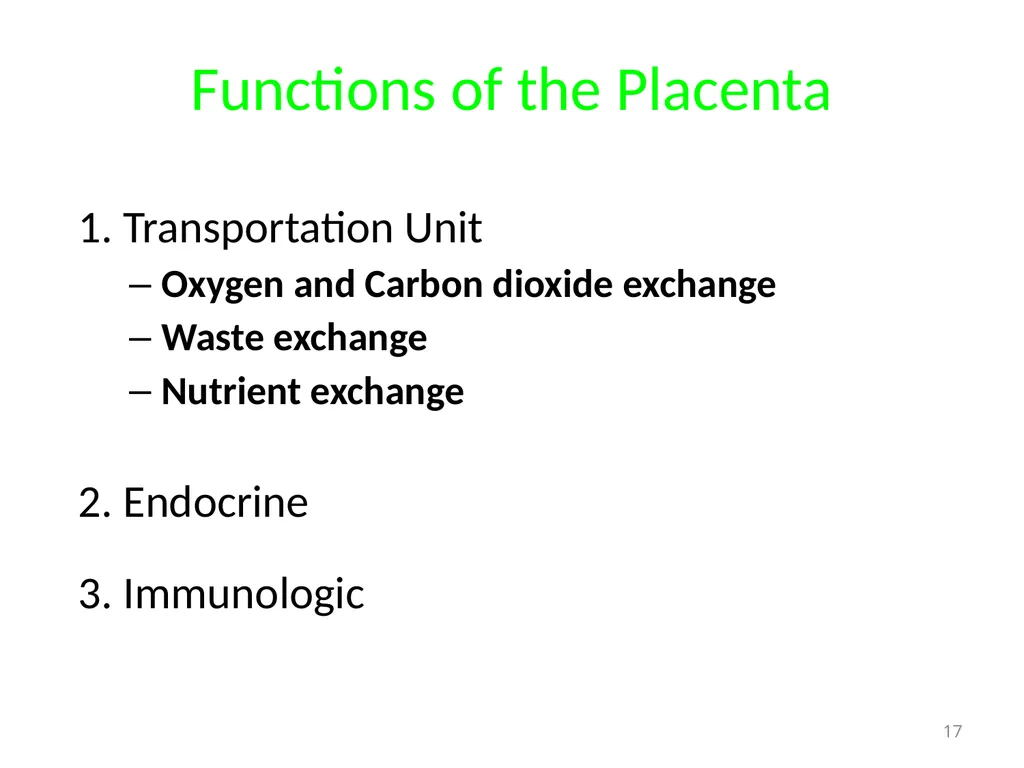
slide17. Functions of the Placenta 1. Transportation Unit
Oxygen and Carbon dioxide exchange
Waste exchange
Nutrient exchange
2. Endocrine
3. Immunologic 17<br>
slide18. Umbilical Cord 18<br>
slide19. Fetal Circulation Respiratory system Cardiovascular system 19<br>
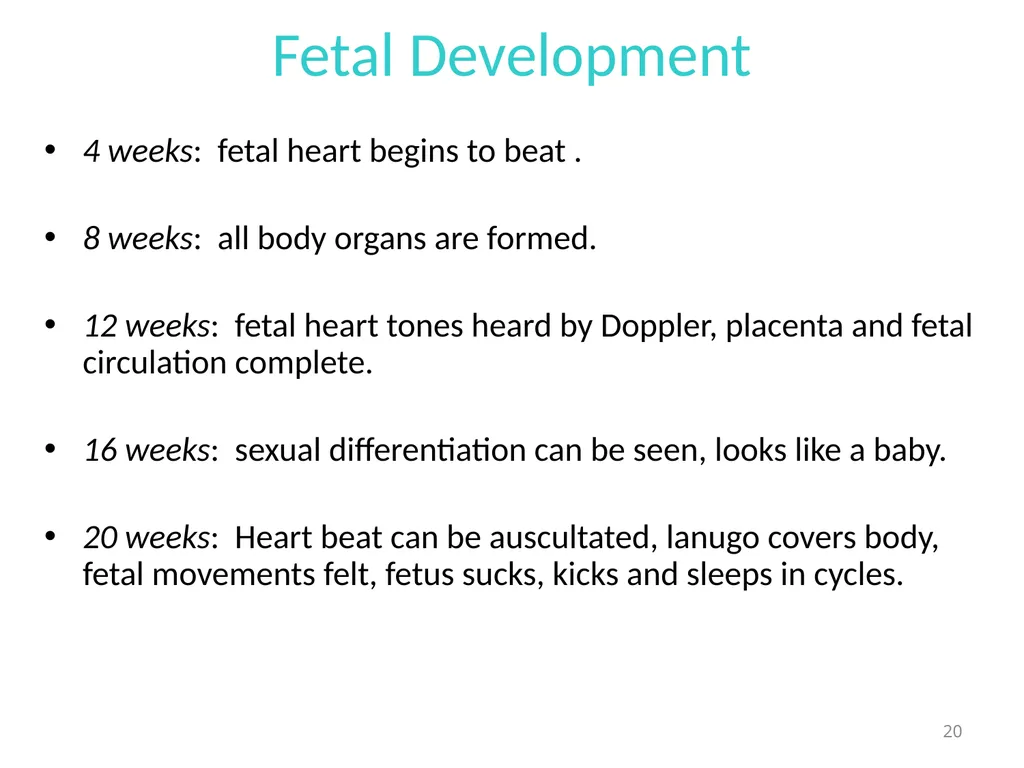
slide20. Fetal Development 4 weeks: fetal heart begins to beat .
8 weeks: all body organs are formed.
12 weeks: fetal heart tones heard by Doppler, placenta and fetal circulation complete.
16 weeks: sexual differentiation can be seen, looks like a baby.
20 weeks: Heart beat can be auscultated, lanugo covers body, fetal movements felt, fetus sucks, kicks and sleeps in cycles. 20<br>
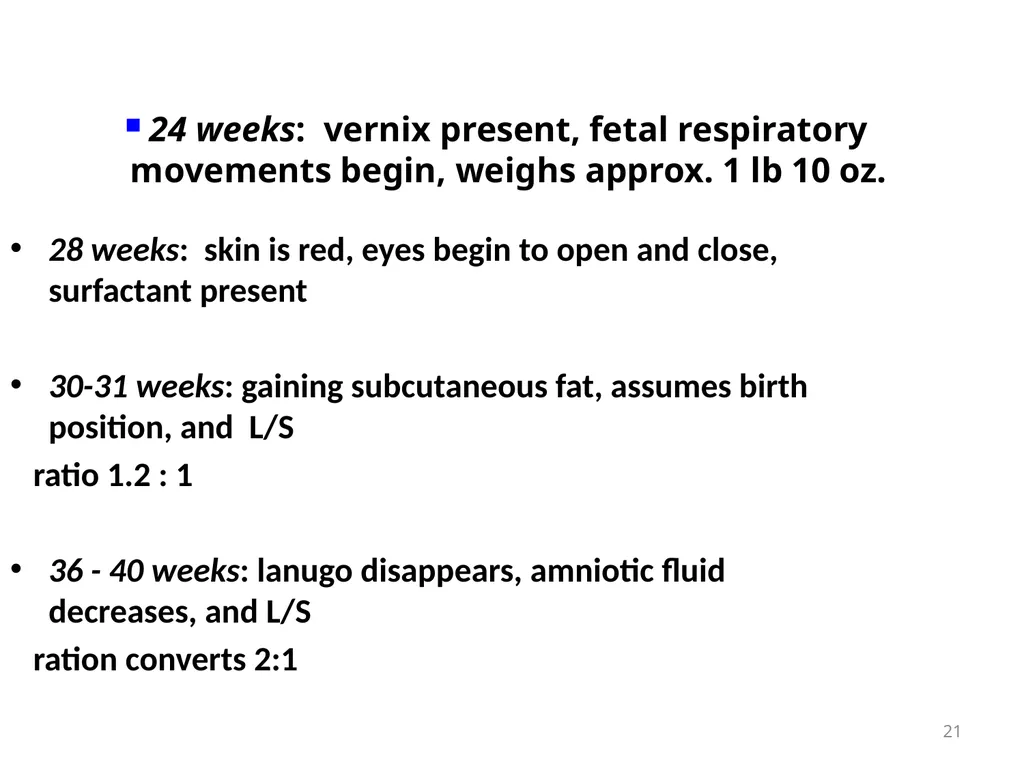
slide21. 21 28 weeks: skin is red, eyes begin to open and close, surfactant present
30-31 weeks: gaining subcutaneous fat, assumes birth position, and L/S
ratio 1.2 : 1
36 - 40 weeks: lanugo disappears, amniotic fluid decreases, and L/S
ration converts 2:1 24 weeks: vernix present, fetal respiratory movements begin, weighs approx. 1 lb 10 oz.<br>
slide22. Nageles Rule 22<br>
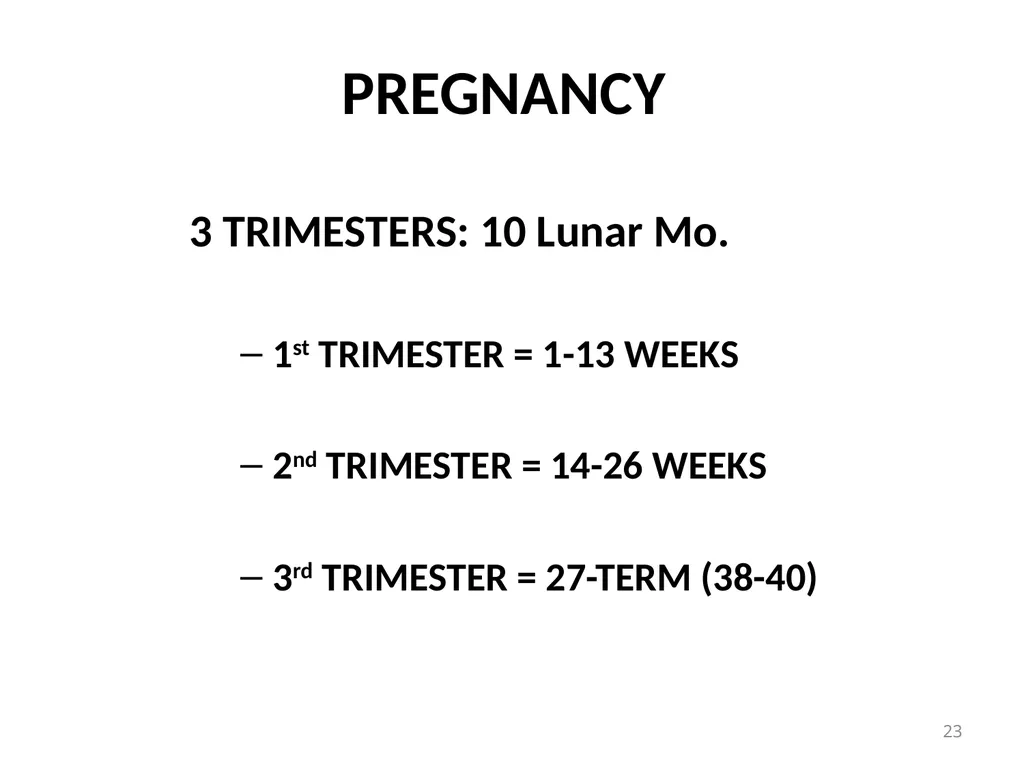
slide23. PREGNANCY 3 TRIMESTERS: 10 Lunar Mo.
1st TRIMESTER = 1-13 WEEKS
2nd TRIMESTER = 14-26 WEEKS
3rd TRIMESTER = 27-TERM (38-40) 23<br>
slide24. Signs and Symptoms 1. Presumptive or Subjective:
Amenorrhea
N&V
Urinary frequency
Breast tenderness and changes
Fatigue
Quickening 24<br>
slide25. Signs and Symptoms 2. Probable or Objective:
Chadwick’s sign
Goodell’s sign
Hegar’s sign
Enlargement of abdomen
Uterine souffle
Pigmentation changes
Braxton Hicks contractions 25<br>
slide26. Diagnostic- Positive Indicators 1. Fetal heartbeat
2. Fetal movements palpated
3. Ultrasound
4. Detection of placental hormones 26<br>
slide27. ADOLESCENT MOTHERS 1 Million Teenagers are
pregnant each year.
30% of these pregnancies end
in abortion.
500,000 deliver each year.
1 in 6 teenagers will become
pregnant again in one year. 27<br>
slide28. Adolescent’s Normal Growth & Development Age range: 12 to 18 or 20 years old.
Time of rapid physical growth, cognitive,
social, and emotional maturity.
Time of sexual maturity. 28<br>
slide29. Dilemmas for the Pregnant Adolescent 1. Psychological Maturity:
Parenthood v.s. Adolescent Growth and Development.
Ability to make choices and decisions.
Ability to understand consequences of child-bearing and child rearing.
Ability to make a life long commitment. 29<br>
slide30. Dilemmas for the Pregnant Adolescent 2. Physiological Maturity:
Cardiovascular system still maturing.
Respiratory and basal metabolic
systems maturing.
Skeletal system continues
to mature 30<br>
slide31. Adolescent Behavior verses Older Women 1. Less likely to receive adequate prenatal care.
2. More likely to smoke.
3. More likely to use drugs.
4. More likely to be malnourished and not gain weight.
THEREFORE:
1. Prone to high risk….hypertension.
2. Prone to deliver low birth weight babies.
3. Prone to have long-term disabilities. 31<br>
slide32. Physiologic Changes 1. Reproductive system
Uterine enlargement
Braxton Hicks contractions
Cervical
Ovarian
Vagina
Breasts 32<br>
slide33. Physiologic Changes 2. Cardiovascular System
Blood volume increases 40% to 45%
Red blood cell volume increases 17%
Hematocrit decreases 7% (physiologic anemia of pregnancy)
Pulse increases
BP decreases slightly and returns to near normal during third trimester
Dependent edema
Supine and postural hypotension 33<br>
slide34. Physiologic Changes 3. Respiratory System
Diaphragm elevates.
Nasal edema and vascular congestion.
Rate and vital capacity increase.
Airway resistance decreases allowing 15% to 20% increase in oxygen uptake. 34<br>
slide35. Physiologic Changes 4. Gastrointestinal System
N&V during first trimester.
Gum tissue soft and bleeds easily.
Increased saliva (ptyalism).
Gastric acidity decreases.
Gastric emptying time decreases.
Cardiac sphincter relaxes.
Decreased intestinal motility.
Pressure on vessels from enlarging
uterus . 35<br>
slide36. Physiologic Changes 5. Urinary System
Output increases, specific gravity decreases.
Urinary frequency during 1st and 3rd trimesters.
Glomerular filtration rate rises by 50%.
Renal tubular absorption increases.
Glycosuria is common. 36<br>
slide37. Physiologic Changes 6. Integumentary System
Linea nigra and Chloasma.
Vascular spider nevi.
Areola and nipple color changes.
Striae on abdomen, breasts and thighs.
Increased activity of sweat and sebacious glands. 37<br>
slide38. Physiologic Changes 7. Skeletal System
Sacroiliac, sacrococcygeal and pubic joints relax.
Symphysis pubis may separate slightly.
Lumbodorsal spinal curve increases.
Diastasis recti. 38<br>
slide39. PHYSIOLOGIC CHANGES 8. Metabolic Changes - Weight Gain 1. First Trimester:
2 to 5 lbs
2. Second Trimester:
12 to 15 lbs
3. Third Trimester:
12 to 15 lbs
Total = 24 to 30 lbs 39 Fetus 7.5 lbs
Placenta and
membranes 1.5 lbs
Amniotic fluid 2.0 lbs
Uterus 2.5 lbs
Breasts 3.0 lbs
Increased blood
volume 2-4 lbs
Extravascular
fluid and fat 4-9 lbs<br>
slide40. PHYSIOLOGIC CHANGES 9. Endocrine System Changes
Thyroid: increase in basal metabolic rate
Pituitary: Prolactin and Oxytocin
Pancreas
Adrenals: Cortisol and Aldosterone
Placental Hormones: HCG, estrogen, progesterone, human placental lactogen, relaxin
Parathyroid 40<br>
slide41. 41<br>
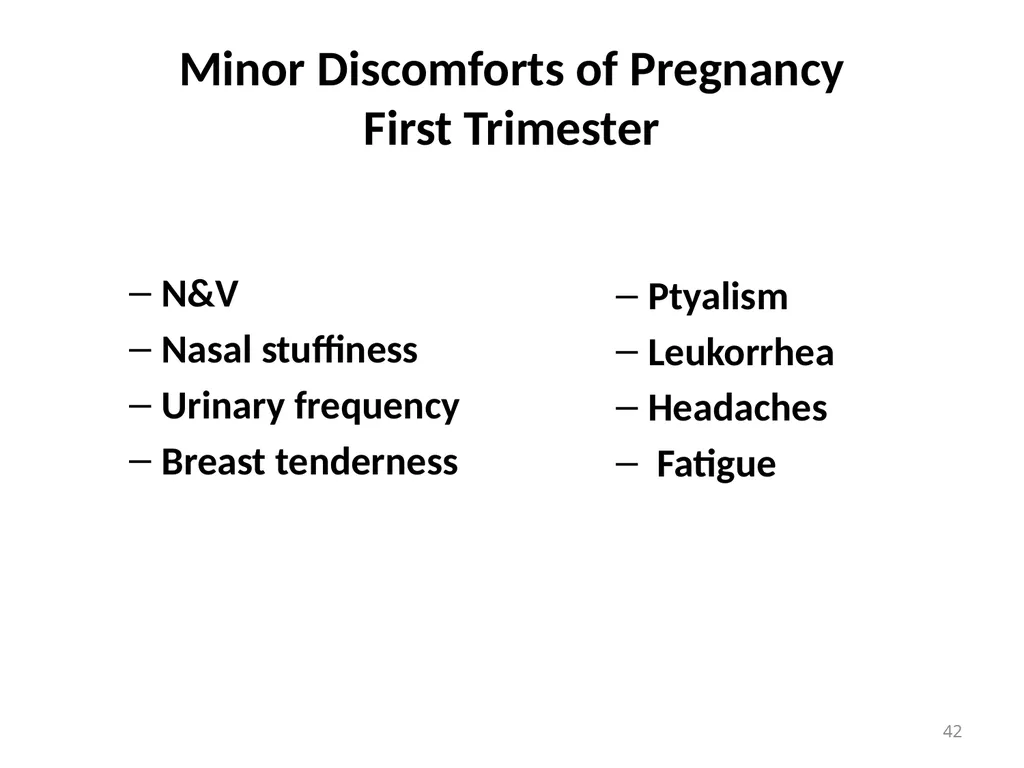
slide42. Minor Discomforts of Pregnancy First Trimester N&V
Nasal stuffiness
Urinary frequency
Breast tenderness Ptyalism
Leukorrhea
Headaches
Fatigue 42<br>
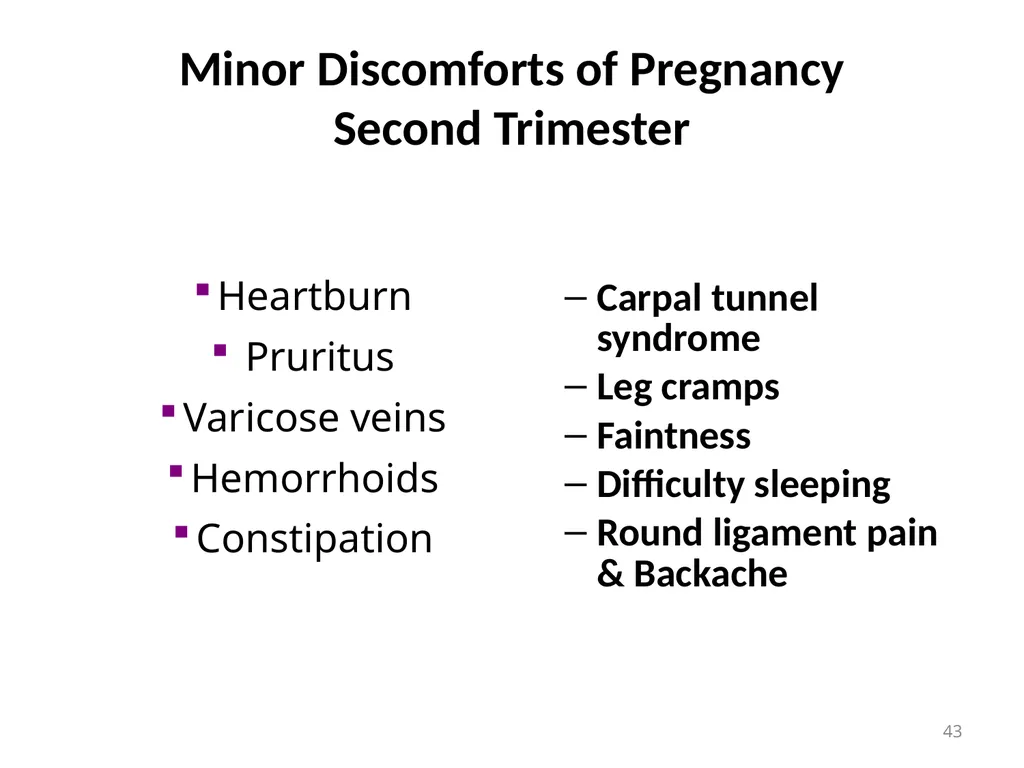
slide43. Minor Discomforts of Pregnancy Second Trimester Carpal tunnel syndrome
Leg cramps
Faintness
Difficulty sleeping
Round ligament pain & Backache 43 Heartburn
Pruritus
Varicose veins
Hemorrhoids
Constipation<br>
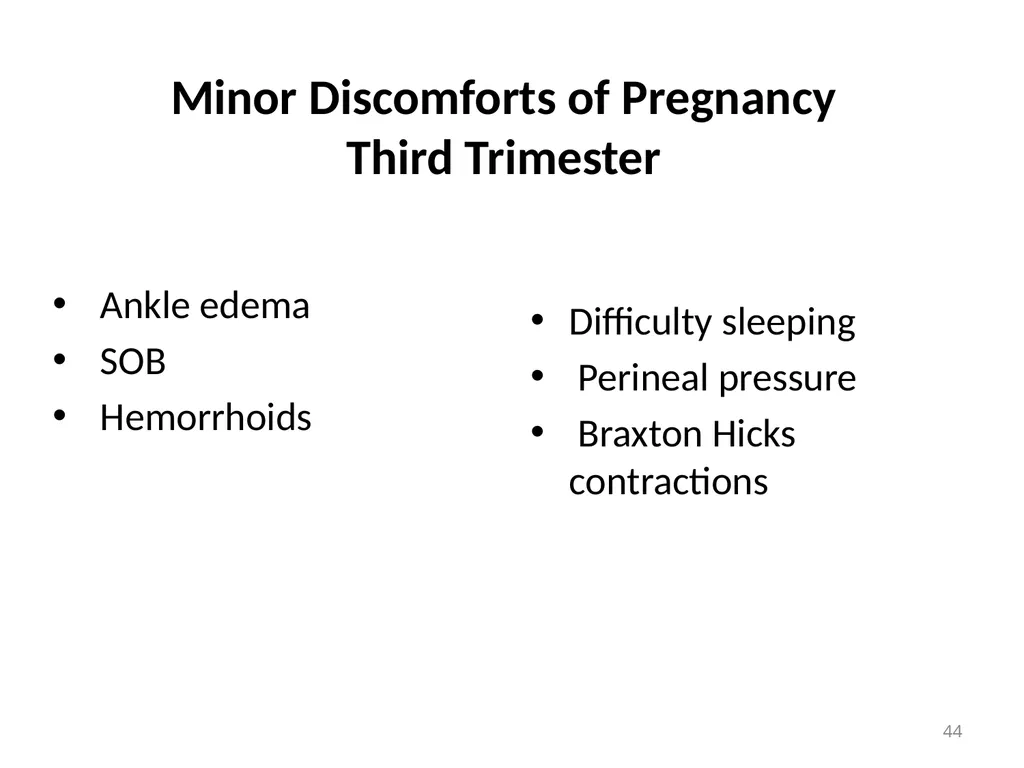
slide44. Minor Discomforts of Pregnancy Third Trimester Ankle edema
SOB
Hemorrhoids Difficulty sleeping
Perineal pressure
Braxton Hicks contractions 44<br>
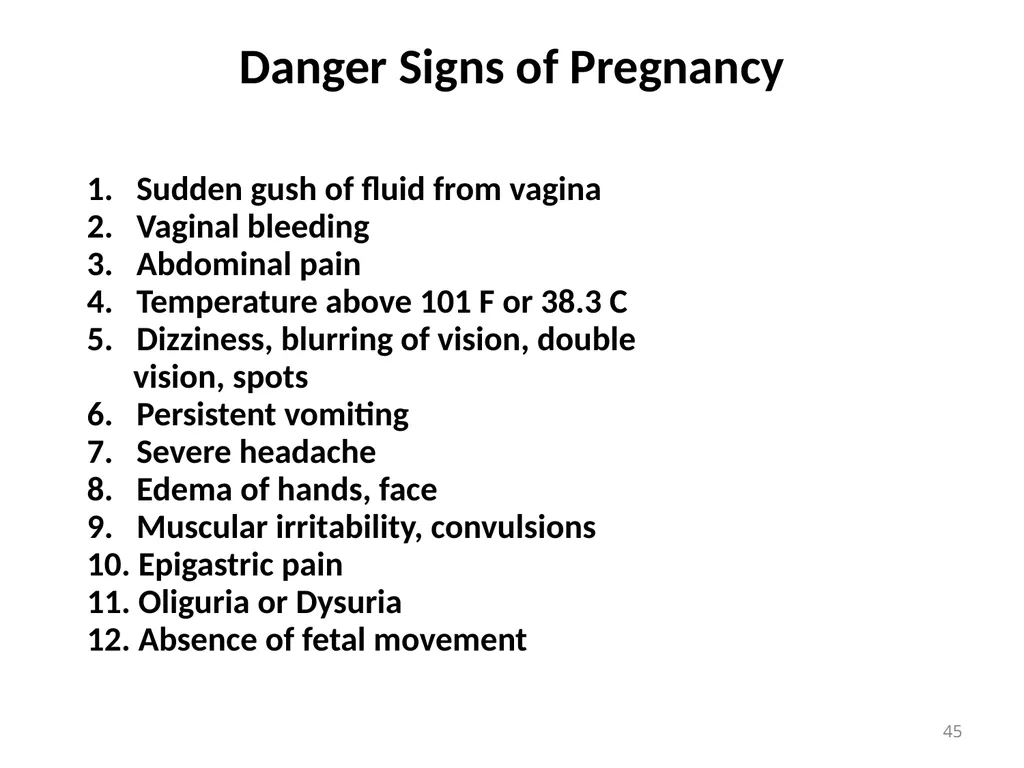
slide45. Danger Signs of Pregnancy 1. Sudden gush of fluid from vagina
2. Vaginal bleeding
3. Abdominal pain
4. Temperature above 101 F or 38.3 C
5. Dizziness, blurring of vision, double
vision, spots
6. Persistent vomiting
7. Severe headache
8. Edema of hands, face
9. Muscular irritability, convulsions
10. Epigastric pain
11. Oliguria or Dysuria
12. Absence of fetal movement 45<br>
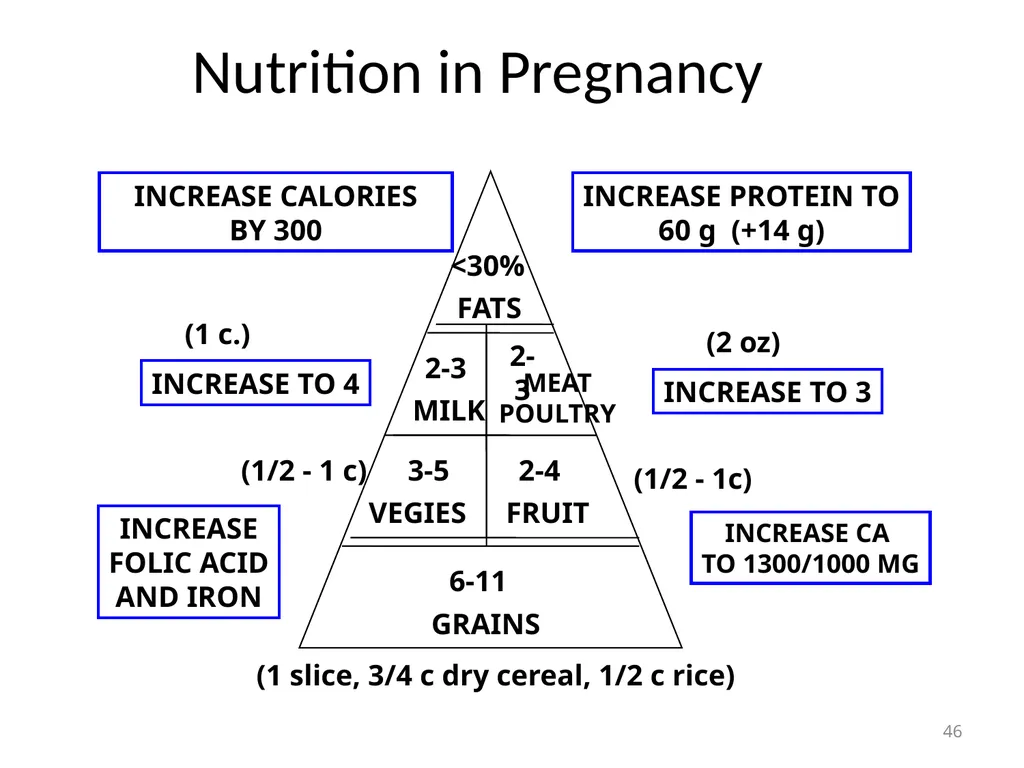
slide46. 46 Nutrition in Pregnancy INCREASE CALORIES
BY 300 INCREASE TO 3 INCREASE TO 4 INCREASE PROTEIN TO
60 g (+14 g) INCREASE CA
TO 1300/1000 MG INCREASE
FOLIC ACID
AND IRON (1 c.) (2 oz) (1/2 - 1 c) (1/2 - 1c) (1 slice, 3/4 c dry cereal, 1/2 c rice)<br>
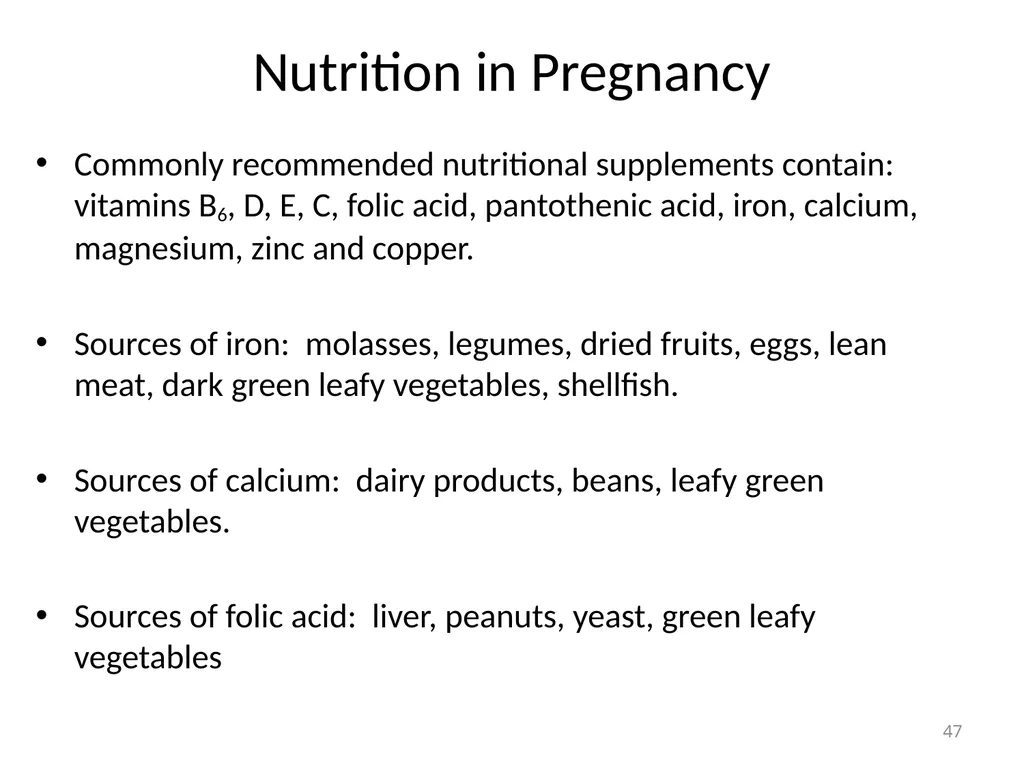
slide47. Nutrition in Pregnancy Commonly recommended nutritional supplements contain: vitamins B6, D, E, C, folic acid, pantothenic acid, iron, calcium, magnesium, zinc and copper.
Sources of iron: molasses, legumes, dried fruits, eggs, lean meat, dark green leafy vegetables, shellfish.
Sources of calcium: dairy products, beans, leafy green vegetables.
Sources of folic acid: liver, peanuts, yeast, green leafy vegetables 47<br>
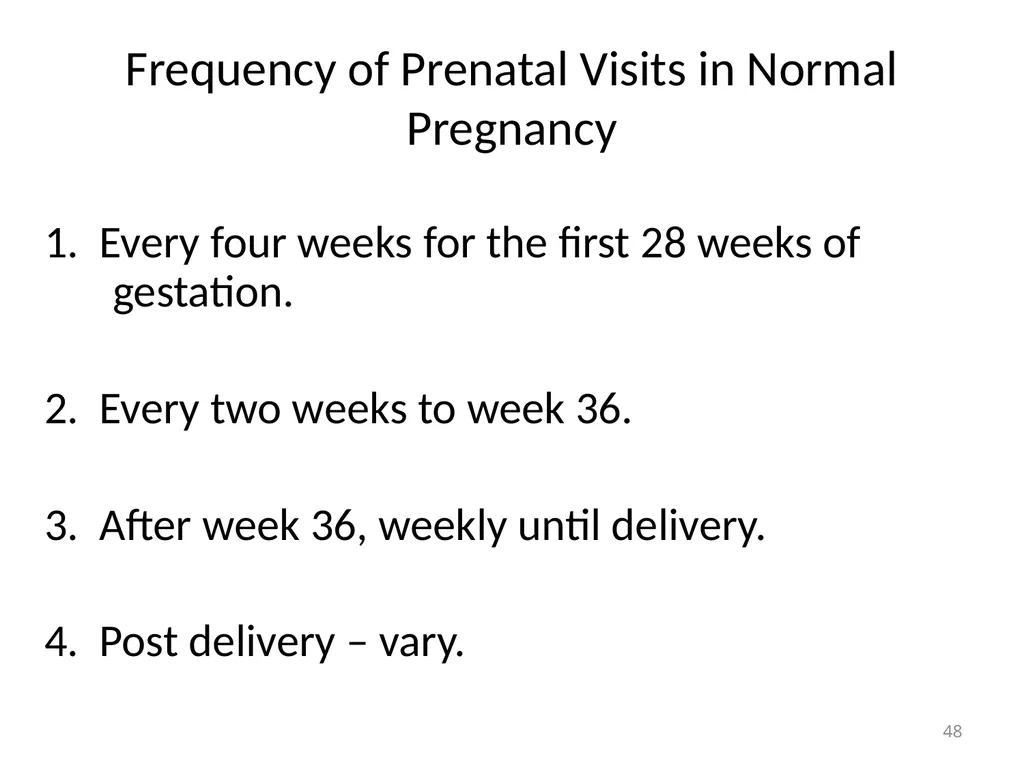
slide48. Frequency of Prenatal Visits in Normal Pregnancy 1. Every four weeks for the first 28 weeks of gestation.
2. Every two weeks to week 36.
3. After week 36, weekly until delivery.
4. Post delivery – vary. 48<br>
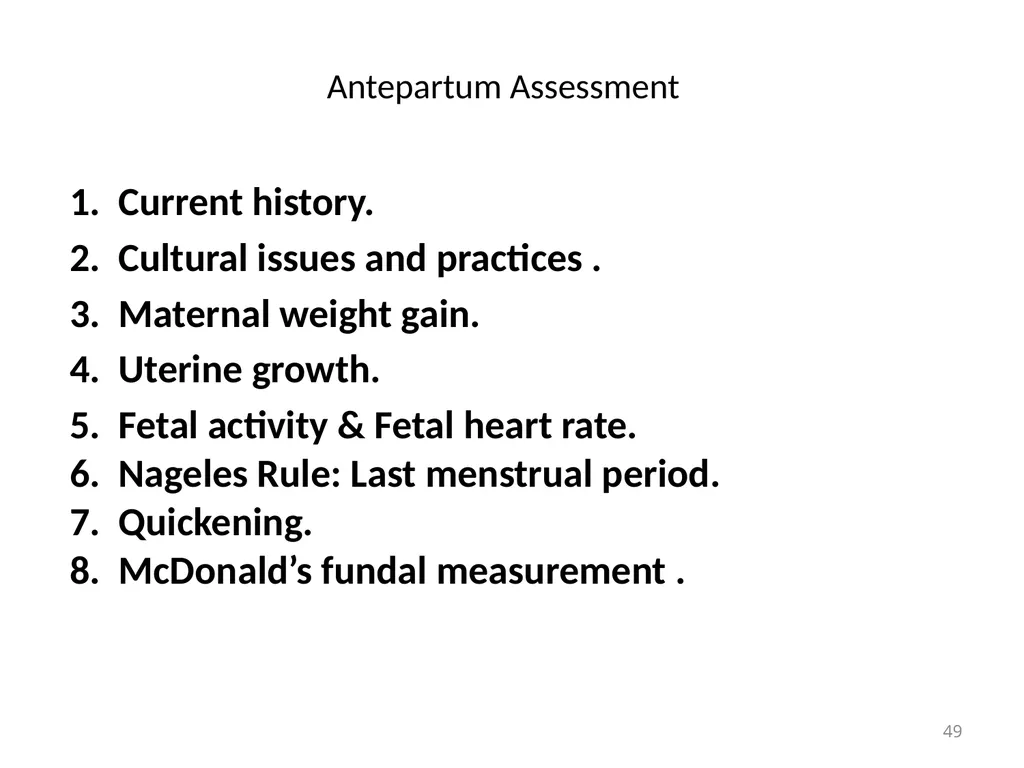
slide49. Antepartum Assessment 1. Current history.
2. Cultural issues and practices .
3. Maternal weight gain.
4. Uterine growth.
5. Fetal activity & Fetal heart rate.
6. Nageles Rule: Last menstrual period.
7. Quickening.
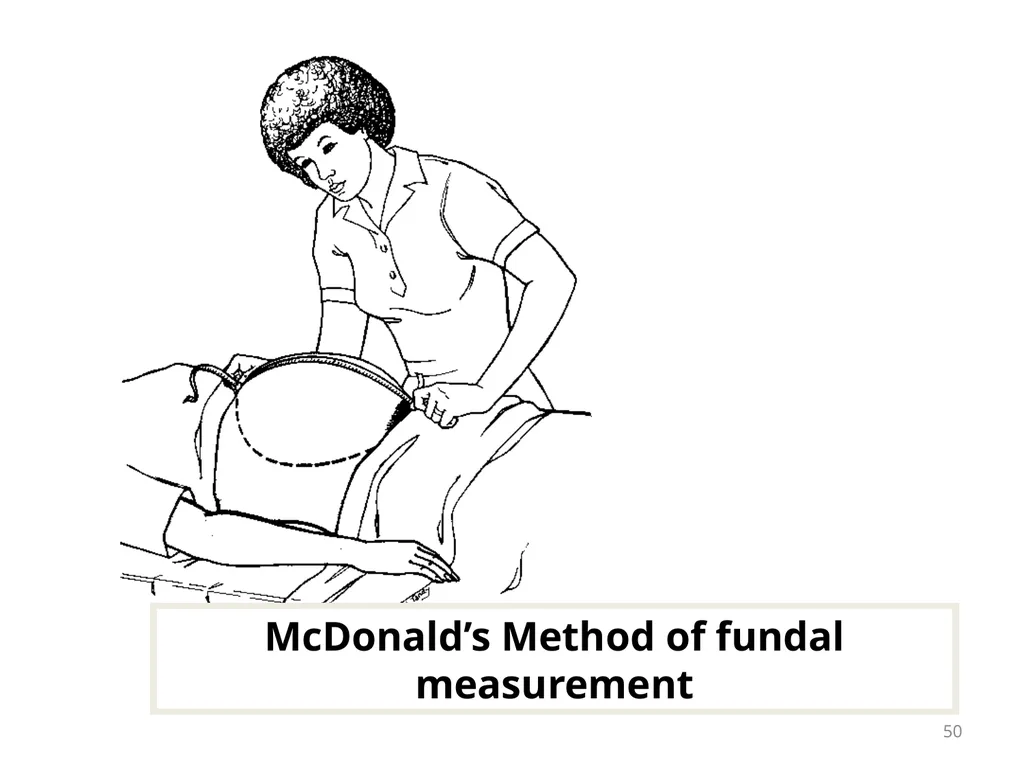
8. McDonald’s fundal measurement . 49<br>
slide50. 50 McDonald’s Method of fundal measurement<br>
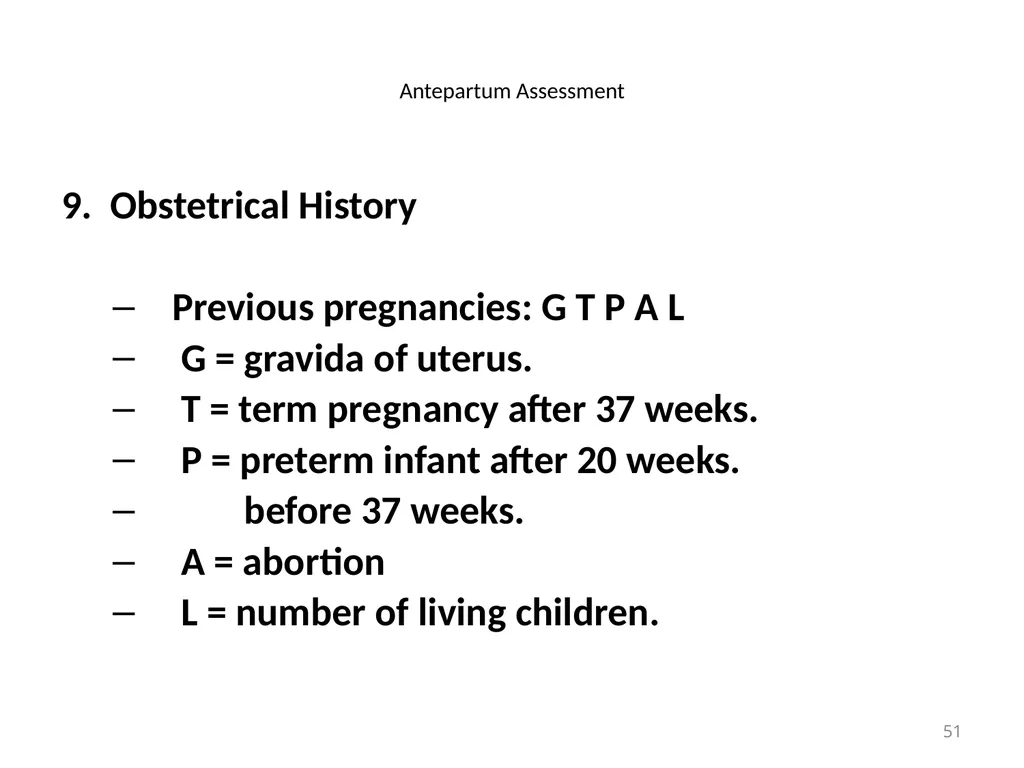
slide51. Antepartum Assessment 9. Obstetrical History
Previous pregnancies: G T P A L
G = gravida of uterus.
T = term pregnancy after 37 weeks.
P = preterm infant after 20 weeks.
before 37 weeks.
A = abortion
L = number of living children. 51<br>
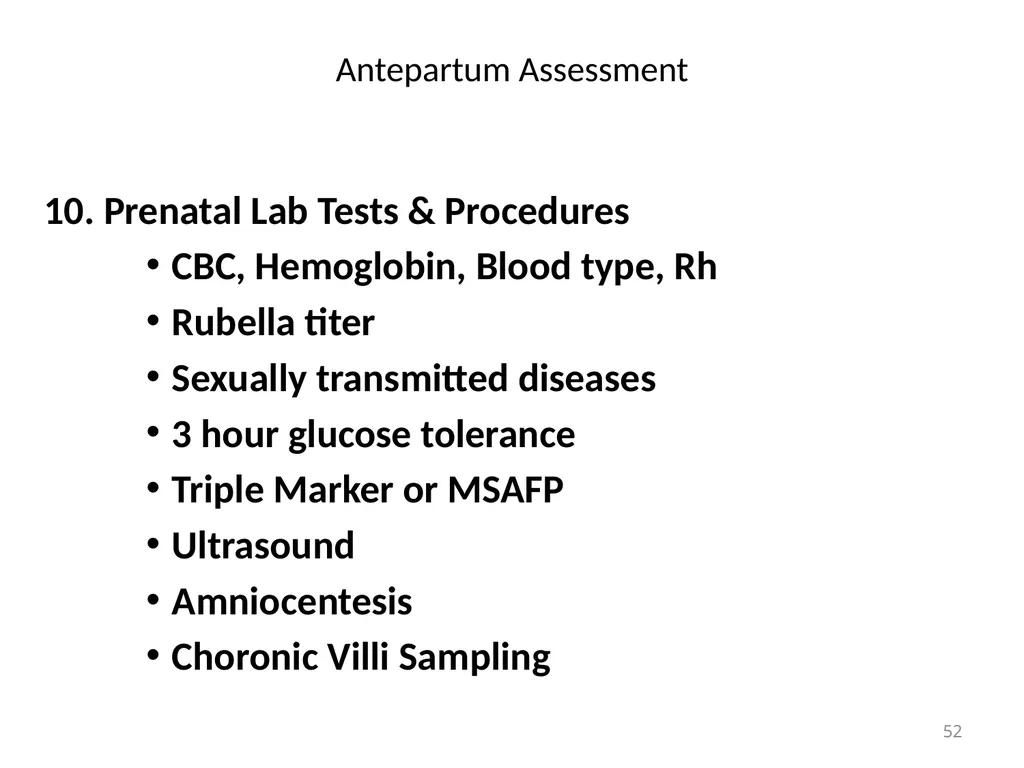
slide52. Antepartum Assessment 10. Prenatal Lab Tests & Procedures
CBC, Hemoglobin, Blood type, Rh
Rubella titer
Sexually transmitted diseases
3 hour glucose tolerance
Triple Marker or MSAFP
Ultrasound
Amniocentesis
Choronic Villi Sampling 52<br>
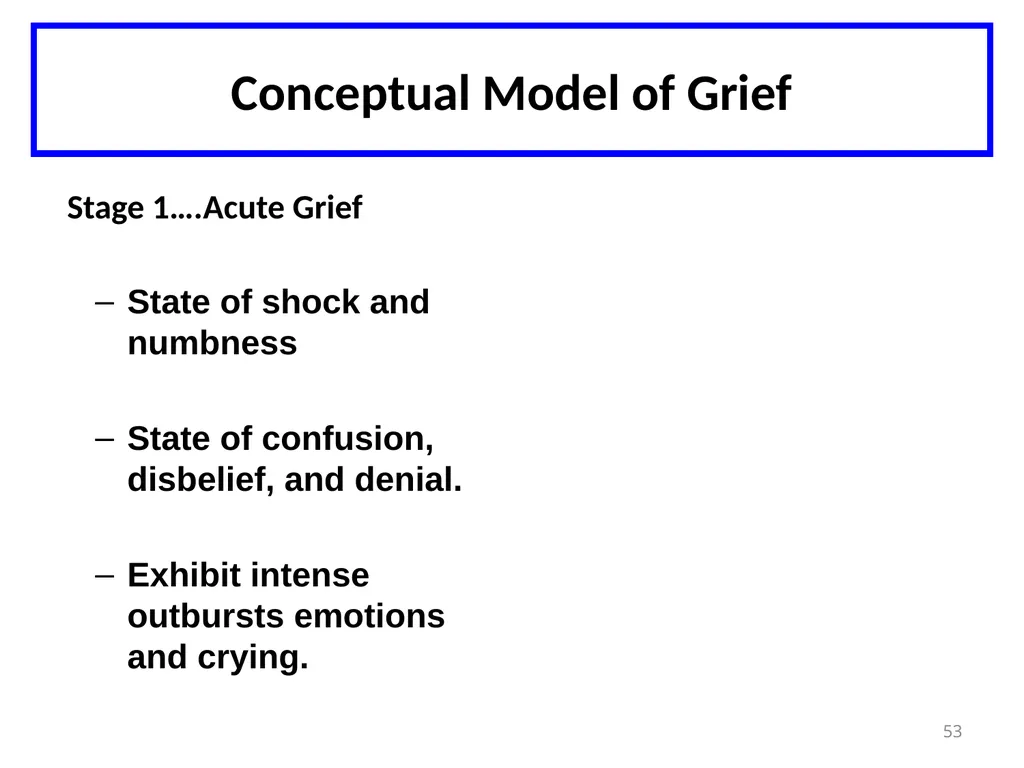
slide53. Conceptual Model of Grief Stage 1….Acute Grief
State of shock and numbness
State of confusion, disbelief, and denial.
Exhibit intense outbursts emotions and crying. 53<br>
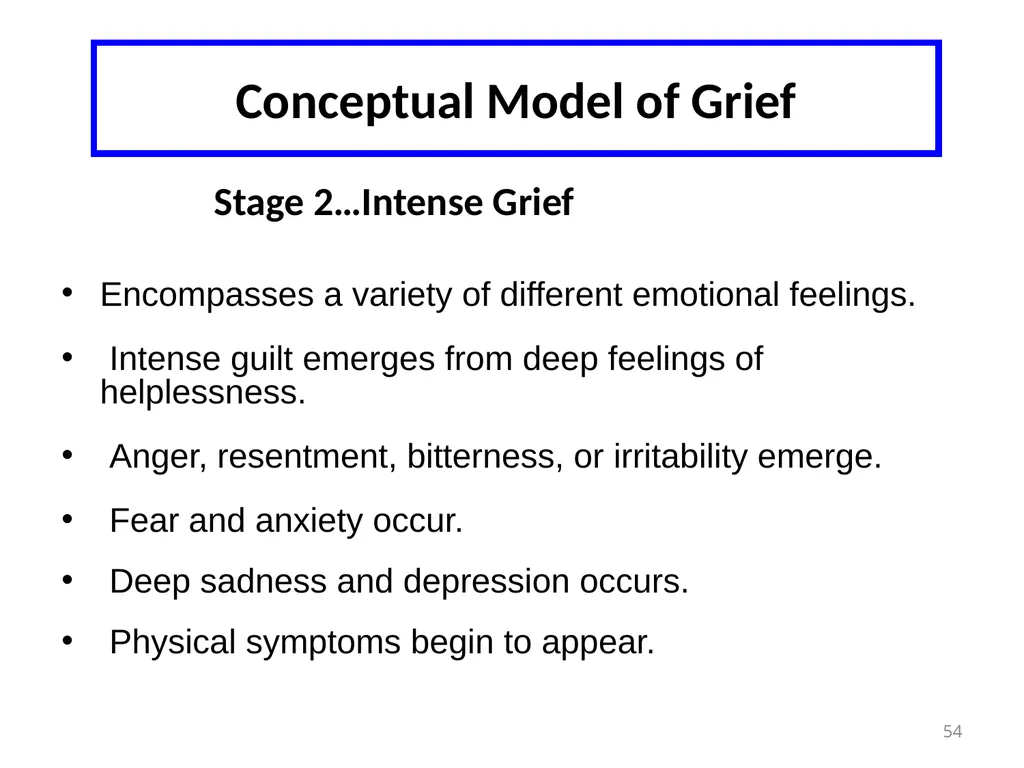
slide54. Conceptual Model of Grief Stage 2…Intense Grief
Encompasses a variety of different emotional feelings.
Intense guilt emerges from deep feelings of helplessness.
Anger, resentment, bitterness, or irritability emerge.
Fear and anxiety occur.
Deep sadness and depression occurs.
Physical symptoms begin to appear. 54<br>
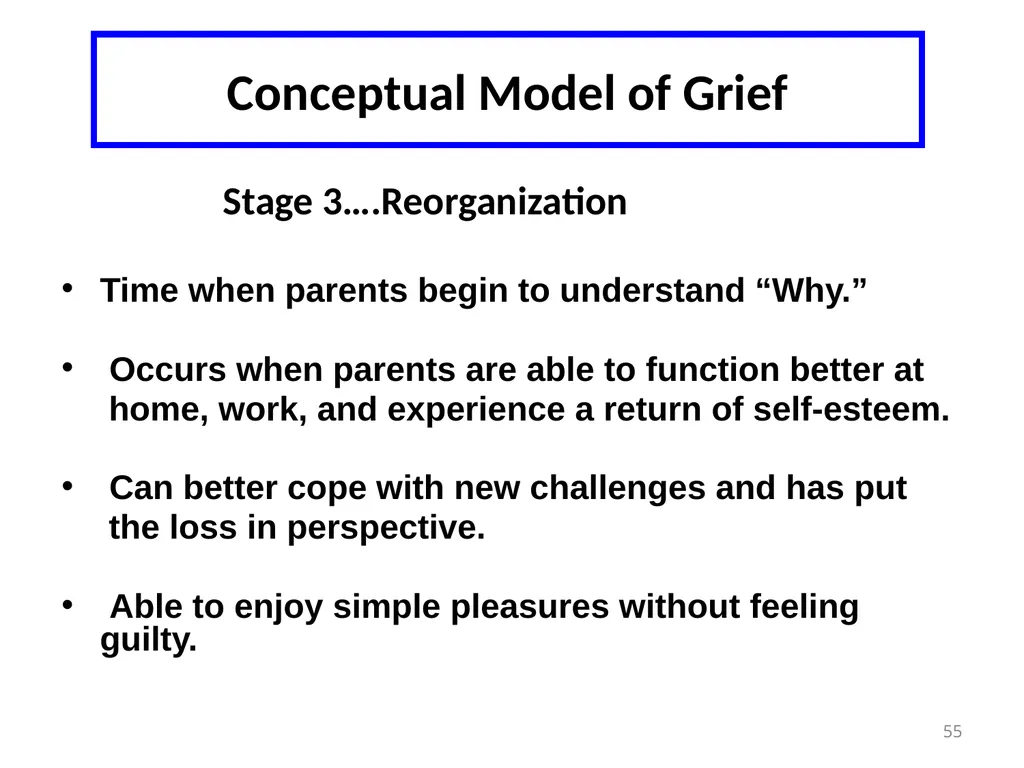
slide55. Conceptual Model of Grief Stage 3….Reorganization
Time when parents begin to understand “Why.”
Occurs when parents are able to function better at
home, work, and experience a return of self-esteem.
Can better cope with new challenges and has put
the loss in perspective.
Able to enjoy simple pleasures without feeling guilty. 55<br>
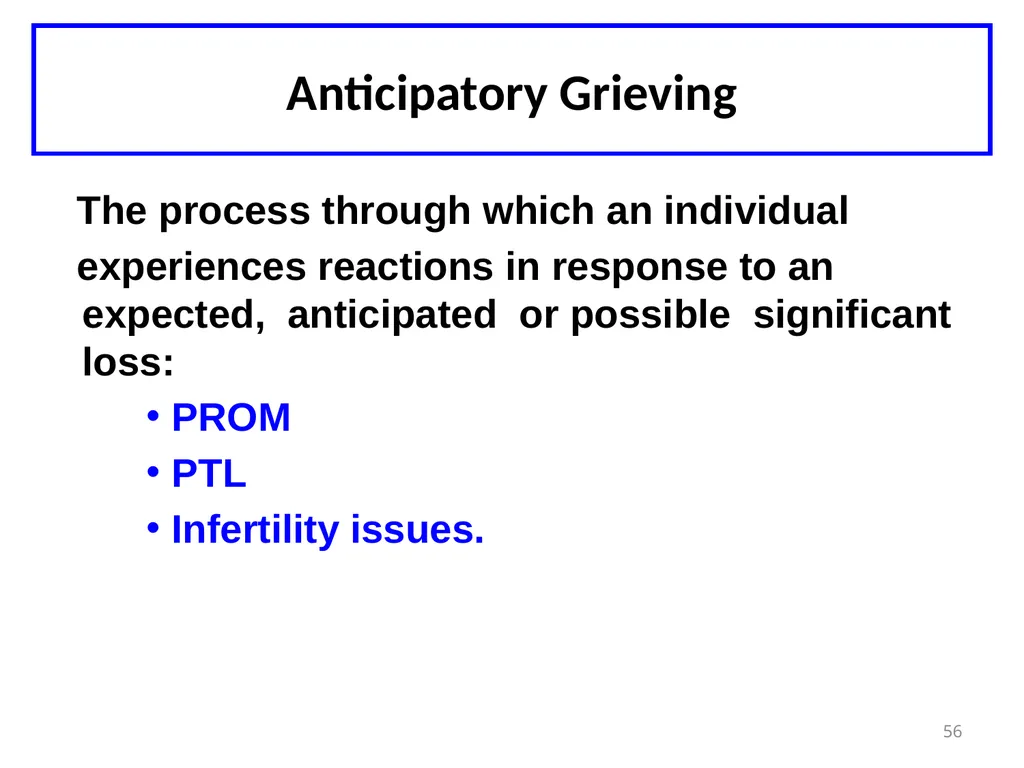
slide56. Anticipatory Grieving The process through which an individual
experiences reactions in response to an expected, anticipated or possible significant loss:
PROM
PTL
Infertility issues. 56<br>
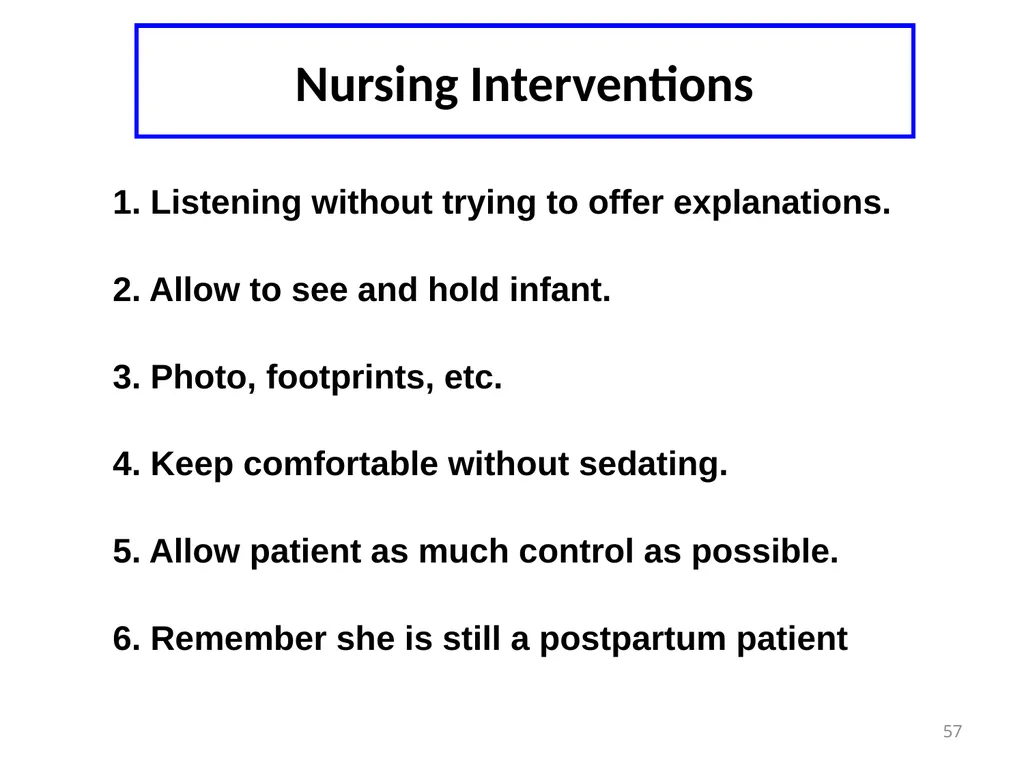
slide57. Nursing Interventions 1. Listening without trying to offer explanations.
2. Allow to see and hold infant.
3. Photo, footprints, etc.
4. Keep comfortable without sedating.
5. Allow patient as much control as possible.
6. Remember she is still a postpartum patient 57<br>
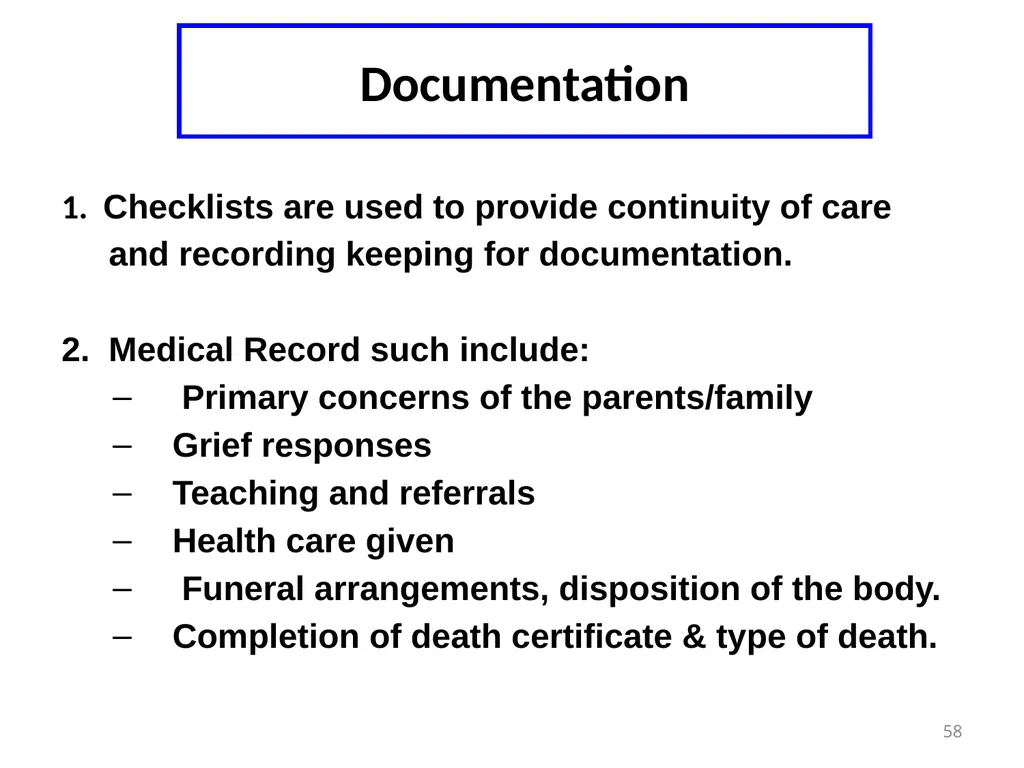
slide58. Documentation 1. Checklists are used to provide continuity of care
and recording keeping for documentation.
2. Medical Record such include:
Primary concerns of the parents/family
Grief responses
Teaching and referrals
Health care given
Funeral arrangements, disposition of the body.
Completion of death certificate & type of death. 58<br>
Hormone function
Fertilization/implantation
Placenta & structures
Fetal circulation
Nagele’s rule
Grief Pregnancy
Presumptive
Probable
Positive
Physio changes
Adolescent
Danger signs
GTPAL 1<br>
slide2. Structures for Conception Female genitals
Pelvis
Uterus 2<br>
slide3. Menstrual cycle Menstrual
Proliferative
Secretory
Ischemic 3<br>
slide4. Ovarian cycle Follicle
Corpeus luteum 4<br>
slide5. Pituitary cycle 5<br>
slide6. MEASURING SPINNBARKEIT (ELASTICITY) 6<br>
slide7. Factors Contributing to Genetic Disorders 1. Hereditary factors
Abnormalities passed from one or both parents.
2. Non-hereditary factors
Environmental
Infections or diseases
Advanced maternal age 7<br>
slide8. Diagnostic Procedures 1. Ultrasound
2. Chorionic Villi sampling
3. Amniocentesis
Fluid analysis
4. Prenatal Labs
MSAFP
Triple Screening: MSAFP + estriol + hCG 8<br>
slide9. 9 CHORIONIC VILLI
SAMPLING AMNIOCENTESIS<br>
slide10. Nursing Management 1. Assessment: Genetic Hx
2. Nursing Dx:
Decisional Conflict
Anticipatory Grieving
Knowledge Deficit
Body Image Disturbance
3. Planning and Implementation:
Identify families needing counseling
Provide information
Support 10<br>
slide11. 5. Evaluation
Couples receive appropriate counseling
Families receive needed information and support
Families are comfortable with own decisions 11<br>
slide12. FERTILIZATION AND IMPLANTATION 1. Fertilization
Ova
Sperm
2. Cellular Multiplication
3. Implantation
4.Cell differentiation 12<br>
slide13. Ampulla
Ovulation
Prostaglandin
Fertilization 13<br>
slide14. 14 Embryonic membranes
Chorion
Amnion<br>
slide15. 15 MATERNAL SIDE OF PLACENTA FETAL SIDE OF PLACENTA<br>
slide16. PLACENTAL CIRCULATION 16<br>
slide17. Functions of the Placenta 1. Transportation Unit
Oxygen and Carbon dioxide exchange
Waste exchange
Nutrient exchange
2. Endocrine
3. Immunologic 17<br>
slide18. Umbilical Cord 18<br>
slide19. Fetal Circulation Respiratory system Cardiovascular system 19<br>
slide20. Fetal Development 4 weeks: fetal heart begins to beat .
8 weeks: all body organs are formed.
12 weeks: fetal heart tones heard by Doppler, placenta and fetal circulation complete.
16 weeks: sexual differentiation can be seen, looks like a baby.
20 weeks: Heart beat can be auscultated, lanugo covers body, fetal movements felt, fetus sucks, kicks and sleeps in cycles. 20<br>
slide21. 21 28 weeks: skin is red, eyes begin to open and close, surfactant present
30-31 weeks: gaining subcutaneous fat, assumes birth position, and L/S
ratio 1.2 : 1
36 - 40 weeks: lanugo disappears, amniotic fluid decreases, and L/S
ration converts 2:1 24 weeks: vernix present, fetal respiratory movements begin, weighs approx. 1 lb 10 oz.<br>
slide22. Nageles Rule 22<br>
slide23. PREGNANCY 3 TRIMESTERS: 10 Lunar Mo.
1st TRIMESTER = 1-13 WEEKS
2nd TRIMESTER = 14-26 WEEKS
3rd TRIMESTER = 27-TERM (38-40) 23<br>
slide24. Signs and Symptoms 1. Presumptive or Subjective:
Amenorrhea
N&V
Urinary frequency
Breast tenderness and changes
Fatigue
Quickening 24<br>
slide25. Signs and Symptoms 2. Probable or Objective:
Chadwick’s sign
Goodell’s sign
Hegar’s sign
Enlargement of abdomen
Uterine souffle
Pigmentation changes
Braxton Hicks contractions 25<br>
slide26. Diagnostic- Positive Indicators 1. Fetal heartbeat
2. Fetal movements palpated
3. Ultrasound
4. Detection of placental hormones 26<br>
slide27. ADOLESCENT MOTHERS 1 Million Teenagers are
pregnant each year.
30% of these pregnancies end
in abortion.
500,000 deliver each year.
1 in 6 teenagers will become
pregnant again in one year. 27<br>
slide28. Adolescent’s Normal Growth & Development Age range: 12 to 18 or 20 years old.
Time of rapid physical growth, cognitive,
social, and emotional maturity.
Time of sexual maturity. 28<br>
slide29. Dilemmas for the Pregnant Adolescent 1. Psychological Maturity:
Parenthood v.s. Adolescent Growth and Development.
Ability to make choices and decisions.
Ability to understand consequences of child-bearing and child rearing.
Ability to make a life long commitment. 29<br>
slide30. Dilemmas for the Pregnant Adolescent 2. Physiological Maturity:
Cardiovascular system still maturing.
Respiratory and basal metabolic
systems maturing.
Skeletal system continues
to mature 30<br>
slide31. Adolescent Behavior verses Older Women 1. Less likely to receive adequate prenatal care.
2. More likely to smoke.
3. More likely to use drugs.
4. More likely to be malnourished and not gain weight.
THEREFORE:
1. Prone to high risk….hypertension.
2. Prone to deliver low birth weight babies.
3. Prone to have long-term disabilities. 31<br>
slide32. Physiologic Changes 1. Reproductive system
Uterine enlargement
Braxton Hicks contractions
Cervical
Ovarian
Vagina
Breasts 32<br>
slide33. Physiologic Changes 2. Cardiovascular System
Blood volume increases 40% to 45%
Red blood cell volume increases 17%
Hematocrit decreases 7% (physiologic anemia of pregnancy)
Pulse increases
BP decreases slightly and returns to near normal during third trimester
Dependent edema
Supine and postural hypotension 33<br>
slide34. Physiologic Changes 3. Respiratory System
Diaphragm elevates.
Nasal edema and vascular congestion.
Rate and vital capacity increase.
Airway resistance decreases allowing 15% to 20% increase in oxygen uptake. 34<br>
slide35. Physiologic Changes 4. Gastrointestinal System
N&V during first trimester.
Gum tissue soft and bleeds easily.
Increased saliva (ptyalism).
Gastric acidity decreases.
Gastric emptying time decreases.
Cardiac sphincter relaxes.
Decreased intestinal motility.
Pressure on vessels from enlarging
uterus . 35<br>
slide36. Physiologic Changes 5. Urinary System
Output increases, specific gravity decreases.
Urinary frequency during 1st and 3rd trimesters.
Glomerular filtration rate rises by 50%.
Renal tubular absorption increases.
Glycosuria is common. 36<br>
slide37. Physiologic Changes 6. Integumentary System
Linea nigra and Chloasma.
Vascular spider nevi.
Areola and nipple color changes.
Striae on abdomen, breasts and thighs.
Increased activity of sweat and sebacious glands. 37<br>
slide38. Physiologic Changes 7. Skeletal System
Sacroiliac, sacrococcygeal and pubic joints relax.
Symphysis pubis may separate slightly.
Lumbodorsal spinal curve increases.
Diastasis recti. 38<br>
slide39. PHYSIOLOGIC CHANGES 8. Metabolic Changes - Weight Gain 1. First Trimester:
2 to 5 lbs
2. Second Trimester:
12 to 15 lbs
3. Third Trimester:
12 to 15 lbs
Total = 24 to 30 lbs 39 Fetus 7.5 lbs
Placenta and
membranes 1.5 lbs
Amniotic fluid 2.0 lbs
Uterus 2.5 lbs
Breasts 3.0 lbs
Increased blood
volume 2-4 lbs
Extravascular
fluid and fat 4-9 lbs<br>
slide40. PHYSIOLOGIC CHANGES 9. Endocrine System Changes
Thyroid: increase in basal metabolic rate
Pituitary: Prolactin and Oxytocin
Pancreas
Adrenals: Cortisol and Aldosterone
Placental Hormones: HCG, estrogen, progesterone, human placental lactogen, relaxin
Parathyroid 40<br>
slide41. 41<br>
slide42. Minor Discomforts of Pregnancy First Trimester N&V
Nasal stuffiness
Urinary frequency
Breast tenderness Ptyalism
Leukorrhea
Headaches
Fatigue 42<br>
slide43. Minor Discomforts of Pregnancy Second Trimester Carpal tunnel syndrome
Leg cramps
Faintness
Difficulty sleeping
Round ligament pain & Backache 43 Heartburn
Pruritus
Varicose veins
Hemorrhoids
Constipation<br>
slide44. Minor Discomforts of Pregnancy Third Trimester Ankle edema
SOB
Hemorrhoids Difficulty sleeping
Perineal pressure
Braxton Hicks contractions 44<br>
slide45. Danger Signs of Pregnancy 1. Sudden gush of fluid from vagina
2. Vaginal bleeding
3. Abdominal pain
4. Temperature above 101 F or 38.3 C
5. Dizziness, blurring of vision, double
vision, spots
6. Persistent vomiting
7. Severe headache
8. Edema of hands, face
9. Muscular irritability, convulsions
10. Epigastric pain
11. Oliguria or Dysuria
12. Absence of fetal movement 45<br>
slide46. 46 Nutrition in Pregnancy INCREASE CALORIES
BY 300 INCREASE TO 3 INCREASE TO 4 INCREASE PROTEIN TO
60 g (+14 g) INCREASE CA
TO 1300/1000 MG INCREASE
FOLIC ACID
AND IRON (1 c.) (2 oz) (1/2 - 1 c) (1/2 - 1c) (1 slice, 3/4 c dry cereal, 1/2 c rice)<br>
slide47. Nutrition in Pregnancy Commonly recommended nutritional supplements contain: vitamins B6, D, E, C, folic acid, pantothenic acid, iron, calcium, magnesium, zinc and copper.
Sources of iron: molasses, legumes, dried fruits, eggs, lean meat, dark green leafy vegetables, shellfish.
Sources of calcium: dairy products, beans, leafy green vegetables.
Sources of folic acid: liver, peanuts, yeast, green leafy vegetables 47<br>
slide48. Frequency of Prenatal Visits in Normal Pregnancy 1. Every four weeks for the first 28 weeks of gestation.
2. Every two weeks to week 36.
3. After week 36, weekly until delivery.
4. Post delivery – vary. 48<br>
slide49. Antepartum Assessment 1. Current history.
2. Cultural issues and practices .
3. Maternal weight gain.
4. Uterine growth.
5. Fetal activity & Fetal heart rate.
6. Nageles Rule: Last menstrual period.
7. Quickening.
8. McDonald’s fundal measurement . 49<br>
slide50. 50 McDonald’s Method of fundal measurement<br>
slide51. Antepartum Assessment 9. Obstetrical History
Previous pregnancies: G T P A L
G = gravida of uterus.
T = term pregnancy after 37 weeks.
P = preterm infant after 20 weeks.
before 37 weeks.
A = abortion
L = number of living children. 51<br>
slide52. Antepartum Assessment 10. Prenatal Lab Tests & Procedures
CBC, Hemoglobin, Blood type, Rh
Rubella titer
Sexually transmitted diseases
3 hour glucose tolerance
Triple Marker or MSAFP
Ultrasound
Amniocentesis
Choronic Villi Sampling 52<br>
slide53. Conceptual Model of Grief Stage 1….Acute Grief
State of shock and numbness
State of confusion, disbelief, and denial.
Exhibit intense outbursts emotions and crying. 53<br>
slide54. Conceptual Model of Grief Stage 2…Intense Grief
Encompasses a variety of different emotional feelings.
Intense guilt emerges from deep feelings of helplessness.
Anger, resentment, bitterness, or irritability emerge.
Fear and anxiety occur.
Deep sadness and depression occurs.
Physical symptoms begin to appear. 54<br>
slide55. Conceptual Model of Grief Stage 3….Reorganization
Time when parents begin to understand “Why.”
Occurs when parents are able to function better at
home, work, and experience a return of self-esteem.
Can better cope with new challenges and has put
the loss in perspective.
Able to enjoy simple pleasures without feeling guilty. 55<br>
slide56. Anticipatory Grieving The process through which an individual
experiences reactions in response to an expected, anticipated or possible significant loss:
PROM
PTL
Infertility issues. 56<br>
slide57. Nursing Interventions 1. Listening without trying to offer explanations.
2. Allow to see and hold infant.
3. Photo, footprints, etc.
4. Keep comfortable without sedating.
5. Allow patient as much control as possible.
6. Remember she is still a postpartum patient 57<br>
slide58. Documentation 1. Checklists are used to provide continuity of care
and recording keeping for documentation.
2. Medical Record such include:
Primary concerns of the parents/family
Grief responses
Teaching and referrals
Health care given
Funeral arrangements, disposition of the body.
Completion of death certificate & type of death. 58<br>