
October 2023 The Transformative Power of
KL
Published · 18 slides · 0 views

1 / 1
Description
October 2023 The Transformative Power of E-Commerce Exploring its Role and Future Directions in Trade Activities Table of Contents 1 Introduction to E-Commerce 2 E-Commerce Evolution 3 Current Trends in E-Commerce 4 Key Benefits of
Related Topics
Share
Embed code
Download this presentation From Below
"October 2023 The Transformative Power of" is the property of its rightful owner. Permission is granted to download and print the materials on this website for personal, non-commercial use only, and to display it on your personal computer provided you do not modify the materials and that you retain all copyright notices contained in the materials. By downloading content from our website, you accept the terms of this agreement.
Presentation Transcript
01
October 2023 The Transformative Power of E-Commerce Exploring its Role and Future Directions in Trade Activities<br>
02
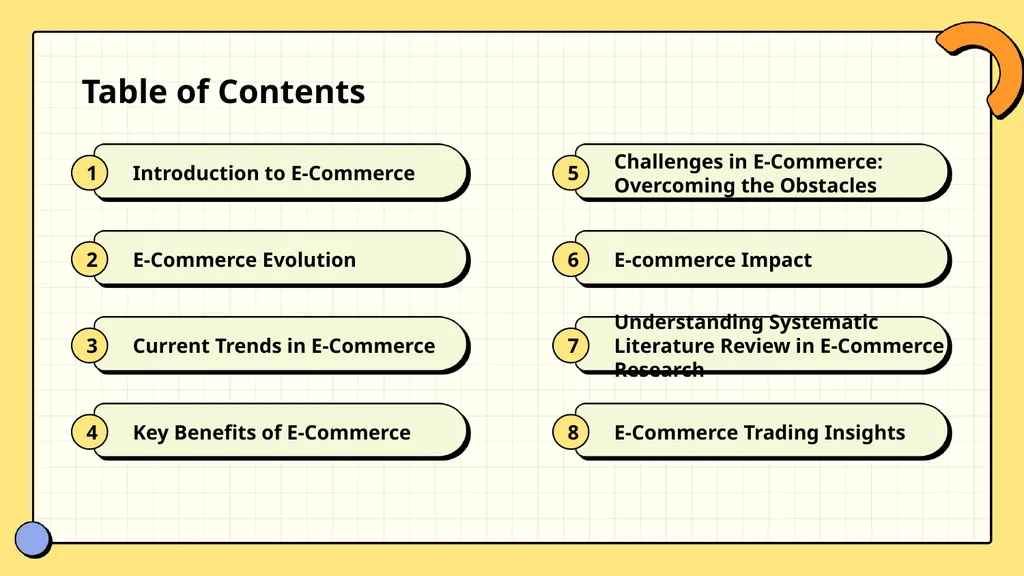
Table of Contents 1 Introduction to E-Commerce 2 E-Commerce Evolution 3 Current Trends in E-Commerce 4 Key Benefits of E-Commerce 5 Challenges in E-Commerce: Overcoming the Obstacles 6 E-commerce Impact 7 Understanding Systematic Literature Review in E-Commerce Research 8 E-Commerce Trading Insights<br>
03
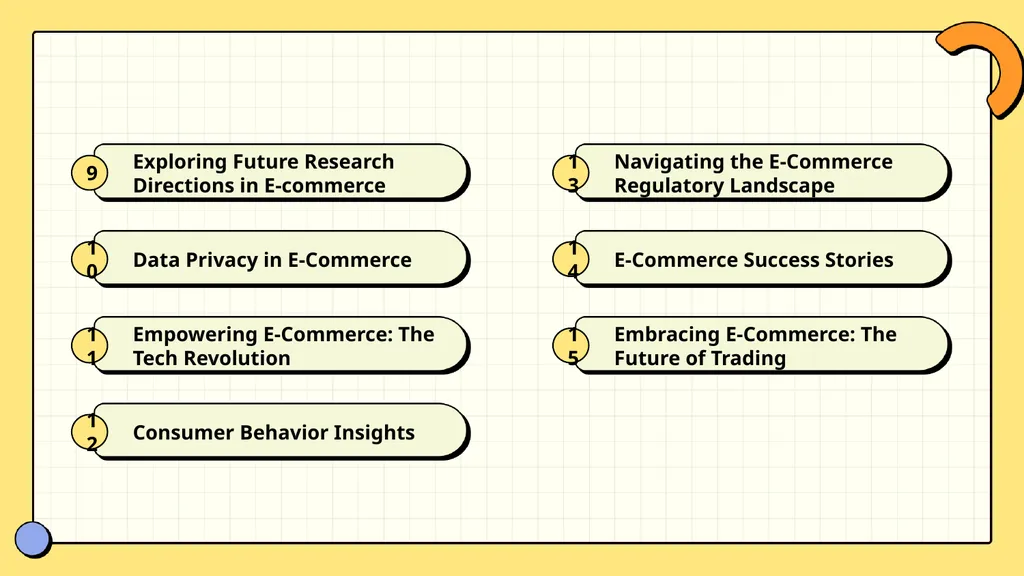
9 Exploring Future Research Directions in E-commerce 10 Data Privacy in E-Commerce 11 Empowering E-Commerce: The Tech Revolution 12 Consumer Behavior Insights 13 Navigating the E-Commerce Regulatory Landscape 14 E-Commerce Success Stories 15 Embracing E-Commerce: The Future of Trading<br>
04
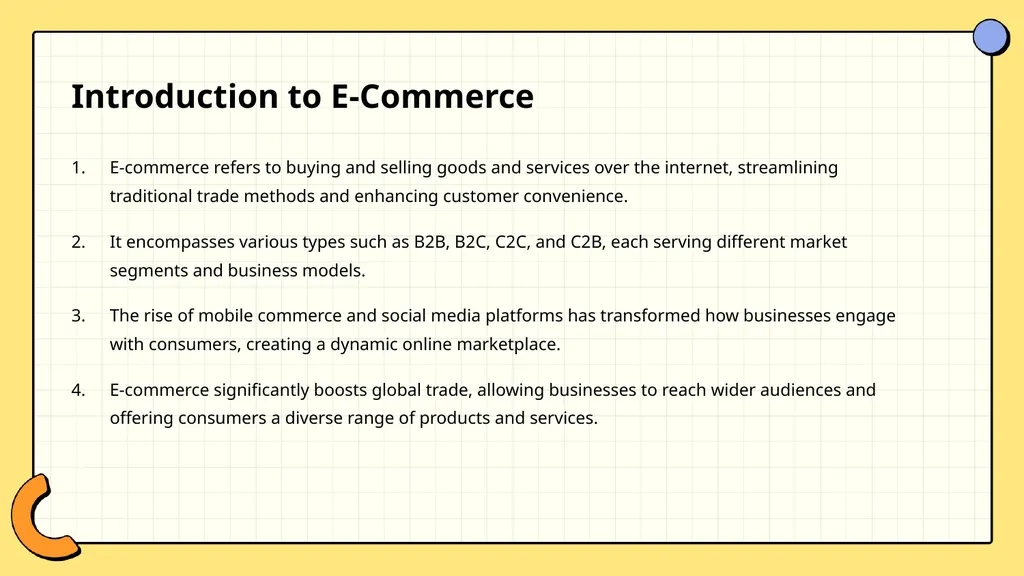
Introduction to E-Commerce E-commerce refers to buying and selling goods and services over the internet, streamlining traditional trade methods and enhancing customer convenience.
It encompasses various types such as B2B, B2C, C2C, and C2B, each serving different market segments and business models.
The rise of mobile commerce and social media platforms has transformed how businesses engage with consumers, creating a dynamic online marketplace.
E-commerce significantly boosts global trade, allowing businesses to reach wider audiences and offering consumers a diverse range of products and services.<br>
It encompasses various types such as B2B, B2C, C2C, and C2B, each serving different market segments and business models.
The rise of mobile commerce and social media platforms has transformed how businesses engage with consumers, creating a dynamic online marketplace.
E-commerce significantly boosts global trade, allowing businesses to reach wider audiences and offering consumers a diverse range of products and services.<br>
05
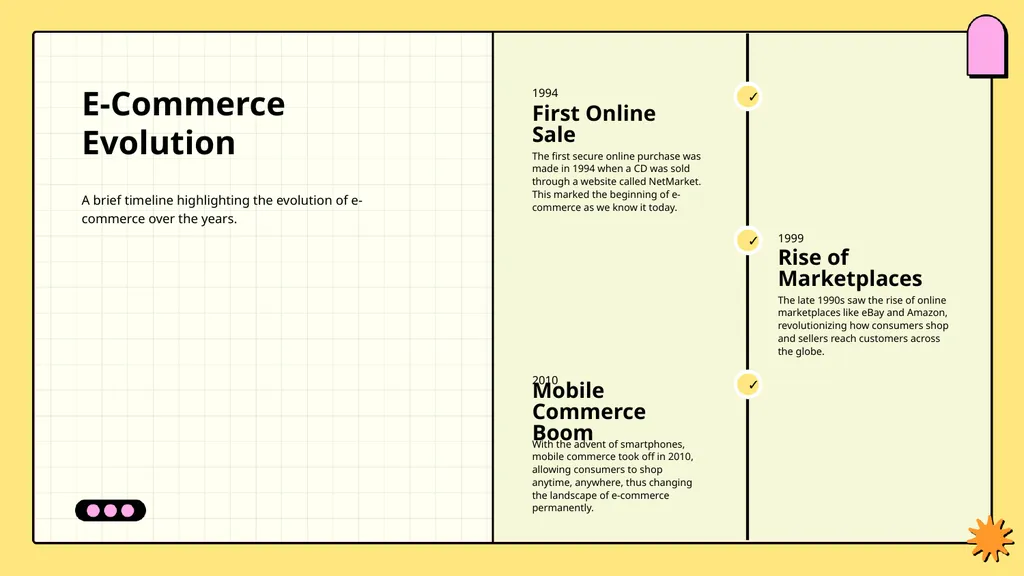
E-Commerce Evolution A brief timeline highlighting the evolution of e-commerce over the years. ✓ ✓ ✓ 1994 First Online Sale The first secure online purchase was made in 1994 when a CD was sold through a website called NetMarket. This marked the beginning of e-commerce as we know it today. 1999 Rise of Marketplaces The late 1990s saw the rise of online marketplaces like eBay and Amazon, revolutionizing how consumers shop and sellers reach customers across the globe. 2010 Mobile Commerce Boom With the advent of smartphones, mobile commerce took off in 2010, allowing consumers to shop anytime, anywhere, thus changing the landscape of e-commerce permanently.<br>
06
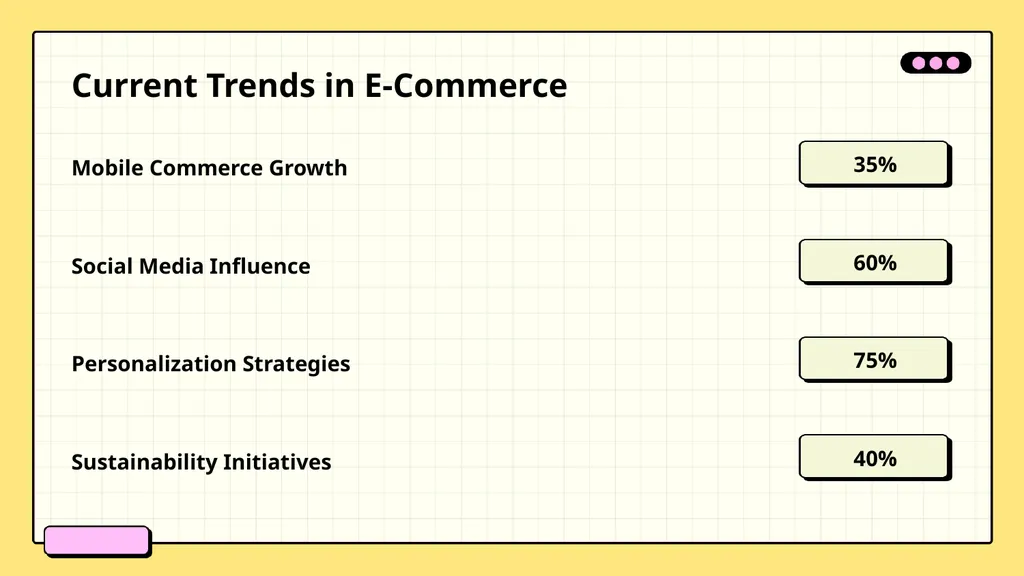
Current Trends in E-Commerce Mobile Commerce Growth Social Media Influence Personalization Strategies Sustainability Initiatives 35% 60% 75% 40%<br>
07
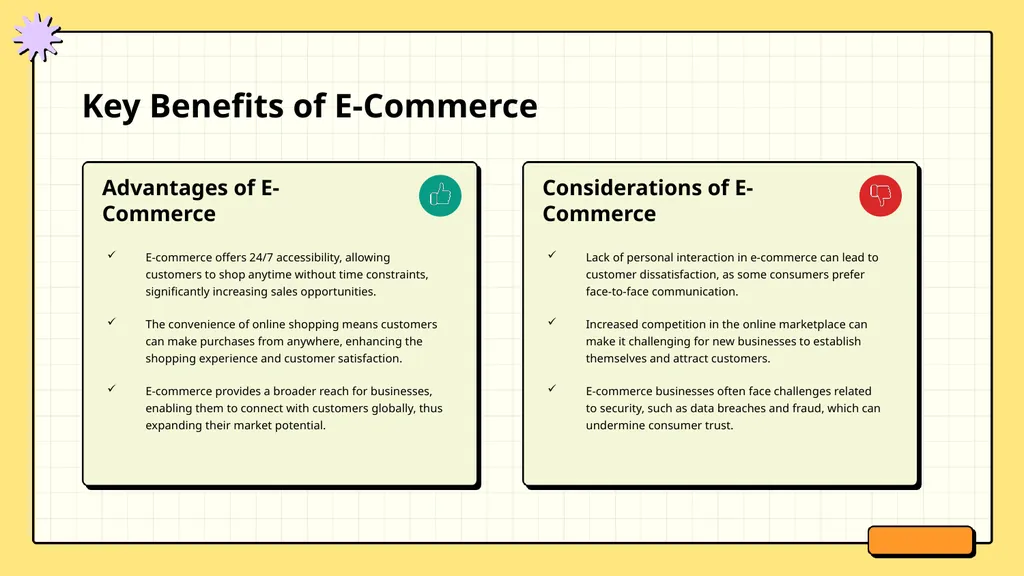
Key Benefits of E-Commerce Advantages of E-Commerce Considerations of E-Commerce E-commerce offers 24/7 accessibility, allowing customers to shop anytime without time constraints, significantly increasing sales opportunities.
The convenience of online shopping means customers can make purchases from anywhere, enhancing the shopping experience and customer satisfaction.
E-commerce provides a broader reach for businesses, enabling them to connect with customers globally, thus expanding their market potential. Lack of personal interaction in e-commerce can lead to customer dissatisfaction, as some consumers prefer face-to-face communication.
Increased competition in the online marketplace can make it challenging for new businesses to establish themselves and attract customers.
E-commerce businesses often face challenges related to security, such as data breaches and fraud, which can undermine consumer trust.<br>
The convenience of online shopping means customers can make purchases from anywhere, enhancing the shopping experience and customer satisfaction.
E-commerce provides a broader reach for businesses, enabling them to connect with customers globally, thus expanding their market potential. Lack of personal interaction in e-commerce can lead to customer dissatisfaction, as some consumers prefer face-to-face communication.
Increased competition in the online marketplace can make it challenging for new businesses to establish themselves and attract customers.
E-commerce businesses often face challenges related to security, such as data breaches and fraud, which can undermine consumer trust.<br>
08
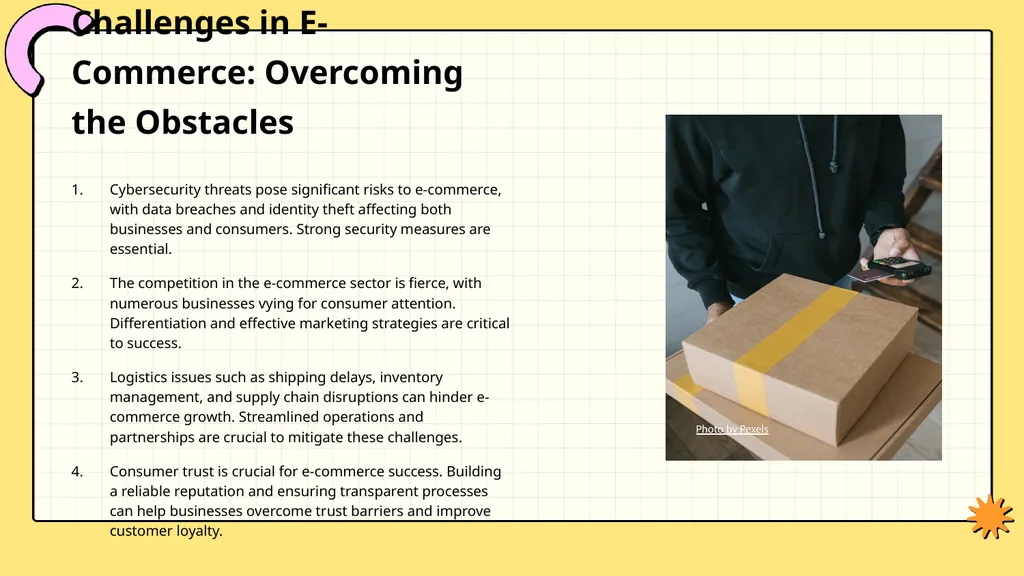
Challenges in E-Commerce: Overcoming the Obstacles Photo by Pexels Cybersecurity threats pose significant risks to e-commerce, with data breaches and identity theft affecting both businesses and consumers. Strong security measures are essential.
The competition in the e-commerce sector is fierce, with numerous businesses vying for consumer attention. Differentiation and effective marketing strategies are critical to success.
Logistics issues such as shipping delays, inventory management, and supply chain disruptions can hinder e-commerce growth. Streamlined operations and partnerships are crucial to mitigate these challenges.
Consumer trust is crucial for e-commerce success. Building a reliable reputation and ensuring transparent processes can help businesses overcome trust barriers and improve customer loyalty.<br>
The competition in the e-commerce sector is fierce, with numerous businesses vying for consumer attention. Differentiation and effective marketing strategies are critical to success.
Logistics issues such as shipping delays, inventory management, and supply chain disruptions can hinder e-commerce growth. Streamlined operations and partnerships are crucial to mitigate these challenges.
Consumer trust is crucial for e-commerce success. Building a reliable reputation and ensuring transparent processes can help businesses overcome trust barriers and improve customer loyalty.<br>
09
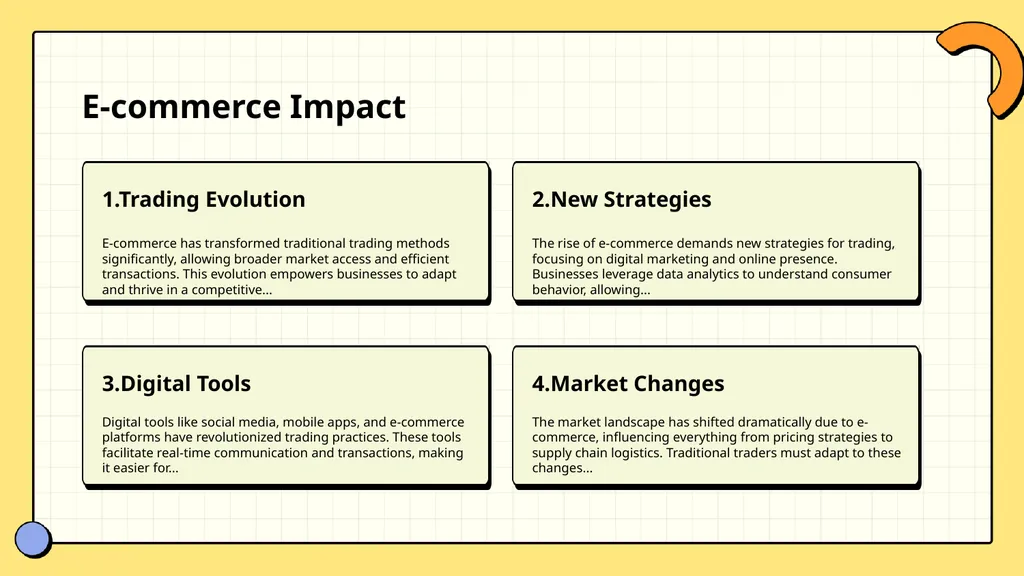
E-commerce Impact 1.Trading Evolution 2.New Strategies 3.Digital Tools 4.Market Changes E-commerce has transformed traditional trading methods significantly, allowing broader market access and efficient transactions. This evolution empowers businesses to adapt and thrive in a competitive... The rise of e-commerce demands new strategies for trading, focusing on digital marketing and online presence. Businesses leverage data analytics to understand consumer behavior, allowing... Digital tools like social media, mobile apps, and e-commerce platforms have revolutionized trading practices. These tools facilitate real-time communication and transactions, making it easier for... The market landscape has shifted dramatically due to e-commerce, influencing everything from pricing strategies to supply chain logistics. Traditional traders must adapt to these changes...<br>
10
Understanding Systematic Literature Review in E-Commerce Research A systematic literature review (SLR) is a methodical approach to collecting and analyzing research on a specific topic, here applied to e-commerce studies.
SLRs help researchers synthesize existing literature, providing clarity on trends, gaps, and findings related to e-commerce, facilitating informed decision-making.
The approach follows a structured methodology, including defining research questions, selecting databases, screening studies, and extracting relevant data systematically.
In e-commerce, conducting an SLR can unveil insights into consumer behavior, technology adoption, and market dynamics, essential for stakeholders aiming to enhance strategies.<br>
SLRs help researchers synthesize existing literature, providing clarity on trends, gaps, and findings related to e-commerce, facilitating informed decision-making.
The approach follows a structured methodology, including defining research questions, selecting databases, screening studies, and extracting relevant data systematically.
In e-commerce, conducting an SLR can unveil insights into consumer behavior, technology adoption, and market dynamics, essential for stakeholders aiming to enhance strategies.<br>
11
E-Commerce Trading Insights E-commerce has revolutionized traditional trading by enabling global access, allowing businesses to reach diverse markets without geographical constraints.
Key findings show that e-commerce engagement results in increased sales and customer retention, driving significant revenue growth for online retailers.
The literature highlights the importance of trust and security in online transactions, influencing consumer behavior and adoption of e-commerce platforms.
Technology advancements, including mobile commerce and digital payments, have further facilitated e-commerce trading, enhancing user experience and efficiency in transactions.<br>
Key findings show that e-commerce engagement results in increased sales and customer retention, driving significant revenue growth for online retailers.
The literature highlights the importance of trust and security in online transactions, influencing consumer behavior and adoption of e-commerce platforms.
Technology advancements, including mobile commerce and digital payments, have further facilitated e-commerce trading, enhancing user experience and efficiency in transactions.<br>
12
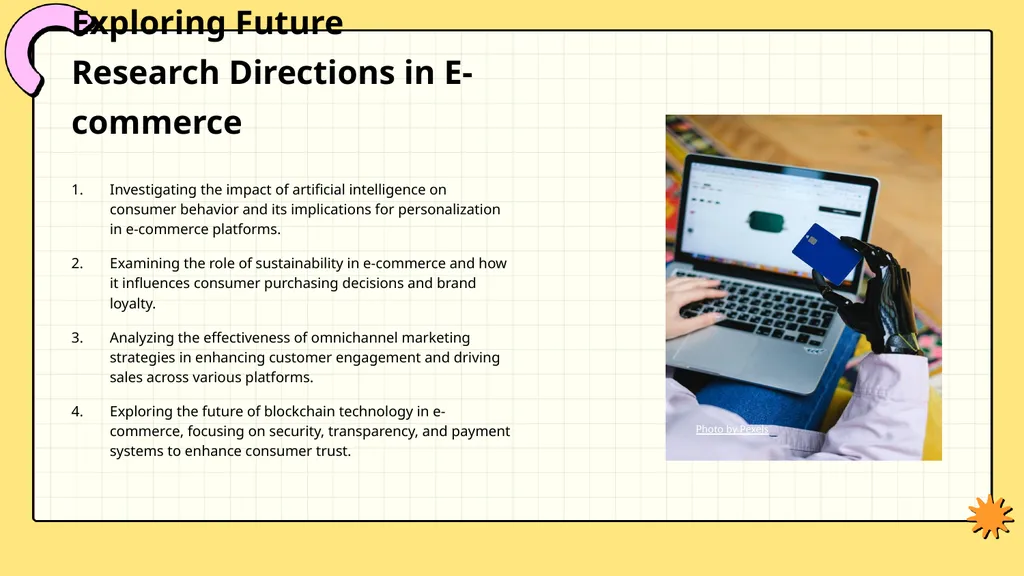
Exploring Future Research Directions in E-commerce Photo by Pexels Investigating the impact of artificial intelligence on consumer behavior and its implications for personalization in e-commerce platforms.
Examining the role of sustainability in e-commerce and how it influences consumer purchasing decisions and brand loyalty.
Analyzing the effectiveness of omnichannel marketing strategies in enhancing customer engagement and driving sales across various platforms.
Exploring the future of blockchain technology in e-commerce, focusing on security, transparency, and payment systems to enhance consumer trust.<br>
Examining the role of sustainability in e-commerce and how it influences consumer purchasing decisions and brand loyalty.
Analyzing the effectiveness of omnichannel marketing strategies in enhancing customer engagement and driving sales across various platforms.
Exploring the future of blockchain technology in e-commerce, focusing on security, transparency, and payment systems to enhance consumer trust.<br>
13
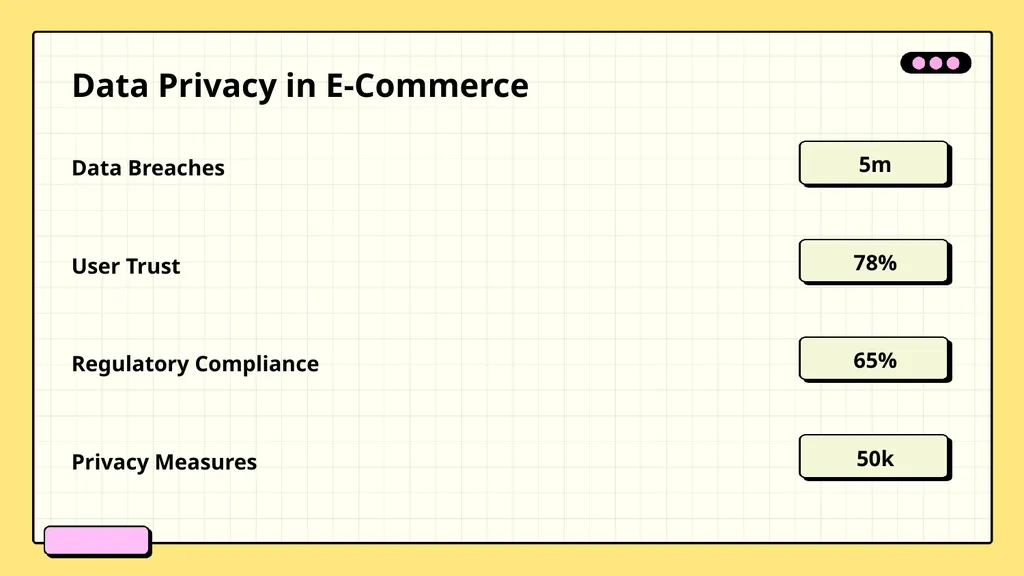
Data Privacy in E-Commerce Data Breaches User Trust Regulatory Compliance Privacy Measures 5m 78% 65% 50k<br>
14
Empowering E-Commerce: The Tech Revolution Technology streamlines e-commerce operations, enabling seamless transactions, and improving customer engagement through advanced interface designs and personalized experiences.
Innovative payment solutions, including mobile wallets and cryptocurrencies, ensure secure and swift transactions, enhancing customer trust and boosting sales.
Data analytics and AI allow businesses to understand consumer behavior, optimize inventory, and tailor marketing strategies, leading to increased efficiency and sales growth.
Automation in logistics and supply chain management minimizes human error, reduces costs, and accelerates delivery times, ensuring a smoother overall customer experience.<br>
Innovative payment solutions, including mobile wallets and cryptocurrencies, ensure secure and swift transactions, enhancing customer trust and boosting sales.
Data analytics and AI allow businesses to understand consumer behavior, optimize inventory, and tailor marketing strategies, leading to increased efficiency and sales growth.
Automation in logistics and supply chain management minimizes human error, reduces costs, and accelerates delivery times, ensuring a smoother overall customer experience.<br>
15
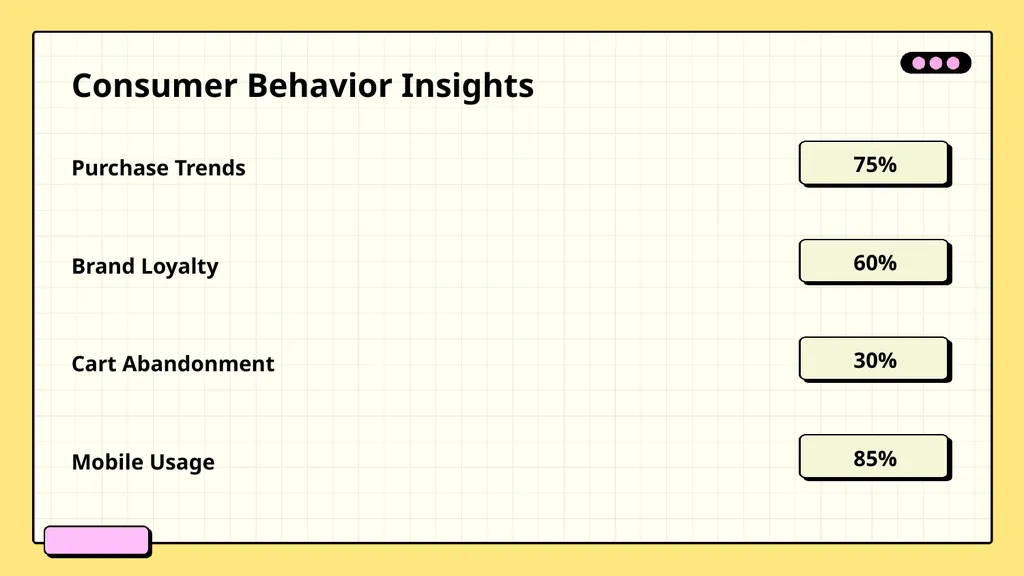
Consumer Behavior Insights Purchase Trends Brand Loyalty Cart Abandonment Mobile Usage 75% 60% 30% 85%<br>
16
Navigating the E-Commerce Regulatory Landscape E-commerce regulations vary significantly across regions, impacting businesses' operations and compliance requirements. Understanding these laws is crucial for global market participation.
Key regulations include data protection laws, consumer protection standards, and taxation policies that differ from one jurisdiction to another, creating complexities for e-commerce operators.
Regions like the EU enforce strict data privacy regulations such as GDPR, while the US focuses on a mix of state and federal laws, requiring tailored compliance strategies for businesses.
Emerging markets are adopting e-commerce regulations rapidly, with countries like India and Brazil implementing frameworks that support digital transactions while ensuring consumer rights and business accountability.<br>
Key regulations include data protection laws, consumer protection standards, and taxation policies that differ from one jurisdiction to another, creating complexities for e-commerce operators.
Regions like the EU enforce strict data privacy regulations such as GDPR, while the US focuses on a mix of state and federal laws, requiring tailored compliance strategies for businesses.
Emerging markets are adopting e-commerce regulations rapidly, with countries like India and Brazil implementing frameworks that support digital transactions while ensuring consumer rights and business accountability.<br>
17
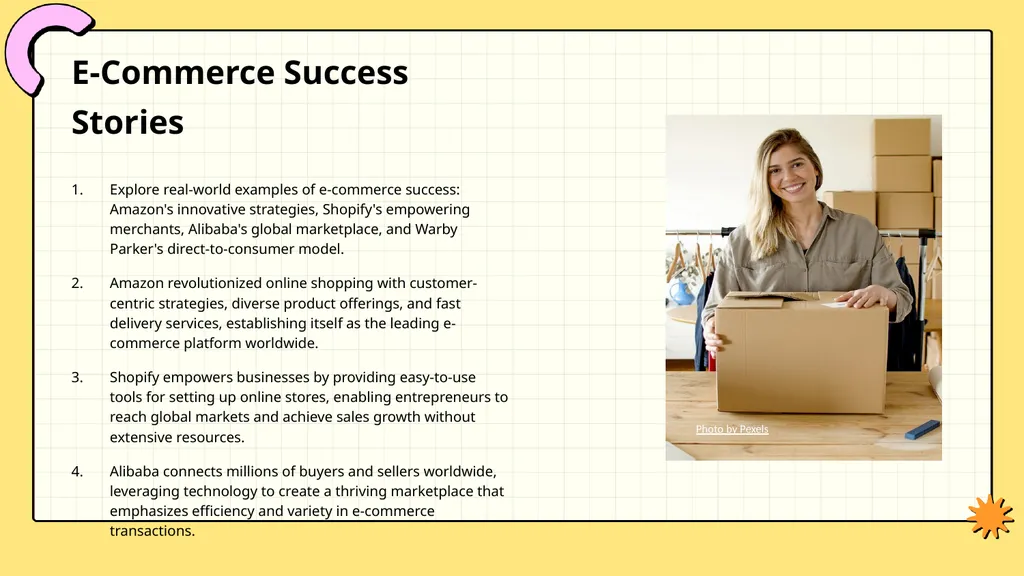
E-Commerce Success Stories Photo by Pexels Explore real-world examples of e-commerce success: Amazon's innovative strategies, Shopify's empowering merchants, Alibaba's global marketplace, and Warby Parker's direct-to-consumer model.
Amazon revolutionized online shopping with customer-centric strategies, diverse product offerings, and fast delivery services, establishing itself as the leading e-commerce platform worldwide.
Shopify empowers businesses by providing easy-to-use tools for setting up online stores, enabling entrepreneurs to reach global markets and achieve sales growth without extensive resources.
Alibaba connects millions of buyers and sellers worldwide, leveraging technology to create a thriving marketplace that emphasizes efficiency and variety in e-commerce transactions.<br>
Amazon revolutionized online shopping with customer-centric strategies, diverse product offerings, and fast delivery services, establishing itself as the leading e-commerce platform worldwide.
Shopify empowers businesses by providing easy-to-use tools for setting up online stores, enabling entrepreneurs to reach global markets and achieve sales growth without extensive resources.
Alibaba connects millions of buyers and sellers worldwide, leveraging technology to create a thriving marketplace that emphasizes efficiency and variety in e-commerce transactions.<br>
18
Embracing E-Commerce: The Future of Trading Key Benefits of E-Commerce Challenges to Consider E-commerce offers global reach, allowing businesses to connect with customers worldwide without geographical limitations.
It provides convenience for consumers, with the ability to shop anytime from anywhere, enhancing customer satisfaction and sales potential.
Digital platforms enable data-driven insights, helping businesses tailor their offerings and improve marketing strategies effectively. Competition is fierce in the online marketplace, making it challenging for new entrants to establish their brand.
Security concerns, such as data breaches and fraud, pose risks to both businesses and customers, requiring robust protection measures.
Technological dependencies may lead to issues such as website downtime or system failures, impacting sales and customer trust.<br>
It provides convenience for consumers, with the ability to shop anytime from anywhere, enhancing customer satisfaction and sales potential.
Digital platforms enable data-driven insights, helping businesses tailor their offerings and improve marketing strategies effectively. Competition is fierce in the online marketplace, making it challenging for new entrants to establish their brand.
Security concerns, such as data breaches and fraud, pose risks to both businesses and customers, requiring robust protection measures.
Technological dependencies may lead to issues such as website downtime or system failures, impacting sales and customer trust.<br>