
Opioid use disorders: presentations and




Description: Opioid use disorders: presentations and management. Dr Dauda Sulyman Chief Consultant Psychiatrist, Drug Abuse Treatment, Education and Rehabilitation Unit, University of Ilorin Teaching Hospital, Ilorin. Outlines Introduction Classes of
Related Topics
Download Presentation
"Opioid use disorders: presentations and" is the property of its rightful owner. Permission is granted to download and print the materials on this website for personal, non-commercial use only, and to display it on your personal computer provided you do not modify the materials and that you retain all copyright notices contained in the materials. By downloading content from our website, you accept the terms of this agreement.
Presentation Transcript
slide1. Opioid use disorders: presentations and management. Dr Dauda Sulyman
Chief Consultant Psychiatrist,
Drug Abuse Treatment, Education and Rehabilitation Unit,
University of Ilorin Teaching Hospital, Ilorin.<br>
slide3. Outlines Introduction
Classes of Opioids
Opioid Use disorders
Epidemiology
Risk Factors
Types of Opioid Use Disorders
Presentation
Complications
Management
Recommendations and Conclustion<br>
slide4. Introduction Opioid – refers to natural and synthetic substances that act at one of the three main opioid receptor systems (mu, kappa, delta).
Opioids can have analgesic and central nervous system depressant effects as well as the potential to cause euphoria.
It is widely available as prescription opioid analgesics.<br>
slide5. Classes of opioids Opiates are naturally occurring opioid extracted from the opium poppy, and containing morphine and codeine
Synthetic opioids - Oxycodone and hydrocodone.
Semi-synthetic opioids- fentanyl, tramadol, and methadone, pentazocine. Heroin is a derivative of morphine
Prescribed opioids – Opioid medications are prescribed principally for pain relief.<br>
slide6. Opioid use disorder? Opioid use disorder (OUD) is a problematic pattern of opioid use that causes significant impairment and/or distress. It was previously classified as opioid abuse or opioid dependence in DSM-IV criteria.
OUD is typically a chronic, relapsing illness<br>
slide7. Epidemiology OUD affect over 16 million people worldwide, over 2.1 million in the U.S
Over 120,000 deaths worldwide annually
Up to 50% of patients on chronic opioid therapy meet the criteria for opioid use disorder
Men are more likely to use opioids generally
Women have prescribed opioids more often than men for analgesia.
Deaths due to opioid use tends to skew at older ages
Yet, heroin overdoses peak between the ages of 20 and 30.<br>
slide8. In Nigeria, prevalence of heroin use was 0.1-0.2 and other pharmaceutical opioid was between 4.7 – 5.1 % of the population aged between 15 – 64 years
Commonly used opioid in Nigeria are codeine, tramadol, pentazocine, and morphine
85% use oral medications while the rest were injectable
More women (20%) than men (11.5%) use injection
Average age of onset 21 years
80% of patients with OUD use it daily<br>
slide9. Route of administration The intravenous route is rapid and produces high bioavailability but is also most dangerous to the user.
Intramuscular route
Intranasal inhalation requires minimal equipment and the onset of action is rapid enough to produce euphoria.
Opioids can be smoked; it is known as "chasing the dragon”. Smoking opioids is the fastest route for delivering the drug to the brain.<br>
slide11. Risk factors Genetic factor
Environmental factors, such as ease of access
a prior history of substance use disorder,
younger age
Presence of painful conditions
History with mental health disorders (depression, anxiety, etc.)
Family history of addiction or substance misuse
Personal experience with drug use or experimentation<br>
slide12. Regular or heavy tobacco use
Risk-taking or thrill-seeking behavior
Severe pressures at home or at work
Poverty or unemployment
Previous criminal activity
Stressful life or family situations<br>
slide13. Intoxication Slurred speech
appear sedated
pinpoint pupils (miosis)
Decreased perception of pain
Euphoria
Confusion
Desire to sleep
Hypokinesis
Hypotension
Nausea
Constipation<br>
slide14. Withdrawal generalized pain
chills
cramps
diarrhea
dilated pupils
restlessness
anxiety
nausea
Vomiting
Sneezing<br>
slide15. Agitation
Increased tearing
Trouble sleeping
Runny nose
Sweating
Yawning
Goose bumps
Fast heart rate
High blood pressure
Cravings<br>
slide16. Initial symptoms of opioid withdrawal (usually occur within 24 hours): Heavy sweating
Muscle aches and pain
Restlessness and inability to sleep
Anxiety
Runny nose
Eyes tearing up<br>
slide17. Later symptoms of opioid withdrawal (usually occur after the first day or so): Abdominal cramps
Diarrhea
Intense nausea and vomiting
Rapid heart beat
High blood pressure
Dilated pupils and/or blurry vision
Goose bumps<br>
slide18. Dependence Syndrome Taking larger amounts or taking drugs over a longer period than intended.
Persistent desire or unsuccessful efforts to cut down or control opioid use.
Spending a great deal of time obtaining or using the opioid or recovering from its effects.
Craving, or a strong desire or urge to use opioids
Problems fulfilling obligations at work, school or home.
Continued opioid use despite having recurring social or interpersonal problems.<br>
slide19. Giving up or reducing activities because of opioid use.
Using opioids in physically hazardous situations.
Continued opioid use despite ongoing physical or psychological problem likely to have been caused or worsened by opioids.
Tolerance (i.e., need for increased amounts or diminished effect with continued use of the same amount)
Experiencing withdrawal (opioid withdrawal syndrome) or taking opioids (or a closely related substance) to relieve or avoid withdrawal symptoms<br>
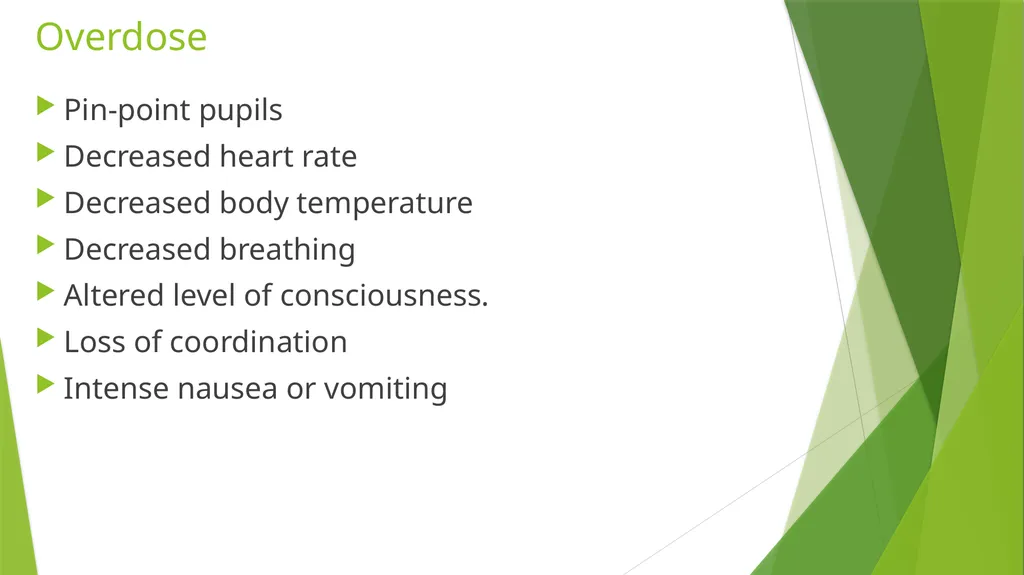
slide20. Overdose Pin-point pupils
Decreased heart rate
Decreased body temperature
Decreased breathing
Altered level of consciousness.
Loss of coordination
Intense nausea or vomiting<br>
slide21. Constipation
Slurred speech
Shaking
Sweating
Pulmonary edema
Shock
Death<br>
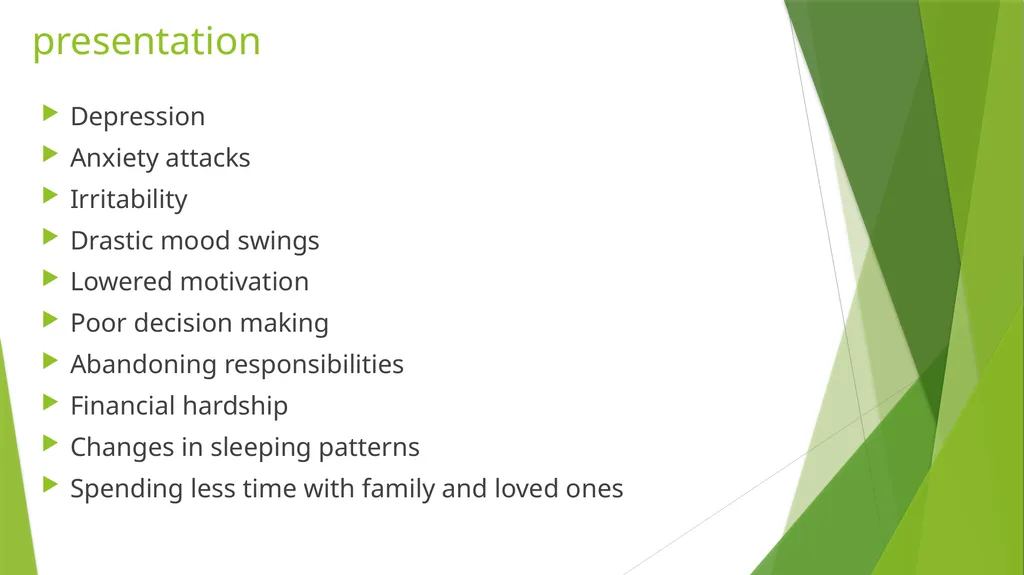
slide22. presentation Depression
Anxiety attacks
Irritability
Drastic mood swings
Lowered motivation
Poor decision making
Abandoning responsibilities
Financial hardship
Changes in sleeping patterns
Spending less time with family and loved ones<br>
slide23. stealing shoplifting, burglary, prostitution
Going to multiple doctors/pharmacists to get opioid prescriptions
Work and relationships problems
Missing appointments/ being extremely late
Poor attention to self-care, physical appearance and personal hygiene<br>
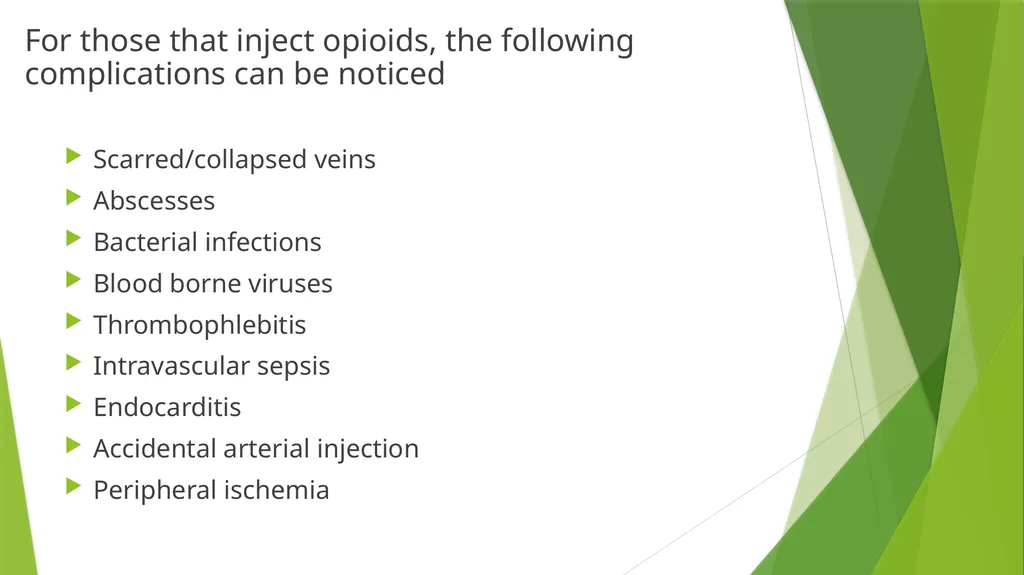
slide24. For those that inject opioids, the following complications can be noticed Scarred/collapsed veins
Abscesses
Bacterial infections
Blood borne viruses
Thrombophlebitis
Intravascular sepsis
Endocarditis
Accidental arterial injection
Peripheral ischemia<br>
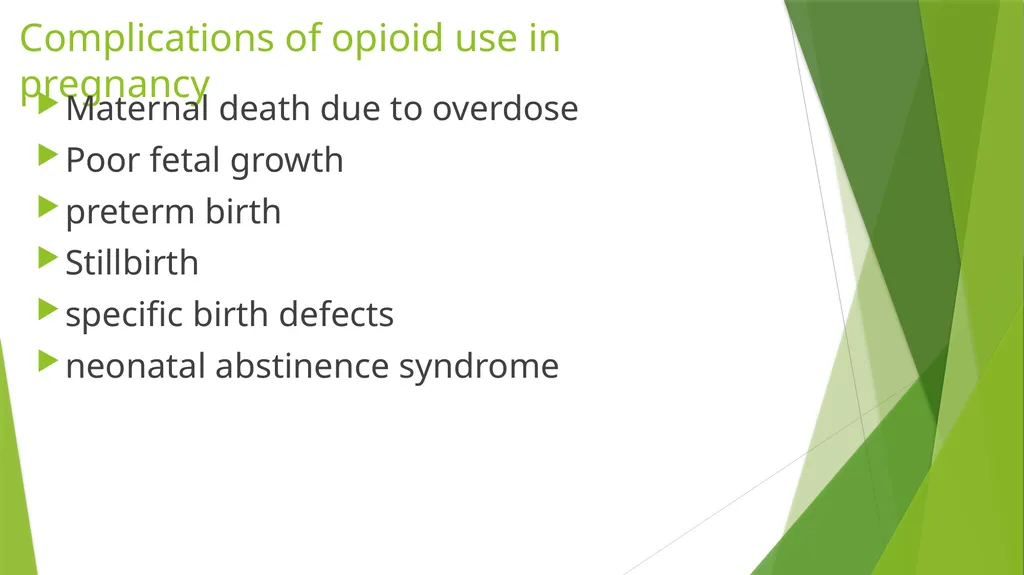
slide25. Complications of opioid use in pregnancy Maternal death due to overdose
Poor fetal growth
preterm birth
Stillbirth
specific birth defects
neonatal abstinence syndrome<br>
slide26. Management History taking from patients and significant others
Full physical extermination
Mental status examination
Urine/blood toxicology tests
Screening for Hepatitis A, B, and C, and HIV
Liver function tests: increase in ALT and AST can represent signs of acute liver damage<br>
slide27. Individualized your treatment – outpatient counseling, intensive outpatient treatment, inpatient treatment, or long-term therapeutic communities.
Medications for opioid use disorder (MOUDs) work by reducing withdrawal symptoms and opioid cravings while decreasing the biological response to future drug use.
Individuals receiving MOUDs stop or decrease their use of injection drugs and thus lower their rates of contracting infectious diseases
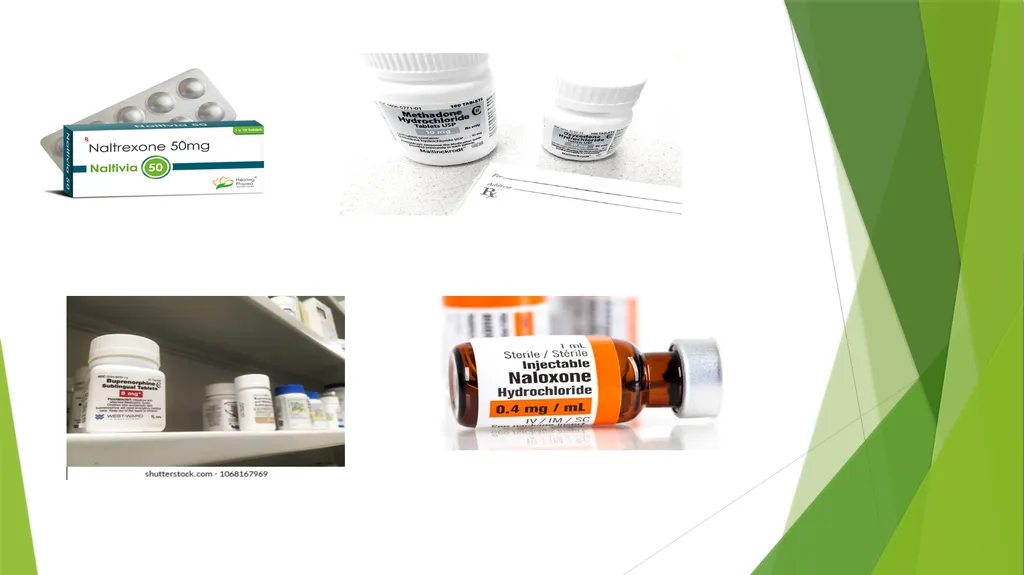
Researches have shown that opioid receptor agonist (methadone), partial agonist (buprenorphine), or opioid antagonist (naltrexone) can support recovery.<br>
slide28. As an example, a study of persons undergoing a three-day inpatient medically supervised withdrawal from opioids found only 17 percent of patients reported being abstinent from opioids at a 30-day follow-up after discharge, although drug use decreased and treatment engagement increased following the withdrawal treatment.
Among persons who stabilize on an opioid agonist medication, such as methadone or buprenorphine, rates of relapse are significantly reduced<br>
slide30. Medications for opioid use disorder Methadone – Prevents withdrawal symptoms and reduces cravings.
It does not cause a euphoric feeling
Methadone maintenance is non-sedating and is medically safe.
The maintenance phase begins approximately six weeks after the initiation of therapy.
The length of the maintenance phase can last years to an entire lifetime.<br>
slide31. Buprenorphine –Partial agonist/antagonist.
Detoxification or maintenance<br>
slide32. Naltrexone – An Antagonist
It is available in pill form or monthly injection<br>
slide33. Dihydrocodeine is an opioid agonist which can sometimes be used during detoxification in place of methadone and buprenorphine.
It may be used as a second line treatment<br>
slide34. Naloxone is a potentially life-saving medication used to quickly reverse an opioid overdose.
It reverses and blocks the effects of other opioids and return normal breathing
It is available as a prefilled auto-injection device, as a nasal spray and as an injectable.<br>
slide35. Clonidine or tizanidine are helpful to decrease anxiety associated with opioid withdrawal.
The treatment of anxiety and insomnia associated with opioid withdrawal is with benzodiazepines or other sedating drugs.
Diarrhea, nausea, and vomiting therapy is with loperamide. Prochlorperazine, along with sports drinks or intravenous fluids, is also helpful.
Pain mitigation is through the use of non-steroidal anti-inflammatory agents.<br>
slide36. Despite compelling evidence that MOUD is effective, these medications remain underutilized.
This is due in part to the need for daily dosing for most of the medications.
Extended-release naltrexone (XR-NTX), depo-injection for 28 days
Probuphine®, an implantable buprenorphine product, was approved in 2016.
A once-monthly buprenorphine injection, Sublocade®, became FDA approved in 2017
However, limited access to these and other MOUDs has hindered efforts to address the opioid use disorders.<br>
slide37. Psychotherapy Effective behavioral interventions delivered by trained professionals
Treatment typically involves cognitive behavioral approaches, such as encouraging motivation to change and education about treatment and relapse prevention
Maintenance programs should include psychological support.
Patients with opioid-use disorders are encouraged to participate in self-help programs such as Narcotics Anonymous.
The combination of education, motivational enhancement, and self-help groups helps patients change how they think about the ways that opioids affect their lives<br>
slide38. Prognosis High risks of relapse to the use of illicit drugs and overdoses after discontinuation of maintenance methadone that may lead to death
medications assisted therapy reduces the incidence of long-term opioid addiction while decreasing illegal opiate use and decreasing mortality.
The cost to society with opioid replacement is less compare to non-treatment.
Methadone treatment for opioid use disorder is associated with a 50% reduction in all-cause mortality, as well as a 50% reduction in the incidence of hepatitis C.
Over 90% of patients who go through opioid withdrawal without medications assisted treatment relapse within one month<br>
slide39. Recommendation Responsible prescription of opioids for management of chronic pain
Exploit other method of pain management
Medications for OUD should be made available
More researches needed on OUD especially in our clime
Effective regulations of opioid
Education and enlightenment of the populace on the danger of OU
Training of professionals in the management of substance use disoders<br>
slide40. Conclusion OUD is a chronic and relapsing disease due to use of opioids
Majority of the users start from prescription opioids.
It has devastating effects on the individual, the family and the society
It is however treatable with MOUD and psychosocial supports to prevent relapses
Some of the main medications for management of OUD are not available in the country, hence the need to appeal to appropriate government agencies
training and retraining of professional in the field of prevention and treatment is important.<br>
slide41. Thanks for listening<br>
slide42. References
Pathan H, Williams J. Basic opioid pharmacology: an update. Br J Pain. 2012;6(1):11-16. doi:10.1177/2049463712438493
Dydyk AM, Jain NK, Gupta M. Opioid Use Disorder. [Updated 2021 Jul 12]. In: StatPearls [Internet]. Treasure Island (FL): StatPearls Publishing; 2021 Jan-. Available from: https://www.ncbi.nlm.nih.gov/books/NBK553166/
UNOCD. Drug use survey in Nigeria, 2018.
American Psychiatric Association. Diagnostic and Statistical Manual of Mental Disorders, Fifth Edition (DSM-5), American Psychiatric Association, Arlington, VA 2013.
Wilson N, Kariisa M, Seth P, et al. Drug and Opioid-Involved Overdose Deaths - United States, 2017-2018. MMWR Morb Mortal Wkly Rep 2020; 69:290.
Hoffman, K.A., Ponce Terashima, J. & McCarty, D. Opioid use disorder and treatment: challenges and opportunities. BMC Health Serv Res 19, 884 (2019). https://doi.org/10.1186/s12913-019-4751-4
National Institute of Drug Abuse. Principle of drug addiction treatment- a research based guide, 3rd edition. National institutes of Health, 2012. US department of Health and Human Servises.
American Society of Addiction Medicine. The ASAM National practice guideline for the use of medication in the treatment of addiction involving opioid use, 2015.
National Collaborating Centre for Mental Health (UK). Drug Misuse: Opioid Detoxification. Leicester (UK): British Psychological Society; 2008. (NICE Clinical Guidelines, No. 52.) 6, PHARMACOLOGICAL AND PHYSICAL INTERVENTIONS IN OPIOID DETOXIFICATION. Available from: https://www.ncbi.nlm.nih.gov/books/NBK50618/
Wright, N.M., Sheard, L., Tompkins, C.N. et al. Buprenorphine versus dihydrocodeine for opiate detoxification in primary care: a randomised controlled trial. BMC Fam Pract 8, 3 (2007). https://doi.org/10.1186/1471-2296-8-3
NIDA. 2017, March 30. Naloxone for Opioid Overdose: Life-Saving Science. Retrieved from https://www.drugabuse.gov/publications/naloxone-opioid-overdose-life-saving-science on 2021, July 28<br>
Chief Consultant Psychiatrist,
Drug Abuse Treatment, Education and Rehabilitation Unit,
University of Ilorin Teaching Hospital, Ilorin.<br>
slide3. Outlines Introduction
Classes of Opioids
Opioid Use disorders
Epidemiology
Risk Factors
Types of Opioid Use Disorders
Presentation
Complications
Management
Recommendations and Conclustion<br>
slide4. Introduction Opioid – refers to natural and synthetic substances that act at one of the three main opioid receptor systems (mu, kappa, delta).
Opioids can have analgesic and central nervous system depressant effects as well as the potential to cause euphoria.
It is widely available as prescription opioid analgesics.<br>
slide5. Classes of opioids Opiates are naturally occurring opioid extracted from the opium poppy, and containing morphine and codeine
Synthetic opioids - Oxycodone and hydrocodone.
Semi-synthetic opioids- fentanyl, tramadol, and methadone, pentazocine. Heroin is a derivative of morphine
Prescribed opioids – Opioid medications are prescribed principally for pain relief.<br>
slide6. Opioid use disorder? Opioid use disorder (OUD) is a problematic pattern of opioid use that causes significant impairment and/or distress. It was previously classified as opioid abuse or opioid dependence in DSM-IV criteria.
OUD is typically a chronic, relapsing illness<br>
slide7. Epidemiology OUD affect over 16 million people worldwide, over 2.1 million in the U.S
Over 120,000 deaths worldwide annually
Up to 50% of patients on chronic opioid therapy meet the criteria for opioid use disorder
Men are more likely to use opioids generally
Women have prescribed opioids more often than men for analgesia.
Deaths due to opioid use tends to skew at older ages
Yet, heroin overdoses peak between the ages of 20 and 30.<br>
slide8. In Nigeria, prevalence of heroin use was 0.1-0.2 and other pharmaceutical opioid was between 4.7 – 5.1 % of the population aged between 15 – 64 years
Commonly used opioid in Nigeria are codeine, tramadol, pentazocine, and morphine
85% use oral medications while the rest were injectable
More women (20%) than men (11.5%) use injection
Average age of onset 21 years
80% of patients with OUD use it daily<br>
slide9. Route of administration The intravenous route is rapid and produces high bioavailability but is also most dangerous to the user.
Intramuscular route
Intranasal inhalation requires minimal equipment and the onset of action is rapid enough to produce euphoria.
Opioids can be smoked; it is known as "chasing the dragon”. Smoking opioids is the fastest route for delivering the drug to the brain.<br>
slide11. Risk factors Genetic factor
Environmental factors, such as ease of access
a prior history of substance use disorder,
younger age
Presence of painful conditions
History with mental health disorders (depression, anxiety, etc.)
Family history of addiction or substance misuse
Personal experience with drug use or experimentation<br>
slide12. Regular or heavy tobacco use
Risk-taking or thrill-seeking behavior
Severe pressures at home or at work
Poverty or unemployment
Previous criminal activity
Stressful life or family situations<br>
slide13. Intoxication Slurred speech
appear sedated
pinpoint pupils (miosis)
Decreased perception of pain
Euphoria
Confusion
Desire to sleep
Hypokinesis
Hypotension
Nausea
Constipation<br>
slide14. Withdrawal generalized pain
chills
cramps
diarrhea
dilated pupils
restlessness
anxiety
nausea
Vomiting
Sneezing<br>
slide15. Agitation
Increased tearing
Trouble sleeping
Runny nose
Sweating
Yawning
Goose bumps
Fast heart rate
High blood pressure
Cravings<br>
slide16. Initial symptoms of opioid withdrawal (usually occur within 24 hours): Heavy sweating
Muscle aches and pain
Restlessness and inability to sleep
Anxiety
Runny nose
Eyes tearing up<br>
slide17. Later symptoms of opioid withdrawal (usually occur after the first day or so): Abdominal cramps
Diarrhea
Intense nausea and vomiting
Rapid heart beat
High blood pressure
Dilated pupils and/or blurry vision
Goose bumps<br>
slide18. Dependence Syndrome Taking larger amounts or taking drugs over a longer period than intended.
Persistent desire or unsuccessful efforts to cut down or control opioid use.
Spending a great deal of time obtaining or using the opioid or recovering from its effects.
Craving, or a strong desire or urge to use opioids
Problems fulfilling obligations at work, school or home.
Continued opioid use despite having recurring social or interpersonal problems.<br>
slide19. Giving up or reducing activities because of opioid use.
Using opioids in physically hazardous situations.
Continued opioid use despite ongoing physical or psychological problem likely to have been caused or worsened by opioids.
Tolerance (i.e., need for increased amounts or diminished effect with continued use of the same amount)
Experiencing withdrawal (opioid withdrawal syndrome) or taking opioids (or a closely related substance) to relieve or avoid withdrawal symptoms<br>
slide20. Overdose Pin-point pupils
Decreased heart rate
Decreased body temperature
Decreased breathing
Altered level of consciousness.
Loss of coordination
Intense nausea or vomiting<br>
slide21. Constipation
Slurred speech
Shaking
Sweating
Pulmonary edema
Shock
Death<br>
slide22. presentation Depression
Anxiety attacks
Irritability
Drastic mood swings
Lowered motivation
Poor decision making
Abandoning responsibilities
Financial hardship
Changes in sleeping patterns
Spending less time with family and loved ones<br>
slide23. stealing shoplifting, burglary, prostitution
Going to multiple doctors/pharmacists to get opioid prescriptions
Work and relationships problems
Missing appointments/ being extremely late
Poor attention to self-care, physical appearance and personal hygiene<br>
slide24. For those that inject opioids, the following complications can be noticed Scarred/collapsed veins
Abscesses
Bacterial infections
Blood borne viruses
Thrombophlebitis
Intravascular sepsis
Endocarditis
Accidental arterial injection
Peripheral ischemia<br>
slide25. Complications of opioid use in pregnancy Maternal death due to overdose
Poor fetal growth
preterm birth
Stillbirth
specific birth defects
neonatal abstinence syndrome<br>
slide26. Management History taking from patients and significant others
Full physical extermination
Mental status examination
Urine/blood toxicology tests
Screening for Hepatitis A, B, and C, and HIV
Liver function tests: increase in ALT and AST can represent signs of acute liver damage<br>
slide27. Individualized your treatment – outpatient counseling, intensive outpatient treatment, inpatient treatment, or long-term therapeutic communities.
Medications for opioid use disorder (MOUDs) work by reducing withdrawal symptoms and opioid cravings while decreasing the biological response to future drug use.
Individuals receiving MOUDs stop or decrease their use of injection drugs and thus lower their rates of contracting infectious diseases
Researches have shown that opioid receptor agonist (methadone), partial agonist (buprenorphine), or opioid antagonist (naltrexone) can support recovery.<br>
slide28. As an example, a study of persons undergoing a three-day inpatient medically supervised withdrawal from opioids found only 17 percent of patients reported being abstinent from opioids at a 30-day follow-up after discharge, although drug use decreased and treatment engagement increased following the withdrawal treatment.
Among persons who stabilize on an opioid agonist medication, such as methadone or buprenorphine, rates of relapse are significantly reduced<br>
slide30. Medications for opioid use disorder Methadone – Prevents withdrawal symptoms and reduces cravings.
It does not cause a euphoric feeling
Methadone maintenance is non-sedating and is medically safe.
The maintenance phase begins approximately six weeks after the initiation of therapy.
The length of the maintenance phase can last years to an entire lifetime.<br>
slide31. Buprenorphine –Partial agonist/antagonist.
Detoxification or maintenance<br>
slide32. Naltrexone – An Antagonist
It is available in pill form or monthly injection<br>
slide33. Dihydrocodeine is an opioid agonist which can sometimes be used during detoxification in place of methadone and buprenorphine.
It may be used as a second line treatment<br>
slide34. Naloxone is a potentially life-saving medication used to quickly reverse an opioid overdose.
It reverses and blocks the effects of other opioids and return normal breathing
It is available as a prefilled auto-injection device, as a nasal spray and as an injectable.<br>
slide35. Clonidine or tizanidine are helpful to decrease anxiety associated with opioid withdrawal.
The treatment of anxiety and insomnia associated with opioid withdrawal is with benzodiazepines or other sedating drugs.
Diarrhea, nausea, and vomiting therapy is with loperamide. Prochlorperazine, along with sports drinks or intravenous fluids, is also helpful.
Pain mitigation is through the use of non-steroidal anti-inflammatory agents.<br>
slide36. Despite compelling evidence that MOUD is effective, these medications remain underutilized.
This is due in part to the need for daily dosing for most of the medications.
Extended-release naltrexone (XR-NTX), depo-injection for 28 days
Probuphine®, an implantable buprenorphine product, was approved in 2016.
A once-monthly buprenorphine injection, Sublocade®, became FDA approved in 2017
However, limited access to these and other MOUDs has hindered efforts to address the opioid use disorders.<br>
slide37. Psychotherapy Effective behavioral interventions delivered by trained professionals
Treatment typically involves cognitive behavioral approaches, such as encouraging motivation to change and education about treatment and relapse prevention
Maintenance programs should include psychological support.
Patients with opioid-use disorders are encouraged to participate in self-help programs such as Narcotics Anonymous.
The combination of education, motivational enhancement, and self-help groups helps patients change how they think about the ways that opioids affect their lives<br>
slide38. Prognosis High risks of relapse to the use of illicit drugs and overdoses after discontinuation of maintenance methadone that may lead to death
medications assisted therapy reduces the incidence of long-term opioid addiction while decreasing illegal opiate use and decreasing mortality.
The cost to society with opioid replacement is less compare to non-treatment.
Methadone treatment for opioid use disorder is associated with a 50% reduction in all-cause mortality, as well as a 50% reduction in the incidence of hepatitis C.
Over 90% of patients who go through opioid withdrawal without medications assisted treatment relapse within one month<br>
slide39. Recommendation Responsible prescription of opioids for management of chronic pain
Exploit other method of pain management
Medications for OUD should be made available
More researches needed on OUD especially in our clime
Effective regulations of opioid
Education and enlightenment of the populace on the danger of OU
Training of professionals in the management of substance use disoders<br>
slide40. Conclusion OUD is a chronic and relapsing disease due to use of opioids
Majority of the users start from prescription opioids.
It has devastating effects on the individual, the family and the society
It is however treatable with MOUD and psychosocial supports to prevent relapses
Some of the main medications for management of OUD are not available in the country, hence the need to appeal to appropriate government agencies
training and retraining of professional in the field of prevention and treatment is important.<br>
slide41. Thanks for listening<br>
slide42. References
Pathan H, Williams J. Basic opioid pharmacology: an update. Br J Pain. 2012;6(1):11-16. doi:10.1177/2049463712438493
Dydyk AM, Jain NK, Gupta M. Opioid Use Disorder. [Updated 2021 Jul 12]. In: StatPearls [Internet]. Treasure Island (FL): StatPearls Publishing; 2021 Jan-. Available from: https://www.ncbi.nlm.nih.gov/books/NBK553166/
UNOCD. Drug use survey in Nigeria, 2018.
American Psychiatric Association. Diagnostic and Statistical Manual of Mental Disorders, Fifth Edition (DSM-5), American Psychiatric Association, Arlington, VA 2013.
Wilson N, Kariisa M, Seth P, et al. Drug and Opioid-Involved Overdose Deaths - United States, 2017-2018. MMWR Morb Mortal Wkly Rep 2020; 69:290.
Hoffman, K.A., Ponce Terashima, J. & McCarty, D. Opioid use disorder and treatment: challenges and opportunities. BMC Health Serv Res 19, 884 (2019). https://doi.org/10.1186/s12913-019-4751-4
National Institute of Drug Abuse. Principle of drug addiction treatment- a research based guide, 3rd edition. National institutes of Health, 2012. US department of Health and Human Servises.
American Society of Addiction Medicine. The ASAM National practice guideline for the use of medication in the treatment of addiction involving opioid use, 2015.
National Collaborating Centre for Mental Health (UK). Drug Misuse: Opioid Detoxification. Leicester (UK): British Psychological Society; 2008. (NICE Clinical Guidelines, No. 52.) 6, PHARMACOLOGICAL AND PHYSICAL INTERVENTIONS IN OPIOID DETOXIFICATION. Available from: https://www.ncbi.nlm.nih.gov/books/NBK50618/
Wright, N.M., Sheard, L., Tompkins, C.N. et al. Buprenorphine versus dihydrocodeine for opiate detoxification in primary care: a randomised controlled trial. BMC Fam Pract 8, 3 (2007). https://doi.org/10.1186/1471-2296-8-3
NIDA. 2017, March 30. Naloxone for Opioid Overdose: Life-Saving Science. Retrieved from https://www.drugabuse.gov/publications/naloxone-opioid-overdose-life-saving-science on 2021, July 28<br>