Oregon University System Presented by: Patricia
Description: Oregon University System Presented by: Patricia Patti Snopkowski Chief Auditor, OUS Internal Audit Division 2011 Annual Risk Assessment Objective and Goal of a Risk Assessment Identify audits that will add value to the organization.
Related Topics
Download Presentation
"Oregon University System Presented by: Patricia" is the property of its rightful owner. Permission is granted to download and print the materials on this website for personal, non-commercial use only, and to display it on your personal computer provided you do not modify the materials and that you retain all copyright notices contained in the materials. By downloading content from our website, you accept the terms of this agreement.
Presentation Transcript
slide1. Oregon University System Presented by: Patricia “Patti” Snopkowski
Chief Auditor, OUS Internal Audit Division 2011 Annual Risk Assessment<br>
slide2. Objective and Goal of a Risk Assessment Identify audits that will add value to the organization.
Reduce the risk of losses related to internal control structure breakdowns
Identify opportunities for increased efficiencies
Reinforce existing control strengths 2<br>
slide3. IIA Risk Assessment Standards 2010 – Planning
The chief audit executive must establish risk-based plans to determine the priorities of the internal audit activity, consistent with the organization's goals. 3<br>
slide4. IIA Risk Assessment Standards 2010.A1
The internal audit activity’s plan of engagements must be based on a documented risk assessment, undertaken at least annually. The input of senior management and the board must be considered in this process.
2010.A2
The chief audit executive must identify and consider the expectations of senior management, the board, and other stakeholders for internal audit opinions and other conclusions. 4<br>
slide5. IIA Risk Assessment Standards 2010.C1
The chief audit executive should consider accepting consulting engagements based on the engagement’s potential to improve management of risks, add value, and improve the organization’s operations. Accepted engagements must be included in the plan. 5<br>
slide6. IIA Risk Assessment Standards 2020 – Communication and Approval
The chief audit executive must communicate the internal audit activity’s plans and resource requirements, including significant interim changes, to senior management and the board for review and approval. The chief audit executive must also communicate the impact of resource limitations. 6<br>
slide7. IIA Risk Assessment Standards 2030 – Resource Management
The chief audit executive must ensure that internal audit resources are appropriate, sufficient, and effectively deployed to achieve the approved plan. 7<br>
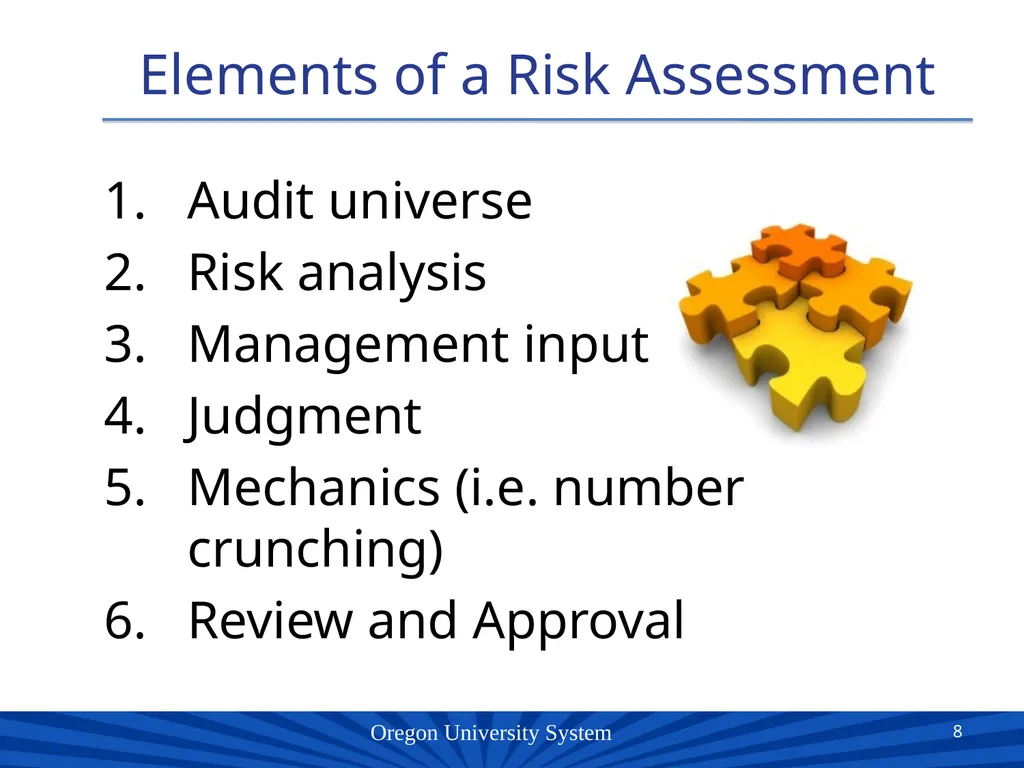
slide8. Elements of a Risk Assessment Audit universe
Risk analysis
Management input
Judgment
Mechanics (i.e. number crunching)
Review and Approval 8<br>
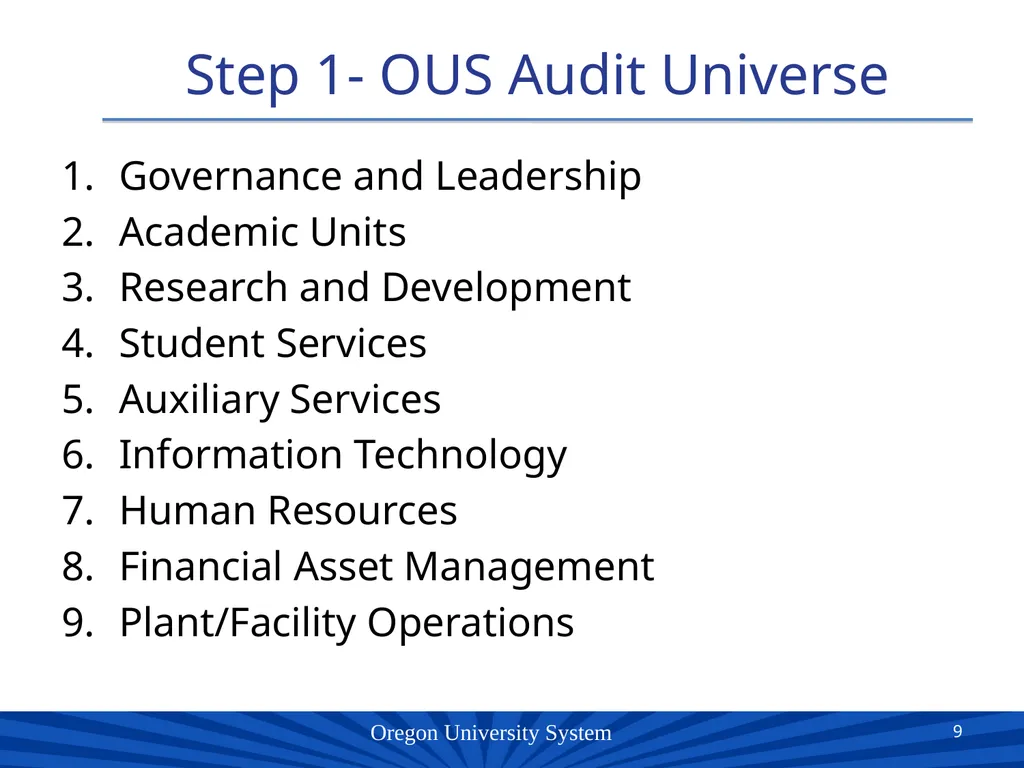
slide9. Step 1- OUS Audit Universe Governance and Leadership
Academic Units
Research and Development
Student Services
Auxiliary Services
Information Technology
Human Resources
Financial Asset Management
Plant/Facility Operations 9<br>
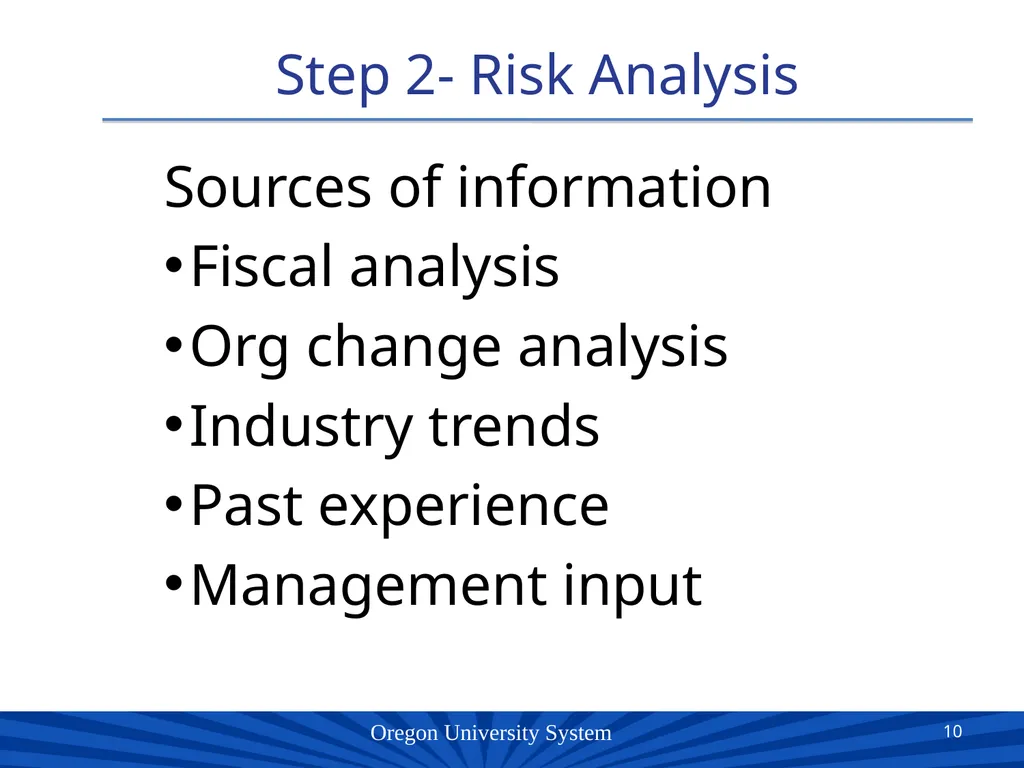
slide10. Step 2- Risk Analysis Sources of information
Fiscal analysis
Org change analysis
Industry trends
Past experience
Management input 10<br>
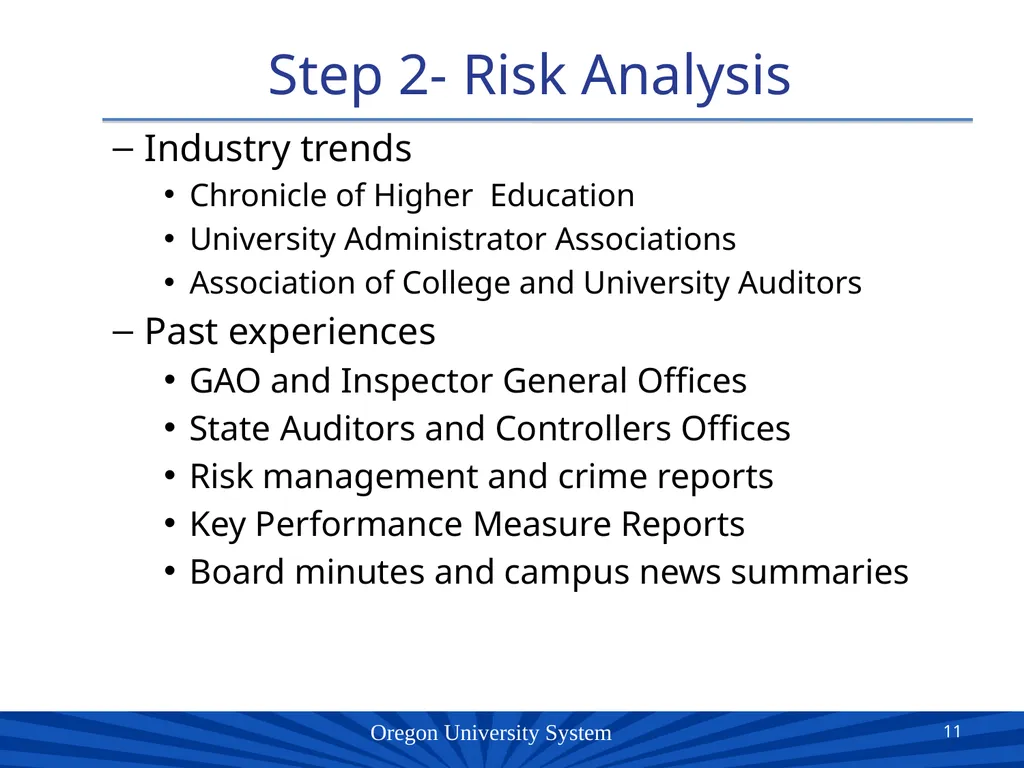
slide11. Step 2- Risk Analysis Industry trends
Chronicle of Higher Education
University Administrator Associations
Association of College and University Auditors
Past experiences
GAO and Inspector General Offices
State Auditors and Controllers Offices
Risk management and crime reports
Key Performance Measure Reports
Board minutes and campus news summaries 11<br>
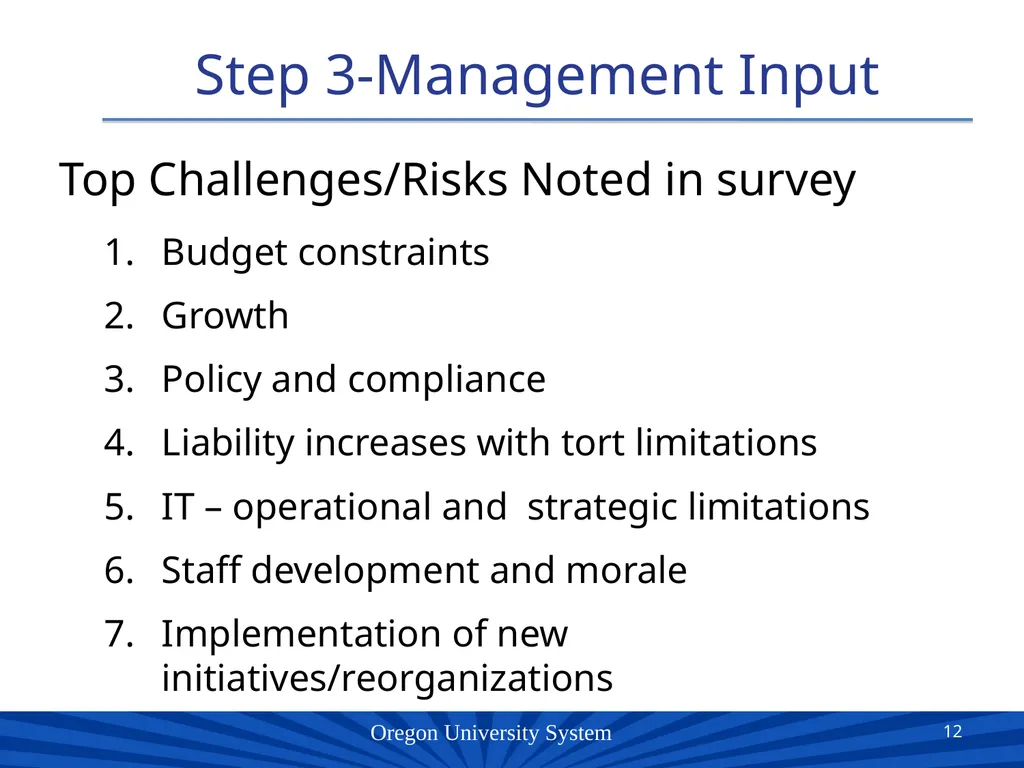
slide12. Step 3-Management Input Top Challenges/Risks Noted in survey
Budget constraints
Growth
Policy and compliance
Liability increases with tort limitations
IT – operational and strategic limitations
Staff development and morale
Implementation of new initiatives/reorganizations 12<br>
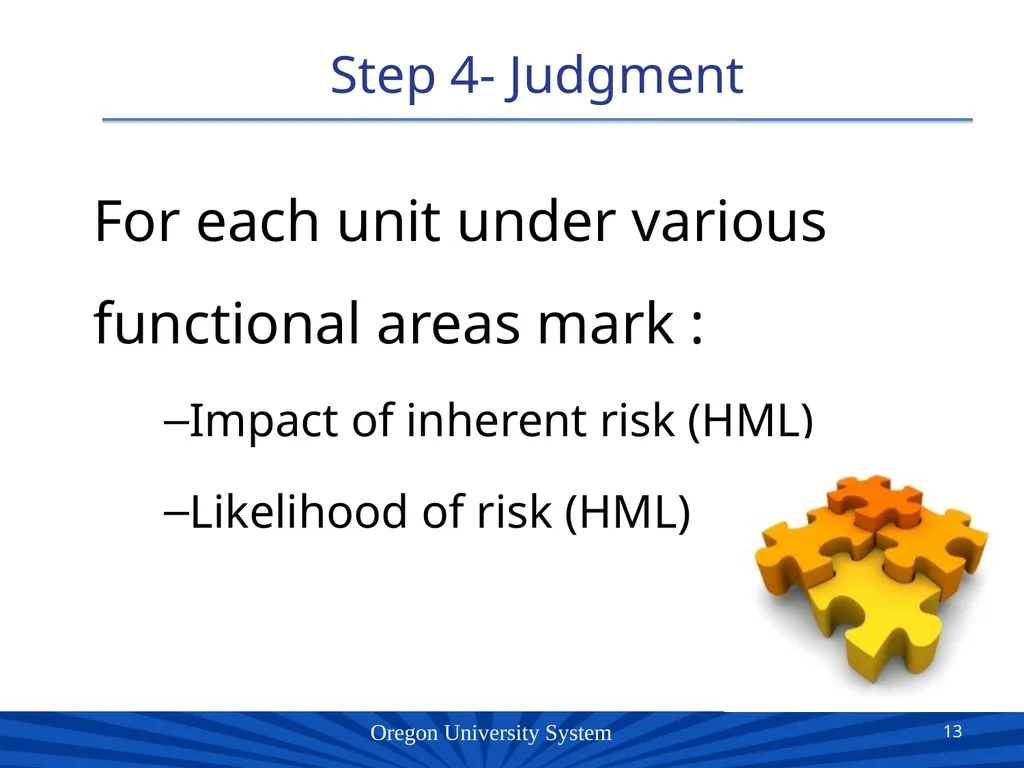
slide13. Step 4- Judgment For each unit under various functional areas mark :
Impact of inherent risk (HML)
Likelihood of risk (HML) 13<br>
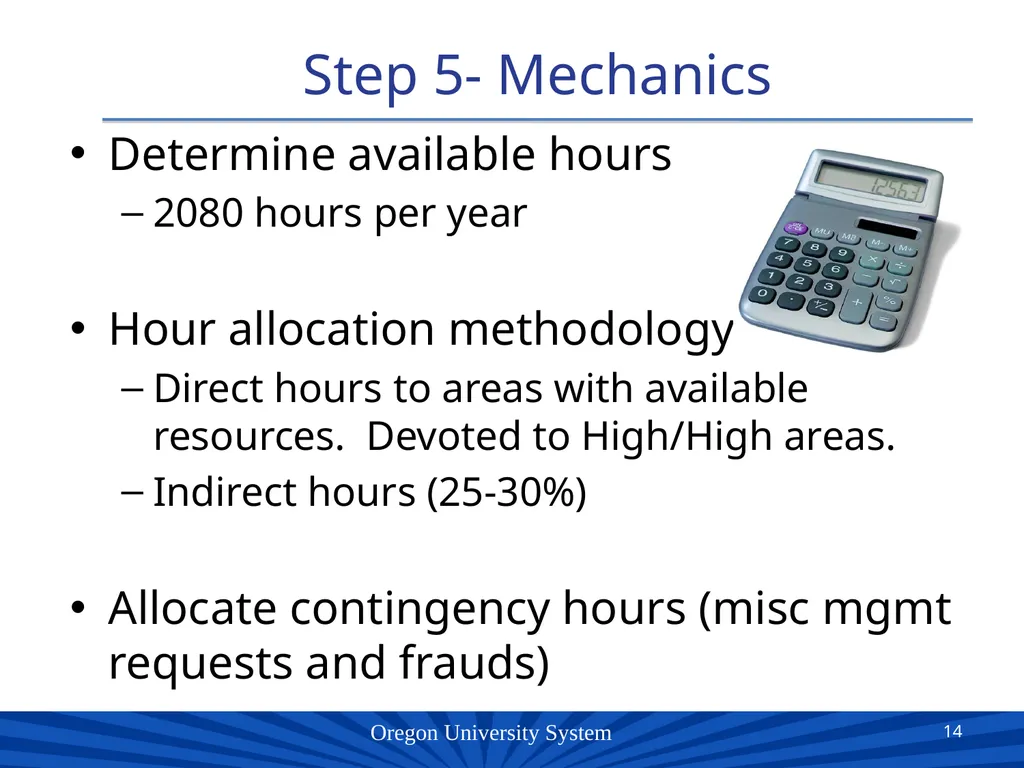
slide14. Step 5- Mechanics Determine available hours
2080 hours per year
Hour allocation methodology
Direct hours to areas with available resources. Devoted to High/High areas.
Indirect hours (25-30%)
Allocate contingency hours (misc mgmt requests and frauds) 14<br>
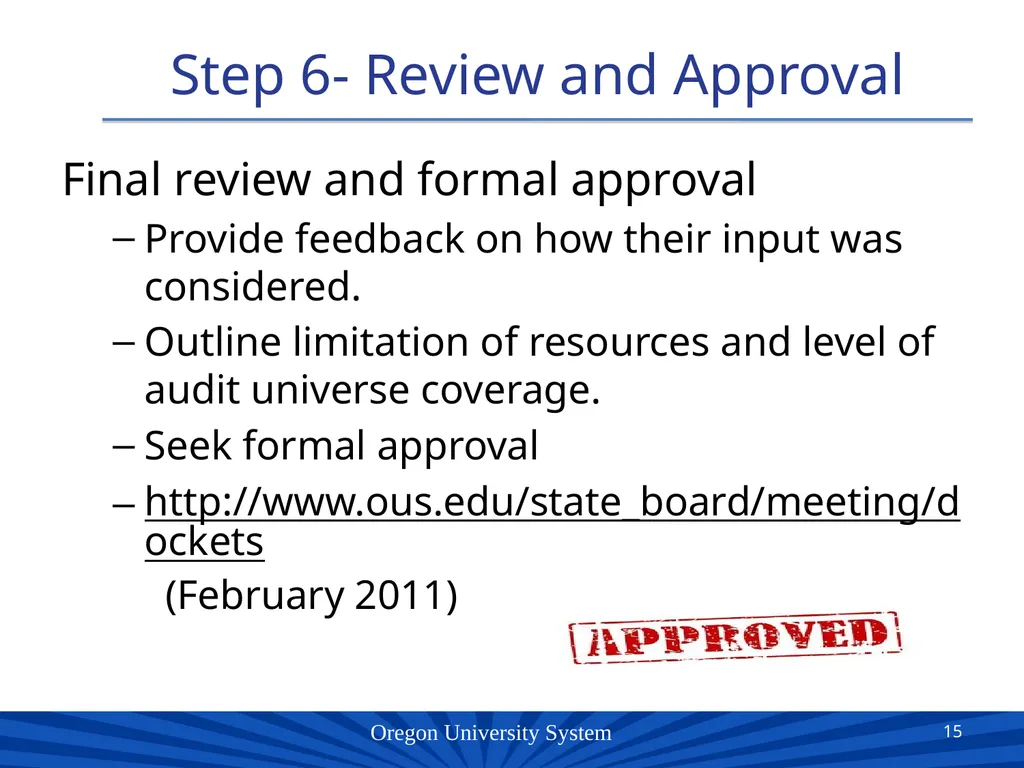
slide15. Step 6- Review and Approval Final review and formal approval
Provide feedback on how their input was considered.
Outline limitation of resources and level of audit universe coverage.
Seek formal approval
http://www.ous.edu/state_board/meeting/dockets (February 2011) 15<br>
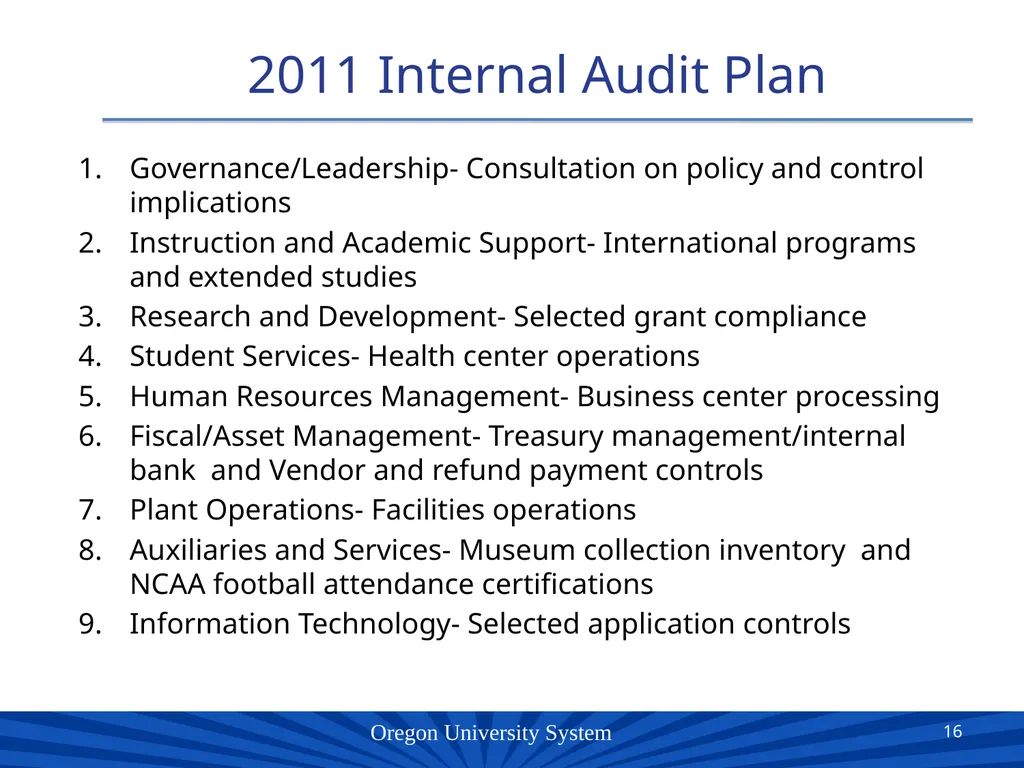
slide16. 2011 Internal Audit Plan Governance/Leadership- Consultation on policy and control implications
Instruction and Academic Support- International programs and extended studies
Research and Development- Selected grant compliance
Student Services- Health center operations
Human Resources Management- Business center processing
Fiscal/Asset Management- Treasury management/internal bank and Vendor and refund payment controls
Plant Operations- Facilities operations
Auxiliaries and Services- Museum collection inventory and NCAA football attendance certifications
Information Technology- Selected application controls 16<br>

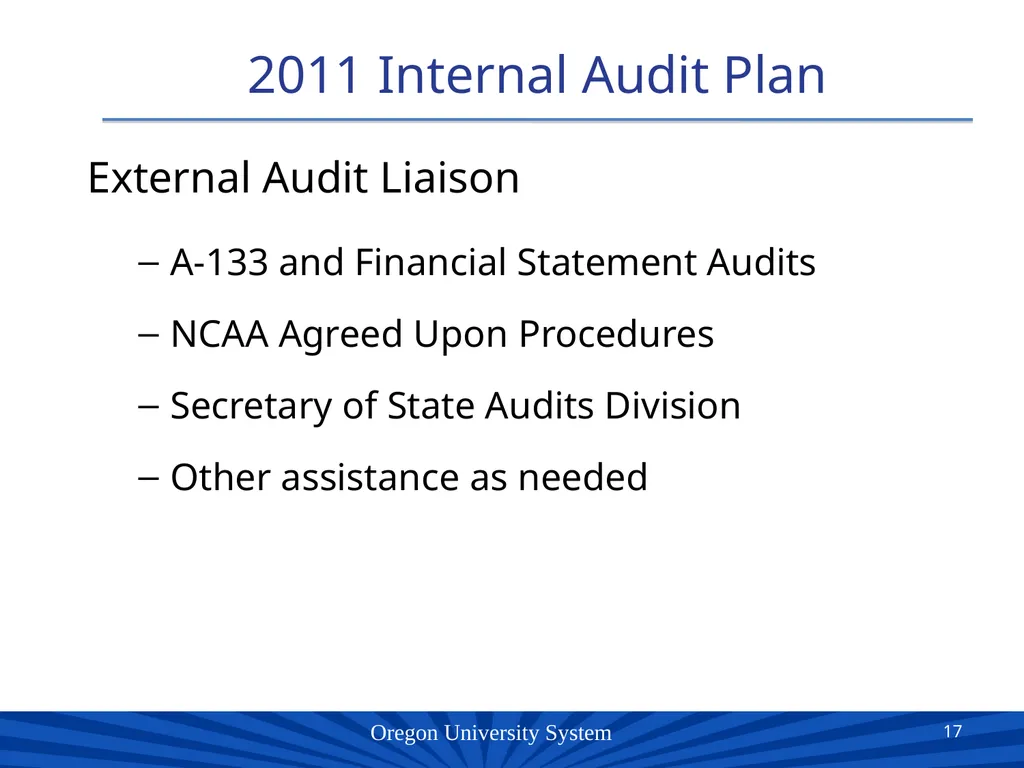
slide17. 2011 Internal Audit Plan External Audit Liaison
A-133 and Financial Statement Audits
NCAA Agreed Upon Procedures
Secretary of State Audits Division
Other assistance as needed 17<br>
slide18. Oregon University System Questions ?<br>
Chief Auditor, OUS Internal Audit Division 2011 Annual Risk Assessment<br>
slide2. Objective and Goal of a Risk Assessment Identify audits that will add value to the organization.
Reduce the risk of losses related to internal control structure breakdowns
Identify opportunities for increased efficiencies
Reinforce existing control strengths 2<br>
slide3. IIA Risk Assessment Standards 2010 – Planning
The chief audit executive must establish risk-based plans to determine the priorities of the internal audit activity, consistent with the organization's goals. 3<br>
slide4. IIA Risk Assessment Standards 2010.A1
The internal audit activity’s plan of engagements must be based on a documented risk assessment, undertaken at least annually. The input of senior management and the board must be considered in this process.
2010.A2
The chief audit executive must identify and consider the expectations of senior management, the board, and other stakeholders for internal audit opinions and other conclusions. 4<br>
slide5. IIA Risk Assessment Standards 2010.C1
The chief audit executive should consider accepting consulting engagements based on the engagement’s potential to improve management of risks, add value, and improve the organization’s operations. Accepted engagements must be included in the plan. 5<br>
slide6. IIA Risk Assessment Standards 2020 – Communication and Approval
The chief audit executive must communicate the internal audit activity’s plans and resource requirements, including significant interim changes, to senior management and the board for review and approval. The chief audit executive must also communicate the impact of resource limitations. 6<br>
slide7. IIA Risk Assessment Standards 2030 – Resource Management
The chief audit executive must ensure that internal audit resources are appropriate, sufficient, and effectively deployed to achieve the approved plan. 7<br>
slide8. Elements of a Risk Assessment Audit universe
Risk analysis
Management input
Judgment
Mechanics (i.e. number crunching)
Review and Approval 8<br>
slide9. Step 1- OUS Audit Universe Governance and Leadership
Academic Units
Research and Development
Student Services
Auxiliary Services
Information Technology
Human Resources
Financial Asset Management
Plant/Facility Operations 9<br>
slide10. Step 2- Risk Analysis Sources of information
Fiscal analysis
Org change analysis
Industry trends
Past experience
Management input 10<br>
slide11. Step 2- Risk Analysis Industry trends
Chronicle of Higher Education
University Administrator Associations
Association of College and University Auditors
Past experiences
GAO and Inspector General Offices
State Auditors and Controllers Offices
Risk management and crime reports
Key Performance Measure Reports
Board minutes and campus news summaries 11<br>
slide12. Step 3-Management Input Top Challenges/Risks Noted in survey
Budget constraints
Growth
Policy and compliance
Liability increases with tort limitations
IT – operational and strategic limitations
Staff development and morale
Implementation of new initiatives/reorganizations 12<br>
slide13. Step 4- Judgment For each unit under various functional areas mark :
Impact of inherent risk (HML)
Likelihood of risk (HML) 13<br>
slide14. Step 5- Mechanics Determine available hours
2080 hours per year
Hour allocation methodology
Direct hours to areas with available resources. Devoted to High/High areas.
Indirect hours (25-30%)
Allocate contingency hours (misc mgmt requests and frauds) 14<br>
slide15. Step 6- Review and Approval Final review and formal approval
Provide feedback on how their input was considered.
Outline limitation of resources and level of audit universe coverage.
Seek formal approval
http://www.ous.edu/state_board/meeting/dockets (February 2011) 15<br>
slide16. 2011 Internal Audit Plan Governance/Leadership- Consultation on policy and control implications
Instruction and Academic Support- International programs and extended studies
Research and Development- Selected grant compliance
Student Services- Health center operations
Human Resources Management- Business center processing
Fiscal/Asset Management- Treasury management/internal bank and Vendor and refund payment controls
Plant Operations- Facilities operations
Auxiliaries and Services- Museum collection inventory and NCAA football attendance certifications
Information Technology- Selected application controls 16<br>
slide17. 2011 Internal Audit Plan External Audit Liaison
A-133 and Financial Statement Audits
NCAA Agreed Upon Procedures
Secretary of State Audits Division
Other assistance as needed 17<br>
slide18. Oregon University System Questions ?<br>