Overdose Response Training Dave Morgan, RPh Safe
Description: Overdose Response Training Dave Morgan, RPh Safe Prescribing Consultant, Norfolk District Attorneys Office Daniel Muse, MD Brockton Hospital Sgt. Brian Holmes Sgt. Donna McNamara Stoughton Police Department Lt . Patrick Glynn Quincy
Related Topics
Download Presentation
"Overdose Response Training Dave Morgan, RPh Safe" is the property of its rightful owner. Permission is granted to download and print the materials on this website for personal, non-commercial use only, and to display it on your personal computer provided you do not modify the materials and that you retain all copyright notices contained in the materials. By downloading content from our website, you accept the terms of this agreement.
Presentation Transcript
slide1. Overdose Response Training Dave Morgan, RPh
Safe Prescribing Consultant, Norfolk District Attorney’s Office
Daniel Muse, MD
Brockton Hospital
Sgt. Brian Holmes & Sgt. Donna McNamara
Stoughton Police Department
Lt . Patrick Glynn Quincy Police Department<br>
slide3. Know how opioids work
Recognize an opioid overdose
Respond to opioid overdose
Getting help
Rescue breathing
Administering naloxone Learning Objectives<br>
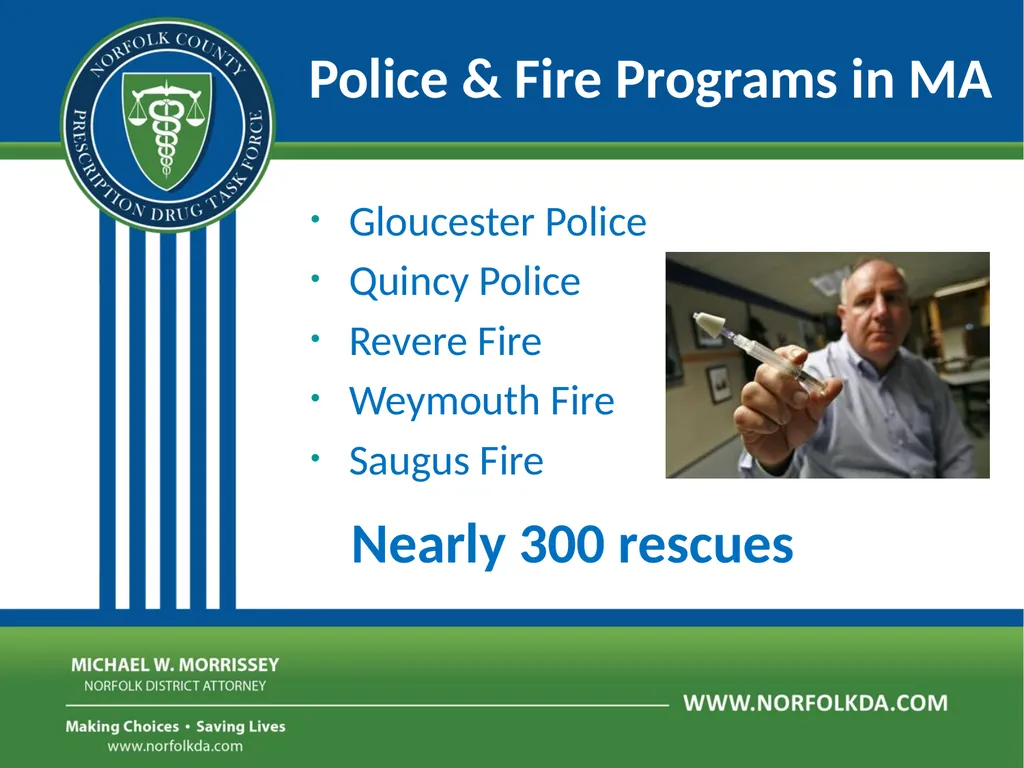
slide4. Gloucester Police
Quincy Police
Revere Fire
Weymouth Fire
Saugus Fire Nearly 300 rescues Police & Fire Programs in MA<br>
slide5. Opioids are sedative narcotics
They are used in medicine mainly torelieve pain
Opioids repress the urge to breathe-when someone is having an opioidoverdose, they stop breathing andcould die What are opioids/opiates?<br>
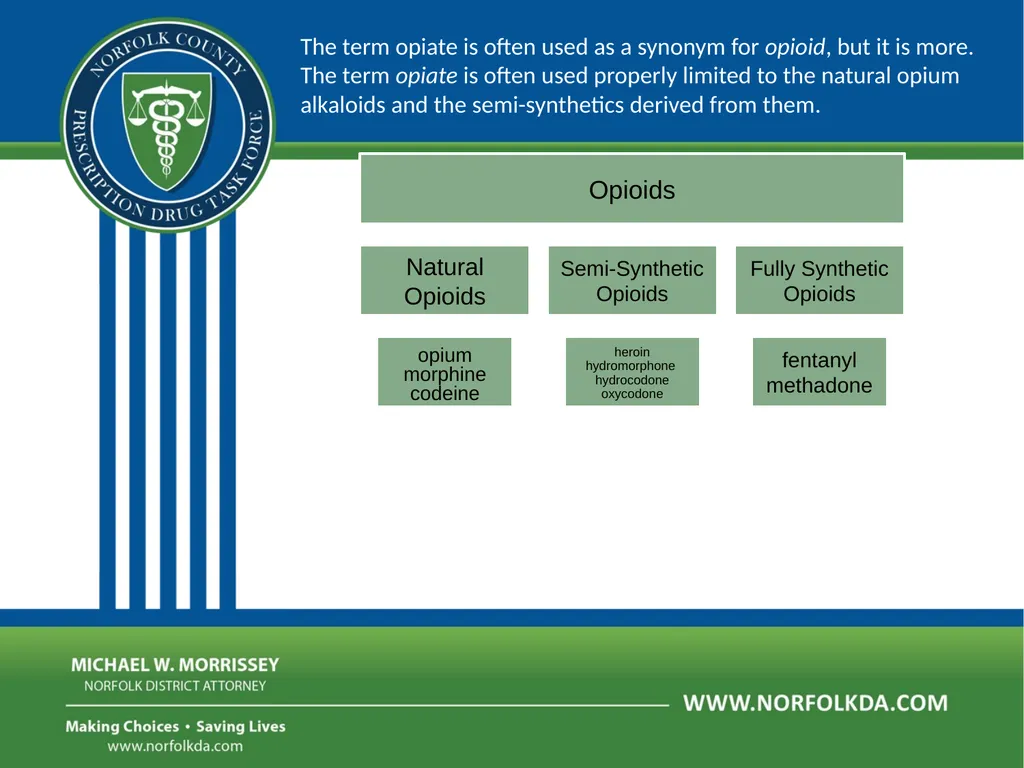
slide6. The term opiate is often used as a synonym for opioid, but it is more. The term opiate is often used properly limited to the natural opium alkaloids and the semi-synthetics derived from them.<br>
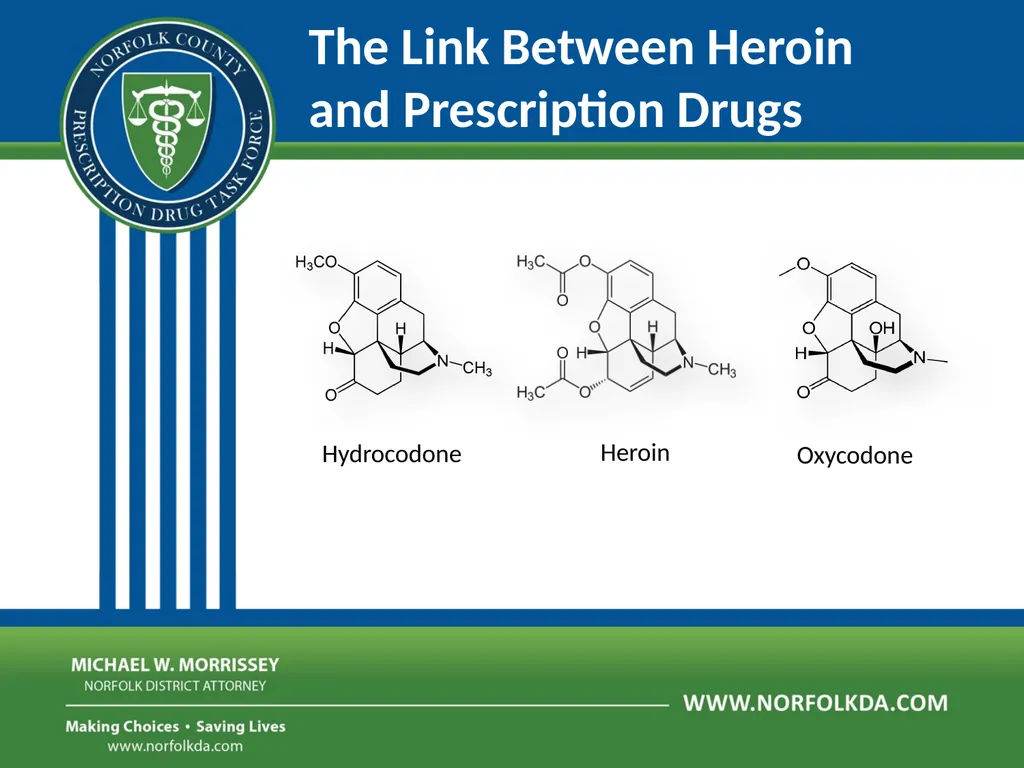
slide7. Hydrocodone Oxycodone Heroin The Link Between Heroinand Prescription Drugs<br>
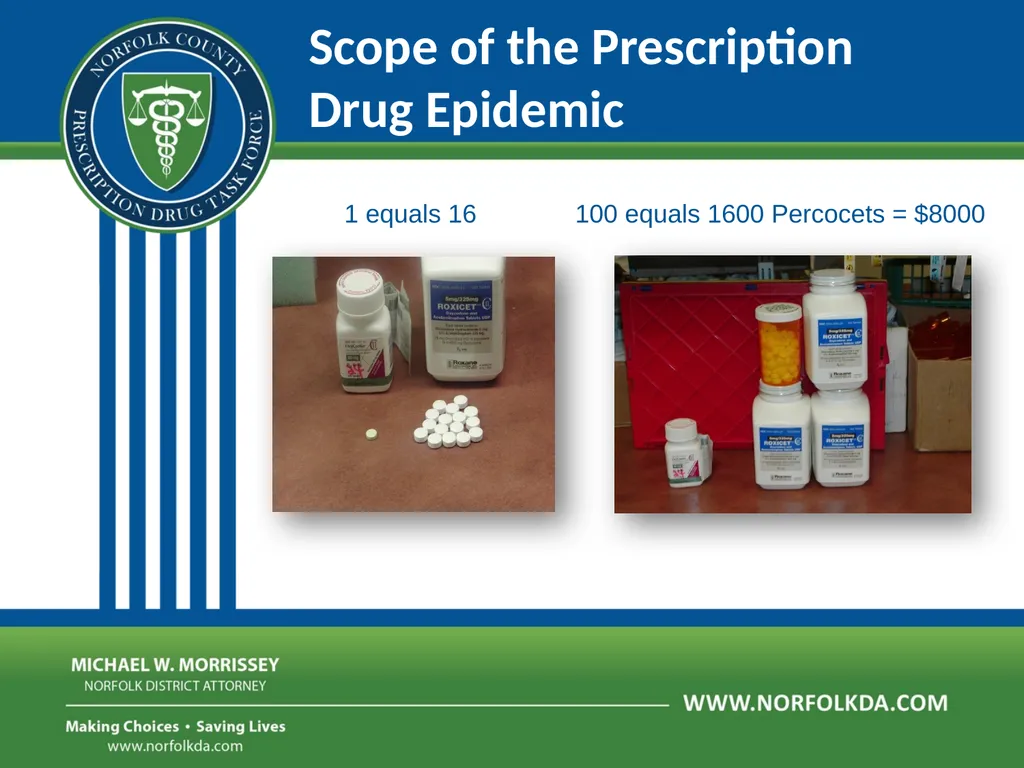
slide8. 1 equals 16 100 equals 1600 Percocets = $8000 Scope of the PrescriptionDrug Epidemic<br>
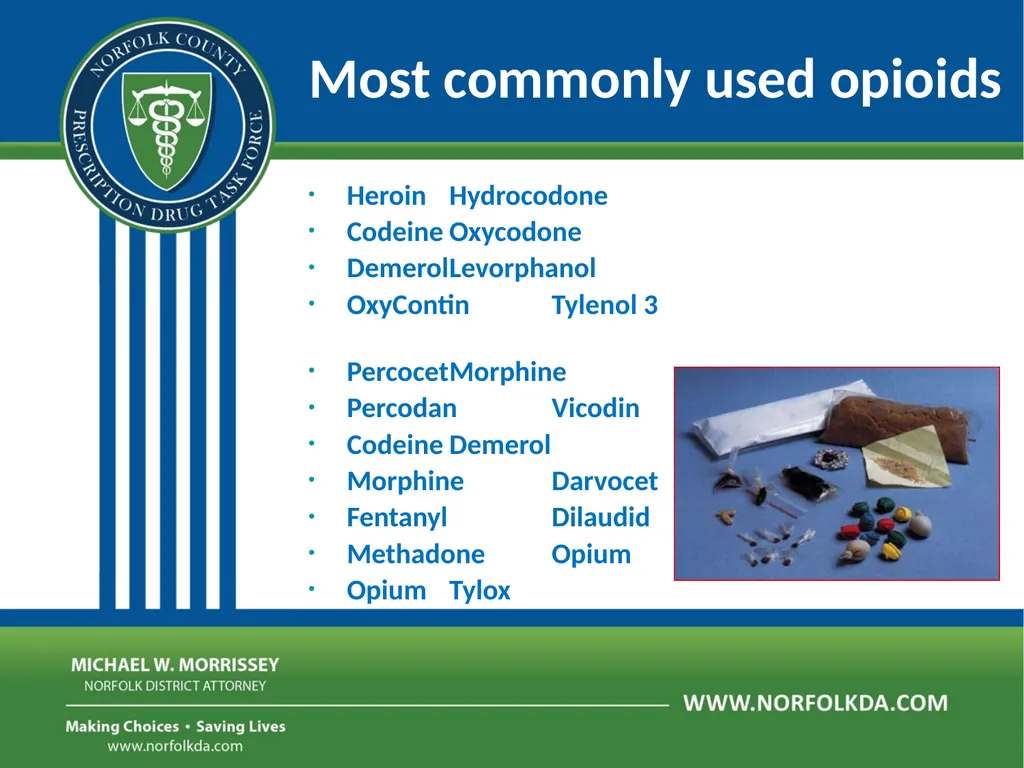
slide9. Heroin Hydrocodone
Codeine Oxycodone
Demerol Levorphanol
OxyContin Tylenol 3
Percocet Morphine
Percodan Vicodin
Codeine Demerol
Morphine Darvocet
Fentanyl Dilaudid
Methadone Opium
Opium Tylox Most commonly used opioids<br>
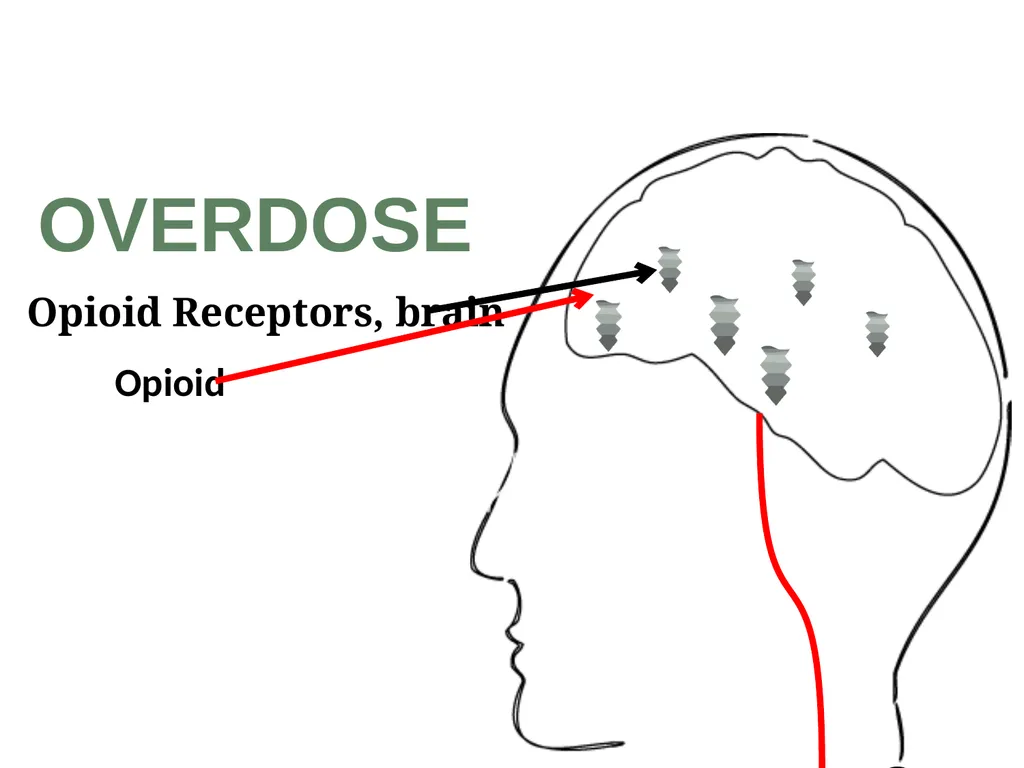
slide10. Opioid Receptors, brain Opioid OVERDOSE How do opioids affect breathing?<br>
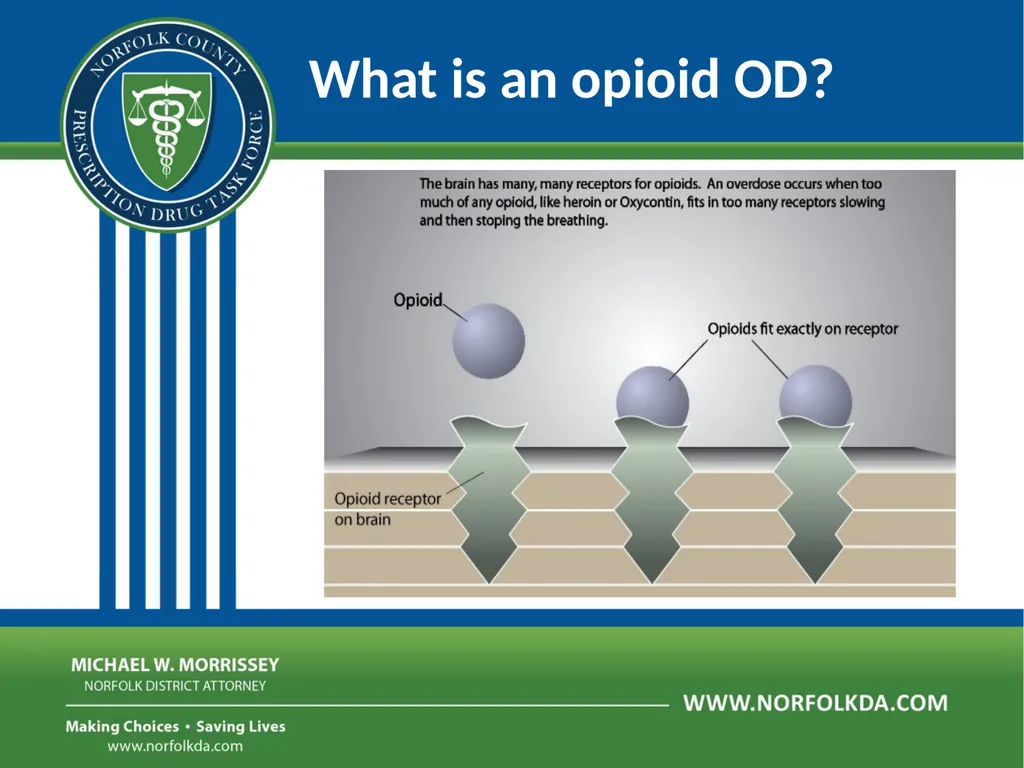
slide11. What is an opioid OD?<br>
slide12. Mixing drugs- benzos, alcohol & cocaine especially
Changes in tolerance
Physical health
Previous experience of non-fatal overdose
Variation in strength and content of ‘street’ drugs What puts people at riskfor ODs?<br>
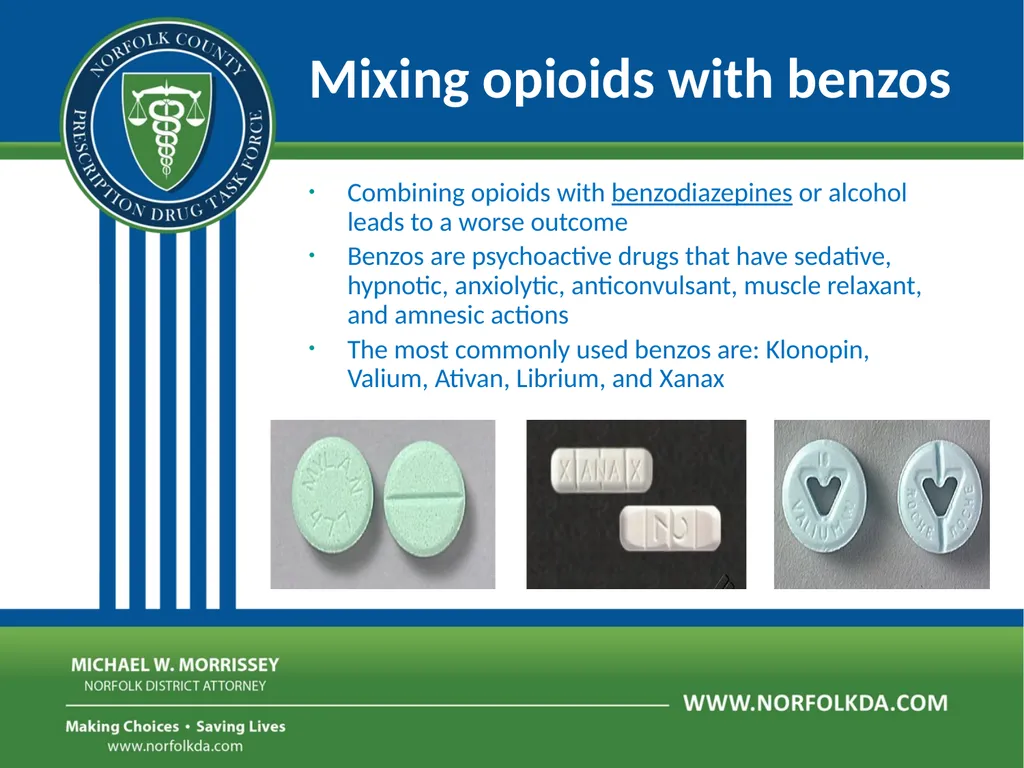
slide13. Combining opioids with benzodiazepines or alcohol leads to a worse outcome
Benzos are psychoactive drugs that have sedative, hypnotic, anxiolytic, anticonvulsant, muscle relaxant, and amnesic actions
The most commonly used benzos are: Klonopin, Valium, Ativan, Librium, and Xanax Mixing opioids with benzos<br>
slide14. Naloxone knocks the opiate off the opiate receptor- it does nothing other than blocking opiate receptors
Temporarily takes away the “high,” giving the person the chance to breathe
Naloxone works in 1 to 3 minutes and lasts 30 to 90 minutes What is Naloxone?<br>
slide15. Naloxone can neither be abused nor cause overdose, only contraindication is known sensitivity, which is very rare.
Too much Naloxone can cause withdrawal symptoms such as: muscle discomfort
disorientation
combativeness nausea/vomiting
diarrhea
chills What is NARCAN?<br>
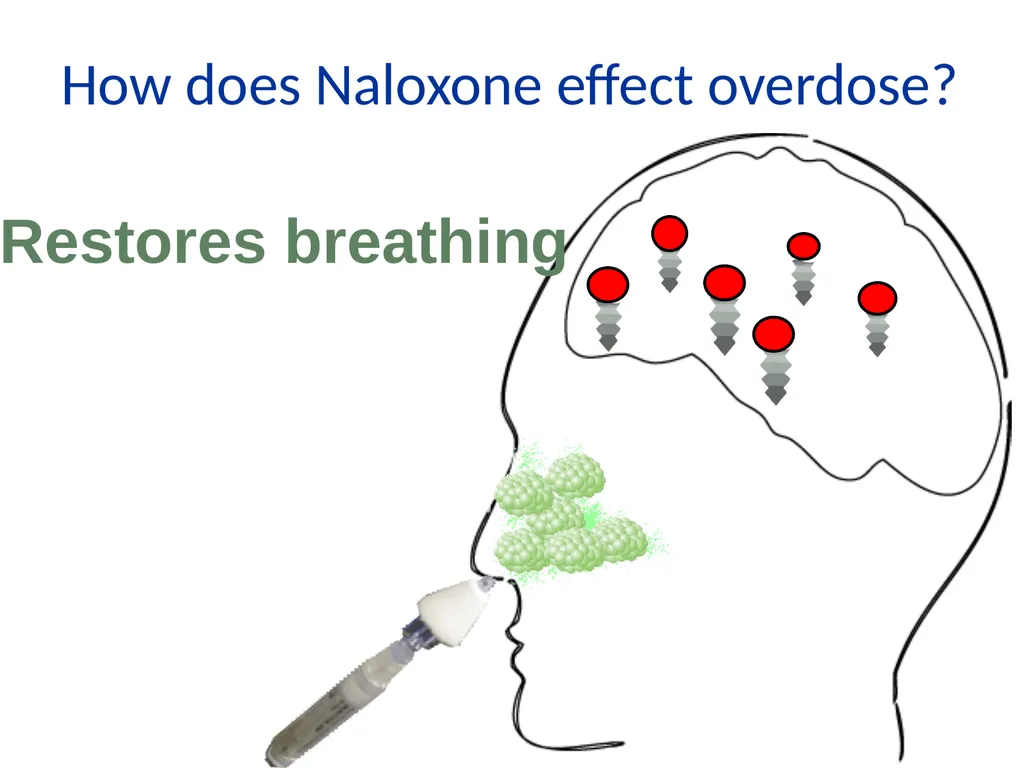
slide16. How does Naloxone effect overdose? Restores breathing<br>
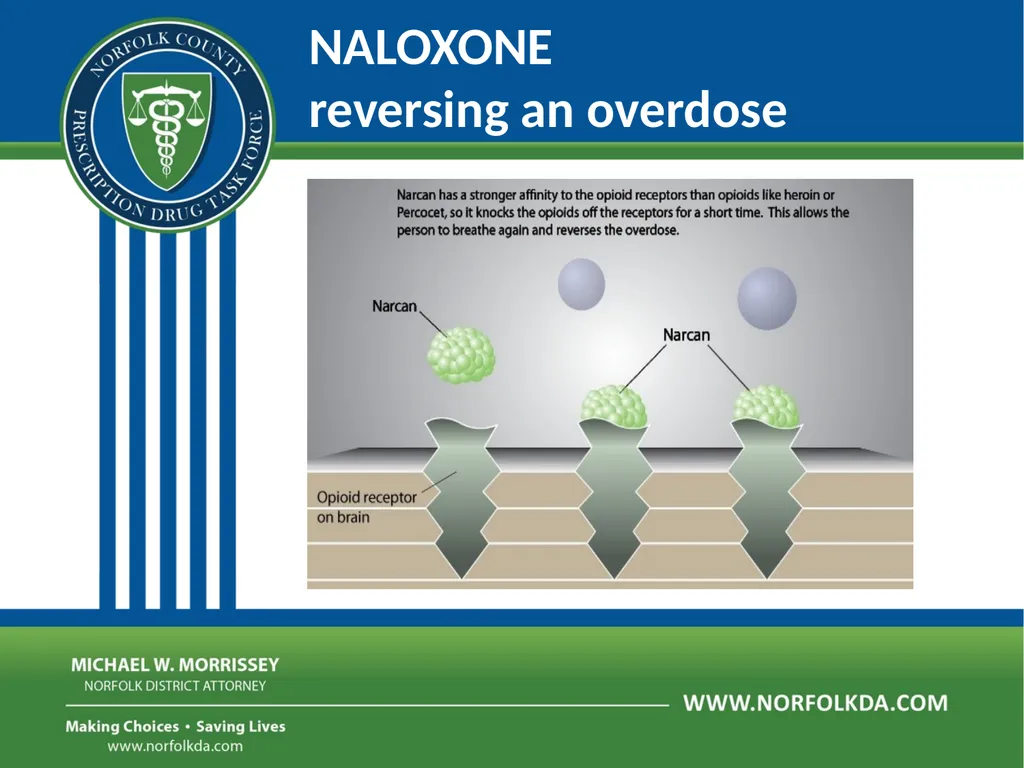
slide17. NALOXONE
reversing an overdose<br>
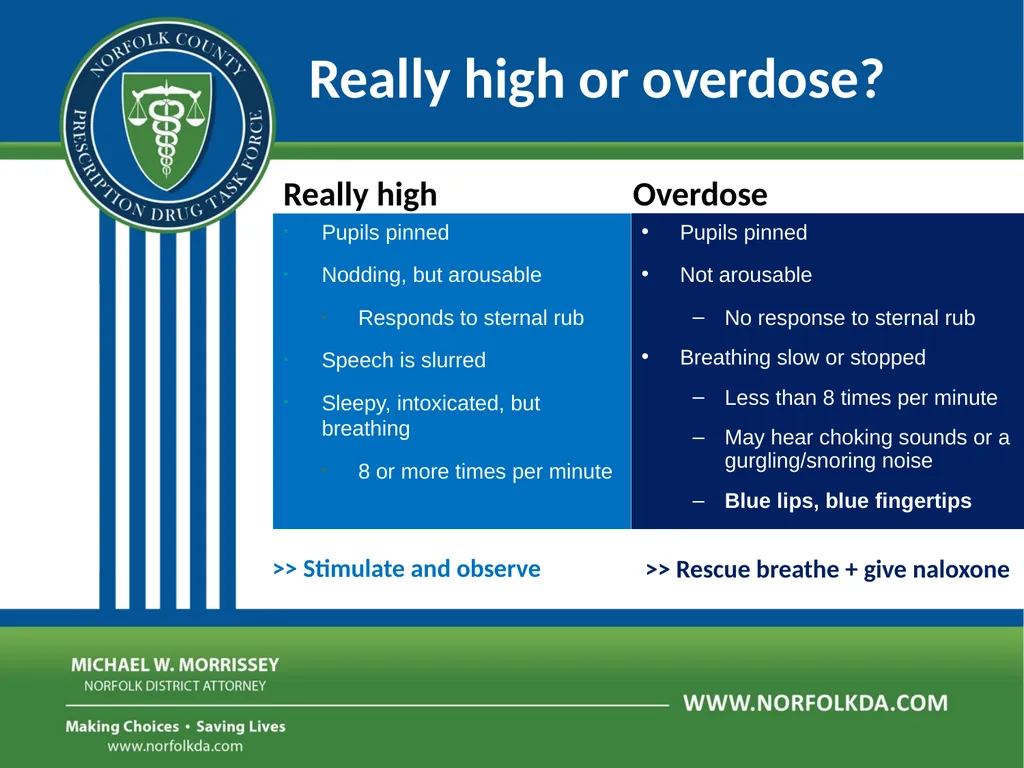
slide18. Really high Pupils pinned
Nodding, but arousable
Responds to sternal rub
Speech is slurred
Sleepy, intoxicated, but breathing
8 or more times per minute Overdose Pupils pinned
Not arousable
No response to sternal rub
Breathing slow or stopped
Less than 8 times per minute
May hear choking sounds or a gurgling/snoring noise
Blue lips, blue fingertips >> Stimulate and observe >> Rescue breathe + give naloxone Really high or overdose?<br>
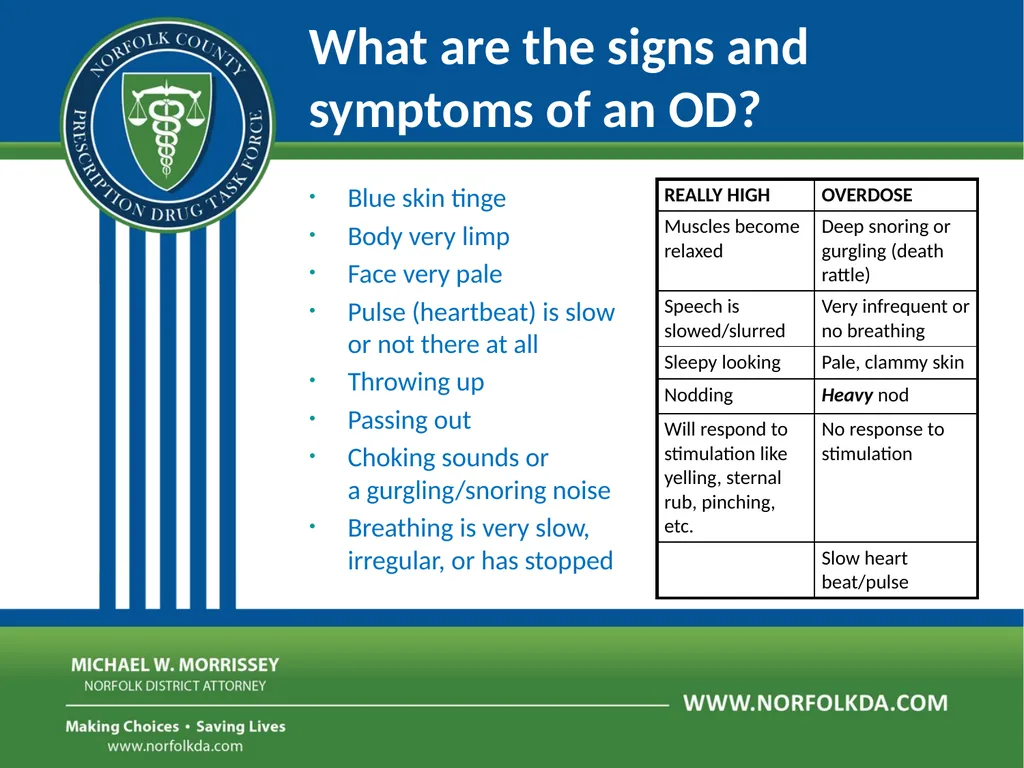
slide19. Blue skin tinge
Body very limp
Face very pale
Pulse (heartbeat) is slowor not there at all
Throwing up
Passing out
Choking sounds ora gurgling/snoring noise
Breathing is very slow,irregular, or has stopped What are the signs and
symptoms of an OD?<br>
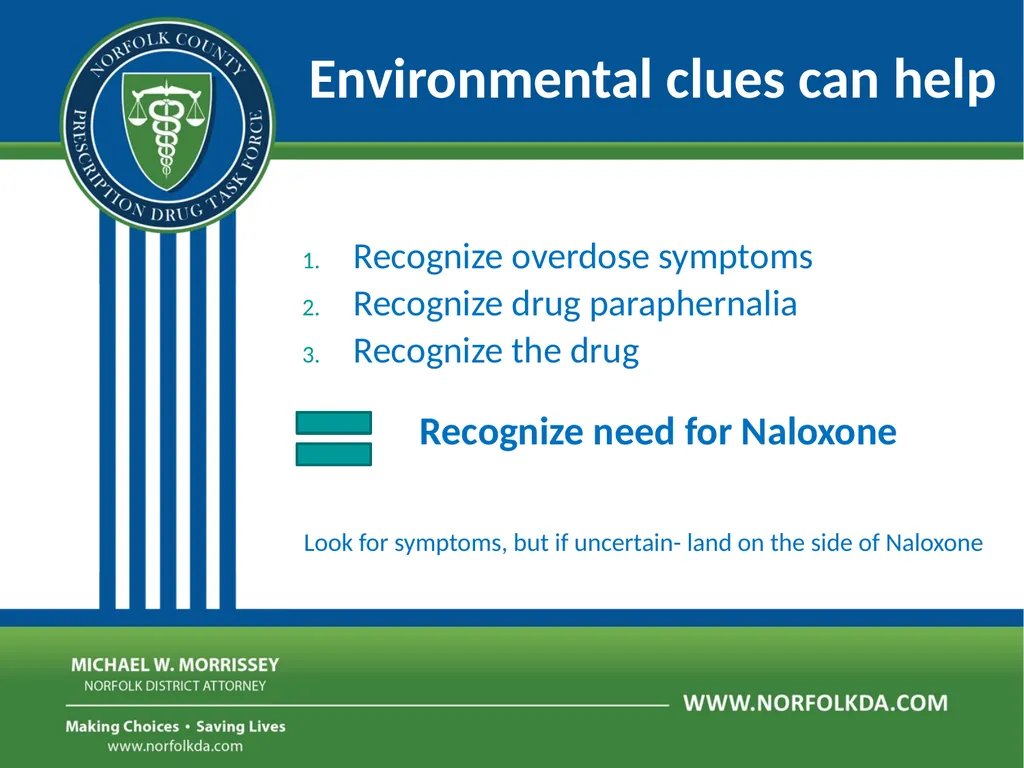
slide20. Recognize overdose symptoms
Recognize drug paraphernalia
Recognize the drug Recognize need for Naloxone Look for symptoms, but if uncertain- land on the side of Naloxone Environmental clues can help<br>
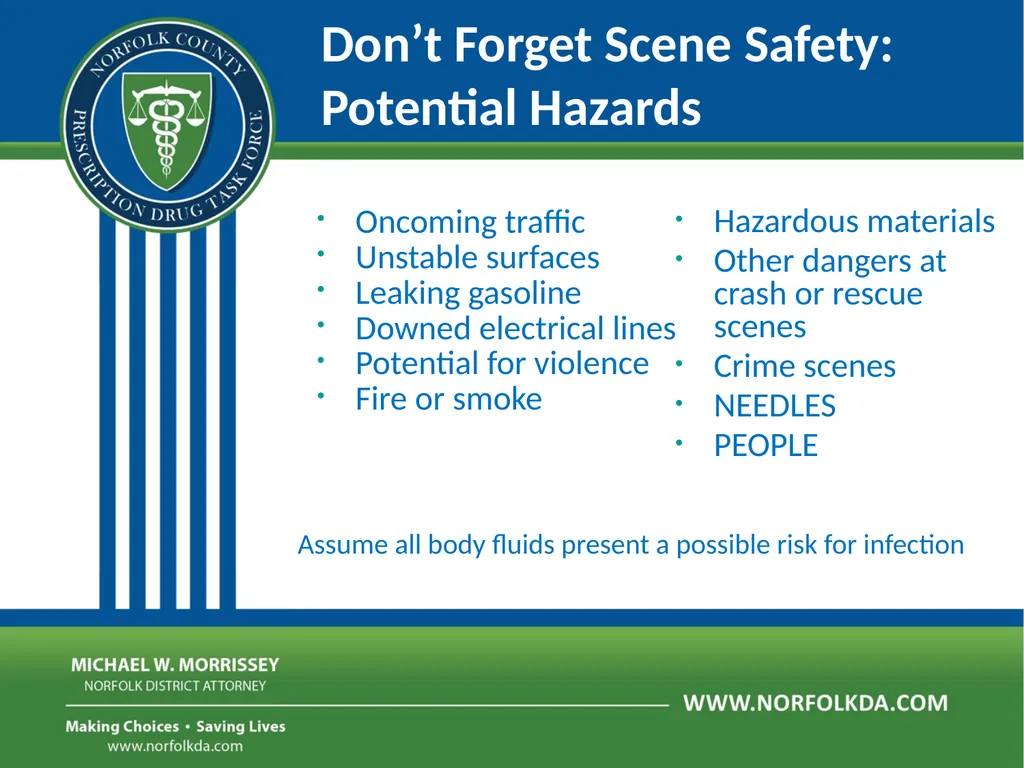
slide21. Don’t Forget Scene Safety: Potential Hazards Oncoming traffic
Unstable surfaces
Leaking gasoline
Downed electrical lines
Potential for violence
Fire or smoke Hazardous materials
Other dangers at crash or rescuescenes
Crime scenes
NEEDLES
PEOPLE Assume all body fluids present a possible risk for infection<br>
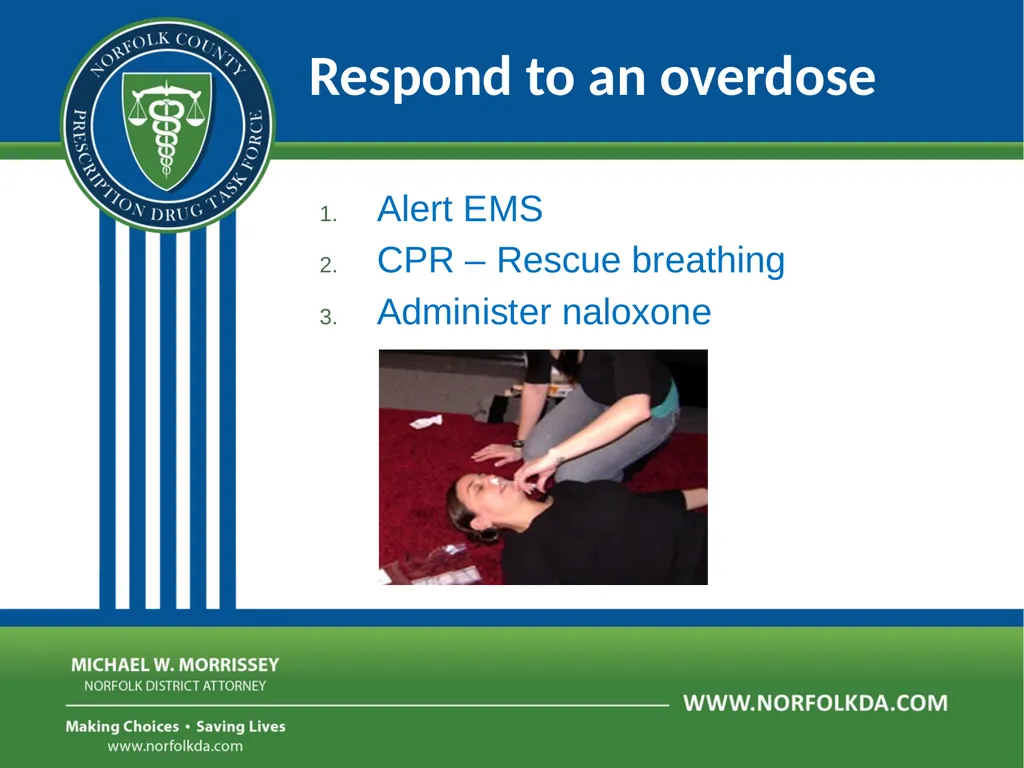
slide22. Alert EMS
CPR – Rescue breathing
Administer naloxone Respond to an overdose<br>
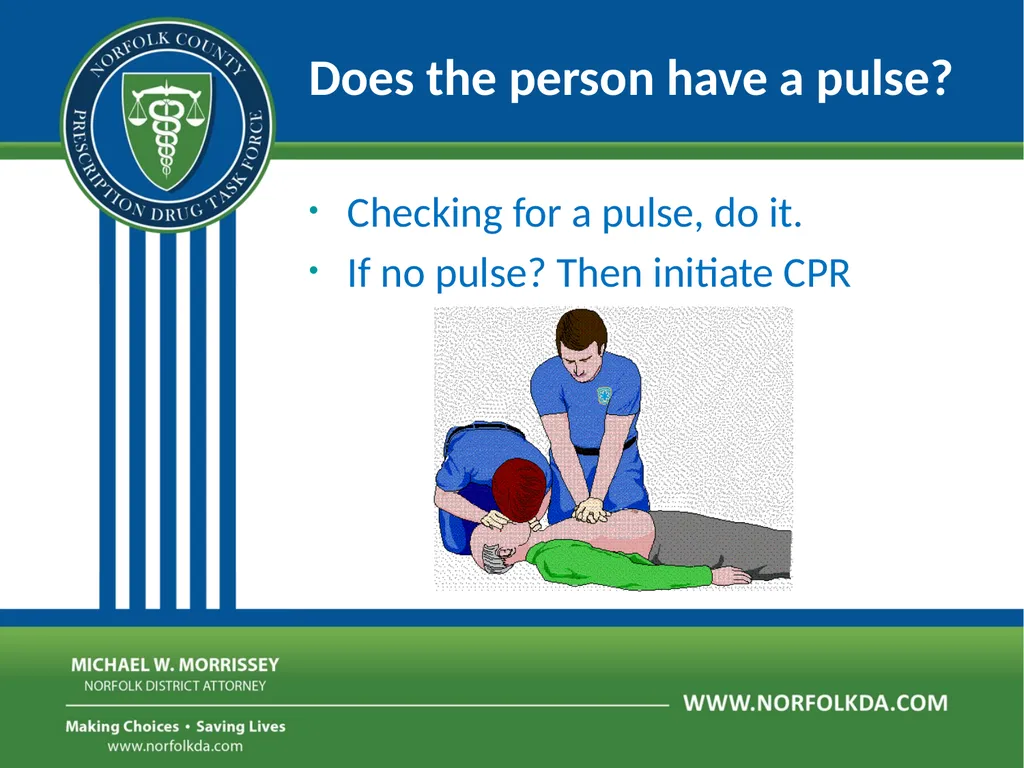
slide23. Checking for a pulse, do it.
If no pulse? Then initiate CPR Does the person have a pulse?<br>
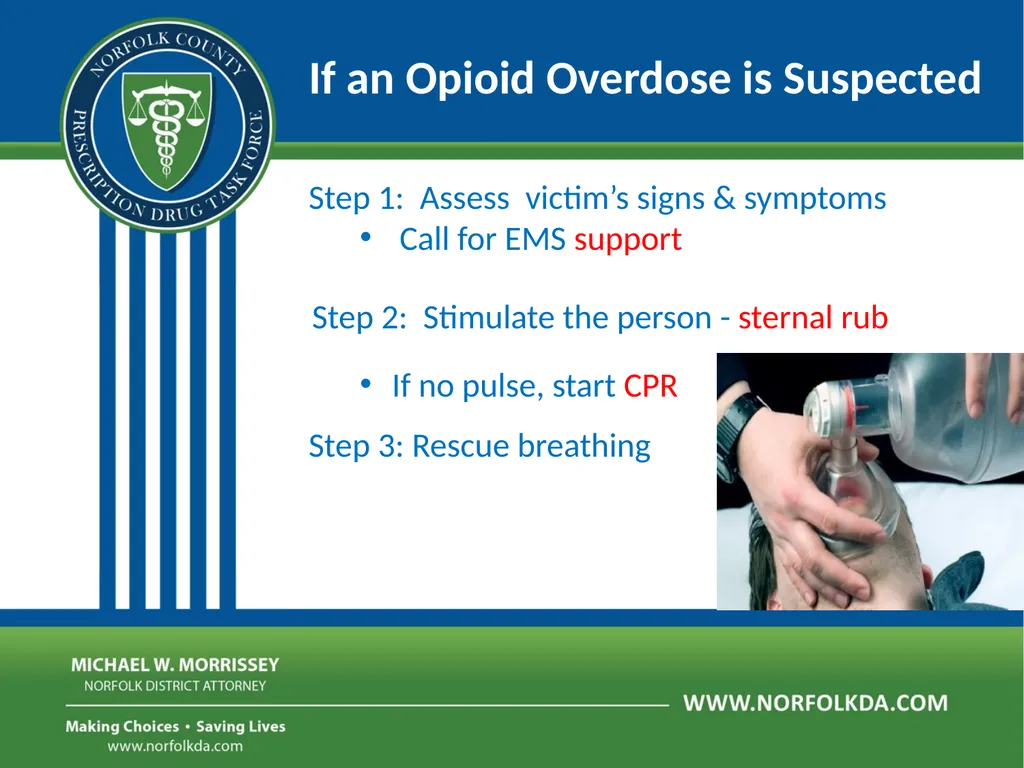
slide24. Step 1: Assess victim’s signs & symptoms
Call for EMS support Step 2: Stimulate the person - sternal rub Step 3: Rescue breathing If no pulse, start CPR If an Opioid Overdose is Suspected<br>
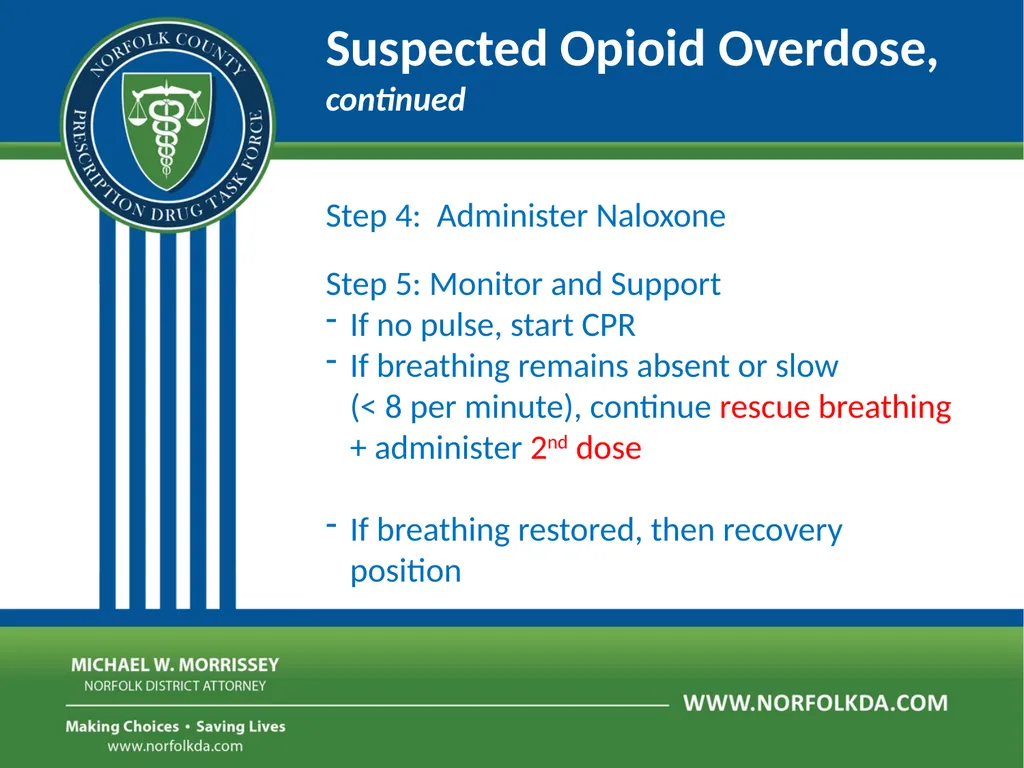
slide25. Suspected Opioid Overdose, continued Step 4: Administer Naloxone Step 5: Monitor and Support
If no pulse, start CPR
If breathing remains absent or slow(< 8 per minute), continue rescue breathing + administer 2nd dose
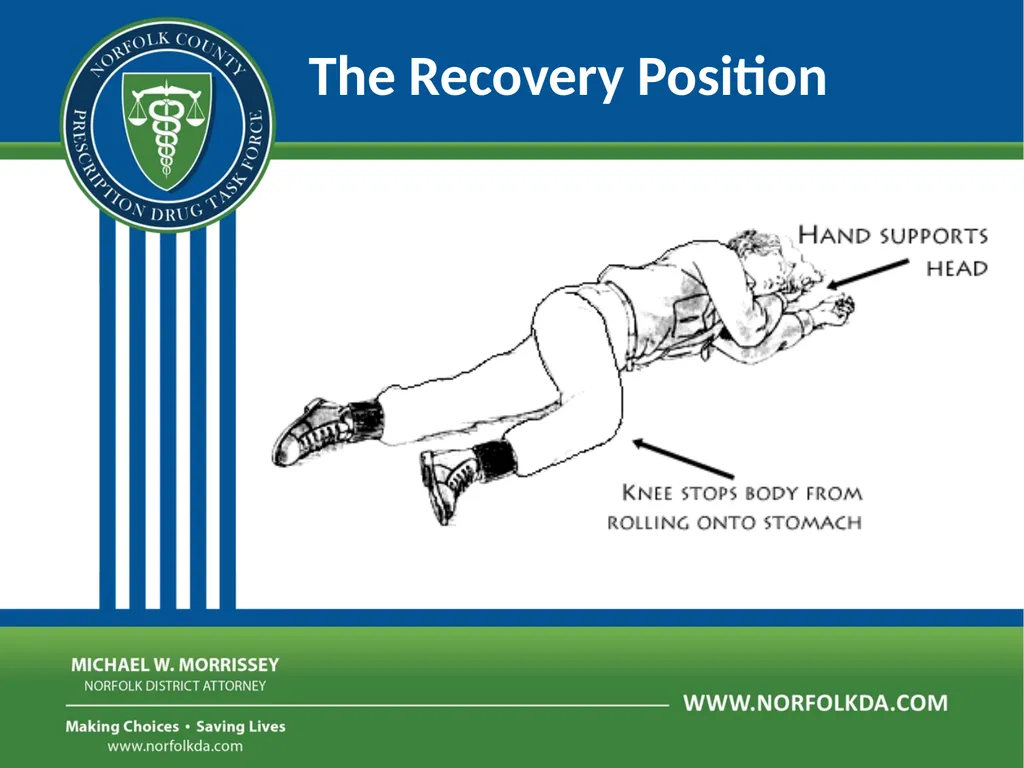
If breathing restored, then recovery position<br>
slide26. The Recovery Position<br>
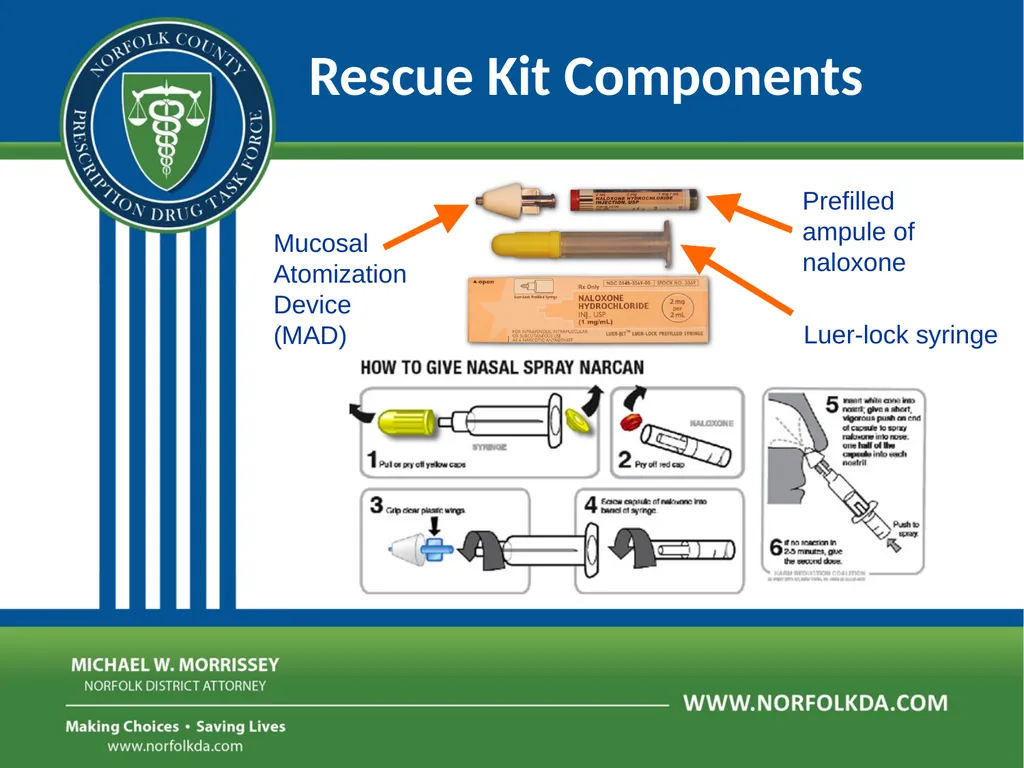
slide27. Mucosal Atomization Device (MAD) Luer-lock syringe Prefilled ampule of naloxone Rescue Kit Components<br>
slide28. Demonstration of atomizer, syringe and naloxone cartridge assembly Naloxone administration<br>
slide29. Delivery route has advantages:
Its easy and convenient
The nose is a very easy access point for medication delivery (even easier than the arm, especially in winter)
No shots are needed
It is painless
It eliminates any risk of a needlesticking to you Intranasal Naloxone administration<br>
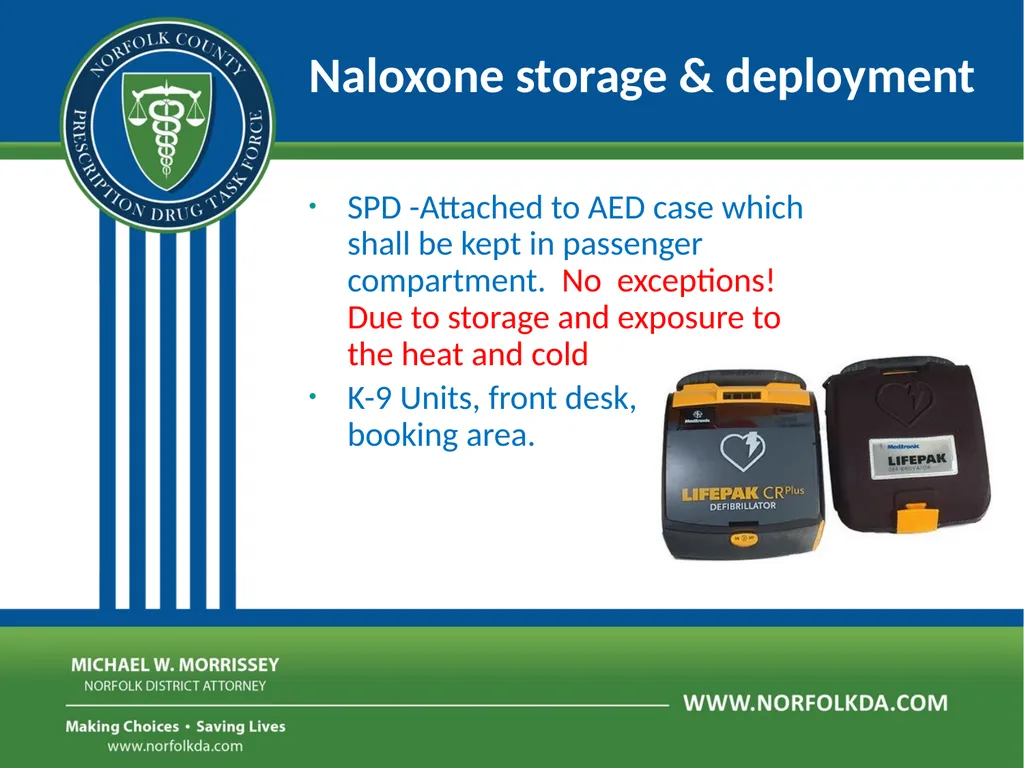
slide30. SPD -Attached to AED case which shall be kept in passenger compartment. No exceptions! Due to storage and exposure to the heat and cold
K-9 Units, front desk,booking area. Naloxone storage & deployment<br>
slide31. National & regional drug threat<br>
slide32. The problem of fatal and non-fatal drug overdoses in Boston
Boston ranks higher than any other metropolitan area in the country for heroin mentions in emergency departments (DAWN, 2009) Local Drug Overdose Problem<br>
slide33. Drug overdose is the number one cause of death among drug users in the United States (Latkin, 2004)
Overdoses kill more heroin injection drug users than AIDS, hepatitis, and other conditions that are related to their drug use (Sporer, 1999)
Between 1984 and 2004, deaths from mixing pharmaceuticals with alcohol and/or street drugs increased 3196% (Phillips, 2008) The problem of drug overdoses
nationwide<br>
slide34. Car accidents is the number one cause of accidental death in the country, except for 16 states where more people die from drug overdose. Massachusetts is one of those 16 states (CDC, 2009)
In 2008, 12 Massachusetts residents died every single week from drug overdoses (MDPH, 2008) The problem of drug overdoses
In Massachusetts<br>
slide35. Will Naloxone work on an alcohol OD?
What if it is a crack/cocaine or speed/methamphetamine overdose?
Are the ambulance and hospitals using the Nasal Naloxone?
Others? Questions & Answers<br>
slide36. Questions & Answers Am I protected against a lawsuit for giving a person who is overdosing Naloxone?
What is the risk period for an OD to reoccur after giving Naloxone?
If the person isn’t overdosing and I give them Naloxone will it hurt them?<br>

Safe Prescribing Consultant, Norfolk District Attorney’s Office
Daniel Muse, MD
Brockton Hospital
Sgt. Brian Holmes & Sgt. Donna McNamara
Stoughton Police Department
Lt . Patrick Glynn Quincy Police Department<br>
slide3. Know how opioids work
Recognize an opioid overdose
Respond to opioid overdose
Getting help
Rescue breathing
Administering naloxone Learning Objectives<br>
slide4. Gloucester Police
Quincy Police
Revere Fire
Weymouth Fire
Saugus Fire Nearly 300 rescues Police & Fire Programs in MA<br>
slide5. Opioids are sedative narcotics
They are used in medicine mainly torelieve pain
Opioids repress the urge to breathe-when someone is having an opioidoverdose, they stop breathing andcould die What are opioids/opiates?<br>
slide6. The term opiate is often used as a synonym for opioid, but it is more. The term opiate is often used properly limited to the natural opium alkaloids and the semi-synthetics derived from them.<br>
slide7. Hydrocodone Oxycodone Heroin The Link Between Heroinand Prescription Drugs<br>
slide8. 1 equals 16 100 equals 1600 Percocets = $8000 Scope of the PrescriptionDrug Epidemic<br>
slide9. Heroin Hydrocodone
Codeine Oxycodone
Demerol Levorphanol
OxyContin Tylenol 3
Percocet Morphine
Percodan Vicodin
Codeine Demerol
Morphine Darvocet
Fentanyl Dilaudid
Methadone Opium
Opium Tylox Most commonly used opioids<br>
slide10. Opioid Receptors, brain Opioid OVERDOSE How do opioids affect breathing?<br>
slide11. What is an opioid OD?<br>
slide12. Mixing drugs- benzos, alcohol & cocaine especially
Changes in tolerance
Physical health
Previous experience of non-fatal overdose
Variation in strength and content of ‘street’ drugs What puts people at riskfor ODs?<br>
slide13. Combining opioids with benzodiazepines or alcohol leads to a worse outcome
Benzos are psychoactive drugs that have sedative, hypnotic, anxiolytic, anticonvulsant, muscle relaxant, and amnesic actions
The most commonly used benzos are: Klonopin, Valium, Ativan, Librium, and Xanax Mixing opioids with benzos<br>
slide14. Naloxone knocks the opiate off the opiate receptor- it does nothing other than blocking opiate receptors
Temporarily takes away the “high,” giving the person the chance to breathe
Naloxone works in 1 to 3 minutes and lasts 30 to 90 minutes What is Naloxone?<br>
slide15. Naloxone can neither be abused nor cause overdose, only contraindication is known sensitivity, which is very rare.
Too much Naloxone can cause withdrawal symptoms such as: muscle discomfort
disorientation
combativeness nausea/vomiting
diarrhea
chills What is NARCAN?<br>
slide16. How does Naloxone effect overdose? Restores breathing<br>
slide17. NALOXONE
reversing an overdose<br>
slide18. Really high Pupils pinned
Nodding, but arousable
Responds to sternal rub
Speech is slurred
Sleepy, intoxicated, but breathing
8 or more times per minute Overdose Pupils pinned
Not arousable
No response to sternal rub
Breathing slow or stopped
Less than 8 times per minute
May hear choking sounds or a gurgling/snoring noise
Blue lips, blue fingertips >> Stimulate and observe >> Rescue breathe + give naloxone Really high or overdose?<br>
slide19. Blue skin tinge
Body very limp
Face very pale
Pulse (heartbeat) is slowor not there at all
Throwing up
Passing out
Choking sounds ora gurgling/snoring noise
Breathing is very slow,irregular, or has stopped What are the signs and
symptoms of an OD?<br>
slide20. Recognize overdose symptoms
Recognize drug paraphernalia
Recognize the drug Recognize need for Naloxone Look for symptoms, but if uncertain- land on the side of Naloxone Environmental clues can help<br>
slide21. Don’t Forget Scene Safety: Potential Hazards Oncoming traffic
Unstable surfaces
Leaking gasoline
Downed electrical lines
Potential for violence
Fire or smoke Hazardous materials
Other dangers at crash or rescuescenes
Crime scenes
NEEDLES
PEOPLE Assume all body fluids present a possible risk for infection<br>
slide22. Alert EMS
CPR – Rescue breathing
Administer naloxone Respond to an overdose<br>
slide23. Checking for a pulse, do it.
If no pulse? Then initiate CPR Does the person have a pulse?<br>
slide24. Step 1: Assess victim’s signs & symptoms
Call for EMS support Step 2: Stimulate the person - sternal rub Step 3: Rescue breathing If no pulse, start CPR If an Opioid Overdose is Suspected<br>
slide25. Suspected Opioid Overdose, continued Step 4: Administer Naloxone Step 5: Monitor and Support
If no pulse, start CPR
If breathing remains absent or slow(< 8 per minute), continue rescue breathing + administer 2nd dose
If breathing restored, then recovery position<br>
slide26. The Recovery Position<br>
slide27. Mucosal Atomization Device (MAD) Luer-lock syringe Prefilled ampule of naloxone Rescue Kit Components<br>
slide28. Demonstration of atomizer, syringe and naloxone cartridge assembly Naloxone administration<br>
slide29. Delivery route has advantages:
Its easy and convenient
The nose is a very easy access point for medication delivery (even easier than the arm, especially in winter)
No shots are needed
It is painless
It eliminates any risk of a needlesticking to you Intranasal Naloxone administration<br>
slide30. SPD -Attached to AED case which shall be kept in passenger compartment. No exceptions! Due to storage and exposure to the heat and cold
K-9 Units, front desk,booking area. Naloxone storage & deployment<br>
slide31. National & regional drug threat<br>
slide32. The problem of fatal and non-fatal drug overdoses in Boston
Boston ranks higher than any other metropolitan area in the country for heroin mentions in emergency departments (DAWN, 2009) Local Drug Overdose Problem<br>
slide33. Drug overdose is the number one cause of death among drug users in the United States (Latkin, 2004)
Overdoses kill more heroin injection drug users than AIDS, hepatitis, and other conditions that are related to their drug use (Sporer, 1999)
Between 1984 and 2004, deaths from mixing pharmaceuticals with alcohol and/or street drugs increased 3196% (Phillips, 2008) The problem of drug overdoses
nationwide<br>
slide34. Car accidents is the number one cause of accidental death in the country, except for 16 states where more people die from drug overdose. Massachusetts is one of those 16 states (CDC, 2009)
In 2008, 12 Massachusetts residents died every single week from drug overdoses (MDPH, 2008) The problem of drug overdoses
In Massachusetts<br>
slide35. Will Naloxone work on an alcohol OD?
What if it is a crack/cocaine or speed/methamphetamine overdose?
Are the ambulance and hospitals using the Nasal Naloxone?
Others? Questions & Answers<br>
slide36. Questions & Answers Am I protected against a lawsuit for giving a person who is overdosing Naloxone?
What is the risk period for an OD to reoccur after giving Naloxone?
If the person isn’t overdosing and I give them Naloxone will it hurt them?<br>