
Overview: OLI Norman Bier @NormanBier John

Description: Overview: OLI Norman Bier NormanBier John Rinderle JohnRinderle What is CMUs Open Learning Initiative? Scientifically-based online learning environments designed to improve both quality and productivity in higher education Open Learning
Related Topics
Download Presentation
"Overview: OLI Norman Bier @NormanBier John" is the property of its rightful owner. Permission is granted to download and print the materials on this website for personal, non-commercial use only, and to display it on your personal computer provided you do not modify the materials and that you retain all copyright notices contained in the materials. By downloading content from our website, you accept the terms of this agreement.
Presentation Transcript
slide1. Overview: OLI Norman Bier @NormanBier
John Rinderle @JohnRinderle<br>
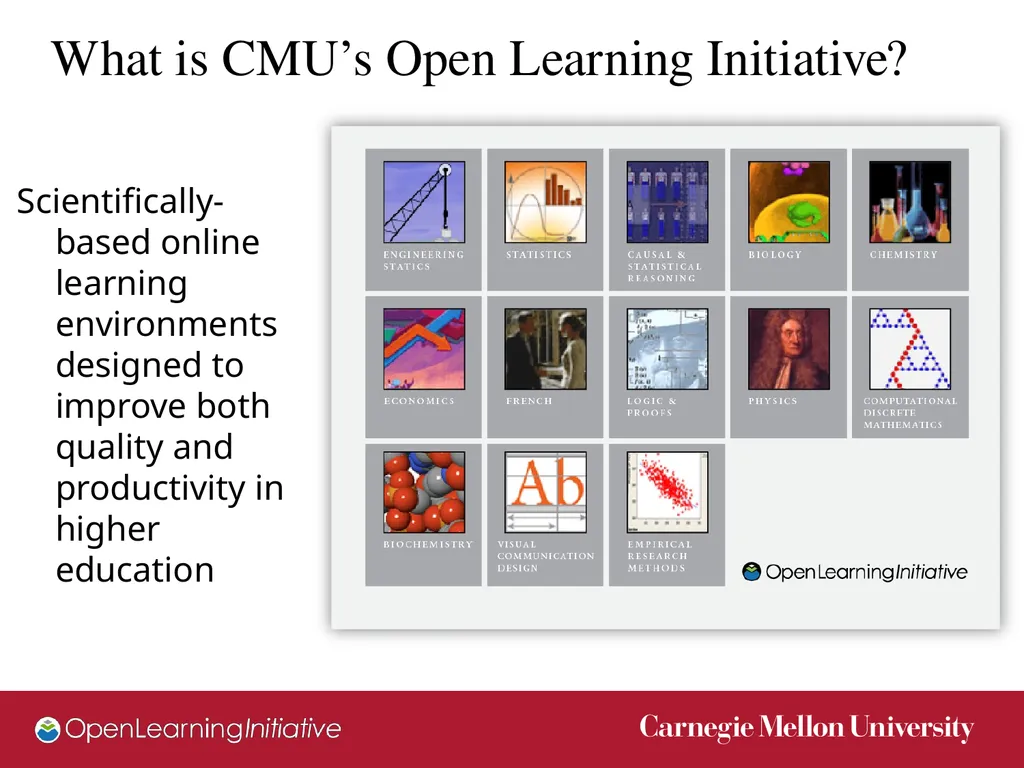
slide2. What is CMU’s Open Learning Initiative? Scientifically-based online learning environments designed to improve both quality and productivity in higher education<br>
slide3. Open Learning Initiative Produce courses and course materials which enact instruction and support instructors
Provide open access to these courses and materials
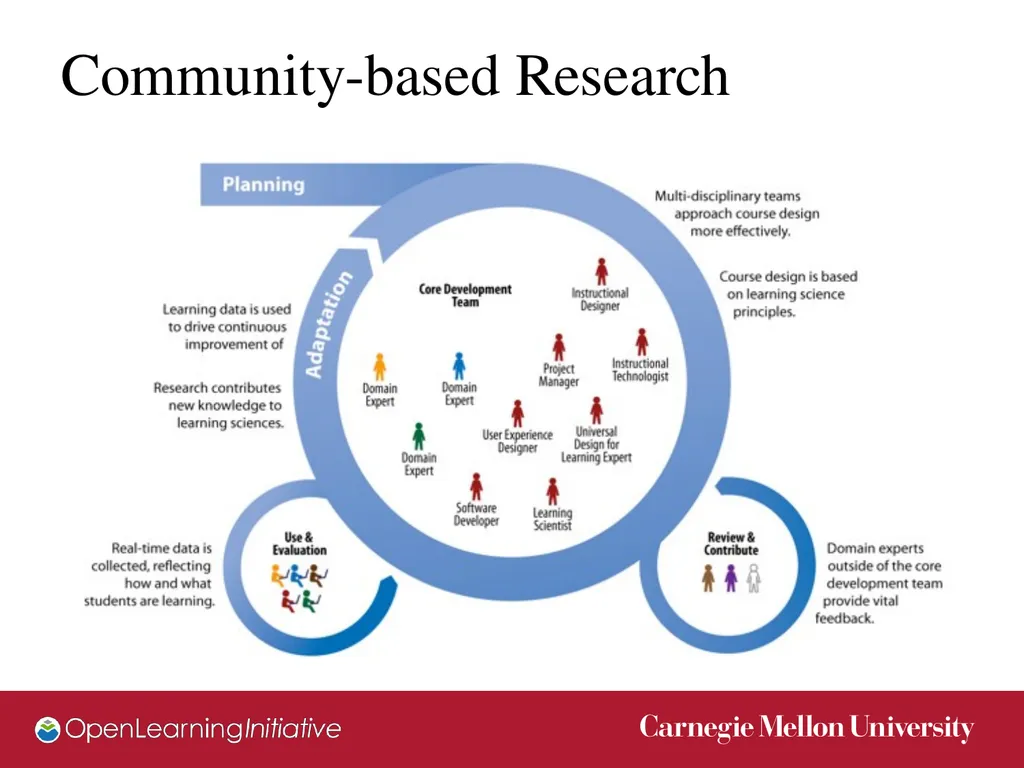
Develop communities of use, research and development that enable evaluation and continuous improvement<br>
slide4. Why a learner-centered approach? Learning results from what the student does and thinks and only from what the student does and thinks. The teacher can advance learning only by influencing what the student does to learn.
Herbert Simon, 2001 It’s not teaching that causes learning. Attempts by the learner to perform cause learning, dependent upon the quality of feedback and opportunities to use it.
Grant Wiggins
President, Center of Learning Assessment<br>
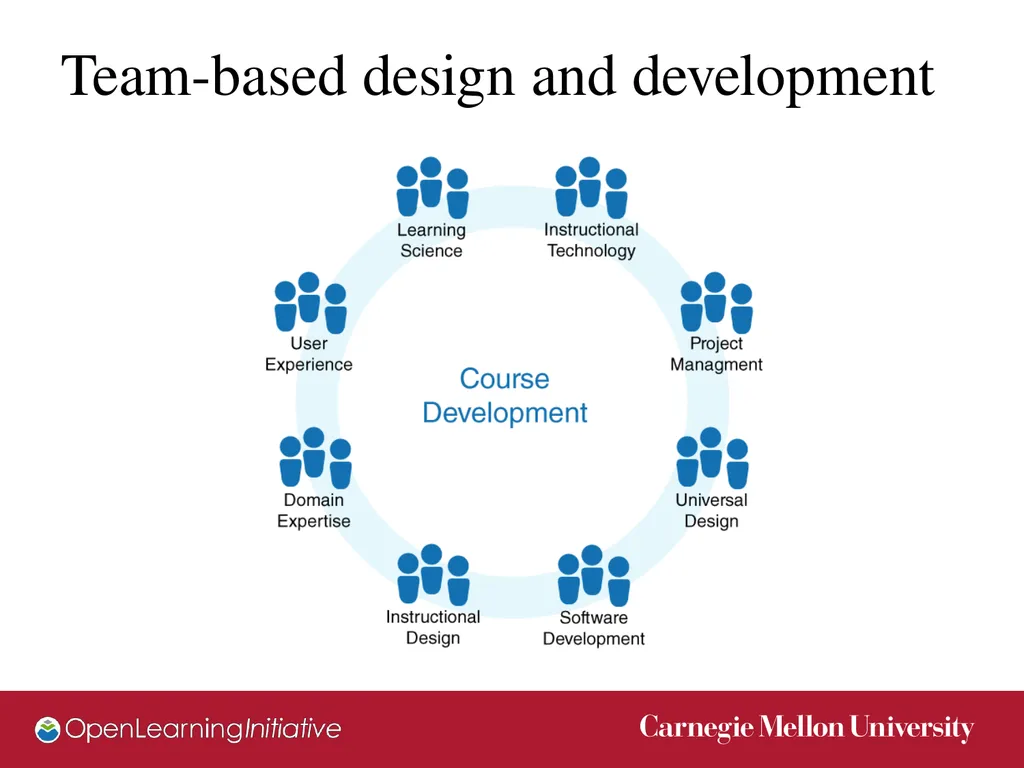
slide5. Team-based design and development<br>
slide6. Community-based Research<br>
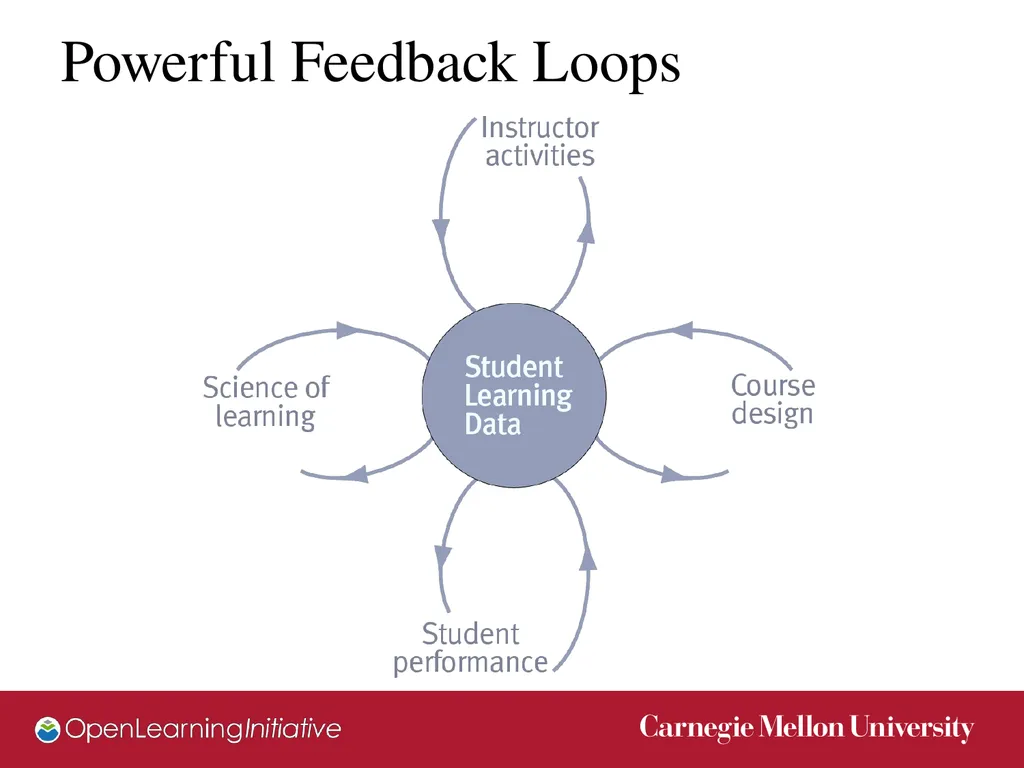
slide7. Powerful Feedback Loops<br>
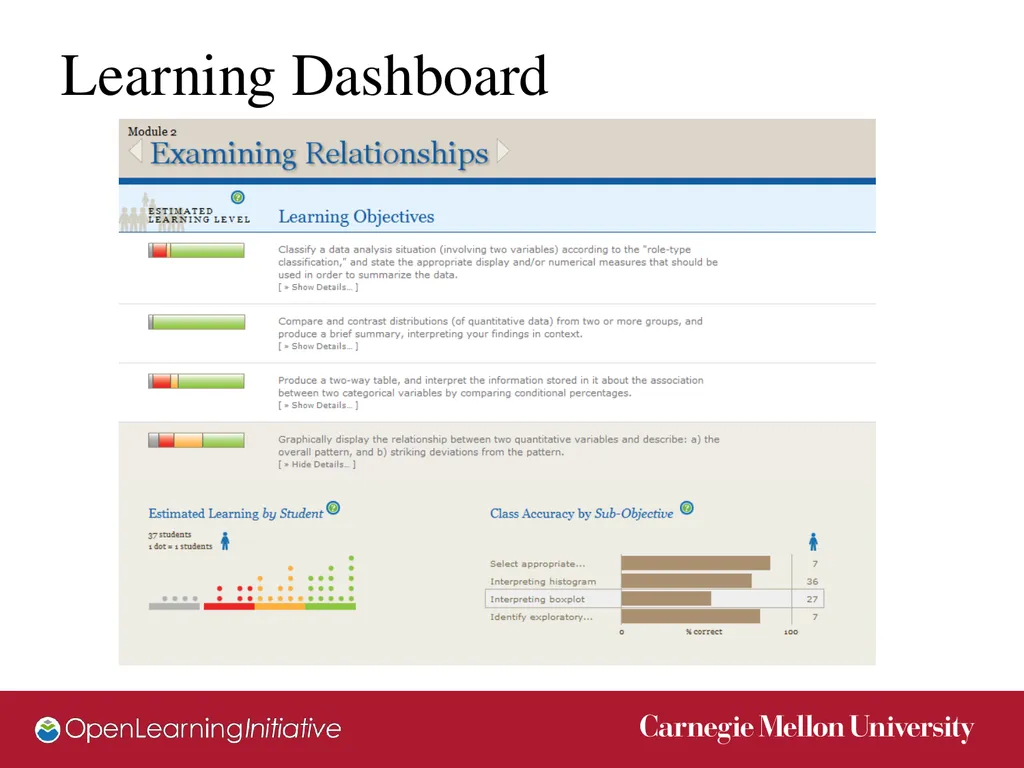
slide8. Learning Dashboard<br>
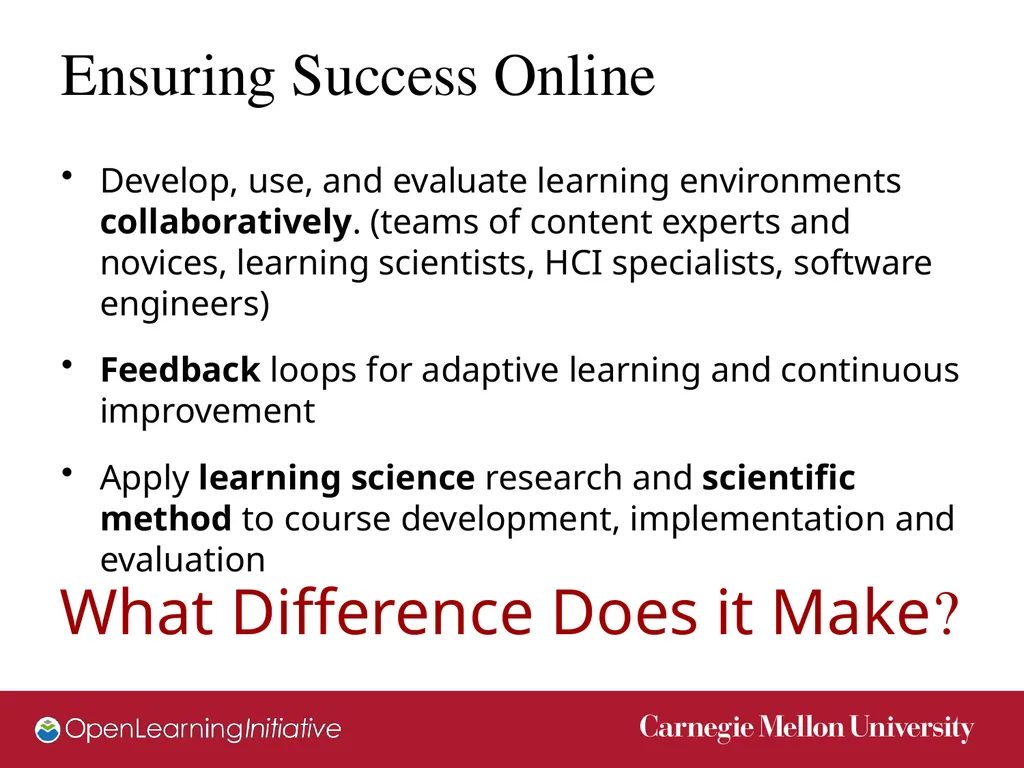
slide9. Ensuring Success Online Develop, use, and evaluate learning environments collaboratively. (teams of content experts and novices, learning scientists, HCI specialists, software engineers)
Feedback loops for adaptive learning and continuous improvement
Apply learning science research and scientific method to course development, implementation and evaluation What Difference Does it Make?<br>
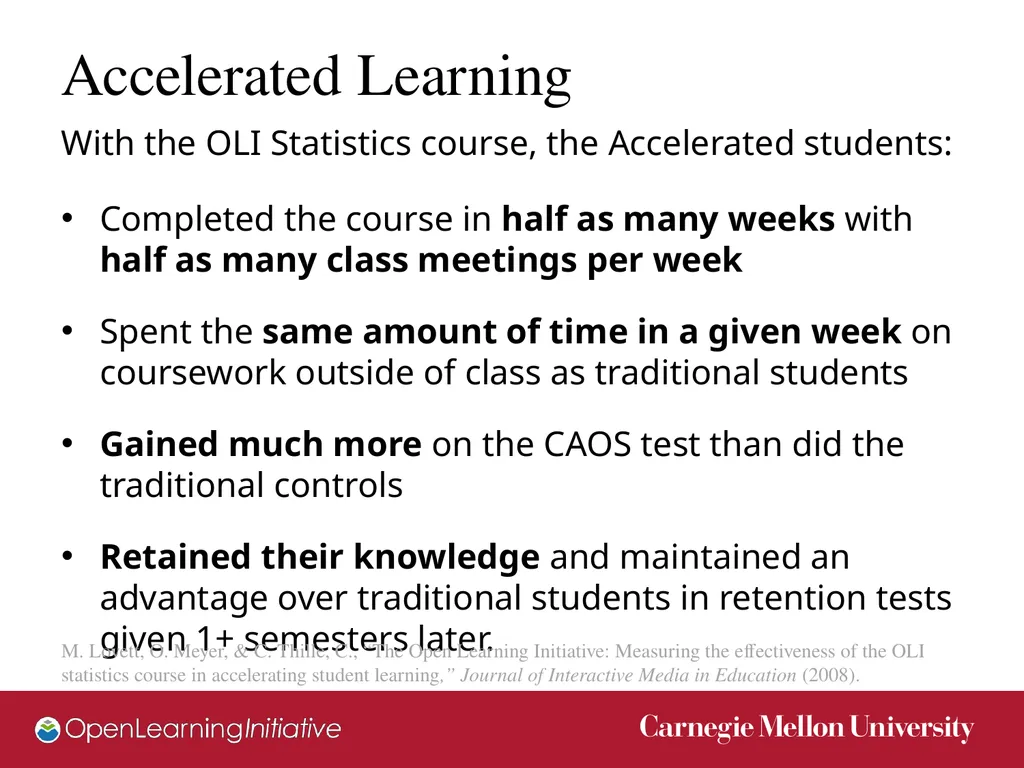
slide10. Accelerated Learning With the OLI Statistics course, the Accelerated students:
Completed the course in half as many weeks with half as many class meetings per week
Spent the same amount of time in a given week on coursework outside of class as traditional students
Gained much more on the CAOS test than did the traditional controls
Retained their knowledge and maintained an advantage over traditional students in retention tests given 1+ semesters later. M. Lovett, O. Meyer, & C. Thille, C., “The Open Learning Initiative: Measuring the effectiveness of the OLI statistics course in accelerating student learning,” Journal of Interactive Media in Education (2008).<br>
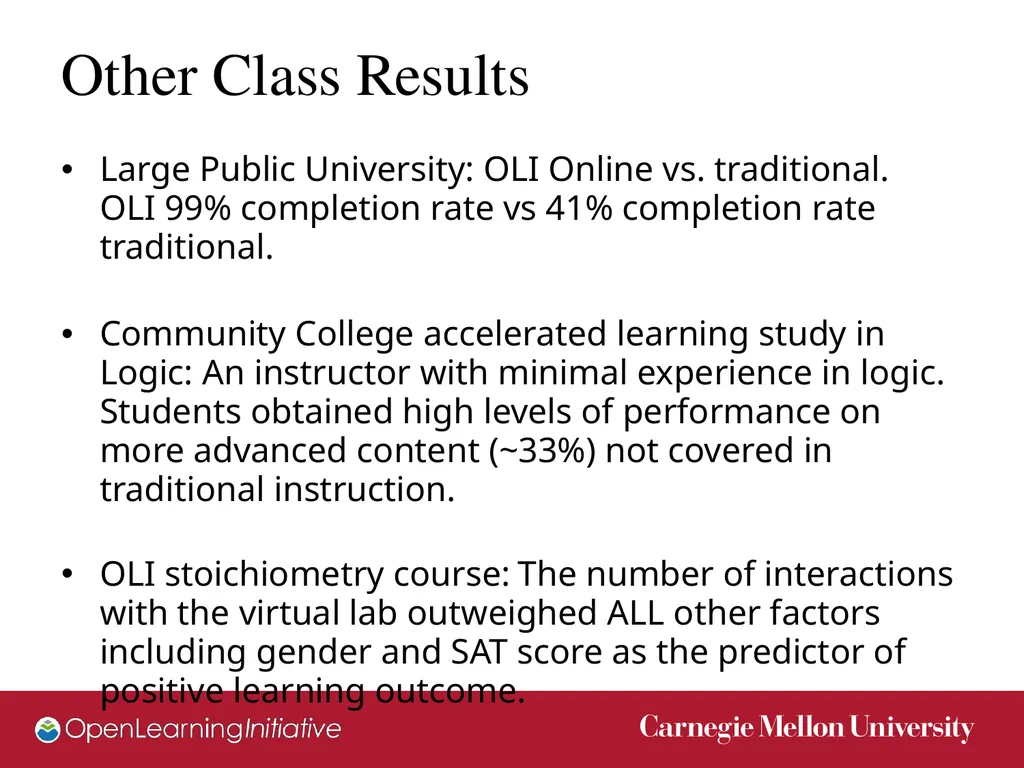
slide11. Other Class Results Large Public University: OLI Online vs. traditional. OLI 99% completion rate vs 41% completion rate traditional.
Community College accelerated learning study in Logic: An instructor with minimal experience in logic. Students obtained high levels of performance on more advanced content (~33%) not covered in traditional instruction.
OLI stoichiometry course: The number of interactions with the virtual lab outweighed ALL other factors including gender and SAT score as the predictor of positive learning outcome.<br>
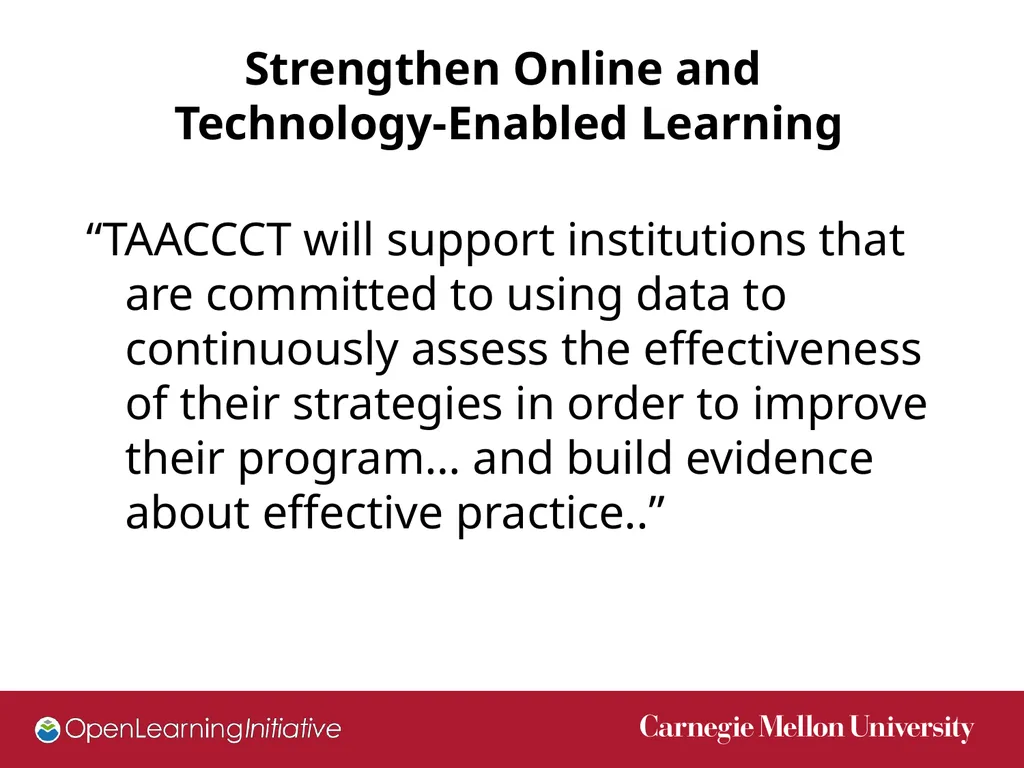
slide12. “TAACCCT will support institutions that are committed to using data to continuously assess the effectiveness of their strategies in order to improve their program… and build evidence about effective practice..” Strengthen Online and Technology-Enabled Learning<br>
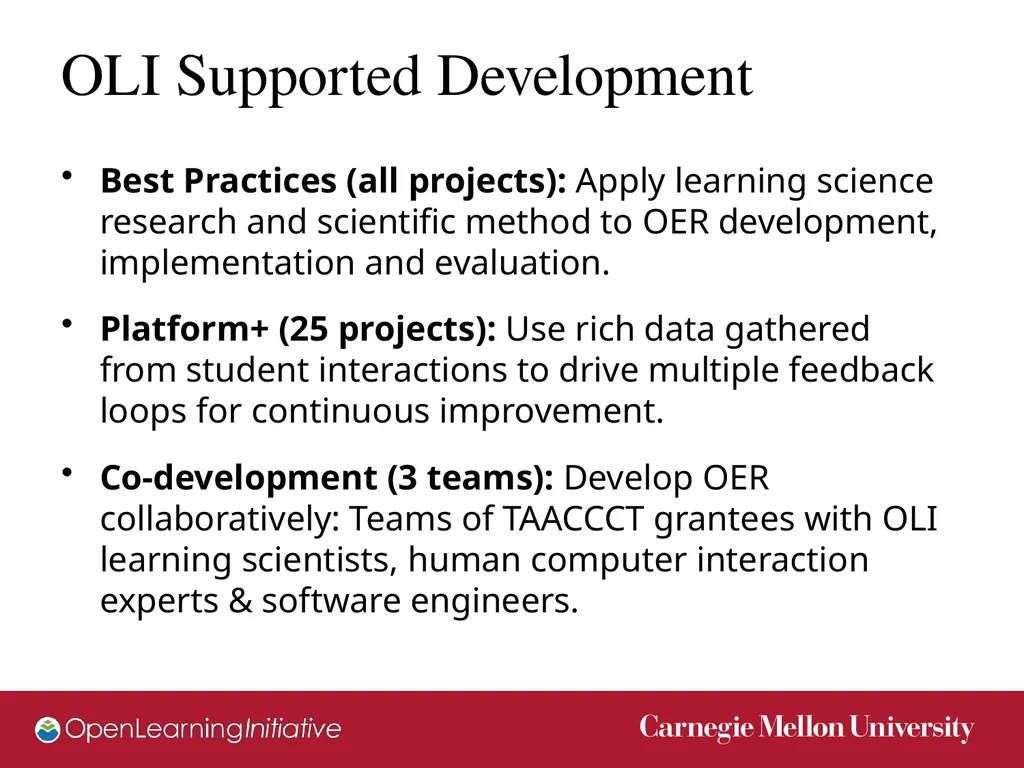
slide13. OLI Supported Development Best Practices (all projects): Apply learning science research and scientific method to OER development, implementation and evaluation.
Platform+ (25 projects): Use rich data gathered from student interactions to drive multiple feedback loops for continuous improvement.
Co-development (3 teams): Develop OER collaboratively: Teams of TAACCCT grantees with OLI learning scientists, human computer interaction experts & software engineers.<br>
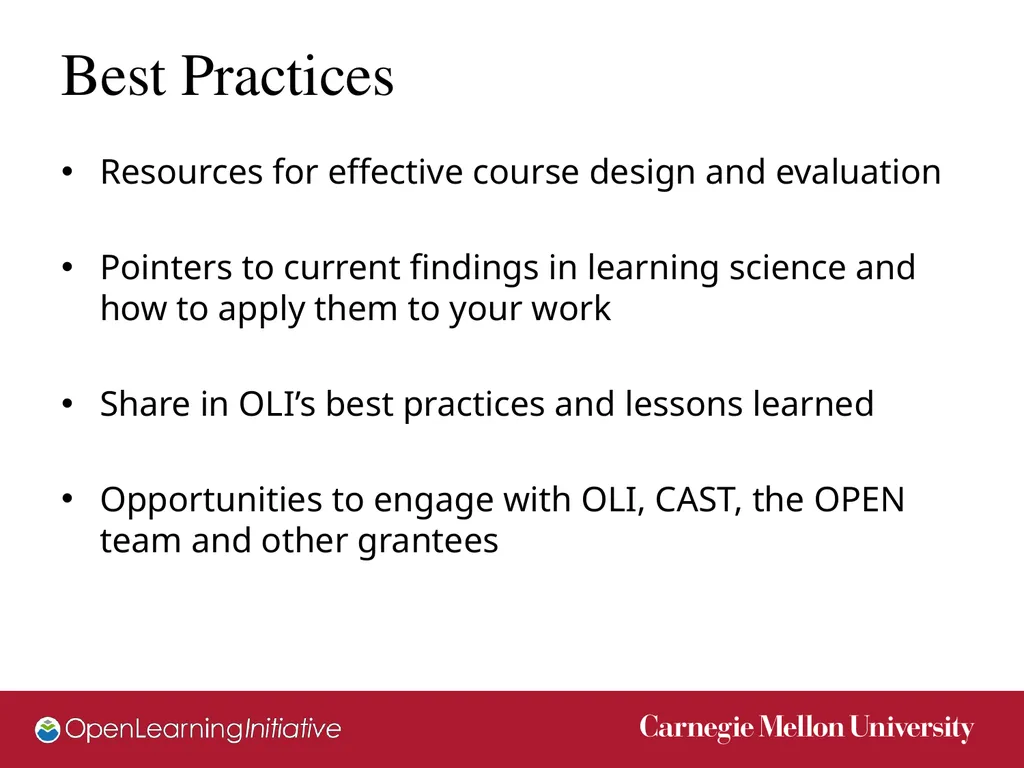
slide14. Best Practices Resources for effective course design and evaluation
Pointers to current findings in learning science and how to apply them to your work
Share in OLI’s best practices and lessons learned
Opportunities to engage with OLI, CAST, the OPEN team and other grantees<br>
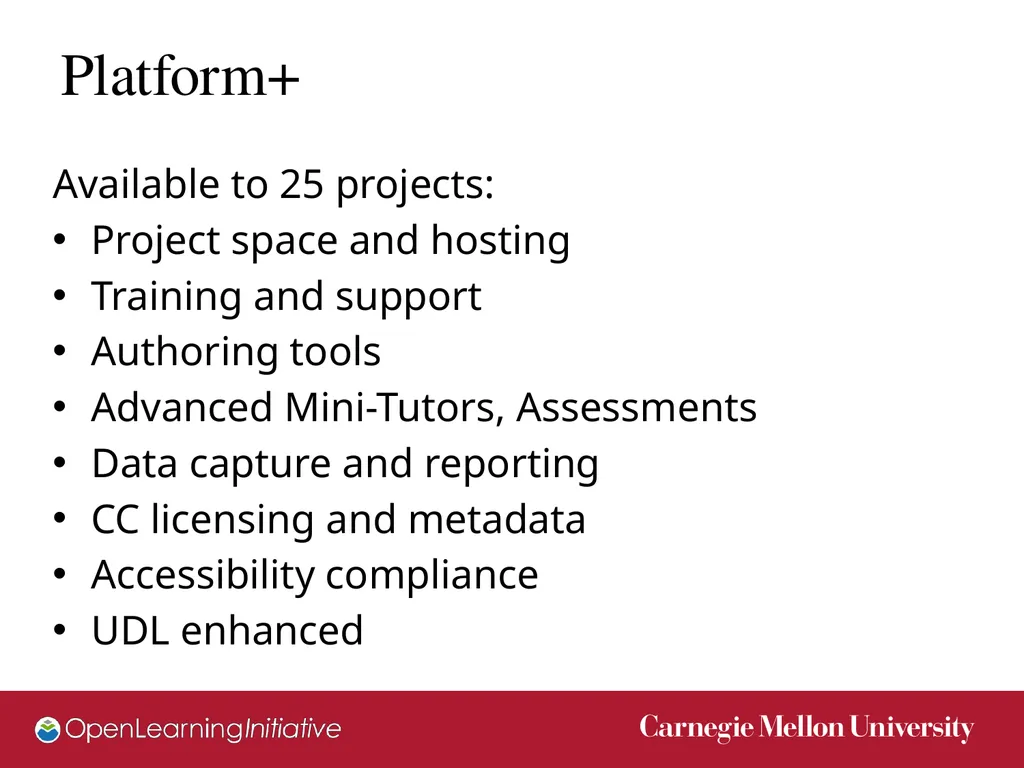
slide15. Platform+ Available to 25 projects:
Project space and hosting
Training and support
Authoring tools
Advanced Mini-Tutors, Assessments
Data capture and reporting
CC licensing and metadata
Accessibility compliance
UDL enhanced<br>
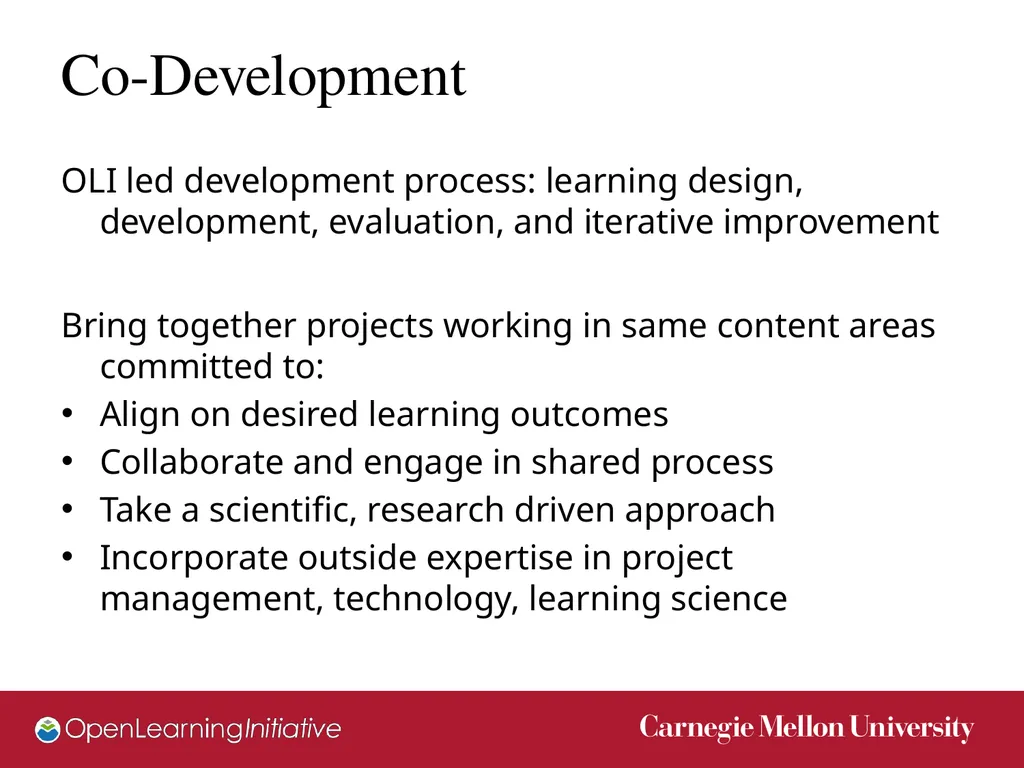
slide16. Co-Development OLI led development process: learning design, development, evaluation, and iterative improvement
Bring together projects working in same content areas committed to:
Align on desired learning outcomes
Collaborate and engage in shared process
Take a scientific, research driven approach
Incorporate outside expertise in project management, technology, learning science<br>
slide17. Co-Development Build learning environments which
Target the mutual needs of participant projects
Embed frequent opportunities for goal directed practice and targeted feedback
Capture data and deliver timely feedback to the learner, instructor, and course development team
Demonstrate effectiveness through research and evaluation
Increase adoption through goal alignment
Satisfy your TAACCCT obligations for effectiveness evaluation<br>
slide18. “Improvement in Post Secondary Education will require converting teaching from a ‘solo sport’ to a community based research activity.”
—Herbert Simon<br>
John Rinderle @JohnRinderle<br>
slide2. What is CMU’s Open Learning Initiative? Scientifically-based online learning environments designed to improve both quality and productivity in higher education<br>
slide3. Open Learning Initiative Produce courses and course materials which enact instruction and support instructors
Provide open access to these courses and materials
Develop communities of use, research and development that enable evaluation and continuous improvement<br>
slide4. Why a learner-centered approach? Learning results from what the student does and thinks and only from what the student does and thinks. The teacher can advance learning only by influencing what the student does to learn.
Herbert Simon, 2001 It’s not teaching that causes learning. Attempts by the learner to perform cause learning, dependent upon the quality of feedback and opportunities to use it.
Grant Wiggins
President, Center of Learning Assessment<br>
slide5. Team-based design and development<br>
slide6. Community-based Research<br>
slide7. Powerful Feedback Loops<br>
slide8. Learning Dashboard<br>
slide9. Ensuring Success Online Develop, use, and evaluate learning environments collaboratively. (teams of content experts and novices, learning scientists, HCI specialists, software engineers)
Feedback loops for adaptive learning and continuous improvement
Apply learning science research and scientific method to course development, implementation and evaluation What Difference Does it Make?<br>
slide10. Accelerated Learning With the OLI Statistics course, the Accelerated students:
Completed the course in half as many weeks with half as many class meetings per week
Spent the same amount of time in a given week on coursework outside of class as traditional students
Gained much more on the CAOS test than did the traditional controls
Retained their knowledge and maintained an advantage over traditional students in retention tests given 1+ semesters later. M. Lovett, O. Meyer, & C. Thille, C., “The Open Learning Initiative: Measuring the effectiveness of the OLI statistics course in accelerating student learning,” Journal of Interactive Media in Education (2008).<br>
slide11. Other Class Results Large Public University: OLI Online vs. traditional. OLI 99% completion rate vs 41% completion rate traditional.
Community College accelerated learning study in Logic: An instructor with minimal experience in logic. Students obtained high levels of performance on more advanced content (~33%) not covered in traditional instruction.
OLI stoichiometry course: The number of interactions with the virtual lab outweighed ALL other factors including gender and SAT score as the predictor of positive learning outcome.<br>
slide12. “TAACCCT will support institutions that are committed to using data to continuously assess the effectiveness of their strategies in order to improve their program… and build evidence about effective practice..” Strengthen Online and Technology-Enabled Learning<br>
slide13. OLI Supported Development Best Practices (all projects): Apply learning science research and scientific method to OER development, implementation and evaluation.
Platform+ (25 projects): Use rich data gathered from student interactions to drive multiple feedback loops for continuous improvement.
Co-development (3 teams): Develop OER collaboratively: Teams of TAACCCT grantees with OLI learning scientists, human computer interaction experts & software engineers.<br>
slide14. Best Practices Resources for effective course design and evaluation
Pointers to current findings in learning science and how to apply them to your work
Share in OLI’s best practices and lessons learned
Opportunities to engage with OLI, CAST, the OPEN team and other grantees<br>
slide15. Platform+ Available to 25 projects:
Project space and hosting
Training and support
Authoring tools
Advanced Mini-Tutors, Assessments
Data capture and reporting
CC licensing and metadata
Accessibility compliance
UDL enhanced<br>
slide16. Co-Development OLI led development process: learning design, development, evaluation, and iterative improvement
Bring together projects working in same content areas committed to:
Align on desired learning outcomes
Collaborate and engage in shared process
Take a scientific, research driven approach
Incorporate outside expertise in project management, technology, learning science<br>
slide17. Co-Development Build learning environments which
Target the mutual needs of participant projects
Embed frequent opportunities for goal directed practice and targeted feedback
Capture data and deliver timely feedback to the learner, instructor, and course development team
Demonstrate effectiveness through research and evaluation
Increase adoption through goal alignment
Satisfy your TAACCCT obligations for effectiveness evaluation<br>
slide18. “Improvement in Post Secondary Education will require converting teaching from a ‘solo sport’ to a community based research activity.”
—Herbert Simon<br>