05
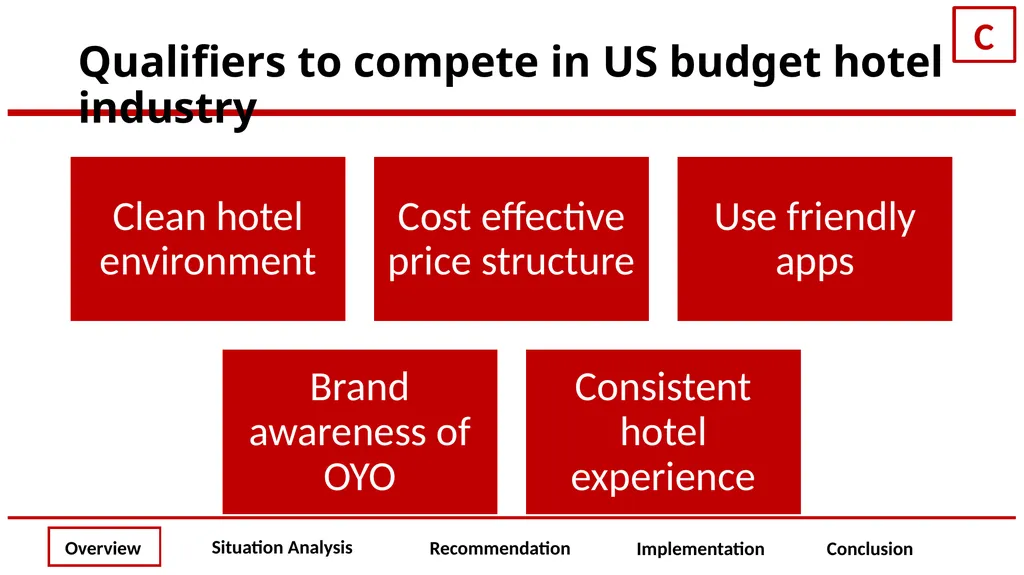
Qualifiers to compete in US budget hotel industry<br>
07
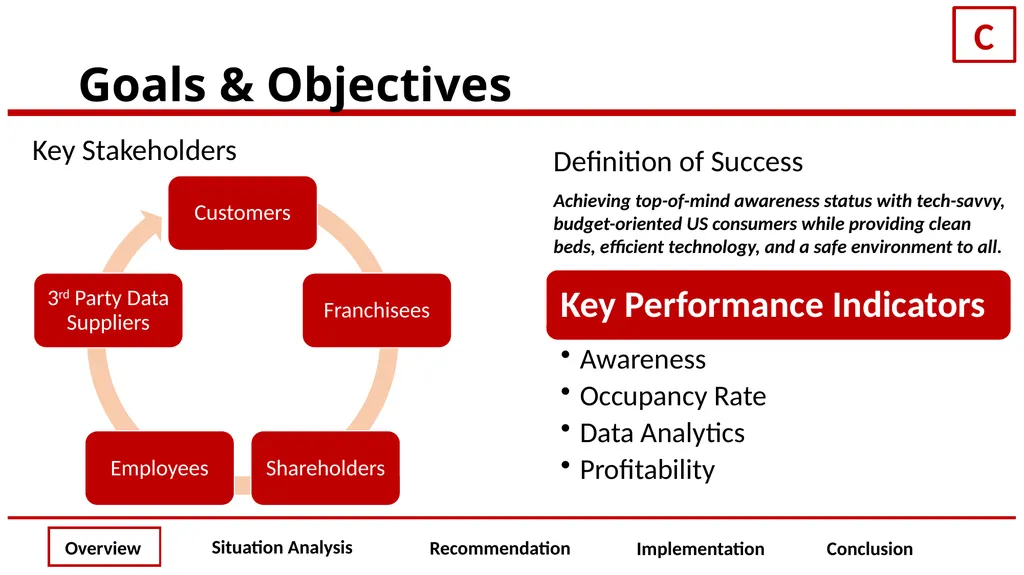
Goals & Objectives Key Stakeholders Definition of Success Achieving top-of-mind awareness status with tech-savvy, budget-oriented US consumers while providing clean beds, efficient technology, and a safe environment to all.<br>
09
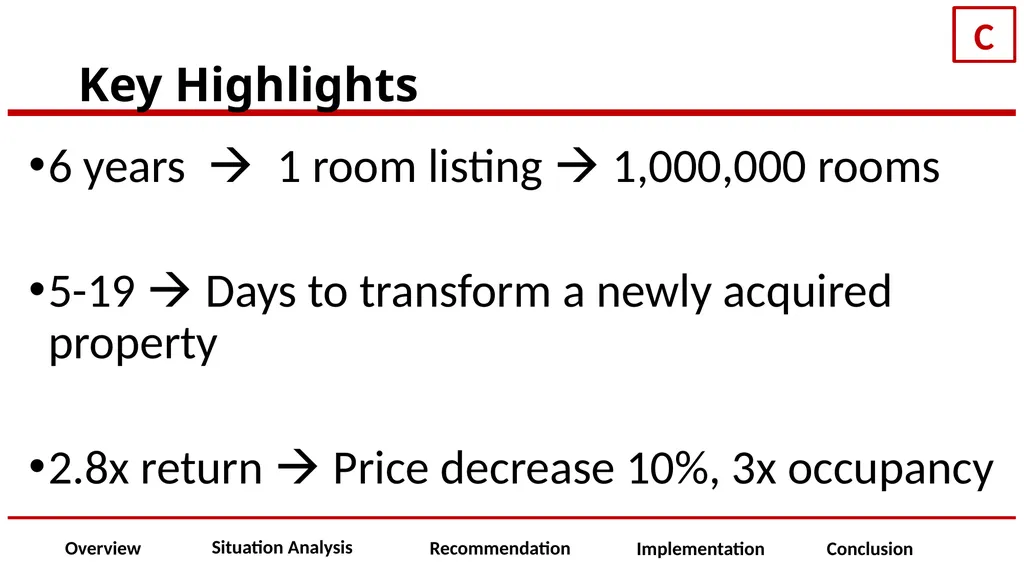
Key Highlights 6 years 1 room listing 1,000,000 rooms
5-19 Days to transform a newly acquired property
2.8x return Price decrease 10%, 3x occupancy<br>
12
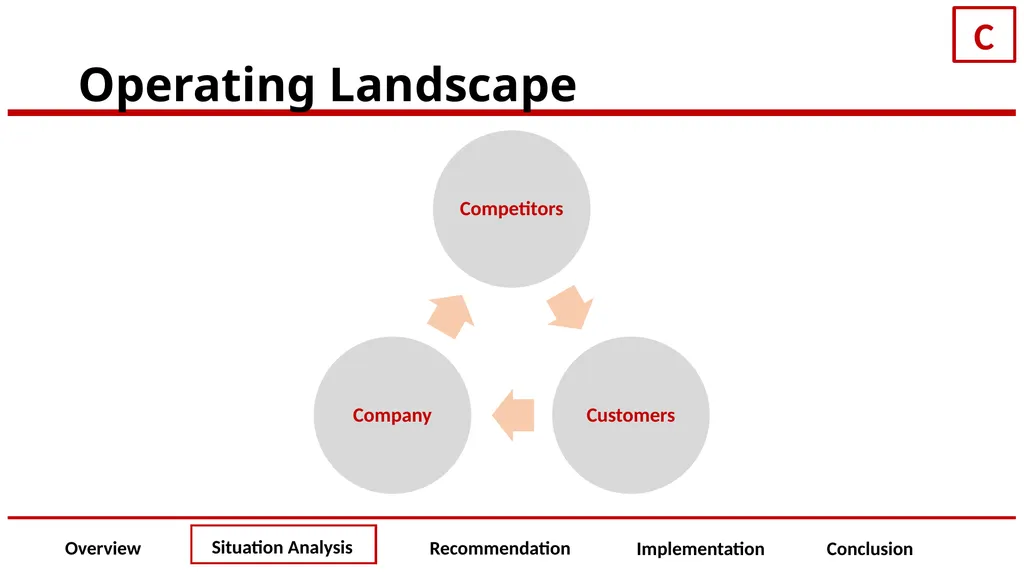
Operating Landscape<br>
13
Operating Landscape: Competition<br>
14
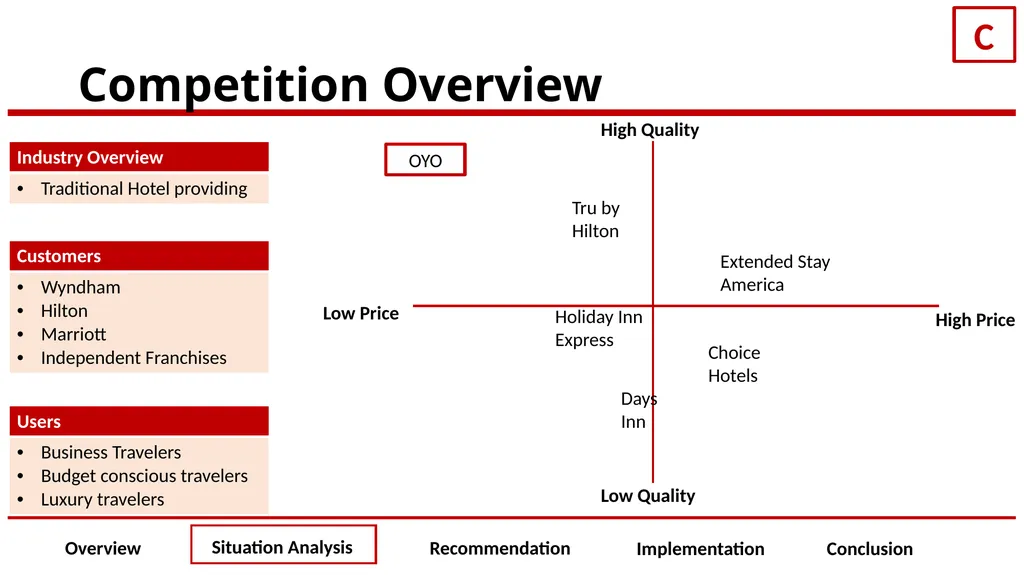
Competition Overview High Quality Low Quality High Price Low Price OYO Tru by Hilton Holiday Inn Express Extended Stay America Choice Hotels Days Inn<br>
15
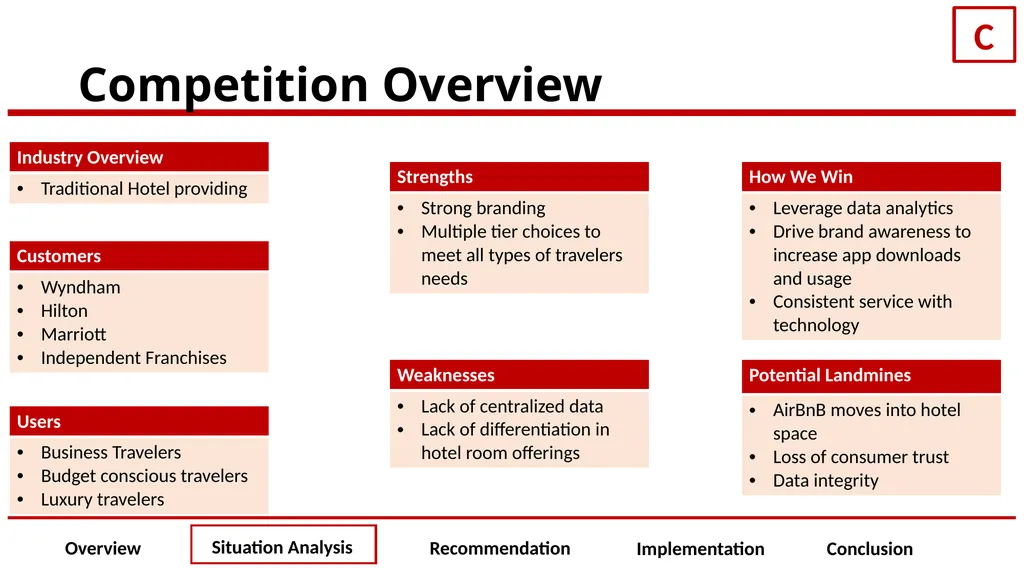
Competition Overview<br>
16
Operating Landscape: Customer<br>
17
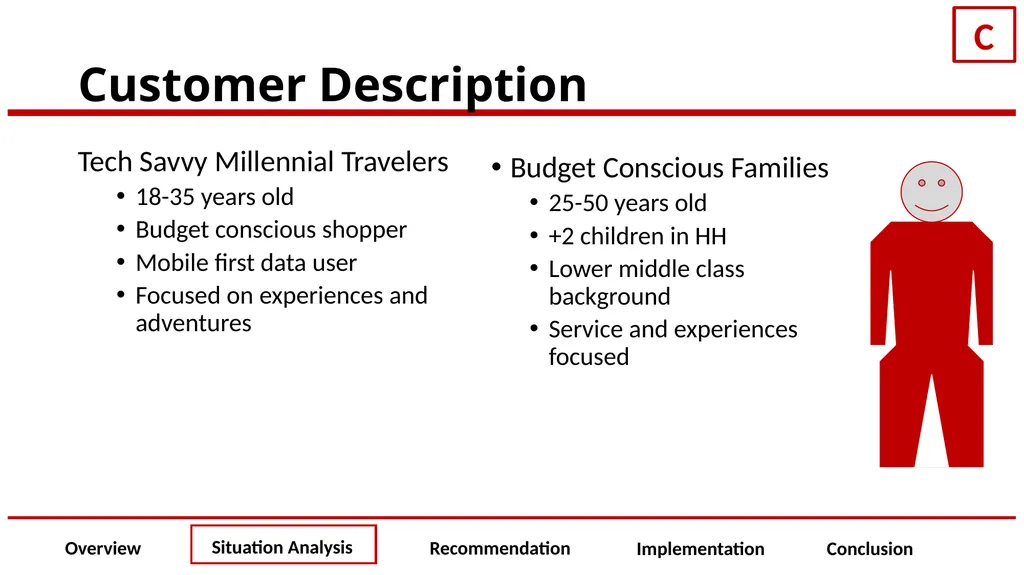
Customer Description Tech Savvy Millennial Travelers
18-35 years old
Budget conscious shopper
Mobile first data user
Focused on experiences and adventures Budget Conscious Families
25-50 years old
+2 children in HH
Lower middle class background
Service and experiences focused<br>
18
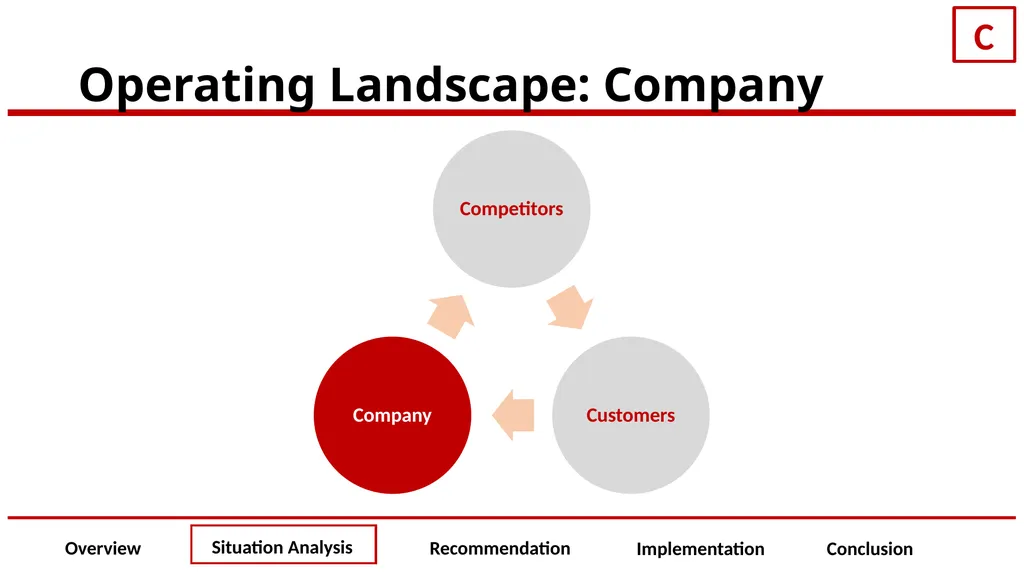
Operating Landscape: Company<br>
19
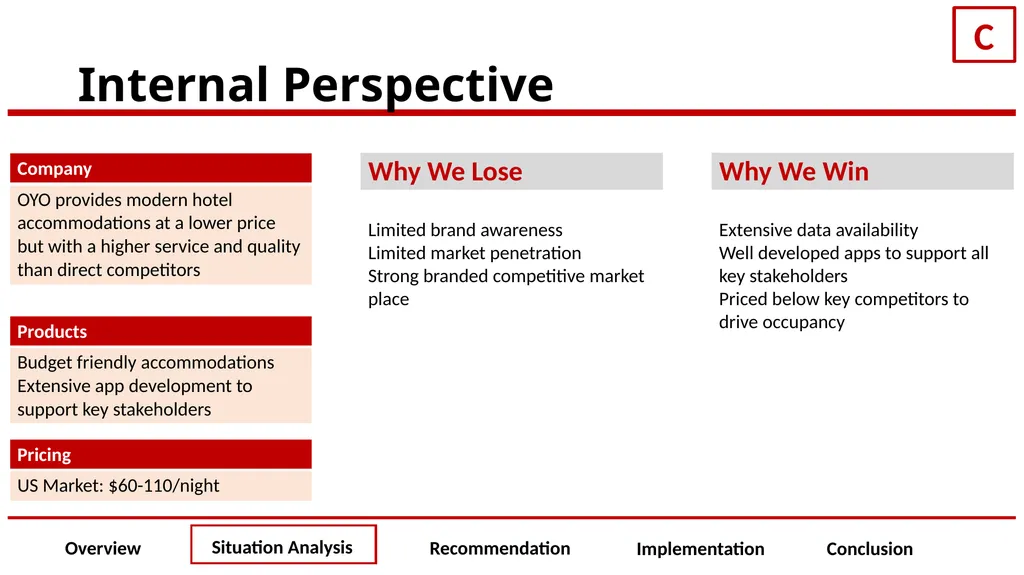
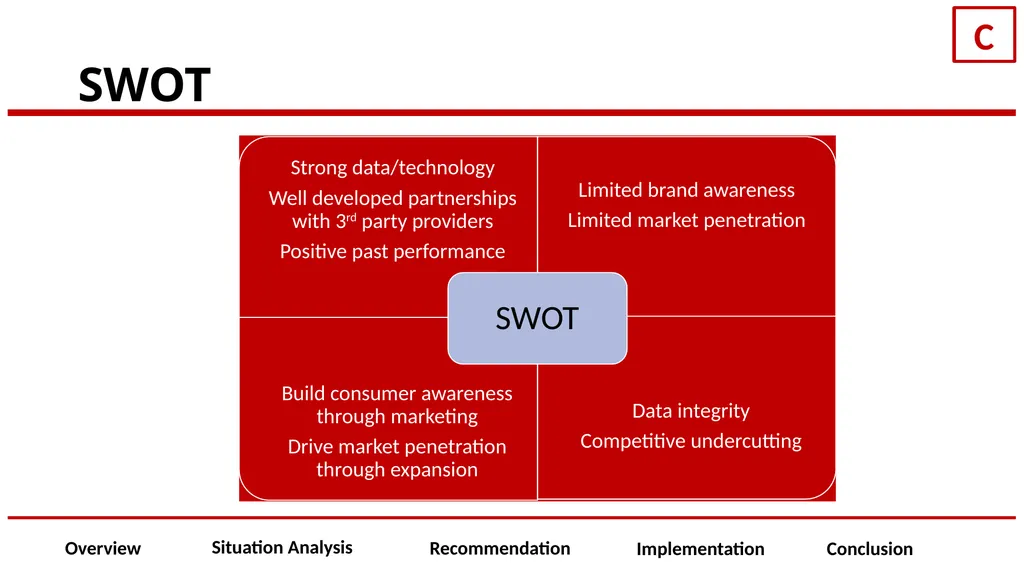
Internal Perspective Why We Lose Why We Win Limited brand awareness
Limited market penetration
Strong branded competitive market place Extensive data availability
Well developed apps to support all key stakeholders
Priced below key competitors to drive occupancy<br>
21
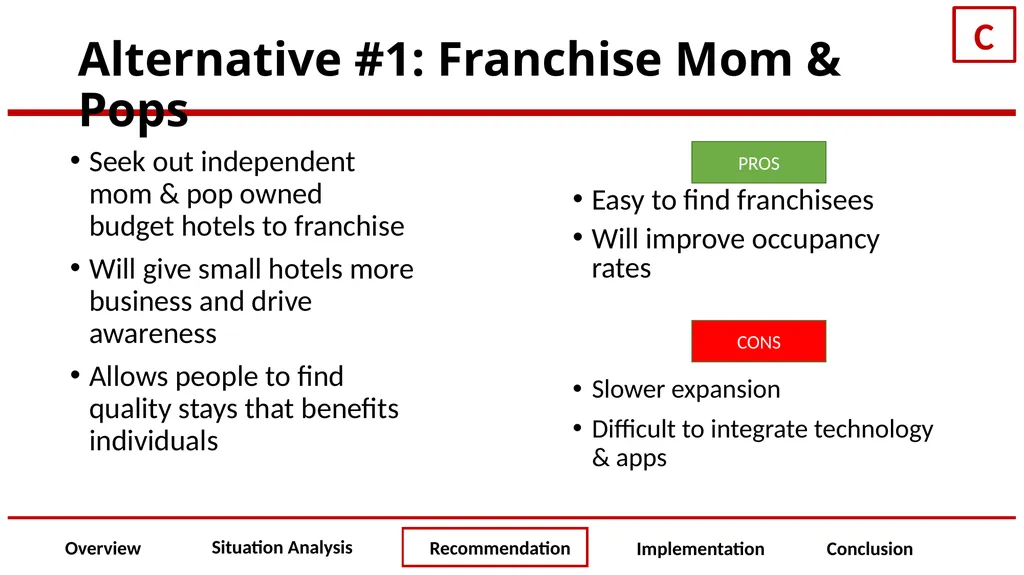
Alternative #1: Franchise Mom & Pops Seek out independent mom & pop owned budget hotels to franchise
Will give small hotels more business and drive awareness
Allows people to find quality stays that benefits individuals Easy to find franchisees
Will improve occupancy rates Slower expansion
Difficult to integrate technology & apps PROS CONS<br>
22
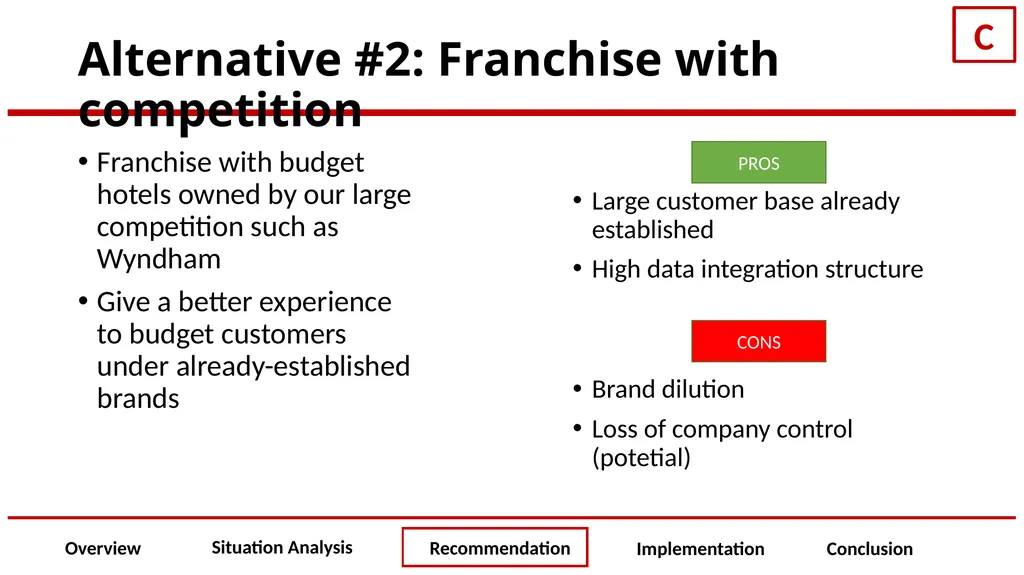
Alternative #2: Franchise with competition Franchise with budget hotels owned by our large competition such as Wyndham
Give a better experience to budget customers under already-established brands Large customer base already established
High data integration structure Brand dilution
Loss of company control (potetial) PROS CONS<br>
23
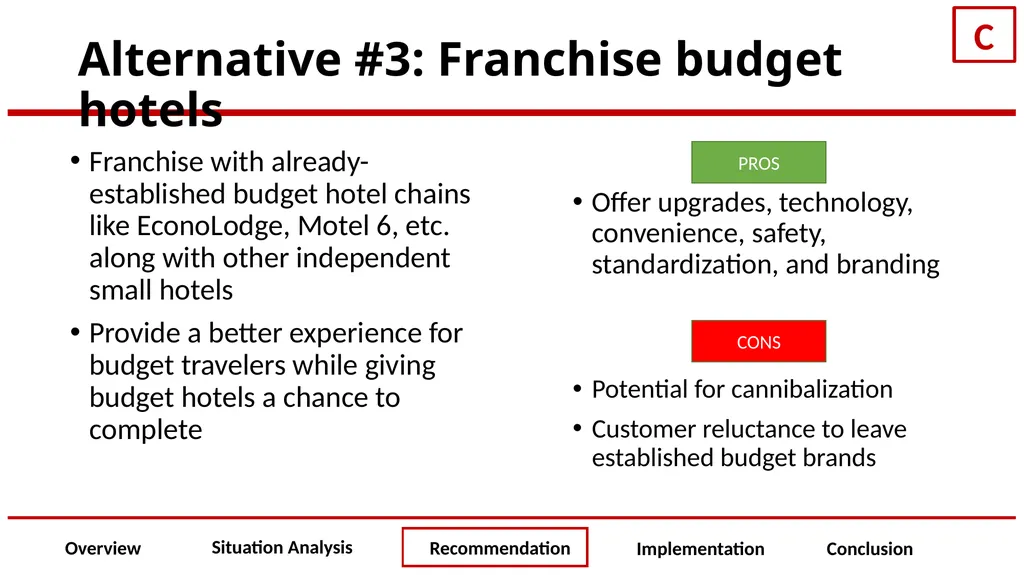
Alternative #3: Franchise budget hotels Franchise with already-established budget hotel chains like EconoLodge, Motel 6, etc. along with other independent small hotels
Provide a better experience for budget travelers while giving budget hotels a chance to complete Offer upgrades, technology, convenience, safety, standardization, and branding Potential for cannibalization
Customer reluctance to leave established budget brands PROS CONS<br>
24
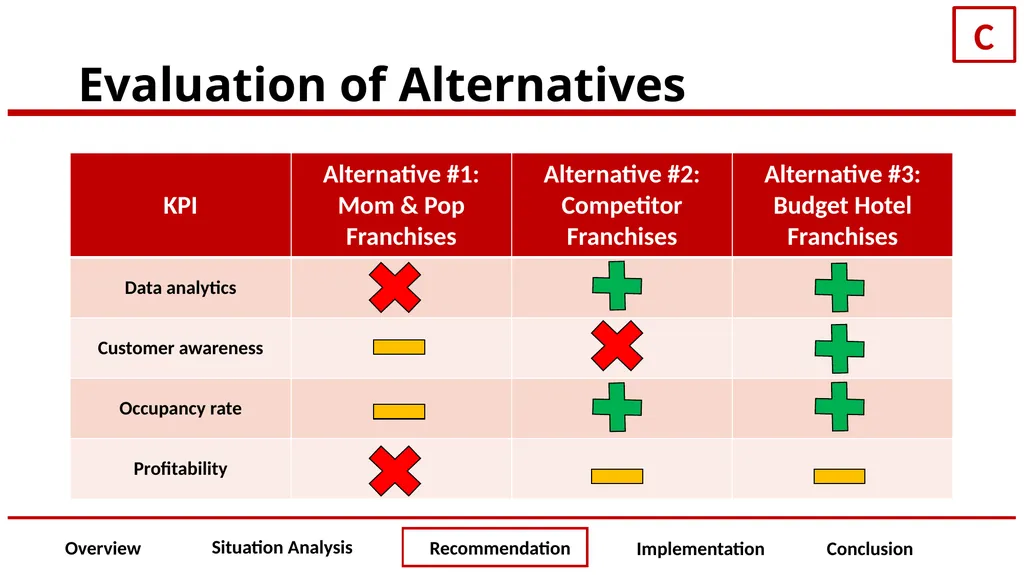
Evaluation of Alternatives<br>
26
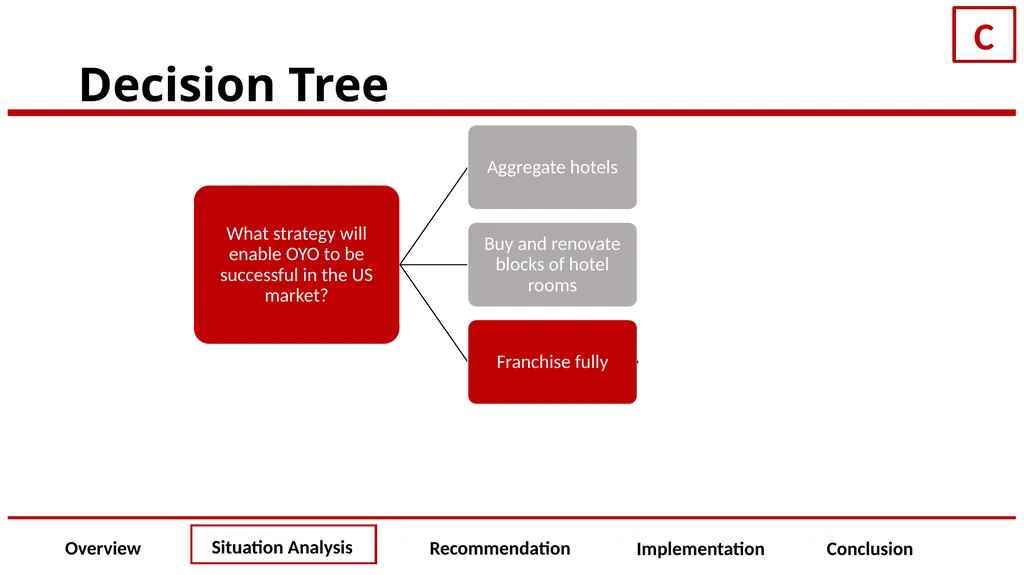
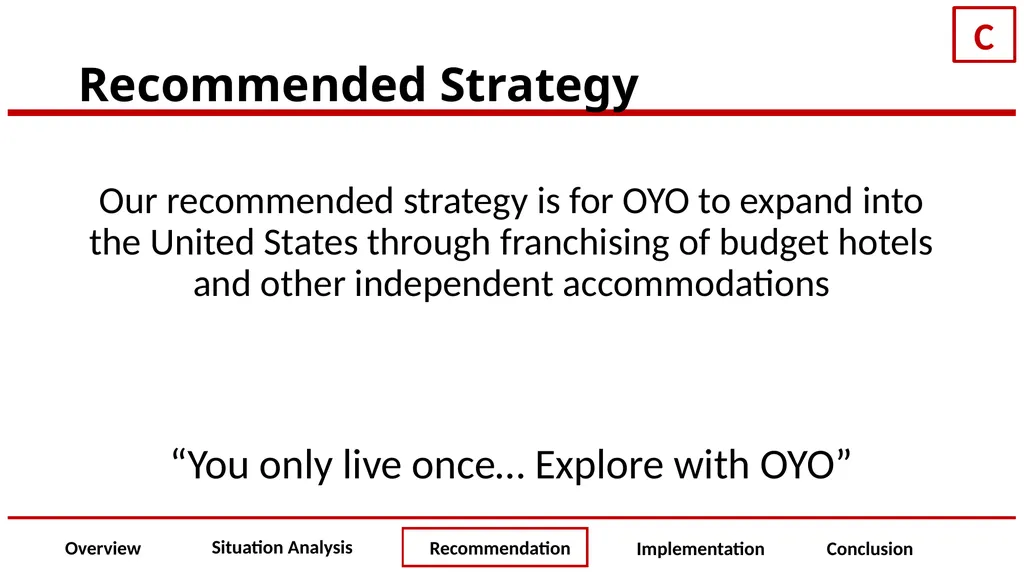
Recommended Strategy Our recommended strategy is for OYO to expand into the United States through franchising of budget hotels and other independent accommodations “You only live once… Explore with OYO”<br>
27
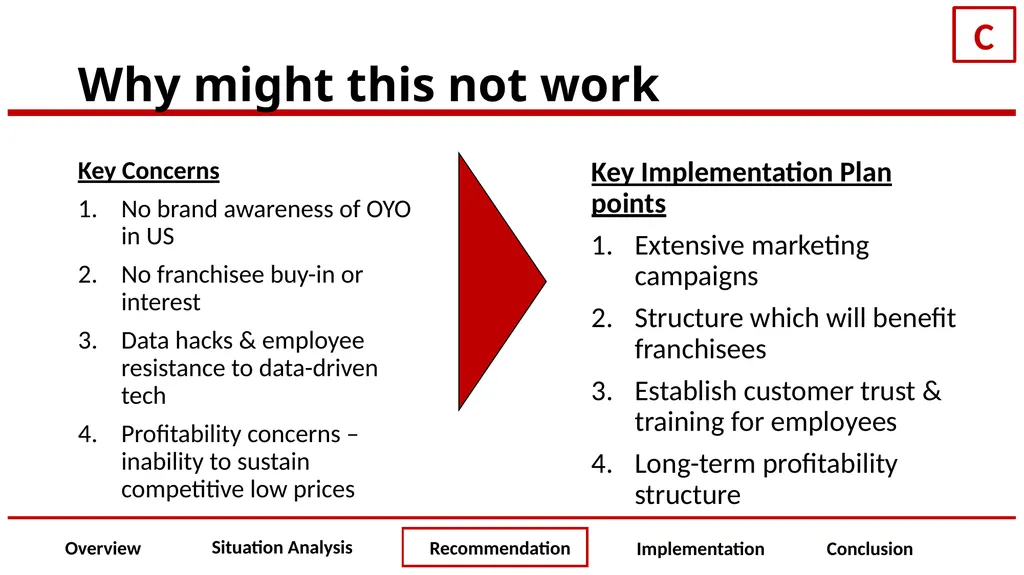
Why might this not work Key Concerns
No brand awareness of OYO in US
No franchisee buy-in or interest
Data hacks & employee resistance to data-driven tech
Profitability concerns – inability to sustain competitive low prices Key Implementation Plan points
Extensive marketing campaigns
Structure which will benefit franchisees
Establish customer trust & training for employees
Long-term profitability structure<br>
28
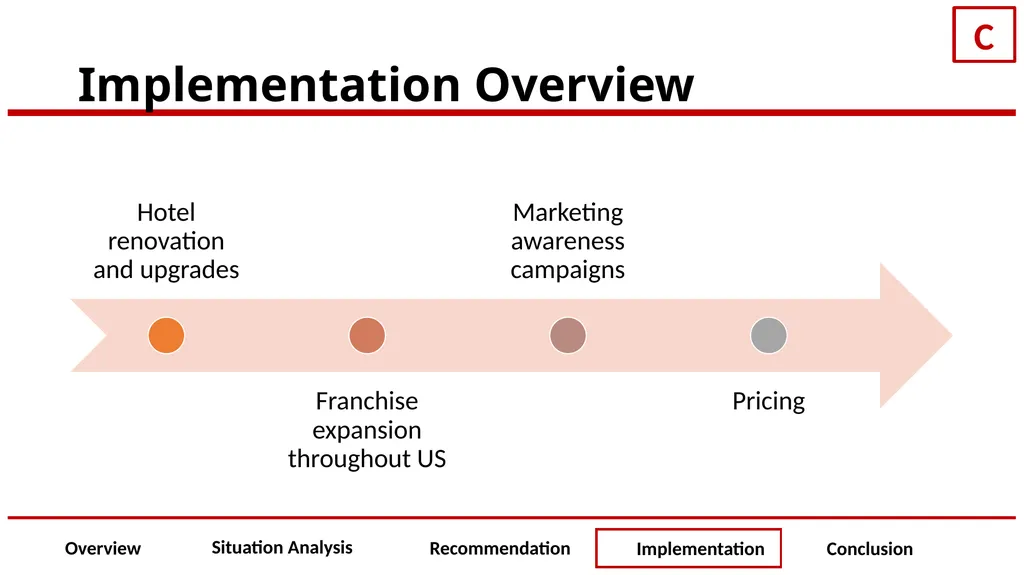
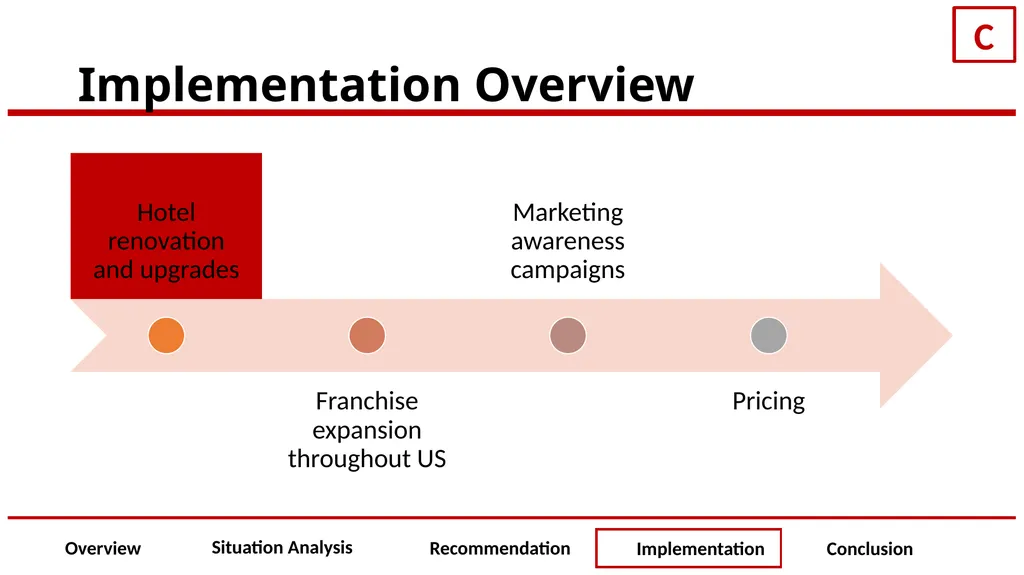
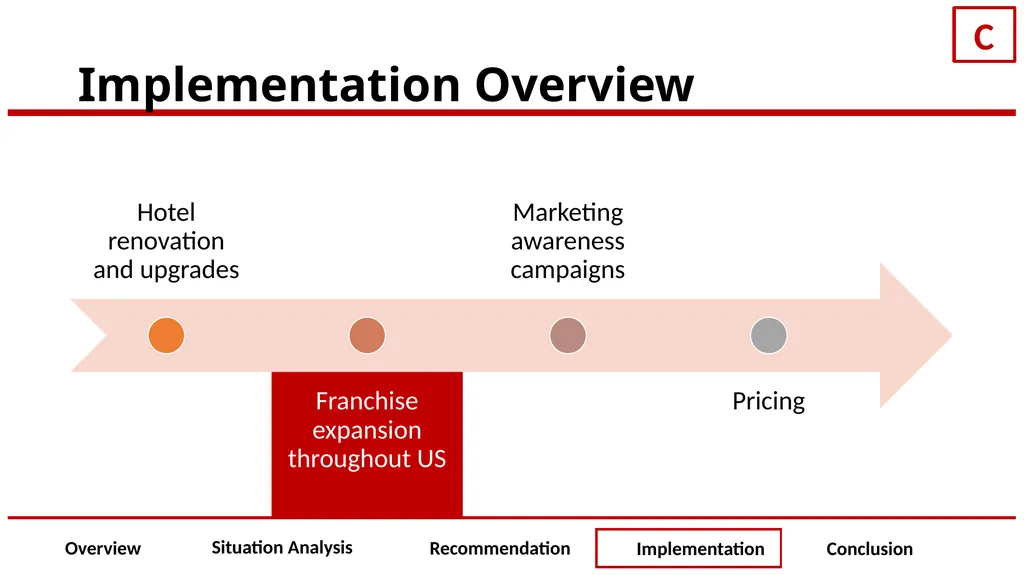
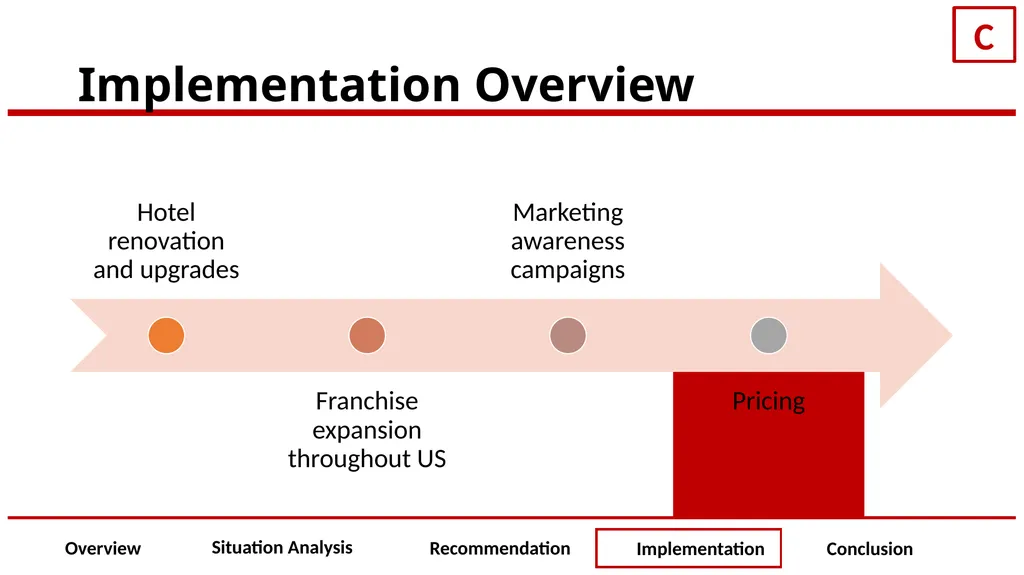
Implementation Overview<br>
29
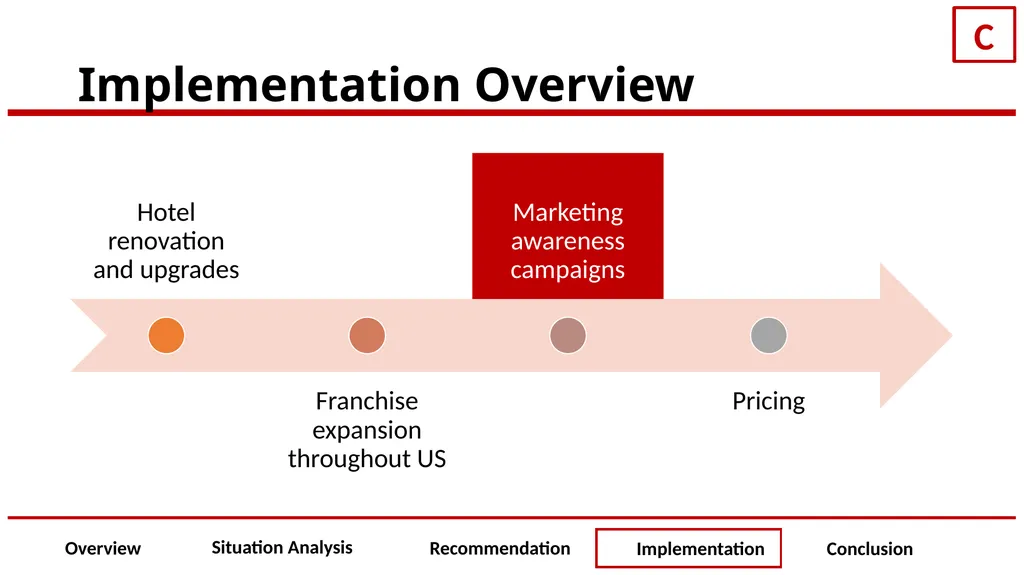
Implementation Overview<br>
30
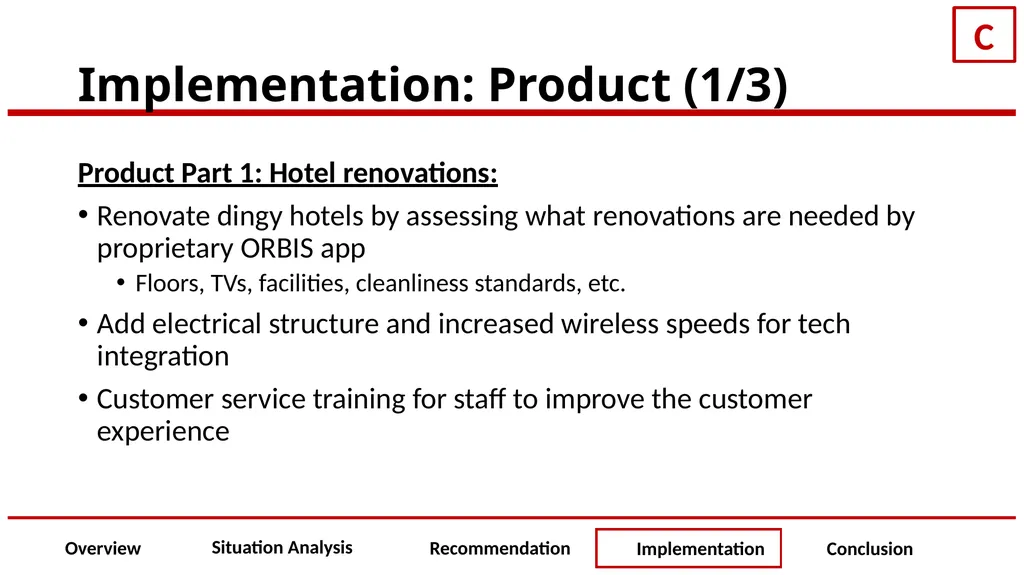
Implementation: Product (1/3) Product Part 1: Hotel renovations:
Renovate dingy hotels by assessing what renovations are needed by proprietary ORBIS app
Floors, TVs, facilities, cleanliness standards, etc.
Add electrical structure and increased wireless speeds for tech integration
Customer service training for staff to improve the customer experience<br>
31
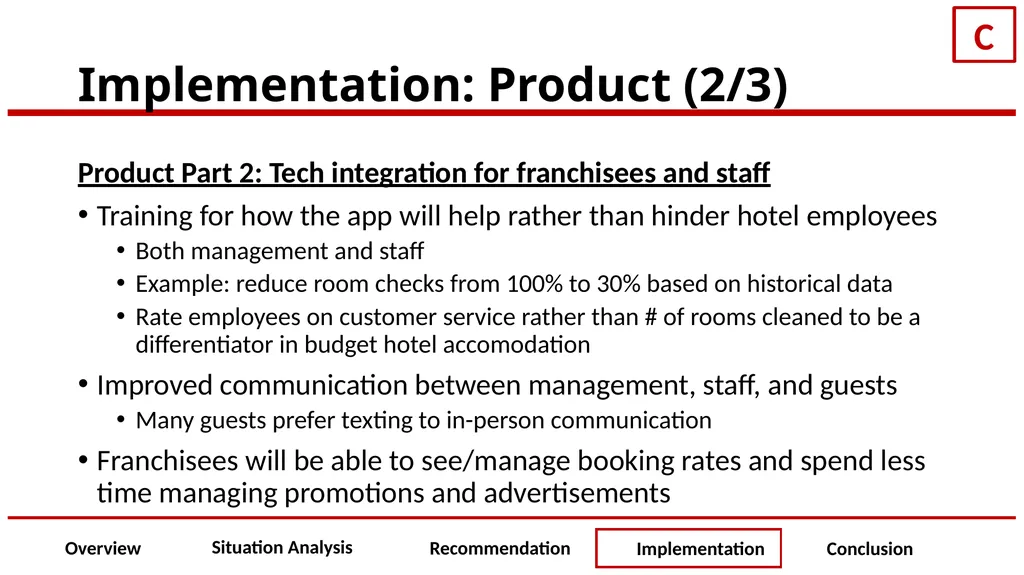
Implementation: Product (2/3) Product Part 2: Tech integration for franchisees and staff
Training for how the app will help rather than hinder hotel employees
Both management and staff
Example: reduce room checks from 100% to 30% based on historical data
Rate employees on customer service rather than # of rooms cleaned to be a differentiator in budget hotel accomodation
Improved communication between management, staff, and guests
Many guests prefer texting to in-person communication
Franchisees will be able to see/manage booking rates and spend less time managing promotions and advertisements<br>
32
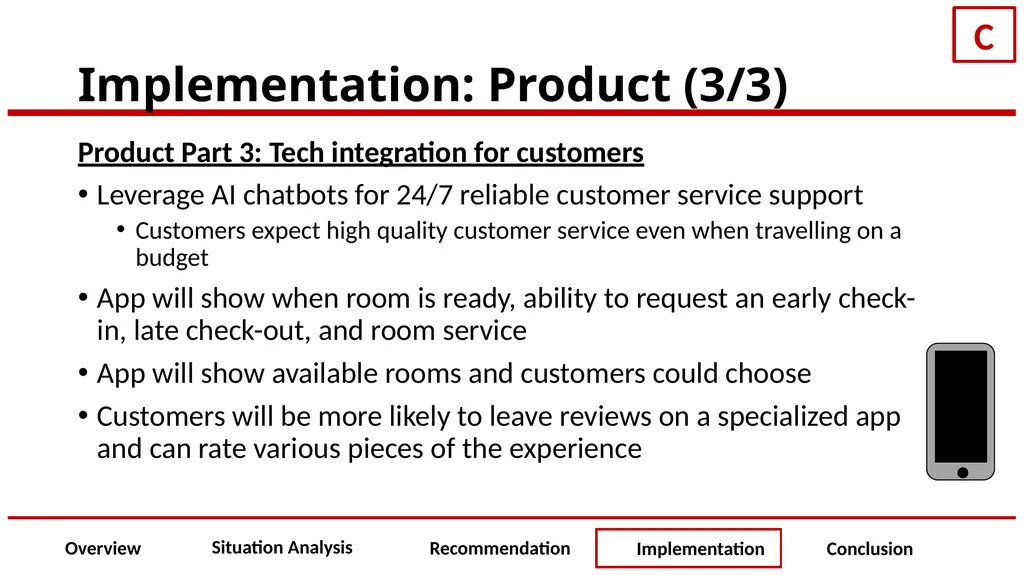
Implementation: Product (3/3) Product Part 3: Tech integration for customers
Leverage AI chatbots for 24/7 reliable customer service support
Customers expect high quality customer service even when travelling on a budget
App will show when room is ready, ability to request an early check-in, late check-out, and room service
App will show available rooms and customers could choose
Customers will be more likely to leave reviews on a specialized app and can rate various pieces of the experience<br>
33
Implementation Overview<br>
34
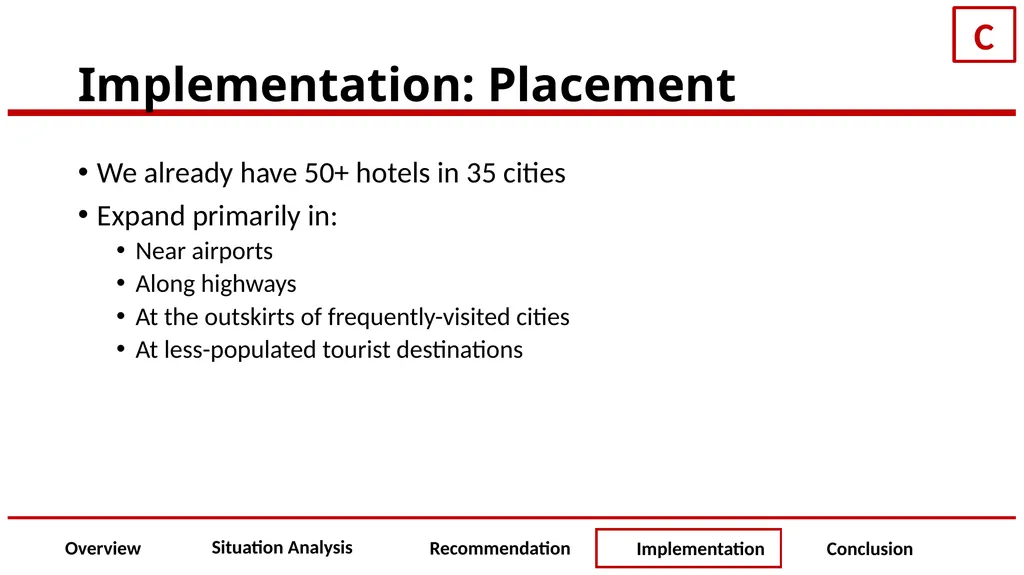
Implementation: Placement We already have 50+ hotels in 35 cities
Expand primarily in:
Near airports
Along highways
At the outskirts of frequently-visited cities
At less-populated tourist destinations<br>
35
Implementation Overview<br>
36
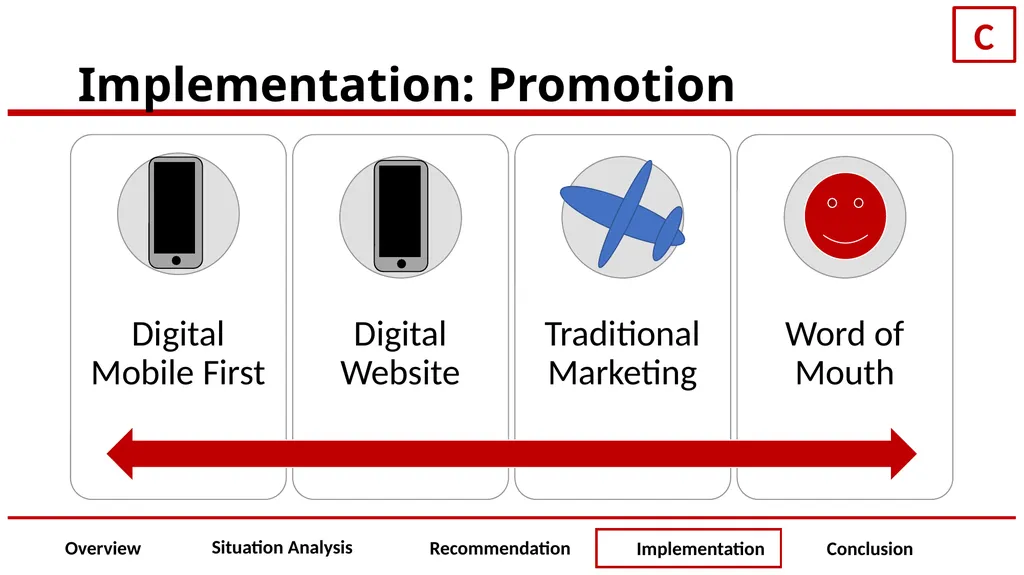
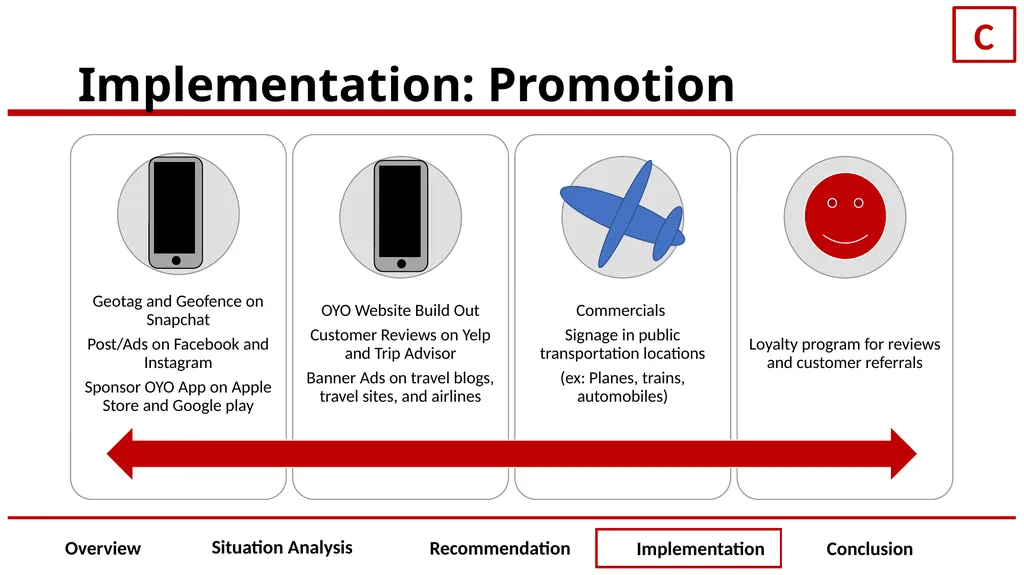
Implementation: Promotion<br>
37
Implementation: Promotion<br>
38
Implementation Overview<br>
39
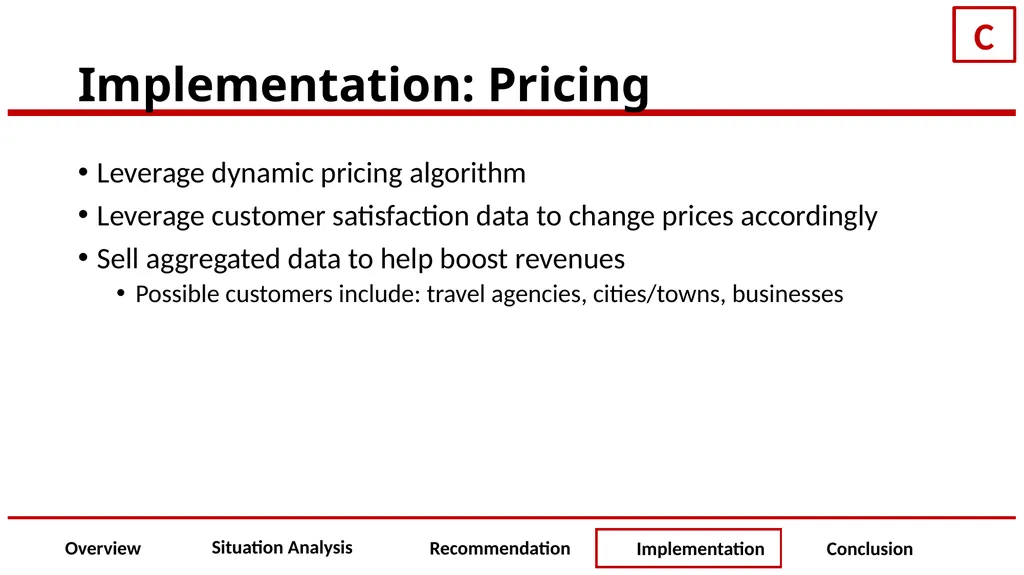
Implementation: Pricing Leverage dynamic pricing algorithm
Leverage customer satisfaction data to change prices accordingly
Sell aggregated data to help boost revenues
Possible customers include: travel agencies, cities/towns, businesses<br>
40
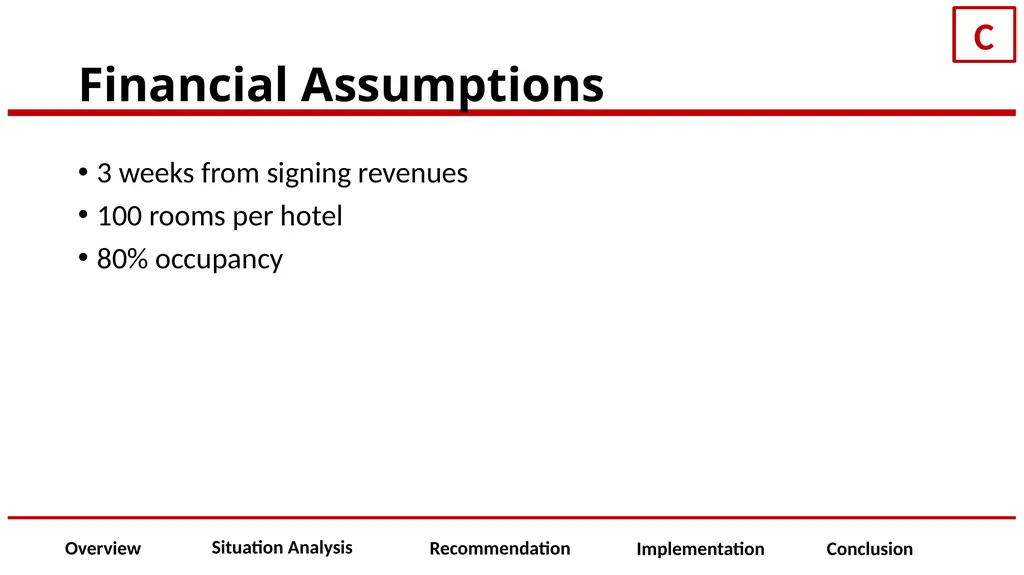
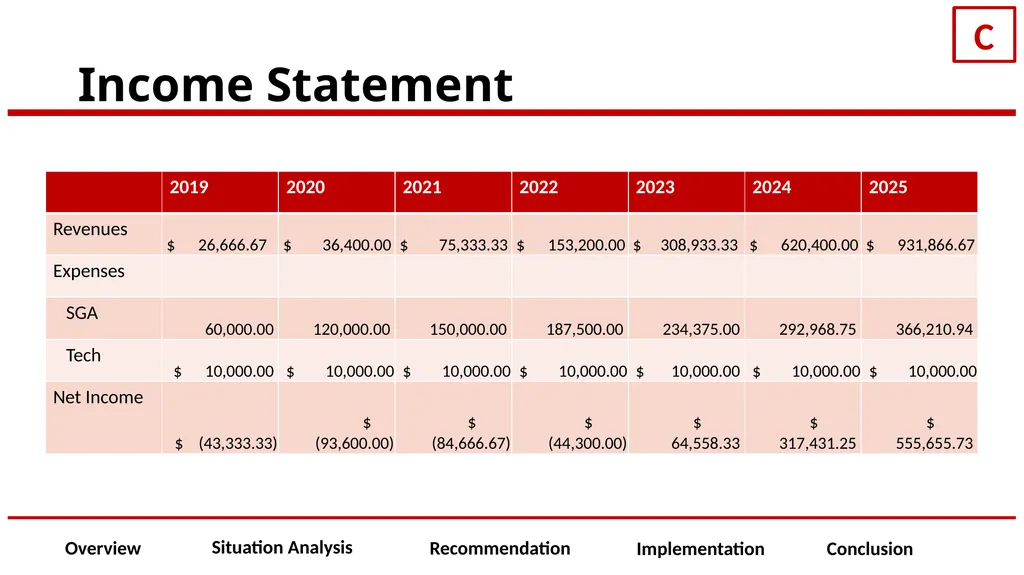
Financial Assumptions 3 weeks from signing revenues
100 rooms per hotel
80% occupancy<br>
45
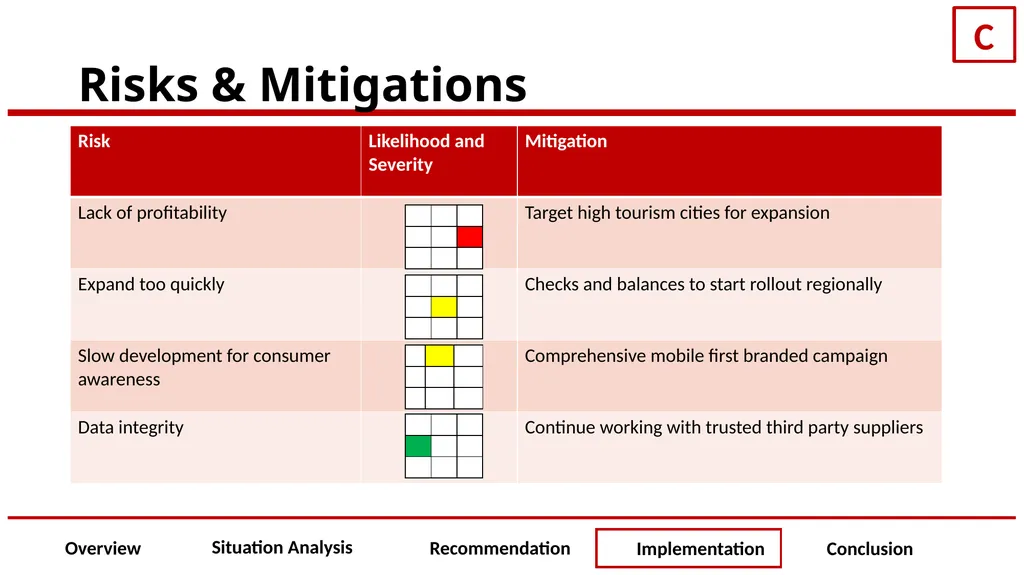
Risks & Mitigations<br>
46
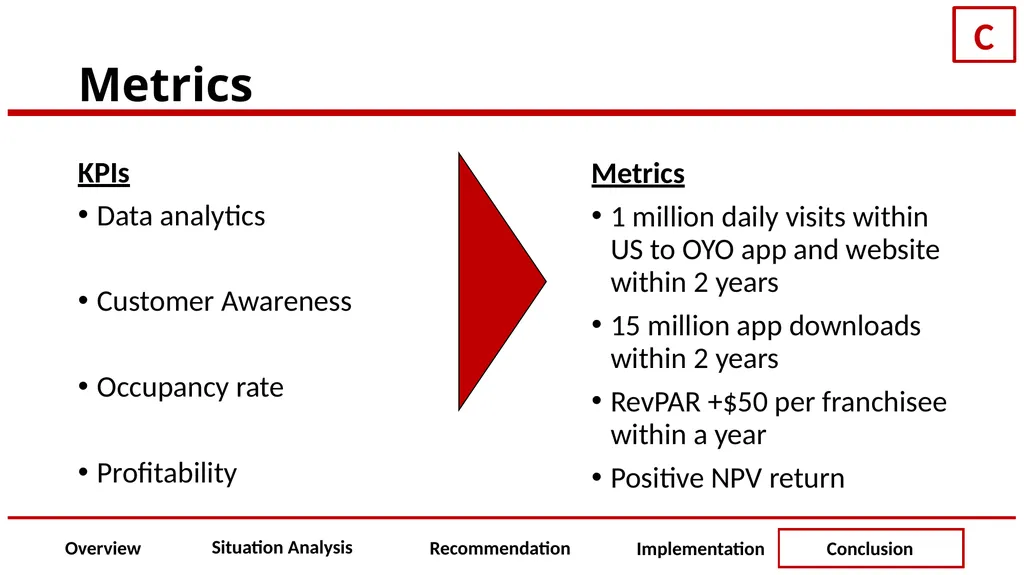
Metrics KPIs
Data analytics
Customer Awareness
Occupancy rate
Profitability Metrics
1 million daily visits within US to OYO app and website within 2 years
15 million app downloads within 2 years
RevPAR +$50 per franchisee within a year
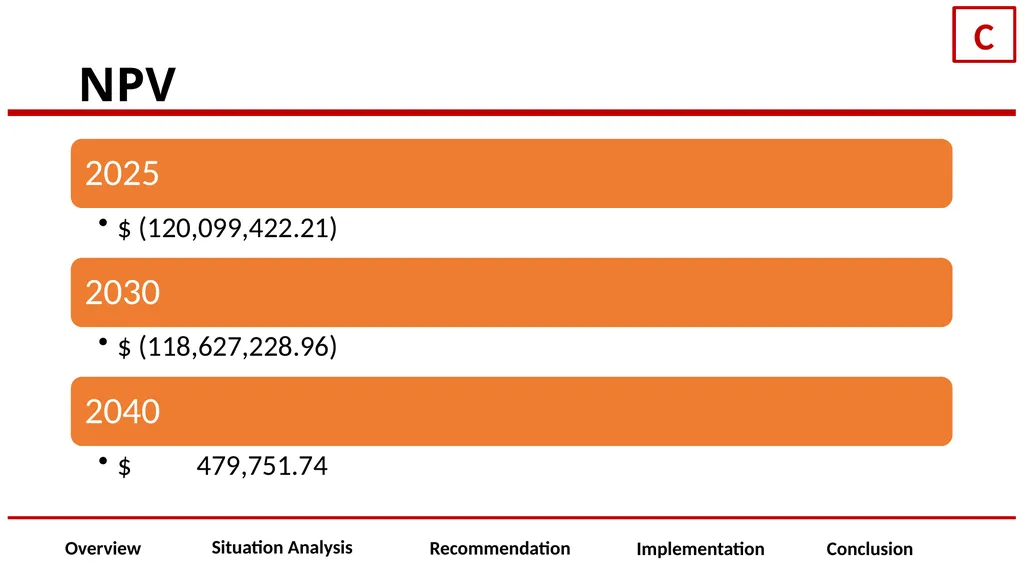
Positive NPV return<br>
47
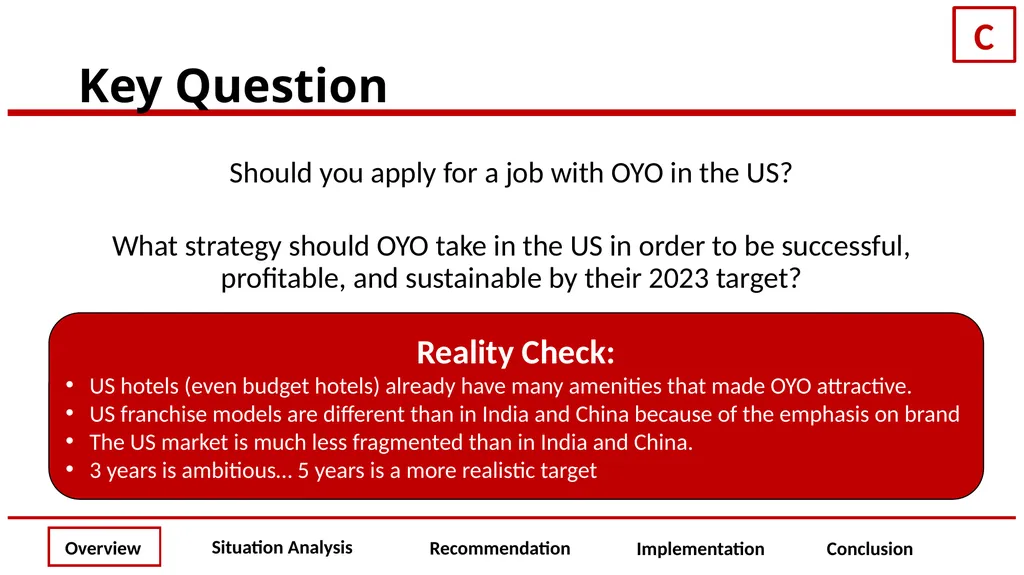
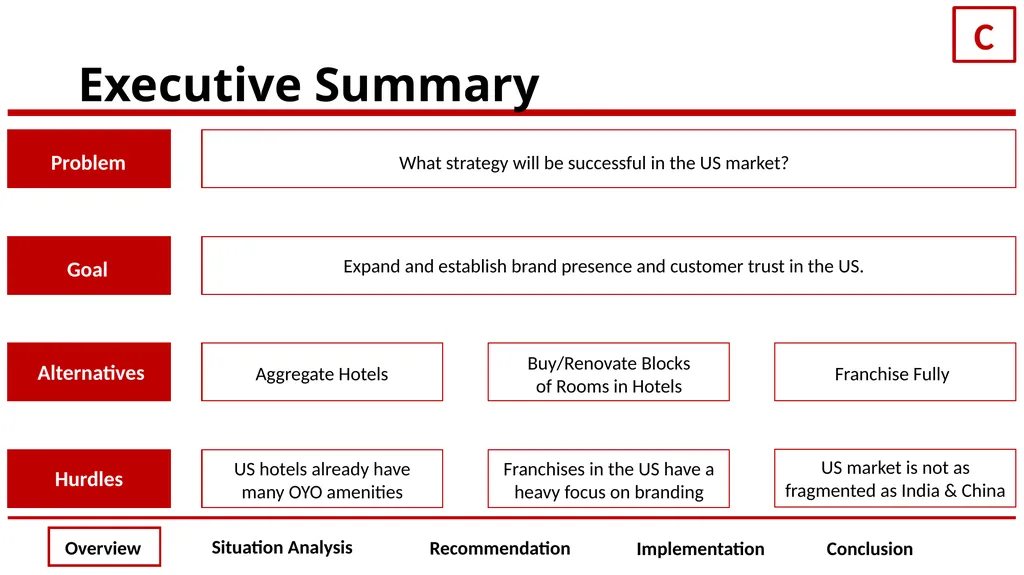
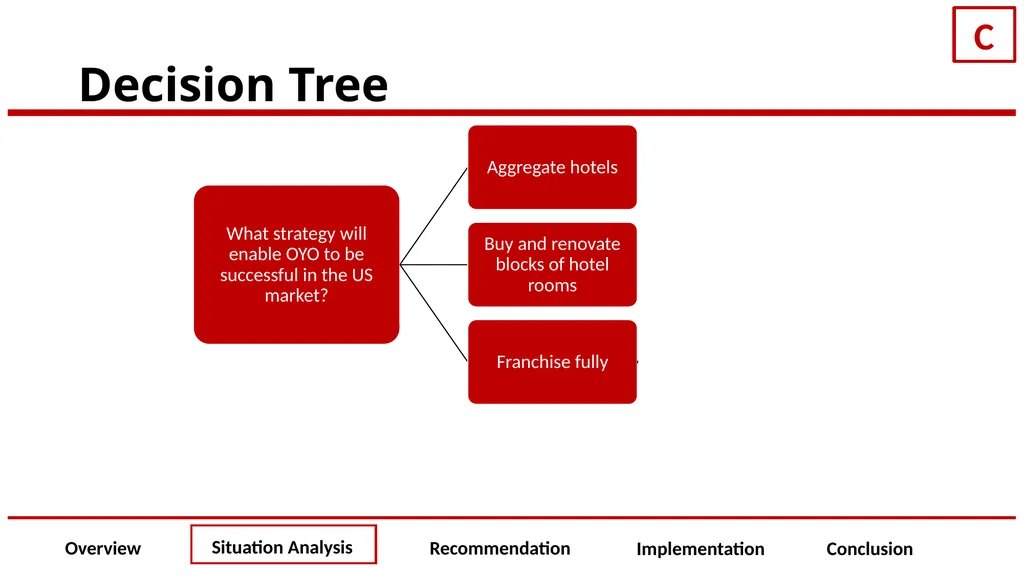
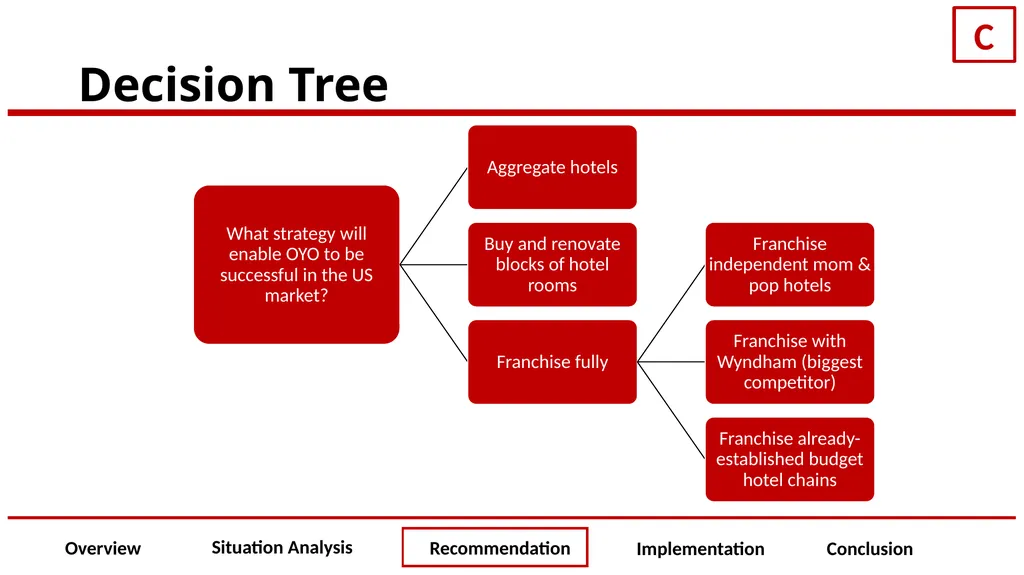
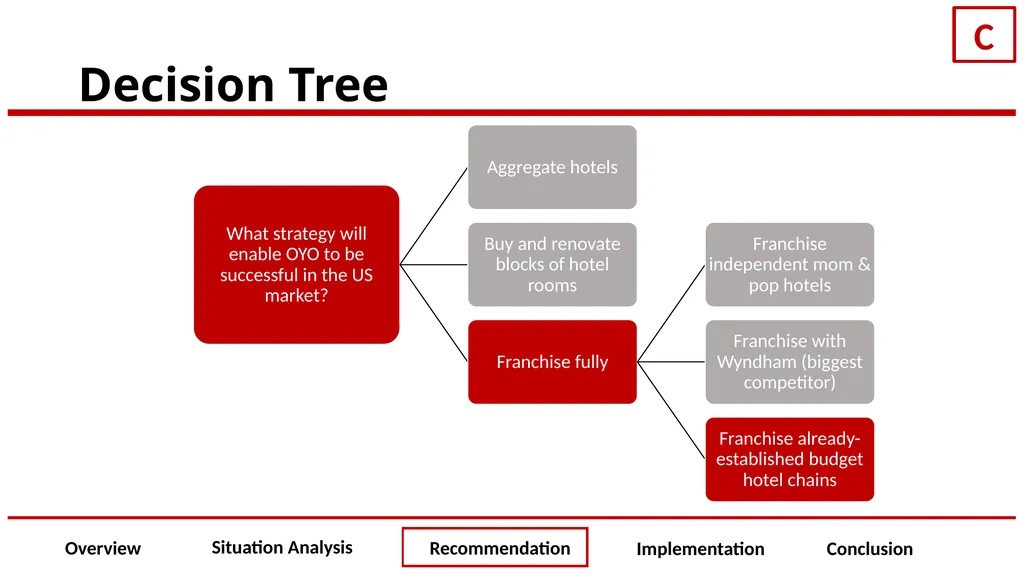
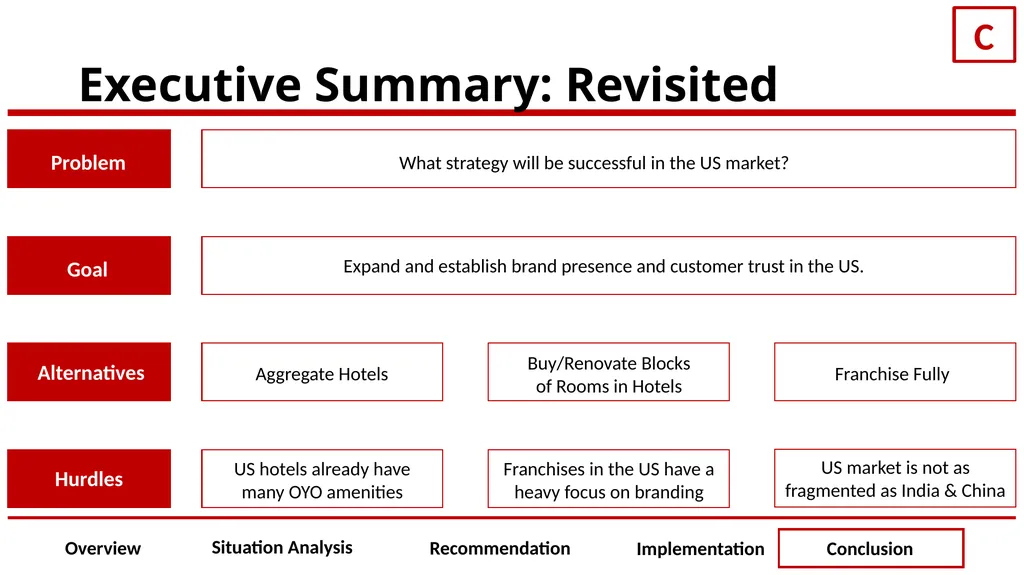
Executive Summary: Revisited Problem Goal Alternatives Hurdles What strategy will be successful in the US market? Expand and establish brand presence and customer trust in the US. Aggregate Hotels Buy/Renovate Blocks
of Rooms in Hotels Franchise Fully US hotels already have many OYO amenities Franchises in the US have a heavy focus on branding US market is not as fragmented as India & China<br>
48
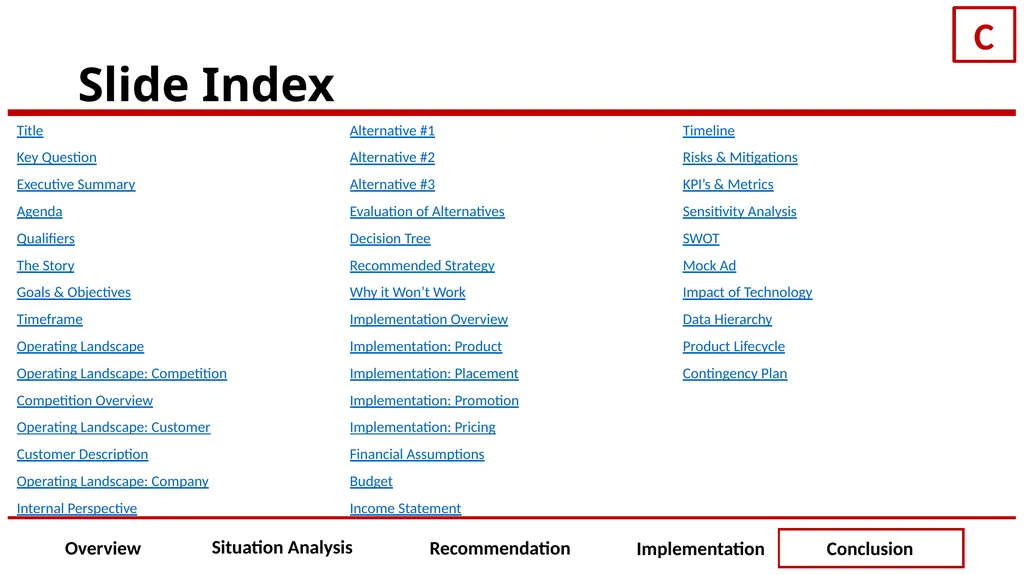
Slide Index Title
Key Question
Executive Summary
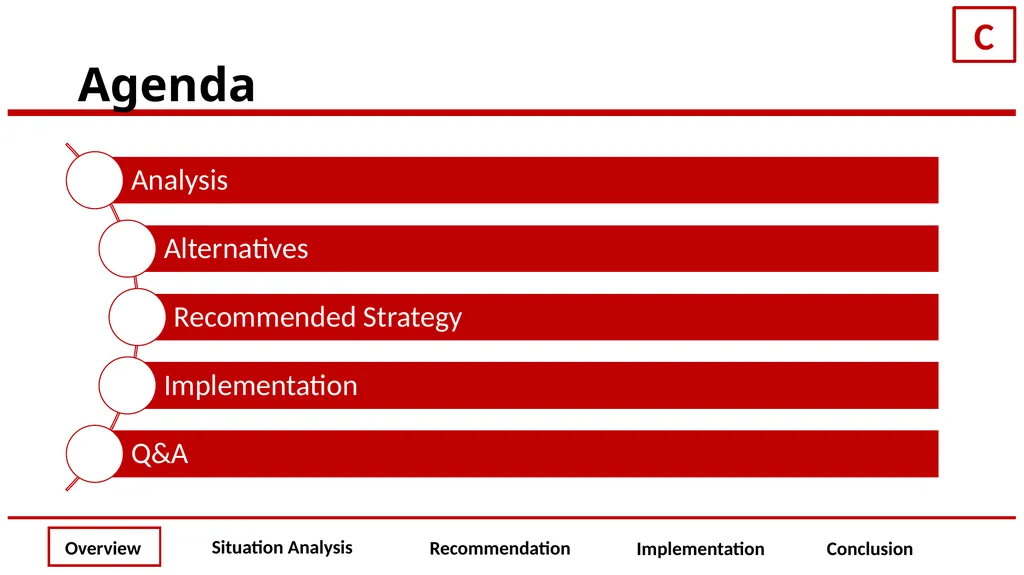
Agenda
Qualifiers
The Story
Goals & Objectives
Timeframe
Operating Landscape
Operating Landscape: Competition
Competition Overview
Operating Landscape: Customer
Customer Description
Operating Landscape: Company
Internal Perspective
Alternative #1
Alternative #2
Alternative #3
Evaluation of Alternatives
Decision Tree
Recommended Strategy
Why it Won’t Work
Implementation Overview
Implementation: Product
Implementation: Placement
Implementation: Promotion
Implementation: Pricing
Financial Assumptions
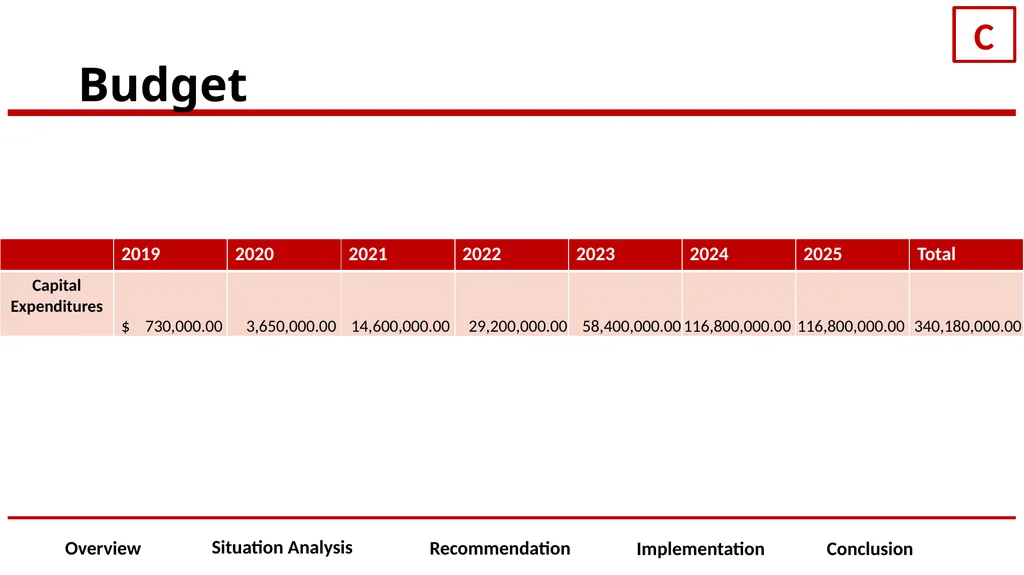
Budget
Income Statement
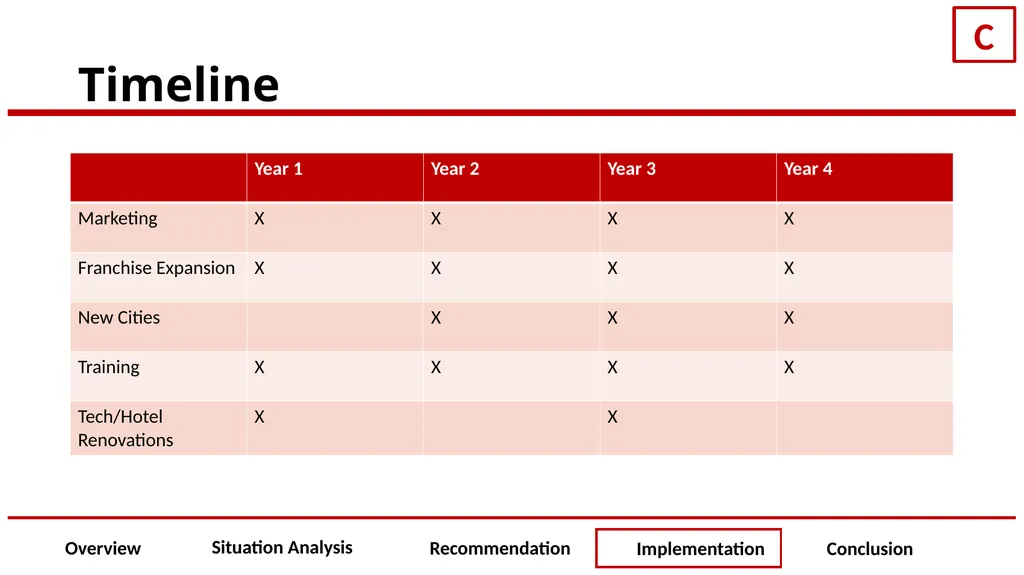
Timeline
Risks & Mitigations
KPI’s & Metrics
Sensitivity Analysis
SWOT
Mock Ad
Impact of Technology
Data Hierarchy
Product Lifecycle
Contingency Plan<br>
51
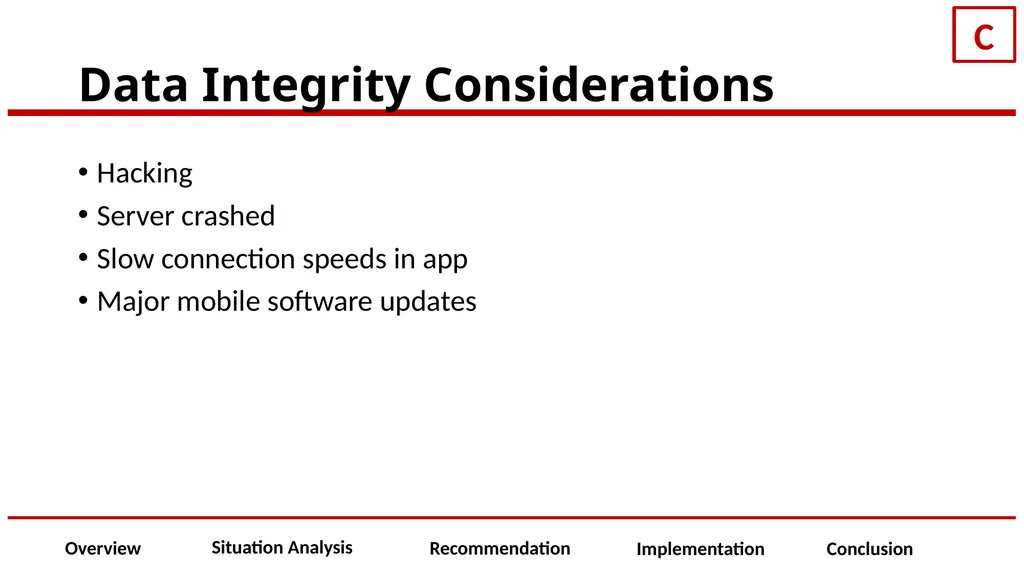
Data Integrity Considerations Hacking
Server crashed
Slow connection speeds in app
Major mobile software updates<br>