Pain management Prescribing: Case Studies Inge Bateman Lead Clinical Nurse Specialist Inpatient Pain Service University Sussex Hospitals NHS Foundation Trust Worthing, St. Richards Southlands Hospitals Definition of pain Why do we treat
"Pain management Prescribing: Case Studies Inge" is the property of its rightful owner. Permission is granted to
download and print the materials on this website for personal, non-commercial use only, and to display it
on your personal computer provided you do not modify the materials and that you retain all copyright
notices contained in the materials. By downloading content from our website, you accept the terms of this
agreement.
Presentation Transcript
01
Pain management Prescribing: Case Studies Inge Bateman
Lead Clinical Nurse Specialist Inpatient Pain Service
University Sussex Hospitals NHS Foundation Trust
Worthing, St. Richards & Southlands Hospitals<br>
02
Definition of pain
Why do we treat pain?
Pain assessment
Case study presentation – management of pain is easy or is it? Session content<br>
03
The International Association for the Study of Pain (IASP) now define pain as “An unpleasant sensory and emotional experience associated with, or resembling that associated with, actual or potential tissue damage,”
Six key notes and etymology:
Pain is always a personal experience that is influenced to varying degrees by biological, psychological, and social factors.
Pain and nociception are different phenomena. Pain cannot be inferred solely from activity in sensory neurons.
Through their life experiences, individuals learn the concept of pain.
A person’s report of an experience as pain should be respected.
Although pain usually serves an adaptive role, it may have adverse effects on function and social and psychological well-being.
Verbal description is only one of several behaviors to express pain; inability to communicate does not negate the possibility that a human or a nonhuman animal experiences pain.
IASP 2202020 Definition of pain<br>
04
Humanitarian reasons
Reduce complications
Speed up Recovery
Promote early discharge
Quality of life improved Why treat acute pain?<br>
05
General (reduced mobility – increased risk of thrombo embolic event)
Respiratory (Severe pain (especially upper abdomen & thoracic - may cause inability to cough FRC atelectasis, V/Q abnormalities, hypoxaemia)
Cardiovascular (activates sympathetic efferent nerves causing HR, Inotropy, BP which myocardial O2 demand and myocardial O2 supply so risk of cardiac ischaemia)
GI (Sympathetic activity GI motility contributes to ileus)
Chronicity (Poorly controlled acute pain can lead to debilitating chronic pain syndromes) Consequences if pain not well controlled<br>
06
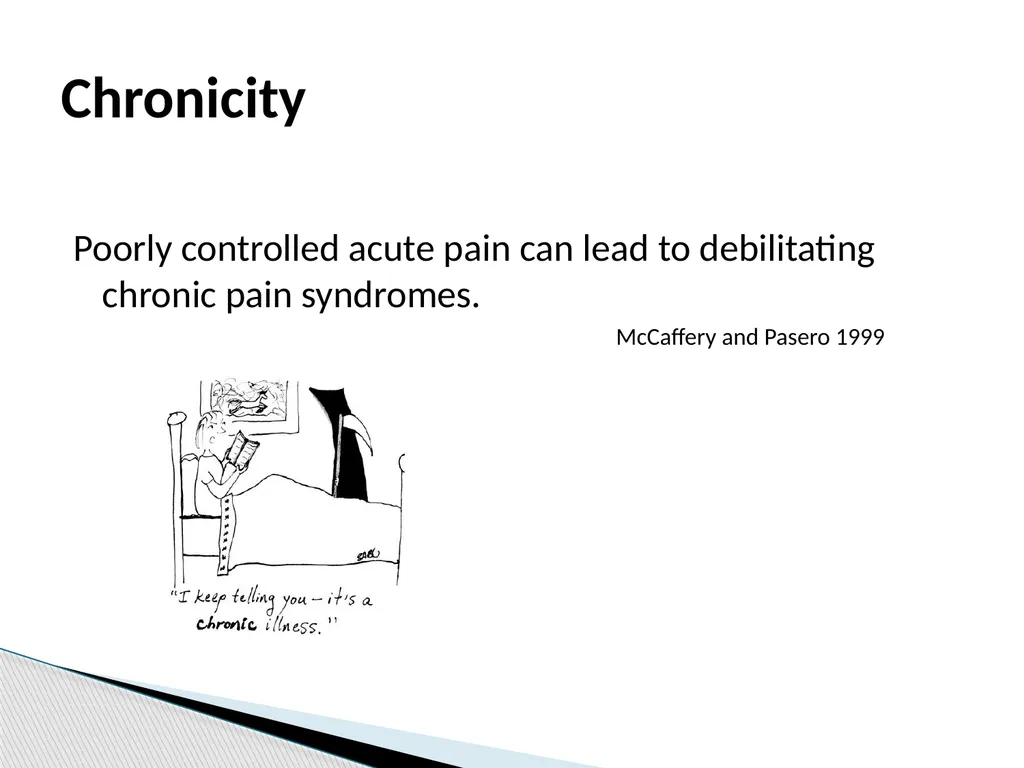
Poorly controlled acute pain can lead to debilitating chronic pain syndromes.
McCaffery and Pasero 1999 Chronicity<br>
07
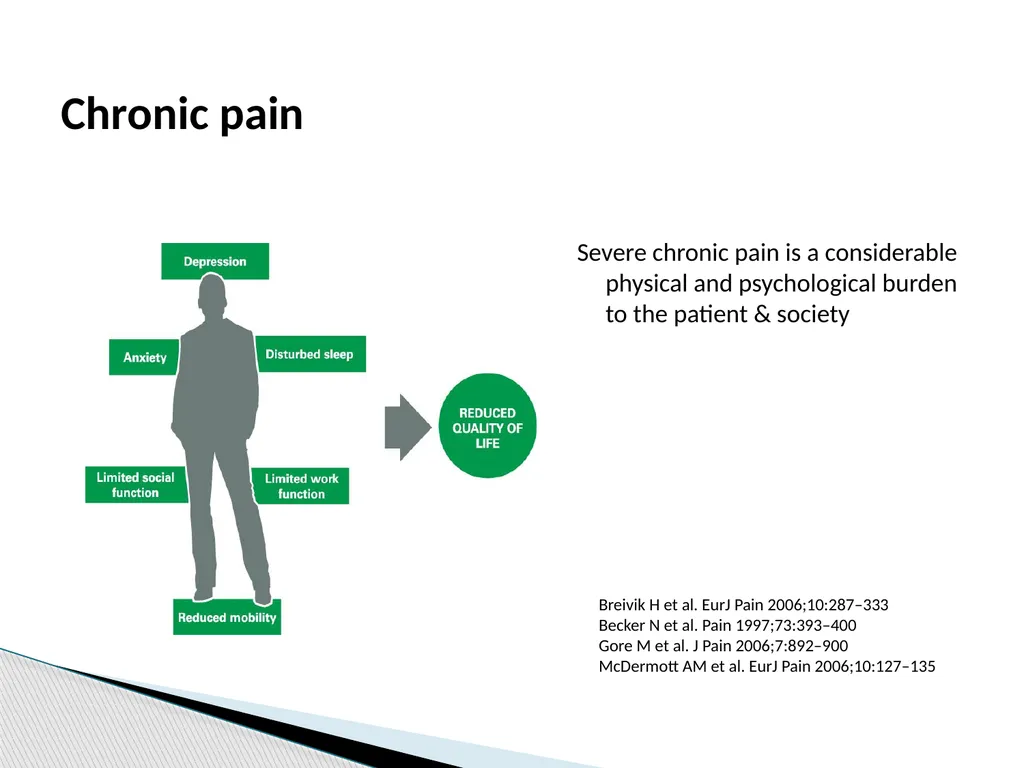
Chronic pain Severe chronic pain is a considerable physical and psychological burden to the patient & society Breivik H et al. EurJ Pain 2006;10:287–333
Becker N et al. Pain 1997;73:393–400
Gore M et al. J Pain 2006;7:892–900
McDermott AM et al. EurJ Pain 2006;10:127–135<br>
08
In order to treat pain effectively it is necessary to assess it.
Pain is most effectively assessed by means of self-reporting.
Stannard, C 1998. Effective pain management<br>
09
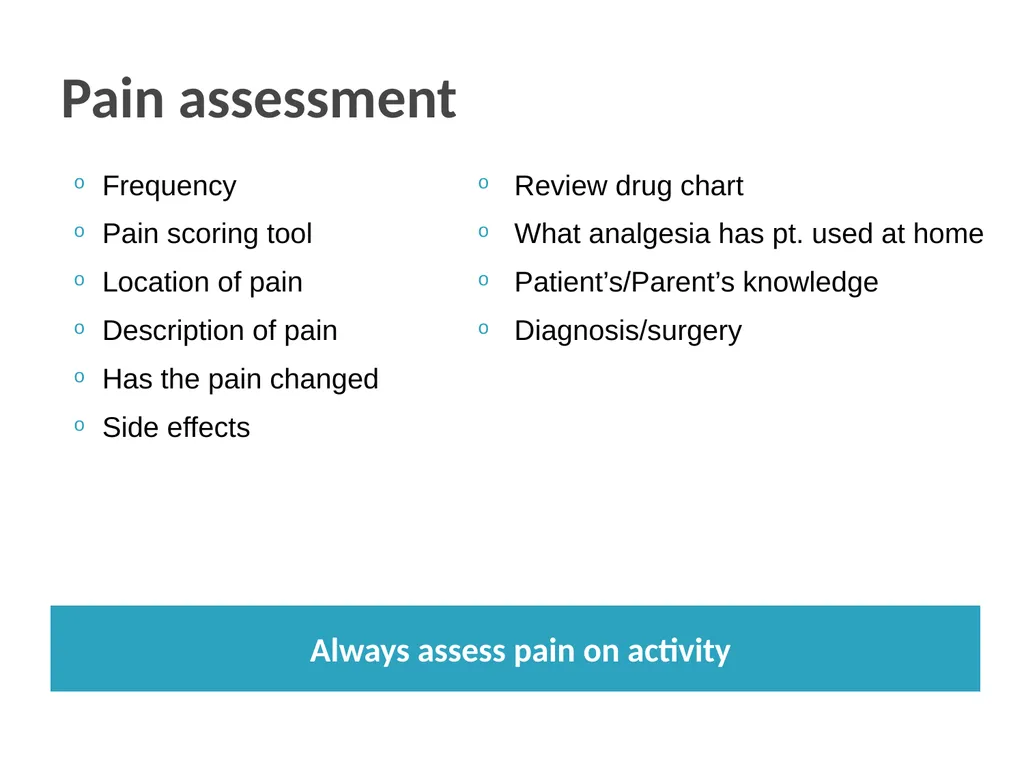
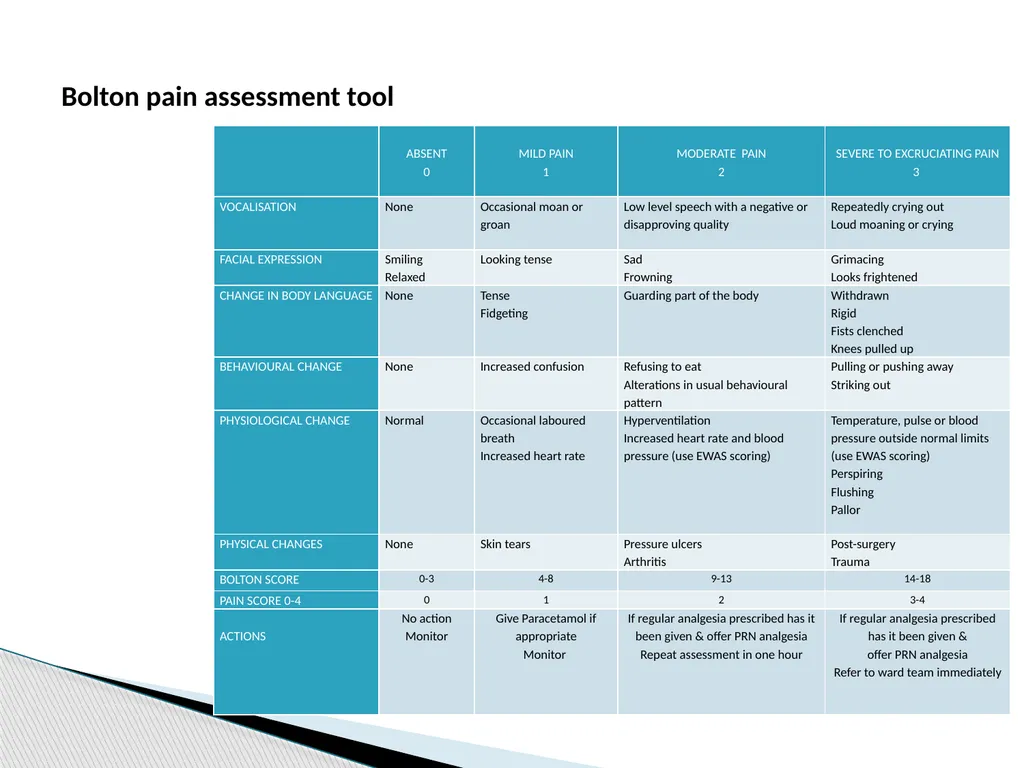
Pain assessment Always assess pain on activity Frequency
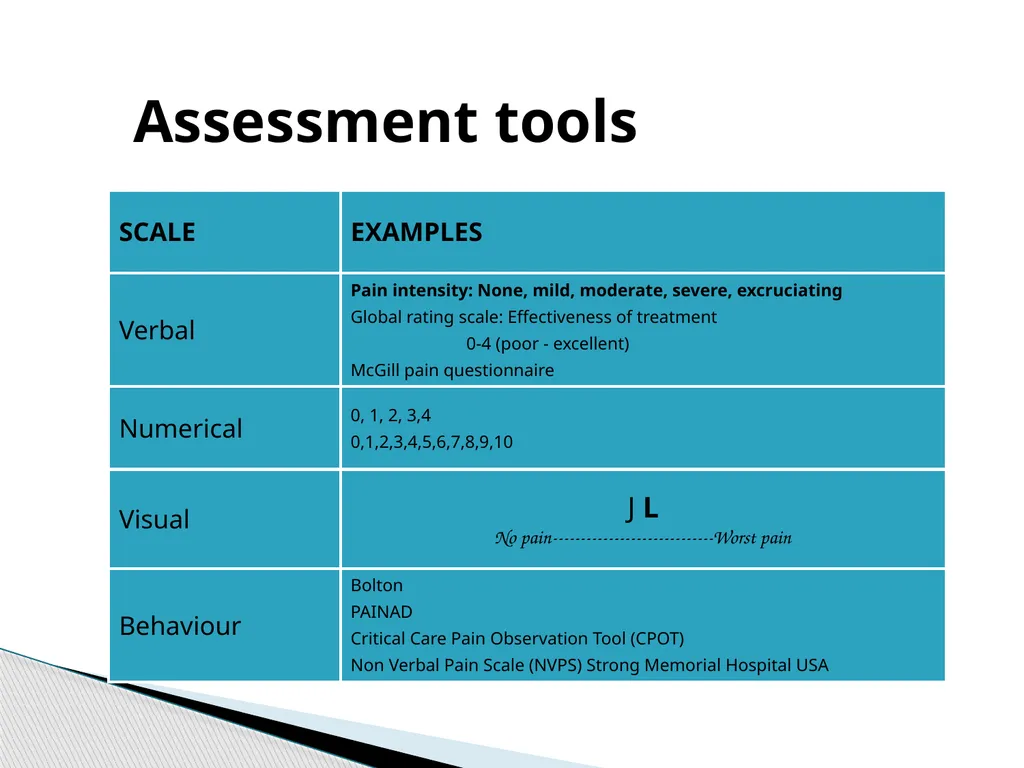
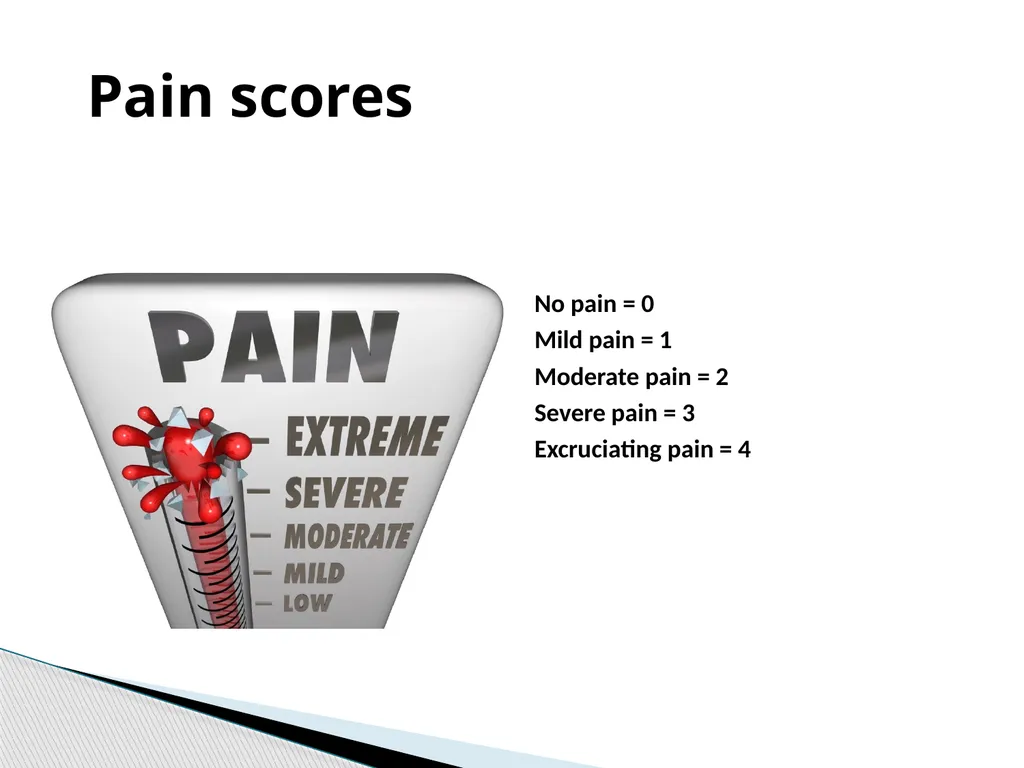
Pain scoring tool
Location of pain
Description of pain
Has the pain changed
Side effects Review drug chart
What analgesia has pt. used at home
Patient’s/Parent’s knowledge
Diagnosis/surgery<br>
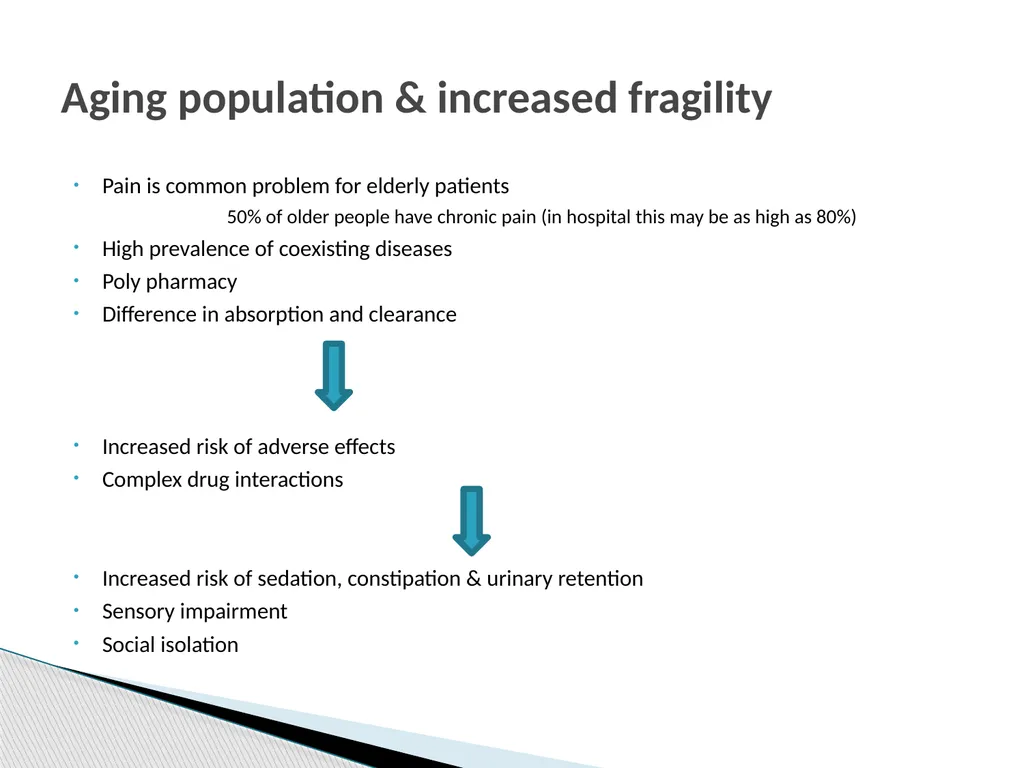
Pain is common problem for elderly patients
50% of older people have chronic pain (in hospital this may be as high as 80%)
High prevalence of coexisting diseases
Poly pharmacy
Difference in absorption and clearance
Increased risk of adverse effects
Complex drug interactions
Increased risk of sedation, constipation & urinary retention
Sensory impairment
Social isolation Aging population & increased fragility<br>
14
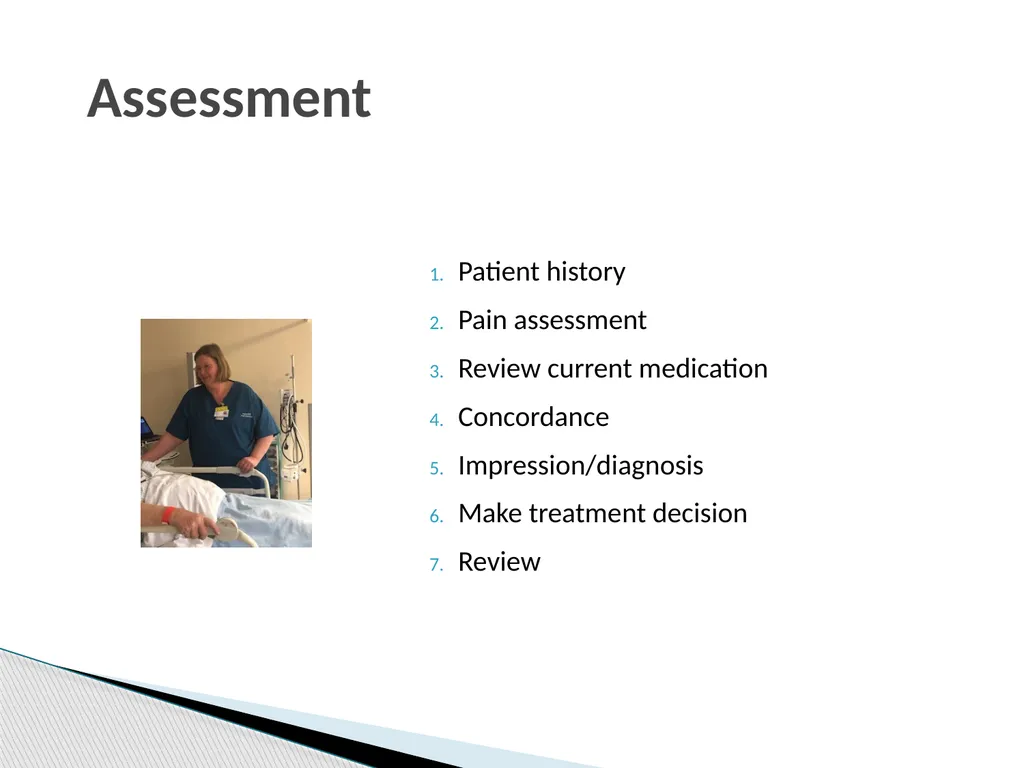
Assessment Patient history
Pain assessment
Review current medication
Concordance
Impression/diagnosis
Make treatment decision
Review<br>
15
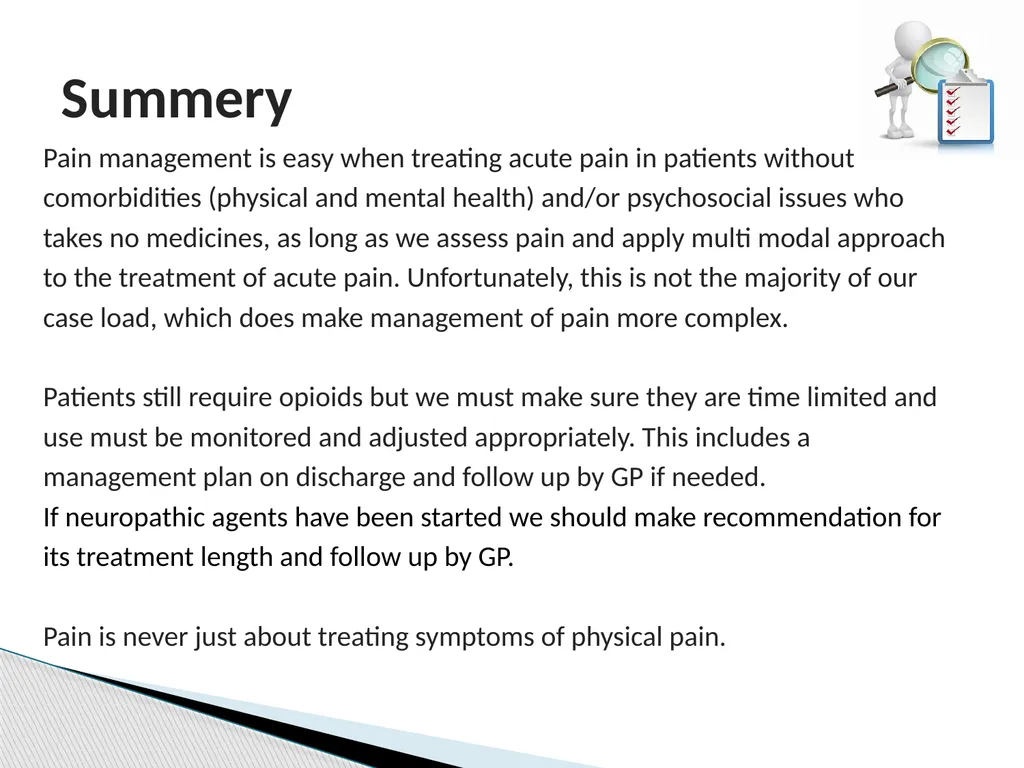
Pain management is easy when treating acute pain in patients without
comorbidities (physical and mental health) and/or psychosocial issues who
takes no medicines, as long as we assess pain and apply multi modal approach
to the treatment of acute pain. Unfortunately, this is not the majority of our
case load, which does make management of pain more complex.
Patients still require opioids but we must make sure they are time limited and
use must be monitored and adjusted appropriately. This includes a
management plan on discharge and follow up by GP if needed.
If neuropathic agents have been started we should make recommendation for
its treatment length and follow up by GP.
Pain is never just about treating symptoms of physical pain. Summery<br>