Parents evening presentation Help your son or daughter through the UCAS process Contents Why go on to higher education? The applicant journey and how you can help Research Personal statements Offers and replies Results At the heart of
Related Topics
Download this presentation From Below
"Parents’ evening presentation Help your son or" is the property of its rightful owner. Permission is granted to
download and print the materials on this website for personal, non-commercial use only, and to display it
on your personal computer provided you do not modify the materials and that you retain all copyright
notices contained in the materials. By downloading content from our website, you accept the terms of this
agreement.
Share
Embed code
Presentation Transcript
01
Parents’ evening presentation Help your son or daughter through the UCAS process<br>
02
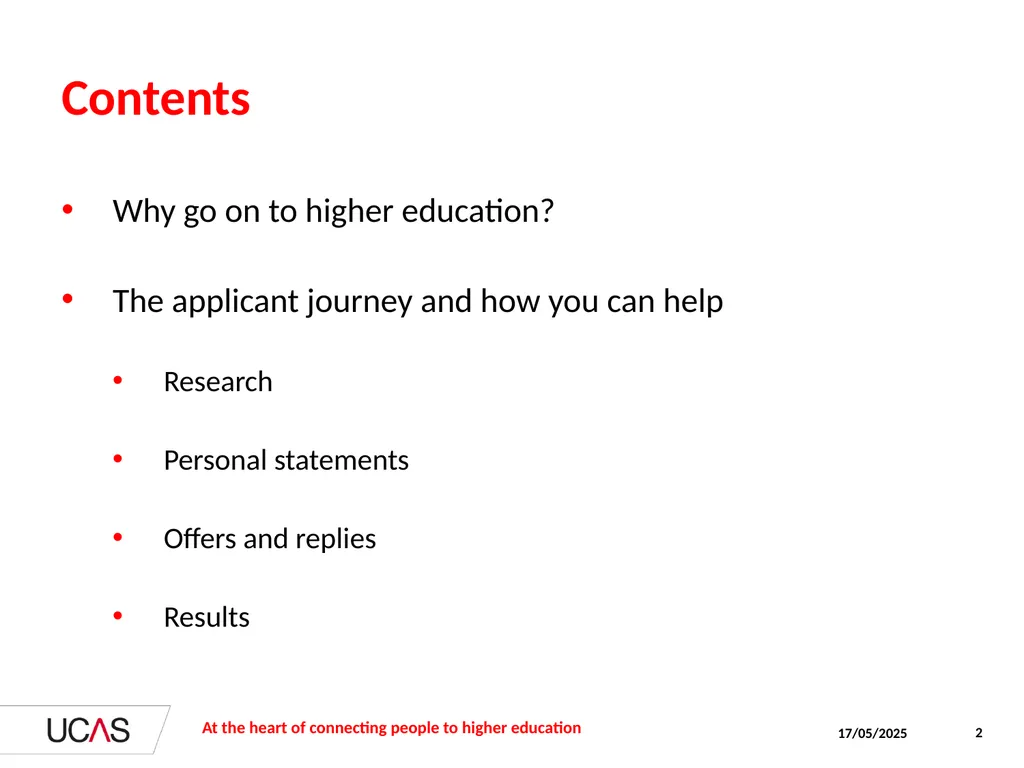
Contents Why go on to higher education?
The applicant journey and how you can help
Research
Personal statements
Offers and replies
Results At the heart of connecting people to higher education<br>
03
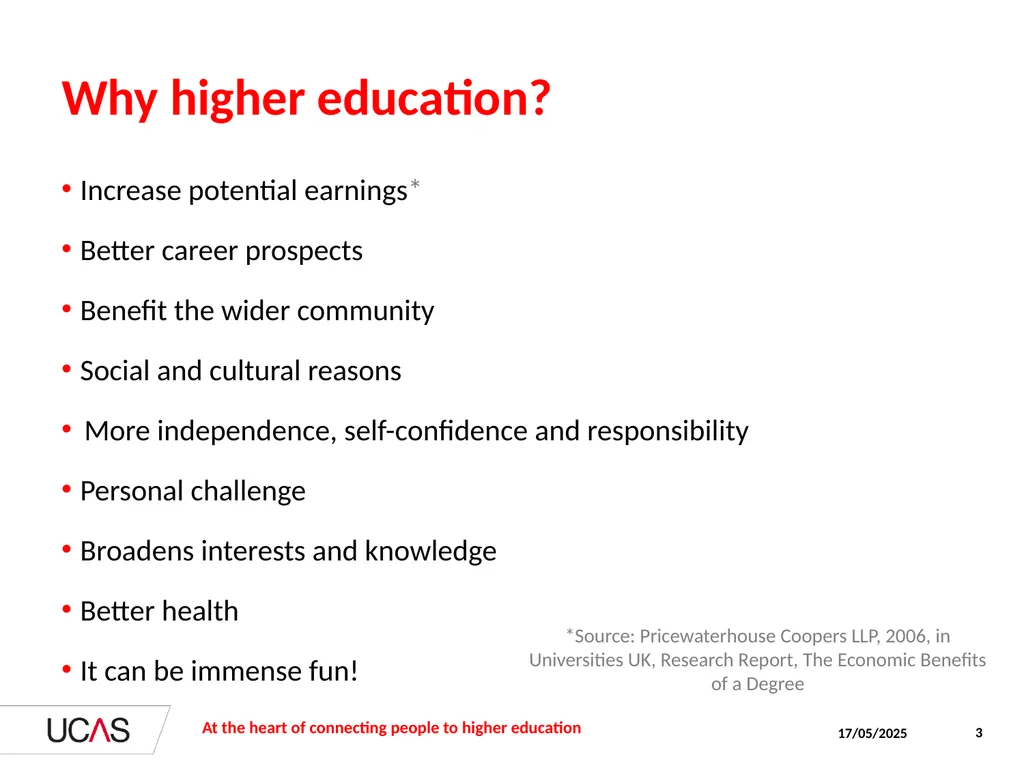
Why higher education? Increase potential earnings*
Better career prospects
Benefit the wider community
Social and cultural reasons
More independence, self-confidence and responsibility
Personal challenge
Broadens interests and knowledge
Better health
It can be immense fun! At the heart of connecting people to higher education *Source: Pricewaterhouse Coopers LLP, 2006, in Universities UK, Research Report, The Economic Benefits of a Degree<br>
04
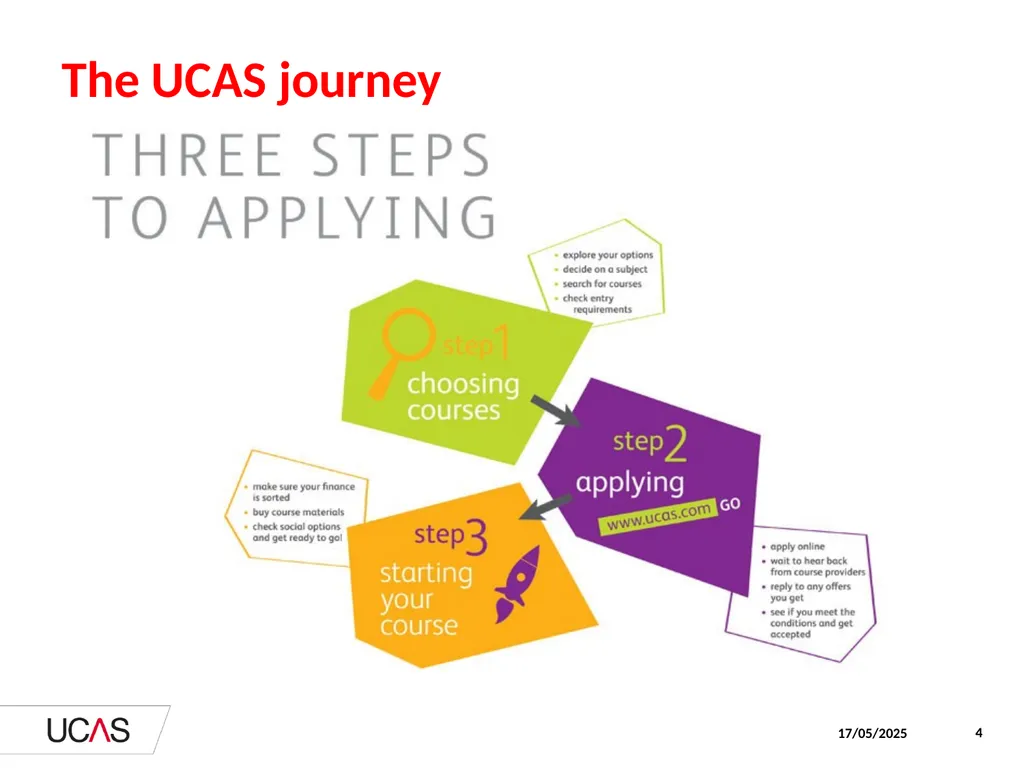
The UCAS journey<br>
05
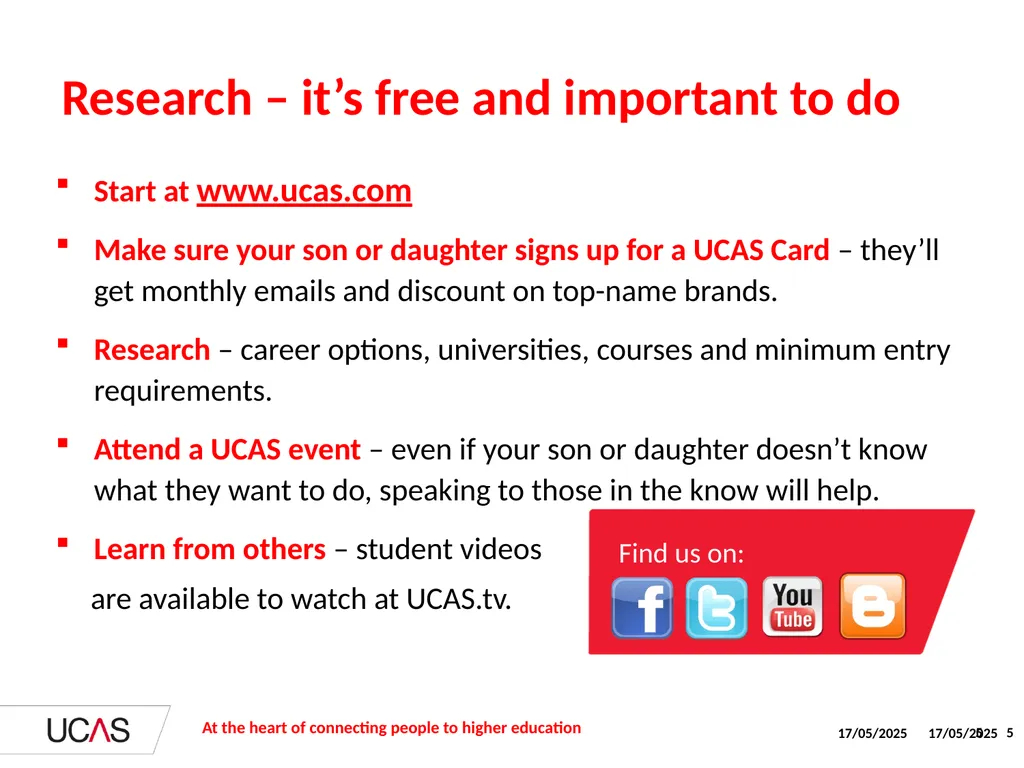
Start at www.ucas.com
Make sure your son or daughter signs up for a UCAS Card – they’ll get monthly emails and discount on top-name brands.
Research – career options, universities, courses and minimum entry requirements.
Attend a UCAS event – even if your son or daughter doesn’t know what they want to do, speaking to those in the know will help.
Learn from others – student videos
are available to watch at UCAS.tv. Research – it’s free and important to do At the heart of connecting people to higher education 06/01/2015 5 Find us on:<br>
06
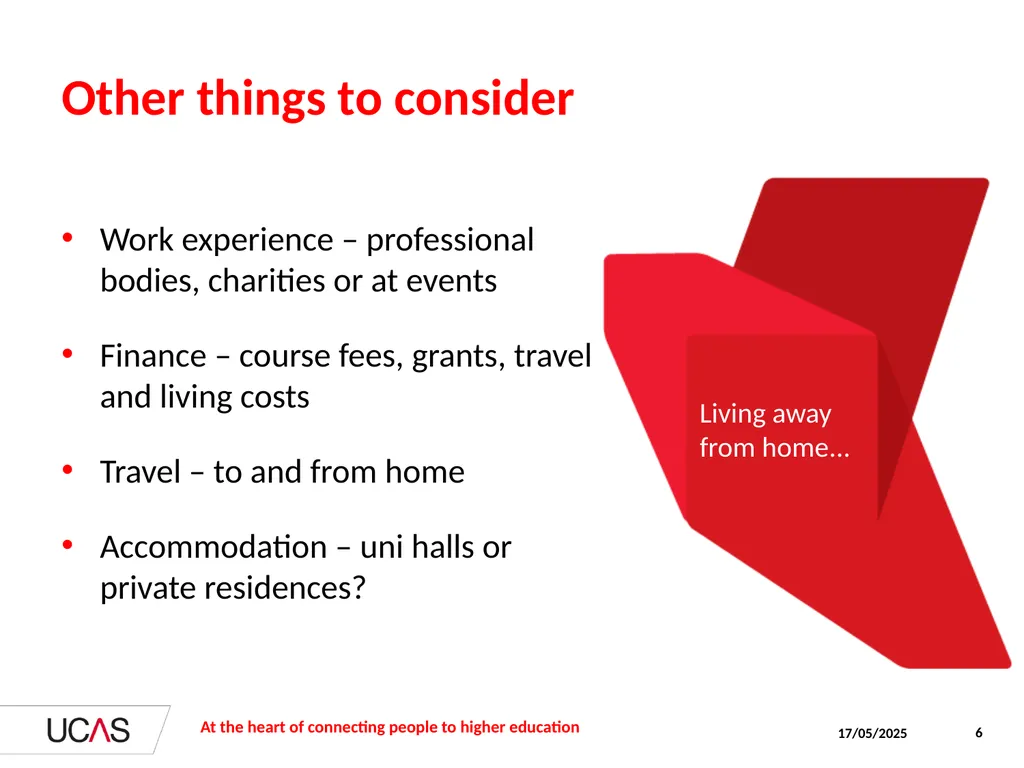
Other things to consider Work experience – professional bodies, charities or at events
Finance – course fees, grants, travel and living costs
Travel – to and from home
Accommodation – uni halls or private residences? 06/01/2015 At the heart of connecting people to higher education 6 Living away from home...<br>
07
How can you support the research process? Download the 2014 UCAS Parent Guide from the UCAS website.
Offer to attend open days with them, you may have a different perspective.
Financial assistance – with railway tickets.
Try to remain impartial. 06/01/2015 At the heart of connecting people to higher education 7 Visit
www.ucas.com/parents Sign up to the monthly UCAS Parents Newsletter.<br>
08
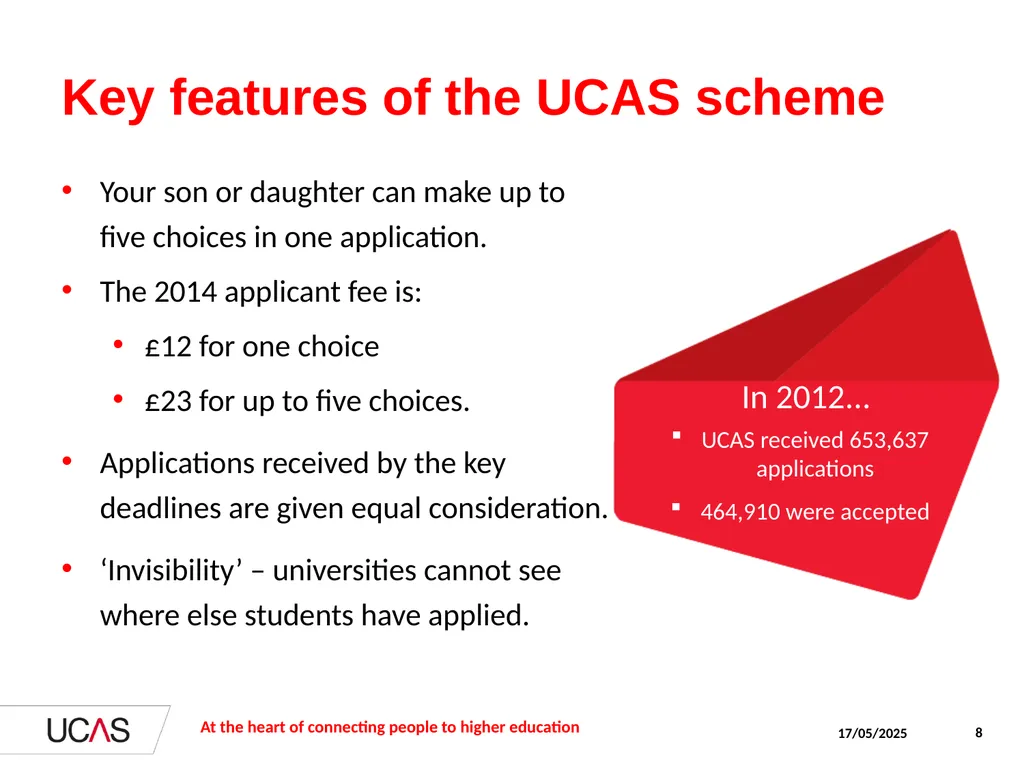
Key features of the UCAS scheme Your son or daughter can make up to five choices in one application.
The 2014 applicant fee is:
£12 for one choice
£23 for up to five choices.
Applications received by the key deadlines are given equal consideration.
‘Invisibility’ – universities cannot see where else students have applied. 06/01/2015 At the heart of connecting people to higher education 8 UCAS received 653,637 applications
464,910 were accepted In 2012...<br>
09
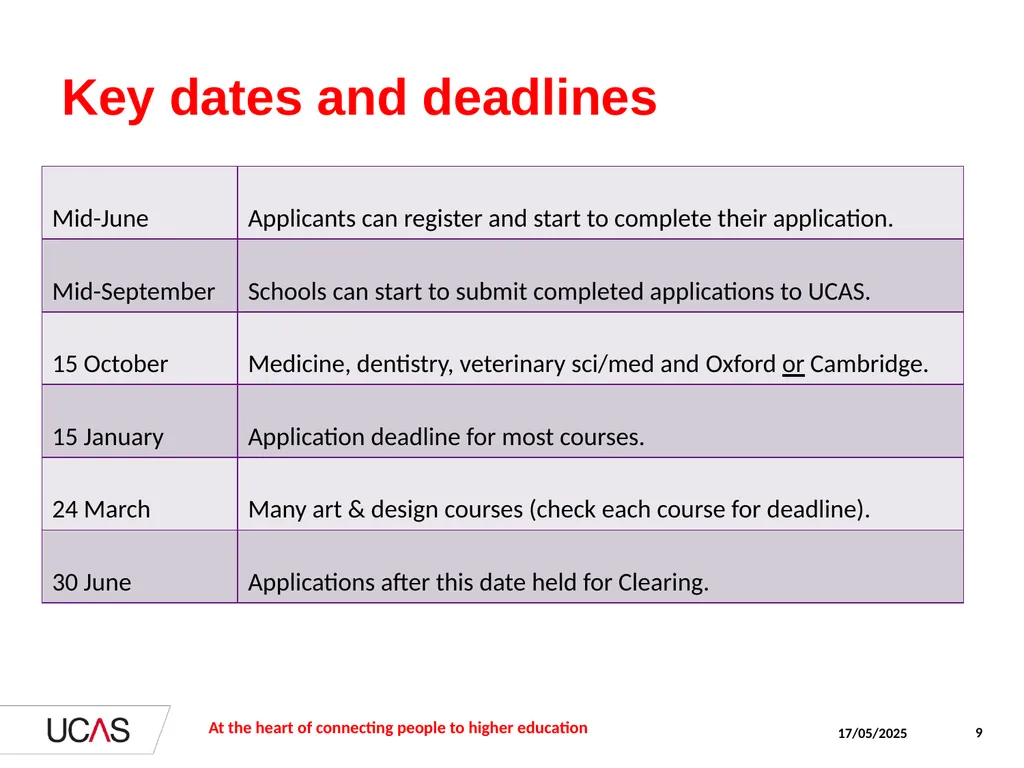
Key dates and deadlines At the heart of connecting people to higher education<br>
10
The UCAS application 06/01/2015 At the heart of connecting people to higher education 10<br>
11
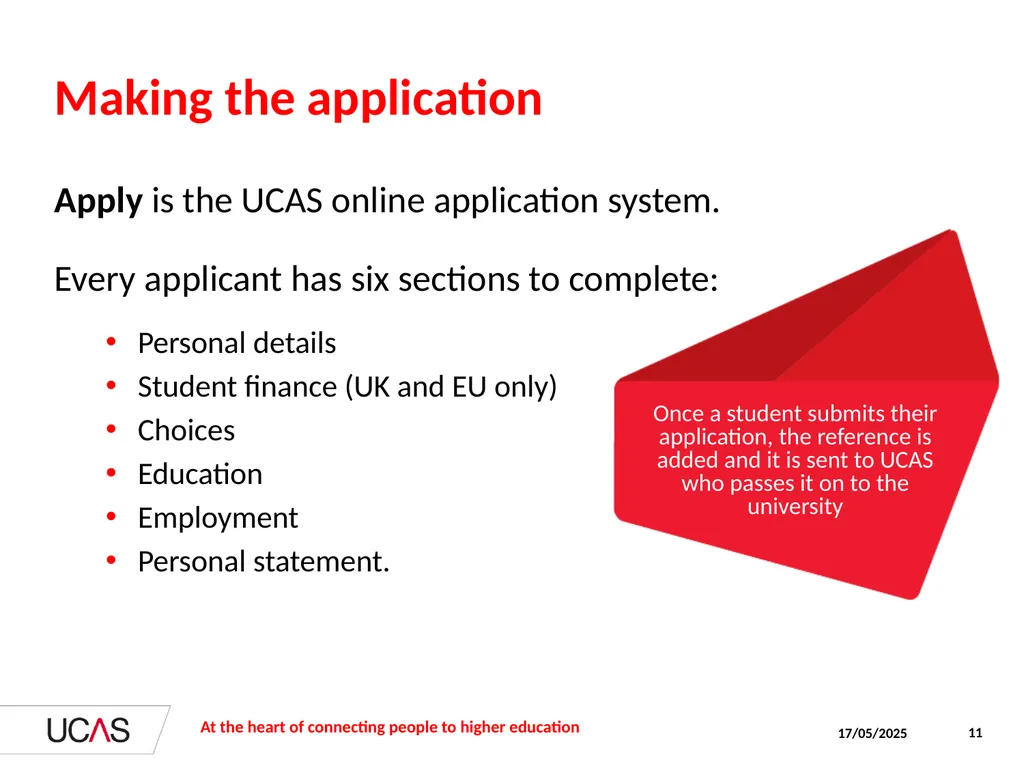
Making the application Apply is the UCAS online application system.
Every applicant has six sections to complete:
Personal details
Student finance (UK and EU only)
Choices
Education
Employment
Personal statement. 06/01/2015 At the heart of connecting people to higher education 11 Once a student submits their application, the reference is added and it is sent to UCAS who passes it on to the university<br>
12
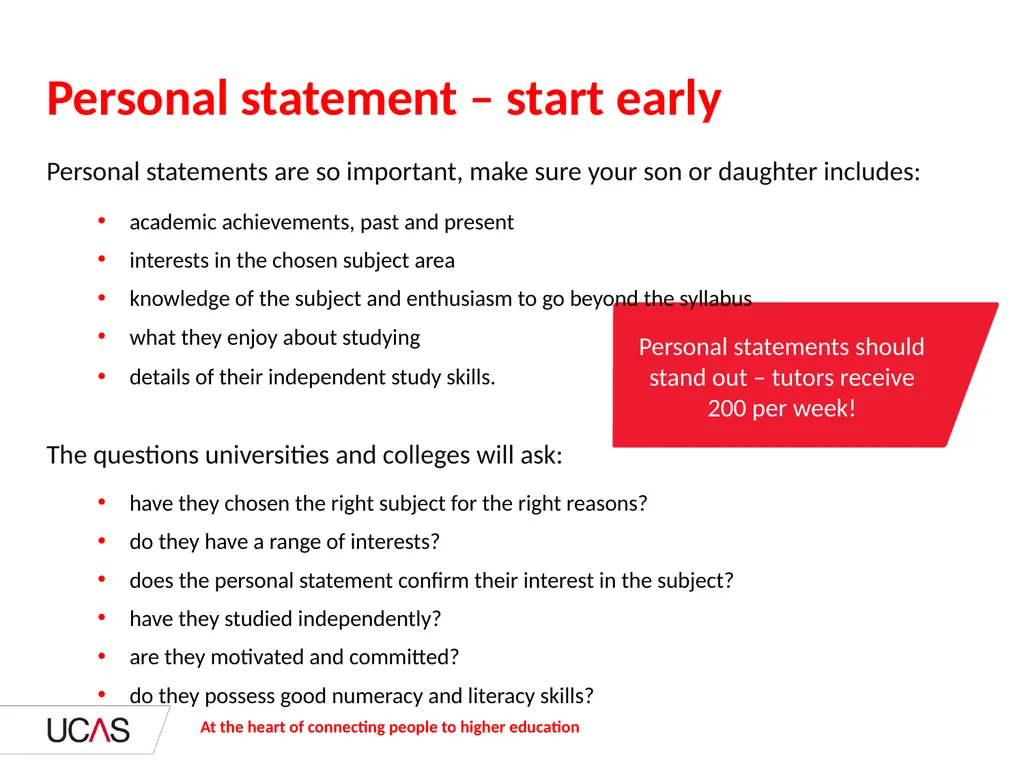
Personal statements are so important, make sure your son or daughter includes:
academic achievements, past and present
interests in the chosen subject area
knowledge of the subject and enthusiasm to go beyond the syllabus
what they enjoy about studying
details of their independent study skills.
The questions universities and colleges will ask:
have they chosen the right subject for the right reasons?
do they have a range of interests?
does the personal statement confirm their interest in the subject?
have they studied independently?
are they motivated and committed?
do they possess good numeracy and literacy skills? Personal statement – start early At the heart of connecting people to higher education Personal statements should stand out – tutors receive 200 per week!<br>
13
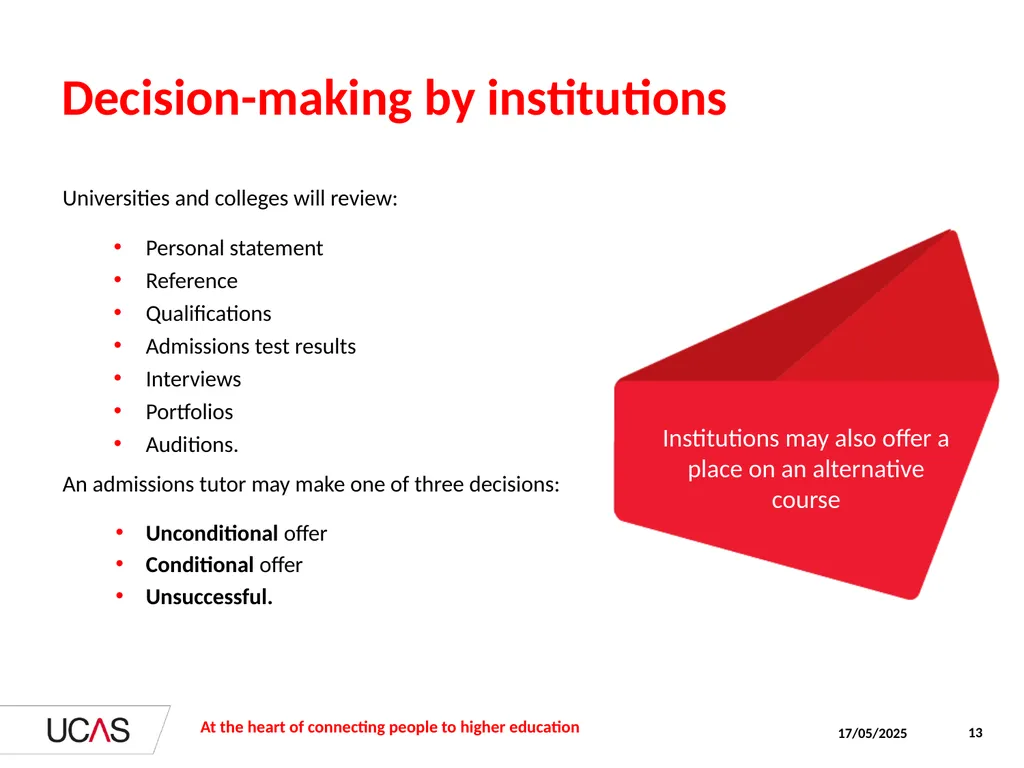
Institutions may also offer a place on an alternative course 06/01/2015 At the heart of connecting people to higher education 13 Decision-making by institutions Universities and colleges will review:
Personal statement
Reference
Qualifications
Admissions test results
Interviews
Portfolios
Auditions.
An admissions tutor may make one of three decisions:
Unconditional offer
Conditional offer
Unsuccessful.<br>
14
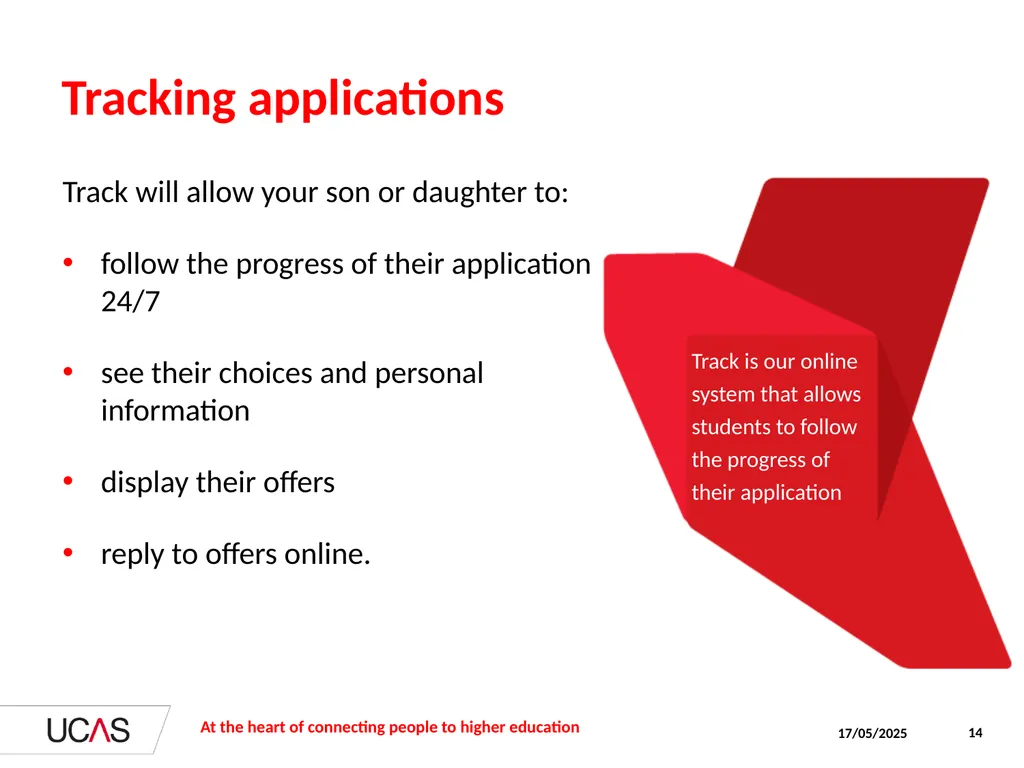
Tracking applications Track will allow your son or daughter to:
follow the progress of their application 24/7
see their choices and personal information
display their offers
reply to offers online. 06/01/2015 At the heart of connecting people to higher education 14 Track is our online system that allows students to follow the progress of their application<br>
15
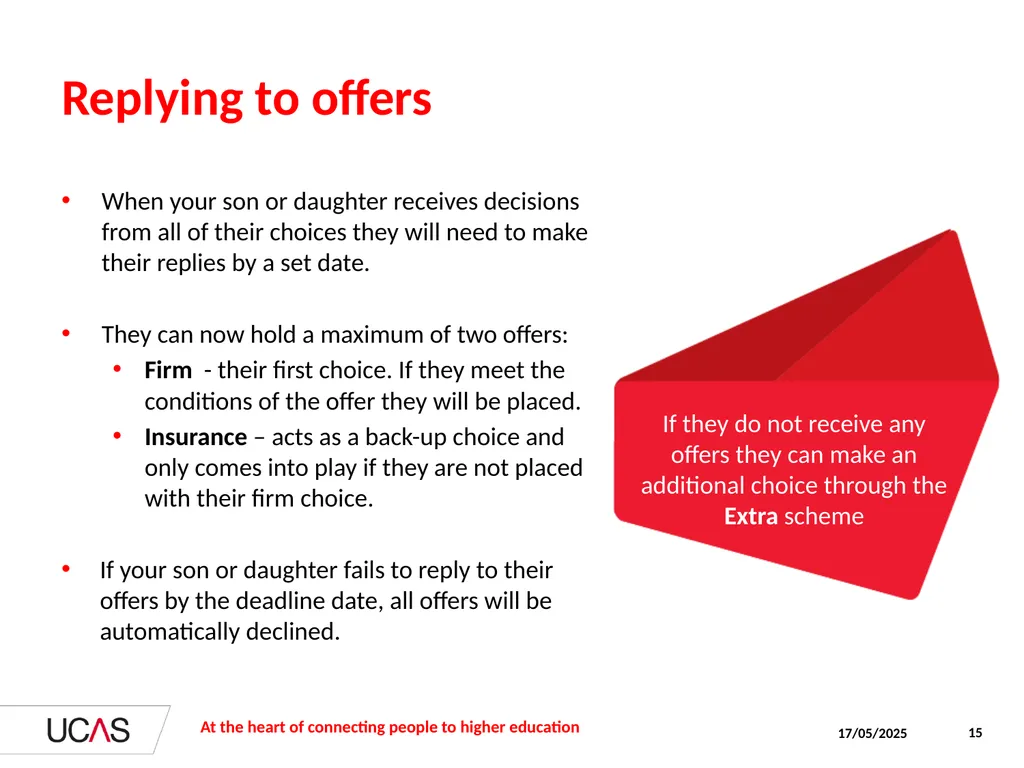
Replying to offers When your son or daughter receives decisions from all of their choices they will need to make their replies by a set date.
They can now hold a maximum of two offers:
Firm - their first choice. If they meet the conditions of the offer they will be placed.
Insurance – acts as a back-up choice and only comes into play if they are not placed with their firm choice.
If your son or daughter fails to reply to their offers by the deadline date, all offers will be automatically declined. 06/01/2015 At the heart of connecting people to higher education 15 If they do not receive any offers they can make an additional choice through the Extra scheme<br>
16
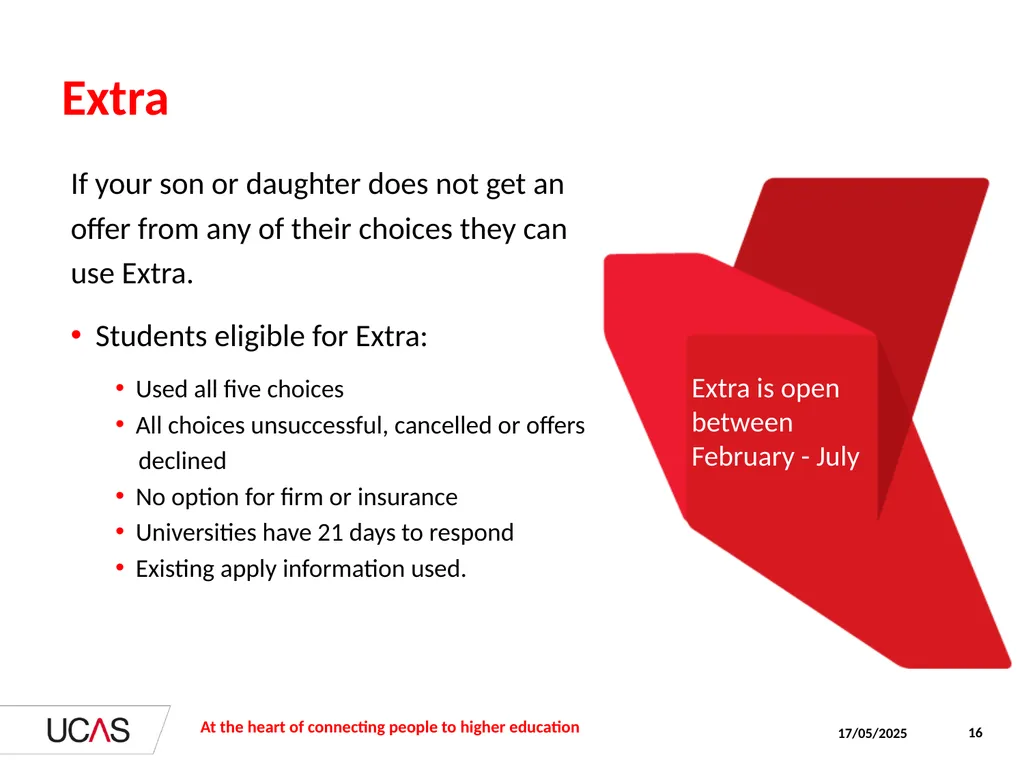
Extra If your son or daughter does not get an offer from any of their choices they can use Extra.
Students eligible for Extra:
Used all five choices
All choices unsuccessful, cancelled or offers
declined
No option for firm or insurance
Universities have 21 days to respond
Existing apply information used. 06/01/2015 At the heart of connecting people to higher education 16 Extra is open between February - July<br>
17
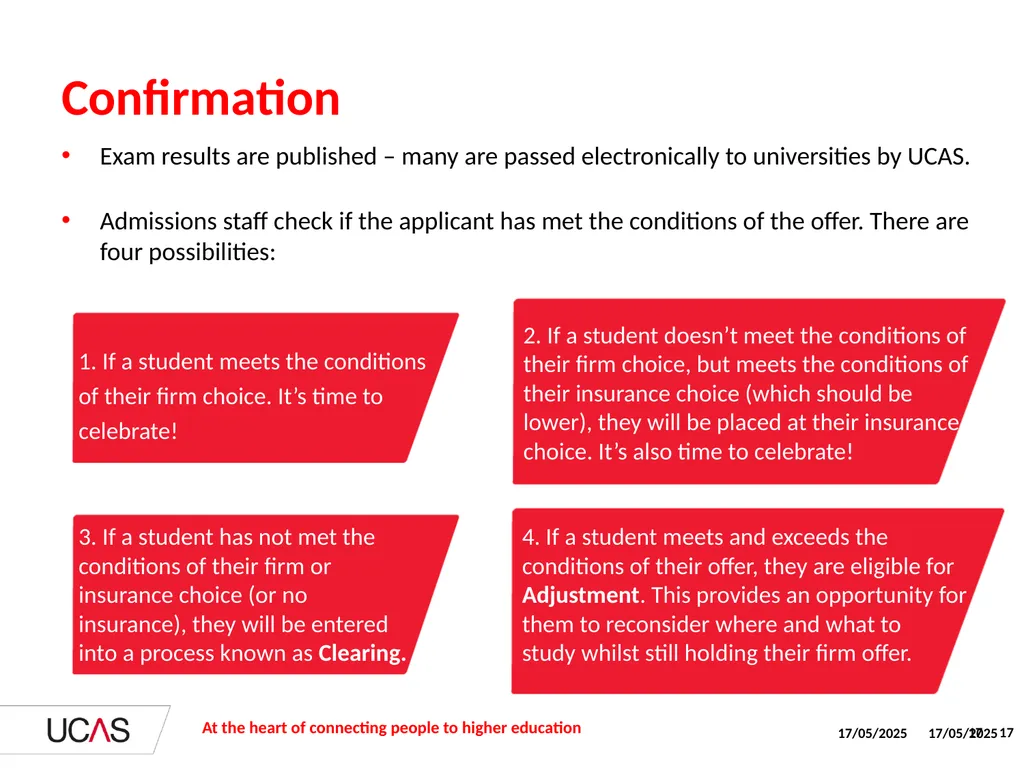
Confirmation Exam results are published – many are passed electronically to universities by UCAS.
Admissions staff check if the applicant has met the conditions of the offer. There are four possibilities: At the heart of connecting people to higher education 06/01/2015 17<br>
18
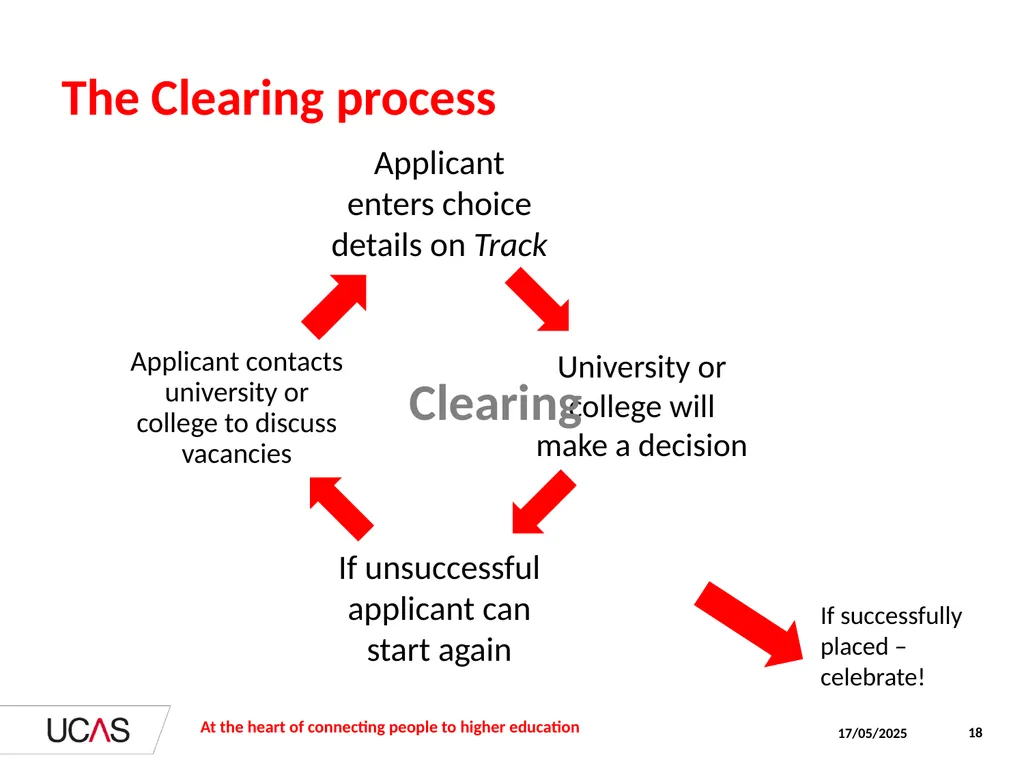
06/01/2015 At the heart of connecting people to higher education 18 The Clearing process Clearing If successfully placed – celebrate!<br>
19
How can you support the application process? Don’t book holidays at key times
e.g. results day
Engage with the school – find out opening times and key contacts, use opportunities provided
Support your son or daughter’s management of their application.
Make sure they read everything they are sent carefully!
Prepare them for living away from home:
Cost of living – paying bills
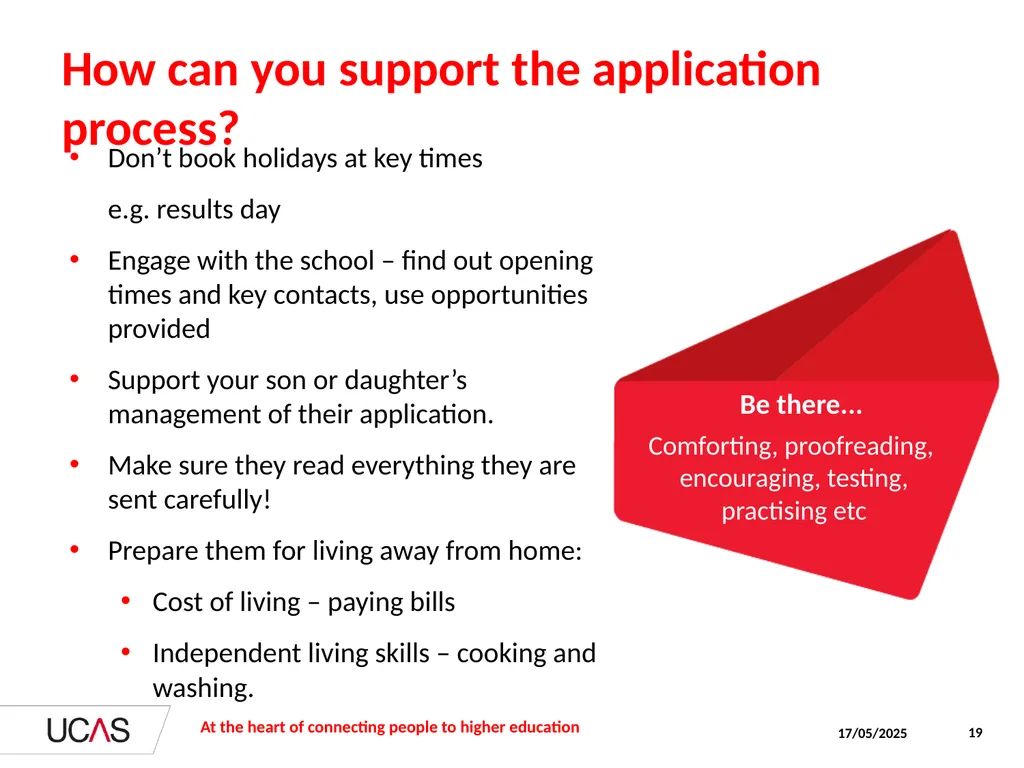
Independent living skills – cooking and washing. 06/01/2015 At the heart of connecting people to higher education 19 Comforting, proofreading, encouraging, testing, practising etc Be there...<br>
20
Find out more At the heart of connecting people to higher education 06/01/2015 20<br>